Egypt Bolting Tools Market Research Report 2033

Egypt Bolting Tools Market Research Report 2033

Segments - by Product Type (Hydraulic Torque Wrenches, Pneumatic Torque Wrenches, Manual Torque Wrenches, Tensioners, Others), by Application (Oil & Gas, Power Generation, Construction, Mining, Manufacturing, Others), by End-User (Industrial, Commercial, Others), by And Distribution Channel (Direct Sales, Distributors, Online Retail, Others)

https://growthmarketreports.com/Raksha
Author : Raksha Sharma
https://growthmarketreports.com/Vaibhav
Fact-checked by : V. Chandola
https://growthmarketreports.com/Rucha
Editor : Rucha Phatak

Upcoming | Report ID :CM-26 | 4.6 Rating | 44 Reviews | 289 Pages | Format : Docx PDF

Report Description


Egypt Bolting Tools Market Outlook

According to our latest research, the global bolting tools market size reached USD 862 million in 2024, with Egypt contributing a significant share due to its robust industrial and energy sectors. The global market is expected to grow at a CAGR of 5.6% over the forecast period, reaching USD 1.43 billion by 2033. This growth is primarily driven by increasing demand for precision fastening solutions in high-stakes industries such as oil and gas, construction, and power generation, which are thriving sectors in Egypt’s evolving economy. As per our latest research, Egypt's bolting tools market is poised for steady expansion, benefiting from ongoing infrastructure projects, energy investments, and the country’s strategic focus on industrial modernization.

One of the fundamental growth factors for the bolting tools market in Egypt is the nation’s ambitious infrastructure development agenda. Egypt is witnessing a surge in large-scale construction projects, including new urban communities, bridges, highways, and energy plants. These projects necessitate advanced bolting tools to ensure structural integrity, safety, and operational efficiency. The government’s Vision 2030, which emphasizes sustainable economic growth through infrastructure and industrialization, directly translates into increased demand for high-precision bolting solutions. As a result, manufacturers and distributors of hydraulic torque wrenches, tensioners, and other bolting tools are seeing heightened opportunities, particularly as Egypt aims to position itself as a regional industrial hub.

Another key driver is the ongoing expansion and modernization of Egypt’s oil and gas sector. The country is a regional energy powerhouse, with significant investments pouring into both upstream and downstream activities. Bolting tools are indispensable for maintaining safety and operational reliability in oil refineries, pipelines, and offshore rigs. The adoption of advanced hydraulic and pneumatic torque wrenches has become standard practice, as these tools offer superior accuracy and efficiency compared to manual alternatives. Additionally, the focus on minimizing downtime and ensuring compliance with international safety standards is pushing end-users to invest in high-quality, technologically advanced bolting equipment, thereby fueling market growth.

The manufacturing sector in Egypt also plays a crucial role in the growth of the bolting tools market. With the government’s push toward industrialization, there has been a notable influx of foreign direct investment in manufacturing, automotive assembly, and heavy machinery production. These industries require reliable bolting solutions for assembly lines, maintenance, and equipment installation. The increasing adoption of automation and Industry 4.0 principles further amplifies the need for precision fastening tools. Moreover, the integration of digital monitoring and calibration features in modern bolting tools is gaining traction, as manufacturers seek to enhance productivity and reduce operational risks.

Regionally, Egypt’s strategic location as a gateway between Africa, Europe, and the Middle East amplifies its importance in the bolting tools market. The Suez Canal expansion, new industrial zones, and logistics hubs are driving demand for high-performance bolting solutions. Northern Egypt, including Cairo and Alexandria, remains the epicenter of industrial and commercial activity, while the Suez Canal corridor is emerging as a major growth hotspot. The concentration of oil and gas operations in the Gulf of Suez and the Western Desert further boosts regional demand for advanced bolting tools. As Egypt continues to attract multinational companies and expand its export-oriented industries, the market outlook remains robust and promising.

Global Egypt Bolting Tools Industry Outlook

Product Type Analysis

The Egypt bolting tools market by product type is segmented into hydraulic torque wrenches, pneumatic torque wrenches, manual torque wrenches, tensioners, and others. Among these, hydraulic torque wrenches have witnessed the highest adoption, particularly in industries where precision, safety, and efficiency are paramount. These tools are favored for their ability to deliver consistent and controlled torque, making them indispensable in critical applications such as oil and gas pipelines, power plants, and large-scale construction projects. The rising complexity of industrial assemblies and the need for compliance with stringent safety standards are propelling the demand for hydraulic torque wrenches, which are often equipped with digital controls and data logging capabilities for enhanced traceability and quality assurance.

Pneumatic torque wrenches are also gaining traction, especially in environments where speed and ease of use are crucial. These tools are widely utilized in automotive assembly lines, mining operations, and maintenance workshops. Their lightweight design, coupled with high torque output, makes them suitable for repetitive tasks, reducing operator fatigue and increasing productivity. The growing focus on operational efficiency and workplace safety is driving investments in pneumatic solutions, as these tools help minimize human error and ensure uniform bolt tightening across multiple applications. As industries in Egypt continue to modernize, the adoption of pneumatic torque wrenches is expected to grow steadily, supported by advancements in tool ergonomics and energy efficiency.

Manual torque wrenches, while considered traditional, remain an essential component of the bolting tools market in Egypt, particularly in small and medium enterprises (SMEs) and sectors with limited automation. Their affordability, simplicity, and portability make them ideal for maintenance, repair, and fieldwork in remote locations. However, the market share of manual wrenches is gradually declining as end-users shift towards more advanced hydraulic and pneumatic options. Nevertheless, manufacturers are innovating by introducing manual wrenches with improved materials, ergonomic grips, and torque measurement features to retain their relevance in cost-sensitive applications.

Tensioners represent a specialized segment within the bolting tools market, catering to applications that require precise bolt elongation and uniform load distribution. These tools are extensively used in critical infrastructure projects, such as bridges, power plants, and petrochemical facilities. The increasing adoption of tensioners is driven by the need for enhanced safety, reduced maintenance downtime, and compliance with global engineering standards. As more projects in Egypt demand high-integrity bolted joints, the demand for advanced tensioning systems is expected to rise, supported by innovations in hydraulic and electric tensioning technologies.

The "others" category includes a variety of ancillary bolting tools, such as nut splitters, bolt cutters, and calibration devices. While these tools represent a smaller share of the market, their importance cannot be overlooked, especially in maintenance and emergency response scenarios. As the Egyptian market matures, there is growing interest in integrated bolting solutions that combine multiple functionalities, offering end-users greater flexibility and cost savings. Overall, the product type segment is characterized by a shift towards automation, digitalization, and safety-driven innovations, reflecting broader trends in Egypt’s industrial landscape.

Report Scope

Attributes Details
Report Title Egypt Bolting Tools Market Research Report 2033
By Product Type Hydraulic Torque Wrenches, Pneumatic Torque Wrenches, Manual Torque Wrenches, Tensioners, Others
By Application Oil & Gas, Power Generation, Construction, Mining, Manufacturing, Others
By End-User Industrial, Commercial, Others
By And Distribution Channel Direct Sales, Distributors, Online Retail, Others
Regions Covered North America, Europe, APAC, Latin America, MEA
Base Year 2024
Historic Data 2018-2023
Forecast Period 2025-2033
Number of Pages 289
Number of Tables & Figures 307
Customization Available Yes, the report can be customized as per your need.

Application Analysis

The application landscape of the Egypt bolting tools market is diverse, with oil and gas emerging as the dominant segment. The country’s expansive oil and gas infrastructure, encompassing refineries, pipelines, and offshore platforms, relies heavily on advanced bolting tools to ensure operational safety and efficiency. Hydraulic and pneumatic torque wrenches are particularly prevalent in this sector, given their ability to deliver precise and repeatable torque in hazardous environments. The ongoing investments in oil exploration, production, and refining are expected to sustain the demand for high-performance bolting solutions, as the industry prioritizes reliability and compliance with international safety standards.

Power generation is another critical application area, driven by Egypt’s ambitious plans to diversify its energy mix and expand electricity generation capacity. The construction of new power plants, both conventional and renewable, necessitates the use of specialized bolting tools for equipment installation, maintenance, and periodic inspections. Tensioners and hydraulic wrenches are widely employed in turbine assembly, boiler maintenance, and transformer installations, where precise bolt tightening is essential for operational integrity. As Egypt accelerates its transition to renewable energy sources, including solar and wind, the demand for advanced bolting solutions in the power sector is expected to grow, supported by government incentives and international partnerships.

The construction industry in Egypt is experiencing unprecedented growth, fueled by mega-projects such as the New Administrative Capital, new urban communities, and transportation infrastructure upgrades. Bolting tools are indispensable in this sector, ensuring the safe and efficient assembly of steel structures, bridges, and heavy machinery. The increasing adoption of modular construction techniques and prefabricated components further amplifies the need for reliable bolting solutions. As construction companies seek to enhance productivity and reduce project timelines, the integration of automated and digital torque tools is becoming more prevalent, driving market growth in this application segment.

Mining and manufacturing represent additional growth avenues for the bolting tools market in Egypt. The mining sector, with its focus on mineral extraction and processing, requires robust and durable bolting tools for equipment maintenance and assembly in challenging environments. Similarly, the manufacturing industry, spanning automotive, heavy machinery, and consumer goods, relies on bolting tools for assembly lines, quality assurance, and maintenance operations. The adoption of Industry 4.0 principles, including digital monitoring and predictive maintenance, is driving demand for smart bolting solutions that offer real-time data analytics and remote monitoring capabilities.

Other application areas, such as transportation, shipbuilding, and utilities, also contribute to the market’s diversity. As Egypt continues to invest in infrastructure modernization and industrial diversification, the application spectrum for bolting tools is expected to broaden, creating new opportunities for manufacturers and distributors. The evolving regulatory landscape, with stricter safety and quality standards, further underscores the importance of advanced bolting solutions across all major application segments.

End-User Analysis

The end-user landscape of the Egypt bolting tools market is segmented into industrial, commercial, and others, each exhibiting distinct demand patterns and growth trajectories. The industrial segment is by far the largest, driven by the country’s robust base of oil and gas, power generation, mining, and manufacturing operations. Within this segment, companies prioritize reliability, safety, and efficiency, leading to strong demand for hydraulic and pneumatic torque wrenches, tensioners, and other advanced bolting tools. The ongoing trend towards automation and digitalization in industrial settings is further boosting the adoption of smart bolting solutions, which offer enhanced accuracy, data logging, and remote monitoring capabilities.

The commercial segment, while smaller in comparison, is gaining momentum as Egypt’s economy diversifies and urbanizes. Commercial end-users include construction firms, facility management companies, and service providers involved in infrastructure maintenance, building construction, and utilities management. These organizations typically require a mix of manual and automated bolting tools for various tasks, ranging from routine maintenance to large-scale installations. The increasing emphasis on safety, quality assurance, and regulatory compliance is prompting commercial end-users to invest in higher-quality bolting solutions, particularly for projects with stringent safety requirements.

The “others” category encompasses a wide range of smaller end-users, including educational institutions, research laboratories, and government agencies. While these entities represent a relatively minor share of the market, they contribute to the overall demand for specialized bolting tools, particularly for training, research, and pilot projects. As Egypt continues to invest in technical education and workforce development, the demand for training-grade bolting equipment and demonstration tools is expected to grow, supporting the market’s long-term expansion.

Across all end-user segments, there is a clear trend towards value-added services, such as tool calibration, maintenance contracts, and technical training. Manufacturers and distributors are increasingly offering comprehensive service packages to differentiate themselves in a competitive market. The growing importance of after-sales support, coupled with the rise of digital platforms for customer engagement, is reshaping the end-user experience and driving loyalty in the Egyptian bolting tools market.

Another notable trend is the increasing collaboration between end-users and tool manufacturers to develop customized solutions tailored to specific industry needs. This co-creation approach is particularly prevalent in high-stakes industries such as oil and gas, power generation, and construction, where operational requirements can vary significantly from one project to another. By working closely with end-users, manufacturers are able to deliver innovative bolting solutions that address unique challenges, enhance productivity, and ensure compliance with evolving industry standards.

Distribution Channel Analysis

The distribution channel landscape for bolting tools in Egypt is segmented into direct sales, distributors, online retail, and others. Direct sales remain the preferred channel for large industrial clients, particularly in the oil and gas, power generation, and manufacturing sectors. These end-users often require customized solutions, technical support, and after-sales services, which are best delivered through direct engagement with manufacturers or authorized representatives. The direct sales channel is characterized by long-term relationships, bulk orders, and tailored service agreements, making it a critical component of the market’s value chain.

Distributors play a pivotal role in expanding market reach, particularly among small and medium enterprises (SMEs) and commercial end-users. By leveraging extensive networks and local market knowledge, distributors are able to offer a wide range of bolting tools, spare parts, and accessories to diverse customer segments. The distributor channel is also instrumental in providing technical support, product demonstrations, and training services, which are essential for building customer trust and loyalty. As competition intensifies, leading distributors are investing in digital platforms, inventory management systems, and value-added services to enhance their market position.

Online retail is an emerging distribution channel, driven by the rapid adoption of e-commerce and digital procurement platforms in Egypt. While online sales currently account for a relatively small share of the market, their importance is growing, particularly among SMEs and individual contractors seeking convenience, price transparency, and a wide product selection. The proliferation of online marketplaces and specialized e-commerce portals is making it easier for customers to compare products, access technical information, and place orders remotely. As digital literacy and internet penetration continue to rise in Egypt, the online retail channel is expected to gain further traction, supported by secure payment systems and efficient logistics networks.

The "others" category includes specialized channels such as rental services, tool libraries, and government procurement programs. Rental services are particularly popular for short-term projects and maintenance activities, offering cost-effective access to high-value bolting tools without the need for significant capital investment. Tool libraries and government procurement programs also contribute to market diversity, catering to niche segments such as education, research, and public infrastructure projects. As the market evolves, there is growing interest in hybrid distribution models that combine the strengths of multiple channels to deliver greater value to end-users.

Overall, the distribution channel segment is undergoing significant transformation, driven by changing customer preferences, technological advancements, and the rise of digital commerce. Manufacturers and distributors are increasingly focusing on omnichannel strategies, integrating online and offline touchpoints to provide a seamless customer experience. The ability to offer comprehensive solutions, responsive support, and flexible delivery options will be key differentiators in the competitive Egyptian bolting tools market.

Opportunities & Threats

The Egypt bolting tools market presents a wealth of opportunities, particularly as the country embarks on a new phase of industrialization and infrastructure development. The government’s Vision 2030 and strategic investments in energy, transportation, and construction are creating sustained demand for advanced bolting solutions. There is significant potential for manufacturers to introduce innovative products, such as digitally enabled torque tools, smart tensioners, and integrated fastening systems, tailored to the unique needs of Egyptian industries. Partnerships with local distributors, investment in training and technical support, and participation in large-scale projects can further enhance market penetration and brand recognition. Additionally, the growing emphasis on safety, quality, and regulatory compliance is opening up opportunities for value-added services, such as calibration, maintenance, and certification programs.

Another major opportunity lies in the adoption of Industry 4.0 technologies and digital transformation across Egypt’s industrial landscape. The integration of IoT, data analytics, and remote monitoring capabilities in bolting tools is enabling predictive maintenance, real-time quality assurance, and enhanced operational efficiency. Manufacturers that invest in R&D and collaborate with local industry stakeholders are well-positioned to capitalize on this trend, offering smart bolting solutions that address emerging challenges and deliver measurable value. The rise of e-commerce and digital procurement platforms also presents new avenues for market expansion, particularly among SMEs and commercial end-users seeking convenience and cost savings.

Despite these opportunities, the market faces several restraining factors that could impact growth. One of the primary challenges is the high initial cost of advanced bolting tools, which can be a barrier for price-sensitive customers, particularly SMEs and smaller contractors. Additionally, the market is characterized by intense competition from low-cost imports and counterfeit products, which can undermine quality standards and erode profit margins for established manufacturers. The lack of skilled technicians and limited awareness of the benefits of advanced bolting solutions in some segments also pose challenges, highlighting the need for ongoing training, education, and capacity-building initiatives. Addressing these restraining factors will be essential for sustaining long-term growth and ensuring the continued success of the Egyptian bolting tools market.

Regional Outlook

Regionally, the Egyptian bolting tools market is concentrated in key industrial and commercial hubs, with Cairo and Alexandria accounting for the lion’s share of demand. In 2024, these regions collectively contributed approximately USD 22 million to the national market, driven by their dense concentration of manufacturing plants, construction projects, and energy facilities. The presence of major industrial zones, logistics hubs, and export-oriented industries in these cities further amplifies the demand for advanced bolting solutions. As infrastructure development and urbanization continue apace, Cairo and Alexandria are expected to retain their dominance, with projected CAGR of 5.8% through 2033.

The Suez Canal corridor and the surrounding governorates represent another major growth region, benefiting from ongoing investments in logistics, shipping, and energy infrastructure. The expansion of the Suez Canal, new industrial parks, and the establishment of free zones are driving demand for high-performance bolting tools, particularly in the oil and gas and power generation sectors. In 2024, the Suez Canal region accounted for approximately USD 12 million in bolting tools sales, with strong growth prospects as new projects come online and international investors increase their presence. The region’s strategic location as a gateway between Africa, Europe, and the Middle East further enhances its importance in the national market.

Other regions, including Upper Egypt and the Western Desert, are also witnessing increased demand for bolting tools, albeit from a smaller base. These areas are home to significant mining operations, energy projects, and emerging industrial clusters. In 2024, these regions collectively contributed around USD 6 million to the national market, with growth driven by government initiatives to promote regional development and attract investment outside the traditional industrial heartlands. As infrastructure and industrialization efforts expand into these regions, the demand for bolting tools is expected to rise, supported by targeted incentives and capacity-building programs.

Egypt Bolting Tools Market Statistics

Competitor Outlook

The competitive landscape of the Egypt bolting tools market is characterized by a mix of multinational corporations, regional players, and local manufacturers, each vying for market share through product innovation, service excellence, and strategic partnerships. Leading global brands dominate the high-end segment, offering advanced hydraulic and pneumatic torque wrenches, tensioners, and integrated fastening systems. These companies leverage their extensive R&D capabilities, global supply chains, and established reputations to cater to large industrial clients in sectors such as oil and gas, power generation, and construction. Their focus on quality, reliability, and compliance with international standards gives them a competitive edge, particularly in projects with stringent safety and performance requirements.

Regional and local players, on the other hand, are increasingly focusing on cost competitiveness, customization, and responsive customer service to differentiate themselves. By leveraging their deep understanding of local market dynamics and customer needs, these companies are able to offer tailored solutions, flexible pricing, and rapid delivery times. Many local manufacturers are also investing in technology upgrades, workforce training, and certification programs to enhance product quality and expand their market reach. Strategic alliances with international brands, distributors, and service providers are becoming more common, enabling local players to access new technologies, expand their product portfolios, and participate in larger projects.

The market is also witnessing increased competition from low-cost imports and counterfeit products, which pose a challenge to established brands and undermine quality standards. To counter this threat, leading manufacturers are investing in brand protection, customer education, and after-sales support, while also working closely with regulatory authorities to enforce quality standards and combat counterfeit activities. The growing importance of digital platforms for marketing, sales, and customer engagement is further intensifying competition, as companies seek to differentiate themselves through superior online experiences, technical support, and value-added services.

Major companies operating in the Egypt bolting tools market include international giants such as Atlas Copco, HYTORC, Enerpac Tool Group, and Stanley Black & Decker, as well as prominent regional players like Al-Mansoori Specialized Engineering and Petrojet. Atlas Copco is renowned for its innovative hydraulic and pneumatic torque solutions, extensive service network, and commitment to sustainability. HYTORC is a global leader in industrial bolting systems, offering a comprehensive range of torque and tensioning tools designed for critical applications. Enerpac Tool Group specializes in high-pressure hydraulic tools and solutions for industrial maintenance, construction, and energy sectors. Stanley Black & Decker, with its broad portfolio of hand and power tools, serves a wide range of end-users, from large industrial clients to SMEs and commercial contractors.

Al-Mansoori Specialized Engineering and Petrojet are notable regional players, leveraging their deep industry expertise and local presence to deliver customized bolting solutions and technical services. These companies are particularly active in the oil and gas, power generation, and construction sectors, where they offer a combination of product sales, equipment rental, and on-site support. Their ability to provide end-to-end solutions, from tool selection and calibration to operator training and maintenance, has earned them a strong reputation among Egyptian clients. As competition intensifies, both international and local players are expected to focus on innovation, customer engagement, and strategic partnerships to sustain their growth and maintain market leadership in the dynamic Egyptian bolting tools market.

Key Players

  • Enerpac
  • Hydratight
  • Atlas Copco
  • ITH Bolting Technology
  • SPX FLOW
  • Hi-Force
  • Norbar Torque Tools
  • Hytorc
  • Torq-Comm International
  • Plarad (Maschinenfabrik Wagner)
  • RAD Torque Systems
  • Boltight Limited
  • TorcUP
  • Alkitronic
  • GEDORE Torque Solutions
  • Powermaster Engineers
  • Wren Hydraulic Equipment
  • Torc-Tech
  • TorcSense
  • Stanley Black & Decker
Egypt Bolting Tools Market Overview

Segments

The Egypt Bolting Tools market has been segmented on the basis of

Product Type

  • Hydraulic Torque Wrenches
  • Pneumatic Torque Wrenches
  • Manual Torque Wrenches
  • Tensioners
  • Others

Application

  • Oil & Gas
  • Power Generation
  • Construction
  • Mining
  • Manufacturing
  • Others

End-User

  • Industrial
  • Commercial
  • Others

And Distribution Channel

  • Direct Sales
  • Distributors
  • Online Retail
  • Others

Frequently Asked Questions

Additional company profiles can be provided on request.

Yes, the report covers product specific information such as composition development etc.

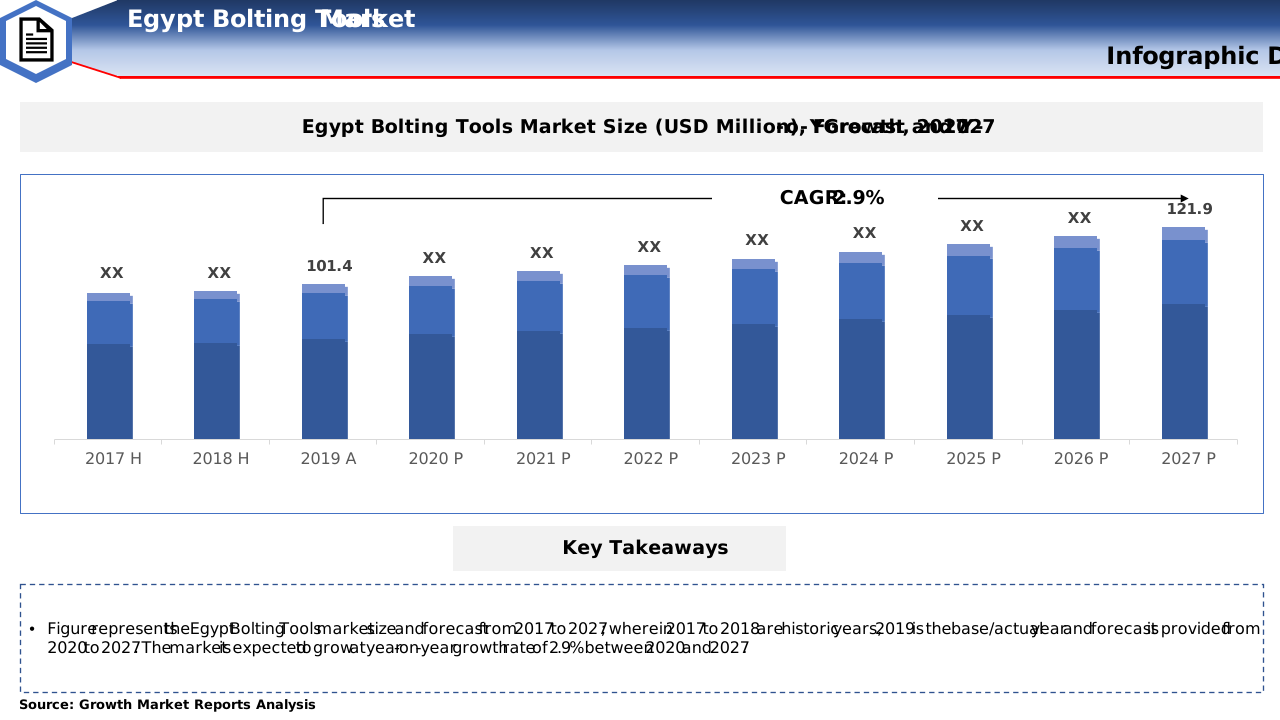
According to this Growth Market Reports report, the market from Egypt bolting tools is likely to register a CAGR of 2.9% during forecast period 2020-2027, with an anticipated to reach USD 121.9 million by the end of the 2027.

In addition Pricing Analysis and Company Market Share (in % for base year 2019), Trade Scenario, CXO’s Perspective, Unit Sales & Market Share, By Company, 2015-2020, and Concentration Ratio (CR5 and HHI) for Egypt bolting tools market is available in final report.

Rising demand for saving time and improving accuracy and efficiency, increasing construction and infrastructure activities, growth in industrial activities, and rising use of bolting tools in the automotive industry is expected to boost the market.

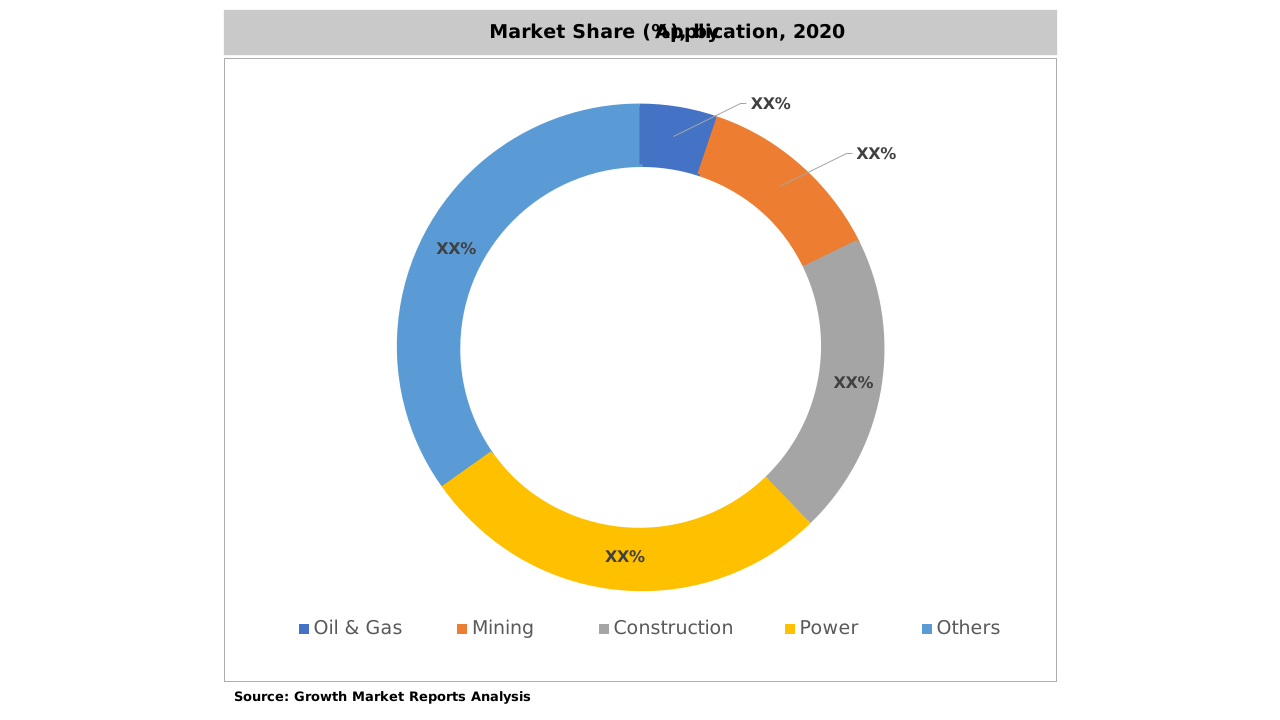
Oil & Gas, Mining, Construction, Power, and Others are the key application that are driving the Egypt bolting tools market.

Factors such as competitive strength and market positioning are key areas considered while selecting top companies to be profiled.

The market is expected to decline in-between 2019 and 2020 owing to the adverse effect of COVID-19 pandemic. Disruptive supply chain and country lockdown conditions have forced the manufacturers for temporarily suspension of production which is resulting to declining sales.

The base year considered for the Egypt bolting tools market report is 2019. The complete analysis period is 2015 to 2027, wherein, 2015, 2016, 2017, 2018 are the historic years and the forecast is provided from 2020 to 2027.

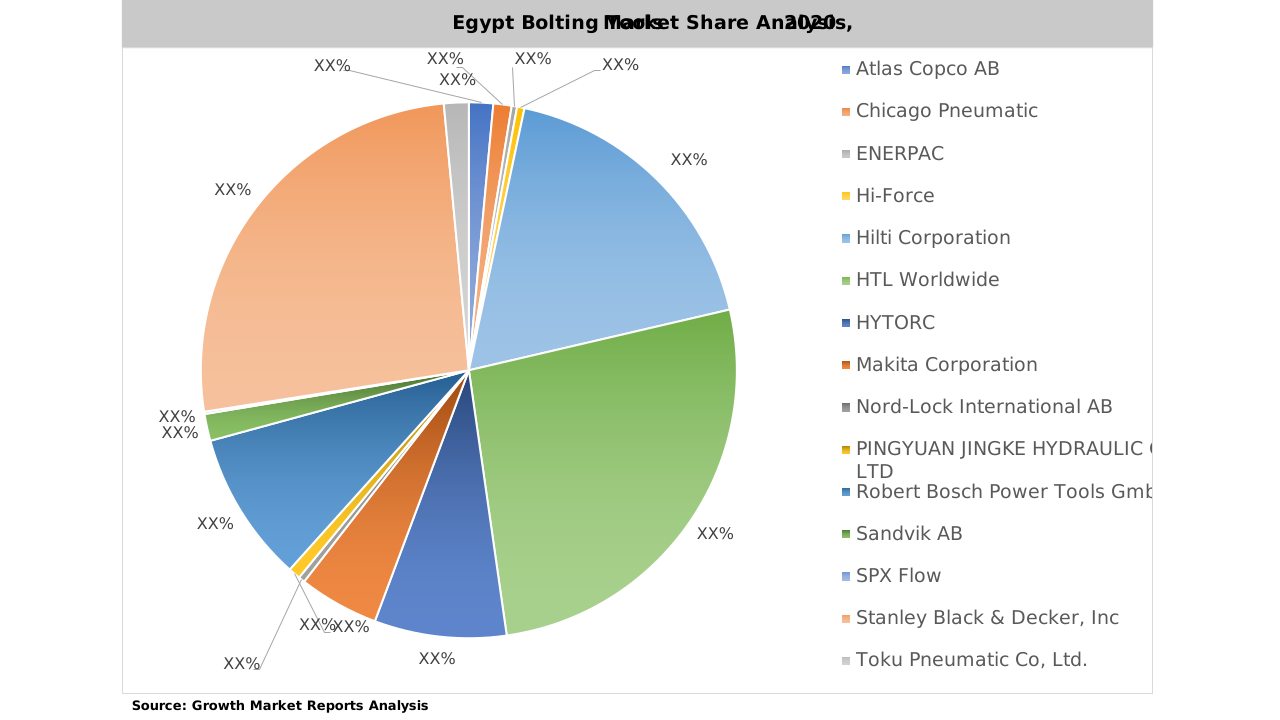
Major manufactures include, Sandvik AB, SPX Flow, Nord-Lock International AB, Atlas Copco AB, HTL Worldwide, and Stanley Black & Decker, Inc.

Table Of Content

Chapter 1 Executive Summary
Chapter 2 Assumptions and Acronyms Used
Chapter 3 Research Methodology
Chapter 4 Egypt Bolting Tools Market Overview
   4.1 Introduction
      4.1.1 Market Taxonomy
      4.1.2 Market Definition
      4.1.3 Macro-Economic Factors Impacting the Market Growth
   4.2 Egypt Bolting Tools Market Dynamics
      4.2.1 Market Drivers
      4.2.2 Market Restraints
      4.2.3 Market Opportunity
   4.3 Egypt Bolting Tools Market - Supply Chain Analysis
      4.3.1 List of Key Suppliers
      4.3.2 List of Key Distributors
      4.3.3 List of Key Consumers
   4.4 Key Forces Shaping the Egypt Bolting Tools Market
      4.4.1 Bargaining Power of Suppliers
      4.4.2 Bargaining Power of Buyers
      4.4.3 Threat of Substitution
      4.4.4 Threat of New Entrants
      4.4.5 Competitive Rivalry
   4.5 Global Egypt Bolting Tools Market Size & Forecast, 2023-2032
      4.5.1 Egypt Bolting Tools Market Size and Y-o-Y Growth
      4.5.2 Egypt Bolting Tools Market Absolute $ Opportunity

Chapter 5 Global Egypt Bolting Tools Market Analysis and Forecast By Product Type
   5.1 Introduction
      5.1.1 Key Market Trends & Growth Opportunities By Product Type
      5.1.2 Basis Point Share (BPS) Analysis By Product Type
      5.1.3 Absolute $ Opportunity Assessment By Product Type
   5.2 Egypt Bolting Tools Market Size Forecast By Product Type
      5.2.1 Hydraulic Torque Wrenches
      5.2.2 Pneumatic Torque Wrenches
      5.2.3 Manual Torque Wrenches
      5.2.4 Tensioners
      5.2.5 Others
   5.3 Market Attractiveness Analysis By Product Type

Chapter 6 Global Egypt Bolting Tools Market Analysis and Forecast By Application
   6.1 Introduction
      6.1.1 Key Market Trends & Growth Opportunities By Application
      6.1.2 Basis Point Share (BPS) Analysis By Application
      6.1.3 Absolute $ Opportunity Assessment By Application
   6.2 Egypt Bolting Tools Market Size Forecast By Application
      6.2.1 Oil & Gas
      6.2.2 Power Generation
      6.2.3 Construction
      6.2.4 Mining
      6.2.5 Manufacturing
      6.2.6 Others
   6.3 Market Attractiveness Analysis By Application

Chapter 7 Global Egypt Bolting Tools Market Analysis and Forecast By End-User
   7.1 Introduction
      7.1.1 Key Market Trends & Growth Opportunities By End-User
      7.1.2 Basis Point Share (BPS) Analysis By End-User
      7.1.3 Absolute $ Opportunity Assessment By End-User
   7.2 Egypt Bolting Tools Market Size Forecast By End-User
      7.2.1 Industrial
      7.2.2 Commercial
      7.2.3 Others
   7.3 Market Attractiveness Analysis By End-User

Chapter 8 Global Egypt Bolting Tools Market Analysis and Forecast By And Distribution Channel
   8.1 Introduction
      8.1.1 Key Market Trends & Growth Opportunities By And Distribution Channel
      8.1.2 Basis Point Share (BPS) Analysis By And Distribution Channel
      8.1.3 Absolute $ Opportunity Assessment By And Distribution Channel
   8.2 Egypt Bolting Tools Market Size Forecast By And Distribution Channel
      8.2.1 Direct Sales
      8.2.2 Distributors
      8.2.3 Online Retail
      8.2.4 Others
   8.3 Market Attractiveness Analysis By And Distribution Channel

Chapter 9 Global Egypt Bolting Tools Market Analysis and Forecast by Region
   9.1 Introduction
      9.1.1 Key Market Trends & Growth Opportunities By Region
      9.1.2 Basis Point Share (BPS) Analysis By Region
      9.1.3 Absolute $ Opportunity Assessment By Region
   9.2 Egypt Bolting Tools Market Size Forecast By Region
      9.2.1 North America
      9.2.2 Europe
      9.2.3 Asia Pacific
      9.2.4 Latin America
      9.2.5 Middle East & Africa (MEA)
   9.3 Market Attractiveness Analysis By Region

Chapter 10 Coronavirus Disease (COVID-19) Impact 
   10.1 Introduction 
   10.2 Current & Future Impact Analysis 
   10.3 Economic Impact Analysis 
   10.4 Government Policies 
   10.5 Investment Scenario

Chapter 11 North America Egypt Bolting Tools Analysis and Forecast
   11.1 Introduction
   11.2 North America Egypt Bolting Tools Market Size Forecast by Country
      11.2.1 U.S.
      11.2.2 Canada
   11.3 Basis Point Share (BPS) Analysis by Country
   11.4 Absolute $ Opportunity Assessment by Country
   11.5 Market Attractiveness Analysis by Country
   11.6 North America Egypt Bolting Tools Market Size Forecast By Product Type
      11.6.1 Hydraulic Torque Wrenches
      11.6.2 Pneumatic Torque Wrenches
      11.6.3 Manual Torque Wrenches
      11.6.4 Tensioners
      11.6.5 Others
   11.7 Basis Point Share (BPS) Analysis By Product Type 
   11.8 Absolute $ Opportunity Assessment By Product Type 
   11.9 Market Attractiveness Analysis By Product Type
   11.10 North America Egypt Bolting Tools Market Size Forecast By Application
      11.10.1 Oil & Gas
      11.10.2 Power Generation
      11.10.3 Construction
      11.10.4 Mining
      11.10.5 Manufacturing
      11.10.6 Others
   11.11 Basis Point Share (BPS) Analysis By Application 
   11.12 Absolute $ Opportunity Assessment By Application 
   11.13 Market Attractiveness Analysis By Application
   11.14 North America Egypt Bolting Tools Market Size Forecast By End-User
      11.14.1 Industrial
      11.14.2 Commercial
      11.14.3 Others
   11.15 Basis Point Share (BPS) Analysis By End-User 
   11.16 Absolute $ Opportunity Assessment By End-User 
   11.17 Market Attractiveness Analysis By End-User
   11.18 North America Egypt Bolting Tools Market Size Forecast By And Distribution Channel
      11.18.1 Direct Sales
      11.18.2 Distributors
      11.18.3 Online Retail
      11.18.4 Others
   11.19 Basis Point Share (BPS) Analysis By And Distribution Channel 
   11.20 Absolute $ Opportunity Assessment By And Distribution Channel 
   11.21 Market Attractiveness Analysis By And Distribution Channel

Chapter 12 Europe Egypt Bolting Tools Analysis and Forecast
   12.1 Introduction
   12.2 Europe Egypt Bolting Tools Market Size Forecast by Country
      12.2.1 Germany
      12.2.2 France
      12.2.3 Italy
      12.2.4 U.K.
      12.2.5 Spain
      12.2.6 Russia
      12.2.7 Rest of Europe
   12.3 Basis Point Share (BPS) Analysis by Country
   12.4 Absolute $ Opportunity Assessment by Country
   12.5 Market Attractiveness Analysis by Country
   12.6 Europe Egypt Bolting Tools Market Size Forecast By Product Type
      12.6.1 Hydraulic Torque Wrenches
      12.6.2 Pneumatic Torque Wrenches
      12.6.3 Manual Torque Wrenches
      12.6.4 Tensioners
      12.6.5 Others
   12.7 Basis Point Share (BPS) Analysis By Product Type 
   12.8 Absolute $ Opportunity Assessment By Product Type 
   12.9 Market Attractiveness Analysis By Product Type
   12.10 Europe Egypt Bolting Tools Market Size Forecast By Application
      12.10.1 Oil & Gas
      12.10.2 Power Generation
      12.10.3 Construction
      12.10.4 Mining
      12.10.5 Manufacturing
      12.10.6 Others
   12.11 Basis Point Share (BPS) Analysis By Application 
   12.12 Absolute $ Opportunity Assessment By Application 
   12.13 Market Attractiveness Analysis By Application
   12.14 Europe Egypt Bolting Tools Market Size Forecast By End-User
      12.14.1 Industrial
      12.14.2 Commercial
      12.14.3 Others
   12.15 Basis Point Share (BPS) Analysis By End-User 
   12.16 Absolute $ Opportunity Assessment By End-User 
   12.17 Market Attractiveness Analysis By End-User
   12.18 Europe Egypt Bolting Tools Market Size Forecast By And Distribution Channel
      12.18.1 Direct Sales
      12.18.2 Distributors
      12.18.3 Online Retail
      12.18.4 Others
   12.19 Basis Point Share (BPS) Analysis By And Distribution Channel 
   12.20 Absolute $ Opportunity Assessment By And Distribution Channel 
   12.21 Market Attractiveness Analysis By And Distribution Channel

Chapter 13 Asia Pacific Egypt Bolting Tools Analysis and Forecast
   13.1 Introduction
   13.2 Asia Pacific Egypt Bolting Tools Market Size Forecast by Country
      13.2.1 China
      13.2.2 Japan
      13.2.3 South Korea
      13.2.4 India
      13.2.5 Australia
      13.2.6 South East Asia (SEA)
      13.2.7 Rest of Asia Pacific (APAC)
   13.3 Basis Point Share (BPS) Analysis by Country
   13.4 Absolute $ Opportunity Assessment by Country
   13.5 Market Attractiveness Analysis by Country
   13.6 Asia Pacific Egypt Bolting Tools Market Size Forecast By Product Type
      13.6.1 Hydraulic Torque Wrenches
      13.6.2 Pneumatic Torque Wrenches
      13.6.3 Manual Torque Wrenches
      13.6.4 Tensioners
      13.6.5 Others
   13.7 Basis Point Share (BPS) Analysis By Product Type 
   13.8 Absolute $ Opportunity Assessment By Product Type 
   13.9 Market Attractiveness Analysis By Product Type
   13.10 Asia Pacific Egypt Bolting Tools Market Size Forecast By Application
      13.10.1 Oil & Gas
      13.10.2 Power Generation
      13.10.3 Construction
      13.10.4 Mining
      13.10.5 Manufacturing
      13.10.6 Others
   13.11 Basis Point Share (BPS) Analysis By Application 
   13.12 Absolute $ Opportunity Assessment By Application 
   13.13 Market Attractiveness Analysis By Application
   13.14 Asia Pacific Egypt Bolting Tools Market Size Forecast By End-User
      13.14.1 Industrial
      13.14.2 Commercial
      13.14.3 Others
   13.15 Basis Point Share (BPS) Analysis By End-User 
   13.16 Absolute $ Opportunity Assessment By End-User 
   13.17 Market Attractiveness Analysis By End-User
   13.18 Asia Pacific Egypt Bolting Tools Market Size Forecast By And Distribution Channel
      13.18.1 Direct Sales
      13.18.2 Distributors
      13.18.3 Online Retail
      13.18.4 Others
   13.19 Basis Point Share (BPS) Analysis By And Distribution Channel 
   13.20 Absolute $ Opportunity Assessment By And Distribution Channel 
   13.21 Market Attractiveness Analysis By And Distribution Channel

Chapter 14 Latin America Egypt Bolting Tools Analysis and Forecast
   14.1 Introduction
   14.2 Latin America Egypt Bolting Tools Market Size Forecast by Country
      14.2.1 Brazil
      14.2.2 Mexico
      14.2.3 Rest of Latin America (LATAM)
   14.3 Basis Point Share (BPS) Analysis by Country
   14.4 Absolute $ Opportunity Assessment by Country
   14.5 Market Attractiveness Analysis by Country
   14.6 Latin America Egypt Bolting Tools Market Size Forecast By Product Type
      14.6.1 Hydraulic Torque Wrenches
      14.6.2 Pneumatic Torque Wrenches
      14.6.3 Manual Torque Wrenches
      14.6.4 Tensioners
      14.6.5 Others
   14.7 Basis Point Share (BPS) Analysis By Product Type 
   14.8 Absolute $ Opportunity Assessment By Product Type 
   14.9 Market Attractiveness Analysis By Product Type
   14.10 Latin America Egypt Bolting Tools Market Size Forecast By Application
      14.10.1 Oil & Gas
      14.10.2 Power Generation
      14.10.3 Construction
      14.10.4 Mining
      14.10.5 Manufacturing
      14.10.6 Others
   14.11 Basis Point Share (BPS) Analysis By Application 
   14.12 Absolute $ Opportunity Assessment By Application 
   14.13 Market Attractiveness Analysis By Application
   14.14 Latin America Egypt Bolting Tools Market Size Forecast By End-User
      14.14.1 Industrial
      14.14.2 Commercial
      14.14.3 Others
   14.15 Basis Point Share (BPS) Analysis By End-User 
   14.16 Absolute $ Opportunity Assessment By End-User 
   14.17 Market Attractiveness Analysis By End-User
   14.18 Latin America Egypt Bolting Tools Market Size Forecast By And Distribution Channel
      14.18.1 Direct Sales
      14.18.2 Distributors
      14.18.3 Online Retail
      14.18.4 Others
   14.19 Basis Point Share (BPS) Analysis By And Distribution Channel 
   14.20 Absolute $ Opportunity Assessment By And Distribution Channel 
   14.21 Market Attractiveness Analysis By And Distribution Channel

Chapter 15 Middle East & Africa (MEA) Egypt Bolting Tools Analysis and Forecast
   15.1 Introduction
   15.2 Middle East & Africa (MEA) Egypt Bolting Tools Market Size Forecast by Country
      15.2.1 Saudi Arabia
      15.2.2 South Africa
      15.2.3 UAE
      15.2.4 Rest of Middle East & Africa (MEA)
   15.3 Basis Point Share (BPS) Analysis by Country
   15.4 Absolute $ Opportunity Assessment by Country
   15.5 Market Attractiveness Analysis by Country
   15.6 Middle East & Africa (MEA) Egypt Bolting Tools Market Size Forecast By Product Type
      15.6.1 Hydraulic Torque Wrenches
      15.6.2 Pneumatic Torque Wrenches
      15.6.3 Manual Torque Wrenches
      15.6.4 Tensioners
      15.6.5 Others
   15.7 Basis Point Share (BPS) Analysis By Product Type 
   15.8 Absolute $ Opportunity Assessment By Product Type 
   15.9 Market Attractiveness Analysis By Product Type
   15.10 Middle East & Africa (MEA) Egypt Bolting Tools Market Size Forecast By Application
      15.10.1 Oil & Gas
      15.10.2 Power Generation
      15.10.3 Construction
      15.10.4 Mining
      15.10.5 Manufacturing
      15.10.6 Others
   15.11 Basis Point Share (BPS) Analysis By Application 
   15.12 Absolute $ Opportunity Assessment By Application 
   15.13 Market Attractiveness Analysis By Application
   15.14 Middle East & Africa (MEA) Egypt Bolting Tools Market Size Forecast By End-User
      15.14.1 Industrial
      15.14.2 Commercial
      15.14.3 Others
   15.15 Basis Point Share (BPS) Analysis By End-User 
   15.16 Absolute $ Opportunity Assessment By End-User 
   15.17 Market Attractiveness Analysis By End-User
   15.18 Middle East & Africa (MEA) Egypt Bolting Tools Market Size Forecast By And Distribution Channel
      15.18.1 Direct Sales
      15.18.2 Distributors
      15.18.3 Online Retail
      15.18.4 Others
   15.19 Basis Point Share (BPS) Analysis By And Distribution Channel 
   15.20 Absolute $ Opportunity Assessment By And Distribution Channel 
   15.21 Market Attractiveness Analysis By And Distribution Channel

Chapter 16 Competition Landscape 
   16.1 Egypt Bolting Tools Market: Competitive Dashboard
   16.2 Global Egypt Bolting Tools Market: Market Share Analysis, 2023
   16.3 Company Profiles (Details – Overview, Financials, Developments, Strategy) 
      16.3.1 Enerpac
Hydratight
Atlas Copco
ITH Bolting Technology
SPX FLOW
Hi-Force
Norbar Torque Tools
Hytorc
Torq-Comm International
Plarad (Maschinenfabrik Wagner)
RAD Torque Systems
Boltight Limited
TorcUP
Alkitronic
GEDORE Torque Solutions
Powermaster Engineers
Wren Hydraulic Equipment
Torc-Tech
TorcSense
Stanley Black & Decker

Methodology

Our Clients

Siemens Healthcare
Honda Motor Co. Ltd.
Nestle SA
Pfizer
General Electric
The John Holland Group
Dassault Aviation
FedEx Logistics