Segments - by Product Type (Coreless Induction Furnace, Channel Induction Furnace), by Application (Steelmaking, Copper, Aluminum, Zinc, Precious Metals, Others), by End-User (Foundries, Steel Plants, Metal Processing, Automotive, Aerospace, Others), by Capacity (Up to 1 Ton, 1-10 Tons, 10-20 Tons, Above 20 Tons)
As per our latest research, the global Induction Furnace market size reached USD 1.94 billion in 2024, supported by robust demand from the metal processing and foundry sectors. The market is projected to grow at a CAGR of 6.2% from 2025 to 2033, reaching an estimated value of USD 3.33 billion by 2033. This growth is driven by increasing adoption of energy-efficient and environmentally-friendly melting technologies, rising investments in infrastructure and manufacturing, and the ongoing shift towards electric-based metal processing solutions worldwide.
The primary growth factor for the induction furnace market is the rising demand for high-quality metal products across various industries, including automotive, aerospace, construction, and electronics. Induction furnaces offer significant advantages over traditional melting methods, such as precise temperature control, faster melting times, and reduced emissions, making them highly attractive for modern metalworking operations. The push towards decarbonization and stricter environmental regulations have further accelerated the adoption of induction furnaces, as they support cleaner production processes and lower energy consumption. Additionally, the growing trend of recycling scrap metal, particularly in emerging economies, has spurred investments in induction furnace technologies, as these systems are well-suited for efficient and sustainable metal recycling.
Another major driver is the rapid industrialization and urbanization in developing regions, particularly in Asia Pacific. Countries such as China, India, and Southeast Asian nations are witnessing significant expansion in their manufacturing and infrastructure sectors, boosting the demand for steel, aluminum, and other metals. This, in turn, has led to increased installations of induction furnaces in both new and existing foundries and metal processing plants. Technological advancements, such as the integration of automation, digital controls, and remote monitoring, have further enhanced the operational efficiency and reliability of induction furnaces, making them an essential part of the modern metallurgical landscape. The rise of electric vehicles and renewable energy projects is also fostering new opportunities for induction furnace manufacturers, as these sectors require specialized metal alloys and components.
Furthermore, the induction furnace market is benefiting from a broader shift towards sustainable manufacturing practices and the circular economy. Companies are increasingly seeking solutions that minimize waste, optimize resource utilization, and reduce the carbon footprint of their operations. Induction furnaces, with their ability to efficiently melt and refine a wide range of metals, align perfectly with these objectives. The growing focus on automation and digitalization in the metalworking industry is also driving the adoption of smart induction furnaces that offer real-time process monitoring, predictive maintenance, and data-driven optimization. These trends are expected to continue shaping the market landscape over the forecast period, creating new growth avenues for both established players and innovative startups.
In the context of sustainable metal processing, the Electromagnetic Induction Heater emerges as a pivotal technology. This innovative heating solution utilizes electromagnetic fields to generate heat directly within the metal, offering a highly efficient and precise method of temperature control. Unlike traditional heating methods, electromagnetic induction heaters reduce energy consumption and minimize heat loss, making them an environmentally friendly option. Their ability to provide rapid and uniform heating is particularly advantageous in applications requiring high precision, such as in the production of high-quality metal alloys. As industries strive for greater energy efficiency, the adoption of electromagnetic induction heaters is expected to rise, further supporting the transition to cleaner manufacturing processes.
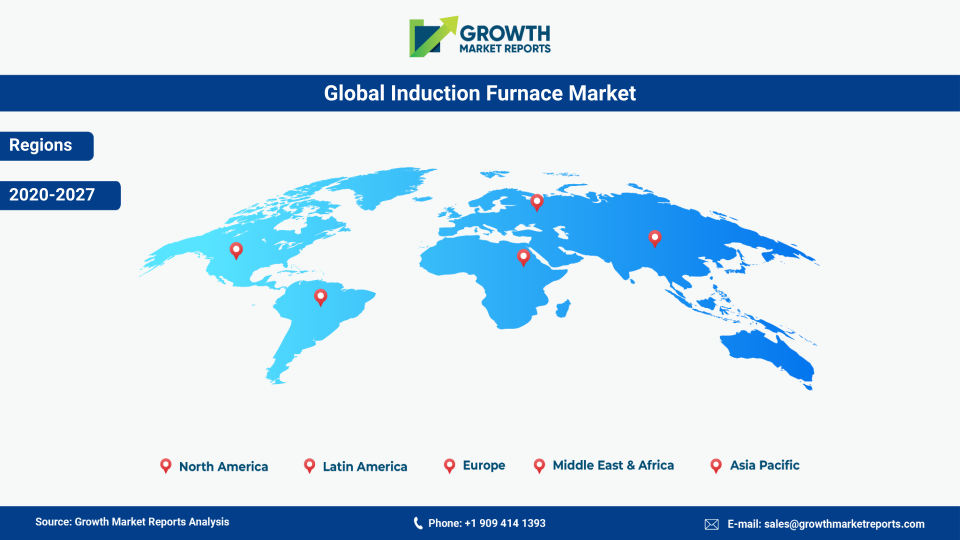
Regionally, Asia Pacific dominates the induction furnace market, accounting for the largest share in 2024, followed by Europe and North America. The region's leadership can be attributed to its vast manufacturing base, strong demand for steel and non-ferrous metals, and substantial investments in industrial modernization. Europe is also a significant market, driven by stringent environmental standards and the presence of advanced metal processing industries. North America, while mature, continues to witness steady growth due to technological upgrades and the ongoing shift towards sustainable production methods. The Middle East & Africa and Latin America are emerging as promising markets, supported by infrastructure development and rising investments in the mining and metals sectors.
The induction furnace market is segmented by product type into Coreless Induction Furnaces and Channel Induction Furnaces. Coreless induction furnaces are the most widely used type, owing to their versatility, high melting efficiency, and ability to process a wide range of metals and alloys. These furnaces are particularly favored in foundries and metal processing plants for their rapid heating, homogeneous mixing, and precise temperature control. Their design allows for easy charging and tapping, making them ideal for batch operations and frequent alloy changes. The coreless segment has witnessed significant technological advancements, including improved coil designs, enhanced refractory materials, and integration with digital control systems, all of which contribute to higher productivity and lower operational costs.
Channel induction furnaces, on the other hand, are typically used for holding and superheating molten metal rather than primary melting. Their unique design, featuring an iron core and a channel-shaped induction coil, enables continuous operation and efficient energy transfer, making them suitable for large-scale, uninterrupted metal processing applications. Channel furnaces are particularly valued in steel plants and large foundries for their ability to maintain molten metal at a consistent temperature over extended periods, thereby supporting seamless casting and forging operations. The adoption of channel induction furnaces is growing in regions with high-volume metal production, as they offer significant energy savings and reduced maintenance requirements compared to traditional holding furnaces.
The choice between coreless and channel induction furnaces is largely influenced by the specific requirements of the application, such as the type of metal being processed, the desired production volume, and the operational workflow. Coreless furnaces are preferred for flexibility and rapid turnaround, while channel furnaces excel in scenarios requiring continuous, large-scale metal handling. Both types are benefiting from ongoing research and development efforts aimed at enhancing energy efficiency, reducing downtime, and improving process control. Manufacturers are increasingly offering customized solutions tailored to the unique needs of different industries, further expanding the adoption of induction furnace technologies across diverse end-user segments.
Aluminum casting processes are also witnessing advancements with the introduction of the Electromagnetic Stirrer for Aluminum Casting. This technology enhances the quality of aluminum castings by inducing a controlled stirring motion within the molten metal, ensuring homogeneity and reducing defects. The electromagnetic stirrer's ability to improve the microstructure of aluminum alloys is crucial for industries demanding lightweight and high-strength materials, such as automotive and aerospace sectors. By optimizing the distribution of alloying elements and minimizing segregation, electromagnetic stirrers contribute to the production of superior aluminum components. As the demand for high-performance aluminum products continues to grow, the role of electromagnetic stirring in casting processes is becoming increasingly significant.
Technological innovation is a key differentiator in the product type segment, with leading players investing heavily in the development of advanced induction heating systems. Features such as automated charging, remote diagnostics, and real-time process monitoring are becoming standard in new-generation furnaces, enabling users to achieve higher throughput, better quality control, and lower environmental impact. The integration of Industry 4.0 principles, including IoT connectivity and data analytics, is also transforming the way induction furnaces are operated and maintained, paving the way for smarter, more efficient metal processing solutions. As a result, the product type segment is expected to witness sustained growth and diversification over the forecast period.
| Attributes | Details |
| Report Title | Induction Furnace Market Research Report 2033 |
| By Product Type | Coreless Induction Furnace, Channel Induction Furnace |
| By Application | Steelmaking, Copper, Aluminum, Zinc, Precious Metals, Others |
| By End-User | Foundries, Steel Plants, Metal Processing, Automotive, Aerospace, Others |
| By Capacity | Up to 1 Ton, 1-10 Tons, 10-20 Tons, Above 20 Tons |
| Regions Covered | North America, Europe, APAC, Latin America, MEA |
| Base Year | 2024 |
| Historic Data | 2018-2023 |
| Forecast Period | 2025-2033 |
| Number of Pages | 279 |
| Number of Tables & Figures | 396 |
| Customization Available | Yes, the report can be customized as per your need. |
The application segment of the induction furnace market is highly diverse, encompassing Steelmaking, Copper, Aluminum, Zinc, Precious Metals, and Others. Steelmaking represents the largest application area, driven by the massive demand for steel in construction, automotive, machinery, and infrastructure projects worldwide. Induction furnaces are increasingly being adopted in steel mini-mills and specialty steel plants for their ability to produce high-quality steel with lower emissions and energy consumption compared to conventional methods. The flexibility of induction furnaces allows for the melting of various steel grades and the efficient recycling of scrap, making them an integral part of modern steel production.
Copper and aluminum processing are also significant application areas, benefiting from the excellent heat transfer and precise control offered by induction furnaces. In the copper segment, induction furnaces are used for both primary smelting and secondary recycling, supporting the production of pure copper and copper alloys for electrical, construction, and industrial applications. The aluminum segment is witnessing robust growth, fueled by the rising demand for lightweight materials in automotive, aerospace, and packaging industries. Induction furnaces enable efficient melting and alloying of aluminum, minimizing oxidation losses and ensuring consistent quality.
The processing of zinc and precious metals, such as gold, silver, and platinum, represents another important application segment. Induction furnaces are preferred for these metals due to their ability to provide controlled, contamination-free melting environments, which are essential for producing high-purity products. The precious metals segment, in particular, is experiencing increased adoption of induction furnaces in jewelry manufacturing, electronics, and investment casting, where quality and precision are paramount. Additionally, the "Others" category includes a wide range of specialty metals and alloys, such as nickel, titanium, and rare earth elements, further highlighting the versatility of induction furnace technology.
The application landscape is evolving rapidly, with growing emphasis on recycling and sustainable resource management. Induction furnaces are playing a critical role in enabling closed-loop metal recycling systems, where scrap and end-of-life products are efficiently melted and reused in new manufacturing processes. This trend is particularly pronounced in regions with stringent environmental regulations and ambitious circular economy goals. The ability of induction furnaces to handle diverse feedstocks and deliver consistent quality is driving their adoption across a broad spectrum of metal processing applications, positioning them as a cornerstone of the modern metallurgical industry.
The end-user segment of the induction furnace market includes Foundries, Steel Plants, Metal Processing, Automotive, Aerospace, and Others. Foundries represent a major end-user group, leveraging induction furnaces for the melting and casting of ferrous and non-ferrous metals. The foundry sector values induction furnaces for their flexibility, rapid melting cycles, and ability to produce high-quality castings with minimal impurities. The shift towards automated and digitally controlled foundry operations is further boosting the demand for advanced induction furnace systems, as manufacturers seek to improve efficiency, reduce labor costs, and enhance product consistency.
Steel plants are another key end-user, particularly in regions with large-scale steel production and recycling activities. Induction furnaces are increasingly being integrated into steel mini-mills and specialty steel facilities, where they are used for melting scrap, refining alloys, and producing high-grade steel products. The automotive and aerospace industries are also significant end-users, driven by the need for lightweight, high-performance metal components. Induction furnaces enable the precise melting and alloying of aluminum, magnesium, and titanium, supporting the production of critical parts for vehicles and aircraft.
The metal processing segment encompasses a wide range of activities, including the production of copper, aluminum, zinc, and other non-ferrous metals. Induction furnaces are widely used in this segment for their ability to deliver consistent, high-purity melts and support a variety of downstream processing operations, such as casting, extrusion, and rolling. The adoption of induction furnaces in metal processing is being driven by the need for energy efficiency, process flexibility, and compliance with environmental regulations.
Other end-users include electronics manufacturers, jewelry producers, and companies involved in the production of specialty alloys and advanced materials. These industries require precise control over melting conditions and material composition, making induction furnaces an ideal choice for their operations. The growing trend towards customization and small-batch production in advanced manufacturing sectors is also creating new opportunities for induction furnace suppliers, as companies seek flexible, scalable solutions that can be tailored to specific applications and product requirements.
The capacity segment of the induction furnace market is categorized into Up to 1 Ton, 1-10 Tons, 10-20 Tons, and Above 20 Tons. Furnaces with a capacity of up to 1 ton are primarily used in small foundries, research laboratories, and specialty metal processing applications. These compact units offer high flexibility and are ideal for producing small batches of alloys, prototypes, and custom castings. The demand for small-capacity induction furnaces is being driven by the growth of niche manufacturing sectors, such as medical devices, precision engineering, and jewelry, where quality and precision are critical.
The 1-10 tons capacity segment represents a significant share of the market, catering to medium-sized foundries and metal processing plants. These furnaces strike a balance between throughput and operational flexibility, making them suitable for a wide range of applications, including automotive parts, machinery components, and industrial castings. The adoption of 1-10 ton induction furnaces is being fueled by the need for efficient, cost-effective melting solutions that can handle diverse feedstocks and support frequent alloy changes.
Furnaces with a capacity of 10-20 tons are typically used in larger foundries and steel plants, where high-volume production and continuous operation are essential. These units are designed for heavy-duty applications, offering robust performance, advanced process control, and efficient energy utilization. The 10-20 tons segment is witnessing increased investments in automation and digitalization, as manufacturers seek to optimize production workflows and minimize downtime.
The above 20 tons capacity segment caters to the largest-scale metal processing operations, including integrated steel mills and major industrial plants. These high-capacity furnaces are engineered for maximum throughput, reliability, and energy efficiency, supporting the production of large steel billets, ingots, and other bulk metal products. The demand for above 20 ton induction furnaces is particularly strong in regions with extensive infrastructure development and large-scale manufacturing activities, such as Asia Pacific and the Middle East. The trend towards consolidation and modernization in the metal industry is expected to drive further growth in this segment over the forecast period.
The induction furnace market presents several compelling opportunities for growth and innovation. One of the most significant opportunities lies in the ongoing transition towards sustainable manufacturing and the circular economy. As industries worldwide seek to reduce their environmental footprint and comply with stricter emissions regulations, the demand for energy-efficient, low-emission melting technologies is expected to surge. Induction furnaces, with their ability to support clean, flexible, and high-quality metal production, are well-positioned to capitalize on this trend. Manufacturers can further enhance their market position by developing advanced furnace solutions that integrate digital controls, automation, and IoT connectivity, enabling smarter, more efficient operations and facilitating predictive maintenance and process optimization.
Another major opportunity is the rising demand for specialty alloys and advanced materials in high-growth sectors such as electric vehicles, renewable energy, aerospace, and electronics. These industries require precise control over material composition and melting conditions, creating a strong need for induction furnaces capable of handling complex metallurgical processes. The shift towards lightweight and high-performance materials is also driving the adoption of induction furnaces for aluminum, magnesium, and titanium processing. Additionally, the growing emphasis on metal recycling and resource efficiency is opening up new avenues for induction furnace suppliers, as companies seek solutions that can efficiently process a wide range of scrap and secondary materials.
However, the market also faces certain restraining factors that could impact its growth trajectory. One of the primary challenges is the high initial capital investment required for the installation and commissioning of advanced induction furnace systems. Small and medium-sized enterprises, in particular, may face financial constraints in adopting these technologies, especially in regions with limited access to financing or government support. Additionally, the availability of skilled labor for operating and maintaining sophisticated induction furnace equipment remains a concern in some markets. The presence of alternative melting technologies, such as electric arc furnaces and cupola furnaces, also poses competitive pressures, particularly in regions with established traditional metalworking industries. Addressing these challenges will require targeted efforts by manufacturers, policymakers, and industry stakeholders to promote awareness, provide training, and offer financial incentives for technology adoption.
Asia Pacific remains the dominant region in the global induction furnace market, accounting for more than 48% of the total market value in 2024, which translates to approximately USD 0.93 billion. The region's leadership is driven by rapid industrialization, urbanization, and robust growth in the manufacturing and infrastructure sectors, particularly in China, India, and Southeast Asian countries. These markets are witnessing significant investments in steel production, metal processing, and recycling facilities, all of which are fueling the demand for advanced induction furnace technologies. The strong focus on energy efficiency and environmental sustainability, combined with government initiatives to promote clean manufacturing, is further accelerating the adoption of induction furnaces in the region. Asia Pacific is also expected to register the highest CAGR of 7.1% during the forecast period, reflecting its dynamic growth potential.
Europe represents the second-largest market for induction furnaces, with a market size of around USD 0.54 billion in 2024. The region is characterized by a mature metalworking industry, stringent environmental regulations, and a strong emphasis on technological innovation. European manufacturers are at the forefront of adopting advanced induction furnace systems, integrating automation, digital controls, and IoT solutions to enhance operational efficiency and reduce emissions. The demand for high-quality steel, aluminum, and specialty alloys in automotive, aerospace, and engineering sectors is driving continuous investments in modern melting technologies. Germany, Italy, and France are among the key contributors to the European induction furnace market, supported by their well-established industrial base and focus on sustainable production practices.
North America, with a market value of approximately USD 0.32 billion in 2024, continues to witness steady growth in the induction furnace market. The region's metal processing and foundry sectors are undergoing significant modernization, with increasing adoption of energy-efficient and environmentally-friendly melting solutions. The United States and Canada are leading the way in integrating digitalization and automation into their manufacturing processes, creating new opportunities for induction furnace suppliers. The ongoing shift towards electric vehicles, renewable energy, and advanced manufacturing is also driving demand for high-performance metal components, further supporting market growth. Latin America and the Middle East & Africa, while accounting for smaller shares of the global market, are emerging as promising regions, driven by infrastructure development, mining activities, and investments in new metal processing facilities.
The global induction furnace market is highly competitive, characterized by the presence of both established multinational companies and innovative regional players. The competitive landscape is shaped by factors such as technological innovation, product quality, customization capabilities, and after-sales service. Leading companies are focused on developing advanced induction furnace solutions that offer superior energy efficiency, process control, and operational flexibility. The integration of automation, digital controls, and IoT connectivity has become a key differentiator, enabling manufacturers to offer value-added features such as remote monitoring, predictive maintenance, and real-time process optimization. Strategic partnerships, mergers and acquisitions, and investments in research and development are common strategies employed by market leaders to strengthen their market position and expand their global footprint.
In addition to product innovation, companies are increasingly emphasizing customer-centric approaches, offering tailored solutions that address the specific needs of different industries and applications. This includes customized furnace designs, process optimization services, and comprehensive training and support programs. The ability to provide end-to-end solutions, from initial consultation and system design to installation, commissioning, and ongoing maintenance, is becoming increasingly important in securing long-term customer relationships. As the market continues to evolve, companies that can deliver high-performance, reliable, and sustainable induction furnace solutions are expected to capture a larger share of the growing demand.
The competitive landscape also features a number of regional and niche players who specialize in specific product types, applications, or end-user segments. These companies often compete on the basis of cost, flexibility, and local market knowledge, catering to the unique requirements of small and medium-sized enterprises. The rise of Industry 4.0 and digitalization is creating new opportunities for collaboration and innovation, with technology providers, automation specialists, and software developers increasingly partnering with furnace manufacturers to deliver integrated, smart solutions.
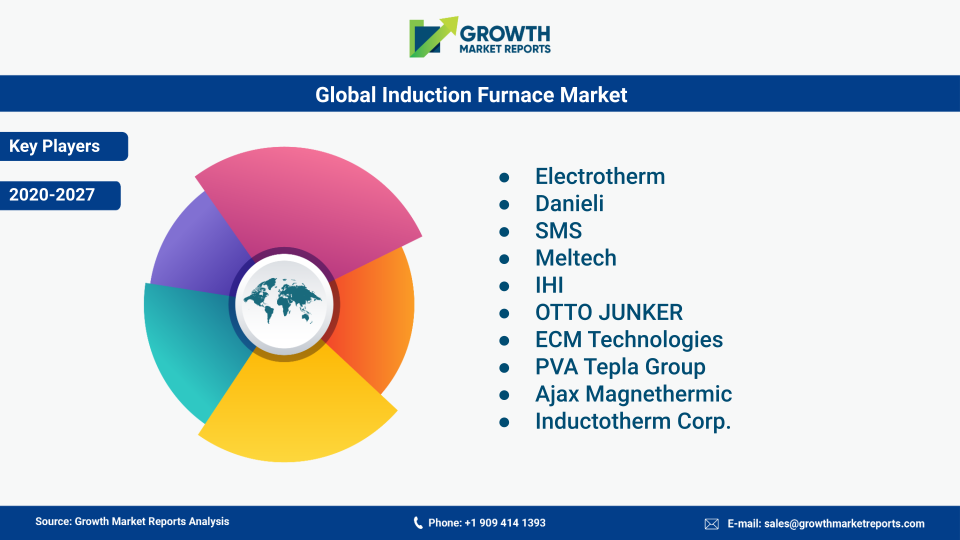
Some of the major companies in the global induction furnace market include Inductotherm Group, Electrotherm, ABP Induction Systems, Danieli Group, Meltech Limited, OTTO Junker GmbH, and Mechatherm International. Inductotherm Group is recognized as a global leader, offering a comprehensive range of induction melting, heating, and pouring systems for various industries. Electrotherm is known for its innovative furnace designs and strong presence in emerging markets, particularly in Asia. ABP Induction Systems and Danieli Group are renowned for their advanced automation and process control technologies, catering to large-scale steel and metal processing plants. Meltech Limited and OTTO Junker GmbH specialize in customized solutions for niche applications, while Mechatherm International focuses on high-capacity furnaces for the aluminum and non-ferrous metals industries. These companies are continuously investing in research and development, expanding their product portfolios, and enhancing their service offerings to maintain a competitive edge in the rapidly evolving induction furnace market.
The Induction Furnace market has been segmented on the basis of
Major Manufactures include Electrotherm, Danieli, SMS, Inductotherm Corporation, IHI, and OTTO JUNKER.
The companies operating in the industries such as steel, copper, aluminum, and zinc industry are the key end-users driving the market growth.
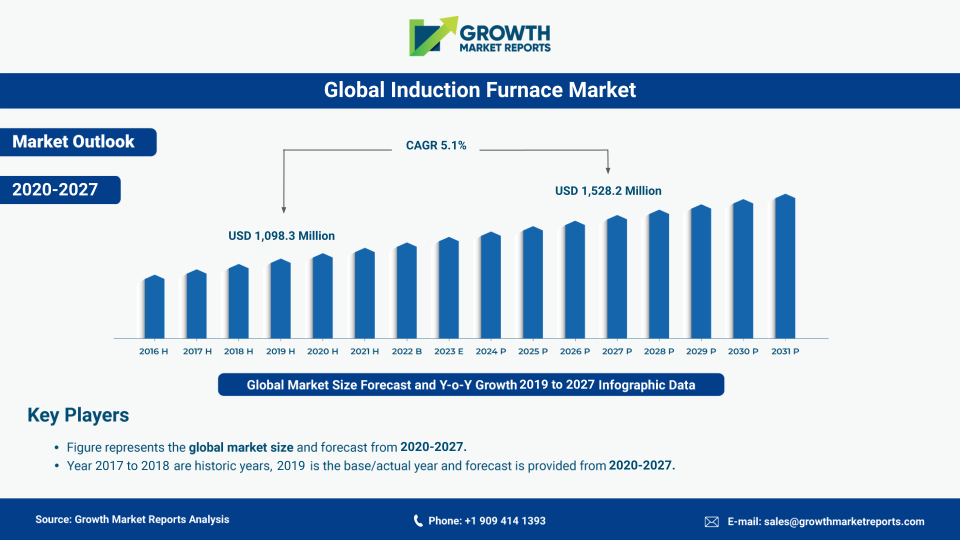
The base year considered for the global induction furnace market report is 2019. The complete analysis period is 2017 to 2027, wherein, 2017 & 2018 are the historic years and the forecast is provided from 2020 to 2027.
The market is expected to witness slow growth between 2019 and 2020 owing to the slight negative impact of COVID-19 pandemic on the induction furnace market.
Factors such as competitive strength and market positioning are key areas considered while selecting top companies to be profiled.
The growing demand for induction furnace for the various industries such as steel, copper, aluminum, zinc and increasing metallurgical operations are the factors driving the growth of the induction furnace market.
The report provides company market share analysis and volume data.
According to the Growth Market Reports report, the induction furnace market is likely to register a CAGR of 5.1% during forecast period 2020-2027, with an anticipated valuation of USD 1,528.2 million by the end of the 2027.
Yes, the report covers product specific information such as coreless induction furnace and channel induction furnace.
Additional company profiles can be provided on request.