Marine Winches Market Research Report 2033

Marine Winches Market Research Report 2033

Segments - by Product Type (Electric Winches, Hydraulic Winches, Manual Winches, Pneumatic Winches, Others), by Application (Mooring, Towing, Anchoring, Others), by End-User (Commercial Vessels, Offshore Platforms, Naval Vessels, Others), by Distribution Channel (Direct Sales, Distributors, Online Sales, Others)

https://growthmarketreports.com/Raksha
Author : Raksha Sharma
https://growthmarketreports.com/Vaibhav
Fact-checked by : V. Chandola
https://growthmarketreports.com/Shruti
Editor : Shruti Bhat

Upcoming | Report ID :AD-109 | 4.6 Rating | 88 Reviews | 250 Pages | Format : Docx PDF

Report Description


Marine Winches Market Outlook

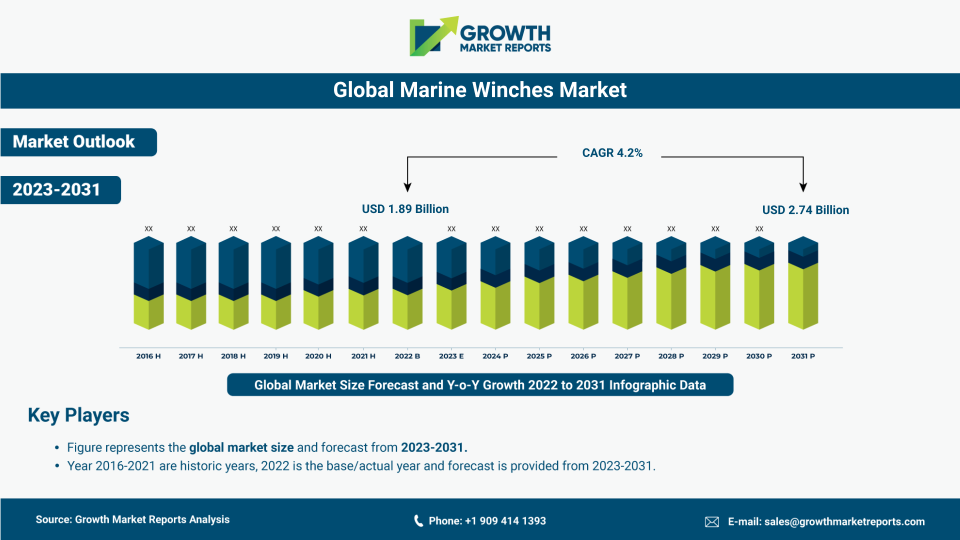
As per our latest research, the global marine winches market size in 2024 stands at USD 2.85 billion, reflecting robust demand across commercial and naval marine operations. The market is poised to expand at a CAGR of 5.7% from 2025 to 2033, reaching a projected value of USD 4.73 billion by 2033. This growth is primarily driven by the increasing adoption of advanced winching solutions across offshore platforms, commercial vessels, and naval fleets, coupled with ongoing technological advancements and modernization initiatives in the maritime industry.

A key growth factor for the marine winches market is the rapid expansion of global maritime trade. The surge in international shipping activities, fueled by rising demand for commodities, energy resources, and consumer goods, is compelling vessel operators to invest in reliable and high-performance winching systems. These winches are critical for cargo handling, mooring, towing, and anchoring operations, ensuring vessel safety and operational efficiency. Additionally, the growing size and complexity of modern vessels necessitate the deployment of technologically advanced winches, further accelerating market growth. The integration of automation and remote monitoring features into winching systems is also enhancing operational precision and reducing manual intervention, which aligns with the industryÂ’s focus on safety and efficiency.

Another significant driver is the proliferation of offshore oil and gas exploration activities. With the depletion of onshore reserves and the increasing focus on deepwater and ultra-deepwater exploration, offshore platforms are being equipped with sophisticated marine winches for tasks such as mooring, anchoring, and subsea operations. The rising investments in offshore wind energy projects, particularly in Europe and Asia Pacific, are also creating new avenues for market growth. These projects require robust winching solutions to handle heavy equipment and ensure the stability of floating structures, thereby expanding the marketÂ’s end-user base. Moreover, stringent safety regulations and the need for compliance with international maritime standards are prompting operators to upgrade to advanced winching systems.

Technological innovation remains at the forefront of the marine winches marketÂ’s expansion. Manufacturers are focusing on the development of energy-efficient and environmentally friendly winches, including electric and hybrid models, to address the growing emphasis on sustainability within the maritime sector. The integration of smart technologies, such as IoT-enabled monitoring and predictive maintenance, is enabling real-time performance tracking and reducing downtime. These advancements are not only improving the reliability and lifespan of winching systems but also reducing operational costs for end-users. Furthermore, the increasing adoption of modular and customizable winch designs is allowing operators to tailor solutions to specific vessel requirements, enhancing market penetration across diverse marine applications.

The Capstan Winch, a pivotal component in marine operations, is renowned for its ability to handle heavy loads with precision and reliability. These winches are particularly favored in scenarios where space is limited, and a compact yet powerful solution is required. The design of a Capstan Winch allows for continuous rope winding, making it ideal for tasks such as mooring and anchoring. Its versatility extends to various marine applications, including fishing vessels and research ships, where the need for controlled and efficient rope handling is paramount. As the marine industry continues to evolve, the demand for Capstan Winches is expected to grow, driven by their efficiency and adaptability in diverse operational settings.

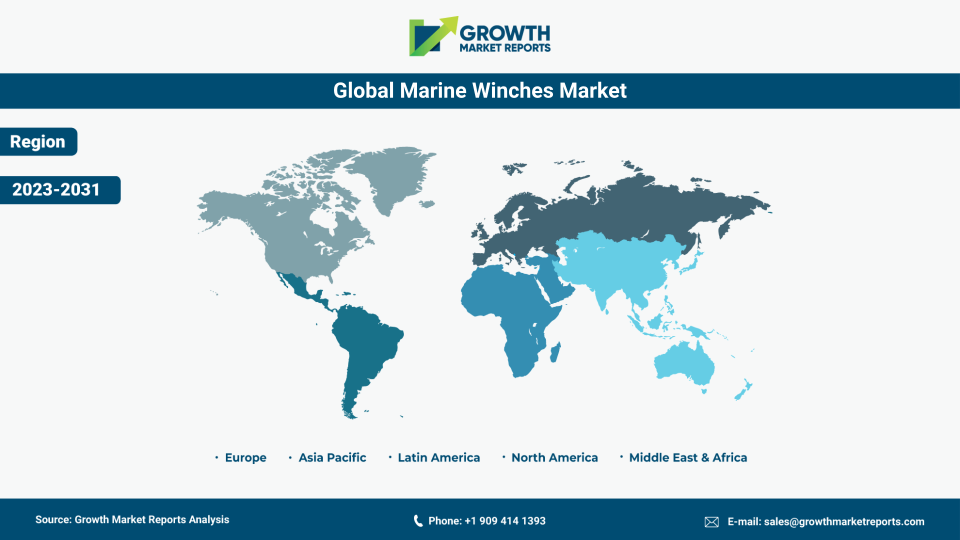
From a regional perspective, Asia Pacific continues to dominate the marine winches market, accounting for the largest revenue share in 2024. This dominance is attributed to the regionÂ’s extensive shipbuilding activities, burgeoning offshore exploration projects, and the expanding commercial shipping fleet. North America and Europe are also significant contributors, driven by technological advancements, stringent regulatory frameworks, and the presence of major naval forces. Meanwhile, the Middle East & Africa and Latin America are witnessing steady growth, supported by investments in port infrastructure and offshore energy projects. The marketÂ’s regional dynamics are shaped by factors such as economic development, maritime trade volumes, and government initiatives to modernize port and vessel infrastructure.

Global Marine Winches Industry Outlook

Product Type Analysis

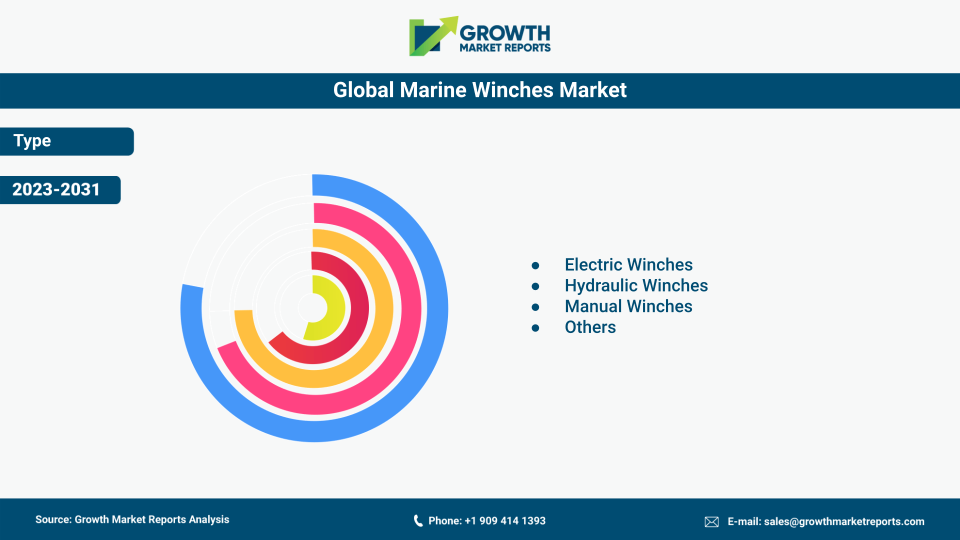
The marine winches market is segmented by product type into electric winches, hydraulic winches, manual winches, pneumatic winches, and others. Electric winches have gained significant traction in recent years due to their energy efficiency, ease of operation, and low maintenance requirements. Their adoption is particularly prominent in commercial vessels and offshore platforms, where reliability and automation are paramount. The integration of advanced control systems and remote operation capabilities in electric winches is enhancing crew safety and operational precision, making them a preferred choice for modern maritime applications. The shift towards electrification in the maritime sector, driven by environmental regulations and the pursuit of sustainability, is further propelling the demand for electric winches.

Hydraulic winches continue to hold a substantial market share, especially in heavy-duty applications such as offshore drilling, towing, and anchoring. These winches are valued for their high load-bearing capacity, robustness, and ability to operate in harsh marine environments. Hydraulic winches are commonly used on large commercial vessels, naval ships, and offshore platforms where demanding operational conditions necessitate reliable and powerful winching solutions. Ongoing advancements in hydraulic system design, including the development of compact and energy-efficient models, are expanding their applicability across a broader range of vessel types and marine operations.

Manual winches, while representing a smaller segment, remain essential for specific applications where simplicity, portability, and cost-effectiveness are prioritized. These winches are widely used on small boats, fishing vessels, and in emergency situations where power sources may be unavailable. The demand for manual winches is sustained by their ease of use, minimal maintenance requirements, and affordability. However, their market share is gradually declining as vessel operators increasingly opt for automated and powered winching solutions that offer greater efficiency and safety.

Pneumatic winches are gaining traction in niche applications, particularly in environments where explosion-proof equipment is required, such as oil and gas platforms. These winches are powered by compressed air and are valued for their safety, reliability, and ability to operate in hazardous conditions. The adoption of pneumatic winches is being driven by the expanding offshore oil and gas sector, as well as the need for specialized equipment in challenging marine environments. Manufacturers are focusing on enhancing the performance and durability of pneumatic winches to cater to the evolving needs of the maritime industry.

The "others" segment encompasses specialized winches, including hybrid models and custom-designed solutions tailored to unique vessel requirements. The growing demand for modular and adaptable winching systems is encouraging manufacturers to innovate and develop products that can be customized for specific applications. This trend is particularly evident in the offshore wind energy sector and specialized research vessels, where unique operational challenges necessitate bespoke winching solutions. Overall, the product type segment is characterized by ongoing innovation, with manufacturers striving to balance performance, efficiency, and sustainability to meet the diverse needs of the marine industry.

Report Scope

Attributes Details
Report Title Marine Winches Market Research Report 2033
By Product Type Electric Winches, Hydraulic Winches, Manual Winches, Pneumatic Winches, Others
By Application Mooring, Towing, Anchoring, Others
By End-User Commercial Vessels, Offshore Platforms, Naval Vessels, Others
By Distribution Channel Direct Sales, Distributors, Online Sales, Others
Regions Covered North America, Europe, APAC, Latin America, MEA
Base Year 2024
Historic Data 2018-2023
Forecast Period 2025-2033
Number of Pages 250
Number of Tables & Figures 269
Customization Available Yes, the report can be customized as per your need.

Application Analysis

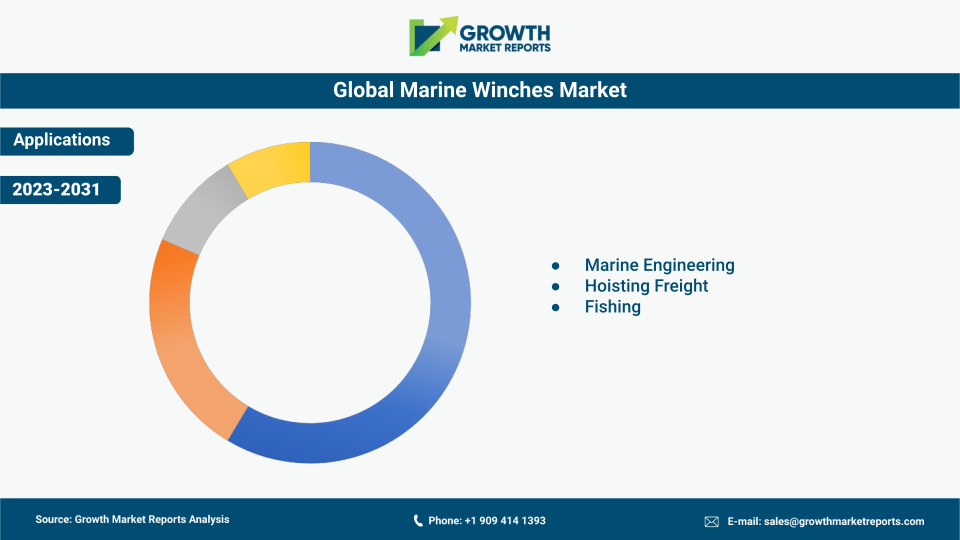
The marine winches market is segmented by application into mooring, towing, anchoring, and others. Mooring winches dominate the market, driven by the critical role they play in securing vessels at ports, offshore platforms, and during loading and unloading operations. The increasing size of modern vessels and the complexity of mooring operations are necessitating the adoption of advanced, automated mooring winches equipped with remote monitoring and control capabilities. The emphasis on safety, operational efficiency, and compliance with international maritime regulations is further boosting the demand for state-of-the-art mooring winching systems.

Towing winches are essential for maneuvering vessels, assisting in docking, and supporting salvage operations. The growth in global shipping traffic and the expansion of port infrastructure are driving the demand for reliable towing winches that can handle a wide range of vessel sizes and types. Technological advancements, such as the integration of load monitoring sensors and automated tension control, are enhancing the performance and safety of towing winches. The increasing use of tugboats and support vessels in offshore oil and gas exploration is also contributing to the steady growth of the towing winches segment.

Anchoring winches are vital for securing vessels in position during operations such as loading, unloading, or offshore drilling. The growing number of offshore platforms and the expansion of deepwater exploration activities are fueling the demand for robust and reliable anchoring winches. These winches are designed to withstand extreme marine conditions and provide precise control over anchor deployment and retrieval. Innovations in anchoring winch technology, including the development of high-capacity and corrosion-resistant models, are enabling operators to enhance vessel safety and operational efficiency.

The "others" application segment includes specialized winching operations such as cable handling, rescue operations, and scientific research. The increasing deployment of research vessels, offshore construction platforms, and subsea exploration equipment is creating new opportunities for specialized winching solutions. Manufacturers are responding by developing custom-designed winches that can be integrated with advanced control systems and tailored to meet the unique requirements of these applications. The growing focus on marine research, environmental monitoring, and offshore renewable energy projects is expected to drive further innovation and growth in this segment.

Overall, the application segment of the marine winches market is characterized by a strong emphasis on safety, reliability, and operational efficiency. The adoption of advanced winching solutions across diverse marine operations is being driven by the need to comply with stringent regulatory standards and to enhance the performance and safety of vessel operations. As the maritime industry continues to evolve, the demand for innovative and adaptable winching systems is expected to remain robust across all application segments.

End-User Analysis

The marine winches market is segmented by end-user into commercial vessels, offshore platforms, naval vessels, and others. Commercial vessels represent the largest end-user segment, accounting for a significant share of market revenue in 2024. The growth of global maritime trade, the expansion of container shipping fleets, and the increasing demand for bulk carriers and tankers are driving the adoption of advanced winching systems in commercial shipping. Vessel operators are prioritizing the integration of automated and energy-efficient winches to enhance cargo handling efficiency, reduce operational costs, and comply with environmental regulations.

Offshore platforms, including oil and gas rigs and offshore wind farms, are major consumers of marine winches. The increasing focus on offshore energy exploration and the expansion of renewable energy projects are fueling the demand for high-capacity and reliable winching solutions. Offshore platforms require specialized winches for tasks such as mooring, anchoring, and subsea equipment handling, often under challenging environmental conditions. The adoption of smart winching systems with remote monitoring and predictive maintenance capabilities is enabling operators to optimize performance and minimize downtime, thereby supporting the growth of this segment.

Naval vessels constitute another important end-user segment, driven by ongoing modernization programs and the need to enhance the operational capabilities of naval fleets. Naval vessels require robust and technologically advanced winching systems for a range of applications, including mooring, towing, and rescue operations. The increasing investments in defense infrastructure, particularly in North America, Europe, and Asia Pacific, are boosting the demand for high-performance winches that can meet stringent military standards. The integration of advanced control systems and the focus on crew safety are key trends shaping the adoption of winching solutions in the naval sector.

The "others" end-user segment includes research vessels, fishing boats, and pleasure craft, each with unique winching requirements. The growing interest in marine research, environmental monitoring, and recreational boating is creating new opportunities for specialized winching solutions. Manufacturers are developing custom-designed winches that cater to the specific needs of these vessels, including compact and portable models for small boats and high-precision winches for research applications. The increasing deployment of autonomous and remotely operated vessels is also expected to drive innovation and growth in this segment.

Across all end-user segments, the demand for marine winches is being shaped by the need for increased operational efficiency, safety, and regulatory compliance. The ongoing shift towards automation, electrification, and smart technologies is enabling vessel operators to optimize performance, reduce costs, and enhance the safety and reliability of marine operations. As the maritime industry continues to evolve, the adoption of advanced winching solutions is expected to remain a key priority for end-users across commercial, offshore, naval, and specialized marine applications.

Distribution Channel Analysis

The marine winches market is segmented by distribution channel into direct sales, distributors, online sales, and others. Direct sales remain the most prominent distribution channel, particularly for large-scale and customized winching solutions. Manufacturers often engage directly with shipbuilders, vessel operators, and offshore platform owners to provide tailored winching systems that meet specific operational requirements. The direct sales channel enables manufacturers to offer comprehensive after-sales support, maintenance services, and technical assistance, thereby enhancing customer satisfaction and fostering long-term relationships.

Distributors play a crucial role in expanding market reach, particularly in regions with a fragmented maritime industry landscape. Distributors facilitate the availability of a wide range of winching products, including standard and off-the-shelf models, to small and medium-sized vessel operators. They also provide value-added services such as installation, maintenance, and spare parts supply, which are essential for ensuring the reliability and longevity of winching systems. The distributor channel is particularly important in emerging markets, where manufacturers may lack a direct presence.

Online sales are gaining traction as digitalization transforms the procurement processes in the maritime industry. E-commerce platforms and manufacturer websites are increasingly being used to market and sell marine winches, particularly smaller and standardized models. The convenience of online purchasing, coupled with the availability of detailed product information and customer reviews, is driving the adoption of this channel among vessel operators and shipyards. The COVID-19 pandemic accelerated the shift towards online sales, as travel restrictions and supply chain disruptions prompted stakeholders to explore digital procurement options.

The "others" distribution channel segment includes third-party agents, system integrators, and specialized marine equipment suppliers. These channels are particularly relevant for niche applications and customized winching solutions that require specialized expertise and integration with other marine systems. System integrators, for example, play a key role in the deployment of advanced winching systems on offshore platforms and research vessels, ensuring seamless integration with onboard control systems and equipment.

Overall, the distribution channel landscape of the marine winches market is evolving in response to changing customer preferences and technological advancements. Manufacturers are increasingly focusing on enhancing their digital presence, expanding their distributor networks, and offering comprehensive support services to cater to the diverse needs of vessel operators. The growing emphasis on customer-centric solutions and the adoption of omnichannel distribution strategies are expected to drive further growth and innovation in this segment.

Opportunities & Threats

The marine winches market presents significant opportunities for growth, particularly in the realm of technological innovation and sustainability. The increasing adoption of electric and hybrid winches, driven by the need to reduce carbon emissions and comply with stringent environmental regulations, is creating new avenues for manufacturers. The integration of smart technologies, such as IoT-enabled sensors and predictive maintenance, is enabling real-time monitoring and performance optimization, thereby enhancing the value proposition of advanced winching solutions. Additionally, the expansion of offshore wind energy projects and the growing focus on deepwater exploration are generating strong demand for specialized winching systems that can operate in challenging marine environments. The ongoing digitalization of the maritime industry, coupled with the rise of autonomous and remotely operated vessels, is expected to further stimulate innovation and market growth.

Another major opportunity lies in the expansion of emerging markets, particularly in Asia Pacific, Latin America, and the Middle East & Africa. Rapid economic development, increased investments in port infrastructure, and the modernization of commercial and naval fleets are creating favorable conditions for market expansion. Manufacturers that can offer cost-effective, reliable, and technologically advanced winching solutions tailored to the specific needs of these regions are well-positioned to capitalize on these growth opportunities. Strategic partnerships, local manufacturing, and the establishment of robust distribution networks are key strategies for penetrating these high-potential markets. Furthermore, the growing emphasis on crew safety and operational efficiency is driving demand for winching systems equipped with advanced safety features and automation capabilities.

Despite the positive outlook, the marine winches market faces several restraining factors. The high initial cost of advanced winching systems, particularly those equipped with automation and smart technologies, can be a barrier for small and medium-sized vessel operators. Additionally, the complexity of integrating new winching solutions with existing vessel infrastructure may pose challenges, particularly for older fleets. Economic uncertainties, fluctuations in raw material prices, and supply chain disruptions can also impact market growth. Moreover, stringent regulatory requirements and the need for continuous compliance with international maritime standards may increase operational costs and complexity for manufacturers and end-users alike.

Regional Outlook

The Asia Pacific region dominates the global marine winches market, accounting for the largest share of global revenue in 2024, with a market size of approximately USD 1.12 billion. This dominance is driven by the regionÂ’s robust shipbuilding industry, expanding commercial shipping fleet, and significant investments in offshore oil and gas exploration. China, Japan, and South Korea are the leading contributors, supported by government initiatives to modernize port infrastructure and enhance maritime capabilities. The region is also witnessing strong growth in offshore wind energy projects, particularly in China and Taiwan, which is further boosting the demand for advanced winching solutions. The Asia Pacific market is expected to grow at a CAGR of 6.2% from 2025 to 2033, outpacing other regions and maintaining its leadership position.

North America is the second-largest market, with a market size of USD 650 million in 2024, driven by technological advancements, stringent regulatory frameworks, and the presence of major naval forces. The United States is the primary contributor, supported by ongoing investments in defense modernization, port infrastructure, and offshore energy exploration. The adoption of advanced winching solutions equipped with automation, remote monitoring, and safety features is particularly notable in the region. The growing focus on sustainability and the transition towards electric and hybrid winches are also shaping market dynamics in North America. The region is expected to maintain steady growth over the forecast period, supported by continued investments in maritime infrastructure and technology.

Europe accounts for a market size of USD 580 million in 2024, characterized by a strong focus on sustainability, innovation, and compliance with stringent environmental regulations. The region is a leader in offshore wind energy projects, particularly in the North Sea, which is driving demand for specialized winching solutions. Major shipbuilding nations such as Germany, Norway, and the Netherlands are investing in advanced winching technologies to enhance vessel efficiency and safety. The presence of a large commercial shipping fleet and the ongoing modernization of naval forces are further supporting market growth in Europe. The Middle East & Africa and Latin America, with market sizes of USD 300 million and USD 200 million respectively in 2024, are witnessing steady growth, supported by investments in port development, offshore exploration, and the expansion of regional shipping fleets. These regions offer significant untapped potential for market expansion, particularly as economic development and maritime trade volumes continue to rise.

Marine Winches Market Statistics

Competitor Outlook

The marine winches market is characterized by intense competition, with a mix of global and regional players vying for market share. Leading manufacturers are focusing on innovation, product differentiation, and strategic partnerships to strengthen their market positions. The competitive landscape is shaped by the need to offer technologically advanced, reliable, and cost-effective winching solutions that cater to the diverse requirements of commercial, offshore, and naval end-users. Companies are investing heavily in research and development to introduce new products equipped with smart technologies, energy-efficient designs, and enhanced safety features. The ability to provide comprehensive after-sales support, maintenance services, and technical assistance is also a key differentiator in the market.

Strategic collaborations and mergers and acquisitions are common strategies employed by major players to expand their product portfolios, enhance technological capabilities, and access new markets. Manufacturers are increasingly focusing on the development of modular and customizable winching systems that can be tailored to specific vessel requirements. The shift towards digitalization and the integration of IoT-enabled monitoring and predictive maintenance features are enabling companies to offer value-added solutions that enhance operational efficiency and reduce downtime for end-users. The growing emphasis on sustainability and environmental compliance is also prompting manufacturers to develop electric and hybrid winches that reduce carbon emissions and energy consumption.

The market is also witnessing the entry of new players, particularly in emerging markets, who are leveraging local manufacturing capabilities and cost advantages to compete with established brands. These new entrants are focusing on offering affordable and reliable winching solutions tailored to the needs of small and medium-sized vessel operators. However, established players continue to dominate the high-end segment of the market, supported by their extensive product portfolios, strong brand reputation, and global distribution networks. The ability to provide end-to-end solutions, including system integration and technical support, remains a critical factor for success in the competitive marine winches market.

Some of the major companies operating in the marine winches market include MacGregor (Cargotec Corporation), Rolls-Royce Holdings plc, Ingersoll Rand Inc., TWG (The Winch Group), Braden Winch (PACCAR Inc.), Huisman Equipment B.V., Markey Machinery, Dinamic Oil, and Konecranes. MacGregor, a subsidiary of Cargotec, is renowned for its advanced winching solutions for commercial and offshore vessels, offering a comprehensive range of electric and hydraulic winches. Rolls-Royce Holdings plc is a leading provider of marine propulsion and deck machinery, including high-performance winching systems for naval and commercial applications. Ingersoll Rand Inc. and TWG are prominent players in the hydraulic and pneumatic winch segments, catering to a wide range of marine and offshore applications.

Braden Winch, a subsidiary of PACCAR Inc., specializes in heavy-duty winching solutions for commercial vessels and offshore platforms, while Huisman Equipment B.V. is known for its innovative winch designs tailored to the needs of offshore energy projects. Markey Machinery has a strong reputation for custom-engineered winches for research vessels, naval ships, and offshore platforms. Dinamic Oil and Konecranes are also key players, offering a diverse portfolio of winching solutions for various marine applications. These companies are continuously investing in research and development to enhance product performance, reliability, and sustainability, ensuring they remain at the forefront of the rapidly evolving marine winches market.

Key Players

  • MacGregor
  • Konecranes
  • Rolls-Royce
  • TTS Group
  • Huisman Equipment
  • Ingersoll Rand
  • PALFINGER AG
  • DMT Marine Equipment
  • Adria Winch
  • Markey Machinery
  • Allied Marine & Industrial
  • Braden (PACCAR)
  • Dinamic Oil
  • Ibercisa Deck Machinery
  • Fukushima Ltd.
  • Rapp Marine
  • TWG (The Winch Group)
  • ACE Winches
  • Muir Engineering
  • Anchormax
Marine Winches Market Overview

Segments

The Marine Winches market has been segmented on the basis of

Product Type

  • Electric Winches
  • Hydraulic Winches
  • Manual Winches
  • Pneumatic Winches
  • Others

Application

  • Mooring
  • Towing
  • Anchoring
  • Others

End-User

  • Commercial Vessels
  • Offshore Platforms
  • Naval Vessels
  • Others

Distribution Channel

  • Direct Sales
  • Distributors
  • Online Sales
  • Others

Competitive Landscape

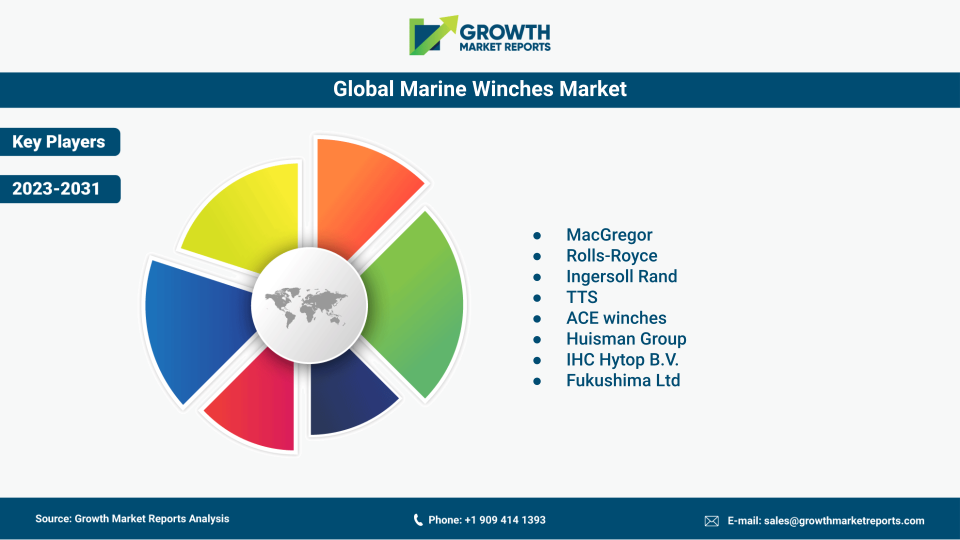
  • Key players in the market include MacGregor, Rolls-Royce, Ingersoll Rand, Fukushima Ltd, and TTS. These companies are considered as key manufacturers of marine winches based on their revenue, regional presence, research & development (R&D) activities, and supply chain management system.
  • The players are adopting key strategies such as acquisition, merger, and geographical expansion to strengthen their market position. For instance, in July 2019, MacGregor announced that it acquired the offshore and marine businesses of TTS Group ASA. The acquired businesses is expected to be integrated within MacGregor's operating structure.
  • In April 2019, Ingersoll Rand announced that it would spin off its industrial business and merge it with compressors & industrial pump producer Gardner Denver Holdings Inc. This strategy is expected to allow Ingersoll to focus on its high-margin business that possesses Trane and Thermo King Brand of heating, air conditioning, and transport refrigeration systems.
  • In July 2018, Rolls-Royce signed an agreement to sell its commercial marine business to KONGSBERG. KONGSBERG delivers high technology solutions and systems to the oil & gas, defense, aerospace, and merchant marine industries.
  • In February 2018, MacGregor announced that it acquired Rapp Marine Group (RMG) to strengthen its product portfolio for the research vessel and fishery segment. RMG consists of around 120 people with main locations in the US, Norway, and the UK. This acquisition is completed for an enterprise value of approximately EUR 16 million.

Marine Winches Market Key Players

Frequently Asked Questions

Opportunities include the adoption of electric/hybrid winches, smart technologies, and growth in emerging markets. Challenges include high initial costs, integration complexity, regulatory compliance, and supply chain disruptions.

Marine winches are distributed through direct sales, distributors, online sales, and specialized channels such as system integrators and marine equipment suppliers.

Major players include MacGregor (Cargotec), Rolls-Royce Holdings, Ingersoll Rand, TWG (The Winch Group), Braden Winch (PACCAR), Huisman Equipment, Markey Machinery, Dinamic Oil, and Konecranes.

Technological advancements such as automation, IoT-enabled monitoring, predictive maintenance, energy-efficient electric and hybrid winches, and modular/customizable designs are driving market growth.

Key end-users include commercial vessels, offshore platforms (oil & gas rigs, wind farms), naval vessels, research vessels, fishing boats, and pleasure craft.

Marine winches are primarily used for mooring, towing, anchoring, and specialized operations such as cable handling, rescue missions, and scientific research.

The main product types in the marine winches market are electric winches, hydraulic winches, manual winches, pneumatic winches, and specialized or hybrid winches.

Asia Pacific leads the marine winches market, accounting for the largest revenue share in 2024, driven by robust shipbuilding, offshore exploration, and a growing commercial shipping fleet.

The marine winches market is expected to grow at a CAGR of 5.7% from 2025 to 2033, reaching a projected value of USD 4.73 billion by 2033.

As of 2024, the global marine winches market is valued at USD 2.85 billion, reflecting strong demand across commercial, offshore, and naval marine operations.

Table Of Content

Chapter 1 Executive Summary
Chapter 2 Assumptions and Acronyms Used
Chapter 3 Research Methodology
Chapter 4 Marine Winches Market Overview
   4.1 Introduction
      4.1.1 Market Taxonomy
      4.1.2 Market Definition
      4.1.3 Macro-Economic Factors Impacting the Market Growth
   4.2 Marine Winches Market Dynamics
      4.2.1 Market Drivers
      4.2.2 Market Restraints
      4.2.3 Market Opportunity
   4.3 Marine Winches Market - Supply Chain Analysis
      4.3.1 List of Key Suppliers
      4.3.2 List of Key Distributors
      4.3.3 List of Key Consumers
   4.4 Key Forces Shaping the Marine Winches Market
      4.4.1 Bargaining Power of Suppliers
      4.4.2 Bargaining Power of Buyers
      4.4.3 Threat of Substitution
      4.4.4 Threat of New Entrants
      4.4.5 Competitive Rivalry
   4.5 Global Marine Winches Market Size & Forecast, 2023-2032
      4.5.1 Marine Winches Market Size and Y-o-Y Growth
      4.5.2 Marine Winches Market Absolute $ Opportunity

Chapter 5 Global Marine Winches Market Analysis and Forecast By Product Type
   5.1 Introduction
      5.1.1 Key Market Trends & Growth Opportunities By Product Type
      5.1.2 Basis Point Share (BPS) Analysis By Product Type
      5.1.3 Absolute $ Opportunity Assessment By Product Type
   5.2 Marine Winches Market Size Forecast By Product Type
      5.2.1 Electric Winches
      5.2.2 Hydraulic Winches
      5.2.3 Manual Winches
      5.2.4 Pneumatic Winches
      5.2.5 Others
   5.3 Market Attractiveness Analysis By Product Type

Chapter 6 Global Marine Winches Market Analysis and Forecast By Application
   6.1 Introduction
      6.1.1 Key Market Trends & Growth Opportunities By Application
      6.1.2 Basis Point Share (BPS) Analysis By Application
      6.1.3 Absolute $ Opportunity Assessment By Application
   6.2 Marine Winches Market Size Forecast By Application
      6.2.1 Mooring
      6.2.2 Towing
      6.2.3 Anchoring
      6.2.4 Others
   6.3 Market Attractiveness Analysis By Application

Chapter 7 Global Marine Winches Market Analysis and Forecast By End-User
   7.1 Introduction
      7.1.1 Key Market Trends & Growth Opportunities By End-User
      7.1.2 Basis Point Share (BPS) Analysis By End-User
      7.1.3 Absolute $ Opportunity Assessment By End-User
   7.2 Marine Winches Market Size Forecast By End-User
      7.2.1 Commercial Vessels
      7.2.2 Offshore Platforms
      7.2.3 Naval Vessels
      7.2.4 Others
   7.3 Market Attractiveness Analysis By End-User

Chapter 8 Global Marine Winches Market Analysis and Forecast By Distribution Channel
   8.1 Introduction
      8.1.1 Key Market Trends & Growth Opportunities By Distribution Channel
      8.1.2 Basis Point Share (BPS) Analysis By Distribution Channel
      8.1.3 Absolute $ Opportunity Assessment By Distribution Channel
   8.2 Marine Winches Market Size Forecast By Distribution Channel
      8.2.1 Direct Sales
      8.2.2 Distributors
      8.2.3 Online Sales
      8.2.4 Others
   8.3 Market Attractiveness Analysis By Distribution Channel

Chapter 9 Global Marine Winches Market Analysis and Forecast by Region
   9.1 Introduction
      9.1.1 Key Market Trends & Growth Opportunities By Region
      9.1.2 Basis Point Share (BPS) Analysis By Region
      9.1.3 Absolute $ Opportunity Assessment By Region
   9.2 Marine Winches Market Size Forecast By Region
      9.2.1 North America
      9.2.2 Europe
      9.2.3 Asia Pacific
      9.2.4 Latin America
      9.2.5 Middle East & Africa (MEA)
   9.3 Market Attractiveness Analysis By Region

Chapter 10 Coronavirus Disease (COVID-19) Impact 
   10.1 Introduction 
   10.2 Current & Future Impact Analysis 
   10.3 Economic Impact Analysis 
   10.4 Government Policies 
   10.5 Investment Scenario

Chapter 11 North America Marine Winches Analysis and Forecast
   11.1 Introduction
   11.2 North America Marine Winches Market Size Forecast by Country
      11.2.1 U.S.
      11.2.2 Canada
   11.3 Basis Point Share (BPS) Analysis by Country
   11.4 Absolute $ Opportunity Assessment by Country
   11.5 Market Attractiveness Analysis by Country
   11.6 North America Marine Winches Market Size Forecast By Product Type
      11.6.1 Electric Winches
      11.6.2 Hydraulic Winches
      11.6.3 Manual Winches
      11.6.4 Pneumatic Winches
      11.6.5 Others
   11.7 Basis Point Share (BPS) Analysis By Product Type 
   11.8 Absolute $ Opportunity Assessment By Product Type 
   11.9 Market Attractiveness Analysis By Product Type
   11.10 North America Marine Winches Market Size Forecast By Application
      11.10.1 Mooring
      11.10.2 Towing
      11.10.3 Anchoring
      11.10.4 Others
   11.11 Basis Point Share (BPS) Analysis By Application 
   11.12 Absolute $ Opportunity Assessment By Application 
   11.13 Market Attractiveness Analysis By Application
   11.14 North America Marine Winches Market Size Forecast By End-User
      11.14.1 Commercial Vessels
      11.14.2 Offshore Platforms
      11.14.3 Naval Vessels
      11.14.4 Others
   11.15 Basis Point Share (BPS) Analysis By End-User 
   11.16 Absolute $ Opportunity Assessment By End-User 
   11.17 Market Attractiveness Analysis By End-User
   11.18 North America Marine Winches Market Size Forecast By Distribution Channel
      11.18.1 Direct Sales
      11.18.2 Distributors
      11.18.3 Online Sales
      11.18.4 Others
   11.19 Basis Point Share (BPS) Analysis By Distribution Channel 
   11.20 Absolute $ Opportunity Assessment By Distribution Channel 
   11.21 Market Attractiveness Analysis By Distribution Channel

Chapter 12 Europe Marine Winches Analysis and Forecast
   12.1 Introduction
   12.2 Europe Marine Winches Market Size Forecast by Country
      12.2.1 Germany
      12.2.2 France
      12.2.3 Italy
      12.2.4 U.K.
      12.2.5 Spain
      12.2.6 Russia
      12.2.7 Rest of Europe
   12.3 Basis Point Share (BPS) Analysis by Country
   12.4 Absolute $ Opportunity Assessment by Country
   12.5 Market Attractiveness Analysis by Country
   12.6 Europe Marine Winches Market Size Forecast By Product Type
      12.6.1 Electric Winches
      12.6.2 Hydraulic Winches
      12.6.3 Manual Winches
      12.6.4 Pneumatic Winches
      12.6.5 Others
   12.7 Basis Point Share (BPS) Analysis By Product Type 
   12.8 Absolute $ Opportunity Assessment By Product Type 
   12.9 Market Attractiveness Analysis By Product Type
   12.10 Europe Marine Winches Market Size Forecast By Application
      12.10.1 Mooring
      12.10.2 Towing
      12.10.3 Anchoring
      12.10.4 Others
   12.11 Basis Point Share (BPS) Analysis By Application 
   12.12 Absolute $ Opportunity Assessment By Application 
   12.13 Market Attractiveness Analysis By Application
   12.14 Europe Marine Winches Market Size Forecast By End-User
      12.14.1 Commercial Vessels
      12.14.2 Offshore Platforms
      12.14.3 Naval Vessels
      12.14.4 Others
   12.15 Basis Point Share (BPS) Analysis By End-User 
   12.16 Absolute $ Opportunity Assessment By End-User 
   12.17 Market Attractiveness Analysis By End-User
   12.18 Europe Marine Winches Market Size Forecast By Distribution Channel
      12.18.1 Direct Sales
      12.18.2 Distributors
      12.18.3 Online Sales
      12.18.4 Others
   12.19 Basis Point Share (BPS) Analysis By Distribution Channel 
   12.20 Absolute $ Opportunity Assessment By Distribution Channel 
   12.21 Market Attractiveness Analysis By Distribution Channel

Chapter 13 Asia Pacific Marine Winches Analysis and Forecast
   13.1 Introduction
   13.2 Asia Pacific Marine Winches Market Size Forecast by Country
      13.2.1 China
      13.2.2 Japan
      13.2.3 South Korea
      13.2.4 India
      13.2.5 Australia
      13.2.6 South East Asia (SEA)
      13.2.7 Rest of Asia Pacific (APAC)
   13.3 Basis Point Share (BPS) Analysis by Country
   13.4 Absolute $ Opportunity Assessment by Country
   13.5 Market Attractiveness Analysis by Country
   13.6 Asia Pacific Marine Winches Market Size Forecast By Product Type
      13.6.1 Electric Winches
      13.6.2 Hydraulic Winches
      13.6.3 Manual Winches
      13.6.4 Pneumatic Winches
      13.6.5 Others
   13.7 Basis Point Share (BPS) Analysis By Product Type 
   13.8 Absolute $ Opportunity Assessment By Product Type 
   13.9 Market Attractiveness Analysis By Product Type
   13.10 Asia Pacific Marine Winches Market Size Forecast By Application
      13.10.1 Mooring
      13.10.2 Towing
      13.10.3 Anchoring
      13.10.4 Others
   13.11 Basis Point Share (BPS) Analysis By Application 
   13.12 Absolute $ Opportunity Assessment By Application 
   13.13 Market Attractiveness Analysis By Application
   13.14 Asia Pacific Marine Winches Market Size Forecast By End-User
      13.14.1 Commercial Vessels
      13.14.2 Offshore Platforms
      13.14.3 Naval Vessels
      13.14.4 Others
   13.15 Basis Point Share (BPS) Analysis By End-User 
   13.16 Absolute $ Opportunity Assessment By End-User 
   13.17 Market Attractiveness Analysis By End-User
   13.18 Asia Pacific Marine Winches Market Size Forecast By Distribution Channel
      13.18.1 Direct Sales
      13.18.2 Distributors
      13.18.3 Online Sales
      13.18.4 Others
   13.19 Basis Point Share (BPS) Analysis By Distribution Channel 
   13.20 Absolute $ Opportunity Assessment By Distribution Channel 
   13.21 Market Attractiveness Analysis By Distribution Channel

Chapter 14 Latin America Marine Winches Analysis and Forecast
   14.1 Introduction
   14.2 Latin America Marine Winches Market Size Forecast by Country
      14.2.1 Brazil
      14.2.2 Mexico
      14.2.3 Rest of Latin America (LATAM)
   14.3 Basis Point Share (BPS) Analysis by Country
   14.4 Absolute $ Opportunity Assessment by Country
   14.5 Market Attractiveness Analysis by Country
   14.6 Latin America Marine Winches Market Size Forecast By Product Type
      14.6.1 Electric Winches
      14.6.2 Hydraulic Winches
      14.6.3 Manual Winches
      14.6.4 Pneumatic Winches
      14.6.5 Others
   14.7 Basis Point Share (BPS) Analysis By Product Type 
   14.8 Absolute $ Opportunity Assessment By Product Type 
   14.9 Market Attractiveness Analysis By Product Type
   14.10 Latin America Marine Winches Market Size Forecast By Application
      14.10.1 Mooring
      14.10.2 Towing
      14.10.3 Anchoring
      14.10.4 Others
   14.11 Basis Point Share (BPS) Analysis By Application 
   14.12 Absolute $ Opportunity Assessment By Application 
   14.13 Market Attractiveness Analysis By Application
   14.14 Latin America Marine Winches Market Size Forecast By End-User
      14.14.1 Commercial Vessels
      14.14.2 Offshore Platforms
      14.14.3 Naval Vessels
      14.14.4 Others
   14.15 Basis Point Share (BPS) Analysis By End-User 
   14.16 Absolute $ Opportunity Assessment By End-User 
   14.17 Market Attractiveness Analysis By End-User
   14.18 Latin America Marine Winches Market Size Forecast By Distribution Channel
      14.18.1 Direct Sales
      14.18.2 Distributors
      14.18.3 Online Sales
      14.18.4 Others
   14.19 Basis Point Share (BPS) Analysis By Distribution Channel 
   14.20 Absolute $ Opportunity Assessment By Distribution Channel 
   14.21 Market Attractiveness Analysis By Distribution Channel

Chapter 15 Middle East & Africa (MEA) Marine Winches Analysis and Forecast
   15.1 Introduction
   15.2 Middle East & Africa (MEA) Marine Winches Market Size Forecast by Country
      15.2.1 Saudi Arabia
      15.2.2 South Africa
      15.2.3 UAE
      15.2.4 Rest of Middle East & Africa (MEA)
   15.3 Basis Point Share (BPS) Analysis by Country
   15.4 Absolute $ Opportunity Assessment by Country
   15.5 Market Attractiveness Analysis by Country
   15.6 Middle East & Africa (MEA) Marine Winches Market Size Forecast By Product Type
      15.6.1 Electric Winches
      15.6.2 Hydraulic Winches
      15.6.3 Manual Winches
      15.6.4 Pneumatic Winches
      15.6.5 Others
   15.7 Basis Point Share (BPS) Analysis By Product Type 
   15.8 Absolute $ Opportunity Assessment By Product Type 
   15.9 Market Attractiveness Analysis By Product Type
   15.10 Middle East & Africa (MEA) Marine Winches Market Size Forecast By Application
      15.10.1 Mooring
      15.10.2 Towing
      15.10.3 Anchoring
      15.10.4 Others
   15.11 Basis Point Share (BPS) Analysis By Application 
   15.12 Absolute $ Opportunity Assessment By Application 
   15.13 Market Attractiveness Analysis By Application
   15.14 Middle East & Africa (MEA) Marine Winches Market Size Forecast By End-User
      15.14.1 Commercial Vessels
      15.14.2 Offshore Platforms
      15.14.3 Naval Vessels
      15.14.4 Others
   15.15 Basis Point Share (BPS) Analysis By End-User 
   15.16 Absolute $ Opportunity Assessment By End-User 
   15.17 Market Attractiveness Analysis By End-User
   15.18 Middle East & Africa (MEA) Marine Winches Market Size Forecast By Distribution Channel
      15.18.1 Direct Sales
      15.18.2 Distributors
      15.18.3 Online Sales
      15.18.4 Others
   15.19 Basis Point Share (BPS) Analysis By Distribution Channel 
   15.20 Absolute $ Opportunity Assessment By Distribution Channel 
   15.21 Market Attractiveness Analysis By Distribution Channel

Chapter 16 Competition Landscape 
   16.1 Marine Winches Market: Competitive Dashboard
   16.2 Global Marine Winches Market: Market Share Analysis, 2023
   16.3 Company Profiles (Details – Overview, Financials, Developments, Strategy) 
      16.3.1 MacGregor
Konecranes
Rolls-Royce
TTS Group
Huisman Equipment
Ingersoll Rand
PALFINGER AG
DMT Marine Equipment
Adria Winch
Markey Machinery
Allied Marine & Industrial
Braden (PACCAR)
Dinamic Oil
Ibercisa Deck Machinery
Fukushima Ltd.
Rapp Marine
TWG (The Winch Group)
ACE Winches
Muir Engineering
Anchormax

Methodology

Our Clients

Pfizer
The John Holland Group
sinopec
Microsoft
Honda Motor Co. Ltd.
FedEx Logistics
Siemens Healthcare
Nestle SA