Segments - by Voltage Type (Low Voltage, Medium Voltage, High Voltage), by Insulation Type (Air Insulated, Gas Insulated, Others), by Application (Power Generation, Transmission & Distribution, Industrial, Commercial, Utilities, Others), by Installation (Indoor, Outdoor), by End-User (Utilities, Industrial, Commercial, Others)
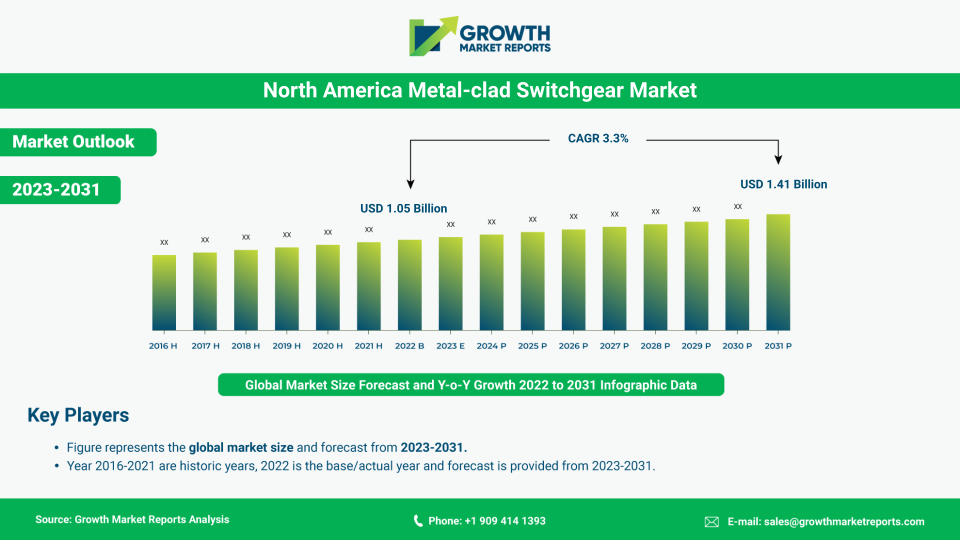
According to our latest research, the global metal-clad switchgear market size in 2024 stands at USD 7.4 billion, with a robust year-on-year growth driven by increasing investments in power infrastructure and modernization of electrical grids. The market is projected to expand at a CAGR of 5.8% from 2025 to 2033, reaching an estimated value of USD 13.2 billion by the end of the forecast period. This sustained growth is primarily attributed to the rising demand for reliable and safe electrical distribution systems, as well as the rapid urbanization and industrialization occurring across both developed and emerging economies.
One of the primary growth factors fueling the metal-clad switchgear market is the global emphasis on grid reliability and modernization. As electrical grids age, utilities and governments are increasingly investing in upgrading infrastructure to support higher loads and integrate renewable energy sources. Metal-clad switchgear, known for its enhanced safety features, arc fault containment, and ease of maintenance, is being adopted widely in substations and power plants. These systems are integral to ensuring uninterrupted power supply, reducing downtime, and maintaining operational safety standards, making them indispensable in both new installations and retrofit projects. The heightened focus on minimizing electrical hazards and ensuring personnel safety further accelerates the adoption of metal-clad switchgear across industries.
Another significant driver is the rapid pace of industrialization and urban expansion, particularly in Asia Pacific and the Middle East. Manufacturing facilities, commercial complexes, and infrastructure projects require robust and scalable electrical distribution solutions, which has led to a surge in demand for advanced switchgear systems. Additionally, as industries transition towards automation and digitization, the need for reliable power management systems grows, positioning metal-clad switchgear as a preferred choice due to its modularity and adaptability. The increasing deployment of renewable energy projects, such as wind and solar farms, also necessitates advanced switchgear solutions to manage variable loads and ensure grid stability, further propelling market growth.
Technological advancements and regulatory mandates are also shaping the metal-clad switchgear market landscape. The integration of digital monitoring, IoT-based diagnostics, and predictive maintenance capabilities in modern switchgear systems is enhancing operational efficiency and reducing lifecycle costs. Regulatory frameworks focused on energy efficiency, safety, and environmental sustainability are compelling end-users to upgrade to newer, compliant switchgear solutions. Moreover, the growing trend of electrification in transportation and the expansion of data centers are creating new avenues for market expansion. These factors collectively underscore the pivotal role of innovation and compliance in driving the adoption of metal-clad switchgear worldwide.
Regionally, the market outlook remains highly dynamic, with Asia Pacific emerging as the dominant force due to its large-scale infrastructure investments and burgeoning industrial sector. North America and Europe are witnessing steady growth, driven by grid modernization initiatives and the integration of renewable energy sources. Meanwhile, Latin America and the Middle East & Africa are experiencing accelerated market penetration, supported by ongoing electrification projects and government-led reforms. The competitive landscape is characterized by the presence of global industry leaders who are continuously investing in R&D and strategic collaborations to maintain their market position. Overall, the metal-clad switchgear market is poised for sustained expansion, underpinned by a confluence of technological, regulatory, and economic drivers.
The metal-clad switchgear market is segmented by voltage type into low voltage, medium voltage, and high voltage categories, each catering to distinct application requirements. Low voltage metal-clad switchgear systems are predominantly used in commercial and light industrial settings, where electrical loads are moderate and operational safety is paramount. These systems offer cost-effective protection and control for circuits up to 1 kV, making them ideal for office buildings, shopping malls, and small manufacturing units. The increasing trend of smart building automation and the proliferation of data centers are further driving demand for low voltage switchgear, as these environments require reliable and compact solutions that can be easily integrated with digital monitoring systems.
Medium voltage metal-clad switchgear, typically rated from 1 kV to 38 kV, represents the largest segment by revenue share, owing to its widespread application in power generation, transmission, and distribution networks. These systems are essential for substations, industrial plants, and utility grids, where they provide critical functions such as circuit isolation, fault protection, and load management. The ongoing modernization of aging grid infrastructure, especially in developed economies, is fueling the replacement of legacy switchgear with advanced medium voltage solutions. Additionally, the integration of renewable energy sources into the grid necessitates robust medium voltage switchgear to manage fluctuating loads and ensure grid stability, further augmenting segment growth.
The high voltage segment, encompassing systems rated above 38 kV, caters primarily to large-scale power transmission and heavy industrial applications. High voltage metal-clad switchgear is engineered to handle extreme electrical stresses, making it indispensable in utilities, power plants, and critical infrastructure projects. The expansion of cross-border transmission networks and the construction of ultra-high voltage substations in regions like Asia Pacific and the Middle East are driving demand for this segment. Furthermore, the global push for energy interconnection and the development of smart grids are expected to bolster the adoption of high voltage switchgear, as these initiatives require advanced protection and control mechanisms to ensure network reliability and resilience.
Technological advancements are reshaping the voltage type landscape, with manufacturers introducing modular and scalable solutions that can be customized to meet specific voltage requirements. The integration of digital relays, remote monitoring, and predictive maintenance features is enhancing the performance and reliability of metal-clad switchgear across all voltage categories. End-users are increasingly prioritizing solutions that offer flexibility, ease of installation, and minimal maintenance, prompting manufacturers to focus on innovation and product differentiation. As a result, the voltage type segment is witnessing a shift towards smart, interconnected switchgear systems that can seamlessly adapt to evolving grid and industrial demands.
In summary, the voltage type segmentation of the metal-clad switchgear market highlights the diverse application landscape and underscores the importance of tailored solutions to address varying electrical distribution needs. The continued growth of low, medium, and high voltage segments is driven by factors such as infrastructure development, grid modernization, and the integration of renewable energy sources. As end-user requirements become increasingly complex, the demand for advanced, reliable, and adaptable switchgear solutions is expected to remain strong across all voltage categories.
| Attributes | Details |
| Report Title | Metal-clad Switchgear Market Research Report 2033 |
| By Voltage Type | Low Voltage, Medium Voltage, High Voltage |
| By Insulation Type | Air Insulated, Gas Insulated, Others |
| By Application | Power Generation, Transmission & Distribution, Industrial, Commercial, Utilities, Others |
| By Installation | Indoor, Outdoor |
| By End-User | Utilities, Industrial, Commercial, Others |
| Regions Covered | North America, Europe, APAC, Latin America, MEA |
| Base Year | 2024 |
| Historic Data | 2018-2023 |
| Forecast Period | 2025-2033 |
| Number of Pages | 267 |
| Number of Tables & Figures | 293 |
| Customization Available | Yes, the report can be customized as per your need. |
The insulation type segment of the metal-clad switchgear market is primarily divided into air insulated, gas insulated, and other emerging insulation technologies. Air insulated switchgear (AIS) remains the most widely adopted solution globally, valued for its cost-effectiveness, ease of maintenance, and proven reliability. AIS systems are extensively used in outdoor substations, industrial plants, and commercial buildings due to their straightforward design and operational simplicity. The ongoing expansion of utility-scale power distribution networks, particularly in emerging economies, is sustaining demand for air insulated switchgear, as these markets prioritize affordability and ease of deployment.
Gas insulated switchgear (GIS), on the other hand, is gaining significant traction in applications where space constraints and environmental considerations are paramount. GIS systems utilize sulfur hexafluoride (SF6) or alternative gases to provide superior insulation and arc-quenching capabilities within a compact enclosure. This makes them ideal for urban substations, underground installations, and offshore platforms where space is limited and operational reliability is critical. The rising adoption of GIS is also driven by its enhanced safety features, lower maintenance requirements, and ability to withstand harsh environmental conditions. As urbanization intensifies and cities seek to optimize land use, the demand for gas insulated switchgear is expected to rise steadily.
Other insulation types, such as solid insulated and hybrid systems, are emerging as alternatives to traditional air and gas insulated switchgear. Solid insulated switchgear leverages advanced composite materials to achieve high dielectric strength and arc resistance, making it suitable for specialized applications in renewable energy integration and smart grids. Hybrid solutions combine the benefits of both air and gas insulation, offering a balanced approach to performance, safety, and environmental impact. These innovations are being driven by regulatory pressures to reduce greenhouse gas emissions and enhance the sustainability of electrical infrastructure, prompting manufacturers to invest in research and development of eco-friendly insulation technologies.
The choice of insulation type is increasingly influenced by factors such as total cost of ownership, environmental impact, and regulatory compliance. End-users are evaluating the long-term benefits of advanced insulation technologies, balancing upfront capital costs against operational efficiency and maintenance savings. The transition towards green switchgear, particularly in Europe and North America, is accelerating the adoption of alternatives to SF6-based systems, as regulatory agencies impose stricter limits on greenhouse gas emissions. This trend is expected to shape the future of the insulation type segment, with a growing emphasis on sustainability and innovation.
Overall, the insulation type segmentation underscores the evolving priorities of the metal-clad switchgear market, with a clear shift towards solutions that offer enhanced safety, reliability, and environmental performance. The continued growth of air and gas insulated switchgear, complemented by the emergence of solid and hybrid technologies, reflects the dynamic nature of the market and the ongoing pursuit of optimized electrical distribution solutions.
The application segment of the metal-clad switchgear market encompasses a diverse range of end-use scenarios, including power generation, transmission & distribution, industrial, commercial, utilities, and others. In power generation, metal-clad switchgear plays a critical role in protecting and controlling electrical circuits within power plants. As global energy demand rises and new generation facilities are constructed, the need for reliable switchgear systems to manage high fault currents and ensure operational continuity is becoming increasingly important. The integration of renewable energy sources, such as solar and wind, is also driving demand for advanced switchgear solutions capable of handling variable and intermittent loads.
The transmission and distribution (T&D) segment represents a significant share of the metal-clad switchgear market, as these systems are essential for managing the flow of electricity across vast networks. Metal-clad switchgear is deployed in substations to isolate faults, protect equipment, and maintain grid stability. The ongoing modernization of T&D infrastructure, particularly in North America and Europe, is fueling the replacement of outdated switchgear with state-of-the-art systems that offer enhanced safety, digital monitoring, and remote control capabilities. As utilities invest in smart grid technologies and automation, the demand for intelligent switchgear solutions is expected to accelerate.
Industrial applications constitute a major growth area for the metal-clad switchgear market, driven by the expansion of manufacturing, mining, oil and gas, and process industries. These environments require robust power distribution systems capable of withstanding harsh operating conditions and minimizing downtime. Metal-clad switchgear provides the necessary arc fault protection, ease of maintenance, and scalability to support complex industrial operations. The trend towards Industry 4.0 and the adoption of automation technologies are further increasing the need for reliable and intelligent switchgear solutions in industrial settings.
In the commercial sector, metal-clad switchgear is widely used to ensure safe and efficient power distribution in office buildings, shopping malls, hospitals, data centers, and educational institutions. The proliferation of digital infrastructure, coupled with the growing emphasis on energy efficiency and sustainability, is driving demand for advanced switchgear systems that can be seamlessly integrated with building management and energy monitoring platforms. The rise of green building certifications and regulatory mandates for electrical safety are also influencing procurement decisions in the commercial application segment.
Utilities remain the largest end-user segment, accounting for a substantial share of the global metal-clad switchgear market. Utilities require high-performance switchgear to manage grid operations, support renewable energy integration, and comply with stringent regulatory standards. The transition towards decentralized energy systems, microgrids, and distributed generation is creating new opportunities for switchgear manufacturers to develop innovative solutions tailored to utility needs. As the global energy landscape evolves, the application segment of the metal-clad switchgear market is expected to witness sustained growth, driven by the convergence of technology, regulation, and end-user requirements.
The installation segment of the metal-clad switchgear market is divided into indoor and outdoor installations, each serving distinct operational environments and application needs. Indoor metal-clad switchgear is predominantly used in commercial buildings, manufacturing plants, data centers, and institutional facilities where environmental control and space optimization are critical. These systems are designed for installation within controlled environments, offering enhanced protection against dust, moisture, and temperature fluctuations. The increasing trend of urbanization and the development of high-rise buildings are driving demand for compact, modular indoor switchgear solutions that can be easily integrated within limited spaces.
Outdoor metal-clad switchgear is engineered to withstand harsh environmental conditions, including extreme temperatures, humidity, and exposure to dust and corrosive elements. These systems are widely deployed in substations, utility networks, renewable energy installations, and industrial sites located in remote or challenging environments. The robust construction and weatherproof enclosures of outdoor switchgear ensure reliable performance and safety, even under adverse conditions. The expansion of power transmission and distribution infrastructure, particularly in rural and remote areas, is fueling demand for outdoor metal-clad switchgear systems that offer durability and minimal maintenance requirements.
The choice between indoor and outdoor installation is influenced by factors such as site conditions, available space, environmental risks, and regulatory requirements. End-users are increasingly seeking solutions that offer flexibility and adaptability, allowing for seamless integration with existing infrastructure and future expansion plans. Manufacturers are responding by developing modular switchgear systems that can be customized for both indoor and outdoor applications, incorporating features such as digital monitoring, remote diagnostics, and predictive maintenance to enhance operational efficiency and reduce lifecycle costs.
Technological advancements are further blurring the lines between indoor and outdoor switchgear solutions, with the introduction of hybrid systems that combine the benefits of both installation types. These innovations are enabling end-users to optimize space utilization, improve safety, and achieve greater energy efficiency across a wide range of applications. The growing emphasis on sustainability and environmental stewardship is also influencing installation decisions, as end-users prioritize solutions that minimize environmental impact and support green building initiatives.
Overall, the installation segment of the metal-clad switchgear market reflects the diverse and evolving needs of end-users across different industries and geographies. The continued growth of indoor and outdoor installations, driven by infrastructure development, urbanization, and technological innovation, underscores the importance of adaptable and reliable switchgear solutions in modern electrical distribution networks.
The end-user segment of the metal-clad switchgear market is categorized into utilities, industrial, commercial, and others, each with unique requirements and growth drivers. Utilities represent the largest end-user group, as they are responsible for the generation, transmission, and distribution of electricity to residential, commercial, and industrial consumers. The ongoing modernization of utility infrastructure, coupled with the integration of renewable energy sources and the deployment of smart grid technologies, is driving demand for advanced metal-clad switchgear solutions that offer enhanced safety, reliability, and digital capabilities.
Industrial end-users, including manufacturing, mining, oil and gas, and process industries, require robust and scalable power distribution systems to support complex operations and ensure uninterrupted production. Metal-clad switchgear provides the necessary arc fault protection, ease of maintenance, and modularity to meet the demanding requirements of industrial environments. The trend towards automation, digitalization, and predictive maintenance is further increasing the need for intelligent switchgear solutions that can support real-time monitoring, remote diagnostics, and efficient asset management in industrial settings.
The commercial sector, encompassing office buildings, shopping malls, hospitals, data centers, and educational institutions, is witnessing growing adoption of metal-clad switchgear systems to ensure safe and efficient power distribution. The proliferation of digital infrastructure, coupled with the increasing focus on energy efficiency and sustainability, is driving demand for switchgear solutions that can be seamlessly integrated with building management and energy monitoring platforms. Regulatory mandates for electrical safety and the rise of green building certifications are also influencing procurement decisions in the commercial end-user segment.
Other end-users, such as transportation, infrastructure, and public sector organizations, are also contributing to the growth of the metal-clad switchgear market. The electrification of transportation networks, expansion of public infrastructure projects, and the development of smart cities are creating new opportunities for switchgear manufacturers to develop tailored solutions that address the specific needs of these sectors. The increasing adoption of electric vehicles and the expansion of charging infrastructure are expected to further drive demand for advanced switchgear systems in the coming years.
In summary, the end-user segmentation of the metal-clad switchgear market highlights the diverse application landscape and underscores the importance of customized solutions to address varying operational requirements. The continued growth of utilities, industrial, commercial, and other end-user segments is driven by factors such as infrastructure development, regulatory compliance, and the integration of digital technologies. As end-user needs become increasingly complex and dynamic, the demand for advanced, reliable, and adaptable switchgear solutions is expected to remain strong across all segments.
The metal-clad switchgear market is poised for significant growth, presenting a multitude of opportunities for manufacturers, technology providers, and investors. One of the most promising opportunities lies in the ongoing global transition towards renewable energy and decentralized power generation. As countries strive to meet ambitious clean energy targets, the integration of solar, wind, and other renewable sources into the grid is accelerating. This transition necessitates advanced switchgear solutions capable of managing variable loads, ensuring grid stability, and supporting bidirectional power flows. Manufacturers that can develop innovative, eco-friendly, and digitally enabled switchgear systems are well-positioned to capitalize on this trend and capture a larger share of the market.
Another key opportunity stems from the rapid adoption of smart grid technologies and the digital transformation of electrical infrastructure. The integration of IoT, artificial intelligence, and predictive analytics into switchgear systems is enabling real-time monitoring, remote diagnostics, and proactive maintenance, thereby reducing operational costs and enhancing asset reliability. Utilities and industrial end-users are increasingly seeking solutions that offer advanced data analytics, cybersecurity, and seamless integration with existing SCADA and energy management platforms. Companies that invest in R&D and form strategic partnerships to deliver intelligent, connected switchgear solutions will be at the forefront of market innovation and growth.
Despite the numerous growth opportunities, the metal-clad switchgear market faces certain restraining factors that could impact its trajectory. One of the primary challenges is the high initial capital investment required for the deployment of advanced switchgear systems, particularly in emerging economies and cost-sensitive markets. The complexity of integrating new technologies with legacy infrastructure, coupled with concerns over cybersecurity and data privacy, may also hinder widespread adoption. Additionally, regulatory uncertainties and the evolving landscape of standards for environmental sustainability and safety could pose compliance challenges for manufacturers and end-users alike. Navigating these restraints will require a balanced approach, emphasizing innovation, cost optimization, and proactive engagement with regulatory bodies.
The regional analysis of the metal-clad switchgear market reveals significant variations in market size, growth drivers, and adoption patterns across different geographies. Asia Pacific dominates the global market, accounting for approximately USD 3.2 billion in 2024, driven by large-scale infrastructure investments, rapid urbanization, and the expansion of industrial and utility sectors in countries such as China, India, and Japan. The region is witnessing a surge in power generation and transmission projects, as well as the integration of renewable energy sources, which are fueling demand for advanced switchgear solutions. With a projected CAGR of 6.4% from 2025 to 2033, Asia Pacific is expected to maintain its leadership position, supported by favorable government policies, rising energy consumption, and ongoing electrification initiatives.
North America represents the second-largest market, with a market size of USD 1.8 billion in 2024, driven by the modernization of aging grid infrastructure, the adoption of smart grid technologies, and the integration of distributed energy resources. The United States and Canada are at the forefront of grid digitalization, renewable energy deployment, and regulatory compliance, creating a robust demand for intelligent and eco-friendly switchgear systems. The region’s focus on energy efficiency, safety, and sustainability is prompting utilities and industrial end-users to upgrade to advanced metal-clad switchgear solutions that offer enhanced monitoring, control, and predictive maintenance capabilities.
Europe follows closely, with a market size of USD 1.5 billion in 2024, characterized by stringent regulatory standards, a strong emphasis on environmental sustainability, and the ongoing transition towards renewable energy. Countries such as Germany, the United Kingdom, and France are investing heavily in smart grid infrastructure, energy storage, and the electrification of transportation networks, driving demand for advanced switchgear solutions. The region is also witnessing growing adoption of green switchgear technologies, as regulatory agencies impose stricter limits on greenhouse gas emissions and promote the use of eco-friendly insulation materials. Meanwhile, Latin America and Middle East & Africa collectively account for over USD 0.9 billion in 2024, with growth driven by infrastructure development, electrification projects, and the expansion of industrial and commercial sectors. These regions offer significant untapped potential, particularly as governments prioritize energy access, grid reliability, and economic diversification.
The global metal-clad switchgear market is characterized by intense competition, with a mix of multinational corporations, regional players, and specialized technology providers vying for market share. The competitive landscape is shaped by factors such as product innovation, technological differentiation, strategic partnerships, and customer-centric solutions. Leading companies are investing heavily in research and development to introduce advanced switchgear systems that offer enhanced safety, digital integration, and environmental sustainability. The focus on developing modular, scalable, and eco-friendly products is driving differentiation and enabling market leaders to address the evolving needs of utilities, industrial, and commercial end-users.
Mergers, acquisitions, and strategic collaborations are common strategies employed by key players to expand their product portfolios, enter new markets, and strengthen their competitive position. Companies are forming alliances with technology providers, engineering firms, and system integrators to deliver comprehensive solutions that encompass hardware, software, and services. The integration of IoT, artificial intelligence, and predictive analytics into switchgear systems is emerging as a key differentiator, enabling companies to offer value-added services such as remote monitoring, real-time diagnostics, and proactive maintenance. This trend is particularly pronounced in developed markets, where digital transformation and grid modernization are top priorities.
The competitive dynamics of the metal-clad switchgear market are also influenced by regulatory compliance, sustainability initiatives, and customer engagement. Companies are aligning their product development and marketing strategies with evolving regulatory standards for safety, energy efficiency, and environmental impact. The shift towards green switchgear technologies, driven by regulatory mandates and customer preferences, is prompting manufacturers to invest in alternative insulation materials, energy-efficient designs, and lifecycle management solutions. Customer engagement and after-sales support are critical factors in building long-term relationships and securing repeat business, particularly in large-scale utility and industrial projects.
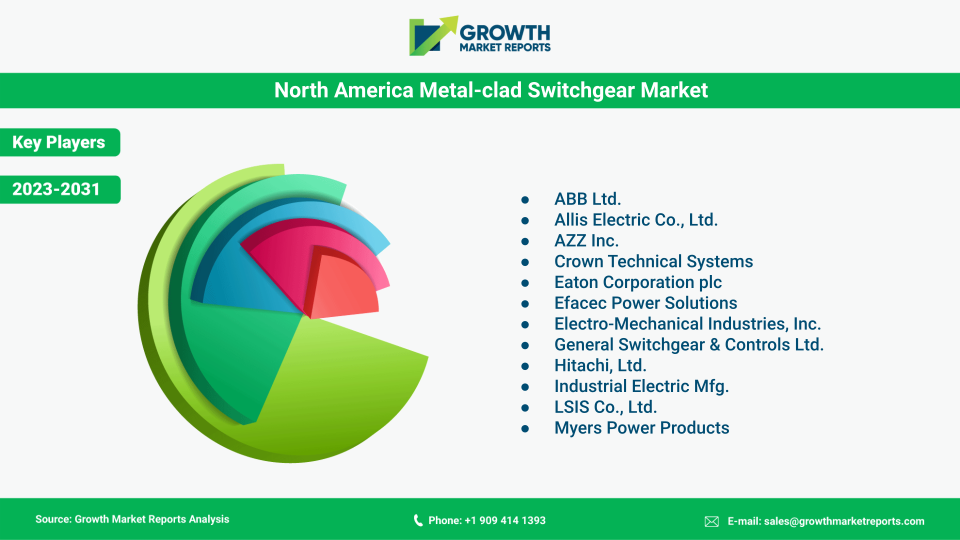
Some of the major companies operating in the global metal-clad switchgear market include ABB Ltd., Siemens AG, Schneider Electric SE, Eaton Corporation plc, Mitsubishi Electric Corporation, General Electric Company, Hyundai Electric & Energy Systems Co., Ltd., Powell Industries, Inc., Lucy Electric, and Toshiba Energy Systems & Solutions Corporation. These companies are recognized for their extensive product portfolios, global presence, and commitment to innovation and sustainability. ABB Ltd. and Siemens AG are leading the market with a strong focus on digitalization, modularity, and eco-friendly solutions, while Schneider Electric SE and Eaton Corporation plc are known for their customer-centric approach and comprehensive service offerings. Mitsubishi Electric Corporation and General Electric Company are leveraging their expertise in power systems and automation to deliver advanced switchgear solutions for utilities, industrial, and commercial end-users.
Emerging players and regional manufacturers are also making significant inroads, particularly in Asia Pacific and Latin America, by offering cost-effective and customized solutions tailored to local market needs. These companies are focusing on expanding their distribution networks, enhancing product quality, and building strategic partnerships to compete effectively with global leaders. The competitive landscape is expected to remain dynamic, with ongoing innovation, consolidation, and market expansion shaping the future of the metal-clad switchgear market.
The Metal-clad Switchgear market has been segmented on the basis of
Yes, the report offers customization options to meet specific research or business requirements.
Challenges include high initial investment costs, integration with legacy infrastructure, cybersecurity concerns, regulatory compliance, and evolving standards for environmental sustainability and safety.
Advancements include the integration of digital monitoring, IoT-based diagnostics, predictive maintenance, modular designs, and eco-friendly insulation technologies to enhance safety, efficiency, and sustainability.
Key companies include ABB Ltd., Siemens AG, Schneider Electric SE, Eaton Corporation plc, Mitsubishi Electric Corporation, General Electric Company, Hyundai Electric & Energy Systems, Powell Industries, Lucy Electric, and Toshiba Energy Systems.
Metal-clad switchgear is used in power generation, transmission & distribution, industrial facilities, commercial buildings, utilities, and other sectors requiring reliable and safe electrical distribution.
Asia Pacific is the largest market, driven by infrastructure investments and industrial expansion. North America and Europe follow, focusing on grid modernization and renewable energy integration. Latin America and Middle East & Africa are also experiencing significant growth.
Metal-clad switchgear uses air insulated (AIS), gas insulated (GIS), and emerging insulation technologies such as solid insulated and hybrid systems, each offering unique benefits for different installation environments.
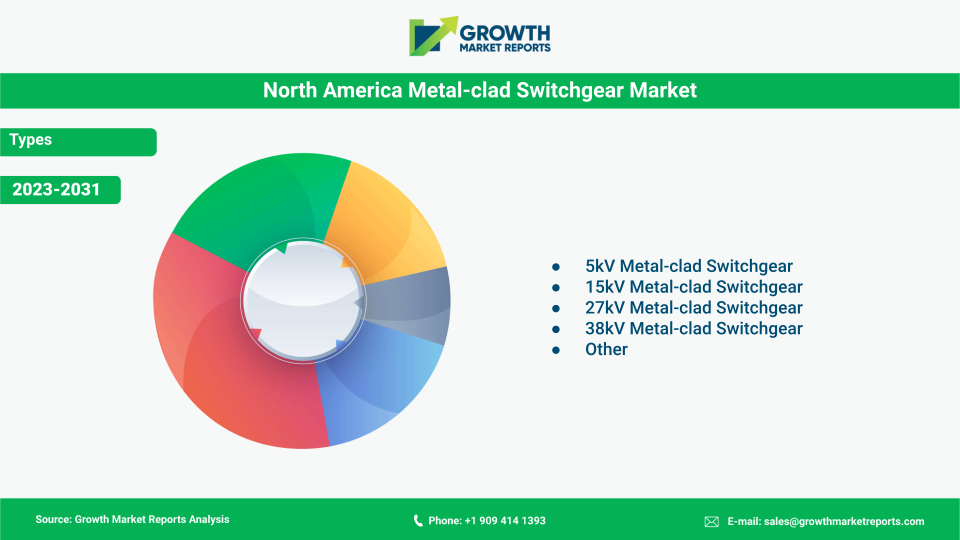
The market is segmented into low voltage (up to 1 kV), medium voltage (1 kV to 38 kV), and high voltage (above 38 kV) switchgear, each serving different application needs from commercial buildings to large-scale power transmission.
Key growth drivers include increasing investments in power infrastructure, grid modernization, rising demand for reliable and safe electrical distribution, rapid urbanization and industrialization, and the integration of renewable energy sources.
As of 2024, the global metal-clad switchgear market is valued at USD 7.4 billion. It is expected to grow at a CAGR of 5.8% from 2025 to 2033, reaching approximately USD 13.2 billion by the end of the forecast period.