Submersible Pump Market Research Report 2033

Submersible Pump Market Research Report 2033

Segments - by Product Type (Borewell Submersible Pumps, Openwell Submersible Pumps, Non-Clog Submersible Pumps, Others), by Application (Agriculture, Industrial, Residential, Municipal, Others), by Operation (Single-stage, Multi-stage), by Power Rating (Up to 1 HP, 1-5 HP, Above 5 HP), by Distribution Channel (Online, Offline)

https://growthmarketreports.com/Raksha
Author : Raksha Sharma
https://growthmarketreports.com/Vaibhav
Fact-checked by : V. Chandola
https://growthmarketreports.com/Shruti
Editor : Shruti Bhat

Upcoming | Report ID :EP-1757 | 4.8 Rating | 70 Reviews | 259 Pages | Format : Docx PDF

Report Description


Submersible Pump Market Outlook

According to our latest research, the global submersible pump market size in 2024 stands at USD 14.7 billion, driven by robust demand across agriculture, municipal, and industrial sectors. The market is set to expand at a CAGR of 6.2% from 2025 to 2033, reaching a projected value of USD 25.1 billion by 2033. This sustained growth is primarily attributed to rapid urbanization, increasing demand for water supply and wastewater management, and significant advancements in pumping technologies.

One of the primary growth drivers for the submersible pump market is the escalating need for efficient water management solutions in both developed and developing regions. With urban populations swelling and industrialization accelerating, the pressure on existing water resources has intensified, necessitating the adoption of advanced pumping systems. Submersible pumps, known for their energy efficiency, reliability, and ability to operate under harsh conditions, are increasingly being deployed for groundwater extraction, sewage treatment, and drainage applications. The integration of smart technologies and automation in pump systems further enhances operational efficiency, reducing maintenance costs and minimizing downtime, which in turn fuels market growth.

Another significant factor propelling the submersible pump market is the increased focus on agricultural productivity. In regions where agriculture forms the backbone of the economy, submersible pumps are vital for irrigation, ensuring consistent water supply to crops even in areas with erratic rainfall. Government initiatives aimed at improving rural infrastructure, coupled with subsidies for efficient irrigation equipment, have spurred the adoption of submersible pumps in the agricultural sector. Furthermore, the growing awareness about water conservation and the need for sustainable irrigation practices have prompted farmers to transition from traditional surface pumps to more energy-efficient submersible variants, thereby contributing to market expansion.

The industrial sector also plays a pivotal role in the growth trajectory of the submersible pump market. Industrial applications such as mining, oil & gas, construction, and wastewater treatment demand robust and reliable pumping solutions capable of handling abrasive fluids and high-solid content. Submersible pumps, with their superior performance and ability to operate submerged in fluids, are ideally suited for these challenging environments. The ongoing infrastructure development projects, particularly in emerging economies, are further driving the demand for submersible pumps. Additionally, stringent environmental regulations regarding effluent discharge and wastewater management have compelled industries to invest in advanced submersible pumping systems, thus bolstering market growth.

Regionally, the Asia Pacific region dominates the submersible pump market, accounting for the largest share in 2024. This dominance is underpinned by rapid urbanization, expanding agricultural activities, and substantial investments in water infrastructure projects across countries such as China, India, and Southeast Asian nations. North America and Europe also represent significant markets, benefiting from technological advancements, stringent environmental standards, and a robust industrial base. Meanwhile, the Middle East & Africa and Latin America are witnessing steady growth, driven by increasing investments in municipal water supply and irrigation projects. Overall, the global submersible pump market is poised for robust expansion, supported by diverse and dynamic growth drivers across regions.

In the realm of industrial applications, Vertical Immersion Pumps have emerged as a pivotal solution, particularly in sectors requiring the handling of corrosive or abrasive fluids. These pumps are designed to operate with the motor and bearings above the liquid level, which makes them ideal for applications where the fluid is aggressive or contains solids. Their robust construction and ability to handle high temperatures and pressures make them indispensable in industries such as chemical processing, mining, and wastewater treatment. As industries continue to evolve and demand more efficient and reliable pumping solutions, the role of Vertical Immersion Pumps is expected to expand, offering enhanced performance and longevity in challenging environments.

Global Submersible Pump Industry Outlook

Product Type Analysis

The submersible pump market is segmented by product type into borewell submersible pumps, openwell submersible pumps, non-clog submersible pumps, and others. Borewell submersible pumps hold a significant share due to their widespread usage in groundwater extraction for residential, agricultural, and municipal applications. These pumps are designed to operate below the surface, making them ideal for areas with deep water tables. The increasing scarcity of surface water sources, coupled with the need for efficient groundwater extraction, has led to a surge in demand for borewell submersible pumps, particularly in regions facing water stress. Technological advancements in pump design, such as enhanced corrosion resistance and improved motor efficiency, have further bolstered their adoption.

Openwell submersible pumps are gaining traction, especially in agricultural and municipal sectors, due to their versatility and ease of installation. Unlike borewell pumps, openwell variants are installed in open water sources such as wells, ponds, and tanks, making them suitable for regions with shallow water tables. The ability to handle varying water levels and their robustness in handling debris-laden water are key factors driving their popularity. Additionally, government initiatives promoting rural electrification and irrigation infrastructure development have positively impacted the demand for openwell submersible pumps, particularly in developing economies.

Non-clog submersible pumps are specifically designed for handling wastewater and sewage applications. Their unique design prevents clogging by allowing the passage of solid particles, making them indispensable in municipal wastewater treatment plants, industrial effluent management, and flood control systems. The rising urban population and increasing industrialization have led to a surge in wastewater generation, necessitating efficient pumping solutions like non-clog submersible pumps. Moreover, stringent environmental regulations regarding wastewater discharge have compelled municipalities and industries to upgrade their pumping infrastructure, thereby driving the growth of this segment.

Other types of submersible pumps, including specialized variants for mining, oil & gas, and dewatering applications, also contribute to the overall market. These pumps are engineered to withstand extreme conditions, such as high temperatures, corrosive fluids, and abrasive particles. The ongoing expansion of mining and oil & gas exploration activities, particularly in regions like Latin America and Africa, has created new growth avenues for these specialized submersible pumps. Manufacturers are increasingly focusing on product innovation and customization to cater to the diverse requirements of these niche applications, thereby enhancing their market presence.

Report Scope

Attributes Details
Report Title Submersible Pump Market Research Report 2033
By Product Type Borewell Submersible Pumps, Openwell Submersible Pumps, Non-Clog Submersible Pumps, Others
By Application Agriculture, Industrial, Residential, Municipal, Others
By Operation Single-stage, Multi-stage
By Power Rating Up to 1 HP, 1-5 HP, Above 5 HP
By Distribution Channel Online, Offline
Regions Covered North America, Europe, APAC, Latin America, MEA
Base Year 2024
Historic Data 2018-2023
Forecast Period 2025-2033
Number of Pages 259
Number of Tables & Figures 315
Customization Available Yes, the report can be customized as per your need.

Application Analysis

The submersible pump market finds extensive application across agriculture, industrial, residential, municipal, and other sectors. In agriculture, submersible pumps play a critical role in ensuring reliable irrigation, especially in regions with irregular rainfall patterns and depleting surface water sources. The adoption of advanced submersible pumps has enabled farmers to optimize water usage, enhance crop yields, and promote sustainable farming practices. Government subsidies and awareness campaigns about efficient irrigation methods have further accelerated the uptake of submersible pumps in the agricultural sector, making it one of the largest application segments.

The Electric Submersible Pump (ESP) is another vital component in the submersible pump market, particularly within the oil and gas industry. These pumps are renowned for their ability to efficiently lift large volumes of fluids from deep wells, making them indispensable in oil extraction processes. The versatility of ESPs allows them to be used in various applications, including dewatering, artificial lift, and geothermal energy production. With advancements in technology, ESPs have become increasingly energy-efficient and reliable, addressing the growing demand for sustainable and cost-effective pumping solutions in the energy sector. As the global focus on energy efficiency intensifies, the adoption of Electric Submersible Pumps is anticipated to rise, driving further innovations and market growth.

Industrial applications of submersible pumps span a wide spectrum, including mining, construction, oil & gas, and manufacturing. These industries require robust and reliable pumping solutions for dewatering, slurry handling, and fluid transfer operations. Submersible pumps, with their ability to operate submerged in fluids and handle high-solid content, are ideally suited for such demanding environments. The ongoing industrialization in emerging economies, coupled with increasing investments in infrastructure development, has fueled the demand for submersible pumps in the industrial sector. Additionally, the emphasis on environmental compliance and wastewater management has prompted industries to invest in advanced pumping systems.

In the residential sector, submersible pumps are primarily used for domestic water supply, drainage, and sewage management. The rapid urbanization and rising living standards in developing regions have led to increased construction of residential complexes, thereby driving the demand for efficient water supply and wastewater management solutions. Submersible pumps, known for their compact design, low noise operation, and high efficiency, are increasingly preferred for residential applications. The growing trend of smart homes and the integration of IoT-enabled pump monitoring systems have further enhanced the appeal of submersible pumps in the residential segment.

Municipal applications constitute another significant segment of the submersible pump market. Municipalities rely on submersible pumps for water supply, sewage treatment, flood control, and stormwater management. The rising urban population and increasing frequency of extreme weather events have placed immense pressure on municipal water infrastructure, necessitating the deployment of reliable and high-capacity pumping systems. Government initiatives aimed at upgrading municipal water supply and wastewater treatment facilities have created lucrative opportunities for submersible pump manufacturers. The emphasis on sustainable urban development and efficient resource management is expected to drive further growth in this segment.

Operation Analysis

The submersible pump market is classified by operation into single-stage and multi-stage pumps, each catering to specific application requirements. Single-stage submersible pumps are widely used for applications requiring moderate head and flow rates, such as residential water supply and small-scale irrigation. Their simple design, ease of installation, and low maintenance requirements make them an attractive choice for users seeking cost-effective pumping solutions. The increasing demand for domestic water supply, especially in rural and semi-urban areas, has contributed to the steady growth of the single-stage submersible pump segment.

Multi-stage submersible pumps, on the other hand, are designed for applications requiring high head and pressure, such as deep well irrigation, industrial water supply, and municipal water distribution. These pumps consist of multiple impellers stacked in series, enabling them to achieve higher pressures and deliver water over long distances. The growing need for efficient groundwater extraction in agriculture, coupled with rising investments in municipal water infrastructure, has fueled the demand for multi-stage submersible pumps. Technological advancements, such as the integration of variable frequency drives and remote monitoring systems, have further enhanced the performance and reliability of multi-stage pumps.

In the context of heavy-duty applications, the Submersible Slurry Pump stands out for its ability to handle high-solid content and abrasive materials. These pumps are specifically engineered for environments such as mining, dredging, and construction, where the movement of slurry and sediment is a critical task. Their robust design and construction enable them to operate efficiently in harsh conditions, providing reliable performance and minimizing downtime. The demand for Submersible Slurry Pumps is driven by the need for efficient material handling solutions in industries that deal with challenging materials. As infrastructure projects and mining activities continue to expand globally, the role of Submersible Slurry Pumps in ensuring operational efficiency and cost-effectiveness becomes increasingly significant.

The choice between single-stage and multi-stage submersible pumps is largely determined by the specific requirements of the application, such as the depth of the water source, required flow rate, and operating conditions. End-users are increasingly seeking customized solutions that offer optimal performance, energy efficiency, and minimal maintenance. Manufacturers are responding to this demand by offering a wide range of single-stage and multi-stage pumps with varying specifications and features, thereby catering to the diverse needs of customers across different sectors.

The ongoing trend towards automation and smart pump systems has also influenced the operation segment of the submersible pump market. The integration of sensors, IoT devices, and advanced control systems has enabled real-time monitoring and remote operation of submersible pumps, enhancing their efficiency and reliability. These technological advancements are particularly beneficial for large-scale applications, such as municipal water supply and industrial processes, where continuous monitoring and prompt maintenance are critical. As the adoption of smart pump systems continues to rise, both single-stage and multi-stage submersible pumps are expected to witness significant growth in the coming years.

Power Rating Analysis

Power rating is a crucial factor in the submersible pump market, with segments categorized as up to 1 HP, 1-5 HP, and above 5 HP. Pumps with power ratings up to 1 HP are predominantly utilized in residential and small-scale agricultural applications, where moderate flow rates and head are sufficient. The demand for these pumps is driven by the increasing construction of residential buildings, particularly in urban and semi-urban areas, and the need for efficient domestic water supply solutions. Their compact size, low energy consumption, and ease of installation make them a preferred choice for homeowners and small-scale farmers.

The 1-5 HP segment caters to a broader range of applications, including medium-sized agricultural fields, small industries, and municipal water supply systems. These pumps offer higher flow rates and head compared to the up to 1 HP segment, making them suitable for applications requiring moderate to high water output. The growing adoption of mechanized irrigation in agriculture, coupled with increasing investments in small and medium-scale industrial projects, has fueled the demand for submersible pumps in the 1-5 HP range. Additionally, government initiatives promoting energy-efficient pumping solutions have further boosted the uptake of pumps in this segment.

Pumps with power ratings above 5 HP are primarily used in large-scale industrial, municipal, and agricultural applications where high flow rates and head are essential. These pumps are designed to handle demanding tasks such as deep well irrigation, large-scale water supply, and industrial fluid transfer. The expansion of industrial infrastructure, particularly in emerging economies, has created significant growth opportunities for high-power submersible pumps. Moreover, the increasing focus on large-scale irrigation projects and municipal water supply systems has driven the demand for pumps with higher power ratings. Manufacturers are continuously innovating to enhance the efficiency, durability, and performance of these high-power pumps to meet the evolving needs of end-users.

The choice of power rating is influenced by several factors, including the depth of the water source, required flow rate, application type, and energy efficiency considerations. End-users are increasingly prioritizing energy-efficient pumps to reduce operational costs and minimize environmental impact. As a result, manufacturers are investing in research and development to design pumps that offer optimal performance across different power ratings while ensuring minimal energy consumption. This focus on energy efficiency is expected to drive further growth in the power rating segment of the submersible pump market.

Distribution Channel Analysis

The submersible pump market is segmented by distribution channel into online and offline channels, each playing a distinct role in the market dynamics. Offline distribution channels, including authorized dealers, distributors, and retail outlets, have traditionally dominated the market. These channels offer customers the advantage of personalized service, product demonstrations, and after-sales support, which are particularly important for high-value and technically complex products like submersible pumps. The strong network of offline distributors, particularly in rural and semi-urban areas, has facilitated the widespread adoption of submersible pumps across diverse end-user segments.

However, the online distribution channel is rapidly gaining traction, driven by the increasing penetration of the internet and the growing popularity of e-commerce platforms. Online channels offer several benefits, such as convenience, a wide range of product options, competitive pricing, and doorstep delivery. The ability to compare different models, read customer reviews, and access detailed product specifications has empowered consumers to make informed purchasing decisions. As a result, manufacturers and distributors are increasingly leveraging online platforms to expand their reach and tap into new customer segments, particularly in urban areas.

The COVID-19 pandemic further accelerated the shift towards online distribution channels, as lockdowns and movement restrictions prompted consumers to adopt digital purchasing methods. Many leading submersible pump manufacturers have established their own e-commerce portals or partnered with third-party platforms to enhance their online presence. This trend is expected to continue, with online channels playing an increasingly important role in the market, especially for standardized and lower-capacity pumps.

Despite the growth of online channels, offline distribution remains crucial for the sale of high-capacity and customized submersible pumps, where technical consultation and after-sales service are essential. The coexistence of online and offline channels is expected to persist, with manufacturers adopting an omnichannel approach to cater to the diverse needs of customers. The integration of digital tools and technologies, such as virtual product demonstrations and online customer support, is further enhancing the customer experience across both channels, thereby driving growth in the distribution segment of the submersible pump market.

Opportunities & Threats

The submersible pump market presents significant opportunities for growth, particularly in emerging economies where rapid urbanization, industrialization, and agricultural expansion are driving demand for efficient water management solutions. The increasing focus on sustainable development and water conservation has created new avenues for the adoption of energy-efficient and environmentally friendly submersible pumps. Government initiatives aimed at improving rural infrastructure, promoting mechanized irrigation, and upgrading municipal water supply systems have further bolstered market prospects. Additionally, the integration of smart technologies, such as IoT-enabled pump monitoring and control systems, offers opportunities for manufacturers to differentiate their products and enhance value for customers.

Technological advancements in pump design and materials present another major opportunity for market players. The development of corrosion-resistant materials, high-efficiency motors, and advanced control systems has significantly improved the performance, durability, and energy efficiency of submersible pumps. These innovations are particularly relevant for applications in harsh environments, such as mining, oil & gas, and wastewater treatment, where reliability and longevity are critical. Manufacturers that invest in research and development to create innovative and customized solutions are well-positioned to capitalize on the growing demand for advanced submersible pumps across diverse end-user segments.

Despite the numerous opportunities, the submersible pump market faces several restraints that could hinder its growth. One of the primary challenges is the high initial cost of submersible pumps, particularly for high-capacity and technologically advanced models. This can be a significant barrier for small-scale farmers and residential users, especially in developing regions with limited access to financing. Additionally, the availability of low-cost alternatives, such as surface pumps, can limit the adoption of submersible pumps in price-sensitive markets. Furthermore, the lack of standardized regulations and quality control measures in some regions can lead to the proliferation of substandard products, undermining consumer confidence and market growth.

Regional Outlook

In 2024, the Asia Pacific region leads the submersible pump market with a market size of USD 6.5 billion, reflecting the regionÂ’s rapid urbanization, expanding agricultural activities, and robust investments in water infrastructure. China and India are the primary contributors, accounting for over half of the regional market share. The increasing need for efficient irrigation systems, coupled with government initiatives aimed at improving water supply and wastewater management, has fueled the demand for submersible pumps across the region. The Asia Pacific market is projected to grow at a CAGR of 7.1% through 2033, outpacing other regions due to ongoing infrastructure development and technological adoption.

North America holds the second largest share in the submersible pump market, with a market value of USD 3.2 billion in 2024. The region benefits from advanced technological infrastructure, stringent environmental regulations, and a well-established industrial base. The demand for submersible pumps in North America is driven by applications in municipal water supply, wastewater treatment, and industrial processes. The increasing focus on water conservation and the adoption of smart pump technologies are expected to further drive market growth in the region. Europe follows closely, with a market size of USD 2.8 billion, characterized by a strong emphasis on sustainability, energy efficiency, and compliance with environmental standards.

The Middle East & Africa and Latin America regions collectively account for a market size of USD 2.2 billion in 2024. These regions are witnessing steady growth, driven by investments in municipal water supply, irrigation projects, and industrial development. In the Middle East, the scarcity of freshwater resources has necessitated the adoption of advanced water extraction and management solutions, creating opportunities for submersible pump manufacturers. Latin America, with its expanding agricultural sector and increasing urbanization, is also emerging as a promising market for submersible pumps. Overall, the regional outlook for the submersible pump market remains positive, with diverse growth drivers and opportunities across different geographies.

Submersible Pump Market Statistics

Competitor Outlook

The submersible pump market is highly competitive, characterized by the presence of numerous global and regional players vying for market share. Leading manufacturers are focused on product innovation, technological advancements, and strategic partnerships to strengthen their market position. The competitive landscape is shaped by factors such as pricing, product quality, distribution network, and after-sales service. Companies are increasingly investing in research and development to introduce energy-efficient and smart pumping solutions that cater to the evolving needs of customers across various end-user segments. The growing emphasis on sustainability and environmental compliance has also prompted manufacturers to develop eco-friendly products with reduced carbon footprints.

Mergers and acquisitions, joint ventures, and collaborations are common strategies adopted by key players to expand their product portfolios, enhance technological capabilities, and enter new markets. The increasing demand for customized and application-specific submersible pumps has led manufacturers to focus on developing tailored solutions that address the unique requirements of different industries and regions. The rise of digitalization and the integration of IoT and automation technologies have further intensified competition, as companies strive to differentiate their offerings and deliver enhanced value to customers.

Regional players, particularly in Asia Pacific and Latin America, are leveraging their strong local presence and understanding of market dynamics to compete effectively with global giants. These companies often focus on cost-effective manufacturing, efficient distribution, and localized product development to cater to the specific needs of their target markets. However, global players continue to dominate the high-end and technologically advanced segments of the market, leveraging their extensive resources, brand reputation, and global reach.

Some of the major companies operating in the submersible pump market include Grundfos, Xylem Inc., KSB Group, Sulzer Ltd., Franklin Electric Co., Ltd., Wilo SE, Ebara Corporation, and Flowserve Corporation. Grundfos is renowned for its innovative and energy-efficient pumping solutions, with a strong focus on sustainability and digitalization. Xylem Inc. is a leading provider of water technology solutions, offering a comprehensive range of submersible pumps for various applications. KSB Group and Sulzer Ltd. are recognized for their robust product portfolios and global presence, catering to diverse industries such as water management, mining, and oil & gas.

Franklin Electric Co., Ltd. specializes in submersible motors and pumping systems, with a strong emphasis on research and development. Wilo SE and Ebara Corporation are prominent players in the municipal and industrial segments, known for their high-quality and reliable pumping solutions. Flowserve Corporation offers a wide range of pumps and flow control products, serving customers across multiple industries worldwide. These companies are continuously investing in technological innovation, strategic partnerships, and market expansion initiatives to maintain their competitive edge and capitalize on the growing demand for submersible pumps.

Key Players

  • Grundfos
  • Xylem Inc.
  • Sulzer Ltd.
  • KSB SE & Co. KGaA
  • Franklin Electric Co., Inc.
  • Wilo SE
  • EBARA Corporation
  • Flowserve Corporation
  • ITT Inc.
  • Pedrollo S.p.A.
  • Baker Hughes Company
  • Tsurumi Manufacturing Co., Ltd.
  • Shakti Pumps (India) Ltd.
  • CRI Pumps Pvt Ltd.
  • Atlas Copco AB
  • DAB Pumps S.p.A.
  • Weir Group PLC
  • Kirloskar Brothers Limited
  • Zoeller Company
  • Grindex AB
Submersible Pump Market Overview

Segments

The Submersible Pump market has been segmented on the basis of

Product Type

  • Borewell Submersible Pumps
  • Openwell Submersible Pumps
  • Non-Clog Submersible Pumps
  • Others

Application

  • Agriculture
  • Industrial
  • Residential
  • Municipal
  • Others

Operation

  • Single-stage
  • Multi-stage

Power Rating

  • Up to 1 HP
  • 1-5 HP
  • Above 5 HP

Distribution Channel

  • Online
  • Offline

Competitive Landscape

Key players competing in the market include ITT Goulds Pumps Inc; Borets International Ltd; EBARA CORPORATION; Flowserve Corp; Gorman-Rupp Co; Sulzer AG; Weir Group PLC; Halliburton Company; Schlumberger Limited.; and Baker Hughes Company. Some of these players are adopting several market strategies including acquisitions, mergers, collaborations, partnerships, capacity expansion, and product launches to increase their market shares.
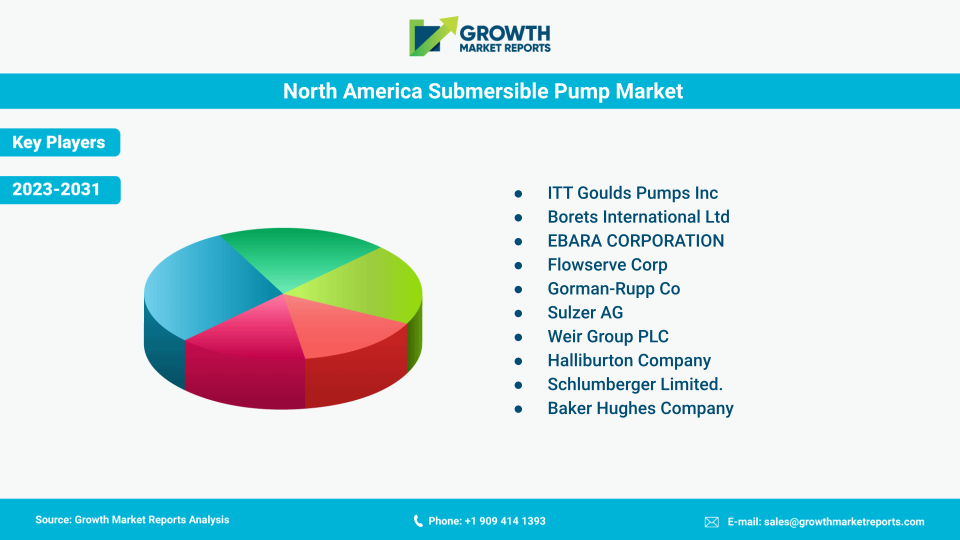

North America Submersible Pump Market Key Players

Frequently Asked Questions

Challenges include the high initial cost of advanced pumps, competition from low-cost alternatives, lack of standardized regulations in some regions, and the proliferation of substandard products.

Major players include Grundfos, Xylem Inc., Sulzer Ltd., KSB SE & Co. KGaA, Franklin Electric Co., Inc., Wilo SE, EBARA Corporation, Flowserve Corporation, and others.

Submersible pumps are distributed through both offline channels (dealers, distributors, retail outlets) and online channels (e-commerce platforms and manufacturer websites), with online sales gaining traction due to convenience and wider reach.

The market is segmented by power rating into up to 1 HP (mainly for residential and small-scale agriculture), 1-5 HP (for medium-sized agriculture and small industries), and above 5 HP (for large-scale industrial, municipal, and agricultural applications).

Key growth drivers include rapid urbanization, increasing demand for water supply and wastewater management, advancements in pump technology, government initiatives for rural infrastructure, and a growing focus on energy efficiency and water conservation.

The main types of submersible pumps include borewell submersible pumps, openwell submersible pumps, non-clog submersible pumps, and specialized pumps for mining, oil & gas, and dewatering applications.

Submersible pumps are widely used in agriculture (for irrigation), industrial sectors (mining, oil & gas, construction, wastewater treatment), residential water supply, and municipal water and sewage management.

The Asia Pacific region dominates the submersible pump market, with China and India as major contributors. North America and Europe also hold significant market shares, while the Middle East & Africa and Latin America are experiencing steady growth.

The submersible pump market is expected to grow at a CAGR of 6.2% from 2025 to 2033, reaching a projected value of USD 25.1 billion by 2033.

The global submersible pump market size in 2024 is estimated at USD 14.7 billion, driven by strong demand across agriculture, municipal, and industrial sectors.

Table Of Content

Chapter 1 Executive Summary
Chapter 2 Assumptions and Acronyms Used
Chapter 3 Research Methodology
Chapter 4 Submersible Pump Market Overview
   4.1 Introduction
      4.1.1 Market Taxonomy
      4.1.2 Market Definition
      4.1.3 Macro-Economic Factors Impacting the Market Growth
   4.2 Submersible Pump Market Dynamics
      4.2.1 Market Drivers
      4.2.2 Market Restraints
      4.2.3 Market Opportunity
   4.3 Submersible Pump Market - Supply Chain Analysis
      4.3.1 List of Key Suppliers
      4.3.2 List of Key Distributors
      4.3.3 List of Key Consumers
   4.4 Key Forces Shaping the Submersible Pump Market
      4.4.1 Bargaining Power of Suppliers
      4.4.2 Bargaining Power of Buyers
      4.4.3 Threat of Substitution
      4.4.4 Threat of New Entrants
      4.4.5 Competitive Rivalry
   4.5 Global Submersible Pump Market Size & Forecast, 2023-2032
      4.5.1 Submersible Pump Market Size and Y-o-Y Growth
      4.5.2 Submersible Pump Market Absolute $ Opportunity

Chapter 5 Global Submersible Pump Market Analysis and Forecast By Product Type
   5.1 Introduction
      5.1.1 Key Market Trends & Growth Opportunities By Product Type
      5.1.2 Basis Point Share (BPS) Analysis By Product Type
      5.1.3 Absolute $ Opportunity Assessment By Product Type
   5.2 Submersible Pump Market Size Forecast By Product Type
      5.2.1 Borewell Submersible Pumps
      5.2.2 Openwell Submersible Pumps
      5.2.3 Non-Clog Submersible Pumps
      5.2.4 Others
   5.3 Market Attractiveness Analysis By Product Type

Chapter 6 Global Submersible Pump Market Analysis and Forecast By Application
   6.1 Introduction
      6.1.1 Key Market Trends & Growth Opportunities By Application
      6.1.2 Basis Point Share (BPS) Analysis By Application
      6.1.3 Absolute $ Opportunity Assessment By Application
   6.2 Submersible Pump Market Size Forecast By Application
      6.2.1 Agriculture
      6.2.2 Industrial
      6.2.3 Residential
      6.2.4 Municipal
      6.2.5 Others
   6.3 Market Attractiveness Analysis By Application

Chapter 7 Global Submersible Pump Market Analysis and Forecast By Operation
   7.1 Introduction
      7.1.1 Key Market Trends & Growth Opportunities By Operation
      7.1.2 Basis Point Share (BPS) Analysis By Operation
      7.1.3 Absolute $ Opportunity Assessment By Operation
   7.2 Submersible Pump Market Size Forecast By Operation
      7.2.1 Single-stage
      7.2.2 Multi-stage
   7.3 Market Attractiveness Analysis By Operation

Chapter 8 Global Submersible Pump Market Analysis and Forecast By Power Rating
   8.1 Introduction
      8.1.1 Key Market Trends & Growth Opportunities By Power Rating
      8.1.2 Basis Point Share (BPS) Analysis By Power Rating
      8.1.3 Absolute $ Opportunity Assessment By Power Rating
   8.2 Submersible Pump Market Size Forecast By Power Rating
      8.2.1 Up to 1 HP
      8.2.2 1-5 HP
      8.2.3 Above 5 HP
   8.3 Market Attractiveness Analysis By Power Rating

Chapter 9 Global Submersible Pump Market Analysis and Forecast By Distribution Channel
   9.1 Introduction
      9.1.1 Key Market Trends & Growth Opportunities By Distribution Channel
      9.1.2 Basis Point Share (BPS) Analysis By Distribution Channel
      9.1.3 Absolute $ Opportunity Assessment By Distribution Channel
   9.2 Submersible Pump Market Size Forecast By Distribution Channel
      9.2.1 Online
      9.2.2 Offline
   9.3 Market Attractiveness Analysis By Distribution Channel

Chapter 10 Global Submersible Pump Market Analysis and Forecast by Region
   10.1 Introduction
      10.1.1 Key Market Trends & Growth Opportunities By Region
      10.1.2 Basis Point Share (BPS) Analysis By Region
      10.1.3 Absolute $ Opportunity Assessment By Region
   10.2 Submersible Pump Market Size Forecast By Region
      10.2.1 North America
      10.2.2 Europe
      10.2.3 Asia Pacific
      10.2.4 Latin America
      10.2.5 Middle East & Africa (MEA)
   10.3 Market Attractiveness Analysis By Region

Chapter 11 Coronavirus Disease (COVID-19) Impact 
   11.1 Introduction 
   11.2 Current & Future Impact Analysis 
   11.3 Economic Impact Analysis 
   11.4 Government Policies 
   11.5 Investment Scenario

Chapter 12 North America Submersible Pump Analysis and Forecast
   12.1 Introduction
   12.2 North America Submersible Pump Market Size Forecast by Country
      12.2.1 U.S.
      12.2.2 Canada
   12.3 Basis Point Share (BPS) Analysis by Country
   12.4 Absolute $ Opportunity Assessment by Country
   12.5 Market Attractiveness Analysis by Country
   12.6 North America Submersible Pump Market Size Forecast By Product Type
      12.6.1 Borewell Submersible Pumps
      12.6.2 Openwell Submersible Pumps
      12.6.3 Non-Clog Submersible Pumps
      12.6.4 Others
   12.7 Basis Point Share (BPS) Analysis By Product Type 
   12.8 Absolute $ Opportunity Assessment By Product Type 
   12.9 Market Attractiveness Analysis By Product Type
   12.10 North America Submersible Pump Market Size Forecast By Application
      12.10.1 Agriculture
      12.10.2 Industrial
      12.10.3 Residential
      12.10.4 Municipal
      12.10.5 Others
   12.11 Basis Point Share (BPS) Analysis By Application 
   12.12 Absolute $ Opportunity Assessment By Application 
   12.13 Market Attractiveness Analysis By Application
   12.14 North America Submersible Pump Market Size Forecast By Operation
      12.14.1 Single-stage
      12.14.2 Multi-stage
   12.15 Basis Point Share (BPS) Analysis By Operation 
   12.16 Absolute $ Opportunity Assessment By Operation 
   12.17 Market Attractiveness Analysis By Operation
   12.18 North America Submersible Pump Market Size Forecast By Power Rating
      12.18.1 Up to 1 HP
      12.18.2 1-5 HP
      12.18.3 Above 5 HP
   12.19 Basis Point Share (BPS) Analysis By Power Rating 
   12.20 Absolute $ Opportunity Assessment By Power Rating 
   12.21 Market Attractiveness Analysis By Power Rating
   12.22 North America Submersible Pump Market Size Forecast By Distribution Channel
      12.22.1 Online
      12.22.2 Offline
   12.23 Basis Point Share (BPS) Analysis By Distribution Channel 
   12.24 Absolute $ Opportunity Assessment By Distribution Channel 
   12.25 Market Attractiveness Analysis By Distribution Channel

Chapter 13 Europe Submersible Pump Analysis and Forecast
   13.1 Introduction
   13.2 Europe Submersible Pump Market Size Forecast by Country
      13.2.1 Germany
      13.2.2 France
      13.2.3 Italy
      13.2.4 U.K.
      13.2.5 Spain
      13.2.6 Russia
      13.2.7 Rest of Europe
   13.3 Basis Point Share (BPS) Analysis by Country
   13.4 Absolute $ Opportunity Assessment by Country
   13.5 Market Attractiveness Analysis by Country
   13.6 Europe Submersible Pump Market Size Forecast By Product Type
      13.6.1 Borewell Submersible Pumps
      13.6.2 Openwell Submersible Pumps
      13.6.3 Non-Clog Submersible Pumps
      13.6.4 Others
   13.7 Basis Point Share (BPS) Analysis By Product Type 
   13.8 Absolute $ Opportunity Assessment By Product Type 
   13.9 Market Attractiveness Analysis By Product Type
   13.10 Europe Submersible Pump Market Size Forecast By Application
      13.10.1 Agriculture
      13.10.2 Industrial
      13.10.3 Residential
      13.10.4 Municipal
      13.10.5 Others
   13.11 Basis Point Share (BPS) Analysis By Application 
   13.12 Absolute $ Opportunity Assessment By Application 
   13.13 Market Attractiveness Analysis By Application
   13.14 Europe Submersible Pump Market Size Forecast By Operation
      13.14.1 Single-stage
      13.14.2 Multi-stage
   13.15 Basis Point Share (BPS) Analysis By Operation 
   13.16 Absolute $ Opportunity Assessment By Operation 
   13.17 Market Attractiveness Analysis By Operation
   13.18 Europe Submersible Pump Market Size Forecast By Power Rating
      13.18.1 Up to 1 HP
      13.18.2 1-5 HP
      13.18.3 Above 5 HP
   13.19 Basis Point Share (BPS) Analysis By Power Rating 
   13.20 Absolute $ Opportunity Assessment By Power Rating 
   13.21 Market Attractiveness Analysis By Power Rating
   13.22 Europe Submersible Pump Market Size Forecast By Distribution Channel
      13.22.1 Online
      13.22.2 Offline
   13.23 Basis Point Share (BPS) Analysis By Distribution Channel 
   13.24 Absolute $ Opportunity Assessment By Distribution Channel 
   13.25 Market Attractiveness Analysis By Distribution Channel

Chapter 14 Asia Pacific Submersible Pump Analysis and Forecast
   14.1 Introduction
   14.2 Asia Pacific Submersible Pump Market Size Forecast by Country
      14.2.1 China
      14.2.2 Japan
      14.2.3 South Korea
      14.2.4 India
      14.2.5 Australia
      14.2.6 South East Asia (SEA)
      14.2.7 Rest of Asia Pacific (APAC)
   14.3 Basis Point Share (BPS) Analysis by Country
   14.4 Absolute $ Opportunity Assessment by Country
   14.5 Market Attractiveness Analysis by Country
   14.6 Asia Pacific Submersible Pump Market Size Forecast By Product Type
      14.6.1 Borewell Submersible Pumps
      14.6.2 Openwell Submersible Pumps
      14.6.3 Non-Clog Submersible Pumps
      14.6.4 Others
   14.7 Basis Point Share (BPS) Analysis By Product Type 
   14.8 Absolute $ Opportunity Assessment By Product Type 
   14.9 Market Attractiveness Analysis By Product Type
   14.10 Asia Pacific Submersible Pump Market Size Forecast By Application
      14.10.1 Agriculture
      14.10.2 Industrial
      14.10.3 Residential
      14.10.4 Municipal
      14.10.5 Others
   14.11 Basis Point Share (BPS) Analysis By Application 
   14.12 Absolute $ Opportunity Assessment By Application 
   14.13 Market Attractiveness Analysis By Application
   14.14 Asia Pacific Submersible Pump Market Size Forecast By Operation
      14.14.1 Single-stage
      14.14.2 Multi-stage
   14.15 Basis Point Share (BPS) Analysis By Operation 
   14.16 Absolute $ Opportunity Assessment By Operation 
   14.17 Market Attractiveness Analysis By Operation
   14.18 Asia Pacific Submersible Pump Market Size Forecast By Power Rating
      14.18.1 Up to 1 HP
      14.18.2 1-5 HP
      14.18.3 Above 5 HP
   14.19 Basis Point Share (BPS) Analysis By Power Rating 
   14.20 Absolute $ Opportunity Assessment By Power Rating 
   14.21 Market Attractiveness Analysis By Power Rating
   14.22 Asia Pacific Submersible Pump Market Size Forecast By Distribution Channel
      14.22.1 Online
      14.22.2 Offline
   14.23 Basis Point Share (BPS) Analysis By Distribution Channel 
   14.24 Absolute $ Opportunity Assessment By Distribution Channel 
   14.25 Market Attractiveness Analysis By Distribution Channel

Chapter 15 Latin America Submersible Pump Analysis and Forecast
   15.1 Introduction
   15.2 Latin America Submersible Pump Market Size Forecast by Country
      15.2.1 Brazil
      15.2.2 Mexico
      15.2.3 Rest of Latin America (LATAM)
   15.3 Basis Point Share (BPS) Analysis by Country
   15.4 Absolute $ Opportunity Assessment by Country
   15.5 Market Attractiveness Analysis by Country
   15.6 Latin America Submersible Pump Market Size Forecast By Product Type
      15.6.1 Borewell Submersible Pumps
      15.6.2 Openwell Submersible Pumps
      15.6.3 Non-Clog Submersible Pumps
      15.6.4 Others
   15.7 Basis Point Share (BPS) Analysis By Product Type 
   15.8 Absolute $ Opportunity Assessment By Product Type 
   15.9 Market Attractiveness Analysis By Product Type
   15.10 Latin America Submersible Pump Market Size Forecast By Application
      15.10.1 Agriculture
      15.10.2 Industrial
      15.10.3 Residential
      15.10.4 Municipal
      15.10.5 Others
   15.11 Basis Point Share (BPS) Analysis By Application 
   15.12 Absolute $ Opportunity Assessment By Application 
   15.13 Market Attractiveness Analysis By Application
   15.14 Latin America Submersible Pump Market Size Forecast By Operation
      15.14.1 Single-stage
      15.14.2 Multi-stage
   15.15 Basis Point Share (BPS) Analysis By Operation 
   15.16 Absolute $ Opportunity Assessment By Operation 
   15.17 Market Attractiveness Analysis By Operation
   15.18 Latin America Submersible Pump Market Size Forecast By Power Rating
      15.18.1 Up to 1 HP
      15.18.2 1-5 HP
      15.18.3 Above 5 HP
   15.19 Basis Point Share (BPS) Analysis By Power Rating 
   15.20 Absolute $ Opportunity Assessment By Power Rating 
   15.21 Market Attractiveness Analysis By Power Rating
   15.22 Latin America Submersible Pump Market Size Forecast By Distribution Channel
      15.22.1 Online
      15.22.2 Offline
   15.23 Basis Point Share (BPS) Analysis By Distribution Channel 
   15.24 Absolute $ Opportunity Assessment By Distribution Channel 
   15.25 Market Attractiveness Analysis By Distribution Channel

Chapter 16 Middle East & Africa (MEA) Submersible Pump Analysis and Forecast
   16.1 Introduction
   16.2 Middle East & Africa (MEA) Submersible Pump Market Size Forecast by Country
      16.2.1 Saudi Arabia
      16.2.2 South Africa
      16.2.3 UAE
      16.2.4 Rest of Middle East & Africa (MEA)
   16.3 Basis Point Share (BPS) Analysis by Country
   16.4 Absolute $ Opportunity Assessment by Country
   16.5 Market Attractiveness Analysis by Country
   16.6 Middle East & Africa (MEA) Submersible Pump Market Size Forecast By Product Type
      16.6.1 Borewell Submersible Pumps
      16.6.2 Openwell Submersible Pumps
      16.6.3 Non-Clog Submersible Pumps
      16.6.4 Others
   16.7 Basis Point Share (BPS) Analysis By Product Type 
   16.8 Absolute $ Opportunity Assessment By Product Type 
   16.9 Market Attractiveness Analysis By Product Type
   16.10 Middle East & Africa (MEA) Submersible Pump Market Size Forecast By Application
      16.10.1 Agriculture
      16.10.2 Industrial
      16.10.3 Residential
      16.10.4 Municipal
      16.10.5 Others
   16.11 Basis Point Share (BPS) Analysis By Application 
   16.12 Absolute $ Opportunity Assessment By Application 
   16.13 Market Attractiveness Analysis By Application
   16.14 Middle East & Africa (MEA) Submersible Pump Market Size Forecast By Operation
      16.14.1 Single-stage
      16.14.2 Multi-stage
   16.15 Basis Point Share (BPS) Analysis By Operation 
   16.16 Absolute $ Opportunity Assessment By Operation 
   16.17 Market Attractiveness Analysis By Operation
   16.18 Middle East & Africa (MEA) Submersible Pump Market Size Forecast By Power Rating
      16.18.1 Up to 1 HP
      16.18.2 1-5 HP
      16.18.3 Above 5 HP
   16.19 Basis Point Share (BPS) Analysis By Power Rating 
   16.20 Absolute $ Opportunity Assessment By Power Rating 
   16.21 Market Attractiveness Analysis By Power Rating
   16.22 Middle East & Africa (MEA) Submersible Pump Market Size Forecast By Distribution Channel
      16.22.1 Online
      16.22.2 Offline
   16.23 Basis Point Share (BPS) Analysis By Distribution Channel 
   16.24 Absolute $ Opportunity Assessment By Distribution Channel 
   16.25 Market Attractiveness Analysis By Distribution Channel

Chapter 17 Competition Landscape 
   17.1 Submersible Pump Market: Competitive Dashboard
   17.2 Global Submersible Pump Market: Market Share Analysis, 2023
   17.3 Company Profiles (Details – Overview, Financials, Developments, Strategy) 
      17.3.1 Grundfos
Xylem Inc.
Sulzer Ltd.
KSB SE & Co. KGaA
Franklin Electric Co., Inc.
Wilo SE
EBARA Corporation
Flowserve Corporation
ITT Inc.
Pedrollo S.p.A.
Baker Hughes Company
Tsurumi Manufacturing Co., Ltd.
Shakti Pumps (India) Ltd.
CRI Pumps Pvt Ltd.
Atlas Copco AB
DAB Pumps S.p.A.
Weir Group PLC
Kirloskar Brothers Limited
Zoeller Company
Grindex AB

Methodology

Our Clients

General Electric
Nestle SA
Siemens Healthcare
Deloitte
Honda Motor Co. Ltd.
sinopec
General Mills
Dassault Aviation