Soy Beverages Market Research Report 2033

Soy Beverages Market Research Report 2033

Segments - by Product Type (Soy Milk, Soy-Based Drinkable Yogurt, Flavored Soy Beverages, Others), by Application (Household, Food Service, Others), by Distribution Channel (Supermarkets/Hypermarkets, Convenience Stores, Online Retail, Specialty Stores, Others), by Packaging Type (Cartons, Bottles, Cans, Others)

https://growthmarketreports.com/Anuradha
Author : Anuradha B. More
https://growthmarketreports.com/Vaibhav
Fact-checked by : Vaibhav Chandola
https://growthmarketreports.com/Shruti
Editor : Shruti Bhat

Upcoming | Report ID :FB-3332 | 4.8 Rating | 71 Reviews | 270 Pages | Format : Docx PDF

Report Description


Soy Beverages Market Outlook

According to our latest research, the global soy beverages market size reached USD 5.4 billion in 2024, demonstrating robust demand driven by health-conscious consumers and the rising adoption of plant-based diets. The market is expected to grow at a CAGR of 6.2% between 2025 and 2033, projecting a value of USD 9.3 billion by 2033. This upward trajectory is supported by increasing awareness of lactose intolerance, the nutritional benefits of soy, and a strong shift toward sustainable and ethical food and beverage choices worldwide.

A major growth factor for the soy beverages market is the escalating prevalence of lactose intolerance and dairy allergies among global populations. As consumers become more aware of the digestive discomfort and potential health risks associated with dairy consumption, they are actively seeking non-dairy alternatives. Soy beverages, with their high protein content and rich nutritional profile, are emerging as a preferred choice for individuals seeking to eliminate or reduce dairy intake. Furthermore, the growing trend of veganism and plant-based diets, particularly among millennials and Gen Z consumers, has provided a significant boost to the soy beverage industry. These demographic groups are not only health-conscious but also highly attuned to environmental and ethical considerations, making soy beverages a natural fit for their lifestyle choices.

The market's expansion is also being fueled by product innovation and diversification. Manufacturers are continuously investing in research and development to introduce new flavors, fortified formulations, and functional soy beverages that cater to evolving consumer preferences. Flavored soy beverages, soy-based drinkable yogurts, and ready-to-drink options are gaining traction as they offer convenience and a variety of taste profiles. Additionally, the fortification of soy beverages with vitamins, minerals, and other nutrients enhances their appeal as a wholesome, nutritious alternative to traditional dairy products. This trend is further amplified by aggressive marketing campaigns and strategic collaborations between food and beverage companies, which are helping to broaden the consumer base and enhance brand visibility.

Another critical driver of the soy beverages market is the rising focus on sustainability and environmental responsibility. Soy cultivation has a lower carbon footprint compared to dairy farming, and the production of soy beverages requires significantly less water and land resources. As consumers become increasingly aware of the environmental impact of their food choices, they are gravitating toward products that align with their values. Governments and regulatory bodies across various regions are also promoting plant-based diets as part of their sustainability initiatives, further propelling the growth of the soy beverages market. Moreover, the expansion of distribution channels, including online retail and specialty stores, has made soy beverages more accessible to a wider audience, contributing to sustained market growth.

Regionally, Asia Pacific continues to dominate the soy beverages market, driven by a long-standing tradition of soy consumption and a large lactose-intolerant population. However, North America and Europe are witnessing rapid growth due to increasing consumer awareness, the popularity of plant-based lifestyles, and the introduction of innovative soy beverage products. Latin America and the Middle East & Africa are also emerging as promising markets, supported by changing dietary patterns and improving distribution infrastructure. The global landscape is characterized by dynamic shifts in consumer preferences, regulatory support, and a competitive environment that encourages continuous product development and market expansion.

Global Soy Beverages Industry Outlook

Product Type Analysis

The soy beverages market is segmented by product type into soy milk, soy-based drinkable yogurt, flavored soy beverages, and others. Among these, soy milk remains the most dominant category, accounting for a substantial share of the overall market. This is attributed to its close resemblance to traditional dairy milk in terms of taste, texture, and nutritional value. Soy milk is widely consumed as a standalone beverage and is also used as an ingredient in cooking and baking, further driving its demand. The growing popularity of soy milk can be linked to its high protein content, low saturated fat levels, and its suitability for individuals with lactose intolerance or dairy allergies. Manufacturers are also introducing organic and non-GMO variants to cater to health-conscious consumers, thereby expanding the market for soy milk.

Flavored soy beverages are rapidly gaining traction, particularly among younger consumers who seek variety and enhanced taste experiences. The introduction of flavors such as vanilla, chocolate, strawberry, and matcha has broadened the appeal of soy beverages beyond traditional consumers. These products are often fortified with additional nutrients, such as calcium and vitamins, to enhance their functional benefits. The convenience of ready-to-drink flavored soy beverages makes them a popular choice for on-the-go consumption, especially in urban areas where busy lifestyles demand quick and nutritious options. This segment is expected to witness significant growth during the forecast period as manufacturers continue to innovate and introduce new flavor profiles to capture a wider audience.

Soy-based drinkable yogurt is an emerging segment within the soy beverages market, driven by the increasing demand for probiotic-rich and gut-friendly products. These beverages offer the combined benefits of soy protein and probiotics, making them a popular choice among health-conscious consumers. The growing awareness of the importance of gut health and the rising prevalence of digestive disorders are key factors driving the adoption of soy-based drinkable yogurts. Manufacturers are focusing on product development to improve taste, texture, and nutritional content, thereby enhancing the overall consumer experience. The segment is expected to witness robust growth, particularly in developed markets where consumers are more receptive to functional and fortified beverages.

The "others" category includes a range of innovative soy beverage products, such as soy-based smoothies, protein shakes, and specialty drinks. These products cater to niche consumer segments with specific dietary preferences, such as athletes, fitness enthusiasts, and individuals following plant-based or allergen-free diets. The introduction of value-added soy beverages, such as those enriched with omega-3 fatty acids or plant sterols, is further expanding the product portfolio and driving market growth. As consumer awareness of the health benefits of soy continues to increase, the demand for diverse and innovative soy beverage products is expected to rise, creating new opportunities for manufacturers in this segment.

Report Scope

Attributes Details
Report Title Soy Beverages Market Research Report 2033
By Product Type Soy Milk, Soy-Based Drinkable Yogurt, Flavored Soy Beverages, Others
By Application Household, Food Service, Others
By Distribution Channel Supermarkets/Hypermarkets, Convenience Stores, Online Retail, Specialty Stores, Others
By Packaging Type Cartons, Bottles, Cans, Others
Regions Covered North America, Europe, APAC, Latin America, MEA
Base Year 2024
Historic Data 2018-2023
Forecast Period 2025-2033
Number of Pages 270
Number of Tables & Figures 294
Customization Available Yes, the report can be customized as per your need.

Application Analysis

The soy beverages market is segmented by application into household, food service, and others. The household segment holds the largest share, as soy beverages are commonly consumed as a substitute for dairy milk in homes around the world. The increasing prevalence of lactose intolerance and the growing adoption of plant-based diets are key factors driving the demand for soy beverages in the household segment. Consumers are incorporating soy milk and other soy-based beverages into their daily routines, using them in cereals, smoothies, coffee, and cooking. The convenience of ready-to-drink soy beverages and the availability of various flavors and formulations further enhance their appeal for household consumption.

The food service segment is witnessing significant growth, fueled by the rising popularity of plant-based menus in restaurants, cafes, and food chains. As consumers become more health-conscious and seek plant-based alternatives when dining out, food service providers are expanding their offerings to include soy beverages. Coffee shops, in particular, are increasingly offering soy milk as an alternative to dairy milk in lattes, cappuccinos, and other beverages. The adoption of soy beverages in the food service sector is also driven by the growing demand for allergen-free and vegan options, which cater to a diverse customer base. This trend is expected to continue as more food service establishments recognize the importance of offering plant-based alternatives to attract and retain customers.

The "others" application segment includes use cases such as institutional catering, schools, hospitals, and corporate cafeterias. These settings are increasingly incorporating soy beverages into their menus to accommodate dietary restrictions and promote healthy eating habits. The inclusion of soy beverages in institutional menus is often supported by government initiatives and nutrition programs aimed at improving public health outcomes. As awareness of the health benefits of soy continues to grow, the adoption of soy beverages in these settings is expected to increase, contributing to overall market growth. Manufacturers are also partnering with institutions to develop customized soy beverage solutions that meet specific nutritional requirements.

Overall, the application analysis highlights the versatility of soy beverages and their ability to cater to a wide range of consumer needs and preferences. Whether consumed at home, in food service establishments, or in institutional settings, soy beverages offer a nutritious and sustainable alternative to traditional dairy products. The continued expansion of applications and the development of tailored product offerings are expected to drive sustained growth in the soy beverages market over the forecast period.

Distribution Channel Analysis

The soy beverages market is segmented by distribution channel into supermarkets/hypermarkets, convenience stores, online retail, specialty stores, and others. Supermarkets and hypermarkets dominate the distribution landscape, accounting for the largest share of sales. These retail formats offer a wide variety of soy beverage brands and products, providing consumers with the convenience of one-stop shopping. The visibility and accessibility of soy beverages in prominent retail chains have significantly contributed to market growth, as consumers are more likely to purchase products that are readily available and well-promoted. Retailers are also dedicating more shelf space to plant-based beverages, reflecting the growing consumer demand for these products.

Convenience stores play a crucial role in the distribution of soy beverages, particularly in urban areas where consumers seek quick and easy access to ready-to-drink options. The convenience store segment is characterized by impulse purchases and on-the-go consumption, making it an important channel for single-serve soy beverages and flavored variants. Manufacturers are increasingly focusing on packaging innovations and promotional strategies to enhance the appeal of soy beverages in convenience stores. The expansion of convenience store networks, especially in emerging markets, is expected to drive further growth in this segment.

Online retail is emerging as a rapidly growing distribution channel for soy beverages, driven by the increasing penetration of e-commerce platforms and changing consumer shopping habits. The convenience of online shopping, coupled with the availability of a wide range of products and brands, has made it easier for consumers to access soy beverages from the comfort of their homes. Online retailers often offer attractive discounts, subscription services, and doorstep delivery, further enhancing the appeal of this channel. The COVID-19 pandemic has accelerated the shift toward online retail, and this trend is expected to continue as consumers increasingly prioritize safety, convenience, and variety in their purchasing decisions.

Specialty stores, including health food stores and organic grocery outlets, cater to a niche segment of health-conscious consumers who prioritize quality, sustainability, and nutritional value. These stores often stock premium and organic soy beverage products, as well as innovative formulations that may not be widely available in mainstream retail channels. The growing popularity of specialty stores reflects the increasing consumer demand for natural and functional beverages, as well as the willingness to pay a premium for products that align with specific dietary preferences and lifestyle choices. The "others" category includes smaller retail formats, vending machines, and direct-to-consumer sales, which collectively contribute to the overall distribution landscape.

Packaging Type Analysis

Packaging plays a critical role in the soy beverages market, influencing consumer preferences, product shelf life, and brand differentiation. The market is segmented by packaging type into cartons, bottles, cans, and others. Cartons are the most widely used packaging format for soy beverages, accounting for the largest market share. Cartons offer several advantages, including lightweight design, ease of storage, and extended shelf life through aseptic packaging technology. They are also perceived as environmentally friendly, as many cartons are recyclable and made from renewable materials. The widespread adoption of carton packaging is driven by consumer demand for convenience and sustainability, as well as the ability of manufacturers to offer a variety of sizes and formats to suit different consumption occasions.

Bottles are gaining popularity as a packaging format for soy beverages, particularly for ready-to-drink and flavored variants. Bottles offer portability, resealability, and ease of use, making them ideal for on-the-go consumption. The transparency of bottles also allows consumers to see the product, which can enhance trust and appeal. Manufacturers are increasingly investing in innovative bottle designs and materials, such as biodegradable plastics and glass, to cater to environmentally conscious consumers. The growing demand for premium and functional soy beverages is expected to drive further adoption of bottle packaging in the coming years.

Cans represent a smaller but growing segment of the soy beverages packaging market. Cans offer excellent protection against light and oxygen, helping to preserve the flavor and nutritional quality of soy beverages. They are also lightweight, durable, and easy to transport, making them suitable for single-serve and ready-to-drink products. The adoption of cans is particularly prominent in regions with strong demand for convenience and portability, such as North America and Europe. Manufacturers are exploring the use of recyclable and eco-friendly materials to address environmental concerns associated with traditional aluminum cans.

The "others" category includes innovative and alternative packaging formats, such as pouches, tetra packs, and biodegradable containers. These formats cater to specific consumer needs, such as portion control, portability, and sustainability. The development of smart packaging solutions, including QR codes and interactive labels, is also gaining traction as manufacturers seek to enhance consumer engagement and provide additional product information. As packaging technology continues to evolve, the soy beverages market is expected to witness further innovation and diversification in packaging formats, driven by changing consumer preferences and regulatory requirements.

Opportunities & Threats

The soy beverages market presents significant opportunities for growth and innovation, particularly in the areas of product development and market expansion. One of the most promising opportunities lies in the development of fortified and functional soy beverages that cater to specific health needs, such as heart health, bone health, and immune support. Manufacturers can leverage advances in food science and nutrition to create value-added products that offer enhanced health benefits, thereby differentiating their offerings and capturing a larger share of the market. The growing demand for organic, non-GMO, and clean-label products also presents an opportunity for manufacturers to tap into the premium segment of the market and attract discerning consumers who prioritize quality and transparency.

Another key opportunity in the soy beverages market is the expansion of distribution channels and the adoption of digital marketing strategies. The rise of e-commerce and direct-to-consumer sales provides manufacturers with new avenues to reach consumers, build brand loyalty, and gather valuable customer insights. Strategic partnerships with retailers, food service providers, and online platforms can help manufacturers expand their market presence and increase product accessibility. Additionally, targeted marketing campaigns that highlight the nutritional, environmental, and ethical benefits of soy beverages can help educate consumers and drive demand. The growing popularity of plant-based diets and the increasing acceptance of soy beverages in mainstream markets create a favorable environment for sustained growth and innovation.

Despite the numerous opportunities, the soy beverages market faces certain challenges and threats that could hinder its growth. One of the primary restrainers is the competition from other plant-based beverages, such as almond milk, oat milk, and coconut milk, which are gaining popularity among consumers. These alternatives often boast unique taste profiles and perceived health benefits, making them attractive options for consumers seeking variety. Additionally, concerns about genetically modified soybeans and the potential presence of allergens may deter some consumers from choosing soy beverages. Manufacturers must address these concerns through transparent labeling, rigorous quality control, and the development of allergen-free and non-GMO products to maintain consumer trust and loyalty.

Regional Outlook

The Asia Pacific region remains the largest and most dynamic market for soy beverages, accounting for approximately USD 2.7 billion of the global market in 2024. This dominance is rooted in the region’s long-standing tradition of soy consumption, particularly in countries such as China, Japan, and South Korea, where soy-based foods and beverages are integral to the local diet. The high prevalence of lactose intolerance among Asian populations further drives demand for soy beverages as a dairy alternative. Rapid urbanization, rising disposable incomes, and increasing health awareness are also contributing to market growth in the region. The Asia Pacific soy beverages market is projected to grow at a CAGR of 6.5% over the forecast period, outpacing other regions due to strong consumer acceptance and ongoing product innovation.

In North America, the soy beverages market is experiencing steady growth, with a market size of approximately USD 1.1 billion in 2024. The region is characterized by a high level of consumer awareness regarding the health and environmental benefits of plant-based diets. The increasing prevalence of lactose intolerance, coupled with the growing popularity of vegan and flexitarian lifestyles, has fueled demand for soy beverages. The presence of major multinational brands and a well-developed distribution infrastructure further support market expansion. Product innovation, particularly in the form of flavored and fortified soy beverages, is helping to attract new consumers and retain existing ones. The North American market is expected to maintain a healthy growth rate as consumers continue to prioritize health, wellness, and sustainability.

Europe is another important market for soy beverages, with a market size of around USD 900 million in 2024. The region is witnessing increasing adoption of plant-based diets, driven by health concerns, ethical considerations, and environmental awareness. European consumers are highly receptive to innovative and premium soy beverage products, particularly those that are organic, non-GMO, and free from artificial additives. The expansion of distribution channels, including supermarkets, specialty stores, and online platforms, has made soy beverages more accessible to a broader audience. The European market is expected to grow at a steady pace, supported by favorable regulatory policies and ongoing product development. Latin America and the Middle East & Africa are smaller but emerging markets, with growing consumer awareness and improving distribution networks contributing to gradual market expansion.

Soy Beverages Market Statistics

Competitor Outlook

The soy beverages market is characterized by intense competition and a dynamic landscape, with both multinational corporations and regional players vying for market share. Leading companies are leveraging their extensive distribution networks, strong brand recognition, and robust R&D capabilities to introduce innovative products and capture new consumer segments. The competitive environment is further intensified by the entry of new players, particularly in emerging markets, where rising health awareness and changing dietary patterns are creating new opportunities for growth. Companies are increasingly focusing on product differentiation, premiumization, and sustainability to strengthen their competitive position and appeal to a diverse consumer base.

Product innovation is a key strategy employed by market leaders to stay ahead of the competition. Manufacturers are investing in the development of new flavors, fortified formulations, and functional soy beverages that cater to specific health needs and lifestyle preferences. The introduction of organic, non-GMO, and clean-label products reflects the growing consumer demand for transparency and quality. Companies are also exploring new packaging solutions, such as eco-friendly materials and smart packaging technologies, to enhance product appeal and address environmental concerns. Strategic partnerships and collaborations with retailers, food service providers, and online platforms are helping companies expand their market reach and improve product accessibility.

Marketing and branding play a crucial role in the competitive dynamics of the soy beverages market. Companies are investing in targeted advertising campaigns, influencer partnerships, and social media marketing to build brand awareness and engage with consumers. The use of health claims, sustainability messaging, and ethical sourcing practices is becoming increasingly important in differentiating products and building consumer trust. Companies are also leveraging digital platforms to gather customer insights, personalize marketing efforts, and drive online sales. The ability to adapt to changing consumer preferences and market trends is essential for maintaining a competitive edge in this rapidly evolving market.

Some of the major companies operating in the soy beverages market include The Hain Celestial Group, Danone S.A., Vitasoy International Holdings Ltd., Eden Foods Inc., SunOpta Inc., Alpro (a Danone brand), Pacific Foods of Oregon LLC, and Kikkoman Corporation. These companies are known for their extensive product portfolios, strong distribution networks, and commitment to sustainability and innovation. For example, Danone S.A. has a significant presence in the plant-based beverage market through its Alpro and Silk brands, offering a wide range of soy-based products. Vitasoy International Holdings Ltd. is a leading player in the Asia Pacific region, known for its innovative soy beverages and commitment to environmental sustainability. The Hain Celestial Group and Eden Foods Inc. focus on organic and natural soy beverages, catering to health-conscious consumers in North America and Europe. SunOpta Inc. is a key supplier of plant-based ingredients and beverages, with a strong emphasis on quality and traceability.

These companies are actively investing in research and development to introduce new products, improve formulations, and enhance the overall consumer experience. Strategic acquisitions, partnerships, and expansion into new markets are common strategies employed to strengthen their competitive position and drive growth. The competitive landscape is expected to remain dynamic, with ongoing innovation, evolving consumer preferences, and increasing emphasis on sustainability shaping the future of the soy beverages market. As the market continues to expand, companies that prioritize quality, transparency, and customer engagement will be well-positioned to succeed in this highly competitive industry.

Key Players

  • Danone
  • The Hain Celestial Group
  • Eden Foods
  • Vitasoy International Holdings
  • SunOpta
  • Kikkoman Corporation
  • Sanitarium Health and Wellbeing Company
  • Pureharvest
  • Pacific Foods of Oregon
  • Alpro
  • Nestlé S.A.
  • WhiteWave Foods (now part of Danone)
  • Jain Agro Food Products
  • Pulmuone Co., Ltd.
  • Sahmyook Foods
  • Jain Irrigation Systems
  • Hiland Dairy
  • Earth’s Own Food Company
  • Dean Foods
  • Triballat Noyal
Soy Beverages Market Overview

Segments

The Soy Beverages market has been segmented on the basis of

Product Type

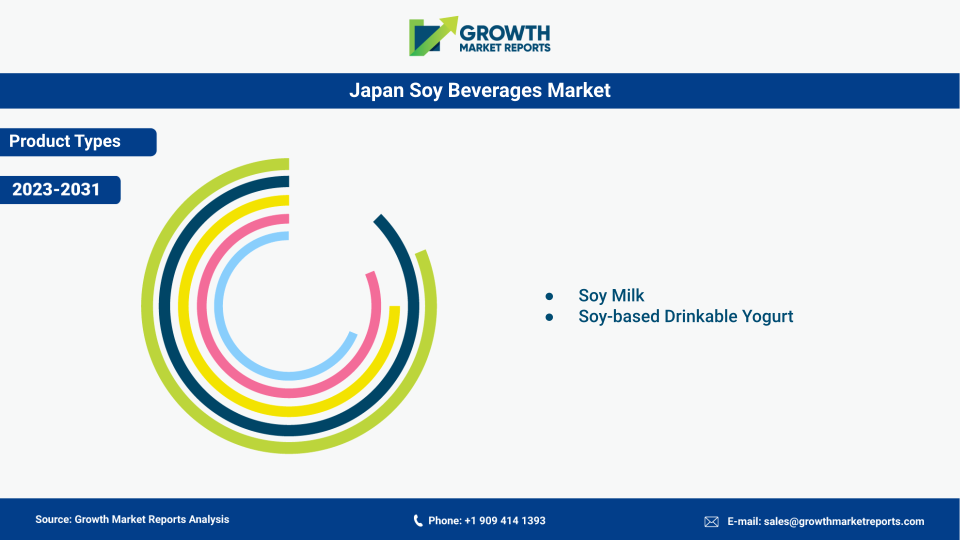
  • Soy Milk
  • Soy-Based Drinkable Yogurt
  • Flavored Soy Beverages
  • Others

Application

  • Household
  • Food Service
  • Others

Distribution Channel

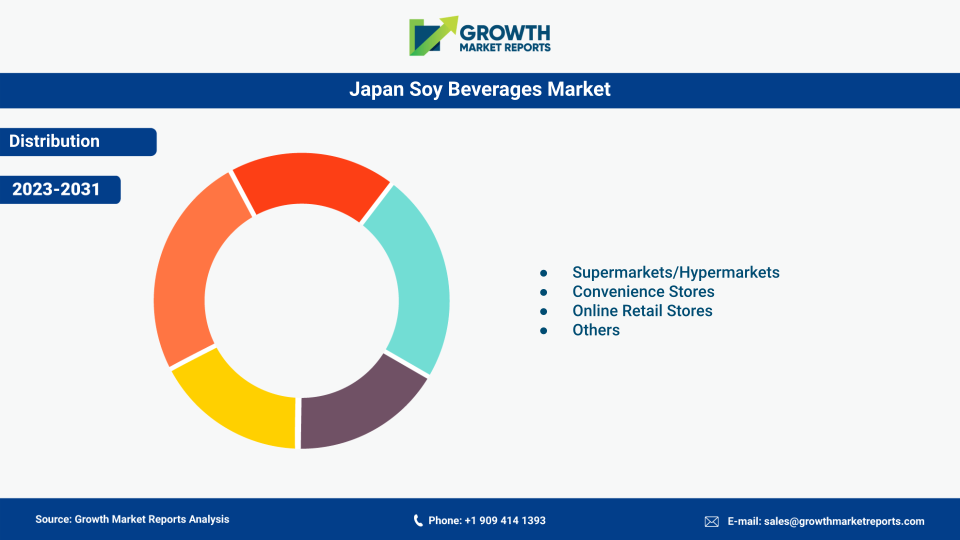
  • Supermarkets/Hypermarkets
  • Convenience Stores
  • Online Retail
  • Specialty Stores
  • Others

Packaging Type

  • Cartons
  • Bottles
  • Cans
  • Others

Competitive Landscape

Key players competing in the japan soy beverages market are Lam Soon Group; Otsuka Pharmaceutical Co., Ltd.; Kikkoman Corporation; MARUSAN-AI Co., Ltd; and The Hain Celestial Group

Companies are engaging in partnerships with supermarkets and hypermarkets to expand their market share. Moreover, they’re focusing on improving their brand awareness in the country.
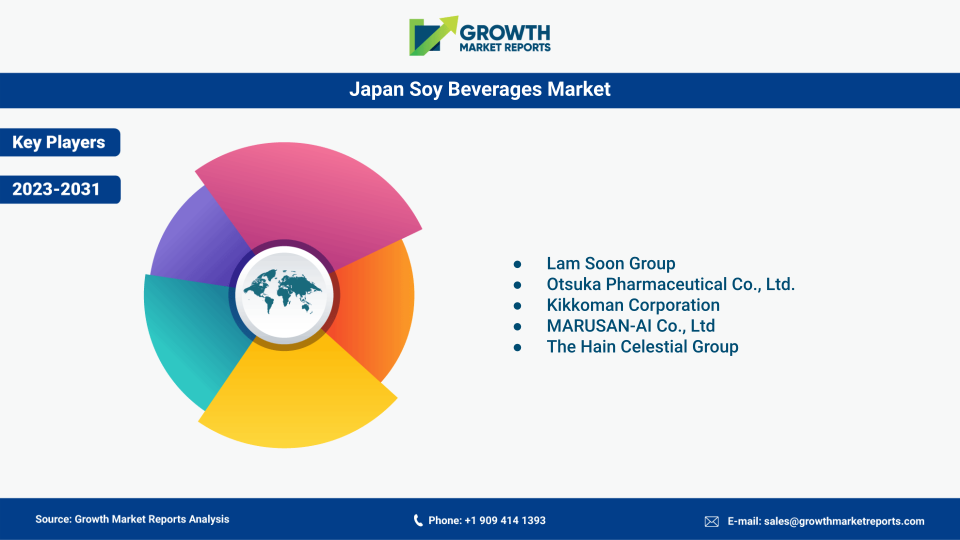

Japan Soy Beverages Market Key Players

Frequently Asked Questions

Challenges include competition from other plant-based beverages like almond and oat milk, consumer concerns about GMOs and allergens, and the need for transparent labeling and rigorous quality control.

Trends include the development of fortified and functional soy beverages, expansion of online and specialty retail channels, and increasing demand for organic, non-GMO, and clean-label products. Opportunities exist in product innovation, digital marketing, and strategic partnerships.

Major companies include Danone S.A. (Alpro, Silk), The Hain Celestial Group, Vitasoy International Holdings Ltd., Eden Foods Inc., SunOpta Inc., Kikkoman Corporation, Pacific Foods of Oregon, and others.

Soy beverages are mainly used in households as dairy alternatives, in food service establishments like restaurants and cafes, and in institutional settings such as schools, hospitals, and corporate cafeterias.

Common packaging types include cartons (the most popular), bottles, cans, and innovative formats like pouches and biodegradable containers, with a focus on sustainability and convenience.

Soy beverages are distributed through supermarkets/hypermarkets, convenience stores, online retail, specialty stores, and other channels like vending machines and direct-to-consumer sales.

The market is segmented into soy milk, soy-based drinkable yogurt, flavored soy beverages, and others such as soy-based smoothies and protein shakes. Soy milk is the most dominant category.

Asia Pacific leads the soy beverages market due to a long-standing tradition of soy consumption and a high prevalence of lactose intolerance. North America and Europe are also experiencing rapid growth, while Latin America and the Middle East & Africa are emerging markets.

Key growth drivers include rising health consciousness, increasing lactose intolerance and dairy allergies, the popularity of plant-based diets, product innovation, and a growing focus on sustainability and environmental responsibility.

The global soy beverages market reached USD 5.4 billion in 2024 and is projected to grow at a CAGR of 6.2% from 2025 to 2033, reaching an estimated value of USD 9.3 billion by 2033.

Table Of Content

Chapter 1 Executive Summary
Chapter 2 Assumptions and Acronyms Used
Chapter 3 Research Methodology
Chapter 4 Soy Beverages Market Overview
   4.1 Introduction
      4.1.1 Market Taxonomy
      4.1.2 Market Definition
      4.1.3 Macro-Economic Factors Impacting the Market Growth
   4.2 Soy Beverages Market Dynamics
      4.2.1 Market Drivers
      4.2.2 Market Restraints
      4.2.3 Market Opportunity
   4.3 Soy Beverages Market - Supply Chain Analysis
      4.3.1 List of Key Suppliers
      4.3.2 List of Key Distributors
      4.3.3 List of Key Consumers
   4.4 Key Forces Shaping the Soy Beverages Market
      4.4.1 Bargaining Power of Suppliers
      4.4.2 Bargaining Power of Buyers
      4.4.3 Threat of Substitution
      4.4.4 Threat of New Entrants
      4.4.5 Competitive Rivalry
   4.5 Global Soy Beverages Market Size & Forecast, 2023-2032
      4.5.1 Soy Beverages Market Size and Y-o-Y Growth
      4.5.2 Soy Beverages Market Absolute $ Opportunity

Chapter 5 Global Soy Beverages Market Analysis and Forecast By Product Type
   5.1 Introduction
      5.1.1 Key Market Trends & Growth Opportunities By Product Type
      5.1.2 Basis Point Share (BPS) Analysis By Product Type
      5.1.3 Absolute $ Opportunity Assessment By Product Type
   5.2 Soy Beverages Market Size Forecast By Product Type
      5.2.1 Soy Milk
      5.2.2 Soy-Based Drinkable Yogurt
      5.2.3 Flavored Soy Beverages
      5.2.4 Others
   5.3 Market Attractiveness Analysis By Product Type

Chapter 6 Global Soy Beverages Market Analysis and Forecast By Application
   6.1 Introduction
      6.1.1 Key Market Trends & Growth Opportunities By Application
      6.1.2 Basis Point Share (BPS) Analysis By Application
      6.1.3 Absolute $ Opportunity Assessment By Application
   6.2 Soy Beverages Market Size Forecast By Application
      6.2.1 Household
      6.2.2 Food Service
      6.2.3 Others
   6.3 Market Attractiveness Analysis By Application

Chapter 7 Global Soy Beverages Market Analysis and Forecast By Distribution Channel
   7.1 Introduction
      7.1.1 Key Market Trends & Growth Opportunities By Distribution Channel
      7.1.2 Basis Point Share (BPS) Analysis By Distribution Channel
      7.1.3 Absolute $ Opportunity Assessment By Distribution Channel
   7.2 Soy Beverages Market Size Forecast By Distribution Channel
      7.2.1 Supermarkets/Hypermarkets
      7.2.2 Convenience Stores
      7.2.3 Online Retail
      7.2.4 Specialty Stores
      7.2.5 Others
   7.3 Market Attractiveness Analysis By Distribution Channel

Chapter 8 Global Soy Beverages Market Analysis and Forecast By Packaging Type
   8.1 Introduction
      8.1.1 Key Market Trends & Growth Opportunities By Packaging Type
      8.1.2 Basis Point Share (BPS) Analysis By Packaging Type
      8.1.3 Absolute $ Opportunity Assessment By Packaging Type
   8.2 Soy Beverages Market Size Forecast By Packaging Type
      8.2.1 Cartons
      8.2.2 Bottles
      8.2.3 Cans
      8.2.4 Others
   8.3 Market Attractiveness Analysis By Packaging Type

Chapter 9 Global Soy Beverages Market Analysis and Forecast by Region
   9.1 Introduction
      9.1.1 Key Market Trends & Growth Opportunities By Region
      9.1.2 Basis Point Share (BPS) Analysis By Region
      9.1.3 Absolute $ Opportunity Assessment By Region
   9.2 Soy Beverages Market Size Forecast By Region
      9.2.1 North America
      9.2.2 Europe
      9.2.3 Asia Pacific
      9.2.4 Latin America
      9.2.5 Middle East & Africa (MEA)
   9.3 Market Attractiveness Analysis By Region

Chapter 10 Coronavirus Disease (COVID-19) Impact 
   10.1 Introduction 
   10.2 Current & Future Impact Analysis 
   10.3 Economic Impact Analysis 
   10.4 Government Policies 
   10.5 Investment Scenario

Chapter 11 North America Soy Beverages Analysis and Forecast
   11.1 Introduction
   11.2 North America Soy Beverages Market Size Forecast by Country
      11.2.1 U.S.
      11.2.2 Canada
   11.3 Basis Point Share (BPS) Analysis by Country
   11.4 Absolute $ Opportunity Assessment by Country
   11.5 Market Attractiveness Analysis by Country
   11.6 North America Soy Beverages Market Size Forecast By Product Type
      11.6.1 Soy Milk
      11.6.2 Soy-Based Drinkable Yogurt
      11.6.3 Flavored Soy Beverages
      11.6.4 Others
   11.7 Basis Point Share (BPS) Analysis By Product Type 
   11.8 Absolute $ Opportunity Assessment By Product Type 
   11.9 Market Attractiveness Analysis By Product Type
   11.10 North America Soy Beverages Market Size Forecast By Application
      11.10.1 Household
      11.10.2 Food Service
      11.10.3 Others
   11.11 Basis Point Share (BPS) Analysis By Application 
   11.12 Absolute $ Opportunity Assessment By Application 
   11.13 Market Attractiveness Analysis By Application
   11.14 North America Soy Beverages Market Size Forecast By Distribution Channel
      11.14.1 Supermarkets/Hypermarkets
      11.14.2 Convenience Stores
      11.14.3 Online Retail
      11.14.4 Specialty Stores
      11.14.5 Others
   11.15 Basis Point Share (BPS) Analysis By Distribution Channel 
   11.16 Absolute $ Opportunity Assessment By Distribution Channel 
   11.17 Market Attractiveness Analysis By Distribution Channel
   11.18 North America Soy Beverages Market Size Forecast By Packaging Type
      11.18.1 Cartons
      11.18.2 Bottles
      11.18.3 Cans
      11.18.4 Others
   11.19 Basis Point Share (BPS) Analysis By Packaging Type 
   11.20 Absolute $ Opportunity Assessment By Packaging Type 
   11.21 Market Attractiveness Analysis By Packaging Type

Chapter 12 Europe Soy Beverages Analysis and Forecast
   12.1 Introduction
   12.2 Europe Soy Beverages Market Size Forecast by Country
      12.2.1 Germany
      12.2.2 France
      12.2.3 Italy
      12.2.4 U.K.
      12.2.5 Spain
      12.2.6 Russia
      12.2.7 Rest of Europe
   12.3 Basis Point Share (BPS) Analysis by Country
   12.4 Absolute $ Opportunity Assessment by Country
   12.5 Market Attractiveness Analysis by Country
   12.6 Europe Soy Beverages Market Size Forecast By Product Type
      12.6.1 Soy Milk
      12.6.2 Soy-Based Drinkable Yogurt
      12.6.3 Flavored Soy Beverages
      12.6.4 Others
   12.7 Basis Point Share (BPS) Analysis By Product Type 
   12.8 Absolute $ Opportunity Assessment By Product Type 
   12.9 Market Attractiveness Analysis By Product Type
   12.10 Europe Soy Beverages Market Size Forecast By Application
      12.10.1 Household
      12.10.2 Food Service
      12.10.3 Others
   12.11 Basis Point Share (BPS) Analysis By Application 
   12.12 Absolute $ Opportunity Assessment By Application 
   12.13 Market Attractiveness Analysis By Application
   12.14 Europe Soy Beverages Market Size Forecast By Distribution Channel
      12.14.1 Supermarkets/Hypermarkets
      12.14.2 Convenience Stores
      12.14.3 Online Retail
      12.14.4 Specialty Stores
      12.14.5 Others
   12.15 Basis Point Share (BPS) Analysis By Distribution Channel 
   12.16 Absolute $ Opportunity Assessment By Distribution Channel 
   12.17 Market Attractiveness Analysis By Distribution Channel
   12.18 Europe Soy Beverages Market Size Forecast By Packaging Type
      12.18.1 Cartons
      12.18.2 Bottles
      12.18.3 Cans
      12.18.4 Others
   12.19 Basis Point Share (BPS) Analysis By Packaging Type 
   12.20 Absolute $ Opportunity Assessment By Packaging Type 
   12.21 Market Attractiveness Analysis By Packaging Type

Chapter 13 Asia Pacific Soy Beverages Analysis and Forecast
   13.1 Introduction
   13.2 Asia Pacific Soy Beverages Market Size Forecast by Country
      13.2.1 China
      13.2.2 Japan
      13.2.3 South Korea
      13.2.4 India
      13.2.5 Australia
      13.2.6 South East Asia (SEA)
      13.2.7 Rest of Asia Pacific (APAC)
   13.3 Basis Point Share (BPS) Analysis by Country
   13.4 Absolute $ Opportunity Assessment by Country
   13.5 Market Attractiveness Analysis by Country
   13.6 Asia Pacific Soy Beverages Market Size Forecast By Product Type
      13.6.1 Soy Milk
      13.6.2 Soy-Based Drinkable Yogurt
      13.6.3 Flavored Soy Beverages
      13.6.4 Others
   13.7 Basis Point Share (BPS) Analysis By Product Type 
   13.8 Absolute $ Opportunity Assessment By Product Type 
   13.9 Market Attractiveness Analysis By Product Type
   13.10 Asia Pacific Soy Beverages Market Size Forecast By Application
      13.10.1 Household
      13.10.2 Food Service
      13.10.3 Others
   13.11 Basis Point Share (BPS) Analysis By Application 
   13.12 Absolute $ Opportunity Assessment By Application 
   13.13 Market Attractiveness Analysis By Application
   13.14 Asia Pacific Soy Beverages Market Size Forecast By Distribution Channel
      13.14.1 Supermarkets/Hypermarkets
      13.14.2 Convenience Stores
      13.14.3 Online Retail
      13.14.4 Specialty Stores
      13.14.5 Others
   13.15 Basis Point Share (BPS) Analysis By Distribution Channel 
   13.16 Absolute $ Opportunity Assessment By Distribution Channel 
   13.17 Market Attractiveness Analysis By Distribution Channel
   13.18 Asia Pacific Soy Beverages Market Size Forecast By Packaging Type
      13.18.1 Cartons
      13.18.2 Bottles
      13.18.3 Cans
      13.18.4 Others
   13.19 Basis Point Share (BPS) Analysis By Packaging Type 
   13.20 Absolute $ Opportunity Assessment By Packaging Type 
   13.21 Market Attractiveness Analysis By Packaging Type

Chapter 14 Latin America Soy Beverages Analysis and Forecast
   14.1 Introduction
   14.2 Latin America Soy Beverages Market Size Forecast by Country
      14.2.1 Brazil
      14.2.2 Mexico
      14.2.3 Rest of Latin America (LATAM)
   14.3 Basis Point Share (BPS) Analysis by Country
   14.4 Absolute $ Opportunity Assessment by Country
   14.5 Market Attractiveness Analysis by Country
   14.6 Latin America Soy Beverages Market Size Forecast By Product Type
      14.6.1 Soy Milk
      14.6.2 Soy-Based Drinkable Yogurt
      14.6.3 Flavored Soy Beverages
      14.6.4 Others
   14.7 Basis Point Share (BPS) Analysis By Product Type 
   14.8 Absolute $ Opportunity Assessment By Product Type 
   14.9 Market Attractiveness Analysis By Product Type
   14.10 Latin America Soy Beverages Market Size Forecast By Application
      14.10.1 Household
      14.10.2 Food Service
      14.10.3 Others
   14.11 Basis Point Share (BPS) Analysis By Application 
   14.12 Absolute $ Opportunity Assessment By Application 
   14.13 Market Attractiveness Analysis By Application
   14.14 Latin America Soy Beverages Market Size Forecast By Distribution Channel
      14.14.1 Supermarkets/Hypermarkets
      14.14.2 Convenience Stores
      14.14.3 Online Retail
      14.14.4 Specialty Stores
      14.14.5 Others
   14.15 Basis Point Share (BPS) Analysis By Distribution Channel 
   14.16 Absolute $ Opportunity Assessment By Distribution Channel 
   14.17 Market Attractiveness Analysis By Distribution Channel
   14.18 Latin America Soy Beverages Market Size Forecast By Packaging Type
      14.18.1 Cartons
      14.18.2 Bottles
      14.18.3 Cans
      14.18.4 Others
   14.19 Basis Point Share (BPS) Analysis By Packaging Type 
   14.20 Absolute $ Opportunity Assessment By Packaging Type 
   14.21 Market Attractiveness Analysis By Packaging Type

Chapter 15 Middle East & Africa (MEA) Soy Beverages Analysis and Forecast
   15.1 Introduction
   15.2 Middle East & Africa (MEA) Soy Beverages Market Size Forecast by Country
      15.2.1 Saudi Arabia
      15.2.2 South Africa
      15.2.3 UAE
      15.2.4 Rest of Middle East & Africa (MEA)
   15.3 Basis Point Share (BPS) Analysis by Country
   15.4 Absolute $ Opportunity Assessment by Country
   15.5 Market Attractiveness Analysis by Country
   15.6 Middle East & Africa (MEA) Soy Beverages Market Size Forecast By Product Type
      15.6.1 Soy Milk
      15.6.2 Soy-Based Drinkable Yogurt
      15.6.3 Flavored Soy Beverages
      15.6.4 Others
   15.7 Basis Point Share (BPS) Analysis By Product Type 
   15.8 Absolute $ Opportunity Assessment By Product Type 
   15.9 Market Attractiveness Analysis By Product Type
   15.10 Middle East & Africa (MEA) Soy Beverages Market Size Forecast By Application
      15.10.1 Household
      15.10.2 Food Service
      15.10.3 Others
   15.11 Basis Point Share (BPS) Analysis By Application 
   15.12 Absolute $ Opportunity Assessment By Application 
   15.13 Market Attractiveness Analysis By Application
   15.14 Middle East & Africa (MEA) Soy Beverages Market Size Forecast By Distribution Channel
      15.14.1 Supermarkets/Hypermarkets
      15.14.2 Convenience Stores
      15.14.3 Online Retail
      15.14.4 Specialty Stores
      15.14.5 Others
   15.15 Basis Point Share (BPS) Analysis By Distribution Channel 
   15.16 Absolute $ Opportunity Assessment By Distribution Channel 
   15.17 Market Attractiveness Analysis By Distribution Channel
   15.18 Middle East & Africa (MEA) Soy Beverages Market Size Forecast By Packaging Type
      15.18.1 Cartons
      15.18.2 Bottles
      15.18.3 Cans
      15.18.4 Others
   15.19 Basis Point Share (BPS) Analysis By Packaging Type 
   15.20 Absolute $ Opportunity Assessment By Packaging Type 
   15.21 Market Attractiveness Analysis By Packaging Type

Chapter 16 Competition Landscape 
   16.1 Soy Beverages Market: Competitive Dashboard
   16.2 Global Soy Beverages Market: Market Share Analysis, 2023
   16.3 Company Profiles (Details – Overview, Financials, Developments, Strategy) 
      16.3.1 Danone
The Hain Celestial Group
Eden Foods
Vitasoy International Holdings
SunOpta
Kikkoman Corporation
Sanitarium Health and Wellbeing Company
Pureharvest
Pacific Foods of Oregon
Alpro
Nestlé S.A.
WhiteWave Foods (now part of Danone)
Jain Agro Food Products
Pulmuone Co., Ltd.
Sahmyook Foods
Jain Irrigation Systems
Hiland Dairy
Earth’s Own Food Company
Dean Foods
Triballat Noyal

Methodology

Our Clients

Honda Motor Co. Ltd.
Siemens Healthcare
Dassault Aviation
Pfizer
General Mills
Deloitte
sinopec
General Electric