Silicon Nitride Ceramic Substrates Market Research Report 2033

Silicon Nitride Ceramic Substrates Market Research Report 2033

Segments - by Product Type (High Purity Silicon Nitride Substrates, Standard Silicon Nitride Substrates), by Application (LED, Power Electronics, Automotive, Aerospace, Medical Devices, Others), by End-User (Electronics, Automotive, Aerospace & Defense, Medical, Others), by Thickness (Up to 0.5 mm, 0.5–1.0 mm, Above 1.0 mm)

https://growthmarketreports.com/Raksha
Author : Raksha Sharma
https://growthmarketreports.com/Vaibhav
Fact-checked by : V. Chandola
https://growthmarketreports.com/Shruti
Editor : Shruti Bhat

Upcoming | Report ID :MC-164 | 4.1 Rating | 35 Reviews | 263 Pages | Format : Docx PDF

Report Description


Silicon Nitride Ceramic Substrates Market Outlook

According to our latest research, the global silicon nitride ceramic substrates market size in 2024 stands at USD 1.17 billion, reflecting robust demand across key sectors such as electronics, automotive, and medical devices. The market is experiencing a healthy compound annual growth rate (CAGR) of 7.3% from 2025 to 2033. By the end of the forecast period in 2033, the market is projected to reach USD 2.21 billion. This impressive growth trajectory is primarily fueled by the increasing adoption of silicon nitride ceramic substrates in high-performance and reliability-critical applications, driven by their superior thermal conductivity, mechanical strength, and resistance to extreme environments.

The primary growth factor driving the silicon nitride ceramic substrates market is the surging demand for advanced electronic components that require high thermal conductivity and electrical insulation. As the global electronics industry continues to innovate, particularly in power electronics and LED applications, manufacturers are increasingly turning to silicon nitride substrates to enhance device performance and reliability. These substrates are highly valued for their ability to withstand high temperatures and harsh operational conditions, making them indispensable in next-generation electronic devices. The rapid miniaturization of electronic components and the growing complexity of integrated circuits further amplify the need for substrates that offer both mechanical robustness and excellent thermal management, positioning silicon nitride as a material of choice in this evolving landscape.

Another significant driver is the automotive industry's accelerating shift towards electric vehicles (EVs) and advanced driver-assistance systems (ADAS). Silicon nitride ceramic substrates play a pivotal role in power electronic modules, inverters, and high-frequency switching devices used in EVs. Their exceptional thermal shock resistance and dielectric properties ensure the safe and efficient operation of automotive electronics, which are increasingly subjected to demanding performance criteria. Moreover, the global push for energy efficiency, reduction in carbon emissions, and the integration of sophisticated sensors and control units in vehicles are collectively propelling the adoption of silicon nitride substrates. This trend is especially pronounced in regions with strong automotive manufacturing bases, such as Asia Pacific and Europe.

The medical devices sector is also emerging as a promising avenue for market expansion, as silicon nitride ceramic substrates are being utilized in a variety of applications, including implantable devices, diagnostic equipment, and surgical instruments. The biocompatibility, chemical inertness, and mechanical strength of silicon nitride make it an ideal material for medical applications where reliability and patient safety are paramount. Additionally, ongoing research and development activities aimed at enhancing the properties of silicon nitride ceramics are expected to unlock new possibilities in both traditional and emerging medical technologies. As healthcare systems worldwide continue to invest in advanced diagnostic and therapeutic solutions, the demand for high-performance ceramic substrates is set to rise further.

From a regional perspective, Asia Pacific dominates the global silicon nitride ceramic substrates market, accounting for the largest share in both production and consumption. The presence of major electronics manufacturing hubs in China, Japan, South Korea, and Taiwan, coupled with the rapid expansion of the automotive and medical device industries, underpins the region's leadership. North America and Europe are also witnessing steady growth, driven by technological advancements and increasing investments in high-reliability electronics and renewable energy sectors. Meanwhile, emerging markets in Latin America and the Middle East & Africa are gradually catching up, as local industries recognize the benefits of silicon nitride substrates in enhancing product performance and longevity.

Global Silicon Nitride Ceramic Substrates Industry Outlook

Product Type Analysis

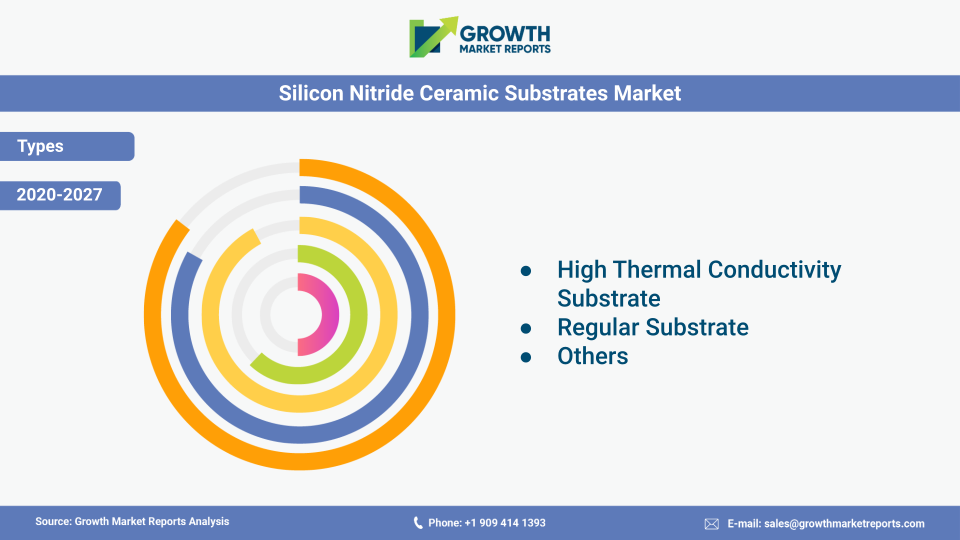
The silicon nitride ceramic substrates market can be segmented by product type into high purity silicon nitride substrates and standard silicon nitride substrates. High purity silicon nitride substrates are gaining significant traction due to their exceptional thermal conductivity, low dielectric loss, and minimal impurity content. These attributes make them highly suitable for applications in power electronics, LED packaging, and high-frequency communication devices, where reliability and performance are non-negotiable. As industries continue to push the boundaries of miniaturization and thermal management, the demand for high purity substrates is expected to outpace that of standard grades, driving innovation and premium pricing in this segment.

Standard silicon nitride substrates, while not as advanced as their high purity counterparts, still offer a compelling combination of mechanical strength, thermal stability, and cost-effectiveness. These substrates are widely used in applications where extreme performance is not a primary requirement, such as certain automotive components, industrial machinery, and general-purpose electronic devices. The versatility and relatively lower cost of standard silicon nitride substrates make them an attractive option for manufacturers seeking to balance performance and budget constraints, particularly in price-sensitive markets.

The ongoing trend towards high-performance electronics and the increasing complexity of end-use applications are prompting manufacturers to invest in advanced manufacturing technologies and quality control processes. This has resulted in a gradual shift from standard to high purity silicon nitride substrates across several industries. Companies are focusing on enhancing purity levels, reducing defect rates, and improving consistency in substrate properties to meet the stringent requirements of cutting-edge applications.

Furthermore, the competitive landscape in the product type segment is characterized by technological differentiation, with leading players investing heavily in research and development to introduce next-generation substrates. Innovations such as ultra-thin, high-strength substrates and hybrid materials are emerging as key differentiators, enabling manufacturers to cater to specialized applications and capture higher market share. As end-users become more discerning in their material choices, the emphasis on product performance, reliability, and customization is expected to intensify.

Report Scope

Attributes Details
Report Title Silicon Nitride Ceramic Substrates Market Research Report 2033
By Product Type High Purity Silicon Nitride Substrates, Standard Silicon Nitride Substrates
By Application LED, Power Electronics, Automotive, Aerospace, Medical Devices, Others
By End-User Electronics, Automotive, Aerospace & Defense, Medical, Others
By Thickness Up to 0.5 mm, 0.5–1.0 mm, Above 1.0 mm
Regions Covered North America, Europe, APAC, Latin America, MEA
Base Year 2024
Historic Data 2018-2023
Forecast Period 2025-2033
Number of Pages 263
Number of Tables & Figures 294
Customization Available Yes, the report can be customized as per your need.

Application Analysis

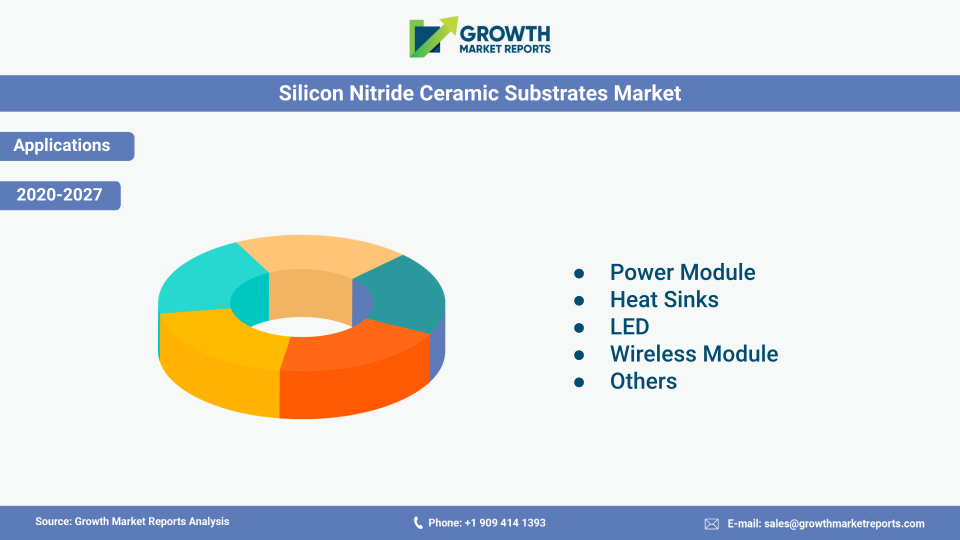
The application landscape of the silicon nitride ceramic substrates market is diverse, encompassing LED, power electronics, automotive, aerospace, medical devices, and others. Among these, the LED segment stands out as a major revenue generator, fueled by the global transition towards energy-efficient lighting solutions. Silicon nitride substrates are increasingly being adopted in high-power LED modules due to their superior heat dissipation capabilities, which are critical for maintaining brightness and extending device lifespan. The rapid proliferation of LED-based lighting in commercial, residential, and automotive sectors is expected to sustain robust demand for silicon nitride substrates in this application.

Power electronics represent another high-growth application segment, driven by the expanding use of silicon nitride substrates in devices such as inverters, converters, and power modules. The ability of these substrates to handle high voltages and currents, while minimizing thermal and electrical losses, makes them indispensable in renewable energy systems, electric vehicles, and industrial automation. As the world shifts towards clean energy and electrification, the demand for reliable and efficient power electronic components is set to surge, further boosting the adoption of silicon nitride substrates.

In the automotive sector, silicon nitride ceramic substrates are increasingly being utilized in advanced electronic control units, sensors, and power modules for electric and hybrid vehicles. The stringent requirements for durability, thermal management, and miniaturization in automotive electronics are driving the preference for silicon nitride over traditional materials. Additionally, the integration of sophisticated safety and connectivity features in modern vehicles is creating new opportunities for substrate manufacturers to collaborate with automotive OEMs and component suppliers.

The aerospace and medical device segments, while smaller in terms of market share, are characterized by high-value applications that demand uncompromising performance and reliability. In aerospace, silicon nitride substrates are used in critical electronic systems and sensor modules exposed to extreme conditions. In the medical field, their biocompatibility and resistance to sterilization processes make them ideal for implantable devices and diagnostic equipment. As regulatory standards in these sectors continue to evolve, the emphasis on material quality and traceability is expected to drive further adoption of silicon nitride substrates.

End-User Analysis

Segmenting the silicon nitride ceramic substrates market by end-user reveals a strong presence in the electronics, automotive, aerospace & defense, medical, and other industries. The electronics sector commands the largest share, underpinned by the relentless demand for high-performance components in consumer electronics, telecommunications, and industrial automation. Silicon nitride substrates are integral to the production of printed circuit boards, semiconductor packages, and high-frequency devices, where their thermal and electrical properties enable the development of compact, reliable, and energy-efficient products.

The automotive industry is rapidly emerging as a key end-user, driven by the electrification of vehicles and the integration of advanced driver assistance and infotainment systems. Silicon nitride substrates are being increasingly adopted in powertrain electronics, battery management systems, and safety-critical modules, where their ability to withstand thermal cycling and mechanical stress enhances the overall reliability and safety of automotive electronics. As automakers strive to meet stringent emission standards and improve vehicle performance, the role of high-performance ceramic substrates is expected to become even more pronounced.

Aerospace and defense applications, though niche, represent a lucrative segment for silicon nitride substrate manufacturers. The unique combination of lightweight, high strength, and resistance to thermal and chemical extremes makes silicon nitride an ideal material for mission-critical electronic systems, sensors, and communication devices used in aircraft, satellites, and defense equipment. The increasing adoption of unmanned aerial vehicles (UAVs) and the modernization of military platforms are further expanding the scope of silicon nitride substrates in this sector.

In the medical industry, silicon nitride ceramic substrates are gaining traction in diagnostic imaging equipment, implantable devices, and surgical tools, owing to their biocompatibility, non-magnetic properties, and resistance to corrosion. The growing focus on patient safety, device miniaturization, and infection control is driving the adoption of advanced ceramic materials in medical device manufacturing. As healthcare providers and device manufacturers continue to invest in next-generation technologies, the demand for high-quality silicon nitride substrates is expected to rise steadily.

Thickness Analysis

The silicon nitride ceramic substrates market is also segmented by thickness, with categories including up to 0.5 mm, 0.5–1.0 mm, and above 1.0 mm. Substrates with thickness up to 0.5 mm are widely used in applications where miniaturization and lightweight design are critical, such as in mobile devices, high-performance LEDs, and compact power modules. The trend towards thinner and more efficient electronic devices is driving the demand for ultra-thin silicon nitride substrates, prompting manufacturers to invest in advanced fabrication techniques and quality control measures to ensure consistent thickness and performance.

The 0.5–1.0 mm thickness segment caters to a broad range of applications, balancing mechanical strength with thermal management capabilities. These substrates are commonly used in automotive, industrial, and medical devices, where durability and reliability are paramount. The versatility of this thickness range allows for customization and integration into various device architectures, making it a popular choice among OEMs and component manufacturers seeking to optimize performance without compromising on cost or manufacturability.

Substrates above 1.0 mm in thickness are primarily utilized in heavy-duty applications that demand exceptional mechanical strength and resistance to thermal and mechanical stresses. Industries such as aerospace, defense, and industrial automation rely on thick silicon nitride substrates for critical electronic modules, power converters, and control systems exposed to harsh operating environments. The ability of these substrates to maintain structural integrity and performance under extreme conditions makes them indispensable in mission-critical applications.

The ongoing miniaturization of electronic components and the push for higher power densities are influencing substrate thickness trends across industries. Manufacturers are increasingly focusing on developing substrates with optimized thickness profiles that meet the specific requirements of each application, balancing factors such as thermal conductivity, mechanical strength, and cost-effectiveness. As end-users demand greater customization and performance, the market for silicon nitride substrates across different thickness categories is expected to evolve in line with technological advancements and shifting industry needs.

Opportunities & Threats

The silicon nitride ceramic substrates market presents a host of opportunities, particularly in the context of emerging technologies and the ongoing digital transformation across industries. The proliferation of 5G networks, the Internet of Things (IoT), and artificial intelligence (AI) is driving demand for high-performance electronic components that require advanced substrate materials. Silicon nitride’s superior thermal and electrical properties position it as a preferred choice for next-generation devices, opening up new avenues for growth in telecommunications, data centers, and smart infrastructure. Additionally, the increasing focus on sustainable and energy-efficient technologies is prompting manufacturers to explore innovative applications of silicon nitride substrates in renewable energy systems, electric vehicles, and energy storage solutions.

Another significant opportunity lies in the development of customized and application-specific substrates, as end-users seek tailored solutions to address unique performance requirements. Advances in material science and manufacturing technologies are enabling the production of silicon nitride substrates with enhanced properties, such as improved thermal conductivity, reduced dielectric loss, and greater mechanical strength. This trend towards customization is expected to drive collaboration between substrate manufacturers, OEMs, and research institutions, fostering innovation and accelerating the adoption of silicon nitride ceramics in new and existing markets.

Despite the positive outlook, the market faces certain restraining factors, chief among them being the high cost of raw materials and complex manufacturing processes associated with silicon nitride substrates. The need for precise control over purity, microstructure, and defect levels necessitates significant investment in advanced equipment and quality assurance protocols, which can pose entry barriers for new players and limit market penetration in price-sensitive regions. Furthermore, competition from alternative materials such as aluminum nitride and alumina ceramics, which offer comparable properties at lower costs, presents an ongoing challenge for silicon nitride substrate manufacturers. Addressing these cost and process-related challenges will be crucial for sustaining long-term growth and competitiveness in the market.

Regional Outlook

Regionally, Asia Pacific remains the dominant force in the global silicon nitride ceramic substrates market, accounting for over 48% of the total market value in 2024, or approximately USD 561 million. The region’s leadership is anchored by its robust electronics manufacturing ecosystem, particularly in countries like China, Japan, South Korea, and Taiwan, which serve as global hubs for semiconductor and LED production. The rapid expansion of the automotive and medical device industries in Asia Pacific further amplifies demand for silicon nitride substrates, as manufacturers prioritize high-performance materials to meet evolving consumer and regulatory requirements. With a projected CAGR of 8.0% through 2033, Asia Pacific is expected to maintain its growth momentum, driven by ongoing investments in advanced manufacturing and R&D.

North America follows as the second-largest market, with a market size of USD 312 million in 2024, representing approximately 27% of the global market. The region benefits from a strong presence of leading technology companies, automotive manufacturers, and defense contractors, all of which are major consumers of high-performance ceramic substrates. The focus on innovation, coupled with increasing investments in renewable energy and electric vehicle infrastructure, is expected to sustain steady growth in North America. Additionally, the region’s emphasis on regulatory compliance and product quality is driving the adoption of advanced materials like silicon nitride in critical applications.

Europe holds a significant share of the market, valued at USD 210 million in 2024, or roughly 18% of the global total. The region’s advanced automotive and aerospace industries, along with a strong focus on sustainability and energy efficiency, are key contributors to market growth. European manufacturers are increasingly incorporating silicon nitride substrates into high-reliability electronic systems, particularly in the context of electric mobility and industrial automation. Meanwhile, Latin America and the Middle East & Africa collectively account for the remaining 7% of the market, with a combined value of USD 82 million in 2024. These regions are gradually expanding their footprint in the silicon nitride substrates market, driven by growing investments in infrastructure, healthcare, and industrial development.

Silicon Nitride Ceramic Substrates Market Statistics

Competitor Outlook

The competitive landscape of the silicon nitride ceramic substrates market is characterized by a mix of global leaders and regional players, all vying for market share through innovation, quality, and strategic partnerships. Leading companies are heavily invested in research and development, aiming to enhance the performance, reliability, and cost-effectiveness of their silicon nitride substrates. This focus on innovation is driving the introduction of new product variants, such as ultra-thin, high-purity, and hybrid substrates, tailored to meet the evolving needs of end-users across diverse industries. The ability to offer customized solutions and maintain stringent quality standards is emerging as a key differentiator in this highly competitive market.

Mergers, acquisitions, and strategic collaborations are common strategies employed by major players to strengthen their market position and expand their global footprint. Companies are increasingly seeking to diversify their product portfolios, enter new geographic markets, and leverage synergies across different application segments. The competitive dynamics are further shaped by the entry of new players, particularly in Asia Pacific, where favorable government policies and access to advanced manufacturing infrastructure are lowering entry barriers. However, established players continue to hold a significant edge, thanks to their extensive distribution networks, brand reputation, and technological expertise.

Key players in the silicon nitride ceramic substrates market include Kyocera Corporation, Toshiba Materials, Rogers Corporation, CoorsTek Inc., and CeramTec GmbH. Kyocera Corporation is renowned for its comprehensive portfolio of ceramic substrates, leveraging advanced manufacturing technologies to deliver high-performance products for electronics, automotive, and medical applications. Toshiba Materials is a leader in the development of high-purity silicon nitride substrates, focusing on innovation and quality to cater to demanding end-use sectors such as power electronics and LED manufacturing. Rogers Corporation is recognized for its expertise in engineered materials, offering a range of ceramic substrates designed for high-frequency and high-power applications.

CoorsTek Inc. is a prominent player with a strong presence in both standard and high-purity silicon nitride substrates, serving industries such as aerospace, defense, and industrial automation. CeramTec GmbH, based in Europe, is known for its extensive R&D capabilities and commitment to sustainability, supplying advanced ceramic solutions to the automotive, medical, and electronics markets. These companies, along with several regional and niche players, are continuously investing in process optimization, capacity expansion, and customer engagement to maintain their competitive edge. As the market evolves, the ability to anticipate industry trends, adapt to changing customer needs, and deliver value-added solutions will be critical for sustained success in the silicon nitride ceramic substrates market.

Key Players

  • Kyocera Corporation
  • Rogers Corporation
  • CoorsTek Inc.
  • CeramTec GmbH
  • Toshiba Materials Co., Ltd.
  • MARUWA Co., Ltd.
  • Denka Company Limited
  • Morgan Advanced Materials
  • NGK Spark Plug Co., Ltd. (NTK Technical Ceramics)
  • Hitachi Metals, Ltd.
  • Ferro Corporation
  • AdValue Technology
  • Innovacera
  • Precision Ceramics
  • Ortech Advanced Ceramics
  • Elan Technology
  • Corning Incorporated
  • Lianyungang Highborn Technology Co., Ltd.
  • Shenzhen Hard Precision Ceramic Co., Ltd.
  • Xiamen Innovacera Advanced Materials Co., Ltd.
Silicon Nitride Ceramic Substrates Market Overview

Segments

The Silicon Nitride Ceramic Substrates market has been segmented on the basis of

Product Type

  • High Purity Silicon Nitride Substrates
  • Standard Silicon Nitride Substrates

Application

  • LED
  • Power Electronics
  • Automotive
  • Aerospace
  • Medical Devices
  • Others

End-User

  • Electronics
  • Automotive
  • Aerospace & Defense
  • Medical
  • Others

Thickness

  • Up to 0.5 mm
  • 0.5–1.0 mm
  • Above 1.0 mm

Competitive Landscape

Top players operating in the market include TOSHIBA MATERIALS CO., LTD., Rogers Corporation, KYOCERA Corporation, MARUWA Co., Ltd., CoorsTek Inc., Denka, and Yantai Tomley Hi-tech Advanced Materials Co. Ltd. (Yantai Tongli Gaoke New Material Co., Ltd.). These companies are considered as key manufacturers of silicon nitride ceramic substrates based on their revenue, research development (R&D) activities, product offerings, regional presence, and supply chain management system.
These players are adopting key strategies such as acquisition, collaborations, and geographical expansion to gain market share. For instance,
  • In 2019, Toshiba Materials Co., Ltd partnered with the Heraeus Company. Heraeus and Toshiba jointly develop silicon nitride ceramic substrates.
  • In 2019, Denka Company Limited increased investment related to the Thermally Conductive Materials for Automotive Applications. This action of the company helps them to make position in the global market as demand for the automotive application increased.
  • In 2018, CoorsTek Inc. launched different engineered ceramics, thereby increasing its product portfolio and revenue.
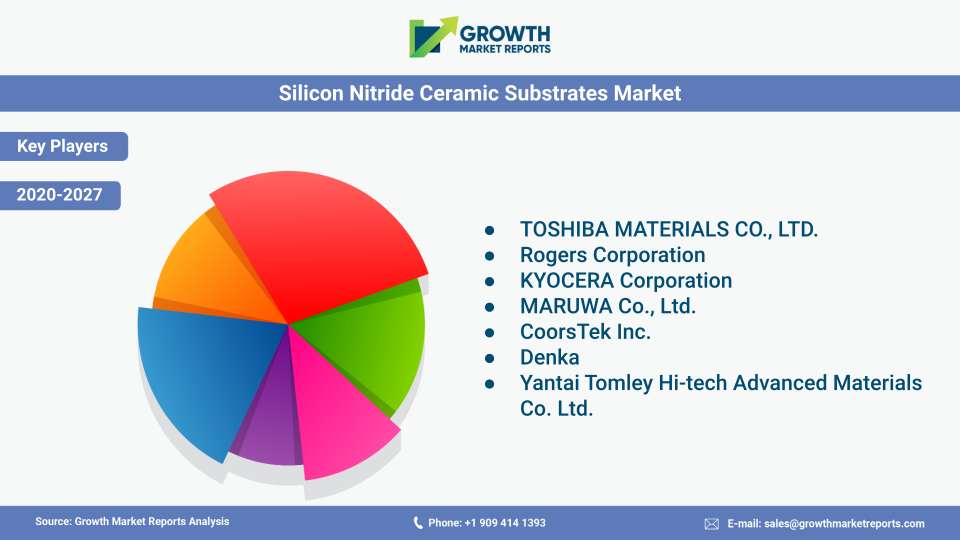

Silicon Nitride Ceramic Substrates Market Key Players

Frequently Asked Questions

Additional company profiles can be provided on request.

Yes, the report includes the pricing analysis in the final report.

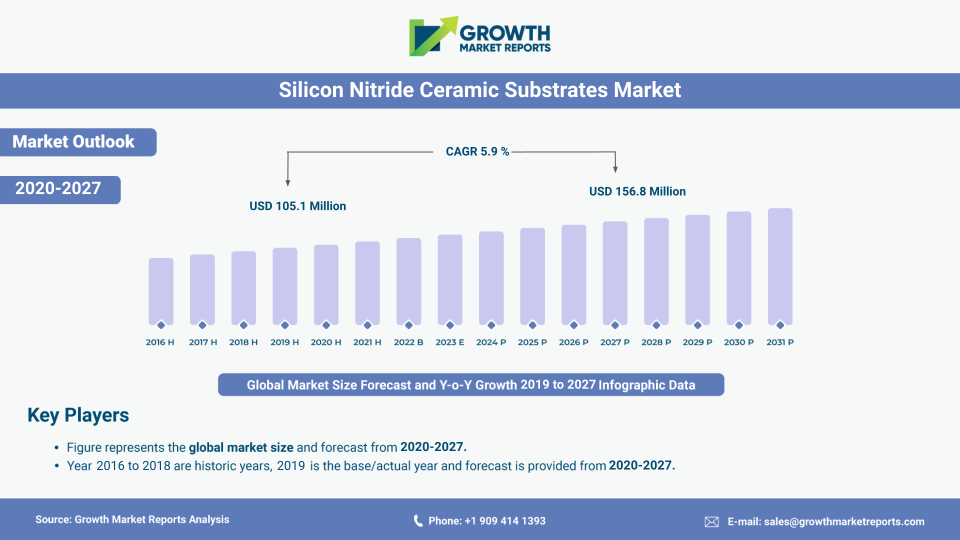
According to this Growth Market Reports report, the market from silicon nitride ceramic substrates is likely to register a CAGR of 5.9% during forecast period 2020-2027, with an anticipated valuation of USD 156.8 million by the end of the 2027.

In addition to market size (in USD Million) and Volume, company market share (in % for base year 2019), and other data such as pricing analysis for year 2017 to 2027 (estimated pricing analysis) is provided, and key impact of regulation in final report.

Increasing use of ceramic substrates as an alternate to metals and alloys. The increasing demand for compact microelectronics packaging solutions is another significant factor driving the growth of the ceramic substrates market, are the factors expected to drive the market growth during forecast period.

Factors such as competitive strength and market positioning are key areas considered while selecting top companies to be profiled.

The market is expected to witness decline of over 2.5% between 2019 and 2020 owing to the negative impact of COVID 19 pandemic on the silicon nitride ceramic substrates market. The shutdown of production activities, disruption in supply chain due to restrictions on transportation activities, and temporary decline in demand for silicon nitride ceramic substrates are some of the prime reasons responsible for this market trend.

The base year considered for the global silicon nitride ceramic substrates market report is 2019. The complete analysis period is 2017 to 2027, wherein, 2017, and 2018 are the historic years and the forecast is provided from 2020 to 2027.

The electronics industry is the key end-user driving the silicon nitride ceramic substrates market growth.

Major manufactures include TOSHIBA MATERIALS CO., LTD., Rogers Corporation, KYOCERA Corporation, MARUWA Co., Ltd., CoorsTek Inc., and Denka.

Table Of Content

Chapter 1 Executive Summary
Chapter 2 Assumptions and Acronyms Used
Chapter 3 Research Methodology
Chapter 4 Silicon Nitride Ceramic Substrates Market Overview
   4.1 Introduction
      4.1.1 Market Taxonomy
      4.1.2 Market Definition
      4.1.3 Macro-Economic Factors Impacting the Market Growth
   4.2 Silicon Nitride Ceramic Substrates Market Dynamics
      4.2.1 Market Drivers
      4.2.2 Market Restraints
      4.2.3 Market Opportunity
   4.3 Silicon Nitride Ceramic Substrates Market - Supply Chain Analysis
      4.3.1 List of Key Suppliers
      4.3.2 List of Key Distributors
      4.3.3 List of Key Consumers
   4.4 Key Forces Shaping the Silicon Nitride Ceramic Substrates Market
      4.4.1 Bargaining Power of Suppliers
      4.4.2 Bargaining Power of Buyers
      4.4.3 Threat of Substitution
      4.4.4 Threat of New Entrants
      4.4.5 Competitive Rivalry
   4.5 Global Silicon Nitride Ceramic Substrates Market Size & Forecast, 2023-2032
      4.5.1 Silicon Nitride Ceramic Substrates Market Size and Y-o-Y Growth
      4.5.2 Silicon Nitride Ceramic Substrates Market Absolute $ Opportunity

Chapter 5 Global Silicon Nitride Ceramic Substrates Market Analysis and Forecast By Product Type
   5.1 Introduction
      5.1.1 Key Market Trends & Growth Opportunities By Product Type
      5.1.2 Basis Point Share (BPS) Analysis By Product Type
      5.1.3 Absolute $ Opportunity Assessment By Product Type
   5.2 Silicon Nitride Ceramic Substrates Market Size Forecast By Product Type
      5.2.1 High Purity Silicon Nitride Substrates
      5.2.2 Standard Silicon Nitride Substrates
   5.3 Market Attractiveness Analysis By Product Type

Chapter 6 Global Silicon Nitride Ceramic Substrates Market Analysis and Forecast By Application
   6.1 Introduction
      6.1.1 Key Market Trends & Growth Opportunities By Application
      6.1.2 Basis Point Share (BPS) Analysis By Application
      6.1.3 Absolute $ Opportunity Assessment By Application
   6.2 Silicon Nitride Ceramic Substrates Market Size Forecast By Application
      6.2.1 LED
      6.2.2 Power Electronics
      6.2.3 Automotive
      6.2.4 Aerospace
      6.2.5 Medical Devices
      6.2.6 Others
   6.3 Market Attractiveness Analysis By Application

Chapter 7 Global Silicon Nitride Ceramic Substrates Market Analysis and Forecast By End-User
   7.1 Introduction
      7.1.1 Key Market Trends & Growth Opportunities By End-User
      7.1.2 Basis Point Share (BPS) Analysis By End-User
      7.1.3 Absolute $ Opportunity Assessment By End-User
   7.2 Silicon Nitride Ceramic Substrates Market Size Forecast By End-User
      7.2.1 Electronics
      7.2.2 Automotive
      7.2.3 Aerospace & Defense
      7.2.4 Medical
      7.2.5 Others
   7.3 Market Attractiveness Analysis By End-User

Chapter 8 Global Silicon Nitride Ceramic Substrates Market Analysis and Forecast By Thickness
   8.1 Introduction
      8.1.1 Key Market Trends & Growth Opportunities By Thickness
      8.1.2 Basis Point Share (BPS) Analysis By Thickness
      8.1.3 Absolute $ Opportunity Assessment By Thickness
   8.2 Silicon Nitride Ceramic Substrates Market Size Forecast By Thickness
      8.2.1 Up to 0.5 mm
      8.2.2 0.5–1.0 mm
      8.2.3 Above 1.0 mm
   8.3 Market Attractiveness Analysis By Thickness

Chapter 9 Global Silicon Nitride Ceramic Substrates Market Analysis and Forecast by Region
   9.1 Introduction
      9.1.1 Key Market Trends & Growth Opportunities By Region
      9.1.2 Basis Point Share (BPS) Analysis By Region
      9.1.3 Absolute $ Opportunity Assessment By Region
   9.2 Silicon Nitride Ceramic Substrates Market Size Forecast By Region
      9.2.1 North America
      9.2.2 Europe
      9.2.3 Asia Pacific
      9.2.4 Latin America
      9.2.5 Middle East & Africa (MEA)
   9.3 Market Attractiveness Analysis By Region

Chapter 10 Coronavirus Disease (COVID-19) Impact 
   10.1 Introduction 
   10.2 Current & Future Impact Analysis 
   10.3 Economic Impact Analysis 
   10.4 Government Policies 
   10.5 Investment Scenario

Chapter 11 North America Silicon Nitride Ceramic Substrates Analysis and Forecast
   11.1 Introduction
   11.2 North America Silicon Nitride Ceramic Substrates Market Size Forecast by Country
      11.2.1 U.S.
      11.2.2 Canada
   11.3 Basis Point Share (BPS) Analysis by Country
   11.4 Absolute $ Opportunity Assessment by Country
   11.5 Market Attractiveness Analysis by Country
   11.6 North America Silicon Nitride Ceramic Substrates Market Size Forecast By Product Type
      11.6.1 High Purity Silicon Nitride Substrates
      11.6.2 Standard Silicon Nitride Substrates
   11.7 Basis Point Share (BPS) Analysis By Product Type 
   11.8 Absolute $ Opportunity Assessment By Product Type 
   11.9 Market Attractiveness Analysis By Product Type
   11.10 North America Silicon Nitride Ceramic Substrates Market Size Forecast By Application
      11.10.1 LED
      11.10.2 Power Electronics
      11.10.3 Automotive
      11.10.4 Aerospace
      11.10.5 Medical Devices
      11.10.6 Others
   11.11 Basis Point Share (BPS) Analysis By Application 
   11.12 Absolute $ Opportunity Assessment By Application 
   11.13 Market Attractiveness Analysis By Application
   11.14 North America Silicon Nitride Ceramic Substrates Market Size Forecast By End-User
      11.14.1 Electronics
      11.14.2 Automotive
      11.14.3 Aerospace & Defense
      11.14.4 Medical
      11.14.5 Others
   11.15 Basis Point Share (BPS) Analysis By End-User 
   11.16 Absolute $ Opportunity Assessment By End-User 
   11.17 Market Attractiveness Analysis By End-User
   11.18 North America Silicon Nitride Ceramic Substrates Market Size Forecast By Thickness
      11.18.1 Up to 0.5 mm
      11.18.2 0.5–1.0 mm
      11.18.3 Above 1.0 mm
   11.19 Basis Point Share (BPS) Analysis By Thickness 
   11.20 Absolute $ Opportunity Assessment By Thickness 
   11.21 Market Attractiveness Analysis By Thickness

Chapter 12 Europe Silicon Nitride Ceramic Substrates Analysis and Forecast
   12.1 Introduction
   12.2 Europe Silicon Nitride Ceramic Substrates Market Size Forecast by Country
      12.2.1 Germany
      12.2.2 France
      12.2.3 Italy
      12.2.4 U.K.
      12.2.5 Spain
      12.2.6 Russia
      12.2.7 Rest of Europe
   12.3 Basis Point Share (BPS) Analysis by Country
   12.4 Absolute $ Opportunity Assessment by Country
   12.5 Market Attractiveness Analysis by Country
   12.6 Europe Silicon Nitride Ceramic Substrates Market Size Forecast By Product Type
      12.6.1 High Purity Silicon Nitride Substrates
      12.6.2 Standard Silicon Nitride Substrates
   12.7 Basis Point Share (BPS) Analysis By Product Type 
   12.8 Absolute $ Opportunity Assessment By Product Type 
   12.9 Market Attractiveness Analysis By Product Type
   12.10 Europe Silicon Nitride Ceramic Substrates Market Size Forecast By Application
      12.10.1 LED
      12.10.2 Power Electronics
      12.10.3 Automotive
      12.10.4 Aerospace
      12.10.5 Medical Devices
      12.10.6 Others
   12.11 Basis Point Share (BPS) Analysis By Application 
   12.12 Absolute $ Opportunity Assessment By Application 
   12.13 Market Attractiveness Analysis By Application
   12.14 Europe Silicon Nitride Ceramic Substrates Market Size Forecast By End-User
      12.14.1 Electronics
      12.14.2 Automotive
      12.14.3 Aerospace & Defense
      12.14.4 Medical
      12.14.5 Others
   12.15 Basis Point Share (BPS) Analysis By End-User 
   12.16 Absolute $ Opportunity Assessment By End-User 
   12.17 Market Attractiveness Analysis By End-User
   12.18 Europe Silicon Nitride Ceramic Substrates Market Size Forecast By Thickness
      12.18.1 Up to 0.5 mm
      12.18.2 0.5–1.0 mm
      12.18.3 Above 1.0 mm
   12.19 Basis Point Share (BPS) Analysis By Thickness 
   12.20 Absolute $ Opportunity Assessment By Thickness 
   12.21 Market Attractiveness Analysis By Thickness

Chapter 13 Asia Pacific Silicon Nitride Ceramic Substrates Analysis and Forecast
   13.1 Introduction
   13.2 Asia Pacific Silicon Nitride Ceramic Substrates Market Size Forecast by Country
      13.2.1 China
      13.2.2 Japan
      13.2.3 South Korea
      13.2.4 India
      13.2.5 Australia
      13.2.6 South East Asia (SEA)
      13.2.7 Rest of Asia Pacific (APAC)
   13.3 Basis Point Share (BPS) Analysis by Country
   13.4 Absolute $ Opportunity Assessment by Country
   13.5 Market Attractiveness Analysis by Country
   13.6 Asia Pacific Silicon Nitride Ceramic Substrates Market Size Forecast By Product Type
      13.6.1 High Purity Silicon Nitride Substrates
      13.6.2 Standard Silicon Nitride Substrates
   13.7 Basis Point Share (BPS) Analysis By Product Type 
   13.8 Absolute $ Opportunity Assessment By Product Type 
   13.9 Market Attractiveness Analysis By Product Type
   13.10 Asia Pacific Silicon Nitride Ceramic Substrates Market Size Forecast By Application
      13.10.1 LED
      13.10.2 Power Electronics
      13.10.3 Automotive
      13.10.4 Aerospace
      13.10.5 Medical Devices
      13.10.6 Others
   13.11 Basis Point Share (BPS) Analysis By Application 
   13.12 Absolute $ Opportunity Assessment By Application 
   13.13 Market Attractiveness Analysis By Application
   13.14 Asia Pacific Silicon Nitride Ceramic Substrates Market Size Forecast By End-User
      13.14.1 Electronics
      13.14.2 Automotive
      13.14.3 Aerospace & Defense
      13.14.4 Medical
      13.14.5 Others
   13.15 Basis Point Share (BPS) Analysis By End-User 
   13.16 Absolute $ Opportunity Assessment By End-User 
   13.17 Market Attractiveness Analysis By End-User
   13.18 Asia Pacific Silicon Nitride Ceramic Substrates Market Size Forecast By Thickness
      13.18.1 Up to 0.5 mm
      13.18.2 0.5–1.0 mm
      13.18.3 Above 1.0 mm
   13.19 Basis Point Share (BPS) Analysis By Thickness 
   13.20 Absolute $ Opportunity Assessment By Thickness 
   13.21 Market Attractiveness Analysis By Thickness

Chapter 14 Latin America Silicon Nitride Ceramic Substrates Analysis and Forecast
   14.1 Introduction
   14.2 Latin America Silicon Nitride Ceramic Substrates Market Size Forecast by Country
      14.2.1 Brazil
      14.2.2 Mexico
      14.2.3 Rest of Latin America (LATAM)
   14.3 Basis Point Share (BPS) Analysis by Country
   14.4 Absolute $ Opportunity Assessment by Country
   14.5 Market Attractiveness Analysis by Country
   14.6 Latin America Silicon Nitride Ceramic Substrates Market Size Forecast By Product Type
      14.6.1 High Purity Silicon Nitride Substrates
      14.6.2 Standard Silicon Nitride Substrates
   14.7 Basis Point Share (BPS) Analysis By Product Type 
   14.8 Absolute $ Opportunity Assessment By Product Type 
   14.9 Market Attractiveness Analysis By Product Type
   14.10 Latin America Silicon Nitride Ceramic Substrates Market Size Forecast By Application
      14.10.1 LED
      14.10.2 Power Electronics
      14.10.3 Automotive
      14.10.4 Aerospace
      14.10.5 Medical Devices
      14.10.6 Others
   14.11 Basis Point Share (BPS) Analysis By Application 
   14.12 Absolute $ Opportunity Assessment By Application 
   14.13 Market Attractiveness Analysis By Application
   14.14 Latin America Silicon Nitride Ceramic Substrates Market Size Forecast By End-User
      14.14.1 Electronics
      14.14.2 Automotive
      14.14.3 Aerospace & Defense
      14.14.4 Medical
      14.14.5 Others
   14.15 Basis Point Share (BPS) Analysis By End-User 
   14.16 Absolute $ Opportunity Assessment By End-User 
   14.17 Market Attractiveness Analysis By End-User
   14.18 Latin America Silicon Nitride Ceramic Substrates Market Size Forecast By Thickness
      14.18.1 Up to 0.5 mm
      14.18.2 0.5–1.0 mm
      14.18.3 Above 1.0 mm
   14.19 Basis Point Share (BPS) Analysis By Thickness 
   14.20 Absolute $ Opportunity Assessment By Thickness 
   14.21 Market Attractiveness Analysis By Thickness

Chapter 15 Middle East & Africa (MEA) Silicon Nitride Ceramic Substrates Analysis and Forecast
   15.1 Introduction
   15.2 Middle East & Africa (MEA) Silicon Nitride Ceramic Substrates Market Size Forecast by Country
      15.2.1 Saudi Arabia
      15.2.2 South Africa
      15.2.3 UAE
      15.2.4 Rest of Middle East & Africa (MEA)
   15.3 Basis Point Share (BPS) Analysis by Country
   15.4 Absolute $ Opportunity Assessment by Country
   15.5 Market Attractiveness Analysis by Country
   15.6 Middle East & Africa (MEA) Silicon Nitride Ceramic Substrates Market Size Forecast By Product Type
      15.6.1 High Purity Silicon Nitride Substrates
      15.6.2 Standard Silicon Nitride Substrates
   15.7 Basis Point Share (BPS) Analysis By Product Type 
   15.8 Absolute $ Opportunity Assessment By Product Type 
   15.9 Market Attractiveness Analysis By Product Type
   15.10 Middle East & Africa (MEA) Silicon Nitride Ceramic Substrates Market Size Forecast By Application
      15.10.1 LED
      15.10.2 Power Electronics
      15.10.3 Automotive
      15.10.4 Aerospace
      15.10.5 Medical Devices
      15.10.6 Others
   15.11 Basis Point Share (BPS) Analysis By Application 
   15.12 Absolute $ Opportunity Assessment By Application 
   15.13 Market Attractiveness Analysis By Application
   15.14 Middle East & Africa (MEA) Silicon Nitride Ceramic Substrates Market Size Forecast By End-User
      15.14.1 Electronics
      15.14.2 Automotive
      15.14.3 Aerospace & Defense
      15.14.4 Medical
      15.14.5 Others
   15.15 Basis Point Share (BPS) Analysis By End-User 
   15.16 Absolute $ Opportunity Assessment By End-User 
   15.17 Market Attractiveness Analysis By End-User
   15.18 Middle East & Africa (MEA) Silicon Nitride Ceramic Substrates Market Size Forecast By Thickness
      15.18.1 Up to 0.5 mm
      15.18.2 0.5–1.0 mm
      15.18.3 Above 1.0 mm
   15.19 Basis Point Share (BPS) Analysis By Thickness 
   15.20 Absolute $ Opportunity Assessment By Thickness 
   15.21 Market Attractiveness Analysis By Thickness

Chapter 16 Competition Landscape 
   16.1 Silicon Nitride Ceramic Substrates Market: Competitive Dashboard
   16.2 Global Silicon Nitride Ceramic Substrates Market: Market Share Analysis, 2023
   16.3 Company Profiles (Details – Overview, Financials, Developments, Strategy) 
      16.3.1 Kyocera Corporation
Rogers Corporation
CoorsTek Inc.
CeramTec GmbH
Toshiba Materials Co., Ltd.
MARUWA Co., Ltd.
Denka Company Limited
Morgan Advanced Materials
NGK Spark Plug Co., Ltd. (NTK Technical Ceramics)
Hitachi Metals, Ltd.
Ferro Corporation
AdValue Technology
Innovacera
Precision Ceramics
Ortech Advanced Ceramics
Elan Technology
Corning Incorporated
Lianyungang Highborn Technology Co., Ltd.
Shenzhen Hard Precision Ceramic Co., Ltd.
Xiamen Innovacera Advanced Materials Co., Ltd.

Methodology

Our Clients

Siemens Healthcare
Pfizer
General Electric
sinopec
Nestle SA
The John Holland Group
FedEx Logistics
Deloitte