Reactive Adhesives Market Research Report 2033

Reactive Adhesives Market Research Report 2033

Segments - by Product Type (Epoxy, Polyurethane, Acrylic, Silicone, Others), by Application (Automotive & Transportation, Building & Construction, Electronics, Packaging, Healthcare, Others), by End-Use Industry (Industrial, Commercial, Residential, Others)

https://growthmarketreports.com/Raksha
Author : Raksha Sharma
https://growthmarketreports.com/Vaibhav
Fact-checked by : V. Chandola
https://growthmarketreports.com/Shruti
Editor : Shruti Bhat

Upcoming | Report ID :MC-3474 | 4.9 Rating | 69 Reviews | 292 Pages | Format : Docx PDF

Report Description


Reactive Adhesives Market Outlook

According to our latest research, the global reactive adhesives market size reached USD 8.7 billion in 2024, propelled by robust demand across multiple industries, particularly in automotive, construction, and electronics. The market is exhibiting a healthy compound annual growth rate (CAGR) of 6.1% from 2025 to 2033. By the end of 2033, the global reactive adhesives market is forecasted to achieve a size of USD 14.8 billion. This remarkable growth is primarily driven by the increasing preference for high-performance bonding solutions that offer enhanced durability, chemical resistance, and versatility across a diverse range of substrates.

The key growth factor for the reactive adhesives market is the ongoing evolution and sophistication of end-use industries, particularly the automotive & transportation sector. The rise in demand for lightweight vehicles, coupled with the trend toward electric vehicles, has significantly spurred the adoption of reactive adhesives. These adhesives provide superior strength and flexibility, enabling manufacturers to bond dissimilar materials such as metals, plastics, and composites, which are essential for reducing vehicle weight and improving fuel efficiency. Additionally, the automotive industry’s stringent safety and environmental regulations have further accelerated the shift from traditional mechanical fasteners to advanced adhesive technologies, thereby fueling market expansion.

Another major driver is the rapid urbanization and infrastructure development witnessed globally, especially in emerging economies. The construction and building sector increasingly relies on reactive adhesives for applications including flooring, paneling, insulation, and façade systems. Their ability to cure quickly, provide watertight seals, and withstand harsh environmental conditions makes them indispensable in modern construction practices. Moreover, the ongoing trend towards green buildings and sustainable construction materials has prompted manufacturers to develop eco-friendly reactive adhesive formulations, further broadening their market appeal and adoption.

Technological advancements in adhesive chemistry and formulation have played a pivotal role in expanding the applications of reactive adhesives. Innovations such as low-VOC (volatile organic compounds) adhesives, improved curing mechanisms, and enhanced thermal and chemical resistance have made these products suitable for sensitive applications in electronics, healthcare, and packaging. The miniaturization of electronic devices and the need for reliable, high-performance bonding solutions in medical devices have opened new avenues for market growth. Furthermore, the increasing focus on automation and efficient assembly processes in industrial manufacturing has amplified the demand for fast-curing and strong-bonding reactive adhesives.

From a regional perspective, Asia Pacific continues to dominate the global reactive adhesives market, accounting for the largest share in 2024. This dominance is attributed to rapid industrialization, expanding automotive production, and booming construction activities, particularly in China, India, and Southeast Asia. North America and Europe also hold significant market shares, driven by technological innovation and the presence of established end-use industries. Meanwhile, Latin America and the Middle East & Africa are witnessing steady growth, supported by infrastructure investments and the gradual adoption of advanced manufacturing practices. The regional dynamics underscore the global nature of the reactive adhesives market and highlight the diverse opportunities available for market participants.

Global Reactive Adhesives Industry Outlook

Product Type Analysis

The reactive adhesives market is segmented by product type into epoxy, polyurethane, acrylic, silicone, and others, each offering unique properties tailored to specific applications. Epoxy adhesives are widely recognized for their exceptional bonding strength, chemical resistance, and durability, making them the preferred choice in demanding sectors such as aerospace, automotive, and construction. Their ability to adhere to a wide range of substrates, including metals, composites, and ceramics, has solidified their position as a market leader. The increasing use of advanced composites in transportation and infrastructure projects continues to drive the demand for epoxy-based reactive adhesives, as they ensure long-lasting and reliable joints under extreme conditions.

Polyurethane adhesives have gained significant traction due to their flexibility, impact resistance, and excellent adhesion to diverse materials. They are extensively used in automotive assembly, footwear, and construction applications, where dynamic loads and thermal expansion are common challenges. The growing preference for lightweight and energy-efficient vehicles has further boosted the adoption of polyurethane adhesives, as they enable the bonding of lightweight materials without compromising structural integrity. Additionally, the development of moisture-curing and solvent-free polyurethane formulations aligns with sustainability trends and regulatory requirements, expanding their usage in green building and eco-friendly manufacturing.

Acrylic reactive adhesives are characterized by their rapid curing times, high shear strength, and resistance to environmental factors such as UV radiation and moisture. These attributes make them ideal for high-speed assembly lines in the electronics, automotive, and signage industries. The proliferation of consumer electronics, coupled with the miniaturization of devices, has heightened the demand for acrylic adhesives that can provide precise and reliable bonds in compact assemblies. Furthermore, the ongoing shift towards water-based and low-VOC acrylic adhesives is addressing environmental concerns and regulatory pressures, paving the way for broader market penetration.

Silicone adhesives are highly valued for their outstanding thermal stability, flexibility, and resistance to weathering, making them indispensable in applications requiring long-term performance under extreme temperatures and harsh environments. The electronics and healthcare sectors, in particular, have witnessed increased adoption of silicone reactive adhesives for encapsulation, sealing, and bonding of sensitive components. The ability of silicone adhesives to maintain their properties over a wide temperature range and their compatibility with various substrates ensures their continued relevance in emerging applications, such as renewable energy and advanced medical devices.

The "others" category encompasses a range of specialized reactive adhesives, including cyanoacrylate and hybrid formulations, which cater to niche requirements in industrial assembly, consumer goods, and specialty packaging. These adhesives offer unique benefits such as instant bonding, high transparency, and tailored performance characteristics. The ongoing innovation in hybrid adhesive technologies, which combine the strengths of different chemistries, is expanding the functional scope of reactive adhesives and enabling their use in previously untapped sectors. As a result, the product type segment remains a dynamic and competitive landscape, with continuous advancements shaping the future trajectory of the market.

Report Scope

Attributes Details
Report Title Reactive Adhesives Market Research Report 2033
By Product Type Epoxy, Polyurethane, Acrylic, Silicone, Others
By Application Automotive & Transportation, Building & Construction, Electronics, Packaging, Healthcare, Others
By End-Use Industry Industrial, Commercial, Residential, Others
Regions Covered North America, Europe, APAC, Latin America, MEA
Base Year 2024
Historic Data 2018-2023
Forecast Period 2025-2033
Number of Pages 292
Number of Tables & Figures 375
Customization Available Yes, the report can be customized as per your need.

Application Analysis

The application landscape of the reactive adhesives market is broad and multifaceted, encompassing automotive & transportation, building & construction, electronics, packaging, healthcare, and other sectors. In the automotive & transportation segment, reactive adhesives play a critical role in vehicle assembly, body panel bonding, and structural reinforcement. The shift towards electric vehicles and lightweight designs has intensified the demand for adhesives that can bond dissimilar materials, reduce vehicle weight, and enhance crashworthiness. Manufacturers are increasingly leveraging reactive adhesives to improve production efficiency, reduce assembly time, and meet stringent safety standards, thereby driving sustained growth in this application segment.

The building & construction sector is another major consumer of reactive adhesives, utilizing them for a wide array of applications such as flooring, wall cladding, insulation, and window installation. The demand for energy-efficient and sustainable buildings has led to the adoption of adhesives that offer superior thermal insulation, moisture resistance, and long-term durability. Reactive adhesives are also favored for their ability to bond modern construction materials, including composites and engineered wood, which are integral to green building practices. The ongoing urbanization and infrastructure development in emerging markets are further boosting the consumption of reactive adhesives in construction projects.

In the electronics industry, reactive adhesives are indispensable for assembling and protecting delicate components in devices such as smartphones, laptops, and wearable technology. The miniaturization of electronic devices and the need for high-performance bonding solutions that can withstand thermal cycling, vibration, and environmental exposure have driven innovation in adhesive formulations. Reactive adhesives enable precise and reliable assembly processes, supporting the rapid pace of technological advancement in consumer electronics and industrial automation. Additionally, the trend towards flexible and foldable electronics is opening new avenues for adhesive applications in this dynamic sector.

The packaging and healthcare segments are also significant contributors to the reactive adhesives market. In packaging, these adhesives are used for sealing, labeling, and laminating applications, where fast curing times and strong adhesion are essential. The growth of e-commerce and the demand for sustainable packaging materials have led to increased adoption of reactive adhesives that offer recyclability and reduced environmental impact. In healthcare, reactive adhesives are utilized in the assembly of medical devices, wound care products, and dental applications, where biocompatibility, sterilizability, and reliability are paramount. The rising demand for advanced medical devices and disposable healthcare products is expected to further propel market growth in these segments.

Other applications of reactive adhesives include aerospace, marine, furniture, and consumer goods, where specific performance requirements such as resistance to chemicals, water, and UV radiation are critical. The versatility of reactive adhesives, combined with continuous innovation in formulation and application techniques, ensures their relevance across a wide spectrum of industries. As end-user demands evolve and new challenges emerge, the application segment will remain a key driver of market expansion and technological advancement.

End-Use Industry Analysis

The reactive adhesives market is segmented by end-use industry into industrial, commercial, residential, and others, each with distinct requirements and growth dynamics. The industrial segment represents the largest share, driven by the widespread use of reactive adhesives in manufacturing, assembly, and maintenance operations across sectors such as automotive, electronics, and machinery. The need for high-performance bonding solutions that enhance productivity, reduce downtime, and support automation has led to the widespread adoption of reactive adhesives in industrial settings. The ongoing digital transformation and Industry 4.0 initiatives are further amplifying the demand for advanced adhesives that can support smart manufacturing and efficient production processes.

In the commercial sector, reactive adhesives are extensively used in the construction of office buildings, retail spaces, hotels, and public infrastructure. The emphasis on energy efficiency, aesthetics, and durability in commercial construction projects has driven the adoption of adhesives that offer superior bonding strength, weather resistance, and ease of application. The trend towards modular construction and prefabricated building components has also contributed to the growing use of reactive adhesives, as they enable rapid and reliable assembly of diverse materials. Additionally, the increasing focus on sustainable building practices and green certifications is encouraging the use of low-emission and environmentally friendly adhesive formulations in commercial projects.

The residential segment, while smaller in comparison to industrial and commercial, is witnessing steady growth due to rising urbanization, home renovation activities, and the adoption of modern construction materials. Reactive adhesives are used in a variety of residential applications, including flooring, tile installation, window and door assembly, and plumbing. Homeowners and contractors are increasingly seeking adhesives that offer quick curing, long-lasting bonds, and resistance to moisture and temperature fluctuations. The growing popularity of DIY home improvement projects and the availability of user-friendly adhesive products are further supporting market growth in the residential segment.

The "others" category encompasses niche end-use industries such as aerospace, marine, and specialty manufacturing, where reactive adhesives are required to meet stringent performance standards. These industries demand adhesives that can withstand extreme temperatures, high loads, and aggressive chemical environments. The development of customized adhesive solutions tailored to the specific needs of these industries has expanded the market's reach and opened new growth opportunities. As technological advancements continue to drive innovation in adhesive chemistry and application methods, the end-use industry segment remains a critical determinant of market dynamics and future expansion.

Overall, the diverse end-use industry landscape underscores the versatility and adaptability of reactive adhesives. The ability to address the unique challenges of different industries, coupled with ongoing R&D efforts to enhance product performance and sustainability, positions reactive adhesives as a vital component in the global manufacturing and construction ecosystem. As industries continue to evolve and new applications emerge, the end-use industry segment will play a pivotal role in shaping the growth trajectory of the reactive adhesives market.

Opportunities & Threats

The reactive adhesives market is brimming with opportunities, particularly in the realm of technological innovation and sustainable product development. The growing emphasis on green chemistry and the need to comply with stringent environmental regulations are driving the development of bio-based and low-VOC adhesive formulations. Manufacturers are investing heavily in R&D to create products that offer high performance while minimizing environmental impact, opening new avenues for market growth in eco-sensitive regions. Additionally, the rapid adoption of automation and smart manufacturing processes in industries such as automotive, electronics, and packaging is creating demand for adhesives that can support high-speed, precision assembly. The integration of digital technologies, such as sensor-enabled adhesives for real-time monitoring of bond integrity, represents a promising frontier for market expansion.

Emerging markets present another significant opportunity for the reactive adhesives industry. The ongoing industrialization, urbanization, and infrastructure development in regions such as Asia Pacific, Latin America, and the Middle East & Africa are fueling demand for advanced construction materials and manufacturing solutions. Governments and private sector players are investing in large-scale projects, ranging from transportation networks to smart cities, which require high-performance adhesives for reliable and durable bonding. The increasing penetration of international adhesive manufacturers in these regions, coupled with the rising awareness of the benefits of reactive adhesives, is expected to unlock substantial growth potential over the forecast period. Furthermore, the trend towards lightweighting and material innovation in automotive and aerospace industries is creating opportunities for adhesives that can bond new substrates and meet evolving performance requirements.

Despite the numerous growth opportunities, the reactive adhesives market faces certain restraining factors that could impede its progress. One of the primary challenges is the volatility in raw material prices, particularly for key inputs such as epoxies, polyurethanes, and acrylics. Fluctuations in crude oil prices and supply chain disruptions can significantly impact production costs and profit margins for adhesive manufacturers. Additionally, the complex and time-consuming regulatory approval processes for new adhesive formulations, especially in sensitive applications such as healthcare and food packaging, can delay market entry and limit innovation. The increasing competition from alternative bonding technologies, such as mechanical fasteners and welding, also poses a threat to the widespread adoption of reactive adhesives in certain applications. Addressing these challenges will require strategic investments in supply chain management, regulatory compliance, and continuous product innovation.

Regional Outlook

The regional distribution of the reactive adhesives market highlights the dominance of Asia Pacific, which accounted for approximately USD 3.7 billion in market size in 2024. This region is expected to maintain its leadership position, driven by rapid industrialization, robust automotive production, and extensive infrastructure development in countries such as China, India, and Japan. The Asia Pacific market is projected to grow at a CAGR of 7.2% over the forecast period, outpacing other regions due to favorable government policies, rising foreign investments, and the expansion of manufacturing capacities. The presence of a large consumer base and the increasing adoption of advanced construction and manufacturing technologies further bolster the region’s growth prospects.

North America represents the second-largest market, with a size of USD 2.4 billion in 2024. The region benefits from a well-established industrial base, technological innovation, and strong demand from the automotive, electronics, and healthcare sectors. The United States, in particular, is a major contributor to market growth, supported by ongoing investments in R&D and the presence of leading adhesive manufacturers. The focus on sustainability and regulatory compliance has led to the development and adoption of eco-friendly adhesive solutions, further driving market expansion in North America. The region is expected to witness steady growth over the forecast period, with a projected CAGR of around 5.3%.

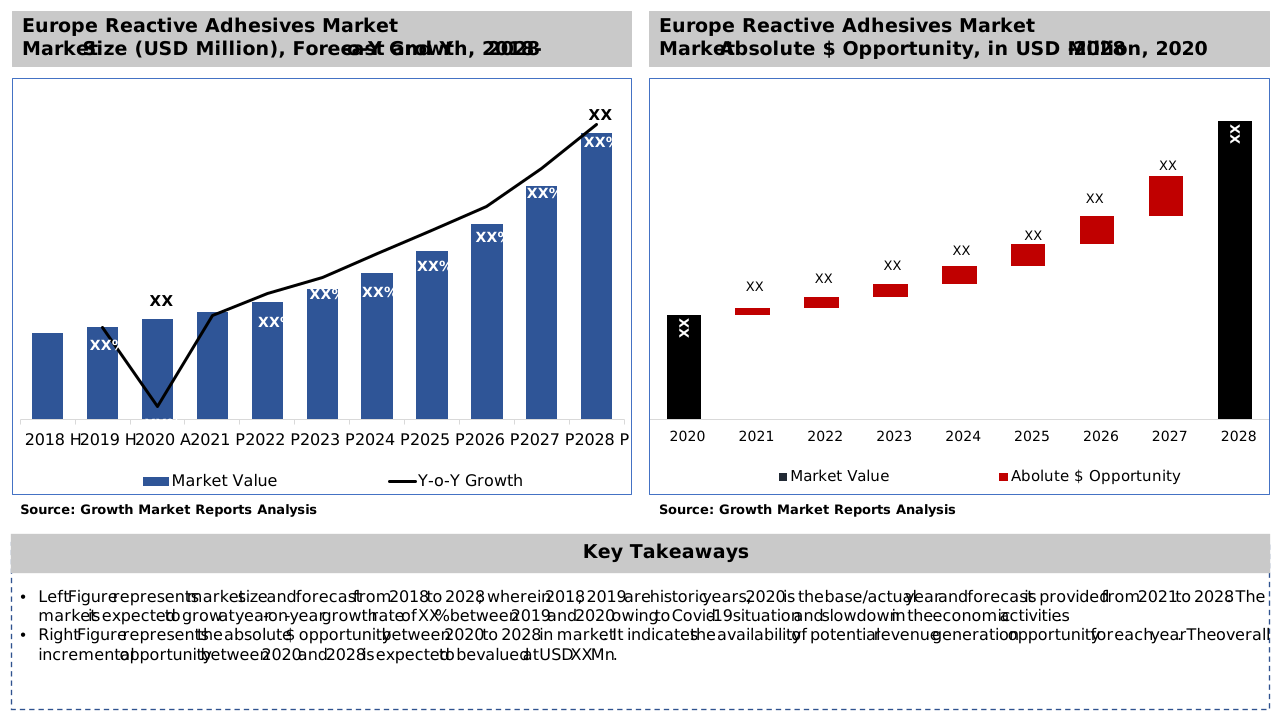
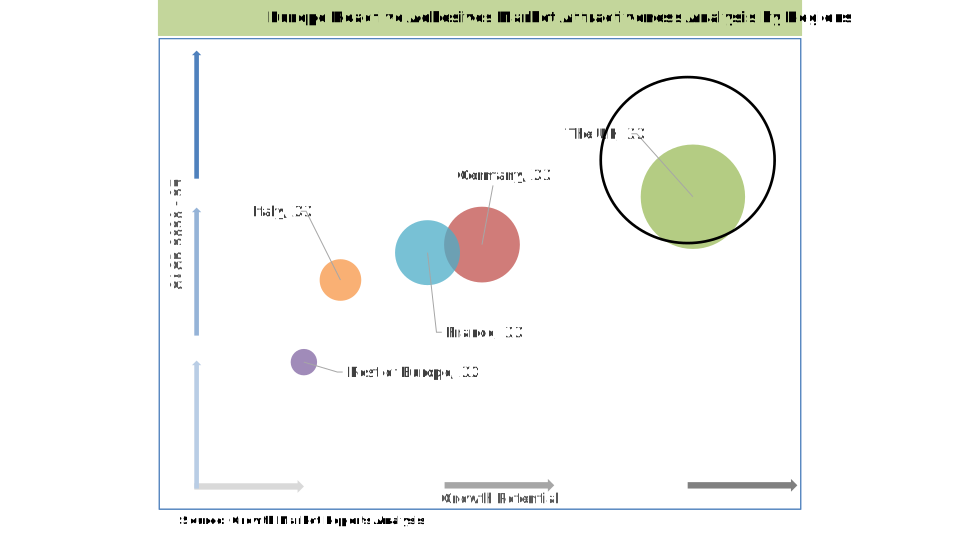
Europe holds a significant share of the global reactive adhesives market, valued at USD 1.8 billion in 2024. The region is characterized by stringent environmental regulations, a strong emphasis on sustainability, and a highly developed automotive and construction sector. Germany, France, and the United Kingdom are the leading markets within Europe, benefiting from advanced manufacturing capabilities and a focus on innovation. The increasing adoption of green building practices and the demand for lightweight materials in automotive and aerospace applications are key growth drivers. Latin America and the Middle East & Africa, with market sizes of USD 0.5 billion and USD 0.3 billion respectively, are experiencing gradual growth, supported by infrastructure investments and the modernization of manufacturing processes. Although these regions currently account for a smaller share of the global market, they offer significant long-term growth potential as economic development accelerates.

Reactive Adhesives Market Statistics

Competitor Outlook

The competitive landscape of the reactive adhesives market is characterized by intense rivalry among leading global and regional players, each striving to enhance their market position through product innovation, strategic partnerships, and geographic expansion. The market is moderately consolidated, with a handful of major companies commanding a significant share, while numerous smaller players compete in niche segments and regional markets. Key competitive strategies include the development of advanced adhesive formulations with improved performance characteristics, investment in sustainable and eco-friendly products, and the expansion of production capacities to meet rising global demand. The ability to offer customized solutions tailored to specific end-user requirements is a critical differentiator in this highly competitive market.

Research and development activities are at the forefront of competition, as companies seek to address evolving customer needs and comply with increasingly stringent regulatory standards. The focus on reducing the environmental impact of adhesives has led to the introduction of low-VOC, bio-based, and solvent-free products, which are gaining traction in developed markets. Strategic collaborations and mergers and acquisitions are also prevalent, enabling companies to expand their product portfolios, access new technologies, and strengthen their presence in high-growth regions. The growing importance of digitalization and automation in manufacturing processes is prompting adhesive manufacturers to develop smart adhesives with integrated sensing capabilities, further intensifying competition.

The threat of new entrants in the reactive adhesives market is moderate, given the capital-intensive nature of production, the need for extensive R&D capabilities, and the complexities associated with regulatory compliance. However, the rapid pace of technological innovation and the emergence of specialty adhesive manufacturers are contributing to a dynamic and evolving competitive environment. Companies with strong distribution networks, robust technical support, and a commitment to sustainability are well-positioned to capitalize on market opportunities and maintain a competitive edge.

Some of the major players in the global reactive adhesives market include Henkel AG & Co. KGaA, 3M Company, H.B. Fuller Company, Sika AG, Arkema Group, Huntsman Corporation, Dow Inc., Ashland Global Holdings Inc., Bostik SA, and Permabond LLC. Henkel is renowned for its broad portfolio of high-performance adhesives and its focus on sustainability and innovation. 3M is a global leader in adhesive technologies, offering solutions for automotive, electronics, healthcare, and industrial applications. H.B. Fuller and Sika AG are also prominent players, known for their extensive R&D activities and commitment to developing advanced, environmentally friendly adhesive products.

Arkema Group and Huntsman Corporation have established themselves as key suppliers of specialty chemicals and reactive adhesives, with a strong presence in Europe and North America. Dow Inc. and Ashland Global Holdings are recognized for their innovative product offerings and global distribution networks. Bostik SA, a subsidiary of Arkema, specializes in adhesives for construction, industrial, and consumer markets, while Permabond LLC focuses on engineering adhesives for industrial assembly and maintenance. These companies are continuously investing in new technologies, expanding their product portfolios, and strengthening their global footprint to maintain their competitive positions in the rapidly evolving reactive adhesives market.

Key Players

  • 3M
  • Sika AG
  • H.B. Fuller Company
  • Henkel AG & Co. KGaA
  • Bostik SA
  • Dow Inc.
  • Ashland Global Holdings Inc.
  • Lord Corporation
  • Permabond LLC
  • Jowat SE
  • Pidilite Industries Limited
  • Illinois Tool Works Inc. (ITW)
  • Wacker Chemie AG
  • Huntsman Corporation
  • Master Bond Inc.
  • Avery Dennison Corporation
  • Franklin International
  • DELO Industrial Adhesives
  • Dymax Corporation
  • Parson Adhesives Inc.
Reactive Adhesives Market Overview

Segments

The Reactive Adhesives market has been segmented on the basis of

Product Type

  • Epoxy
  • Polyurethane
  • Acrylic
  • Silicone
  • Others

Application

  • Automotive & Transportation
  • Building & Construction
  • Electronics
  • Packaging
  • Healthcare
  • Others

End-Use Industry

  • Industrial
  • Commercial
  • Residential
  • Others

Competitive Landscape

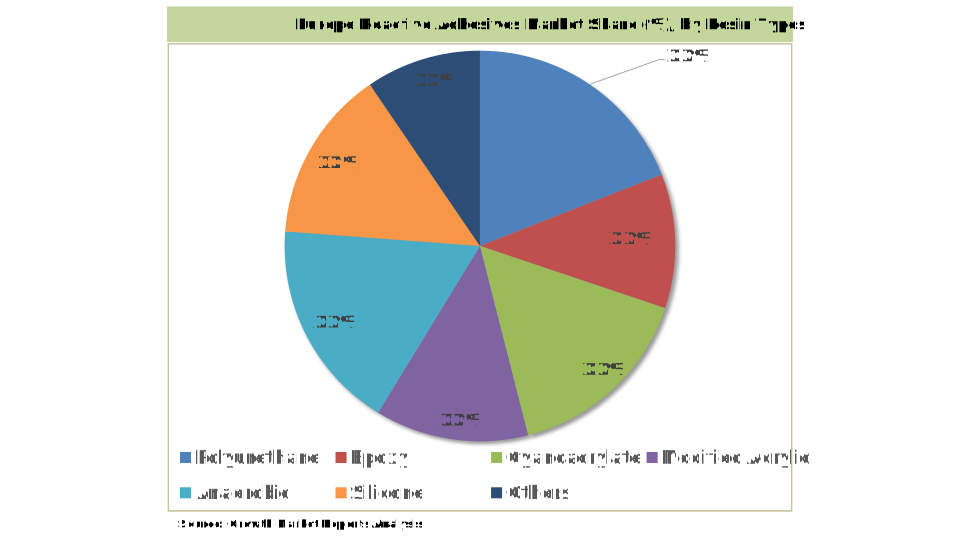
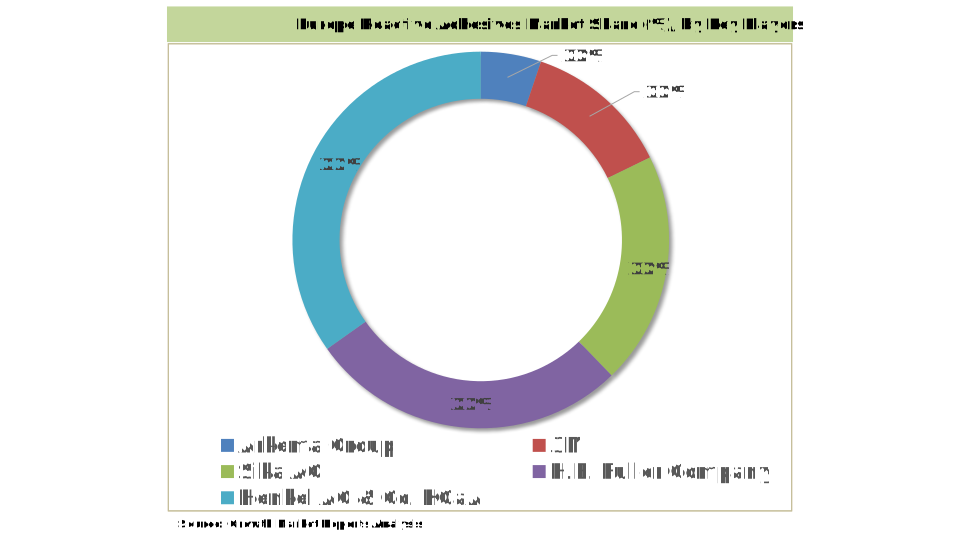
The Europe reactive adhesives market is moderately fragmented as the market share is divided among a large number of players. Key players competing in the Europe reactive adhesives market are Arkema Group; 3M; Sika AG; H.B. Fuller Company; and Henkel AG & Co. KGaA.

Europe Reactive Adhesives Market

Frequently Asked Questions

Opportunities include technological innovation in adhesive chemistry, increased demand for sustainable products, rapid adoption of automation in manufacturing, and expansion in emerging markets such as Asia Pacific, Latin America, and the Middle East & Africa.

The market faces challenges such as volatility in raw material prices, complex regulatory approval processes, and competition from alternative bonding technologies like mechanical fasteners and welding.

Major companies in the global reactive adhesives market include Henkel AG & Co. KGaA, 3M Company, H.B. Fuller Company, Sika AG, Arkema Group, Huntsman Corporation, Dow Inc., Ashland Global Holdings Inc., Bostik SA, and Permabond LLC.

Key trends include the development of low-VOC, bio-based, and solvent-free adhesive formulations to meet environmental regulations and support green building and sustainable manufacturing practices.

Asia Pacific is the leading region in the global reactive adhesives market, accounting for the largest share in 2024, thanks to rapid industrialization, automotive production, and infrastructure development in countries like China and India.

The automotive industry drives market growth due to the need for lightweight vehicles, electric vehicle production, and stringent safety and environmental regulations, all of which require advanced bonding solutions provided by reactive adhesives.

The main types of reactive adhesives are epoxy, polyurethane, acrylic, silicone, and specialized formulations such as cyanoacrylate and hybrid adhesives.

Key end-use industries for reactive adhesives include automotive & transportation, building & construction, electronics, packaging, healthcare, and others such as aerospace and marine.

The reactive adhesives market is expected to grow at a compound annual growth rate (CAGR) of 6.1% from 2025 to 2033, reaching an estimated USD 14.8 billion by the end of 2033.

As of 2024, the global reactive adhesives market size reached USD 8.7 billion, driven by strong demand in industries such as automotive, construction, and electronics.

Table Of Content

Chapter 1 Executive Summary
Chapter 2 Assumptions and Acronyms Used
Chapter 3 Research Methodology
Chapter 4 Reactive Adhesives Market Overview
   4.1 Introduction
      4.1.1 Market Taxonomy
      4.1.2 Market Definition
      4.1.3 Macro-Economic Factors Impacting the Market Growth
   4.2 Reactive Adhesives Market Dynamics
      4.2.1 Market Drivers
      4.2.2 Market Restraints
      4.2.3 Market Opportunity
   4.3 Reactive Adhesives Market - Supply Chain Analysis
      4.3.1 List of Key Suppliers
      4.3.2 List of Key Distributors
      4.3.3 List of Key Consumers
   4.4 Key Forces Shaping the Reactive Adhesives Market
      4.4.1 Bargaining Power of Suppliers
      4.4.2 Bargaining Power of Buyers
      4.4.3 Threat of Substitution
      4.4.4 Threat of New Entrants
      4.4.5 Competitive Rivalry
   4.5 Global Reactive Adhesives Market Size & Forecast, 2023-2032
      4.5.1 Reactive Adhesives Market Size and Y-o-Y Growth
      4.5.2 Reactive Adhesives Market Absolute $ Opportunity

Chapter 5 Global Reactive Adhesives Market Analysis and Forecast By Product Type
   5.1 Introduction
      5.1.1 Key Market Trends & Growth Opportunities By Product Type
      5.1.2 Basis Point Share (BPS) Analysis By Product Type
      5.1.3 Absolute $ Opportunity Assessment By Product Type
   5.2 Reactive Adhesives Market Size Forecast By Product Type
      5.2.1 Epoxy
      5.2.2 Polyurethane
      5.2.3 Acrylic
      5.2.4 Silicone
      5.2.5 Others
   5.3 Market Attractiveness Analysis By Product Type

Chapter 6 Global Reactive Adhesives Market Analysis and Forecast By Application
   6.1 Introduction
      6.1.1 Key Market Trends & Growth Opportunities By Application
      6.1.2 Basis Point Share (BPS) Analysis By Application
      6.1.3 Absolute $ Opportunity Assessment By Application
   6.2 Reactive Adhesives Market Size Forecast By Application
      6.2.1 Automotive & Transportation
      6.2.2 Building & Construction
      6.2.3 Electronics
      6.2.4 Packaging
      6.2.5 Healthcare
      6.2.6 Others
   6.3 Market Attractiveness Analysis By Application

Chapter 7 Global Reactive Adhesives Market Analysis and Forecast By End-Use Industry
   7.1 Introduction
      7.1.1 Key Market Trends & Growth Opportunities By End-Use Industry
      7.1.2 Basis Point Share (BPS) Analysis By End-Use Industry
      7.1.3 Absolute $ Opportunity Assessment By End-Use Industry
   7.2 Reactive Adhesives Market Size Forecast By End-Use Industry
      7.2.1 Industrial
      7.2.2 Commercial
      7.2.3 Residential
      7.2.4 Others
   7.3 Market Attractiveness Analysis By End-Use Industry

Chapter 8 Global Reactive Adhesives Market Analysis and Forecast by Region
   8.1 Introduction
      8.1.1 Key Market Trends & Growth Opportunities By Region
      8.1.2 Basis Point Share (BPS) Analysis By Region
      8.1.3 Absolute $ Opportunity Assessment By Region
   8.2 Reactive Adhesives Market Size Forecast By Region
      8.2.1 North America
      8.2.2 Europe
      8.2.3 Asia Pacific
      8.2.4 Latin America
      8.2.5 Middle East & Africa (MEA)
   8.3 Market Attractiveness Analysis By Region

Chapter 9 Coronavirus Disease (COVID-19) Impact 
   9.1 Introduction 
   9.2 Current & Future Impact Analysis 
   9.3 Economic Impact Analysis 
   9.4 Government Policies 
   9.5 Investment Scenario

Chapter 10 North America Reactive Adhesives Analysis and Forecast
   10.1 Introduction
   10.2 North America Reactive Adhesives Market Size Forecast by Country
      10.2.1 U.S.
      10.2.2 Canada
   10.3 Basis Point Share (BPS) Analysis by Country
   10.4 Absolute $ Opportunity Assessment by Country
   10.5 Market Attractiveness Analysis by Country
   10.6 North America Reactive Adhesives Market Size Forecast By Product Type
      10.6.1 Epoxy
      10.6.2 Polyurethane
      10.6.3 Acrylic
      10.6.4 Silicone
      10.6.5 Others
   10.7 Basis Point Share (BPS) Analysis By Product Type 
   10.8 Absolute $ Opportunity Assessment By Product Type 
   10.9 Market Attractiveness Analysis By Product Type
   10.10 North America Reactive Adhesives Market Size Forecast By Application
      10.10.1 Automotive & Transportation
      10.10.2 Building & Construction
      10.10.3 Electronics
      10.10.4 Packaging
      10.10.5 Healthcare
      10.10.6 Others
   10.11 Basis Point Share (BPS) Analysis By Application 
   10.12 Absolute $ Opportunity Assessment By Application 
   10.13 Market Attractiveness Analysis By Application
   10.14 North America Reactive Adhesives Market Size Forecast By End-Use Industry
      10.14.1 Industrial
      10.14.2 Commercial
      10.14.3 Residential
      10.14.4 Others
   10.15 Basis Point Share (BPS) Analysis By End-Use Industry 
   10.16 Absolute $ Opportunity Assessment By End-Use Industry 
   10.17 Market Attractiveness Analysis By End-Use Industry

Chapter 11 Europe Reactive Adhesives Analysis and Forecast
   11.1 Introduction
   11.2 Europe Reactive Adhesives Market Size Forecast by Country
      11.2.1 Germany
      11.2.2 France
      11.2.3 Italy
      11.2.4 U.K.
      11.2.5 Spain
      11.2.6 Russia
      11.2.7 Rest of Europe
   11.3 Basis Point Share (BPS) Analysis by Country
   11.4 Absolute $ Opportunity Assessment by Country
   11.5 Market Attractiveness Analysis by Country
   11.6 Europe Reactive Adhesives Market Size Forecast By Product Type
      11.6.1 Epoxy
      11.6.2 Polyurethane
      11.6.3 Acrylic
      11.6.4 Silicone
      11.6.5 Others
   11.7 Basis Point Share (BPS) Analysis By Product Type 
   11.8 Absolute $ Opportunity Assessment By Product Type 
   11.9 Market Attractiveness Analysis By Product Type
   11.10 Europe Reactive Adhesives Market Size Forecast By Application
      11.10.1 Automotive & Transportation
      11.10.2 Building & Construction
      11.10.3 Electronics
      11.10.4 Packaging
      11.10.5 Healthcare
      11.10.6 Others
   11.11 Basis Point Share (BPS) Analysis By Application 
   11.12 Absolute $ Opportunity Assessment By Application 
   11.13 Market Attractiveness Analysis By Application
   11.14 Europe Reactive Adhesives Market Size Forecast By End-Use Industry
      11.14.1 Industrial
      11.14.2 Commercial
      11.14.3 Residential
      11.14.4 Others
   11.15 Basis Point Share (BPS) Analysis By End-Use Industry 
   11.16 Absolute $ Opportunity Assessment By End-Use Industry 
   11.17 Market Attractiveness Analysis By End-Use Industry

Chapter 12 Asia Pacific Reactive Adhesives Analysis and Forecast
   12.1 Introduction
   12.2 Asia Pacific Reactive Adhesives Market Size Forecast by Country
      12.2.1 China
      12.2.2 Japan
      12.2.3 South Korea
      12.2.4 India
      12.2.5 Australia
      12.2.6 South East Asia (SEA)
      12.2.7 Rest of Asia Pacific (APAC)
   12.3 Basis Point Share (BPS) Analysis by Country
   12.4 Absolute $ Opportunity Assessment by Country
   12.5 Market Attractiveness Analysis by Country
   12.6 Asia Pacific Reactive Adhesives Market Size Forecast By Product Type
      12.6.1 Epoxy
      12.6.2 Polyurethane
      12.6.3 Acrylic
      12.6.4 Silicone
      12.6.5 Others
   12.7 Basis Point Share (BPS) Analysis By Product Type 
   12.8 Absolute $ Opportunity Assessment By Product Type 
   12.9 Market Attractiveness Analysis By Product Type
   12.10 Asia Pacific Reactive Adhesives Market Size Forecast By Application
      12.10.1 Automotive & Transportation
      12.10.2 Building & Construction
      12.10.3 Electronics
      12.10.4 Packaging
      12.10.5 Healthcare
      12.10.6 Others
   12.11 Basis Point Share (BPS) Analysis By Application 
   12.12 Absolute $ Opportunity Assessment By Application 
   12.13 Market Attractiveness Analysis By Application
   12.14 Asia Pacific Reactive Adhesives Market Size Forecast By End-Use Industry
      12.14.1 Industrial
      12.14.2 Commercial
      12.14.3 Residential
      12.14.4 Others
   12.15 Basis Point Share (BPS) Analysis By End-Use Industry 
   12.16 Absolute $ Opportunity Assessment By End-Use Industry 
   12.17 Market Attractiveness Analysis By End-Use Industry

Chapter 13 Latin America Reactive Adhesives Analysis and Forecast
   13.1 Introduction
   13.2 Latin America Reactive Adhesives Market Size Forecast by Country
      13.2.1 Brazil
      13.2.2 Mexico
      13.2.3 Rest of Latin America (LATAM)
   13.3 Basis Point Share (BPS) Analysis by Country
   13.4 Absolute $ Opportunity Assessment by Country
   13.5 Market Attractiveness Analysis by Country
   13.6 Latin America Reactive Adhesives Market Size Forecast By Product Type
      13.6.1 Epoxy
      13.6.2 Polyurethane
      13.6.3 Acrylic
      13.6.4 Silicone
      13.6.5 Others
   13.7 Basis Point Share (BPS) Analysis By Product Type 
   13.8 Absolute $ Opportunity Assessment By Product Type 
   13.9 Market Attractiveness Analysis By Product Type
   13.10 Latin America Reactive Adhesives Market Size Forecast By Application
      13.10.1 Automotive & Transportation
      13.10.2 Building & Construction
      13.10.3 Electronics
      13.10.4 Packaging
      13.10.5 Healthcare
      13.10.6 Others
   13.11 Basis Point Share (BPS) Analysis By Application 
   13.12 Absolute $ Opportunity Assessment By Application 
   13.13 Market Attractiveness Analysis By Application
   13.14 Latin America Reactive Adhesives Market Size Forecast By End-Use Industry
      13.14.1 Industrial
      13.14.2 Commercial
      13.14.3 Residential
      13.14.4 Others
   13.15 Basis Point Share (BPS) Analysis By End-Use Industry 
   13.16 Absolute $ Opportunity Assessment By End-Use Industry 
   13.17 Market Attractiveness Analysis By End-Use Industry

Chapter 14 Middle East & Africa (MEA) Reactive Adhesives Analysis and Forecast
   14.1 Introduction
   14.2 Middle East & Africa (MEA) Reactive Adhesives Market Size Forecast by Country
      14.2.1 Saudi Arabia
      14.2.2 South Africa
      14.2.3 UAE
      14.2.4 Rest of Middle East & Africa (MEA)
   14.3 Basis Point Share (BPS) Analysis by Country
   14.4 Absolute $ Opportunity Assessment by Country
   14.5 Market Attractiveness Analysis by Country
   14.6 Middle East & Africa (MEA) Reactive Adhesives Market Size Forecast By Product Type
      14.6.1 Epoxy
      14.6.2 Polyurethane
      14.6.3 Acrylic
      14.6.4 Silicone
      14.6.5 Others
   14.7 Basis Point Share (BPS) Analysis By Product Type 
   14.8 Absolute $ Opportunity Assessment By Product Type 
   14.9 Market Attractiveness Analysis By Product Type
   14.10 Middle East & Africa (MEA) Reactive Adhesives Market Size Forecast By Application
      14.10.1 Automotive & Transportation
      14.10.2 Building & Construction
      14.10.3 Electronics
      14.10.4 Packaging
      14.10.5 Healthcare
      14.10.6 Others
   14.11 Basis Point Share (BPS) Analysis By Application 
   14.12 Absolute $ Opportunity Assessment By Application 
   14.13 Market Attractiveness Analysis By Application
   14.14 Middle East & Africa (MEA) Reactive Adhesives Market Size Forecast By End-Use Industry
      14.14.1 Industrial
      14.14.2 Commercial
      14.14.3 Residential
      14.14.4 Others
   14.15 Basis Point Share (BPS) Analysis By End-Use Industry 
   14.16 Absolute $ Opportunity Assessment By End-Use Industry 
   14.17 Market Attractiveness Analysis By End-Use Industry

Chapter 15 Competition Landscape 
   15.1 Reactive Adhesives Market: Competitive Dashboard
   15.2 Global Reactive Adhesives Market: Market Share Analysis, 2023
   15.3 Company Profiles (Details – Overview, Financials, Developments, Strategy) 
      15.3.1 3M
Sika AG
H.B. Fuller Company
Henkel AG & Co. KGaA
Bostik SA
Dow Inc.
Ashland Global Holdings Inc.
Lord Corporation
Permabond LLC
Jowat SE
Pidilite Industries Limited
Illinois Tool Works Inc. (ITW)
Wacker Chemie AG
Huntsman Corporation
Master Bond Inc.
Avery Dennison Corporation
Franklin International
DELO Industrial Adhesives
Dymax Corporation
Parson Adhesives Inc.

Methodology

Our Clients

General Mills
Microsoft
FedEx Logistics
Honda Motor Co. Ltd.
Pfizer
Deloitte
The John Holland Group
General Electric