Cable Wrapping Tapes Market Research Report 2033

Cable Wrapping Tapes Market Research Report 2033

Segments - by Material Type (PVC, PET, Polypropylene, Cloth, Foam, Others), by Application (Automotive, Electrical & Electronics, Aerospace, Industrial, Others), by Adhesive Type (Acrylic, Rubber, Silicone, Others), by Distribution Channel (Online, Offline)

https://growthmarketreports.com/Raksha
Author : Raksha Sharma
https://growthmarketreports.com/Vaibhav
Fact-checked by : V. Chandola
https://growthmarketreports.com/Shruti
Editor : Shruti Bhat

Upcoming | Report ID :MC-557 | 4.2 Rating | 30 Reviews | 274 Pages | Format : Docx PDF

Report Description


Cable Wrapping Tapes Market Outlook

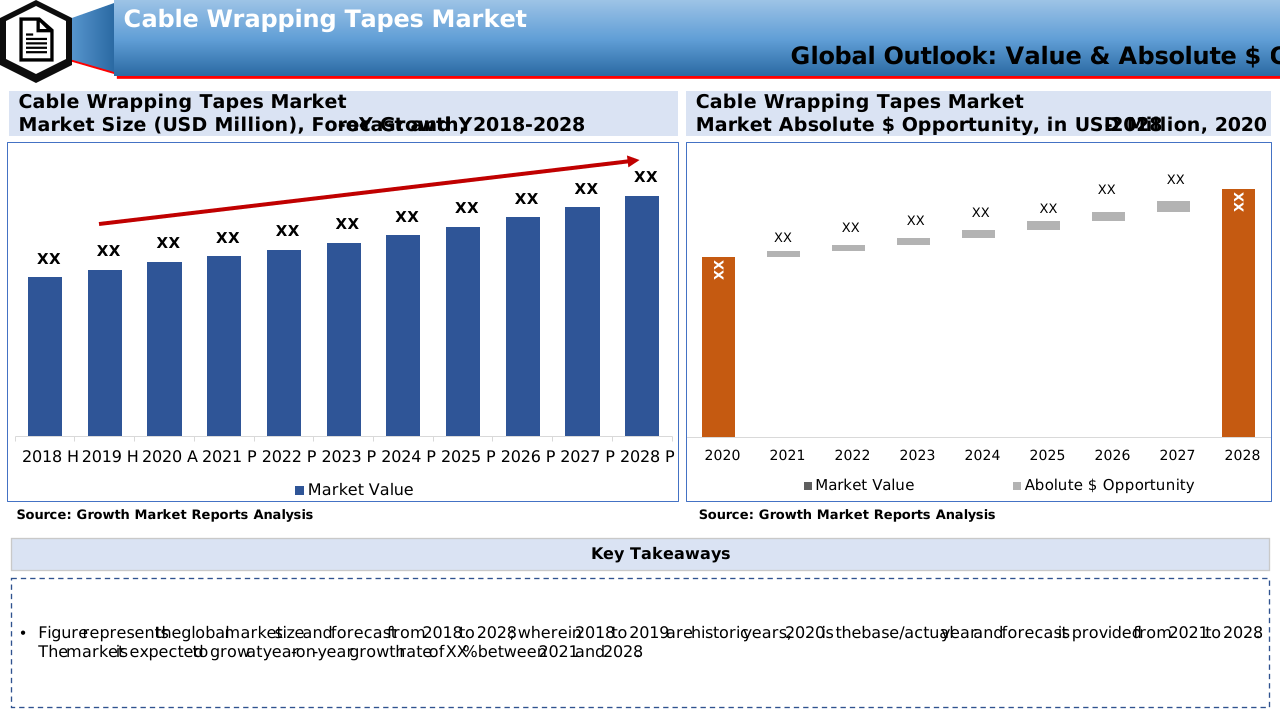
According to our latest research, the global cable wrapping tapes market size stood at USD 2.13 billion in 2024, demonstrating robust growth driven by expanding applications in automotive, electrical, and industrial sectors. The market is projected to reach USD 3.48 billion by 2033, growing at a steady CAGR of 5.5% during the forecast period of 2025 to 2033. This growth is primarily fueled by rapid advancements in electrical infrastructure, increasing automotive production, and the rising demand for safe and reliable cable management solutions across various industries.

The cable wrapping tapes market is witnessing significant growth due to the surging demand for efficient cable management in modern infrastructure projects. With the global push towards smart cities and the proliferation of complex electrical systems, the need for high-quality cable wrapping tapes has become more pronounced. These tapes play a crucial role in insulation, bundling, and protecting cables from environmental and mechanical damage. Moreover, the adoption of advanced materials such as PET and polypropylene is further enhancing the performance characteristics of these tapes, making them suitable for a wide range of applications. The increasing focus on safety standards and regulatory compliance in electrical installations is also propelling the demand for reliable cable wrapping solutions.

Another key growth factor for the cable wrapping tapes market is the rapid expansion of the automotive and electronics sectors. The automotive industry, in particular, is experiencing a surge in the integration of electronic components, sensors, and wiring harnesses, necessitating robust insulation and protection solutions. Cable wrapping tapes offer superior resistance to heat, abrasion, and chemicals, making them indispensable in automotive manufacturing. Similarly, the electronics industry’s emphasis on miniaturization and high-performance devices is driving the need for tapes that ensure optimal cable organization and shielding. The trend towards electric vehicles and connected devices is expected to further augment the demand for specialized cable wrapping tapes in the coming years.

Sustainability and environmental concerns are also shaping the cable wrapping tapes market landscape. Manufacturers are increasingly focusing on developing eco-friendly and recyclable tape materials to align with stringent environmental regulations. The shift towards halogen-free and low-VOC adhesive formulations is gaining traction, especially in regions with strict environmental standards. Additionally, advancements in adhesive technologies are enabling the production of tapes with enhanced bonding strength, flexibility, and durability. The rising popularity of online distribution channels is also making cable wrapping tapes more accessible to a broader customer base, further driving market growth.

Regionally, Asia Pacific dominates the global cable wrapping tapes market, accounting for the largest share in 2024. This dominance is attributed to the rapid industrialization, urbanization, and infrastructure development in countries such as China, India, and Japan. North America and Europe follow closely, driven by stringent safety regulations and the presence of established automotive and electronics industries. Meanwhile, the Middle East & Africa and Latin America are emerging as promising markets, supported by increasing investments in energy and telecommunications infrastructure. The regional outlook remains positive, with all regions expected to contribute to the overall growth of the cable wrapping tapes market during the forecast period.

Global Cable Wrapping Tapes Industry Outlook

Material Type Analysis

The cable wrapping tapes market is segmented by material type into PVC, PET, polypropylene, cloth, foam, and others, each offering unique advantages for specific applications. PVC tapes continue to hold the largest market share owing to their excellent electrical insulation properties, flexibility, and cost-effectiveness. These tapes are widely used in electrical and automotive applications where flame retardancy and resistance to moisture are critical. The durability and ease of application of PVC tapes make them a preferred choice for both professional and DIY uses. However, environmental concerns regarding PVC’s recyclability and the presence of hazardous additives are prompting manufacturers to explore alternative materials.

PET (polyethylene terephthalate) tapes are gaining traction in the cable wrapping tapes market due to their superior mechanical strength, thermal stability, and resistance to chemicals. PET tapes are particularly favored in high-performance environments such as aerospace and advanced electronics, where reliability and longevity are paramount. Their ability to withstand extreme temperatures and harsh conditions makes them ideal for demanding applications. In addition, PET tapes are often used in situations where transparency and minimal weight are desired, further expanding their utility across various industries.

Polypropylene tapes are increasingly being adopted for their lightweight nature, excellent chemical resistance, and cost efficiency. These tapes are suitable for bundling and securing cables in industrial and commercial settings, where exposure to oils, solvents, and other chemicals is common. Polypropylene’s low density and high tensile strength provide an optimal balance of performance and affordability. Furthermore, the material’s recyclability aligns well with the growing emphasis on sustainable packaging and cable management solutions, making polypropylene tapes a popular choice among environmentally conscious consumers.

Cloth and foam tapes cater to specialized applications within the cable wrapping tapes market. Cloth tapes, known for their high abrasion resistance and flexibility, are extensively used in automotive wiring harnesses and industrial cable assemblies. They provide a strong, conformable wrap that protects cables from mechanical wear and vibration. Foam tapes, on the other hand, offer excellent cushioning and sound dampening properties, making them suitable for applications where vibration isolation and noise reduction are critical. Other materials, including specialty composites and hybrid tapes, are also being developed to address specific performance requirements in niche markets.

The ongoing innovation in material science is expected to drive the evolution of cable wrapping tapes, with manufacturers continuously seeking to enhance performance, durability, and sustainability. As regulatory pressures mount and customer preferences shift towards eco-friendly products, the demand for halogen-free, low-emission, and recyclable materials will likely shape the future landscape of the cable wrapping tapes market. The material type segment will remain a key area of focus for industry players aiming to differentiate their offerings and capture new growth opportunities.

Report Scope

Attributes Details
Report Title Cable Wrapping Tapes Market Research Report 2033
By Material Type PVC, PET, Polypropylene, Cloth, Foam, Others
By Application Automotive, Electrical & Electronics, Aerospace, Industrial, Others
By Adhesive Type Acrylic, Rubber, Silicone, Others
By Distribution Channel Online, Offline
Regions Covered North America, Europe, APAC, Latin America, MEA
Base Year 2024
Historic Data 2018-2023
Forecast Period 2025-2033
Number of Pages 274
Number of Tables & Figures 354
Customization Available Yes, the report can be customized as per your need.

Application Analysis

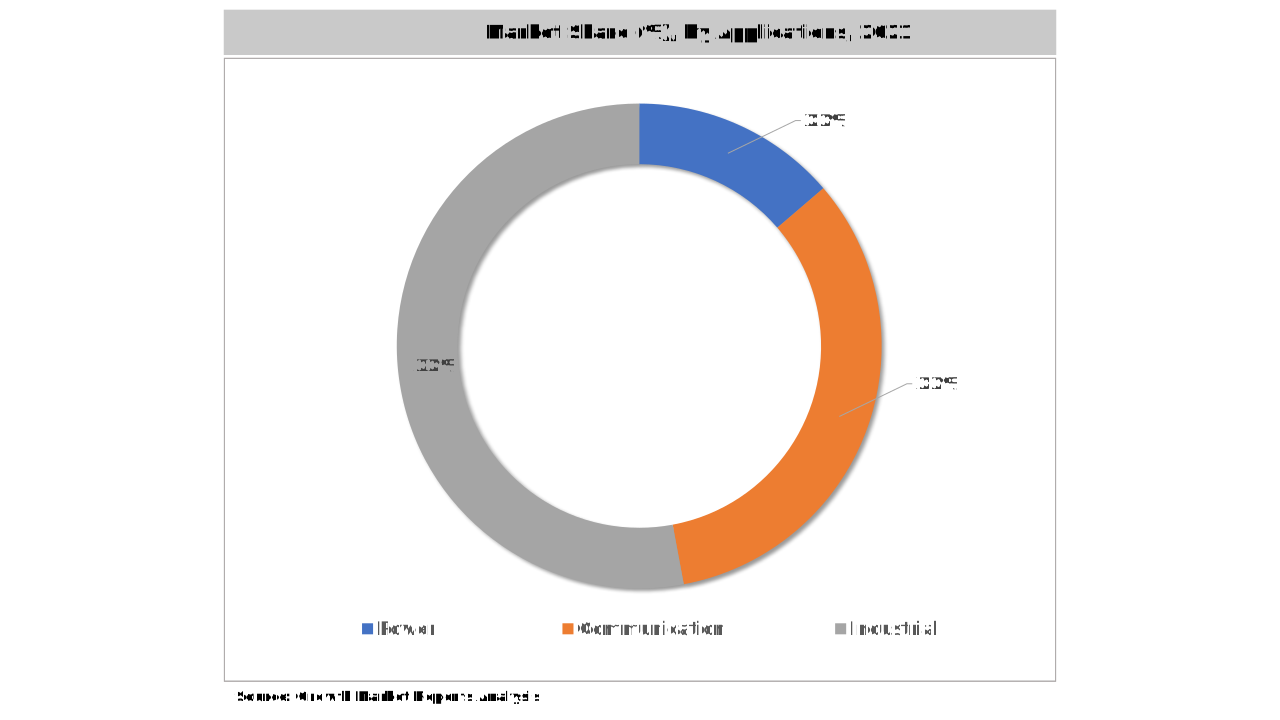
The cable wrapping tapes market is segmented by application into automotive, electrical & electronics, aerospace, industrial, and others, reflecting the diverse range of end-use industries that rely on these products. The automotive segment stands out as a major contributor to market revenue, driven by the increasing complexity of vehicle electrical systems and the growing adoption of electric vehicles. Cable wrapping tapes are essential for organizing, insulating, and protecting wiring harnesses in modern automobiles, where safety, reliability, and durability are paramount. The shift towards connected and autonomous vehicles is further intensifying the demand for advanced cable management solutions, positioning the automotive sector as a key growth engine for the market.

In the electrical & electronics segment, cable wrapping tapes play a vital role in ensuring the safety and performance of electrical installations, devices, and components. The proliferation of consumer electronics, smart home devices, and industrial automation systems is driving the need for high-quality tapes that offer superior insulation, heat resistance, and EMI shielding. As electronic devices become more compact and complex, the importance of effective cable organization and protection increases, fueling the adoption of specialized tapes tailored for these applications. The emphasis on compliance with international safety standards and regulations is also contributing to the steady growth of this segment.

The aerospace industry represents a niche but rapidly expanding application area for cable wrapping tapes. Aircraft and spacecraft require lightweight, durable, and flame-retardant materials to ensure the integrity and safety of wiring systems under extreme conditions. Cable wrapping tapes used in aerospace applications must meet stringent performance criteria, including resistance to temperature fluctuations, vibration, and chemical exposure. As the global aerospace sector continues to grow, driven by rising air travel demand and technological advancements, the demand for high-performance cable wrapping tapes is expected to increase significantly.

The industrial segment encompasses a wide range of applications, including machinery, manufacturing equipment, and infrastructure projects. Cable wrapping tapes are indispensable for bundling, securing, and insulating cables in industrial environments where exposure to harsh chemicals, moisture, and mechanical stress is common. The rise of Industry 4.0 and the increasing automation of manufacturing processes are creating new opportunities for cable management solutions that enhance operational efficiency and safety. Other application areas, such as telecommunications, renewable energy, and construction, also contribute to the overall demand for cable wrapping tapes, reflecting the market’s broad and diverse customer base.

As industries continue to evolve and adopt new technologies, the application landscape for cable wrapping tapes is expected to diversify further. Manufacturers are responding by developing tapes with specialized features, such as enhanced heat resistance, UV stability, and anti-microbial properties, to meet the unique requirements of different sectors. The ability to offer tailored solutions for specific applications will be a critical success factor for companies operating in this dynamic and competitive market.

Adhesive Type Analysis

The adhesive type segment of the cable wrapping tapes market is categorized into acrylic, rubber, silicone, and others, each offering distinct performance characteristics suited to different applications. Acrylic adhesives are widely favored for their excellent aging properties, resistance to UV light, and strong bonding capabilities. These adhesives provide long-term durability and are less prone to yellowing or degrading over time, making them suitable for both indoor and outdoor cable management applications. The versatility of acrylic adhesives allows them to be used across a variety of substrates, including plastics, metals, and glass, further enhancing their appeal in the market.

Rubber-based adhesives are known for their superior initial tack and flexibility, making them ideal for applications that require quick bonding and adaptability to irregular surfaces. These adhesives are commonly used in automotive and industrial settings where cables may be exposed to vibration, movement, or temperature fluctuations. Rubber adhesives offer excellent adhesion to a wide range of materials and maintain their performance even in challenging environments. However, they may be less resistant to aging and UV exposure compared to acrylic formulations, which can limit their suitability for certain long-term or outdoor applications.

Silicone adhesives are gaining popularity in the cable wrapping tapes market due to their outstanding resistance to extreme temperatures, chemicals, and moisture. These adhesives are particularly well-suited for high-performance applications in aerospace, electronics, and industrial environments where reliability under harsh conditions is critical. Silicone adhesives maintain their flexibility and adhesive strength across a broad temperature range, ensuring consistent performance even in demanding situations. Their inert nature also makes them suitable for use in sensitive electronic and medical applications, where contamination or chemical reactivity must be minimized.

Beyond the primary adhesive types, the market also includes specialty and hybrid adhesives engineered to meet specific performance requirements. These may include low-VOC, halogen-free, or flame-retardant formulations designed to address regulatory and environmental concerns. The development of advanced adhesives is enabling manufacturers to offer tapes with enhanced bonding strength, faster curing times, and improved compatibility with emerging cable materials. As end-user industries continue to demand higher performance and greater sustainability, the adhesive type segment will remain a focal point for innovation and differentiation in the cable wrapping tapes market.

The choice of adhesive type is a critical consideration for end-users, as it directly impacts the tape’s performance, durability, and suitability for specific applications. Manufacturers are investing in research and development to create adhesives that not only meet technical requirements but also align with evolving environmental and safety standards. The ongoing shift towards eco-friendly and low-emission adhesives is expected to drive future growth in this segment, as customers increasingly prioritize sustainability alongside performance.

Distribution Channel Analysis

The distribution channel segment for the cable wrapping tapes market is divided into online and offline channels, reflecting the evolving purchasing behaviors of end-users and the growing influence of e-commerce. Offline channels, including distributors, wholesalers, and specialty retailers, have traditionally dominated the market, offering customers the advantage of immediate product availability, personalized service, and technical support. These channels are particularly important for industrial and commercial customers who require large volumes or have specific technical requirements that necessitate expert guidance. The established relationships and logistical capabilities of offline distributors continue to play a vital role in ensuring timely and efficient delivery of cable wrapping tapes to end-users across various industries.

However, the online distribution channel is rapidly gaining momentum, driven by the increasing digitization of procurement processes and the growing preference for convenience and transparency. Online platforms, including manufacturer websites, e-commerce marketplaces, and B2B portals, offer customers a wide selection of cable wrapping tapes, detailed product information, and competitive pricing. The ability to compare products, read reviews, and access technical documentation online is empowering customers to make informed purchasing decisions. The COVID-19 pandemic has further accelerated the shift towards online channels, as businesses and consumers increasingly rely on digital platforms for sourcing essential supplies.

The rise of online distribution is also enabling manufacturers to reach a broader and more diverse customer base, including small and medium enterprises (SMEs) and DIY enthusiasts who may not have access to traditional distribution networks. Online channels offer greater flexibility in terms of order quantities, customization options, and delivery schedules, catering to the evolving needs of modern customers. Additionally, the integration of advanced logistics and supply chain technologies is enhancing the efficiency and reliability of online order fulfillment, further driving the adoption of digital channels in the cable wrapping tapes market.

Despite the growing popularity of online channels, offline distribution remains crucial for complex or large-scale projects where technical expertise, product demonstrations, and after-sales support are essential. Many customers continue to value the personalized service and hands-on experience offered by brick-and-mortar distributors, especially when dealing with specialized or high-value products. The coexistence of online and offline channels is expected to persist, with manufacturers adopting omnichannel strategies to maximize market reach and customer satisfaction.

The distribution channel landscape for cable wrapping tapes is likely to continue evolving in response to technological advancements, changing customer preferences, and the ongoing digital transformation of the industrial supply chain. Companies that can effectively integrate online and offline channels, leverage data analytics, and provide seamless customer experiences will be well-positioned to capture new growth opportunities and strengthen their competitive position in the market.

Opportunities & Threats

The cable wrapping tapes market presents a wealth of opportunities for manufacturers and suppliers, particularly as industries worldwide embrace digitalization, automation, and electrification. The ongoing expansion of renewable energy projects, smart grids, and electric vehicle infrastructure is creating new demand for advanced cable management solutions. Emerging markets in Asia Pacific, Latin America, and Africa offer significant growth potential, driven by rapid urbanization, industrialization, and infrastructure development. The increasing adoption of Industry 4.0 technologies and the Internet of Things (IoT) is also generating opportunities for specialized tapes that offer enhanced performance, durability, and connectivity. Additionally, the growing emphasis on sustainability is opening doors for eco-friendly and recyclable tape materials, catering to environmentally conscious customers and helping manufacturers differentiate their offerings in a competitive market.

Innovation remains a key driver of opportunity in the cable wrapping tapes market, with manufacturers investing in research and development to create products that address evolving customer needs and regulatory requirements. The development of smart tapes with embedded sensors, RFID tags, or anti-counterfeiting features represents a promising avenue for value-added solutions. Advances in adhesive technology, material science, and manufacturing processes are enabling the production of tapes with superior bonding strength, flexibility, and resistance to extreme conditions. Collaborative partnerships between manufacturers, end-users, and technology providers are fostering the co-creation of customized solutions for specific applications, further expanding the market’s growth potential. The rise of e-commerce and digital distribution channels is also enabling companies to reach new customer segments and streamline their supply chains, enhancing competitiveness and profitability.

Despite the positive outlook, the cable wrapping tapes market faces several restraining factors that could hinder its growth. Fluctuations in raw material prices, particularly for petroleum-based materials such as PVC and polypropylene, can impact production costs and profit margins. Stringent environmental regulations regarding the use of certain chemicals and additives in tape formulations may necessitate costly product reformulations and compliance efforts. Intense competition from low-cost manufacturers, especially in emerging markets, poses a threat to established players and can lead to price wars and margin pressures. Additionally, the availability of alternative cable management solutions, such as cable trays, conduits, and heat shrink tubing, may limit the adoption of cable wrapping tapes in certain applications. Addressing these challenges will require ongoing innovation, cost management, and a proactive approach to regulatory compliance and sustainability.

Regional Outlook

Asia Pacific remains the dominant region in the global cable wrapping tapes market, accounting for approximately 44% of the total market value in 2024, or around USD 0.94 billion. This leadership is driven by the region’s rapid industrialization, urbanization, and infrastructure development, particularly in China, India, and Southeast Asia. The booming automotive, electronics, and construction sectors in these countries are fueling demand for high-quality cable wrapping tapes. Government initiatives to upgrade power grids, expand renewable energy capacity, and promote smart city projects are further boosting market growth. The Asia Pacific market is projected to grow at a robust CAGR of 6.2% through 2033, outpacing other regions and solidifying its position as the global growth engine for cable wrapping tapes.

North America follows as the second-largest regional market, with a market size of approximately USD 0.53 billion in 2024. The region benefits from a mature automotive and electronics industry, stringent safety and environmental regulations, and a strong focus on innovation and quality. The growing adoption of electric vehicles, renewable energy projects, and smart infrastructure is creating new opportunities for cable wrapping tapes in North America. The market is characterized by high demand for advanced materials and specialty tapes that meet rigorous performance standards. The United States and Canada are the primary contributors to regional growth, supported by well-established distribution networks and a strong emphasis on research and development.

Europe holds a significant share of the global cable wrapping tapes market, valued at around USD 0.39 billion in 2024. The region’s focus on sustainability, energy efficiency, and regulatory compliance is driving the adoption of eco-friendly and high-performance cable management solutions. The automotive, aerospace, and industrial sectors in Germany, France, and the United Kingdom are key drivers of demand for cable wrapping tapes. Meanwhile, the Middle East & Africa and Latin America are emerging as promising markets, with combined market values of approximately USD 0.27 billion in 2024. These regions are benefiting from increased investments in energy, telecommunications, and infrastructure projects, as well as rising urbanization and industrialization. While their market shares are smaller compared to Asia Pacific, North America, and Europe, their higher growth rates present attractive opportunities for market expansion and investment.

Cable Wrapping Tapes Market Statistics

Competitor Outlook

The cable wrapping tapes market is highly competitive, with a diverse mix of global, regional, and local players vying for market share. The competitive landscape is characterized by ongoing innovation, a strong emphasis on quality and performance, and a growing focus on sustainability. Leading manufacturers are investing in research and development to create differentiated products that address the evolving needs of end-users across various industries. The ability to offer customized solutions, advanced materials, and value-added services is a key differentiator for market leaders. Strategic partnerships, mergers and acquisitions, and geographic expansion are common strategies employed by companies to strengthen their market presence and enhance their product portfolios.

The market is also witnessing increasing competition from low-cost manufacturers, particularly in Asia Pacific, who are leveraging cost advantages and scale to capture price-sensitive segments. Established players are responding by enhancing their supply chain efficiency, optimizing production processes, and focusing on high-margin, specialty products. The rise of digital distribution channels is enabling new entrants to access a broader customer base and compete on the basis of convenience, price, and product variety. As customer preferences shift towards eco-friendly and sustainable products, companies that can offer halogen-free, recyclable, and low-emission tapes are likely to gain a competitive edge.

Innovation remains at the core of competitive strategy in the cable wrapping tapes market. Leading companies are developing smart tapes with embedded sensors, RFID tags, and other advanced features to cater to the growing demand for intelligent cable management solutions. The integration of digital technologies, such as IoT and data analytics, is enabling manufacturers to offer value-added services such as predictive maintenance and real-time monitoring. The ability to anticipate and respond to changing customer needs, regulatory requirements, and market trends will be critical for companies seeking to maintain and grow their market share in this dynamic and evolving industry.

Some of the major players in the global cable wrapping tapes market include 3M Company, Nitto Denko Corporation, Tesa SE, Avery Dennison Corporation, Saint-Gobain Performance Plastics, Scapa Group plc, HellermannTyton, Shurtape Technologies, LLC, and Intertape Polymer Group Inc. These companies are known for their extensive product portfolios, strong distribution networks, and commitment to quality and innovation. 3M Company, for example, is renowned for its cutting-edge adhesive technologies and a wide range of specialty tapes for automotive, electrical, and industrial applications. Nitto Denko Corporation and Tesa SE are recognized for their focus on high-performance tapes and sustainability initiatives, while Avery Dennison Corporation is a leader in pressure-sensitive adhesive solutions.

Saint-Gobain Performance Plastics and Scapa Group plc are prominent players in the European market, offering a broad range of cable management solutions tailored to the needs of the automotive, aerospace, and electronics industries. HellermannTyton is known for its expertise in cable protection and identification systems, while Shurtape Technologies and Intertape Polymer Group have a strong presence in North America with a focus on industrial and specialty tapes. These leading companies are continuously expanding their product offerings, investing in new technologies, and exploring strategic partnerships to strengthen their market positions and address emerging opportunities in the cable wrapping tapes market.

Key Players

  • 3M
  • Avery Dennison Corporation
  • Nitto Denko Corporation
  • Tesa SE
  • Saint-Gobain Performance Plastics
  • Scapa Group plc
  • Intertape Polymer Group Inc.
  • HellermannTyton Group PLC
  • Shurtape Technologies LLC
  • Plymouth Rubber Europa S.A.
  • Berry Global Inc.
  • Advance Tapes International Ltd.
  • Parafix Tapes & Conversions Ltd.
  • DeWal Industries Inc.
  • PPI Adhesive Products Ltd.
  • Teraoka Seisakusho Co. Ltd.
  • Ajit Industries Pvt. Ltd.
  • Zhejiang Yonghe Adhesive Products Co. Ltd.
  • Shanghai Yongguan Adhesive Products Corp. Ltd.
  • Electro Tape Specialties Inc.
Cable Wrapping Tapes Market Overview

Segments

The Cable Wrapping Tapes market has been segmented on the basis of

Material Type

  • PVC
  • PET
  • Polypropylene
  • Cloth
  • Foam
  • Others

Application

  • Automotive
  • Electrical & Electronics
  • Aerospace
  • Industrial
  • Others

Adhesive Type

  • Acrylic
  • Rubber
  • Silicone
  • Others

Distribution Channel

  • Online
  • Offline

Competitive Landscape

The major players of the market are 3M, HellermannTyton Corporation, Jinyang Technology Co., LTD., Denka, Furukawa Electric, Plymouth, Berry Plastics, Shushi, Scapa, Nitto, and Saint Gobin (CHR).

Companies had to face some challenges due to the COVID-19 pandemic related lockdowns, imposed worldwide. However, the market is anticipated to recover soon.

Companies are focusing on optimizing their supply chain operations, which have been hit hard due to the pandemic.
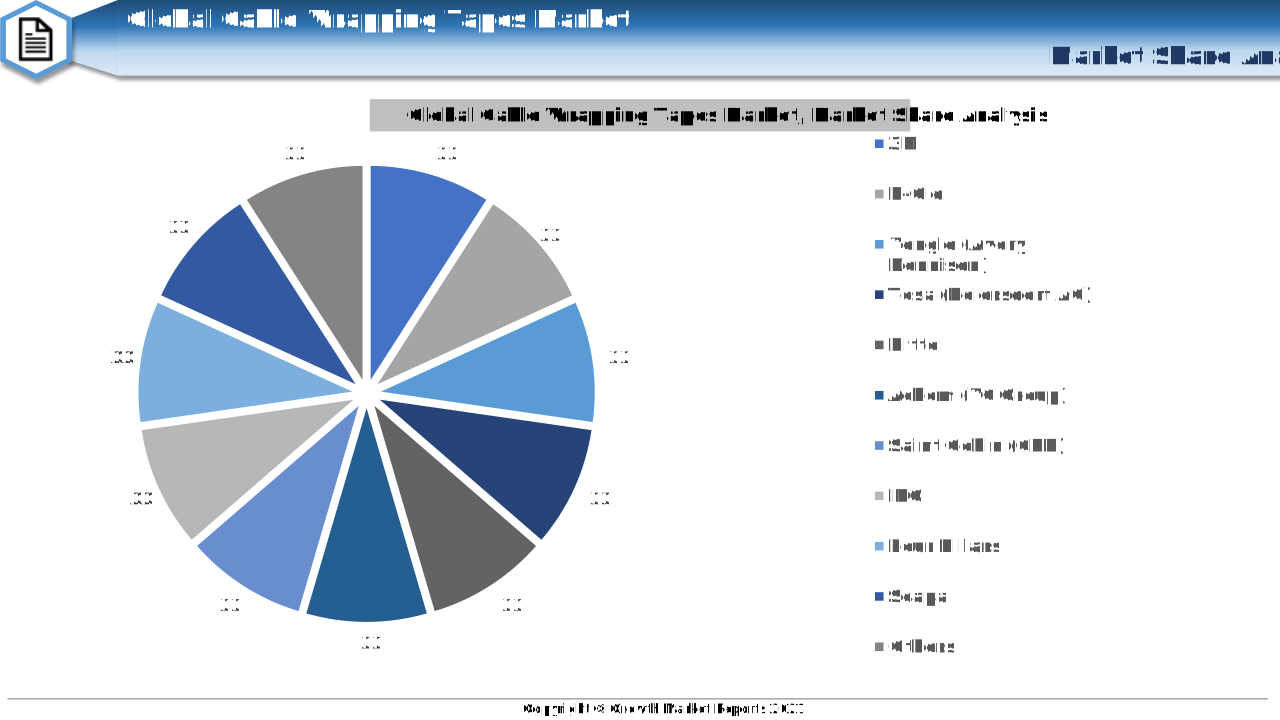

Cable Wrapping Tapes Market By key Players

Frequently Asked Questions

Opportunities include the expansion of renewable energy projects, electric vehicle infrastructure, smart grids, and the development of smart tapes with embedded sensors and advanced adhesive technologies.

Key challenges include fluctuations in raw material prices, stringent environmental regulations, intense competition from low-cost manufacturers, and the availability of alternative cable management solutions.

Major players include 3M Company, Nitto Denko Corporation, Tesa SE, Avery Dennison Corporation, Saint-Gobain Performance Plastics, Scapa Group plc, HellermannTyton, Shurtape Technologies LLC, and Intertape Polymer Group Inc.

While offline channels remain important, online distribution is rapidly growing due to increased digitization, convenience, and broader product accessibility.

The main adhesive types are acrylic, rubber, and silicone, each offering different properties such as UV resistance, flexibility, and high-temperature performance.

Asia Pacific dominates the global market, accounting for approximately 44% of the total market value in 2024, driven by rapid industrialization and infrastructure development.

Manufacturers are developing eco-friendly, halogen-free, and recyclable tape materials to comply with stringent environmental regulations and meet growing demand for sustainable solutions.

Cable wrapping tapes are commonly made from PVC, PET, polypropylene, cloth, foam, and specialty composites, each offering unique benefits for specific applications.

Key industries driving demand include automotive, electrical & electronics, aerospace, and industrial sectors, due to increased focus on cable management, safety, and reliability.

The global cable wrapping tapes market is projected to reach USD 3.48 billion by 2033, growing at a CAGR of 5.5% from 2025 to 2033.

Table Of Content

Chapter 1 Executive Summary
Chapter 2 Assumptions and Acronyms Used
Chapter 3 Research Methodology
Chapter 4 Cable Wrapping Tapes Market Overview
   4.1 Introduction
      4.1.1 Market Taxonomy
      4.1.2 Market Definition
      4.1.3 Macro-Economic Factors Impacting the Market Growth
   4.2 Cable Wrapping Tapes Market Dynamics
      4.2.1 Market Drivers
      4.2.2 Market Restraints
      4.2.3 Market Opportunity
   4.3 Cable Wrapping Tapes Market - Supply Chain Analysis
      4.3.1 List of Key Suppliers
      4.3.2 List of Key Distributors
      4.3.3 List of Key Consumers
   4.4 Key Forces Shaping the Cable Wrapping Tapes Market
      4.4.1 Bargaining Power of Suppliers
      4.4.2 Bargaining Power of Buyers
      4.4.3 Threat of Substitution
      4.4.4 Threat of New Entrants
      4.4.5 Competitive Rivalry
   4.5 Global Cable Wrapping Tapes Market Size & Forecast, 2023-2032
      4.5.1 Cable Wrapping Tapes Market Size and Y-o-Y Growth
      4.5.2 Cable Wrapping Tapes Market Absolute $ Opportunity

Chapter 5 Global Cable Wrapping Tapes Market Analysis and Forecast By Material Type
   5.1 Introduction
      5.1.1 Key Market Trends & Growth Opportunities By Material Type
      5.1.2 Basis Point Share (BPS) Analysis By Material Type
      5.1.3 Absolute $ Opportunity Assessment By Material Type
   5.2 Cable Wrapping Tapes Market Size Forecast By Material Type
      5.2.1 PVC
      5.2.2 PET
      5.2.3 Polypropylene
      5.2.4 Cloth
      5.2.5 Foam
      5.2.6 Others
   5.3 Market Attractiveness Analysis By Material Type

Chapter 6 Global Cable Wrapping Tapes Market Analysis and Forecast By Application
   6.1 Introduction
      6.1.1 Key Market Trends & Growth Opportunities By Application
      6.1.2 Basis Point Share (BPS) Analysis By Application
      6.1.3 Absolute $ Opportunity Assessment By Application
   6.2 Cable Wrapping Tapes Market Size Forecast By Application
      6.2.1 Automotive
      6.2.2 Electrical & Electronics
      6.2.3 Aerospace
      6.2.4 Industrial
      6.2.5 Others
   6.3 Market Attractiveness Analysis By Application

Chapter 7 Global Cable Wrapping Tapes Market Analysis and Forecast By Adhesive Type
   7.1 Introduction
      7.1.1 Key Market Trends & Growth Opportunities By Adhesive Type
      7.1.2 Basis Point Share (BPS) Analysis By Adhesive Type
      7.1.3 Absolute $ Opportunity Assessment By Adhesive Type
   7.2 Cable Wrapping Tapes Market Size Forecast By Adhesive Type
      7.2.1 Acrylic
      7.2.2 Rubber
      7.2.3 Silicone
      7.2.4 Others
   7.3 Market Attractiveness Analysis By Adhesive Type

Chapter 8 Global Cable Wrapping Tapes Market Analysis and Forecast By Distribution Channel
   8.1 Introduction
      8.1.1 Key Market Trends & Growth Opportunities By Distribution Channel
      8.1.2 Basis Point Share (BPS) Analysis By Distribution Channel
      8.1.3 Absolute $ Opportunity Assessment By Distribution Channel
   8.2 Cable Wrapping Tapes Market Size Forecast By Distribution Channel
      8.2.1 Online
      8.2.2 Offline
   8.3 Market Attractiveness Analysis By Distribution Channel

Chapter 9 Global Cable Wrapping Tapes Market Analysis and Forecast by Region
   9.1 Introduction
      9.1.1 Key Market Trends & Growth Opportunities By Region
      9.1.2 Basis Point Share (BPS) Analysis By Region
      9.1.3 Absolute $ Opportunity Assessment By Region
   9.2 Cable Wrapping Tapes Market Size Forecast By Region
      9.2.1 North America
      9.2.2 Europe
      9.2.3 Asia Pacific
      9.2.4 Latin America
      9.2.5 Middle East & Africa (MEA)
   9.3 Market Attractiveness Analysis By Region

Chapter 10 Coronavirus Disease (COVID-19) Impact 
   10.1 Introduction 
   10.2 Current & Future Impact Analysis 
   10.3 Economic Impact Analysis 
   10.4 Government Policies 
   10.5 Investment Scenario

Chapter 11 North America Cable Wrapping Tapes Analysis and Forecast
   11.1 Introduction
   11.2 North America Cable Wrapping Tapes Market Size Forecast by Country
      11.2.1 U.S.
      11.2.2 Canada
   11.3 Basis Point Share (BPS) Analysis by Country
   11.4 Absolute $ Opportunity Assessment by Country
   11.5 Market Attractiveness Analysis by Country
   11.6 North America Cable Wrapping Tapes Market Size Forecast By Material Type
      11.6.1 PVC
      11.6.2 PET
      11.6.3 Polypropylene
      11.6.4 Cloth
      11.6.5 Foam
      11.6.6 Others
   11.7 Basis Point Share (BPS) Analysis By Material Type 
   11.8 Absolute $ Opportunity Assessment By Material Type 
   11.9 Market Attractiveness Analysis By Material Type
   11.10 North America Cable Wrapping Tapes Market Size Forecast By Application
      11.10.1 Automotive
      11.10.2 Electrical & Electronics
      11.10.3 Aerospace
      11.10.4 Industrial
      11.10.5 Others
   11.11 Basis Point Share (BPS) Analysis By Application 
   11.12 Absolute $ Opportunity Assessment By Application 
   11.13 Market Attractiveness Analysis By Application
   11.14 North America Cable Wrapping Tapes Market Size Forecast By Adhesive Type
      11.14.1 Acrylic
      11.14.2 Rubber
      11.14.3 Silicone
      11.14.4 Others
   11.15 Basis Point Share (BPS) Analysis By Adhesive Type 
   11.16 Absolute $ Opportunity Assessment By Adhesive Type 
   11.17 Market Attractiveness Analysis By Adhesive Type
   11.18 North America Cable Wrapping Tapes Market Size Forecast By Distribution Channel
      11.18.1 Online
      11.18.2 Offline
   11.19 Basis Point Share (BPS) Analysis By Distribution Channel 
   11.20 Absolute $ Opportunity Assessment By Distribution Channel 
   11.21 Market Attractiveness Analysis By Distribution Channel

Chapter 12 Europe Cable Wrapping Tapes Analysis and Forecast
   12.1 Introduction
   12.2 Europe Cable Wrapping Tapes Market Size Forecast by Country
      12.2.1 Germany
      12.2.2 France
      12.2.3 Italy
      12.2.4 U.K.
      12.2.5 Spain
      12.2.6 Russia
      12.2.7 Rest of Europe
   12.3 Basis Point Share (BPS) Analysis by Country
   12.4 Absolute $ Opportunity Assessment by Country
   12.5 Market Attractiveness Analysis by Country
   12.6 Europe Cable Wrapping Tapes Market Size Forecast By Material Type
      12.6.1 PVC
      12.6.2 PET
      12.6.3 Polypropylene
      12.6.4 Cloth
      12.6.5 Foam
      12.6.6 Others
   12.7 Basis Point Share (BPS) Analysis By Material Type 
   12.8 Absolute $ Opportunity Assessment By Material Type 
   12.9 Market Attractiveness Analysis By Material Type
   12.10 Europe Cable Wrapping Tapes Market Size Forecast By Application
      12.10.1 Automotive
      12.10.2 Electrical & Electronics
      12.10.3 Aerospace
      12.10.4 Industrial
      12.10.5 Others
   12.11 Basis Point Share (BPS) Analysis By Application 
   12.12 Absolute $ Opportunity Assessment By Application 
   12.13 Market Attractiveness Analysis By Application
   12.14 Europe Cable Wrapping Tapes Market Size Forecast By Adhesive Type
      12.14.1 Acrylic
      12.14.2 Rubber
      12.14.3 Silicone
      12.14.4 Others
   12.15 Basis Point Share (BPS) Analysis By Adhesive Type 
   12.16 Absolute $ Opportunity Assessment By Adhesive Type 
   12.17 Market Attractiveness Analysis By Adhesive Type
   12.18 Europe Cable Wrapping Tapes Market Size Forecast By Distribution Channel
      12.18.1 Online
      12.18.2 Offline
   12.19 Basis Point Share (BPS) Analysis By Distribution Channel 
   12.20 Absolute $ Opportunity Assessment By Distribution Channel 
   12.21 Market Attractiveness Analysis By Distribution Channel

Chapter 13 Asia Pacific Cable Wrapping Tapes Analysis and Forecast
   13.1 Introduction
   13.2 Asia Pacific Cable Wrapping Tapes Market Size Forecast by Country
      13.2.1 China
      13.2.2 Japan
      13.2.3 South Korea
      13.2.4 India
      13.2.5 Australia
      13.2.6 South East Asia (SEA)
      13.2.7 Rest of Asia Pacific (APAC)
   13.3 Basis Point Share (BPS) Analysis by Country
   13.4 Absolute $ Opportunity Assessment by Country
   13.5 Market Attractiveness Analysis by Country
   13.6 Asia Pacific Cable Wrapping Tapes Market Size Forecast By Material Type
      13.6.1 PVC
      13.6.2 PET
      13.6.3 Polypropylene
      13.6.4 Cloth
      13.6.5 Foam
      13.6.6 Others
   13.7 Basis Point Share (BPS) Analysis By Material Type 
   13.8 Absolute $ Opportunity Assessment By Material Type 
   13.9 Market Attractiveness Analysis By Material Type
   13.10 Asia Pacific Cable Wrapping Tapes Market Size Forecast By Application
      13.10.1 Automotive
      13.10.2 Electrical & Electronics
      13.10.3 Aerospace
      13.10.4 Industrial
      13.10.5 Others
   13.11 Basis Point Share (BPS) Analysis By Application 
   13.12 Absolute $ Opportunity Assessment By Application 
   13.13 Market Attractiveness Analysis By Application
   13.14 Asia Pacific Cable Wrapping Tapes Market Size Forecast By Adhesive Type
      13.14.1 Acrylic
      13.14.2 Rubber
      13.14.3 Silicone
      13.14.4 Others
   13.15 Basis Point Share (BPS) Analysis By Adhesive Type 
   13.16 Absolute $ Opportunity Assessment By Adhesive Type 
   13.17 Market Attractiveness Analysis By Adhesive Type
   13.18 Asia Pacific Cable Wrapping Tapes Market Size Forecast By Distribution Channel
      13.18.1 Online
      13.18.2 Offline
   13.19 Basis Point Share (BPS) Analysis By Distribution Channel 
   13.20 Absolute $ Opportunity Assessment By Distribution Channel 
   13.21 Market Attractiveness Analysis By Distribution Channel

Chapter 14 Latin America Cable Wrapping Tapes Analysis and Forecast
   14.1 Introduction
   14.2 Latin America Cable Wrapping Tapes Market Size Forecast by Country
      14.2.1 Brazil
      14.2.2 Mexico
      14.2.3 Rest of Latin America (LATAM)
   14.3 Basis Point Share (BPS) Analysis by Country
   14.4 Absolute $ Opportunity Assessment by Country
   14.5 Market Attractiveness Analysis by Country
   14.6 Latin America Cable Wrapping Tapes Market Size Forecast By Material Type
      14.6.1 PVC
      14.6.2 PET
      14.6.3 Polypropylene
      14.6.4 Cloth
      14.6.5 Foam
      14.6.6 Others
   14.7 Basis Point Share (BPS) Analysis By Material Type 
   14.8 Absolute $ Opportunity Assessment By Material Type 
   14.9 Market Attractiveness Analysis By Material Type
   14.10 Latin America Cable Wrapping Tapes Market Size Forecast By Application
      14.10.1 Automotive
      14.10.2 Electrical & Electronics
      14.10.3 Aerospace
      14.10.4 Industrial
      14.10.5 Others
   14.11 Basis Point Share (BPS) Analysis By Application 
   14.12 Absolute $ Opportunity Assessment By Application 
   14.13 Market Attractiveness Analysis By Application
   14.14 Latin America Cable Wrapping Tapes Market Size Forecast By Adhesive Type
      14.14.1 Acrylic
      14.14.2 Rubber
      14.14.3 Silicone
      14.14.4 Others
   14.15 Basis Point Share (BPS) Analysis By Adhesive Type 
   14.16 Absolute $ Opportunity Assessment By Adhesive Type 
   14.17 Market Attractiveness Analysis By Adhesive Type
   14.18 Latin America Cable Wrapping Tapes Market Size Forecast By Distribution Channel
      14.18.1 Online
      14.18.2 Offline
   14.19 Basis Point Share (BPS) Analysis By Distribution Channel 
   14.20 Absolute $ Opportunity Assessment By Distribution Channel 
   14.21 Market Attractiveness Analysis By Distribution Channel

Chapter 15 Middle East & Africa (MEA) Cable Wrapping Tapes Analysis and Forecast
   15.1 Introduction
   15.2 Middle East & Africa (MEA) Cable Wrapping Tapes Market Size Forecast by Country
      15.2.1 Saudi Arabia
      15.2.2 South Africa
      15.2.3 UAE
      15.2.4 Rest of Middle East & Africa (MEA)
   15.3 Basis Point Share (BPS) Analysis by Country
   15.4 Absolute $ Opportunity Assessment by Country
   15.5 Market Attractiveness Analysis by Country
   15.6 Middle East & Africa (MEA) Cable Wrapping Tapes Market Size Forecast By Material Type
      15.6.1 PVC
      15.6.2 PET
      15.6.3 Polypropylene
      15.6.4 Cloth
      15.6.5 Foam
      15.6.6 Others
   15.7 Basis Point Share (BPS) Analysis By Material Type 
   15.8 Absolute $ Opportunity Assessment By Material Type 
   15.9 Market Attractiveness Analysis By Material Type
   15.10 Middle East & Africa (MEA) Cable Wrapping Tapes Market Size Forecast By Application
      15.10.1 Automotive
      15.10.2 Electrical & Electronics
      15.10.3 Aerospace
      15.10.4 Industrial
      15.10.5 Others
   15.11 Basis Point Share (BPS) Analysis By Application 
   15.12 Absolute $ Opportunity Assessment By Application 
   15.13 Market Attractiveness Analysis By Application
   15.14 Middle East & Africa (MEA) Cable Wrapping Tapes Market Size Forecast By Adhesive Type
      15.14.1 Acrylic
      15.14.2 Rubber
      15.14.3 Silicone
      15.14.4 Others
   15.15 Basis Point Share (BPS) Analysis By Adhesive Type 
   15.16 Absolute $ Opportunity Assessment By Adhesive Type 
   15.17 Market Attractiveness Analysis By Adhesive Type
   15.18 Middle East & Africa (MEA) Cable Wrapping Tapes Market Size Forecast By Distribution Channel
      15.18.1 Online
      15.18.2 Offline
   15.19 Basis Point Share (BPS) Analysis By Distribution Channel 
   15.20 Absolute $ Opportunity Assessment By Distribution Channel 
   15.21 Market Attractiveness Analysis By Distribution Channel

Chapter 16 Competition Landscape 
   16.1 Cable Wrapping Tapes Market: Competitive Dashboard
   16.2 Global Cable Wrapping Tapes Market: Market Share Analysis, 2023
   16.3 Company Profiles (Details – Overview, Financials, Developments, Strategy) 
      16.3.1 3M
Avery Dennison Corporation
Nitto Denko Corporation
Tesa SE
Saint-Gobain Performance Plastics
Scapa Group plc
Intertape Polymer Group Inc.
HellermannTyton Group PLC
Shurtape Technologies LLC
Plymouth Rubber Europa S.A.
Berry Global Inc.
Advance Tapes International Ltd.
Parafix Tapes & Conversions Ltd.
DeWal Industries Inc.
PPI Adhesive Products Ltd.
Teraoka Seisakusho Co. Ltd.
Ajit Industries Pvt. Ltd.
Zhejiang Yonghe Adhesive Products Co. Ltd.
Shanghai Yongguan Adhesive Products Corp. Ltd.
Electro Tape Specialties Inc.

Methodology

Our Clients

sinopec
Microsoft
Honda Motor Co. Ltd.
Deloitte
Pfizer
FedEx Logistics
General Mills
Dassault Aviation