Segments - by Product Type (Synthetic, Semi-Synthetic, Mineral-Based, Bio-Based), by Application (Automotive, Industrial Machinery, Marine, Aerospace, Household, Others), by Distribution Channel (Online, Offline), by End-User (Commercial, Residential, Industrial)
According to our latest research, the global penetrating oil market size stood at USD 1.58 billion in 2024, exhibiting robust growth driven by expanding industrial and automotive sectors worldwide. The market is projected to grow at a CAGR of 4.7% over the forecast period, reaching USD 2.41 billion by 2033. This healthy growth trajectory is primarily attributed to rising demand for maintenance solutions across diverse industries, increased mechanization, and a growing focus on equipment efficiency and longevity. As per our comprehensive analysis, the market is experiencing dynamic shifts due to technological advancements, changing end-user preferences, and a heightened emphasis on sustainable and high-performance lubricants.
One of the primary growth factors propelling the penetrating oil market is the surging demand for effective maintenance products in the automotive and industrial machinery sectors. As machinery and vehicles become more sophisticated, the need for advanced lubricants that can efficiently reduce friction, prevent rust, and facilitate the smooth removal of stuck or corroded components has intensified. The proliferation of automated manufacturing lines and the adoption of precision engineering in both developed and emerging economies have further accentuated the necessity for high-quality penetrating oils. Additionally, the increasing frequency of preventive maintenance schedules in industries such as manufacturing, transportation, and logistics is directly contributing to the escalating consumption of penetrating oils globally.
Another significant contributor to market growth is the rising awareness and adoption of bio-based and environmentally friendly penetrating oils. Stringent environmental regulations and growing corporate sustainability initiatives are compelling manufacturers to develop and market products with lower volatile organic compound (VOC) content and reduced ecological impact. Bio-based penetrating oils, derived from renewable resources, are gaining traction among environmentally conscious consumers and industries seeking to minimize their carbon footprint. This shift is not only fostering innovation in product formulations but is also opening new avenues for market expansion, particularly in regions with strict regulatory frameworks governing chemical usage and emissions.
Furthermore, the expansion of e-commerce platforms and digital distribution channels is reshaping the way penetrating oils are marketed and sold. The convenience of online purchasing, coupled with the availability of detailed product information and customer reviews, is enabling end-users to make more informed decisions. This trend is particularly evident among small and medium enterprises (SMEs) and residential users who benefit from the accessibility and competitive pricing offered by online channels. The growing penetration of digital marketing and direct-to-consumer sales strategies is expected to further accelerate market growth, as manufacturers and distributors leverage technology to reach untapped customer segments and streamline supply chains.
In the realm of industrial maintenance, the importance of specialized products like Shredder Oil cannot be overstated. Shredder Oil is specifically formulated to maintain the optimal performance of shredding equipment, which is crucial in industries where document destruction and material processing are routine. This oil not only ensures smooth operation by reducing friction and wear but also extends the lifespan of the machinery by preventing jamming and overheating. As industries continue to prioritize efficiency and reliability, the demand for such specialized maintenance solutions is expected to grow, reflecting a broader trend towards targeted lubrication products that cater to specific operational needs.
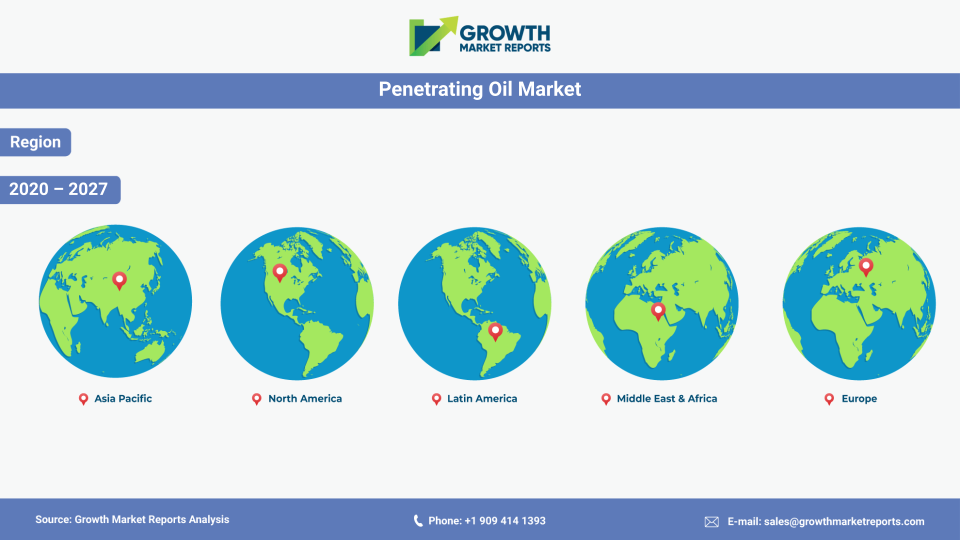
Regionally, the Asia Pacific market is emerging as a dominant force, fueled by rapid industrialization, robust automotive production, and significant infrastructure development. North America and Europe continue to be mature markets, characterized by high product adoption rates and a strong focus on innovation and regulatory compliance. Meanwhile, Latin America and the Middle East & Africa are witnessing steady growth, driven by increasing investments in industrial and transportation sectors. The interplay of these regional dynamics is shaping the competitive landscape and influencing market strategies among leading players.
The penetrating oil market by product type is segmented into synthetic, semi-synthetic, mineral-based, and bio-based oils. Synthetic penetrating oils are gaining substantial traction due to their superior performance characteristics, including higher thermal stability, better lubrication properties, and enhanced resistance to oxidation. These attributes make synthetic oils particularly suitable for high-performance industrial and automotive applications where equipment is subjected to extreme conditions. The growing shift towards synthetic formulations is also being driven by the increasing need for products that can extend machinery life and reduce maintenance costs, which is a critical consideration for industries operating in competitive environments.
Semi-synthetic penetrating oils, which blend the benefits of synthetic and mineral-based oils, are witnessing steady demand, especially in applications where a balance between performance and cost is essential. These products offer improved lubrication and rust prevention compared to traditional mineral-based oils, while remaining more affordable than fully synthetic alternatives. Semi-synthetic oils are commonly used in medium-duty industrial and automotive maintenance tasks, where they provide adequate performance without necessitating the premium pricing associated with synthetics. As industries continue to seek cost-effective solutions that do not compromise on quality, the semi-synthetic segment is expected to maintain its relevance throughout the forecast period.
Mineral-based penetrating oils, traditionally the most widely used category, continue to hold a significant share of the market, particularly in price-sensitive regions and among small-scale users. These oils are valued for their affordability and versatility, making them a popular choice for general-purpose lubrication and maintenance in residential and light commercial settings. However, the market share of mineral-based oils is gradually declining as end-users increasingly opt for higher-performance alternatives that offer better protection and efficiency. Nevertheless, mineral-based oils remain indispensable in applications where cost considerations outweigh the need for advanced properties.
The bio-based penetrating oil segment is experiencing rapid growth, driven by increasing environmental awareness and regulatory pressures to reduce the use of petroleum-derived products. Bio-based oils, typically formulated from vegetable oils or other renewable resources, offer excellent biodegradability and reduced toxicity, making them an attractive option for environmentally sensitive applications. Industries operating in sectors such as food processing, agriculture, and marine are particularly receptive to bio-based solutions due to their minimal environmental impact. As technological advancements continue to enhance the performance and availability of bio-based penetrating oils, this segment is poised for significant expansion in the coming years.
| Attributes | Details |
| Report Title | Global Penetrating Oil Market Research Report 2033 |
| By Product Type | Synthetic, Semi-Synthetic, Mineral-Based, Bio-Based |
| By Application | Automotive, Industrial Machinery, Marine, Aerospace, Household, Others |
| By Distribution Channel | Online, Offline |
| By End-User | Commercial, Residential, Industrial |
| Regions Covered | North America, Europe, APAC, Latin America, MEA |
| Base Year | 2024 |
| Historic Data | 2018-2023 |
| Forecast Period | 2025-2033 |
| Number of Pages | 283 |
| Number of Tables & Figures | 324 |
| Customization Available | Yes, the report can be customized as per your need. |
The application landscape of the penetrating oil market is diverse, encompassing automotive, industrial machinery, marine, aerospace, household, and other specialized sectors. The automotive segment remains the largest end-use application, driven by the extensive use of penetrating oils for vehicle maintenance, repair, and component protection. With the global automotive fleet expanding and vehicles becoming increasingly complex, the demand for high-performance lubricants that can address issues such as seized bolts, corrosion, and noise reduction is on the rise. Automotive service centers, repair shops, and DIY enthusiasts all contribute to sustained demand in this segment.
Industrial machinery represents another key application area, with penetrating oils playing a critical role in ensuring the smooth operation of equipment in manufacturing plants, processing facilities, and construction sites. The adoption of preventive and predictive maintenance practices in these industries has heightened the importance of reliable lubrication solutions. Penetrating oils are used to loosen rusted or frozen parts, protect against moisture, and extend the operational lifespan of machinery. As industries continue to invest in automation and modernization, the use of advanced penetrating oils is expected to increase, further bolstering market growth in this segment.
The marine and aerospace sectors, while smaller in terms of overall market share, present unique opportunities for penetrating oil manufacturers. In the marine industry, penetrating oils are essential for maintaining ship engines, deck machinery, and other equipment exposed to harsh saltwater environments. Similarly, the aerospace sector relies on specialized lubricants to ensure the safety and reliability of critical components subjected to extreme conditions. The stringent performance requirements and regulatory standards in these sectors drive demand for high-quality, corrosion-resistant penetrating oils, often formulated with advanced additives and materials.
Household applications constitute a significant portion of the market, particularly in developed regions where DIY repair and maintenance activities are common. Penetrating oils are widely used by homeowners for tasks such as loosening stuck fasteners, lubricating door hinges, and preventing rust on tools and appliances. The growing popularity of home improvement projects and the increasing availability of user-friendly products through retail and online channels are contributing to steady growth in this segment. Additionally, the market for specialized applications, such as electronics, agriculture, and utilities, continues to expand as manufacturers develop tailored solutions to address the unique needs of these industries.
The distribution landscape of the penetrating oil market is evolving rapidly, with both online and offline channels playing pivotal roles in reaching diverse customer segments. Traditionally, offline channels such as automotive parts stores, industrial suppliers, and hardware retailers have dominated the market, offering customers the advantage of immediate product availability and personalized service. These channels remain particularly important for bulk buyers and professional users who require technical support and value-added services. The established networks of distributors and wholesalers also facilitate the efficient supply of penetrating oils to remote and industrial locations.
However, the rise of e-commerce and digital marketplaces is transforming the way penetrating oils are marketed and sold. Online channels offer unparalleled convenience, allowing customers to browse a wide range of products, compare prices, and access detailed specifications from the comfort of their homes or workplaces. The ability to read customer reviews and ratings further enhances the decision-making process, particularly for residential users and small businesses. Manufacturers and distributors are increasingly investing in digital marketing strategies, search engine optimization, and direct-to-consumer platforms to capture a larger share of the growing online market.
The integration of omni-channel strategies is becoming a key differentiator for leading players in the penetrating oil market. By offering seamless experiences across both online and offline touchpoints, companies can cater to the diverse preferences of their customer base. For instance, customers may research products online before making a purchase in-store, or vice versa. The ability to provide consistent product information, pricing, and availability across channels is essential for building brand loyalty and driving repeat business. As technology continues to reshape the retail landscape, the importance of a robust and flexible distribution strategy cannot be overstated.
In addition to traditional and digital channels, the market is witnessing the emergence of specialized distribution networks targeting specific industries or applications. For example, suppliers focused on the marine or aerospace sectors may offer customized product assortments, technical training, and after-sales support tailored to the unique requirements of these markets. Such niche channels enable manufacturers to differentiate their offerings and capture value in segments where standard distribution approaches may be less effective. Overall, the dynamic interplay between online, offline, and specialized channels is shaping the future of the penetrating oil market, with customer convenience, service quality, and product innovation emerging as key drivers of success.
The penetrating oil market is segmented by end-user into commercial, residential, and industrial categories, each with distinct demand drivers and consumption patterns. The industrial segment accounts for the largest share of the market, underpinned by the extensive use of penetrating oils in manufacturing, processing, and heavy machinery maintenance. Industrial users prioritize products that offer superior performance, durability, and compatibility with a wide range of equipment. The adoption of rigorous maintenance protocols and the increasing complexity of industrial machinery are fueling demand for advanced penetrating oils capable of addressing challenging operating conditions and minimizing downtime.
Commercial end-users, including automotive service centers, fleet operators, construction companies, and facility management firms, represent a significant and growing segment of the market. These users require reliable and cost-effective solutions for routine maintenance, repair, and operational efficiency. The increasing outsourcing of maintenance services and the proliferation of commercial vehicle fleets are driving sustained demand for penetrating oils in this segment. Commercial users often seek products that offer a balance between performance and affordability, as well as convenient packaging and distribution options to support their operational needs.
The residential segment, while smaller in terms of overall market share, is characterized by steady growth and high product turnover. Homeowners and DIY enthusiasts use penetrating oils for a wide range of maintenance tasks, from lubricating door hinges and locks to freeing rusted bolts and preserving garden tools. The growing trend of home improvement and the increasing availability of user-friendly, multi-purpose products through retail and online channels are supporting the expansion of this segment. Manufacturers are responding by offering convenient packaging, clear usage instructions, and marketing campaigns tailored to the needs and preferences of residential consumers.
Across all end-user segments, the demand for specialized and application-specific penetrating oils is increasing. Industrial and commercial users, in particular, are seeking products formulated to address the unique challenges of their operating environments, such as extreme temperatures, high humidity, or exposure to aggressive chemicals. The ability to offer customized solutions, technical support, and value-added services is emerging as a key differentiator for manufacturers targeting these segments. As end-user expectations continue to evolve, the market is witnessing a shift towards more sophisticated and diversified product offerings designed to meet the specific needs of different customer groups.
The penetrating oil market presents a wide array of opportunities for growth and innovation, particularly as industries worldwide continue to prioritize equipment reliability and operational efficiency. One of the most promising opportunities lies in the development of advanced, high-performance formulations that cater to the evolving needs of modern machinery and vehicles. As equipment becomes more sophisticated and operates under increasingly demanding conditions, the demand for penetrating oils with enhanced properties, such as superior corrosion resistance, thermal stability, and biodegradability, is expected to rise. Manufacturers that invest in research and development to create innovative products tailored to these requirements are well-positioned to capture market share and build long-term customer loyalty.
Another significant opportunity is the growing emphasis on sustainability and environmental responsibility. The shift towards bio-based and low-VOC penetrating oils is gaining momentum, driven by regulatory pressures, corporate sustainability initiatives, and changing consumer preferences. Companies that can offer environmentally friendly alternatives without compromising on performance stand to benefit from this trend, particularly in regions with stringent environmental regulations. Additionally, the expansion of digital distribution channels and the adoption of omni-channel marketing strategies offer new avenues for reaching a broader customer base and enhancing brand visibility. By leveraging technology and data analytics, manufacturers can better understand customer needs, optimize supply chains, and deliver personalized solutions that drive growth and differentiation.
Despite these opportunities, the penetrating oil market faces several challenges and restraining factors that could impact its growth trajectory. One of the primary threats is the increasing volatility in raw material prices, particularly for petroleum-based products. Fluctuations in crude oil prices can significantly affect production costs and profit margins, making it difficult for manufacturers to maintain competitive pricing. Additionally, the market is subject to intense competition, with numerous local and international players vying for market share. This competitive pressure can lead to price wars, reduced profitability, and the commoditization of standard products. Furthermore, the growing regulatory scrutiny of chemical formulations and environmental impact poses compliance challenges for manufacturers, particularly in regions with rigorous safety and environmental standards. Companies must navigate these complexities while continuing to innovate and deliver value to customers.
The regional dynamics of the penetrating oil market reveal a complex interplay of economic, industrial, and regulatory factors that shape demand patterns and growth prospects. The Asia Pacific region leads the global market, accounting for approximately 38% of total revenue in 2024, driven by rapid industrialization, expanding automotive production, and significant infrastructure development in countries such as China, India, and Southeast Asia. The region's robust manufacturing base and increasing investments in machinery and equipment maintenance are fueling sustained demand for penetrating oils. With a projected CAGR of 5.2% through 2033, Asia Pacific is expected to maintain its leadership position and offer lucrative opportunities for both local and international manufacturers.
North America and Europe represent mature markets characterized by high penetration rates, advanced technological adoption, and a strong focus on regulatory compliance and sustainability. North America accounted for approximately 27% of the global market in 2024, supported by a well-established automotive and industrial sector, as well as a growing emphasis on preventive maintenance and equipment reliability. Europe, with a market share of around 22%, is distinguished by stringent environmental regulations and a strong preference for bio-based and low-emission products. Both regions are witnessing steady, albeit moderate, growth as manufacturers innovate to meet evolving customer and regulatory demands.
In Latin America and the Middle East & Africa, the penetrating oil market is experiencing steady expansion, albeit from a smaller base. Latin America contributed approximately 8% of global revenue in 2024, with growth driven by increasing investments in industrial and transportation infrastructure, particularly in Brazil and Mexico. The Middle East & Africa region, accounting for about 5% of the market, is benefiting from ongoing industrialization, urbanization, and the development of new manufacturing hubs. While these regions face challenges such as economic volatility and regulatory uncertainties, they offer untapped potential for market participants willing to invest in local partnerships, distribution networks, and tailored product offerings.
The penetrating oil market is characterized by intense competition, with a diverse array of global, regional, and local players vying for market share. The competitive landscape is shaped by factors such as product innovation, brand reputation, distribution reach, and customer service. Leading companies invest heavily in research and development to create high-performance formulations that address the evolving needs of industrial, automotive, and residential users. The ability to offer a broad portfolio of products, including synthetic, semi-synthetic, mineral-based, and bio-based options, is a key differentiator for market leaders seeking to cater to diverse customer requirements.
Brand recognition and customer loyalty play a significant role in the penetrating oil market, particularly in segments where product performance and reliability are critical. Established brands benefit from extensive distribution networks, strong relationships with industrial and commercial customers, and a reputation for quality and consistency. However, the market also offers opportunities for new entrants and niche players to carve out a presence by focusing on specialized applications, innovative formulations, or environmentally friendly alternatives. The rise of digital marketing and e-commerce platforms is leveling the playing field, enabling smaller companies to reach a wider audience and compete effectively with established players.
Strategic partnerships, mergers, and acquisitions are common strategies employed by market participants to enhance their product offerings, expand geographic reach, and strengthen their competitive position. Collaboration with distributors, OEMs, and end-users allows companies to better understand market needs, accelerate product development, and improve customer engagement. The ability to provide value-added services, such as technical support, training, and customized solutions, is increasingly important in building long-term relationships and differentiating offerings in a crowded marketplace.
Some of the major companies operating in the penetrating oil market include WD-40 Company, 3M, CRC Industries, The Lubrizol Corporation, Fuchs Petrolub SE, Royal Dutch Shell, ExxonMobil Corporation, TotalEnergies, and Klüber Lubrication. WD-40 Company is renowned for its flagship multi-use product, widely recognized for its versatility and effectiveness in both industrial and household applications. 3M and CRC Industries offer comprehensive portfolios of specialty lubricants and maintenance products, catering to a broad spectrum of end-users. The Lubrizol Corporation and Fuchs Petrolub SE are leaders in the development of advanced lubricant technologies, with a strong emphasis on innovation and sustainability. Major oil companies such as Royal Dutch Shell, ExxonMobil, and TotalEnergies leverage their global distribution networks and extensive R&D capabilities to deliver high-quality penetrating oils to industrial and commercial customers worldwide. Klüber Lubrication is distinguished by its focus on specialty lubricants for demanding applications in sectors such as food processing, pharmaceuticals, and marine. These companies continue to shape the competitive landscape through ongoing investment in product development, sustainability initiatives, and customer-centric strategies.
The Global Penetrating Oil market has been segmented on the basis of
Key players in the global penetrating oil market includes WD-40 Company, Illinois Tool Works Inc., and Calumet Specialty Products Partners, L.P. These companies are considered as key manufacturers of Penetrating Oil, based on their revenue, research & development activities, regional presence, and supply chain management system.
The players are adopting key strategies such as acquisition, and geographical expansion where potential opportunity for the Penetrating Oil extraction is added in the company’s capacity.
In 2020, the Calumet Specialty Products Partners, L.P. has completed the acquisition of Paralogics, LLC, a producer of candle and industrial wax blends. company expands its presence in the specialty wax blending and packaging market
In November 2019, Electrolube Limited launched a new range of gap- filling products with excellent thermal performance. GF400 is a two-part, liquid silicone-based gap filler, which can either be cured at room temperature or accelerated with heat.
On April 10, 2018, Lubrication Engineers introduced advanced formula turbine oil named Endure Turbine Oil (6481-6482). The advanced formula turbine oil was developed with a blend of highly refined base oils and proprietary additive technology for providing superior oxidate and thermal stability.
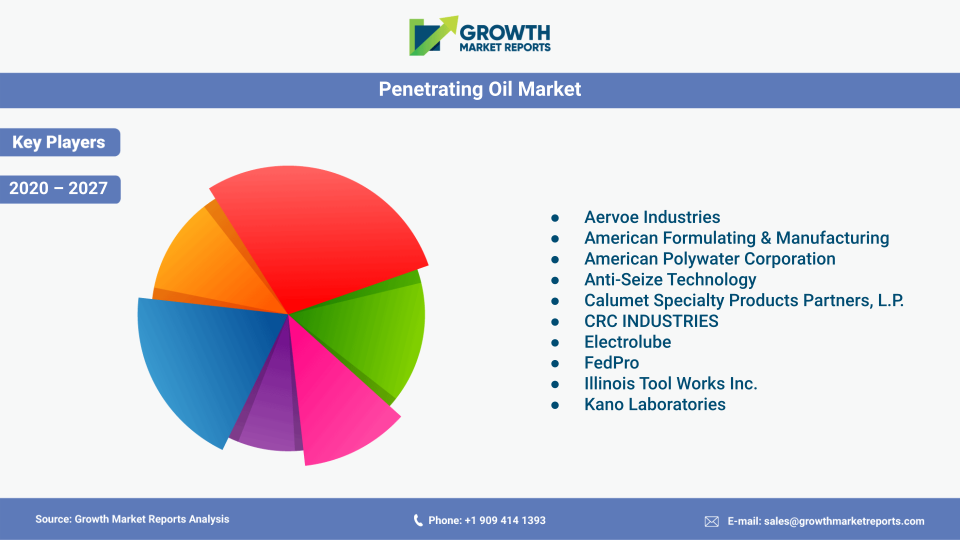
Major manufactures include, WD-40 Company, Illinois Tool Works Inc., and Calumet Specialty Products Partners, L.P.
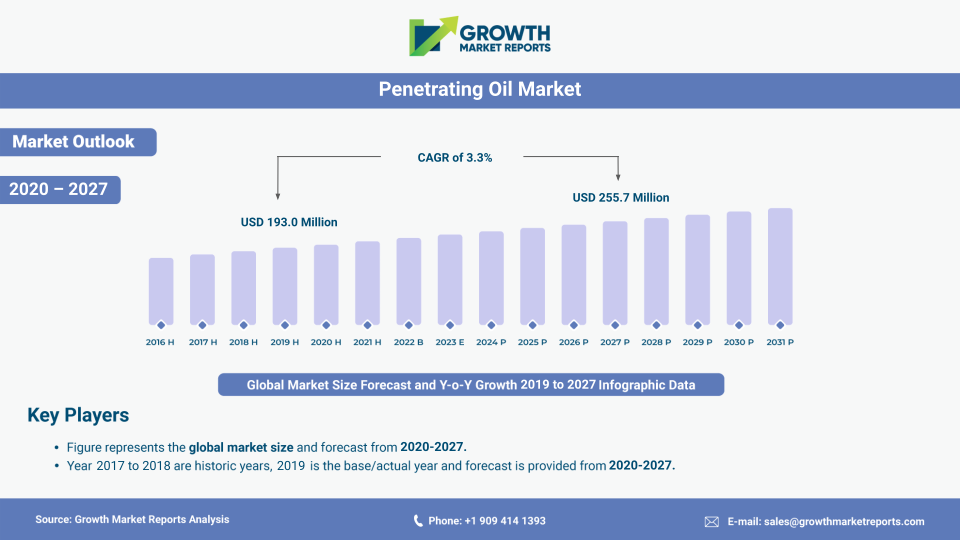
The base year considered for the global Penetrating Oil market report is 2019. The complete analysis period is 2017 to 2027, wherein, 2017 & 2018 are the historic years and the forecast is provided from 2020 to 2027.
The market is expected to decline in-between 2019 and 2020 owing to the adverse effect of COVID-19 pandemic. Disruptive supply chain and country lockdown conditions have forced the manufacturers for temporarily suspension of production which is resulting to declining sales.
Factors such as competitive strength and market positioning are key areas considered while selecting top companies to be profiled.
Construction, Automotive, Food & Beverages, Marine, Agriculture, Military, and Others are the key End-user that are driving the Penetrating Oil market.
Rising awareness and increasing diverse applications for penetrating oil and increasing the demand for green products such as penetrating oil propelling the growth of the market.
Company Market Share (in % for base year 2019) for penetrating oil market is available in final report.
According to this Growth Market Reports report, the market from Penetrating Oil is likely to register a CAGR of 3.3% during forecast period 2020-2027, with an anticipated to reach around USD 255.7 million by the end of the 2027.
Yes, the report covers product specific information such as composition development etc.
Additional company profiles can be provided on request.