Antifouling Paints and Coatings Market Report 2034

Antifouling Paints and Coatings Market Report 2034

Segments - by Product Type (Copper-based, Biocide-free, Self-polishing Copolymer, Hybrid, Others), by Application (Shipping Vessels, Drilling Rigs & Production Platforms, Fishing Boats, Yachts & Other Boats, Others), by End-Use Industry (Marine, Oil & Gas, Shipping, Defense, Others), by Distribution Channel (Direct, Indirect)

https://growthmarketreports.com/Raksha
Author : Raksha Sharma
https://growthmarketreports.com/Vaibhav
Fact-checked by : V. Chandola
https://growthmarketreports.com/Shruti
Editor : Shruti Bhat

Last Updated : Jun, 2026 | Report ID :MC-62 | 4.9 Rating | 40 Reviews | 280 Pages | Format : Docx PDF

Report Description

This report is updated with the latest market data and insights as of June 2026. Base year: 2025  |  Forecast period: 2026-2034


Antifouling Paints and Coatings Market Outlook

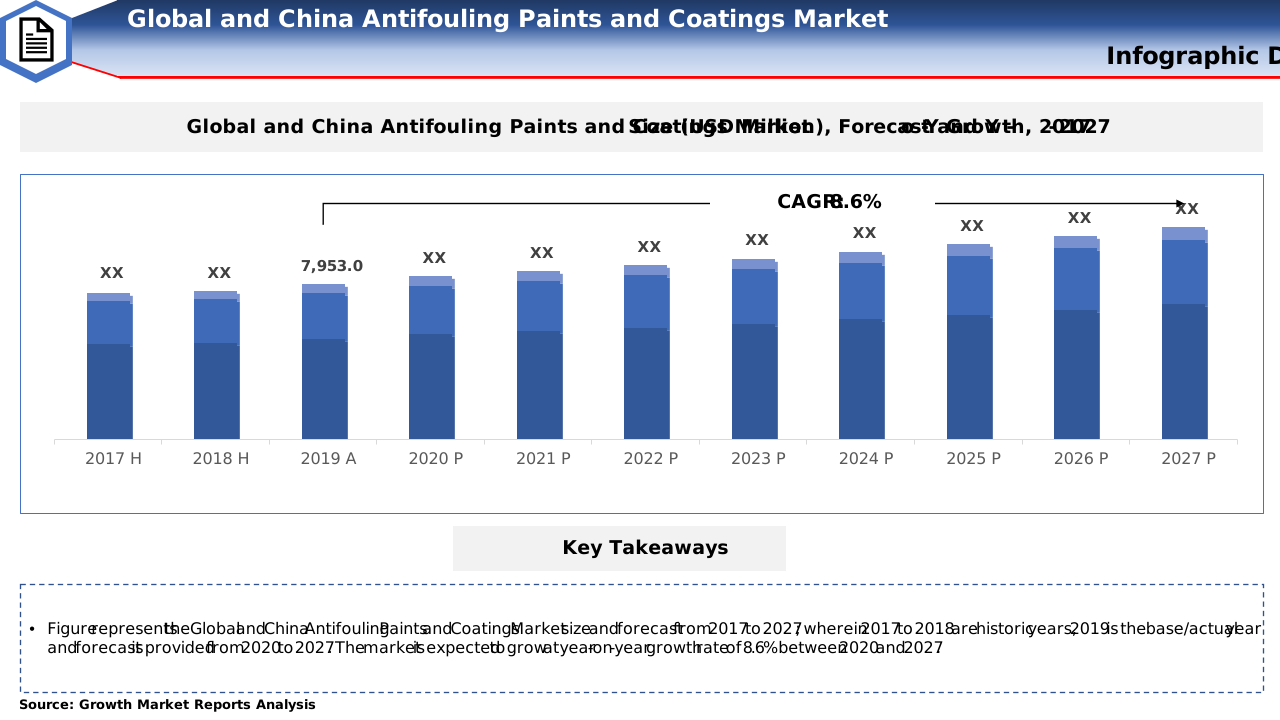
As per the latest research, the global antifouling paints and coatings market size reached USD 10.1 billion in 2025, reflecting robust and sustained demand across marine and offshore industries worldwide. The market is projected to expand at a CAGR of 4.7% from 2026 to 2034, reaching a forecasted value of USD 15.4 billion by 2034. This steady growth is primarily driven by the rising need for advanced marine protection solutions, escalating shipbuilding activities across Asia Pacific, and stringent environmental regulations encouraging the adoption of eco-friendly antifouling technologies. For a focused view of vessel-specific demand, the broader landscape of marine antifouling paints provides essential context on how product innovation and regulatory pressure are reshaping procurement decisions globally.

Global Antifouling Paints and Coatings Market Size Forecast 2025-2034, USD Billion

The growth trajectory of the antifouling paints and coatings market is significantly influenced by the increasing volume of global maritime trade and the ongoing expansion of the commercial shipping industry. As international trade continues to surge past pre-pandemic peaks, the demand for new vessels and the maintenance of existing fleets have become paramount priorities for fleet operators. Antifouling coatings are essential for protecting ship hulls from biofouling, which can lead to increased fuel consumption, elevated greenhouse gas emissions, and rising maintenance costs. The adoption of these coatings not only enhances operational efficiency but also ensures compliance with international maritime standards set by bodies such as the International Maritime Organization (IMO). Additionally, the push for greener shipping practices is propelling the development of biocide-free and hybrid antifouling solutions, further fueling market expansion through the forecast period.

Another major growth factor is the rapid pace of technological advancement in antifouling formulations. Research and development efforts are focused on creating high-performance, long-lasting coatings that minimize environmental impact while providing superior hull protection. The emergence of self-polishing copolymer and hybrid coatings has revolutionized the market by offering extended service intervals and reduced dry-docking frequencies. These innovations are particularly attractive to shipping companies aiming to optimize lifecycle costs and improve sustainability profiles. Moreover, increasing investments in offshore oil and gas exploration, coupled with the proliferation of drilling rigs and production platforms in deepwater regions, are contributing to heightened demand for advanced antifouling solutions capable of withstanding harsh subsea conditions.

The market is also being shaped by regulatory frameworks established by the IMO and regional authorities. These regulations mandate the use of antifouling systems that limit the release of harmful substances into marine ecosystems, compelling manufacturers to develop coatings that are both effective and compliant with evolving environmental standards. The growing awareness about the ecological consequences of biofouling, including the introduction of invasive aquatic species and the degradation of marine habitats, is further encouraging end-users to invest in state-of-the-art antifouling technologies. Innovations such as electrochemical antifouling systems are gaining attention as a complement to traditional coating approaches, offering active biofouling prevention without reliance on biocidal chemicals. This regulatory impetus, combined with the economic benefits of improved vessel efficiency, is expected to sustain market growth throughout the 2026-2034 forecast period.

In the realm of Marine Coatings And Treatments, the industry is witnessing a transformative shift towards more sustainable and efficient solutions. These coatings are not only pivotal in protecting vessels from harsh marine conditions but also play a crucial role in enhancing the longevity and performance of marine structures. As the demand for environmentally friendly options grows, manufacturers are focusing on developing coatings that minimize ecological impact while providing robust protection. The integration of advanced materials and technologies is enabling the creation of coatings that offer superior resistance to biofouling and corrosion, ensuring that marine assets remain operationally efficient and compliant with stringent environmental regulations.

Regionally, Asia Pacific dominates the antifouling paints and coatings market, driven by its large shipbuilding sector, extensive coastline, and growing offshore energy investments. Countries such as China, South Korea, and Japan are at the forefront of vessel construction and maintenance, creating a substantial and growing demand for antifouling solutions. North America and Europe also represent significant market shares, supported by strong maritime industries, active recreational boating communities, and stringent environmental policies. Meanwhile, emerging markets in Latin America and the Middle East and Africa are witnessing rising adoption rates, fueled by investments in offshore infrastructure and port development. The regional dynamics are shaped by a combination of economic activity, regulatory enforcement, and technological adoption, creating a diverse and competitive global landscape through 2034.

Product Type Analysis

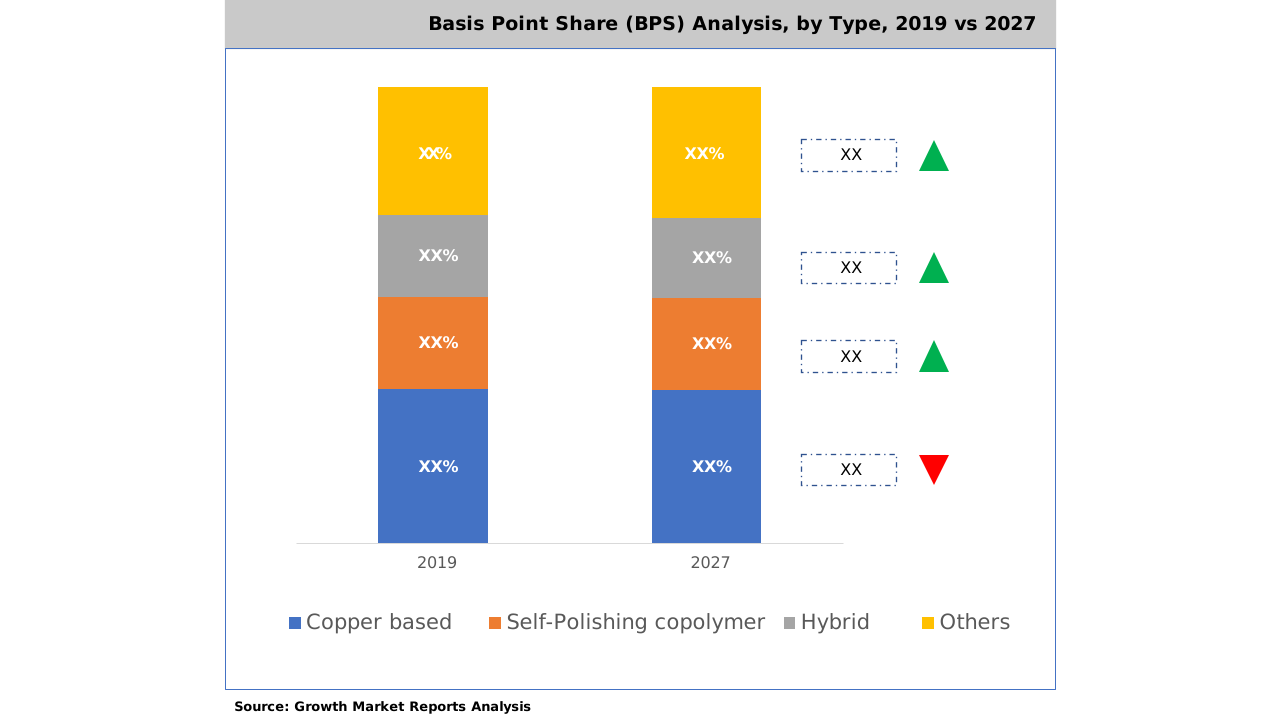
The antifouling paints and coatings market is segmented by product type into copper-based, biocide-free, self-polishing copolymer, hybrid, and others. Copper-based coatings continue to hold the largest share, estimated at approximately 34.5% of the market in 2025, due to their proven efficacy in preventing biofouling across a wide range of vessel types and operating environments. These formulations leverage the biocidal properties of copper compounds to inhibit the growth of barnacles, algae, and other marine organisms, making them a preferred choice for commercial vessels and offshore platforms. However, environmental concerns over copper leaching into marine ecosystems have spurred regulatory scrutiny in the European Union, Scandinavia, and parts of Asia Pacific, prompting the industry to seek alternatives that balance performance with sustainability. Ongoing research into reduced-copper and hybrid formulations is a key trend shaping this segment's evolution through the forecast period. The dedicated segment of copper-based antifouling paint continues to attract investment even as regulatory headwinds build, underscoring the technology's enduring commercial relevance.

Antifouling Paints and Coatings Market Share by Product Type 2025

The biocide-free category is gaining significant traction as regulatory bodies and environmentally conscious end-users prioritize marine stewardship. Holding approximately 18.2% of the market in 2025, these coatings utilize physical or chemical mechanisms such as silicone-based or fluoropolymer technologies to create a low-energy, slippery surface that prevents organism attachment rather than killing them. Biocide-free solutions are especially popular among operators of yachts, fishing boats, and vessels operating in ecologically sensitive areas such as marine protected zones. The market for these products is expected to grow at a faster pace than the overall market average as more stakeholders adopt green shipping practices and as international regulations become increasingly stringent. Manufacturers are investing heavily in R&D to enhance the durability and fouling-release effectiveness of biocide-free coatings, making them a viable and increasingly competitive alternative to traditional options.

Self-polishing copolymer (SPC) coatings represent a technological cornerstone of modern antifouling strategies, commanding approximately 27.8% of total market revenue in 2025. These products gradually hydrolyze in seawater in a controlled manner, continuously exposing fresh biocidal surfaces and maintaining hull cleanliness over extended service periods of up to five years. SPC coatings are favored for their long service life, reduced maintenance requirements, and ability to deliver consistent performance throughout the coating's lifespan. The adoption of SPC technology is particularly pronounced in the commercial shipping sector, where operational efficiency and cost savings are critical competitive factors. Continuous innovations in polymer chemistry are expanding the application range of SPC coatings, enabling their use across a broader range of vessel speeds, trade routes, and climatic conditions.

Hybrid antifouling coatings combine the strengths of multiple technologies, representing roughly 13.6% of market value in 2025 and growing. These formulations may integrate copper compounds, organic biocides, and silicone-based fouling-release components to provide a comprehensive and adaptable defense against diverse fouling organisms. Hybrid products are designed to meet the specific needs of different vessel types and operating environments, making them attractive to a broad customer base spanning commercial shipping, defense, and offshore energy. The flexibility and customizable nature of hybrid coatings are driving their adoption in both newbuild projects and retrofit maintenance programs. As end-users seek tailored solutions that address unique operational challenges while meeting environmental compliance requirements, the hybrid segment is poised for significant growth through 2034.

The "others" category, accounting for approximately 5.9% of the market in 2025, encompasses a range of emerging antifouling technologies including nano-coatings, enzyme-based systems, and advanced polymer architectures. These innovative products are at the forefront of industry research, offering the potential for superior performance with minimal environmental footprint. Exciting developments in the area of light-activated antifouling solutions are drawing attention from both shipbuilders and regulatory bodies, as these systems can disrupt biofilm formation without releasing persistent chemicals. While still in relatively early stages of commercialization, next-generation coatings are expected to gain meaningful market share as their efficacy and cost-effectiveness are demonstrated in real-world applications across the 2026-2034 forecast window.

Report Scope

Attributes Details
Report Title Antifouling Paints and Coatings Market Research Report 2034
By Product Type Copper-based, Biocide-free, Self-polishing Copolymer, Hybrid, Others
By Application Shipping Vessels, Drilling Rigs & Production Platforms, Fishing Boats, Yachts & Other Boats, Others
By End-Use Industry Marine, Oil & Gas, Shipping, Defense, Others
By Distribution Channel Direct, Indirect
Regions Covered North America, Europe, APAC, Latin America, MEA
Base Year 2025
Historic Data 2019-2024
Forecast Period 2026-2034
Number of Pages 280
Number of Tables & Figures 251
Customization Available Yes, the report can be customized as per your need.

Application Analysis

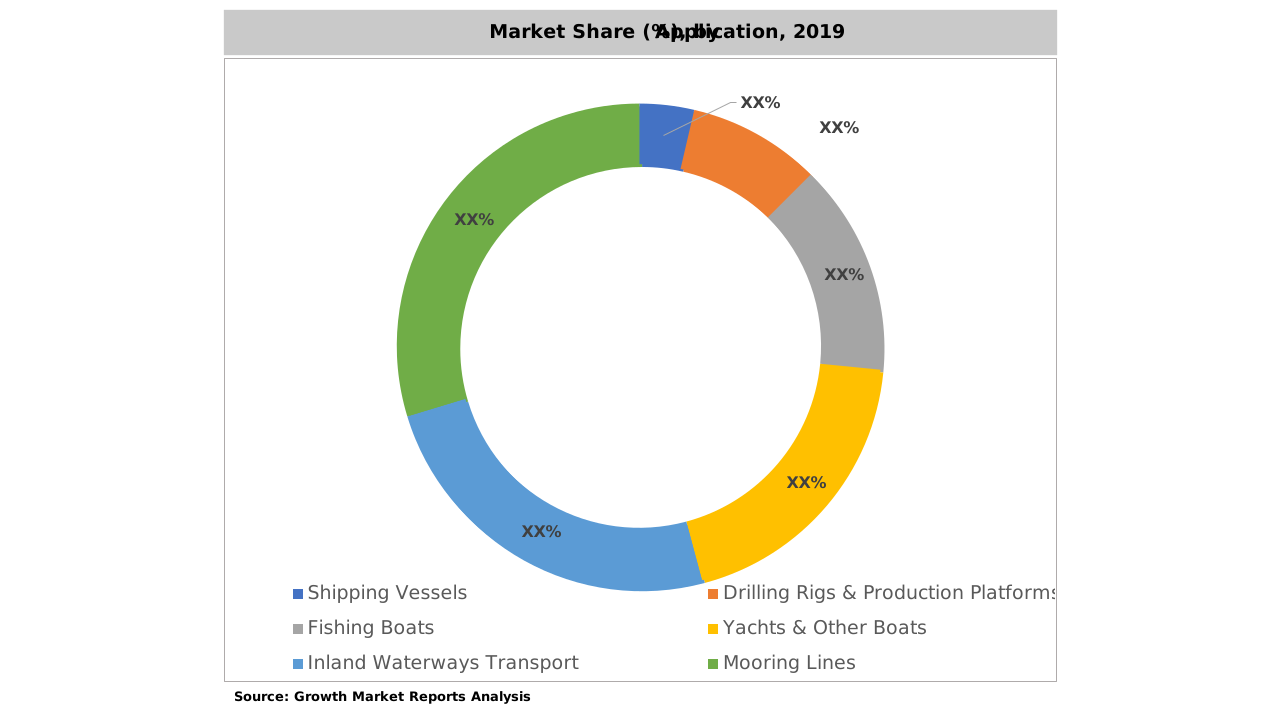
The application landscape for antifouling paints and coatings is diverse, reflecting the wide range of marine assets that require protection from biofouling. Shipping vessels constitute the largest application segment in 2025, driven by the sheer volume of global maritime trade and the critical need to maintain vessel hull efficiency. Biofouling can significantly increase hydrodynamic drag, leading to higher fuel consumption and greenhouse gas emissions that conflict with decarbonization targets under the IMO's Carbon Intensity Indicator framework. As a result, ship operators are investing heavily in advanced antifouling solutions to optimize operational costs and comply with environmental regulations. The adoption of high-performance coatings is particularly pronounced among large cargo ships, container vessels, and tankers, where even marginal improvements in hull smoothness translate into material fuel savings. The specialized market for protective coatings on commercial vessels is therefore one of the most dynamic sub-segments within the broader industry.

Drilling rigs and production platforms represent another key application area, particularly in the offshore oil and gas sector. These structures are continuously exposed to harsh marine environments, making them susceptible to rapid biofouling accumulation that accelerates corrosion and increases structural maintenance burdens. Effective antifouling coatings are essential for maintaining the structural integrity and operational efficiency of offshore platforms. The expansion of offshore exploration activities, especially in the Gulf of Mexico, the North Sea, Southeast Asia, and emerging deepwater basins off West Africa and Brazil, is driving demand for robust and long-lasting antifouling solutions. The need to minimize maintenance downtime and extend service intervals further underscores the economic importance of advanced coatings in this segment.

The fishing boats and yachts and other boats segments are characterized by diverse requirements and usage patterns. Owners of recreational vessels such as yachts and sailboats prioritize coatings that offer ease of application, superior aesthetics, and minimal environmental impact, particularly given the tendency of these vessels to operate in coastal marine protected areas. In contrast, commercial fishing operators focus on durability and cost-effectiveness, given demanding operational conditions and frequent exposure to fouling organisms in productive coastal and pelagic waters. The increasing popularity of leisure boating and the growth of marine tourism are contributing to the steady expansion of the antifouling coatings market in these segments. Manufacturers are responding with tailored solutions that address the unique performance and compliance needs of each vessel category.

Other application areas include port infrastructure, aquaculture installations, and military vessels. The aquaculture sector in particular represents a notable growth opportunity, as net pen operators seek coatings that prevent biofouling accumulation on cage structures without harming cultivated species. The dedicated segment covering antifouling solutions for aquaculture nets is growing as global fish farming output expands, especially in Norway, Chile, and Southeast Asia. Naval vessels require coatings that meet stringent defense standards for durability, stealth, and resistance to extreme conditions. The diversification of application areas is prompting manufacturers to innovate and expand their product portfolios to serve a broader spectrum of customer requirements, reinforcing the market's resilience across economic cycles.

The ongoing evolution of application requirements is fostering collaboration between coating manufacturers, shipbuilders, and end-users. Customization and technical support are becoming important competitive differentiators, as clients seek solutions that deliver optimal performance in specific operating environments and regulatory contexts. The integration of digital technologies such as hull monitoring systems, underwater inspection drones, and predictive maintenance analytics is also enhancing the value proposition of antifouling coatings. By enabling real-time performance tracking and proactive maintenance scheduling, these innovations are helping operators maximize the return on their antifouling investments and extend recoating intervals, reducing total lifecycle costs.

End-Use Industry Analysis

The marine industry is the primary end-user of antifouling paints and coatings, accounting for the largest share of market demand in 2025. This sector encompasses commercial shipping, passenger transport, fishing, and recreational boating, all of which require effective biofouling management to ensure operational efficiency and regulatory compliance. The emphasis on fuel efficiency, decarbonization, and vessel longevity is driving the adoption of advanced coatings across the marine industry. The increasing size and technical complexity of modern vessels are also elevating the performance expectations placed on antifouling products, prompting continuous innovation in polymer science, surface engineering, and application methodologies.

The oil and gas sector represents a significant and resilient growth opportunity for antifouling coatings, particularly in the context of offshore exploration and production. Platforms, rigs, floating production storage and offloading (FPSO) units, and subsea infrastructure are exposed to challenging marine conditions that accelerate biofouling and corrosion simultaneously. The use of high-performance coatings is essential for maintaining operational uptime and minimizing maintenance costs in environments where access for repair is costly and logistically complex. As global energy demand continues to evolve and new deepwater fields are brought into production, investments in offshore oil and gas projects are expected to drive sustained demand for antifouling solutions tailored to the unique requirements of this industry through 2034.

The shipping industry, encompassing both bulk commodity and specialized cargo vessels, is a major and growing consumer of antifouling paints and coatings. The focus on reducing operational costs, enhancing vessel performance, and meeting environmental targets under the IMO's 2050 decarbonization strategy is prompting shipping companies to invest in next-generation coatings that offer measurable hull efficiency benefits. The trend towards larger and more specialized vessels, including LNG carriers, very large crude carriers, and ultra-large container ships, is further expanding the addressable market for antifouling products. Strategic long-term partnerships between shipping companies and coating manufacturers are facilitating the co-development of customized solutions that deliver verifiable efficiency gains.

The defense sector, while smaller in terms of volume, is characterized by stringent performance, confidentiality, and safety requirements. Naval vessels and military support ships must maintain peak operational readiness, often in hostile, remote, or ecologically regulated environments. Antifouling coatings for defense applications must deliver exceptional durability, resistance to extreme conditions including cavitation and high-speed operation, and compliance with military procurement standards. The growing emphasis on fleet modernization programs across the United States, European NATO members, India, and Australia is creating sustained niche opportunities for specialized antifouling products within the defense sector.

Other end-use industries include port authorities, coastal infrastructure operators, and aquaculture businesses. These segments, though individually smaller, collectively contribute meaningful diversity and resilience to the antifouling paints and coatings market. The need to protect underwater structures such as piles, jetties, and sea chests, maintain navigational aids, and support sustainable aquaculture practices is driving the adoption of tailored antifouling solutions. As the market continues to mature through the 2026-2034 forecast period, the ability to address the specific technical and regulatory needs of diverse end-use industries will remain a key determinant of competitive success for coating manufacturers.
Distribution Channel Analysis

The direct distribution channel is a dominant force in the antifouling paints and coatings market, particularly for large-scale projects and institutional clients. Shipyards, fleet operators, and offshore platform owners often engage directly with coating manufacturers to procure customized solutions, negotiate volume pricing, and access dedicated technical support. This channel allows for close collaboration, tailored product engineering, and seamless integration of antifouling programs into scheduled maintenance cycles. The direct approach is especially prevalent in regions with established shipbuilding and offshore industries such as South Korea, China, Norway, and the Gulf of Mexico, where long-term supplier relationships and comprehensive after-sales service are critical to project success. The growing importance of hull coating service contracts is further strengthening direct channel relationships by bundling product supply with application expertise and performance guarantees.

The indirect distribution channel encompasses a network of distributors, retailers, chandleries, and agents that facilitate the sale of antifouling products to a broader and more geographically dispersed customer base. This channel is particularly important for reaching smaller vessel operators, recreational boat owners, and clients in remote or emerging markets where manufacturers do not maintain direct sales infrastructure. Distributors play a vital role in providing localized inventory management, technical advice, and application support, ensuring that end-users have timely access to the latest antifouling technologies. The indirect channel also enables manufacturers to expand their market footprint cost-effectively, accelerating penetration in fast-growing markets across Southeast Asia, Latin America, and the Middle East and Africa.

The evolution of distribution strategies is being shaped by accelerating digitalization and e-commerce adoption across the marine supply chain. Online platforms and digital marketplaces are increasingly being used to market and sell antifouling paints and coatings, offering customers greater convenience, price transparency, and access to comprehensive product data sheets and application guides. Manufacturers are investing in digital tools to enhance customer engagement, streamline order processing, and provide value-added services such as virtual technical consultations and step-by-step application tutorials accessible on mobile devices. The integration of digital channels is expected to enhance market reach, improve customer satisfaction scores, and drive incremental revenue growth particularly among the recreational boating segment.

Collaboration between manufacturers and distributors is becoming more strategic and data-driven, with an emphasis on joint marketing initiatives, product training certifications, and co-investment in technical support infrastructure. Distributors are increasingly viewed as market development partners, contributing valuable real-time insights into local customer preferences, competitive pricing dynamics, and emerging regulatory requirements. The ability to offer comprehensive solutions, including surface preparation materials, application equipment rental, and post-application inspection services, is emerging as a key differentiator in an increasingly competitive distribution landscape. As market dynamics evolve through 2034, distribution channel strategy will remain a critical lever in capturing growth opportunities and building lasting, loyal customer relationships across vessel categories and geographies.

The rise of sustainability as a key purchasing criterion is also influencing distribution practices and channel communication strategies. Distributors are being tasked with actively educating customers about the environmental benefits and total cost-of-ownership advantages of new antifouling technologies, particularly biocide-free and SPC formulations. Manufacturers are providing structured training programs, digital certification pathways, and co-branded educational content to ensure that distributors can effectively communicate product value and support customers in navigating evolving environmental compliance requirements. This collaborative, knowledge-led approach is helping to accelerate the market transition towards greener and more durable antifouling solutions across all vessel categories.

Opportunities & Threats

The antifouling paints and coatings market is poised for significant opportunities through the 2026-2034 forecast period, driven by the global imperative for sustainable marine operations and the accelerating adoption of green shipping practices. The transition towards biocide-free and hybrid antifouling coatings presents a substantial revenue growth avenue, as regulatory authorities across the EU, Scandinavia, and the Asia Pacific increasingly restrict copper and tributyltin-adjacent chemistries. Innovations in nanotechnology, polymer chemistry, and biomimetic surface engineering are enabling the development of high-performance coatings that offer extended service life, dramatically reduced maintenance intervals, and minimal ecological footprint. Market participants that invest consistently in R&D pipelines and collaborate strategically with universities, research institutes, and classification societies are well-positioned to capture emerging technology-leadership opportunities and establish defensible competitive moats in the next generation of antifouling solutions.

Another key opportunity lies in the digitalization of marine maintenance and asset lifecycle management. The integration of smart hull sensors, underwater drone inspection services, data analytics platforms, and AI-driven predictive maintenance tools is transforming how antifouling coatings are monitored, managed, and reapplied. These technologies enable real-time tracking of coating performance degradation, early detection of biofouling hot spots, and proactive recoating planning that minimizes unscheduled dry-docking. By offering digital service layers alongside their physical product portfolios, coating manufacturers can generate recurring service revenue streams, deepen customer relationships, and differentiate themselves from commodity competitors. The convergence of material science innovation and digital services is expected to unlock new value streams and drive sustained premium pricing power over the forecast period.

Despite the positive overall outlook, the market faces certain threats and restraining factors that could moderate growth in specific segments or geographies. The relatively high upfront cost of advanced antifouling coatings, particularly those based on novel biocide-free or nano-enabled chemistries, can be a meaningful barrier to adoption for price-sensitive customers such as small fishing fleet operators and independent yacht owners in developing economies. Additionally, the continuous evolution of environmental regulations presents an ongoing compliance challenge, as manufacturers must invest heavily to reformulate products ahead of regulatory deadlines with limited certainty about approval timelines. The risk of product obsolescence driven by sudden regulatory changes, and the capital intensity of maintaining simultaneous R&D programs across multiple technology platforms, can create financial strain particularly for mid-sized regional players competing against well-capitalized multinationals.

Regional Outlook

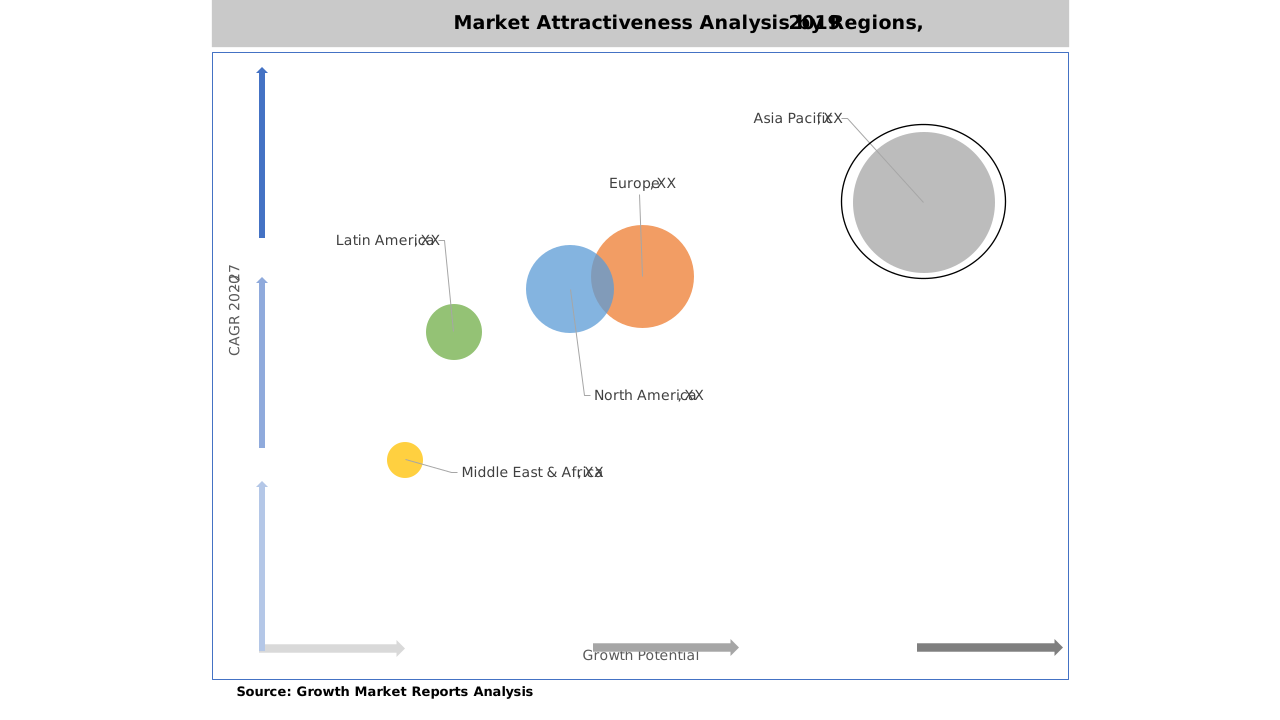
The Asia Pacific region leads the global antifouling paints and coatings market, accounting for approximately 42.1% of total market value in 2025, or roughly USD 4.25 billion. This dominance is underpinned by the region's robust and expanding shipbuilding industry, extensive coastline, growing offshore energy sector, and increasingly active aquaculture industry. China, South Korea, and Japan are the key contributors, with massive investments in both commercial and naval vessel construction driving recurring demand for antifouling maintenance products. The region's rapid economic development, rising intra-Asian maritime trade volumes, and tightening domestic environmental regulations are expected to sustain a CAGR of approximately 5.3% through 2034, the highest of any region. The adoption of advanced and eco-friendly antifouling solutions is accelerating in response to stricter government mandates and rising corporate sustainability commitments among leading regional shipowners.

Antifouling Paints and Coatings Market Regional Share 2025

Europe represents the second-largest market, with an estimated value of approximately USD 2.49 billion in 2025. The region's recognized leadership in maritime innovation, combined with some of the world's most stringent regulatory frameworks including the EU Biocidal Products Regulation and the IMO's AFS Convention enforcement, is driving accelerated adoption of next-generation antifouling technologies. Countries such as Norway, Germany, the Netherlands, and Greece are at the forefront of sustainable shipping initiatives, fostering strong and growing demand for biocide-free and SPC coatings. The presence of major global shipping companies headquartered in the region and a strong institutional focus on fleet decarbonization are supporting sustained market investment. Europe's commitment to achieving IMO 2050 emissions targets and protecting marine biodiversity in designated protected areas is expected to continue driving premium antifouling investment through 2034.

North America holds a market share of approximately USD 1.80 billion in 2025, driven by the United States' substantial commercial fleet, active offshore oil and gas operations particularly in the Gulf of Mexico, and one of the world's largest recreational boating markets. The region's regulatory environment, led by the U.S. Environmental Protection Agency and state-level agencies such as California's Department of Pesticide Regulation, is driving progressive restrictions on copper-based antifouling products, accelerating the shift toward eco-friendly alternatives. Meanwhile, Latin America and the Middle East and Africa collectively account for around USD 1.56 billion in 2025, with growth fueled by expanding port infrastructure development, increasing commercial vessel traffic, and significant upstream and midstream offshore energy investments in Brazil, Saudi Arabia, the UAE, and Nigeria. Both regions are expected to register above-average growth rates of approximately 5.0% and 4.8% respectively through 2034, as local maritime industries modernize and align increasingly with global best practices in hull protection and environmental compliance.

Competitor Outlook

The antifouling paints and coatings market is characterized by intense and multi-dimensional competition, with leading players vying for market share through product innovation, sustainability positioning, geographic expansion, and service differentiation. The competitive landscape features a mix of large multinational coating corporations, regionally dominant specialists, and focused niche technology providers catering to specific vessel types or operating environments. Companies are investing heavily in research and development to create coatings that deliver superior biofouling prevention, longer service intervals, and minimal environmental impact, while simultaneously reducing total cost of ownership for end-users. Strategic partnerships, mergers and acquisitions, and collaborative development ventures are common as firms seek to enhance their technological capabilities, broaden their product portfolios, and extend their geographic footprints in high-growth markets.

Product innovation is at the heart of competitive strategy in the antifouling paints and coatings market as of 2025. Leading companies are leveraging advances in polymer chemistry, nanotechnology, biomimicry, and surface engineering to develop next-generation coatings that meet the evolving performance and regulatory needs of the marine industry. The shift towards biocide-free and hybrid formulations is particularly pronounced, with manufacturers accelerating development timelines to bring compliant and commercially viable products to market ahead of regulatory enforcement deadlines. The integration of digital technologies, including hull performance monitoring dashboards, coating consumption analytics, and AI-powered maintenance planning tools, is further enhancing the value proposition of leading brands and creating new recurring revenue streams beyond traditional product sales. Companies that can demonstrate measurable and independently verified benefits in terms of fuel savings, emission reductions, and maintenance cost avoidance are increasingly capturing preferred-supplier status with major fleet operators.

The distribution and service network remains a critical competitive battleground. Firms with strong direct sales organizations and well-established distributor partner ecosystems are able to offer tailored technical solutions and responsive on-site support. The ability to provide application training, technical advisory services, hull inspection coordination, and coating performance guarantees is highly valued by end-users, particularly in complex projects involving newbuild vessels or major refits at geographically dispersed shipyards. As the market becomes increasingly globalized, the capacity to adapt products and services to local regulatory environments, climate conditions, and customer preferences is becoming a decisive success factor. Companies that combine global brand credibility with locally empowered technical teams are consistently outperforming more centralized competitors.

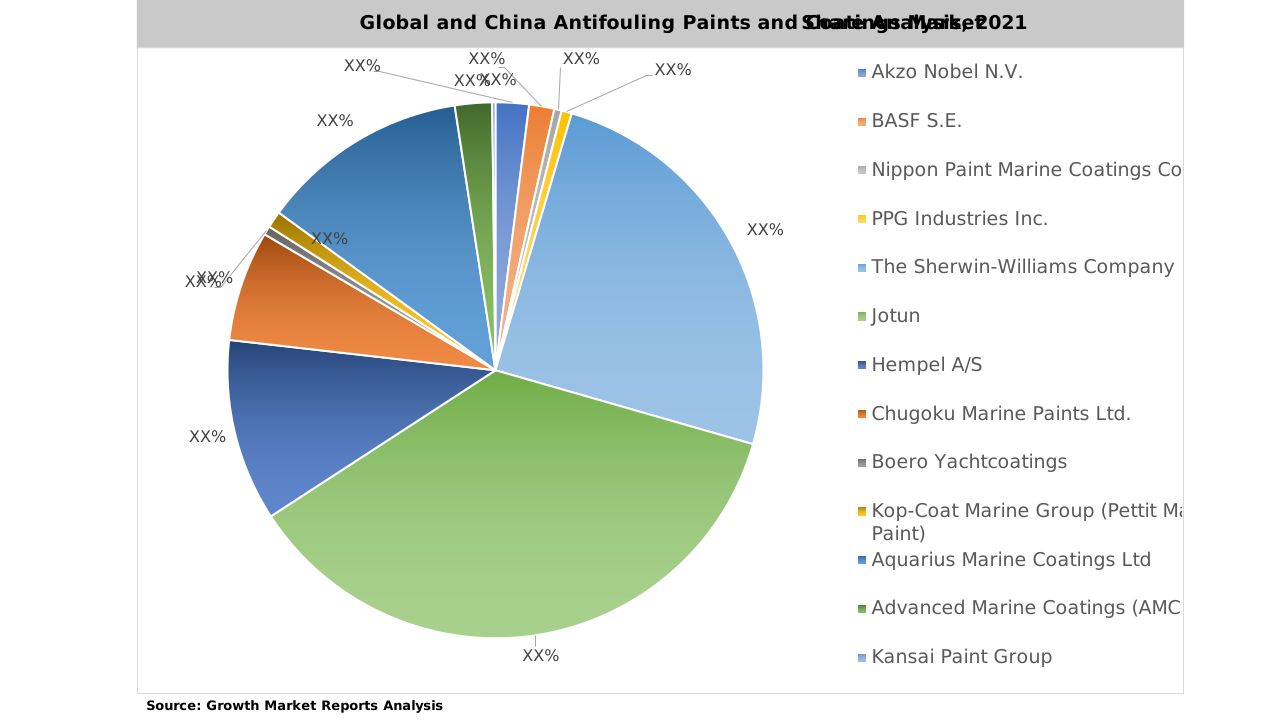
Major companies active in the antifouling paints and coatings market include AkzoNobel N.V., PPG Industries Inc., Jotun A/S, Hempel A/S, and Chugoku Marine Paints Ltd.. AkzoNobel, through its International brand, is a recognized innovation leader in SPC and hybrid antifouling coatings, serving both commercial and naval customers across more than 100 countries. PPG Industries leverages its extensive global R&D network to deliver high-performance marine coatings that satisfy the most stringent environmental and operational requirements. Jotun A/S combines deep marine expertise with a strong commitment to digital hull monitoring and sustainability transparency, making it a preferred partner for environmentally progressive shipowners. Hempel A/S offers a comprehensive and continuously expanding portfolio of antifouling solutions, supported by a global network of service centers and certified applicators. Chugoku Marine Paints is particularly well-positioned in the Asia Pacific region, where its advanced SPC and biocide-free formulations are widely adopted by regional shipbuilders and fleet operators. Kansai Paint, Nippon Paint Holdings, Sherwin-Williams, BASF, and RPM International round out the roster of globally significant players competing across multiple product and geographic segments.

These leading companies are distinguished by their unwavering commitment to innovation, sustainability leadership, and customer-centric service delivery. They invest consistently in developing new coating technologies, expanding and refreshing their product portfolios, and elevating their service capabilities in response to shifting customer expectations and regulatory demands. Strategic collaborations with classification societies, port authorities, fleet managers, and independent research bodies are enabling the co-creation of next-generation solutions that address both immediate commercial needs and longer-term environmental imperatives. The ongoing evolution of the antifouling paints and coatings market through the 2026-2034 forecast period will continue to be shaped by the competitive dynamics among these industry leaders as they strive to deliver measurable value to customers while maintaining the highest standards of environmental stewardship and corporate responsibility.

Key Players

  • Akzo Nobel N.V.
  • PPG Industries, Inc.
  • Jotun A/S
  • Hempel A/S
  • Kansai Paint Co., Ltd.
  • Nippon Paint Holdings Co., Ltd.
  • Chugoku Marine Paints, Ltd.
  • Sherwin-Williams Company
  • BASF SE
  • RPM International Inc.
  • DuPont de Nemours, Inc.
  • Axalta Coating Systems Ltd.
  • Pettit Marine Paint
  • Sea Hawk Paints
  • Boero YachtCoatings
  • Advanced Marine Coatings AS
  • Oceanmax International Ltd.
  • Wilckens Farben GmbH

Segments

The Antifouling Paints and Coatings market has been segmented on the basis of

Product Type

  • Copper-based
  • Biocide-free
  • Self-polishing Copolymer
  • Hybrid
  • Others

Application

  • Shipping Vessels
  • Drilling Rigs & Production Platforms
  • Fishing Boats
  • Yachts & Other Boats
  • Others

End-Use Industry

  • Marine
  • Oil & Gas
  • Shipping
  • Defense
  • Others

Distribution Channel

  • Direct
  • Indirect

Frequently Asked Questions

Yes. The report is fully customizable. If you require the addition, removal, or substitution of company profiles beyond the 18 included in the standard version, our research team can accommodate those requests. Customization options also extend to geographic scope, additional sub-segments, deeper country-level analysis, and bespoke competitive intelligence sections. Please contact our sales team with specific requirements, and a customized proposal with revised scope and pricing will be prepared. Turnaround time for customized reports typically ranges from five to ten business days depending on the extent of modifications requested.

Yes. Product type is the primary segmentation of this report and is analyzed in full detail. The five segments covered are copper-based coatings, biocide-free coatings, self-polishing copolymer coatings, hybrid coatings, and others (including nano-coatings and advanced polymer systems). Each segment is assessed by revenue from 2019 to 2034, with qualitative analysis of technology drivers, regulatory influences, competitive dynamics, and growth outlook. The report also examines the interplay between product types and specific applications, helping readers understand which formulations are gaining share in commercial shipping, offshore platforms, recreational boating, and defense applications.

Based on the 2025 base market size of USD 10.1 billion and a forecast CAGR of 4.7%, the global antifouling paints and coatings market is projected to reach approximately USD 11.1 billion by 2027. This growth will be supported by continued fleet expansion in Asia Pacific, accelerating adoption of self-polishing copolymer and biocide-free coatings in Europe and North America, and rising offshore infrastructure investments in Latin America and the Middle East and Africa. The 2027 figure reflects a market that has firmly consolidated its post-pandemic recovery and is advancing steadily on the back of regulatory and technological tailwinds.

Beyond the core market sizing and forecasting, the report provides granular sub-segment revenue tables for all product types, applications, end-use industries, and distribution channels from 2019 through 2034. It includes competitive benchmarking matrices, company market share analysis, and product portfolio comparisons for the 18 profiled players. Regional deep-dives cover country-level data for the top five economies within each geography. The report also features regulatory impact analysis covering IMO conventions, the EU Biocidal Products Regulation, and EPA guidelines, alongside a technology readiness assessment for emerging antifouling innovations such as nano-coatings, electrochemical systems, and ultraviolet-activated formulations.

Several converging factors are fueling market growth as of 2025. Rising global seaborne trade is increasing the size of active commercial fleets, expanding the total addressable surface area requiring antifouling protection. Stricter IMO and regional regulations, including the International Convention on the Control of Harmful Anti-fouling Systems, are compelling operators to upgrade to compliant, next-generation coatings. Growing awareness of the economic cost of biofouling, including elevated fuel consumption and increased dry-docking frequency, is incentivizing proactive coating investments. The expansion of offshore oil and gas exploration, particularly in deepwater regions, is driving demand for robust subsea and platform coatings. Additionally, rapid innovation in biocide-free, self-polishing copolymer, and hybrid technologies is expanding the performance envelope of antifouling solutions and attracting new customer segments.

Companies profiled in this report were selected based on several criteria: annual revenue generated from antifouling paints and coatings or broader marine coatings product lines, geographic presence and distribution reach across major regional markets, depth of product portfolio spanning multiple antifouling technologies, documented R&D investment and patent activity related to antifouling innovation, and overall strategic significance in shaping market competition. Only companies that are genuinely active in the commercial production and sale of antifouling coatings have been included. Trade associations, government bodies, and research-only institutions have been excluded.

The COVID-19 pandemic had a notable negative impact on the antifouling paints and coatings market during 2019-2020. Global maritime trade volumes declined sharply, shipbuilding orders were deferred, and dry-docking schedules were disrupted as shipyards reduced operations under lockdown conditions. Offshore oil and gas projects faced delays due to falling crude oil prices and capital expenditure cuts. The recreational boating segment was similarly affected by marina closures and travel restrictions. However, the market began recovering in 2021 as trade volumes rebounded, deferred maintenance work accelerated, and governments prioritized port infrastructure spending. By 2023 and into 2024 and 2025, the market had fully recovered and surpassed pre-pandemic levels, driven by pent-up demand and an accelerated push toward greener antifouling technologies.

The base year for this report is 2025, with historical data covering 2019 through 2024. The forecast period spans 2026 to 2034, providing a comprehensive nine-year outlook. This structure allows readers to assess pre- and post-pandemic market dynamics, understand the recovery trajectory through 2024, and evaluate growth projections through the mid-2030s based on current trends in shipbuilding, offshore energy, and environmental regulation.

Shipping vessels remain the dominant application, accounting for the largest share of antifouling coatings demand in 2025 due to the continued expansion of global maritime trade and the critical need to minimize hydrodynamic drag and fuel consumption. Drilling rigs and production platforms represent the second major application, propelled by renewed offshore oil and gas exploration investments. Fishing boats and yachts and other recreational boats are also significant contributors, driven by growing leisure boating activity and stricter biofouling management mandates in ecologically sensitive coastal regions.

The global antifouling paints and coatings market features a competitive mix of multinational corporations and regional specialists. Leading players as of 2025 include Akzo Nobel N.V., PPG Industries Inc., Jotun A/S, Hempel A/S, Chugoku Marine Paints Ltd., Kansai Paint Co. Ltd., Nippon Paint Holdings Co. Ltd., Sherwin-Williams Company, BASF SE, RPM International Inc., DuPont de Nemours Inc., Axalta Coating Systems Ltd., Pettit Marine Paint, Sea Hawk Paints, Boero YachtCoatings, Advanced Marine Coatings AS, Oceanmax International Ltd., and Wilckens Farben GmbH. These companies compete on the basis of product innovation, sustainability credentials, distribution reach, and after-sales technical support.

Table Of Content

Chapter 1 Executive Summary
Chapter 2 Assumptions and Acronyms Used
Chapter 3 Research Methodology
Chapter 4 Antifouling Paints and Coatings Market Overview
   4.1 Introduction
      4.1.1 Market Taxonomy
      4.1.2 Market Definition
      4.1.3 Macro-Economic Factors Impacting the Market Growth
   4.2 Antifouling Paints and Coatings Market Dynamics
      4.2.1 Market Drivers
      4.2.2 Market Restraints
      4.2.3 Market Opportunity
   4.3 Antifouling Paints and Coatings Market - Supply Chain Analysis
      4.3.1 List of Key Suppliers
      4.3.2 List of Key Distributors
      4.3.3 List of Key Consumers
   4.4 Key Forces Shaping the Antifouling Paints and Coatings Market
      4.4.1 Bargaining Power of Suppliers
      4.4.2 Bargaining Power of Buyers
      4.4.3 Threat of Substitution
      4.4.4 Threat of New Entrants
      4.4.5 Competitive Rivalry
   4.5 Global Antifouling Paints and Coatings Market Size & Forecast, 2023-2032
      4.5.1 Antifouling Paints and Coatings Market Size and Y-o-Y Growth
      4.5.2 Antifouling Paints and Coatings Market Absolute $ Opportunity

Chapter 5 Global Antifouling Paints and Coatings Market Analysis and Forecast By Product Type
   5.1 Introduction
      5.1.1 Key Market Trends & Growth Opportunities By Product Type
      5.1.2 Basis Point Share (BPS) Analysis By Product Type
      5.1.3 Absolute $ Opportunity Assessment By Product Type
   5.2 Antifouling Paints and Coatings Market Size Forecast By Product Type
      5.2.1 Copper-based
      5.2.2 Biocide-free
      5.2.3 Self-polishing Copolymer
      5.2.4 Hybrid
      5.2.5 Others
   5.3 Market Attractiveness Analysis By Product Type

Chapter 6 Global Antifouling Paints and Coatings Market Analysis and Forecast By Application
   6.1 Introduction
      6.1.1 Key Market Trends & Growth Opportunities By Application
      6.1.2 Basis Point Share (BPS) Analysis By Application
      6.1.3 Absolute $ Opportunity Assessment By Application
   6.2 Antifouling Paints and Coatings Market Size Forecast By Application
      6.2.1 Shipping Vessels
      6.2.2 Drilling Rigs & Production Platforms
      6.2.3 Fishing Boats
      6.2.4 Yachts & Other Boats
      6.2.5 Others
   6.3 Market Attractiveness Analysis By Application

Chapter 7 Global Antifouling Paints and Coatings Market Analysis and Forecast By End-Use Industry
   7.1 Introduction
      7.1.1 Key Market Trends & Growth Opportunities By End-Use Industry
      7.1.2 Basis Point Share (BPS) Analysis By End-Use Industry
      7.1.3 Absolute $ Opportunity Assessment By End-Use Industry
   7.2 Antifouling Paints and Coatings Market Size Forecast By End-Use Industry
      7.2.1 Marine
      7.2.2 Oil & Gas
      7.2.3 Shipping
      7.2.4 Defense
      7.2.5 Others
   7.3 Market Attractiveness Analysis By End-Use Industry

Chapter 8 Global Antifouling Paints and Coatings Market Analysis and Forecast By Distribution Channel
   8.1 Introduction
      8.1.1 Key Market Trends & Growth Opportunities By Distribution Channel
      8.1.2 Basis Point Share (BPS) Analysis By Distribution Channel
      8.1.3 Absolute $ Opportunity Assessment By Distribution Channel
   8.2 Antifouling Paints and Coatings Market Size Forecast By Distribution Channel
      8.2.1 Direct
      8.2.2 Indirect
   8.3 Market Attractiveness Analysis By Distribution Channel

Chapter 9 Global Antifouling Paints and Coatings Market Analysis and Forecast by Region
   9.1 Introduction
      9.1.1 Key Market Trends & Growth Opportunities By Region
      9.1.2 Basis Point Share (BPS) Analysis By Region
      9.1.3 Absolute $ Opportunity Assessment By Region
   9.2 Antifouling Paints and Coatings Market Size Forecast By Region
      9.2.1 North America
      9.2.2 Europe
      9.2.3 Asia Pacific
      9.2.4 Latin America
      9.2.5 Middle East & Africa (MEA)
   9.3 Market Attractiveness Analysis By Region

Chapter 10 Coronavirus Disease (COVID-19) Impact 
   10.1 Introduction 
   10.2 Current & Future Impact Analysis 
   10.3 Economic Impact Analysis 
   10.4 Government Policies 
   10.5 Investment Scenario

Chapter 11 North America Antifouling Paints and Coatings Analysis and Forecast
   11.1 Introduction
   11.2 North America Antifouling Paints and Coatings Market Size Forecast by Country
      11.2.1 U.S.
      11.2.2 Canada
   11.3 Basis Point Share (BPS) Analysis by Country
   11.4 Absolute $ Opportunity Assessment by Country
   11.5 Market Attractiveness Analysis by Country
   11.6 North America Antifouling Paints and Coatings Market Size Forecast By Product Type
      11.6.1 Copper-based
      11.6.2 Biocide-free
      11.6.3 Self-polishing Copolymer
      11.6.4 Hybrid
      11.6.5 Others
   11.7 Basis Point Share (BPS) Analysis By Product Type 
   11.8 Absolute $ Opportunity Assessment By Product Type 
   11.9 Market Attractiveness Analysis By Product Type
   11.10 North America Antifouling Paints and Coatings Market Size Forecast By Application
      11.10.1 Shipping Vessels
      11.10.2 Drilling Rigs & Production Platforms
      11.10.3 Fishing Boats
      11.10.4 Yachts & Other Boats
      11.10.5 Others
   11.11 Basis Point Share (BPS) Analysis By Application 
   11.12 Absolute $ Opportunity Assessment By Application 
   11.13 Market Attractiveness Analysis By Application
   11.14 North America Antifouling Paints and Coatings Market Size Forecast By End-Use Industry
      11.14.1 Marine
      11.14.2 Oil & Gas
      11.14.3 Shipping
      11.14.4 Defense
      11.14.5 Others
   11.15 Basis Point Share (BPS) Analysis By End-Use Industry 
   11.16 Absolute $ Opportunity Assessment By End-Use Industry 
   11.17 Market Attractiveness Analysis By End-Use Industry
   11.18 North America Antifouling Paints and Coatings Market Size Forecast By Distribution Channel
      11.18.1 Direct
      11.18.2 Indirect
   11.19 Basis Point Share (BPS) Analysis By Distribution Channel 
   11.20 Absolute $ Opportunity Assessment By Distribution Channel 
   11.21 Market Attractiveness Analysis By Distribution Channel

Chapter 12 Europe Antifouling Paints and Coatings Analysis and Forecast
   12.1 Introduction
   12.2 Europe Antifouling Paints and Coatings Market Size Forecast by Country
      12.2.1 Germany
      12.2.2 France
      12.2.3 Italy
      12.2.4 U.K.
      12.2.5 Spain
      12.2.6 Russia
      12.2.7 Rest of Europe
   12.3 Basis Point Share (BPS) Analysis by Country
   12.4 Absolute $ Opportunity Assessment by Country
   12.5 Market Attractiveness Analysis by Country
   12.6 Europe Antifouling Paints and Coatings Market Size Forecast By Product Type
      12.6.1 Copper-based
      12.6.2 Biocide-free
      12.6.3 Self-polishing Copolymer
      12.6.4 Hybrid
      12.6.5 Others
   12.7 Basis Point Share (BPS) Analysis By Product Type 
   12.8 Absolute $ Opportunity Assessment By Product Type 
   12.9 Market Attractiveness Analysis By Product Type
   12.10 Europe Antifouling Paints and Coatings Market Size Forecast By Application
      12.10.1 Shipping Vessels
      12.10.2 Drilling Rigs & Production Platforms
      12.10.3 Fishing Boats
      12.10.4 Yachts & Other Boats
      12.10.5 Others
   12.11 Basis Point Share (BPS) Analysis By Application 
   12.12 Absolute $ Opportunity Assessment By Application 
   12.13 Market Attractiveness Analysis By Application
   12.14 Europe Antifouling Paints and Coatings Market Size Forecast By End-Use Industry
      12.14.1 Marine
      12.14.2 Oil & Gas
      12.14.3 Shipping
      12.14.4 Defense
      12.14.5 Others
   12.15 Basis Point Share (BPS) Analysis By End-Use Industry 
   12.16 Absolute $ Opportunity Assessment By End-Use Industry 
   12.17 Market Attractiveness Analysis By End-Use Industry
   12.18 Europe Antifouling Paints and Coatings Market Size Forecast By Distribution Channel
      12.18.1 Direct
      12.18.2 Indirect
   12.19 Basis Point Share (BPS) Analysis By Distribution Channel 
   12.20 Absolute $ Opportunity Assessment By Distribution Channel 
   12.21 Market Attractiveness Analysis By Distribution Channel

Chapter 13 Asia Pacific Antifouling Paints and Coatings Analysis and Forecast
   13.1 Introduction
   13.2 Asia Pacific Antifouling Paints and Coatings Market Size Forecast by Country
      13.2.1 China
      13.2.2 Japan
      13.2.3 South Korea
      13.2.4 India
      13.2.5 Australia
      13.2.6 South East Asia (SEA)
      13.2.7 Rest of Asia Pacific (APAC)
   13.3 Basis Point Share (BPS) Analysis by Country
   13.4 Absolute $ Opportunity Assessment by Country
   13.5 Market Attractiveness Analysis by Country
   13.6 Asia Pacific Antifouling Paints and Coatings Market Size Forecast By Product Type
      13.6.1 Copper-based
      13.6.2 Biocide-free
      13.6.3 Self-polishing Copolymer
      13.6.4 Hybrid
      13.6.5 Others
   13.7 Basis Point Share (BPS) Analysis By Product Type 
   13.8 Absolute $ Opportunity Assessment By Product Type 
   13.9 Market Attractiveness Analysis By Product Type
   13.10 Asia Pacific Antifouling Paints and Coatings Market Size Forecast By Application
      13.10.1 Shipping Vessels
      13.10.2 Drilling Rigs & Production Platforms
      13.10.3 Fishing Boats
      13.10.4 Yachts & Other Boats
      13.10.5 Others
   13.11 Basis Point Share (BPS) Analysis By Application 
   13.12 Absolute $ Opportunity Assessment By Application 
   13.13 Market Attractiveness Analysis By Application
   13.14 Asia Pacific Antifouling Paints and Coatings Market Size Forecast By End-Use Industry
      13.14.1 Marine
      13.14.2 Oil & Gas
      13.14.3 Shipping
      13.14.4 Defense
      13.14.5 Others
   13.15 Basis Point Share (BPS) Analysis By End-Use Industry 
   13.16 Absolute $ Opportunity Assessment By End-Use Industry 
   13.17 Market Attractiveness Analysis By End-Use Industry
   13.18 Asia Pacific Antifouling Paints and Coatings Market Size Forecast By Distribution Channel
      13.18.1 Direct
      13.18.2 Indirect
   13.19 Basis Point Share (BPS) Analysis By Distribution Channel 
   13.20 Absolute $ Opportunity Assessment By Distribution Channel 
   13.21 Market Attractiveness Analysis By Distribution Channel

Chapter 14 Latin America Antifouling Paints and Coatings Analysis and Forecast
   14.1 Introduction
   14.2 Latin America Antifouling Paints and Coatings Market Size Forecast by Country
      14.2.1 Brazil
      14.2.2 Mexico
      14.2.3 Rest of Latin America (LATAM)
   14.3 Basis Point Share (BPS) Analysis by Country
   14.4 Absolute $ Opportunity Assessment by Country
   14.5 Market Attractiveness Analysis by Country
   14.6 Latin America Antifouling Paints and Coatings Market Size Forecast By Product Type
      14.6.1 Copper-based
      14.6.2 Biocide-free
      14.6.3 Self-polishing Copolymer
      14.6.4 Hybrid
      14.6.5 Others
   14.7 Basis Point Share (BPS) Analysis By Product Type 
   14.8 Absolute $ Opportunity Assessment By Product Type 
   14.9 Market Attractiveness Analysis By Product Type
   14.10 Latin America Antifouling Paints and Coatings Market Size Forecast By Application
      14.10.1 Shipping Vessels
      14.10.2 Drilling Rigs & Production Platforms
      14.10.3 Fishing Boats
      14.10.4 Yachts & Other Boats
      14.10.5 Others
   14.11 Basis Point Share (BPS) Analysis By Application 
   14.12 Absolute $ Opportunity Assessment By Application 
   14.13 Market Attractiveness Analysis By Application
   14.14 Latin America Antifouling Paints and Coatings Market Size Forecast By End-Use Industry
      14.14.1 Marine
      14.14.2 Oil & Gas
      14.14.3 Shipping
      14.14.4 Defense
      14.14.5 Others
   14.15 Basis Point Share (BPS) Analysis By End-Use Industry 
   14.16 Absolute $ Opportunity Assessment By End-Use Industry 
   14.17 Market Attractiveness Analysis By End-Use Industry
   14.18 Latin America Antifouling Paints and Coatings Market Size Forecast By Distribution Channel
      14.18.1 Direct
      14.18.2 Indirect
   14.19 Basis Point Share (BPS) Analysis By Distribution Channel 
   14.20 Absolute $ Opportunity Assessment By Distribution Channel 
   14.21 Market Attractiveness Analysis By Distribution Channel

Chapter 15 Middle East & Africa (MEA) Antifouling Paints and Coatings Analysis and Forecast
   15.1 Introduction
   15.2 Middle East & Africa (MEA) Antifouling Paints and Coatings Market Size Forecast by Country
      15.2.1 Saudi Arabia
      15.2.2 South Africa
      15.2.3 UAE
      15.2.4 Rest of Middle East & Africa (MEA)
   15.3 Basis Point Share (BPS) Analysis by Country
   15.4 Absolute $ Opportunity Assessment by Country
   15.5 Market Attractiveness Analysis by Country
   15.6 Middle East & Africa (MEA) Antifouling Paints and Coatings Market Size Forecast By Product Type
      15.6.1 Copper-based
      15.6.2 Biocide-free
      15.6.3 Self-polishing Copolymer
      15.6.4 Hybrid
      15.6.5 Others
   15.7 Basis Point Share (BPS) Analysis By Product Type 
   15.8 Absolute $ Opportunity Assessment By Product Type 
   15.9 Market Attractiveness Analysis By Product Type
   15.10 Middle East & Africa (MEA) Antifouling Paints and Coatings Market Size Forecast By Application
      15.10.1 Shipping Vessels
      15.10.2 Drilling Rigs & Production Platforms
      15.10.3 Fishing Boats
      15.10.4 Yachts & Other Boats
      15.10.5 Others
   15.11 Basis Point Share (BPS) Analysis By Application 
   15.12 Absolute $ Opportunity Assessment By Application 
   15.13 Market Attractiveness Analysis By Application
   15.14 Middle East & Africa (MEA) Antifouling Paints and Coatings Market Size Forecast By End-Use Industry
      15.14.1 Marine
      15.14.2 Oil & Gas
      15.14.3 Shipping
      15.14.4 Defense
      15.14.5 Others
   15.15 Basis Point Share (BPS) Analysis By End-Use Industry 
   15.16 Absolute $ Opportunity Assessment By End-Use Industry 
   15.17 Market Attractiveness Analysis By End-Use Industry
   15.18 Middle East & Africa (MEA) Antifouling Paints and Coatings Market Size Forecast By Distribution Channel
      15.18.1 Direct
      15.18.2 Indirect
   15.19 Basis Point Share (BPS) Analysis By Distribution Channel 
   15.20 Absolute $ Opportunity Assessment By Distribution Channel 
   15.21 Market Attractiveness Analysis By Distribution Channel

Chapter 16 Competition Landscape 
   16.1 Antifouling Paints and Coatings Market: Competitive Dashboard
   16.2 Global Antifouling Paints and Coatings Market: Market Share Analysis, 2023
   16.3 Company Profiles (Details – Overview, Financials, Developments, Strategy) 
      16.3.1 Akzo Nobel N.V.
      16.3.2 PPG Industries, Inc.
      16.3.3 Jotun A/S
      16.3.4 Hempel A/S
      16.3.5 Kansai Paint Co., Ltd.
      16.3.6 Nippon Paint Holdings Co., Ltd.
      16.3.7 Chugoku Marine Paints, Ltd.
      16.3.8 Sherwin-Williams Company
      16.3.9 BASF SE
      16.3.10 RPM International Inc.
      16.3.11 DuPont de Nemours, Inc.
      16.3.12 Axalta Coating Systems Ltd.
      16.3.13 Pettit Marine Paint
      16.3.14 Sea Hawk Paints
      16.3.15 Boero YachtCoatings
      16.3.16 Advanced Marine Coatings AS
      16.3.17 Oceanmax International Ltd.
      16.3.18 Wilckens Farben GmbH

Methodology

Our Clients

General Mills
Pfizer
Honda Motor Co. Ltd.
General Electric
FedEx Logistics
Nestle SA
sinopec
The John Holland Group