Organic Dry Fruit Snacks Market Research Report 2033

Organic Dry Fruit Snacks Market Research Report 2033

Segments - by Product Type (Mixed Dry Fruit Snacks, Single Fruit Snacks, Trail Mixes, Others), by Packaging Type (Pouches, Jars, Boxes, Others), by Distribution Channel (Supermarkets/Hypermarkets, Convenience Stores, Online Retail, Specialty Stores, Others), by End-User (Households, Food Service, Others)

https://growthmarketreports.com/Anuradha
Author : Anuradha B. More
https://growthmarketreports.com/Vaibhav
Fact-checked by : Vaibhav Chandola
https://growthmarketreports.com/Shruti
Editor : Shruti Bhat

Upcoming | Report ID :FB-118 | 4.0 Rating | 34 Reviews | 252 Pages | Format : Docx PDF

Report Description


Organic Dry Fruit Snacks Market Outlook

According to our latest research, the global organic dry fruit snacks market size reached USD 8.9 billion in 2024, and is anticipated to expand at a robust CAGR of 9.2% from 2025 to 2033. By the end of the forecast period, the market is projected to achieve a value of USD 19.6 billion. The primary growth factor driving this market is the increasing consumer shift towards healthy snacking alternatives, coupled with rising awareness about organic and clean-label products.

One of the most significant growth drivers for the organic dry fruit snacks market is the growing consumer inclination towards health and wellness. As consumers become more health-conscious, there is a marked preference for snacks that are not only convenient but also nutritious and free from artificial additives. Organic dry fruit snacks, which are rich in essential nutrients, vitamins, and antioxidants, are perceived as an ideal option for individuals seeking healthier snack choices. The increased prevalence of lifestyle diseases such as obesity, diabetes, and cardiovascular disorders has further propelled demand for organic food products, including dry fruit snacks. Additionally, the rise in disposable incomes, particularly in emerging economies, has enabled a broader segment of the population to afford premium and healthy snacking options, further fueling market growth.

The expansion of organized retail and e-commerce platforms has played a pivotal role in boosting the organic dry fruit snacks market. Supermarkets, hypermarkets, and online retail channels have made it easier for consumers to access a wide variety of organic dry fruit snack products. These channels offer greater visibility and accessibility, allowing brands to reach a larger customer base. The proliferation of specialty stores dedicated to organic and health foods has also contributed to market expansion. Moreover, aggressive marketing campaigns and promotional activities by key players have enhanced consumer awareness regarding the benefits of organic dry fruit snacks, driving sales across both developed and developing regions.

Another crucial factor propelling the market is the innovation in product offerings and packaging. Manufacturers are investing in research and development to launch new flavors, blends, and convenient packaging formats that cater to evolving consumer preferences. The introduction of mixed dry fruit snacks, single fruit variants, and trail mixes with added functional ingredients such as seeds, spices, and superfoods has diversified the product portfolio, attracting a wider audience. Sustainable and eco-friendly packaging solutions are also gaining traction, aligning with the growing consumer demand for environmentally responsible products. These innovations not only enhance product appeal but also support brand differentiation in a highly competitive market landscape.

The rise of Solar-Dried Fruit Snacks is an exciting development within the organic dry fruit snacks market. These snacks are gaining popularity due to their unique drying process, which utilizes solar energy to preserve the natural flavors and nutrients of the fruit. This method not only enhances the taste and quality of the snacks but also aligns with the growing consumer demand for sustainable and eco-friendly food production practices. Solar-dried fruit snacks are particularly appealing to environmentally conscious consumers who are looking to reduce their carbon footprint while enjoying healthy and delicious snack options. As awareness of the environmental impact of food production continues to grow, solar-dried fruit snacks are poised to become a significant segment within the broader organic dry fruit snacks market.

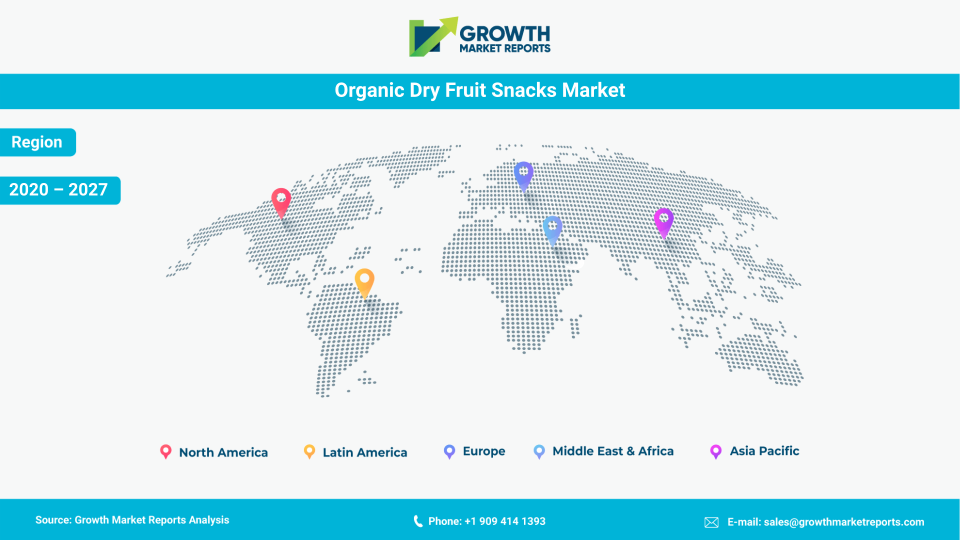
From a regional perspective, North America and Europe currently dominate the organic dry fruit snacks market, accounting for a significant share of global revenue. The Asia Pacific region, however, is expected to witness the fastest growth during the forecast period, driven by rising health consciousness, urbanization, and increasing disposable incomes. Latin America and the Middle East & Africa are also emerging as lucrative markets, supported by a growing middle-class population and expanding retail infrastructure. The regional outlook remains positive, with substantial opportunities for market players to capitalize on the evolving consumer trends and preferences across different geographies.

Global Organic Dry Fruit Snacks Industry Outlook

Product Type Analysis

The product type segment of the organic dry fruit snacks market encompasses mixed dry fruit snacks, single fruit snacks, trail mixes, and other variants. Mixed dry fruit snacks have garnered considerable popularity due to their balanced nutritional profile and diverse flavor combinations. These snacks typically combine various dried fruits and sometimes include nuts or seeds, offering consumers a wholesome and convenient snacking option. The demand for mixed dry fruit snacks is particularly high among health-conscious individuals seeking energy-boosting snacks for on-the-go consumption. Manufacturers are capitalizing on this trend by introducing innovative blends featuring exotic fruits, organic sweeteners, and functional additives to cater to diverse consumer palates.

Single fruit snacks, such as dried mango, apple, or banana, are also witnessing increased demand, especially among consumers with specific taste preferences or dietary restrictions. These snacks are favored for their simplicity, transparency, and natural sweetness, making them an attractive option for children and adults alike. The growing trend of clean-label products has further bolstered the popularity of single fruit snacks, as consumers seek minimally processed foods with recognizable ingredients. Brands are responding by highlighting the origin, organic certification, and nutritional benefits of their single fruit snack offerings, thereby building trust and loyalty among their target audience.

Trail mixes represent another dynamic segment within the organic dry fruit snacks market. Traditionally comprising a combination of dried fruits, nuts, seeds, and sometimes chocolate or yogurt-coated ingredients, trail mixes are valued for their high energy content and versatility. These snacks are particularly popular among athletes, outdoor enthusiasts, and busy professionals who require convenient, nutrient-dense snacks to fuel their active lifestyles. The inclusion of superfoods, protein-rich seeds, and unique flavor profiles has further elevated the appeal of organic trail mixes. Brands are leveraging this trend by offering customizable trail mix options and premium blends tailored to specific dietary needs, such as gluten-free, vegan, or keto-friendly variants.

The “Others” category includes less common but emerging product types such as fruit bars, fruit chips, and fruit clusters. These innovative products are gaining traction among consumers seeking novel snacking experiences and added convenience. Fruit bars, for instance, combine dried fruits with other organic ingredients to create portable, mess-free snacks ideal for school lunches or travel. Fruit chips and clusters offer a crunchy texture and unique flavor profiles, appealing to consumers looking for alternatives to traditional chips and confectionery. As consumer preferences continue to evolve, the product type segment is expected to witness ongoing diversification and innovation, driving overall market growth.

Report Scope

Attributes Details
Report Title Organic Dry Fruit Snacks Market Research Report 2033
By Product Type Mixed Dry Fruit Snacks, Single Fruit Snacks, Trail Mixes, Others
By Packaging Type Pouches, Jars, Boxes, Others
By Distribution Channel Supermarkets/Hypermarkets, Convenience Stores, Online Retail, Specialty Stores, Others
By End-User Households, Food Service, Others
Regions Covered North America, Europe, APAC, Latin America, MEA
Base Year 2024
Historic Data 2018-2023
Forecast Period 2025-2033
Number of Pages 252
Number of Tables & Figures 382
Customization Available Yes, the report can be customized as per your need.

Packaging Type Analysis

Packaging plays a crucial role in the organic dry fruit snacks market, influencing both consumer purchasing decisions and product shelf life. Among the various packaging types, pouches have emerged as the most popular format, owing to their convenience, portability, and ability to preserve product freshness. Resealable pouches, in particular, are favored by consumers who value the ability to keep snacks fresh over multiple servings. The lightweight and flexible nature of pouches also contributes to reduced transportation costs and a lower environmental footprint, making them an attractive choice for both manufacturers and eco-conscious consumers.

Dried Fruit Snacks have become a staple in the snacking habits of health-conscious consumers around the world. These snacks offer a convenient and nutritious alternative to traditional snack foods, providing a rich source of vitamins, minerals, and antioxidants. The versatility of dried fruit snacks allows them to be enjoyed on their own or as part of a trail mix, making them a popular choice for individuals seeking a quick energy boost. With the increasing focus on clean-label and minimally processed foods, dried fruit snacks are gaining traction among consumers who prioritize natural ingredients and transparency. As the demand for healthy and convenient snacking options continues to rise, dried fruit snacks are expected to play a pivotal role in shaping the future of the organic dry fruit snacks market.

Jars represent another widely used packaging option, especially for premium and bulk offerings. Glass and BPA-free plastic jars are often perceived as more sustainable and reusable compared to single-use packaging. Jars provide excellent protection against moisture and contamination, ensuring the integrity of organic dry fruit snacks throughout their shelf life. They are also visually appealing, allowing brands to showcase the quality and variety of their products, which can enhance shelf presence and consumer appeal. The trend towards gifting and sharing has further boosted demand for attractively packaged jars, particularly during festive seasons and special occasions.

Boxes are commonly used for multipack or family-sized portions of organic dry fruit snacks. Cardboard and paper-based boxes are gaining popularity due to their recyclability and lower environmental impact. Boxes offer ample space for branding, nutritional information, and certifications, enabling brands to communicate their value propositions effectively. Innovative box designs, such as compartmentalized packaging for assorted snack packs, are being introduced to cater to consumer demand for variety and convenience. As sustainability becomes an increasingly important consideration, manufacturers are exploring eco-friendly materials and minimalist packaging designs to reduce waste and appeal to environmentally conscious consumers.

The “Others” category includes packaging formats such as tins, canisters, and composite containers. These options are often used for specialty products, limited-edition releases, or high-end gift packs. Tins and canisters offer superior protection against external factors such as light, humidity, and pests, making them suitable for long-term storage. Composite containers, which combine different materials for enhanced functionality, are also gaining traction in the premium segment. As consumer preferences shift towards sustainable and innovative packaging solutions, the packaging type segment is expected to witness continued evolution, with a focus on balancing convenience, aesthetics, and environmental responsibility.

Distribution Channel Analysis

The distribution channel landscape for organic dry fruit snacks is diverse, encompassing supermarkets/hypermarkets, convenience stores, online retail, specialty stores, and other outlets. Supermarkets and hypermarkets remain the dominant distribution channels, accounting for a substantial share of market sales. These large-format retail stores offer a wide variety of organic dry fruit snack brands and products, providing consumers with the convenience of one-stop shopping. The visibility and prominence of organic snack sections within supermarkets have played a pivotal role in driving impulse purchases and expanding the consumer base. Retailers are increasingly collaborating with organic brands to offer exclusive promotions and in-store sampling events, further boosting sales.

Convenience stores are another important distribution channel, particularly in urban areas where consumers seek quick and accessible snacking options. The strategic location of convenience stores, often in residential neighborhoods or near workplaces, makes them a preferred choice for busy individuals and families. The growing trend of grab-and-go snacking has led to an increase in the availability of single-serve and portion-controlled organic dry fruit snacks in convenience stores. Retailers are also leveraging digital technologies and loyalty programs to enhance the shopping experience and encourage repeat purchases.

Online retail has emerged as a rapidly growing distribution channel for organic dry fruit snacks, driven by the proliferation of e-commerce platforms and changing consumer shopping behaviors. The convenience of home delivery, access to a wider product assortment, and the ability to compare prices and reviews have made online shopping increasingly popular. E-commerce platforms such as Amazon, Walmart, and specialty organic food websites have witnessed a surge in demand for organic dry fruit snacks, particularly during the COVID-19 pandemic. Brands are investing in digital marketing strategies, influencer partnerships, and subscription models to capture a larger share of the online market and build long-term customer relationships.

Specialty stores, including health food stores, organic markets, and gourmet retailers, cater to a niche segment of consumers seeking high-quality and premium organic dry fruit snacks. These stores often offer curated selections of certified organic products, providing consumers with assurance of authenticity and traceability. The personalized service and knowledgeable staff in specialty stores contribute to a superior shopping experience, fostering brand loyalty and repeat business. The “Others” category includes distribution channels such as vending machines, foodservice outlets, and direct-to-consumer sales, which are gaining traction as brands explore new avenues to reach consumers and expand market penetration.

End-User Analysis

The end-user segment of the organic dry fruit snacks market is primarily divided into households, food service, and other applications. Households constitute the largest end-user segment, driven by the increasing adoption of healthy snacking habits among families and individuals. Parents are particularly inclined to purchase organic dry fruit snacks for their children, recognizing the nutritional benefits and absence of artificial additives. The convenience, portability, and long shelf life of these snacks make them an ideal choice for home consumption, school lunches, and on-the-go snacking. The rising awareness of organic certifications and food safety has further reinforced the preference for organic dry fruit snacks among health-conscious households.

The food service segment, which includes restaurants, cafes, hotels, airlines, and catering services, represents a growing market for organic dry fruit snacks. Foodservice operators are increasingly incorporating organic and healthy snack options into their menus to cater to the evolving preferences of their customers. The demand for organic dry fruit snacks in the food service sector is driven by the rising trend of premiumization and the desire to offer unique and differentiated menu items. Airlines and hospitality chains, in particular, are embracing organic snack options to enhance the overall guest experience and align with their sustainability initiatives. The food service segment is expected to witness steady growth as more operators recognize the value of offering organic and health-focused snacks.

The “Others” category encompasses institutional buyers such as schools, hospitals, corporate offices, and fitness centers. These institutions are increasingly prioritizing the health and well-being of their stakeholders by offering nutritious and organic snack options. Schools and educational institutions, for example, are replacing traditional snacks with organic dry fruit snacks as part of their efforts to promote healthy eating habits among students. Hospitals and healthcare facilities are also incorporating organic snacks into patient meals and vending machines to support recovery and overall wellness. As the focus on health and nutrition continues to intensify across various sectors, the end-user segment is poised for sustained growth and diversification.

Opportunities & Threats

The organic dry fruit snacks market presents significant opportunities for growth and innovation. One of the most promising opportunities lies in the development of new product formulations and flavor combinations that cater to diverse consumer preferences and dietary needs. The increasing demand for plant-based, gluten-free, and allergen-friendly snacks provides a fertile ground for manufacturers to experiment with novel ingredients and functional additives. The integration of superfoods, probiotics, and adaptogens into organic dry fruit snacks can further enhance their nutritional value and appeal to health-conscious consumers. Brands that invest in research and development to create differentiated and value-added products are well-positioned to capture a larger share of the market and build lasting customer loyalty.

Another major opportunity for market players is the expansion into emerging markets, particularly in Asia Pacific, Latin America, and the Middle East & Africa. These regions are experiencing rapid urbanization, rising disposable incomes, and increasing awareness of health and wellness, creating a favorable environment for the adoption of organic dry fruit snacks. Strategic partnerships with local distributors, investment in localized marketing campaigns, and the introduction of affordable product formats can help brands penetrate these high-potential markets. Additionally, the growing popularity of e-commerce and digital platforms provides an effective channel for reaching a broader audience and driving sales growth in both developed and developing regions.

Despite the positive outlook, the organic dry fruit snacks market faces several challenges that could restrain growth. One of the primary restraining factors is the relatively high cost of organic products compared to conventional alternatives. The premium pricing of organic dry fruit snacks can limit their accessibility to price-sensitive consumers, particularly in developing economies. The stringent regulatory requirements and certification processes associated with organic labeling can also pose barriers for small and medium-sized enterprises seeking to enter the market. Furthermore, supply chain complexities, including the sourcing of high-quality organic raw materials and fluctuations in crop yields, can impact product availability and pricing. Addressing these challenges will require concerted efforts from industry stakeholders, including investment in supply chain optimization, cost reduction strategies, and consumer education initiatives.

Regional Outlook

Regionally, North America commands the largest share of the global organic dry fruit snacks market, contributing approximately USD 3.1 billion in 2024. The region's dominance can be attributed to the high level of health consciousness among consumers, well-established retail infrastructure, and widespread availability of organic products. The United States is the primary market within North America, driven by a strong demand for convenient and healthy snacking options. Leading brands in the region are continuously innovating to cater to evolving consumer preferences, introducing new flavors, packaging formats, and functional ingredients. The region is expected to maintain its leadership position throughout the forecast period, supported by ongoing investments in product development and marketing.

Europe is another significant market for organic dry fruit snacks, accounting for approximately USD 2.7 billion in 2024. The region's growth is fueled by stringent food safety regulations, increasing consumer awareness of organic certifications, and a strong emphasis on sustainability. Countries such as Germany, the United Kingdom, and France are at the forefront of the organic food movement, with consumers willing to pay a premium for high-quality, ethically sourced products. The European market is characterized by a high degree of product innovation, with brands introducing unique blends, functional ingredients, and eco-friendly packaging solutions. The region is projected to grow at a steady CAGR of 8.6% over the forecast period, driven by continued demand for healthy and sustainable snacking options.

The Asia Pacific region is poised to register the fastest growth in the organic dry fruit snacks market, with a market size of USD 1.8 billion in 2024 and an anticipated CAGR of 12.4% from 2025 to 2033. The rapid urbanization, rising disposable incomes, and increasing health consciousness among consumers in countries such as China, India, and Japan are driving demand for organic dry fruit snacks. The region's expanding middle class and growing exposure to Western dietary trends are further contributing to market growth. Local and international brands are investing in product localization, distribution partnerships, and digital marketing to capture the burgeoning demand in Asia Pacific. Latin America and the Middle East & Africa, with market sizes of USD 0.7 billion and USD 0.6 billion respectively in 2024, are also witnessing increasing adoption of organic dry fruit snacks, supported by improving retail infrastructure and rising consumer awareness.

Organic Dry Fruit Snacks Market Statistics

Competitor Outlook

The competitive landscape of the organic dry fruit snacks market is characterized by the presence of both established multinational corporations and emerging local players. Leading companies are focusing on product innovation, strategic partnerships, and mergers & acquisitions to strengthen their market position and expand their product portfolios. The market is highly fragmented, with numerous players competing on the basis of product quality, brand reputation, pricing, and distribution reach. Companies are investing heavily in research and development to introduce new flavors, functional ingredients, and sustainable packaging solutions that cater to the evolving preferences of health-conscious consumers. The emphasis on clean-label ingredients, transparency, and ethical sourcing has become a key differentiator for brands seeking to build trust and loyalty among their target audience.

Branding and marketing play a crucial role in shaping consumer perceptions and driving brand loyalty in the organic dry fruit snacks market. Leading companies are leveraging digital marketing, influencer partnerships, and social media campaigns to raise awareness about the benefits of organic snacking and engage with their customers. The growing popularity of e-commerce and direct-to-consumer sales channels has provided brands with new opportunities to reach a wider audience and build deeper customer relationships. Companies are also investing in packaging innovation to enhance product appeal, improve convenience, and reduce environmental impact. The shift towards sustainable and eco-friendly packaging is particularly pronounced, with brands seeking to align with consumer values and regulatory requirements.

Strategic collaborations and partnerships with retailers, distributors, and foodservice operators are becoming increasingly important for market players seeking to expand their distribution footprint and enhance market penetration. Companies are also exploring opportunities for international expansion, particularly in emerging markets with high growth potential. The ability to adapt to local tastes, preferences, and regulatory requirements is critical for success in these markets. In addition to organic certification, brands are emphasizing other attributes such as non-GMO, gluten-free, and allergen-friendly formulations to appeal to a broader consumer base.

Some of the major companies operating in the organic dry fruit snacks market include Sun-Maid Growers of California, Made In Nature, Navitas Organics, Peeled Snacks, Patanjali Ayurved Ltd., Happilo International Pvt. Ltd., and NutriBoost. Sun-Maid Growers of California is renowned for its extensive range of organic raisins and mixed fruit snacks, leveraging its strong supply chain and brand heritage. Made In Nature and Navitas Organics are recognized for their innovative product offerings, including superfood-infused snacks and trail mixes. Peeled Snacks has carved a niche in the market with its focus on clean-label, non-GMO, and organic dried fruit snacks. Patanjali Ayurved Ltd. and Happilo International Pvt. Ltd. are prominent players in the Asia Pacific region, offering a wide variety of organic dry fruit snacks tailored to local tastes and preferences. NutriBoost, based in Europe, is known for its commitment to sustainability and high-quality organic ingredients. These companies, along with numerous emerging players, are driving competition and innovation in the organic dry fruit snacks market, ensuring a dynamic and evolving market landscape.

Key Players

  • Sun-Maid Growers of California
  • Made In Nature
  • Navitas Organics
  • Patagonia Provisions
  • Bergin Fruit and Nut Company
  • Sunbeam Foods
  • Traina Foods
  • Mariani Packing Company
  • National Raisin Company
  • Nutiva
  • Terrasoul Superfoods
  • Stoneridge Orchards
  • Mavuno Harvest
  • Food to Live
  • Sahale Snacks
  • Brothers All Natural
  • Organic Traditions
  • Peeled Snacks
  • Kirkland Signature (Costco)
  • NOW Foods
Organic Dry Fruit Snacks Market Overview

Segments

The Organic Dry Fruit Snacks market has been segmented on the basis of

Product Type

  • Mixed Dry Fruit Snacks
  • Single Fruit Snacks
  • Trail Mixes
  • Others

Packaging Type

  • Pouches
  • Jars
  • Boxes
  • Others

Distribution Channel

  • Supermarkets/Hypermarkets
  • Convenience Stores
  • Online Retail
  • Specialty Stores
  • Others

End-User

  • Households
  • Food Service
  • Others

Competitive Landscape

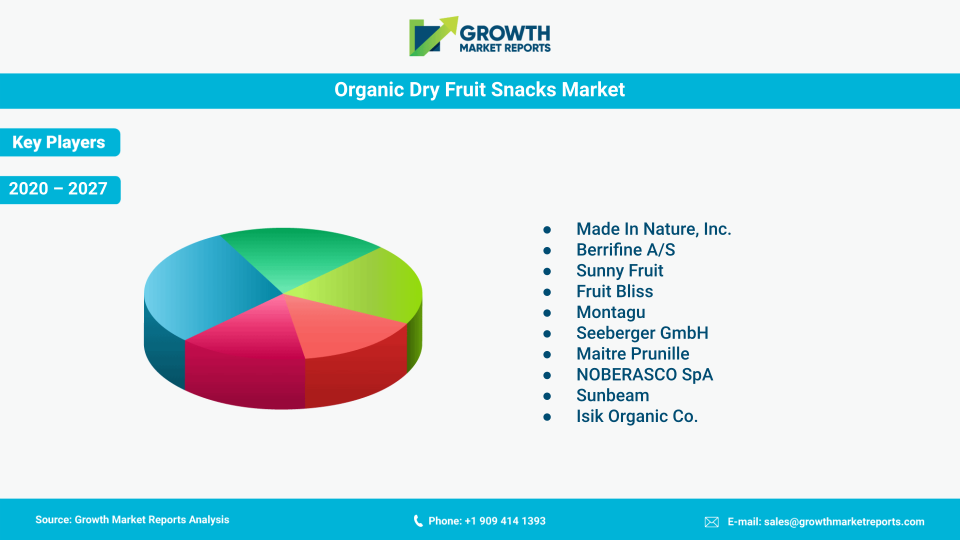
Key players in the market include Made In Nature, Inc., Sun-Maid Growers of California, Berrifine A/S, Sunny Fruit, Fruit Bliss, Montagu, Seeberger GmbH, Maitre Prunille, NOBERASCO SpA, Sunbeam, SDA Group Companies Inc, Isik Organic Co., Osman Akça, Crazy Jack, Peeled Snacks, Sunsweet, Whitworths, Prana, and Ocean Spray.

These players are considered as key manufacturers of the market based on their different varieties of product availability, regional presence, better supply chain management system, and increasing demand for their products. 
These players are adopting strategies such as product development, geographical expansion, and mergers & acquisition to increase their market share.
  • In 2018, Made In Nature, an organic snack brand in the U.S., announced the launch of the product, Organic Veggie Pops. Veggie Pops are made with real, whole food, and with no powders or fillers and artificial puffed stuff. These are made from organic ingredients including kale, chickpeas, cauliflower, bell peppers, nuts, seeds, and spices, which are slowly dried to a crunchy texture. Veggie Pops deliver savory satisfaction in three plant-based flavors including: Broccoli Cheddar, Sour Cream & Onion, and Salt & Pepper.
  • Sun-Maid Growers of California announced a brand licensing agreement giving the license to produce and distribute to the companies such as Flowers Foods, producer of Nature's Own, Wonder, Tastykake, Dave's Killer Bread, and other bakery foods, and Sun-Maid Raisin bread. These brands sell products to approximately 80% of the U.S. population. The agreement allowed the companies to launch products in retail stores and expand their brand presence. In January 2019, Sun-Maid launched a campaign to remind consumers of the experiences and memories they have had with Sun-Maid over the years. Flowers might help support the campaign with tie-ins that promote the taste and quality of Sun-Maid Raisin bread.

Organic Dry Fruit Snacks Market Key Players

Frequently Asked Questions

Major Manufactures include Made In Nature, Inc., Sun-Maid Growers of California, Berrifine A/S, Sunny Fruit, Fruit Bliss, Montagu, Seeberger GmbH, Maitre Prunille, NOBERASCO SpA, Sunbeam, SDA Group Companies Inc, Isik Organic Co., Osman Akça, Crazy Jack, Peeled Snacks, Sunsweet, Whitworths, Prana, and Ocean Spray and Others.

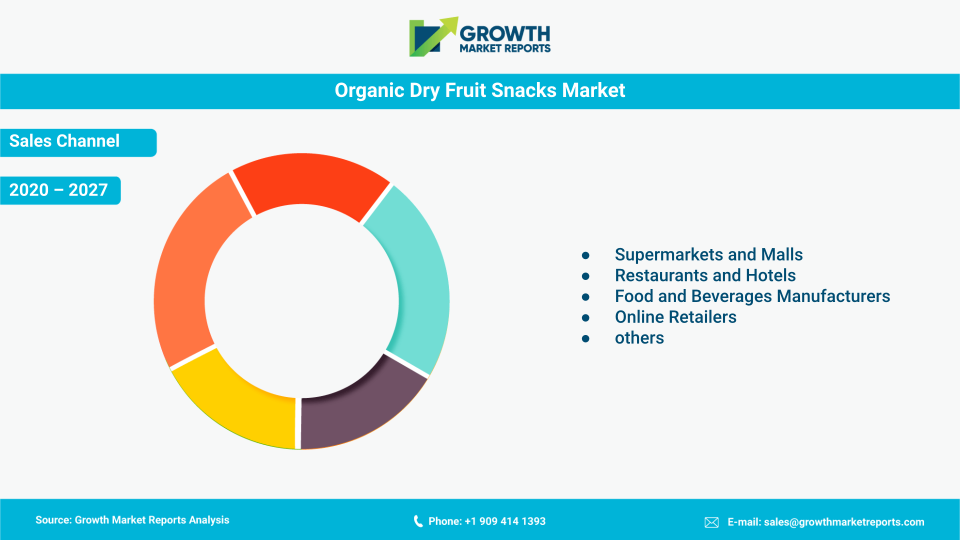
Supermarkets and malls, restaurants and hotels, food and beverages manufacturers, online retailers, and others.

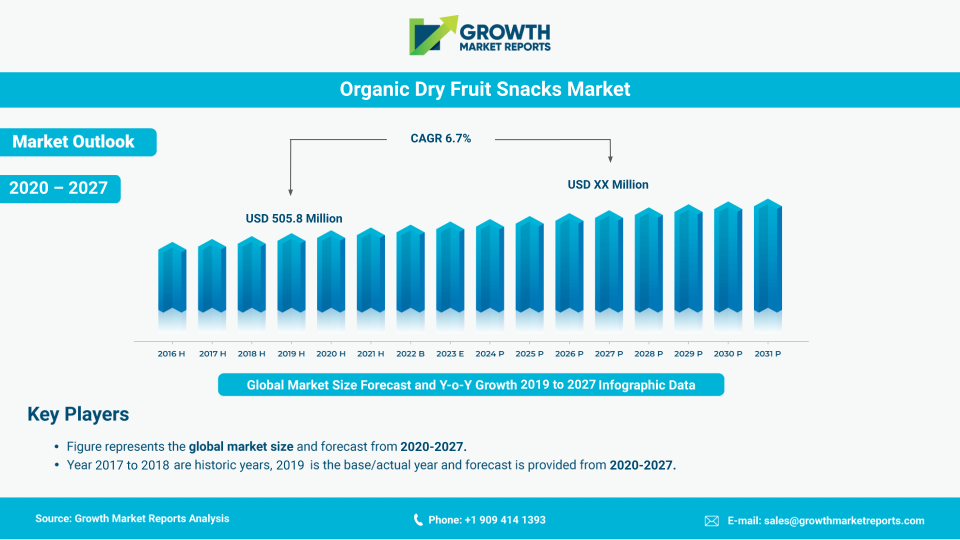
The base year considered for the global organic dry fruit snacks market report is 2019. The complete analysis period is 2017 to 2027, wherein, 2017 & 2018 are the historic years and the forecast is provided from 2020 to 2027.

The market is expected to witness slight growth in terms of demand during 2019-2020 owing to the postive impact of COVID-19 pandemic on the organic dried fruit snacks market.

Factors such as competitive strength and market positioning are key areas considered, while selecting top companies to be profiled.

The market is driven by surge in the manufacture of organic dried fruits as there is rise in world population demanding organic food options. Additionally, organic dried fruits are easy to carry food and offer nutritional benefits, making them ideal for the fast lifestyle.

In addition to market size (in USD Million) and market volume (Tons) company market share (in % for base year 2019), other data such macro-economic factors, COVID-19 Impact on the Disc Brake is available in final report.

According to this Growth Market Reports report, the organic dried fruits market is likely to register a CAGR of 6.7% during forecast period, with an anticipated valuation of USD 816.2 million by the end of the 2027.

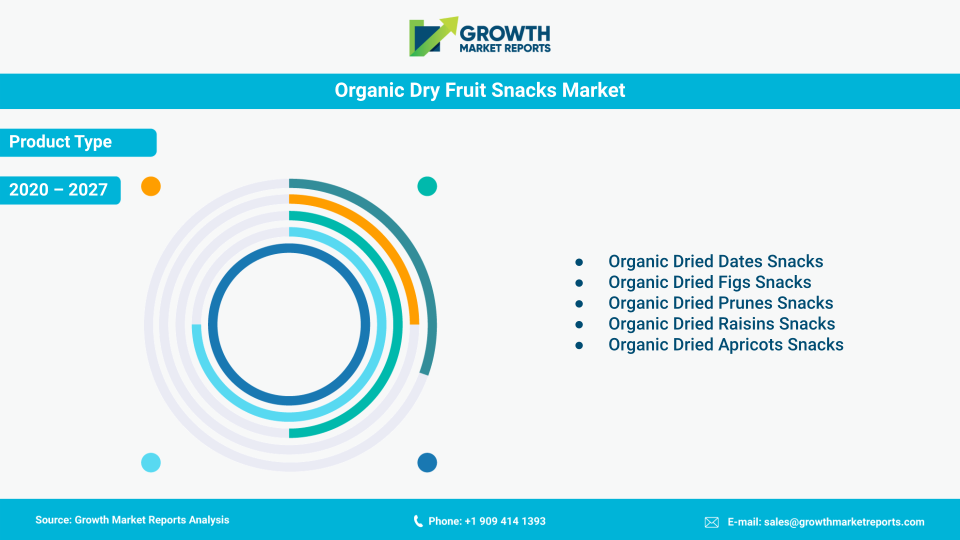
Yes, the report covers types of organic dried fruits such as organic dried dates snacks, organic dried figs snacks, organic dried prunes snacks, organic dried raisins snacks, and organic dried apricots snacks.

Additional company profiles can be provided on request

Table Of Content

Chapter 1 Executive Summary
Chapter 2 Assumptions and Acronyms Used
Chapter 3 Research Methodology
Chapter 4 Organic Dry Fruit Snacks Market Overview
   4.1 Introduction
      4.1.1 Market Taxonomy
      4.1.2 Market Definition
      4.1.3 Macro-Economic Factors Impacting the Market Growth
   4.2 Organic Dry Fruit Snacks Market Dynamics
      4.2.1 Market Drivers
      4.2.2 Market Restraints
      4.2.3 Market Opportunity
   4.3 Organic Dry Fruit Snacks Market - Supply Chain Analysis
      4.3.1 List of Key Suppliers
      4.3.2 List of Key Distributors
      4.3.3 List of Key Consumers
   4.4 Key Forces Shaping the Organic Dry Fruit Snacks Market
      4.4.1 Bargaining Power of Suppliers
      4.4.2 Bargaining Power of Buyers
      4.4.3 Threat of Substitution
      4.4.4 Threat of New Entrants
      4.4.5 Competitive Rivalry
   4.5 Global Organic Dry Fruit Snacks Market Size & Forecast, 2023-2032
      4.5.1 Organic Dry Fruit Snacks Market Size and Y-o-Y Growth
      4.5.2 Organic Dry Fruit Snacks Market Absolute $ Opportunity

Chapter 5 Global Organic Dry Fruit Snacks Market Analysis and Forecast By Product Type
   5.1 Introduction
      5.1.1 Key Market Trends & Growth Opportunities By Product Type
      5.1.2 Basis Point Share (BPS) Analysis By Product Type
      5.1.3 Absolute $ Opportunity Assessment By Product Type
   5.2 Organic Dry Fruit Snacks Market Size Forecast By Product Type
      5.2.1 Mixed Dry Fruit Snacks
      5.2.2 Single Fruit Snacks
      5.2.3 Trail Mixes
      5.2.4 Others
   5.3 Market Attractiveness Analysis By Product Type

Chapter 6 Global Organic Dry Fruit Snacks Market Analysis and Forecast By Packaging Type
   6.1 Introduction
      6.1.1 Key Market Trends & Growth Opportunities By Packaging Type
      6.1.2 Basis Point Share (BPS) Analysis By Packaging Type
      6.1.3 Absolute $ Opportunity Assessment By Packaging Type
   6.2 Organic Dry Fruit Snacks Market Size Forecast By Packaging Type
      6.2.1 Pouches
      6.2.2 Jars
      6.2.3 Boxes
      6.2.4 Others
   6.3 Market Attractiveness Analysis By Packaging Type

Chapter 7 Global Organic Dry Fruit Snacks Market Analysis and Forecast By Distribution Channel
   7.1 Introduction
      7.1.1 Key Market Trends & Growth Opportunities By Distribution Channel
      7.1.2 Basis Point Share (BPS) Analysis By Distribution Channel
      7.1.3 Absolute $ Opportunity Assessment By Distribution Channel
   7.2 Organic Dry Fruit Snacks Market Size Forecast By Distribution Channel
      7.2.1 Supermarkets/Hypermarkets
      7.2.2 Convenience Stores
      7.2.3 Online Retail
      7.2.4 Specialty Stores
      7.2.5 Others
   7.3 Market Attractiveness Analysis By Distribution Channel

Chapter 8 Global Organic Dry Fruit Snacks Market Analysis and Forecast By End-User
   8.1 Introduction
      8.1.1 Key Market Trends & Growth Opportunities By End-User
      8.1.2 Basis Point Share (BPS) Analysis By End-User
      8.1.3 Absolute $ Opportunity Assessment By End-User
   8.2 Organic Dry Fruit Snacks Market Size Forecast By End-User
      8.2.1 Households
      8.2.2 Food Service
      8.2.3 Others
   8.3 Market Attractiveness Analysis By End-User

Chapter 9 Global Organic Dry Fruit Snacks Market Analysis and Forecast by Region
   9.1 Introduction
      9.1.1 Key Market Trends & Growth Opportunities By Region
      9.1.2 Basis Point Share (BPS) Analysis By Region
      9.1.3 Absolute $ Opportunity Assessment By Region
   9.2 Organic Dry Fruit Snacks Market Size Forecast By Region
      9.2.1 North America
      9.2.2 Europe
      9.2.3 Asia Pacific
      9.2.4 Latin America
      9.2.5 Middle East & Africa (MEA)
   9.3 Market Attractiveness Analysis By Region

Chapter 10 Coronavirus Disease (COVID-19) Impact 
   10.1 Introduction 
   10.2 Current & Future Impact Analysis 
   10.3 Economic Impact Analysis 
   10.4 Government Policies 
   10.5 Investment Scenario

Chapter 11 North America Organic Dry Fruit Snacks Analysis and Forecast
   11.1 Introduction
   11.2 North America Organic Dry Fruit Snacks Market Size Forecast by Country
      11.2.1 U.S.
      11.2.2 Canada
   11.3 Basis Point Share (BPS) Analysis by Country
   11.4 Absolute $ Opportunity Assessment by Country
   11.5 Market Attractiveness Analysis by Country
   11.6 North America Organic Dry Fruit Snacks Market Size Forecast By Product Type
      11.6.1 Mixed Dry Fruit Snacks
      11.6.2 Single Fruit Snacks
      11.6.3 Trail Mixes
      11.6.4 Others
   11.7 Basis Point Share (BPS) Analysis By Product Type 
   11.8 Absolute $ Opportunity Assessment By Product Type 
   11.9 Market Attractiveness Analysis By Product Type
   11.10 North America Organic Dry Fruit Snacks Market Size Forecast By Packaging Type
      11.10.1 Pouches
      11.10.2 Jars
      11.10.3 Boxes
      11.10.4 Others
   11.11 Basis Point Share (BPS) Analysis By Packaging Type 
   11.12 Absolute $ Opportunity Assessment By Packaging Type 
   11.13 Market Attractiveness Analysis By Packaging Type
   11.14 North America Organic Dry Fruit Snacks Market Size Forecast By Distribution Channel
      11.14.1 Supermarkets/Hypermarkets
      11.14.2 Convenience Stores
      11.14.3 Online Retail
      11.14.4 Specialty Stores
      11.14.5 Others
   11.15 Basis Point Share (BPS) Analysis By Distribution Channel 
   11.16 Absolute $ Opportunity Assessment By Distribution Channel 
   11.17 Market Attractiveness Analysis By Distribution Channel
   11.18 North America Organic Dry Fruit Snacks Market Size Forecast By End-User
      11.18.1 Households
      11.18.2 Food Service
      11.18.3 Others
   11.19 Basis Point Share (BPS) Analysis By End-User 
   11.20 Absolute $ Opportunity Assessment By End-User 
   11.21 Market Attractiveness Analysis By End-User

Chapter 12 Europe Organic Dry Fruit Snacks Analysis and Forecast
   12.1 Introduction
   12.2 Europe Organic Dry Fruit Snacks Market Size Forecast by Country
      12.2.1 Germany
      12.2.2 France
      12.2.3 Italy
      12.2.4 U.K.
      12.2.5 Spain
      12.2.6 Russia
      12.2.7 Rest of Europe
   12.3 Basis Point Share (BPS) Analysis by Country
   12.4 Absolute $ Opportunity Assessment by Country
   12.5 Market Attractiveness Analysis by Country
   12.6 Europe Organic Dry Fruit Snacks Market Size Forecast By Product Type
      12.6.1 Mixed Dry Fruit Snacks
      12.6.2 Single Fruit Snacks
      12.6.3 Trail Mixes
      12.6.4 Others
   12.7 Basis Point Share (BPS) Analysis By Product Type 
   12.8 Absolute $ Opportunity Assessment By Product Type 
   12.9 Market Attractiveness Analysis By Product Type
   12.10 Europe Organic Dry Fruit Snacks Market Size Forecast By Packaging Type
      12.10.1 Pouches
      12.10.2 Jars
      12.10.3 Boxes
      12.10.4 Others
   12.11 Basis Point Share (BPS) Analysis By Packaging Type 
   12.12 Absolute $ Opportunity Assessment By Packaging Type 
   12.13 Market Attractiveness Analysis By Packaging Type
   12.14 Europe Organic Dry Fruit Snacks Market Size Forecast By Distribution Channel
      12.14.1 Supermarkets/Hypermarkets
      12.14.2 Convenience Stores
      12.14.3 Online Retail
      12.14.4 Specialty Stores
      12.14.5 Others
   12.15 Basis Point Share (BPS) Analysis By Distribution Channel 
   12.16 Absolute $ Opportunity Assessment By Distribution Channel 
   12.17 Market Attractiveness Analysis By Distribution Channel
   12.18 Europe Organic Dry Fruit Snacks Market Size Forecast By End-User
      12.18.1 Households
      12.18.2 Food Service
      12.18.3 Others
   12.19 Basis Point Share (BPS) Analysis By End-User 
   12.20 Absolute $ Opportunity Assessment By End-User 
   12.21 Market Attractiveness Analysis By End-User

Chapter 13 Asia Pacific Organic Dry Fruit Snacks Analysis and Forecast
   13.1 Introduction
   13.2 Asia Pacific Organic Dry Fruit Snacks Market Size Forecast by Country
      13.2.1 China
      13.2.2 Japan
      13.2.3 South Korea
      13.2.4 India
      13.2.5 Australia
      13.2.6 South East Asia (SEA)
      13.2.7 Rest of Asia Pacific (APAC)
   13.3 Basis Point Share (BPS) Analysis by Country
   13.4 Absolute $ Opportunity Assessment by Country
   13.5 Market Attractiveness Analysis by Country
   13.6 Asia Pacific Organic Dry Fruit Snacks Market Size Forecast By Product Type
      13.6.1 Mixed Dry Fruit Snacks
      13.6.2 Single Fruit Snacks
      13.6.3 Trail Mixes
      13.6.4 Others
   13.7 Basis Point Share (BPS) Analysis By Product Type 
   13.8 Absolute $ Opportunity Assessment By Product Type 
   13.9 Market Attractiveness Analysis By Product Type
   13.10 Asia Pacific Organic Dry Fruit Snacks Market Size Forecast By Packaging Type
      13.10.1 Pouches
      13.10.2 Jars
      13.10.3 Boxes
      13.10.4 Others
   13.11 Basis Point Share (BPS) Analysis By Packaging Type 
   13.12 Absolute $ Opportunity Assessment By Packaging Type 
   13.13 Market Attractiveness Analysis By Packaging Type
   13.14 Asia Pacific Organic Dry Fruit Snacks Market Size Forecast By Distribution Channel
      13.14.1 Supermarkets/Hypermarkets
      13.14.2 Convenience Stores
      13.14.3 Online Retail
      13.14.4 Specialty Stores
      13.14.5 Others
   13.15 Basis Point Share (BPS) Analysis By Distribution Channel 
   13.16 Absolute $ Opportunity Assessment By Distribution Channel 
   13.17 Market Attractiveness Analysis By Distribution Channel
   13.18 Asia Pacific Organic Dry Fruit Snacks Market Size Forecast By End-User
      13.18.1 Households
      13.18.2 Food Service
      13.18.3 Others
   13.19 Basis Point Share (BPS) Analysis By End-User 
   13.20 Absolute $ Opportunity Assessment By End-User 
   13.21 Market Attractiveness Analysis By End-User

Chapter 14 Latin America Organic Dry Fruit Snacks Analysis and Forecast
   14.1 Introduction
   14.2 Latin America Organic Dry Fruit Snacks Market Size Forecast by Country
      14.2.1 Brazil
      14.2.2 Mexico
      14.2.3 Rest of Latin America (LATAM)
   14.3 Basis Point Share (BPS) Analysis by Country
   14.4 Absolute $ Opportunity Assessment by Country
   14.5 Market Attractiveness Analysis by Country
   14.6 Latin America Organic Dry Fruit Snacks Market Size Forecast By Product Type
      14.6.1 Mixed Dry Fruit Snacks
      14.6.2 Single Fruit Snacks
      14.6.3 Trail Mixes
      14.6.4 Others
   14.7 Basis Point Share (BPS) Analysis By Product Type 
   14.8 Absolute $ Opportunity Assessment By Product Type 
   14.9 Market Attractiveness Analysis By Product Type
   14.10 Latin America Organic Dry Fruit Snacks Market Size Forecast By Packaging Type
      14.10.1 Pouches
      14.10.2 Jars
      14.10.3 Boxes
      14.10.4 Others
   14.11 Basis Point Share (BPS) Analysis By Packaging Type 
   14.12 Absolute $ Opportunity Assessment By Packaging Type 
   14.13 Market Attractiveness Analysis By Packaging Type
   14.14 Latin America Organic Dry Fruit Snacks Market Size Forecast By Distribution Channel
      14.14.1 Supermarkets/Hypermarkets
      14.14.2 Convenience Stores
      14.14.3 Online Retail
      14.14.4 Specialty Stores
      14.14.5 Others
   14.15 Basis Point Share (BPS) Analysis By Distribution Channel 
   14.16 Absolute $ Opportunity Assessment By Distribution Channel 
   14.17 Market Attractiveness Analysis By Distribution Channel
   14.18 Latin America Organic Dry Fruit Snacks Market Size Forecast By End-User
      14.18.1 Households
      14.18.2 Food Service
      14.18.3 Others
   14.19 Basis Point Share (BPS) Analysis By End-User 
   14.20 Absolute $ Opportunity Assessment By End-User 
   14.21 Market Attractiveness Analysis By End-User

Chapter 15 Middle East & Africa (MEA) Organic Dry Fruit Snacks Analysis and Forecast
   15.1 Introduction
   15.2 Middle East & Africa (MEA) Organic Dry Fruit Snacks Market Size Forecast by Country
      15.2.1 Saudi Arabia
      15.2.2 South Africa
      15.2.3 UAE
      15.2.4 Rest of Middle East & Africa (MEA)
   15.3 Basis Point Share (BPS) Analysis by Country
   15.4 Absolute $ Opportunity Assessment by Country
   15.5 Market Attractiveness Analysis by Country
   15.6 Middle East & Africa (MEA) Organic Dry Fruit Snacks Market Size Forecast By Product Type
      15.6.1 Mixed Dry Fruit Snacks
      15.6.2 Single Fruit Snacks
      15.6.3 Trail Mixes
      15.6.4 Others
   15.7 Basis Point Share (BPS) Analysis By Product Type 
   15.8 Absolute $ Opportunity Assessment By Product Type 
   15.9 Market Attractiveness Analysis By Product Type
   15.10 Middle East & Africa (MEA) Organic Dry Fruit Snacks Market Size Forecast By Packaging Type
      15.10.1 Pouches
      15.10.2 Jars
      15.10.3 Boxes
      15.10.4 Others
   15.11 Basis Point Share (BPS) Analysis By Packaging Type 
   15.12 Absolute $ Opportunity Assessment By Packaging Type 
   15.13 Market Attractiveness Analysis By Packaging Type
   15.14 Middle East & Africa (MEA) Organic Dry Fruit Snacks Market Size Forecast By Distribution Channel
      15.14.1 Supermarkets/Hypermarkets
      15.14.2 Convenience Stores
      15.14.3 Online Retail
      15.14.4 Specialty Stores
      15.14.5 Others
   15.15 Basis Point Share (BPS) Analysis By Distribution Channel 
   15.16 Absolute $ Opportunity Assessment By Distribution Channel 
   15.17 Market Attractiveness Analysis By Distribution Channel
   15.18 Middle East & Africa (MEA) Organic Dry Fruit Snacks Market Size Forecast By End-User
      15.18.1 Households
      15.18.2 Food Service
      15.18.3 Others
   15.19 Basis Point Share (BPS) Analysis By End-User 
   15.20 Absolute $ Opportunity Assessment By End-User 
   15.21 Market Attractiveness Analysis By End-User

Chapter 16 Competition Landscape 
   16.1 Organic Dry Fruit Snacks Market: Competitive Dashboard
   16.2 Global Organic Dry Fruit Snacks Market: Market Share Analysis, 2023
   16.3 Company Profiles (Details – Overview, Financials, Developments, Strategy) 
      16.3.1 Sun-Maid Growers of California
Made In Nature
Navitas Organics
Patagonia Provisions
Bergin Fruit and Nut Company
Sunbeam Foods
Traina Foods
Mariani Packing Company
National Raisin Company
Nutiva
Terrasoul Superfoods
Stoneridge Orchards
Mavuno Harvest
Food to Live
Sahale Snacks
Brothers All Natural
Organic Traditions
Peeled Snacks
Kirkland Signature (Costco)
NOW Foods

Methodology

Our Clients

Microsoft
General Mills
FedEx Logistics
Siemens Healthcare
Pfizer
Nestle SA
Honda Motor Co. Ltd.
Deloitte