Polyurethane Market Research Report 2033

Polyurethane Market Research Report 2033

Segments - by Product Type (Flexible Foam, Rigid Foam, Coatings, Adhesives & Sealants, Elastomers, Others), by Application (Furniture & Interiors, Construction, Electronics & Appliances, Automotive, Footwear, Packaging, Others), by End-Use Industry (Building & Construction, Automotive & Transportation, Bedding & Furniture, Electronics, Footwear, Others)

https://growthmarketreports.com/Raksha
Author : Raksha Sharma
https://growthmarketreports.com/Vaibhav
Fact-checked by : V. Chandola
https://growthmarketreports.com/Shruti
Editor : Shruti Bhat

Upcoming | Report ID :MC-1889 | 4.4 Rating | 64 Reviews | 264 Pages | Format : Docx PDF

Report Description


Polyurethane Market Outlook

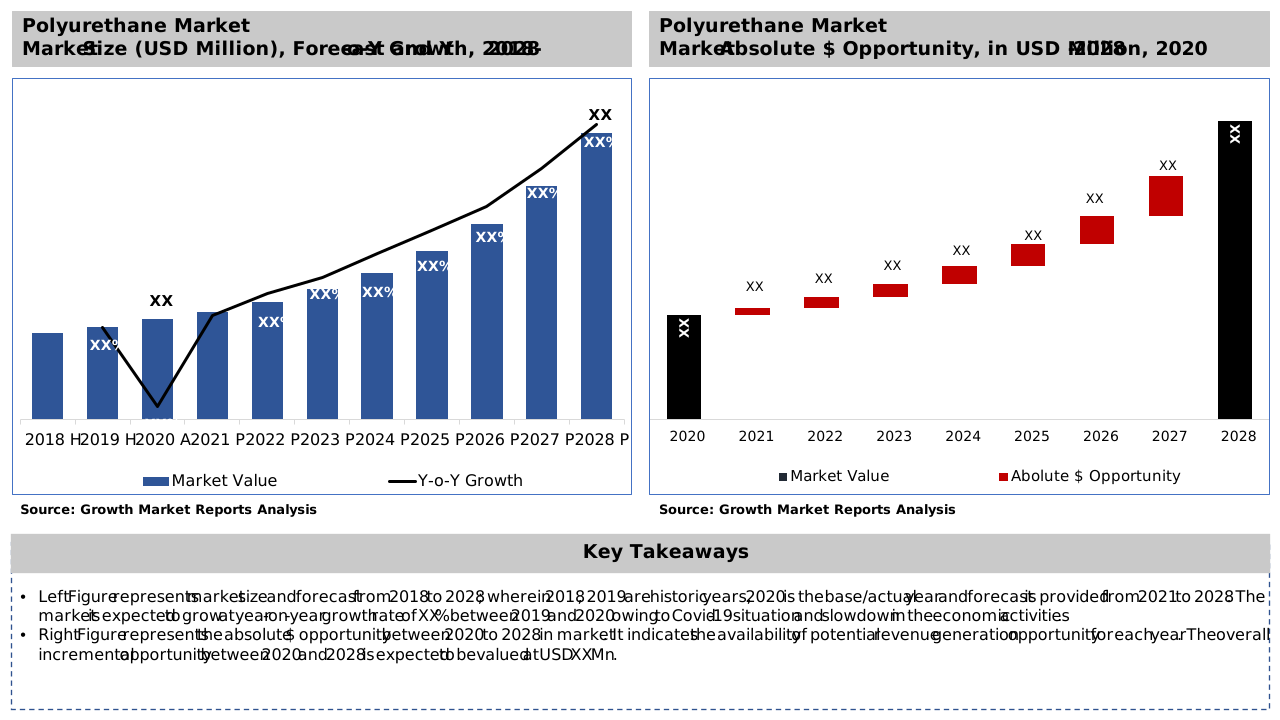
According to our latest research, the global polyurethane market size reached USD 82.3 billion in 2024, demonstrating robust demand across diverse industries. The market is projected to expand at a CAGR of 5.4% from 2025 to 2033, reaching a value of approximately USD 131.2 billion by 2033. This steady growth trajectory is primarily driven by the increasing use of polyurethane in construction, automotive, and furniture sectors, coupled with rising demand for energy-efficient materials and innovative end-use applications.

The growth of the polyurethane market is underpinned by the material's remarkable versatility and superior performance characteristics. Polyurethane's adaptability allows it to be engineered into flexible foams, rigid foams, coatings, adhesives, sealants, and elastomers, making it indispensable across a wide range of industries. Its lightweight nature, high durability, and excellent thermal insulation properties make polyurethane a preferred choice in the construction industry for insulation panels, spray foams, and sealants. Additionally, the ongoing trend towards green building initiatives and energy-efficient infrastructure is fueling the adoption of polyurethane-based products, as they contribute to reduced energy consumption and enhanced structural integrity.

Another significant growth driver is the expanding automotive and transportation sector, where polyurethane is extensively used for lightweighting, noise reduction, and comfort enhancement. The push towards electric vehicles and stricter emission regulations are prompting manufacturers to adopt advanced materials like polyurethane to achieve improved fuel efficiency and lower environmental impact. Polyurethane foams are widely utilized in automotive interiors, seating, and headrests, while rigid foams find applications in lightweight structural components. Furthermore, the increasing demand for high-performance adhesives and coatings in automotive assembly is further bolstering market growth. The global shift towards sustainable mobility solutions is expected to create new avenues for polyurethane applications in the coming years.

The rapid urbanization and rising disposable incomes in emerging economies are also playing a pivotal role in the expansion of the polyurethane market. As urban populations grow, there is an escalating demand for modern furniture, high-quality mattresses, and advanced consumer electronics, all of which rely heavily on polyurethane components. The proliferation of e-commerce and the changing lifestyles of consumers are driving the need for innovative packaging solutions and comfortable footwear, further propelling market demand. Moreover, ongoing investments in infrastructure development in Asia Pacific, Latin America, and the Middle East & Africa are expected to sustain the momentum of polyurethane consumption across various end-use industries.

The solvolysis of polyurethanes is emerging as a promising method for recycling and reusing polyurethane materials, which are otherwise challenging to break down. This process involves the chemical breakdown of polyurethane polymers using solvents, resulting in the recovery of valuable raw materials that can be reused in new production cycles. As the demand for sustainable practices grows, solvolysis offers a viable solution for reducing waste and minimizing the environmental impact of polyurethane disposal. By enabling the recovery of polyols and other components, solvolysis not only supports circular economy initiatives but also aligns with the industry's shift towards greener and more sustainable manufacturing processes. This innovative recycling method is gaining traction as companies seek to address the environmental challenges associated with polyurethane waste.

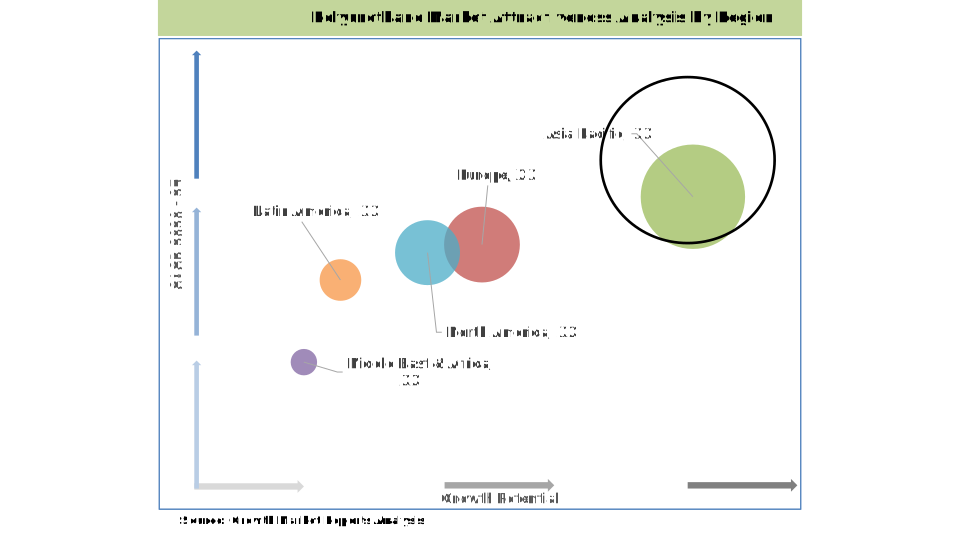
Regionally, the Asia Pacific market continues to dominate the global polyurethane landscape, accounting for the largest share due to rapid industrialization, urban development, and a robust manufacturing sector. North America and Europe follow closely, driven by technological advancements, stringent energy efficiency standards, and a strong focus on sustainable construction practices. The Middle East & Africa and Latin America are also witnessing steady growth, fueled by infrastructure investments and expanding automotive and consumer goods industries. Overall, the global polyurethane market is poised for significant expansion, supported by technological innovation, evolving consumer preferences, and a favorable regulatory environment.

Global Polyurethane Industry Outlook

Product Type Analysis

The product type segment of the polyurethane market is characterized by a diverse range of offerings, including flexible foam, rigid foam, coatings, adhesives & sealants, elastomers, and others. Flexible polyurethane foam remains the most widely used product type, accounting for a substantial portion of the market share due to its extensive application in furniture, bedding, automotive seating, and packaging. Its unique combination of comfort, resilience, and lightweight properties makes it an ideal material for cushioning and support purposes. The ongoing demand for high-quality mattresses and upholstered furniture in both residential and commercial spaces continues to drive the consumption of flexible foam globally.

Rigid polyurethane foam is another critical segment, primarily utilized in the construction and refrigeration industries for insulation purposes. Its exceptional thermal insulating properties and structural strength make it indispensable in the production of insulation panels, spray foams, and cold storage units. The growing emphasis on energy efficiency in buildings, coupled with stringent regulatory standards for thermal insulation, is propelling the adoption of rigid polyurethane foam across developed and emerging markets. Additionally, the increasing use of this product type in refrigerated transportation and packaging applications is further contributing to its market growth.

Polyurethane coatings, adhesives, and sealants represent a rapidly growing segment, driven by their superior bonding, protective, and sealing capabilities. These products are extensively used in automotive assembly, construction, electronics, and footwear manufacturing. The demand for high-performance coatings that offer resistance to abrasion, chemicals, and weathering is on the rise, especially in industrial and infrastructure projects. Polyurethane adhesives and sealants are favored for their strong adhesion, flexibility, and durability, making them suitable for bonding diverse substrates and sealing joints in construction and automotive applications.

Elastomers are another important product type within the polyurethane market, known for their high elasticity, abrasion resistance, and load-bearing capacity. Polyurethane elastomers are widely employed in the production of wheels, rollers, gaskets, and industrial components that require superior mechanical performance and longevity. The growing demand for durable and high-performance materials in manufacturing, mining, and material handling sectors is driving the adoption of polyurethane elastomers. Additionally, ongoing research and development efforts aimed at enhancing the performance characteristics of elastomers are expected to unlock new growth opportunities in the coming years.

Other product types, including thermoplastic polyurethanes and specialty formulations, cater to niche applications in medical devices, textiles, and electronics. The continuous innovation in product formulations to meet specific end-user requirements is a key factor supporting the expansion of the product type segment. Overall, the diverse product portfolio and the ability to customize polyurethane formulations according to application needs are central to the sustained growth and competitiveness of the global polyurethane market.

Report Scope

Attributes Details
Report Title Polyurethane Market Research Report 2033
By Product Type Flexible Foam, Rigid Foam, Coatings, Adhesives & Sealants, Elastomers, Others
By Application Furniture & Interiors, Construction, Electronics & Appliances, Automotive, Footwear, Packaging, Others
By End-Use Industry Building & Construction, Automotive & Transportation, Bedding & Furniture, Electronics, Footwear, Others
Regions Covered North America, Europe, APAC, Latin America, MEA
Base Year 2024
Historic Data 2018-2023
Forecast Period 2025-2033
Number of Pages 264
Number of Tables & Figures 342
Customization Available Yes, the report can be customized as per your need.

Application Analysis

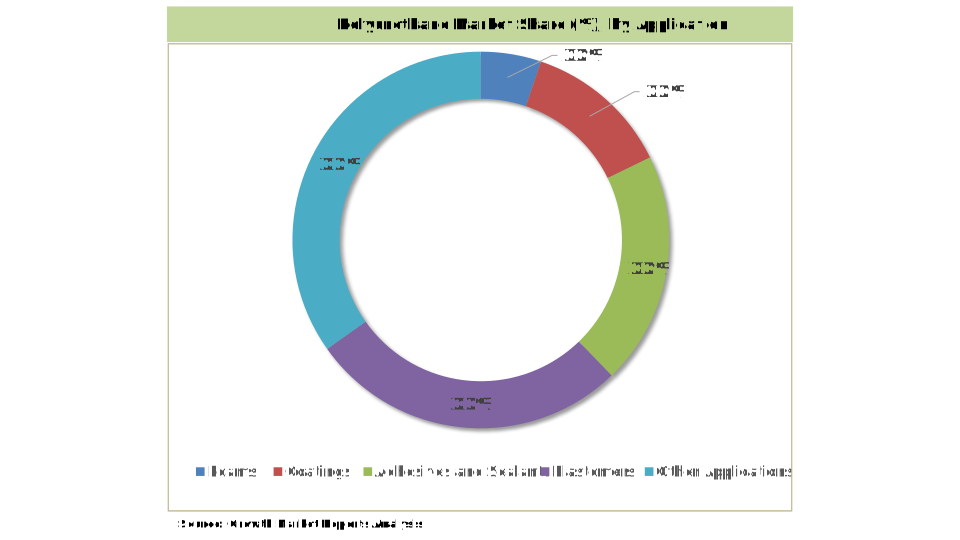
The application segment of the polyurethane market encompasses a broad spectrum of end-uses, including furniture & interiors, construction, electronics & appliances, automotive, footwear, packaging, and others. The furniture & interiors segment holds a dominant position, driven by the widespread use of flexible polyurethane foam in mattresses, sofas, chairs, and other upholstered products. The increasing focus on comfort, aesthetics, and ergonomic design in modern furniture is fueling the demand for high-quality polyurethane foam. Moreover, the growing hospitality and real estate sectors, particularly in emerging economies, are contributing to the sustained growth of this application segment.

The construction industry represents a significant application area for polyurethane, especially in the form of rigid foam for thermal insulation, coatings, and sealants. Polyurethane-based insulation materials are integral to energy-efficient building designs, offering superior thermal resistance and moisture protection. The adoption of green building standards and the implementation of stringent energy codes are driving the use of polyurethane products in both residential and commercial construction projects. Additionally, the versatility of polyurethane coatings and sealants in waterproofing, flooring, and protective applications is further enhancing their appeal in the construction sector.

Electronics & appliances constitute another key application segment, where polyurethane is used for encapsulation, potting, and insulation of electronic components. The material's excellent dielectric properties, chemical resistance, and flexibility make it ideal for protecting sensitive electronic devices from moisture, dust, and mechanical stress. The proliferation of consumer electronics, smart devices, and home appliances is fueling the demand for advanced polyurethane formulations that offer enhanced performance and reliability. Furthermore, the miniaturization of electronic components and the trend towards compact device designs are creating new opportunities for polyurethane applications in this segment.

The automotive industry is a major consumer of polyurethane, utilizing the material in seating, headrests, armrests, dashboards, and various interior and exterior components. Polyurethane's lightweight and noise-dampening properties contribute to improved fuel efficiency, comfort, and safety in vehicles. The shift towards electric vehicles and the adoption of lightweight materials in automotive manufacturing are further driving the demand for polyurethane-based solutions. Moreover, the use of polyurethane adhesives, coatings, and elastomers in assembly and structural applications is enhancing the overall performance and durability of vehicles.

Footwear and packaging are also important application segments, with polyurethane being used to manufacture comfortable, durable, and lightweight soles, midsoles, and insoles in footwear, as well as protective and flexible packaging materials. The evolving consumer preferences for stylish and functional footwear, coupled with the growth of the e-commerce and retail sectors, are supporting the expansion of these segments. Other applications, such as medical devices, sports equipment, and industrial machinery, further underscore the versatility and widespread adoption of polyurethane across diverse end-use scenarios.

End-Use Industry Analysis

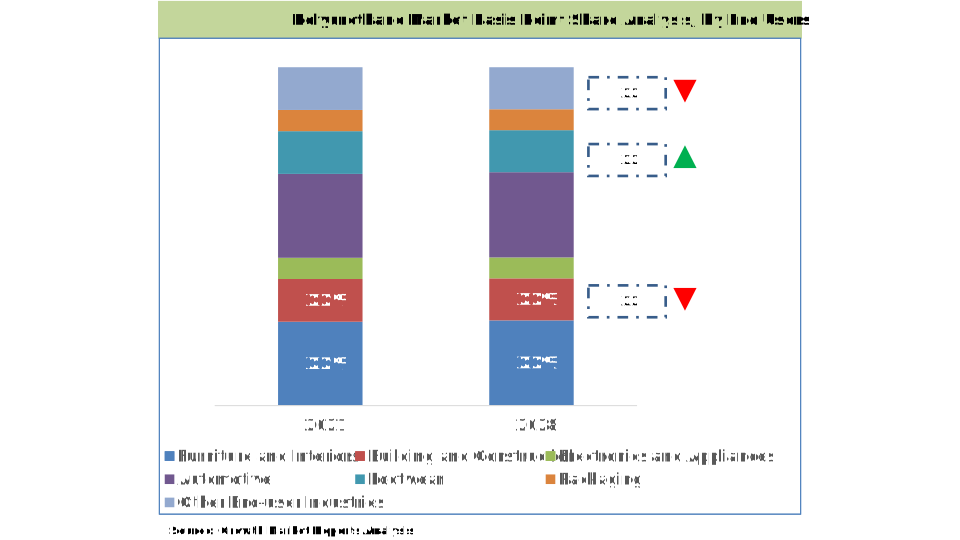
The end-use industry segment of the polyurethane market is segmented into building & construction, automotive & transportation, bedding & furniture, electronics, footwear, and others. The building & construction industry is the largest consumer of polyurethane products, accounting for a significant share of the global market. Polyurethane's superior insulating properties, durability, and versatility make it an ideal material for a wide range of construction applications, including insulation panels, spray foams, sealants, and coatings. The global push for energy-efficient buildings and the adoption of green building certifications are driving the demand for polyurethane-based solutions in both new construction and renovation projects.

The automotive & transportation industry represents a dynamic and rapidly growing end-use sector for polyurethane. The material's lightweight, noise-reducing, and shock-absorbing properties are critical for enhancing vehicle performance, comfort, and safety. Polyurethane is extensively used in automotive interiors, seating, headliners, and structural components, as well as in adhesives and coatings for vehicle assembly. The transition towards electric and hybrid vehicles, along with the increasing focus on lightweighting and emission reduction, is expected to further accelerate the adoption of polyurethane in the automotive sector.

Bedding & furniture is another prominent end-use industry, driven by the widespread use of flexible polyurethane foam in mattresses, pillows, sofas, and chairs. The rising demand for premium bedding and furniture products, coupled with growing urbanization and changing lifestyles, is fueling the consumption of polyurethane in this segment. Manufacturers are continuously innovating to develop advanced foam formulations that offer enhanced comfort, support, and durability, catering to the evolving preferences of consumers worldwide.

The electronics industry is witnessing increasing utilization of polyurethane for encapsulation, insulation, and protection of electronic components and devices. The growing complexity and miniaturization of electronic products require materials that offer excellent electrical insulation, moisture resistance, and mechanical strength. Polyurethane's ability to meet these requirements makes it a preferred choice for a wide range of electronic applications, including circuit boards, sensors, connectors, and housings. The rapid expansion of the consumer electronics and smart device markets is expected to sustain the growth of this end-use segment in the coming years.

The footwear industry relies heavily on polyurethane for the production of lightweight, comfortable, and durable soles, insoles, and midsoles. The material's flexibility, cushioning, and abrasion resistance are critical for enhancing the performance and longevity of footwear products. The increasing demand for sports, casual, and fashion footwear, along with the growth of the global retail and e-commerce sectors, is driving the adoption of polyurethane in this industry. Other end-use industries, such as medical devices, sports equipment, and industrial machinery, further highlight the broad applicability and growth potential of polyurethane in diverse market segments.

Opportunities & Threats

The polyurethane market presents a multitude of opportunities for growth and innovation, particularly in the realms of sustainability and advanced material development. One of the most promising avenues is the increasing focus on bio-based and recyclable polyurethanes. As environmental concerns and regulatory pressures intensify, manufacturers are investing in the development of eco-friendly polyurethane formulations derived from renewable resources such as soy, castor oil, and recycled materials. These sustainable alternatives not only reduce the environmental footprint of polyurethane production but also open up new market segments, especially among environmentally conscious consumers and industries. The integration of circular economy principles and the adoption of green chemistry practices are expected to drive the next wave of innovation and differentiation in the polyurethane market.

Technological advancements and the emergence of smart materials are creating new opportunities for polyurethane applications in high-growth sectors such as automotive, electronics, and healthcare. The development of high-performance polyurethane composites, foams with enhanced thermal and acoustic insulation properties, and smart coatings with self-healing or antimicrobial functionalities are expanding the scope of polyurethane usage. The increasing penetration of electric vehicles, 5G infrastructure, and smart home technologies is generating demand for advanced polyurethane solutions that offer superior performance, reliability, and sustainability. Additionally, the rising investments in infrastructure development, particularly in Asia Pacific and emerging markets, are expected to create robust demand for polyurethane in construction, transportation, and industrial applications.

Despite the numerous growth opportunities, the polyurethane market faces certain restraining factors that could impede its expansion. The volatility in raw material prices, particularly those derived from petrochemicals, poses a significant challenge for manufacturers, impacting production costs and profit margins. Additionally, the environmental concerns associated with the use of isocyanates and other chemicals in polyurethane production have led to increased regulatory scrutiny and the implementation of stricter safety and environmental standards. The need to comply with evolving regulations and address sustainability concerns is compelling manufacturers to invest in research and development, process optimization, and the adoption of alternative raw materials. While these challenges are likely to persist, proactive innovation and strategic collaborations can help industry players navigate the evolving landscape and capitalize on emerging opportunities.

Regional Outlook

The Asia Pacific region dominates the global polyurethane market, accounting for over 45% of the total market share in 2024, with a market size of approximately USD 37.2 billion. The region's leadership is attributed to rapid industrialization, urbanization, and robust growth in construction, automotive, and consumer goods sectors. China, India, Japan, and South Korea are the primary contributors to market expansion, driven by large-scale infrastructure projects, rising disposable incomes, and a thriving manufacturing ecosystem. The Asia Pacific polyurethane market is projected to grow at a CAGR of 6.2% from 2025 to 2033, outpacing other regions due to ongoing investments in smart cities, green buildings, and advanced automotive technologies.

North America is the second-largest market, with a market size of USD 19.8 billion in 2024, supported by strong demand from the construction, automotive, and electronics industries. The region benefits from technological advancements, a mature industrial base, and stringent energy efficiency regulations that drive the adoption of polyurethane insulation and coatings. The United States remains the largest market within the region, followed by Canada and Mexico. The focus on sustainable building practices, coupled with the resurgence of the automotive sector, is expected to sustain steady growth in the North American polyurethane market over the forecast period.

Europe holds a significant share of the global polyurethane market, valued at USD 16.7 billion in 2024, driven by a robust automotive industry, advanced construction practices, and a strong emphasis on sustainability. Germany, France, Italy, and the United Kingdom are the leading markets in the region, supported by stringent regulations promoting energy-efficient materials and the adoption of green building standards. The European market is characterized by continuous innovation, the presence of major multinational players, and a growing focus on bio-based polyurethane solutions. Meanwhile, Latin America and the Middle East & Africa are emerging as promising markets, with a combined market size of USD 8.6 billion in 2024, fueled by infrastructure development, urbanization, and expanding consumer markets. These regions offer attractive growth opportunities for polyurethane manufacturers seeking to diversify their geographic footprint and tap into high-potential markets.

Polyurethane Market Statistics

Competitor Outlook

The global polyurethane market is highly competitive and fragmented, with the presence of numerous multinational corporations and regional players vying for market share. The competitive landscape is characterized by continuous innovation, strategic collaborations, mergers and acquisitions, and investments in research and development. Leading companies are focused on expanding their product portfolios, enhancing production capacities, and developing sustainable and high-performance polyurethane solutions to meet evolving customer demands. The ability to offer customized formulations, superior technical support, and efficient supply chain management is becoming increasingly important for maintaining a competitive edge in the market.

Major players in the polyurethane market are also investing in the development of bio-based and recyclable polyurethane products to address growing environmental concerns and regulatory requirements. Companies are leveraging advanced manufacturing technologies, such as digitalization, automation, and process optimization, to improve product quality, reduce costs, and enhance operational efficiency. Strategic partnerships with raw material suppliers, technology providers, and end-user industries are enabling market leaders to strengthen their market position and accelerate the commercialization of innovative polyurethane solutions.

The competitive dynamics are further shaped by the entry of new players, particularly in emerging markets, who are introducing cost-effective and innovative products tailored to local needs. The increasing focus on sustainability, product differentiation, and value-added services is driving companies to invest in branding, marketing, and customer engagement initiatives. Additionally, the ongoing consolidation in the industry, through mergers and acquisitions, is enabling companies to expand their geographic reach, access new technologies, and achieve economies of scale.

Some of the major companies operating in the global polyurethane market include BASF SE, Covestro AG, Huntsman Corporation, Dow Inc., Mitsui Chemicals, Inc., Recticel NV, Tosoh Corporation, Wanhua Chemical Group Co., Ltd., and Woodbridge Foam Corporation. BASF SE is a global leader in the polyurethane market, known for its extensive product portfolio, strong R&D capabilities, and commitment to sustainability. Covestro AG is renowned for its innovative polyurethane solutions and focus on circular economy initiatives. Huntsman Corporation is a key player with a diverse range of polyurethane products catering to construction, automotive, and industrial applications. Dow Inc. is recognized for its advanced polyurethane technologies and strategic collaborations with industry partners. Mitsui Chemicals, Inc. and Wanhua Chemical Group are prominent players in the Asia Pacific region, driving market growth through capacity expansions and product innovation. Recticel NV, Tosoh Corporation, and Woodbridge Foam Corporation are also notable players, contributing to the competitiveness and dynamism of the global polyurethane market.

Key Players

  • Covestro AG
  • BASF SE
  • The Dow Chemical Company
  • Huntsman Corporation
  • Wanhua Chemical Group Co., Ltd.
  • Mitsui Chemicals, Inc.
  • Tosoh Corporation
  • Recticel NV/SA
  • Woodbridge Foam Corporation
  • FoamPartner Group
  • FXI Holdings, Inc.
  • RAMPF Holding GmbH & Co. KG
  • DIC Corporation
  • Chemtura Corporation (LANXESS)
  • Perstorp Holding AB
  • Manali Petrochemicals Limited
  • Sheela Foam Limited
  • Era Polymers Pty Ltd
  • Lubrizol Corporation
  • Stepan Company
Polyurethane Market Overview

Segments

The Polyurethane market has been segmented on the basis of

Product Type

  • Flexible Foam
  • Rigid Foam
  • Coatings
  • Adhesives & Sealants
  • Elastomers
  • Others

Application

  • Furniture & Interiors
  • Construction
  • Electronics & Appliances
  • Automotive
  • Footwear
  • Packaging
  • Others

End-Use Industry

  • Building & Construction
  • Automotive & Transportation
  • Bedding & Furniture
  • Electronics
  • Footwear
  • Others

Competitive Landscape

Key players competing in the polyurethane market include Dow, Covestro AG, BASF SE, Huntsman International LLC, and Wanhua.

Some of these players are using several market strategies such as mergers, acquisitions, partnerships, collaborations, capacity expansion, and product launches to increase their market shares.
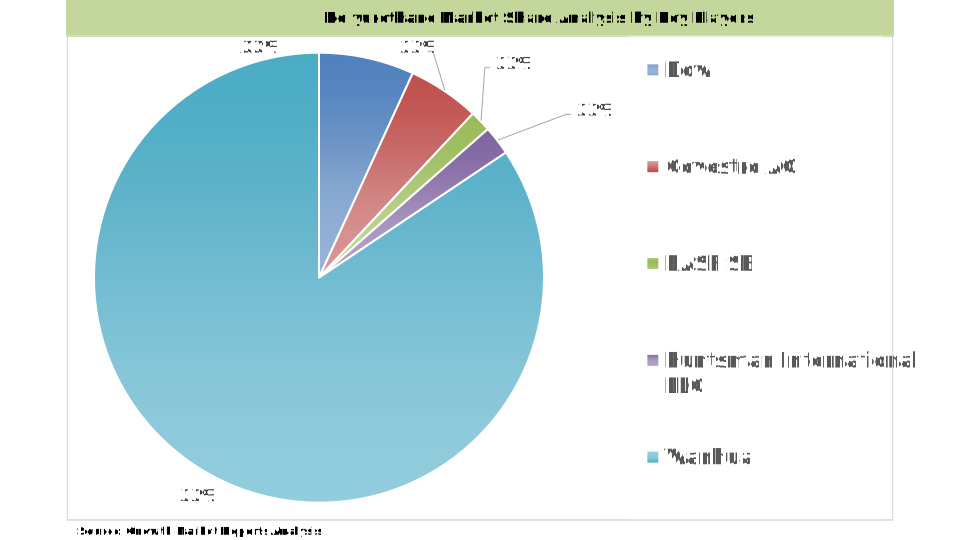

Global Polyurethane Market Key Players

Frequently Asked Questions

Opportunities include the development of advanced, high-performance, and sustainable polyurethane materials, growth in emerging markets, and expanding applications in electric vehicles, smart electronics, and green building projects.

Challenges include volatility in raw material prices, environmental concerns regarding isocyanates, and increasing regulatory scrutiny, prompting manufacturers to focus on innovation and alternative raw materials.

Major players include BASF SE, Covestro AG, Huntsman Corporation, Dow Inc., Mitsui Chemicals, Inc., Recticel NV, Tosoh Corporation, Wanhua Chemical Group Co., Ltd., and Woodbridge Foam Corporation.

The main end-use industries are building & construction, automotive & transportation, bedding & furniture, electronics, and footwear, with building & construction being the largest consumer.

There is a growing focus on bio-based and recyclable polyurethanes, with manufacturers investing in eco-friendly formulations derived from renewable resources to address environmental concerns and regulatory requirements.

Asia Pacific dominates the global polyurethane market, accounting for over 45% of the total market share in 2024, followed by North America and Europe.

Polyurethane is used in furniture & interiors, construction, electronics & appliances, automotive, footwear, packaging, and other sectors, with furniture & interiors being the largest application segment.

Flexible foam is the most widely used product type, followed by rigid foam, coatings, adhesives & sealants, and elastomers. Flexible foam is especially popular in furniture, bedding, automotive seating, and packaging.

Key growth drivers include increasing demand from construction, automotive, and furniture sectors, rising need for energy-efficient materials, and expanding applications in emerging industries.

The global polyurethane market reached USD 82.3 billion in 2024 and is projected to grow at a CAGR of 5.4% from 2025 to 2033, reaching approximately USD 131.2 billion by 2033.

Table Of Content

Chapter 1 Executive Summary
Chapter 2 Assumptions and Acronyms Used
Chapter 3 Research Methodology
Chapter 4 Polyurethane Market Overview
   4.1 Introduction
      4.1.1 Market Taxonomy
      4.1.2 Market Definition
      4.1.3 Macro-Economic Factors Impacting the Market Growth
   4.2 Polyurethane Market Dynamics
      4.2.1 Market Drivers
      4.2.2 Market Restraints
      4.2.3 Market Opportunity
   4.3 Polyurethane Market - Supply Chain Analysis
      4.3.1 List of Key Suppliers
      4.3.2 List of Key Distributors
      4.3.3 List of Key Consumers
   4.4 Key Forces Shaping the Polyurethane Market
      4.4.1 Bargaining Power of Suppliers
      4.4.2 Bargaining Power of Buyers
      4.4.3 Threat of Substitution
      4.4.4 Threat of New Entrants
      4.4.5 Competitive Rivalry
   4.5 Global Polyurethane Market Size & Forecast, 2023-2032
      4.5.1 Polyurethane Market Size and Y-o-Y Growth
      4.5.2 Polyurethane Market Absolute $ Opportunity

Chapter 5 Global Polyurethane Market Analysis and Forecast By Product Type
   5.1 Introduction
      5.1.1 Key Market Trends & Growth Opportunities By Product Type
      5.1.2 Basis Point Share (BPS) Analysis By Product Type
      5.1.3 Absolute $ Opportunity Assessment By Product Type
   5.2 Polyurethane Market Size Forecast By Product Type
      5.2.1 Flexible Foam
      5.2.2 Rigid Foam
      5.2.3 Coatings
      5.2.4 Adhesives & Sealants
      5.2.5 Elastomers
      5.2.6 Others
   5.3 Market Attractiveness Analysis By Product Type

Chapter 6 Global Polyurethane Market Analysis and Forecast By Application
   6.1 Introduction
      6.1.1 Key Market Trends & Growth Opportunities By Application
      6.1.2 Basis Point Share (BPS) Analysis By Application
      6.1.3 Absolute $ Opportunity Assessment By Application
   6.2 Polyurethane Market Size Forecast By Application
      6.2.1 Furniture & Interiors
      6.2.2 Construction
      6.2.3 Electronics & Appliances
      6.2.4 Automotive
      6.2.5 Footwear
      6.2.6 Packaging
      6.2.7 Others
   6.3 Market Attractiveness Analysis By Application

Chapter 7 Global Polyurethane Market Analysis and Forecast By End-Use Industry
   7.1 Introduction
      7.1.1 Key Market Trends & Growth Opportunities By End-Use Industry
      7.1.2 Basis Point Share (BPS) Analysis By End-Use Industry
      7.1.3 Absolute $ Opportunity Assessment By End-Use Industry
   7.2 Polyurethane Market Size Forecast By End-Use Industry
      7.2.1 Building & Construction
      7.2.2 Automotive & Transportation
      7.2.3 Bedding & Furniture
      7.2.4 Electronics
      7.2.5 Footwear
      7.2.6 Others
   7.3 Market Attractiveness Analysis By End-Use Industry

Chapter 8 Global Polyurethane Market Analysis and Forecast by Region
   8.1 Introduction
      8.1.1 Key Market Trends & Growth Opportunities By Region
      8.1.2 Basis Point Share (BPS) Analysis By Region
      8.1.3 Absolute $ Opportunity Assessment By Region
   8.2 Polyurethane Market Size Forecast By Region
      8.2.1 North America
      8.2.2 Europe
      8.2.3 Asia Pacific
      8.2.4 Latin America
      8.2.5 Middle East & Africa (MEA)
   8.3 Market Attractiveness Analysis By Region

Chapter 9 Coronavirus Disease (COVID-19) Impact 
   9.1 Introduction 
   9.2 Current & Future Impact Analysis 
   9.3 Economic Impact Analysis 
   9.4 Government Policies 
   9.5 Investment Scenario

Chapter 10 North America Polyurethane Analysis and Forecast
   10.1 Introduction
   10.2 North America Polyurethane Market Size Forecast by Country
      10.2.1 U.S.
      10.2.2 Canada
   10.3 Basis Point Share (BPS) Analysis by Country
   10.4 Absolute $ Opportunity Assessment by Country
   10.5 Market Attractiveness Analysis by Country
   10.6 North America Polyurethane Market Size Forecast By Product Type
      10.6.1 Flexible Foam
      10.6.2 Rigid Foam
      10.6.3 Coatings
      10.6.4 Adhesives & Sealants
      10.6.5 Elastomers
      10.6.6 Others
   10.7 Basis Point Share (BPS) Analysis By Product Type 
   10.8 Absolute $ Opportunity Assessment By Product Type 
   10.9 Market Attractiveness Analysis By Product Type
   10.10 North America Polyurethane Market Size Forecast By Application
      10.10.1 Furniture & Interiors
      10.10.2 Construction
      10.10.3 Electronics & Appliances
      10.10.4 Automotive
      10.10.5 Footwear
      10.10.6 Packaging
      10.10.7 Others
   10.11 Basis Point Share (BPS) Analysis By Application 
   10.12 Absolute $ Opportunity Assessment By Application 
   10.13 Market Attractiveness Analysis By Application
   10.14 North America Polyurethane Market Size Forecast By End-Use Industry
      10.14.1 Building & Construction
      10.14.2 Automotive & Transportation
      10.14.3 Bedding & Furniture
      10.14.4 Electronics
      10.14.5 Footwear
      10.14.6 Others
   10.15 Basis Point Share (BPS) Analysis By End-Use Industry 
   10.16 Absolute $ Opportunity Assessment By End-Use Industry 
   10.17 Market Attractiveness Analysis By End-Use Industry

Chapter 11 Europe Polyurethane Analysis and Forecast
   11.1 Introduction
   11.2 Europe Polyurethane Market Size Forecast by Country
      11.2.1 Germany
      11.2.2 France
      11.2.3 Italy
      11.2.4 U.K.
      11.2.5 Spain
      11.2.6 Russia
      11.2.7 Rest of Europe
   11.3 Basis Point Share (BPS) Analysis by Country
   11.4 Absolute $ Opportunity Assessment by Country
   11.5 Market Attractiveness Analysis by Country
   11.6 Europe Polyurethane Market Size Forecast By Product Type
      11.6.1 Flexible Foam
      11.6.2 Rigid Foam
      11.6.3 Coatings
      11.6.4 Adhesives & Sealants
      11.6.5 Elastomers
      11.6.6 Others
   11.7 Basis Point Share (BPS) Analysis By Product Type 
   11.8 Absolute $ Opportunity Assessment By Product Type 
   11.9 Market Attractiveness Analysis By Product Type
   11.10 Europe Polyurethane Market Size Forecast By Application
      11.10.1 Furniture & Interiors
      11.10.2 Construction
      11.10.3 Electronics & Appliances
      11.10.4 Automotive
      11.10.5 Footwear
      11.10.6 Packaging
      11.10.7 Others
   11.11 Basis Point Share (BPS) Analysis By Application 
   11.12 Absolute $ Opportunity Assessment By Application 
   11.13 Market Attractiveness Analysis By Application
   11.14 Europe Polyurethane Market Size Forecast By End-Use Industry
      11.14.1 Building & Construction
      11.14.2 Automotive & Transportation
      11.14.3 Bedding & Furniture
      11.14.4 Electronics
      11.14.5 Footwear
      11.14.6 Others
   11.15 Basis Point Share (BPS) Analysis By End-Use Industry 
   11.16 Absolute $ Opportunity Assessment By End-Use Industry 
   11.17 Market Attractiveness Analysis By End-Use Industry

Chapter 12 Asia Pacific Polyurethane Analysis and Forecast
   12.1 Introduction
   12.2 Asia Pacific Polyurethane Market Size Forecast by Country
      12.2.1 China
      12.2.2 Japan
      12.2.3 South Korea
      12.2.4 India
      12.2.5 Australia
      12.2.6 South East Asia (SEA)
      12.2.7 Rest of Asia Pacific (APAC)
   12.3 Basis Point Share (BPS) Analysis by Country
   12.4 Absolute $ Opportunity Assessment by Country
   12.5 Market Attractiveness Analysis by Country
   12.6 Asia Pacific Polyurethane Market Size Forecast By Product Type
      12.6.1 Flexible Foam
      12.6.2 Rigid Foam
      12.6.3 Coatings
      12.6.4 Adhesives & Sealants
      12.6.5 Elastomers
      12.6.6 Others
   12.7 Basis Point Share (BPS) Analysis By Product Type 
   12.8 Absolute $ Opportunity Assessment By Product Type 
   12.9 Market Attractiveness Analysis By Product Type
   12.10 Asia Pacific Polyurethane Market Size Forecast By Application
      12.10.1 Furniture & Interiors
      12.10.2 Construction
      12.10.3 Electronics & Appliances
      12.10.4 Automotive
      12.10.5 Footwear
      12.10.6 Packaging
      12.10.7 Others
   12.11 Basis Point Share (BPS) Analysis By Application 
   12.12 Absolute $ Opportunity Assessment By Application 
   12.13 Market Attractiveness Analysis By Application
   12.14 Asia Pacific Polyurethane Market Size Forecast By End-Use Industry
      12.14.1 Building & Construction
      12.14.2 Automotive & Transportation
      12.14.3 Bedding & Furniture
      12.14.4 Electronics
      12.14.5 Footwear
      12.14.6 Others
   12.15 Basis Point Share (BPS) Analysis By End-Use Industry 
   12.16 Absolute $ Opportunity Assessment By End-Use Industry 
   12.17 Market Attractiveness Analysis By End-Use Industry

Chapter 13 Latin America Polyurethane Analysis and Forecast
   13.1 Introduction
   13.2 Latin America Polyurethane Market Size Forecast by Country
      13.2.1 Brazil
      13.2.2 Mexico
      13.2.3 Rest of Latin America (LATAM)
   13.3 Basis Point Share (BPS) Analysis by Country
   13.4 Absolute $ Opportunity Assessment by Country
   13.5 Market Attractiveness Analysis by Country
   13.6 Latin America Polyurethane Market Size Forecast By Product Type
      13.6.1 Flexible Foam
      13.6.2 Rigid Foam
      13.6.3 Coatings
      13.6.4 Adhesives & Sealants
      13.6.5 Elastomers
      13.6.6 Others
   13.7 Basis Point Share (BPS) Analysis By Product Type 
   13.8 Absolute $ Opportunity Assessment By Product Type 
   13.9 Market Attractiveness Analysis By Product Type
   13.10 Latin America Polyurethane Market Size Forecast By Application
      13.10.1 Furniture & Interiors
      13.10.2 Construction
      13.10.3 Electronics & Appliances
      13.10.4 Automotive
      13.10.5 Footwear
      13.10.6 Packaging
      13.10.7 Others
   13.11 Basis Point Share (BPS) Analysis By Application 
   13.12 Absolute $ Opportunity Assessment By Application 
   13.13 Market Attractiveness Analysis By Application
   13.14 Latin America Polyurethane Market Size Forecast By End-Use Industry
      13.14.1 Building & Construction
      13.14.2 Automotive & Transportation
      13.14.3 Bedding & Furniture
      13.14.4 Electronics
      13.14.5 Footwear
      13.14.6 Others
   13.15 Basis Point Share (BPS) Analysis By End-Use Industry 
   13.16 Absolute $ Opportunity Assessment By End-Use Industry 
   13.17 Market Attractiveness Analysis By End-Use Industry

Chapter 14 Middle East & Africa (MEA) Polyurethane Analysis and Forecast
   14.1 Introduction
   14.2 Middle East & Africa (MEA) Polyurethane Market Size Forecast by Country
      14.2.1 Saudi Arabia
      14.2.2 South Africa
      14.2.3 UAE
      14.2.4 Rest of Middle East & Africa (MEA)
   14.3 Basis Point Share (BPS) Analysis by Country
   14.4 Absolute $ Opportunity Assessment by Country
   14.5 Market Attractiveness Analysis by Country
   14.6 Middle East & Africa (MEA) Polyurethane Market Size Forecast By Product Type
      14.6.1 Flexible Foam
      14.6.2 Rigid Foam
      14.6.3 Coatings
      14.6.4 Adhesives & Sealants
      14.6.5 Elastomers
      14.6.6 Others
   14.7 Basis Point Share (BPS) Analysis By Product Type 
   14.8 Absolute $ Opportunity Assessment By Product Type 
   14.9 Market Attractiveness Analysis By Product Type
   14.10 Middle East & Africa (MEA) Polyurethane Market Size Forecast By Application
      14.10.1 Furniture & Interiors
      14.10.2 Construction
      14.10.3 Electronics & Appliances
      14.10.4 Automotive
      14.10.5 Footwear
      14.10.6 Packaging
      14.10.7 Others
   14.11 Basis Point Share (BPS) Analysis By Application 
   14.12 Absolute $ Opportunity Assessment By Application 
   14.13 Market Attractiveness Analysis By Application
   14.14 Middle East & Africa (MEA) Polyurethane Market Size Forecast By End-Use Industry
      14.14.1 Building & Construction
      14.14.2 Automotive & Transportation
      14.14.3 Bedding & Furniture
      14.14.4 Electronics
      14.14.5 Footwear
      14.14.6 Others
   14.15 Basis Point Share (BPS) Analysis By End-Use Industry 
   14.16 Absolute $ Opportunity Assessment By End-Use Industry 
   14.17 Market Attractiveness Analysis By End-Use Industry

Chapter 15 Competition Landscape 
   15.1 Polyurethane Market: Competitive Dashboard
   15.2 Global Polyurethane Market: Market Share Analysis, 2023
   15.3 Company Profiles (Details – Overview, Financials, Developments, Strategy) 
      15.3.1 Covestro AG
BASF SE
The Dow Chemical Company
Huntsman Corporation
Wanhua Chemical Group Co., Ltd.
Mitsui Chemicals, Inc.
Tosoh Corporation
Recticel NV/SA
Woodbridge Foam Corporation
FoamPartner Group
FXI Holdings, Inc.
RAMPF Holding GmbH & Co. KG
DIC Corporation
Chemtura Corporation (LANXESS)
Perstorp Holding AB
Manali Petrochemicals Limited
Sheela Foam Limited
Era Polymers Pty Ltd
Lubrizol Corporation
Stepan Company

Methodology

Our Clients

Nestle SA
Deloitte
Pfizer
Honda Motor Co. Ltd.
Siemens Healthcare
Dassault Aviation
General Mills
sinopec