Pineapple Market Size, Share & Industry Trends | Report 2030
Pineapple Market
Segments - by Source (Organic and Conventional), By Types (Fresh and Packaged (Shelf-Stable and Frozen)), By Varieties (Cayenne Pineapple, Queen Pineapple, Red Spanish Pineapple, MD2/MG3, and Others), By Application (Commercial (Beverages & Drinks, Bakery & Snacks, and Others) and Individual), By Distribution Channels (Supermarkets/Hypermarkets, Convenience Stores, Independent Retailers, Online Sales, and Others) and Region (North America, Europe, Asia Pacific, Latin America, Middle East & Africa) - Global Industry Analysis, Growth, Share, Size, Trends, and Forecast 2021 – 2028
Segments - by Source (Organic and Conventional), By Types (Fresh and Packaged (Shelf-Stable and Frozen)), By Varieties (Cayenne Pineapple, Queen Pineapple, Red Spanish Pineapple, MD2/MG3, and Others), By Application (Commercial (Beverages & Drinks, Bakery & Snacks, and Others) and Individual), By Distribution Channels (Supermarkets/Hypermarkets, Convenience Stores, Independent Retailers, Online Sales, and Others) and Region (North America, Europe, Asia Pacific, Latin America, Middle East & Africa) - Global Industry Analysis, Growth, Share, Size, Trends, and Forecast 2021 – 2028
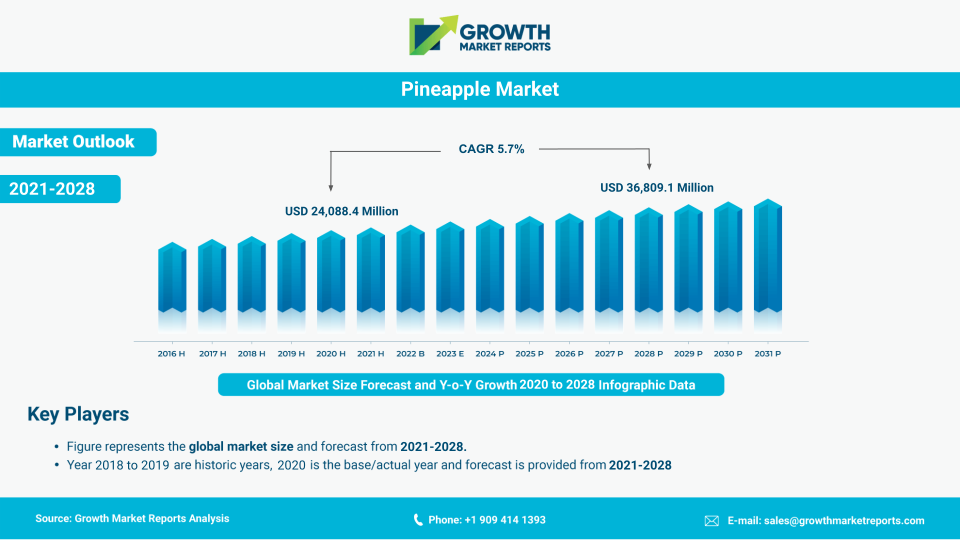
The global pineapple market size was valued at USD 24,088.4 Mn in 2020 and is projected to reach USD 36,809.1 Mn by 2028, expanding at a CAGR of 5.7% during the forecast period, 2021-2028. The pineapple market has immense opportunities owing to the rise in demand for the product and increases in awareness in consumers along with growth in investments from private investors and companies.
The pineapple (Ananas comosus) is a tropical plant in the Bromeliaceae family that produces edible fruit. It is thought that the pineapple originated in Brazil. It spread from Brazil to other tropical parts of the world. The name ananas is derived from the Indian term nana. The wild Brazilian pineapple is likely to be its ancestor (Ananas microstates Lindle).
Pineapples are vitamin, enzyme, and antioxidant-rich tropical fruits. They help to strengthen the immune system, produce strong bones, and relieve indigestion. Pineapples, despite their deliciousness, are low in calories. Pineapples are bromeliads, and they are the only bromeliad that produce edible fruit. The fruit is composed of numerous separate berries that cluster around a center. Each pineapple scale represents a unique flower or berry.
Pineapple Market Macro-Economic Factor
Consumption pattern: Consumption patterns is the expenditure patterns of income groups within or across categories of products, such as clothing, discretionary items, and food. These pattern includes a process by which consumers search, purchase and consume produces.
Consumption pattern: Consumption patterns is the expenditure patterns of income groups within or across categories of products, such as clothing, discretionary items, and food. These pattern includes a process by which consumers search, purchase and consume produces.
Pineapple Market Dynamics
Drivers
Growing demand for frozen pineapples
Growing demand for frozen pineapples around the world as a consequence of increased consumer awareness of various frozen fruits is expected to propel the global frozen pineapple market. Increasing number of working people around the world, as well as a hectic lifestyle, are factors that are expected to promote the growth of the global frozen pineapple market during the forecast period.
Improvements in logistic and packaging by developing methods to use air temperature for highest shelf-life and to prevent them from damage, cuts, abrasions, bruising, and crushing, is projected to drive for market players to increase their production and improve supply chain during the forecast period.
Increasing demand for product made from organic pineapples
The increase in demand is mostly due to an increase in demand for organic pineapple fruits. Usage of organic fresh produce in processing increased as a result of lifestyle changes in many emerging countries. A work-focused existence with little time for one's personal self is becoming the norm. This fast-paced lifestyle considers how little time people have to have a nutritious supper.
As a result, consumers are interested in ready-to-eat processed foods. It is currently one of the most important necessities in today's fast-paced society. Diced organic pineapples, pineapple pulp and juice, and instant dehydrated powder form of organic pineapples are highly demanded by consumers.
Restraints
The nutritional value and overall quality of fresh produce and processed meals that reach customers are significantly reduced. These losses are particularly severe in many parts of the world, including underdeveloped countries, due to lack of modern storage and processing facilities. Endogenous variables have a significant impact on the ripening, senescence, and degradation of fruits.
Damages caused to fresh fruits and products lead to increased water loss and postharvest decay. Punctures, cuts, abrasions, bruising, and crushing cause substantial quality losses. Loss of fruit quality during postharvest handling is the result of physiological breakdown, decay, and dehydration. Quality loss during postharvest handling is projected to hamper the market during the forecast period.
Opportunities
Vacuum frying is a technology where food products are deep fried under vacuum or near vacuum conditions to reduce the fat content as compared to normal deep frying. Vacuum frying is frying process under a vacuum condition to prevent material object deterioration due to excessive heat caused by high temperature. It is a process that produces healthy fruit snacks (pineapple chips), which partially preserve the original color and nutritional compounds of the fruit and have high hydrophilic antioxidant capacity.
Pineapple can increase energy, which in turn, is driving the demand for pineapple. Growing use of pineapple in healthy snacks is projected to boost the fresh pineapple market growth.
Pineapple Market Segment Insights
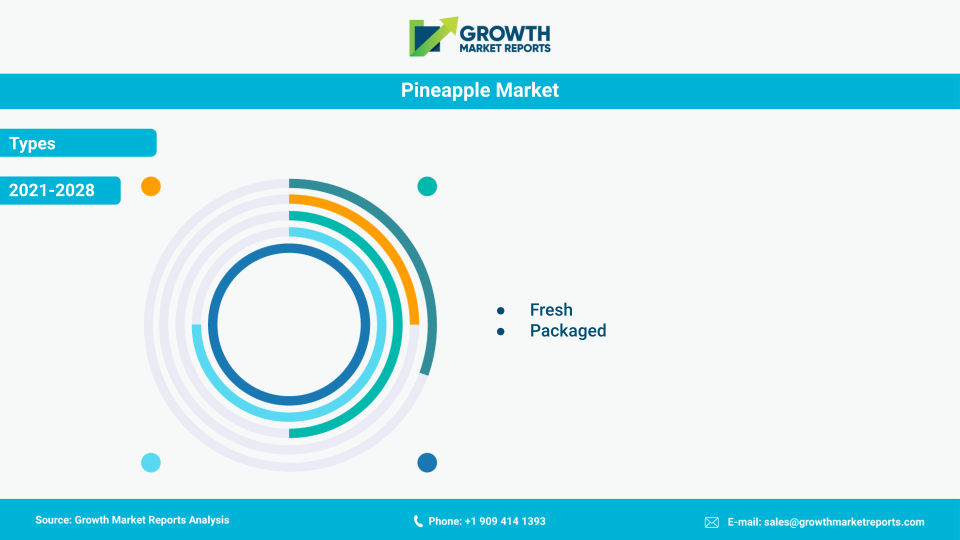
On the basis of type, the global pineapple market is bifurcated into fresh and packaged. The packaged segment further bifurcated into shelf stable and frozen. The fresh segment held 82.0% share of the market in 2020 owing to the increasing consumption of natural fruit. The packaged segment is anticipated to expand at a significant rate during the forecast period owing to its affordable and convenient.
On the basis of source, the global pineapple market is bifurcated into organic and conventional. The organic segment held 1.3% share of the market in 2020 owing to the increasing consumption of natural and minimally processed food. The conventional segment is anticipated to expand at a significant rate during the forecast period owing to its low prices and more supply than organic pineapple.
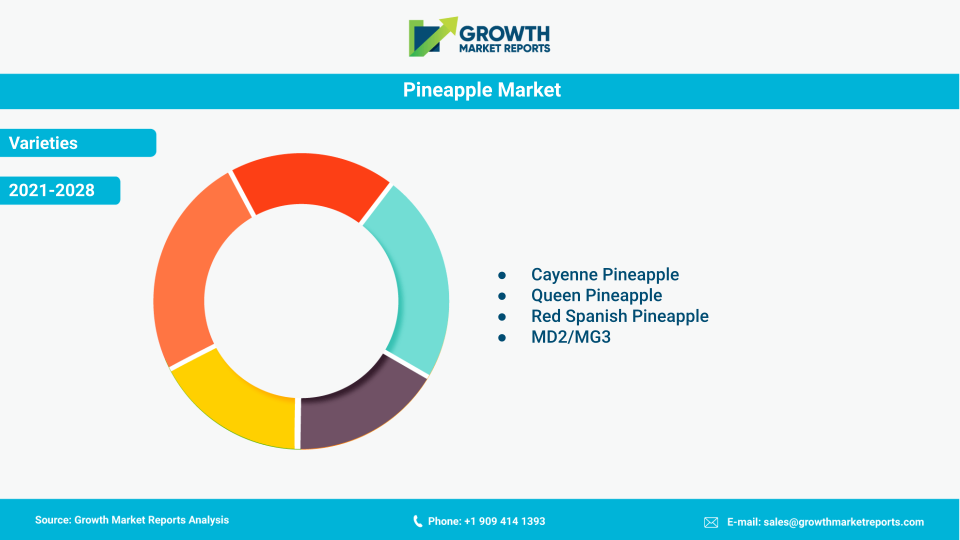
In terms of Varieties, the Pineapple market is segmented into Cayenne Pineapple, Queen Pineapple, Red Spanish Pineapple, and MD2/MG3. The MD2/MG3 segment is expected to dominate the market during the forecast period, as it has longer shelf life. Over the forecast period, the demand for Cayenne pineapple is expected to increase, as it mostly used in processing for packaging.
On the basis of application, the market is classified as business-to-business (Commercial) and business-to-consumers (Individual). The business-to-business (Commercial) segment is further divided into, bakery & snacks, beverages and drinks, and others. The Commercial segment accounted for significant share of the market in 2020 and is expected to expand at a considerable CAGR during the forecast period, owing to the rising occurrence of health problems associated with food products, increasing vegan and flexitarian population, and high consumer preference for functional food.
Based on distribution channels, global pineapple market is classified as hypermarkets/supermarkets, independent retailer, convenience store, and online sales and others.
The hypermarkets/supermarket segment accounted for significant share of the market in 2020 and is expected to expand at a substantial CAGR during the forecast period. The online sales segment is anticipated to expand at a significant CAGR during the forecast period owing to increasing online shopping to avoid crowded places and physical contact.
Pineapple Market Regional Outlook
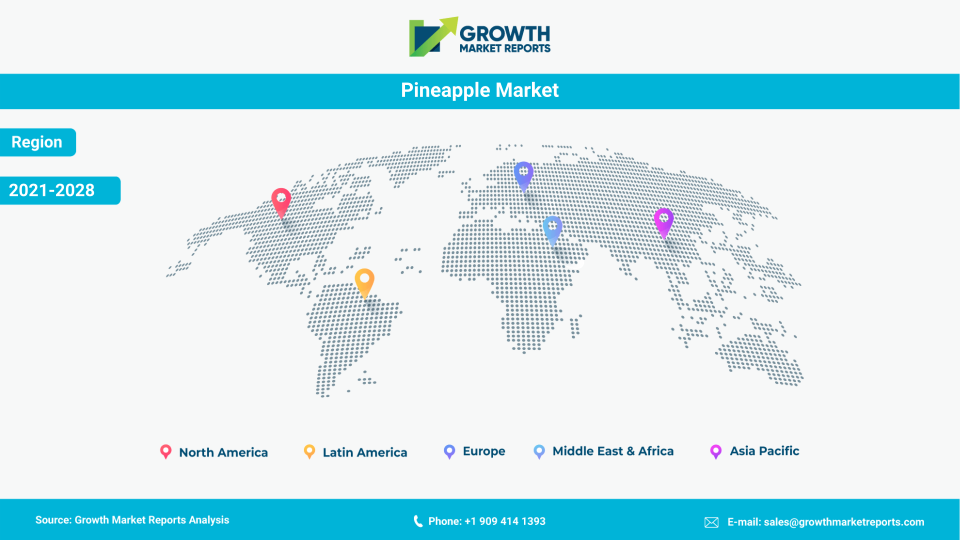
Based on regions, the Pineapple market is fragmented into North America, Europe, Asia Pacific, Latin America, and Middle East & Africa. LATAM is a promising region of the market. The region constituted 27.9%share in 2020. The market in this region is expected to grow due to increasing awareness regarding health among consumers. The market in the Middle East & Africa (MEA) is projected to expand at a CAGR of 6.4% during the forecast period owing to the increasing trend of healthy snacking.
Key Benefits for Industry Participants & Stakeholders
In-depth Analysis of the Global Pineapple Market
Historical, Current and Projected Market Size in terms of Value
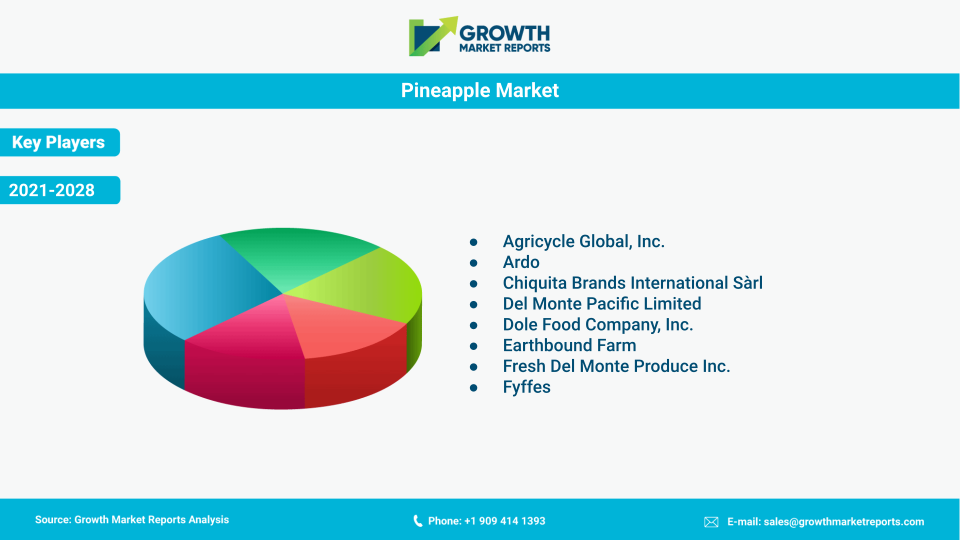
Top players in the market include SOL SIMPLE LLC, Agricycle Global, Inc., ArdoChiquita Brands International, Sàrl, Fyffes, Earthbound Farm, Hawaiian Crown, Siam Pineapple, V & K Pineapple Canning Co., Ltd, SunOpta, Wawona Frozen Foods, Winz International Ltd, Dole Food Company, Inc., Fresh Del Monte Produce Inc., Del Monte Pacific Limited.
These companies are considered as key manufacturers of Global Pineapple based on their revenue, product offerings and supply chain management system. The players are adopting key strategies such as acquisition, collaborations, and geographical expansion where there is potential opportunity for the Global Pineapple market.
Chapter 1 Executive Summary Chapter 2 Assumptions and Acronyms Used Chapter 3 Research Methodology Chapter 4 Pineapple Market Overview 4.1 Introduction 4.1.1 Market Taxonomy 4.1.2 Market Definition 4.1.3 Macro-Economic Factors Impacting the Market Growth 4.2 Pineapple Market Dynamics 4.2.1 Market Drivers 4.2.2 Market Restraints 4.2.3 Market Opportunity 4.3 Pineapple Market - Supply Chain Analysis 4.3.1 List of Key Suppliers 4.3.2 List of Key Distributors 4.3.3 List of Key Consumers 4.4 Key Forces Shaping the Pineapple Market 4.4.1 Bargaining Power of Suppliers 4.4.2 Bargaining Power of Buyers 4.4.3 Threat of Substitution 4.4.4 Threat of New Entrants 4.4.5 Competitive Rivalry 4.5 Global Pineapple Market Size & Forecast, 2018-2028 4.5.1 Pineapple Market Size and Y-o-Y Growth 4.5.2 Pineapple Market Absolute $ Opportunity 4.6 Pricing Analysis & Forecast, By Source, 2018-2028 4.7 Global Pineapple Market: Impact Of Key Regulations 4.8 Global Pineapple Market: Consumer Buying Behavior Analysis Chapter 5 Global Pineapple Market Analysis and Forecast By Source 5.1 Introduction 5.1.1 Key Market Trends & Growth Opportunities By Source 5.1.2 Basis Point Share (BPS) Analysis By Source 5.1.3 Absolute $ Opportunity Assessment By Source 5.2 Pineapple Market Size Forecast By Source 5.2.1 Organic 5.2.2 Conventional 5.3 Market Attractiveness Analysis By Source Chapter 6 Global Pineapple Market Analysis and Forecast By Types 6.1 Introduction 6.1.1 Key Market Trends & Growth Opportunities By Types 6.1.2 Basis Point Share (BPS) Analysis By Types 6.1.3 Absolute $ Opportunity Assessment By Types 6.2 Pineapple Market Size Forecast By Types 6.2.1 Fresh 6.2.2 Packaged 6.2.2.1 Shelf-Stable 6.2.2.2 Frozen 6.3 Market Attractiveness Analysis By Types Chapter 7 Global Pineapple Market Analysis and Forecast By Varieties 7.1 Introduction 7.1.1 Key Market Trends & Growth Opportunities By Varieties 7.1.2 Basis Point Share (BPS) Analysis By Varieties 7.1.3 Absolute $ Opportunity Assessment By Varieties 7.2 Pineapple Market Size Forecast By Varieties 7.2.1 Cayenne Pineapple 7.2.2 Queen Pineapple 7.2.3 Red Spanish Pineapple 7.2.4 MD2/MG3 7.2.5 Others 7.3 Market Attractiveness Analysis By Varieties Chapter 8 Global Pineapple Market Analysis and Forecast By Applications 8.1 Introduction 8.1.1 Key Market Trends & Growth Opportunities By Applications 8.1.2 Basis Point Share (BPS) Analysis By Applications 8.1.3 Absolute $ Opportunity Assessment By Applications 8.2 Pineapple Market Size Forecast By Applications 8.2.1 Commercial 8.2.1.1 Beverages & Drinks 8.2.1.2 Bakery & Snacks 8.2.1.3 Others 8.2.2 Individual 8.3 Market Attractiveness Analysis By Applications Chapter 9 Global Pineapple Market Analysis and Forecast By Distribution Channels 9.1 Introduction 9.1.1 Key Market Trends & Growth Opportunities By Distribution Channels 9.1.2 Basis Point Share (BPS) Analysis By Distribution Channels 9.1.3 Absolute $ Opportunity Assessment By Distribution Channels 9.2 Pineapple Market Size Forecast By Distribution Channels 9.2.1 Supermarkets/Hypermarkets 9.2.2 Convenience Stores 9.2.3 Independent Retailers 9.2.4 Online Sales 9.2.5 Others 9.3 Market Attractiveness Analysis By Distribution Channels Chapter 10 Global Pineapple Market Analysis and Forecast by Region 10.1 Introduction 10.1.1 Key Market Trends & Growth Opportunities by Region 10.1.2 Basis Point Share (BPS) Analysis by Region 10.1.3 Absolute $ Opportunity Assessment by Region 10.2 Pineapple Market Size Forecast by Region 10.2.1 North America 10.2.2 Europe 10.2.3 Asia Pacific 10.2.4 Latin America 10.2.5 Middle East & Africa (MEA) 10.3 Market Attractiveness Analysis by Region Chapter 11 Coronavirus Disease (COVID-19) Impact 11.1 Introduction 11.2 Current & Future Impact Analysis 11.3 Economic Impact Analysis 11.4 Government Policies 11.5 Investment Scenario Chapter 12 North America Pineapple Analysis and Forecast 12.1 Introduction 12.2 North America Pineapple Market Size Forecast by Country 12.2.1 U.S. 12.2.2 Canada 12.3 Basis Point Share (BPS) Analysis by Country 12.4 Absolute $ Opportunity Assessment by Country 12.5 Market Attractiveness Analysis by Country 12.6 North America Pineapple Market Size Forecast By Source 12.6.1 Organic 12.6.2 Conventional 12.7 Basis Point Share (BPS) Analysis By Source 12.8 Absolute $ Opportunity Assessment By Source 12.9 Market Attractiveness Analysis By Source 12.10 North America Pineapple Market Size Forecast By Types 12.10.1 Fresh 12.10.2 Packaged 12.10.2.1 Shelf-Stable 12.10.2.2 Frozen 12.11 Basis Point Share (BPS) Analysis By Types 12.12 Absolute $ Opportunity Assessment By Types 12.13 Market Attractiveness Analysis By Types 12.14 North America Pineapple Market Size Forecast By Varieties 12.14.1 Cayenne Pineapple 12.14.2 Queen Pineapple 12.14.3 Red Spanish Pineapple 12.14.4 MD2/MG3 12.14.5 Others 12.15 Basis Point Share (BPS) Analysis By Varieties 12.16 Absolute $ Opportunity Assessment By Varieties 12.17 Market Attractiveness Analysis By Varieties 12.18 North America Pineapple Market Size Forecast By Applications 12.18.1 Commercial 12.18.1.1 Beverages & Drinks 12.18.1.2 Bakery & Snacks 12.18.1.3 Others 12.18.2 Individual 12.19 Basis Point Share (BPS) Analysis By Applications 12.20 Absolute $ Opportunity Assessment By Applications 12.21 Market Attractiveness Analysis By Applications 12.22 North America Pineapple Market Size Forecast By Distribution Channels 12.22.1 Supermarkets/Hypermarkets 12.22.2 Convenience Stores 12.22.3 Independent Retailers 12.22.4 Online Sales 12.22.5 Others 12.23 Basis Point Share (BPS) Analysis By Distribution Channels 12.24 Absolute $ Opportunity Assessment By Distribution Channels 12.25 Market Attractiveness Analysis By Distribution Channels Chapter 13 Europe Pineapple Analysis and Forecast 13.1 Introduction 13.2 Europe Pineapple Market Size Forecast by Country 13.2.1 Germany 13.2.2 France 13.2.3 Italy 13.2.4 U.K. 13.2.5 Spain 13.2.6 Russia 13.2.7 Rest of Europe 13.3 Basis Point Share (BPS) Analysis by Country 13.4 Absolute $ Opportunity Assessment by Country 13.5 Market Attractiveness Analysis by Country 13.6 Europe Pineapple Market Size Forecast By Source 13.6.1 Organic 13.6.2 Conventional 13.7 Basis Point Share (BPS) Analysis By Source 13.8 Absolute $ Opportunity Assessment By Source 13.9 Market Attractiveness Analysis By Source 13.10 Europe Pineapple Market Size Forecast By Types 13.10.1 Fresh 13.10.2 Packaged 13.10.2.1 Shelf-Stable 13.10.2.2 Frozen 13.11 Basis Point Share (BPS) Analysis By Types 13.12 Absolute $ Opportunity Assessment By Types 13.13 Market Attractiveness Analysis By Types 13.14 Europe Pineapple Market Size Forecast By Varieties 13.14.1 Cayenne Pineapple 13.14.2 Queen Pineapple 13.14.3 Red Spanish Pineapple 13.14.4 MD2/MG3 13.14.5 Others 13.15 Basis Point Share (BPS) Analysis By Varieties 13.16 Absolute $ Opportunity Assessment By Varieties 13.17 Market Attractiveness Analysis By Varieties 13.18 Europe Pineapple Market Size Forecast By Applications 13.18.1 Commercial 13.18.1.1 Beverages & Drinks 13.18.1.2 Bakery & Snacks 13.18.1.3 Others 13.18.2 Individual 13.19 Basis Point Share (BPS) Analysis By Applications 13.20 Absolute $ Opportunity Assessment By Applications 13.21 Market Attractiveness Analysis By Applications 13.22 Europe Pineapple Market Size Forecast By Distribution Channels 13.22.1 Supermarkets/Hypermarkets 13.22.2 Convenience Stores 13.22.3 Independent Retailers 13.22.4 Online Sales 13.22.5 Others 13.23 Basis Point Share (BPS) Analysis By Distribution Channels 13.24 Absolute $ Opportunity Assessment By Distribution Channels 13.25 Market Attractiveness Analysis By Distribution Channels Chapter 14 Asia Pacific Pineapple Analysis and Forecast 14.1 Introduction 14.2 Asia Pacific Pineapple Market Size Forecast by Country 14.2.1 China 14.2.2 Japan 14.2.3 South Korea 14.2.4 India 14.2.5 Australia 14.2.6 South East Asia (SEA) 14.2.7 Rest of Asia Pacific (APAC) 14.3 Basis Point Share (BPS) Analysis by Country 14.4 Absolute $ Opportunity Assessment by Country 14.5 Market Attractiveness Analysis by Country 14.6 Asia Pacific Pineapple Market Size Forecast By Source 14.6.1 Organic 14.6.2 Conventional 14.7 Basis Point Share (BPS) Analysis By Source 14.8 Absolute $ Opportunity Assessment By Source 14.9 Market Attractiveness Analysis By Source 14.10 Asia Pacific Pineapple Market Size Forecast By Types 14.10.1 Fresh 14.10.2 Packaged 14.10.2.1 Shelf-Stable 14.10.2.2 Frozen 14.11 Basis Point Share (BPS) Analysis By Types 14.12 Absolute $ Opportunity Assessment By Types 14.13 Market Attractiveness Analysis By Types 14.14 Asia Pacific Pineapple Market Size Forecast By Varieties 14.14.1 Cayenne Pineapple 14.14.2 Queen Pineapple 14.14.3 Red Spanish Pineapple 14.14.4 MD2/MG3 14.14.5 Others 14.15 Basis Point Share (BPS) Analysis By Varieties 14.16 Absolute $ Opportunity Assessment By Varieties 14.17 Market Attractiveness Analysis By Varieties 14.18 Asia Pacific Pineapple Market Size Forecast By Applications 14.18.1 Commercial 14.18.1.1 Beverages & Drinks 14.18.1.2 Bakery & Snacks 14.18.1.3 Others 14.18.2 Individual 14.19 Basis Point Share (BPS) Analysis By Applications 14.20 Absolute $ Opportunity Assessment By Applications 14.21 Market Attractiveness Analysis By Applications 14.22 Asia Pacific Pineapple Market Size Forecast By Distribution Channels 14.22.1 Supermarkets/Hypermarkets 14.22.2 Convenience Stores 14.22.3 Independent Retailers 14.22.4 Online Sales 14.22.5 Others 14.23 Basis Point Share (BPS) Analysis By Distribution Channels 14.24 Absolute $ Opportunity Assessment By Distribution Channels 14.25 Market Attractiveness Analysis By Distribution Channels Chapter 15 Latin America Pineapple Analysis and Forecast 15.1 Introduction 15.2 Latin America Pineapple Market Size Forecast by Country 15.2.1 Brazil 15.2.2 Mexico 15.2.3 Rest of Latin America (LATAM) 15.3 Basis Point Share (BPS) Analysis by Country 15.4 Absolute $ Opportunity Assessment by Country 15.5 Market Attractiveness Analysis by Country 15.6 Latin America Pineapple Market Size Forecast By Source 15.6.1 Organic 15.6.2 Conventional 15.7 Basis Point Share (BPS) Analysis By Source 15.8 Absolute $ Opportunity Assessment By Source 15.9 Market Attractiveness Analysis By Source 15.10 Latin America Pineapple Market Size Forecast By Types 15.10.1 Fresh 15.10.2 Packaged 15.10.2.1 Shelf-Stable 15.10.2.2 Frozen 15.11 Basis Point Share (BPS) Analysis By Types 15.12 Absolute $ Opportunity Assessment By Types 15.13 Market Attractiveness Analysis By Types 15.14 Latin America Pineapple Market Size Forecast By Varieties 15.14.1 Cayenne Pineapple 15.14.2 Queen Pineapple 15.14.3 Red Spanish Pineapple 15.14.4 MD2/MG3 15.14.5 Others 15.15 Basis Point Share (BPS) Analysis By Varieties 15.16 Absolute $ Opportunity Assessment By Varieties 15.17 Market Attractiveness Analysis By Varieties 15.18 Latin America Pineapple Market Size Forecast By Applications 15.18.1 Commercial 15.18.1.1 Beverages & Drinks 15.18.1.2 Bakery & Snacks 15.18.1.3 Others 15.18.2 Individual 15.19 Basis Point Share (BPS) Analysis By Applications 15.20 Absolute $ Opportunity Assessment By Applications 15.21 Market Attractiveness Analysis By Applications 15.22 Latin America Pineapple Market Size Forecast By Distribution Channels 15.22.1 Supermarkets/Hypermarkets 15.22.2 Convenience Stores 15.22.3 Independent Retailers 15.22.4 Online Sales 15.22.5 Others 15.23 Basis Point Share (BPS) Analysis By Distribution Channels 15.24 Absolute $ Opportunity Assessment By Distribution Channels 15.25 Market Attractiveness Analysis By Distribution Channels Chapter 16 Middle East & Africa (MEA) Pineapple Analysis and Forecast 16.1 Introduction 16.2 Middle East & Africa (MEA) Pineapple Market Size Forecast by Country 16.2.1 Saudi Arabia 16.2.2 South Africa 16.2.3 UAE 16.2.4 Rest of Middle East & Africa (MEA) 16.3 Basis Point Share (BPS) Analysis by Country 16.4 Absolute $ Opportunity Assessment by Country 16.5 Market Attractiveness Analysis by Country 16.6 Middle East & Africa (MEA) Pineapple Market Size Forecast By Source 16.6.1 Organic 16.6.2 Conventional 16.7 Basis Point Share (BPS) Analysis By Source 16.8 Absolute $ Opportunity Assessment By Source 16.9 Market Attractiveness Analysis By Source 16.10 Middle East & Africa (MEA) Pineapple Market Size Forecast By Types 16.10.1 Fresh 16.10.2 Packaged 16.10.2.1 Shelf-Stable 16.10.2.2 Frozen 16.11 Basis Point Share (BPS) Analysis By Types 16.12 Absolute $ Opportunity Assessment By Types 16.13 Market Attractiveness Analysis By Types 16.14 Middle East & Africa (MEA) Pineapple Market Size Forecast By Varieties 16.14.1 Cayenne Pineapple 16.14.2 Queen Pineapple 16.14.3 Red Spanish Pineapple 16.14.4 MD2/MG3 16.14.5 Others 16.15 Basis Point Share (BPS) Analysis By Varieties 16.16 Absolute $ Opportunity Assessment By Varieties 16.17 Market Attractiveness Analysis By Varieties 16.18 Middle East & Africa (MEA) Pineapple Market Size Forecast By Applications 16.18.1 Commercial 16.18.1.1 Beverages & Drinks 16.18.1.2 Bakery & Snacks 16.18.1.3 Others 16.18.2 Individual 16.19 Basis Point Share (BPS) Analysis By Applications 16.20 Absolute $ Opportunity Assessment By Applications 16.21 Market Attractiveness Analysis By Applications 16.22 Middle East & Africa (MEA) Pineapple Market Size Forecast By Distribution Channels 16.22.1 Supermarkets/Hypermarkets 16.22.2 Convenience Stores 16.22.3 Independent Retailers 16.22.4 Online Sales 16.22.5 Others 16.23 Basis Point Share (BPS) Analysis By Distribution Channels 16.24 Absolute $ Opportunity Assessment By Distribution Channels 16.25 Market Attractiveness Analysis By Distribution Channels Chapter 17 Competition Landscape 17.1 Pineapple Market: Competitive Dashboard 17.2 Global Pineapple Market: Market Share Analysis, 2020 17.3 Company Profiles (Details – Overview, Financials, Developments, Strategy) 17.3.1 Agricycle Global, Inc. 17.3.2 Ardo 17.3.3 Chiquita Brands International Sàrl 17.3.4 Del Monte Pacific Limited 17.3.5 Dole Food Company, Inc. 17.3.6 Earthbound Farm 17.3.7 Fresh Del Monte Produce Inc. 17.3.8 Fyffes 17.3.9 Hawaiian Crown 17.3.10 Siam Pineapple 17.3.11 SOL SIMPLE LLC 17.3.12 SunOpta 17.3.13 V & K Pineapple Canning Co., Ltd 17.3.14 Wawona Frozen Foods 17.3.15 Winz International Ltd
Ask for Research To Be Focused On Specific Regions or Segments
Receive Data As Per Your Format and Definition
Companies Profiled based on Your Requirements
Breaking Down Competitive Landscape as per Your Requirements
Any Level of Customization
Our Clients
Client Testinomials
We needed a highly accurate and precise report, which Growth Market Reports delivered promptly. The company compiled information from a wide array of reliable agencies and sourcess.It is extremely satisfactory to be working with you. Strategy Head of Major Tech Company
We were very pleased to contact Growth Market Reports as they tailored reports precisely as per our requirements. As we are dealing with the aerospace and defense industry, we need reports of high accuracy and substantial quality. Major Player in Defense Industry
Extremely delighted to have a well-crafted report on “Global Packaging Solutions Market Research Report” from your team. Thank you for providing me with all our requirements and for incorporating our suggestions. CMO of Leading Packaging Company from USA
I had a good experience working with Growth Market Reports as they were very open to all constructive changes in the report. I found that the report had its charm embedded with ample of data. Founder and Managing Partner of Major Korean Company
Our company has been working with Growth Market Reports for some years now and we are very happy with the quality of the reports provided by the company.I, on behalf of my organization, would like to thank you for offering professional reports. Global Consulting Firm
According to this Growth Market Reports report, the global pineapple market is likely to register a CAGR of 5.7% during forecast period 2021-2028, with an anticipated valuation of USD 36,809.1 million by the end of the 2028.
In addition to market size (in US$ Million), Company Market Share (in % for base year 2020), Future Opportunities, Recent Developments & Impact Analysis, Regulatory Landscape, Technology Landscape, and quality parameter overview is provided.
The increase in demand is mostly due to an increase in demand for organic pineapple fruits. Usage of organic fresh produce in processing increased as a result of lifestyle changes in many emerging countries. A work-focused existence with little time for one's personal self is becoming the norm. This fast-paced lifestyle considers how little time people have to have a nutritious supper. As a result, consumers are interested in ready-to-eat processed foods. It is currently one of the most important necessities in today's fast-paced society. Diced organic pineapples, pineapple pulp and juice, and instant dehydrated powder form of organic pineapples are highly demanded by consumers.
The base year considered for the Global Pineapple market report is 2020. The complete analysis period is 2018 to 2028, wherein, 2018 and 2019 are the historic years, and the forecast is provided from 2021 to 2028.
Major manufacturers include Agricycle Global, Inc., Ardo, Chiquita Brands International Sàrl, Del Monte Pacific Limited, Dole Food Company, Inc., Earthbound Farm, Fresh Del Monte Produce Inc., Fyffes, Hawaiian Crown, Siam Pineapple, SOL SIMPLE LLC, SunOpta, V & K Pineapple Canning Co., Ltd, Wawona Frozen Foods, and Winz International Ltd.











 Request For Customization
 Enquiry Before Buying
 Speak With Analyst





