PET Foam Market Research Report 2033

PET Foam Market Research Report 2033

Segments - by Product Type (Low Density PET Foam, High Density PET Foam), by Application (Wind Energy, Transportation, Marine, Building & Construction, Packaging, Others), by End-Use Industry (Aerospace, Automotive, Electrical & Electronics, Others)

https://growthmarketreports.com/Raksha
Author : Raksha Sharma
https://growthmarketreports.com/Vaibhav
Fact-checked by : V. Chandola
https://growthmarketreports.com/Shruti
Editor : Shruti Bhat

Upcoming | Report ID :MC-4439 | 4.8 Rating | 87 Reviews | 273 Pages | Format : Docx PDF

Report Description


PET Foam Market Outlook

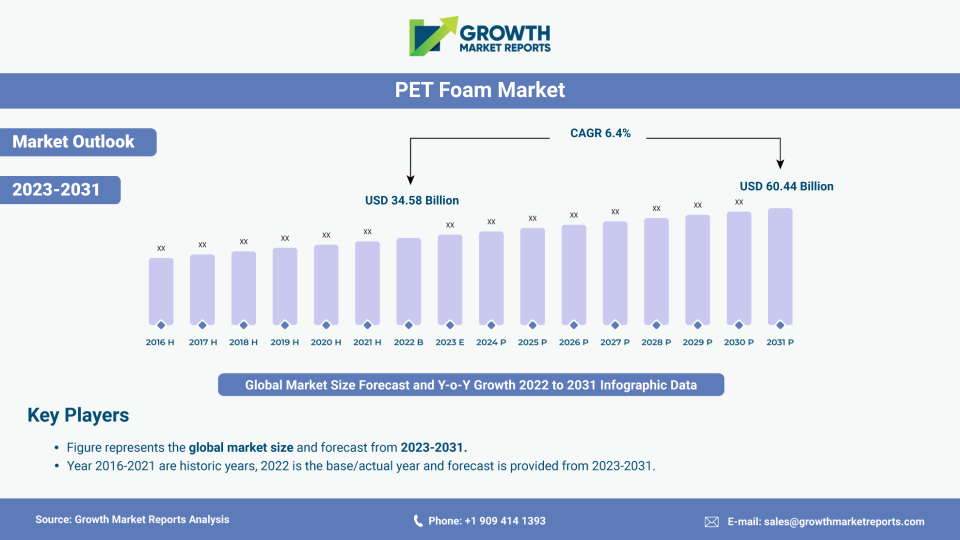
According to our latest research, the PET foam market size reached USD 540 million globally in 2024, reflecting a robust expansion trajectory. The market is expected to grow at a CAGR of 7.2% from 2025 to 2033, with the total market value forecasted to reach USD 1.02 billion by 2033. This impressive growth is primarily driven by the rising demand for lightweight, durable, and sustainable materials across diverse industries such as wind energy, transportation, and construction. As per the latest research findings, the increasing adoption of PET foam in structural applications and its recyclability are key factors propelling the market forward.

One of the primary growth factors for the PET foam market is the increasing emphasis on environmental sustainability and the circular economy. PET foam, derived from recycled PET bottles and other post-consumer waste, is gaining significant traction as industries and end-users seek to reduce their carbon footprint. The materialÂ’s inherent recyclability, combined with its lightweight, high strength-to-weight ratio, and chemical resistance, makes it an attractive alternative to traditional core materials like PVC and PUR foams. Furthermore, regulatory bodies across Europe and North America are implementing stringent environmental standards, which is further accelerating the adoption of PET foam in various applications, particularly in wind energy and automotive sectors where sustainability is a crucial criterion.

Another key driver is the rapid expansion of the wind energy industry, especially in emerging markets such as China and India, as well as the continued growth in Europe and North America. PET foam is widely used as a core material in wind turbine blades due to its mechanical strength, durability, and cost-effectiveness. The increasing installation of wind farms, both onshore and offshore, is significantly boosting the demand for PET foam. Additionally, the construction and transportation industries are increasingly utilizing PET foam for insulation, sandwich panels, and lightweight structural components, further driving market growth. The versatility of PET foam, combined with its compatibility with various manufacturing processes like vacuum infusion and resin transfer molding, enhances its appeal across multiple end-use industries.

Technological advancements and product innovations are also playing a pivotal role in shaping the PET foam market. Manufacturers are investing in research and development to improve the properties of PET foam, such as increasing its fire resistance, thermal insulation, and mechanical performance. The development of high-density PET foam variants has opened new avenues in aerospace and marine applications, where high performance and safety standards are paramount. Furthermore, the integration of digital manufacturing technologies and automation in production processes is enabling manufacturers to achieve higher precision, efficiency, and cost savings, thereby making PET foam more accessible and affordable for a broader range of applications.

The introduction of Recycled PETG Foam Core into the market is a promising development that aligns with the growing emphasis on sustainability and environmental responsibility. Recycled PETG Foam Core is manufactured using post-consumer PET waste, which not only helps in reducing landfill waste but also conserves natural resources by minimizing the need for virgin materials. This innovative product offers similar mechanical properties and durability as traditional PET foam, making it suitable for a wide range of applications, including construction, transportation, and wind energy. By incorporating recycled materials, manufacturers can significantly lower their carbon footprint, appealing to eco-conscious consumers and industries. The adoption of Recycled PETG Foam Core is expected to gain momentum as more companies and regulatory bodies prioritize sustainable practices and circular economy principles.

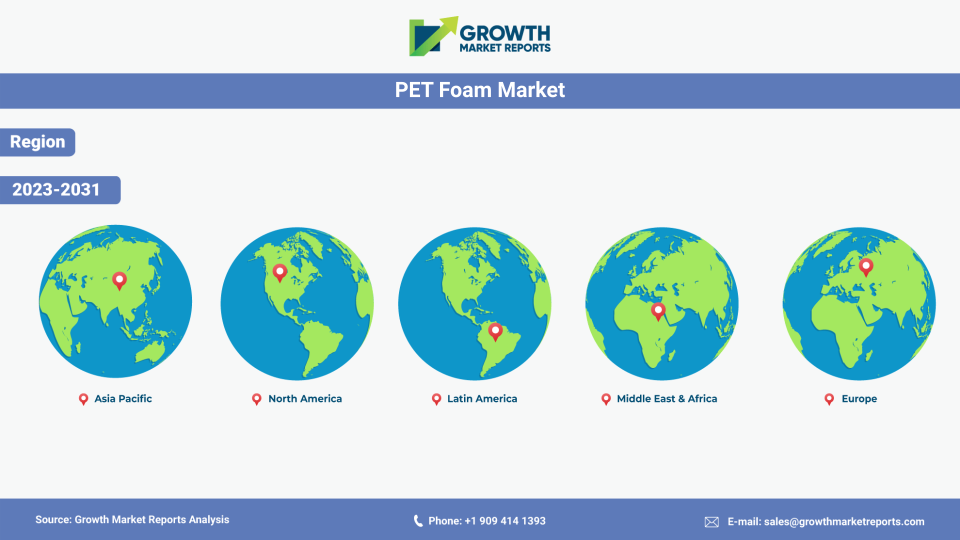
From a regional perspective, Asia Pacific is emerging as the fastest-growing market for PET foam, driven by rapid industrialization, urbanization, and infrastructure development in countries like China, India, and Southeast Asia. Europe continues to dominate the market in terms of value, owing to its mature wind energy sector and stringent environmental regulations. North America is witnessing steady growth, supported by investments in renewable energy and the automotive sector. Meanwhile, Latin America and the Middle East & Africa are showing promising potential, albeit from a smaller base, as governments and private players increase their focus on sustainable materials and green technologies. The regional dynamics are expected to evolve further as global supply chains become more integrated and localized production capabilities expand.

Global PET Foam Industry Outlook

Product Type Analysis

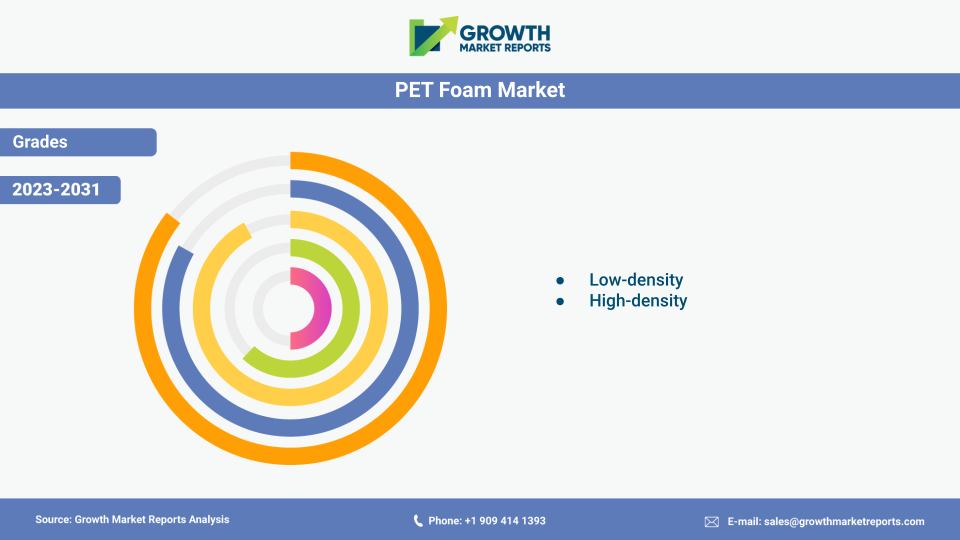
The PET foam market is segmented by product type into low density PET foam and high density PET foam, each catering to distinct applications and performance requirements. Low density PET foam, typically characterized by a density range of 70-120 kg/m³, is widely preferred for applications where weight savings and thermal insulation are critical, such as in building and construction, packaging, and certain transportation components. Its lightweight nature, coupled with excellent mechanical properties and chemical resistance, makes it an ideal choice for sandwich panels, insulation boards, and lightweight structural parts. The demand for low density PET foam is further driven by its cost-effectiveness and ease of processing, making it accessible for mass-market applications.

High density PET foam, on the other hand, is engineered for applications demanding superior mechanical strength, impact resistance, and dimensional stability. With densities typically exceeding 120 kg/m³, high density PET foam is increasingly used in wind turbine blades, aerospace components, marine structures, and high-performance automotive parts. The robust structural integrity and fire-retardant properties of high density PET foam enable it to meet the stringent safety and performance standards required in these industries. Furthermore, advancements in high density PET foam formulations have led to improved thermal and acoustic insulation, expanding its use in specialized construction and industrial applications.

The ongoing trend towards lightweighting in transportation and renewable energy sectors is fueling the adoption of both low and high density PET foam. As end-users seek to enhance fuel efficiency, reduce emissions, and improve overall system performance, the selection of the appropriate PET foam product type becomes a strategic decision. Manufacturers are responding by offering customized solutions, including hybrid foam cores and tailored density profiles, to address the unique requirements of different applications. This product differentiation is contributing to the overall expansion of the PET foam market and fostering innovation across the value chain.

In terms of market share, low density PET foam currently accounts for a larger volume share due to its widespread use in construction and packaging applications. However, the high density PET foam segment is expected to witness faster growth during the forecast period, driven by rising demand in wind energy, aerospace, and marine industries. The increasing adoption of high density PET foam in new and emerging applications, coupled with ongoing product development efforts, is likely to reshape the competitive landscape and create new opportunities for market participants.

Report Scope

Attributes Details
Report Title PET Foam Market Research Report 2033
By Product Type Low Density PET Foam, High Density PET Foam
By Application Wind Energy, Transportation, Marine, Building & Construction, Packaging, Others
By End-Use Industry Aerospace, Automotive, Electrical & Electronics, Others
Regions Covered North America, Europe, APAC, Latin America, MEA
Base Year 2024
Historic Data 2018-2023
Forecast Period 2025-2033
Number of Pages 273
Number of Tables & Figures 286
Customization Available Yes, the report can be customized as per your need.

Application Analysis

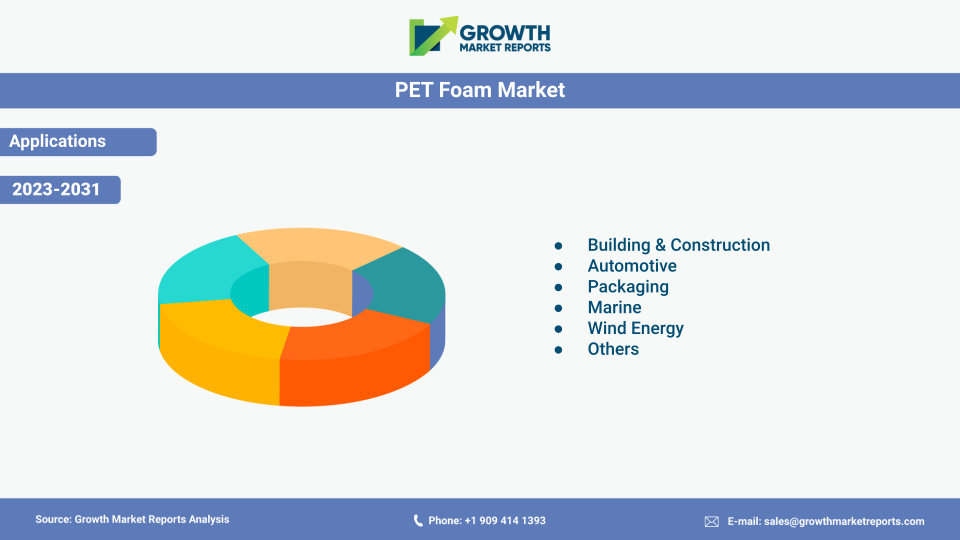
The application landscape of the PET foam market is diverse, encompassing key sectors such as wind energy, transportation, marine, building & construction, packaging, and others. Among these, wind energy represents the largest and fastest-growing application segment, accounting for a significant share of global PET foam consumption. The materialÂ’s exceptional mechanical properties, fatigue resistance, and compatibility with composite manufacturing processes make it an ideal core material for wind turbine blades. As countries ramp up investments in renewable energy infrastructure, the demand for PET foam in wind energy applications is expected to witness sustained growth throughout the forecast period.

In the transportation sector, PET foam is increasingly being utilized in automotive, rail, and aerospace applications for lightweight structural components, interior panels, and insulation systems. The drive towards electric vehicles (EVs) and fuel-efficient transportation solutions is accelerating the adoption of PET foam, as manufacturers seek to reduce vehicle weight without compromising safety or performance. The marine industry is also leveraging PET foam for boat hulls, decks, and bulkheads, benefiting from its buoyancy, water resistance, and durability in harsh marine environments. These trends underscore the versatility of PET foam and its ability to meet the evolving needs of multiple high-growth industries.

Building & construction is another major application area for PET foam, particularly in insulation boards, sandwich panels, and prefabricated building elements. The materialÂ’s excellent thermal insulation, fire resistance, and moisture barrier properties make it suitable for energy-efficient building designs and sustainable construction practices. The packaging industry, although representing a smaller share, is experiencing growing interest in PET foam for protective packaging, cushioning, and lightweight containers, driven by the shift towards eco-friendly and recyclable packaging materials.

Other emerging applications include sports and leisure equipment, industrial machinery, and consumer goods, where PET foam is valued for its combination of strength, lightness, and environmental benefits. The ability of PET foam to be tailored for specific performance attributes, such as enhanced fire retardancy or improved acoustic insulation, is opening new avenues for market expansion. As industries continue to prioritize sustainability, energy efficiency, and performance optimization, the application scope of PET foam is expected to broaden further, driving long-term market growth.

End-Use Industry Analysis

The PET foam market serves a wide range of end-use industries, including aerospace, automotive, electrical & electronics, and others. In the aerospace sector, PET foam is gaining prominence as a core material for lightweight composite structures, interior panels, and insulation systems. The stringent weight reduction requirements, coupled with the need for high strength and fire resistance, make PET foam an attractive alternative to traditional core materials. Ongoing advancements in aerospace engineering and the increasing adoption of composite materials are expected to drive the demand for high-performance PET foam in this sector.

The automotive industry is another major end-user, leveraging PET foam for lightweight body panels, energy-absorbing structures, and interior components. The global shift towards electric and hybrid vehicles, along with tightening emission regulations, is compelling automakers to adopt lightweight materials like PET foam to enhance fuel efficiency and reduce greenhouse gas emissions. Additionally, the recyclability of PET foam aligns with the automotive industryÂ’s sustainability goals and end-of-life vehicle directives, further supporting its adoption.

In the electrical & electronics industry, PET foam is utilized for insulation, protective casings, and lightweight enclosures. The materialÂ’s excellent dielectric properties, flame retardancy, and resistance to chemicals and moisture make it suitable for a wide range of electronic applications. As the demand for consumer electronics, renewable energy systems, and smart devices continues to grow, the use of PET foam in this sector is expected to increase correspondingly.

Other end-use industries, such as marine, building & construction, and industrial equipment, are also contributing to the growth of the PET foam market. The versatility and adaptability of PET foam, combined with ongoing product innovations, are enabling its penetration into new and emerging industries. As end-users increasingly prioritize sustainability, cost-effectiveness, and performance, PET foam is well-positioned to capture a larger share of the global materials market in the coming years.

Opportunities & Threats

The PET foam market presents a multitude of opportunities for growth and innovation, driven by the global shift towards sustainable materials and the increasing adoption of lightweight solutions in key industries. One significant opportunity lies in the expansion of the wind energy sector, particularly in emerging markets where government policies and investments are focused on renewable energy development. Additionally, the ongoing electrification of transportation and the rise of electric vehicles are creating new demand for lightweight, recyclable materials like PET foam. The construction industryÂ’s transition towards green building practices and energy-efficient designs further amplifies the market potential for PET foam in insulation and structural applications.

Another promising opportunity is the continuous advancement in PET foam manufacturing technologies and the development of high-performance, customized products. Manufacturers are increasingly investing in research and development to enhance the mechanical, thermal, and fire-resistant properties of PET foam, making it suitable for a broader range of applications. The integration of digital manufacturing, automation, and innovative recycling processes is enabling cost reductions, improved product quality, and greater scalability, thereby expanding the addressable market for PET foam. Strategic collaborations between material suppliers, end-users, and research institutions are also fostering innovation and accelerating the commercialization of next-generation PET foam products.

Despite the numerous growth opportunities, the PET foam market faces certain restraining factors, with raw material price volatility being a primary concern. The market is heavily reliant on the availability and cost of recycled PET, which can fluctuate due to changes in collection rates, recycling infrastructure, and global demand for PET-based products. Additionally, competition from alternative core materials such as PVC, PUR, and other polymer foams poses a threat, particularly in price-sensitive applications. Regulatory uncertainties and the need for continuous compliance with evolving environmental standards can also impact market dynamics. Addressing these challenges will require strategic investments in supply chain resilience, product differentiation, and sustainable sourcing practices.

Regional Outlook

Regionally, the PET foam market is led by Europe, which accounted for approximately USD 210 million in 2024, driven by its mature wind energy sector, stringent environmental regulations, and strong emphasis on sustainable materials. The regionÂ’s leadership is further reinforced by significant investments in research and development, advanced manufacturing capabilities, and a well-established recycling infrastructure. Key countries such as Germany, Denmark, and the United Kingdom are at the forefront of PET foam adoption in wind energy, automotive, and construction applications. The European market is expected to maintain steady growth, supported by ongoing policy initiatives and the transition towards a circular economy.

The Asia Pacific region is witnessing the fastest growth in the PET foam market, with a market value of USD 160 million in 2024 and a projected CAGR of 8.4% through 2033. Rapid industrialization, urbanization, and infrastructure development in countries like China, India, and Southeast Asia are driving demand for lightweight, high-performance materials. The expanding wind energy sector, growing automotive production, and increasing investments in sustainable construction are key factors fueling market growth in the region. Local manufacturers are also ramping up production capacities and adopting advanced technologies to meet the rising demand and compete with global players.

In North America, the PET foam market reached USD 110 million in 2024, supported by investments in renewable energy, automotive innovation, and sustainable building practices. The United States and Canada are leading the adoption of PET foam in wind energy and construction applications, leveraging their strong manufacturing base and focus on sustainability. Meanwhile, Latin America and the Middle East & Africa regions, with market sizes of USD 35 million and USD 25 million respectively in 2024, are showing steady growth as governments and industries increasingly recognize the benefits of PET foam in energy, construction, and packaging sectors. These regions are expected to play a more significant role in the global market as local production capabilities and recycling infrastructure continue to develop.

PET Foam Market Statistics

Competitor Outlook

The competitive landscape of the PET foam market is characterized by the presence of several leading global and regional players, each striving to enhance their market position through product innovation, capacity expansion, and strategic partnerships. The market is moderately consolidated, with a few key players accounting for a significant share of global production and sales. Intense competition exists in terms of product quality, pricing, technological advancements, and customer service, compelling companies to continuously invest in research and development to maintain their competitive edge. The focus on sustainability and circular economy principles is also driving companies to innovate in recycling processes and develop eco-friendly PET foam products.

Major players in the PET foam market are increasingly adopting strategies such as mergers and acquisitions, joint ventures, and collaborations to expand their product portfolios, enter new markets, and strengthen their global footprint. These strategic initiatives are enabling companies to leverage synergies, access new technologies, and enhance their value proposition to customers. Additionally, companies are investing in capacity expansions and the establishment of new production facilities, particularly in high-growth regions such as Asia Pacific and North America, to meet the rising demand and reduce lead times.

Innovation remains a key differentiator in the PET foam market, with leading companies focusing on the development of high-performance, customized products tailored to specific industry requirements. This includes the introduction of PET foam variants with enhanced fire resistance, improved mechanical properties, and superior thermal and acoustic insulation. The integration of digital manufacturing technologies, automation, and advanced quality control systems is further enabling companies to achieve higher efficiency, consistency, and scalability in production, thereby strengthening their market position.

Some of the major companies operating in the PET foam market include 3A Composites (Schweiter Technologies), Armacell International S.A., Gurit Holding AG, DIAB Group, and BASF SE. 3A Composites is a pioneer in PET foam innovation and holds a significant share in the wind energy and transportation sectors. Armacell International S.A. is known for its advanced insulation solutions and a strong presence in building and construction applications. Gurit Holding AG and DIAB Group are recognized for their high-performance PET foam products tailored for aerospace, marine, and industrial applications. BASF SE, a global leader in chemical manufacturing, is leveraging its expertise to develop sustainable and recyclable PET foam solutions for diverse industries. These companies are continuously investing in R&D, expanding their product offerings, and collaborating with industry stakeholders to stay ahead in the competitive landscape.

In addition to these global leaders, several regional players and emerging companies are making significant contributions to the PET foam market, particularly in Asia Pacific and Latin America. These companies are focusing on cost-competitive manufacturing, localization of supply chains, and the development of innovative products to cater to the specific needs of local markets. The increasing entry of new players and the expansion of existing ones are expected to intensify competition further, driving continuous innovation and value creation across the PET foam market.

Key Players

  • Armacell International S.A.
  • 3A Composites GmbH
  • Sekisui Chemical Co., Ltd.
  • BASF SE
  • Jiangsu Yulong New Material Technology Co., Ltd.
  • Zotefoams plc
  • Diab Group
  • CoreLite Inc.
  • Carbon-Core Corp.
  • Changzhou Tiansheng New Materials Co., Ltd.
  • Hunan Rifeng Composite Co., Ltd.
  • SABIC
  • Evonik Industries AG
  • Gurit Holding AG
  • Bcomp Ltd.
  • Recticel NV/SA
  • FoamPartner Group
  • Plascore, Inc.
  • Euro-Composites S.A.
  • SWM International (Schweitzer-Mauduit International, Inc.)
PET Foam Market Overview

Segments

The PET Foam market has been segmented on the basis of

Product Type

  • Low Density PET Foam
  • High Density PET Foam

Application

  • Wind Energy
  • Transportation
  • Marine
  • Building & Construction
  • Packaging
  • Others

End-Use Industry

  • Aerospace
  • Automotive
  • Electrical & Electronics
  • Others

Competitive Landscape

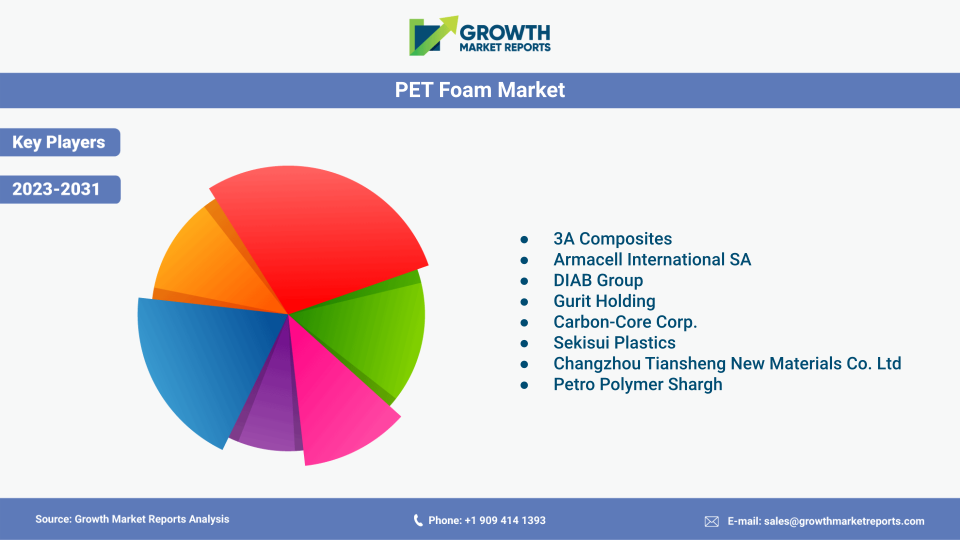
Key players competing in the global PET foam market are 3A Composites; Armacell International SA; DIAB Group; Gurit Holding; Carbon-Core Corp.; Sekisui Plastics; Changzhou Tiansheng New Materials Co. Ltd; and Petro Polymer Shargh.

Major players are currently dominating the PET foam market and the rate of new entrants to the market is very low.  Some of these players have adopted a series of business development strategies including merger and acquisition, entering into partnerships and collaboration, product launches, and production capacity expansion to expand their consumer base and enhance their market share.

For instance,

  • On April 13, 2021, a Luxembourg-based major manufacturer of industrial and flexible foam, Armacell International SA entered into a joint venture with a Turkey-based company, METYX Composites. The venture was aimed at strengthening Armacell’s position in the composite industry in Turkey and enhancing its PET foam operation for wind turbine manufacturing in the country.  
PET Foam Market Key Players 

Frequently Asked Questions

Yes, the PET foam market research report offers customization options to address specific requirements regarding product type, application, region, and more.

Opportunities include the expansion of wind energy and electric vehicle markets, advancements in PET foam manufacturing and recycling technologies, and increased adoption in green building and sustainable construction.

PET foam is used as a core material in wind turbine blades due to its high mechanical strength, durability, and cost-effectiveness. The growth of wind energy installations globally is significantly boosting PET foam demand.

Challenges include raw material price volatility, competition from alternative core materials like PVC and PUR foams, and the need to comply with evolving environmental regulations.

Key companies include 3A Composites (Schweiter Technologies), Armacell International S.A., Gurit Holding AG, DIAB Group, BASF SE, Sekisui Chemical Co., Ltd., Zotefoams plc, SABIC, Evonik Industries AG, and others.

Europe leads the PET foam market due to its mature wind energy sector and strict environmental regulations. Asia Pacific is the fastest-growing region, driven by rapid industrialization and infrastructure development, while North America is also experiencing steady growth.

Low density PET foam (70-120 kg/m³) is preferred for applications requiring weight savings and thermal insulation, such as construction and packaging. High density PET foam (>120 kg/m³) is used in demanding applications like wind turbine blades, aerospace, and marine structures due to its superior mechanical strength and fire resistance.

Key growth drivers include rising demand for sustainable and lightweight materials, increasing adoption in wind energy and automotive sectors, stringent environmental regulations, and advancements in PET foam technology and recyclability.

The global PET foam market reached USD 540 million in 2024 and is expected to grow at a CAGR of 7.2% from 2025 to 2033, reaching approximately USD 1.02 billion by 2033.

PET foam is a lightweight, durable, and recyclable material derived from recycled PET bottles and post-consumer waste. It is widely used in wind energy, transportation, marine, building & construction, and packaging industries due to its excellent mechanical properties, chemical resistance, and sustainability.

Table Of Content

Chapter 1 Executive Summary
Chapter 2 Assumptions and Acronyms Used
Chapter 3 Research Methodology
Chapter 4 PET Foam Market Overview
   4.1 Introduction
      4.1.1 Market Taxonomy
      4.1.2 Market Definition
      4.1.3 Macro-Economic Factors Impacting the Market Growth
   4.2 PET Foam Market Dynamics
      4.2.1 Market Drivers
      4.2.2 Market Restraints
      4.2.3 Market Opportunity
   4.3 PET Foam Market - Supply Chain Analysis
      4.3.1 List of Key Suppliers
      4.3.2 List of Key Distributors
      4.3.3 List of Key Consumers
   4.4 Key Forces Shaping the PET Foam Market
      4.4.1 Bargaining Power of Suppliers
      4.4.2 Bargaining Power of Buyers
      4.4.3 Threat of Substitution
      4.4.4 Threat of New Entrants
      4.4.5 Competitive Rivalry
   4.5 Global PET Foam Market Size & Forecast, 2023-2032
      4.5.1 PET Foam Market Size and Y-o-Y Growth
      4.5.2 PET Foam Market Absolute $ Opportunity

Chapter 5 Global PET Foam Market Analysis and Forecast By Product Type
   5.1 Introduction
      5.1.1 Key Market Trends & Growth Opportunities By Product Type
      5.1.2 Basis Point Share (BPS) Analysis By Product Type
      5.1.3 Absolute $ Opportunity Assessment By Product Type
   5.2 PET Foam Market Size Forecast By Product Type
      5.2.1 Low Density PET Foam
      5.2.2 High Density PET Foam
   5.3 Market Attractiveness Analysis By Product Type

Chapter 6 Global PET Foam Market Analysis and Forecast By Application
   6.1 Introduction
      6.1.1 Key Market Trends & Growth Opportunities By Application
      6.1.2 Basis Point Share (BPS) Analysis By Application
      6.1.3 Absolute $ Opportunity Assessment By Application
   6.2 PET Foam Market Size Forecast By Application
      6.2.1 Wind Energy
      6.2.2 Transportation
      6.2.3 Marine
      6.2.4 Building & Construction
      6.2.5 Packaging
      6.2.6 Others
   6.3 Market Attractiveness Analysis By Application

Chapter 7 Global PET Foam Market Analysis and Forecast By End-Use Industry
   7.1 Introduction
      7.1.1 Key Market Trends & Growth Opportunities By End-Use Industry
      7.1.2 Basis Point Share (BPS) Analysis By End-Use Industry
      7.1.3 Absolute $ Opportunity Assessment By End-Use Industry
   7.2 PET Foam Market Size Forecast By End-Use Industry
      7.2.1 Aerospace
      7.2.2 Automotive
      7.2.3 Electrical & Electronics
      7.2.4 Others
   7.3 Market Attractiveness Analysis By End-Use Industry

Chapter 8 Global PET Foam Market Analysis and Forecast by Region
   8.1 Introduction
      8.1.1 Key Market Trends & Growth Opportunities By Region
      8.1.2 Basis Point Share (BPS) Analysis By Region
      8.1.3 Absolute $ Opportunity Assessment By Region
   8.2 PET Foam Market Size Forecast By Region
      8.2.1 North America
      8.2.2 Europe
      8.2.3 Asia Pacific
      8.2.4 Latin America
      8.2.5 Middle East & Africa (MEA)
   8.3 Market Attractiveness Analysis By Region

Chapter 9 Coronavirus Disease (COVID-19) Impact 
   9.1 Introduction 
   9.2 Current & Future Impact Analysis 
   9.3 Economic Impact Analysis 
   9.4 Government Policies 
   9.5 Investment Scenario

Chapter 10 North America PET Foam Analysis and Forecast
   10.1 Introduction
   10.2 North America PET Foam Market Size Forecast by Country
      10.2.1 U.S.
      10.2.2 Canada
   10.3 Basis Point Share (BPS) Analysis by Country
   10.4 Absolute $ Opportunity Assessment by Country
   10.5 Market Attractiveness Analysis by Country
   10.6 North America PET Foam Market Size Forecast By Product Type
      10.6.1 Low Density PET Foam
      10.6.2 High Density PET Foam
   10.7 Basis Point Share (BPS) Analysis By Product Type 
   10.8 Absolute $ Opportunity Assessment By Product Type 
   10.9 Market Attractiveness Analysis By Product Type
   10.10 North America PET Foam Market Size Forecast By Application
      10.10.1 Wind Energy
      10.10.2 Transportation
      10.10.3 Marine
      10.10.4 Building & Construction
      10.10.5 Packaging
      10.10.6 Others
   10.11 Basis Point Share (BPS) Analysis By Application 
   10.12 Absolute $ Opportunity Assessment By Application 
   10.13 Market Attractiveness Analysis By Application
   10.14 North America PET Foam Market Size Forecast By End-Use Industry
      10.14.1 Aerospace
      10.14.2 Automotive
      10.14.3 Electrical & Electronics
      10.14.4 Others
   10.15 Basis Point Share (BPS) Analysis By End-Use Industry 
   10.16 Absolute $ Opportunity Assessment By End-Use Industry 
   10.17 Market Attractiveness Analysis By End-Use Industry

Chapter 11 Europe PET Foam Analysis and Forecast
   11.1 Introduction
   11.2 Europe PET Foam Market Size Forecast by Country
      11.2.1 Germany
      11.2.2 France
      11.2.3 Italy
      11.2.4 U.K.
      11.2.5 Spain
      11.2.6 Russia
      11.2.7 Rest of Europe
   11.3 Basis Point Share (BPS) Analysis by Country
   11.4 Absolute $ Opportunity Assessment by Country
   11.5 Market Attractiveness Analysis by Country
   11.6 Europe PET Foam Market Size Forecast By Product Type
      11.6.1 Low Density PET Foam
      11.6.2 High Density PET Foam
   11.7 Basis Point Share (BPS) Analysis By Product Type 
   11.8 Absolute $ Opportunity Assessment By Product Type 
   11.9 Market Attractiveness Analysis By Product Type
   11.10 Europe PET Foam Market Size Forecast By Application
      11.10.1 Wind Energy
      11.10.2 Transportation
      11.10.3 Marine
      11.10.4 Building & Construction
      11.10.5 Packaging
      11.10.6 Others
   11.11 Basis Point Share (BPS) Analysis By Application 
   11.12 Absolute $ Opportunity Assessment By Application 
   11.13 Market Attractiveness Analysis By Application
   11.14 Europe PET Foam Market Size Forecast By End-Use Industry
      11.14.1 Aerospace
      11.14.2 Automotive
      11.14.3 Electrical & Electronics
      11.14.4 Others
   11.15 Basis Point Share (BPS) Analysis By End-Use Industry 
   11.16 Absolute $ Opportunity Assessment By End-Use Industry 
   11.17 Market Attractiveness Analysis By End-Use Industry

Chapter 12 Asia Pacific PET Foam Analysis and Forecast
   12.1 Introduction
   12.2 Asia Pacific PET Foam Market Size Forecast by Country
      12.2.1 China
      12.2.2 Japan
      12.2.3 South Korea
      12.2.4 India
      12.2.5 Australia
      12.2.6 South East Asia (SEA)
      12.2.7 Rest of Asia Pacific (APAC)
   12.3 Basis Point Share (BPS) Analysis by Country
   12.4 Absolute $ Opportunity Assessment by Country
   12.5 Market Attractiveness Analysis by Country
   12.6 Asia Pacific PET Foam Market Size Forecast By Product Type
      12.6.1 Low Density PET Foam
      12.6.2 High Density PET Foam
   12.7 Basis Point Share (BPS) Analysis By Product Type 
   12.8 Absolute $ Opportunity Assessment By Product Type 
   12.9 Market Attractiveness Analysis By Product Type
   12.10 Asia Pacific PET Foam Market Size Forecast By Application
      12.10.1 Wind Energy
      12.10.2 Transportation
      12.10.3 Marine
      12.10.4 Building & Construction
      12.10.5 Packaging
      12.10.6 Others
   12.11 Basis Point Share (BPS) Analysis By Application 
   12.12 Absolute $ Opportunity Assessment By Application 
   12.13 Market Attractiveness Analysis By Application
   12.14 Asia Pacific PET Foam Market Size Forecast By End-Use Industry
      12.14.1 Aerospace
      12.14.2 Automotive
      12.14.3 Electrical & Electronics
      12.14.4 Others
   12.15 Basis Point Share (BPS) Analysis By End-Use Industry 
   12.16 Absolute $ Opportunity Assessment By End-Use Industry 
   12.17 Market Attractiveness Analysis By End-Use Industry

Chapter 13 Latin America PET Foam Analysis and Forecast
   13.1 Introduction
   13.2 Latin America PET Foam Market Size Forecast by Country
      13.2.1 Brazil
      13.2.2 Mexico
      13.2.3 Rest of Latin America (LATAM)
   13.3 Basis Point Share (BPS) Analysis by Country
   13.4 Absolute $ Opportunity Assessment by Country
   13.5 Market Attractiveness Analysis by Country
   13.6 Latin America PET Foam Market Size Forecast By Product Type
      13.6.1 Low Density PET Foam
      13.6.2 High Density PET Foam
   13.7 Basis Point Share (BPS) Analysis By Product Type 
   13.8 Absolute $ Opportunity Assessment By Product Type 
   13.9 Market Attractiveness Analysis By Product Type
   13.10 Latin America PET Foam Market Size Forecast By Application
      13.10.1 Wind Energy
      13.10.2 Transportation
      13.10.3 Marine
      13.10.4 Building & Construction
      13.10.5 Packaging
      13.10.6 Others
   13.11 Basis Point Share (BPS) Analysis By Application 
   13.12 Absolute $ Opportunity Assessment By Application 
   13.13 Market Attractiveness Analysis By Application
   13.14 Latin America PET Foam Market Size Forecast By End-Use Industry
      13.14.1 Aerospace
      13.14.2 Automotive
      13.14.3 Electrical & Electronics
      13.14.4 Others
   13.15 Basis Point Share (BPS) Analysis By End-Use Industry 
   13.16 Absolute $ Opportunity Assessment By End-Use Industry 
   13.17 Market Attractiveness Analysis By End-Use Industry

Chapter 14 Middle East & Africa (MEA) PET Foam Analysis and Forecast
   14.1 Introduction
   14.2 Middle East & Africa (MEA) PET Foam Market Size Forecast by Country
      14.2.1 Saudi Arabia
      14.2.2 South Africa
      14.2.3 UAE
      14.2.4 Rest of Middle East & Africa (MEA)
   14.3 Basis Point Share (BPS) Analysis by Country
   14.4 Absolute $ Opportunity Assessment by Country
   14.5 Market Attractiveness Analysis by Country
   14.6 Middle East & Africa (MEA) PET Foam Market Size Forecast By Product Type
      14.6.1 Low Density PET Foam
      14.6.2 High Density PET Foam
   14.7 Basis Point Share (BPS) Analysis By Product Type 
   14.8 Absolute $ Opportunity Assessment By Product Type 
   14.9 Market Attractiveness Analysis By Product Type
   14.10 Middle East & Africa (MEA) PET Foam Market Size Forecast By Application
      14.10.1 Wind Energy
      14.10.2 Transportation
      14.10.3 Marine
      14.10.4 Building & Construction
      14.10.5 Packaging
      14.10.6 Others
   14.11 Basis Point Share (BPS) Analysis By Application 
   14.12 Absolute $ Opportunity Assessment By Application 
   14.13 Market Attractiveness Analysis By Application
   14.14 Middle East & Africa (MEA) PET Foam Market Size Forecast By End-Use Industry
      14.14.1 Aerospace
      14.14.2 Automotive
      14.14.3 Electrical & Electronics
      14.14.4 Others
   14.15 Basis Point Share (BPS) Analysis By End-Use Industry 
   14.16 Absolute $ Opportunity Assessment By End-Use Industry 
   14.17 Market Attractiveness Analysis By End-Use Industry

Chapter 15 Competition Landscape 
   15.1 PET Foam Market: Competitive Dashboard
   15.2 Global PET Foam Market: Market Share Analysis, 2023
   15.3 Company Profiles (Details – Overview, Financials, Developments, Strategy) 
      15.3.1 Armacell International S.A.
3A Composites GmbH
Sekisui Chemical Co., Ltd.
BASF SE
Jiangsu Yulong New Material Technology Co., Ltd.
Zotefoams plc
Diab Group
CoreLite Inc.
Carbon-Core Corp.
Changzhou Tiansheng New Materials Co., Ltd.
Hunan Rifeng Composite Co., Ltd.
SABIC
Evonik Industries AG
Gurit Holding AG
Bcomp Ltd.
Recticel NV/SA
FoamPartner Group
Plascore, Inc.
Euro-Composites S.A.
SWM International (Schweitzer-Mauduit International, Inc.)

Methodology

Our Clients

Honda Motor Co. Ltd.
FedEx Logistics
Dassault Aviation
Pfizer
General Mills
Nestle SA
Siemens Healthcare
Deloitte