Pediatric Clinical Trials Market Report 2025-2034

Pediatric Clinical Trials Market Report 2025-2034

Segments - by Phase (Phase I, Phase II, Phase III, Phase IV), by Study Design (Interventional, Observational, Expanded Access), by Therapeutic Area (Oncology, Infectious Diseases, Cardiology, Genetic Diseases, CNS Disorders, Others), by End-User (Pharmaceutical & Biotechnology Companies, Contract Research Organizations, Academic & Research Institutes, Others)

https://growthmarketreports.com/raksha
Author : Raksha Sharma
https://growthmarketreports.com/Vaibhav
Fact-checked by : V. Chandola
https://growthmarketreports.com/Shruti
Editor : Shruti Bhat

Last Updated : Jun, 2026 | Report ID :HC-2218 | 4.4 Rating | 5 Reviews | 286 Pages | Format : Docx PDF

Report Description

This report is updated with the latest market data and insights as of June 2026. Base year: 2025  |  Forecast period: 2026-2034


Pediatric Clinical Trials Market Outlook

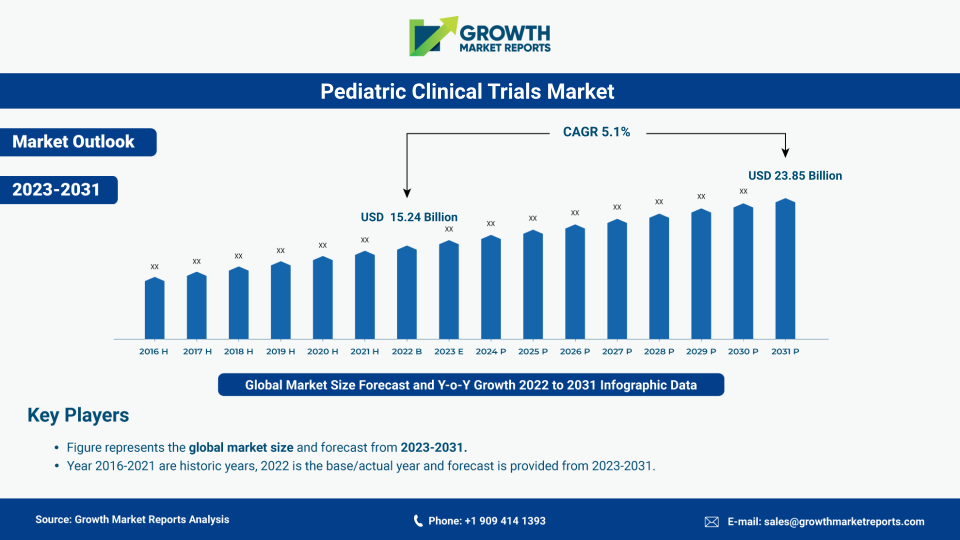
According to our latest research, the global pediatric clinical trials market size reached USD 17.9 billion in 2025, demonstrating robust growth driven by increasing demand for pediatric-specific therapies and strengthened regulatory initiatives worldwide. The market is forecasted to achieve USD 35.8 billion by 2034, expanding at a CAGR of 7.8% during the forecast period of 2026 to 2034. This growth is largely propelled by rising incidences of pediatric diseases, enhanced government funding, and the growing emphasis on child-specific drug development. The broader clinical trials industry is experiencing parallel expansion, and the pediatric segment is outpacing several adult therapeutic segments due to unmet medical need and favorable regulatory tailwinds.

Global Pediatric Clinical Trials Market Size Forecast 2025-2034, USD Billion

The primary growth driver for the pediatric clinical trials market is the increasing prevalence of chronic and rare diseases among children, including oncology, genetic disorders, and infectious diseases. As awareness about pediatric health rises globally, there is a heightened demand for safe and effective treatments tailored to children's unique physiological profiles. Regulatory bodies such as the US FDA and the European Medicines Agency have implemented pediatric investigation plans and incentives to encourage pharmaceutical companies to invest in pediatric drug development. These regulatory frameworks are expediting the clinical trial process while ensuring that drugs are tested and approved specifically for pediatric populations, thereby boosting overall market growth through 2034.

Technological advancements in clinical trial methodologies are another significant contributor to the expansion of this market. Innovations such as decentralized trials, wearable health monitoring devices, and advanced data analytics are streamlining recruitment, monitoring, and data collection processes. These technologies enable more efficient and less invasive trial designs, which are particularly crucial for pediatric populations. The integration of artificial intelligence and machine learning is enhancing the precision of patient selection and outcome measurement, further optimizing trial outcomes and compressing development timelines. Simultaneously, the growing focus on rare pediatric disease therapeutics is attracting dedicated investment and specialized trial infrastructure.

Increased collaboration between pharmaceutical companies, contract research organizations, and academic and research institutes is also playing a pivotal role in market growth. These partnerships foster more comprehensive and diverse clinical trial protocols, which are essential for addressing the unique needs of pediatric patients. Growing investment from both public and private sectors, along with global initiatives to improve pediatric healthcare infrastructure, is expanding the reach of clinical trials into emerging markets, thereby accelerating the discovery and approval of pediatric therapies.

From a regional perspective, North America currently dominates the pediatric clinical trials market, accounting for the largest share in 2025, followed by Europe and Asia Pacific. The United States benefits from a strong regulatory framework, substantial public and private funding, and a well-established healthcare infrastructure that collectively support a high volume of pediatric clinical research. Europe is witnessing significant growth due to increased government initiatives and collaborative cross-border research programs. Meanwhile, the Asia Pacific region is emerging as a high-growth market, driven by a large pediatric population, rising healthcare investments, and the growing presence of global pharmaceutical companies conducting trials in countries such as China and India.

Phase Analysis

The phase segmentation of the pediatric clinical trials market includes Phase I, Phase II, Phase III, and Phase IV trials, each representing a critical stage in the clinical development of pediatric medications. Phase I trials focus primarily on safety and dosage determination, often involving a small cohort of pediatric participants. These trials are essential for establishing the initial safety profile of a new therapy in children, who may metabolize drugs differently than adults. Due to ethical considerations and the vulnerability of pediatric patients, Phase I trials are meticulously designed with stringent monitoring protocols, which can increase operational costs and complexity. The growing number of first-in-pediatric studies, especially for rare and genetic diseases, continues to expand the scope of Phase I trials within the overall market as of 2025.

Pediatric Clinical Trials Market Share by Phase 2025

Phase II pediatric clinical trials are pivotal in evaluating the efficacy and optimal dosing of investigational drugs, typically involving a larger group of pediatric participants. These trials are crucial for determining whether a therapy demonstrates sufficient therapeutic effect in the target pediatric population. Demand for Phase II trials is rising, driven by an expanding pipeline of pediatric drugs and the necessity to generate robust efficacy data before advancing to larger-scale studies. Regulatory agencies are increasingly requiring comprehensive Phase II data to ensure that drugs are both safe and effective for children, fueling the growth of this segment throughout the 2026-2034 forecast window. Efficient patient recruitment strategies are increasingly critical to maintaining Phase II timelines.

Phase III trials represent the most extensive and resource-intensive segment within the pediatric clinical trials market, accounting for approximately 42.3% of market share in 2025. These trials involve large cohorts and are designed to confirm efficacy, monitor side effects, and compare the investigational therapy to existing standard treatments. The complexity of Phase III trials is heightened in pediatric populations due to challenges in patient recruitment, ethical considerations, and the need for age-appropriate formulations. Despite these hurdles, the rising incidence of chronic pediatric diseases and the push for more child-specific therapies are driving significant investment into Phase III studies, making this segment a major revenue contributor throughout the forecast period.

Phase IV trials, also known as post-marketing surveillance studies, play a critical role in monitoring the long-term safety and effectiveness of pediatric drugs after regulatory approval. These trials are essential for identifying rare or delayed adverse events that may not have been detected in earlier phases, particularly given the unique physiological responses of children. The growing emphasis on pharmacovigilance and real-world evidence in pediatrics is leading to increased demand for Phase IV studies, as regulatory authorities and healthcare providers seek to ensure the ongoing safety of pediatric therapies. Overall, the phase analysis highlights the dynamic and evolving nature of pediatric clinical trials, with each phase addressing specific challenges and opportunities in the development of child-centric medicines.

Report Scope

Attributes Details
Report Title Pediatric Clinical Trials Market Research Report 2025-2034
By Phase Phase I, Phase II, Phase III, Phase IV
By Study Design Interventional, Observational, Expanded Access
By Therapeutic Area Oncology, Infectious Diseases, Cardiology, Genetic Diseases, CNS Disorders, Others
By End-User Pharmaceutical & Biotechnology Companies, Contract Research Organizations, Academic & Research Institutes, Others
Regions Covered North America, Europe, APAC, Latin America, MEA
Base Year 2025
Historic Data 2019-2024
Forecast Period 2026-2034
Number of Pages 286
Number of Tables & Figures 279
Customization Available Yes, the report can be customized as per your need.

Study Design Analysis

The study design segment of the pediatric clinical trials market encompasses interventional, observational, and expanded access studies, each serving distinct purposes in clinical research. Interventional studies are the most prevalent, involving active assignment of interventions to participants to assess the efficacy and safety of new therapies. These studies are highly structured and often randomized, providing robust data that form the basis for regulatory approvals. The complexity of designing interventional trials for pediatric populations stems from ethical considerations, age-appropriate dosing, and the need for parental consent, which can extend recruitment timelines. The increasing focus on developing child-specific drugs and the implementation of adaptive trial designs are enhancing the efficiency and success rates of interventional studies in the pediatric segment as of 2025.

Observational studies play a vital role in understanding disease progression, treatment patterns, and long-term outcomes in pediatric populations without direct intervention. These studies are particularly valuable for rare diseases, where randomized controlled trials may not be feasible due to limited patient numbers. Observational research provides real-world evidence that complements data from interventional studies, offering insights into the natural history of diseases and the effectiveness of therapies in routine clinical practice. The growing adoption of electronic health records and patient registries is facilitating large-scale observational studies, thereby expanding their impact within the pediatric clinical trials market through 2034.

Expanded access studies, also known as compassionate use programs, allow children with serious or life-threatening conditions to receive investigational therapies outside of formal clinical trials. These programs are critical for pediatric patients who have exhausted all available treatment options and cannot participate in traditional trials due to stringent inclusion criteria. Expanded access studies are gaining traction as regulatory agencies encourage pharmaceutical companies to make promising therapies available to pediatric patients in need. The increasing prevalence of rare and orphan diseases among children is further driving demand for expanded access programs, highlighting their significance in the broader clinical trial landscape.

The integration of innovative study designs, such as decentralized and virtual trials, is transforming the pediatric clinical trials market by reducing geographical and logistical barriers to participation. These approaches leverage telemedicine, remote monitoring, and digital data collection to enhance patient engagement and retention, particularly in pediatric populations where travel and frequent clinic visits can be burdensome. The adoption of hybrid study designs that combine elements of interventional and observational research is also on the rise, enabling more comprehensive data collection and analysis. As the market continues to evolve through 2034, the focus on patient-centric and flexible study designs will be paramount in addressing the unique challenges of pediatric clinical research.

Therapeutic Area Analysis

The therapeutic area segmentation of the pediatric clinical trials market encompasses oncology, infectious diseases, cardiology, genetic diseases, CNS disorders, and others, reflecting the diverse range of health challenges faced by children. Oncology remains the largest and fastest-growing therapeutic area, driven by the rising incidence of pediatric cancers and the urgent need for new and effective treatments. The complexity of pediatric oncology trials stems from the heterogeneity of cancer types, the need for age-appropriate formulations, and the ethical considerations involved in enrolling children with life-threatening conditions. Advances in precision medicine and targeted therapies are fueling innovation in this segment. The rapid evolution of cancer genomic profiling in children is enabling more refined patient stratification and improving survival rates and quality of life for pediatric cancer patients.

Infectious diseases represent another significant therapeutic area within the pediatric clinical trials market, particularly in low- and middle-income countries where the burden of infectious diseases remains high. The development of vaccines and antimicrobial agents tailored for pediatric populations is a key focus, with ongoing trials addressing diseases such as influenza, respiratory syncytial virus, and emerging viral threats. The rapid response to emerging infectious threats and the implementation of global immunization programs are driving increased investment in pediatric infectious disease trials, underscoring their critical role in improving child health outcomes worldwide.

The cardiology segment is witnessing steady growth as the prevalence of congenital and acquired heart diseases among children rises globally. Clinical trials in pediatric cardiology are essential for developing safe and effective treatments for conditions such as congenital heart defects, arrhythmias, and hypertension. The advancement of minimally invasive procedures and novel pharmacological agents is expanding the therapeutic options available to pediatric patients, thereby driving demand for clinical trials in this area. Collaboration between pediatric cardiologists, researchers, and industry stakeholders is essential for overcoming the unique challenges associated with conducting trials in this complex patient population.

Genetic diseases and CNS disorders are gaining prominence in the pediatric clinical trials market due to advances in genomics and neurobiology. The identification of genetic mutations underlying rare pediatric diseases has paved the way for the development of targeted therapies and gene-editing technologies. The growing utility of genetic testing in pediatric populations is facilitating early diagnosis and enabling precision interventions across a widening range of inherited conditions. Similarly, the increasing recognition of neurological and developmental disorders in children is driving research into new treatments for conditions such as epilepsy, autism spectrum disorders, and cerebral palsy.

Other therapeutic areas, including respiratory diseases, metabolic disorders, and immunological conditions, also contribute to the diversity of the pediatric clinical trials market. The rising prevalence of asthma, type 1 diabetes, and autoimmune diseases among children is prompting increased research and development efforts to address unmet medical needs. As the understanding of pediatric disease mechanisms continues to evolve through 2034, the scope of clinical trials is expected to broaden, encompassing a wider range of conditions and therapeutic modalities.

End-User Analysis

The end-user segmentation of the pediatric clinical trials market includes pharmaceutical and biotechnology companies, contract research organizations, academic and research institutes, and others. Pharmaceutical and biotechnology companies are the primary drivers of market growth, accounting for the largest share of clinical trial activity in 2025. These organizations are investing heavily in the development of pediatric drugs and biologics, motivated by regulatory incentives and the growing market potential for child-specific therapies. The increasing complexity of pediatric diseases and the need for innovative treatment options are prompting companies to expand their research pipelines and collaborate with external partners to accelerate drug development through the forecast period.

Contract research organizations play a crucial role in the pediatric clinical trials market by providing specialized expertise and operational support to pharmaceutical sponsors. CROs offer a wide range of services, including study design, patient recruitment, data management, and regulatory compliance, enabling sponsors to conduct trials more efficiently and cost-effectively. The outsourcing of clinical trial activities to CROs is becoming increasingly common as companies seek to leverage their global networks and experience in managing complex pediatric studies. The growing demand for CRO services is also driving consolidation and innovation within the sector, as organizations strive to differentiate themselves through technology adoption and patient-centric trial designs.

Academic and research institutes are integral to the advancement of pediatric clinical research, particularly in the early stages of drug discovery and development. These institutions often conduct investigator-initiated trials and collaborate with industry partners to explore new therapeutic approaches and generate foundational data. Academic medical centers are leading efforts to establish pediatric research networks and biobanks, which facilitate patient recruitment and data sharing across multiple sites. The involvement of academic institutions in pediatric clinical trials is essential for fostering innovation and ensuring that research addresses the unique needs of children.

Other end-users, including government agencies, non-profit organizations, and patient advocacy groups, contribute to the pediatric clinical trials ecosystem by providing funding, advocacy, and logistical support. These stakeholders play a critical role in raising awareness about pediatric diseases, promoting patient engagement, and ensuring that research priorities align with the needs of affected children and their families. The collaborative efforts of all end-users are essential for overcoming the challenges associated with pediatric clinical trials and advancing the development of safe and effective therapies for children through 2034.

Opportunities & Threats

The pediatric clinical trials market is ripe with opportunities, particularly as advancements in technology and regulatory frameworks create a more supportive environment for pediatric drug development. The increasing adoption of decentralized and hybrid trial models offers significant potential to improve patient recruitment, retention, and data quality, especially for rare diseases and geographically dispersed populations. The integration of digital health tools, such as remote monitoring devices and mobile applications, can enhance the patient experience and facilitate real-time data collection, making trials more accessible and less burdensome for children and their families. The expansion of global pediatric research networks and collaborative initiatives is fostering knowledge sharing and accelerating the development of innovative therapies, opening new avenues for market growth through 2034.

Another major opportunity lies in the growing focus on precision medicine and genomics in pediatric research. Advances in genetic sequencing and molecular diagnostics are enabling the identification of disease-specific biomarkers and the development of targeted therapies for rare and complex pediatric conditions. The increasing availability of personalized treatment options is driving demand for clinical trials that can validate the safety and efficacy of these therapies in diverse pediatric populations. Furthermore, the implementation of regulatory incentives, such as the US FDA's Best Pharmaceuticals for Children Act and the EMA's Pediatric Investigation Plans, is encouraging greater investment in pediatric drug development and creating a favorable market landscape for all stakeholders operating in this space in 2025 and beyond.

Despite these opportunities, the pediatric clinical trials market faces several restraining factors that could impede growth. One of the primary challenges is the ethical and logistical complexity of conducting trials in children, who are considered a vulnerable population. Obtaining informed consent, ensuring age-appropriate study designs, and managing the risk of adverse events require careful planning and oversight. Additionally, the small size and heterogeneity of pediatric patient populations can make recruitment and retention difficult, leading to extended trial timelines and increased costs. Regulatory requirements for pediatric studies are often more stringent than those for adult trials, further complicating the approval process. Addressing these challenges will require ongoing collaboration between regulators, industry stakeholders, and patient advocacy groups to ensure that pediatric clinical trials are conducted safely and effectively.

Regional Outlook

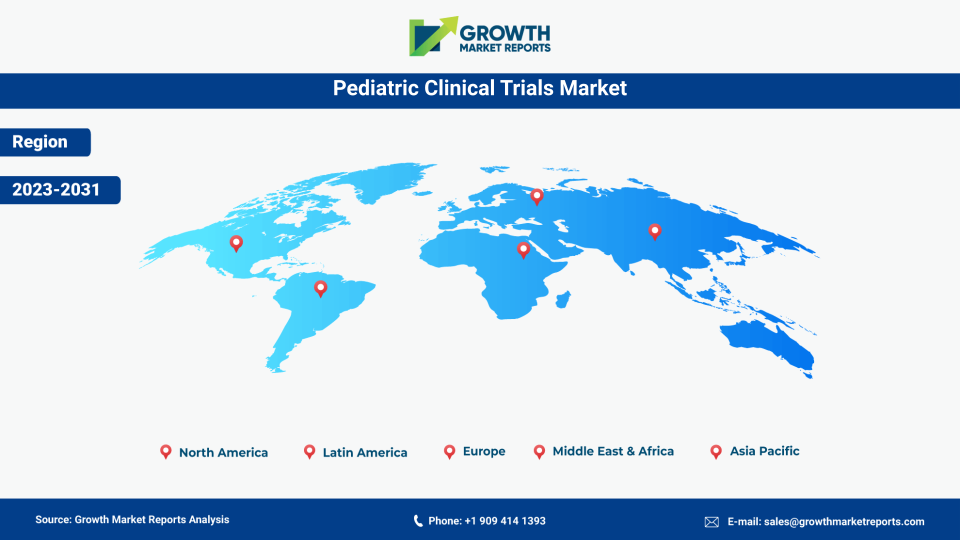
The regional analysis of the pediatric clinical trials market reveals significant variations in market size, growth rates, and research activity across different geographies. North America leads the global market, accounting for approximately USD 7.4 billion in 2025 and holding roughly 41.5% of the global share. This leadership is driven by a strong regulatory framework, substantial funding, and a well-established healthcare infrastructure. The United States remains the largest contributor, with a high volume of pediatric clinical trial activity supported by FDA regulatory initiatives and robust investment from both public and private sectors. Canada also plays a significant role, with its focus on rare diseases and collaborative research networks enhancing the region's overall market position.

Pediatric Clinical Trials Market Regional Share 2025

Europe is the second-largest market, valued at approximately USD 5.1 billion in 2025, and is expected to grow at a CAGR of 8.0% through 2034. The region benefits from a harmonized regulatory environment under the European Medicines Agency, which has implemented specific guidelines and incentives for pediatric drug development. Countries such as Germany, the United Kingdom, and France are leading contributors, with active research communities and strong partnerships between academia, industry, and government agencies. The increasing adoption of digital health technologies and the expansion of cross-border clinical trial networks are further supporting market growth in Europe throughout the forecast period.

The Asia Pacific region is emerging as a high-growth market, with a market size of approximately USD 3.3 billion in 2025 and a share of around 18.6%. The region's large pediatric population, rising healthcare investments, and growing presence of global pharmaceutical companies are driving increased clinical trial activity in countries such as China, India, and Japan. The expansion of pediatric research infrastructure and the implementation of government initiatives to improve child health are creating new opportunities for market expansion. Latin America and the Middle East & Africa represent smaller but rapidly growing markets, with increasing participation in global clinical trials and efforts to address the burden of infectious and genetic diseases among children. As the pediatric clinical trials market continues to globalize through 2034, regional collaboration and capacity-building will be essential for ensuring equitable access to innovative therapies for children worldwide.

Competitor Outlook

The competitive landscape of the pediatric clinical trials market is characterized by the presence of leading pharmaceutical and biotechnology companies, contract research organizations, and academic institutions, all working to address the unique challenges of pediatric drug development. The market is highly dynamic in 2025, with companies focusing on innovation, strategic collaborations, and regulatory compliance to gain a competitive edge. Major players are investing in advanced technologies, such as decentralized trial platforms, artificial intelligence-driven patient matching, and real-world evidence generation, to enhance trial efficiency and patient outcomes. The increasing complexity of pediatric diseases and the demand for personalized therapies are prompting companies to expand their research pipelines and form partnerships with academic and research institutes.

Strategic alliances and mergers and acquisitions are common in this market, as companies seek to strengthen their capabilities and expand their global reach. Collaborations between pharmaceutical sponsors and CROs are particularly prevalent, enabling efficient management of complex pediatric trials and access to specialized expertise in regulatory affairs, biostatistics, and patient engagement. The rise of patient-centric trial designs and the integration of digital health solutions are further differentiating leading market players, as they strive to improve participant engagement and streamline trial operations. Intellectual property management and regulatory compliance remain critical success factors, with companies investing in robust quality management systems to navigate the evolving landscape of pediatric clinical research.

The competitive environment is also shaped by the growing involvement of non-profit organizations and patient advocacy groups, which play a pivotal role in driving awareness, funding, and patient recruitment for pediatric clinical trials. These stakeholders are increasingly influencing research priorities and pushing for greater transparency in trial design and reporting. As the market advances toward 2034, companies that can demonstrate a genuine commitment to patient-centric innovation and regulatory excellence will be best positioned to capture the growing opportunities within the global pediatric clinical trials landscape.

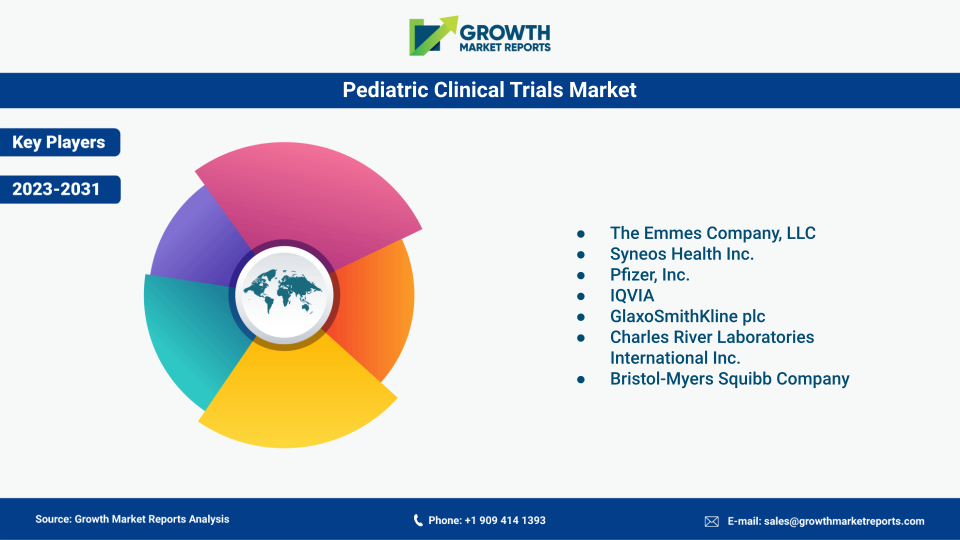
Major companies operating in the pediatric clinical trials market include Pfizer Inc., Novartis AG, GlaxoSmithKline plc, Sanofi S.A., Johnson & Johnson, AstraZeneca plc, Merck & Co., Inc., Roche Holding AG, Eli Lilly and Company, Bristol Myers Squibb, AbbVie Inc., Bayer AG, Novo Nordisk A/S, Takeda Pharmaceutical Company Limited, ICON plc, IQVIA Holdings Inc., Parexel International Corporation, and Syneos Health, Inc. These companies are recognized for their extensive research pipelines, global presence, and commitment to advancing pediatric drug development. Pfizer and Novartis are leading innovators in pediatric oncology and rare disease research, while GlaxoSmithKline and Sanofi have made significant investments in pediatric vaccines and infectious disease trials. CROs such as ICON, IQVIA, Parexel, and Syneos Health offer comprehensive clinical trial management services, leveraging their global networks and technological expertise to support complex pediatric studies across all phases.

Key Players

  • Pfizer Inc.
  • GlaxoSmithKline plc
  • Johnson & Johnson
  • Novartis AG
  • Sanofi S.A.
  • AstraZeneca plc
  • Merck & Co., Inc.
  • Roche Holding AG
  • Eli Lilly and Company
  • Bristol Myers Squibb
  • AbbVie Inc.
  • Bayer AG
  • Novo Nordisk A/S
  • Takeda Pharmaceutical Company Limited
  • ICON plc
  • IQVIA Holdings Inc.
  • Parexel International Corporation
  • Syneos Health, Inc.

Segments

The Pediatric Clinical Trials market has been segmented on the basis of

Phase

  • Phase I
  • Phase II
  • Phase III
  • Phase IV

Study Design

  • Interventional
  • Observational
  • Expanded Access

Therapeutic Area

  • Oncology
  • Infectious Diseases
  • Cardiology
  • Genetic Diseases
  • CNS Disorders
  • Others

End-User

  • Pharmaceutical & Biotechnology Companies
  • Contract Research Organizations
  • Academic & Research Institutes
  • Others

Frequently Asked Questions

Leading companies include Pfizer Inc., Novartis AG, GlaxoSmithKline plc, Sanofi S.A., Johnson & Johnson, AstraZeneca plc, Merck & Co., Roche Holding AG, Eli Lilly and Company, Bristol Myers Squibb, AbbVie Inc., Bayer AG, Novo Nordisk A/S, Takeda Pharmaceutical Company Limited, ICON plc, IQVIA Holdings Inc., Parexel International Corporation, and Syneos Health, Inc.

Key opportunities include the expansion of decentralized and hybrid trial models, growth in precision medicine and genomic-targeted therapies, regulatory incentives for pediatric drug development, and increasing market access in Asia Pacific and Latin America. Major challenges include ethical and logistical complexities of enrolling a vulnerable population, small and heterogeneous patient pools, high operational costs, and stricter regulatory requirements compared to adult trials.

Pharmaceutical and biotechnology companies are the primary end-users and the largest contributors to market activity. Contract research organizations provide essential operational support, while academic and research institutes drive early-stage discovery and investigator-initiated studies. Government agencies, non-profit organizations, and patient advocacy groups also contribute funding and logistical support.

Oncology is the largest and fastest-growing therapeutic area, followed by infectious diseases, genetic diseases, CNS disorders, cardiology, and other areas including respiratory and metabolic conditions. Advances in precision oncology, gene therapy, and vaccine development continue to drive activity across these segments.

The primary study designs are interventional studies, which involve direct assignment of therapies and form the basis for regulatory approvals; observational studies, which capture real-world evidence and disease progression without direct intervention; and expanded access programs, which allow seriously ill children to receive investigational therapies outside of formal trials.

Pediatric clinical trials are conducted across four phases. Phase I trials focus on safety and dosage in small cohorts. Phase II trials evaluate efficacy and optimal dosing in larger groups. Phase III trials confirm efficacy and compare therapies against standards of care in large cohorts. Phase IV, or post-marketing surveillance, monitors long-term safety and real-world effectiveness after regulatory approval.

North America dominates the market, holding approximately 41.5% of the global share in 2025, owing to a robust regulatory framework and strong funding from both government and private sources. Europe is the second-largest region with roughly 28.7% share, while Asia Pacific is the fastest-growing region, accounting for around 18.6% of the market.

Key drivers include the rising prevalence of chronic and rare pediatric diseases, regulatory incentives such as the US FDA's Best Pharmaceuticals for Children Act and the EMA's Pediatric Investigation Plans, advances in precision medicine and genomics, and the growing adoption of decentralized trial platforms that reduce barriers to participation for children and families.

The market is projected to grow at a CAGR of 7.8% from 2026 to 2034, reaching approximately USD 35.8 billion by 2034. This growth is underpinned by rising pediatric disease incidence, expanding trial networks in emerging markets, and the adoption of decentralized and technology-enabled trial models.

The global pediatric clinical trials market reached USD 17.9 billion in 2025, reflecting steady expansion driven by regulatory mandates, a growing pipeline of pediatric-specific drugs, and increased public and private investment in child-focused clinical research.

Table Of Content

Chapter 1 Executive Summary
Chapter 2 Assumptions and Acronyms Used
Chapter 3 Research Methodology
Chapter 4 Pediatric Clinical Trials Market Overview
   4.1 Introduction
      4.1.1 Market Taxonomy
      4.1.2 Market Definition
      4.1.3 Macro-Economic Factors Impacting the Market Growth
   4.2 Pediatric Clinical Trials Market Dynamics
      4.2.1 Market Drivers
      4.2.2 Market Restraints
      4.2.3 Market Opportunity
   4.3 Pediatric Clinical Trials Market - Supply Chain Analysis
      4.3.1 List of Key Suppliers
      4.3.2 List of Key Distributors
      4.3.3 List of Key Consumers
   4.4 Key Forces Shaping the Pediatric Clinical Trials Market
      4.4.1 Bargaining Power of Suppliers
      4.4.2 Bargaining Power of Buyers
      4.4.3 Threat of Substitution
      4.4.4 Threat of New Entrants
      4.4.5 Competitive Rivalry
   4.5 Global Pediatric Clinical Trials Market Size & Forecast, 2023-2032
      4.5.1 Pediatric Clinical Trials Market Size and Y-o-Y Growth
      4.5.2 Pediatric Clinical Trials Market Absolute $ Opportunity

Chapter 5 Global Pediatric Clinical Trials Market Analysis and Forecast By Phase
   5.1 Introduction
      5.1.1 Key Market Trends & Growth Opportunities By Phase
      5.1.2 Basis Point Share (BPS) Analysis By Phase
      5.1.3 Absolute $ Opportunity Assessment By Phase
   5.2 Pediatric Clinical Trials Market Size Forecast By Phase
      5.2.1 Phase I
      5.2.2 Phase II
      5.2.3 Phase III
      5.2.4 Phase IV
   5.3 Market Attractiveness Analysis By Phase

Chapter 6 Global Pediatric Clinical Trials Market Analysis and Forecast By Study Design
   6.1 Introduction
      6.1.1 Key Market Trends & Growth Opportunities By Study Design
      6.1.2 Basis Point Share (BPS) Analysis By Study Design
      6.1.3 Absolute $ Opportunity Assessment By Study Design
   6.2 Pediatric Clinical Trials Market Size Forecast By Study Design
      6.2.1 Interventional
      6.2.2 Observational
      6.2.3 Expanded Access
   6.3 Market Attractiveness Analysis By Study Design

Chapter 7 Global Pediatric Clinical Trials Market Analysis and Forecast By Therapeutic Area
   7.1 Introduction
      7.1.1 Key Market Trends & Growth Opportunities By Therapeutic Area
      7.1.2 Basis Point Share (BPS) Analysis By Therapeutic Area
      7.1.3 Absolute $ Opportunity Assessment By Therapeutic Area
   7.2 Pediatric Clinical Trials Market Size Forecast By Therapeutic Area
      7.2.1 Oncology
      7.2.2 Infectious Diseases
      7.2.3 Cardiology
      7.2.4 Genetic Diseases
      7.2.5 CNS Disorders
      7.2.6 Others
   7.3 Market Attractiveness Analysis By Therapeutic Area

Chapter 8 Global Pediatric Clinical Trials Market Analysis and Forecast By End-User
   8.1 Introduction
      8.1.1 Key Market Trends & Growth Opportunities By End-User
      8.1.2 Basis Point Share (BPS) Analysis By End-User
      8.1.3 Absolute $ Opportunity Assessment By End-User
   8.2 Pediatric Clinical Trials Market Size Forecast By End-User
      8.2.1 Pharmaceutical & Biotechnology Companies
      8.2.2 Contract Research Organizations
      8.2.3 Academic & Research Institutes
      8.2.4 Others
   8.3 Market Attractiveness Analysis By End-User

Chapter 9 Global Pediatric Clinical Trials Market Analysis and Forecast by Region
   9.1 Introduction
      9.1.1 Key Market Trends & Growth Opportunities By Region
      9.1.2 Basis Point Share (BPS) Analysis By Region
      9.1.3 Absolute $ Opportunity Assessment By Region
   9.2 Pediatric Clinical Trials Market Size Forecast By Region
      9.2.1 North America
      9.2.2 Europe
      9.2.3 Asia Pacific
      9.2.4 Latin America
      9.2.5 Middle East & Africa (MEA)
   9.3 Market Attractiveness Analysis By Region

Chapter 10 Coronavirus Disease (COVID-19) Impact 
   10.1 Introduction 
   10.2 Current & Future Impact Analysis 
   10.3 Economic Impact Analysis 
   10.4 Government Policies 
   10.5 Investment Scenario

Chapter 11 North America Pediatric Clinical Trials Analysis and Forecast
   11.1 Introduction
   11.2 North America Pediatric Clinical Trials Market Size Forecast by Country
      11.2.1 U.S.
      11.2.2 Canada
   11.3 Basis Point Share (BPS) Analysis by Country
   11.4 Absolute $ Opportunity Assessment by Country
   11.5 Market Attractiveness Analysis by Country
   11.6 North America Pediatric Clinical Trials Market Size Forecast By Phase
      11.6.1 Phase I
      11.6.2 Phase II
      11.6.3 Phase III
      11.6.4 Phase IV
   11.7 Basis Point Share (BPS) Analysis By Phase 
   11.8 Absolute $ Opportunity Assessment By Phase 
   11.9 Market Attractiveness Analysis By Phase
   11.10 North America Pediatric Clinical Trials Market Size Forecast By Study Design
      11.10.1 Interventional
      11.10.2 Observational
      11.10.3 Expanded Access
   11.11 Basis Point Share (BPS) Analysis By Study Design 
   11.12 Absolute $ Opportunity Assessment By Study Design 
   11.13 Market Attractiveness Analysis By Study Design
   11.14 North America Pediatric Clinical Trials Market Size Forecast By Therapeutic Area
      11.14.1 Oncology
      11.14.2 Infectious Diseases
      11.14.3 Cardiology
      11.14.4 Genetic Diseases
      11.14.5 CNS Disorders
      11.14.6 Others
   11.15 Basis Point Share (BPS) Analysis By Therapeutic Area 
   11.16 Absolute $ Opportunity Assessment By Therapeutic Area 
   11.17 Market Attractiveness Analysis By Therapeutic Area
   11.18 North America Pediatric Clinical Trials Market Size Forecast By End-User
      11.18.1 Pharmaceutical & Biotechnology Companies
      11.18.2 Contract Research Organizations
      11.18.3 Academic & Research Institutes
      11.18.4 Others
   11.19 Basis Point Share (BPS) Analysis By End-User 
   11.20 Absolute $ Opportunity Assessment By End-User 
   11.21 Market Attractiveness Analysis By End-User

Chapter 12 Europe Pediatric Clinical Trials Analysis and Forecast
   12.1 Introduction
   12.2 Europe Pediatric Clinical Trials Market Size Forecast by Country
      12.2.1 Germany
      12.2.2 France
      12.2.3 Italy
      12.2.4 U.K.
      12.2.5 Spain
      12.2.6 Russia
      12.2.7 Rest of Europe
   12.3 Basis Point Share (BPS) Analysis by Country
   12.4 Absolute $ Opportunity Assessment by Country
   12.5 Market Attractiveness Analysis by Country
   12.6 Europe Pediatric Clinical Trials Market Size Forecast By Phase
      12.6.1 Phase I
      12.6.2 Phase II
      12.6.3 Phase III
      12.6.4 Phase IV
   12.7 Basis Point Share (BPS) Analysis By Phase 
   12.8 Absolute $ Opportunity Assessment By Phase 
   12.9 Market Attractiveness Analysis By Phase
   12.10 Europe Pediatric Clinical Trials Market Size Forecast By Study Design
      12.10.1 Interventional
      12.10.2 Observational
      12.10.3 Expanded Access
   12.11 Basis Point Share (BPS) Analysis By Study Design 
   12.12 Absolute $ Opportunity Assessment By Study Design 
   12.13 Market Attractiveness Analysis By Study Design
   12.14 Europe Pediatric Clinical Trials Market Size Forecast By Therapeutic Area
      12.14.1 Oncology
      12.14.2 Infectious Diseases
      12.14.3 Cardiology
      12.14.4 Genetic Diseases
      12.14.5 CNS Disorders
      12.14.6 Others
   12.15 Basis Point Share (BPS) Analysis By Therapeutic Area 
   12.16 Absolute $ Opportunity Assessment By Therapeutic Area 
   12.17 Market Attractiveness Analysis By Therapeutic Area
   12.18 Europe Pediatric Clinical Trials Market Size Forecast By End-User
      12.18.1 Pharmaceutical & Biotechnology Companies
      12.18.2 Contract Research Organizations
      12.18.3 Academic & Research Institutes
      12.18.4 Others
   12.19 Basis Point Share (BPS) Analysis By End-User 
   12.20 Absolute $ Opportunity Assessment By End-User 
   12.21 Market Attractiveness Analysis By End-User

Chapter 13 Asia Pacific Pediatric Clinical Trials Analysis and Forecast
   13.1 Introduction
   13.2 Asia Pacific Pediatric Clinical Trials Market Size Forecast by Country
      13.2.1 China
      13.2.2 Japan
      13.2.3 South Korea
      13.2.4 India
      13.2.5 Australia
      13.2.6 South East Asia (SEA)
      13.2.7 Rest of Asia Pacific (APAC)
   13.3 Basis Point Share (BPS) Analysis by Country
   13.4 Absolute $ Opportunity Assessment by Country
   13.5 Market Attractiveness Analysis by Country
   13.6 Asia Pacific Pediatric Clinical Trials Market Size Forecast By Phase
      13.6.1 Phase I
      13.6.2 Phase II
      13.6.3 Phase III
      13.6.4 Phase IV
   13.7 Basis Point Share (BPS) Analysis By Phase 
   13.8 Absolute $ Opportunity Assessment By Phase 
   13.9 Market Attractiveness Analysis By Phase
   13.10 Asia Pacific Pediatric Clinical Trials Market Size Forecast By Study Design
      13.10.1 Interventional
      13.10.2 Observational
      13.10.3 Expanded Access
   13.11 Basis Point Share (BPS) Analysis By Study Design 
   13.12 Absolute $ Opportunity Assessment By Study Design 
   13.13 Market Attractiveness Analysis By Study Design
   13.14 Asia Pacific Pediatric Clinical Trials Market Size Forecast By Therapeutic Area
      13.14.1 Oncology
      13.14.2 Infectious Diseases
      13.14.3 Cardiology
      13.14.4 Genetic Diseases
      13.14.5 CNS Disorders
      13.14.6 Others
   13.15 Basis Point Share (BPS) Analysis By Therapeutic Area 
   13.16 Absolute $ Opportunity Assessment By Therapeutic Area 
   13.17 Market Attractiveness Analysis By Therapeutic Area
   13.18 Asia Pacific Pediatric Clinical Trials Market Size Forecast By End-User
      13.18.1 Pharmaceutical & Biotechnology Companies
      13.18.2 Contract Research Organizations
      13.18.3 Academic & Research Institutes
      13.18.4 Others
   13.19 Basis Point Share (BPS) Analysis By End-User 
   13.20 Absolute $ Opportunity Assessment By End-User 
   13.21 Market Attractiveness Analysis By End-User

Chapter 14 Latin America Pediatric Clinical Trials Analysis and Forecast
   14.1 Introduction
   14.2 Latin America Pediatric Clinical Trials Market Size Forecast by Country
      14.2.1 Brazil
      14.2.2 Mexico
      14.2.3 Rest of Latin America (LATAM)
   14.3 Basis Point Share (BPS) Analysis by Country
   14.4 Absolute $ Opportunity Assessment by Country
   14.5 Market Attractiveness Analysis by Country
   14.6 Latin America Pediatric Clinical Trials Market Size Forecast By Phase
      14.6.1 Phase I
      14.6.2 Phase II
      14.6.3 Phase III
      14.6.4 Phase IV
   14.7 Basis Point Share (BPS) Analysis By Phase 
   14.8 Absolute $ Opportunity Assessment By Phase 
   14.9 Market Attractiveness Analysis By Phase
   14.10 Latin America Pediatric Clinical Trials Market Size Forecast By Study Design
      14.10.1 Interventional
      14.10.2 Observational
      14.10.3 Expanded Access
   14.11 Basis Point Share (BPS) Analysis By Study Design 
   14.12 Absolute $ Opportunity Assessment By Study Design 
   14.13 Market Attractiveness Analysis By Study Design
   14.14 Latin America Pediatric Clinical Trials Market Size Forecast By Therapeutic Area
      14.14.1 Oncology
      14.14.2 Infectious Diseases
      14.14.3 Cardiology
      14.14.4 Genetic Diseases
      14.14.5 CNS Disorders
      14.14.6 Others
   14.15 Basis Point Share (BPS) Analysis By Therapeutic Area 
   14.16 Absolute $ Opportunity Assessment By Therapeutic Area 
   14.17 Market Attractiveness Analysis By Therapeutic Area
   14.18 Latin America Pediatric Clinical Trials Market Size Forecast By End-User
      14.18.1 Pharmaceutical & Biotechnology Companies
      14.18.2 Contract Research Organizations
      14.18.3 Academic & Research Institutes
      14.18.4 Others
   14.19 Basis Point Share (BPS) Analysis By End-User 
   14.20 Absolute $ Opportunity Assessment By End-User 
   14.21 Market Attractiveness Analysis By End-User

Chapter 15 Middle East & Africa (MEA) Pediatric Clinical Trials Analysis and Forecast
   15.1 Introduction
   15.2 Middle East & Africa (MEA) Pediatric Clinical Trials Market Size Forecast by Country
      15.2.1 Saudi Arabia
      15.2.2 South Africa
      15.2.3 UAE
      15.2.4 Rest of Middle East & Africa (MEA)
   15.3 Basis Point Share (BPS) Analysis by Country
   15.4 Absolute $ Opportunity Assessment by Country
   15.5 Market Attractiveness Analysis by Country
   15.6 Middle East & Africa (MEA) Pediatric Clinical Trials Market Size Forecast By Phase
      15.6.1 Phase I
      15.6.2 Phase II
      15.6.3 Phase III
      15.6.4 Phase IV
   15.7 Basis Point Share (BPS) Analysis By Phase 
   15.8 Absolute $ Opportunity Assessment By Phase 
   15.9 Market Attractiveness Analysis By Phase
   15.10 Middle East & Africa (MEA) Pediatric Clinical Trials Market Size Forecast By Study Design
      15.10.1 Interventional
      15.10.2 Observational
      15.10.3 Expanded Access
   15.11 Basis Point Share (BPS) Analysis By Study Design 
   15.12 Absolute $ Opportunity Assessment By Study Design 
   15.13 Market Attractiveness Analysis By Study Design
   15.14 Middle East & Africa (MEA) Pediatric Clinical Trials Market Size Forecast By Therapeutic Area
      15.14.1 Oncology
      15.14.2 Infectious Diseases
      15.14.3 Cardiology
      15.14.4 Genetic Diseases
      15.14.5 CNS Disorders
      15.14.6 Others
   15.15 Basis Point Share (BPS) Analysis By Therapeutic Area 
   15.16 Absolute $ Opportunity Assessment By Therapeutic Area 
   15.17 Market Attractiveness Analysis By Therapeutic Area
   15.18 Middle East & Africa (MEA) Pediatric Clinical Trials Market Size Forecast By End-User
      15.18.1 Pharmaceutical & Biotechnology Companies
      15.18.2 Contract Research Organizations
      15.18.3 Academic & Research Institutes
      15.18.4 Others
   15.19 Basis Point Share (BPS) Analysis By End-User 
   15.20 Absolute $ Opportunity Assessment By End-User 
   15.21 Market Attractiveness Analysis By End-User

Chapter 16 Competition Landscape 
   16.1 Pediatric Clinical Trials Market: Competitive Dashboard
   16.2 Global Pediatric Clinical Trials Market: Market Share Analysis, 2023
   16.3 Company Profiles (Details – Overview, Financials, Developments, Strategy) 
      16.3.1 Pfizer Inc.
      16.3.2 GlaxoSmithKline plc
      16.3.3 Johnson & Johnson
      16.3.4 Novartis AG
      16.3.5 Sanofi S.A.
      16.3.6 AstraZeneca plc
      16.3.7 Merck & Co., Inc.
      16.3.8 Roche Holding AG
      16.3.9 Eli Lilly and Company
      16.3.10 Bristol Myers Squibb
      16.3.11 AbbVie Inc.
      16.3.12 Bayer AG
      16.3.13 Novo Nordisk A/S
      16.3.14 Takeda Pharmaceutical Company Limited
      16.3.15 ICON plc
      16.3.16 IQVIA Holdings Inc.
      16.3.17 Parexel International Corporation
      16.3.18 Syneos Health, Inc.

Methodology

Our Clients

The John Holland Group
Siemens Healthcare
Pfizer
Deloitte
General Electric
Honda Motor Co. Ltd.
General Mills
Microsoft