Segments - by Study Design (Interventional, Observational, Expanded Access), by Phase (Phase I, Phase II, Phase III, Phase IV), by Application (Oncology, Cardiovascular, Infectious Disease, CNS, Autoimmune Disorders, Others), by End-User (Pharmaceutical & Biotechnology Companies, Contract Research Organizations, Academic & Research Institutions, Others)
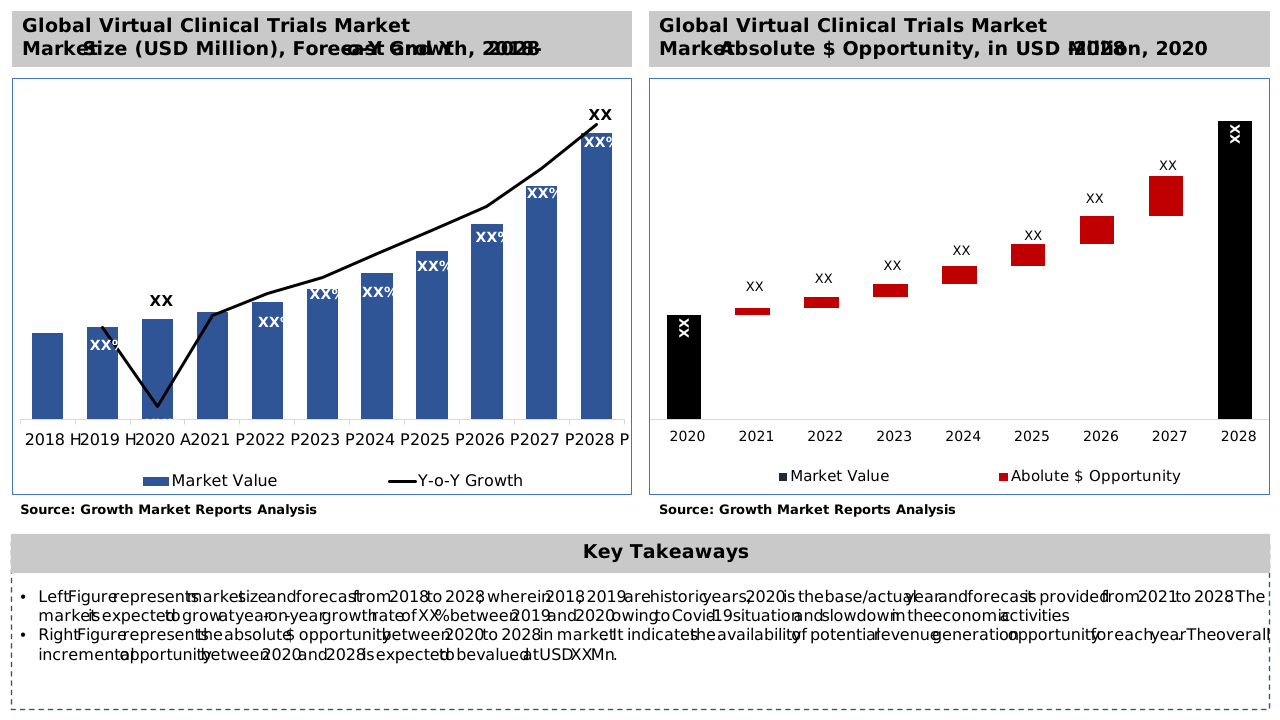
According to our latest research, the global virtual clinical trials market size reached USD 3.9 billion in 2024, demonstrating robust momentum and widespread adoption of decentralized methodologies across the clinical research landscape. The market is projected to attain a value of USD 13.1 billion by 2033, expanding at an impressive CAGR of 14.2% during the forecast period. This remarkable growth is primarily attributed to the increasing digitization of healthcare, the urgent need for more patient-centric and efficient clinical trial models, and the acceleration of remote technologies, all of which are reshaping the traditional clinical trials paradigm.
One of the most significant growth factors propelling the virtual clinical trials market is the pressing demand for faster, more flexible, and cost-effective clinical research processes. Traditional clinical trials often face challenges such as high operational costs, lengthy recruitment periods, and limited patient diversity due to geographic constraints. Virtual clinical trials, leveraging telemedicine, digital health platforms, wearable sensors, and remote monitoring, address these challenges by enabling real-time data collection and patient engagement regardless of location. This not only expedites trial timelines but also enhances data accuracy and reliability, making virtual models increasingly attractive to sponsors and research organizations. Moreover, the COVID-19 pandemic has acted as a major catalyst, highlighting the necessity for remote and decentralized solutions to ensure clinical trial continuity during global disruptions.
Another pivotal growth driver is the evolving regulatory landscape and increasing acceptance of digital health technologies by regulatory authorities worldwide. Agencies such as the FDA, EMA, and other regional bodies have issued guidelines supporting the use of remote monitoring, electronic informed consent, and digital endpoints in clinical trials. These regulatory advancements have fostered greater confidence among pharmaceutical companies, contract research organizations (CROs), and academic institutions to invest in virtual clinical trial infrastructure. Additionally, the integration of artificial intelligence, machine learning, and big data analytics into virtual trial platforms is enabling more precise patient recruitment, real-time monitoring of adverse events, and adaptive trial designs, further optimizing outcomes and reducing attrition rates.
The growing emphasis on patient-centricity and diversity in clinical research is also fueling the expansion of the virtual clinical trials market. Traditional, site-based trials often underrepresent minority populations and patients from rural or underserved areas due to logistical barriers. Virtual clinical trials, by contrast, empower broader and more inclusive participation by reducing travel requirements and offering greater flexibility in scheduling. This democratization of clinical research not only improves the generalizability of trial results but also aligns with global health equity initiatives. As a result, pharmaceutical and biotechnology companies are increasingly adopting virtual trial models to enhance patient recruitment, retention, and overall trial success rates.
From a regional perspective, North America currently dominates the virtual clinical trials market, accounting for the largest revenue share in 2024. This leadership is driven by advanced healthcare infrastructure, early adoption of digital health technologies, and a strong presence of leading pharmaceutical and biotech companies. Europe follows closely, supported by robust regulatory frameworks and government initiatives promoting digital health innovation. Meanwhile, the Asia Pacific region is emerging as a high-growth market, propelled by increasing investments in healthcare IT, rising clinical research activities, and expanding internet penetration. As the market continues to evolve, strategic collaborations between technology providers, CROs, and academic institutions will be instrumental in driving global adoption and standardization of virtual clinical trials.
The study design segment of the virtual clinical trials market is categorized into Interventional, Observational, and Expanded Access designs, each playing a crucial role in shaping the landscape of decentralized clinical research. Interventional virtual trials, which involve actively administering a treatment or intervention to participants, have gained significant traction due to their ability to facilitate complex protocols while minimizing in-person visits. The adoption of remote monitoring technologies, telemedicine consultations, and digital data capture tools has enabled researchers to conduct interventional studies with greater flexibility and efficiency. This approach not only reduces overall trial costs but also enhances patient compliance by allowing participants to engage from the comfort of their homes, leading to higher retention rates and more robust data collection.
Observational virtual clinical trials, which focus on monitoring health outcomes without altering participants' standard care, have also experienced substantial growth. These studies leverage digital health platforms and wearable devices to collect real-world data over extended periods, providing valuable insights into disease progression, treatment adherence, and patient-reported outcomes. The scalability and low operational burden of virtual observational trials make them particularly attractive for large-scale population health studies and post-marketing surveillance. Moreover, the integration of advanced analytics and machine learning algorithms enables researchers to identify patterns and correlations within vast datasets, driving more informed decision-making and hypothesis generation.
Expanded access virtual trials, designed to provide investigational therapies to patients who lack alternative treatment options, have seen increased utilization as regulatory agencies encourage broader access to experimental treatments. Virtual platforms facilitate streamlined communication between patients, healthcare providers, and sponsors, ensuring timely enrollment and monitoring of patients in need. This model is especially beneficial for rare disease populations or those residing in remote areas, where access to specialized clinical sites may be limited. By leveraging digital tools for eligibility screening, consent, and follow-up, expanded access virtual trials can accelerate the delivery of potentially life-saving therapies while maintaining rigorous safety oversight.
The convergence of these study design modalities within the virtual clinical trials market underscores the versatility and adaptability of decentralized research models. Sponsors and CROs are increasingly adopting hybrid approaches that combine elements of interventional, observational, and expanded access studies to maximize efficiency and address diverse research objectives. As technology continues to advance, the delineation between traditional and virtual study designs is expected to blur further, with seamless integration of digital tools becoming the norm across all phases of clinical research. This evolution will be critical in meeting the growing demand for personalized medicine, real-world evidence, and patient-centric trial experiences.
| Attributes | Details |
| Report Title | Virtual Clinical Trials Market Research Report 2033 |
| By Study Design | Interventional, Observational, Expanded Access |
| By Phase | Phase I, Phase II, Phase III, Phase IV |
| By Application | Oncology, Cardiovascular, Infectious Disease, CNS, Autoimmune Disorders, Others |
| By End-User | Pharmaceutical & Biotechnology Companies, Contract Research Organizations, Academic & Research Institutions, Others |
| Regions Covered | North America, Europe, APAC, Latin America, MEA |
| Base Year | 2024 |
| Historic Data | 2018-2023 |
| Forecast Period | 2025-2033 |
| Number of Pages | 261 |
| Number of Tables & Figures | 288 |
| Customization Available | Yes, the report can be customized as per your need. |
The virtual clinical trials market is segmented by phase into Phase I, Phase II, Phase III, and Phase IV, each representing distinct stages in the drug development lifecycle. Phase I virtual trials, which primarily assess safety and dosage in healthy volunteers or small patient cohorts, have benefited from remote monitoring technologies that enable real-time data collection and adverse event reporting. The use of wearable sensors, telehealth consultations, and electronic diaries allows sponsors to closely monitor participants' vital signs and responses without requiring frequent site visits. This not only enhances participant safety but also accelerates the transition to subsequent trial phases by streamlining data analysis and regulatory submissions.
Phase II virtual trials, focused on evaluating efficacy and optimal dosing in larger patient populations, have seen increased adoption due to their ability to facilitate rapid patient recruitment and engagement. Remote consent processes, digital symptom tracking, and virtual site visits enable sponsors to enroll diverse participants from multiple geographic regions, improving the generalizability of trial results. The integration of electronic patient-reported outcomes (ePROs) and centralized data management systems further enhances data quality and reduces the risk of protocol deviations. As a result, Phase II virtual trials are increasingly favored by pharmaceutical and biotechnology companies seeking to accelerate proof-of-concept studies and inform Phase III trial designs.
Phase III virtual clinical trials, which involve large-scale efficacy and safety assessments across diverse patient populations, represent a significant growth opportunity for the market. The complexity and scale of Phase III trials have traditionally posed logistical challenges, including site management, patient retention, and data consistency. Virtual trial platforms address these challenges by enabling decentralized recruitment, remote monitoring, and centralized data aggregation. This approach not only reduces operational costs but also improves patient adherence and trial continuity, particularly during global disruptions such as the COVID-19 pandemic. Regulatory agencies have increasingly recognized the validity of virtual methodologies in Phase III studies, further driving market adoption.
Phase IV virtual trials, or post-marketing surveillance studies, are leveraging digital health technologies to monitor long-term safety and effectiveness of approved therapies in real-world settings. The ability to collect real-time patient data through mobile apps, wearable devices, and electronic health records enables sponsors to identify rare adverse events and assess treatment outcomes over extended periods. Virtual Phase IV trials also facilitate ongoing patient engagement and education, supporting medication adherence and improving overall health outcomes. As healthcare systems worldwide prioritize value-based care and real-world evidence generation, the demand for virtual Phase IV trials is expected to rise, further expanding the market's reach.
The application segment of the virtual clinical trials market encompasses a wide range of therapeutic areas, including Oncology, Cardiovascular, Infectious Disease, CNS (Central Nervous System), Autoimmune Disorders, and Others. Oncology remains the largest and fastest-growing application, driven by the high prevalence of cancer and the urgent need for innovative therapies. Virtual clinical trials in oncology enable sponsors to reach a broader patient population, including those in remote or underserved regions, and facilitate continuous monitoring of treatment responses and adverse events. The integration of telemedicine, remote imaging, and digital pathology tools enhances data accuracy and accelerates trial timelines, making virtual models particularly attractive for complex oncology studies.
Cardiovascular virtual clinical trials are also gaining momentum, supported by the widespread adoption of wearable devices and remote monitoring technologies. These tools enable real-time tracking of vital signs, cardiac events, and medication adherence, providing valuable insights into the safety and efficacy of investigational therapies. Virtual trial platforms facilitate seamless communication between patients, investigators, and sponsors, improving patient engagement and retention. As the global burden of cardiovascular diseases continues to rise, virtual clinical trials offer a scalable and cost-effective solution for evaluating new treatments and preventive interventions.
The infectious disease segment has witnessed significant growth in virtual clinical trial adoption, particularly in response to the COVID-19 pandemic and ongoing efforts to combat emerging pathogens. Virtual platforms enable rapid patient recruitment, remote consent, and real-time symptom tracking, allowing sponsors to conduct large-scale studies with minimal logistical barriers. The ability to collect and analyze data from diverse populations enhances the generalizability of trial results and supports the development of effective public health interventions. As infectious disease threats continue to evolve, virtual clinical trials will play a critical role in accelerating vaccine and therapeutic development.
Central nervous system (CNS) and autoimmune disorder trials are increasingly leveraging virtual methodologies to overcome challenges associated with patient recruitment, retention, and monitoring. CNS trials, in particular, benefit from remote cognitive assessments, electronic patient diaries, and telepsychiatry consultations, which enable continuous monitoring of neuropsychological outcomes. Autoimmune disorder trials utilize digital health platforms to track symptom fluctuations, medication adherence, and quality of life metrics over time. The flexibility and patient-centricity of virtual clinical trials make them well-suited for these complex and chronic conditions, driving ongoing innovation and market growth.
The end-user segment of the virtual clinical trials market is comprised of Pharmaceutical & Biotechnology Companies, Contract Research Organizations (CROs), Academic & Research Institutions, and Others, each playing a distinct role in driving market adoption. Pharmaceutical and biotechnology companies represent the largest end-user group, leveraging virtual trial platforms to accelerate drug development, reduce costs, and improve patient engagement. The shift towards decentralized research models allows these organizations to streamline protocol execution, enhance data quality, and achieve faster regulatory approvals. The competitive landscape of the pharmaceutical industry, coupled with the need for innovative trial designs, is fueling ongoing investments in virtual clinical trial technologies.
Contract research organizations (CROs) are key enablers of virtual clinical trials, providing specialized expertise, infrastructure, and operational support to sponsors. CROs have rapidly expanded their digital capabilities, offering end-to-end virtual trial solutions that encompass patient recruitment, data management, remote monitoring, and regulatory compliance. By partnering with technology providers and leveraging advanced analytics, CROs can optimize trial efficiency, reduce site burden, and deliver high-quality data to sponsors. The growing demand for outsourced clinical research services is expected to drive continued growth in the CRO segment, as sponsors seek to capitalize on the benefits of virtual trial models.
Academic and research institutions are increasingly adopting virtual clinical trial methodologies to conduct investigator-initiated studies, population health research, and translational science projects. The flexibility and scalability of virtual platforms enable academic researchers to reach diverse patient populations, collect real-world evidence, and collaborate with industry partners. Government funding agencies and non-profit organizations are also supporting the adoption of virtual trials to advance public health initiatives and address unmet medical needs. The academic segment is expected to play a pivotal role in driving innovation and standardization within the virtual clinical trials market.
Other end-users, including government agencies, non-profit organizations, and healthcare providers, are leveraging virtual clinical trial platforms to support public health research, disease surveillance, and patient registries. These stakeholders are increasingly recognizing the value of decentralized research models in improving access to care, enhancing patient outcomes, and generating real-world evidence. As the virtual clinical trials market continues to evolve, collaboration among diverse end-users will be essential in advancing best practices, regulatory harmonization, and global adoption of virtual trial methodologies.
The virtual clinical trials market presents substantial opportunities for innovation, efficiency, and global impact. One of the most promising opportunities lies in the integration of advanced digital health technologies, such as artificial intelligence, machine learning, and blockchain, into virtual trial platforms. These technologies can enhance patient recruitment by identifying eligible participants from electronic health records, optimize trial design through predictive analytics, and ensure data integrity and security. The adoption of interoperable digital platforms also enables seamless data sharing and collaboration among stakeholders, accelerating the translation of research findings into clinical practice. As regulatory agencies continue to embrace digital innovation, the market is poised for significant expansion and transformation.
Another major opportunity is the potential for virtual clinical trials to democratize access to research and improve health equity. By reducing geographic, socioeconomic, and logistical barriers, virtual trials enable broader participation from underrepresented populations and regions. This inclusivity enhances the generalizability of trial results and supports the development of therapies that address diverse patient needs. The growing emphasis on patient-centricity and real-world evidence generation further aligns with global healthcare trends, positioning virtual clinical trials as a key driver of personalized medicine and value-based care. Strategic partnerships between technology providers, healthcare organizations, and patient advocacy groups will be critical in realizing these opportunities and advancing the field.
Despite these opportunities, the virtual clinical trials market faces several challenges and restraining factors. Data privacy and security concerns remain a significant barrier, as the collection and transmission of sensitive patient information through digital platforms increase the risk of cyberattacks and data breaches. Ensuring compliance with global data protection regulations, such as GDPR and HIPAA, requires robust cybersecurity measures and ongoing vigilance. Additionally, the lack of standardized protocols and guidelines for virtual trial conduct can create variability in trial quality and regulatory acceptance. Addressing these challenges will require continued investment in technology, regulatory harmonization, and stakeholder education to build trust and ensure the sustainability of virtual clinical trial models.
North America continues to lead the global virtual clinical trials market, accounting for the largest revenue share of USD 1.7 billion in 2024. The region's dominance is driven by advanced healthcare infrastructure, early adoption of digital health technologies, and a strong presence of leading pharmaceutical and biotechnology companies. The United States, in particular, has been at the forefront of virtual trial innovation, supported by favorable regulatory frameworks and significant investments in healthcare IT. The North American market is expected to maintain its leadership position, with a projected CAGR of 13.7% through 2033, as stakeholders increasingly embrace decentralized research models to enhance trial efficiency and patient engagement.
Europe represents the second-largest regional market, with a value of USD 1.0 billion in 2024, driven by robust regulatory support, government initiatives promoting digital health, and a strong ecosystem of academic and research institutions. Countries such as the United Kingdom, Germany, and France are leading the adoption of virtual clinical trial methodologies, leveraging national health systems and digital infrastructure to facilitate large-scale research initiatives. The European market is characterized by a high degree of collaboration between public and private sectors, fostering innovation and best practice sharing. As regulatory agencies continue to refine guidelines for virtual trial conduct, the region is poised for sustained growth and leadership in digital clinical research.
The Asia Pacific region is emerging as a high-growth market for virtual clinical trials, with a market size of USD 0.8 billion in 2024 and a projected CAGR of 15.8% through 2033. Rapid advancements in healthcare IT, increasing clinical research activities, and expanding internet penetration are driving adoption across countries such as China, Japan, India, and Australia. The region's large and diverse patient populations offer significant opportunities for sponsors to conduct inclusive and representative studies. Government investments in digital health infrastructure and regulatory reforms are further supporting market expansion. As Asia Pacific continues to evolve as a global hub for clinical research, virtual trial adoption is expected to accelerate, contributing to the overall growth of the global market.
The competitive landscape of the virtual clinical trials market is characterized by the presence of a diverse array of players, ranging from established pharmaceutical and biotechnology companies to innovative technology providers and contract research organizations (CROs). The market is highly dynamic, with companies continuously investing in digital health platforms, remote monitoring technologies, and advanced analytics to gain a competitive edge. Strategic collaborations, mergers and acquisitions, and partnerships are common strategies employed by market participants to expand their service offerings, enhance technological capabilities, and strengthen their global footprint. As the demand for virtual clinical trials continues to rise, competition is intensifying, driving ongoing innovation and market consolidation.
Leading pharmaceutical and biotechnology companies are at the forefront of virtual clinical trial adoption, leveraging their extensive resources and expertise to develop and implement decentralized research models. These organizations are increasingly partnering with technology providers and CROs to access specialized digital platforms, data management solutions, and operational support. The integration of artificial intelligence, machine learning, and real-world data analytics is enabling sponsors to optimize trial design, improve patient recruitment, and accelerate regulatory submissions. As the industry shifts towards more patient-centric and data-driven approaches, pharmaceutical and biotech companies are expected to play a pivotal role in shaping the future of virtual clinical trials.
Contract research organizations (CROs) are key enablers of virtual clinical trials, offering end-to-end solutions that encompass patient recruitment, remote monitoring, data management, and regulatory compliance. CROs are rapidly expanding their digital capabilities through strategic partnerships, technology acquisitions, and internal innovation. By providing scalable and flexible virtual trial services, CROs are helping sponsors navigate the complexities of decentralized research and achieve faster, more cost-effective trial outcomes. The growing demand for outsourced clinical research services is driving increased competition among CROs, with leading players differentiating themselves through technology leadership, operational excellence, and global reach.
Major companies operating in the virtual clinical trials market include IQVIA, Medable, Science 37, Oracle Health Sciences, Parexel, LabCorp, ICON plc, Covance, PRA Health Sciences, and Signant Health. IQVIA is renowned for its comprehensive digital trial solutions and advanced analytics capabilities, supporting sponsors across all phases of clinical research. Medable and Science 37 are recognized as pioneers in decentralized trial platforms, offering robust patient engagement tools and seamless integration with electronic health records. Oracle Health Sciences and Parexel are leveraging their expertise in data management and regulatory compliance to deliver end-to-end virtual trial services. LabCorp, ICON plc, and Covance are expanding their digital offerings through strategic acquisitions and partnerships, while PRA Health Sciences and Signant Health are focusing on enhancing patient-centricity and real-world evidence generation. Collectively, these companies are driving innovation, setting industry standards, and shaping the evolution of the virtual clinical trials market.
The Virtual Clinical Trials market has been segmented on the basis of
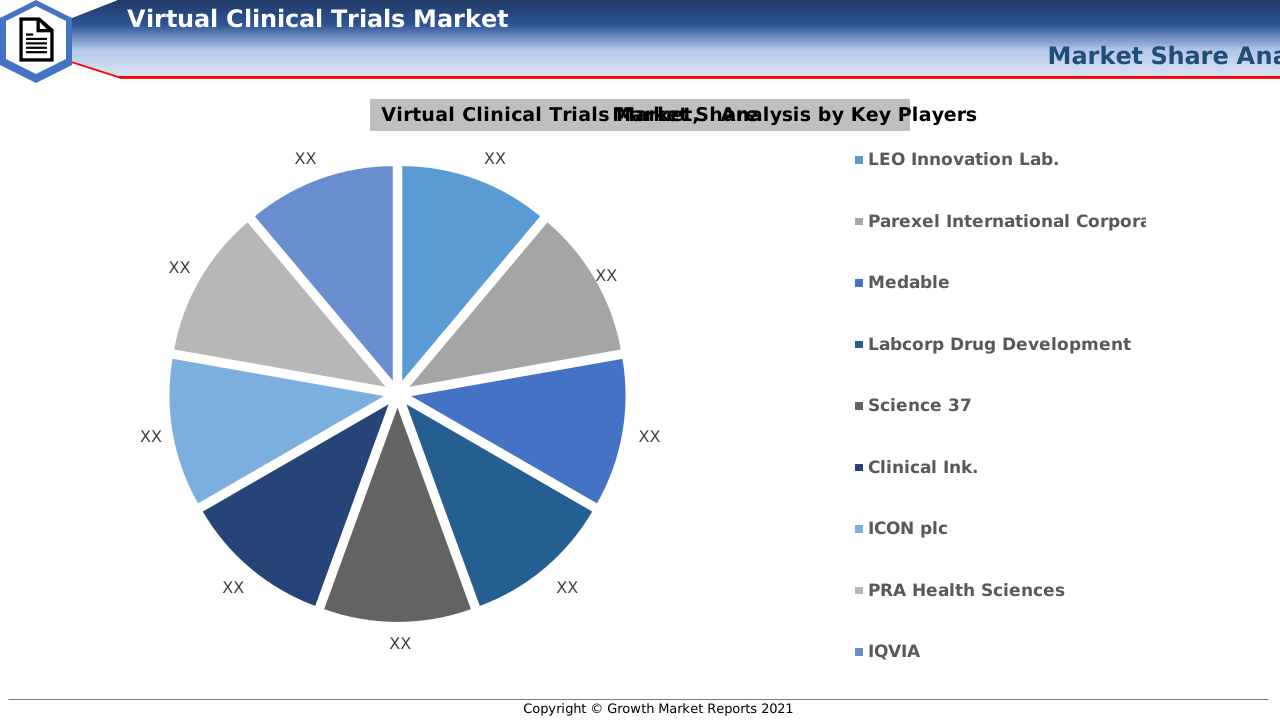
Key players in the global virtual clinical trials market include LEO Innovation Lab., Parexel International Corporation., Medable, Labcorp Drug Development, Science 37, Clinical Ink., ICON plc, PRA Health Sciences, and IQVIA. These companies engage in mergers and acquisitions, collaborations, agreements, and partnerships to strengthen their regional footprint.
Regulatory agencies like the FDA and EMA have issued guidelines supporting remote monitoring, electronic consent, and digital endpoints, increasing confidence and adoption among sponsors and CROs.
Major players include IQVIA, Covance (LabCorp), Parexel International, Medable, Science 37, Oracle Health Sciences, ICON plc, Syneos Health, PPD (Thermo Fisher Scientific), and Signant Health.
Opportunities include the integration of AI, machine learning, and blockchain for improved recruitment and data integrity, as well as increased access and health equity. Challenges include data privacy concerns, cybersecurity risks, and the need for standardized protocols.
Key end-users include pharmaceutical and biotechnology companies, contract research organizations (CROs), academic and research institutions, and government or non-profit organizations.
Oncology is the largest and fastest-growing application, followed by cardiovascular, infectious disease, CNS (central nervous system), autoimmune disorders, and others.
The primary study designs are Interventional, Observational, and Expanded Access. Interventional studies involve active treatment, observational studies monitor outcomes without intervention, and expanded access provides investigational therapies to patients lacking alternatives.
North America leads the market, followed by Europe and the Asia Pacific region. North America benefits from advanced healthcare infrastructure and early digital adoption, while Asia Pacific is experiencing rapid growth due to increased healthcare IT investments.
Key growth drivers include increasing healthcare digitization, the need for patient-centric and efficient trial models, regulatory support for digital health technologies, and the acceleration of remote technologies, especially post-COVID-19.
Virtual clinical trials, also known as decentralized trials, use digital health platforms, telemedicine, wearable sensors, and remote monitoring to conduct research without requiring participants to visit physical sites, unlike traditional trials.
The global virtual clinical trials market reached USD 3.9 billion in 2024 and is projected to grow to USD 13.1 billion by 2033, with a CAGR of 14.2% during the forecast period.