Segments - by Type (Proton Therapy, Heavy Ion Therapy, Neutron Therapy), by Product (Cyclotrons, Synchrotrons, Synchrocyclotrons, Beam Delivery Systems), by Application (Oncology, Pediatrics, Others), by End-User (Hospitals, Cancer Research Centers, Specialty Clinics)
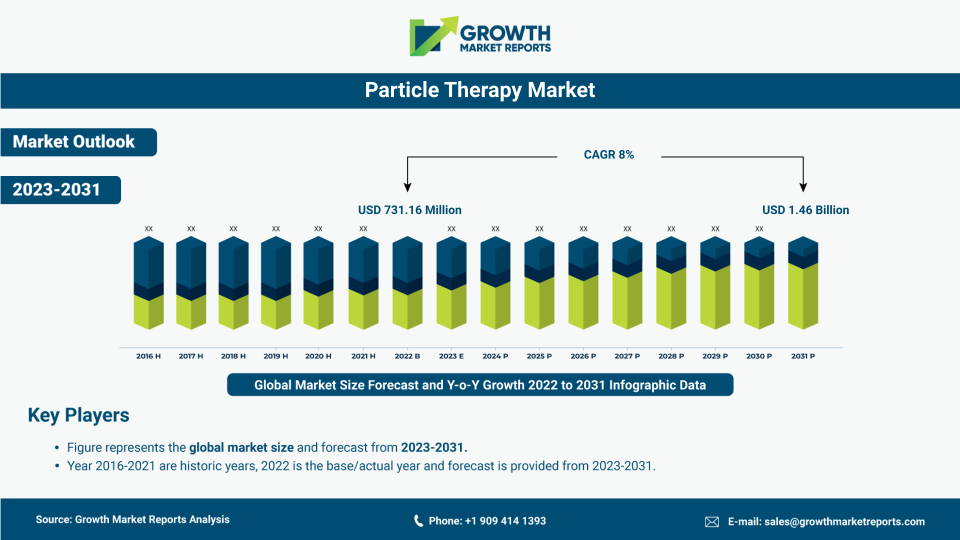
According to our latest research, the particle therapy market size reached USD 1.56 billion in 2024, reflecting robust momentum in advanced cancer treatment modalities. The market is experiencing a strong compound annual growth rate (CAGR) of 9.8% and is projected to attain a value of USD 3.52 billion by 2033. This impressive growth is primarily driven by the rising global incidence of cancer, ongoing technological advancements in particle therapy systems, and increasing awareness of the clinical efficacy and safety of particle therapy over conventional radiotherapy methods.
One of the most significant growth factors for the particle therapy market is the escalating burden of cancer worldwide. As per recent data from the World Health Organization, cancer continues to be a leading cause of morbidity and mortality globally, with millions of new cases diagnosed each year. Particle therapy, especially proton and heavy ion therapies, offers superior precision in targeting malignant tumors while minimizing damage to surrounding healthy tissues. This distinct advantage has led to a surge in demand for particle therapy equipment and services, as healthcare providers and patients seek more effective and less invasive treatment options. Additionally, the increasing adoption of personalized medicine and the growing recognition of the benefits of particle therapy in pediatric oncology are further fueling market expansion.
Technological innovation remains at the forefront of market growth. The development of compact and cost-effective particle therapy systems, such as single-room proton therapy units and advanced beam delivery systems, has made these treatments more accessible to a broader spectrum of healthcare facilities. The integration of artificial intelligence and image-guided therapy into particle therapy platforms has significantly improved treatment accuracy, workflow efficiency, and patient outcomes. Furthermore, ongoing investments by both public and private stakeholders in research and development are accelerating the commercialization of next-generation particle therapy products. These advancements are not only reducing the operational costs associated with particle therapy but are also expanding its clinical applications beyond conventional oncology, including the treatment of non-cancerous conditions.
Another key driver is the favorable reimbursement landscape and supportive regulatory frameworks in major markets. Governments and health insurance providers in regions such as North America, Europe, and parts of Asia Pacific are increasingly recognizing the clinical and economic value of particle therapy. This has led to the inclusion of particle therapy procedures in public and private health insurance plans, thereby reducing the financial burden on patients and stimulating market demand. Moreover, strategic collaborations among hospitals, research institutions, and industry players are fostering the establishment of new particle therapy centers, particularly in emerging economies. These collaborative efforts are enhancing the geographical reach and accessibility of particle therapy, thereby contributing to the overall growth trajectory of the market.
Cyclotron Systems play a pivotal role in the particle therapy landscape, particularly in the generation of proton beams. These systems are favored for their compact design and cost-effectiveness, making them ideal for single-room and smaller-scale proton therapy centers. Recent advancements in cyclotron technology, such as the incorporation of superconducting magnets and automated control systems, have further enhanced their operational reliability and energy efficiency. As a result, Cyclotron Systems are increasingly being adopted by healthcare providers seeking to optimize space and budget constraints while delivering effective cancer treatments. The ongoing innovation in cyclotron technology is expected to continue driving their widespread adoption across diverse clinical settings.
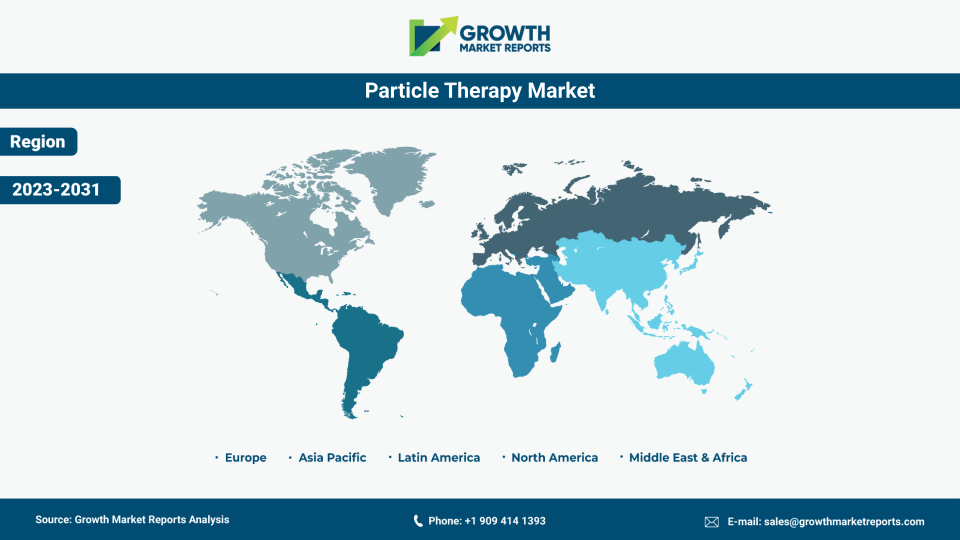
From a regional perspective, North America currently dominates the particle therapy market, accounting for the largest revenue share in 2024, driven by the presence of advanced healthcare infrastructure and a high concentration of leading market players. Europe follows closely, benefiting from strong government support for cancer research and the expansion of particle therapy centers across the region. Meanwhile, the Asia Pacific region is witnessing the fastest growth, propelled by increasing healthcare investments, rising cancer prevalence, and a surge in the adoption of cutting-edge medical technologies in countries such as China and Japan. Latin America and the Middle East & Africa are also emerging as promising markets, owing to growing awareness and gradual improvements in healthcare infrastructure.
The type segment of the particle therapy market encompasses proton therapy, heavy ion therapy, and neutron therapy, each offering unique clinical benefits and technological distinctions. Proton therapy represents the largest and most widely adopted modality, owing to its proven efficacy in treating various cancer types, particularly those located near critical organs and in pediatric patients. The Bragg peak phenomenon, which allows protons to deposit maximum energy directly at the tumor site, significantly reduces collateral damage to healthy tissues. This characteristic has positioned proton therapy as the gold standard for precision radiation treatment, driving its widespread adoption in both developed and emerging markets. The increasing establishment of proton therapy centers and the ongoing development of compact proton therapy systems are further solidifying its market dominance.
Heavy ion therapy, primarily utilizing carbon ions, is gaining traction as a highly effective treatment for radioresistant and deep-seated tumors. This modality offers enhanced biological effectiveness compared to protons, enabling superior tumor control and reduced treatment durations. Although the initial capital investment and operational costs associated with heavy ion therapy are higher, ongoing research and technological advancements are gradually making it more accessible. Several countries, particularly in Europe and Asia, are investing in the development of heavy ion therapy centers, recognizing its potential to address unmet clinical needs in oncology. The expansion of clinical trials and the accumulation of long-term efficacy data are expected to further drive the adoption of heavy ion therapy in the coming years.
Neutron therapy, while less commonly utilized, serves as a valuable option for specific cancer indications, such as salivary gland tumors and certain sarcomas. Neutron particles possess higher linear energy transfer, resulting in greater biological damage to tumor cells. However, the limited availability of neutron therapy facilities, coupled with concerns regarding potential side effects and the emergence of more advanced modalities, has constrained its market growth. Despite these challenges, ongoing research into optimizing neutron therapy protocols and improving patient selection criteria may help sustain its niche applications within the broader particle therapy landscape.
The increasing emphasis on multimodal and combination therapies is also influencing the type segment. Healthcare providers are exploring the synergistic effects of integrating particle therapy with conventional radiotherapy, chemotherapy, and immunotherapy to enhance treatment outcomes. This trend is fostering innovation in treatment planning and delivery, as well as driving collaborations between academic institutions and industry players to develop novel therapeutic approaches. As the clinical evidence base continues to grow, the adoption of diverse particle therapy modalities is expected to expand, catering to a broader spectrum of cancer patients and clinical scenarios.
| Attributes | Details |
| Report Title | Particle Therapy Market Research Report 2033 |
| By Type | Proton Therapy, Heavy Ion Therapy, Neutron Therapy |
| By Product | Cyclotrons, Synchrotrons, Synchrocyclotrons, Beam Delivery Systems |
| By Application | Oncology, Pediatrics, Others |
| By End-User | Hospitals, Cancer Research Centers, Specialty Clinics |
| Regions Covered | North America, Europe, APAC, Latin America, MEA |
| Base Year | 2024 |
| Historic Data | 2018-2023 |
| Forecast Period | 2025-2033 |
| Number of Pages | 286 |
| Number of Tables & Figures | 362 |
| Customization Available | Yes, the report can be customized as per your need. |
The product segment of the particle therapy market is characterized by a diverse range of equipment and technologies, including cyclotrons, synchrotrons, synchrocyclotrons, and beam delivery systems. Cyclotrons are widely used for the generation of proton beams, owing to their compact design, cost-effectiveness, and operational reliability. These systems are particularly favored in single-room and smaller-scale proton therapy centers, where space and budget constraints are significant considerations. Recent advancements in cyclotron technology, such as superconducting magnets and automated control systems, have improved energy efficiency and reduced maintenance requirements, further enhancing their appeal to healthcare providers.
Synchrotrons and synchrocyclotrons, on the other hand, are primarily employed in large-scale particle therapy facilities, offering the flexibility to accelerate a variety of particles, including protons and heavy ions. Synchrotrons are renowned for their ability to deliver high-energy beams with precise control over dose distribution, making them ideal for treating deep-seated and complex tumors. The integration of advanced imaging and real-time monitoring technologies into synchrotron-based systems has significantly improved treatment accuracy and patient safety. Despite their higher initial investment and operational complexity, synchrotrons continue to play a pivotal role in the expansion of state-of-the-art particle therapy centers, particularly in academic and research-oriented settings.
Beam delivery systems represent a critical component of the particle therapy product landscape, encompassing technologies such as gantries, nozzles, and scanning systems. These systems are responsible for directing and shaping the particle beam to conform to the three-dimensional geometry of the tumor. The adoption of pencil beam scanning and intensity-modulated particle therapy has revolutionized beam delivery, enabling highly conformal treatments with minimal exposure to surrounding healthy tissues. Ongoing innovations in robotic positioning, motion management, and adaptive therapy are further enhancing the precision and versatility of beam delivery systems, driving their widespread adoption across diverse clinical settings.
The product segment is also witnessing the emergence of turnkey and modular particle therapy solutions, designed to streamline installation, commissioning, and maintenance processes. These integrated systems are particularly attractive to hospitals and specialty clinics seeking to establish particle therapy capabilities without the need for extensive infrastructure modifications. The increasing availability of financing options, leasing models, and vendor-managed services is further lowering the barriers to entry for healthcare providers, accelerating the global proliferation of particle therapy technologies. As competition intensifies within the market, manufacturers are focusing on product differentiation, after-sales support, and value-added services to capture market share and foster long-term customer relationships.
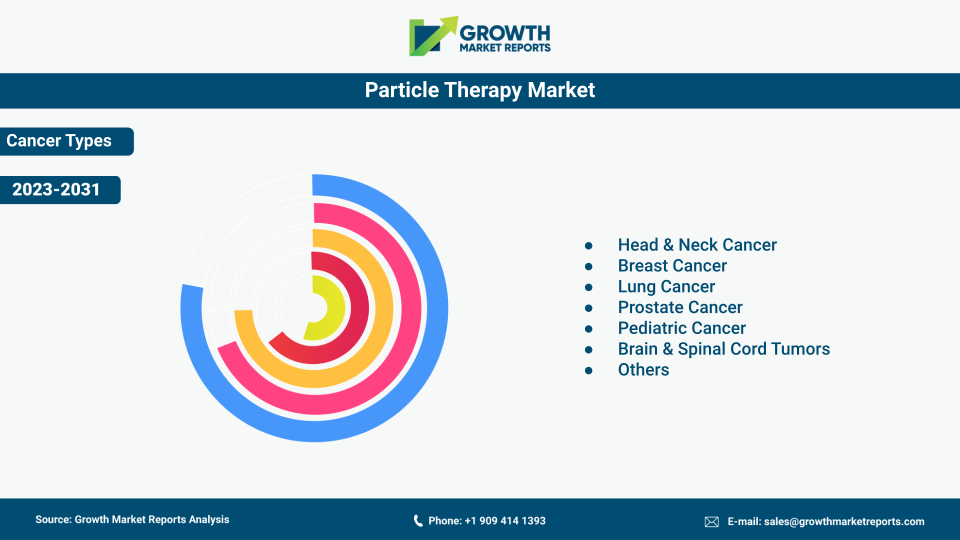
The application segment of the particle therapy market is dominated by oncology, reflecting the primary clinical use of particle therapy in the treatment of various malignancies. Particle therapy has demonstrated superior efficacy in managing tumors that are resistant to conventional radiotherapy, located near critical structures, or require highly precise dose delivery. The ability to minimize radiation-induced side effects and preserve healthy tissue integrity has made particle therapy particularly valuable in the treatment of pediatric cancers, head and neck tumors, brain tumors, and prostate cancer. As a result, the adoption of particle therapy in oncology centers and comprehensive cancer hospitals is steadily increasing, supported by growing clinical evidence and favorable patient outcomes.
Pediatrics represents a rapidly growing sub-segment within the application landscape, driven by the unique vulnerabilities of pediatric patients to radiation-induced toxicity and long-term complications. Particle therapyÂ’s precision and reduced risk of secondary malignancies make it the treatment of choice for children with cancer, especially for tumors located in the brain, spine, and other sensitive areas. The expansion of dedicated pediatric particle therapy programs, coupled with increased funding for childhood cancer research, is expected to further propel growth in this segment. Moreover, collaborations between pediatric oncology centers and particle therapy providers are facilitating knowledge exchange, protocol development, and the establishment of best practices in pediatric care.
Beyond oncology and pediatrics, particle therapy is gradually finding applications in the management of non-cancerous conditions, such as arteriovenous malformations, ocular diseases, and certain benign tumors. Although these indications currently represent a smaller share of the market, ongoing research and clinical trials are exploring the potential benefits of particle therapy in a broader range of diseases. The versatility of particle therapy, combined with advances in imaging and treatment planning, is paving the way for its integration into multidisciplinary care pathways. As the evidence base for non-oncologic applications expands, healthcare providers are likely to increasingly consider particle therapy as a valuable addition to their therapeutic armamentarium.
The application segment is also being shaped by evolving treatment paradigms, such as hypofractionation and adaptive therapy, which aim to optimize treatment efficacy while minimizing patient burden. These approaches leverage the precision and flexibility of particle therapy to deliver higher doses per fraction and adapt treatment plans in real time based on tumor response and anatomical changes. The adoption of such advanced techniques is enhancing the clinical value proposition of particle therapy, driving greater utilization across a diverse array of patient populations and disease indications.
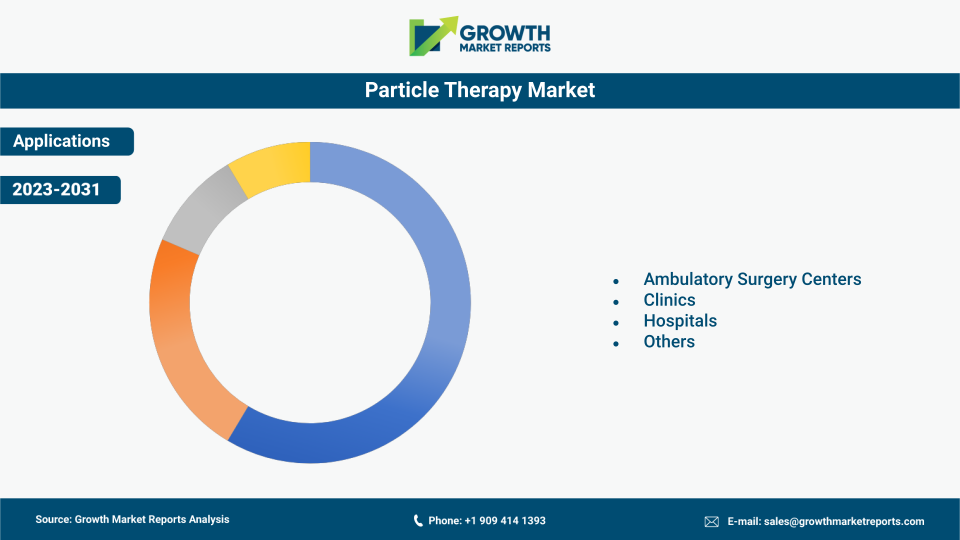
The end-user segment of the particle therapy market is primarily composed of hospitals, cancer research centers, and specialty clinics, each playing a distinct role in the delivery and advancement of particle therapy services. Hospitals represent the largest end-user segment, benefiting from established infrastructure, multidisciplinary care teams, and access to a broad patient base. The integration of particle therapy into hospital-based oncology programs is enabling seamless coordination of care, comprehensive treatment planning, and efficient management of complex cases. As hospitals increasingly invest in state-of-the-art particle therapy facilities, they are also serving as hubs for clinical research, education, and innovation in cancer care.
Cancer research centers are at the forefront of driving scientific discovery and technological advancement in the field of particle therapy. These institutions are actively engaged in clinical trials, translational research, and the development of novel treatment protocols aimed at improving patient outcomes and expanding the therapeutic applications of particle therapy. The collaborative environment within research centers fosters partnerships with industry stakeholders, academic institutions, and regulatory agencies, facilitating the rapid translation of research findings into clinical practice. As the demand for evidence-based medicine continues to grow, cancer research centers are poised to play an increasingly influential role in shaping the future trajectory of the particle therapy market.
Specialty clinics, including standalone particle therapy centers and private oncology practices, are emerging as important contributors to market growth, particularly in regions with high demand for advanced cancer treatments. These clinics offer specialized expertise, personalized care, and streamlined patient pathways, catering to individuals seeking cutting-edge therapies and tailored treatment regimens. The proliferation of specialty clinics is being supported by favorable reimbursement policies, targeted marketing initiatives, and the availability of modular particle therapy solutions that can be rapidly deployed in diverse healthcare settings. As competition intensifies, specialty clinics are differentiating themselves through service excellence, patient-centric care, and the integration of complementary therapies and support services.
The end-user landscape is also being influenced by the increasing involvement of public health authorities, non-profit organizations, and philanthropic foundations in the promotion and funding of particle therapy initiatives. These stakeholders are playing a pivotal role in raising awareness, supporting infrastructure development, and ensuring equitable access to advanced cancer treatments, particularly in underserved and low-resource settings. The convergence of public and private sector efforts is fostering a more inclusive and sustainable market environment, driving long-term growth and innovation in the particle therapy sector.
The particle therapy market is ripe with opportunities, driven by the ongoing expansion of clinical indications and the increasing integration of advanced technologies. The growing body of clinical evidence supporting the efficacy of particle therapy in treating complex and refractory tumors is encouraging healthcare providers to broaden its application across diverse patient populations. The development of compact and cost-effective particle therapy systems is making these treatments accessible to a wider range of healthcare facilities, including community hospitals and specialty clinics. Additionally, the integration of artificial intelligence, machine learning, and real-time imaging into particle therapy platforms is enhancing treatment precision, workflow efficiency, and patient safety. These technological advancements are creating new avenues for market growth, as healthcare providers seek to optimize clinical outcomes and operational performance.
Another significant opportunity lies in the expansion of particle therapy infrastructure in emerging markets. Countries in Asia Pacific, Latin America, and the Middle East are witnessing rapid improvements in healthcare infrastructure, rising cancer prevalence, and increasing investments in advanced medical technologies. Strategic collaborations between governments, industry players, and academic institutions are facilitating the establishment of new particle therapy centers and the training of specialized personnel. The availability of innovative financing models, such as public-private partnerships and vendor-managed services, is further lowering the barriers to entry for healthcare providers in these regions. As awareness of the clinical and economic benefits of particle therapy grows, emerging markets are poised to become major contributors to global market growth in the coming years.
Despite the promising outlook, the particle therapy market faces several restraining factors, with high capital investment and operational costs being the most prominent. The establishment of particle therapy centers requires significant financial resources, advanced infrastructure, and specialized expertise, which can be prohibitive for many healthcare providers, particularly in low- and middle-income countries. Additionally, the complexity of particle therapy systems necessitates ongoing maintenance, technical support, and staff training, further adding to the overall cost burden. Reimbursement challenges and regulatory hurdles in certain regions also pose barriers to market entry and expansion. Addressing these challenges will require concerted efforts from industry stakeholders, policymakers, and healthcare providers to develop sustainable business models, streamline regulatory processes, and promote equitable access to particle therapy services.
The regional analysis of the particle therapy market reveals a dynamic and evolving landscape, with North America maintaining its position as the largest regional market in 2024, accounting for approximately USD 610 million in revenue. The regionÂ’s leadership is underpinned by the presence of advanced healthcare infrastructure, a high concentration of leading market players, and robust investment in cancer research and technology development. The United States, in particular, is home to some of the worldÂ’s most advanced particle therapy centers, supported by favorable reimbursement policies and strong government support for oncology innovation. Canada is also witnessing steady growth, driven by increasing healthcare expenditure and the expansion of cancer treatment facilities.
Europe follows closely, with a market size of around USD 520 million in 2024, benefiting from strong government initiatives, public-private partnerships, and a growing network of particle therapy centers across key countries such as Germany, France, Italy, and the United Kingdom. The region is characterized by a collaborative approach to research and clinical practice, with leading academic institutions and healthcare providers actively engaged in the development and dissemination of best practices in particle therapy. The European market is expected to register a CAGR of 9.5% through 2033, driven by ongoing investments in infrastructure, technological innovation, and the increasing adoption of personalized medicine approaches.
The Asia Pacific region is emerging as the fastest-growing market, with a value of approximately USD 340 million in 2024. Countries such as China, Japan, South Korea, and India are at the forefront of regional growth, supported by rising cancer prevalence, increasing healthcare investments, and the rapid adoption of advanced medical technologies. China and Japan, in particular, have made significant strides in the establishment of particle therapy centers and the development of indigenous technologies. The Asia Pacific market is projected to achieve a CAGR of 11.2% through 2033, outpacing other regions and contributing significantly to global market expansion. Latin America and the Middle East & Africa, while currently representing smaller shares of the global market, are witnessing steady growth driven by improving healthcare infrastructure, rising awareness, and targeted investments in cancer care.
The particle therapy market is characterized by a highly competitive landscape, with a mix of established multinational corporations, specialized medical technology firms, and emerging players vying for market share. Leading companies are leveraging their extensive R&D capabilities, global distribution networks, and strategic partnerships to drive innovation and expand their presence in key markets. The competitive environment is further intensified by the ongoing entry of new players, the emergence of disruptive technologies, and the increasing focus on product differentiation and value-added services. As competition intensifies, companies are prioritizing customer engagement, after-sales support, and the development of integrated solutions that address the evolving needs of healthcare providers and patients.
Innovation remains a central theme in the competitive dynamics of the particle therapy market. Market leaders are investing heavily in the development of next-generation particle therapy systems, incorporating advanced features such as real-time imaging, adaptive therapy, and artificial intelligence-driven treatment planning. These innovations are aimed at enhancing treatment precision, reducing operational complexity, and improving patient outcomes. Companies are also focusing on the development of compact and cost-effective systems that can be deployed in a wider range of healthcare settings, thereby expanding their addressable market and driving adoption among new customer segments. The ability to offer comprehensive solutions, including installation, training, maintenance, and financing options, is emerging as a key differentiator in the competitive landscape.
Strategic collaborations and partnerships are playing a pivotal role in shaping the competitive landscape of the particle therapy market. Companies are increasingly joining forces with hospitals, academic institutions, and research organizations to accelerate the development and commercialization of innovative technologies. These collaborations are facilitating knowledge exchange, clinical validation, and the establishment of best practices, thereby enhancing the overall value proposition of particle therapy solutions. Mergers and acquisitions are also on the rise, as companies seek to strengthen their market position, expand their product portfolios, and gain access to new technologies and customer segments.
Some of the major companies operating in the particle therapy market include Varian Medical Systems (a Siemens Healthineers company), Hitachi, Ltd., IBA (Ion Beam Applications S.A.), Mevion Medical Systems, Sumitomo Heavy Industries, Ltd., and ProTom International. Varian Medical Systems is a global leader in the development and commercialization of advanced cancer treatment technologies, offering a comprehensive portfolio of proton therapy solutions and integrated oncology platforms. Hitachi, Ltd. is renowned for its expertise in particle therapy systems, with a strong focus on innovation, reliability, and customer support. IBA is a pioneer in the design and manufacture of cyclotrons and proton therapy systems, with a global footprint and a track record of successful installations in leading cancer centers worldwide.
Mevion Medical Systems is recognized for its innovative approach to compact proton therapy, offering systems that are designed for ease of installation, operational efficiency, and clinical versatility. Sumitomo Heavy Industries, Ltd. is a key player in the development of heavy ion therapy systems, with a focus on expanding access to advanced cancer treatments in Asia and beyond. ProTom International specializes in the development of next-generation proton therapy solutions, emphasizing precision, flexibility, and patient-centric care. These companies, along with a host of emerging players and technology innovators, are driving the continued evolution and growth of the particle therapy market, shaping its future trajectory through relentless innovation, collaboration, and a commitment to improving patient outcomes worldwide.
The Particle Therapy market has been segmented on the basis of
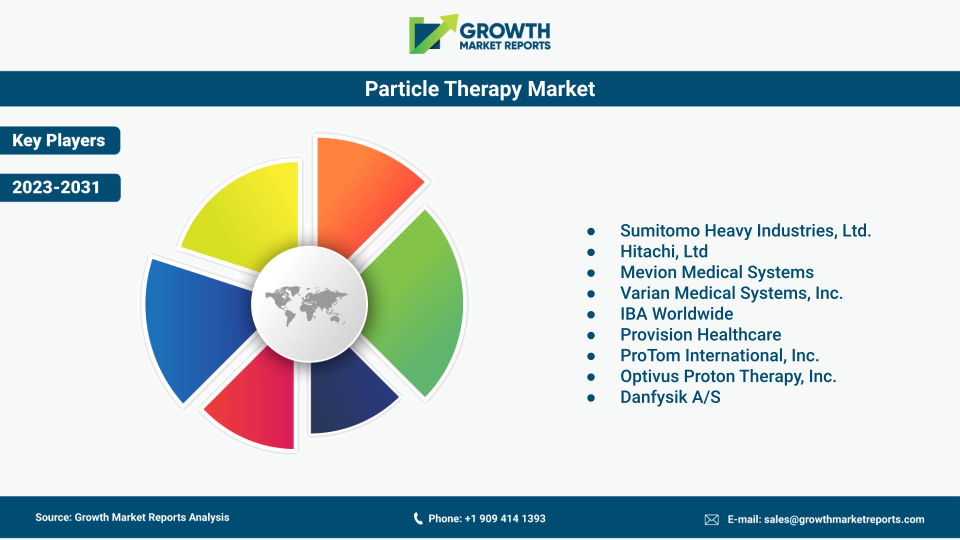
Key players competing in the particle therapy market include Sumitomo Heavy Industries, Ltd.; Mevion Medical Systems; Hitachi, Ltd; Varian Medical Systems, Inc.; IBA Worldwide; Provision Healthcare; ProTom International, Inc.; Optivus Proton Therapy, Inc.; and Danfysik A/S.
Some of these players are using several market strategies such as acquisitions, mergers, collaborations, partnerships, capacity expansion, and product launches to enhance their market shares, generate revenue, and raise their production line of the business in the coming years. For instance,
Technological innovation is driving the market by making systems more compact, cost-effective, and precise. Integration of artificial intelligence, real-time imaging, and adaptive therapy is improving treatment accuracy, workflow efficiency, and patient outcomes, while also expanding clinical applications.
Major challenges include high capital investment and operational costs, the need for specialized infrastructure and expertise, reimbursement and regulatory hurdles in some regions, and limited availability of facilities in low- and middle-income countries.
Particle therapy is primarily used in oncology for treating various cancers, especially those near critical organs or in pediatric patients. It is also being explored for non-cancerous conditions like arteriovenous malformations and certain benign tumors.
Key players include Varian Medical Systems (Siemens Healthineers), Hitachi, Ltd., Ion Beam Applications S.A. (IBA), Mevion Medical Systems, Sumitomo Heavy Industries, ProTom International, and several others specializing in advanced oncology technologies.
Major products include cyclotrons, synchrotrons, synchrocyclotrons, and advanced beam delivery systems. Cyclotrons are popular for their compact design and cost-effectiveness, while synchrotrons are used in large-scale facilities for their flexibility and high-energy beam delivery.
Key growth drivers include the rising global incidence of cancer, technological advancements in particle therapy systems, increasing awareness of its clinical benefits, favorable reimbursement policies, and expanding applications in pediatric oncology and personalized medicine.
The main types of particle therapy are proton therapy, heavy ion therapy (such as carbon ion therapy), and neutron therapy. Proton therapy is the most widely adopted, while heavy ion therapy is gaining traction for treating radioresistant tumors. Neutron therapy is used for specific indications but is less common.
North America currently dominates the particle therapy market, followed by Europe and the Asia Pacific region. Asia Pacific is the fastest-growing market due to rising cancer prevalence, healthcare investments, and adoption of advanced medical technologies.
As of 2024, the global particle therapy market is valued at USD 1.56 billion and is projected to reach USD 3.52 billion by 2033, growing at a compound annual growth rate (CAGR) of 9.8%.
Particle therapy is an advanced form of cancer treatment that uses charged particles, such as protons or heavy ions, to precisely target and destroy cancer cells. Unlike conventional radiotherapy, which uses X-rays, particle therapy delivers maximum energy directly to the tumor site, minimizing damage to surrounding healthy tissues and reducing side effects.