Segments - by Product Type (Active Microwave Devices, Passive Microwave Devices), by Frequency Range (L Band, S Band, C Band, X Band, Ku Band, Ka Band, Others), by Application (Telecommunications, Aerospace & Defense, Medical, Industrial, Automotive, Others), by End-User (Commercial, Military, Industrial, Others)
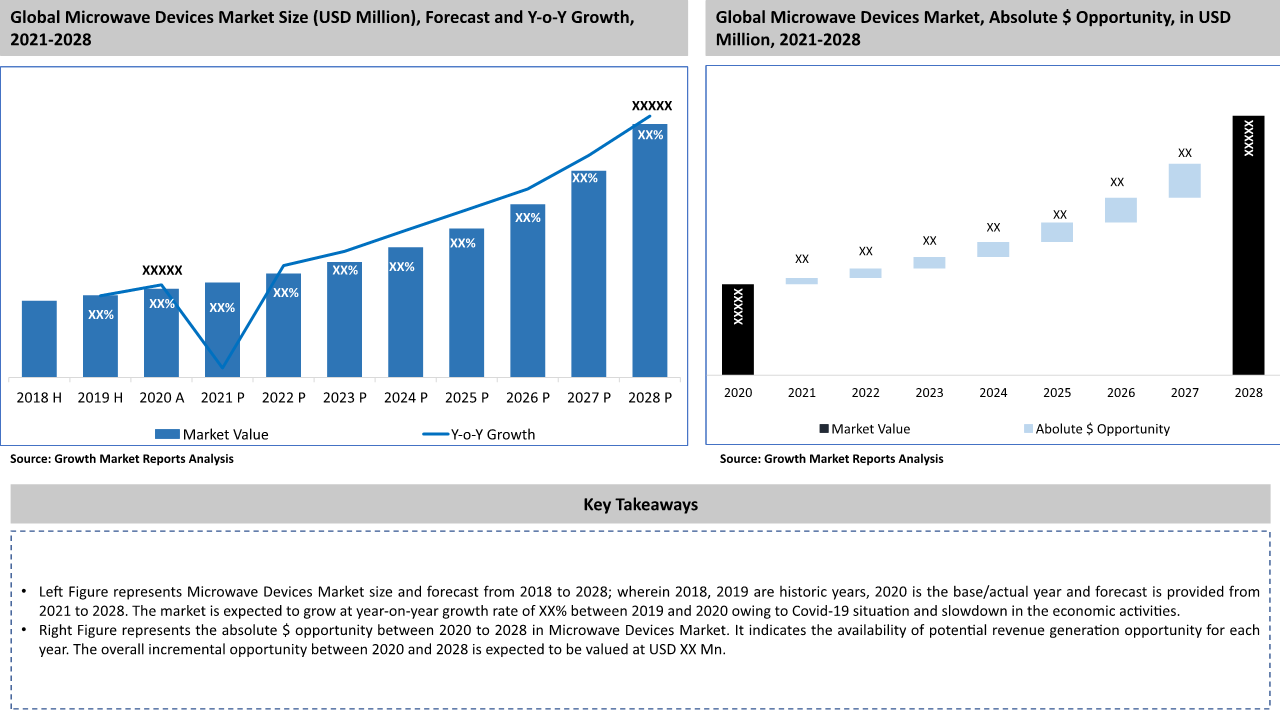
According to our latest research, the global microwave devices market size stood at USD 8.7 billion in 2024, reflecting the robust expansion of this sector. The market is forecasted to grow at a CAGR of 6.2% from 2025 to 2033, reaching an estimated value of USD 15.1 billion by 2033. This remarkable growth is primarily driven by increasing demand for high-frequency components in telecommunications, defense modernization programs, and the proliferation of wireless communication networks. As per our comprehensive analysis, the microwave devices market continues to benefit from technological advancements, expanding applications, and the growing need for reliable, high-speed data transmission across diverse industries.
One of the primary growth factors fueling the expansion of the microwave devices market is the rapid evolution of the telecommunications sector. The global rollout of 5G networks and the anticipated transition towards 6G are generating substantial demand for advanced microwave components that can operate efficiently at higher frequencies. Microwave devices, including both active and passive types, are integral to the infrastructure supporting wireless backhaul, satellite communications, and point-to-point links. The increasing penetration of smartphones, IoT devices, and cloud-based services is further amplifying the need for robust and high-capacity communication networks, thereby bolstering the market for microwave devices. Additionally, the ongoing shift towards digitalization in emerging economies is accelerating the deployment of new telecommunications infrastructure, creating lucrative opportunities for market participants.
Another significant driver is the growing investment in aerospace and defense applications. Governments and defense organizations worldwide are prioritizing the modernization of radar systems, electronic warfare, and communication networks. Microwave devices play a critical role in these applications due to their ability to support high-frequency signal processing, jamming, and detection capabilities. The increasing complexity of modern warfare, coupled with the need for secure and reliable communication channels, is prompting defense agencies to adopt state-of-the-art microwave technologies. Furthermore, the rising threat landscape and geopolitical tensions are compelling nations to enhance their surveillance and reconnaissance capabilities, further driving the adoption of advanced microwave devices.
The microwave devices market is also experiencing significant growth from the medical and industrial sectors. In healthcare, microwave technologies are being leveraged for diagnostic imaging, cancer treatment, and minimally invasive procedures. The rising prevalence of chronic diseases and the emphasis on early diagnosis are catalyzing the demand for microwave-based medical devices. In industrial settings, microwave devices are used for material processing, non-destructive testing, and automation, supporting the push towards Industry 4.0. The convergence of microwave technology with artificial intelligence and machine learning is unlocking new possibilities for precision manufacturing and real-time monitoring, further expanding the addressable market.
Microwave Radio Equipment is becoming increasingly pivotal in the telecommunications sector, especially with the advent of advanced wireless communication technologies. These devices are essential for establishing robust point-to-point communication links, which are crucial for the seamless operation of 5G and future 6G networks. As the demand for high-speed data transmission grows, the role of microwave radio equipment in ensuring reliable connectivity becomes even more critical. This equipment is designed to handle high-frequency signals efficiently, making it indispensable for modern telecommunication infrastructures that require high bandwidth and low latency. The integration of microwave radio equipment in network architectures is facilitating the expansion of wireless backhaul networks, thereby supporting the proliferation of connected devices and IoT applications.
From a regional perspective, Asia Pacific is emerging as the dominant market for microwave devices, driven by rapid industrialization, urbanization, and substantial investments in telecommunications and defense. North America continues to maintain a strong presence due to its advanced technological ecosystem and ongoing R&D activities. Europe is witnessing steady growth, bolstered by the expansion of aerospace and automotive industries. Meanwhile, Latin America and the Middle East & Africa are gradually gaining traction as governments focus on infrastructure development and digital transformation initiatives. The regional dynamics are characterized by varying degrees of market maturity, regulatory frameworks, and investment priorities, shaping the competitive landscape and growth trajectories across the globe.
The microwave devices market is broadly segmented into active microwave devices and passive microwave devices, each playing a distinct role in the performance and functionality of high-frequency systems. Active microwave devices, such as amplifiers, oscillators, and mixers, are essential for signal generation, amplification, and processing in communication networks and radar systems. The increasing demand for high-power, low-noise amplifiers in 5G infrastructure and defense applications is driving the growth of this segment. Technological advancements in semiconductor materials, such as gallium nitride (GaN) and gallium arsenide (GaAs), are further enhancing the efficiency and reliability of active microwave devices, making them indispensable in next-generation wireless and satellite communication systems.
Passive microwave devices, including filters, couplers, and attenuators, are equally critical for ensuring signal integrity and minimizing interference in complex RF environments. These devices are widely used in both commercial and military applications, where precise control over signal transmission and reception is paramount. The proliferation of connected devices and the increasing complexity of wireless networks are creating a strong demand for high-performance passive microwave components. Manufacturers are focusing on miniaturization, improved frequency selectivity, and enhanced power handling capabilities to meet the evolving requirements of end users.
The interplay between active and passive microwave devices is shaping the overall market dynamics, as system integrators seek seamless solutions that combine the strengths of both types. Integrated microwave assemblies, which combine active and passive elements in a single package, are gaining popularity for their compactness, efficiency, and ease of deployment. This trend is particularly evident in aerospace and defense applications, where space and weight constraints are critical considerations. The growing adoption of integrated solutions is prompting manufacturers to invest in R&D and collaborate with system integrators to deliver customized, high-performance microwave assemblies.
Overall, the product type segment is characterized by intense competition, rapid technological innovation, and a strong emphasis on reliability and performance. Leading players are differentiating themselves through proprietary technologies, robust supply chains, and strategic partnerships with key stakeholders. As the demand for advanced microwave devices continues to rise across diverse industries, the market is expected to witness further consolidation, with established players acquiring niche technology providers to enhance their product portfolios and address emerging application areas.
| Attributes | Details |
| Report Title | Microwave Devices Market Market Research Report 2033 |
| By Product Type | Active Microwave Devices, Passive Microwave Devices |
| By Frequency Range | L Band, S Band, C Band, X Band, Ku Band, Ka Band, Others |
| By Application | Telecommunications, Aerospace & Defense, Medical, Industrial, Automotive, Others |
| By End-User | Commercial, Military, Industrial, Others |
| Regions Covered | North America, Europe, APAC, Latin America, MEA |
| Base Year | 2024 |
| Historic Data | 2018-2023 |
| Forecast Period | 2025-2033 |
| Number of Pages | 285 |
| Number of Tables & Figures | 263 |
| Customization Available | Yes, the report can be customized as per your need. |
The microwave devices market is segmented by frequency range into L Band, S Band, C Band, X Band, Ku Band, Ka Band, and others, each catering to specific applications and performance requirements. The L Band (1-2 GHz) and S Band (2-4 GHz) are widely used in radar, navigation, and communication systems, offering a balance between range, resolution, and atmospheric penetration. The increasing deployment of air traffic control systems, weather monitoring radars, and satellite communication networks is driving the demand for microwave devices operating in these frequency bands. The S Band, in particular, is gaining traction in 5G backhaul and satellite-based IoT applications, supported by favorable regulatory policies and spectrum allocations.
The C Band (4-8 GHz) and X Band (8-12 GHz) are preferred for high-capacity data transmission, remote sensing, and military radar applications. The C Band is extensively used in satellite communications, television broadcasting, and point-to-point wireless links, benefiting from its resilience to rain fade and atmospheric attenuation. The X Band, on the other hand, is favored in defense and aerospace applications for its ability to provide high-resolution imaging and target detection. The ongoing modernization of military radar systems and the expansion of satellite networks are fueling the adoption of microwave devices in these frequency ranges.
Higher frequency bands, such as Ku Band (12-18 GHz) and Ka Band (26.5-40 GHz), are witnessing rapid growth due to their suitability for high-speed, high-capacity data transmission in satellite broadband, VSAT, and backhaul applications. The increasing demand for in-flight connectivity, maritime broadband, and remote area communications is driving the deployment of microwave devices capable of operating at these frequencies. The Ka Band, in particular, is emerging as a key enabler of next-generation satellite internet services, supported by advancements in phased array antennas and beamforming technologies.
The "others" category, which includes frequencies beyond Ka Band, is gaining attention for emerging applications such as millimeter-wave 5G, automotive radar, and scientific research. The growing interest in terahertz technologies and the exploration of new frequency bands for ultra-high-speed wireless communication are expected to create new opportunities for microwave device manufacturers. As frequency requirements become more diverse and demanding, manufacturers are investing in advanced materials, precision engineering, and automated testing to ensure the performance and reliability of their products across the entire frequency spectrum.
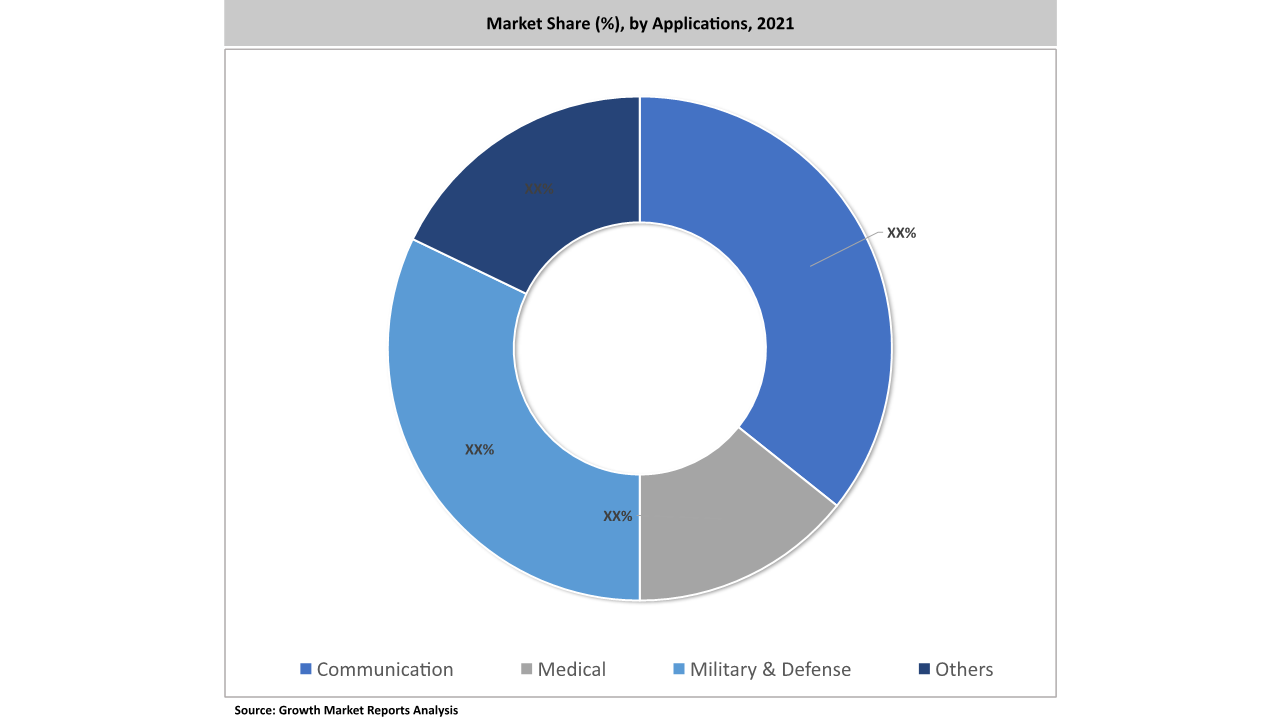
The microwave devices market serves a wide array of applications, with telecommunications, aerospace & defense, medical, industrial, automotive, and others forming the primary segments. Telecommunications remains the largest application area, driven by the exponential growth of wireless communication networks, the rollout of 5G and upcoming 6G technologies, and the increasing demand for high-speed data transmission. Microwave devices are essential for the deployment of base stations, backhaul links, and satellite communication terminals, enabling seamless connectivity and supporting the proliferation of connected devices. The rise of smart cities, IoT, and cloud computing is further amplifying the need for advanced microwave solutions in the telecom sector.
Aerospace & defense is another major application segment, characterized by stringent performance requirements and a strong emphasis on reliability and security. Microwave devices are integral to radar systems, electronic warfare, missile guidance, and secure communication networks. The modernization of military infrastructure, increasing defense budgets, and the development of next-generation surveillance and reconnaissance systems are driving the adoption of high-frequency microwave components. The growing threat of electronic warfare and the need for rapid, secure data transmission in complex operational environments are compelling defense agencies to invest in advanced microwave technologies.
In the medical sector, microwave devices are being increasingly used for diagnostic imaging, cancer treatment (such as microwave ablation), and minimally invasive surgical procedures. The rising prevalence of chronic diseases, the aging population, and the emphasis on early and accurate diagnosis are fueling the demand for microwave-based medical devices. Innovations in microwave imaging, hyperthermia therapy, and wireless patient monitoring are expanding the scope of applications, offering new avenues for market growth.
Industrial and automotive applications are also contributing to the growth of the microwave devices market. In industrial settings, microwave devices are used for material processing, non-destructive testing, and automation, supporting the transition towards smart manufacturing and Industry 4.0 initiatives. In the automotive sector, the adoption of advanced driver-assistance systems (ADAS), collision avoidance, and autonomous driving technologies is driving the integration of microwave radar sensors. The need for real-time object detection, adaptive cruise control, and enhanced safety features is propelling the demand for high-frequency microwave devices in modern vehicles.
Other emerging applications, such as scientific research, environmental monitoring, and space exploration, are also leveraging microwave technologies for their unique capabilities in high-frequency signal processing and data transmission. As the range of applications continues to expand, manufacturers are focusing on developing versatile, high-performance microwave devices that can meet the diverse needs of end users across different sectors.
The microwave devices market is segmented by end-user into commercial, military, industrial, and others, each with distinct requirements and growth drivers. The commercial segment encompasses telecommunications, broadcasting, and satellite communication providers, who rely on microwave devices for high-capacity data transmission, network reliability, and cost-effective deployment. The rapid expansion of mobile networks, increasing internet penetration, and the growing demand for broadband connectivity are driving the adoption of microwave devices in the commercial sector. The shift towards cloud-based services, video streaming, and IoT applications is further amplifying the need for robust and scalable microwave solutions.
The military segment represents a significant portion of the microwave devices market, driven by the need for advanced radar, electronic warfare, and secure communication systems. Defense organizations are prioritizing the modernization of their infrastructure to address evolving threats and enhance operational capabilities. Microwave devices are essential for high-frequency signal processing, target detection, and secure data transmission in complex and contested environments. The increasing focus on network-centric warfare, unmanned systems, and cyber defense is prompting defense agencies to invest in state-of-the-art microwave technologies.
The industrial end-user segment includes manufacturing, automation, energy, and transportation sectors, where microwave devices are used for process control, material testing, and wireless communication. The adoption of Industry 4.0, smart factories, and predictive maintenance is driving the integration of microwave technologies in industrial automation and monitoring systems. The need for real-time data acquisition, remote control, and enhanced operational efficiency is creating new opportunities for microwave device manufacturers in the industrial sector.
Other end-users, such as healthcare providers, research institutions, and government agencies, are also leveraging microwave devices for specialized applications. In healthcare, microwave devices are used for diagnostic imaging, therapeutic procedures, and wireless patient monitoring. Research institutions are utilizing microwave technologies for scientific experiments, environmental monitoring, and space exploration. The diverse range of end-users highlights the versatility and adaptability of microwave devices, underscoring their importance across multiple sectors.
As the end-user landscape continues to evolve, manufacturers are focusing on developing customized solutions that address the specific needs and challenges of each segment. Strategic partnerships, joint ventures, and collaborative R&D efforts are becoming increasingly important for capturing new opportunities and maintaining a competitive edge in the dynamic microwave devices market.
The microwave devices market presents a multitude of opportunities for growth and innovation, particularly in the areas of 5G and 6G telecommunications, defense modernization, and emerging applications such as automotive radar and medical imaging. The increasing demand for high-speed, low-latency communication networks is driving the adoption of advanced microwave devices in both developed and emerging markets. The convergence of microwave technology with artificial intelligence, machine learning, and the Internet of Things is opening up new possibilities for smart manufacturing, autonomous vehicles, and precision healthcare. Manufacturers who can innovate and adapt to these evolving trends are well-positioned to capitalize on the expanding market opportunities.
Another significant opportunity lies in the development of next-generation materials and manufacturing processes. The adoption of advanced semiconductor materials such as gallium nitride (GaN) and silicon carbide (SiC) is enabling the production of microwave devices with superior performance, efficiency, and reliability. The miniaturization of components, integration of active and passive elements, and the use of automated testing and quality control are enhancing the competitiveness of leading manufacturers. Strategic investments in R&D, partnerships with system integrators, and a focus on sustainability and energy efficiency are expected to drive the next wave of innovation in the microwave devices market.
Despite the promising growth prospects, the microwave devices market faces several restraining factors, including high development costs, stringent regulatory requirements, and the complexity of integrating microwave technologies into existing systems. The need for specialized expertise, extensive testing, and compliance with international standards can pose significant barriers to market entry for new players. Additionally, supply chain disruptions, fluctuations in raw material prices, and geopolitical uncertainties can impact the availability and cost of key components. Manufacturers must navigate these challenges by investing in robust supply chains, continuous innovation, and proactive risk management to sustain long-term growth.
The Asia Pacific region currently dominates the microwave devices market, accounting for approximately USD 3.1 billion in 2024. This leadership is attributed to rapid industrialization, urbanization, and significant investments in telecommunications and defense infrastructure across countries such as China, Japan, South Korea, and India. The proliferation of 5G networks, expansion of aerospace and defense capabilities, and the emergence of smart manufacturing are driving the adoption of advanced microwave devices in this region. The Asia Pacific market is expected to grow at a CAGR of 7.3% from 2025 to 2033, outpacing other regions due to its large population base, robust economic growth, and favorable government policies.
North America remains a key market for microwave devices, with a market size of USD 2.7 billion in 2024. The region benefits from a well-established technological ecosystem, strong R&D capabilities, and a high level of defense spending. The United States, in particular, is a major contributor to market growth, driven by ongoing investments in telecommunications infrastructure, aerospace, and defense modernization programs. The presence of leading technology companies, research institutions, and defense contractors is fostering innovation and supporting the development of next-generation microwave devices. North America is expected to maintain steady growth, supported by the continued rollout of 5G networks and the adoption of advanced communication technologies.
Europe accounted for USD 1.8 billion of the global microwave devices market in 2024, with steady growth driven by the expansion of the aerospace, automotive, and industrial sectors. The region is characterized by a strong emphasis on quality, safety, and regulatory compliance, which is shaping the development and adoption of microwave devices. Countries such as Germany, France, and the United Kingdom are leading the way in technological innovation and industrial automation, creating new opportunities for microwave device manufacturers. Meanwhile, Latin America and the Middle East & Africa are gradually emerging as growth markets, supported by infrastructure development, digital transformation initiatives, and increasing investments in telecommunications and defense.
The competitive landscape of the microwave devices market is highly dynamic, characterized by intense rivalry among established players, technological innovation, and a continuous drive for product differentiation. Leading companies are investing heavily in research and development to introduce advanced microwave devices with enhanced performance, efficiency, and reliability. The market is witnessing a trend towards consolidation, with larger players acquiring niche technology providers to expand their product portfolios and strengthen their market positions. Strategic partnerships, joint ventures, and collaborations with system integrators and end-users are becoming increasingly important for capturing new opportunities and addressing the evolving needs of customers.
Innovation is a key differentiator in the microwave devices market, with companies focusing on the development of next-generation materials, miniaturization, and integration of active and passive components. The adoption of advanced manufacturing processes, automated testing, and quality control is enabling manufacturers to deliver high-performance microwave devices that meet the stringent requirements of telecommunications, defense, medical, and industrial applications. Sustainability and energy efficiency are also emerging as important considerations, with companies investing in eco-friendly materials and processes to reduce their environmental footprint and enhance their competitiveness.
The market is characterized by a diverse mix of global giants, regional players, and specialized technology providers, each contributing to the overall growth and innovation of the industry. Leading companies are leveraging their extensive distribution networks, strong brand recognition, and technological expertise to capture a larger share of the market. At the same time, smaller players are carving out niche segments by focusing on specialized applications, customized solutions, and superior customer service. The competitive dynamics are further shaped by regulatory requirements, intellectual property considerations, and the pace of technological change.
Major companies operating in the microwave devices market include Analog Devices Inc., L3Harris Technologies, Qorvo Inc., Teledyne Technologies Incorporated, MACOM Technology Solutions, Cobham plc, CPI International, Inc., NXP Semiconductors, and Keysight Technologies. Analog Devices Inc. is renowned for its broad portfolio of high-performance RF and microwave components, serving telecommunications, defense, and industrial markets. L3Harris Technologies is a leading provider of advanced microwave systems for aerospace and defense applications, with a strong focus on innovation and reliability. Qorvo Inc. specializes in RF solutions for mobile, infrastructure, and aerospace markets, leveraging its expertise in GaN and GaAs technologies to deliver cutting-edge microwave devices.
Teledyne Technologies Incorporated offers a comprehensive range of microwave products, including amplifiers, mixers, and filters, catering to diverse applications in communications, defense, and scientific research. MACOM Technology Solutions is known for its high-performance microwave and millimeter-wave components, serving the telecommunications, aerospace, and industrial sectors. Cobham plc and CPI International, Inc. are leading providers of microwave solutions for defense and satellite communications, with a strong emphasis on reliability and customer support. NXP Semiconductors and Keysight Technologies are also prominent players, offering innovative microwave devices and test solutions for a wide range of applications.
These companies are continuously investing in R&D, expanding their product offerings, and pursuing strategic collaborations to maintain their competitive edge. The focus on innovation, quality, and customer-centric solutions is expected to drive the future growth of the microwave devices market, as manufacturers strive to address the evolving needs of a rapidly changing technological landscape.
The Microwave Devices market has been segmented on the basis of
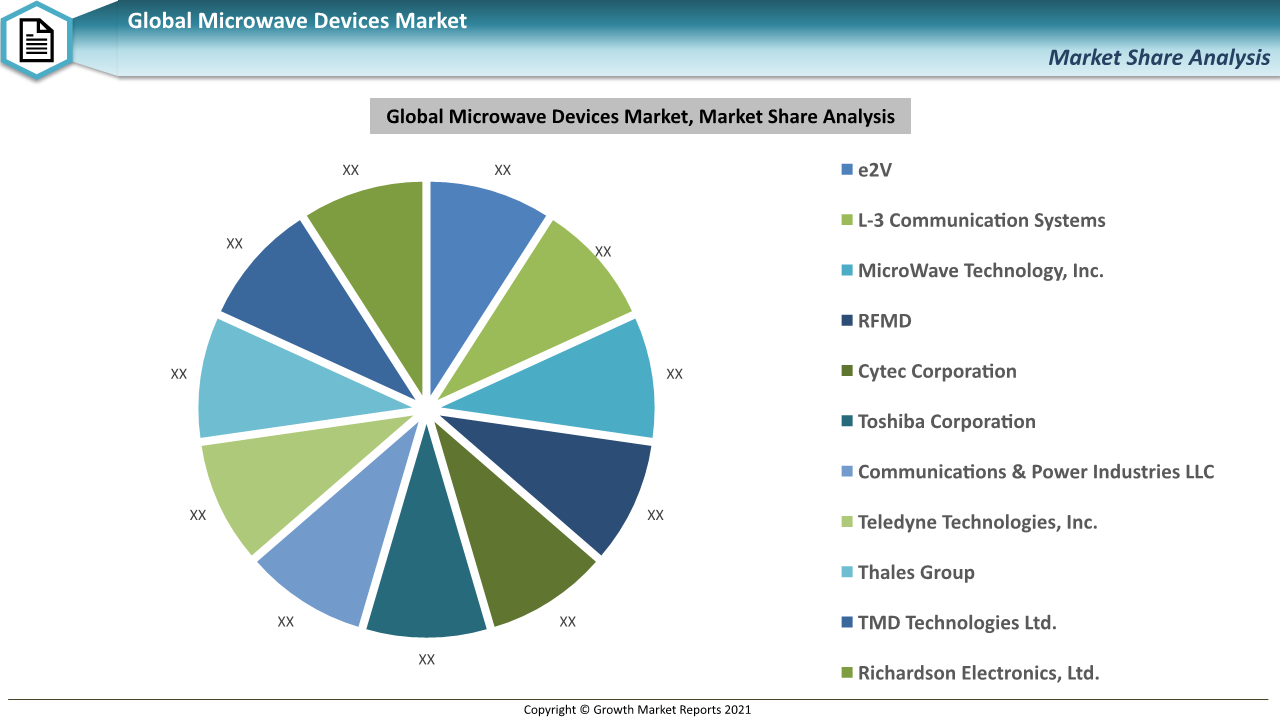
Key players competing in the global microwave devices market are e2V; L-3 Communication systems; MicroWave Technology, Inc.; RFMD; Cytec Corporation; Toshiba Corporation; Communications & Power Industries LLC; Teledyne Technologies, Inc.; Thales Group; TMD Technologies Ltd.; and Richardson Electronics, Ltd. Some of these players mainly focus on new developments that allow high-quality and low-cost manufacturing. Many organizations have engaged on collaboration for broadening and mergers & acquisitions to enhance their product benefits across different industries.
Yes, the report offers customization options to address specific research or business requirements.
Advances in semiconductor materials (like GaN and GaAs), miniaturization, integration of active and passive components, and the convergence with AI and IoT are enhancing device performance, efficiency, and opening new application areas.
Challenges include high development costs, stringent regulatory requirements, integration complexity, supply chain disruptions, and the need for specialized expertise and compliance with international standards.
Major players include Analog Devices Inc., L3Harris Technologies, Qorvo Inc., Teledyne Technologies, MACOM Technology Solutions, Cobham Limited, NXP Semiconductors, Keysight Technologies, and others.
Important frequency ranges include L Band (1-2 GHz), S Band (2-4 GHz), C Band (4-8 GHz), X Band (8-12 GHz), Ku Band (12-18 GHz), Ka Band (26.5-40 GHz), and higher frequencies for emerging applications like 5G millimeter-wave and automotive radar.
The market is segmented into active microwave devices (such as amplifiers, oscillators, and mixers) and passive microwave devices (including filters, couplers, and attenuators). Integrated microwave assemblies combining both types are also gaining popularity.
Microwave devices are widely used in telecommunications, aerospace & defense, medical imaging and treatment, industrial automation, automotive radar, and scientific research.
Asia Pacific is the dominant region, driven by industrialization and investments in telecom and defense. North America and Europe also hold significant market shares, while Latin America and the Middle East & Africa are emerging markets.
Key growth drivers include the rapid expansion of telecommunications (especially 5G and upcoming 6G networks), defense modernization, increasing demand for wireless communication, and growing applications in medical and industrial sectors.
The global microwave devices market was valued at USD 8.7 billion in 2024 and is projected to reach USD 15.1 billion by 2033, growing at a CAGR of 6.2% from 2025 to 2033.