Segments - by Product Type (Drip Irrigation, Sprinkler Irrigation, Center Pivot Irrigation, Lateral Move Irrigation, Others), by Component (Pipes, Valves, Sprinklers, Drippers, Controllers, Others), by Crop Type (Field Crops, Orchard Crops, Plantation Crops, Forage & Turf Grasses, Others), by Application (Agricultural, Landscape, Greenhouse, Others), by End-User (Farmers, Commercial Growers, Government & Institutional, Others)
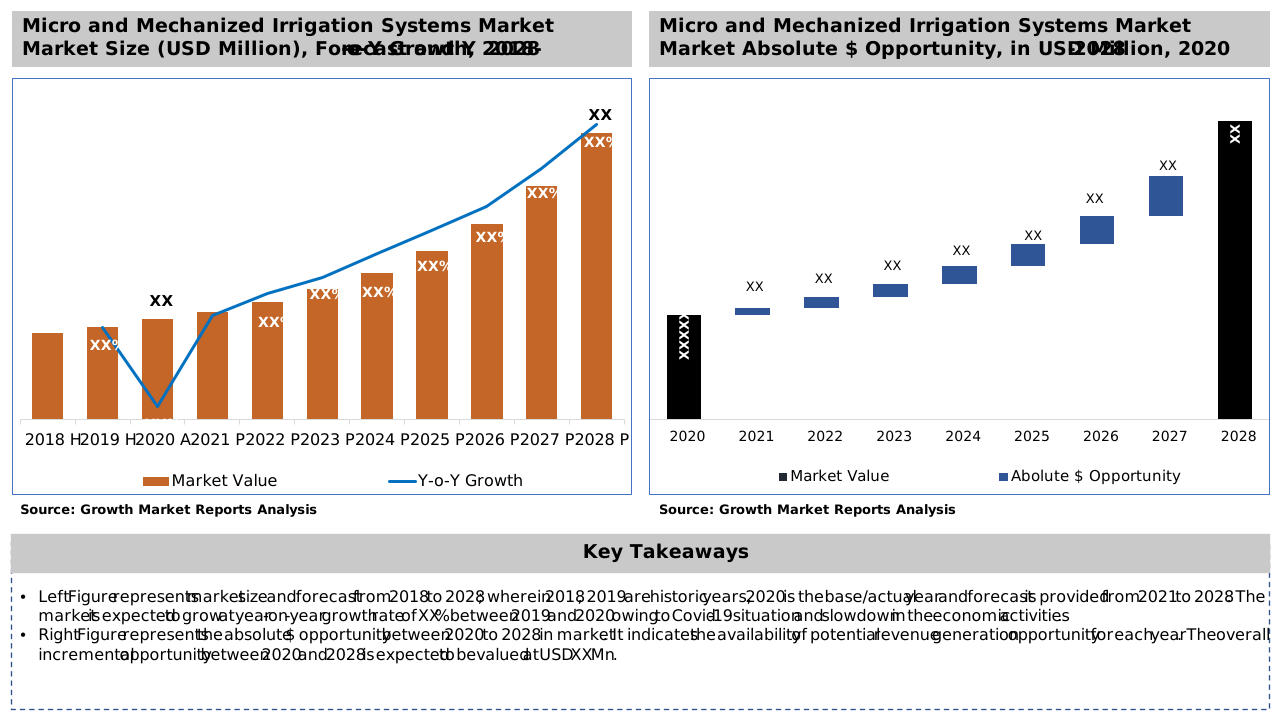
As per our latest research, the global Micro and Mechanized Irrigation Systems market size in 2024 reached USD 15.3 billion, reflecting the rapid adoption of advanced irrigation technologies across the agricultural sector. The market is poised for robust growth, with a projected CAGR of 9.1% from 2025 to 2033. By the end of 2033, the market size is forecasted to reach approximately USD 33.8 billion. This expansion is primarily driven by increasing water scarcity concerns, the need for higher agricultural productivity, and significant technological advancements in irrigation systems.
The surge in demand for micro and mechanized irrigation systems is fueled by the global imperative to enhance water use efficiency in agriculture. With over 70% of freshwater resources consumed by the agricultural sector, there is mounting pressure to adopt water-saving technologies. Drip and sprinkler irrigation systems, which deliver water directly to the plant root zone, have proven to reduce water wastage and promote sustainable farming practices. As governments worldwide implement policies and subsidies to encourage the adoption of these systems, farmers are increasingly investing in advanced irrigation solutions to maximize crop yields and minimize resource input. Furthermore, the growing awareness of climate change impacts, such as erratic rainfall patterns and prolonged droughts, has made efficient irrigation an essential component of modern agriculture.
Technological innovation stands out as a pivotal growth driver in the micro and mechanized irrigation systems market. The integration of automation, sensors, and IoT-enabled controllers has revolutionized irrigation management, enabling precise water delivery and real-time monitoring. These advancements not only improve operational efficiency but also reduce labor costs and enhance crop quality. Manufacturers are focusing on developing user-friendly, cost-effective solutions that cater to smallholder farmers as well as large commercial growers. The proliferation of smart irrigation systems, capable of adjusting water schedules based on soil moisture data and weather forecasts, is expected to further accelerate market growth in the coming years.
The increasing global population and resultant demand for food security have compelled nations to modernize their agricultural infrastructure. Mechanized irrigation systems, such as center pivot and lateral move irrigation, are being rapidly adopted in large-scale farms, particularly in regions with expansive arable land. These systems offer uniform water distribution and can be customized to suit diverse crop types and field conditions. Moreover, international organizations and governments are actively promoting sustainable agricultural practices through funding and technical assistance, thereby fostering the widespread adoption of micro and mechanized irrigation technologies. These collective efforts are crucial in achieving higher productivity, conserving water, and ensuring long-term agricultural sustainability.
Micro Irrigation has emerged as a cornerstone in the quest for sustainable agricultural practices, particularly in regions grappling with water scarcity. By delivering water directly to the root zone, micro irrigation systems significantly reduce evaporation and runoff, ensuring that every drop is utilized efficiently. This technology is especially beneficial for high-value crops, where precision in water application can lead to enhanced yields and quality. As climate change continues to alter precipitation patterns, the reliability and efficiency of micro irrigation make it an indispensable tool for farmers aiming to maintain productivity. The integration of smart technologies into micro irrigation systems further enhances their appeal, offering real-time data and automated adjustments to optimize water use.
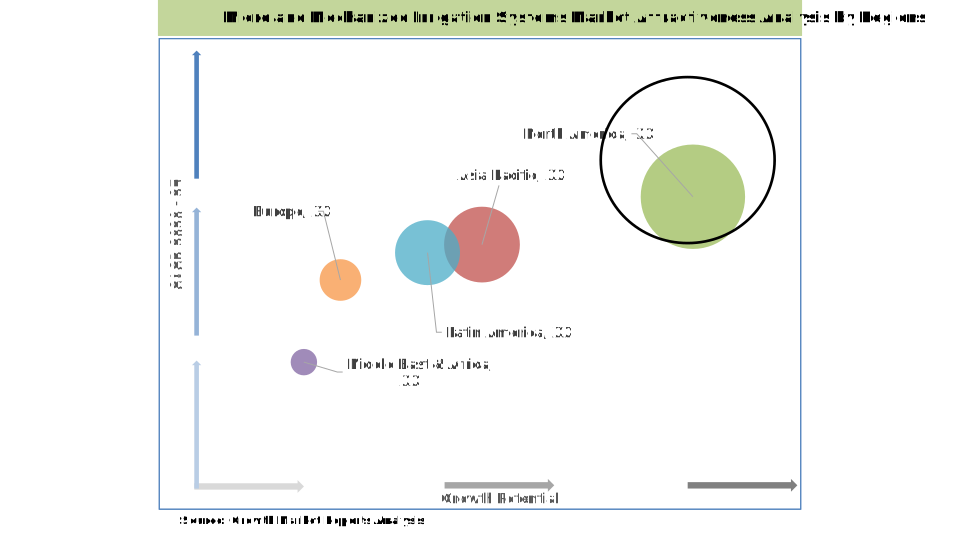
Regionally, Asia Pacific dominates the micro and mechanized irrigation systems market due to its vast agricultural landscape and significant government initiatives aimed at improving irrigation efficiency. Countries such as India and China are at the forefront, investing heavily in infrastructure development and technology adoption. North America and Europe also represent substantial market shares, driven by advanced farming practices and stringent regulations on water usage. Meanwhile, Latin America and the Middle East & Africa are emerging as high-growth markets, propelled by increasing awareness about water conservation and the need to improve agricultural output. The regional outlook indicates a balanced growth trajectory, with each geography contributing uniquely to the global market expansion.
The product type segment of the micro and mechanized irrigation systems market encompasses drip irrigation, sprinkler irrigation, center pivot irrigation, lateral move irrigation, and other specialized systems. Drip irrigation remains the most widely adopted technology, especially in regions facing acute water scarcity. Its ability to deliver water directly to the root zone minimizes evaporation losses and ensures optimal moisture levels for crops. This technology is particularly favored for high-value crops such as fruits, vegetables, and orchards, where precision irrigation translates into better yields and quality. The market for drip irrigation is anticipated to maintain steady growth, supported by ongoing research and development aimed at reducing system costs and enhancing operational efficiency.
Sprinkler irrigation is another prominent segment, widely used for a variety of crops, including cereals, pulses, and oilseeds. Sprinkler systems are highly flexible and can be deployed across diverse field conditions, making them suitable for both small and large-scale farms. The adoption of sprinkler irrigation is driven by its ability to provide uniform water distribution, reduce soil erosion, and facilitate fertigation. Recent technological advancements, such as automated and sensor-based sprinklers, have further enhanced the appeal of this segment, enabling farmers to optimize water usage and adapt to changing climatic conditions.
Center pivot and lateral move irrigation systems are predominantly used in large commercial farms, especially in North America, Europe, and parts of Asia Pacific. These mechanized systems are designed for extensive fields and are capable of irrigating large areas with minimal labor input. The market for center pivot irrigation has witnessed significant growth owing to its efficiency in water application, reduced operational costs, and compatibility with precision agriculture technologies. Lateral move systems, while similar in function, offer enhanced flexibility and are increasingly being adopted in regions with irregular field shapes and topographies.
Other product types, including micro-sprayers, bubblers, and subsurface drip irrigation, cater to niche applications such as greenhouses, nurseries, and specialty crops. These systems are gaining traction as farmers seek customized solutions to address specific irrigation challenges. The diversification of product offerings, coupled with ongoing innovation, ensures that the market remains dynamic and responsive to evolving agricultural needs. Collectively, the product type segment plays a crucial role in shaping the overall growth and competitiveness of the micro and mechanized irrigation systems market.
| Attributes | Details |
| Report Title | Micro and Mechanized Irrigation Systems Market Research Report 2033 |
| By Product Type | Drip Irrigation, Sprinkler Irrigation, Center Pivot Irrigation, Lateral Move Irrigation, Others |
| By Component | Pipes, Valves, Sprinklers, Drippers, Controllers, Others |
| By Crop Type | Field Crops, Orchard Crops, Plantation Crops, Forage & Turf Grasses, Others |
| By Application | Agricultural, Landscape, Greenhouse, Others |
| By End-User | Farmers, Commercial Growers, Government & Institutional, Others |
| Regions Covered | North America, Europe, APAC, Latin America, MEA |
| Base Year | 2024 |
| Historic Data | 2018-2023 |
| Forecast Period | 2025-2033 |
| Number of Pages | 264 |
| Number of Tables & Figures | 250 |
| Customization Available | Yes, the report can be customized as per your need. |
The component segment of the micro and mechanized irrigation systems market includes pipes, valves, sprinklers, drippers, controllers, and other ancillary equipment. Pipes form the backbone of any irrigation system, facilitating the efficient transport of water from the source to the field. The demand for high-quality, durable pipes is on the rise, with manufacturers focusing on lightweight, corrosion-resistant materials that can withstand varying climatic conditions. Innovations in pipe design, such as flexible and modular systems, have made installation and maintenance more convenient for end-users, further driving market growth.
Valves and controllers are critical components that enable precise water management and automation. Modern irrigation systems are increasingly equipped with smart valves and programmable controllers that allow farmers to schedule irrigation cycles, monitor system performance, and adjust water flow based on real-time data. The integration of IoT and cloud-based technologies has transformed traditional irrigation into a data-driven process, providing actionable insights to optimize resource utilization and crop health. The growing adoption of these intelligent components is expected to significantly boost the overall efficiency and effectiveness of micro and mechanized irrigation systems.
Sprinklers and drippers are essential for delivering water directly to plants in a controlled manner. Sprinklers are widely used for surface irrigation, while drippers are preferred for subsurface and targeted irrigation applications. The market for these components is characterized by continuous innovation, with manufacturers introducing energy-efficient, clog-resistant, and easy-to-install solutions. The increasing focus on reducing water wastage and improving irrigation precision has led to the development of advanced sprinkler and dripper technologies that cater to a wide range of crop types and field conditions.
Other components, such as filters, pressure regulators, and fertigation units, play a supportive role in ensuring the smooth operation of irrigation systems. These accessories are vital for maintaining water quality, preventing system blockages, and facilitating the application of fertilizers and nutrients. The component segment is highly competitive, with numerous players offering a diverse array of products tailored to specific market needs. The ongoing emphasis on system integration, reliability, and user-friendliness is expected to drive sustained growth in this segment, contributing to the overall expansion of the micro and mechanized irrigation systems market.
The crop type segment of the micro and mechanized irrigation systems market is categorized into field crops, orchard crops, plantation crops, forage and turf grasses, and others. Field crops, including cereals, pulses, and oilseeds, constitute the largest share of the market, owing to their extensive cultivation across major agricultural regions. The adoption of advanced irrigation systems in field crops is driven by the need to improve water use efficiency, enhance yields, and reduce input costs. Governments and agricultural organizations are actively promoting the use of micro and mechanized irrigation in field crop production through subsidies and technical support, further accelerating market penetration.
Orchard crops, such as fruits and nuts, require precise irrigation to ensure optimal growth and fruit quality. Drip irrigation is particularly popular in orchards, as it delivers water directly to the root zone, minimizing evaporation and promoting uniform moisture distribution. The increasing demand for high-value orchard crops, coupled with the need to conserve water and reduce labor, has led to the widespread adoption of micro irrigation systems in this segment. Technological advancements, such as automated fertigation and remote monitoring, are further enhancing the efficiency and productivity of orchard crop irrigation.
Plantation crops, including tea, coffee, and rubber, are predominantly grown in tropical and subtropical regions. These crops often require specialized irrigation solutions to address unique soil and climatic conditions. Mechanized irrigation systems, such as lateral move and center pivot, are gaining traction in large-scale plantations, offering consistent water application and reduced labor requirements. The shift towards sustainable plantation management practices, supported by government initiatives and industry certifications, is expected to drive steady growth in this segment.
Forage and turf grasses represent a growing market for micro and mechanized irrigation systems, particularly in regions with extensive livestock farming and recreational landscapes. Efficient irrigation is essential for maintaining healthy pastures and turf, especially during dry seasons. The adoption of automated sprinkler systems and smart controllers is on the rise, enabling precise water management and reducing operational costs. Other crop types, including vegetables, floriculture, and specialty crops, also contribute to the market, with customized irrigation solutions designed to meet specific agronomic requirements. The crop type segment remains dynamic, reflecting the diverse needs and evolving preferences of the global agricultural community.
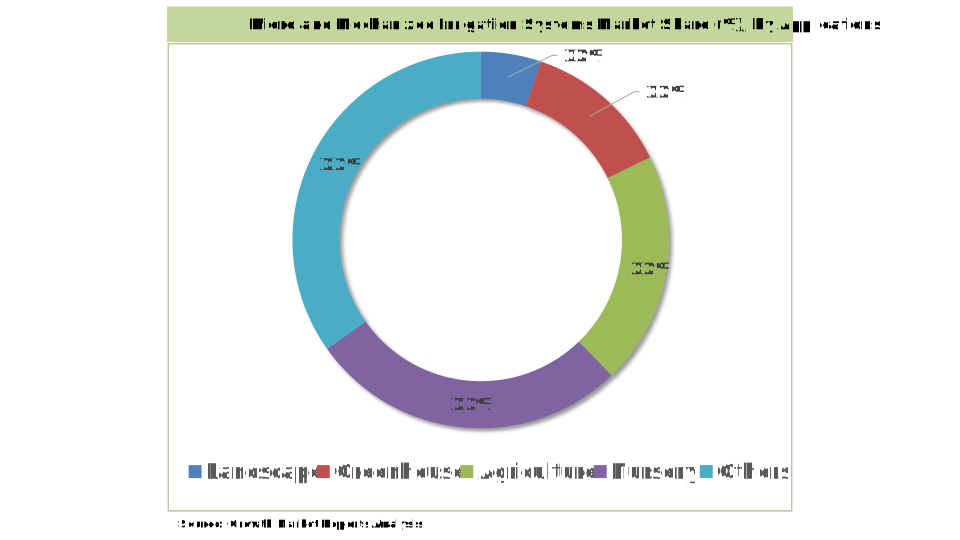
The application segment of the micro and mechanized irrigation systems market encompasses agricultural, landscape, greenhouse, and other specialized uses. Agricultural applications account for the largest share, as farmers increasingly adopt advanced irrigation technologies to enhance productivity and sustainability. The integration of micro and mechanized systems in agriculture enables precise water delivery, efficient nutrient management, and improved crop quality. Government policies promoting water conservation and sustainable farming practices are further driving the adoption of these systems in mainstream agriculture.
Landscape irrigation is a significant growth area, particularly in urban and peri-urban regions. The rising demand for aesthetically pleasing green spaces, coupled with water scarcity concerns, has led to the widespread adoption of efficient irrigation solutions in parks, gardens, golf courses, and sports fields. Automated sprinkler and drip systems are preferred for their ability to deliver uniform water coverage and reduce manual labor. The increasing focus on sustainable landscaping practices, supported by municipal regulations and public awareness campaigns, is expected to drive continued growth in this segment.
Greenhouse applications represent a specialized segment, where precise control over irrigation is essential for optimizing plant growth and maximizing yields. Micro irrigation systems, such as drip and micro-sprayers, are extensively used in greenhouses to maintain optimal moisture levels and support intensive crop production. The adoption of advanced monitoring and automation technologies enables growers to fine-tune irrigation schedules based on real-time data, enhancing resource efficiency and reducing operational costs. The greenhouse segment is projected to witness steady growth, driven by the increasing demand for high-quality, off-season produce and the expansion of protected cultivation areas.
Other applications, including nurseries, vertical farms, and research institutions, contribute to the diversification of the micro and mechanized irrigation systems market. These specialized uses often require customized solutions to address unique environmental and operational challenges. The continuous evolution of application-specific technologies, coupled with ongoing research and development, ensures that the market remains responsive to emerging trends and opportunities. Overall, the application segment highlights the versatility and adaptability of micro and mechanized irrigation systems across a wide range of end-uses.
The end-user segment of the micro and mechanized irrigation systems market is divided into farmers, commercial growers, government and institutional entities, and others. Farmers constitute the largest end-user group, accounting for a substantial share of market demand. The adoption of advanced irrigation systems among farmers is driven by the need to improve crop yields, reduce water consumption, and enhance profitability. Government subsidies, technical assistance, and access to financing have played a crucial role in facilitating the uptake of micro and mechanized irrigation technologies among small and medium-sized farmers, particularly in developing regions.
Commercial growers, including large-scale agricultural enterprises and agribusinesses, are increasingly investing in sophisticated irrigation solutions to optimize resource use and maximize returns. These entities often have the financial capacity and technical expertise to deploy state-of-the-art systems, such as center pivot and automated drip irrigation. The focus on precision agriculture, sustainability, and compliance with international quality standards is driving the adoption of advanced irrigation technologies in the commercial sector. The growing trend towards contract farming and integrated supply chains further underscores the importance of efficient irrigation management among commercial growers.
Government and institutional end-users play a pivotal role in shaping the market landscape through policy interventions, infrastructure development, and capacity-building initiatives. Public sector investments in community irrigation projects, research and development, and technology dissemination have significantly contributed to market growth. Institutions such as agricultural universities, research centers, and extension services are at the forefront of promoting best practices and supporting the adoption of innovative irrigation solutions. The collaboration between government agencies, industry players, and international organizations is expected to further accelerate the diffusion of micro and mechanized irrigation systems across diverse end-user segments.
Other end-users, including NGOs, cooperatives, and private sector organizations, are actively involved in promoting sustainable irrigation practices and supporting farmer adoption through training, technical assistance, and access to finance. These entities often focus on marginalized and resource-constrained communities, ensuring that the benefits of advanced irrigation technologies are accessible to all. The end-user segment is characterized by a high degree of heterogeneity, reflecting the diverse needs, capacities, and preferences of stakeholders across the agricultural value chain. The ongoing emphasis on inclusivity, capacity-building, and stakeholder engagement is expected to drive sustained growth and innovation in the micro and mechanized irrigation systems market.
The micro and mechanized irrigation systems market presents significant opportunities for growth, particularly in the context of increasing global water scarcity and the imperative for sustainable agriculture. The rising adoption of precision agriculture and smart irrigation technologies offers immense potential for market expansion. Innovations such as IoT-enabled controllers, automated scheduling, and remote monitoring are transforming traditional irrigation practices, enabling farmers to optimize water use, reduce input costs, and enhance crop productivity. The growing availability of affordable, user-friendly solutions is making advanced irrigation technologies accessible to smallholder farmers, thereby broadening the market base. Additionally, government policies and international initiatives aimed at promoting water conservation and climate-resilient agriculture are expected to create new avenues for market growth in both developed and emerging economies.
Another major opportunity lies in the integration of renewable energy sources, such as solar-powered pumps and controllers, into micro and mechanized irrigation systems. This trend is particularly relevant in regions with limited access to grid electricity, where solar-powered solutions can significantly reduce operational costs and enhance system reliability. The expansion of greenhouse cultivation, vertical farming, and protected agriculture also presents lucrative opportunities for specialized irrigation solutions. Furthermore, the increasing focus on sustainable landscaping, urban agriculture, and community irrigation projects is expected to drive demand for efficient irrigation systems across non-agricultural applications. The ongoing emphasis on research and development, capacity-building, and public-private partnerships will be instrumental in unlocking the full potential of the micro and mechanized irrigation systems market.
Despite the positive outlook, the market faces several restraining factors that could impede growth. High initial investment costs and limited access to affordable financing remain significant barriers, particularly for smallholder farmers in developing regions. The complexity of system installation, operation, and maintenance can also deter adoption, especially in areas with limited technical expertise and infrastructure. Additionally, fragmented supply chains, lack of standardization, and regulatory challenges may hinder market development in certain geographies. Addressing these constraints through targeted policy interventions, capacity-building programs, and innovative financing mechanisms will be essential to ensuring inclusive and sustainable growth in the micro and mechanized irrigation systems market.
The Asia Pacific region dominates the micro and mechanized irrigation systems market, accounting for approximately USD 6.2 billion in 2024. This dominance is attributed to the region's vast agricultural landscape, high population density, and proactive government initiatives aimed at improving irrigation efficiency. Countries such as India and China are leading the adoption of advanced irrigation technologies, supported by substantial public investments, subsidies, and capacity-building programs. The focus on enhancing food security, conserving water resources, and promoting sustainable agriculture is expected to drive continued growth in the Asia Pacific market, with a projected CAGR of 10.2% through 2033.
In North America, the market size reached approximately USD 3.8 billion in 2024, driven by advanced farming practices, high levels of mechanization, and stringent regulations on water usage. The United States and Canada are at the forefront of adopting precision irrigation technologies, such as center pivot and automated drip systems, to optimize resource utilization and comply with environmental standards. The increasing focus on sustainable agriculture, coupled with ongoing research and development, is expected to sustain steady market growth in North America. The region also benefits from a well-established supply chain, robust infrastructure, and strong industry-academia collaboration, further enhancing its competitive position in the global market.
Europe represents another significant market, valued at USD 2.7 billion in 2024, with growth driven by environmental regulations, climate change adaptation, and the need to enhance agricultural productivity. Countries such as Spain, France, and Italy are investing in modern irrigation infrastructure to address water scarcity and support high-value crop production. Meanwhile, Latin America and the Middle East & Africa are emerging as high-growth regions, with market sizes of USD 1.6 billion and USD 1.0 billion respectively in 2024. These regions are characterized by increasing awareness of water conservation, expanding commercial agriculture, and growing investments in irrigation infrastructure. The regional outlook underscores the diverse growth dynamics and opportunities across different geographies, with each region contributing uniquely to the global expansion of the micro and mechanized irrigation systems market.
The micro and mechanized irrigation systems market is highly competitive, with a diverse array of global and regional players vying for market share. The competitive landscape is characterized by continuous innovation, strategic partnerships, and a strong emphasis on research and development. Leading companies are investing heavily in the development of advanced, user-friendly, and cost-effective irrigation solutions to cater to the evolving needs of farmers and commercial growers. The market is also witnessing increased consolidation, as major players acquire or collaborate with smaller firms to expand their product portfolios, enhance technological capabilities, and strengthen their global presence.
Product differentiation and technological innovation are key strategies employed by market leaders to maintain a competitive edge. Companies are focusing on integrating smart technologies, such as IoT, automation, and remote monitoring, into their irrigation systems to offer enhanced value propositions to customers. The ability to provide comprehensive solutions, including installation, maintenance, and after-sales support, is increasingly becoming a critical success factor. Additionally, companies are leveraging digital platforms and precision agriculture tools to offer data-driven insights and customized recommendations, further enhancing customer engagement and loyalty.
The market is also characterized by a strong focus on sustainability and environmental stewardship. Leading players are developing energy-efficient, water-saving, and eco-friendly products to address the growing demand for sustainable agricultural practices. Strategic collaborations with government agencies, research institutions, and international organizations are common, enabling companies to participate in large-scale projects, access new markets, and influence policy development. The emphasis on capacity-building, training, and technical support is also evident, as companies seek to empower end-users and drive the adoption of advanced irrigation technologies.
Some of the major companies operating in the micro and mechanized irrigation systems market include Jain Irrigation Systems Ltd., Netafim Limited, The Toro Company, Lindsay Corporation, Valmont Industries, Inc., Rain Bird Corporation, Hunter Industries, and Rivulis Irrigation. Jain Irrigation Systems Ltd. is renowned for its comprehensive range of drip and sprinkler irrigation products and has a strong presence in emerging markets. Netafim Limited, a global leader in smart irrigation solutions, is known for its innovative technologies and extensive global footprint. The Toro Company and Rain Bird Corporation are prominent players in both agricultural and landscape irrigation, offering a wide array of products and solutions. Lindsay Corporation and Valmont Industries, Inc. specialize in mechanized irrigation systems, such as center pivot and lateral move, catering to large-scale commercial farms.
Hunter Industries and Rivulis Irrigation are recognized for their focus on product quality, technological advancement, and customer-centric solutions. These companies have established strong distribution networks, robust research and development capabilities, and a commitment to sustainability. The competitive landscape is expected to remain dynamic, with ongoing innovation, strategic alliances, and market expansion initiatives shaping the future of the micro and mechanized irrigation systems market. As the demand for efficient, sustainable, and technologically advanced irrigation solutions continues to grow, market leaders are well-positioned to capitalize on emerging opportunities and drive long-term industry growth.
The Micro and Mechanized Irrigation Systems market has been segmented on the basis of
Key players competing in the global micro and mechanized irrigation systems market are Valmont Industries Inc.; Netafim Limited; Rain Bird Corporation; T-L Irrigation Co.; The Toro Company; Rivulis Irrigation; Jain Irrigation Systems Ltd.; Mahindra EPC Irrigation; Nelson Irrigation Corporation; and Lindsay Corporation.
Industry participants are primarily focused on developing complicated and novel products based on extensive research and development. These products are extremely efficient, dependable, and cost-effective. The market is slightly competitive, with the majority of rivals focusing their efforts on expansion of their products in developing countries.
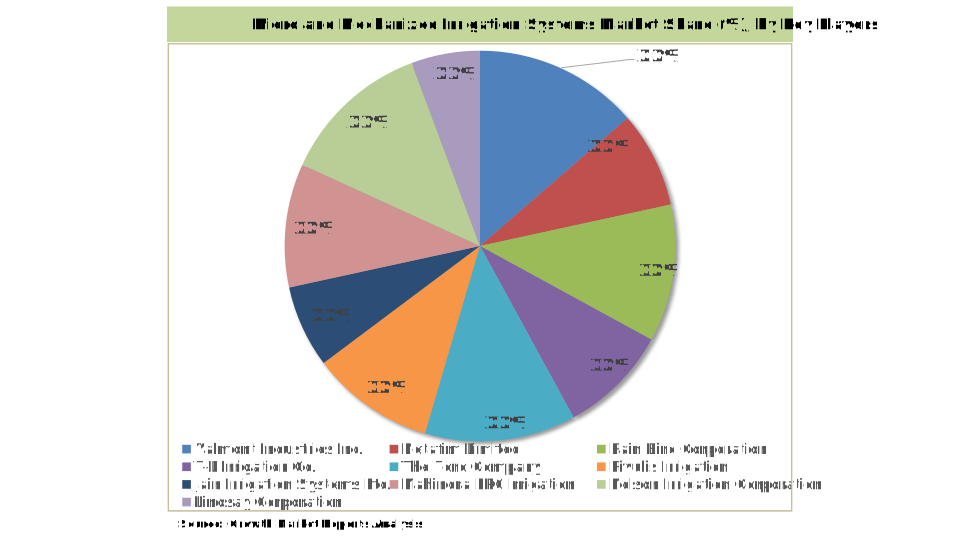
Key players include Jain Irrigation Systems Ltd., Netafim Limited, The Toro Company, Lindsay Corporation, Valmont Industries, Rain Bird Corporation, Hunter Industries, and Rivulis Irrigation, among others.
Opportunities include the adoption of smart irrigation technologies, integration of renewable energy, and expansion in greenhouse and urban agriculture. Challenges include high initial investment, limited financing, technical complexity, and fragmented supply chains.
Field crops (cereals, pulses, oilseeds), orchard crops (fruits, nuts), plantation crops (tea, coffee, rubber), forage and turf grasses, and specialty crops all benefit from these systems.
The main components include pipes, valves, sprinklers, drippers, controllers, filters, pressure regulators, and fertigation units.
Major end-users are farmers, commercial growers, government and institutional entities, as well as NGOs, cooperatives, and private organizations.
Key growth drivers include increasing water scarcity, the need for higher agricultural productivity, technological advancements like IoT and automation, and supportive government policies and subsidies.
The primary types include drip irrigation, sprinkler irrigation, center pivot irrigation, lateral move irrigation, and other specialized systems such as micro-sprayers, bubblers, and subsurface drip irrigation.
Asia Pacific dominates the market, especially countries like India and China, due to extensive government initiatives and large agricultural landscapes. North America and Europe also hold significant market shares.
The market is expected to grow at a CAGR of 9.1% from 2025 to 2033, reaching approximately USD 33.8 billion by the end of 2033.
As of 2024, the global micro and mechanized irrigation systems market size reached USD 15.3 billion, reflecting rapid adoption of advanced irrigation technologies in agriculture.