Segments - by Product Type (Surface Mining Equipment, Underground Mining Equipment, Crushing, Pulverizing & Screening Equipment, Drills & Breakers, Mineral Processing Equipment, Others), by Application (Metal Mining, Mineral Mining, Coal Mining, Others), by Power Source (Diesel, Electric, Hybrid), by End-User (Mining Companies, Contractors, Others)
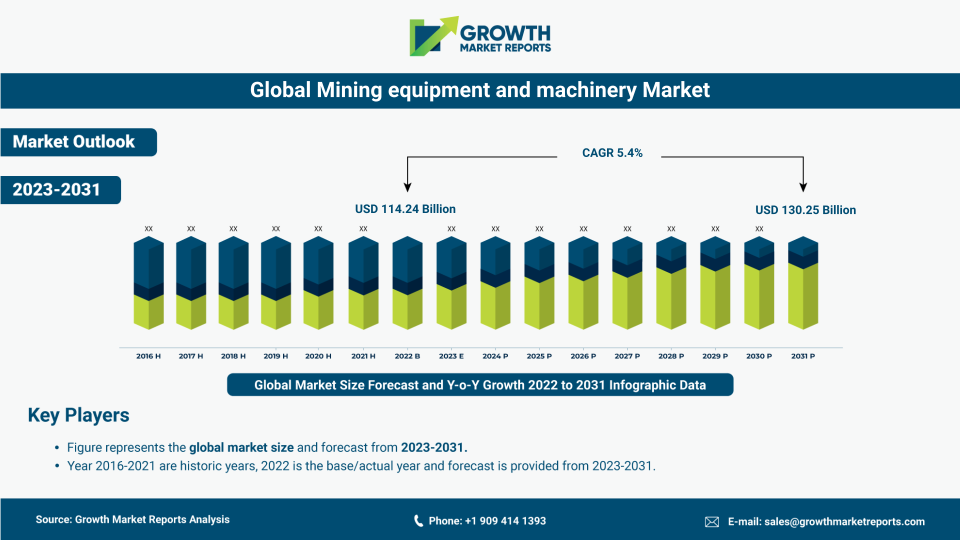
According to our latest research, the global mining equipment and machinery market size reached USD 133.7 billion in 2024, growing at a robust CAGR of 5.4% from 2025 to 2033. By the end of the forecast period in 2033, the market is projected to attain USD 213.1 billion. This impressive growth trajectory is primarily driven by the rising demand for minerals and metals, technological advancements in mining machinery, and the ongoing expansion of mining activities across both developed and emerging economies.
One of the most significant growth factors propelling the mining equipment and machinery market is the surge in global commodity demand, particularly for metals such as copper, iron ore, and gold. The rapid industrialization and urbanization in major economies, especially in the Asia Pacific region, are fueling the need for construction materials and energy resources. This, in turn, is compelling mining companies to enhance their production capacities and invest in advanced equipment to boost efficiency and output. Furthermore, the depletion of easily accessible mineral reserves is pushing mining operations into deeper and more challenging environments, necessitating the adoption of highly specialized and robust machinery. These dynamics collectively contribute to the market’s sustained expansion and technological evolution.
In addition to the rising demand for minerals, the integration of automation and digitalization within mining operations is significantly influencing market growth. Modern mining equipment is increasingly equipped with IoT sensors, AI-driven analytics, and autonomous operation capabilities, enabling real-time monitoring, predictive maintenance, and safer working conditions. These technological advancements not only improve productivity but also reduce operational costs and environmental impact. As the mining industry faces mounting pressure to adhere to stricter environmental regulations and sustainability standards, there is a growing shift towards electric and hybrid-powered machinery. This transition is further supported by government initiatives and incentives aimed at reducing carbon emissions and promoting eco-friendly mining practices.
Another vital growth driver for the mining equipment and machinery market is the increasing investments in exploration and mining infrastructure, particularly in emerging markets. Countries rich in mineral resources, such as Australia, China, India, Brazil, and several African nations, are witnessing a surge in foreign direct investment (FDI) and public-private partnerships. These investments are directed towards expanding mining capacities, modernizing existing operations, and building new infrastructure to support large-scale extraction and processing activities. The influx of capital is fostering the adoption of cutting-edge machinery and equipment, further accelerating market growth. Moreover, the ongoing geopolitical developments and supply chain disruptions are prompting mining companies to diversify their sourcing strategies and invest in resilient and technologically advanced equipment.
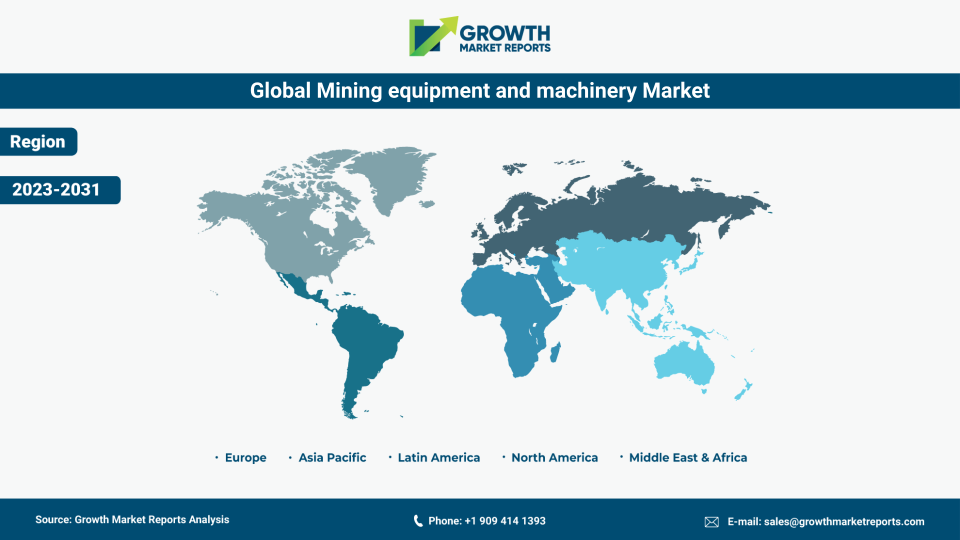
Regionally, the Asia Pacific dominates the global mining equipment and machinery market, accounting for the largest revenue share in 2024. The region’s leadership is attributed to the presence of vast mineral reserves, a booming construction sector, and the rapid pace of industrialization in countries like China, India, and Australia. North America and Europe also represent significant markets, driven by ongoing technological innovation, stringent regulatory frameworks, and the modernization of mining operations. Meanwhile, Latin America and the Middle East & Africa are emerging as lucrative markets due to their untapped mineral potential and increasing government support for mining sector development. Each region presents unique opportunities and challenges, shaping the competitive and strategic landscape of the global mining equipment and machinery market.
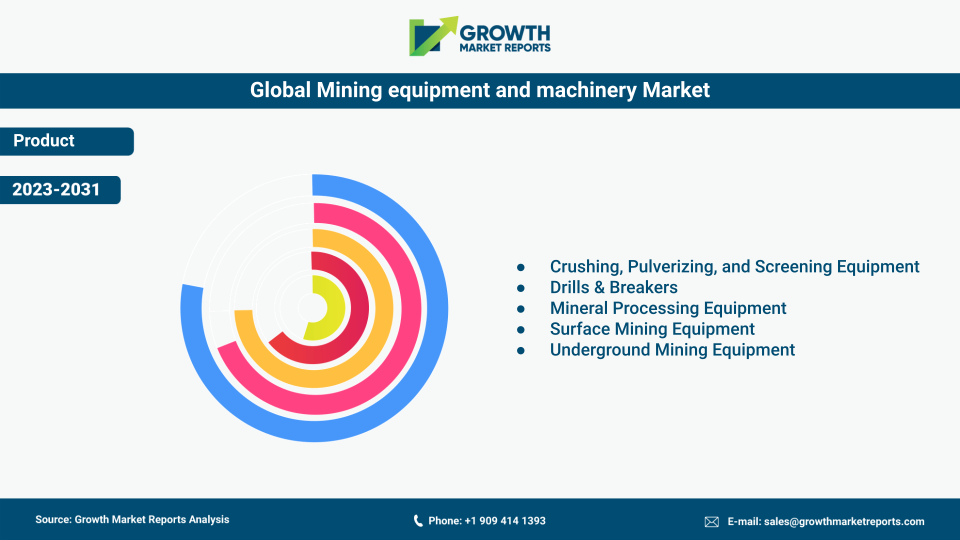
The mining equipment and machinery market is segmented by product type into surface mining equipment, underground mining equipment, crushing, pulverizing & screening equipment, drills & breakers, mineral processing equipment, and others. Surface mining equipment holds the largest share, primarily due to the widespread adoption of open-pit mining techniques for extracting minerals such as coal, iron ore, and copper. The demand for large-scale excavators, loaders, and haul trucks is particularly high in regions with extensive surface mining activities. These machines are designed to operate in harsh environments, offering high productivity, durability, and operational efficiency. Manufacturers are continuously innovating to enhance the performance, fuel efficiency, and safety features of surface mining equipment, which remains a cornerstone of the market.
Underground mining equipment constitutes a significant segment, driven by the increasing need to access deeper ore bodies and the shift towards underground mining methods in mature mining regions. Equipment such as continuous miners, longwall mining systems, and shuttle cars are essential for efficient underground operations. The adoption of advanced ventilation systems, automated drilling machines, and remote-controlled equipment is gaining momentum, as mining companies prioritize worker safety and operational efficiency in challenging underground environments. The ongoing development of battery-powered and emission-free underground vehicles is also expected to transform this segment, aligning with the industry’s sustainability goals.
Crushing, pulverizing & screening equipment, along with drills & breakers, play a critical role in the initial stages of mineral extraction and processing. The demand for high-capacity crushers, efficient screening systems, and robust drilling rigs is rising as mining operations seek to optimize ore fragmentation and reduce processing costs. Technological advancements in material handling, automation, and wear-resistant components are enhancing the reliability and lifespan of these machines. In addition, the integration of digital monitoring systems allows for real-time performance tracking and predictive maintenance, minimizing downtime and maximizing productivity.
Mineral processing equipment encompasses a wide range of machinery used for separating valuable minerals from waste material. This segment includes flotation cells, magnetic separators, cyclones, and thickening equipment. The increasing complexity of ore bodies and the need for higher recovery rates are driving the adoption of sophisticated mineral processing technologies. Manufacturers are focusing on energy-efficient solutions and modular equipment designs that can be easily customized to meet specific operational requirements. The shift towards sustainable mining practices is also prompting the development of water-saving and environmentally friendly processing equipment, further expanding the growth prospects of this segment.
The “others” category includes auxiliary equipment such as conveyors, pumps, and ventilation systems that support core mining operations. These systems are essential for ensuring seamless material flow, maintaining safe working conditions, and optimizing overall mine productivity. As mining projects become more complex and large-scale, the demand for integrated and automated auxiliary equipment is expected to rise. Suppliers are responding by offering turnkey solutions that combine multiple functions and facilitate centralized control, enhancing operational efficiency and reducing total cost of ownership for mining companies.
| Attributes | Details |
| Report Title | Mining Equipment and Machinery Market Research Report 2033 |
| By Product Type | Surface Mining Equipment, Underground Mining Equipment, Crushing, Pulverizing & Screening Equipment, Drills & Breakers, Mineral Processing Equipment, Others |
| By Application | Metal Mining, Mineral Mining, Coal Mining, Others |
| By Power Source | Diesel, Electric, Hybrid |
| By End-User | Mining Companies, Contractors, Others |
| Regions Covered | North America, Europe, APAC, Latin America, MEA |
| Base Year | 2024 |
| Historic Data | 2018-2023 |
| Forecast Period | 2025-2033 |
| Number of Pages | 256 |
| Number of Tables & Figures | 292 |
| Customization Available | Yes, the report can be customized as per your need. |
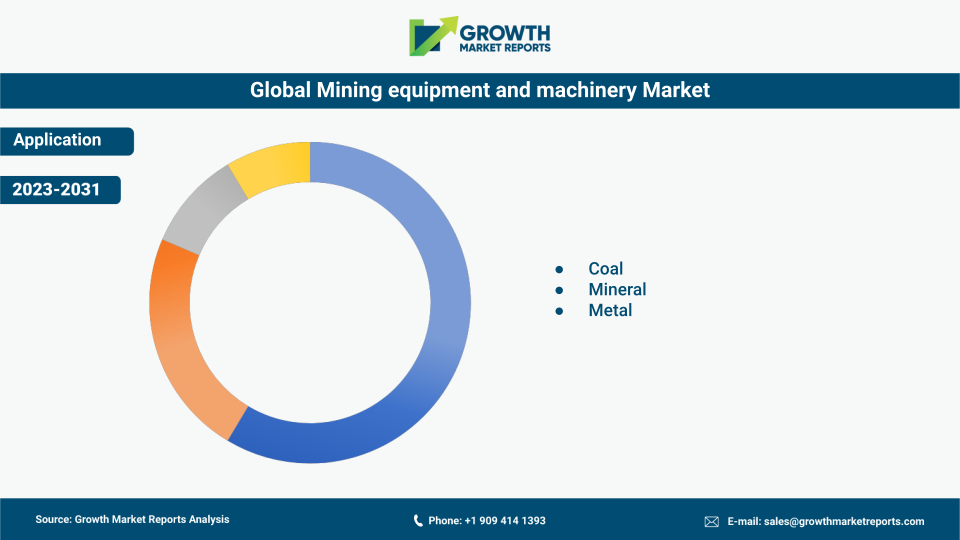
The mining equipment and machinery market is further segmented by application into metal mining, mineral mining, coal mining, and others. Metal mining represents the largest application segment, driven by the global demand for base and precious metals such as copper, gold, iron, and aluminum. The expansion of the electronics, automotive, and construction industries is fueling the need for these metals, prompting mining companies to invest in advanced equipment for efficient extraction and processing. The adoption of automated and digitalized machinery is particularly prominent in metal mining, as companies strive to enhance productivity, reduce costs, and ensure regulatory compliance.
Mineral mining, which includes the extraction of non-metallic minerals such as limestone, phosphate, and gypsum, is witnessing steady growth due to the rising demand for construction materials, fertilizers, and industrial minerals. The increasing emphasis on infrastructure development and agricultural productivity in emerging economies is driving investments in mineral mining projects. Equipment specifically designed for handling bulk materials, such as conveyors, feeders, and screening systems, is in high demand. Manufacturers are focusing on developing versatile and energy-efficient machines that can handle a wide range of mineral types and operating conditions.
Coal mining remains a significant application segment, particularly in regions where coal continues to play a vital role in energy generation and industrial processes. Despite the global shift towards renewable energy sources, coal mining activities persist in countries such as China, India, Australia, and the United States. The demand for high-capacity draglines, continuous miners, and longwall shearers is sustained by the need to maintain efficient and safe coal extraction operations. However, the segment is facing increasing scrutiny due to environmental concerns and regulatory pressures, prompting a gradual transition towards cleaner and more efficient mining technologies.
The “others” application segment includes the extraction of rare earth elements, gemstones, and specialty minerals that are essential for high-tech industries and renewable energy applications. The growing importance of rare earths in the production of batteries, magnets, and electronic components is driving exploration and mining activities in this niche segment. Equipment designed for selective mining, precision drilling, and advanced mineral processing is gaining traction, as companies seek to maximize the recovery of valuable elements while minimizing environmental impact. The ongoing innovation in exploration and extraction technologies is expected to unlock new opportunities in this segment over the forecast period.
The mining equipment and machinery market is segmented by power source into diesel, electric, and hybrid equipment. Diesel-powered machinery continues to dominate the market, owing to its high power output, reliability, and suitability for heavy-duty operations in remote and challenging environments. Diesel engines are widely used in large haul trucks, excavators, and drilling rigs, providing the necessary torque and endurance for continuous mining activities. However, the segment is facing growing challenges related to fuel costs, emissions regulations, and sustainability concerns, prompting manufacturers to explore alternative power solutions.
Electric-powered mining equipment is experiencing rapid adoption, driven by the industry’s focus on reducing carbon emissions, improving energy efficiency, and complying with stringent environmental standards. Battery-electric vehicles (BEVs) and electrically powered drills, loaders, and haul trucks are increasingly being deployed in both surface and underground mining operations. The benefits of electric equipment include lower operating costs, reduced noise levels, and improved air quality, particularly in confined underground environments. Major mining companies are partnering with equipment manufacturers to pilot and scale up the use of electric machinery, signaling a transformative shift in the industry’s power landscape.
Hybrid mining equipment, which combines diesel and electric power sources, is emerging as a viable solution for balancing performance, efficiency, and sustainability. Hybrid systems offer the flexibility to operate in different modes depending on operational requirements and site conditions. For instance, hybrid haul trucks can switch between diesel and electric power to optimize fuel consumption and minimize emissions. The integration of regenerative braking, energy storage systems, and smart control technologies is enhancing the performance and reliability of hybrid equipment. As regulatory pressures intensify and the economics of hybrid solutions improve, this segment is expected to witness significant growth over the forecast period.
The transition towards electric and hybrid power sources is also driving innovation in charging infrastructure, battery technology, and energy management systems. Equipment manufacturers are investing in the development of fast-charging solutions, high-capacity batteries, and modular power systems that can support the demanding requirements of modern mining operations. The growing availability of renewable energy sources, such as solar and wind, is further supporting the adoption of electric and hybrid equipment, enabling mining companies to reduce their carbon footprint and achieve sustainability targets.
The end-user segment of the mining equipment and machinery market comprises mining companies, contractors, and others. Mining companies represent the largest end-user group, as they are directly involved in the extraction, processing, and transportation of minerals. These companies prioritize the acquisition of high-performance, reliable, and technologically advanced equipment to maximize productivity, ensure worker safety, and comply with regulatory requirements. The trend towards digitalization, automation, and remote operation is particularly pronounced among large mining firms, which have the resources to invest in cutting-edge machinery and integrated solutions.
Contractors form a significant end-user segment, providing specialized mining services such as drilling, blasting, earthmoving, and material handling on a contract basis. The increasing outsourcing of mining activities to contractors is driven by the need for operational flexibility, cost optimization, and access to specialized expertise. Contractors typically operate a diverse fleet of equipment and machinery, tailored to the specific requirements of each project. Equipment manufacturers are responding by offering rental, leasing, and financing options, as well as comprehensive maintenance and support services, to cater to the needs of contractor clients.
The “others” end-user category includes government agencies, research institutions, and small-scale mining operators. Government agencies are involved in regulatory oversight, exploration, and infrastructure development, often procuring equipment for public sector mining projects or geological surveys. Research institutions utilize specialized machinery for mineral exploration, testing, and analysis. Small-scale miners, particularly in developing regions, represent a niche but growing segment, driven by the need for affordable, easy-to-operate, and portable equipment. Manufacturers are developing tailored solutions for these end-users, focusing on cost-effectiveness, simplicity, and adaptability.
The evolving needs and operational models of end-users are shaping the competitive landscape of the mining equipment and machinery market. Equipment suppliers are increasingly offering value-added services, such as equipment monitoring, predictive maintenance, operator training, and digital solutions, to enhance customer satisfaction and build long-term partnerships. The emphasis on total cost of ownership, operational efficiency, and sustainability is driving innovation in equipment design, manufacturing, and service delivery across all end-user segments.
The mining equipment and machinery market presents significant opportunities for growth, driven by the ongoing digital transformation of the mining industry. The integration of advanced technologies such as artificial intelligence, machine learning, and Internet of Things (IoT) into mining equipment is enabling real-time data collection, predictive analytics, and autonomous operation. These advancements are revolutionizing mine planning, resource management, and equipment maintenance, resulting in higher productivity, reduced downtime, and enhanced safety. Equipment manufacturers and technology providers have the opportunity to collaborate and develop innovative solutions that address the evolving needs of the mining sector, creating new revenue streams and strengthening their market position.
Another major opportunity lies in the growing demand for sustainable and environmentally friendly mining practices. As governments and regulatory bodies worldwide tighten emissions standards and promote the adoption of clean energy, there is increasing interest in electric and hybrid-powered mining equipment. The development of energy-efficient machinery, renewable energy integration, and water-saving technologies offers substantial growth potential for equipment suppliers. Additionally, the expansion of mining activities in emerging markets, driven by infrastructure development, urbanization, and industrialization, presents untapped opportunities for equipment manufacturers to expand their footprint and cater to a diverse customer base.
Despite the promising outlook, the mining equipment and machinery market faces several restraining factors. One of the primary challenges is the high capital investment required for acquiring and maintaining advanced mining machinery. The cyclical nature of the mining industry, characterized by fluctuating commodity prices and uncertain economic conditions, can impact investment decisions and delay equipment purchases. Furthermore, the increasing complexity of regulatory requirements, particularly related to environmental protection and worker safety, can pose compliance challenges and increase operational costs for mining companies. The shortage of skilled labor and technical expertise to operate and maintain sophisticated equipment is another constraint that could hinder market growth, especially in remote and challenging mining locations.
The Asia Pacific region continues to lead the global mining equipment and machinery market, accounting for the largest share of USD 56.2 billion in 2024. This dominance is driven by the presence of abundant mineral resources, rapid industrialization, and significant investments in mining infrastructure in countries such as China, India, and Australia. The region’s market is expected to grow at a CAGR of 6.1% over the forecast period, outpacing other regions due to ongoing mining projects, government support, and the adoption of advanced technologies. The focus on sustainable mining practices and the transition towards electric and hybrid equipment are further shaping the market landscape in Asia Pacific.
North America holds the second-largest market share, with a value of USD 32.8 billion in 2024. The region is characterized by a mature mining sector, advanced technological capabilities, and stringent regulatory frameworks. The United States and Canada are key contributors, with significant investments in metal and mineral mining, as well as the modernization of existing operations. The adoption of automation, digitalization, and environmentally friendly equipment is gaining momentum, as mining companies seek to enhance operational efficiency and comply with regulatory standards. The region’s stable economic environment and access to skilled labor further support market growth.
Europe, Latin America, and the Middle East & Africa collectively account for the remaining market share, with Europe valued at USD 21.5 billion, Latin America at USD 14.3 billion, and the Middle East & Africa at USD 8.9 billion in 2024. Europe’s market is driven by the emphasis on sustainable mining, innovation, and regulatory compliance, particularly in countries such as Germany, Sweden, and Russia. Latin America is witnessing increased mining activities in Brazil, Chile, and Peru, supported by foreign investments and government initiatives. The Middle East & Africa region offers significant growth potential due to its vast mineral reserves and ongoing infrastructure development, although challenges related to political stability and regulatory frameworks persist. Together, these regions present diverse opportunities and challenges, shaping the global competitive landscape.
The competitive landscape of the mining equipment and machinery market is characterized by the presence of several global and regional players, each striving to enhance their market share through product innovation, strategic partnerships, and expansion into emerging markets. Major companies are investing heavily in research and development to introduce technologically advanced and energy-efficient equipment that meets the evolving needs of the mining industry. The emphasis on digitalization, automation, and sustainability is driving collaboration between equipment manufacturers and technology providers, resulting in integrated solutions that offer enhanced productivity, safety, and operational efficiency.
Market leaders are also focusing on expanding their service offerings, including equipment rental, leasing, maintenance, and remote monitoring solutions, to provide comprehensive value to customers. The trend towards total equipment management and lifecycle support is gaining traction, as mining companies seek to optimize their capital expenditure and minimize downtime. Additionally, mergers and acquisitions, joint ventures, and strategic alliances are common strategies employed by key players to strengthen their market position, access new technologies, and expand their geographic footprint.
The market is witnessing the entry of new players, particularly in the electric and hybrid equipment segment, driven by the growing demand for sustainable and environmentally friendly mining solutions. Start-ups and niche companies are leveraging their agility and innovation capabilities to develop specialized equipment and digital solutions tailored to specific mining applications. However, the market remains highly competitive, with established players leveraging their brand reputation, global distribution networks, and extensive product portfolios to maintain their leadership positions.
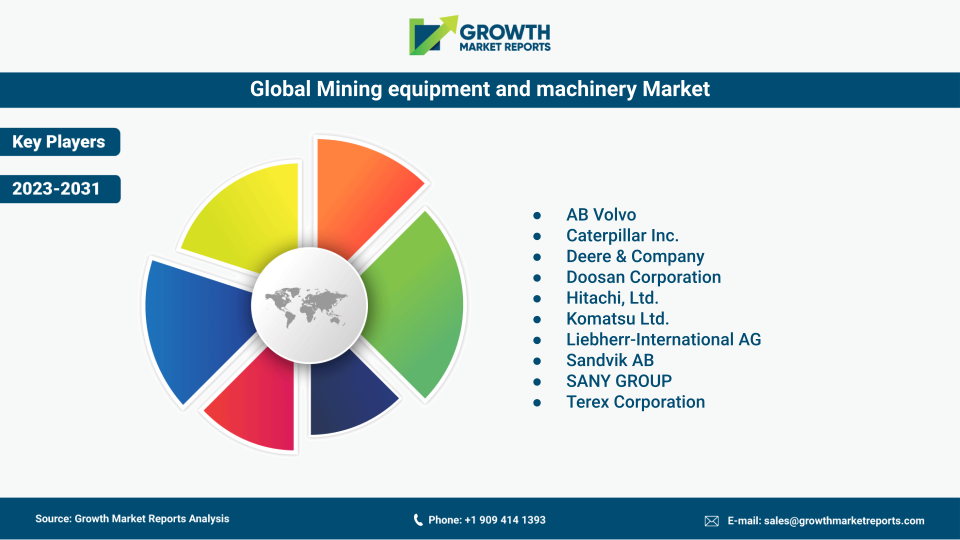
Some of the major companies operating in the mining equipment and machinery market include Caterpillar Inc., Komatsu Ltd., Sandvik AB, Epiroc AB, Hitachi Construction Machinery Co., Ltd., Liebherr Group, Volvo Construction Equipment, Doosan Infracore, Terex Corporation, and Atlas Copco AB. Caterpillar Inc. is renowned for its extensive range of surface and underground mining equipment, as well as its focus on digital solutions and sustainability. Komatsu Ltd. is a global leader in automation and electric mining machinery, with a strong presence in Asia Pacific and North America. Sandvik AB and Epiroc AB are recognized for their innovative drilling, crushing, and mineral processing equipment, while Hitachi Construction Machinery Co., Ltd. and Liebherr Group offer a diverse portfolio of excavators, loaders, and haul trucks. These companies are continuously investing in R&D, expanding their product lines, and forming strategic partnerships to address the evolving demands of the global mining sector.
The Mining Equipment and Machinery market has been segmented on the basis of
Major manufactures include, Caterpillar Inc., Komatsu Ltd., Hitachi, Ltd., AB Volvo, Liebherr-International AG, and others.
The mining industry is the key end-user driving the Mining equipment and machinery market growth.
The base year considered for the global mining equipment and machinery market report is 2019. The complete analysis period is 2017 to 2027, wherein, 2017, and 2018 are the historic years and the forecast is provided from 2020 to 2027.
The market is expected to witness decline of over 2.6% between 2019 and 2020 owing to the negative impact of COVID 19 pandemic on the Mining equipment and machinery market. The shutdown of production activities, restrictions on transportation activities, and temporary decline in demand for mining equipment and machinery are some of the prime reasons responsible for this market trend.
Factors such as competitive strength and market positioning are key areas considered while selecting top companies to be profiled.
Growing consumption of natural resources, rising demand for metals and commodities, adoption of innovative technologies, increasing demand for energy and electricity are the factors expected to drive the market growth during forecast period.
In addition to market size (in US$ Billion), Company Market Share (in % for base year 2019), other data such as pricing analysis for year 2017 to 2027 (estimated pricing analysis) is provided, in final report.
According to this Growth Market Reports report, the market from Mining equipment and machinery is likely to register a CAGR of 5.4 % during forecast period 2020-2027, with an anticipated valuation of US$ 140 million by the end of the 2027.
Yes, the report includes the distributors list in the final report.
Additional company profiles can be provided on request.