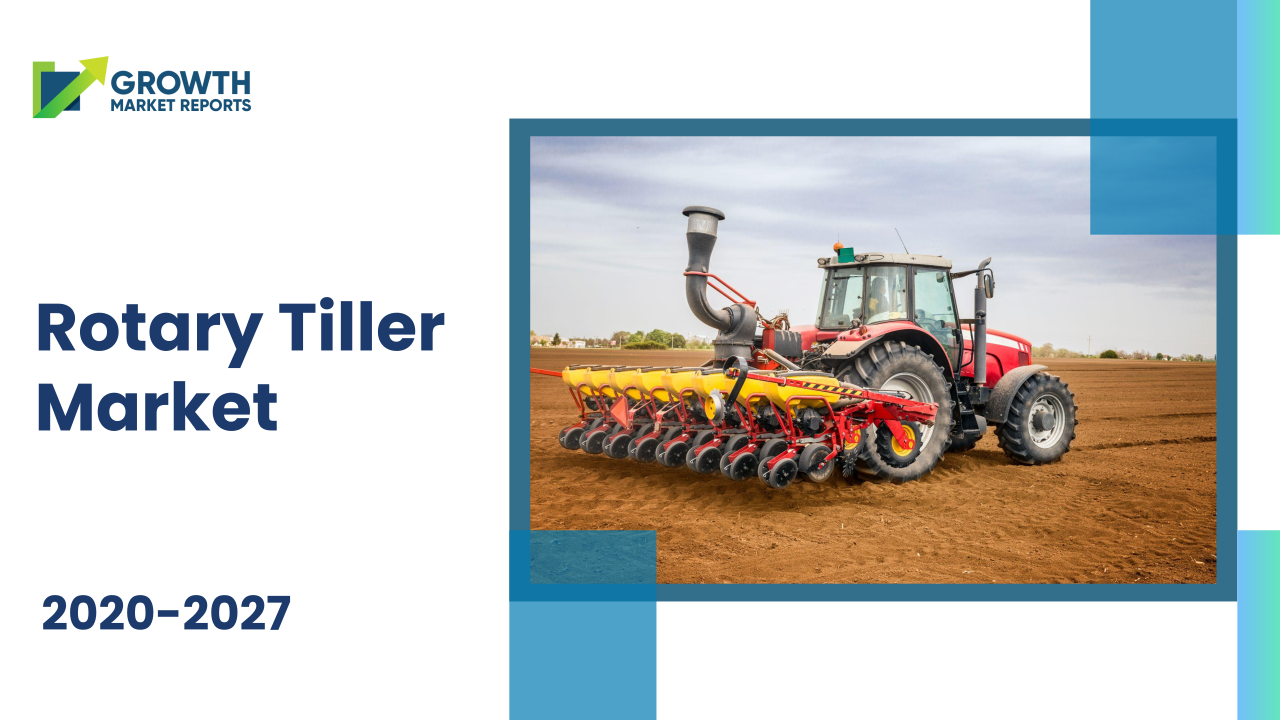
Segments - by Product Type (Heavy-Duty Rotary Tillers, Medium-Duty Rotary Tillers, Light-Duty Rotary Tillers), by Power Source (Tractor-Powered, Electric, Gasoline, Diesel), by Application (Agriculture, Horticulture, Landscaping, Gardening, Others), by End-User (Commercial, Residential, Industrial), by Distribution Channel (Online, Offline)
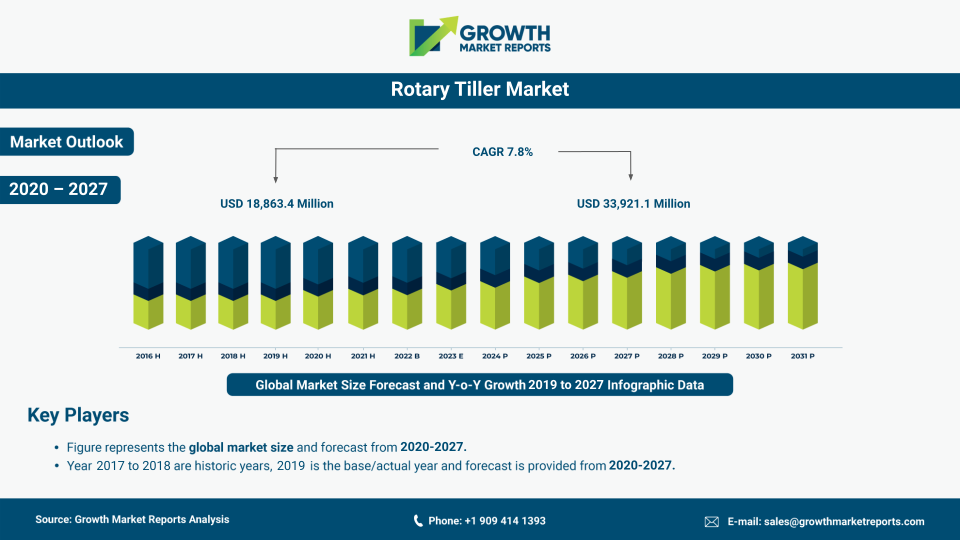
According to our latest research, the global rotary tiller market size reached USD 2.15 billion in 2024, with a robust year-on-year growth that underscores the increasing mechanization of agriculture worldwide. The market is expanding at a CAGR of 6.2%, and by 2033, it is projected to attain a value of USD 3.68 billion. This growth is primarily fueled by the rising demand for efficient soil preparation equipment, the adoption of advanced farming practices, and the need for higher agricultural productivity to meet global food demands. As per our comprehensive analysis, the market is witnessing a significant shift towards technologically advanced rotary tillers that offer enhanced efficiency and reduced labor dependency.
One of the key growth factors driving the rotary tiller market is the global emphasis on increasing agricultural output to cater to the ever-growing population. Farmers and agricultural enterprises are increasingly investing in mechanized solutions to optimize land use and improve crop yields. Rotary tillers, known for their ability to break up, mix, and aerate soil efficiently, are becoming indispensable in modern farming. The integration of precision agriculture technologies with rotary tillers further enhances their effectiveness, enabling farmers to achieve uniform soil texture and better seedbed preparation. Moreover, government initiatives in various countries, aimed at promoting farm mechanization through subsidies and favorable policies, are also contributing to the widespread adoption of rotary tillers.
Another significant factor propelling the growth of the rotary tiller market is the heightened focus on sustainable agricultural practices. As concerns regarding soil health and environmental impact intensify, rotary tillers equipped with advanced features such as adjustable depth control, reduced fuel consumption, and minimal soil disturbance are gaining traction. These innovations not only help in conserving soil structure but also reduce the overall carbon footprint of farming operations. Additionally, the versatility of rotary tillers in handling different soil types and their applicability across various crops make them a preferred choice for both smallholder and large-scale farmers. The trend towards organic farming and the need for precise weed management are further amplifying the demand for efficient tillage equipment.
The rotary tiller market is also benefiting from the expansion of horticulture, landscaping, and gardening activities. Urbanization and rising disposable incomes have led to increased investments in landscaping and home gardening, particularly in developed regions. Rotary tillers are widely used for preparing garden beds, landscaping grounds, and maintaining green spaces, which has opened new avenues for market growth beyond traditional agriculture. The emergence of compact and lightweight rotary tillers designed for residential use has made these machines accessible to a broader customer base. Furthermore, the proliferation of online distribution channels and the availability of a wide range of rotary tillers with varying specifications have made it easier for end-users to make informed purchasing decisions.
From a regional perspective, Asia Pacific dominates the global rotary tiller market, accounting for the largest share in 2024. The region’s leadership is attributed to the vast agricultural landscape, high population density, and ongoing mechanization efforts in countries like China, India, and Japan. North America and Europe also represent significant markets due to their advanced farming infrastructure and high adoption of precision agriculture technologies. Meanwhile, Latin America and the Middle East & Africa are emerging as promising markets, driven by the modernization of agriculture and supportive government policies. Each region presents unique growth opportunities and challenges, shaping the overall dynamics of the rotary tiller market.
The rotary tiller market is segmented by product type into heavy-duty rotary tillers, medium-duty rotary tillers, and light-duty rotary tillers, each catering to distinct user requirements and operational environments. Heavy-duty rotary tillers are primarily designed for large-scale commercial farming operations, where robust performance and the ability to handle tough soil conditions are paramount. These tillers are equipped with powerful engines, reinforced blades, and advanced transmission systems, enabling them to work efficiently over extensive land areas. Their high durability and low maintenance requirements make them a preferred choice for professional agricultural enterprises seeking long-term cost savings and reliability.
Medium-duty rotary tillers strike a balance between performance and affordability, making them suitable for mid-sized farms, horticultural operations, and landscaping businesses. These tillers offer sufficient power to manage moderately challenging soil conditions while remaining accessible to a broader range of users. The versatility of medium-duty tillers allows them to be used for a variety of applications, including seedbed preparation, weed control, and soil aeration. Manufacturers are increasingly focusing on ergonomic designs, user-friendly controls, and enhanced safety features to appeal to this segment, which is characterized by a mix of commercial and semi-professional users.
Light-duty rotary tillers, on the other hand, are tailored for small-scale farming, residential gardening, and landscaping applications. These compact and lightweight machines are easy to maneuver, making them ideal for use in confined spaces and smaller plots of land. The affordability and ease of operation of light-duty tillers have contributed to their growing popularity among hobbyists, home gardeners, and smallholder farmers. Additionally, technological advancements such as cordless electric models and foldable designs are making light-duty rotary tillers more convenient and accessible, further expanding their market reach.
The demand for each product type is influenced by factors such as farm size, soil type, crop variety, and end-user preferences. Heavy-duty rotary tillers dominate in regions with large-scale commercial agriculture, while medium- and light-duty models are more prevalent in areas with fragmented land holdings and a high concentration of smallholders. As the market evolves, manufacturers are investing in research and development to enhance the performance, durability, and energy efficiency of rotary tillers across all product categories. Customization options and modular designs are also gaining traction, allowing users to tailor their equipment to specific operational needs.
Overall, the segmentation by product type enables a more nuanced understanding of market dynamics and helps stakeholders identify growth opportunities within each category. The continuous innovation in design and functionality, coupled with the rising demand for efficient soil preparation equipment, is expected to drive sustained growth across all segments of the rotary tiller market.
| Attributes | Details |
| Report Title | Rotary Tiller Market Research Report 2033 |
| By Product Type | Heavy-Duty Rotary Tillers, Medium-Duty Rotary Tillers, Light-Duty Rotary Tillers |
| By Power Source | Tractor-Powered, Electric, Gasoline, Diesel |
| By Application | Agriculture, Horticulture, Landscaping, Gardening, Others |
| By End-User | Commercial, Residential, Industrial |
| By Distribution Channel | Online, Offline |
| Regions Covered | North America, Europe, APAC, Latin America, MEA |
| Countries Covered | North America (United States, Canada), Europe (Germany, France, Italy, United Kingdom, Spain, Russia, Rest of Europe), Asia Pacific (China, Japan, South Korea, India, Australia, South East Asia (SEA), Rest of Asia Pacific), Latin America (Mexico, Brazil, Rest of Latin America), Middle East & Africa (Saudi Arabia, South Africa, United Arab Emirates, Rest of Middle East & Africa) |
| Base Year | 2024 |
| Historic Data | 2018-2023 |
| Forecast Period | 2025-2033 |
| Number of Pages | 300 |
| Number of Tables & Figures | 358 |
| Customization Available | Yes, the report can be customized as per your need. |
The rotary tiller market is segmented by power source into tractor-powered, electric, gasoline, and diesel rotary tillers, each offering distinct advantages and catering to specific user requirements. Tractor-powered rotary tillers are the most widely used, especially in commercial agriculture, due to their high power output and ability to handle large-scale operations. These tillers are typically attached to tractors via a three-point linkage system, allowing for efficient soil preparation over extensive land areas. The compatibility with various tractor models and the availability of different tiller sizes make this segment highly versatile and adaptable to diverse farming needs.
Electric rotary tillers are gaining popularity, particularly in residential and small-scale applications, due to their eco-friendly operation, low noise levels, and minimal maintenance requirements. The advancement in battery technology has further enhanced the runtime and efficiency of cordless electric tillers, making them a viable option for urban gardeners and landscaping professionals. Electric tillers are also favored for their ease of use, lightweight design, and reduced environmental impact, aligning with the growing trend towards sustainable and green technologies in agriculture and landscaping.
Gasoline-powered rotary tillers are commonly used in both commercial and residential settings, offering a good balance between power and portability. These tillers are particularly suitable for medium-sized plots and areas where access to electricity may be limited. Gasoline engines provide the necessary torque to break up compacted soil and handle challenging terrain, making them a popular choice among farmers and landscapers who require reliable performance in diverse conditions. However, concerns regarding emissions and fuel costs are prompting manufacturers to develop more fuel-efficient and environmentally friendly models.
Diesel-powered rotary tillers are primarily used in heavy-duty applications where maximum power and durability are required. These tillers are capable of operating for extended periods without overheating, making them ideal for large farms and industrial-scale operations. Diesel engines are known for their fuel efficiency and longevity, which translates into lower operating costs over the equipment’s lifespan. However, the higher initial investment and maintenance requirements may limit their adoption among small-scale users. As emission regulations become more stringent, manufacturers are focusing on developing cleaner and more efficient diesel engines to comply with environmental standards.
The choice of power source is influenced by factors such as land size, soil type, availability of resources, and environmental considerations. As the market shifts towards sustainable solutions, the demand for electric and hybrid rotary tillers is expected to rise, particularly in urban and environmentally conscious regions. Meanwhile, tractor-powered, gasoline, and diesel tillers will continue to dominate in areas where large-scale and intensive farming practices prevail. The ongoing innovation in powertrain technologies and the integration of smart features are set to redefine the competitive landscape of the rotary tiller market.
The rotary tiller market is segmented by application into agriculture, horticulture, landscaping, gardening, and others, reflecting the diverse uses of these versatile machines. In agriculture, rotary tillers play a crucial role in soil preparation, weed control, and seedbed formation, directly impacting crop yields and farm productivity. The adoption of rotary tillers in agriculture is driven by the need for efficient and uniform soil mixing, which promotes healthy root development and improves water retention. Large-scale farms and commercial growers rely on heavy-duty and tractor-powered tillers to manage extensive land areas and optimize labor efficiency.
Horticulture is another significant application segment, encompassing the cultivation of fruits, vegetables, flowers, and ornamental plants. Rotary tillers are widely used in horticultural operations to prepare planting beds, incorporate organic matter, and manage weeds. The demand for medium- and light-duty tillers is particularly strong in this segment, as they offer the maneuverability and precision required for working in greenhouses, nurseries, and small plots. The growing popularity of organic farming and sustainable horticultural practices is further boosting the adoption of rotary tillers equipped with features that minimize soil disturbance and preserve soil health.
Landscaping and gardening represent emerging growth areas for the rotary tiller market, driven by urbanization, rising disposable incomes, and increased interest in home improvement and outdoor living spaces. Rotary tillers are essential tools for landscaping professionals and homeowners alike, enabling efficient soil preparation for lawns, flower beds, and vegetable gardens. The availability of compact and user-friendly tillers has made these machines accessible to a wider audience, fueling demand in the residential and commercial landscaping sectors. The integration of ergonomic designs and safety features is enhancing the appeal of rotary tillers for non-professional users.
Beyond traditional applications, rotary tillers are also used in specialized areas such as vineyard management, forestry, and turf maintenance. In vineyards, tillers are employed to manage soil between rows of vines, control weeds, and incorporate cover crops. In forestry, rotary tillers are used for site preparation and reforestation projects. The adaptability of rotary tillers to various applications underscores their value as a multipurpose tool in modern land management practices. Manufacturers are responding to this trend by offering a wide range of attachments and accessories that enhance the functionality and versatility of their products.
The application-based segmentation provides valuable insights into the evolving needs of end-users and highlights the importance of customization and innovation in product development. As the scope of rotary tiller applications continues to expand, manufacturers are focusing on developing specialized models that cater to the unique requirements of each segment. This approach not only drives market growth but also strengthens the competitive positioning of leading players in the rotary tiller market.
The rotary tiller market is segmented by end-user into commercial, residential, and industrial sectors, each exhibiting distinct demand patterns and operational requirements. The commercial segment, comprising large-scale farms, agricultural enterprises, and landscaping companies, accounts for the largest share of the market. These users prioritize performance, durability, and efficiency, often opting for heavy-duty and tractor-powered tillers that can handle intensive and prolonged use. Commercial end-users are also more likely to invest in advanced features such as GPS integration, automated depth control, and telematics for real-time monitoring and optimization of tillage operations.
The residential segment is characterized by smallholder farmers, hobbyists, and homeowners engaged in gardening and landscaping activities. The demand in this segment is driven by the increasing popularity of home gardening, urban farming, and DIY landscaping projects. Residential users typically prefer light-duty and electric rotary tillers that are easy to operate, maintain, and store. The growing availability of affordable and compact models, coupled with the rise of online retail channels, has made rotary tillers more accessible to this segment. Manufacturers are focusing on user-friendly designs, safety features, and intuitive controls to cater to the needs of residential customers.
Industrial end-users represent a niche but significant segment, encompassing sectors such as forestry, construction, and turf management. In these applications, rotary tillers are used for land reclamation, site preparation, and maintenance of large green spaces. Industrial users demand robust and high-performance equipment capable of operating in challenging environments and handling diverse tasks. The adoption of rotary tillers in industrial applications is supported by the trend towards mechanization and the need for efficient land management solutions in infrastructure and environmental projects.
The end-user segmentation highlights the importance of understanding the specific needs and preferences of different customer groups. Commercial users prioritize productivity and return on investment, while residential users value convenience and affordability. Industrial users require specialized features and rugged construction to withstand demanding conditions. Manufacturers are increasingly offering tailored solutions and after-sales support to address the unique requirements of each end-user segment.
As the rotary tiller market continues to evolve, the ability to cater to diverse end-user needs will be a key differentiator for market players. The ongoing innovation in product design, coupled with targeted marketing and distribution strategies, is expected to drive sustained growth across all end-user segments. The rising awareness of the benefits of mechanized tillage and the increasing adoption of rotary tillers in non-traditional applications will further expand the market’s reach and potential.
The rotary tiller market is segmented by distribution channel into online and offline channels, reflecting the changing dynamics of product procurement and customer engagement. Offline channels, including authorized dealerships, specialty stores, and agricultural equipment retailers, have traditionally dominated the market. These channels offer customers the advantage of personalized service, product demonstrations, and after-sales support. The ability to physically inspect and compare products before purchase is particularly important for commercial and industrial buyers, who often require customized solutions and technical guidance.
However, the rise of e-commerce and digital platforms has transformed the distribution landscape, with online channels gaining significant traction in recent years. Online retailers and manufacturer websites offer a wide selection of rotary tillers, detailed product information, and customer reviews, enabling buyers to make informed decisions from the comfort of their homes or offices. The convenience of doorstep delivery, competitive pricing, and promotional offers further enhance the appeal of online channels, especially among residential and small-scale users.
The growing penetration of smartphones and internet connectivity, coupled with the increasing digital literacy of rural populations, has expanded the reach of online distribution channels. Manufacturers and distributors are leveraging digital marketing strategies, social media platforms, and online marketplaces to engage with a broader audience and drive sales. The integration of virtual product tours, interactive guides, and online customer support has further improved the online buying experience, reducing the barriers to entry for new customers.
Despite the growth of online channels, offline distribution remains critical for building trust and providing value-added services such as installation, maintenance, and training. Many customers, particularly in developing regions, continue to rely on local dealerships and distributors for product recommendations and after-sales support. Hybrid distribution models that combine the strengths of both online and offline channels are emerging as a popular strategy among leading market players, enabling them to cater to diverse customer preferences and maximize market coverage.
The distribution channel segmentation underscores the importance of a multi-channel approach in the rotary tiller market. As customer expectations evolve and digital adoption accelerates, manufacturers and distributors must adapt their sales and marketing strategies to remain competitive. The ability to offer a seamless and integrated buying experience across online and offline channels will be a key driver of success in the increasingly dynamic and competitive rotary tiller market.
The rotary tiller market presents numerous opportunities for growth, driven by technological advancements, expanding applications, and evolving customer needs. One of the most promising opportunities lies in the integration of smart technologies and precision agriculture solutions with rotary tillers. The adoption of GPS, IoT sensors, and automation features can significantly enhance the efficiency and effectiveness of tillage operations, enabling farmers to optimize resource use, reduce operational costs, and improve crop yields. Manufacturers that invest in research and development to create innovative and connected rotary tillers are well-positioned to capture a larger share of the market and address the growing demand for data-driven farming solutions.
Another significant opportunity is the expansion of the rotary tiller market into emerging economies, where the mechanization of agriculture is still in its nascent stages. Governments in countries across Asia Pacific, Latin America, and Africa are implementing policies and initiatives to promote the adoption of modern farming equipment and improve agricultural productivity. The availability of affordable and efficient rotary tillers tailored to the needs of smallholder farmers can drive market penetration and contribute to rural development. Additionally, the growing interest in sustainable agriculture, organic farming, and urban gardening presents new avenues for product innovation and market diversification.
Despite the positive outlook, the rotary tiller market faces certain restraining factors that could hinder its growth. One of the primary challenges is the high initial investment required for purchasing advanced rotary tillers, particularly for small-scale and resource-constrained farmers. The cost of ownership, including maintenance, repairs, and spare parts, can also be a barrier to widespread adoption. Furthermore, the lack of technical know-how and limited access to financing options in some regions may impede market growth. Addressing these challenges through affordable financing schemes, training programs, and after-sales support will be crucial for sustaining the long-term growth of the rotary tiller market.
Asia Pacific continues to dominate the global rotary tiller market, accounting for over 45% of the total market share in 2024, or approximately USD 967.5 million. The region’s leadership is driven by the vast agricultural landscape, high population density, and increasing mechanization efforts in countries such as China, India, and Japan. Government initiatives aimed at promoting farm mechanization, coupled with the rising adoption of advanced farming equipment, are fueling market growth in this region. The Asia Pacific rotary tiller market is expected to maintain a strong growth trajectory, with a projected CAGR of 6.8% through 2033, supported by ongoing investments in rural infrastructure and agricultural modernization.
North America represents the second-largest market for rotary tillers, with a market size of USD 537 million in 2024. The region’s advanced agricultural infrastructure, high adoption of precision farming technologies, and strong presence of leading manufacturers contribute to its significant market share. The demand for rotary tillers in North America is driven by the need for efficient soil preparation, weed management, and sustainable farming practices. The trend towards large-scale commercial farming and the increasing emphasis on environmental conservation are further boosting the adoption of technologically advanced rotary tillers in the region.
Europe holds a substantial share of the global rotary tiller market, valued at USD 408 million in 2024. The region’s focus on sustainable agriculture, stringent environmental regulations, and the widespread adoption of modern farming equipment are key factors driving market growth. European countries such as Germany, France, and Italy are at the forefront of innovation in agricultural machinery, with a strong emphasis on energy efficiency and reduced environmental impact. Meanwhile, Latin America and the Middle East & Africa are emerging as high-potential markets, with a combined market size of USD 237.5 million in 2024. These regions are witnessing increased investments in agricultural development and mechanization, supported by favorable government policies and rising awareness of the benefits of modern tillage equipment.
The rotary tiller market is characterized by intense competition, with a mix of global and regional players vying for market share through product innovation, strategic partnerships, and expansion into new markets. Leading companies are focusing on developing technologically advanced rotary tillers that offer enhanced performance, durability, and energy efficiency. The integration of smart features such as GPS guidance, automated depth control, and remote monitoring is emerging as a key differentiator in the market. Additionally, manufacturers are investing in research and development to create eco-friendly and sustainable solutions that align with evolving customer preferences and regulatory requirements.
The competitive landscape is further shaped by the adoption of multi-channel distribution strategies, enabling companies to reach a wider customer base and enhance brand visibility. Collaborations with local distributors, dealerships, and online platforms are helping market players strengthen their presence in emerging markets and tap into new customer segments. Price competitiveness, product quality, and after-sales support are critical factors influencing customer loyalty and market positioning. Companies are also focusing on offering customized solutions and value-added services to address the specific needs of different end-user segments.
Mergers and acquisitions, joint ventures, and strategic alliances are common strategies employed by leading players to expand their product portfolios, enhance technological capabilities, and enter new geographic markets. The increasing emphasis on sustainability and environmental stewardship is prompting companies to develop rotary tillers with reduced emissions, lower fuel consumption, and minimal soil disturbance. Continuous innovation and responsiveness to market trends are essential for maintaining a competitive edge in the dynamic rotary tiller market.
Some of the major companies operating in the rotary tiller market include John Deere, Kubota Corporation, Maschio Gaspardo, Mahindra & Mahindra, AGCO Corporation, CNH Industrial, Yanmar Co., Ltd., Alamo Group Inc., and Land Pride. John Deere is renowned for its extensive range of high-performance rotary tillers and its strong global distribution network. Kubota Corporation is a leading player in the compact and medium-duty tiller segment, known for its innovative designs and user-friendly features. Maschio Gaspardo specializes in heavy-duty and technologically advanced rotary tillers, catering to large-scale commercial farming operations. Mahindra & Mahindra and AGCO Corporation are prominent in emerging markets, offering affordable and reliable solutions tailored to the needs of smallholder farmers.
CNH Industrial and Yanmar Co., Ltd. are recognized for their commitment to sustainability and the development of eco-friendly rotary tillers. Alamo Group Inc. and Land Pride have established strong reputations for product quality, durability, and after-sales support, particularly in North America and Europe. These companies are continuously expanding their product portfolios, investing in research and development, and exploring new markets to capitalize on emerging growth opportunities. The competitive landscape of the rotary tiller market is expected to remain dynamic, with ongoing innovation and strategic initiatives shaping the future of the industry.
The Rotary Tiller market has been segmented on the basis of
Key trends include the integration of smart technologies, expansion into emerging economies, focus on sustainability, and the development of eco-friendly and user-friendly rotary tillers. Opportunities exist in precision agriculture, urban gardening, and product innovation.
Rotary tillers are sold through offline channels like dealerships and specialty stores, as well as online platforms and manufacturer websites. Hybrid models combining both channels are increasingly popular.
Major companies include John Deere, Kubota Corporation, Maschio Gaspardo, Mahindra & Mahindra, AGCO Corporation, CNH Industrial, Yanmar Co., Ltd., Alamo Group Inc., and Land Pride.
Rotary tillers are used in agriculture, horticulture, landscaping, gardening, and specialized areas such as vineyard management and forestry for soil preparation, weed control, and seedbed formation.
The market is segmented into tractor-powered, electric, gasoline, and diesel rotary tillers. Tractor-powered models are most common in commercial agriculture, while electric and gasoline tillers are popular for residential and small-scale use.
Rotary tillers are segmented into heavy-duty, medium-duty, and light-duty types, catering to large-scale commercial farms, mid-sized operations, and smallholder or residential users, respectively.
Asia Pacific leads the market, accounting for over 45% of the global share, followed by North America and Europe. Latin America and the Middle East & Africa are emerging as promising markets due to ongoing agricultural modernization.
Key growth drivers include rising demand for efficient soil preparation equipment, adoption of advanced farming practices, government subsidies for mechanization, and the need for higher agricultural productivity.
The rotary tiller market is expected to grow at a CAGR of 6.2%, reaching a value of USD 3.68 billion by 2033.
As of 2024, the global rotary tiller market size reached USD 2.15 billion, with strong year-on-year growth driven by increasing agricultural mechanization.