Friction Stir Welding Equipment Market Research Report 2033

Friction Stir Welding Equipment Market Research Report 2033

Segments - by Equipment Type (Portable, Fixed, Robotic), by Application (Automotive, Aerospace, Shipbuilding, Railways, General Manufacturing, Others), by End-User (OEMs, Aftermarket)

https://growthmarketreports.com/Raksha
Author : Raksha Sharma
https://growthmarketreports.com/Vaibhav
Fact-checked by : V. Chandola
https://growthmarketreports.com/Rucha
Editor : Rucha Phatak

Upcoming | Report ID :CM-44 | 4.7 Rating | 63 Reviews | 261 Pages | Format : Docx PDF

Report Description


Friction Stir Welding Equipment Market Outlook

According to our latest research, the global Friction Stir Welding Equipment market size reached USD 888.4 million in 2024, reflecting the growing adoption of advanced joining technologies across various manufacturing sectors. The industry is exhibiting a robust compound annual growth rate (CAGR) of 7.2% from 2025 to 2033. By the end of the forecast period in 2033, the Friction Stir Welding Equipment market size is expected to attain USD 1,670.8 million. This significant growth is primarily driven by the increasing demand for lightweight and high-strength materials in automotive and aerospace industries, coupled with the ongoing shift towards automation and energy-efficient manufacturing processes.

The primary growth factor for the Friction Stir Welding Equipment market is the escalating demand for lightweight, high-strength components in the automotive and aerospace sectors. As industries strive to meet stringent emission norms and improve fuel efficiency, the adoption of aluminum and other lightweight alloys has surged. Friction stir welding (FSW) is particularly suited for joining these materials, offering superior mechanical properties and minimal distortion compared to traditional welding techniques. Additionally, the rise in electric vehicle (EV) production globally has fostered the integration of FSW equipment for battery enclosures and chassis manufacturing, further propelling market expansion. The ability of FSW to produce defect-free welds without the need for filler materials or shielding gases also enhances its appeal in high-precision applications.

Another significant driver for the Friction Stir Welding Equipment market is the rapid advancement in automation and robotics within manufacturing facilities. As manufacturers aim to optimize production efficiency and reduce labor costs, the implementation of robotic and automated FSW systems has gained momentum. These systems provide high repeatability, consistent weld quality, and the capacity to handle complex geometries, making them indispensable in industries such as shipbuilding, railways, and general manufacturing. Furthermore, the development of portable FSW equipment has broadened the application scope, enabling on-site repairs and joining of large structures that cannot be easily transported. The integration of Industry 4.0 technologies, such as real-time monitoring and data analytics, is also enhancing the reliability and traceability of FSW processes, thereby contributing to market growth.

The increasing focus on sustainability and energy efficiency is also catalyzing the adoption of Friction Stir Welding Equipment. FSW is a solid-state process that consumes less energy compared to conventional fusion welding methods, as it does not require melting of the workpieces. This results in lower greenhouse gas emissions and a reduced carbon footprint, aligning with global initiatives towards sustainable manufacturing. Additionally, the minimal post-weld processing required due to the high-quality welds produced by FSW translates to lower production costs and material wastage. These advantages are particularly attractive to OEMs and aftermarket service providers seeking to enhance their environmental credentials and operational efficiency. As regulatory pressures intensify and consumer awareness of sustainability grows, the demand for FSW equipment is expected to witness sustained growth across various end-user segments.

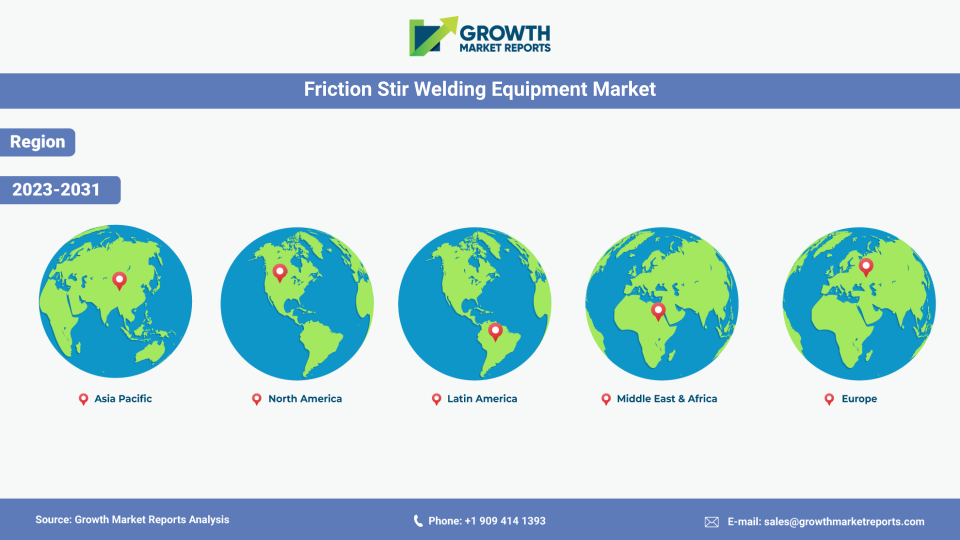
From a regional perspective, Asia Pacific continues to dominate the Friction Stir Welding Equipment market, accounting for the largest revenue share in 2024. This is attributed to the rapid industrialization, expanding automotive and aerospace manufacturing bases, and significant investments in infrastructure development across countries such as China, Japan, and India. North America and Europe also represent substantial markets, driven by technological advancements and the presence of major OEMs and research institutions. Meanwhile, Latin America and the Middle East & Africa are emerging as promising markets, fueled by growing investments in shipbuilding, railways, and energy sectors. The global distribution of demand highlights the widespread adoption of FSW technology, with each region exhibiting unique growth drivers and opportunities for market participants.

Global Friction Stir Welding Equipment Industry Outlook

Equipment Type Analysis

The Friction Stir Welding Equipment market is segmented by equipment type into Portable, Fixed, and Robotic systems, each catering to distinct operational requirements and industry demands. Portable friction stir welding equipment has witnessed increased adoption, particularly in sectors where on-site repairs and joining of large or immobile structures are essential. These systems offer unparalleled flexibility and mobility, enabling manufacturers to perform high-quality welds in remote or challenging environments, such as shipyards, railways, and construction sites. The demand for portable FSW equipment is further bolstered by the growing need for maintenance and refurbishment of aging infrastructure, especially in emerging economies. Manufacturers are continually innovating to enhance the portability, durability, and ease of use of these systems, making them an attractive option for aftermarket service providers and field operations.

Fixed friction stir welding equipment remains the backbone of mass production environments, particularly in automotive, aerospace, and general manufacturing sectors. These systems are designed for high throughput, precision, and repeatability, making them ideal for assembly lines and large-scale fabrication processes. Fixed FSW machines are often integrated with advanced control systems, allowing for real-time monitoring and optimization of welding parameters. The ability to handle a wide range of workpiece sizes and materials further enhances their versatility, catering to the diverse needs of OEMs. As manufacturers increasingly adopt lean manufacturing principles and seek to minimize downtime, the demand for robust and reliable fixed FSW equipment is expected to remain strong throughout the forecast period.

The advent of robotic friction stir welding equipment has revolutionized the market, enabling the automation of complex welding tasks with unprecedented accuracy and efficiency. Robotic FSW systems are particularly favored in industries requiring intricate weld geometries, high production volumes, and stringent quality standards, such as aerospace and automotive manufacturing. These systems leverage advanced robotics, machine vision, and artificial intelligence to deliver consistent weld quality, reduce human error, and optimize cycle times. The integration of robotic FSW with smart factory initiatives and Industry 4.0 platforms is further enhancing process transparency, traceability, and predictive maintenance capabilities. As the cost of robotics continues to decline and the benefits of automation become more widely recognized, the adoption of robotic FSW equipment is poised for significant growth across all major regions.

Innovation in equipment design and functionality is a key trend shaping the Friction Stir Welding Equipment market. Manufacturers are investing in research and development to introduce multi-axis, multi-tool, and hybrid FSW systems that can accommodate increasingly complex manufacturing requirements. The focus on enhancing energy efficiency, reducing cycle times, and improving user interfaces is driving the evolution of next-generation FSW equipment. Additionally, the development of modular and customizable systems is enabling end-users to tailor their welding solutions to specific applications, further expanding the market's addressable scope. The ongoing convergence of FSW technology with digital manufacturing and automation is expected to unlock new opportunities for equipment providers and end-users alike.

Report Scope

Attributes Details
Report Title Friction Stir Welding Equipment Market Research Report 2033
By Equipment Type Portable, Fixed, Robotic
By Application Automotive, Aerospace, Shipbuilding, Railways, General Manufacturing, Others
By End-User OEMs, Aftermarket
Regions Covered North America, Europe, APAC, Latin America, MEA
Base Year 2024
Historic Data 2018-2023
Forecast Period 2025-2033
Number of Pages 261
Number of Tables & Figures 314
Customization Available Yes, the report can be customized as per your need.

Application Analysis

The application landscape of the Friction Stir Welding Equipment market is broad, encompassing key industries such as Automotive, Aerospace, Shipbuilding, Railways, General Manufacturing, and Others. The automotive sector represents one of the largest application areas, driven by the industry's relentless pursuit of lightweighting, improved crashworthiness, and enhanced fuel efficiency. FSW is extensively used for joining aluminum components in vehicle bodies, chassis, and battery enclosures, particularly in electric vehicles. The technology's ability to produce strong, defect-free welds with minimal heat input is highly valued in automotive manufacturing, where precision and reliability are paramount. As automakers continue to invest in advanced joining technologies to meet evolving regulatory and consumer demands, the adoption of FSW equipment in this sector is expected to grow steadily.

In the aerospace industry, Friction Stir Welding Equipment is increasingly utilized for assembling critical structural components, such as fuselage panels, wing sections, and fuel tanks. The technology's capability to join high-strength aluminum and other non-ferrous alloys without compromising material properties is a significant advantage in aerospace applications, where weight reduction and structural integrity are critical. FSW also enables the production of larger, more complex assemblies with fewer joints, reducing the risk of failure and enhancing overall safety. The ongoing expansion of commercial and military aviation fleets, coupled with the rising demand for next-generation aircraft, is fueling investments in advanced FSW equipment and processes within the aerospace sector.

Shipbuilding and railways are also prominent application areas for Friction Stir Welding Equipment, benefiting from the technology's ability to join thick plates and large structures with high efficiency and minimal distortion. In shipbuilding, FSW is employed for fabricating hulls, decks, and bulkheads, contributing to improved vessel performance and durability. The railways sector leverages FSW for manufacturing lightweight train bodies and components, which enhance energy efficiency and passenger safety. As global investments in transportation infrastructure continue to rise, the demand for high-performance welding solutions in these sectors is expected to increase correspondingly.

General manufacturing and other industries, including electronics, energy, and defense, are also embracing Friction Stir Welding Equipment for a wide range of applications. The versatility of FSW in joining dissimilar materials, producing leak-proof joints, and minimizing post-weld processing requirements makes it an attractive option for manufacturers seeking to enhance product quality and operational efficiency. As the trend towards customized and small-batch production gains traction, the flexibility and adaptability of FSW equipment are becoming increasingly important. The ongoing diversification of application areas is expected to create new growth avenues for market participants over the forecast period.

End-User Analysis

The Friction Stir Welding Equipment market is segmented by end-user into OEMs (Original Equipment Manufacturers) and Aftermarket service providers, reflecting the diverse needs and purchasing behaviors of these customer groups. OEMs represent the primary end-users, accounting for the majority of equipment sales and installations. These organizations typically require high-capacity, customized FSW systems to support mass production and assembly line operations. The focus on process optimization, quality assurance, and integration with existing manufacturing infrastructure drives OEMs to invest in advanced FSW equipment with robust automation, monitoring, and control capabilities. As OEMs across automotive, aerospace, and other sectors continue to expand their production capacities and adopt Industry 4.0 practices, their demand for cutting-edge FSW solutions is expected to remain strong.

The Aftermarket segment, while smaller in terms of revenue share, plays a crucial role in supporting the maintenance, repair, and refurbishment needs of various industries. Aftermarket service providers typically require portable and versatile FSW equipment to perform on-site repairs, upgrades, and retrofits of existing structures and components. The increasing emphasis on extending the service life of assets, reducing downtime, and minimizing operational disruptions is driving the adoption of FSW technology in the aftermarket space. Additionally, the growing availability of training, technical support, and spare parts from equipment manufacturers is enhancing the value proposition for aftermarket customers.

OEMs are increasingly collaborating with FSW equipment manufacturers to develop bespoke solutions tailored to their specific production requirements. This trend is particularly evident in industries with stringent quality and regulatory standards, such as aerospace and automotive manufacturing. The ability to co-develop and customize FSW systems enables OEMs to achieve higher levels of process integration, product differentiation, and competitive advantage. As the complexity of manufacturing operations continues to increase, the demand for collaborative partnerships and value-added services is expected to rise accordingly.

In the aftermarket segment, the rise of service-based business models and the growing emphasis on lifecycle management are reshaping customer expectations and purchasing behaviors. Equipment manufacturers are responding by offering comprehensive service packages, including preventive maintenance, remote diagnostics, and process optimization support. The integration of digital technologies, such as IoT-enabled monitoring and predictive analytics, is further enhancing the efficiency and reliability of aftermarket services. As industries prioritize asset uptime and operational resilience, the role of aftermarket FSW solutions is expected to become increasingly prominent.

Opportunities & Threats

The Friction Stir Welding Equipment market presents a host of compelling opportunities for growth and innovation. One of the most significant opportunities lies in the ongoing electrification of the automotive and transportation sectors, particularly the rapid expansion of electric vehicle (EV) production. As EV manufacturers seek to optimize battery enclosures, chassis, and lightweight body structures, the demand for advanced FSW solutions is expected to surge. Furthermore, the development of new materials and alloys, such as high-strength aluminum and magnesium, is creating opportunities for equipment providers to innovate and address emerging joining challenges. The growing adoption of automation and digital manufacturing technologies is also opening new avenues for process optimization, quality assurance, and data-driven decision-making, enabling manufacturers to achieve higher levels of efficiency and competitiveness.

Another key opportunity in the Friction Stir Welding Equipment market is the increasing emphasis on sustainability and energy efficiency in manufacturing. As industries worldwide strive to reduce their environmental impact and comply with stringent regulations, the adoption of solid-state welding processes like FSW is expected to accelerate. Equipment manufacturers can capitalize on this trend by developing energy-efficient, eco-friendly, and user-friendly FSW systems that align with the sustainability goals of their customers. Additionally, the expansion of infrastructure projects and investments in transportation, energy, and defense sectors across emerging economies presents significant growth opportunities for market participants. By offering tailored solutions and comprehensive support services, equipment providers can strengthen their market presence and capture new customer segments.

Despite the promising outlook, the Friction Stir Welding Equipment market faces certain restraints and challenges that could impede growth. One of the primary challenges is the high initial investment and operational costs associated with advanced FSW systems, particularly robotic and automated solutions. Small and medium-sized enterprises (SMEs) may find it difficult to justify these expenditures, especially in price-sensitive markets. Additionally, the technical complexity of FSW processes and the need for skilled operators can pose barriers to adoption, particularly in regions with limited access to training and technical expertise. Addressing these challenges will require ongoing investments in research, workforce development, and customer education by equipment manufacturers and industry stakeholders.

Regional Outlook

The regional dynamics of the Friction Stir Welding Equipment market reveal a diverse landscape, with Asia Pacific emerging as the dominant player in 2024, accounting for over 38% of global revenue, or approximately USD 337.6 million. This leadership is underpinned by the region’s rapid industrialization, burgeoning automotive and aerospace manufacturing sectors, and robust investments in infrastructure development in countries such as China, Japan, South Korea, and India. The presence of major OEMs and a thriving export-oriented manufacturing ecosystem further contribute to the region’s strong demand for advanced FSW solutions. As regional governments continue to promote innovation and technology adoption, Asia Pacific is projected to maintain its leading position, with a forecasted CAGR of 7.8% through 2033.

North America follows as the second-largest market, generating approximately USD 248.7 million in revenue in 2024. The region benefits from a well-established manufacturing base, advanced technological infrastructure, and a strong focus on research and development. The United States, in particular, is a key contributor, driven by the presence of leading aerospace, automotive, and defense manufacturers. The region’s emphasis on automation, sustainability, and high-quality production standards is fostering the adoption of robotic and automated FSW systems. Europe, with a market size of USD 204.3 million, also demonstrates significant growth potential, supported by the presence of major OEMs, stringent regulatory frameworks, and ongoing investments in transportation and renewable energy sectors. The region is witnessing increased adoption of FSW technology in both traditional and emerging applications, driven by the need for lightweighting and enhanced structural integrity.

Latin America and the Middle East & Africa, while representing smaller shares of the global market, are poised for steady growth over the forecast period. Latin America generated around USD 53.3 million in 2024, with Brazil and Mexico leading the adoption of FSW solutions in automotive and shipbuilding industries. The Middle East & Africa, with a market size of USD 44.5 million, is experiencing rising demand for FSW equipment in infrastructure, energy, and transportation projects. Both regions are benefiting from increased foreign investments, government initiatives to modernize manufacturing capabilities, and the growing need for high-performance joining solutions. As these regions continue to develop their industrial bases and expand their application scope, they are expected to contribute increasingly to the overall growth of the Friction Stir Welding Equipment market.

Friction Stir Welding Equipment Market Statistics

Competitor Outlook

The Friction Stir Welding Equipment market is characterized by intense competition, rapid technological advancements, and a dynamic landscape of global and regional players. Leading companies are focusing on product innovation, strategic partnerships, and geographical expansion to strengthen their market positions and address evolving customer needs. The market’s competitive intensity is further heightened by the entry of new players, particularly in emerging economies, who are leveraging cost-competitive manufacturing and localized support services to capture market share. Companies are also investing heavily in research and development to enhance the performance, versatility, and user-friendliness of their FSW equipment, with a particular emphasis on automation, digitalization, and sustainability.

Collaborations and alliances between equipment manufacturers, OEMs, research institutions, and technology providers are increasingly common, enabling the co-development of customized solutions and the acceleration of technology adoption. These partnerships are particularly prevalent in industries with complex joining requirements and stringent quality standards, such as aerospace and automotive manufacturing. The integration of advanced robotics, machine vision, and data analytics into FSW systems is also driving the emergence of smart, connected welding solutions, offering enhanced process control, traceability, and predictive maintenance capabilities. As customers demand higher levels of value-added services, including training, technical support, and lifecycle management, leading players are expanding their service portfolios and investing in digital platforms to deliver seamless customer experiences.

Market leaders are also focusing on sustainability and energy efficiency, developing eco-friendly FSW solutions that align with the environmental goals of their customers. The adoption of solid-state welding processes, energy-efficient equipment designs, and recyclable materials is becoming a key differentiator in the competitive landscape. Furthermore, companies are exploring opportunities in emerging applications and regions, leveraging their technological expertise, global reach, and financial resources to capture new growth avenues. The ability to anticipate market trends, respond quickly to changing customer needs, and deliver innovative, high-quality solutions will be critical for sustained success in the Friction Stir Welding Equipment market.

Some of the major companies operating in the Friction Stir Welding Equipment market include ESAB Group, Colfax Corporation, ThyssenKrupp AG, KUKA AG, Hitachi High-Technologies Corporation, General Tool Company, Stirtec GmbH, PaR Systems, Friction Stir Link Inc., and MTI (Manufacturing Technology, Inc.). ESAB Group is renowned for its comprehensive portfolio of welding solutions and global presence, while KUKA AG is a leader in robotic FSW systems, leveraging its expertise in automation and smart manufacturing. ThyssenKrupp AG and Colfax Corporation are prominent players with strong capabilities in industrial machinery and engineering solutions. Hitachi High-Technologies Corporation is known for its advanced materials and precision engineering, catering to high-end applications in aerospace and electronics.

Emerging companies such as Stirtec GmbH and Friction Stir Link Inc. are gaining traction by focusing on niche applications, customized solutions, and agile service delivery. PaR Systems and General Tool Company are recognized for their expertise in large-scale and complex FSW projects, particularly in shipbuilding and defense sectors. MTI is a key innovator in the development of hybrid and multi-axis FSW systems, addressing the evolving needs of advanced manufacturing environments. These companies are continually expanding their product offerings, investing in R&D, and forging strategic alliances to enhance their competitive advantage and address the diverse requirements of global customers.

The competitive landscape of the Friction Stir Welding Equipment market is expected to remain dynamic and innovation-driven, with ongoing investments in new technologies, market expansion, and customer-centric solutions. As the market continues to evolve, the ability to deliver differentiated value, adapt to changing industry trends, and build strong customer relationships will be essential for sustained leadership and growth.

Key Players

  • Colfax Corporation (ESAB)
  • KUKA AG
  • Hitachi High-Technologies Corporation
  • Grenzebach Maschinenbau GmbH
  • General Tool Company
  • Boeing
  • Mazak Corporation
  • PaR Systems
  • Stirtec GmbH
  • Sapa Group
  • Manufacturing Technology, Inc. (MTI)
  • Friction Stir Link Inc.
  • Nova-Tech Engineering
  • Gatwick Technologies Ltd
  • FOOKE GmbH
  • China FSW Center
  • PTG Heavy Industries
  • U.J. Consortium
  • Nitto Seiki Co., Ltd.
  • Advanced Joining Technologies, Inc.
Friction Stir Welding Equipment Market Overview

Segments

The Friction Stir Welding Equipment market has been segmented on the basis of

Equipment Type

  • Portable
  • Fixed
  • Robotic

Application

  • Automotive
  • Aerospace
  • Shipbuilding
  • Railways
  • General Manufacturing
  • Others

End-User

  • OEMs
  • Aftermarket

Competitive Landscape

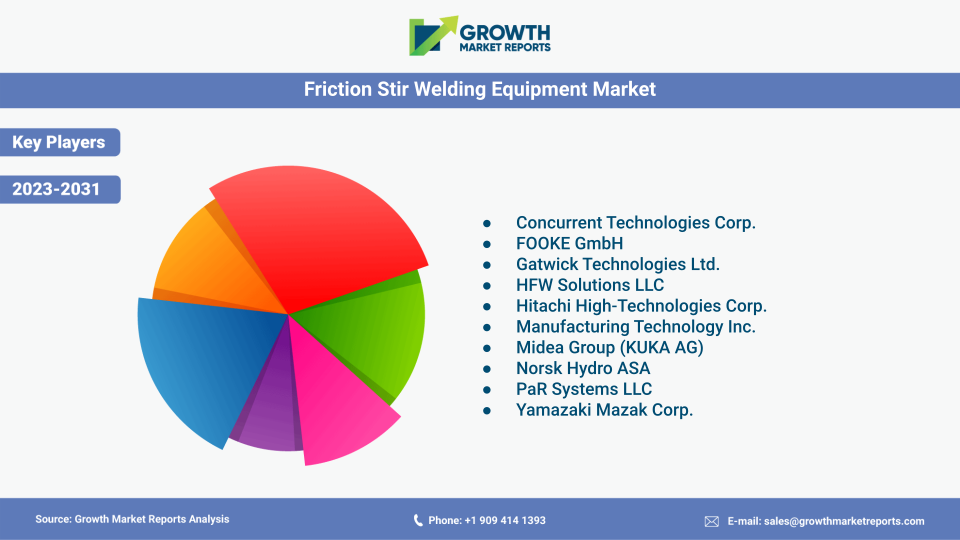
  • Key players in the market include Concurrent Technologies Corp., FOOKE GmbH, Gatwick Technologies Ltd., HFW Solutions LLC, Hitachi High-Technologies Corp. and Others. They considered as key manufacturers of the market based on their different varieties of product availability, regional presence, better supply chain management system, and the increasing demand for the products.
  • The players are adopting key strategies such as product development, geographical expansion, and many other strategies to increase their demand for the friction stir welding equipment.

Friction Stir Welding Equipment Market Key Players

Frequently Asked Questions

Major Manufactures include, Concurrent Technologies Corp., FOOKE GmbH, Gatwick Technologies Ltd., HFW Solutions LLC, Hitachi High-Technologies Corp. and Others.

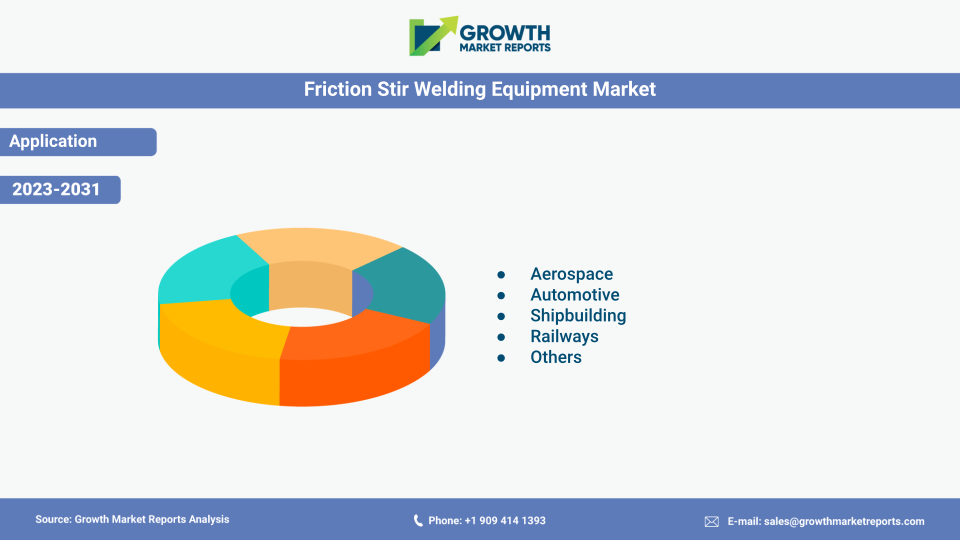
Aerospace, automotive, shipbuilding, railways, and others are the key applications that are driving the friction stir welding equipment market.

The base year considered for the global Friction Stir Welding Equipment market report is 2019. The complete analysis period is 2017 to 2027, wherein, 2017 & 2018 are the historic years and the forecast is provided from 2020 to 2027.

The market is expected to witness sluggish rate owing to the negative impact of COVID-19 pandemic on the friction stir welding equipment market.

Factors such as competitive strength and market positioning are key areas considered while selecting top companies to be profiled.

The market is driven by increasing demand of friction stir welding equipment in different applications.

In addition to market size (in USD Million) and Company Market Share (in % for base year 2019), other data such Macro-economic factors, COVID-19 Impact on the Friction Stir Welding Equipment is available in final report.

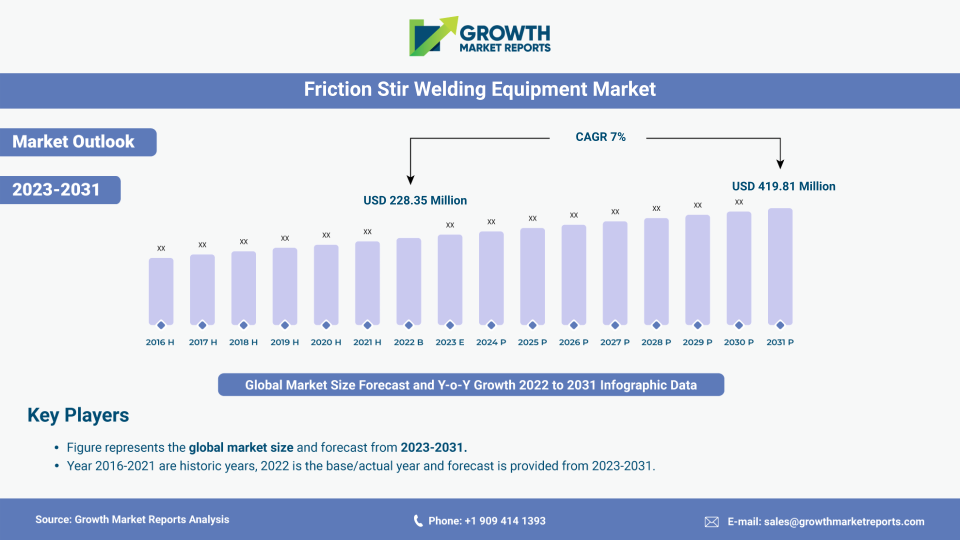
According to this Growth Market Reports report, the market from Friction Stir Welding Equipment is likely to register a CAGR of 7.0% during forecast period 2020-2027, with an anticipated valuation of USD 330.1 million by the end of the 2027.

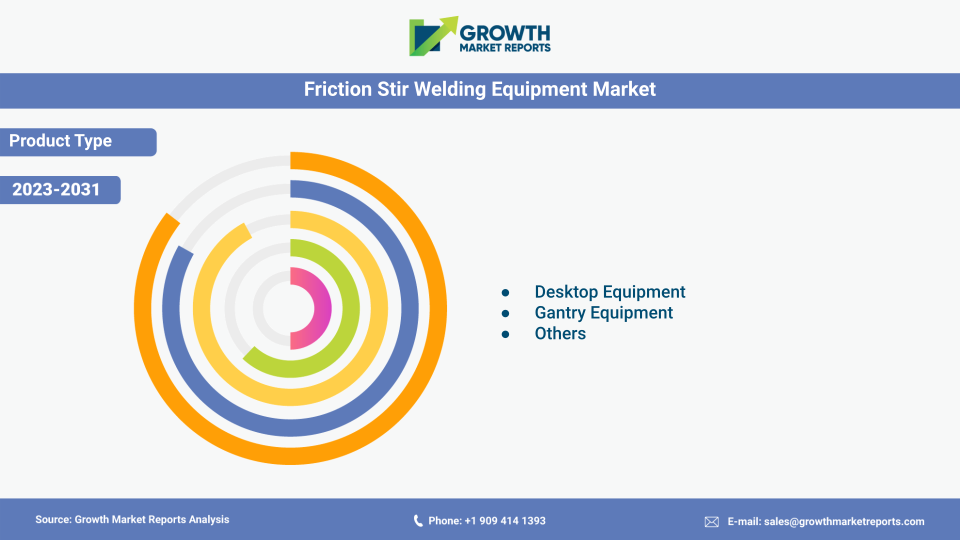
Yes, the report covers types of friction stir welding equipment such as desktop equipment, gantry equipment, and others.

Additional company profiles can be provided on request.

Table Of Content

Chapter 1 Executive Summary
Chapter 2 Assumptions and Acronyms Used
Chapter 3 Research Methodology
Chapter 4 Friction Stir Welding Equipment Market Overview
   4.1 Introduction
      4.1.1 Market Taxonomy
      4.1.2 Market Definition
      4.1.3 Macro-Economic Factors Impacting the Market Growth
   4.2 Friction Stir Welding Equipment Market Dynamics
      4.2.1 Market Drivers
      4.2.2 Market Restraints
      4.2.3 Market Opportunity
   4.3 Friction Stir Welding Equipment Market - Supply Chain Analysis
      4.3.1 List of Key Suppliers
      4.3.2 List of Key Distributors
      4.3.3 List of Key Consumers
   4.4 Key Forces Shaping the Friction Stir Welding Equipment Market
      4.4.1 Bargaining Power of Suppliers
      4.4.2 Bargaining Power of Buyers
      4.4.3 Threat of Substitution
      4.4.4 Threat of New Entrants
      4.4.5 Competitive Rivalry
   4.5 Global Friction Stir Welding Equipment Market Size & Forecast, 2023-2032
      4.5.1 Friction Stir Welding Equipment Market Size and Y-o-Y Growth
      4.5.2 Friction Stir Welding Equipment Market Absolute $ Opportunity

Chapter 5 Global Friction Stir Welding Equipment Market Analysis and Forecast By Equipment Type
   5.1 Introduction
      5.1.1 Key Market Trends & Growth Opportunities By Equipment Type
      5.1.2 Basis Point Share (BPS) Analysis By Equipment Type
      5.1.3 Absolute $ Opportunity Assessment By Equipment Type
   5.2 Friction Stir Welding Equipment Market Size Forecast By Equipment Type
      5.2.1 Portable
      5.2.2 Fixed
      5.2.3 Robotic
   5.3 Market Attractiveness Analysis By Equipment Type

Chapter 6 Global Friction Stir Welding Equipment Market Analysis and Forecast By Application
   6.1 Introduction
      6.1.1 Key Market Trends & Growth Opportunities By Application
      6.1.2 Basis Point Share (BPS) Analysis By Application
      6.1.3 Absolute $ Opportunity Assessment By Application
   6.2 Friction Stir Welding Equipment Market Size Forecast By Application
      6.2.1 Automotive
      6.2.2 Aerospace
      6.2.3 Shipbuilding
      6.2.4 Railways
      6.2.5 General Manufacturing
      6.2.6 Others
   6.3 Market Attractiveness Analysis By Application

Chapter 7 Global Friction Stir Welding Equipment Market Analysis and Forecast By End-User
   7.1 Introduction
      7.1.1 Key Market Trends & Growth Opportunities By End-User
      7.1.2 Basis Point Share (BPS) Analysis By End-User
      7.1.3 Absolute $ Opportunity Assessment By End-User
   7.2 Friction Stir Welding Equipment Market Size Forecast By End-User
      7.2.1 OEMs
      7.2.2 Aftermarket
   7.3 Market Attractiveness Analysis By End-User

Chapter 8 Global Friction Stir Welding Equipment Market Analysis and Forecast by Region
   8.1 Introduction
      8.1.1 Key Market Trends & Growth Opportunities By Region
      8.1.2 Basis Point Share (BPS) Analysis By Region
      8.1.3 Absolute $ Opportunity Assessment By Region
   8.2 Friction Stir Welding Equipment Market Size Forecast By Region
      8.2.1 North America
      8.2.2 Europe
      8.2.3 Asia Pacific
      8.2.4 Latin America
      8.2.5 Middle East & Africa (MEA)
   8.3 Market Attractiveness Analysis By Region

Chapter 9 Coronavirus Disease (COVID-19) Impact 
   9.1 Introduction 
   9.2 Current & Future Impact Analysis 
   9.3 Economic Impact Analysis 
   9.4 Government Policies 
   9.5 Investment Scenario

Chapter 10 North America Friction Stir Welding Equipment Analysis and Forecast
   10.1 Introduction
   10.2 North America Friction Stir Welding Equipment Market Size Forecast by Country
      10.2.1 U.S.
      10.2.2 Canada
   10.3 Basis Point Share (BPS) Analysis by Country
   10.4 Absolute $ Opportunity Assessment by Country
   10.5 Market Attractiveness Analysis by Country
   10.6 North America Friction Stir Welding Equipment Market Size Forecast By Equipment Type
      10.6.1 Portable
      10.6.2 Fixed
      10.6.3 Robotic
   10.7 Basis Point Share (BPS) Analysis By Equipment Type 
   10.8 Absolute $ Opportunity Assessment By Equipment Type 
   10.9 Market Attractiveness Analysis By Equipment Type
   10.10 North America Friction Stir Welding Equipment Market Size Forecast By Application
      10.10.1 Automotive
      10.10.2 Aerospace
      10.10.3 Shipbuilding
      10.10.4 Railways
      10.10.5 General Manufacturing
      10.10.6 Others
   10.11 Basis Point Share (BPS) Analysis By Application 
   10.12 Absolute $ Opportunity Assessment By Application 
   10.13 Market Attractiveness Analysis By Application
   10.14 North America Friction Stir Welding Equipment Market Size Forecast By End-User
      10.14.1 OEMs
      10.14.2 Aftermarket
   10.15 Basis Point Share (BPS) Analysis By End-User 
   10.16 Absolute $ Opportunity Assessment By End-User 
   10.17 Market Attractiveness Analysis By End-User

Chapter 11 Europe Friction Stir Welding Equipment Analysis and Forecast
   11.1 Introduction
   11.2 Europe Friction Stir Welding Equipment Market Size Forecast by Country
      11.2.1 Germany
      11.2.2 France
      11.2.3 Italy
      11.2.4 U.K.
      11.2.5 Spain
      11.2.6 Russia
      11.2.7 Rest of Europe
   11.3 Basis Point Share (BPS) Analysis by Country
   11.4 Absolute $ Opportunity Assessment by Country
   11.5 Market Attractiveness Analysis by Country
   11.6 Europe Friction Stir Welding Equipment Market Size Forecast By Equipment Type
      11.6.1 Portable
      11.6.2 Fixed
      11.6.3 Robotic
   11.7 Basis Point Share (BPS) Analysis By Equipment Type 
   11.8 Absolute $ Opportunity Assessment By Equipment Type 
   11.9 Market Attractiveness Analysis By Equipment Type
   11.10 Europe Friction Stir Welding Equipment Market Size Forecast By Application
      11.10.1 Automotive
      11.10.2 Aerospace
      11.10.3 Shipbuilding
      11.10.4 Railways
      11.10.5 General Manufacturing
      11.10.6 Others
   11.11 Basis Point Share (BPS) Analysis By Application 
   11.12 Absolute $ Opportunity Assessment By Application 
   11.13 Market Attractiveness Analysis By Application
   11.14 Europe Friction Stir Welding Equipment Market Size Forecast By End-User
      11.14.1 OEMs
      11.14.2 Aftermarket
   11.15 Basis Point Share (BPS) Analysis By End-User 
   11.16 Absolute $ Opportunity Assessment By End-User 
   11.17 Market Attractiveness Analysis By End-User

Chapter 12 Asia Pacific Friction Stir Welding Equipment Analysis and Forecast
   12.1 Introduction
   12.2 Asia Pacific Friction Stir Welding Equipment Market Size Forecast by Country
      12.2.1 China
      12.2.2 Japan
      12.2.3 South Korea
      12.2.4 India
      12.2.5 Australia
      12.2.6 South East Asia (SEA)
      12.2.7 Rest of Asia Pacific (APAC)
   12.3 Basis Point Share (BPS) Analysis by Country
   12.4 Absolute $ Opportunity Assessment by Country
   12.5 Market Attractiveness Analysis by Country
   12.6 Asia Pacific Friction Stir Welding Equipment Market Size Forecast By Equipment Type
      12.6.1 Portable
      12.6.2 Fixed
      12.6.3 Robotic
   12.7 Basis Point Share (BPS) Analysis By Equipment Type 
   12.8 Absolute $ Opportunity Assessment By Equipment Type 
   12.9 Market Attractiveness Analysis By Equipment Type
   12.10 Asia Pacific Friction Stir Welding Equipment Market Size Forecast By Application
      12.10.1 Automotive
      12.10.2 Aerospace
      12.10.3 Shipbuilding
      12.10.4 Railways
      12.10.5 General Manufacturing
      12.10.6 Others
   12.11 Basis Point Share (BPS) Analysis By Application 
   12.12 Absolute $ Opportunity Assessment By Application 
   12.13 Market Attractiveness Analysis By Application
   12.14 Asia Pacific Friction Stir Welding Equipment Market Size Forecast By End-User
      12.14.1 OEMs
      12.14.2 Aftermarket
   12.15 Basis Point Share (BPS) Analysis By End-User 
   12.16 Absolute $ Opportunity Assessment By End-User 
   12.17 Market Attractiveness Analysis By End-User

Chapter 13 Latin America Friction Stir Welding Equipment Analysis and Forecast
   13.1 Introduction
   13.2 Latin America Friction Stir Welding Equipment Market Size Forecast by Country
      13.2.1 Brazil
      13.2.2 Mexico
      13.2.3 Rest of Latin America (LATAM)
   13.3 Basis Point Share (BPS) Analysis by Country
   13.4 Absolute $ Opportunity Assessment by Country
   13.5 Market Attractiveness Analysis by Country
   13.6 Latin America Friction Stir Welding Equipment Market Size Forecast By Equipment Type
      13.6.1 Portable
      13.6.2 Fixed
      13.6.3 Robotic
   13.7 Basis Point Share (BPS) Analysis By Equipment Type 
   13.8 Absolute $ Opportunity Assessment By Equipment Type 
   13.9 Market Attractiveness Analysis By Equipment Type
   13.10 Latin America Friction Stir Welding Equipment Market Size Forecast By Application
      13.10.1 Automotive
      13.10.2 Aerospace
      13.10.3 Shipbuilding
      13.10.4 Railways
      13.10.5 General Manufacturing
      13.10.6 Others
   13.11 Basis Point Share (BPS) Analysis By Application 
   13.12 Absolute $ Opportunity Assessment By Application 
   13.13 Market Attractiveness Analysis By Application
   13.14 Latin America Friction Stir Welding Equipment Market Size Forecast By End-User
      13.14.1 OEMs
      13.14.2 Aftermarket
   13.15 Basis Point Share (BPS) Analysis By End-User 
   13.16 Absolute $ Opportunity Assessment By End-User 
   13.17 Market Attractiveness Analysis By End-User

Chapter 14 Middle East & Africa (MEA) Friction Stir Welding Equipment Analysis and Forecast
   14.1 Introduction
   14.2 Middle East & Africa (MEA) Friction Stir Welding Equipment Market Size Forecast by Country
      14.2.1 Saudi Arabia
      14.2.2 South Africa
      14.2.3 UAE
      14.2.4 Rest of Middle East & Africa (MEA)
   14.3 Basis Point Share (BPS) Analysis by Country
   14.4 Absolute $ Opportunity Assessment by Country
   14.5 Market Attractiveness Analysis by Country
   14.6 Middle East & Africa (MEA) Friction Stir Welding Equipment Market Size Forecast By Equipment Type
      14.6.1 Portable
      14.6.2 Fixed
      14.6.3 Robotic
   14.7 Basis Point Share (BPS) Analysis By Equipment Type 
   14.8 Absolute $ Opportunity Assessment By Equipment Type 
   14.9 Market Attractiveness Analysis By Equipment Type
   14.10 Middle East & Africa (MEA) Friction Stir Welding Equipment Market Size Forecast By Application
      14.10.1 Automotive
      14.10.2 Aerospace
      14.10.3 Shipbuilding
      14.10.4 Railways
      14.10.5 General Manufacturing
      14.10.6 Others
   14.11 Basis Point Share (BPS) Analysis By Application 
   14.12 Absolute $ Opportunity Assessment By Application 
   14.13 Market Attractiveness Analysis By Application
   14.14 Middle East & Africa (MEA) Friction Stir Welding Equipment Market Size Forecast By End-User
      14.14.1 OEMs
      14.14.2 Aftermarket
   14.15 Basis Point Share (BPS) Analysis By End-User 
   14.16 Absolute $ Opportunity Assessment By End-User 
   14.17 Market Attractiveness Analysis By End-User

Chapter 15 Competition Landscape 
   15.1 Friction Stir Welding Equipment Market: Competitive Dashboard
   15.2 Global Friction Stir Welding Equipment Market: Market Share Analysis, 2023
   15.3 Company Profiles (Details – Overview, Financials, Developments, Strategy) 
      15.3.1 Colfax Corporation (ESAB) 
KUKA AG 
Hitachi High-Technologies Corporation 
Grenzebach Maschinenbau GmbH 
General Tool Company 
Boeing 
Mazak Corporation 
PaR Systems 
Stirtec GmbH 
Sapa Group 
Manufacturing Technology, Inc. (MTI) 
Friction Stir Link Inc. 
Nova-Tech Engineering 
Gatwick Technologies Ltd 
FOOKE GmbH 
China FSW Center 
PTG Heavy Industries 
U.J. Consortium 
Nitto Seiki Co., Ltd. 
Advanced Joining Technologies, Inc. 

Methodology

Our Clients

Dassault Aviation
The John Holland Group
Microsoft
General Mills
Deloitte
Honda Motor Co. Ltd.
Pfizer
General Electric