Segments - by Product Type (Tractors, Harvesters, Planting Equipment, Irrigation Equipment, Spraying Equipment, Others), by Technology (Guidance Systems, Remote Sensing, Variable Rate Technology, Others), by Application (Yield Monitoring, Field Mapping, Crop Scouting, Weather Tracking & Forecasting, Irrigation Management, Inventory Management, Others), by Offering (Hardware, Software, Services)
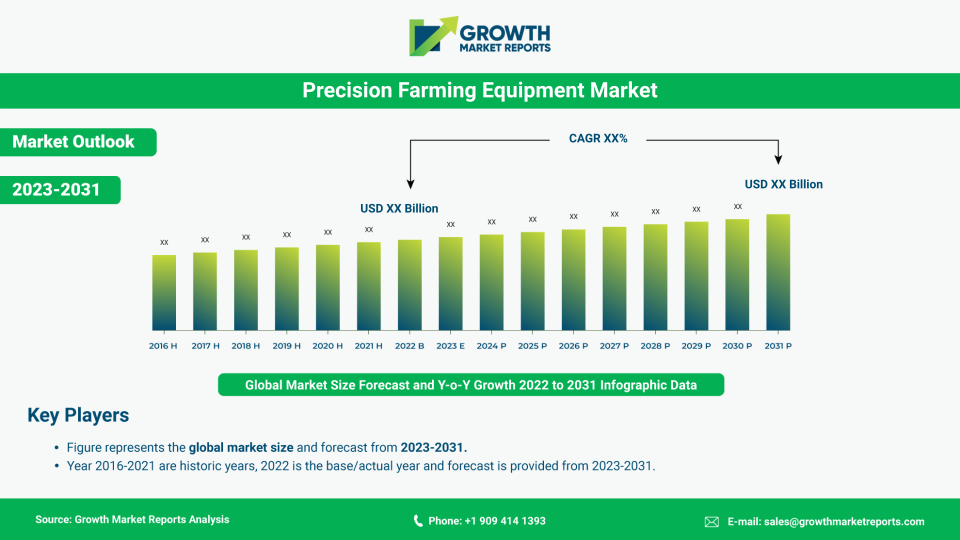
According to our latest research, the global precision farming equipment market size stood at USD 10.7 billion in 2024, with a robust year-over-year CAGR of 12.4% projected for the period 2025 to 2033. This growth trajectory will propel the market to an estimated USD 30.3 billion by 2033. The primary driver behind this surge is the increasing adoption of advanced agricultural technologies aimed at optimizing crop yields and resource management, as per our comprehensive industry analysis.
The growth of the precision farming equipment market is predominantly fueled by the escalating demand for food due to a rapidly growing global population. As arable land becomes increasingly scarce and environmental regulations tighten, farmers and agribusinesses are compelled to maximize productivity from existing resources. Precision farming equipment, including GPS-guided tractors, automated harvesters, and sensor-based irrigation systems, enables farmers to apply inputs such as water, fertilizers, and pesticides with pinpoint accuracy. This not only improves crop yields but also minimizes waste and environmental impact. The integration of data analytics and artificial intelligence into these systems further enhances decision-making, helping farmers respond proactively to changing weather conditions and pest threats, which is a significant growth lever for the market.
Another pivotal factor driving market expansion is the rapid technological advancements in agricultural machinery and digital farming solutions. The proliferation of Internet of Things (IoT) devices, cloud computing, and machine learning algorithms has transformed traditional farming into a data-driven enterprise. Modern precision farming equipment leverages real-time data from remote sensors, drones, and satellite imagery to deliver actionable insights and automate various farming processes. This technological evolution not only improves operational efficiency but also reduces labor costs, making precision agriculture accessible even to small and medium-sized farms. Additionally, the increasing availability of government incentives and subsidies for adopting sustainable farming practices is further catalyzing the market’s growth.
Furthermore, the growing awareness regarding sustainable agriculture and environmental conservation is significantly influencing the adoption of precision farming equipment. With climate change posing a serious threat to global food security, there is a heightened emphasis on reducing the carbon footprint of agricultural operations. Precision farming technologies enable precise application of resources, thereby lowering emissions and conserving water. These benefits align with global sustainability goals and regulatory frameworks, encouraging both large-scale agribusinesses and individual farmers to invest in advanced farming equipment. The rising trend of farm consolidation and the emergence of large commercial farms also create a conducive environment for the adoption of high-value precision equipment.
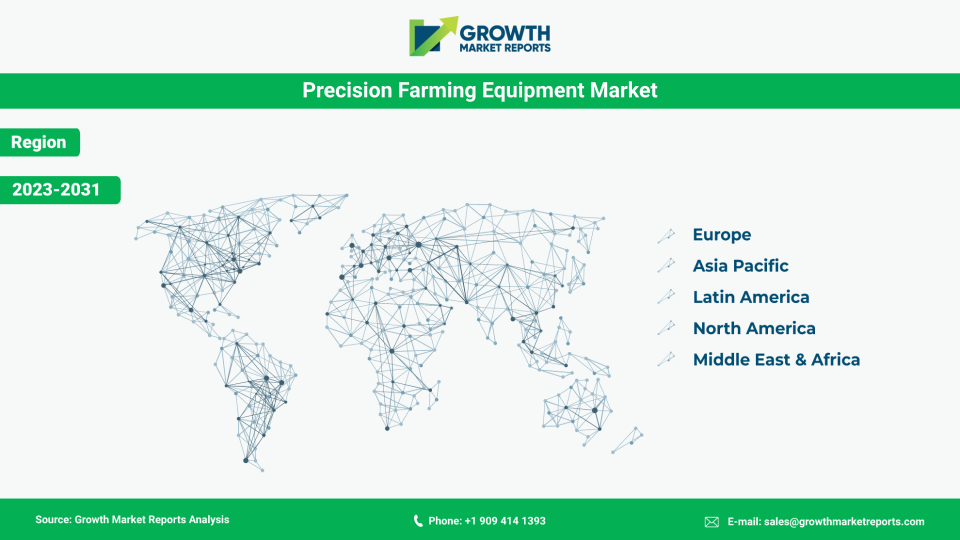
Regionally, North America continues to lead the precision farming equipment market, accounting for the largest share owing to high technology adoption rates and supportive government policies. Europe follows closely, driven by stringent environmental regulations and a strong focus on sustainable agriculture. The Asia Pacific region is witnessing the fastest growth, supported by substantial investments in agricultural modernization, rising food demand, and increasing awareness of the benefits of precision farming. Latin America and the Middle East & Africa are also emerging as promising markets, albeit at a slower pace, due to growing agricultural exports and gradual technology penetration.
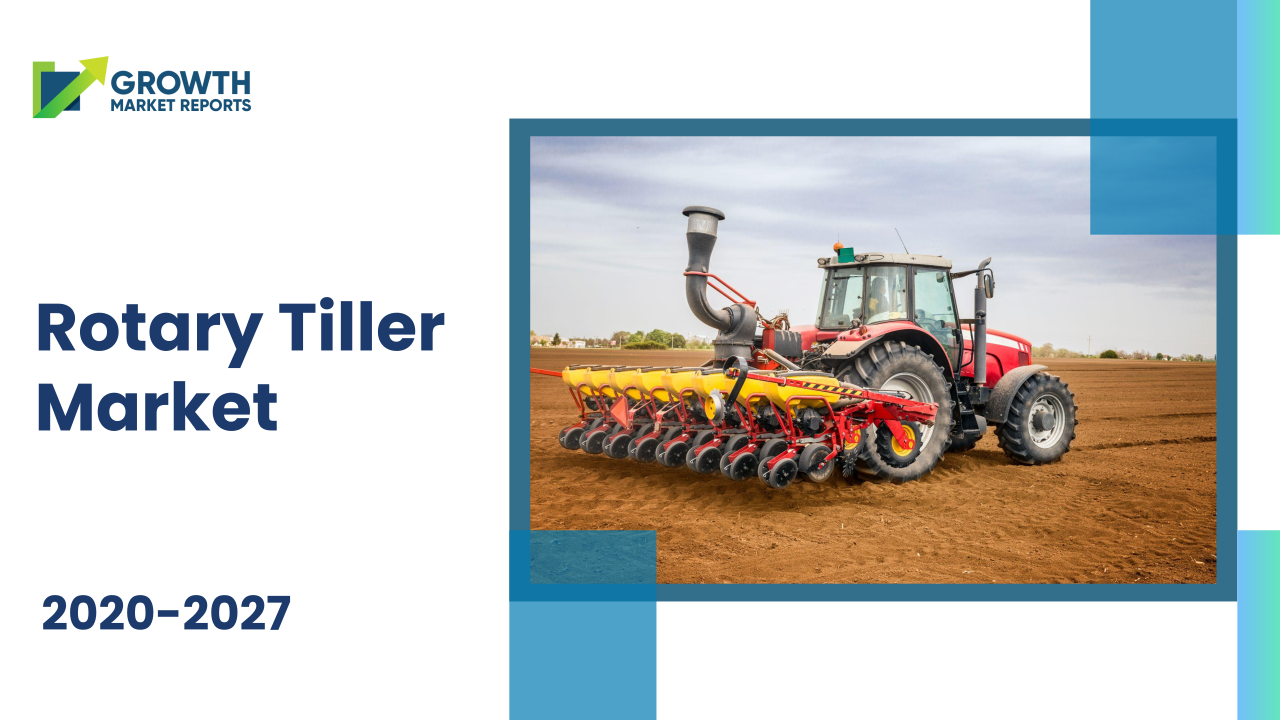
The product type segment of the precision farming equipment market encompasses a diverse range of machinery, including tractors, harvesters, planting equipment, irrigation equipment, spraying equipment, and other specialized tools. Tractors remain the backbone of modern agriculture, representing the largest share within this segment. The integration of GPS guidance, auto-steering, and telematics systems into tractors has revolutionized field operations, enabling precise soil preparation, planting, and fertilization. This not only enhances productivity but also reduces fuel consumption and operational costs. The demand for advanced tractors is particularly strong in developed markets, where farm sizes are larger and labor shortages are more acute. However, emerging economies are rapidly catching up, driven by government support and increasing awareness of the benefits of mechanized farming.
Harvesters constitute another significant sub-segment, with technological innovations such as yield monitoring sensors, automated grain handling systems, and real-time data analytics transforming the harvesting process. These advancements allow farmers to optimize harvest timing, reduce losses, and improve grain quality. The adoption of smart harvesters is gaining momentum in regions with high cereal production, such as North America, Europe, and parts of Asia. Planting equipment, including seed drills and planters equipped with variable rate technology, plays a crucial role in ensuring uniform seed distribution and optimal plant population. This directly impacts crop yields and resource utilization, making it a critical investment for both large and small-scale farmers.
Irrigation equipment is witnessing robust growth, particularly in regions facing water scarcity and erratic rainfall patterns. Precision irrigation systems, such as drip and sprinkler irrigation, are increasingly being integrated with soil moisture sensors and automated control units. These systems enable farmers to apply water precisely where and when it is needed, reducing wastage and improving crop health. The adoption of smart irrigation solutions is further supported by government initiatives aimed at promoting water conservation and sustainable agriculture. Spraying equipment, including drone-based and ground-based sprayers, is also gaining traction due to its ability to deliver pesticides and fertilizers accurately, minimizing environmental impact and ensuring crop safety.
The "Others" category includes specialized equipment such as soil sensors, weather stations, and autonomous robots, which are becoming increasingly important in the context of precision agriculture. These tools provide critical data on soil health, microclimatic conditions, and pest infestations, enabling farmers to make informed decisions and implement targeted interventions. The continuous evolution of product offerings within this segment reflects the dynamic nature of the precision farming equipment market, with manufacturers focusing on innovation and customization to address the diverse needs of global agriculture.
| Attributes | Details |
| Report Title | Precision Farming Equipment Market Research Report 2033 |
| By Product Type | Tractors, Harvesters, Planting Equipment, Irrigation Equipment, Spraying Equipment, Others |
| By Technology | Guidance Systems, Remote Sensing, Variable Rate Technology, Others |
| By Application | Yield Monitoring, Field Mapping, Crop Scouting, Weather Tracking & Forecasting, Irrigation Management, Inventory Management, Others |
| By Offering | Hardware, Software, Services |
| Regions Covered | North America, Europe, APAC, Latin America, MEA |
| Base Year | 2024 |
| Historic Data | 2018-2023 |
| Forecast Period | 2025-2033 |
| Number of Pages | 255 |
| Number of Tables & Figures | 308 |
| Customization Available | Yes, the report can be customized as per your need. |
The technology segment is central to the evolution of the precision farming equipment market, encompassing guidance systems, remote sensing, variable rate technology (VRT), and other cutting-edge solutions. Guidance systems, such as GPS and GNSS-based auto-steering, have become standard features in modern tractors and harvesters. These systems ensure precise navigation and field coverage, reducing overlaps and missed areas during planting, fertilizing, and harvesting. The adoption of guidance systems has been particularly rapid in North America and Europe, where large-scale mechanized farming is prevalent. The integration of real-time kinematic (RTK) technology further enhances accuracy, enabling sub-inch precision and facilitating advanced applications such as strip tillage and controlled traffic farming.
Remote sensing technologies, including satellite imagery, drones, and ground-based sensors, play a pivotal role in monitoring crop health, soil conditions, and pest infestations. These technologies provide high-resolution data that can be analyzed to detect early signs of stress, nutrient deficiencies, or disease outbreaks. The ability to monitor large areas in real-time allows farmers to implement timely interventions, reducing losses and optimizing inputs. The adoption of remote sensing is gaining momentum across all major agricultural regions, supported by falling costs of drone technology and increasing availability of satellite data. This trend is expected to continue, driven by advancements in image processing and artificial intelligence.
Variable rate technology (VRT) is another transformative innovation in precision agriculture, enabling the site-specific application of seeds, fertilizers, and pesticides. VRT systems leverage data from soil sensors, yield monitors, and field maps to adjust input rates on-the-go, ensuring that each part of the field receives the optimal amount of resources. This not only enhances productivity but also reduces input costs and environmental impact. The adoption of VRT is particularly strong in regions with diverse soil types and varying field conditions, such as the United States, Brazil, and parts of Europe. The increasing availability of user-friendly VRT solutions is also encouraging adoption among small and medium-sized farms.
The "Others" category in the technology segment includes emerging solutions such as artificial intelligence, machine learning, blockchain, and robotics. These technologies are driving the next wave of innovation in precision farming, enabling predictive analytics, automated decision-making, and transparent supply chains. For instance, AI-powered platforms can analyze vast amounts of data from multiple sources to provide actionable insights on crop management, pest control, and market trends. Robotics and autonomous vehicles are also being deployed for tasks such as planting, weeding, and harvesting, further reducing labor dependency and improving efficiency. The continuous advancement of these technologies is expected to reshape the precision farming equipment market in the coming years.
The application segment of the precision farming equipment market is broad and multifaceted, covering yield monitoring, field mapping, crop scouting, weather tracking and forecasting, irrigation management, inventory management, and other specialized uses. Yield monitoring is one of the most widely adopted applications, enabling farmers to track crop performance in real-time during harvest. This data is invaluable for identifying high-yield and low-yield zones within a field, facilitating targeted interventions and continuous improvement. Yield monitoring systems are commonly integrated into modern harvesters and are widely used in large-scale commercial farming operations, particularly in North America, Europe, and Australia.
Field mapping is another critical application, providing detailed spatial information on soil types, nutrient levels, and topography. This information forms the foundation for site-specific management practices, allowing farmers to tailor inputs and operations to the unique characteristics of each field. Field mapping technologies leverage data from GPS, remote sensors, and drones to create high-resolution maps that guide decision-making throughout the crop cycle. The adoption of field mapping is accelerating globally, driven by the increasing availability of affordable mapping tools and the growing recognition of their value in optimizing resource use and maximizing yields.
Crop scouting, traditionally a labor-intensive process, has been revolutionized by the advent of drones and mobile applications. These tools enable rapid, accurate assessment of crop health, pest infestations, and disease outbreaks, allowing for timely and targeted interventions. The integration of AI-powered image analysis further enhances the accuracy and efficiency of crop scouting, reducing the reliance on manual labor and improving outcomes. Weather tracking and forecasting is another vital application, providing farmers with real-time data on temperature, precipitation, humidity, and wind conditions. Advanced weather stations and predictive analytics platforms help farmers make informed decisions on planting, irrigation, and pest control, reducing risks and improving productivity.
Irrigation management is gaining prominence, particularly in regions facing water scarcity and unpredictable rainfall patterns. Precision irrigation systems, integrated with soil moisture sensors and automated controllers, enable farmers to apply water efficiently and sustainably. Inventory management, while often overlooked, plays a critical role in optimizing input use and reducing waste. Modern inventory management systems leverage IoT devices and cloud-based platforms to track the usage and availability of seeds, fertilizers, pesticides, and machinery parts, ensuring seamless operations and minimizing downtime. The "Others" category includes specialized applications such as automated machinery diagnostics, livestock monitoring, and supply chain optimization, reflecting the expanding scope of precision farming equipment.
The offering segment of the precision farming equipment market is categorized into hardware, software, and services, each playing a distinct role in driving market growth and adoption. Hardware forms the backbone of precision agriculture, encompassing tractors, harvesters, sensors, drones, weather stations, and other physical devices. The continuous evolution of hardware, with the integration of advanced electronics, connectivity solutions, and automation features, has significantly enhanced the capabilities and reliability of precision farming equipment. Hardware sales account for the largest share of the market, driven by the need for robust, field-ready machinery that can withstand challenging agricultural environments. The growing trend of farm mechanization, particularly in emerging economies, is further boosting demand for advanced hardware solutions.
Software is emerging as a critical enabler of precision agriculture, providing the intelligence and analytics needed to transform raw data into actionable insights. Modern farm management software platforms offer a wide range of functionalities, including data integration, visualization, predictive analytics, and decision support. These platforms enable farmers to monitor field conditions, track equipment performance, plan operations, and optimize resource use from a centralized dashboard. The increasing adoption of cloud-based software solutions is making precision agriculture more accessible and scalable, allowing farmers of all sizes to benefit from advanced analytics and remote management capabilities. Software-as-a-Service (SaaS) models are gaining popularity, offering flexible pricing and regular updates.
Services represent a rapidly growing segment, encompassing consulting, training, equipment maintenance, data analysis, and technical support. As precision farming technologies become more sophisticated, farmers increasingly rely on specialized service providers to ensure optimal performance and return on investment. Consulting services help farmers select the right equipment, design site-specific management plans, and implement best practices for sustainable agriculture. Training programs are essential for building the skills and knowledge needed to operate and maintain advanced machinery. Equipment maintenance and technical support services are critical for minimizing downtime and ensuring the longevity of high-value assets. The growing complexity of precision agriculture systems is driving demand for comprehensive, end-to-end service offerings.
The interplay between hardware, software, and services is fundamental to the success of precision farming initiatives. Integrated solutions that combine robust hardware, intuitive software, and reliable support services are increasingly favored by farmers and agribusinesses. Leading market players are focusing on developing holistic offerings that address the full spectrum of farmer needs, from equipment installation and configuration to data-driven decision-making and ongoing support. This trend is expected to accelerate as the precision farming equipment market matures, with value-added services playing a pivotal role in differentiating products and building long-term customer relationships.
The precision farming equipment market is ripe with opportunities, particularly as the global agricultural sector undergoes a digital transformation. One of the most significant opportunities lies in the integration of artificial intelligence, machine learning, and big data analytics into precision agriculture systems. These technologies have the potential to unlock new levels of efficiency and productivity by enabling predictive insights, automated decision-making, and real-time optimization of farm operations. The proliferation of IoT devices and connected sensors is generating vast amounts of data that can be harnessed to drive continuous improvement and innovation. Startups and established players alike are investing heavily in R&D to develop next-generation solutions that address the evolving needs of modern agriculture.
Another major opportunity is the expansion of precision farming into emerging markets, where agricultural modernization is a top priority. Countries in Asia Pacific, Latin America, and Africa are investing in infrastructure, education, and technology adoption to boost food production and improve rural livelihoods. Precision farming equipment offers a pathway to sustainable intensification, enabling smallholder farmers to increase yields, reduce input costs, and mitigate environmental impact. The availability of affordable, scalable solutions tailored to the unique challenges of these regions is expected to drive significant market growth. Additionally, the increasing focus on sustainable agriculture and climate resilience is creating new opportunities for precision equipment that supports resource conservation and environmental stewardship.
Despite the promising outlook, the precision farming equipment market faces several restraining factors. High initial investment costs and the complexity of advanced systems can be significant barriers to adoption, particularly for small and medium-sized farms with limited financial resources. The lack of technical expertise and infrastructure in certain regions further hampers market penetration. Data privacy and security concerns also pose challenges, as the increasing digitization of agriculture raises questions about data ownership and protection. Addressing these barriers will require concerted efforts from industry stakeholders, including manufacturers, governments, and research institutions, to provide affordable solutions, training, and support services that facilitate widespread adoption.
North America remains the largest regional market for precision farming equipment, accounting for approximately 38% of the global market size in 2024, which translates to around USD 4.1 billion. The region’s dominance is attributed to the early adoption of advanced agricultural technologies, strong government support for sustainable farming, and the presence of leading market players. The United States, in particular, is a global leader in precision agriculture, with extensive use of GPS-guided machinery, variable rate technology, and data-driven farm management systems. Canada is also witnessing steady growth, supported by investments in research and innovation. The North American market is expected to maintain a healthy CAGR of 11.2% through 2033, driven by ongoing technological advancements and the increasing focus on climate-smart agriculture.
Europe holds the second-largest share of the precision farming equipment market, with a market size of approximately USD 2.9 billion in 2024. The region’s growth is driven by stringent environmental regulations, a strong emphasis on sustainable agriculture, and the widespread adoption of digital farming solutions. Countries such as Germany, France, and the Netherlands are at the forefront of precision agriculture, leveraging advanced machinery, remote sensing, and data analytics to optimize farm operations. The European Union’s Common Agricultural Policy (CAP) and various national initiatives provide financial incentives and technical support for the adoption of precision farming equipment. The market in Europe is projected to grow at a CAGR of 12.1% over the forecast period.
The Asia Pacific region is emerging as the fastest-growing market for precision farming equipment, with a market size of USD 2.3 billion in 2024 and an impressive projected CAGR of 14.5% through 2033. Rapid population growth, rising food demand, and government initiatives to modernize agriculture are key drivers of market expansion in countries such as China, India, and Australia. The increasing availability of affordable precision equipment and the growing awareness of the benefits of sustainable farming are accelerating adoption across the region. Latin America and the Middle East & Africa are also witnessing gradual growth, supported by investments in agricultural infrastructure and the expansion of export-oriented agribusinesses. However, challenges such as limited access to capital and technical expertise may constrain market development in these regions.
The competitive landscape of the precision farming equipment market is characterized by the presence of a mix of global giants, regional players, and innovative startups. Leading companies are investing heavily in research and development to introduce advanced technologies and integrated solutions that cater to the diverse needs of modern agriculture. Strategic partnerships, mergers, and acquisitions are common as players seek to expand their product portfolios, enhance technological capabilities, and strengthen their market presence. The market is highly dynamic, with continuous innovation driving differentiation and competitive advantage. Companies are also focusing on expanding their geographic footprint, particularly in emerging markets with high growth potential.
Key players in the precision farming equipment market are increasingly adopting a customer-centric approach, offering comprehensive solutions that combine hardware, software, and services. This holistic approach enables them to address the full spectrum of farmer needs, from equipment installation and configuration to data analytics and ongoing support. The ability to provide end-to-end solutions is becoming a critical differentiator in a market where customer expectations are evolving rapidly. Companies are also leveraging digital platforms and IoT connectivity to deliver remote monitoring, predictive maintenance, and real-time support, enhancing the value proposition for customers.
Innovation remains at the core of competitive strategy, with companies investing in emerging technologies such as artificial intelligence, machine learning, robotics, and blockchain. These technologies are enabling new applications and business models, such as autonomous machinery, precision livestock management, and transparent supply chains. Startups and technology firms are playing an increasingly important role, bringing agility and fresh perspectives to the market. Collaborations between traditional agricultural equipment manufacturers and technology companies are accelerating the pace of innovation and driving the adoption of next-generation solutions.
Some of the major companies operating in the precision farming equipment market include Deere & Company, AGCO Corporation, CNH Industrial, Trimble Inc., Topcon Positioning Systems, Raven Industries, Kubota Corporation, and AG Leader Technology. Deere & Company, for instance, is a global leader in agricultural machinery, offering a comprehensive range of precision farming solutions, including GPS-guided tractors, yield monitors, and integrated farm management software. AGCO Corporation and CNH Industrial are also prominent players, known for their innovative product portfolios and strong global distribution networks. Trimble Inc. and Topcon Positioning Systems are leading providers of precision guidance and positioning technologies, while Raven Industries specializes in advanced control systems and data analytics. Kubota Corporation and AG Leader Technology are recognized for their focus on innovation and customer support, with a strong presence in key regional markets.
These companies are continuously expanding their offerings through strategic acquisitions, product launches, and partnerships with technology providers and research institutions. For example, Deere & Company’s acquisition of Blue River Technology has strengthened its capabilities in artificial intelligence and machine learning for precision agriculture. Similarly, Trimble’s partnerships with various agri-tech startups have enabled it to enhance its software and data analytics offerings. The competitive landscape is expected to remain dynamic, with ongoing innovation and consolidation shaping the future of the precision farming equipment market.
The Precision Farming Equipment market has been segmented on the basis of
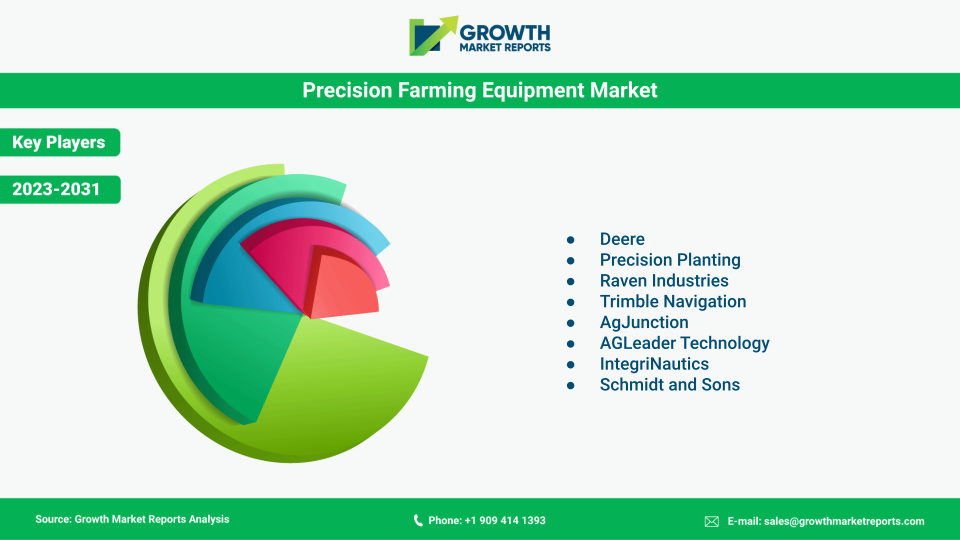
Major players of the market are Deere, Precision Planting, Raven Industries, Trimble Navigation, AgJunction, AGLeader Technology, IntegriNautics, Schmidt and Sons, and Spraying Systems.
Companies are focusing on integrating additional features that benefit the organization and their relationship with farmers. Moreover, the companies operating in the market are acquiring start-ups working on precision farming equipment technologies to strengthen their product capabilities.
Precision farming equipment enables efficient use of water, fertilizers, and pesticides, reduces waste, lowers emissions, and supports sustainable farming practices aligned with global environmental goals.
The market is segmented into hardware (tractors, sensors, drones), software (farm management platforms, analytics), and services (consulting, training, maintenance, technical support).
Key companies include Deere & Company, AGCO Corporation, CNH Industrial, Trimble Inc., Topcon Positioning Systems, Raven Industries, Kubota Corporation, and AG Leader Technology.
Challenges include high initial investment costs, complexity of advanced systems, lack of technical expertise in some regions, and concerns over data privacy and security.
Applications include yield monitoring, field mapping, crop scouting, weather tracking and forecasting, irrigation management, inventory management, and automated machinery diagnostics.
AI, IoT, and machine learning enable real-time data collection, predictive analytics, and automation, helping farmers optimize resource use, improve yields, and reduce environmental impact.
The market includes tractors, harvesters, planting equipment, irrigation equipment, spraying equipment, and specialized tools such as soil sensors, weather stations, and autonomous robots.
North America leads the market, followed by Europe. The Asia Pacific region is the fastest-growing market, while Latin America and the Middle East & Africa are emerging markets with gradual adoption.
Key drivers include increasing adoption of advanced agricultural technologies, rising global food demand, scarcity of arable land, environmental regulations, and the integration of data analytics, IoT, and AI in farming equipment.
The global precision farming equipment market is expected to reach approximately USD 30.3 billion by 2033, growing from USD 10.7 billion in 2024 at a CAGR of 12.4%.