Magnetic Proximity Sensor Market Report 2025

Magnetic Proximity Sensor Market Report 2025

Segments - by Type (Reed Switches, Hall Effect Sensors, Inductive Sensors, Others), by Application (Automotive, Industrial, Consumer Electronics, Aerospace & Defense, Healthcare, Others), by Mounting Type (Flush, Non-Flush), by End-User (OEMs, Aftermarket)

https://growthmarketreports.com/Raksha
Author : Raksha Sharma
https://growthmarketreports.com/Vaibhav
Fact-checked by : V. Chandola
https://growthmarketreports.com/Shruti
Editor : Shruti Bhat

Last Updated : Jun, 2026 | Report ID :ICT-SE-1021 | 5.0 Rating | 99 Reviews | 281 Pages | Format : Docx PDF

Report Description

This report is updated with the latest market data and insights as of June 2026. Base year: 2025  |  Forecast period: 2026-2034


Magnetic Proximity Sensor Market Outlook

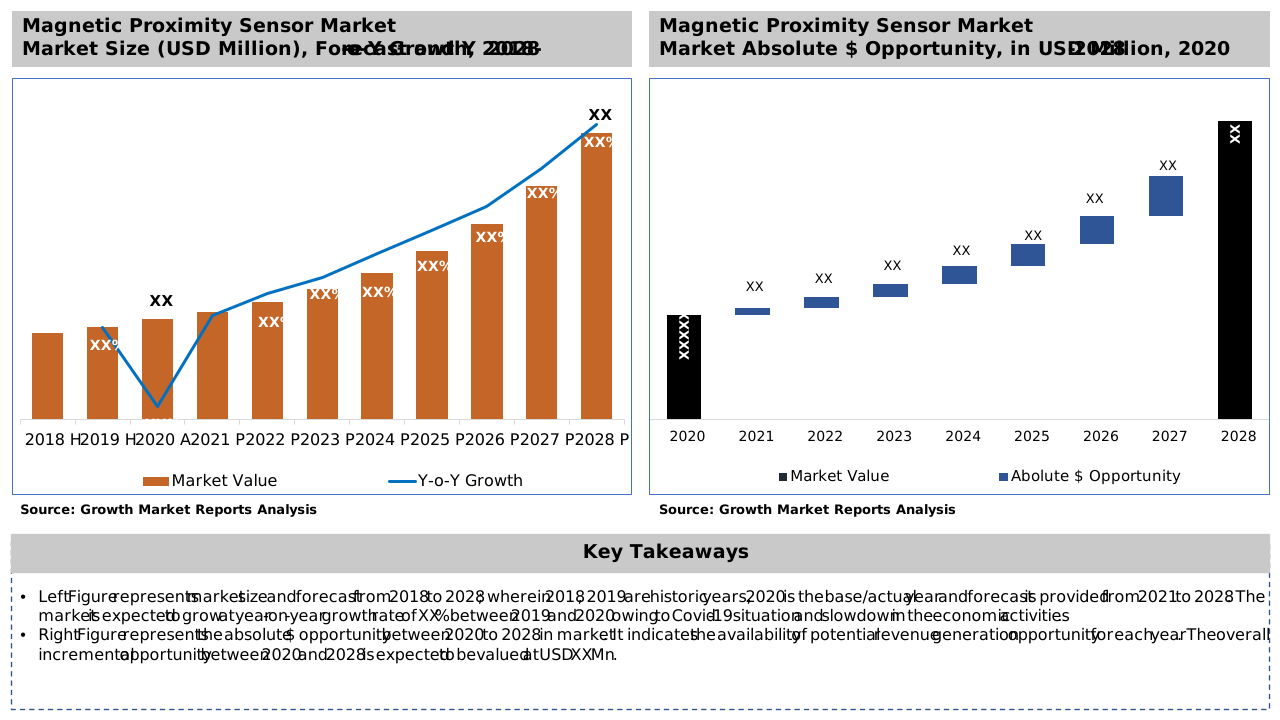
According to our latest research, the global magnetic proximity sensor market size reached USD 3.36 billion in 2025, demonstrating robust growth driven by the expanding adoption of automation across industries. The market is expected to grow at a CAGR of 7.6% from 2026 to 2034, projecting the market size to reach USD 6.51 billion by 2034. This growth is primarily attributed to the increasing demand for contactless sensing solutions in automotive, industrial, and consumer electronics sectors, as well as advancements in sensor technologies that enable higher precision and reliability. Paralleling trends observed across the broader proximity sensing industry, magnetic variants are capturing an expanding share of new design wins as engineers prioritize durability and interference immunity.

Global Magnetic Proximity Sensor Market Size Forecast 2025-2034, USD Billion

A key growth factor for the magnetic proximity sensor market is the accelerating shift towards automation and smart manufacturing in industrial environments. As industries embrace Industry 4.0, the need for reliable, non-contact sensing solutions has surged. Magnetic proximity sensors, capable of detecting the presence or absence of objects without physical contact, are increasingly deployed in assembly lines, robotics, and process automation systems. Their ability to function in harsh environments, resist dust and moisture, and offer long operational life makes them indispensable in modern manufacturing setups. Furthermore, the trend towards predictive maintenance and the integration of sensors into industrial IoT networks is boosting sensor adoption, as businesses seek to minimize downtime and optimize productivity.

The automotive sector is another major driver of market expansion. With the proliferation of advanced driver assistance systems (ADAS), electric vehicles (EVs), and autonomous driving technologies, the demand for magnetic proximity sensors has escalated considerably since 2019. These sensors are used extensively for position sensing, speed detection, and safety applications such as seatbelt detection, anti-lock braking systems, and door closure detection. As automotive manufacturers strive to enhance vehicle safety, efficiency, and user experience, the integration of sophisticated sensor arrays, including magnetic proximity sensors, has become standard practice. The transition towards electrification and the increasing complexity of automotive electronics further amplify the need for high-performance sensors through the 2026-2034 forecast window.

Consumer electronics and healthcare are also witnessing notable increases in magnetic sensing deployment. In consumer devices, these sensors enable features such as screen on/off detection, lid closure sensing in laptops, and user presence detection in smart home devices. In healthcare, magnetic proximity sensors are utilized in medical devices for position tracking, patient monitoring, and non-invasive diagnostics. The growing trend of miniaturization and the demand for low-power, high-precision sensors are further propelling innovation and adoption in these sectors. As wearable health devices and smart home automation gain traction globally, the magnetic proximity sensor market is positioned for sustained growth through 2034.

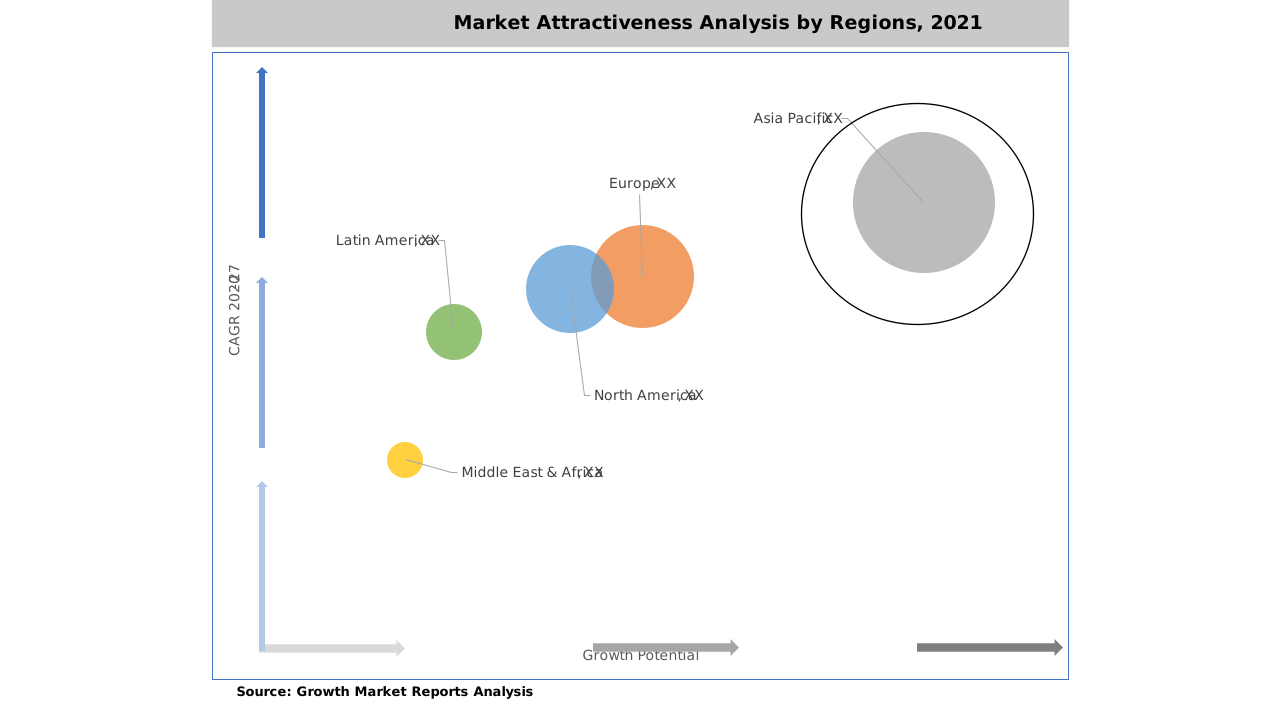
Regionally, Asia Pacific dominates the magnetic proximity sensor market, accounting for the largest share in 2025, driven by the presence of major manufacturing hubs, rapid industrialization, and booming automotive and electronics industries in countries like China, Japan, South Korea, and India. North America and Europe follow as significant markets, fueled by technological advancements, strong automotive sectors, and early adoption of smart manufacturing practices. The Middle East & Africa and Latin America are emerging as promising regions, with increasing investments in industrial automation and infrastructure development. The regional landscape is expected to evolve further as global supply chains diversify and local manufacturing capabilities expand, especially in Asia Pacific and Europe.

Type Analysis

The type segment of the magnetic proximity sensor market is categorized into reed switches, Hall effect sensors, inductive sensors, and others. Reed switches have been widely adopted due to their simplicity, cost-effectiveness, and ability to operate in low-power environments. They are commonly used in security systems, door and window sensors, and automotive applications. Hall effect sensors offer higher sensitivity and can detect both static and dynamic magnetic fields, making them ideal for applications requiring precise position or speed sensing. Inductive sensors are primarily used for detecting metallic objects and are favored in industrial automation due to their robustness and resistance to harsh operating conditions. Together, these types address an extraordinarily diverse range of end-use cases across the global market.

Magnetic Proximity Sensor Market Share by Type 2025

Hall effect sensors hold the leading position in the type segment as of 2025, representing approximately 38.5% of total revenues. Their non-contact operation, long lifespan, and immunity to environmental contaminants make them suitable for critical applications such as wheel speed sensing, gear position detection, and current measurement in electric vehicles. As automotive electronics become more complex and safety regulations tighten, the demand for Hall effect sensors is expected to rise substantially over the 2026-2034 forecast period. Additionally, advancements in semiconductor technology are enabling the development of miniaturized Hall effect sensors with enhanced sensitivity and lower power consumption, further expanding their application scope into wearables, medical devices, and smart infrastructure.

Inductive sensors hold a strong position in industrial automation, accounting for roughly 29.0% of the 2025 market. Their durability and reliability in extreme temperatures, vibration, and chemical exposure make them a preferred choice in manufacturing plants, material handling systems, and robotics. The increasing adoption of smart factories and the integration of sensors into industrial IoT platforms are driving the demand for inductive sensors. Companies evaluating industrial proximity switching solutions frequently select inductive magnetic variants for their zero-maintenance advantages in metal-detection tasks. As industries continue to automate and digitize operations, the need for high-performance, maintenance-free sensing solutions will propel the growth of this segment well into the forecast period.

Reed switches, representing approximately 22.5% of 2025 revenues, maintain steady demand in lower-complexity, cost-sensitive applications. The "others" category, holding around 10.0%, includes emerging sensor types such as magnetoresistive and fluxgate sensors, which are gaining traction in specialized applications requiring ultra-high sensitivity and accuracy. These sensors are being explored for use in medical devices, aerospace systems, and advanced research instrumentation. As technological advancements continue and new use cases emerge, the diversity of sensor types in the market is expected to increase. Manufacturers are focusing on developing multi-functional sensors that combine different sensing principles to address complex application requirements, further driving innovation in this segment.

Report Scope

Attributes Details
Report Title Magnetic Proximity Sensor Market Research Report 2025
By Type Reed Switches, Hall Effect Sensors, Inductive Sensors, Others
By Application Automotive, Industrial, Consumer Electronics, Aerospace & Defense, Healthcare, Others
By Mounting Type Flush, Non-Flush
By End-User OEMs, Aftermarket
Regions Covered North America, Europe, APAC, Latin America, MEA
Base Year 2025
Historic Data 2019-2024
Forecast Period 2026-2034
Number of Pages 281
Number of Tables & Figures 324
Customization Available Yes, the report can be customized as per your need.

Application Analysis

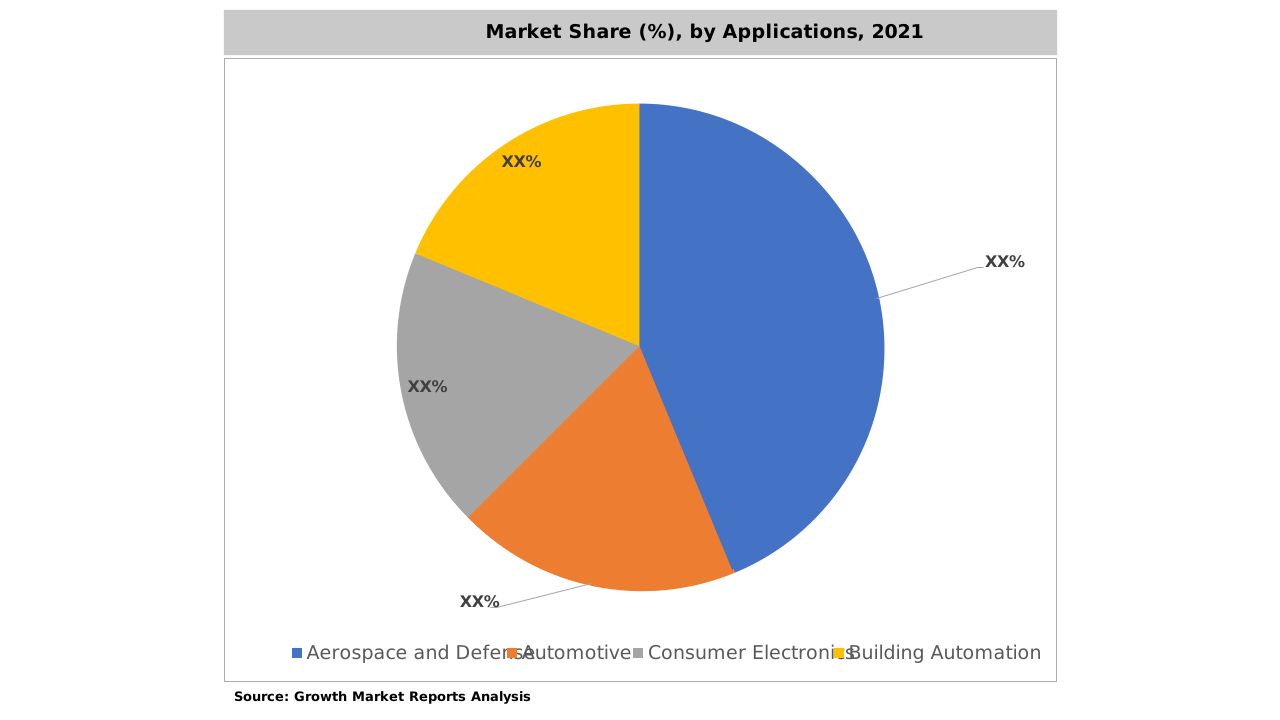
The application segment for magnetic proximity sensors is broad, encompassing automotive, industrial, consumer electronics, aerospace & defense, healthcare, and others. The automotive sector leads in terms of revenue contribution, driven by the integration of sensors in safety, comfort, and efficiency systems. Magnetic proximity sensors are used in various automotive subsystems, including transmission, braking, steering, and infotainment. The shift towards electric and autonomous vehicles is further amplifying sensor demand, as these vehicles require sophisticated sensor arrays for navigation, obstacle detection, and system monitoring. Automotive application revenues are expected to grow at an above-average pace through 2034 as EV penetration accelerates globally.

Industrial applications are another major growth area, with magnetic proximity sensors playing a vital role in automation, robotics, and process control. In manufacturing environments, these sensors enable precise object detection, position sensing, and feedback control, which are essential for optimizing production efficiency and ensuring safety. The adoption of Industry 4.0 technologies and the push towards smart factories are accelerating the deployment of sensors in industrial settings. As manufacturers seek to enhance operational visibility and enable predictive maintenance, the integration of magnetic proximity sensors into industrial IoT networks is becoming increasingly prevalent. Historical data from 2019 to 2024 confirm a consistent upward trajectory in industrial sensor volumes that is expected to continue.

Consumer electronics is a high-growth application segment, driven by the proliferation of smart devices and wearables. Magnetic proximity sensors are used in smartphones, tablets, laptops, and smart home devices for features such as lid closure detection, screen activation, and user presence sensing. The trend towards miniaturization and the demand for energy-efficient components are fostering innovation in sensor design, enabling their integration into compact and portable devices. As the consumer electronics market continues to expand, particularly in Asia Pacific, the demand for advanced magnetic proximity sensors is expected to rise significantly through 2034.

Aerospace and defense and healthcare are specialized application areas where reliability and precision are paramount. In aerospace, magnetic proximity sensors are used for position sensing in actuators, landing gear systems, and cockpit controls. In healthcare, they enable non-invasive monitoring, device positioning, and patient safety features in medical equipment. The stringent regulatory requirements and the need for high-performance, fail-safe components in these sectors drive the adoption of advanced sensor technologies. As research and development efforts continue, new application areas are likely to emerge, further broadening the scope of the market through the 2026-2034 forecast period.

Mounting Type Analysis

The mounting type segment is classified into flush and non-flush mounting. Flush mounting sensors are designed to be installed at the same level as the mounting surface, providing a sleek and unobtrusive appearance. These sensors are widely used in applications where space constraints or aesthetic considerations are important, such as consumer electronics and automotive interiors. Flush mounting also offers protection against mechanical damage and contamination, making it suitable for environments where the sensor may be exposed to dust, moisture, or physical impact.

Non-flush mounting sensors protrude from the mounting surface and are typically used in industrial applications where higher sensing distances are required. These sensors are favored in material handling, conveyor systems, and robotics, where the ability to detect objects at a greater distance is essential for process control and safety. Non-flush sensors are designed to withstand harsh operating conditions, including vibration, temperature extremes, and exposure to chemicals. Their robust construction and extended sensing range make them ideal for demanding industrial environments, and their share of industrial procurement has grown consistently from 2019 through 2025.

The choice between flush and non-flush mounting depends on the specific application requirements, including space availability, desired sensing range, and environmental factors. As industries continue to diversify their use of magnetic proximity sensors, manufacturers are developing a wide range of mounting options to address the varied needs of end-users. Customization and flexibility in mounting solutions are becoming important differentiators in the market, as customers seek sensors that can be seamlessly integrated into their systems. Technological advancements are enabling the development of compact, high-performance sensors that can be installed in challenging locations without compromising reliability or accuracy.

The trend towards miniaturization and the integration of sensors into smart devices and wearables is driving demand for innovative mounting solutions. As the market evolves through 2034, the mounting type segment is expected to see continued innovation, with new designs and materials enhancing sensor performance and durability. Both flush and non-flush configurations will benefit from additive manufacturing and advanced materials science that allow tighter tolerances and improved environmental sealing at lower per-unit costs.

End-User Analysis

The end-user segment for magnetic proximity sensors is divided into OEMs and aftermarket. OEMs constitute the largest share of the market, as they integrate sensors into new equipment and products across automotive, industrial, and consumer electronics sectors. OEM demand is driven by the need for reliable, high-performance sensors that can be seamlessly incorporated into complex systems. The trend towards smart manufacturing, connected vehicles, and intelligent consumer devices is fueling OEM adoption of advanced magnetic proximity sensors. Across the 2019-2025 historical period, OEM volumes grew in lockstep with vehicle production and factory automation capital expenditure cycles.

The aftermarket segment, while smaller in comparison, plays a crucial role in the replacement and upgrade of sensors in existing systems. Aftermarket demand is driven by the need to maintain and enhance the performance of installed equipment, particularly in industrial and automotive applications. As equipment ages and technology evolves, end-users seek to retrofit their systems with the latest sensor technologies to improve efficiency, safety, and reliability. The aftermarket segment is also supported by the growing availability of plug-and-play sensor solutions and the increasing emphasis on predictive maintenance, with both trends accelerating through the 2026-2034 forecast window.

OEMs are increasingly partnering with sensor manufacturers to co-develop customized solutions that meet specific application requirements. This collaborative approach enables the integration of sensors with advanced features such as wireless connectivity, self-diagnostics, and energy harvesting capabilities. As OEMs strive to differentiate their products and deliver enhanced value to customers, the demand for innovative, application-specific magnetic proximity sensors is expected to grow steadily. These partnerships often extend to joint IP development and shared testing infrastructure, reducing time-to-market for next-generation sensor platforms.

The aftermarket segment is benefiting from the rise of e-commerce and online distribution channels, which make it easier for end-users to access a wide range of sensor products and solutions. The increasing focus on sustainability and the circular economy is also driving demand for sensor upgrades and replacements, as businesses seek to extend the lifespan of their assets and reduce waste. As the installed base of equipment continues to expand globally, the aftermarket segment is poised for steady growth through 2034.

Opportunities & Threats

One of the most significant opportunities in the magnetic proximity sensor market lies in the ongoing digital transformation and the adoption of Industry 4.0. As factories and industrial facilities become smarter and more connected, the need for reliable, real-time sensing solutions is expected to surge through the forecast period. Magnetic proximity sensors, with their ability to operate in harsh environments and provide accurate, contactless detection, are well-positioned to capitalize on this trend. The integration of sensors into industrial IoT platforms enables advanced analytics, predictive maintenance, and process optimization, creating new avenues for market growth. Additionally, the proliferation of electric vehicles and the push towards autonomous driving present substantial opportunities for sensor manufacturers, as these vehicles rely heavily on sophisticated sensor arrays for navigation, safety, and system monitoring.

Another major opportunity is the expanding application scope in emerging sectors such as healthcare, smart homes, and wearables. In healthcare, the demand for non-invasive, high-precision sensors is rising as medical devices become more advanced and patient-centric. Magnetic proximity sensors are being used for position tracking, device monitoring, and safety features in a wide range of medical equipment. In smart homes and consumer electronics, the trend towards automation and the IoT is driving the adoption of sensors for user presence detection, device control, and energy management. As consumers increasingly seek intelligent, connected solutions, sensor manufacturers have the opportunity to develop innovative products tailored to these evolving needs, supporting above-average revenue growth through 2034.

Despite the strong growth prospects, the market faces certain restraints. One of the primary challenges is the intense competition from alternative sensing technologies, such as optical and capacitive sensors, which offer similar functionalities in certain applications. Price sensitivity, particularly in cost-driven markets like consumer electronics, can also limit the adoption of high-end magnetic proximity sensors. Additionally, technical challenges related to sensor miniaturization, power consumption, and electromagnetic interference must be addressed to ensure reliable performance in complex environments. Regulatory requirements and certification processes can further add to the time and cost of bringing new sensor products to market, posing a barrier for smaller players and new entrants in the 2026-2034 period.

Regional Outlook

The Asia Pacific region leads the global magnetic proximity sensor market, accounting for approximately USD 1.45 billion in 2025 and representing roughly 43.2% of global revenues. This dominance is driven by rapid industrialization, a robust manufacturing sector, and the presence of leading automotive and electronics manufacturers in countries such as China, Japan, South Korea, and India. The region is witnessing significant investments in automation, smart manufacturing, and infrastructure development, which are fueling the demand for advanced sensing solutions. The growing adoption of electric vehicles and the expansion of the consumer electronics market further contribute to the region's leadership position. With a projected CAGR of 8.3% through 2034, Asia Pacific is expected to maintain its dominance, reaching a market size of approximately USD 2.84 billion by the end of the forecast period.

Magnetic Proximity Sensor Market Regional Share 2025

North America is the second-largest market, with a market size of approximately USD 0.89 billion in 2025, representing 26.5% of global revenues. The region benefits from early adoption of advanced technologies, a strong focus on innovation, and a well-established automotive and aerospace industry. The presence of leading technology companies and a highly developed industrial sector drive the demand for magnetic proximity sensors in applications ranging from smart manufacturing to healthcare and defense. The increasing emphasis on energy efficiency, safety, and regulatory compliance is also boosting sensor adoption. North America is expected to grow at a CAGR of 7.2%, reaching approximately USD 1.68 billion by 2034.

Europe follows closely, with a market size of approximately USD 0.67 billion in 2025, representing 19.8% of global revenues. The region is characterized by a strong automotive sector, significant investments in industrial automation, and a growing focus on sustainability and energy efficiency. Germany, France, and the United Kingdom are key contributors to the European market, supported by advanced manufacturing capabilities and a high level of R&D activity. The increasing adoption of electric vehicles and the push towards smart factories are expected to drive continued growth, with the European market projected to reach approximately USD 1.25 billion by 2034. Meanwhile, Latin America and the Middle East & Africa are emerging markets, with combined market sizes of approximately USD 0.35 billion in 2025, and are expected to grow steadily as investments in industrial automation and infrastructure development accelerate through the forecast period.

Competitor Outlook

The magnetic proximity sensor market is highly competitive, characterized by the presence of both global giants and regional players. The competitive landscape is shaped by continuous innovation, strategic partnerships, and the pursuit of product differentiation. Leading companies are investing heavily in research and development to enhance sensor performance, reduce size and power consumption, and expand the range of applications. Mergers and acquisitions are common strategies employed by major players to strengthen their market position, expand their product portfolios, and gain access to new technologies and customer segments. The market also sees intense competition on pricing, particularly in cost-sensitive segments such as consumer electronics and automotive.

Product innovation is a key focus area for market participants, with companies striving to develop sensors that offer higher sensitivity, faster response times, and greater reliability. The integration of advanced features such as wireless connectivity, self-diagnostics, and energy harvesting capabilities is becoming increasingly important as end-users demand smarter, more versatile sensing solutions. Customization and application-specific sensor development are also gaining traction, as customers seek sensors tailored to their unique requirements. Companies are leveraging advanced manufacturing techniques, such as MEMS (Micro-Electro-Mechanical Systems) technology, to produce miniaturized sensors that can be integrated into compact and portable devices, supporting consistent revenue growth from 2025 through 2034.

Strategic collaborations and partnerships with OEMs, technology providers, and research institutions are playing a vital role in driving market growth and innovation. By working closely with end-users and industry stakeholders, sensor manufacturers are able to identify emerging trends, address technical challenges, and accelerate the development of next-generation sensor solutions. The focus on sustainability and environmental responsibility is also influencing product development, with companies seeking to minimize the environmental impact of their manufacturing processes and products.

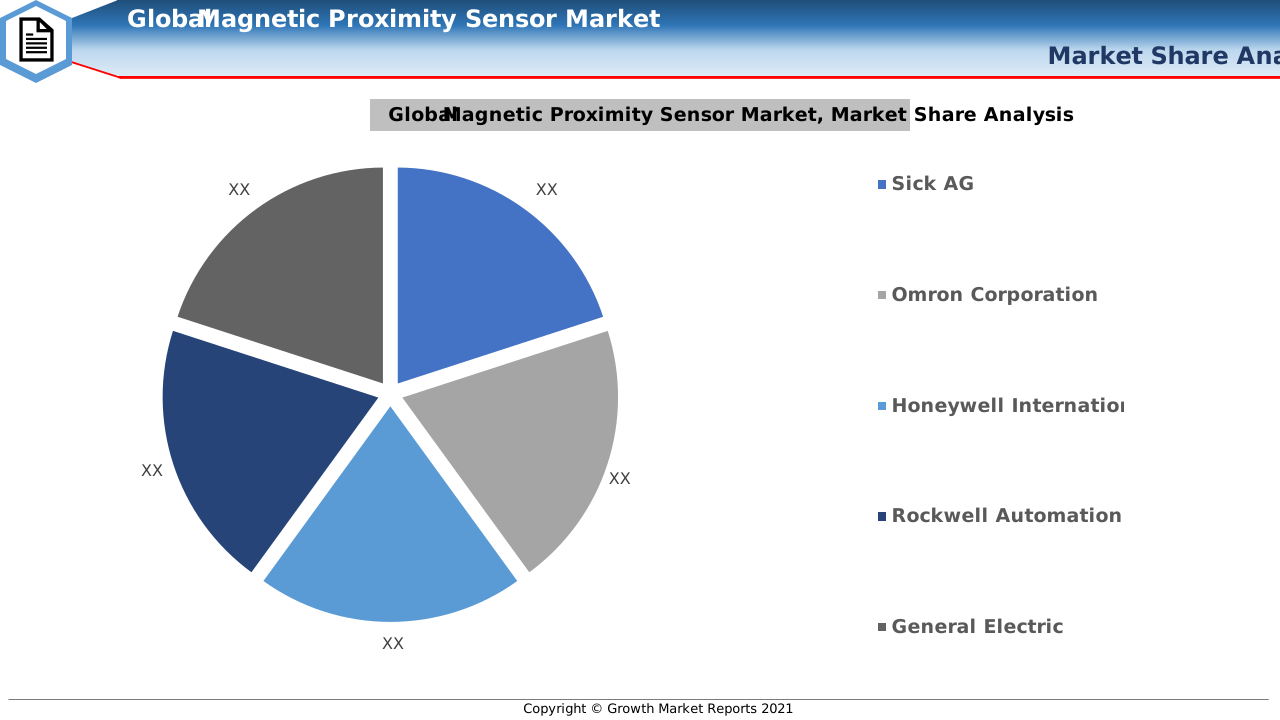
Some of the major companies operating in the magnetic proximity sensor market include Honeywell International Inc., Infineon Technologies AG, STMicroelectronics, NXP Semiconductors, TDK Corporation, TE Connectivity, Omron Corporation, Panasonic Corporation, SICK AG, Allegro MicroSystems, Balluff GmbH, and Melexis NV. Honeywell is recognized for its extensive portfolio of industrial and automotive sensors, while Infineon Technologies and STMicroelectronics are leaders in semiconductor-based sensor solutions. NXP Semiconductors and TDK Corporation are noted for their innovation in automotive and consumer electronics applications. TE Connectivity and Omron Corporation provide a wide range of sensors for industrial automation and process control. Panasonic Corporation and SICK AG are known for their advanced sensor technologies and strong presence in the industrial and healthcare sectors. Allegro MicroSystems specializes in high-performance Hall effect sensors for automotive and industrial applications, and Balluff GmbH brings deep expertise in factory automation sensing. These companies are continuously expanding their product offerings, investing in R&D, and pursuing strategic partnerships to maintain their competitive edge in the rapidly evolving magnetic proximity sensor market through 2034.

Key Players

  • Honeywell International Inc.
  • Infineon Technologies AG
  • NXP Semiconductors N.V.
  • STMicroelectronics N.V.
  • Texas Instruments Incorporated
  • TE Connectivity Ltd.
  • Panasonic Corporation
  • Allegro MicroSystems, Inc.
  • TDK Corporation
  • Murata Manufacturing Co., Ltd.
  • ams-OSRAM AG
  • Analog Devices, Inc.
  • SICK AG
  • Omron Corporation
  • Melexis NV
  • Vishay Intertechnology, Inc.
  • DENSO Corporation
  • ROHM Semiconductor
  • Sensitec GmbH
  • Balluff GmbH

Segments

The Magnetic Proximity Sensor market has been segmented on the basis of

Type

  • Reed Switches
  • Hall Effect Sensors
  • Inductive Sensors
  • Others

Application

  • Automotive
  • Industrial
  • Consumer Electronics
  • Aerospace & Defense
  • Healthcare
  • Others

Mounting Type

  • Flush
  • Non-Flush

End-User

  • OEMs
  • Aftermarket

Frequently Asked Questions

In consumer electronics, magnetic proximity sensors enable automatic screen dimming or power-off when a smartphone is held to the ear, detect laptop lid closure to trigger sleep modes, activate magnetic accessory connections on tablets, and support presence sensing in smart speakers and home automation hubs. In healthcare, these sensors are embedded in infusion pumps, surgical robots, rehabilitation equipment, and diagnostic imaging devices for precise position tracking and non-invasive status monitoring. The rise of wearable health trackers and continuous glucose monitors is creating additional demand for ultra-miniature, low-power magnetic sensing elements with high biocompatibility.

The market features a mix of diversified semiconductor giants and specialized sensing companies. Allegro MicroSystems and Melexis NV are recognized leaders in Hall effect sensor technology for automotive applications. Honeywell International and TE Connectivity offer broad industrial and aerospace sensor portfolios. SICK AG and Omron Corporation are strong in industrial automation sensing. Infineon Technologies, NXP Semiconductors, STMicroelectronics, and Texas Instruments provide foundational semiconductor platforms for sensor integration. TDK Corporation, Murata Manufacturing, Balluff GmbH, and Sensitec GmbH serve niche industrial and high-precision markets. DENSO Corporation brings deep automotive OEM relationships, while Vishay Intertechnology and ROHM Semiconductor supply component-level solutions across segments.

Flush and non-flush mounting are the two standard configurations. Flush-mount sensors sit level with the installation surface, offering a low-profile form factor suited to consumer electronics, automotive interiors, and environments where contamination protection is critical. Non-flush sensors extend beyond the mounting surface to achieve longer sensing distances, making them the preferred choice in industrial material handling, conveyor systems, and robotics. The selection between the two is governed by sensing range requirements, available installation space, and the severity of the operating environment, with manufacturers offering both configurations across all major sensor types.

The primary challenges include intensifying competition from alternative technologies such as optical, ultrasonic, and capacitive sensors, which can serve overlapping functions in certain applications. Electromagnetic interference in complex electronic environments remains a technical hurdle for ensuring consistent sensor accuracy. Supply chain concentration risks, particularly for rare-earth materials and advanced semiconductors, can disrupt production timelines. Additionally, the cost of compliance with stringent automotive and medical device regulatory standards lengthens time-to-market and raises development costs, posing barriers for smaller or newer market entrants.

The most significant trends shaping the market through 2034 include the integration of magnetic proximity sensors into industrial IoT and Industry 4.0 platforms, enabling real-time asset tracking and predictive maintenance. The electrification of transportation is creating demand for high-temperature, high-accuracy sensor variants. Miniaturization is enabling new use cases in wearables and medical implants. On the opportunity side, smart home automation and connected health monitoring represent high-growth verticals where non-contact, low-power sensing is essential. Emerging markets in Southeast Asia, the Middle East, and Latin America are also opening new avenues as manufacturing investment accelerates.

Asia Pacific is the dominant region, representing approximately 43.2% of global revenues in 2025, equivalent to roughly USD 1.45 billion. China, Japan, South Korea, and India collectively drive this leadership through large-scale automotive and electronics manufacturing, aggressive industrial automation investment, and rapidly expanding electric vehicle production. Asia Pacific is forecast to grow at the highest regional CAGR of approximately 8.3% through 2034, reaching an estimated USD 2.84 billion by the end of the forecast period.

In the automotive sector, magnetic proximity sensors perform critical functions including wheel speed sensing for anti-lock braking and traction control, gear and transmission position detection, seatbelt buckle status, door and trunk closure confirmation, and throttle or pedal position feedback. As electric vehicles grow in volume, these sensors also monitor battery management systems, motor rotor positioning, and charging port connectivity. The push toward higher levels of vehicle autonomy further expands sensor requirements for redundant position and proximity monitoring throughout the drivetrain and chassis.

The market comprises four primary types. Hall effect sensors lead with roughly 38.5% of the 2025 market share, valued for their non-contact operation and broad automotive and industrial utility. Inductive sensors hold approximately 29.0%, serving as workhorses in metallic-object detection across manufacturing environments. Reed switches account for around 22.5%, prized for their simplicity and low power draw in security and automotive applications. The remaining 10.0% covers emerging types such as magnetoresistive and fluxgate sensors used in specialized high-precision applications.

Automotive remains the leading demand driver, accounting for a significant share of total revenues as electric vehicles and advanced driver assistance systems require sophisticated sensor arrays. Industrial automation is the second major driver, with smart factories and Industry 4.0 initiatives increasing the deployment of contactless sensing solutions. Consumer electronics, healthcare, and aerospace and defense round out the primary demand verticals, each contributing to steady market expansion through 2034.

The global magnetic proximity sensor market reached USD 3.36 billion in 2025, the base year for this study. Growing at a CAGR of 7.6% over the 2026-2034 forecast period, the market is projected to reach approximately USD 6.51 billion by 2034. This expansion is fueled by accelerating industrial automation, the rapid electrification of the automotive sector, and broadening adoption across consumer electronics and healthcare applications.

Table Of Content

Chapter 1 Executive Summary
Chapter 2 Assumptions and Acronyms Used
Chapter 3 Research Methodology
Chapter 4 Magnetic Proximity Sensor Market Overview
   4.1 Introduction
      4.1.1 Market Taxonomy
      4.1.2 Market Definition
      4.1.3 Macro-Economic Factors Impacting the Market Growth
   4.2 Magnetic Proximity Sensor Market Dynamics
      4.2.1 Market Drivers
      4.2.2 Market Restraints
      4.2.3 Market Opportunity
   4.3 Magnetic Proximity Sensor Market - Supply Chain Analysis
      4.3.1 List of Key Suppliers
      4.3.2 List of Key Distributors
      4.3.3 List of Key Consumers
   4.4 Key Forces Shaping the Magnetic Proximity Sensor Market
      4.4.1 Bargaining Power of Suppliers
      4.4.2 Bargaining Power of Buyers
      4.4.3 Threat of Substitution
      4.4.4 Threat of New Entrants
      4.4.5 Competitive Rivalry
   4.5 Global Magnetic Proximity Sensor Market Size & Forecast, 2023-2032
      4.5.1 Magnetic Proximity Sensor Market Size and Y-o-Y Growth
      4.5.2 Magnetic Proximity Sensor Market Absolute $ Opportunity

Chapter 5 Global Magnetic Proximity Sensor Market Analysis and Forecast By Type
   5.1 Introduction
      5.1.1 Key Market Trends & Growth Opportunities By Type
      5.1.2 Basis Point Share (BPS) Analysis By Type
      5.1.3 Absolute $ Opportunity Assessment By Type
   5.2 Magnetic Proximity Sensor Market Size Forecast By Type
      5.2.1 Reed Switches
      5.2.2 Hall Effect Sensors
      5.2.3 Inductive Sensors
      5.2.4 Others
   5.3 Market Attractiveness Analysis By Type

Chapter 6 Global Magnetic Proximity Sensor Market Analysis and Forecast By Application
   6.1 Introduction
      6.1.1 Key Market Trends & Growth Opportunities By Application
      6.1.2 Basis Point Share (BPS) Analysis By Application
      6.1.3 Absolute $ Opportunity Assessment By Application
   6.2 Magnetic Proximity Sensor Market Size Forecast By Application
      6.2.1 Automotive
      6.2.2 Industrial
      6.2.3 Consumer Electronics
      6.2.4 Aerospace & Defense
      6.2.5 Healthcare
      6.2.6 Others
   6.3 Market Attractiveness Analysis By Application

Chapter 7 Global Magnetic Proximity Sensor Market Analysis and Forecast By Mounting Type
   7.1 Introduction
      7.1.1 Key Market Trends & Growth Opportunities By Mounting Type
      7.1.2 Basis Point Share (BPS) Analysis By Mounting Type
      7.1.3 Absolute $ Opportunity Assessment By Mounting Type
   7.2 Magnetic Proximity Sensor Market Size Forecast By Mounting Type
      7.2.1 Flush
      7.2.2 Non-Flush
   7.3 Market Attractiveness Analysis By Mounting Type

Chapter 8 Global Magnetic Proximity Sensor Market Analysis and Forecast By End-User
   8.1 Introduction
      8.1.1 Key Market Trends & Growth Opportunities By End-User
      8.1.2 Basis Point Share (BPS) Analysis By End-User
      8.1.3 Absolute $ Opportunity Assessment By End-User
   8.2 Magnetic Proximity Sensor Market Size Forecast By End-User
      8.2.1 OEMs
      8.2.2 Aftermarket
   8.3 Market Attractiveness Analysis By End-User

Chapter 9 Global Magnetic Proximity Sensor Market Analysis and Forecast by Region
   9.1 Introduction
      9.1.1 Key Market Trends & Growth Opportunities By Region
      9.1.2 Basis Point Share (BPS) Analysis By Region
      9.1.3 Absolute $ Opportunity Assessment By Region
   9.2 Magnetic Proximity Sensor Market Size Forecast By Region
      9.2.1 North America
      9.2.2 Europe
      9.2.3 Asia Pacific
      9.2.4 Latin America
      9.2.5 Middle East & Africa (MEA)
   9.3 Market Attractiveness Analysis By Region

Chapter 10 Coronavirus Disease (COVID-19) Impact 
   10.1 Introduction 
   10.2 Current & Future Impact Analysis 
   10.3 Economic Impact Analysis 
   10.4 Government Policies 
   10.5 Investment Scenario

Chapter 11 North America Magnetic Proximity Sensor Analysis and Forecast
   11.1 Introduction
   11.2 North America Magnetic Proximity Sensor Market Size Forecast by Country
      11.2.1 U.S.
      11.2.2 Canada
   11.3 Basis Point Share (BPS) Analysis by Country
   11.4 Absolute $ Opportunity Assessment by Country
   11.5 Market Attractiveness Analysis by Country
   11.6 North America Magnetic Proximity Sensor Market Size Forecast By Type
      11.6.1 Reed Switches
      11.6.2 Hall Effect Sensors
      11.6.3 Inductive Sensors
      11.6.4 Others
   11.7 Basis Point Share (BPS) Analysis By Type 
   11.8 Absolute $ Opportunity Assessment By Type 
   11.9 Market Attractiveness Analysis By Type
   11.10 North America Magnetic Proximity Sensor Market Size Forecast By Application
      11.10.1 Automotive
      11.10.2 Industrial
      11.10.3 Consumer Electronics
      11.10.4 Aerospace & Defense
      11.10.5 Healthcare
      11.10.6 Others
   11.11 Basis Point Share (BPS) Analysis By Application 
   11.12 Absolute $ Opportunity Assessment By Application 
   11.13 Market Attractiveness Analysis By Application
   11.14 North America Magnetic Proximity Sensor Market Size Forecast By Mounting Type
      11.14.1 Flush
      11.14.2 Non-Flush
   11.15 Basis Point Share (BPS) Analysis By Mounting Type 
   11.16 Absolute $ Opportunity Assessment By Mounting Type 
   11.17 Market Attractiveness Analysis By Mounting Type
   11.18 North America Magnetic Proximity Sensor Market Size Forecast By End-User
      11.18.1 OEMs
      11.18.2 Aftermarket
   11.19 Basis Point Share (BPS) Analysis By End-User 
   11.20 Absolute $ Opportunity Assessment By End-User 
   11.21 Market Attractiveness Analysis By End-User

Chapter 12 Europe Magnetic Proximity Sensor Analysis and Forecast
   12.1 Introduction
   12.2 Europe Magnetic Proximity Sensor Market Size Forecast by Country
      12.2.1 Germany
      12.2.2 France
      12.2.3 Italy
      12.2.4 U.K.
      12.2.5 Spain
      12.2.6 Russia
      12.2.7 Rest of Europe
   12.3 Basis Point Share (BPS) Analysis by Country
   12.4 Absolute $ Opportunity Assessment by Country
   12.5 Market Attractiveness Analysis by Country
   12.6 Europe Magnetic Proximity Sensor Market Size Forecast By Type
      12.6.1 Reed Switches
      12.6.2 Hall Effect Sensors
      12.6.3 Inductive Sensors
      12.6.4 Others
   12.7 Basis Point Share (BPS) Analysis By Type 
   12.8 Absolute $ Opportunity Assessment By Type 
   12.9 Market Attractiveness Analysis By Type
   12.10 Europe Magnetic Proximity Sensor Market Size Forecast By Application
      12.10.1 Automotive
      12.10.2 Industrial
      12.10.3 Consumer Electronics
      12.10.4 Aerospace & Defense
      12.10.5 Healthcare
      12.10.6 Others
   12.11 Basis Point Share (BPS) Analysis By Application 
   12.12 Absolute $ Opportunity Assessment By Application 
   12.13 Market Attractiveness Analysis By Application
   12.14 Europe Magnetic Proximity Sensor Market Size Forecast By Mounting Type
      12.14.1 Flush
      12.14.2 Non-Flush
   12.15 Basis Point Share (BPS) Analysis By Mounting Type 
   12.16 Absolute $ Opportunity Assessment By Mounting Type 
   12.17 Market Attractiveness Analysis By Mounting Type
   12.18 Europe Magnetic Proximity Sensor Market Size Forecast By End-User
      12.18.1 OEMs
      12.18.2 Aftermarket
   12.19 Basis Point Share (BPS) Analysis By End-User 
   12.20 Absolute $ Opportunity Assessment By End-User 
   12.21 Market Attractiveness Analysis By End-User

Chapter 13 Asia Pacific Magnetic Proximity Sensor Analysis and Forecast
   13.1 Introduction
   13.2 Asia Pacific Magnetic Proximity Sensor Market Size Forecast by Country
      13.2.1 China
      13.2.2 Japan
      13.2.3 South Korea
      13.2.4 India
      13.2.5 Australia
      13.2.6 South East Asia (SEA)
      13.2.7 Rest of Asia Pacific (APAC)
   13.3 Basis Point Share (BPS) Analysis by Country
   13.4 Absolute $ Opportunity Assessment by Country
   13.5 Market Attractiveness Analysis by Country
   13.6 Asia Pacific Magnetic Proximity Sensor Market Size Forecast By Type
      13.6.1 Reed Switches
      13.6.2 Hall Effect Sensors
      13.6.3 Inductive Sensors
      13.6.4 Others
   13.7 Basis Point Share (BPS) Analysis By Type 
   13.8 Absolute $ Opportunity Assessment By Type 
   13.9 Market Attractiveness Analysis By Type
   13.10 Asia Pacific Magnetic Proximity Sensor Market Size Forecast By Application
      13.10.1 Automotive
      13.10.2 Industrial
      13.10.3 Consumer Electronics
      13.10.4 Aerospace & Defense
      13.10.5 Healthcare
      13.10.6 Others
   13.11 Basis Point Share (BPS) Analysis By Application 
   13.12 Absolute $ Opportunity Assessment By Application 
   13.13 Market Attractiveness Analysis By Application
   13.14 Asia Pacific Magnetic Proximity Sensor Market Size Forecast By Mounting Type
      13.14.1 Flush
      13.14.2 Non-Flush
   13.15 Basis Point Share (BPS) Analysis By Mounting Type 
   13.16 Absolute $ Opportunity Assessment By Mounting Type 
   13.17 Market Attractiveness Analysis By Mounting Type
   13.18 Asia Pacific Magnetic Proximity Sensor Market Size Forecast By End-User
      13.18.1 OEMs
      13.18.2 Aftermarket
   13.19 Basis Point Share (BPS) Analysis By End-User 
   13.20 Absolute $ Opportunity Assessment By End-User 
   13.21 Market Attractiveness Analysis By End-User

Chapter 14 Latin America Magnetic Proximity Sensor Analysis and Forecast
   14.1 Introduction
   14.2 Latin America Magnetic Proximity Sensor Market Size Forecast by Country
      14.2.1 Brazil
      14.2.2 Mexico
      14.2.3 Rest of Latin America (LATAM)
   14.3 Basis Point Share (BPS) Analysis by Country
   14.4 Absolute $ Opportunity Assessment by Country
   14.5 Market Attractiveness Analysis by Country
   14.6 Latin America Magnetic Proximity Sensor Market Size Forecast By Type
      14.6.1 Reed Switches
      14.6.2 Hall Effect Sensors
      14.6.3 Inductive Sensors
      14.6.4 Others
   14.7 Basis Point Share (BPS) Analysis By Type 
   14.8 Absolute $ Opportunity Assessment By Type 
   14.9 Market Attractiveness Analysis By Type
   14.10 Latin America Magnetic Proximity Sensor Market Size Forecast By Application
      14.10.1 Automotive
      14.10.2 Industrial
      14.10.3 Consumer Electronics
      14.10.4 Aerospace & Defense
      14.10.5 Healthcare
      14.10.6 Others
   14.11 Basis Point Share (BPS) Analysis By Application 
   14.12 Absolute $ Opportunity Assessment By Application 
   14.13 Market Attractiveness Analysis By Application
   14.14 Latin America Magnetic Proximity Sensor Market Size Forecast By Mounting Type
      14.14.1 Flush
      14.14.2 Non-Flush
   14.15 Basis Point Share (BPS) Analysis By Mounting Type 
   14.16 Absolute $ Opportunity Assessment By Mounting Type 
   14.17 Market Attractiveness Analysis By Mounting Type
   14.18 Latin America Magnetic Proximity Sensor Market Size Forecast By End-User
      14.18.1 OEMs
      14.18.2 Aftermarket
   14.19 Basis Point Share (BPS) Analysis By End-User 
   14.20 Absolute $ Opportunity Assessment By End-User 
   14.21 Market Attractiveness Analysis By End-User

Chapter 15 Middle East & Africa (MEA) Magnetic Proximity Sensor Analysis and Forecast
   15.1 Introduction
   15.2 Middle East & Africa (MEA) Magnetic Proximity Sensor Market Size Forecast by Country
      15.2.1 Saudi Arabia
      15.2.2 South Africa
      15.2.3 UAE
      15.2.4 Rest of Middle East & Africa (MEA)
   15.3 Basis Point Share (BPS) Analysis by Country
   15.4 Absolute $ Opportunity Assessment by Country
   15.5 Market Attractiveness Analysis by Country
   15.6 Middle East & Africa (MEA) Magnetic Proximity Sensor Market Size Forecast By Type
      15.6.1 Reed Switches
      15.6.2 Hall Effect Sensors
      15.6.3 Inductive Sensors
      15.6.4 Others
   15.7 Basis Point Share (BPS) Analysis By Type 
   15.8 Absolute $ Opportunity Assessment By Type 
   15.9 Market Attractiveness Analysis By Type
   15.10 Middle East & Africa (MEA) Magnetic Proximity Sensor Market Size Forecast By Application
      15.10.1 Automotive
      15.10.2 Industrial
      15.10.3 Consumer Electronics
      15.10.4 Aerospace & Defense
      15.10.5 Healthcare
      15.10.6 Others
   15.11 Basis Point Share (BPS) Analysis By Application 
   15.12 Absolute $ Opportunity Assessment By Application 
   15.13 Market Attractiveness Analysis By Application
   15.14 Middle East & Africa (MEA) Magnetic Proximity Sensor Market Size Forecast By Mounting Type
      15.14.1 Flush
      15.14.2 Non-Flush
   15.15 Basis Point Share (BPS) Analysis By Mounting Type 
   15.16 Absolute $ Opportunity Assessment By Mounting Type 
   15.17 Market Attractiveness Analysis By Mounting Type
   15.18 Middle East & Africa (MEA) Magnetic Proximity Sensor Market Size Forecast By End-User
      15.18.1 OEMs
      15.18.2 Aftermarket
   15.19 Basis Point Share (BPS) Analysis By End-User 
   15.20 Absolute $ Opportunity Assessment By End-User 
   15.21 Market Attractiveness Analysis By End-User

Chapter 16 Competition Landscape 
   16.1 Magnetic Proximity Sensor Market: Competitive Dashboard
   16.2 Global Magnetic Proximity Sensor Market: Market Share Analysis, 2023
   16.3 Company Profiles (Details – Overview, Financials, Developments, Strategy) 
      16.3.1 Honeywell International Inc.
      16.3.2 Infineon Technologies AG
      16.3.3 NXP Semiconductors N.V.
      16.3.4 STMicroelectronics N.V.
      16.3.5 Texas Instruments Incorporated
      16.3.6 TE Connectivity Ltd.
      16.3.7 Panasonic Corporation
      16.3.8 Allegro MicroSystems, Inc.
      16.3.9 TDK Corporation
      16.3.10 Murata Manufacturing Co., Ltd.
      16.3.11 ams-OSRAM AG
      16.3.12 Analog Devices, Inc.
      16.3.13 SICK AG
      16.3.14 Omron Corporation
      16.3.15 Melexis NV
      16.3.16 Vishay Intertechnology, Inc.
      16.3.17 DENSO Corporation
      16.3.18 ROHM Semiconductor
      16.3.19 Sensitec GmbH
      16.3.20 Balluff GmbH

Methodology

Our Clients

Honda Motor Co. Ltd.
FedEx Logistics
Deloitte
Nestle SA
The John Holland Group
Microsoft
General Electric
sinopec