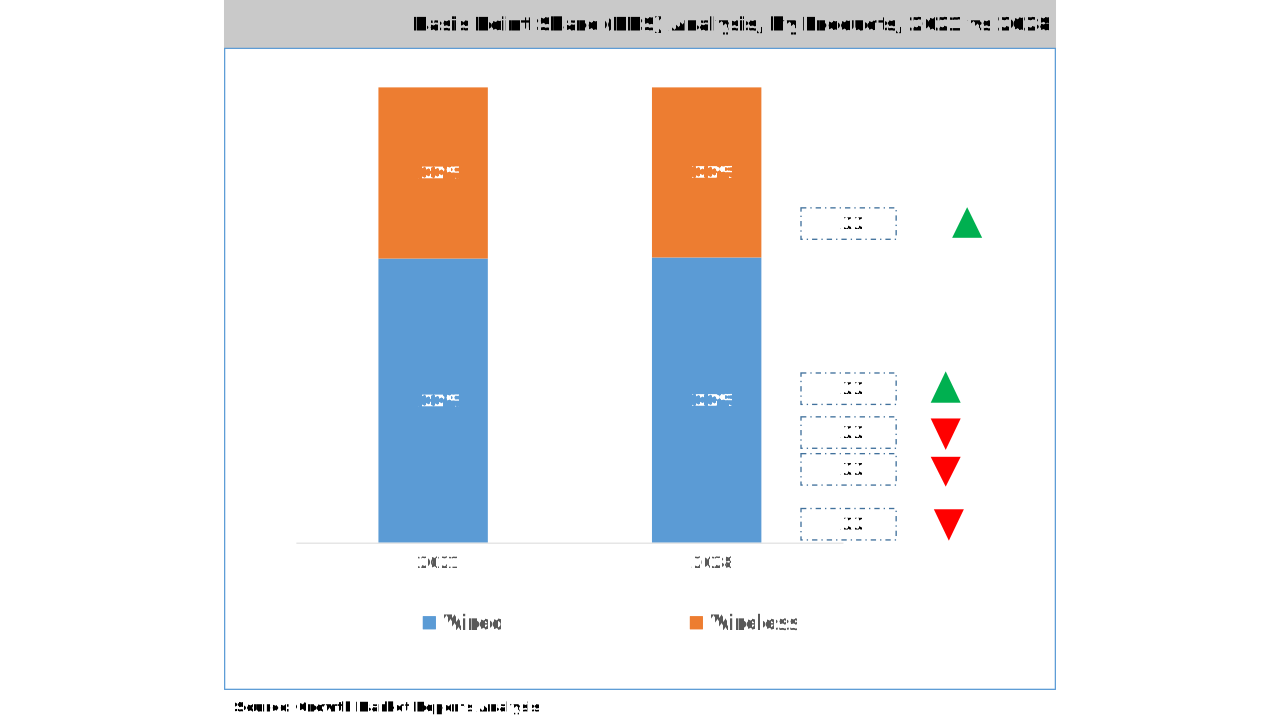
Segments - by Product Type (Wired Doorbell Cameras, Wireless Doorbell Cameras, Battery-Powered Doorbell Cameras, Others), by Resolution (HD, Full HD, 2K, 4K, Others), by Connectivity (Wi-Fi, Bluetooth, Zigbee, Others), by Application (Residential, Commercial, Industrial), by Distribution Channel (Online, Offline)
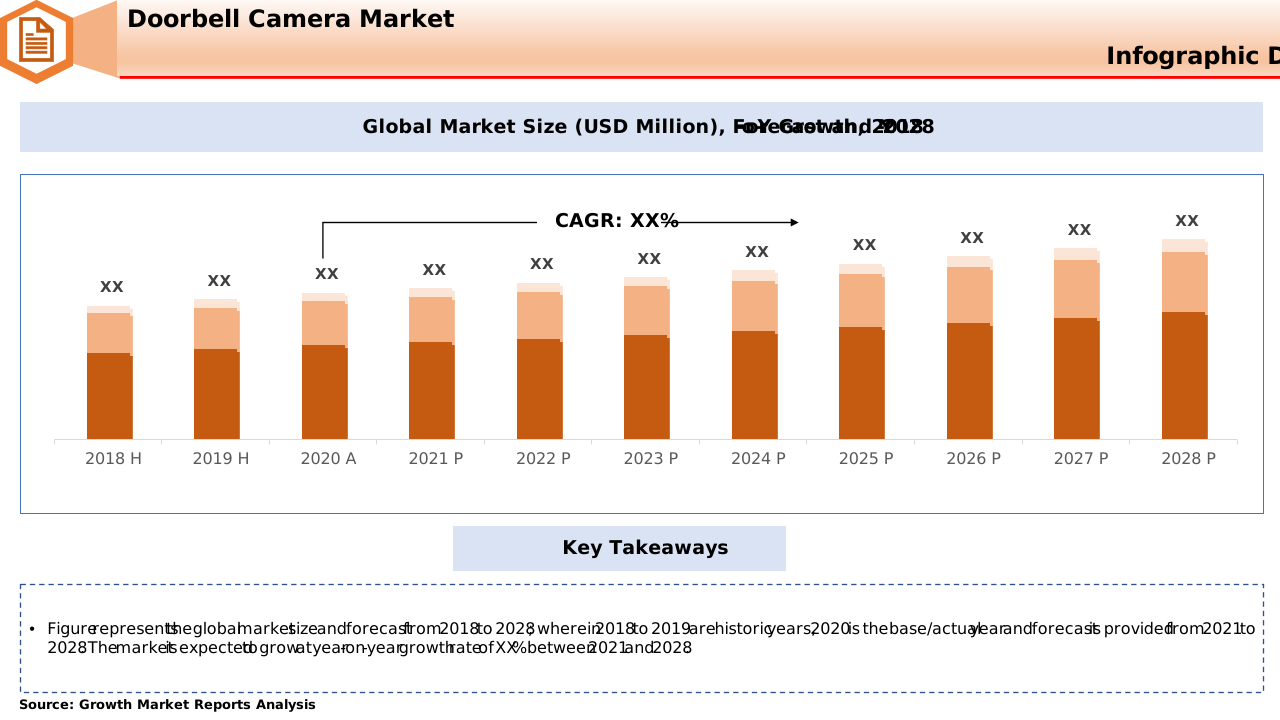
According to our latest research, the global doorbell camera market size stood at USD 3.21 billion in 2024, with a robust year-over-year growth trajectory. The market is anticipated to expand at a CAGR of 15.7% from 2025 to 2033, reaching an estimated value of USD 12.12 billion by 2033. The accelerated adoption of smart home technologies, coupled with heightened concerns over residential and commercial security, continues to drive significant growth in the doorbell camera market. As per the latest research, the surge in urbanization, coupled with technological advancements in video surveillance and IoT connectivity, is further catalyzing demand across diverse applications and regions.
One of the principal growth factors propelling the doorbell camera market is the increasing emphasis on home security and automation. Consumers are increasingly seeking solutions that provide real-time surveillance, remote access, and seamless integration with other smart home devices. The proliferation of high-speed internet and widespread adoption of smartphones have made it easier for users to monitor their premises from virtually anywhere, thereby boosting the uptake of doorbell cameras. Moreover, the growing awareness regarding the benefits of proactive security, such as deterrence of theft and enhanced visitor management, has contributed significantly to the marketÂ’s expansion. The integration of advanced features like motion detection, night vision, and two-way audio communication further enhances the value proposition of these devices, attracting both residential and commercial end-users.
Technological advancements in video resolution, connectivity, and battery efficiency are also playing a pivotal role in shaping the doorbell camera market. The transition from standard definition to HD, Full HD, 2K, and even 4K resolutions has markedly improved image clarity, enabling users to capture finer details and enhance overall security. The evolution of wireless and battery-powered models has made installation easier and more flexible, removing previous barriers related to wiring and power supply. Additionally, the integration of artificial intelligence and machine learning for features such as facial recognition, package detection, and anomaly alerts is setting new benchmarks in the industry. These innovations are not only improving user experience but are also expanding the addressable market by catering to a broader spectrum of customer needs.
The doorbell camera market is also benefitting from favorable regulatory and insurance trends. Many insurance providers are offering premium discounts for homes equipped with advanced security systems, incentivizing the adoption of doorbell cameras. Additionally, governments and municipalities in various regions are promoting the use of smart surveillance as part of broader public safety initiatives. This regulatory support, combined with the declining cost of hardware and the rise of do-it-yourself (DIY) installation models, is lowering the entry barrier for new consumers. As a result, penetration rates are increasing not only in developed markets such as North America and Europe but also in emerging economies across Asia Pacific and Latin America.
The emergence of the Mesh-Aware Video Doorbell is revolutionizing the way consumers approach home security. This innovative technology leverages mesh networking to enhance connectivity and reliability, ensuring seamless video streaming and real-time alerts even in areas with weak Wi-Fi signals. By integrating with existing smart home ecosystems, mesh-aware doorbells offer a robust solution for comprehensive home monitoring. Users can benefit from improved network coverage and reduced latency, which are crucial for maintaining uninterrupted surveillance. As more households adopt smart home devices, the demand for mesh-aware technologies is expected to rise, offering a competitive edge to manufacturers who incorporate these advancements into their product lines. This trend not only addresses connectivity challenges but also enhances the overall user experience, making smart home security more accessible and efficient.
From a regional perspective, North America continues to dominate the global doorbell camera market, accounting for the largest share in 2024. This leadership is attributed to high consumer awareness, early adoption of smart home technologies, and a strong presence of leading manufacturers. However, the Asia Pacific region is emerging as the fastest-growing market, driven by rapid urbanization, rising disposable incomes, and increasing investments in smart city infrastructure. Europe also exhibits steady growth, fueled by stringent security regulations and growing demand for integrated home automation solutions. Meanwhile, Latin America and the Middle East & Africa regions are witnessing gradual adoption, supported by improving connectivity and expanding retail channels.
The doorbell camera market is segmented by product type into Wired Doorbell Cameras, Wireless Doorbell Cameras, Battery-Powered Doorbell Cameras, and Others. Wired doorbell cameras have traditionally been favored for their reliability and consistent power supply, making them a popular choice for permanent installations in both residential and commercial settings. These devices offer uninterrupted operation and are less susceptible to connectivity issues, which is particularly important in areas where Wi-Fi coverage may be inconsistent. However, installation complexity and the need for professional assistance have limited their adoption among DIY consumers, creating opportunities for alternative product types.
The Smart Video Doorbell is becoming an integral component of modern home security systems, offering users a sophisticated blend of technology and convenience. These devices are equipped with features such as AI-powered motion detection, facial recognition, and two-way audio communication, providing homeowners with real-time insights and control over their property. The ability to integrate with other smart home devices, such as lights and locks, further enhances the security framework, allowing for automated responses to potential threats. As consumer awareness of smart home technology grows, the adoption of smart video doorbells is expected to accelerate, driven by their ability to offer peace of mind and enhanced security. This shift towards smarter, more connected homes is reshaping the security landscape, making it essential for manufacturers to innovate continuously and offer products that meet evolving consumer expectations.
Wireless doorbell cameras have seen a remarkable surge in demand, primarily due to their ease of installation and flexibility. These models leverage Wi-Fi or other wireless protocols to transmit video and audio signals, enabling users to place them in locations where wiring is impractical or undesirable. The convenience of wireless connectivity, combined with advancements in battery life and energy efficiency, has made these devices especially appealing to renters, homeowners, and small businesses. Furthermore, wireless doorbell cameras are often equipped with advanced features such as cloud storage, mobile app integration, and real-time alerts, enhancing their utility and appeal.
Battery-powered doorbell cameras represent a significant innovation in the market, addressing key pain points related to power supply and installation. These devices are designed for maximum portability and can be installed without any electrical work, making them ideal for temporary setups or locations without existing wiring. Modern battery-powered models offer extended battery life, often lasting several months on a single charge, and feature energy-saving modes to optimize performance. The growing trend towards DIY security solutions has fueled the popularity of battery-powered doorbell cameras, particularly in emerging markets where infrastructure limitations may impede the adoption of wired alternatives.
The "Others" category encompasses a range of specialized doorbell camera products, including solar-powered models, hybrid systems, and multi-functional units that combine video surveillance with access control or intercom capabilities. Solar-powered doorbell cameras, in particular, are gaining traction in regions with abundant sunlight, offering a sustainable and maintenance-free security solution. Hybrid systems that integrate both wired and wireless functionalities provide users with the best of both worlds, ensuring reliability while offering installation flexibility. As consumer preferences continue to evolve, manufacturers are focusing on developing versatile and feature-rich products to address diverse market needs.
| Attributes | Details |
| Report Title | Doorbell Camera Market Research Report 2033 |
| By Product Type | Wired Doorbell Cameras, Wireless Doorbell Cameras, Battery-Powered Doorbell Cameras, Others |
| By Resolution | HD, Full HD, 2K, 4K, Others |
| By Connectivity | Wi-Fi, Bluetooth, Zigbee, Others |
| By Application | Residential, Commercial, Industrial |
| By Distribution Channel | Online, Offline |
| Regions Covered | North America, Europe, APAC, Latin America, MEA |
| Base Year | 2024 |
| Historic Data | 2018-2023 |
| Forecast Period | 2025-2033 |
| Number of Pages | 298 |
| Number of Tables & Figures | 250 |
| Customization Available | Yes, the report can be customized as per your need. |
Resolution is a critical factor influencing the performance and adoption of doorbell cameras, with the market segmented into HD, Full HD, 2K, 4K, and Others. HD (720p) doorbell cameras represent the entry-level segment, offering basic video quality suitable for general monitoring and visitor identification. While HD models are cost-effective and widely available, their limited resolution can hinder the ability to capture fine details, which may be crucial in security incidents. Consequently, many consumers are opting for higher-resolution models that deliver superior image clarity and enhanced situational awareness.
Full HD (1080p) doorbell cameras have become the industry standard, striking a balance between affordability and performance. These devices provide clear and detailed video footage, enabling users to recognize faces, license plates, and other important details with ease. The widespread availability of high-speed internet and cloud storage solutions has further facilitated the adoption of Full HD cameras, as users can stream and store large volumes of high-resolution video data without significant latency or bandwidth constraints. Full HD models are particularly popular in residential and small business applications, where both cost and performance are key considerations.
The introduction of 2K and 4K doorbell cameras marks a significant advancement in video surveillance technology. These high-resolution models offer unparalleled image quality, capturing even the smallest details with exceptional clarity. 2K doorbell cameras are increasingly being adopted in commercial and high-end residential settings, where security requirements are more stringent. 4K models, while still relatively niche due to higher costs and increased bandwidth demands, are gaining traction among tech-savvy consumers and businesses seeking the highest level of video fidelity. As the cost of high-resolution sensors and storage solutions continues to decline, the adoption of 2K and 4K doorbell cameras is expected to accelerate in the coming years.
The "Others" segment includes innovative resolution formats and technologies, such as wide dynamic range (WDR), infrared (IR) night vision, and panoramic video capabilities. WDR technology enhances image quality in challenging lighting conditions, ensuring that both bright and dark areas are clearly visible. Infrared night vision enables doorbell cameras to capture clear footage even in complete darkness, extending their utility to 24/7 surveillance. Panoramic and fisheye lenses provide a wider field of view, allowing users to monitor larger areas with a single device. These advanced features are increasingly being integrated into mainstream doorbell camera models, further enhancing their value proposition and market appeal.
Connectivity is a defining attribute of modern doorbell cameras, with the market segmented into Wi-Fi, Bluetooth, Zigbee, and Others. Wi-Fi connectivity remains the most prevalent option, enabling seamless integration with home networks and remote access via smartphones and tablets. The ubiquity of Wi-Fi infrastructure in residential and commercial environments has facilitated the widespread adoption of Wi-Fi-enabled doorbell cameras. These devices support real-time video streaming, cloud storage, and smart home automation, making them highly versatile and user-friendly. Wi-Fi connectivity also allows for over-the-air firmware updates, ensuring that devices remain secure and up-to-date with the latest features.
Bluetooth-enabled doorbell cameras are gaining popularity for their ease of setup and low power consumption. While Bluetooth connectivity is typically limited in range compared to Wi-Fi, it offers a reliable and secure connection for close-proximity applications, such as unlocking doors or triggering alarms. Bluetooth doorbell cameras are often used in conjunction with other smart home devices, enabling seamless integration and automation. The growing adoption of Bluetooth Low Energy (BLE) technology is further enhancing the performance and battery life of these devices, making them an attractive option for both residential and commercial users.
Zigbee, a low-power wireless communication protocol, is emerging as a viable connectivity option for doorbell cameras, particularly in smart home ecosystems that prioritize energy efficiency and interoperability. Zigbee-enabled doorbell cameras can communicate with a wide range of compatible devices, such as smart locks, lights, and security systems, enabling comprehensive home automation and centralized control. The mesh networking capabilities of Zigbee enhance coverage and reliability, making it suitable for larger properties or environments with multiple connected devices. As the smart home market continues to evolve, the adoption of Zigbee and other IoT protocols is expected to increase, driving further innovation in doorbell camera connectivity.
The "Others" category encompasses a variety of emerging connectivity options, including Z-Wave, Ethernet, and cellular networks. Z-Wave, similar to Zigbee, is used in smart home applications and offers robust security and interoperability. Ethernet-connected doorbell cameras provide a stable and high-bandwidth connection, ideal for commercial installations or environments with stringent security requirements. Cellular-enabled doorbell cameras offer remote monitoring capabilities in locations without traditional internet access, such as remote vacation homes or construction sites. As connectivity technologies continue to advance, manufacturers are exploring new ways to enhance the reliability, security, and flexibility of doorbell camera solutions.
The doorbell camera market is segmented by application into Residential, Commercial, and Industrial sectors, each with distinct requirements and growth drivers. The residential segment represents the largest share of the market, driven by the rising adoption of smart home technologies and increasing concerns over personal safety and property protection. Homeowners are seeking convenient and effective solutions to monitor visitors, deter potential intruders, and receive real-time alerts on their mobile devices. The integration of doorbell cameras with other smart home devices, such as smart locks and lighting systems, further enhances their appeal and functionality in residential settings.
Commercial applications of doorbell cameras are expanding rapidly, particularly in small businesses, offices, and retail establishments. Business owners are leveraging doorbell cameras to monitor entrances, manage deliveries, and enhance overall security. The ability to remotely grant access to authorized personnel and record visitor interactions is particularly valuable in environments with high foot traffic or sensitive assets. Additionally, the integration of doorbell cameras with access control and alarm systems provides a comprehensive security solution, reducing the risk of theft and unauthorized entry. As commercial security requirements become more sophisticated, demand for advanced doorbell camera features, such as facial recognition and cloud-based video analytics, is on the rise.
The industrial segment, while currently representing a smaller share of the market, is witnessing growing interest in doorbell camera solutions for perimeter security, facility monitoring, and workforce management. Industrial facilities often face unique security challenges, including large perimeters, remote locations, and the need to monitor multiple access points. Doorbell cameras equipped with high-resolution video, night vision, and ruggedized enclosures are well-suited to address these challenges. The adoption of industrial-grade doorbell cameras is expected to increase as manufacturers and facility operators prioritize safety, regulatory compliance, and operational efficiency.
Across all application segments, the trend towards cloud-based video storage and remote access is transforming the way users interact with doorbell cameras. Cloud storage solutions offer scalable and secure video archiving, enabling users to access footage from any location and share it with law enforcement or insurance providers if needed. Mobile app integration and real-time notifications are enhancing user engagement and responsiveness, making doorbell cameras an indispensable component of modern security systems. As application requirements continue to evolve, manufacturers are focusing on developing customizable and scalable solutions to meet the diverse needs of residential, commercial, and industrial customers.
The doorbell camera market is segmented by distribution channel into Online and Offline channels, each playing a critical role in shaping market dynamics and consumer behavior. Online distribution channels, including e-commerce platforms, manufacturer websites, and third-party retailers, have experienced explosive growth in recent years. The convenience of online shopping, coupled with a wide selection of products and competitive pricing, has made e-commerce the preferred purchasing channel for many consumers. Online platforms also provide detailed product information, customer reviews, and comparison tools, empowering buyers to make informed decisions. The COVID-19 pandemic further accelerated the shift towards online channels, with consumers increasingly relying on digital platforms for their security needs.
Offline distribution channels, including brick-and-mortar electronics stores, home improvement centers, and specialty security retailers, continue to play a vital role in the doorbell camera market. Many consumers prefer to see and test products in person before making a purchase, especially for high-value or technically complex devices. Offline channels also offer personalized customer service, installation support, and after-sales assistance, which can be particularly valuable for first-time buyers or those with specific installation requirements. Retail partnerships and in-store demonstrations are effective strategies for manufacturers to increase brand visibility and educate consumers about the benefits of doorbell cameras.
The integration of omnichannel retail strategies is becoming increasingly important in the doorbell camera market. Leading manufacturers are leveraging both online and offline channels to maximize reach and cater to diverse consumer preferences. For example, customers may research products online and complete their purchase in-store, or vice versa. Omnichannel approaches also enable seamless returns, warranty services, and cross-channel promotions, enhancing the overall customer experience. As competition intensifies, manufacturers and retailers are investing in advanced logistics, customer relationship management (CRM) systems, and digital marketing to drive sales across multiple channels.
Emerging trends in distribution include the rise of direct-to-consumer (DTC) sales models and subscription-based services. DTC models allow manufacturers to build direct relationships with customers, gather valuable feedback, and offer tailored solutions. Subscription-based services, such as cloud storage or professional monitoring, create recurring revenue streams and foster long-term customer loyalty. As the market continues to evolve, the ability to offer flexible and convenient purchasing options will be a key differentiator for brands seeking to capture a larger share of the doorbell camera market.
The doorbell camera market presents a wealth of opportunities driven by technological innovation, expanding application areas, and evolving consumer preferences. The integration of artificial intelligence and machine learning is enabling the development of smart doorbell cameras with advanced features such as facial recognition, package detection, and predictive analytics. These capabilities not only enhance security but also provide valuable insights for homeowners and businesses. The growing trend towards smart city initiatives and connected infrastructure is opening new avenues for doorbell camera deployment in public spaces, multi-family residences, and commercial complexes. Additionally, the increasing adoption of cloud-based services and mobile apps is creating opportunities for value-added services, such as video analytics, remote monitoring, and emergency response integration.
Another significant opportunity lies in the expansion of the doorbell camera market into emerging economies, where rapid urbanization, rising disposable incomes, and improving internet connectivity are driving demand for affordable and effective security solutions. Manufacturers are investing in localized product development, distribution networks, and marketing strategies to tap into these high-growth markets. The proliferation of DIY installation models and user-friendly interfaces is lowering the entry barrier for new consumers, further accelerating market penetration. Strategic partnerships with telecom operators, insurance providers, and smart home ecosystem players are also creating synergies and unlocking new revenue streams. As regulatory frameworks evolve to support smart surveillance and data privacy, the doorbell camera market is well-positioned for sustained growth.
Despite the promising outlook, the doorbell camera market faces several restraining factors, including concerns over data privacy and cybersecurity. The increasing connectivity of doorbell cameras makes them potential targets for hacking, unauthorized access, and data breaches. High-profile incidents of camera hijacking and unauthorized surveillance have raised awareness about the importance of robust security protocols and data encryption. Regulatory compliance with data protection laws, such as GDPR and CCPA, adds complexity and cost for manufacturers. Additionally, the high initial cost of advanced doorbell cameras and subscription-based services may deter price-sensitive consumers, particularly in emerging markets. Addressing these challenges through enhanced security features, transparent data policies, and affordable pricing models will be critical for sustained market growth.
North America remains the largest regional market for doorbell cameras, accounting for approximately 41% of the global market value in 2024, or about USD 1.32 billion. The regionÂ’s dominance is attributed to high consumer awareness, early adoption of smart home technologies, and a strong presence of leading manufacturers such as Ring, Google Nest, and Arlo. The United States continues to be the primary growth engine, driven by rising concerns over home security, favorable insurance incentives, and widespread broadband connectivity. Canada and Mexico are also witnessing steady growth, supported by expanding retail channels and increasing investments in residential and commercial security infrastructure.
The Asia Pacific region is emerging as the fastest-growing market for doorbell cameras, with a projected CAGR of 18.4% from 2025 to 2033. The market size in Asia Pacific reached USD 0.68 billion in 2024 and is expected to surpass USD 3.11 billion by 2033. Rapid urbanization, rising disposable incomes, and government-led smart city initiatives are driving demand for advanced security solutions across countries such as China, India, Japan, and South Korea. The proliferation of affordable wireless and battery-powered doorbell cameras is accelerating adoption in both urban and rural areas. Local manufacturers are playing a key role in catering to region-specific requirements and price sensitivities, further boosting market growth.
Europe holds a significant share of the global doorbell camera market, valued at USD 0.76 billion in 2024. The regionÂ’s growth is fueled by stringent security regulations, increasing adoption of home automation, and growing demand for integrated surveillance solutions. Key markets include the United Kingdom, Germany, France, and the Nordic countries, where consumer awareness and purchasing power are high. Latin America and the Middle East & Africa collectively accounted for USD 0.45 billion in 2024, with growth driven by improving connectivity, rising crime rates, and expanding e-commerce channels. While these regions are still in the nascent stages of adoption, they present significant long-term opportunities as infrastructure and consumer awareness continue to improve.
The competitive landscape of the doorbell camera market is characterized by intense rivalry among global technology giants, specialized security firms, and emerging startups. Leading companies are continuously investing in research and development to introduce innovative products with advanced features such as AI-powered analytics, high-resolution video, and seamless smart home integration. Brand reputation, product reliability, and customer support are key differentiators in this highly competitive market. Strategic partnerships, mergers, and acquisitions are common as companies seek to expand their product portfolios, enhance distribution networks, and gain access to new markets. The increasing popularity of subscription-based services and value-added offerings is also driving competition, with companies vying to build long-term customer relationships and recurring revenue streams.
In addition to established players, the market is witnessing the entry of new competitors, particularly in the wireless and battery-powered segments. These entrants are leveraging agile product development, competitive pricing, and targeted marketing to capture market share. The rise of direct-to-consumer sales models and online retail channels has lowered barriers to entry, enabling smaller companies to reach a global audience. However, maintaining product quality, ensuring cybersecurity, and achieving economies of scale remain significant challenges for new entrants. As the market matures, consolidation is expected, with larger players acquiring innovative startups to strengthen their technological capabilities and market presence.
The rapid pace of technological innovation is driving continuous product evolution, with companies focusing on enhancing user experience, interoperability, and data security. The integration of voice assistants, cloud storage, and mobile app controls is becoming standard across leading brands. Companies are also investing in artificial intelligence and machine learning to develop smart features such as facial recognition, anomaly detection, and automated alerts. The ability to offer customizable solutions for different market segments, including residential, commercial, and industrial applications, is emerging as a key success factor. As consumer expectations continue to rise, companies must balance innovation with affordability and ease of use to maintain competitive advantage.
Major companies operating in the global doorbell camera market include Amazon (Ring), Google (Nest), Arlo Technologies, Vivint Smart Home, SimpliSafe, Eufy Security (Anker Innovations), August Home (Assa Abloy), SkyBell Technologies, ADT Inc., and Logitech. Ring, acquired by Amazon, is a market leader known for its extensive product range, robust ecosystem, and strong brand presence. Google Nest leverages advanced AI and seamless integration with Google Home devices to deliver a premium user experience. Arlo Technologies is recognized for its high-resolution video and wireless capabilities, catering to both residential and commercial customers. Vivint Smart Home and SimpliSafe offer comprehensive security solutions with professional monitoring and installation services. Eufy Security and August Home focus on user-friendly, affordable products with strong emphasis on privacy and data security. SkyBell Technologies and Logitech are known for their innovative designs and integration with third-party smart home platforms. ADT Inc. leverages its extensive security expertise and nationwide presence to offer end-to-end solutions for both homes and businesses.
These companies are continuously expanding their product portfolios, investing in R&D, and forming strategic alliances to stay ahead in the competitive landscape. For instance, collaborations with telecom operators and insurance providers are enabling bundled offerings and cross-promotional opportunities. Investments in cloud infrastructure and AI-driven analytics are enhancing product differentiation and customer value. As the market evolves, companies that can deliver reliable, secure, and feature-rich doorbell camera solutions, while adapting to changing consumer needs and regulatory requirements, will be best positioned for long-term success.
The Doorbell Camera market has been segmented on the basis of
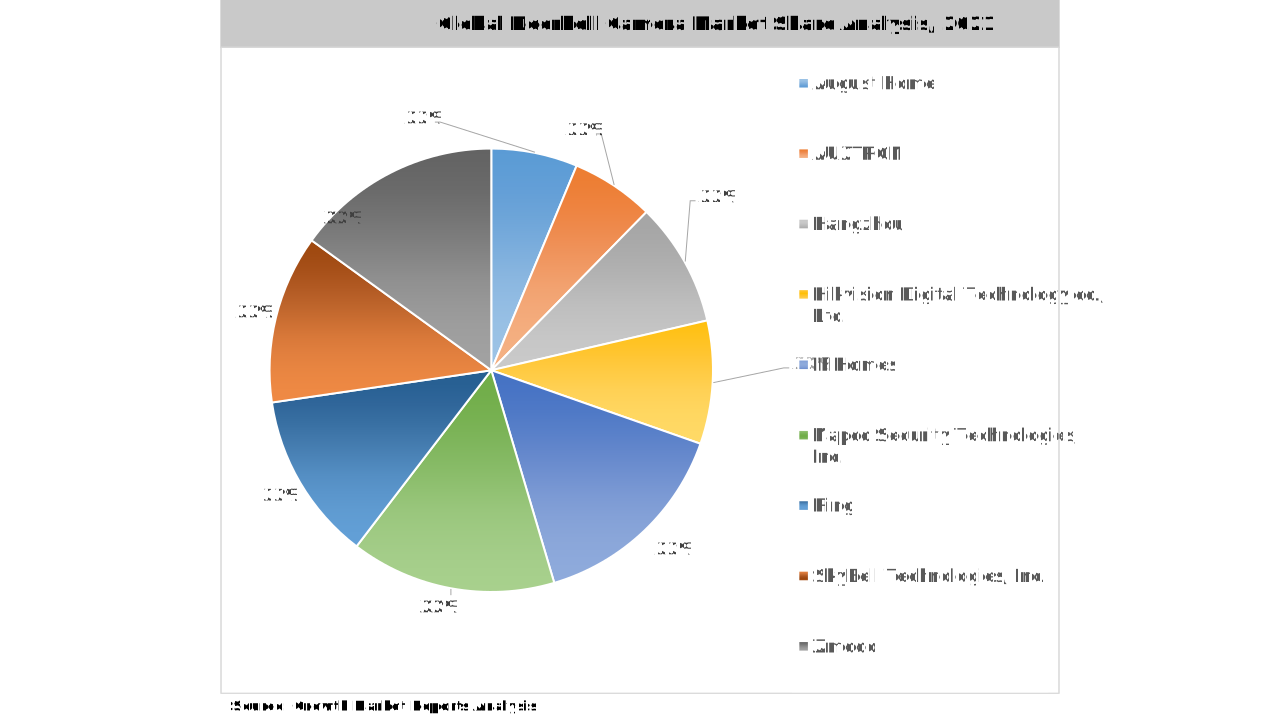
Major players of the doorbell camera market are August Home, AUXTRON, Hangzhou, Hikvision Digital Technology co., Ltd., IFIHomes, NAPCO Security Technologies, Inc., Ring, SkyBell Technologies, Inc., and Zmodo.
Companies are engaging in partnership, collaboration, and mergers. Moreover, the companies are focusing on expanding their product portfolio to expand their expand share.
In June 2020, Zmodo launched the updated version of its app that allows the users to access their devices remotely and subscribe cloud plans for additional features.
In July 2017, NAPCO Security Technologies announced that its Starlink Dual Path Communicator commercial is available to its distributors in the US.
Major challenges include concerns over data privacy and cybersecurity, high initial costs for advanced models, and compliance with data protection regulations.
Key companies include Amazon (Ring), Google Nest, Arlo Technologies, ADT Inc., Vivint Smart Home, SkyBell Technologies, August Home, SimpliSafe, and Eufy Security.
Doorbell cameras are widely used in residential, commercial, and industrial settings for security, visitor management, and access control.
Doorbell cameras can connect via Wi-Fi, Bluetooth, Zigbee, Z-Wave, Ethernet, and even cellular networks, depending on the model.
Higher resolutions like Full HD, 2K, and 4K provide clearer images and better detail, which are crucial for security and identification purposes.
Key features include real-time surveillance, remote access, motion detection, night vision, two-way audio, and integration with smart home devices.
The market offers wired, wireless, battery-powered, and other specialized doorbell cameras such as solar-powered and hybrid models.
North America holds the largest market share, while Asia Pacific is the fastest-growing region due to rapid urbanization and smart city initiatives.
The doorbell camera market is expected to grow at a CAGR of 15.7% from 2025 to 2033, reaching USD 12.12 billion by 2033.
As of 2024, the global doorbell camera market size is valued at USD 3.21 billion.