Segments - by Product Type (Absolute Pressure Sensors, Gauge Pressure Sensors, Differential Pressure Sensors, Sealed Pressure Sensors), by Technology (Piezoresistive, Capacitive, Electromagnetic, Optical, Resonant Solid State, Others), by Application (Automotive, Healthcare, Industrial, Consumer Electronics, Oil & Gas, Aerospace & Defense, Others), by End-User (OEMs, Aftermarket)
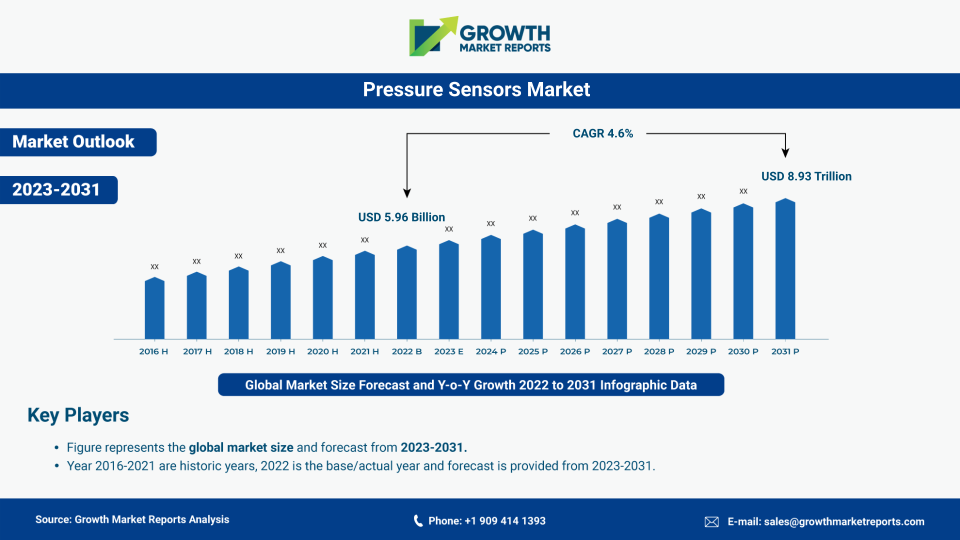
According to our latest research, the global pressure sensors market size reached USD 19.1 billion in 2024, reflecting robust growth driven by expanding applications across industries. The market is poised for further expansion, projected to attain USD 36.2 billion by 2033, progressing at a healthy CAGR of 7.4% during the forecast period. This growth trajectory is primarily attributed to increasing demand for advanced sensing technologies in automotive, healthcare, industrial automation, and consumer electronics sectors, as well as the rising adoption of IoT and Industry 4.0 frameworks globally.
The sustained growth of the pressure sensors market is underpinned by several crucial factors. Firstly, the rapid proliferation of the Internet of Things (IoT) and smart devices has significantly increased the integration of pressure sensors in a wide array of connected applications. Smart homes, wearable health monitors, and industrial automation systems all rely on pressure sensors for real-time data, operational efficiency, and safety. Additionally, advancements in sensor miniaturization and cost-effective manufacturing processes have enabled widespread adoption across both high-end and consumer-grade products. This democratization of sensor technology has created new opportunities for innovation, particularly in sectors where precision and reliability are paramount, such as automotive safety systems and medical devices.
Another key growth driver is the automotive sectorÂ’s transition toward electrification and enhanced safety features. Modern vehicles are equipped with numerous pressure sensors that monitor tire pressure, engine oil, fuel systems, and brake functions. The increasing regulatory emphasis on vehicle safety, coupled with the surging popularity of electric and autonomous vehicles, has compelled automakers to integrate advanced pressure sensing solutions. Furthermore, the healthcare industryÂ’s growing reliance on non-invasive monitoring devices, such as blood pressure monitors and respiratory equipment, has fueled demand for highly accurate and reliable pressure sensors. This trend is expected to persist as healthcare providers and patients alike seek more sophisticated diagnostic and monitoring tools.
Industrial automation and process control represent another significant growth avenue for the pressure sensors market. As manufacturing plants worldwide embrace Industry 4.0, there is an escalating need for real-time monitoring and predictive maintenance, both of which depend heavily on pressure sensors. These sensors are integral to ensuring operational safety, optimizing energy consumption, and minimizing downtime. The oil & gas sector, in particular, has witnessed increased adoption of robust pressure sensors capable of withstanding harsh environments, thereby enhancing operational efficiency and safety. Collectively, these factors are shaping a dynamic market landscape, characterized by rapid technological advancements and expanding application horizons.
In the realm of industrial applications, the Industrial Piezoresistive Pressure Sensor has emerged as a cornerstone technology. These sensors are particularly valued for their high sensitivity and accuracy, making them ideal for monitoring and controlling processes in manufacturing environments. The ability to withstand harsh industrial conditions while providing precise measurements has made them indispensable in sectors such as chemical processing, energy production, and heavy machinery. As industries continue to embrace automation and digital transformation, the demand for these robust sensors is expected to grow, driven by the need for real-time data and enhanced operational efficiency. Their integration into smart manufacturing systems underscores their critical role in advancing Industry 4.0 initiatives.
From a regional perspective, Asia Pacific continues to lead the global pressure sensors market, accounting for the largest revenue share in 2024. The regionÂ’s dominance is attributed to its thriving automotive manufacturing base, burgeoning electronics industry, and substantial investments in industrial automation. North America and Europe follow closely, benefiting from strong healthcare infrastructure, technological innovation, and stringent regulatory norms regarding safety and environmental monitoring. Meanwhile, the Middle East & Africa and Latin America are experiencing steady growth, propelled by infrastructure development and increasing adoption of smart technologies. As these trends unfold, regional disparities in adoption rates and technological maturity will continue to influence the competitive dynamics of the global market.
The pressure sensors market is segmented by product type into absolute pressure sensors, gauge pressure sensors, differential pressure sensors, and sealed pressure sensors. Absolute pressure sensors measure pressure relative to a perfect vacuum and are extensively used in applications where atmospheric pressure fluctuations must be accounted for, such as in barometric and meteorological instruments. Their high accuracy and reliability make them indispensable in aerospace, weather forecasting, and scientific research. Gauge pressure sensors, on the other hand, measure pressure relative to ambient atmospheric pressure, making them ideal for automotive, industrial, and medical applications. These sensors are commonly found in tire pressure monitoring systems, HVAC systems, and medical ventilators, where precise pressure measurement is critical for safety and performance.
Differential pressure sensors occupy a pivotal role in process industries and HVAC systems, where they are used to monitor the difference in pressure between two points. This functionality is crucial for applications such as filter monitoring, flow measurement, and leak detection. The ability to provide real-time feedback and facilitate predictive maintenance has made differential pressure sensors a preferred choice in smart manufacturing and industrial automation. Sealed pressure sensors, meanwhile, are designed to measure pressure relative to a fixed reference, typically a sealed chamber with a known pressure. These sensors are particularly suited for harsh environments, such as oil & gas exploration and marine applications, where exposure to corrosive substances or extreme conditions is common.
Within each product type, technological advancements have led to significant improvements in sensor performance, durability, and integration capabilities. For instance, the miniaturization of absolute and differential pressure sensors has enabled their incorporation into compact consumer electronics and wearable health devices. In the automotive sector, sealed and gauge pressure sensors are increasingly being integrated into advanced driver-assistance systems (ADAS) and electric vehicle (EV) battery management systems, enhancing safety, efficiency, and user experience. The ongoing evolution of sensor technology, combined with growing application diversity, is expected to drive robust demand across all product categories.
Market dynamics within the product type segment are also influenced by industry-specific requirements and regulatory standards. For example, the healthcare sector demands high-precision, biocompatible pressure sensors for patient monitoring and diagnostic equipment, while the oil & gas industry prioritizes ruggedness and resistance to extreme conditions. This diversity in application requirements has spurred manufacturers to develop specialized sensor solutions tailored to sector-specific needs, further fueling market growth. As end-user industries continue to evolve, the demand for customized, high-performance pressure sensors is anticipated to accelerate, reinforcing the segmentÂ’s pivotal role in the broader market.
In the healthcare sector, the Biomedical Pressure Sensor is playing an increasingly vital role. These sensors are integral to a wide range of medical applications, from monitoring blood pressure and respiratory functions to ensuring the accuracy of infusion pumps and ventilators. The growing emphasis on patient safety and the need for precise, non-invasive monitoring solutions have propelled the adoption of biomedical pressure sensors. As healthcare systems worldwide transition towards more personalized and home-based care models, these sensors are set to become even more crucial. Their ability to provide reliable data in real-time is essential for effective patient monitoring and management, particularly in the context of chronic disease management and telemedicine.
| Attributes | Details |
| Report Title | Pressure Sensors Market Research Report 2033 |
| By Product Type | Absolute Pressure Sensors, Gauge Pressure Sensors, Differential Pressure Sensors, Sealed Pressure Sensors |
| By Technology | Piezoresistive, Capacitive, Electromagnetic, Optical, Resonant Solid State, Others |
| By Application | Automotive, Healthcare, Industrial, Consumer Electronics, Oil & Gas, Aerospace & Defense, Others |
| By End-User | OEMs, Aftermarket |
| Regions Covered | North America, Europe, APAC, Latin America, MEA |
| Base Year | 2024 |
| Historic Data | 2018-2023 |
| Forecast Period | 2025-2033 |
| Number of Pages | 262 |
| Number of Tables & Figures | 389 |
| Customization Available | Yes, the report can be customized as per your need. |
Pressure sensors utilize a variety of underlying technologies, each offering distinct advantages and application suitability. Piezoresistive technology dominates the market due to its high sensitivity, linear response, and compatibility with miniaturized designs. These sensors are extensively used in automotive, medical, and consumer electronics applications, where precision and reliability are paramount. Capacitive pressure sensors, known for their low power consumption and excellent stability, are gaining traction in industrial automation and environmental monitoring. Their ability to operate over a wide temperature range and withstand harsh conditions makes them ideal for demanding industrial environments and outdoor applications.
Electromagnetic pressure sensors leverage changes in inductance, capacitance, or reluctance to detect pressure variations. These sensors are particularly valued in applications requiring high-speed response and immunity to electromagnetic interference, such as aerospace, defense, and telecommunications. Optical pressure sensors, though relatively niche, are witnessing increasing adoption in medical and hazardous environments due to their immunity to electromagnetic interference and ability to provide precise, non-contact measurements. These sensors are particularly useful in MRI-compatible medical devices and explosive atmospheres where traditional electronic sensors may pose safety risks.
Resonant solid-state pressure sensors represent a cutting-edge technology that combines high accuracy with long-term stability and low power consumption. These sensors are increasingly being integrated into advanced industrial automation systems, aerospace applications, and high-end scientific instruments. Their ability to deliver reliable measurements over extended periods without recalibration is a significant advantage in mission-critical applications. Other emerging technologies, such as MEMS-based and wireless pressure sensors, are also gaining prominence, driven by the need for compact, energy-efficient, and easily deployable solutions in IoT and smart infrastructure projects.
The technology segment is characterized by intense innovation and rapid product development cycles. Leading manufacturers are investing heavily in research and development to enhance sensor sensitivity, reduce size, and improve integration capabilities with digital systems. The convergence of pressure sensor technology with artificial intelligence, machine learning, and real-time analytics is opening new horizons for predictive maintenance, process optimization, and autonomous operation. As industries continue to digitalize and embrace smart technologies, the demand for advanced, intelligent pressure sensing solutions is expected to surge, reinforcing the critical role of technology innovation in shaping the marketÂ’s future.
The automotive sector stands out as the largest application segment for pressure sensors, driven by the increasing integration of electronic systems in vehicles. Pressure sensors are vital for monitoring and controlling various vehicle functions, including tire pressure, engine performance, fuel injection, and emission control. The shift toward electric and autonomous vehicles has further amplified demand for sophisticated pressure sensing solutions, as these vehicles rely on precise pressure monitoring for battery management, thermal regulation, and safety systems. Regulatory mandates for vehicle safety and emission standards have also contributed to the widespread adoption of pressure sensors in the automotive industry.
The Barometric Pressure Sensor is gaining traction in both consumer and industrial applications due to its ability to measure atmospheric pressure with high precision. These sensors are commonly used in meteorological instruments, smartphones, and wearables to provide accurate altitude and weather data. In industrial settings, they play a critical role in environmental monitoring and control systems, ensuring optimal performance and safety. As the demand for smart devices and connected technologies continues to rise, barometric pressure sensors are increasingly being integrated into IoT ecosystems, enhancing their functionality and utility. Their versatility and reliability make them a key component in the ongoing evolution of smart technology solutions.
In the healthcare sector, pressure sensors play a critical role in patient monitoring, diagnostic equipment, and minimally invasive medical devices. Applications range from blood pressure monitors and ventilators to infusion pumps and wearable health trackers. The growing prevalence of chronic diseases, coupled with the rising demand for home healthcare solutions, has fueled the adoption of compact, high-precision pressure sensors. The COVID-19 pandemic further underscored the importance of reliable pressure sensing in respiratory care and patient monitoring, accelerating innovation and deployment in this segment.
Industrial automation and process control represent another major application area for pressure sensors. These sensors are integral to monitoring and controlling processes in manufacturing, chemical processing, and energy production. They enable real-time feedback, predictive maintenance, and process optimization, thereby enhancing operational efficiency and safety. The adoption of Industry 4.0 principles and the proliferation of smart factories have further increased the demand for advanced pressure sensors capable of seamless integration with digital control systems and IoT platforms.
Consumer electronics is an emerging application segment, with pressure sensors being incorporated into smartphones, wearables, and smart home devices. These sensors enable features such as altitude detection, touch sensitivity, and environmental monitoring, enhancing user experience and device functionality. In the oil & gas and aerospace & defense sectors, pressure sensors are used for equipment monitoring, leak detection, and safety assurance in challenging environments. As the range of applications continues to expand, driven by technological advancements and evolving user needs, the application segment is expected to remain a major driver of market growth.
The pressure sensors market is segmented by end-user into OEMs (Original Equipment Manufacturers) and the aftermarket. OEMs constitute the largest share of the market, as they integrate pressure sensors into a wide array of products during the manufacturing process. Automotive, electronics, and industrial equipment manufacturers are the primary consumers in this segment, leveraging pressure sensors to enhance product performance, safety, and regulatory compliance. The growing emphasis on product differentiation and the integration of smart features have intensified demand for advanced pressure sensors among OEMs, spurring innovation and customization.
The aftermarket segment, while smaller in comparison, plays a vital role in the overall market ecosystem. This segment caters to the replacement, maintenance, and upgrade needs of existing equipment and devices. In the automotive sector, for instance, aftermarket pressure sensors are in demand for replacement in tire pressure monitoring systems, engine management, and HVAC systems. The industrial and healthcare sectors also rely on aftermarket solutions to maintain the performance and reliability of critical equipment. The growing installed base of pressure sensor-equipped devices is expected to drive steady demand in the aftermarket segment, particularly as end-users seek cost-effective solutions to extend equipment lifespan and enhance operational efficiency.
Both OEM and aftermarket segments are influenced by evolving technology trends and regulatory requirements. OEMs are increasingly demanding sensors that offer digital connectivity, self-diagnosis, and seamless integration with IoT platforms. This has prompted sensor manufacturers to develop innovative solutions that cater to these evolving needs. In the aftermarket, the focus is on ease of installation, compatibility, and affordability, with end-users seeking reliable products that can be quickly deployed to minimize downtime and maintenance costs.
The interplay between OEM and aftermarket demand shapes the competitive dynamics of the pressure sensors market. Manufacturers that can offer a comprehensive portfolio of products, spanning both segments, are better positioned to capture market share and address the diverse needs of end-users. As the market continues to evolve, the ability to provide customized, high-performance solutions for both OEM and aftermarket applications will be a key differentiator for leading players.
The pressure sensors market presents a wealth of opportunities for growth and innovation. One of the most promising opportunities lies in the integration of pressure sensors with advanced digital technologies, such as artificial intelligence, machine learning, and IoT. This convergence enables real-time data analytics, predictive maintenance, and autonomous operation, unlocking new value propositions for end-users across industries. The proliferation of smart cities and connected infrastructure offers additional avenues for market expansion, as pressure sensors are integral to environmental monitoring, water management, and public safety systems. Furthermore, the growing emphasis on sustainability and energy efficiency is driving demand for pressure sensors in renewable energy projects, smart buildings, and green manufacturing initiatives.
Another significant opportunity stems from the expanding healthcare and medical device market. The increasing prevalence of chronic diseases, aging populations, and the shift toward home-based care are fueling demand for compact, reliable, and non-invasive pressure sensors. Innovations in wearable health technology, remote patient monitoring, and telemedicine are creating new application areas for pressure sensors, particularly those that offer high accuracy and wireless connectivity. The ongoing digital transformation of healthcare systems, coupled with rising investments in medical research and development, is expected to drive sustained growth in this segment.
Despite the positive outlook, the pressure sensors market faces certain restraining factors that could hinder growth. One of the primary challenges is the intense price competition among manufacturers, particularly in commoditized segments such as automotive and consumer electronics. This has led to margin pressures and a focus on cost reduction, which can impact research and development investments and product innovation. Additionally, the complexity of integrating pressure sensors into increasingly sophisticated systems poses technical challenges, particularly with respect to calibration, signal processing, and compatibility with digital platforms. Regulatory compliance and certification requirements, especially in safety-critical applications, add further complexity and cost to product development. Addressing these challenges will require ongoing investment in technology, quality assurance, and customer support.
The Asia Pacific region dominates the global pressure sensors market, accounting for USD 7.9 billion of the total market size in 2024. This leadership position is driven by the regionÂ’s robust manufacturing base, especially in China, Japan, and South Korea, where automotive, electronics, and industrial automation sectors are thriving. Rapid urbanization, infrastructure development, and the proliferation of smart devices have further accelerated demand for pressure sensors across diverse applications. The regionÂ’s favorable regulatory environment, coupled with strong investments in research and development, has fostered a vibrant ecosystem of sensor manufacturers and technology providers, positioning Asia Pacific as the epicenter of innovation and market growth.
North America follows as the second-largest regional market, with revenues reaching USD 5.1 billion in 2024. The regionÂ’s strength lies in its advanced healthcare infrastructure, high adoption of cutting-edge technologies, and stringent regulatory standards for safety and environmental monitoring. The United States, in particular, is a major hub for automotive, aerospace, and industrial automation, driving sustained demand for high-performance pressure sensors. The presence of leading sensor manufacturers and technology innovators further contributes to the regionÂ’s competitive advantage. North America is expected to maintain a steady growth trajectory, with a projected CAGR of 6.8% through 2033.
Europe represents another significant market, with revenues estimated at USD 4.2 billion in 2024. The region benefits from a strong industrial base, advanced automotive manufacturing, and a growing focus on sustainable energy and smart infrastructure. Germany, France, and the United Kingdom are key contributors, leveraging pressure sensors in automotive safety systems, industrial automation, and renewable energy projects. The Middle East & Africa and Latin America, while smaller in comparison, are witnessing steady growth driven by infrastructure development, increasing adoption of smart technologies, and expanding healthcare sectors. Collectively, these regions accounted for approximately USD 1.9 billion of the global market in 2024, with significant potential for future expansion as technology adoption accelerates.
The global pressure sensors market is characterized by intense competition, rapid technological innovation, and a diverse array of market participants. Leading companies are continuously investing in research and development to enhance sensor performance, reduce size, and improve integration capabilities with digital systems. The competitive landscape is marked by a mix of established multinational corporations and emerging players, each striving to differentiate themselves through product innovation, quality, and customer service. Mergers, acquisitions, and strategic partnerships are common strategies employed to expand product portfolios, enter new markets, and leverage synergies in technology development and distribution.
Key players in the market are increasingly focusing on the development of application-specific and customized pressure sensing solutions to address the unique requirements of different industries. This includes sensors with enhanced durability for harsh environments, high-precision sensors for medical and scientific applications, and smart sensors with digital connectivity for IoT and Industry 4.0 integration. The ability to offer comprehensive solutions that span both OEM and aftermarket segments is a critical success factor, as it enables companies to capture a larger share of the value chain and build long-term customer relationships.
The market is also witnessing a trend toward vertical integration, with leading sensor manufacturers expanding their capabilities across the value chain, from sensor design and manufacturing to software development and system integration. This enables companies to deliver end-to-end solutions that meet the evolving needs of customers and provide a competitive edge in a crowded marketplace. Additionally, the growing importance of data analytics and artificial intelligence is prompting sensor manufacturers to collaborate with technology providers and software companies to develop intelligent, data-driven solutions that deliver actionable insights and enhance operational efficiency.
Major companies operating in the global pressure sensors market include Honeywell International Inc., Siemens AG, Robert Bosch GmbH, TE Connectivity Ltd., ABB Ltd., Emerson Electric Co., Infineon Technologies AG, Texas Instruments Incorporated, STMicroelectronics N.V., and Analog Devices, Inc.. Honeywell International is renowned for its extensive portfolio of industrial and automotive pressure sensors, offering solutions that combine high accuracy with ruggedness and reliability. Siemens AG specializes in advanced automation and process control sensors, catering to the needs of industrial and infrastructure sectors. Robert Bosch GmbH is a global leader in automotive pressure sensors, leveraging its deep expertise in automotive electronics and safety systems.
TE Connectivity and ABB are prominent players in industrial and process automation, offering a wide range of pressure sensing solutions for harsh and demanding environments. Emerson Electric is known for its innovative process control and automation products, including high-performance pressure sensors for oil & gas, chemical, and power generation industries. Infineon Technologies, Texas Instruments, and STMicroelectronics are leading semiconductor companies that provide MEMS-based pressure sensors for automotive, consumer electronics, and medical applications. Analog Devices is recognized for its high-precision analog and digital pressure sensors, catering to a diverse range of industries and applications. These companies are at the forefront of technological innovation, shaping the future of the global pressure sensors market through continuous investment in research, product development, and strategic partnerships.
The Pressure Sensors market has been segmented on the basis of
Key players competing in the global pressure sensors market include ABB Ltd.; Bosch Sensortec GmbH; Honeywell International Inc.; Rockwell Automation, Inc.; and Siemens Building Technologies AG (Siemens AG).
OEMs (Original Equipment Manufacturers) integrate pressure sensors during product manufacturing, dominating market share. The aftermarket segment serves replacement, maintenance, and upgrades for existing equipment, with demand driven by the growing installed base of sensor-equipped devices.
Ongoing R&D is leading to miniaturized, high-performance, and digitally integrated sensors. The convergence with AI and real-time analytics is enabling predictive maintenance, process optimization, and autonomous operation, driving the next wave of market growth.
Opportunities include integration with AI, IoT, and smart infrastructure, as well as growing demand in healthcare and renewable energy. Challenges involve intense price competition, technical integration complexities, and regulatory compliance requirements.
Key companies include Honeywell International Inc., Bosch Sensortec GmbH, TE Connectivity Ltd., Siemens AG, ABB Ltd., Emerson Electric Co., Sensata Technologies, Denso Corporation, NXP Semiconductors, STMicroelectronics, Texas Instruments, Infineon Technologies, Schneider Electric, Analog Devices, Omron Corporation, Panasonic, Murata Manufacturing, Keller AG, First Sensor AG, and BD|SENSORS GmbH.
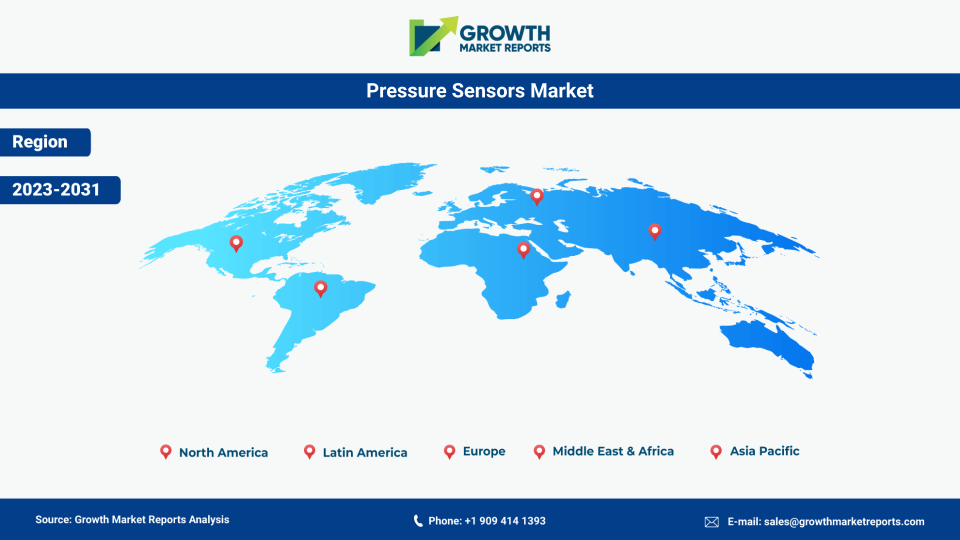
Asia Pacific leads the global market, driven by strong manufacturing bases in China, Japan, and South Korea. North America and Europe follow, benefiting from advanced healthcare, technology, and regulatory standards. The Middle East & Africa and Latin America are experiencing steady growth due to infrastructure development and smart technology adoption.
The automotive sector uses pressure sensors for tire pressure monitoring, engine oil and fuel systems, brake functions, emission control, and advanced driver-assistance systems (ADAS). The shift to electric and autonomous vehicles is further increasing demand for sophisticated pressure sensors.
Common pressure sensor technologies include piezoresistive (high sensitivity, miniaturization), capacitive (low power, stability), electromagnetic (immunity to interference), optical (non-contact, precise), resonant solid-state (high accuracy, long-term stability), and emerging MEMS-based and wireless sensors.
The market is segmented into absolute pressure sensors, gauge pressure sensors, differential pressure sensors, and sealed pressure sensors. Each type serves specific applications, such as barometric measurement, automotive systems, HVAC, industrial process control, and harsh environments.
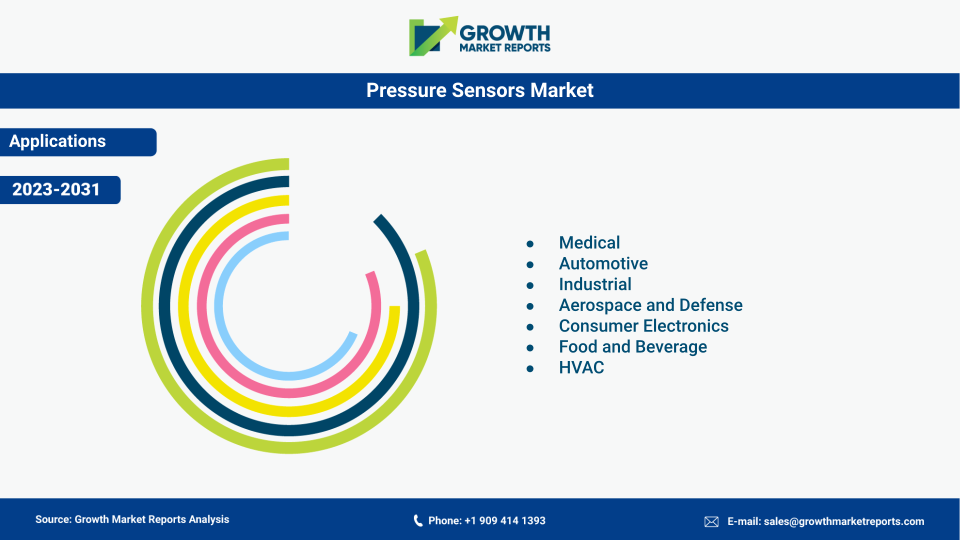
Key industries fueling demand for pressure sensors include automotive (for safety and electrification), healthcare (for non-invasive monitoring devices), industrial automation (for process control and predictive maintenance), consumer electronics (for smart devices), oil & gas, and aerospace & defense.
The global pressure sensors market reached USD 19.1 billion in 2024 and is projected to grow to USD 36.2 billion by 2033, at a CAGR of 7.4%. Growth is driven by expanding applications in automotive, healthcare, industrial automation, and consumer electronics, as well as the adoption of IoT and Industry 4.0.