Piezoresistive Pressure Sensors Market Research Report 2033

Piezoresistive Pressure Sensors Market Research Report 2033

Segments - by Product Type (Absolute Pressure Sensors, Gauge Pressure Sensors, Differential Pressure Sensors), by Material (Silicon, Ceramic, Metal, Others), by Application (Automotive, Healthcare, Industrial, Consumer Electronics, Aerospace & Defense, Oil & Gas, Others), by End-User (OEMs, Aftermarket)

https://growthmarketreports.com/Raksha
Author : Raksha Sharma
https://growthmarketreports.com/Vaibhav
Fact-checked by : V. Chandola
https://growthmarketreports.com/Shruti
Editor : Shruti Bhat

Upcoming | Report ID :ICT-SE-1061 | 4.6 Rating | 70 Reviews | 287 Pages | Format : Docx PDF

Report Description


Piezoresistive Pressure Sensors Market Outlook

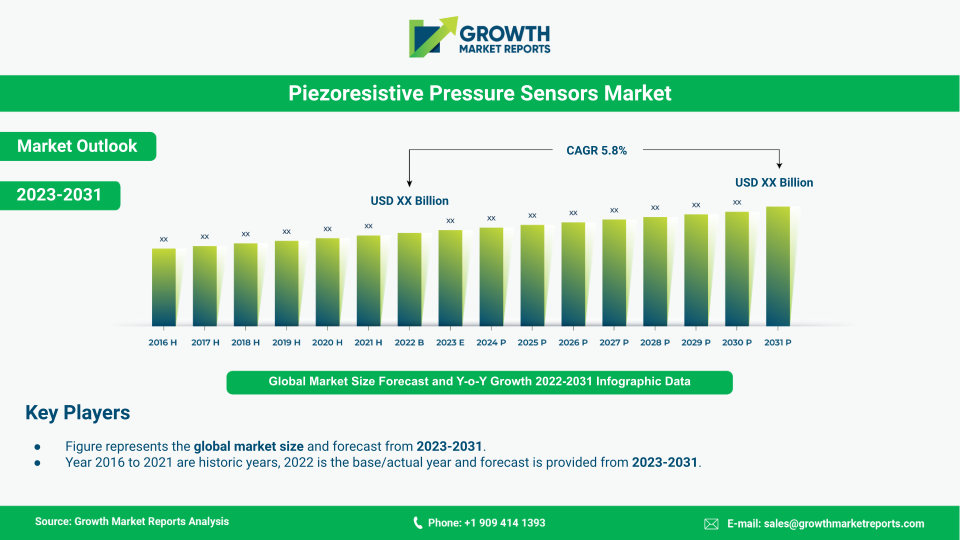
According to our latest research, the global piezoresistive pressure sensors market size reached USD 2.45 billion in 2024, reflecting robust expansion driven by technological advancements and increasing demand across multiple sectors. The market is experiencing a healthy CAGR of 7.2% and is projected to attain a value of USD 4.68 billion by 2033. This growth is primarily attributed to the expanding adoption of smart sensor technologies, rising integration in automotive safety systems, and the proliferation of connected devices in industrial and healthcare applications. As per our comprehensive analysis, the piezoresistive pressure sensors market is set to witness sustained momentum, supported by ongoing innovations and a growing emphasis on automation and digitalization worldwide.

The piezoresistive pressure sensors market is being propelled by several significant growth drivers. Foremost among these is the escalating demand from the automotive industry, where these sensors play a crucial role in applications such as tire pressure monitoring systems (TPMS), engine control, and advanced driver-assistance systems (ADAS). The automotive sector’s shift toward electrification and autonomous vehicles has further intensified the need for precise and reliable pressure measurement solutions. Additionally, stringent regulatory standards regarding vehicle safety and emissions have mandated the integration of advanced sensor technologies, thereby boosting the adoption of piezoresistive pressure sensors. The integration of these sensors ensures enhanced vehicle performance, safety, and compliance, which collectively fuel market expansion.

Another key growth factor is the rapid digital transformation in the industrial and healthcare sectors. In industrial automation, piezoresistive pressure sensors are vital for monitoring and controlling processes, ensuring operational efficiency, and minimizing downtime. The ongoing Industry 4.0 revolution has led to the widespread deployment of sensor-based systems for predictive maintenance, real-time monitoring, and data-driven decision-making. In the healthcare sector, the demand for miniaturized and highly accurate sensors is increasing, especially for applications such as blood pressure monitoring, respiratory devices, and infusion pumps. The growing prevalence of chronic diseases and the need for continuous patient monitoring are accelerating the adoption of piezoresistive pressure sensors in medical devices, thus driving market growth.

Technological advancements and the evolution of material science have also played a pivotal role in shaping the piezoresistive pressure sensors market. The development of new materials such as silicon-on-insulator (SOI), ceramics, and advanced metals has led to the creation of sensors with enhanced sensitivity, durability, and reliability. These innovations have expanded the applicability of piezoresistive pressure sensors in harsh environments, such as oil and gas exploration, aerospace, and defense. Improved manufacturing processes have also enabled cost reductions and mass production, making these sensors more accessible to a broader range of end-users. As industries increasingly prioritize automation, efficiency, and safety, the demand for robust and high-performance piezoresistive pressure sensors continues to rise.

From a regional perspective, Asia Pacific remains the dominant market for piezoresistive pressure sensors, accounting for the largest share in 2024. This is largely due to the region’s thriving automotive manufacturing sector, rapid industrialization, and significant investments in healthcare infrastructure. North America and Europe also represent substantial markets, driven by technological innovation, regulatory compliance, and strong presence of key industry players. The Middle East & Africa and Latin America are witnessing steady growth, supported by expanding industrial activities and increased adoption of automation technologies. The global landscape is characterized by diverse growth patterns, with each region contributing uniquely to the overall expansion of the piezoresistive pressure sensors market.

Global Piezoresistive Pressure Sensors Industry Outlook

Product Type Analysis

The product type segment in the piezoresistive pressure sensors market is categorized into absolute pressure sensors, gauge pressure sensors, and differential pressure sensors. Absolute pressure sensors measure pressure relative to a perfect vacuum, making them indispensable in applications where atmospheric pressure variations must be accounted for, such as aerospace and meteorology. These sensors are extensively used in environments requiring high precision, as they provide consistent and accurate readings regardless of external atmospheric changes. The demand for absolute pressure sensors is further fueled by their widespread adoption in industrial automation and process control, where maintaining optimal pressure levels is critical for safety and efficiency.

Gauge pressure sensors, which measure pressure relative to atmospheric pressure, are the most commonly used type in automotive, healthcare, and consumer electronics applications. Their popularity stems from their versatility and cost-effectiveness, as they are suitable for a wide range of everyday applications, including tire pressure monitoring, HVAC systems, and medical devices. The increasing production of vehicles equipped with advanced safety features and the growing trend of smart home devices have significantly contributed to the rising demand for gauge pressure sensors. These sensors offer reliable performance, ease of integration, and are often preferred for their compatibility with various end-use environments.

Differential pressure sensors, on the other hand, measure the difference between two pressure points and are crucial in applications where monitoring pressure variations across filters, membranes, or flow systems is necessary. Industries such as oil and gas, pharmaceuticals, and industrial manufacturing heavily rely on differential pressure sensors for process optimization, leak detection, and safety assurance. The adoption of differential pressure sensors is being driven by the increasing focus on energy efficiency, regulatory compliance, and the need for precise control in complex industrial processes. These sensors are engineered to withstand challenging operating conditions, ensuring long-term reliability and accuracy.

Overall, the product type segment is witnessing dynamic growth, with each category catering to specific application requirements and industry demands. The ongoing advancements in sensor design, miniaturization, and connectivity are further expanding the scope of piezoresistive pressure sensors across diverse sectors. As industries continue to embrace smart technologies and automation, the demand for high-performance and application-specific pressure sensors is expected to surge, reinforcing the pivotal role of product type segmentation in shaping the market landscape.

Report Scope

Attributes Details
Report Title Piezoresistive Pressure Sensors Market Research Report 2033
By Product Type Absolute Pressure Sensors, Gauge Pressure Sensors, Differential Pressure Sensors
By Material Silicon, Ceramic, Metal, Others
By Application Automotive, Healthcare, Industrial, Consumer Electronics, Aerospace & Defense, Oil & Gas, Others
By End-User OEMs, Aftermarket
Regions Covered North America, Europe, APAC, Latin America, MEA
Base Year 2024
Historic Data 2018-2023
Forecast Period 2025-2033
Number of Pages 287
Number of Tables & Figures 323
Customization Available Yes, the report can be customized as per your need.

Material Analysis

The material segment in the piezoresistive pressure sensors market comprises silicon, ceramic, metal, and others. Silicon-based sensors dominate the market due to their exceptional sensitivity, miniaturization capabilities, and compatibility with microelectromechanical systems (MEMS) technology. The widespread adoption of silicon as a primary material is attributed to its favorable electrical properties, cost-effectiveness, and ease of integration into compact electronic devices. Silicon piezoresistive pressure sensors are extensively used in automotive, consumer electronics, and medical applications, where high precision and reliability are paramount. The continuous innovation in silicon processing and fabrication techniques is further enhancing the performance and affordability of these sensors.

Ceramic materials are gaining traction in the piezoresistive pressure sensors market, particularly in applications requiring high durability, chemical resistance, and stability under extreme conditions. Ceramic sensors are preferred in industrial, oil and gas, and aerospace sectors, where exposure to harsh environments and corrosive substances is common. These sensors offer superior mechanical strength, long operational life, and resistance to temperature fluctuations, making them ideal for demanding applications. The increasing focus on industrial safety, process efficiency, and environmental monitoring is driving the adoption of ceramic-based piezoresistive pressure sensors, contributing to the diversification of material usage in the market.

Metal-based piezoresistive pressure sensors, though less prevalent than silicon and ceramic variants, are essential in specific applications that require robust construction and high-pressure tolerance. Metals such as stainless steel and titanium are utilized to manufacture sensors for use in hydraulic systems, marine equipment, and heavy machinery. The inherent strength and durability of metal sensors allow them to withstand high-pressure environments and mechanical stress, ensuring consistent performance over extended periods. The demand for metal-based sensors is particularly strong in sectors where reliability and longevity are critical, such as aerospace, defense, and industrial automation.

Other materials, including advanced composites and hybrid materials, are being explored to address emerging application requirements and performance challenges. These materials offer unique combinations of properties, such as enhanced flexibility, reduced weight, and improved resistance to environmental factors. The ongoing research and development in material science are expected to yield innovative sensor solutions that cater to the evolving needs of various industries. The material segment’s diversity underscores the importance of selecting the appropriate material based on specific application criteria, operational conditions, and regulatory standards, thereby influencing the overall growth and competitiveness of the piezoresistive pressure sensors market.

Application Analysis

The application segment of the piezoresistive pressure sensors market encompasses automotive, healthcare, industrial, consumer electronics, aerospace & defense, oil & gas, and others. Automotive applications represent a significant share of the market, driven by the integration of pressure sensors in systems such as engine management, fuel injection, brake control, and tire pressure monitoring. The automotive industry’s relentless pursuit of safety, efficiency, and emissions reduction has made piezoresistive pressure sensors indispensable components in modern vehicles. The rise of electric and autonomous vehicles is further amplifying sensor demand, as these vehicles rely on advanced monitoring and control systems to ensure optimal performance and passenger safety.

In the healthcare sector, piezoresistive pressure sensors are critical for medical devices that require accurate and real-time pressure measurements, such as blood pressure monitors, ventilators, infusion pumps, and minimally invasive surgical instruments. The growing prevalence of chronic diseases, aging populations, and the increasing adoption of remote patient monitoring solutions are driving the demand for reliable and miniaturized pressure sensors in healthcare applications. These sensors enable healthcare providers to deliver precise diagnostics, monitor patient conditions continuously, and improve treatment outcomes, thereby enhancing the overall quality of care.

Industrial applications constitute another major segment, with piezoresistive pressure sensors being utilized for process control, automation, predictive maintenance, and safety monitoring in manufacturing plants, chemical processing facilities, and energy production units. The advent of Industry 4.0 and the digitalization of industrial operations have accelerated the deployment of sensor-based systems for data-driven decision-making, efficiency optimization, and risk mitigation. The ability of piezoresistive pressure sensors to operate reliably in harsh environments and provide accurate measurements under varying conditions makes them essential tools for industrial automation and process management.

Consumer electronics, aerospace & defense, and oil & gas applications also contribute significantly to the market’s growth. In consumer electronics, the proliferation of smart devices, wearables, and home automation systems has spurred the integration of compact and energy-efficient pressure sensors. Aerospace & defense sectors rely on piezoresistive pressure sensors for altitude measurement, cabin pressure control, and fuel system monitoring, where precision and reliability are non-negotiable. The oil & gas industry employs these sensors for exploration, drilling, and pipeline monitoring, ensuring operational safety and compliance with environmental regulations. The diverse application landscape highlights the versatility and indispensability of piezoresistive pressure sensors across multiple domains.

End-User Analysis

The end-user segment of the piezoresistive pressure sensors market is bifurcated into OEMs (Original Equipment Manufacturers) and aftermarket. OEMs constitute the primary end-users, accounting for a substantial share of the market due to their direct integration of pressure sensors into new products and systems. Automotive, industrial, healthcare, and consumer electronics manufacturers rely on OEM-supplied sensors to ensure the performance, safety, and compliance of their offerings. The growing trend of product customization, technological innovation, and the need for differentiated features are driving OEMs to collaborate closely with sensor manufacturers, fostering innovation and enhancing market competitiveness.

The aftermarket segment, while smaller in comparison, plays a crucial role in the replacement, maintenance, and upgrade of pressure sensors in existing equipment and systems. Aftermarket demand is particularly strong in the automotive and industrial sectors, where regular maintenance and component replacement are essential for ensuring operational reliability and extending the lifespan of assets. The increasing adoption of predictive maintenance strategies, supported by sensor-based monitoring, is driving the growth of the aftermarket segment. Additionally, the proliferation of do-it-yourself (DIY) solutions and the rising awareness of the benefits of sensor upgrades are contributing to the expansion of the aftermarket landscape.

OEMs are increasingly focusing on the development of application-specific and customized sensor solutions to address the unique requirements of different industries and end-users. This trend is fostering greater collaboration between sensor manufacturers, system integrators, and end-users, leading to the creation of innovative and value-added products. OEMs’ emphasis on quality assurance, regulatory compliance, and technological differentiation is shaping the competitive dynamics of the market, with leading players investing heavily in research and development to maintain their market leadership.

The aftermarket segment is also witnessing significant transformation, driven by advancements in sensor technology, ease of installation, and the growing availability of online distribution channels. The emergence of smart diagnostic tools and remote monitoring solutions is enabling end-users to identify sensor-related issues proactively and undertake timely replacements or upgrades. The aftermarket’s role in supporting operational continuity, reducing downtime, and optimizing asset performance underscores its importance in the overall piezoresistive pressure sensors market ecosystem.

Opportunities & Threats

The piezoresistive pressure sensors market is poised for substantial opportunities, particularly with the accelerating adoption of Industry 4.0 and the Internet of Things (IoT). As industries worldwide embrace digital transformation, the demand for intelligent sensor solutions capable of real-time data acquisition, remote monitoring, and predictive analytics is soaring. Piezoresistive pressure sensors, with their high sensitivity, miniaturization potential, and integration capabilities, are ideally suited to meet the evolving needs of smart factories, connected vehicles, and digital healthcare systems. The proliferation of IoT-enabled devices and the increasing focus on automation, efficiency, and safety are expected to create lucrative growth avenues for sensor manufacturers and solution providers.

Emerging applications in wearables, environmental monitoring, and renewable energy sectors also present significant opportunities for the piezoresistive pressure sensors market. The growing consumer preference for health and fitness tracking devices, coupled with rising environmental awareness, is driving the integration of pressure sensors in innovative applications such as smartwatches, air quality monitors, and weather stations. The renewable energy sector, particularly wind and solar power generation, relies on pressure sensors for monitoring and optimizing system performance. The convergence of advanced materials, sensor miniaturization, and wireless connectivity is enabling the development of next-generation sensor solutions, opening new frontiers for market expansion.

Despite the promising outlook, the market faces certain restraining factors, primarily related to pricing pressures, technical limitations, and intense competition. The commoditization of sensor technologies and the presence of low-cost alternatives have intensified price competition, impacting profit margins for manufacturers. Technical challenges such as signal drift, temperature sensitivity, and long-term stability can affect sensor performance and reliability, particularly in demanding applications. Additionally, the rapid pace of technological change necessitates continuous investment in research and development, posing challenges for smaller players to keep pace with industry leaders. Addressing these restraining factors through innovation, quality assurance, and customer-centric solutions is crucial for sustaining long-term growth in the piezoresistive pressure sensors market.

Regional Outlook

The Asia Pacific region dominates the global piezoresistive pressure sensors market, accounting for the largest share of approximately USD 980 million in 2024. This dominance is attributed to the region’s robust automotive manufacturing sector, rapid industrialization, and significant investments in healthcare and consumer electronics. China, Japan, South Korea, and India are the key contributors, driven by their strong manufacturing capabilities, technological innovation, and growing adoption of smart technologies. The region’s focus on infrastructure development, renewable energy, and environmental monitoring is further fueling the demand for advanced pressure sensor solutions. With a projected CAGR of 8.1% through 2033, Asia Pacific is expected to maintain its leadership position in the global market.

North America is another prominent market, valued at USD 670 million in 2024, supported by the presence of leading sensor manufacturers, advanced technological infrastructure, and stringent regulatory standards. The region’s automotive, aerospace, and healthcare sectors are major consumers of piezoresistive pressure sensors, driven by the need for high-performance, reliable, and compliant solutions. The increasing adoption of IoT, smart manufacturing, and connected healthcare systems is further boosting market growth in North America. The United States and Canada are at the forefront of innovation, with continuous investments in research and development, product differentiation, and strategic collaborations shaping the regional market dynamics.

Europe, with a market size of USD 540 million in 2024, is characterized by a strong focus on industrial automation, environmental sustainability, and regulatory compliance. Germany, France, and the United Kingdom are the leading markets, driven by their advanced manufacturing sectors, emphasis on energy efficiency, and technological leadership. The region’s commitment to reducing carbon emissions, improving industrial safety, and enhancing healthcare infrastructure is driving the adoption of piezoresistive pressure sensors. Latin America and the Middle East & Africa, with market sizes of USD 150 million and USD 110 million respectively, are experiencing steady growth, supported by expanding industrial activities, infrastructure development, and increasing awareness of the benefits of sensor technologies. The regional outlook underscores the diverse growth patterns and opportunities across the global piezoresistive pressure sensors market.

Piezoresistive Pressure Sensors Market Statistics

Competitor Outlook

The competitive landscape of the piezoresistive pressure sensors market is characterized by the presence of several global and regional players, each striving to enhance their market position through product innovation, strategic partnerships, and geographic expansion. Leading companies are investing heavily in research and development to develop advanced sensor solutions with improved accuracy, reliability, and miniaturization. The focus on application-specific and customized sensor offerings is intensifying competition, as manufacturers seek to address the unique requirements of diverse end-users. The market is witnessing increased collaboration between sensor manufacturers, system integrators, and technology providers, fostering innovation and accelerating the adoption of smart sensor solutions.

Mergers and acquisitions, joint ventures, and strategic alliances are prevalent strategies among key players to expand their product portfolios, enter new markets, and strengthen their technological capabilities. The emphasis on quality assurance, regulatory compliance, and customer-centric solutions is shaping the competitive dynamics, with companies striving to differentiate themselves through value-added features, superior performance, and comprehensive support services. The growing importance of digitalization, connectivity, and data analytics is prompting market leaders to integrate advanced technologies such as artificial intelligence, machine learning, and wireless communication into their sensor solutions, enhancing their value proposition and market appeal.

The competitive environment is also influenced by the entry of new players and startups, particularly in emerging markets, who are leveraging innovative business models, cost-effective manufacturing, and agile development processes to capture market share. While established players benefit from brand recognition, extensive distribution networks, and strong customer relationships, new entrants are driving disruption through technological innovation, rapid prototyping, and competitive pricing. The ability to respond to evolving market trends, anticipate customer needs, and deliver high-quality, reliable sensor solutions will be critical for success in the increasingly competitive piezoresistive pressure sensors market.

Major companies operating in the piezoresistive pressure sensors market include Honeywell International Inc., Bosch Sensortec GmbH, STMicroelectronics N.V., TE Connectivity Ltd., Amphenol Corporation, NXP Semiconductors N.V., Infineon Technologies AG, Sensata Technologies, Inc., and First Sensor AG. Honeywell is renowned for its broad portfolio of high-performance pressure sensors catering to automotive, industrial, and aerospace applications. Bosch Sensortec is a leader in MEMS-based sensor solutions, with a strong focus on automotive and consumer electronics markets. STMicroelectronics and NXP Semiconductors are at the forefront of innovation, offering advanced sensor technologies for a wide range of applications. TE Connectivity and Amphenol Corporation are recognized for their robust and reliable sensor offerings, particularly in industrial and harsh environment applications. Infineon Technologies, Sensata Technologies, and First Sensor AG are also prominent players, known for their commitment to quality, innovation, and customer satisfaction. The collective efforts of these industry leaders are shaping the future of the piezoresistive pressure sensors market, driving technological progress and expanding the scope of sensor applications across the globe.

Key Players

  • Honeywell International Inc.
  • TE Connectivity Ltd.
  • Bosch Sensortec GmbH
  • STMicroelectronics N.V.
  • NXP Semiconductors N.V.
  • Sensata Technologies, Inc.
  • Amphenol Advanced Sensors
  • Infineon Technologies AG
  • Omron Corporation
  • ABB Ltd.
  • First Sensor AG
  • Keller AG für Druckmesstechnik
  • Measurement Specialties, Inc.
  • Murata Manufacturing Co., Ltd.
  • Texas Instruments Incorporated
  • BD|SENSORS GmbH
  • GE Measurement & Control Solutions
  • Smiths Interconnect
  • Melexis NV
  • Analog Devices, Inc.
Piezoresistive Pressure Sensors Market Overview

Segments

The Piezoresistive Pressure Sensors market has been segmented on the basis of

Product Type

  • Absolute Pressure Sensors
  • Gauge Pressure Sensors
  • Differential Pressure Sensors

Material

  • Silicon
  • Ceramic
  • Metal
  • Others

Application

  • Automotive
  • Healthcare
  • Industrial
  • Consumer Electronics
  • Aerospace & Defense
  • Oil & Gas
  • Others

End-User

  • OEMs
  • Aftermarket

Competitive Landscape

Some of the major players in the market are BD Sensors GmBH, Metallux SA, First Sensor AG, Honeywell International Inc., Impress Sensors and Systems Ltd.

Low power consumption and the lowest possible size range of piezo resistive sensors are the key factors that are providing a competitive edge to industry players.
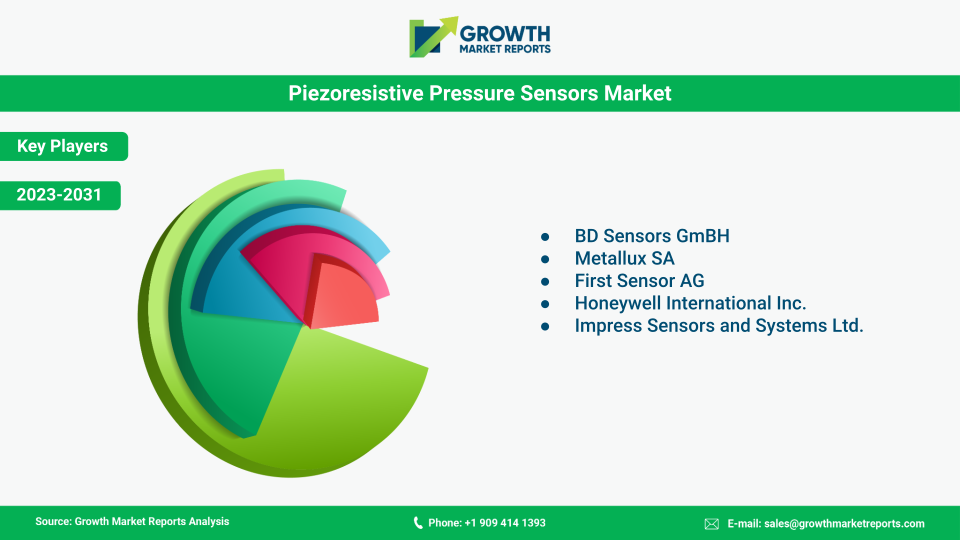

 Piezoresistive Pressure Sensors Market Key Players

Frequently Asked Questions

Technological advancements in materials, miniaturization, wireless connectivity, and integration with AI and IoT are expanding sensor applications, improving performance, and driving market growth.

OEMs integrate pressure sensors directly into new products and systems, accounting for a major market share, while the aftermarket focuses on replacement, maintenance, and upgrades of sensors in existing equipment.

Key players include Honeywell International Inc., TE Connectivity Ltd., Bosch Sensortec GmbH, STMicroelectronics N.V., NXP Semiconductors N.V., Sensata Technologies, Amphenol Advanced Sensors, Infineon Technologies AG, and others.

Opportunities include the adoption of Industry 4.0, IoT, wearables, and renewable energy applications. Challenges involve pricing pressures, technical limitations like signal drift, and intense market competition.

Asia Pacific is the dominant region, accounting for the largest market share in 2024, driven by robust automotive manufacturing, rapid industrialization, and significant investments in healthcare and electronics.

Common materials include silicon, ceramic, and metal. Silicon dominates due to its sensitivity and compatibility with MEMS technology, while ceramics and metals are used for durability and high-pressure applications.

The main types are absolute pressure sensors, gauge pressure sensors, and differential pressure sensors, each serving specific application needs across various industries.

Major industries using piezoresistive pressure sensors include automotive, healthcare, industrial automation, consumer electronics, aerospace & defense, and oil & gas.

Key growth drivers include technological advancements, rising demand in automotive safety systems, increased adoption in industrial automation and healthcare, and the proliferation of connected devices.

The global piezoresistive pressure sensors market reached USD 2.45 billion in 2024 and is projected to grow at a CAGR of 7.2%, attaining a value of USD 4.68 billion by 2033.

Table Of Content

Chapter 1 Executive Summary
Chapter 2 Assumptions and Acronyms Used
Chapter 3 Research Methodology
Chapter 4 Piezoresistive Pressure Sensors Market Overview
   4.1 Introduction
      4.1.1 Market Taxonomy
      4.1.2 Market Definition
      4.1.3 Macro-Economic Factors Impacting the Market Growth
   4.2 Piezoresistive Pressure Sensors Market Dynamics
      4.2.1 Market Drivers
      4.2.2 Market Restraints
      4.2.3 Market Opportunity
   4.3 Piezoresistive Pressure Sensors Market - Supply Chain Analysis
      4.3.1 List of Key Suppliers
      4.3.2 List of Key Distributors
      4.3.3 List of Key Consumers
   4.4 Key Forces Shaping the Piezoresistive Pressure Sensors Market
      4.4.1 Bargaining Power of Suppliers
      4.4.2 Bargaining Power of Buyers
      4.4.3 Threat of Substitution
      4.4.4 Threat of New Entrants
      4.4.5 Competitive Rivalry
   4.5 Global Piezoresistive Pressure Sensors Market Size & Forecast, 2023-2032
      4.5.1 Piezoresistive Pressure Sensors Market Size and Y-o-Y Growth
      4.5.2 Piezoresistive Pressure Sensors Market Absolute $ Opportunity

Chapter 5 Global Piezoresistive Pressure Sensors Market Analysis and Forecast By Product Type
   5.1 Introduction
      5.1.1 Key Market Trends & Growth Opportunities By Product Type
      5.1.2 Basis Point Share (BPS) Analysis By Product Type
      5.1.3 Absolute $ Opportunity Assessment By Product Type
   5.2 Piezoresistive Pressure Sensors Market Size Forecast By Product Type
      5.2.1 Absolute Pressure Sensors
      5.2.2 Gauge Pressure Sensors
      5.2.3 Differential Pressure Sensors
   5.3 Market Attractiveness Analysis By Product Type

Chapter 6 Global Piezoresistive Pressure Sensors Market Analysis and Forecast By Material
   6.1 Introduction
      6.1.1 Key Market Trends & Growth Opportunities By Material
      6.1.2 Basis Point Share (BPS) Analysis By Material
      6.1.3 Absolute $ Opportunity Assessment By Material
   6.2 Piezoresistive Pressure Sensors Market Size Forecast By Material
      6.2.1 Silicon
      6.2.2 Ceramic
      6.2.3 Metal
      6.2.4 Others
   6.3 Market Attractiveness Analysis By Material

Chapter 7 Global Piezoresistive Pressure Sensors Market Analysis and Forecast By Application
   7.1 Introduction
      7.1.1 Key Market Trends & Growth Opportunities By Application
      7.1.2 Basis Point Share (BPS) Analysis By Application
      7.1.3 Absolute $ Opportunity Assessment By Application
   7.2 Piezoresistive Pressure Sensors Market Size Forecast By Application
      7.2.1 Automotive
      7.2.2 Healthcare
      7.2.3 Industrial
      7.2.4 Consumer Electronics
      7.2.5 Aerospace & Defense
      7.2.6 Oil & Gas
      7.2.7 Others
   7.3 Market Attractiveness Analysis By Application

Chapter 8 Global Piezoresistive Pressure Sensors Market Analysis and Forecast By End-User
   8.1 Introduction
      8.1.1 Key Market Trends & Growth Opportunities By End-User
      8.1.2 Basis Point Share (BPS) Analysis By End-User
      8.1.3 Absolute $ Opportunity Assessment By End-User
   8.2 Piezoresistive Pressure Sensors Market Size Forecast By End-User
      8.2.1 OEMs
      8.2.2 Aftermarket
   8.3 Market Attractiveness Analysis By End-User

Chapter 9 Global Piezoresistive Pressure Sensors Market Analysis and Forecast by Region
   9.1 Introduction
      9.1.1 Key Market Trends & Growth Opportunities By Region
      9.1.2 Basis Point Share (BPS) Analysis By Region
      9.1.3 Absolute $ Opportunity Assessment By Region
   9.2 Piezoresistive Pressure Sensors Market Size Forecast By Region
      9.2.1 North America
      9.2.2 Europe
      9.2.3 Asia Pacific
      9.2.4 Latin America
      9.2.5 Middle East & Africa (MEA)
   9.3 Market Attractiveness Analysis By Region

Chapter 10 Coronavirus Disease (COVID-19) Impact 
   10.1 Introduction 
   10.2 Current & Future Impact Analysis 
   10.3 Economic Impact Analysis 
   10.4 Government Policies 
   10.5 Investment Scenario

Chapter 11 North America Piezoresistive Pressure Sensors Analysis and Forecast
   11.1 Introduction
   11.2 North America Piezoresistive Pressure Sensors Market Size Forecast by Country
      11.2.1 U.S.
      11.2.2 Canada
   11.3 Basis Point Share (BPS) Analysis by Country
   11.4 Absolute $ Opportunity Assessment by Country
   11.5 Market Attractiveness Analysis by Country
   11.6 North America Piezoresistive Pressure Sensors Market Size Forecast By Product Type
      11.6.1 Absolute Pressure Sensors
      11.6.2 Gauge Pressure Sensors
      11.6.3 Differential Pressure Sensors
   11.7 Basis Point Share (BPS) Analysis By Product Type 
   11.8 Absolute $ Opportunity Assessment By Product Type 
   11.9 Market Attractiveness Analysis By Product Type
   11.10 North America Piezoresistive Pressure Sensors Market Size Forecast By Material
      11.10.1 Silicon
      11.10.2 Ceramic
      11.10.3 Metal
      11.10.4 Others
   11.11 Basis Point Share (BPS) Analysis By Material 
   11.12 Absolute $ Opportunity Assessment By Material 
   11.13 Market Attractiveness Analysis By Material
   11.14 North America Piezoresistive Pressure Sensors Market Size Forecast By Application
      11.14.1 Automotive
      11.14.2 Healthcare
      11.14.3 Industrial
      11.14.4 Consumer Electronics
      11.14.5 Aerospace & Defense
      11.14.6 Oil & Gas
      11.14.7 Others
   11.15 Basis Point Share (BPS) Analysis By Application 
   11.16 Absolute $ Opportunity Assessment By Application 
   11.17 Market Attractiveness Analysis By Application
   11.18 North America Piezoresistive Pressure Sensors Market Size Forecast By End-User
      11.18.1 OEMs
      11.18.2 Aftermarket
   11.19 Basis Point Share (BPS) Analysis By End-User 
   11.20 Absolute $ Opportunity Assessment By End-User 
   11.21 Market Attractiveness Analysis By End-User

Chapter 12 Europe Piezoresistive Pressure Sensors Analysis and Forecast
   12.1 Introduction
   12.2 Europe Piezoresistive Pressure Sensors Market Size Forecast by Country
      12.2.1 Germany
      12.2.2 France
      12.2.3 Italy
      12.2.4 U.K.
      12.2.5 Spain
      12.2.6 Russia
      12.2.7 Rest of Europe
   12.3 Basis Point Share (BPS) Analysis by Country
   12.4 Absolute $ Opportunity Assessment by Country
   12.5 Market Attractiveness Analysis by Country
   12.6 Europe Piezoresistive Pressure Sensors Market Size Forecast By Product Type
      12.6.1 Absolute Pressure Sensors
      12.6.2 Gauge Pressure Sensors
      12.6.3 Differential Pressure Sensors
   12.7 Basis Point Share (BPS) Analysis By Product Type 
   12.8 Absolute $ Opportunity Assessment By Product Type 
   12.9 Market Attractiveness Analysis By Product Type
   12.10 Europe Piezoresistive Pressure Sensors Market Size Forecast By Material
      12.10.1 Silicon
      12.10.2 Ceramic
      12.10.3 Metal
      12.10.4 Others
   12.11 Basis Point Share (BPS) Analysis By Material 
   12.12 Absolute $ Opportunity Assessment By Material 
   12.13 Market Attractiveness Analysis By Material
   12.14 Europe Piezoresistive Pressure Sensors Market Size Forecast By Application
      12.14.1 Automotive
      12.14.2 Healthcare
      12.14.3 Industrial
      12.14.4 Consumer Electronics
      12.14.5 Aerospace & Defense
      12.14.6 Oil & Gas
      12.14.7 Others
   12.15 Basis Point Share (BPS) Analysis By Application 
   12.16 Absolute $ Opportunity Assessment By Application 
   12.17 Market Attractiveness Analysis By Application
   12.18 Europe Piezoresistive Pressure Sensors Market Size Forecast By End-User
      12.18.1 OEMs
      12.18.2 Aftermarket
   12.19 Basis Point Share (BPS) Analysis By End-User 
   12.20 Absolute $ Opportunity Assessment By End-User 
   12.21 Market Attractiveness Analysis By End-User

Chapter 13 Asia Pacific Piezoresistive Pressure Sensors Analysis and Forecast
   13.1 Introduction
   13.2 Asia Pacific Piezoresistive Pressure Sensors Market Size Forecast by Country
      13.2.1 China
      13.2.2 Japan
      13.2.3 South Korea
      13.2.4 India
      13.2.5 Australia
      13.2.6 South East Asia (SEA)
      13.2.7 Rest of Asia Pacific (APAC)
   13.3 Basis Point Share (BPS) Analysis by Country
   13.4 Absolute $ Opportunity Assessment by Country
   13.5 Market Attractiveness Analysis by Country
   13.6 Asia Pacific Piezoresistive Pressure Sensors Market Size Forecast By Product Type
      13.6.1 Absolute Pressure Sensors
      13.6.2 Gauge Pressure Sensors
      13.6.3 Differential Pressure Sensors
   13.7 Basis Point Share (BPS) Analysis By Product Type 
   13.8 Absolute $ Opportunity Assessment By Product Type 
   13.9 Market Attractiveness Analysis By Product Type
   13.10 Asia Pacific Piezoresistive Pressure Sensors Market Size Forecast By Material
      13.10.1 Silicon
      13.10.2 Ceramic
      13.10.3 Metal
      13.10.4 Others
   13.11 Basis Point Share (BPS) Analysis By Material 
   13.12 Absolute $ Opportunity Assessment By Material 
   13.13 Market Attractiveness Analysis By Material
   13.14 Asia Pacific Piezoresistive Pressure Sensors Market Size Forecast By Application
      13.14.1 Automotive
      13.14.2 Healthcare
      13.14.3 Industrial
      13.14.4 Consumer Electronics
      13.14.5 Aerospace & Defense
      13.14.6 Oil & Gas
      13.14.7 Others
   13.15 Basis Point Share (BPS) Analysis By Application 
   13.16 Absolute $ Opportunity Assessment By Application 
   13.17 Market Attractiveness Analysis By Application
   13.18 Asia Pacific Piezoresistive Pressure Sensors Market Size Forecast By End-User
      13.18.1 OEMs
      13.18.2 Aftermarket
   13.19 Basis Point Share (BPS) Analysis By End-User 
   13.20 Absolute $ Opportunity Assessment By End-User 
   13.21 Market Attractiveness Analysis By End-User

Chapter 14 Latin America Piezoresistive Pressure Sensors Analysis and Forecast
   14.1 Introduction
   14.2 Latin America Piezoresistive Pressure Sensors Market Size Forecast by Country
      14.2.1 Brazil
      14.2.2 Mexico
      14.2.3 Rest of Latin America (LATAM)
   14.3 Basis Point Share (BPS) Analysis by Country
   14.4 Absolute $ Opportunity Assessment by Country
   14.5 Market Attractiveness Analysis by Country
   14.6 Latin America Piezoresistive Pressure Sensors Market Size Forecast By Product Type
      14.6.1 Absolute Pressure Sensors
      14.6.2 Gauge Pressure Sensors
      14.6.3 Differential Pressure Sensors
   14.7 Basis Point Share (BPS) Analysis By Product Type 
   14.8 Absolute $ Opportunity Assessment By Product Type 
   14.9 Market Attractiveness Analysis By Product Type
   14.10 Latin America Piezoresistive Pressure Sensors Market Size Forecast By Material
      14.10.1 Silicon
      14.10.2 Ceramic
      14.10.3 Metal
      14.10.4 Others
   14.11 Basis Point Share (BPS) Analysis By Material 
   14.12 Absolute $ Opportunity Assessment By Material 
   14.13 Market Attractiveness Analysis By Material
   14.14 Latin America Piezoresistive Pressure Sensors Market Size Forecast By Application
      14.14.1 Automotive
      14.14.2 Healthcare
      14.14.3 Industrial
      14.14.4 Consumer Electronics
      14.14.5 Aerospace & Defense
      14.14.6 Oil & Gas
      14.14.7 Others
   14.15 Basis Point Share (BPS) Analysis By Application 
   14.16 Absolute $ Opportunity Assessment By Application 
   14.17 Market Attractiveness Analysis By Application
   14.18 Latin America Piezoresistive Pressure Sensors Market Size Forecast By End-User
      14.18.1 OEMs
      14.18.2 Aftermarket
   14.19 Basis Point Share (BPS) Analysis By End-User 
   14.20 Absolute $ Opportunity Assessment By End-User 
   14.21 Market Attractiveness Analysis By End-User

Chapter 15 Middle East & Africa (MEA) Piezoresistive Pressure Sensors Analysis and Forecast
   15.1 Introduction
   15.2 Middle East & Africa (MEA) Piezoresistive Pressure Sensors Market Size Forecast by Country
      15.2.1 Saudi Arabia
      15.2.2 South Africa
      15.2.3 UAE
      15.2.4 Rest of Middle East & Africa (MEA)
   15.3 Basis Point Share (BPS) Analysis by Country
   15.4 Absolute $ Opportunity Assessment by Country
   15.5 Market Attractiveness Analysis by Country
   15.6 Middle East & Africa (MEA) Piezoresistive Pressure Sensors Market Size Forecast By Product Type
      15.6.1 Absolute Pressure Sensors
      15.6.2 Gauge Pressure Sensors
      15.6.3 Differential Pressure Sensors
   15.7 Basis Point Share (BPS) Analysis By Product Type 
   15.8 Absolute $ Opportunity Assessment By Product Type 
   15.9 Market Attractiveness Analysis By Product Type
   15.10 Middle East & Africa (MEA) Piezoresistive Pressure Sensors Market Size Forecast By Material
      15.10.1 Silicon
      15.10.2 Ceramic
      15.10.3 Metal
      15.10.4 Others
   15.11 Basis Point Share (BPS) Analysis By Material 
   15.12 Absolute $ Opportunity Assessment By Material 
   15.13 Market Attractiveness Analysis By Material
   15.14 Middle East & Africa (MEA) Piezoresistive Pressure Sensors Market Size Forecast By Application
      15.14.1 Automotive
      15.14.2 Healthcare
      15.14.3 Industrial
      15.14.4 Consumer Electronics
      15.14.5 Aerospace & Defense
      15.14.6 Oil & Gas
      15.14.7 Others
   15.15 Basis Point Share (BPS) Analysis By Application 
   15.16 Absolute $ Opportunity Assessment By Application 
   15.17 Market Attractiveness Analysis By Application
   15.18 Middle East & Africa (MEA) Piezoresistive Pressure Sensors Market Size Forecast By End-User
      15.18.1 OEMs
      15.18.2 Aftermarket
   15.19 Basis Point Share (BPS) Analysis By End-User 
   15.20 Absolute $ Opportunity Assessment By End-User 
   15.21 Market Attractiveness Analysis By End-User

Chapter 16 Competition Landscape 
   16.1 Piezoresistive Pressure Sensors Market: Competitive Dashboard
   16.2 Global Piezoresistive Pressure Sensors Market: Market Share Analysis, 2023
   16.3 Company Profiles (Details – Overview, Financials, Developments, Strategy) 
      16.3.1 Honeywell International Inc.
TE Connectivity Ltd.
Bosch Sensortec GmbH
STMicroelectronics N.V.
NXP Semiconductors N.V.
Sensata Technologies, Inc.
Amphenol Advanced Sensors
Infineon Technologies AG
Omron Corporation
ABB Ltd.
First Sensor AG
Keller AG für Druckmesstechnik
Measurement Specialties, Inc.
Murata Manufacturing Co., Ltd.
Texas Instruments Incorporated
BD|SENSORS GmbH
GE Measurement & Control Solutions
Smiths Interconnect
Melexis NV
Analog Devices, Inc.

Methodology

Our Clients

Nestle SA
General Electric
Microsoft
Pfizer
sinopec
Deloitte
Honda Motor Co. Ltd.
Dassault Aviation