Segments - by Component (Hardware, Software, Services), by Technology (iBeacon, Eddystone, AltBeacon, Others), by Application (Retail, Healthcare, Transportation and Logistics, Hospitality, Education, Others), by End-User (Retailers, Enterprises, Airports, Museums, Others)
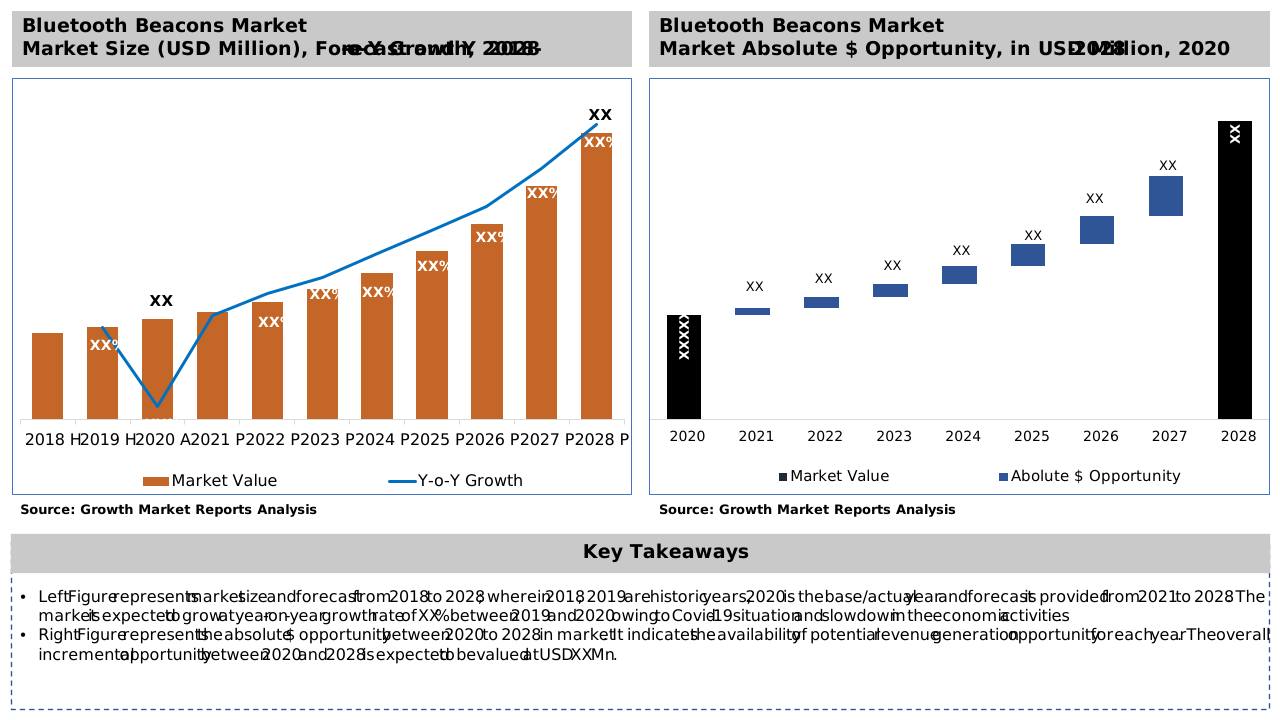
According to our latest research, the global Bluetooth Beacons market size in 2024 stands at USD 2.7 billion, with a robust compound annual growth rate (CAGR) of 21.3% expected over the forecast period. By 2033, the market is projected to reach approximately USD 18.1 billion. This impressive growth trajectory is driven primarily by the increasing adoption of location-based services across industries, coupled with advancements in proximity marketing and the proliferation of IoT-enabled devices. The integration of Bluetooth Beacons into smart environments is revolutionizing how businesses interact with consumers and optimize their operations, thus fueling sustained market expansion.
One of the primary growth factors for the Bluetooth Beacons market is the rising demand for real-time location-based marketing and personalized customer engagement. Retailers and enterprises are leveraging Bluetooth Beacons to send targeted advertisements, promotions, and notifications directly to customersÂ’ smartphones as they move through physical spaces. This capability not only enhances the customer experience but also provides valuable data insights into consumer behavior and preferences. The retail sector, in particular, is witnessing a significant transformation, with Bluetooth Beacons playing a pivotal role in bridging the gap between online and offline experiences, driving higher conversion rates and improving customer retention.
Another significant driver is the increasing deployment of Bluetooth Beacons in the healthcare and transportation sectors. In healthcare, Bluetooth Beacons are being utilized for asset tracking, patient monitoring, and navigation within large hospital campuses. These solutions help reduce operational inefficiencies, improve patient outcomes, and ensure better resource management. Similarly, in transportation and logistics, Bluetooth Beacons facilitate real-time tracking of goods, fleet management, and enhanced passenger experiences in airports and public transit systems. The ability to deliver precise location data and enable seamless connectivity is positioning Bluetooth Beacons as a critical enabler of digital transformation across diverse industry verticals.
Technological advancements and the evolution of Bluetooth standards have further accelerated market growth. The introduction of low-energy Bluetooth (BLE) has significantly extended the battery life of Beacons, making them more cost-effective and easier to maintain. Additionally, the emergence of advanced protocols such as iBeacon, Eddystone, and AltBeacon has expanded the range of applications and interoperability across devices and platforms. As IoT adoption continues to surge and smart infrastructure projects gain momentum, the demand for scalable and secure Bluetooth Beacon solutions is expected to soar, creating new opportunities for market participants and stakeholders.
From a regional perspective, North America currently dominates the Bluetooth Beacons market, accounting for the largest revenue share in 2024, followed closely by Europe and Asia Pacific. The region's leadership is attributed to the early adoption of innovative retail technologies, a strong presence of leading market players, and widespread investment in smart infrastructure. However, the Asia Pacific region is anticipated to exhibit the fastest CAGR during the forecast period, fueled by rapid urbanization, growing retail and hospitality sectors, and increasing government initiatives to promote digital transformation. As market awareness spreads and cost barriers diminish, emerging economies in Latin America and the Middle East & Africa are also poised to witness substantial growth in Bluetooth Beacon deployments.
As the Bluetooth Beacons market continues to expand, the role of a BLE Beacon Management Platform becomes increasingly significant. These platforms provide a centralized solution for managing and monitoring Beacon networks, offering features such as remote configuration, real-time analytics, and seamless integration with existing IT systems. By utilizing a BLE Beacon Management Platform, businesses can optimize their Beacon deployments, ensuring efficient operation and maximizing the return on investment. These platforms also facilitate the deployment of large-scale Beacon networks, enabling organizations to easily scale their operations and adapt to changing business needs. As the demand for location-based services grows, the importance of robust management platforms will continue to rise, driving further innovation and adoption in the market.
The Bluetooth Beacons market is segmented by component into hardware, software, and services, each playing a distinct yet complementary role in the overall ecosystem. Hardware forms the foundation of the market, encompassing the physical Beacon devices that transmit signals to nearby smartphones and connected devices. The ongoing evolution of Beacon hardware, including improvements in battery life, miniaturization, and ruggedization, has made deployment feasible across a broader range of environments. Hardware manufacturers are increasingly focusing on developing energy-efficient and cost-effective solutions to cater to the growing demand in retail, healthcare, and industrial applications. Additionally, advancements in chipsets and sensor integration are enhancing the capabilities of Beacon devices, enabling more precise location tracking and richer data collection.
Software is equally critical, serving as the bridge between Beacon hardware and end-user applications. Software platforms manage Beacon configurations, data analytics, and integration with mobile applications and enterprise systems. The rise of cloud-based Beacon management solutions has simplified large-scale deployments, allowing organizations to remotely monitor and update their Beacon networks. Furthermore, software innovations are driving the development of advanced features such as geofencing, proximity-based notifications, and real-time analytics dashboards. As businesses seek to extract actionable insights from Beacon-generated data, the demand for robust and scalable software solutions is expected to grow, fostering intense competition and innovation among software vendors.
The services segment encompasses a wide array of offerings, including consulting, deployment, maintenance, and managed services. As organizations increasingly adopt Bluetooth Beacons, the complexity of designing, installing, and maintaining large-scale networks has given rise to a thriving services market. Service providers assist clients in selecting the right hardware and software, designing optimal Beacon layouts, and ensuring seamless integration with existing IT infrastructure. Additionally, ongoing support and maintenance services are crucial for maximizing uptime and ensuring the longevity of Beacon deployments. The services segment is expected to witness steady growth as enterprises prioritize operational efficiency and seek expert guidance in navigating the rapidly evolving Beacon landscape.
The interplay between hardware, software, and services is shaping the competitive dynamics of the Bluetooth Beacons market. Companies that offer integrated solutions encompassing all three components are gaining a competitive edge by delivering comprehensive value propositions to their customers. Strategic partnerships between hardware manufacturers, software developers, and service providers are becoming increasingly common, enabling the creation of end-to-end Beacon solutions tailored to specific industry needs. As the market matures, the emphasis on interoperability, scalability, and security will drive further convergence across the component segments, fostering a more cohesive and resilient Beacon ecosystem.
In the realm of Bluetooth technology, the BLE Sniffer emerges as a crucial tool for developers and network administrators. A BLE Sniffer allows for the monitoring and analysis of Bluetooth Low Energy communications, providing insights into data packets and protocol interactions. This capability is essential for troubleshooting connectivity issues, optimizing network performance, and ensuring the security of Beacon deployments. By capturing and decoding BLE signals, a BLE Sniffer aids in the development and testing of Beacon applications, enabling developers to fine-tune their solutions for optimal performance. As the Bluetooth Beacons market grows, the demand for advanced diagnostic tools like BLE Sniffers is expected to increase, supporting the ongoing evolution and refinement of Beacon technologies.
| Attributes | Details |
| Report Title | Bluetooth Beacons Market Research Report 2033 |
| By Component | Hardware, Software, Services |
| By Technology | iBeacon, Eddystone, AltBeacon, Others |
| By Application | Retail, Healthcare, Transportation and Logistics, Hospitality, Education, Others |
| By End-User | Retailers, Enterprises, Airports, Museums, Others |
| Regions Covered | North America, Europe, APAC, Latin America, MEA |
| Base Year | 2024 |
| Historic Data | 2018-2023 |
| Forecast Period | 2025-2033 |
| Number of Pages | 253 |
| Number of Tables & Figures | 391 |
| Customization Available | Yes, the report can be customized as per your need. |
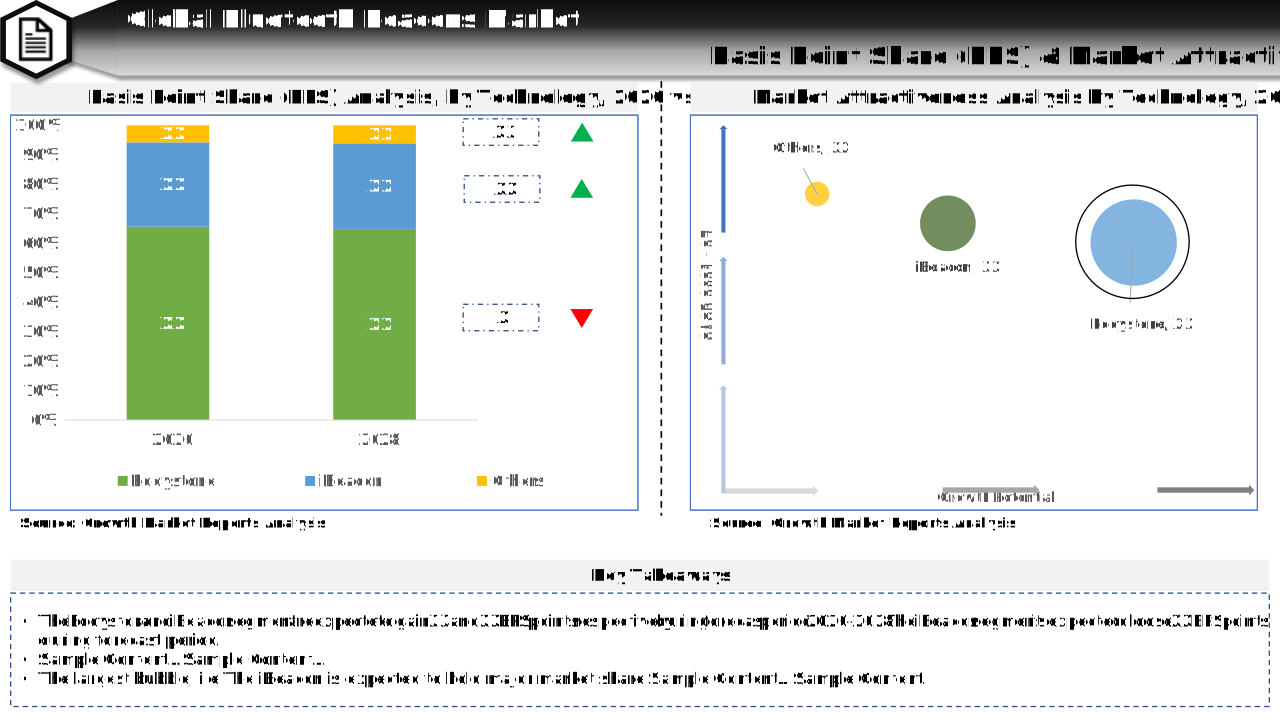
The Bluetooth Beacons market is characterized by a diverse array of technologies, with iBeacon, Eddystone, AltBeacon, and other protocols forming the backbone of Beacon communication. iBeacon, introduced by Apple, remains one of the most widely adopted protocols, particularly in the retail and hospitality sectors. Its seamless integration with iOS devices and robust developer support have made it a preferred choice for proximity marketing and indoor navigation applications. iBeacon's simplicity, reliability, and widespread compatibility continue to drive its adoption, especially among businesses seeking to enhance customer engagement and streamline in-store experiences.
Eddystone, developed by Google, has gained significant traction due to its open-source nature and cross-platform compatibility. Unlike iBeacon, Eddystone supports multiple frame types, enabling a broader range of use cases such as URL broadcasting, telemetry data transmission, and secure communication. The flexibility and extensibility of Eddystone have made it a popular choice for developers and enterprises looking to implement advanced Beacon-based solutions. Its ability to work seamlessly with both Android and iOS devices has contributed to its growing adoption in sectors such as transportation, education, and smart cities, where interoperability is paramount.
AltBeacon, an open and interoperable protocol developed by Radius Networks, addresses the need for a vendor-neutral alternative to proprietary Beacon technologies. AltBeacon is designed to promote interoperability across different Beacon hardware and software platforms, reducing vendor lock-in and enhancing flexibility for end-users. Its adoption is particularly notable in enterprise environments and large-scale deployments where compatibility and scalability are critical considerations. As the demand for open standards continues to rise, AltBeacon is poised to play an increasingly important role in shaping the future of the Bluetooth Beacons market.
Beyond these leading protocols, the market is witnessing the emergence of other proprietary and specialized technologies tailored to specific applications and industry requirements. Innovations in Beacon firmware, security features, and data transmission protocols are expanding the capabilities of Bluetooth Beacons, enabling new use cases such as asset tracking, environmental monitoring, and contactless access control. As organizations seek to leverage the full potential of Beacon technology, the emphasis on interoperability, security, and scalability will drive ongoing innovation and differentiation among Beacon technology providers.
The Bluetooth Beacons market is segmented by application into Retail, Healthcare, Transportation and Logistics, Hospitality, Education, and others, each presenting unique opportunities and challenges. Retail remains the dominant application segment, accounting for the largest share of Beacon deployments. Retailers are utilizing Bluetooth Beacons to deliver personalized promotions, facilitate indoor navigation, and gather valuable data on customer movement and preferences. The ability to enhance the in-store experience and drive higher conversion rates has made Beacon technology an indispensable tool for brick-and-mortar retailers seeking to compete with e-commerce platforms.
In the healthcare sector, Bluetooth Beacons are transforming patient care and operational efficiency. Hospitals and clinics are deploying Beacons for asset tracking, patient wayfinding, and real-time monitoring of medical equipment and personnel. These applications help reduce wait times, minimize equipment loss, and improve overall patient outcomes. The integration of Beacon technology with electronic health records (EHR) and hospital management systems is further enhancing the value proposition for healthcare providers, driving increased adoption across the sector.
The transportation and logistics segment is experiencing rapid growth as organizations seek to optimize supply chain operations and improve passenger experiences. Bluetooth Beacons are being used to track goods and shipments in real time, streamline warehouse operations, and provide location-based information to travelers in airports and transit hubs. The ability to deliver timely and accurate information is enhancing operational visibility and efficiency, making Beacon technology a key enabler of digital transformation in the transportation and logistics industry.
Hospitality and education are also emerging as significant application areas for Bluetooth Beacons. Hotels and resorts are deploying Beacons to offer personalized guest services, automate check-in/check-out processes, and enable location-based promotions and notifications. In educational institutions, Beacons are being used for attendance tracking, campus navigation, and enhancing student engagement through interactive learning experiences. As the benefits of Beacon technology become more widely recognized, adoption is expected to accelerate across a growing number of verticals, driving sustained market growth.
The Bluetooth Beacons market serves a diverse range of end-users, including Retailers, Enterprises, Airports, Museums, and others, each with distinct requirements and use cases. Retailers represent the largest end-user group, leveraging Beacon technology to deliver targeted promotions, improve store navigation, and gain insights into customer behavior. The ability to create personalized shopping experiences and drive higher engagement is prompting retailers to invest heavily in Beacon deployments, particularly in competitive markets where differentiation is key.
Enterprises across various industries are adopting Bluetooth Beacons to enhance operational efficiency, improve workplace safety, and enable seamless access control. In office environments, Beacons are being used for employee tracking, meeting room management, and visitor authentication. The integration of Beacon technology with enterprise resource planning (ERP) and building management systems is further expanding its utility, enabling organizations to optimize resource allocation and streamline facility operations.
Airports are emerging as a significant end-user segment, utilizing Bluetooth Beacons to enhance passenger experiences and improve operational efficiency. Beacons are being deployed for indoor navigation, real-time flight updates, and personalized notifications, helping travelers navigate complex airport environments with ease. The ability to deliver context-aware information and services is driving increased adoption of Beacon technology in the aviation sector, with airports worldwide investing in large-scale Beacon networks.
Museums and cultural institutions are leveraging Bluetooth Beacons to create interactive and immersive visitor experiences. Beacons enable location-based content delivery, guiding visitors through exhibits and providing detailed information on artifacts and displays. This technology is enhancing visitor engagement and enabling museums to offer personalized tours and educational experiences. As awareness of the benefits of Beacon technology grows, adoption among museums and other public venues is expected to rise, contributing to the overall expansion of the market.
The Bluetooth Beacons market presents a wealth of opportunities for innovation and growth, particularly as businesses increasingly recognize the value of location-based services and proximity marketing. The integration of Beacon technology with IoT platforms and smart infrastructure projects is opening up new avenues for application, ranging from smart cities and connected transportation systems to intelligent retail environments and healthcare facilities. As the ecosystem matures, opportunities abound for solution providers to develop tailored offerings that address the unique needs of specific industries and use cases, driving differentiation and competitive advantage.
Another significant opportunity lies in the convergence of Bluetooth Beacons with emerging technologies such as artificial intelligence, machine learning, and augmented reality. By combining Beacon-generated data with advanced analytics and immersive user experiences, businesses can unlock new levels of personalization and engagement. The growing focus on data-driven decision-making and the increasing availability of real-time analytics tools are further enhancing the value proposition of Beacon technology, positioning it as a critical enabler of digital transformation across sectors.
Despite the promising outlook, the Bluetooth Beacons market faces several restraining factors that could impede growth. Security and privacy concerns remain a significant challenge, particularly as organizations collect and process large volumes of location-based data. Ensuring robust data protection measures and compliance with regulatory frameworks such as GDPR is essential to building trust among end-users and stakeholders. Additionally, interoperability issues and the lack of standardized protocols can hinder seamless integration and limit the scalability of Beacon deployments. Addressing these challenges will be critical to sustaining long-term market growth and unlocking the full potential of Bluetooth Beacons technology.
The North America region leads the global Bluetooth Beacons market, accounting for a market size of approximately USD 980 million in 2024. This dominance is attributed to the regionÂ’s early adoption of digital technologies, a strong focus on customer experience innovation, and significant investments in retail and smart infrastructure. The United States, in particular, is witnessing widespread Beacon deployments across retail chains, airports, and healthcare facilities, driving sustained demand for advanced Beacon solutions. As businesses continue to prioritize data-driven strategies and personalized engagement, North America is expected to maintain its leadership position throughout the forecast period.
Europe follows closely, with a market size of around USD 710 million in 2024. The regionÂ’s growth is supported by the rapid adoption of proximity marketing solutions, robust regulatory frameworks, and a strong emphasis on data privacy and security. Countries such as the United Kingdom, Germany, and France are at the forefront of Beacon deployments, particularly in retail, transportation, and cultural institutions. The increasing focus on smart city initiatives and public sector digitalization is expected to drive further market expansion, with Europe projected to achieve a CAGR of 20.1% over the forecast period.
The Asia Pacific region is poised for the fastest growth, with a market value of USD 650 million in 2024 and a projected CAGR exceeding 24% through 2033. Rapid urbanization, expanding retail and hospitality sectors, and government initiatives to promote digital infrastructure are fueling Beacon adoption across countries such as China, Japan, South Korea, and India. The regionÂ’s large population base and increasing smartphone penetration present significant opportunities for Beacon solution providers, with demand expected to surge as businesses seek to enhance customer engagement and operational efficiency. Latin America and the Middle East & Africa, while currently accounting for smaller shares of the global market, are also expected to witness steady growth as awareness and adoption of Beacon technology continue to rise.
The Bluetooth Beacons market is characterized by intense competition and a dynamic landscape, with numerous players vying for market share through innovation, strategic partnerships, and mergers and acquisitions. Leading companies are focusing on expanding their product portfolios, enhancing interoperability, and developing integrated solutions that combine hardware, software, and services. The market is witnessing a trend towards consolidation, as established players acquire niche technology providers to strengthen their capabilities and broaden their geographic reach. Competitive differentiation is increasingly driven by the ability to deliver scalable, secure, and cost-effective Beacon solutions tailored to specific industry needs.
Innovation remains at the core of the competitive landscape, with companies investing heavily in research and development to stay ahead of evolving customer demands and technological advancements. The integration of artificial intelligence, machine learning, and real-time analytics into Beacon solutions is enabling vendors to offer enhanced value propositions, such as predictive analytics, personalized recommendations, and advanced security features. As the market matures, the emphasis on open standards, interoperability, and seamless integration with existing IT infrastructure is expected to drive further competition and collaboration among market participants.
Strategic partnerships and alliances are playing a critical role in shaping the competitive dynamics of the Bluetooth Beacons market. Hardware manufacturers, software developers, and service providers are joining forces to deliver end-to-end solutions that address the diverse needs of customers across industries. These collaborations are enabling companies to leverage complementary strengths, accelerate time-to-market, and tap into new customer segments. As the market continues to evolve, the ability to forge strong partnerships and build robust ecosystems will be a key determinant of long-term success.
Some of the major players in the Bluetooth Beacons market include Estimote, Inc., Kontakt.io, BlueCats, Gimbal, Inc., Radius Networks, Inc., Sensoro Co., Ltd., Beaconinside GmbH, and Blue Sense Networks. Estimote, Inc. is renowned for its innovative Beacon hardware and software solutions, catering to retail, hospitality, and enterprise clients worldwide. Kontakt.io is a leading provider of IoT and location-based services, offering a comprehensive suite of Beacon devices and management platforms. BlueCats specializes in industrial-grade Beacons and asset tracking solutions, serving clients in logistics, manufacturing, and healthcare. Gimbal, Inc. focuses on proximity marketing and location intelligence, enabling businesses to deliver personalized customer experiences and actionable insights.
Radius Networks, Inc. is a pioneer in open Beacon standards and interoperability, with a strong presence in the hospitality and retail sectors. Sensoro Co., Ltd. offers a wide range of Beacon hardware and IoT solutions, with a focus on smart city and industrial applications. Beaconinside GmbH is known for its advanced Beacon management software and analytics platforms, supporting large-scale deployments in Europe and beyond. Blue Sense Networks specializes in secure and scalable Beacon solutions for enterprise and public sector clients, with a growing footprint in North America and Europe. These companies, along with numerous emerging players, are driving innovation and shaping the future of the Bluetooth Beacons market through continuous product development, strategic partnerships, and a relentless focus on customer value.
The Bluetooth Beacons market has been segmented on the basis of
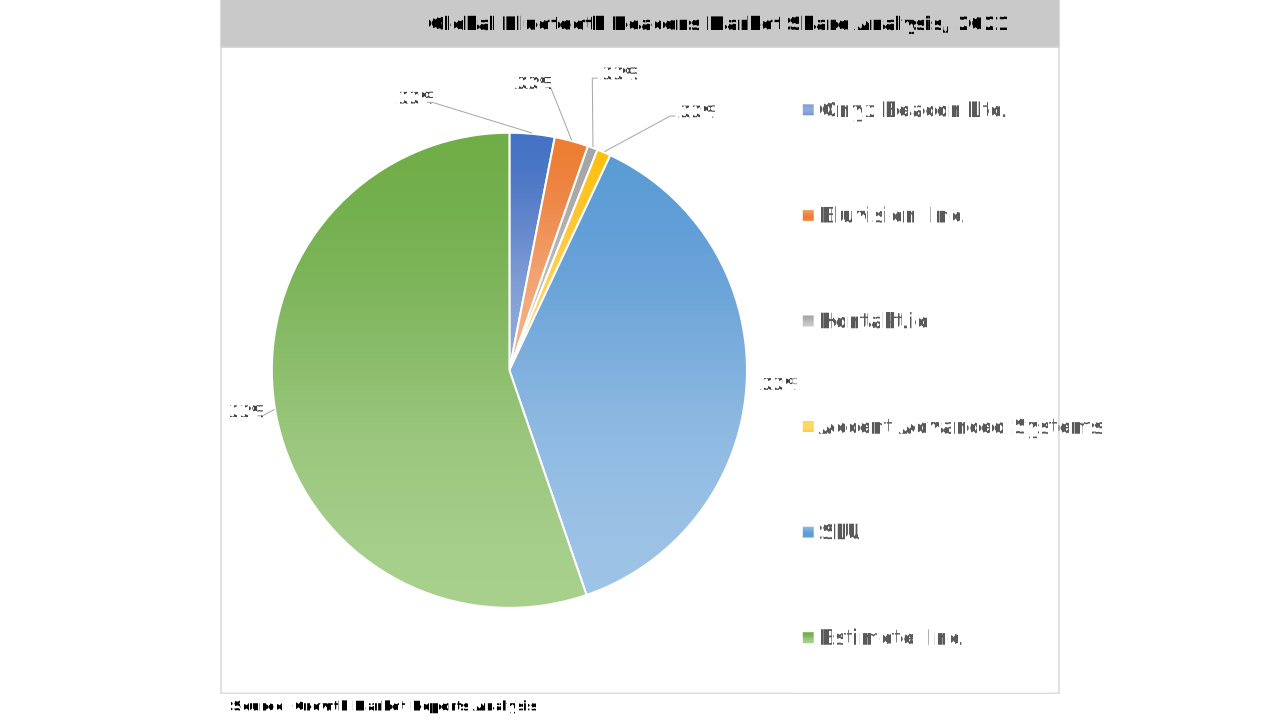
Key players in the global Bluetooth beacons market include Onyx Beacon Ltd., Bluvision, Inc., Kontakt.io, Accent Advanced Systems, SLU, and Estimote, Inc. Major players are partnering with application developers and end-use industries to increase their geographical reach. Sellers are concentrating on the beacon platform, which helps in beacon campaign and management.
Technological advancements such as low-energy Bluetooth (BLE), improved battery life, miniaturization, enhanced security, and integration with AI and IoT platforms are expanding the capabilities and adoption of Bluetooth Beacons.
Key challenges include security and privacy concerns, interoperability issues, lack of standardized protocols, and the need for robust data protection and regulatory compliance.
Key companies include Estimote, Inc., Kontakt.io, BlueCats, Gimbal, Inc., Radius Networks, Inc., Sensoro Co., Ltd., Beaconinside GmbH, Blue Sense Networks, and global tech giants like Apple Inc., Google LLC, and Cisco Systems, Inc.
North America currently leads the market, followed by Europe and Asia Pacific. The Asia Pacific region is expected to experience the fastest growth due to rapid urbanization and expanding digital infrastructure.
Key applications include proximity marketing, indoor navigation, asset tracking, real-time analytics, patient monitoring, fleet management, and personalized customer engagement.
The leading protocols are iBeacon (Apple), Eddystone (Google), and AltBeacon (Radius Networks), each offering unique features for interoperability, cross-platform compatibility, and advanced use cases.
The market is segmented into hardware (Beacon devices), software (management platforms and analytics), and services (consulting, deployment, maintenance, and managed services).
Retail, healthcare, transportation and logistics, hospitality, and education are among the leading industries leveraging Bluetooth Beacons for applications like personalized marketing, asset tracking, indoor navigation, and operational efficiency.
Major growth drivers include the increasing adoption of location-based services, advancements in proximity marketing, proliferation of IoT-enabled devices, and integration into smart environments across industries such as retail, healthcare, and transportation.
As of 2024, the global Bluetooth Beacons market is valued at USD 2.7 billion and is projected to reach approximately USD 18.1 billion by 2033.