Light Switches and Electrical Sockets Market Research Report 2033

Light Switches and Electrical Sockets Market Research Report 2033

Segments - by Product Type (Traditional Switches, Smart Switches, Traditional Sockets, Smart Sockets), by Material (Plastic, Metal, Others), by Application (Residential, Commercial, Industrial, Others), by Distribution Channel (Online, Offline)

https://growthmarketreports.com/Debadatta
Author : Debadatta Patel
https://growthmarketreports.com/Vaibhav
Fact-checked by : V. Chandola
https://growthmarketreports.com/Shruti
Editor : Shruti Bhat

Upcoming | Report ID :CG-5932 | 4.2 Rating | 54 Reviews | 290 Pages | Format : Docx PDF

Report Description


Light Switches and Electrical Sockets Market Outlook

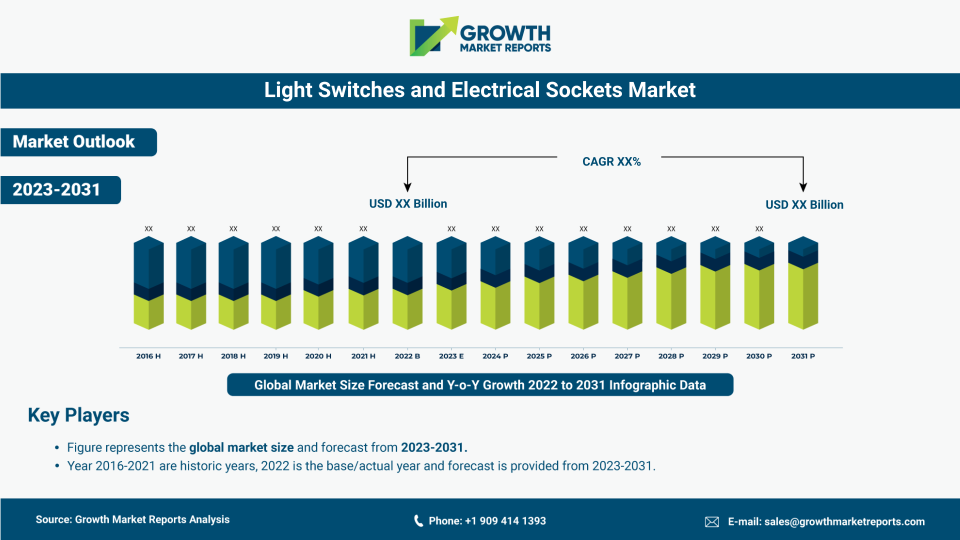
According to our latest research, the global light switches and electrical sockets market size reached USD 16.2 billion in 2024. The market is experiencing a robust expansion, with a recorded CAGR of 5.4% from 2025 to 2033. Based on this growth trajectory, the market is projected to attain a value of USD 25.6 billion by 2033. This positive outlook is primarily driven by the increasing adoption of smart home technologies, rapid urbanization, and the ongoing modernization of commercial and residential infrastructure worldwide. The demand for both traditional and smart switches and sockets is accelerating as consumers and businesses seek enhanced safety, convenience, and energy efficiency in their electrical systems.

One of the primary growth factors propelling the light switches and electrical sockets market is the global surge in urbanization and infrastructure development. As more people migrate to urban areas, there is a heightened demand for new housing, commercial spaces, and industrial facilities, all of which require reliable electrical systems. Governments and private sectors are heavily investing in smart city projects, which integrate advanced electrical solutions, including smart switches and sockets, to optimize energy consumption and improve the quality of life. This trend is particularly prominent in emerging economies across Asia Pacific and Latin America, where rapid urban growth is reshaping the landscape and creating lucrative opportunities for market players.

Another significant driver is the increasing consumer inclination toward smart home automation. With the proliferation of IoT devices and advancements in wireless communication technologies, homeowners are increasingly adopting smart switches and sockets that offer remote control, energy monitoring, and automation features. These products not only enhance convenience but also contribute to energy conservation and improved home security. Manufacturers are responding by developing innovative solutions that are compatible with voice assistants and mobile apps, further fueling market growth. Additionally, the rising awareness of electrical safety standards and the need for reliable power infrastructure are prompting upgrades and replacements of outdated switches and sockets in both residential and commercial settings.

Sustainability and energy efficiency are also playing a pivotal role in shaping the market dynamics. Regulatory bodies across the globe are implementing stringent energy efficiency standards and promoting the use of eco-friendly materials in electrical components. This is encouraging manufacturers to invest in research and development, focusing on the creation of durable, recyclable, and energy-efficient switches and sockets. The integration of smart energy management systems in commercial and industrial buildings is further boosting demand for advanced electrical solutions. As a result, the market is witnessing a shift toward products that not only meet functional requirements but also align with global sustainability goals.

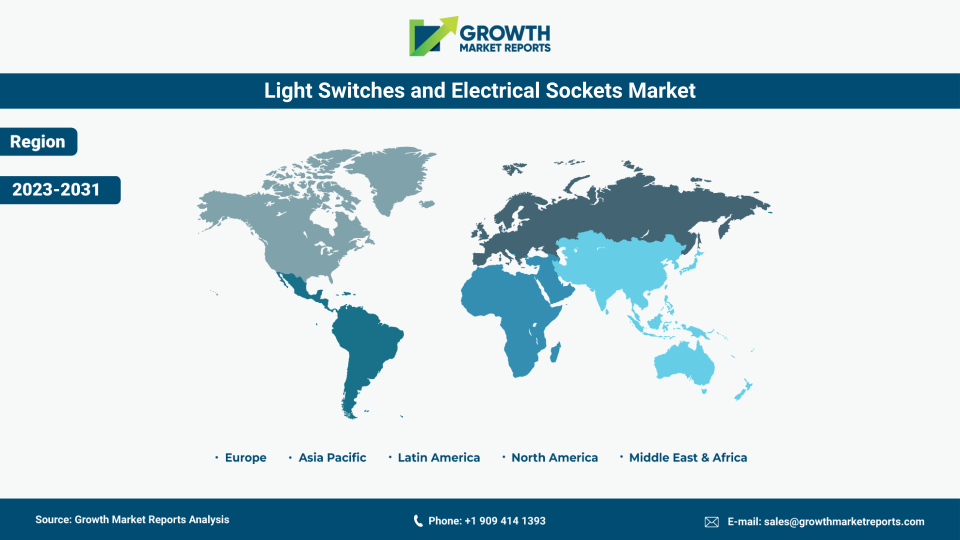
From a regional perspective, the Asia Pacific region is emerging as a dominant force in the light switches and electrical sockets market, driven by rapid urbanization, infrastructural investments, and a burgeoning middle class with increasing purchasing power. North America and Europe are also significant markets, characterized by high adoption rates of smart home technologies and a strong emphasis on safety standards. Meanwhile, the Middle East & Africa and Latin America are experiencing steady growth, supported by ongoing construction activities and efforts to upgrade existing electrical infrastructure. Each region presents unique opportunities and challenges, underscoring the need for tailored strategies by market participants.

Global Light Switches and Electrical Sockets Industry Outlook

Product Type Analysis

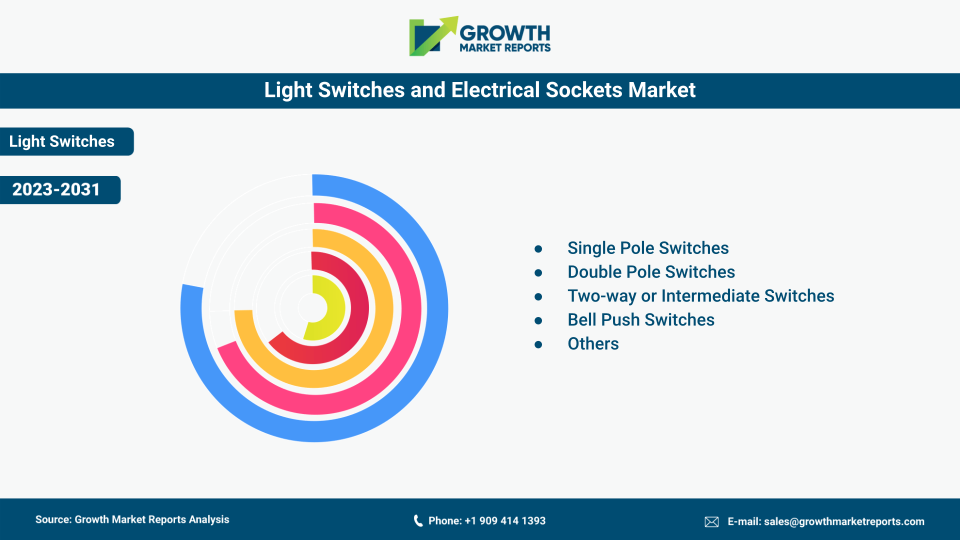
The light switches and electrical sockets market is segmented by product type into traditional switches, smart switches, traditional sockets, and smart sockets. Traditional switches and sockets continue to hold a significant share of the market, particularly in regions with established infrastructure where replacement and retrofitting activities are prevalent. These products are valued for their reliability, affordability, and ease of installation, making them a preferred choice for residential and small commercial projects. However, their growth is relatively steady compared to their smart counterparts, as the market gradually shifts toward more advanced solutions.

Smart switches and sockets are witnessing exponential growth, driven by the rising adoption of home automation and IoT-enabled devices. These products offer features such as remote control via smartphones, integration with voice assistants like Alexa and Google Assistant, and energy usage monitoring. The convenience and energy-saving benefits provided by smart switches and sockets are resonating with tech-savvy consumers and environmentally conscious businesses. Manufacturers are investing heavily in R&D to introduce products with enhanced connectivity, security, and compatibility, further accelerating the transition toward smart electrical solutions in both residential and commercial sectors.

The industrial sector is also embracing smart switches and sockets to optimize energy management, improve operational efficiency, and enhance workplace safety. Industrial smart sockets are equipped with advanced features such as overload protection, real-time monitoring, and automated shutdown capabilities, reducing the risk of electrical hazards and equipment damage. As industries move toward digitalization and smart manufacturing, the demand for intelligent electrical infrastructure is expected to surge, creating new growth avenues for market players specializing in industrial-grade smart switches and sockets.

Despite the growing popularity of smart products, traditional switches and sockets remain indispensable, especially in price-sensitive markets and regions with limited access to advanced technology. Manufacturers are responding by offering hybrid solutions that combine the reliability of traditional products with select smart features, catering to a broader customer base. This approach is helping to bridge the gap between legacy systems and modern requirements, ensuring a smooth transition for consumers and businesses alike.

Report Scope

Attributes Details
Report Title Light Switches and Electrical Sockets Market Research Report 2033
By Product Type Traditional Switches, Smart Switches, Traditional Sockets, Smart Sockets
By Material Plastic, Metal, Others
By Application Residential, Commercial, Industrial, Others
By Distribution Channel Online, Offline
Regions Covered North America, Europe, APAC, Latin America, MEA
Base Year 2024
Historic Data 2018-2023
Forecast Period 2025-2033
Number of Pages 290
Number of Tables & Figures 372
Customization Available Yes, the report can be customized as per your need.

Material Analysis

Material selection plays a crucial role in the manufacturing and performance of light switches and electrical sockets. The market is primarily segmented into plastic, metal, and other materials. Plastic-based switches and sockets dominate the market due to their lightweight nature, cost-effectiveness, and versatility in design. They are widely used in residential and commercial applications, offering a broad range of aesthetic options and finishes. Advances in polymer technology have led to the development of high-grade plastics that provide enhanced durability, fire resistance, and electrical insulation, further boosting their adoption in safety-critical environments.

Metal switches and sockets, on the other hand, are gaining traction in premium and industrial segments where robustness, longevity, and superior electrical conductivity are paramount. Stainless steel and aluminum are commonly used materials, offering resistance to corrosion, impact, and extreme temperatures. These attributes make metal switches and sockets ideal for use in harsh industrial settings, commercial buildings, and luxury residential projects. The growing emphasis on quality and safety standards is encouraging manufacturers to expand their metal product portfolios, catering to the evolving needs of high-end and industrial customers.

Other materials, including glass, ceramic, and composite materials, are also making inroads into the market, particularly in niche segments that prioritize aesthetics and unique design elements. Glass switches and sockets, for instance, are increasingly popular in modern interior designs, offering a sleek and sophisticated appearance. Ceramic components are valued for their exceptional heat resistance and electrical insulation properties, making them suitable for specialized applications. The use of innovative materials is enabling manufacturers to differentiate their products and capture premium market segments.

Sustainability considerations are influencing material choices as well. There is a growing demand for eco-friendly and recyclable materials in the production of switches and sockets, driven by environmental regulations and consumer preferences. Manufacturers are exploring bio-based plastics and other sustainable alternatives to minimize the environmental impact of their products. This trend is expected to gain momentum in the coming years, as stakeholders across the value chain prioritize sustainability and corporate social responsibility.

Application Analysis

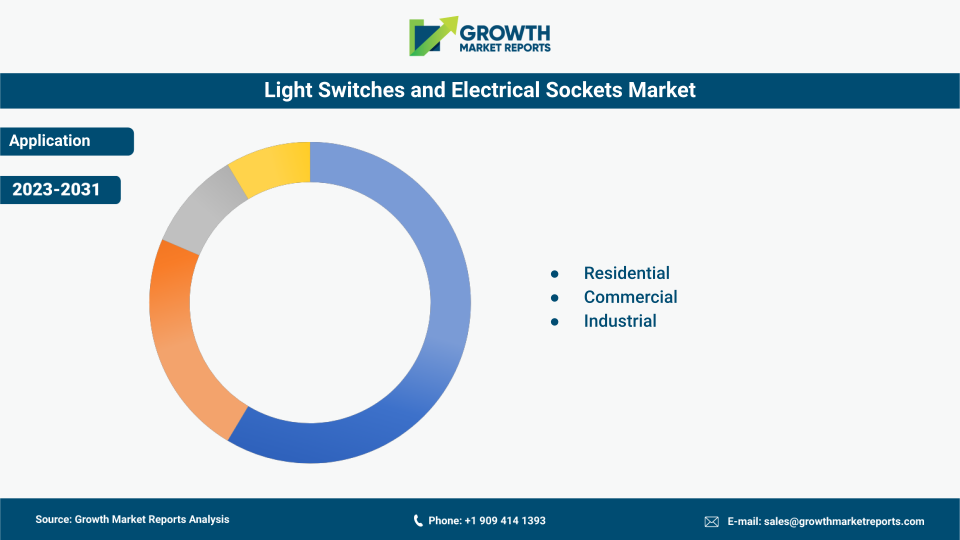
The application segment of the light switches and electrical sockets market encompasses residential, commercial, industrial, and other end uses. The residential sector remains the largest application area, accounting for a substantial share of market demand. The proliferation of new housing developments, coupled with renovation and retrofitting activities in existing homes, is driving the need for both traditional and smart switches and sockets. Homeowners are increasingly prioritizing safety, convenience, and energy efficiency, leading to the adoption of advanced electrical solutions that enhance comfort and reduce utility costs.

The commercial segment is experiencing significant growth, fueled by the construction of office buildings, retail spaces, hotels, and educational institutions. Commercial establishments require reliable and scalable electrical infrastructure to support a wide range of devices and equipment. The integration of smart switches and sockets is becoming commonplace in commercial settings, enabling centralized control, energy monitoring, and automation of lighting and electrical systems. These features contribute to operational efficiency, cost savings, and compliance with energy regulations, making them attractive to facility managers and business owners.

Industrial applications represent a growing opportunity for market expansion, as manufacturing plants, warehouses, and other industrial facilities seek to modernize their electrical infrastructure. Industrial-grade switches and sockets are designed to withstand harsh operating conditions, including exposure to dust, moisture, chemicals, and mechanical stress. The adoption of smart solutions in industrial environments is facilitating predictive maintenance, real-time monitoring, and enhanced safety protocols. As industries embrace digital transformation and Industry 4.0 initiatives, the demand for intelligent electrical components is expected to rise steadily.

Other applications, such as healthcare facilities, transportation hubs, and public infrastructure projects, also contribute to market growth. These sectors require specialized switches and sockets that meet stringent safety, hygiene, and performance standards. For example, hospitals and clinics prioritize antimicrobial materials and touchless operation to minimize the risk of infection. Public transportation systems and airports demand durable and tamper-resistant electrical components to ensure seamless operation and passenger safety. The diverse application landscape underscores the versatility and critical importance of light switches and electrical sockets across various sectors.

Distribution Channel Analysis

The distribution channel segment is divided into online and offline channels, each playing a vital role in the market's supply chain. Offline channels, including electrical wholesalers, specialty stores, and large retail chains, continue to dominate the market, particularly for bulk purchases and professional installations. These channels offer customers the advantage of physical product inspection, expert guidance, and after-sales service, making them the preferred choice for contractors, builders, and institutional buyers. The established network of offline distributors ensures timely availability and delivery of products, supporting large-scale construction and renovation projects.

Online distribution channels are experiencing rapid growth, driven by the increasing penetration of e-commerce platforms and changing consumer purchasing behaviors. The convenience of online shopping, coupled with a wide range of product options and competitive pricing, is attracting both individual consumers and small businesses. Leading manufacturers and retailers are investing in user-friendly websites, digital catalogs, and virtual showrooms to enhance the online buying experience. The availability of detailed product specifications, customer reviews, and installation guides is empowering buyers to make informed decisions and facilitating the adoption of advanced electrical solutions.

The COVID-19 pandemic accelerated the shift toward online sales, as lockdowns and social distancing measures limited access to physical stores. This trend is expected to persist, with online channels capturing an increasing share of the market in the coming years. Manufacturers are partnering with major e-commerce platforms and leveraging digital marketing strategies to expand their reach and tap into new customer segments. The rise of direct-to-consumer sales models is also enabling brands to build stronger relationships with end users and gather valuable feedback for product development.

Despite the growth of online channels, offline distribution remains indispensable for certain customer segments and product categories. Complex or customized solutions, such as industrial-grade switches and sockets, often require professional consultation and installation, which is best facilitated through offline channels. The coexistence of online and offline distribution models is creating a dynamic and competitive marketplace, offering customers greater choice and flexibility in sourcing electrical products.

Opportunities & Threats

The light switches and electrical sockets market presents a multitude of opportunities for growth and innovation. The ongoing digital transformation of homes and businesses is creating a fertile environment for the adoption of smart switches and sockets. As consumers become more aware of the benefits of home automation, energy efficiency, and remote control, the demand for connected electrical solutions is expected to soar. Manufacturers that invest in research and development, focusing on interoperability, security, and user-friendly interfaces, are well positioned to capitalize on this trend. Additionally, the expansion of smart city initiatives and government incentives for energy-efficient building solutions are opening new avenues for market penetration, particularly in developing economies.

Another significant opportunity lies in the integration of sustainability and eco-friendly materials into product design and manufacturing. With increasing regulatory pressures and consumer demand for green products, companies that prioritize sustainability stand to gain a competitive edge. The development of recyclable and biodegradable switches and sockets, as well as energy-saving smart solutions, aligns with global efforts to reduce carbon footprints and promote environmental responsibility. Collaborations with technology providers, architects, and builders to create holistic, sustainable building solutions can further enhance market growth and brand reputation.

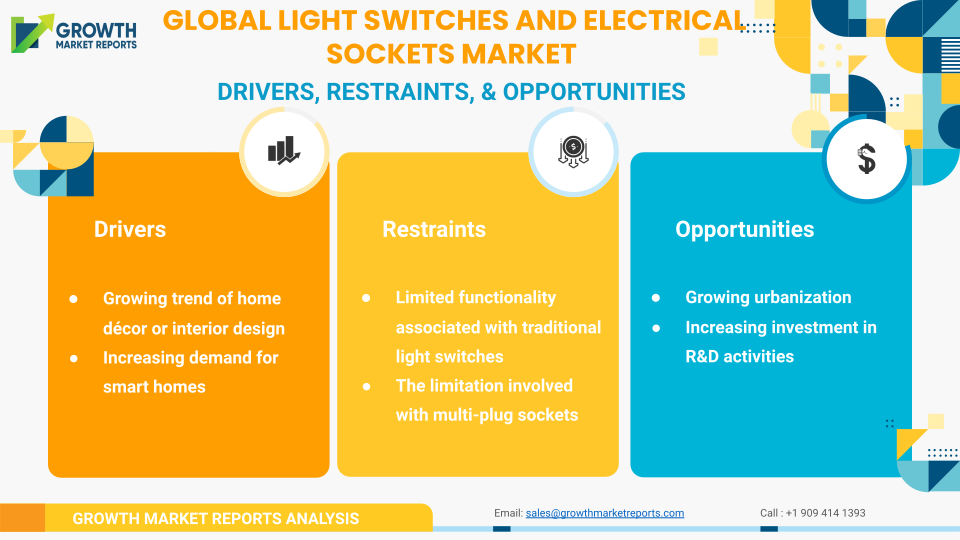
Despite these opportunities, the market faces certain restraints that could hinder its growth trajectory. One of the primary challenges is the high initial cost associated with smart switches and sockets, which may deter price-sensitive consumers and small businesses. The complexity of installation and compatibility issues with existing electrical systems can also pose barriers to adoption, particularly in older buildings. Furthermore, concerns related to data privacy and cybersecurity in smart home devices may limit consumer confidence and uptake. Manufacturers must address these challenges through cost-effective solutions, robust security protocols, and comprehensive customer education to unlock the full potential of the market.

Regional Outlook

The Asia Pacific region leads the global light switches and electrical sockets market, accounting for approximately 42% of the total market share in 2024, with a market value of USD 6.8 billion. The region's dominance is attributed to rapid urbanization, large-scale infrastructure projects, and a growing middle class with increasing disposable income. Countries such as China, India, and Southeast Asian nations are witnessing a construction boom, driving substantial demand for both traditional and smart electrical solutions. The adoption of smart home technologies is also gaining momentum, supported by government initiatives and rising consumer awareness. The Asia Pacific market is projected to grow at a CAGR of 6.2% from 2025 to 2033, outpacing other regions and presenting significant opportunities for market participants.

North America and Europe collectively represent a significant portion of the market, with a combined share of around 38% in 2024, translating to a market value of USD 6.2 billion. North America is characterized by high penetration of smart home devices, advanced infrastructure, and stringent safety regulations. The United States and Canada are leading adopters of smart switches and sockets, driven by consumer demand for convenience, energy efficiency, and enhanced security. Europe, on the other hand, is witnessing steady growth, supported by energy efficiency mandates, retrofitting activities, and a strong focus on sustainability. The integration of smart technologies into residential and commercial buildings is becoming increasingly common, further propelling market expansion in these regions.

The Middle East & Africa and Latin America regions, although smaller in market size, are experiencing steady growth driven by ongoing construction activities, urbanization, and efforts to upgrade existing electrical infrastructure. The Middle East, in particular, is investing heavily in smart city projects and modernizing its real estate sector, creating demand for advanced electrical solutions. Latin America's market is benefiting from government initiatives aimed at improving energy access and infrastructure development. Together, these regions accounted for approximately 20% of the global market in 2024, with a combined value of USD 3.2 billion. As economic conditions improve and technology adoption increases, these regions are expected to contribute more significantly to overall market growth in the coming years.

Light Switches and Electrical Sockets Market Statistics

Competitor Outlook

The competitive landscape of the light switches and electrical sockets market is characterized by the presence of both global giants and regional players, each vying for market share through innovation, product differentiation, and strategic partnerships. Major multinational companies dominate the market with their extensive product portfolios, strong brand recognition, and robust distribution networks. These companies are continuously investing in research and development to introduce advanced solutions that cater to evolving consumer preferences and regulatory requirements. Meanwhile, regional and local players are leveraging their deep market insights and agile operations to address specific customer needs and capitalize on emerging trends.

Innovation is a key differentiator in this market, with leading players focusing on the integration of smart technologies, energy efficiency, and sustainability into their product offerings. The development of IoT-enabled switches and sockets, compatible with various smart home platforms, is gaining traction among consumers seeking seamless connectivity and control. Companies are also prioritizing cybersecurity and data privacy features to address growing concerns related to smart home devices. Collaboration with technology providers, architects, and builders is enabling market leaders to offer comprehensive solutions that go beyond traditional electrical components, encompassing lighting control, energy management, and home automation.

The market is also witnessing increased merger and acquisition activity as companies seek to expand their geographic footprint, diversify their product lines, and gain access to new technologies. Strategic alliances with e-commerce platforms and digital marketing initiatives are helping manufacturers enhance their online presence and reach a broader customer base. Despite intense competition, the market offers ample opportunities for differentiation through design innovation, customization, and value-added services such as installation, maintenance, and technical support.

Some of the major companies operating in the light switches and electrical sockets market include Schneider Electric, Legrand, Siemens AG, ABB Ltd., Panasonic Corporation, Honeywell International Inc., Eaton Corporation, Hubbell Incorporated, Leviton Manufacturing Company, and Lutron Electronics. Schneider Electric is renowned for its comprehensive range of smart and traditional electrical solutions, with a strong emphasis on sustainability and digitalization. Legrand is a global leader in electrical and digital building infrastructures, offering innovative switches and sockets tailored to residential, commercial, and industrial applications. Siemens AG and ABB Ltd. are prominent players in the industrial and commercial segments, leveraging their expertise in automation and energy management to deliver advanced electrical solutions.

Panasonic Corporation and Honeywell International Inc. are recognized for their focus on smart home technologies, offering products that integrate seamlessly with home automation systems. Eaton Corporation and Hubbell Incorporated have a strong presence in the North American market, with a diverse portfolio of switches, sockets, and related accessories. Leviton Manufacturing Company is known for its user-centric designs and commitment to quality, while Lutron Electronics specializes in lighting control systems and smart switches. These companies are continuously expanding their product offerings, investing in R&D, and exploring new markets to maintain their competitive edge in a rapidly evolving industry.

Key Players

  • Schneider Electric
  • Legrand
  • Siemens AG
  • ABB Ltd.
  • Eaton Corporation
  • Honeywell International Inc.
  • Panasonic Corporation
  • Leviton Manufacturing Co., Inc.
  • Havells India Ltd.
  • Lutron Electronics Co., Inc.
  • GE (General Electric)
  • Simon Electric
  • Hager Group
  • Bticino (part of Legrand)
  • Vimar SpA
  • Jung Group
  • MK Electric (Honeywell)
  • Clipsal (Schneider Electric)
  • Wenzhou Chint Electric Co., Ltd.
  • Feidiao Electrical Appliances Co., Ltd.
Light Switches and Electrical Sockets Market Overview

Segments

The Light Switches and Electrical Sockets market has been segmented on the basis of

Product Type

  • Traditional Switches
  • Smart Switches
  • Traditional Sockets
  • Smart Sockets

Material

  • Plastic
  • Metal
  • Others

Application

  • Residential
  • Commercial
  • Industrial
  • Others

Distribution Channel

  • Online
  • Offline

Competitive Landscape

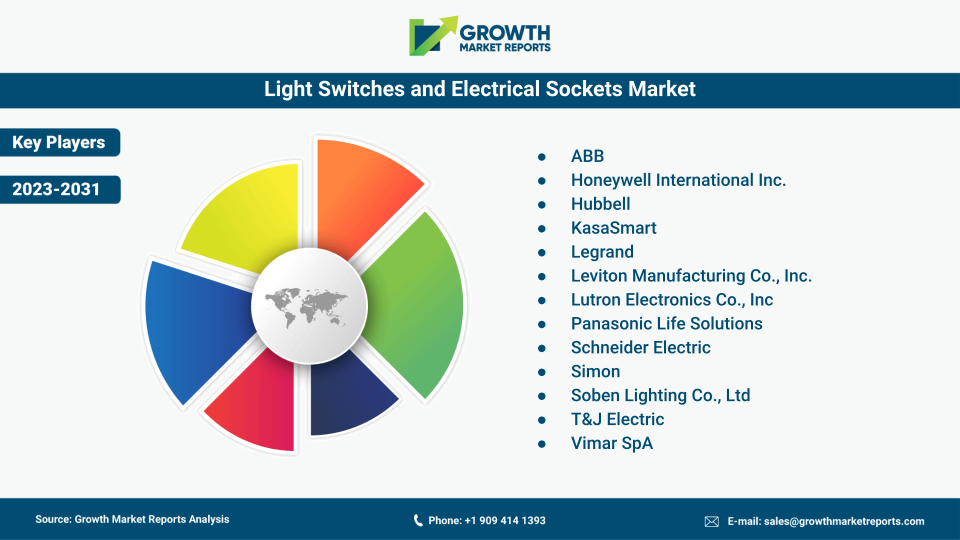
Key players competing in the global market are ABB; Honeywell International Inc.; Hubbell; KasaSmart; Legrand; Leviton Manufacturing Co., Inc.; Lutron Electronics Co., Inc.; Panasonic Life Solutions; Schneider Electric; Simon; Soben Lighting Co., Ltd; T&J Electric; and Vimar SpA.

These companies adopted several development strategies, including collaborations, product launches, mergers, acquisitions, partnerships, and production expansion to expand their consumer base worldwide. For instance,

  • On August 18, 2023, Legrand a global leader in electrical and digital building infrastructures, announced the launch of Allzy, the ultimate all-rounder switch. Allzy is designed to simplify the lives of multitaskers by providing a simplified switch range to boost the user experience.

  • On August 3, 2023, KasaSmart a smart plug provider announced the launch of Kasa KS205 Smart Wi-Fi Light Switch and Kasa KS225 Smart Wi-Fi Light Dimmer Switch to offer a range of noteworthy features, including advanced scheduling and timers. These light switches are controlled anywhere through the Kasa App as long as the devices are connected to a 2.4GHz Wi-Fi connection.

Light Switches and Electrical Sockets Market Key Players

Frequently Asked Questions

Major companies include Schneider Electric, Legrand, Siemens AG, ABB Ltd., Eaton Corporation, Honeywell International Inc., Panasonic Corporation, Leviton Manufacturing Co., Lutron Electronics, and others.

Opportunities include the rise of smart home automation, sustainability initiatives, and smart city projects. Challenges include high initial costs of smart products, installation complexity, and cybersecurity concerns.

Products are distributed through both offline channels (wholesalers, specialty stores, retail chains) and online channels (e-commerce platforms). Online sales are growing rapidly due to convenience and expanded product offerings.

The main application areas are residential, commercial, and industrial sectors. Residential applications dominate, but commercial and industrial segments are growing due to modernization and smart infrastructure initiatives.

Plastic is the most widely used material due to its cost-effectiveness and versatility, while metal (such as stainless steel and aluminum) is popular in premium and industrial segments. Other materials like glass and ceramic are used for niche applications.

Smart switches and sockets offer features like remote control, energy monitoring, and integration with voice assistants, driving their adoption in both residential and commercial sectors for improved convenience and energy savings.

The market is segmented into traditional switches, smart switches, traditional sockets, and smart sockets. Smart products are experiencing rapid growth due to the rise of home automation and IoT devices.

Asia Pacific leads the market, accounting for about 42% of global share in 2024, followed by North America and Europe. The Middle East & Africa and Latin America are also experiencing steady growth.

Key growth drivers include increasing adoption of smart home technologies, rapid urbanization, modernization of infrastructure, and rising demand for energy efficiency and safety in electrical systems.

The global light switches and electrical sockets market reached USD 16.2 billion in 2024 and is projected to grow at a CAGR of 5.4% from 2025 to 2033, reaching USD 25.6 billion by 2033.

Table Of Content

Chapter 1 Executive Summary
Chapter 2 Assumptions and Acronyms Used
Chapter 3 Research Methodology
Chapter 4 Light Switches and Electrical Sockets Market Overview
   4.1 Introduction
      4.1.1 Market Taxonomy
      4.1.2 Market Definition
      4.1.3 Macro-Economic Factors Impacting the Market Growth
   4.2 Light Switches and Electrical Sockets Market Dynamics
      4.2.1 Market Drivers
      4.2.2 Market Restraints
      4.2.3 Market Opportunity
   4.3 Light Switches and Electrical Sockets Market - Supply Chain Analysis
      4.3.1 List of Key Suppliers
      4.3.2 List of Key Distributors
      4.3.3 List of Key Consumers
   4.4 Key Forces Shaping the Light Switches and Electrical Sockets Market
      4.4.1 Bargaining Power of Suppliers
      4.4.2 Bargaining Power of Buyers
      4.4.3 Threat of Substitution
      4.4.4 Threat of New Entrants
      4.4.5 Competitive Rivalry
   4.5 Global Light Switches and Electrical Sockets Market Size & Forecast, 2023-2032
      4.5.1 Light Switches and Electrical Sockets Market Size and Y-o-Y Growth
      4.5.2 Light Switches and Electrical Sockets Market Absolute $ Opportunity

Chapter 5 Global Light Switches and Electrical Sockets Market Analysis and Forecast By Product Type
   5.1 Introduction
      5.1.1 Key Market Trends & Growth Opportunities By Product Type
      5.1.2 Basis Point Share (BPS) Analysis By Product Type
      5.1.3 Absolute $ Opportunity Assessment By Product Type
   5.2 Light Switches and Electrical Sockets Market Size Forecast By Product Type
      5.2.1 Traditional Switches
      5.2.2 Smart Switches
      5.2.3 Traditional Sockets
      5.2.4 Smart Sockets
   5.3 Market Attractiveness Analysis By Product Type

Chapter 6 Global Light Switches and Electrical Sockets Market Analysis and Forecast By Material
   6.1 Introduction
      6.1.1 Key Market Trends & Growth Opportunities By Material
      6.1.2 Basis Point Share (BPS) Analysis By Material
      6.1.3 Absolute $ Opportunity Assessment By Material
   6.2 Light Switches and Electrical Sockets Market Size Forecast By Material
      6.2.1 Plastic
      6.2.2 Metal
      6.2.3 Others
   6.3 Market Attractiveness Analysis By Material

Chapter 7 Global Light Switches and Electrical Sockets Market Analysis and Forecast By Application
   7.1 Introduction
      7.1.1 Key Market Trends & Growth Opportunities By Application
      7.1.2 Basis Point Share (BPS) Analysis By Application
      7.1.3 Absolute $ Opportunity Assessment By Application
   7.2 Light Switches and Electrical Sockets Market Size Forecast By Application
      7.2.1 Residential
      7.2.2 Commercial
      7.2.3 Industrial
      7.2.4 Others
   7.3 Market Attractiveness Analysis By Application

Chapter 8 Global Light Switches and Electrical Sockets Market Analysis and Forecast By Distribution Channel
   8.1 Introduction
      8.1.1 Key Market Trends & Growth Opportunities By Distribution Channel
      8.1.2 Basis Point Share (BPS) Analysis By Distribution Channel
      8.1.3 Absolute $ Opportunity Assessment By Distribution Channel
   8.2 Light Switches and Electrical Sockets Market Size Forecast By Distribution Channel
      8.2.1 Online
      8.2.2 Offline
   8.3 Market Attractiveness Analysis By Distribution Channel

Chapter 9 Global Light Switches and Electrical Sockets Market Analysis and Forecast by Region
   9.1 Introduction
      9.1.1 Key Market Trends & Growth Opportunities By Region
      9.1.2 Basis Point Share (BPS) Analysis By Region
      9.1.3 Absolute $ Opportunity Assessment By Region
   9.2 Light Switches and Electrical Sockets Market Size Forecast By Region
      9.2.1 North America
      9.2.2 Europe
      9.2.3 Asia Pacific
      9.2.4 Latin America
      9.2.5 Middle East & Africa (MEA)
   9.3 Market Attractiveness Analysis By Region

Chapter 10 Coronavirus Disease (COVID-19) Impact 
   10.1 Introduction 
   10.2 Current & Future Impact Analysis 
   10.3 Economic Impact Analysis 
   10.4 Government Policies 
   10.5 Investment Scenario

Chapter 11 North America Light Switches and Electrical Sockets Analysis and Forecast
   11.1 Introduction
   11.2 North America Light Switches and Electrical Sockets Market Size Forecast by Country
      11.2.1 U.S.
      11.2.2 Canada
   11.3 Basis Point Share (BPS) Analysis by Country
   11.4 Absolute $ Opportunity Assessment by Country
   11.5 Market Attractiveness Analysis by Country
   11.6 North America Light Switches and Electrical Sockets Market Size Forecast By Product Type
      11.6.1 Traditional Switches
      11.6.2 Smart Switches
      11.6.3 Traditional Sockets
      11.6.4 Smart Sockets
   11.7 Basis Point Share (BPS) Analysis By Product Type 
   11.8 Absolute $ Opportunity Assessment By Product Type 
   11.9 Market Attractiveness Analysis By Product Type
   11.10 North America Light Switches and Electrical Sockets Market Size Forecast By Material
      11.10.1 Plastic
      11.10.2 Metal
      11.10.3 Others
   11.11 Basis Point Share (BPS) Analysis By Material 
   11.12 Absolute $ Opportunity Assessment By Material 
   11.13 Market Attractiveness Analysis By Material
   11.14 North America Light Switches and Electrical Sockets Market Size Forecast By Application
      11.14.1 Residential
      11.14.2 Commercial
      11.14.3 Industrial
      11.14.4 Others
   11.15 Basis Point Share (BPS) Analysis By Application 
   11.16 Absolute $ Opportunity Assessment By Application 
   11.17 Market Attractiveness Analysis By Application
   11.18 North America Light Switches and Electrical Sockets Market Size Forecast By Distribution Channel
      11.18.1 Online
      11.18.2 Offline
   11.19 Basis Point Share (BPS) Analysis By Distribution Channel 
   11.20 Absolute $ Opportunity Assessment By Distribution Channel 
   11.21 Market Attractiveness Analysis By Distribution Channel

Chapter 12 Europe Light Switches and Electrical Sockets Analysis and Forecast
   12.1 Introduction
   12.2 Europe Light Switches and Electrical Sockets Market Size Forecast by Country
      12.2.1 Germany
      12.2.2 France
      12.2.3 Italy
      12.2.4 U.K.
      12.2.5 Spain
      12.2.6 Russia
      12.2.7 Rest of Europe
   12.3 Basis Point Share (BPS) Analysis by Country
   12.4 Absolute $ Opportunity Assessment by Country
   12.5 Market Attractiveness Analysis by Country
   12.6 Europe Light Switches and Electrical Sockets Market Size Forecast By Product Type
      12.6.1 Traditional Switches
      12.6.2 Smart Switches
      12.6.3 Traditional Sockets
      12.6.4 Smart Sockets
   12.7 Basis Point Share (BPS) Analysis By Product Type 
   12.8 Absolute $ Opportunity Assessment By Product Type 
   12.9 Market Attractiveness Analysis By Product Type
   12.10 Europe Light Switches and Electrical Sockets Market Size Forecast By Material
      12.10.1 Plastic
      12.10.2 Metal
      12.10.3 Others
   12.11 Basis Point Share (BPS) Analysis By Material 
   12.12 Absolute $ Opportunity Assessment By Material 
   12.13 Market Attractiveness Analysis By Material
   12.14 Europe Light Switches and Electrical Sockets Market Size Forecast By Application
      12.14.1 Residential
      12.14.2 Commercial
      12.14.3 Industrial
      12.14.4 Others
   12.15 Basis Point Share (BPS) Analysis By Application 
   12.16 Absolute $ Opportunity Assessment By Application 
   12.17 Market Attractiveness Analysis By Application
   12.18 Europe Light Switches and Electrical Sockets Market Size Forecast By Distribution Channel
      12.18.1 Online
      12.18.2 Offline
   12.19 Basis Point Share (BPS) Analysis By Distribution Channel 
   12.20 Absolute $ Opportunity Assessment By Distribution Channel 
   12.21 Market Attractiveness Analysis By Distribution Channel

Chapter 13 Asia Pacific Light Switches and Electrical Sockets Analysis and Forecast
   13.1 Introduction
   13.2 Asia Pacific Light Switches and Electrical Sockets Market Size Forecast by Country
      13.2.1 China
      13.2.2 Japan
      13.2.3 South Korea
      13.2.4 India
      13.2.5 Australia
      13.2.6 South East Asia (SEA)
      13.2.7 Rest of Asia Pacific (APAC)
   13.3 Basis Point Share (BPS) Analysis by Country
   13.4 Absolute $ Opportunity Assessment by Country
   13.5 Market Attractiveness Analysis by Country
   13.6 Asia Pacific Light Switches and Electrical Sockets Market Size Forecast By Product Type
      13.6.1 Traditional Switches
      13.6.2 Smart Switches
      13.6.3 Traditional Sockets
      13.6.4 Smart Sockets
   13.7 Basis Point Share (BPS) Analysis By Product Type 
   13.8 Absolute $ Opportunity Assessment By Product Type 
   13.9 Market Attractiveness Analysis By Product Type
   13.10 Asia Pacific Light Switches and Electrical Sockets Market Size Forecast By Material
      13.10.1 Plastic
      13.10.2 Metal
      13.10.3 Others
   13.11 Basis Point Share (BPS) Analysis By Material 
   13.12 Absolute $ Opportunity Assessment By Material 
   13.13 Market Attractiveness Analysis By Material
   13.14 Asia Pacific Light Switches and Electrical Sockets Market Size Forecast By Application
      13.14.1 Residential
      13.14.2 Commercial
      13.14.3 Industrial
      13.14.4 Others
   13.15 Basis Point Share (BPS) Analysis By Application 
   13.16 Absolute $ Opportunity Assessment By Application 
   13.17 Market Attractiveness Analysis By Application
   13.18 Asia Pacific Light Switches and Electrical Sockets Market Size Forecast By Distribution Channel
      13.18.1 Online
      13.18.2 Offline
   13.19 Basis Point Share (BPS) Analysis By Distribution Channel 
   13.20 Absolute $ Opportunity Assessment By Distribution Channel 
   13.21 Market Attractiveness Analysis By Distribution Channel

Chapter 14 Latin America Light Switches and Electrical Sockets Analysis and Forecast
   14.1 Introduction
   14.2 Latin America Light Switches and Electrical Sockets Market Size Forecast by Country
      14.2.1 Brazil
      14.2.2 Mexico
      14.2.3 Rest of Latin America (LATAM)
   14.3 Basis Point Share (BPS) Analysis by Country
   14.4 Absolute $ Opportunity Assessment by Country
   14.5 Market Attractiveness Analysis by Country
   14.6 Latin America Light Switches and Electrical Sockets Market Size Forecast By Product Type
      14.6.1 Traditional Switches
      14.6.2 Smart Switches
      14.6.3 Traditional Sockets
      14.6.4 Smart Sockets
   14.7 Basis Point Share (BPS) Analysis By Product Type 
   14.8 Absolute $ Opportunity Assessment By Product Type 
   14.9 Market Attractiveness Analysis By Product Type
   14.10 Latin America Light Switches and Electrical Sockets Market Size Forecast By Material
      14.10.1 Plastic
      14.10.2 Metal
      14.10.3 Others
   14.11 Basis Point Share (BPS) Analysis By Material 
   14.12 Absolute $ Opportunity Assessment By Material 
   14.13 Market Attractiveness Analysis By Material
   14.14 Latin America Light Switches and Electrical Sockets Market Size Forecast By Application
      14.14.1 Residential
      14.14.2 Commercial
      14.14.3 Industrial
      14.14.4 Others
   14.15 Basis Point Share (BPS) Analysis By Application 
   14.16 Absolute $ Opportunity Assessment By Application 
   14.17 Market Attractiveness Analysis By Application
   14.18 Latin America Light Switches and Electrical Sockets Market Size Forecast By Distribution Channel
      14.18.1 Online
      14.18.2 Offline
   14.19 Basis Point Share (BPS) Analysis By Distribution Channel 
   14.20 Absolute $ Opportunity Assessment By Distribution Channel 
   14.21 Market Attractiveness Analysis By Distribution Channel

Chapter 15 Middle East & Africa (MEA) Light Switches and Electrical Sockets Analysis and Forecast
   15.1 Introduction
   15.2 Middle East & Africa (MEA) Light Switches and Electrical Sockets Market Size Forecast by Country
      15.2.1 Saudi Arabia
      15.2.2 South Africa
      15.2.3 UAE
      15.2.4 Rest of Middle East & Africa (MEA)
   15.3 Basis Point Share (BPS) Analysis by Country
   15.4 Absolute $ Opportunity Assessment by Country
   15.5 Market Attractiveness Analysis by Country
   15.6 Middle East & Africa (MEA) Light Switches and Electrical Sockets Market Size Forecast By Product Type
      15.6.1 Traditional Switches
      15.6.2 Smart Switches
      15.6.3 Traditional Sockets
      15.6.4 Smart Sockets
   15.7 Basis Point Share (BPS) Analysis By Product Type 
   15.8 Absolute $ Opportunity Assessment By Product Type 
   15.9 Market Attractiveness Analysis By Product Type
   15.10 Middle East & Africa (MEA) Light Switches and Electrical Sockets Market Size Forecast By Material
      15.10.1 Plastic
      15.10.2 Metal
      15.10.3 Others
   15.11 Basis Point Share (BPS) Analysis By Material 
   15.12 Absolute $ Opportunity Assessment By Material 
   15.13 Market Attractiveness Analysis By Material
   15.14 Middle East & Africa (MEA) Light Switches and Electrical Sockets Market Size Forecast By Application
      15.14.1 Residential
      15.14.2 Commercial
      15.14.3 Industrial
      15.14.4 Others
   15.15 Basis Point Share (BPS) Analysis By Application 
   15.16 Absolute $ Opportunity Assessment By Application 
   15.17 Market Attractiveness Analysis By Application
   15.18 Middle East & Africa (MEA) Light Switches and Electrical Sockets Market Size Forecast By Distribution Channel
      15.18.1 Online
      15.18.2 Offline
   15.19 Basis Point Share (BPS) Analysis By Distribution Channel 
   15.20 Absolute $ Opportunity Assessment By Distribution Channel 
   15.21 Market Attractiveness Analysis By Distribution Channel

Chapter 16 Competition Landscape 
   16.1 Light Switches and Electrical Sockets Market: Competitive Dashboard
   16.2 Global Light Switches and Electrical Sockets Market: Market Share Analysis, 2023
   16.3 Company Profiles (Details – Overview, Financials, Developments, Strategy) 
      16.3.1 Schneider Electric
Legrand
Siemens AG
ABB Ltd.
Eaton Corporation
Honeywell International Inc.
Panasonic Corporation
Leviton Manufacturing Co., Inc.
Havells India Ltd.
Lutron Electronics Co., Inc.
GE (General Electric)
Simon Electric
Hager Group
Bticino (part of Legrand)
Vimar SpA
Jung Group
MK Electric (Honeywell)
Clipsal (Schneider Electric)
Wenzhou Chint Electric Co., Ltd.
Feidiao Electrical Appliances Co., Ltd.

Methodology

Our Clients

Nestle SA
The John Holland Group
Siemens Healthcare
Deloitte
Dassault Aviation
FedEx Logistics
Microsoft
Honda Motor Co. Ltd.