Segments - by Component (Software, Services), by Deployment Mode (On-Premises, Cloud), by Application (Real-Time Log Analytics, Application Performance Management, Infrastructure Management, Network Management, Security and Compliance Management, Others), by Organization Size (Small and Medium Enterprises, Large Enterprises), by End-User (BFSI, Healthcare, Retail, IT and Telecommunications, Manufacturing, Government, Others)
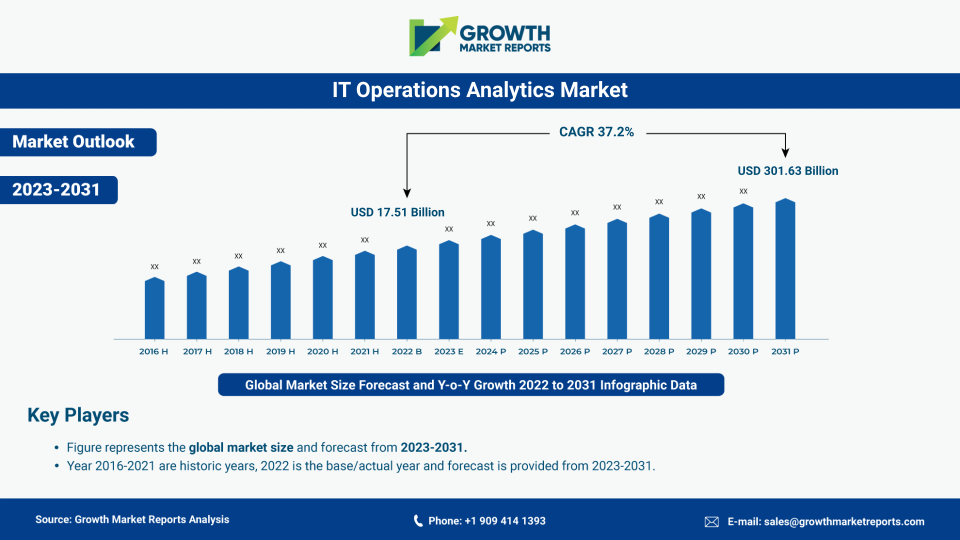
According to our latest research, the global IT Operations Analytics market size in 2024 stands at USD 15.2 billion, reflecting robust growth driven by the increasing complexity of IT environments and the need for advanced analytics in operational processes. The market is projected to expand at a CAGR of 16.8% from 2025 to 2033, reaching an estimated USD 50.5 billion by 2033. This impressive growth trajectory is largely attributed to the rapid adoption of cloud computing, the proliferation of big data, and the growing demand for real-time insights to optimize IT operations and enhance business agility.
A primary growth factor for the IT Operations Analytics market is the exponential increase in data volumes generated by digital transformation initiatives across industries. As organizations continue to migrate their workloads to hybrid and multi-cloud environments, the complexity of managing IT infrastructure has surged. This has created an urgent need for sophisticated analytics solutions that can process, analyze, and visualize vast amounts of data in real time to detect anomalies, predict outages, and drive proactive decision-making. The integration of artificial intelligence and machine learning into IT operations analytics platforms further enhances their capability to deliver actionable insights, automate root cause analysis, and minimize downtime, fueling market expansion.
Another significant driver is the escalating importance of IT compliance, security, and risk management. With the increasing frequency and sophistication of cyber threats, organizations are under immense pressure to ensure the integrity, reliability, and security of their IT operations. IT Operations Analytics solutions empower businesses to monitor their networks, applications, and infrastructure continuously, identify security breaches, and comply with regulatory requirements. The ability to correlate data from disparate sources and provide a unified view of IT health is particularly valuable for sectors such as BFSI, healthcare, and government, where regulatory compliance and data protection are paramount.
The growing trend of digital business models and the shift toward customer-centric services are also propelling the adoption of IT Operations Analytics. Enterprises are leveraging these solutions to gain deeper visibility into application performance, user experiences, and service delivery metrics. This enables them to detect performance bottlenecks, optimize resource allocation, and ensure high availability of critical services. The increasing reliance on mobile applications, e-commerce platforms, and IoT devices further amplifies the need for real-time monitoring and analytics, positioning IT Operations Analytics as a strategic enabler of digital transformation and competitive differentiation.
Operational Intelligence plays a crucial role in the IT Operations Analytics landscape by providing organizations with the ability to gain real-time insights into their IT environments. This capability is essential for managing the growing complexity of IT systems and ensuring that operations run smoothly and efficiently. By leveraging Operational Intelligence, businesses can monitor key performance indicators, detect anomalies, and respond to issues proactively. This not only helps in minimizing downtime but also enhances the overall performance and reliability of IT services. As the demand for real-time data analysis continues to rise, Operational Intelligence is becoming an indispensable tool for organizations striving to maintain a competitive edge in the digital age.
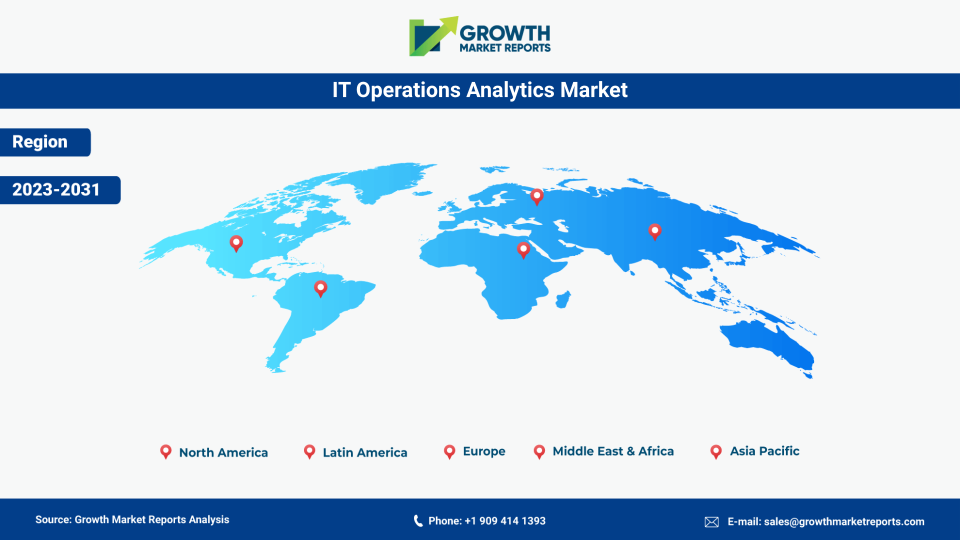
From a regional perspective, North America dominates the IT Operations Analytics market owing to its advanced IT infrastructure, high adoption of cloud technologies, and presence of leading technology vendors. Europe follows closely, driven by stringent data protection regulations and a strong focus on digital innovation. The Asia Pacific region is emerging as a high-growth market, fueled by rapid digitization, expanding IT investments, and a burgeoning startup ecosystem. Latin America and the Middle East & Africa are also witnessing steady growth, albeit from a smaller base, as enterprises in these regions increasingly recognize the value of analytics-driven IT operations to enhance efficiency and resilience.
The IT Operations Analytics market is segmented by component into software and services, each playing a pivotal role in shaping the market landscape. The software segment, which includes platforms and tools for data collection, analysis, visualization, and automation, accounts for the largest share of the market. The demand for advanced analytics software is surging as organizations seek to harness machine learning, artificial intelligence, and big data technologies to gain actionable insights from their IT operations. These solutions are continuously evolving to offer enhanced capabilities such as predictive analytics, automated anomaly detection, and root cause analysis, enabling enterprises to proactively address issues and optimize performance.
The services segment, comprising consulting, integration, support, and managed services, is witnessing significant growth as businesses require expert guidance to deploy, customize, and maintain IT Operations Analytics solutions. Service providers play a critical role in helping organizations navigate the complexities of integrating analytics platforms with existing IT systems, ensuring seamless data flow, and achieving desired business outcomes. As the adoption of IT Operations Analytics accelerates, the demand for specialized services such as data migration, training, and ongoing support is expected to rise, contributing to the overall expansion of the market.
A notable trend within the component segment is the increasing preference for integrated analytics suites that combine multiple functionalities, such as log management, performance monitoring, and security analytics, into a unified platform. This integration simplifies IT operations, reduces the total cost of ownership, and enhances the user experience by providing a single pane of glass for monitoring and analysis. Vendors are investing in research and development to deliver scalable, flexible, and user-friendly solutions that cater to the evolving needs of enterprises across diverse industries.
Furthermore, the growing adoption of open-source analytics tools and platforms is influencing the competitive dynamics of the market. Organizations are leveraging open-source solutions to reduce costs, customize functionalities, and foster innovation. However, the complexity of managing and maintaining open-source tools often necessitates professional services, creating opportunities for service providers to offer value-added solutions and support. Overall, the interplay between software and services is instrumental in driving the growth and maturity of the IT Operations Analytics market.
| Attributes | Details |
| Report Title | IT Operations Analytics Market Research Report 2033 |
| By Component | Software, Services |
| By Deployment Mode | On-Premises, Cloud |
| By Application | Real-Time Log Analytics, Application Performance Management, Infrastructure Management, Network Management, Security and Compliance Management, Others |
| By Organization Size | Small and Medium Enterprises, Large Enterprises |
| By End-User | BFSI, Healthcare, Retail, IT and Telecommunications, Manufacturing, Government, Others |
| Regions Covered | North America, Europe, APAC, Latin America, MEA |
| Base Year | 2024 |
| Historic Data | 2018-2023 |
| Forecast Period | 2025-2033 |
| Number of Pages | 265 |
| Number of Tables & Figures | 255 |
| Customization Available | Yes, the report can be customized as per your need. |
The deployment mode segment of the IT Operations Analytics market is categorized into on-premises and cloud-based solutions, each offering distinct advantages and addressing specific organizational needs. The on-premises deployment model remains popular among large enterprises and highly regulated industries that prioritize data security, control, and compliance. These organizations often manage complex IT environments with stringent regulatory requirements, necessitating in-house analytics solutions that can be tightly integrated with existing infrastructure. On-premises deployments offer greater customization and control over data, making them suitable for organizations with unique security and compliance mandates.
Conversely, the cloud deployment model is experiencing rapid growth, driven by the increasing adoption of Software-as-a-Service (SaaS) and the need for scalable, cost-effective analytics solutions. Cloud-based IT Operations Analytics platforms offer several benefits, including reduced upfront capital expenditure, faster deployment, and the ability to scale resources dynamically based on demand. These solutions are particularly attractive to small and medium enterprises (SMEs) and organizations with distributed IT environments, as they enable remote monitoring, real-time collaboration, and seamless integration with other cloud services.
The hybrid deployment approach is gaining traction as organizations seek to leverage the advantages of both on-premises and cloud solutions. Hybrid models allow businesses to retain sensitive data and critical workloads on-premises while utilizing the cloud for analytics, storage, and non-sensitive operations. This flexibility enables organizations to optimize costs, enhance agility, and address compliance requirements without compromising on performance or security. Vendors are responding to this trend by offering hybrid-ready analytics platforms that support seamless data integration and orchestration across multiple environments.
The shift toward cloud and hybrid deployments is also driving innovation in the market, with vendors investing in advanced security features, automation, and AI-driven analytics to address the unique challenges of distributed IT environments. As organizations continue to embrace digital transformation and cloud-native architectures, the demand for flexible, scalable, and secure IT Operations Analytics solutions is expected to accelerate, shaping the future growth trajectory of the market.
The IT Operations Analytics market encompasses a wide range of applications, each addressing specific operational challenges and delivering unique value propositions. Real-time log analytics is one of the most prominent applications, enabling organizations to monitor, analyze, and visualize log data from diverse sources in real time. This capability is critical for detecting anomalies, troubleshooting issues, and ensuring the smooth functioning of IT systems. As the volume and complexity of log data continue to grow, advanced log analytics solutions equipped with AI and machine learning are becoming indispensable for proactive incident management and operational efficiency.
Application performance management (APM) is another key application area, focusing on monitoring and optimizing the performance of business-critical applications. APM solutions provide deep visibility into application behavior, user experiences, and transaction flows, enabling IT teams to identify performance bottlenecks, optimize resource utilization, and deliver superior service quality. With the increasing reliance on digital applications and services, the demand for robust APM solutions is on the rise, particularly in sectors such as e-commerce, banking, and telecommunications.
Infrastructure management is a core application of IT Operations Analytics, encompassing the monitoring and management of servers, storage, networks, and other IT assets. Analytics-driven infrastructure management solutions enable organizations to ensure high availability, reliability, and scalability of their IT environments. These solutions facilitate capacity planning, predictive maintenance, and automated remediation, reducing operational costs and minimizing downtime. The growing adoption of virtualization, cloud computing, and IoT devices is further amplifying the need for comprehensive infrastructure analytics.
Network management and security & compliance management are also critical applications within the market. Network management solutions leverage analytics to monitor network traffic, detect anomalies, and optimize network performance. Security and compliance management applications focus on identifying security threats, ensuring regulatory compliance, and mitigating risks through continuous monitoring and analysis. As cyber threats become more sophisticated and regulatory requirements more stringent, the adoption of analytics-driven security and compliance solutions is expected to accelerate, driving growth in these application segments.
In addition to these core applications, IT Operations Analytics is increasingly being used for capacity planning, resource optimization, and service delivery management. The ability to correlate data from multiple sources and generate actionable insights is enabling organizations to align IT operations with business objectives, enhance agility, and drive innovation. As the scope of IT Operations Analytics continues to expand, vendors are developing specialized solutions tailored to the unique needs of different industries and use cases.
The IT Operations Analytics market is segmented by organization size into small and medium enterprises (SMEs) and large enterprises, each exhibiting distinct adoption patterns and requirements. Large enterprises, with their complex and heterogeneous IT environments, represent the largest share of the market. These organizations typically operate multiple data centers, cloud platforms, and distributed networks, necessitating advanced analytics solutions to manage, monitor, and optimize their IT operations. Large enterprises are also more likely to invest in comprehensive analytics platforms that offer integrated capabilities for performance monitoring, security, compliance, and automation.
Small and medium enterprises are increasingly recognizing the value of IT Operations Analytics in enhancing operational efficiency, reducing downtime, and supporting business growth. While SMEs may have more limited IT resources and budgets compared to large enterprises, the availability of cloud-based analytics solutions has lowered the barriers to adoption. SaaS-based platforms offer SMEs cost-effective access to advanced analytics capabilities without the need for significant upfront investment in hardware or software. This democratization of analytics is enabling SMEs to compete more effectively, improve service delivery, and respond rapidly to changing market conditions.
The unique challenges faced by SMEs, such as limited in-house expertise and resource constraints, are driving demand for user-friendly, easy-to-deploy analytics solutions that require minimal customization and maintenance. Vendors are responding by offering pre-configured analytics packages, intuitive dashboards, and managed services tailored to the needs of SMEs. These offerings enable smaller organizations to leverage the power of analytics to optimize IT operations, enhance security, and achieve compliance with industry regulations.
For both SMEs and large enterprises, the ability to scale analytics solutions in line with business growth is a key consideration. Scalable platforms that can accommodate increasing data volumes, support new use cases, and integrate with emerging technologies are in high demand. As organizations of all sizes continue to pursue digital transformation initiatives, the adoption of IT Operations Analytics is expected to accelerate, driving growth across both segments.
The IT Operations Analytics market serves a diverse range of end-users, each with unique operational requirements and regulatory considerations. The BFSI sector is one of the largest adopters of IT Operations Analytics, leveraging these solutions to ensure the reliability, security, and compliance of their IT systems. Financial institutions rely on analytics to monitor transaction volumes, detect fraud, and comply with stringent regulatory mandates. The ability to correlate data from multiple sources and generate real-time insights is critical for maintaining trust, minimizing risk, and delivering seamless customer experiences.
Healthcare organizations are increasingly adopting IT Operations Analytics to optimize the performance and security of their IT infrastructure, support electronic health records (EHR) systems, and ensure compliance with healthcare regulations such as HIPAA. Analytics-driven solutions enable healthcare providers to monitor application performance, detect anomalies, and safeguard sensitive patient data. The growing adoption of telemedicine, IoT-enabled medical devices, and cloud-based healthcare applications is further driving demand for advanced analytics solutions in this sector.
The retail industry is leveraging IT Operations Analytics to enhance the performance and reliability of e-commerce platforms, point-of-sale systems, and supply chain operations. Analytics solutions enable retailers to monitor website traffic, optimize application performance, and ensure high availability during peak shopping periods. The ability to gain real-time insights into customer behavior, inventory levels, and transaction data is critical for delivering personalized experiences and driving business growth.
IT and telecommunications companies are at the forefront of adopting IT Operations Analytics to manage complex networks, optimize service delivery, and ensure high levels of uptime. These organizations require advanced analytics platforms capable of processing massive volumes of data in real time, detecting network anomalies, and supporting predictive maintenance. The increasing adoption of 5G, IoT, and cloud-based services is further amplifying the need for robust IT Operations Analytics solutions in this sector.
Manufacturing, government, and other sectors are also embracing IT Operations Analytics to enhance operational efficiency, ensure regulatory compliance, and support digital transformation initiatives. Manufacturing companies use analytics to monitor production systems, optimize maintenance schedules, and improve supply chain visibility. Government agencies leverage analytics to ensure the security and reliability of critical infrastructure, comply with regulatory mandates, and deliver efficient public services. As the scope of IT Operations Analytics continues to expand, its adoption across diverse end-user segments is expected to drive sustained market growth.
The IT Operations Analytics market is poised for significant opportunities as organizations increasingly prioritize digital transformation and operational efficiency. One of the most promising opportunities lies in the integration of artificial intelligence and machine learning into analytics platforms. AI-driven analytics can automate root cause analysis, predict outages, and recommend remediation actions, enabling organizations to move from reactive to proactive IT operations. The growing adoption of edge computing, IoT, and hybrid cloud environments presents additional opportunities for vendors to develop specialized analytics solutions that address the unique challenges of distributed IT architectures.
Another key opportunity is the expanding adoption of IT Operations Analytics in emerging markets, particularly in the Asia Pacific and Latin America regions. As enterprises in these regions invest in digital infrastructure and modernize their IT operations, the demand for analytics-driven solutions is expected to surge. Vendors can capitalize on this trend by offering localized solutions, building strategic partnerships, and providing tailored services that address the specific needs of regional markets. The increasing focus on cybersecurity, regulatory compliance, and data privacy also presents opportunities for vendors to differentiate their offerings and capture new market segments.
Despite the promising outlook, the IT Operations Analytics market faces several restraining factors that could impact its growth. One of the primary challenges is the complexity of integrating analytics solutions with legacy IT systems and disparate data sources. Organizations often struggle to achieve seamless data integration, which can hinder the effectiveness of analytics initiatives and delay time-to-value. Additionally, concerns related to data privacy, security, and compliance may limit the adoption of cloud-based analytics solutions, particularly in highly regulated industries. Addressing these challenges will require ongoing innovation, collaboration, and investment in robust security and integration capabilities.
North America remains the largest regional market for IT Operations Analytics, accounting for approximately 38% of the global market size in 2024, equivalent to nearly USD 5.8 billion. The regionÂ’s leadership is driven by the presence of major technology vendors, a mature IT ecosystem, and high levels of digital adoption across industries. Enterprises in the United States and Canada are at the forefront of implementing advanced analytics solutions to manage complex IT environments, ensure regulatory compliance, and drive innovation. The proliferation of cloud computing, AI, and big data technologies further accelerates the adoption of IT Operations Analytics in North America.
Europe represents the second-largest market, with a market size of USD 4.1 billion in 2024, driven by stringent data protection regulations, a strong focus on digital transformation, and increasing investments in IT infrastructure. Countries such as Germany, the United Kingdom, and France are leading the adoption of analytics-driven IT operations, particularly in sectors such as BFSI, healthcare, and manufacturing. The region is expected to register a steady CAGR of 15.2% over the forecast period, supported by ongoing regulatory initiatives, emphasis on cybersecurity, and the growing demand for real-time insights.
The Asia Pacific region is emerging as a high-growth market, with a market size of USD 3.3 billion in 2024 and a projected CAGR of 20.1% through 2033. Rapid digitization, expanding IT investments, and a burgeoning startup ecosystem are driving the adoption of IT Operations Analytics across countries such as China, India, Japan, and Australia. Enterprises in the region are increasingly leveraging analytics solutions to optimize IT operations, enhance service delivery, and support business growth. Latin America and the Middle East & Africa, with market sizes of USD 1.2 billion and USD 0.8 billion respectively, are also witnessing steady growth as organizations in these regions recognize the value of analytics-driven IT operations.
The IT Operations Analytics market is characterized by intense competition, with a mix of established technology giants, specialized analytics vendors, and emerging startups vying for market share. The competitive landscape is shaped by continuous innovation, strategic partnerships, and a strong focus on research and development. Leading vendors are investing heavily in AI, machine learning, and automation to enhance the capabilities of their analytics platforms and deliver differentiated value to customers. The market is also witnessing a wave of mergers and acquisitions as companies seek to expand their product portfolios, enter new markets, and strengthen their competitive positions.
A key competitive differentiator in the market is the ability to offer integrated, end-to-end analytics solutions that address the full spectrum of IT operations, from performance monitoring and security analytics to compliance management and automation. Vendors that can deliver scalable, flexible, and user-friendly platforms are well-positioned to capture a larger share of the market. Additionally, the ability to provide robust professional services, including consulting, integration, and managed services, is increasingly important as organizations seek expert guidance to maximize the value of their analytics investments.
The market is marked by the presence of several major players, including IBM Corporation, Splunk Inc., SAP SE, Oracle Corporation, Microsoft Corporation, and Hewlett Packard Enterprise (HPE). These companies have established strong brand recognition, extensive customer bases, and comprehensive product portfolios that span the entire IT Operations Analytics value chain. They are leveraging their technological expertise, global reach, and strategic partnerships to drive innovation, enhance customer engagement, and capture new growth opportunities.
In addition to the major players, a growing number of specialized vendors and startups are entering the market with innovative solutions tailored to specific industries, use cases, and deployment models. Companies such as Elastic NV, AppDynamics (a Cisco company), Moogsoft, and Sumo Logic are gaining traction by offering cloud-native analytics platforms, AI-driven insights, and flexible deployment options. These vendors are focusing on delivering exceptional user experiences, rapid time-to-value, and seamless integration with existing IT systems, enabling organizations to achieve their operational and business objectives more effectively.
To remain competitive in the evolving IT Operations Analytics market, vendors must continue to invest in research and development, forge strategic alliances, and expand their global footprints. The ability to anticipate and respond to emerging trends, such as the rise of edge computing, the growing importance of cybersecurity, and the increasing adoption of hybrid and multi-cloud environments, will be critical for sustained success. As the market continues to mature, the competitive landscape is expected to evolve, with new entrants, disruptive technologies, and changing customer preferences shaping the future of IT Operations Analytics.
The IT Operations Analytics market has been segmented on the basis of
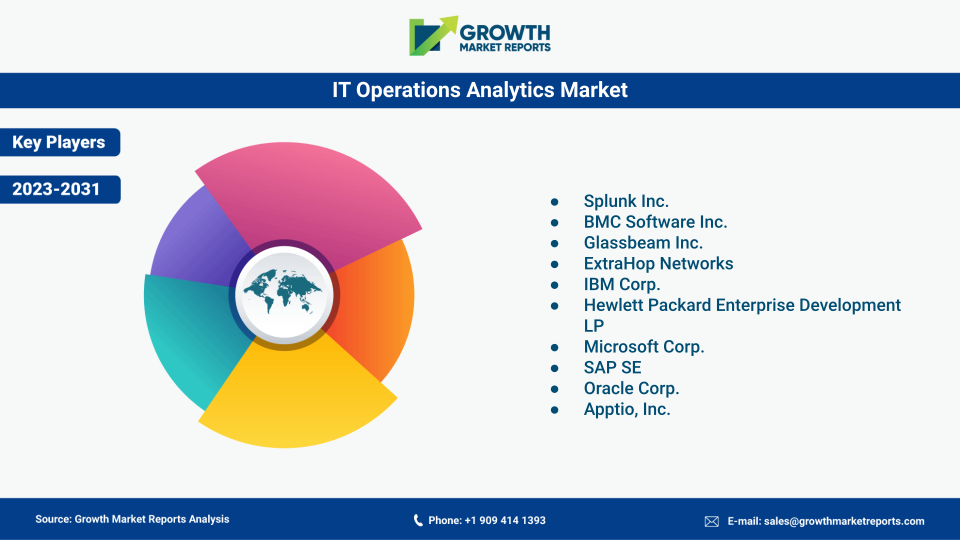
Key players competing in the market are Splunk Inc.; BMC Software Inc.; Glassbeam Inc.; ExtraHop Networks; IBM Corp.; Hewlett Packard Enterprise Development LP; Microsoft Corp.; SAP SE; Oracle Corp.; and Apptio, Inc.
Many of these players have adopted business strategies such as collaborations, partnerships, alliances, acquisitions, and mergers in order to increase their operation expansion, consumer base, and market position globally.
SMEs are increasingly adopting cloud-based analytics solutions due to lower upfront costs, ease of deployment, and the ability to scale as their business grows, enabling them to compete more effectively.
Challenges include the complexity of integrating analytics with legacy systems, data privacy and security concerns, and compliance requirements, especially in regulated industries.
Key players include IBM Corporation, Splunk Inc., SAP SE, Oracle Corporation, Microsoft Corporation, Hewlett Packard Enterprise (HPE), AppDynamics (Cisco), Elastic NV, Moogsoft, and Sumo Logic.
The BFSI, healthcare, retail, IT and telecommunications, manufacturing, and government sectors are among the largest adopters due to their need for reliability, security, and regulatory compliance.
Major applications include real-time log analytics, application performance management, infrastructure management, network management, and security & compliance management.
IT Operations Analytics solutions are deployed via on-premises, cloud, and increasingly hybrid models, each catering to different organizational needs for security, scalability, and flexibility.
North America leads the market, followed by Europe. The Asia Pacific region is emerging as a high-growth market, with Latin America and the Middle East & Africa also experiencing steady growth.
Key growth drivers include the rapid adoption of cloud computing, proliferation of big data, demand for real-time insights, digital transformation, and the integration of AI and machine learning into analytics platforms.
The IT Operations Analytics market is expected to grow at a CAGR of 16.8% from 2025 to 2033, reaching approximately USD 50.5 billion by 2033.
The global IT Operations Analytics market size in 2024 is estimated at USD 15.2 billion, driven by increasing IT complexity and the need for advanced analytics.