Asset Performance Management Market Research Report 2033

Asset Performance Management Market Research Report 2033

Segments - by Component (Software, Services), by Deployment Mode (On-Premises, Cloud), by Enterprise Size (Small and Medium Enterprises, Large Enterprises), by Industry Vertical (Oil & Gas, Energy & Utilities, Manufacturing, Healthcare, Transportation, Chemicals, Mining, Others)

https://growthmarketreports.com/Raksha
Author : Raksha Sharma
https://growthmarketreports.com/Vaibhav
Fact-checked by : V. Chandola
https://growthmarketreports.com/Shruti
Editor : Shruti Bhat

Upcoming | Report ID :ICT-SE-3183 | 4.8 Rating | 74 Reviews | 253 Pages | Format : Docx PDF

Report Description


Asset Performance Management Market Outlook

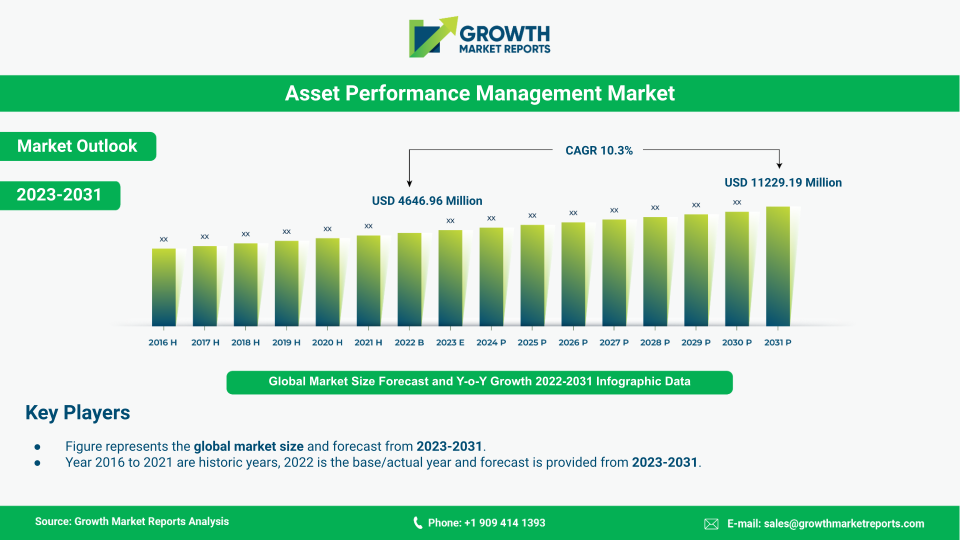
According to our latest research, the global Asset Performance Management (APM) market size reached USD 4.8 billion in 2024 and is projected to grow at a robust CAGR of 11.2% from 2025 to 2033. By the end of 2033, the market is forecasted to attain a value of USD 13.3 billion. This growth is primarily driven by the increasing need for real-time monitoring, predictive maintenance, and the optimization of asset lifecycles across various industry verticals. The rapid adoption of digital transformation initiatives and the integration of advanced analytics and IoT technologies are further contributing to the expansion of the Asset Performance Management market on a global scale.

A significant growth factor for the Asset Performance Management market is the rising demand for predictive maintenance solutions. Organizations globally are seeking to minimize unplanned downtime and extend the operational life of their critical assets. By leveraging APM solutions, companies can utilize real-time data and advanced analytics to predict potential failures before they occur, thereby reducing maintenance costs and optimizing asset utilization. This shift towards condition-based and predictive maintenance is particularly pronounced in asset-intensive industries such as oil & gas, energy & utilities, and manufacturing, where even minor disruptions can lead to substantial financial losses. The integration of artificial intelligence (AI) and machine learning algorithms into APM platforms is further enhancing their predictive capabilities, making them indispensable tools for modern enterprises.

Another key driver propelling the Asset Performance Management market is the growing emphasis on regulatory compliance and safety standards. Industries such as healthcare, chemicals, and mining are subject to stringent regulations regarding asset integrity and operational safety. APM solutions enable organizations to maintain comprehensive records of asset performance, streamline compliance reporting, and ensure adherence to industry standards. This not only helps in avoiding regulatory penalties but also enhances the overall safety and reliability of operations. Furthermore, the increasing focus on sustainability and energy efficiency is pushing organizations to adopt APM solutions that can help monitor and optimize energy consumption, reduce emissions, and support corporate social responsibility initiatives.

The ongoing digital transformation and the proliferation of Industrial Internet of Things (IIoT) devices are also fueling the growth of the Asset Performance Management market. The ability to collect, aggregate, and analyze vast amounts of data from connected assets enables organizations to gain deeper insights into asset health and performance. This data-driven approach facilitates proactive decision-making, reduces operational risks, and drives continuous improvement. Additionally, cloud-based APM solutions are gaining traction due to their scalability, flexibility, and lower total cost of ownership, making them particularly attractive to small and medium enterprises that may lack extensive IT infrastructure. As digitalization continues to reshape industrial operations, the adoption of APM solutions is expected to accelerate further.

In the realm of asset management, Production Asset Management plays a pivotal role by focusing on optimizing the performance and efficiency of production assets. This involves a comprehensive approach to managing the lifecycle of production equipment, from acquisition to disposal, ensuring that assets are utilized to their fullest potential. By implementing Production Asset Management strategies, organizations can enhance their production processes, reduce downtime, and improve overall operational efficiency. This is particularly crucial in industries such as manufacturing and energy, where the seamless operation of production assets directly impacts the bottom line. The integration of advanced technologies, such as IoT and AI, into Production Asset Management systems further enhances their capabilities, enabling real-time monitoring and predictive maintenance of production assets.

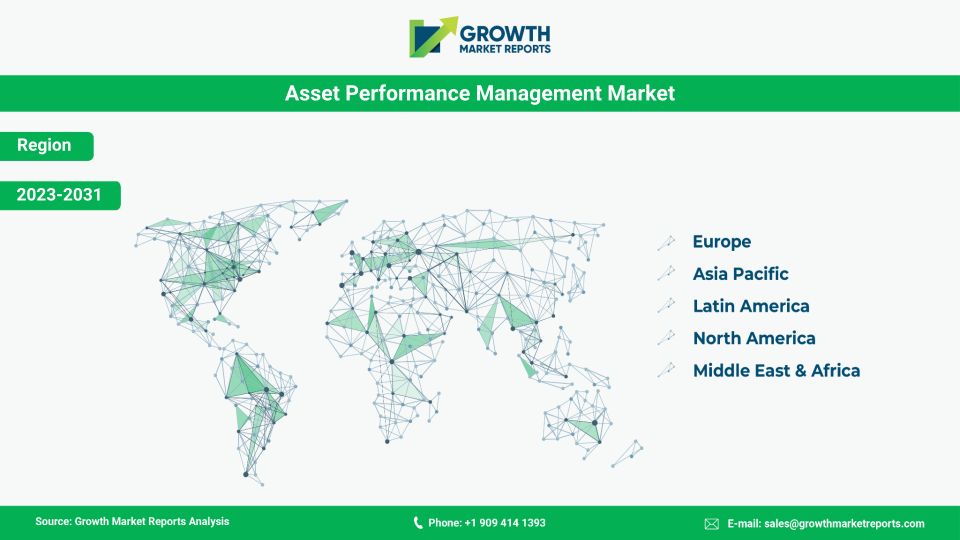
From a regional perspective, North America currently dominates the Asset Performance Management market, accounting for the largest share in 2024. This is attributed to the early adoption of advanced technologies, a strong presence of leading APM solution providers, and significant investments in digital infrastructure. Europe follows closely, driven by strict regulatory frameworks and a high concentration of asset-intensive industries. Meanwhile, the Asia Pacific region is witnessing the fastest growth, fueled by rapid industrialization, expanding manufacturing sectors, and increasing awareness of the benefits of asset optimization. Latin America and the Middle East & Africa are also emerging as promising markets, supported by ongoing infrastructure development and modernization efforts in key industries.

Global Asset Performance Management Industry Outlook

Component Analysis

The Asset Performance Management market is segmented by component into software and services, with each playing a crucial role in the overall ecosystem. The software segment encompasses a wide range of solutions, including predictive analytics, asset health management, reliability-centered maintenance, and risk-based inspection. These software solutions are designed to provide actionable insights by analyzing real-time and historical data from various assets. The increasing adoption of cloud-based APM software, which offers seamless integration with enterprise systems and enables remote monitoring, is further driving the growth of this segment. Organizations are increasingly prioritizing software solutions that offer advanced visualization, customizable dashboards, and robust reporting capabilities to support data-driven decision-making.

The services segment, on the other hand, includes consulting, implementation, training, and support services. As APM solutions become more sophisticated, organizations are seeking expert guidance to ensure successful deployment and maximize return on investment. Consulting services help enterprises assess their asset management needs, develop tailored strategies, and select the most appropriate APM solutions. Implementation services ensure smooth integration with existing IT and OT systems, while training services equip employees with the necessary skills to operate and maintain the solutions effectively. Ongoing support and maintenance services are critical for ensuring optimal performance, addressing technical issues, and keeping the solutions up to date with the latest features and security patches.

The synergy between software and services is essential for the successful adoption and long-term success of Asset Performance Management initiatives. While software provides the technical foundation for asset monitoring and optimization, services ensure that organizations can effectively leverage these capabilities to achieve their business objectives. The demand for end-to-end APM solutions that combine robust software platforms with comprehensive service offerings is on the rise, particularly among large enterprises with complex asset portfolios. As the market continues to evolve, vendors are focusing on expanding their service portfolios and offering value-added services such as advanced analytics, remote asset monitoring, and managed APM services to differentiate themselves in a competitive landscape.

Furthermore, the increasing complexity of industrial assets and the growing need for interoperability are driving the development of open and modular APM platforms. These platforms enable seamless integration with third-party applications and data sources, allowing organizations to build customized asset management ecosystems that meet their unique requirements. The shift towards open architectures and standardized interfaces is also facilitating collaboration between different stakeholders, including asset owners, operators, service providers, and technology vendors. As a result, the component landscape of the APM market is becoming increasingly dynamic, with continuous innovation and a strong emphasis on delivering holistic solutions that address the full spectrum of asset performance management needs.

Report Scope

Attributes Details
Report Title Asset Performance Management Market Research Report 2033
By Component Software, Services
By Deployment Mode On-Premises, Cloud
By Enterprise Size Small and Medium Enterprises, Large Enterprises
By Industry Vertical Oil & Gas, Energy & Utilities, Manufacturing, Healthcare, Transportation, Chemicals, Mining, Others
Regions Covered North America, Europe, APAC, Latin America, MEA
Base Year 2024
Historic Data 2018-2023
Forecast Period 2025-2033
Number of Pages 253
Number of Tables & Figures 307
Customization Available Yes, the report can be customized as per your need.

Deployment Mode Analysis

Deployment mode is a critical consideration for organizations implementing Asset Performance Management solutions, with the market segmented into on-premises and cloud-based deployments. The on-premises deployment mode remains popular among large enterprises and organizations with stringent data security and compliance requirements. These organizations often manage sensitive or mission-critical assets and prefer to retain full control over their data and IT infrastructure. On-premises APM solutions offer greater customization and integration capabilities, allowing organizations to tailor the software to their specific operational needs. However, the high upfront costs, ongoing maintenance requirements, and limited scalability can pose challenges, particularly for organizations with constrained IT resources.

In contrast, cloud-based deployment is gaining significant traction across all industry verticals, driven by its scalability, flexibility, and cost-effectiveness. Cloud-based APM solutions eliminate the need for substantial capital investments in hardware and infrastructure, offering a subscription-based model that aligns with operational budgets. These solutions can be rapidly deployed, easily scaled to accommodate growing asset portfolios, and accessed from anywhere, enabling remote monitoring and management of assets. The cloud model also facilitates seamless updates and integration with emerging technologies such as AI, machine learning, and IoT, ensuring that organizations can stay ahead of the curve in terms of innovation and functionality.

The growing adoption of cloud-based APM solutions is particularly evident among small and medium enterprises (SMEs), which often lack the resources to manage complex on-premises systems. Cloud deployment enables SMEs to leverage advanced asset management capabilities without the burden of managing infrastructure, making it an attractive option for organizations looking to enhance operational efficiency and competitiveness. Additionally, the rise of hybrid deployment models, which combine the benefits of both on-premises and cloud solutions, is enabling organizations to address specific business needs while ensuring data security and regulatory compliance. This hybrid approach is particularly relevant in industries with diverse asset portfolios and varying operational requirements.

As the Asset Performance Management market continues to evolve, deployment flexibility will remain a key differentiator for solution providers. Vendors are increasingly offering modular, cloud-native platforms that can be easily integrated with existing systems and expanded as business needs change. The ability to support multiple deployment modes, including private, public, and hybrid clouds, is becoming a standard requirement for organizations seeking to future-proof their asset management strategies. As digital transformation accelerates and remote operations become more prevalent, the demand for cloud-based and hybrid APM solutions is expected to grow, shaping the future trajectory of the market.

Enterprise Size Analysis

The Asset Performance Management market is segmented by enterprise size into small and medium enterprises (SMEs) and large enterprises, each with distinct needs and adoption patterns. Large enterprises, with their extensive asset bases and complex operational environments, have traditionally been the primary adopters of APM solutions. These organizations require robust, scalable platforms capable of managing thousands of assets across multiple locations and business units. Large enterprises often have dedicated IT and maintenance teams, enabling them to fully leverage the advanced features of APM solutions, such as predictive analytics, risk-based maintenance, and real-time monitoring. The focus for large enterprises is on maximizing asset uptime, reducing maintenance costs, and ensuring regulatory compliance, all of which are critical for maintaining competitiveness in asset-intensive industries.

Small and medium enterprises, while historically slower to adopt APM solutions, are increasingly recognizing the value of asset optimization in driving operational efficiency and business growth. The proliferation of affordable, cloud-based APM solutions has lowered the barriers to entry for SMEs, enabling them to implement advanced asset management practices without significant upfront investments. SMEs are particularly attracted to the flexibility, scalability, and ease of use offered by modern APM platforms, which can be tailored to their specific needs and scaled as their operations grow. The ability to access real-time asset data and predictive insights empowers SMEs to make informed decisions, reduce downtime, and extend the lifespan of critical equipment, thereby improving profitability and competitiveness.

The unique challenges faced by SMEs, such as limited IT resources and expertise, are being addressed by solution providers through user-friendly interfaces, pre-configured templates, and comprehensive support services. Many vendors are offering turnkey APM solutions designed specifically for SMEs, with simplified deployment processes and intuitive dashboards that require minimal training. These solutions often include built-in analytics, mobile access, and integration with commonly used business applications, enabling SMEs to quickly realize the benefits of asset performance management. As awareness of the advantages of APM continues to grow, adoption rates among SMEs are expected to accelerate, contributing to the overall expansion of the market.

For both large enterprises and SMEs, the ability to demonstrate a clear return on investment is a critical factor influencing APM adoption. Solution providers are increasingly focusing on delivering measurable outcomes, such as reduced maintenance costs, improved asset availability, and enhanced safety performance. By offering flexible pricing models, modular solutions, and value-added services, vendors are catering to the diverse needs of organizations of all sizes. As digitalization becomes more pervasive and the competitive landscape intensifies, the adoption of APM solutions across enterprises of all sizes is set to rise, driving sustained growth in the market.

Industry Vertical Analysis

The Asset Performance Management market serves a diverse array of industry verticals, each with unique requirements and challenges. The oil & gas sector is one of the largest adopters of APM solutions, driven by the need to maximize asset uptime, ensure safety, and comply with stringent regulatory standards. In this industry, APM platforms are used to monitor the health of critical equipment such as pumps, compressors, and pipelines, enabling predictive maintenance and reducing the risk of costly unplanned shutdowns. The integration of APM with IoT sensors and advanced analytics is transforming asset management practices in oil & gas, supporting the transition towards digital oilfields and enhancing overall operational efficiency.

The energy & utilities sector is another major market for Asset Performance Management, with organizations seeking to optimize the performance of power generation, transmission, and distribution assets. APM solutions enable utilities to monitor the condition of assets in real time, predict failures, and schedule maintenance activities proactively. This is particularly important in the context of aging infrastructure, increasing demand for renewable energy, and the need to ensure grid reliability. By leveraging APM, utilities can reduce operational costs, improve asset reliability, and support the integration of distributed energy resources, thereby enhancing the resilience and sustainability of energy systems.

Manufacturing is a key vertical driving the adoption of APM solutions, as companies strive to improve productivity, reduce downtime, and maintain high-quality standards. In the manufacturing sector, APM platforms are used to monitor the performance of machinery, production lines, and critical infrastructure, enabling real-time visibility and data-driven decision-making. The adoption of Industry 4.0 principles, including the use of IoT, AI, and advanced analytics, is accelerating the deployment of APM solutions in manufacturing, supporting the shift towards smart factories and digital twins. By optimizing asset performance, manufacturers can increase throughput, reduce waste, and enhance overall competitiveness.

Other industry verticals, such as healthcare, transportation, chemicals, and mining, are also embracing Asset Performance Management to address specific operational challenges. In healthcare, APM solutions are used to ensure the reliability and safety of medical equipment, supporting patient care and regulatory compliance. The transportation sector relies on APM to maintain the performance of vehicles, infrastructure, and signaling systems, improving safety and efficiency. In chemicals and mining, APM platforms help manage the risks associated with hazardous materials and complex processes, ensuring operational continuity and compliance with environmental regulations. As the benefits of asset optimization become increasingly evident, adoption across a broad range of industries is expected to drive sustained growth in the APM market.

Opportunities & Threats

The Asset Performance Management market presents significant opportunities for growth and innovation, particularly in the context of digital transformation and the adoption of advanced technologies. The increasing integration of AI, machine learning, and IoT into APM platforms is enabling organizations to unlock new levels of insight and automation, transforming asset management practices across industries. The emergence of digital twins, which create virtual replicas of physical assets, is providing organizations with unprecedented visibility into asset performance, enabling proactive maintenance and optimization. As organizations continue to invest in digitalization and seek to improve operational efficiency, the demand for innovative APM solutions is expected to rise, creating new opportunities for solution providers and technology vendors.

Another major opportunity lies in the expansion of APM solutions into emerging markets and industry verticals. As developing regions such as Asia Pacific, Latin America, and the Middle East & Africa undergo rapid industrialization and infrastructure development, the need for effective asset management is becoming increasingly critical. Organizations in these regions are seeking to adopt best practices and modern technologies to enhance asset reliability, reduce costs, and ensure compliance with evolving regulatory standards. Additionally, the growing focus on sustainability and energy efficiency is driving the adoption of APM solutions that support environmental monitoring, resource optimization, and emissions reduction. By addressing the unique needs of emerging markets and aligning with global sustainability trends, APM vendors can tap into new growth opportunities and expand their market presence.

Despite the numerous opportunities, the Asset Performance Management market also faces several challenges and threats that could hinder its growth. One of the primary restraining factors is the high cost and complexity associated with implementing and integrating APM solutions, particularly for organizations with legacy systems and limited IT resources. The need for significant upfront investments, ongoing maintenance, and specialized expertise can be a barrier to adoption, especially for small and medium enterprises. Additionally, concerns related to data security, privacy, and regulatory compliance can limit the willingness of organizations to adopt cloud-based or connected APM solutions. To overcome these challenges, solution providers must focus on delivering cost-effective, user-friendly platforms with robust security features and comprehensive support services, ensuring that organizations of all sizes can successfully implement and benefit from Asset Performance Management.

Regional Outlook

North America continues to lead the global Asset Performance Management market, with a market size of approximately USD 1.9 billion in 2024. This dominance can be attributed to the regionÂ’s early adoption of advanced technologies, strong focus on operational efficiency, and significant investments in digital infrastructure. The presence of major APM solution providers and a high concentration of asset-intensive industries, such as oil & gas, utilities, and manufacturing, further contribute to the regionÂ’s leadership position. Organizations in North America are increasingly leveraging APM solutions to drive digital transformation, enhance asset reliability, and comply with stringent regulatory standards. The region is expected to maintain its leadership throughout the forecast period, supported by ongoing innovation and the expansion of cloud-based APM offerings.

Europe holds the second-largest share of the Asset Performance Management market, with a market size of around USD 1.3 billion in 2024. The regionÂ’s growth is driven by strict regulatory frameworks, a strong emphasis on sustainability, and the widespread adoption of Industry 4.0 principles. European organizations are at the forefront of integrating APM solutions with IoT, AI, and advanced analytics to optimize asset performance and support the transition towards smart manufacturing and renewable energy. The regionÂ’s focus on environmental compliance and energy efficiency is also driving the adoption of APM solutions in the energy & utilities, chemicals, and transportation sectors. Europe is expected to witness a steady CAGR of 10.7% during the forecast period, reflecting the ongoing digital transformation and the increasing importance of asset optimization.

The Asia Pacific region is emerging as the fastest-growing market for Asset Performance Management, with a market size of approximately USD 1.1 billion in 2024. Rapid industrialization, expanding manufacturing sectors, and increasing investments in infrastructure are driving the demand for APM solutions across the region. Countries such as China, India, Japan, and South Korea are leading the adoption of digital technologies and modern asset management practices to enhance operational efficiency and competitiveness. The growing awareness of the benefits of predictive maintenance, coupled with government initiatives to promote digitalization and sustainability, is further accelerating the adoption of APM solutions in Asia Pacific. The region is expected to register a robust CAGR of 13.5% over the forecast period, outpacing other regions and contributing significantly to the global marketÂ’s growth trajectory.

Asset Performance Management Market Statistics

Competitor Outlook

The Asset Performance Management market is characterized by intense competition, with a mix of established players and emerging innovators vying for market share. Leading companies are continuously investing in research and development to enhance their product offerings, integrate advanced technologies, and deliver greater value to customers. The competitive landscape is marked by strategic partnerships, mergers and acquisitions, and the expansion of service portfolios to address the evolving needs of organizations across different industry verticals. Solution providers are focusing on developing modular, scalable platforms that support multiple deployment modes and offer seamless integration with existing enterprise systems. The ability to deliver end-to-end solutions, combining robust software with comprehensive services, is a key differentiator in the market.

Innovation is a central theme in the Asset Performance Management market, with vendors leveraging AI, machine learning, IoT, and cloud computing to deliver advanced capabilities such as predictive analytics, digital twins, and remote asset monitoring. The integration of these technologies is enabling organizations to gain deeper insights into asset health, automate maintenance processes, and optimize performance in real time. Solution providers are also prioritizing user experience, offering intuitive interfaces, customizable dashboards, and mobile access to ensure that organizations can easily adopt and utilize APM solutions. As the market evolves, the ability to deliver measurable outcomes, such as reduced downtime, lower maintenance costs, and improved asset reliability, will be critical for maintaining a competitive edge.

The competitive landscape is also shaped by the growing importance of partnerships and ecosystem development. Leading vendors are collaborating with technology providers, system integrators, and industry associations to deliver integrated solutions that address the full spectrum of asset management needs. By building strong partner networks and leveraging complementary expertise, companies can accelerate innovation, expand their market reach, and deliver greater value to customers. The shift towards open, modular platforms is facilitating collaboration and enabling organizations to build customized APM ecosystems that align with their unique operational requirements.

Major companies in the Asset Performance Management market include IBM Corporation, General Electric (GE) Digital, Siemens AG, ABB Ltd., SAP SE, Schneider Electric, Bentley Systems, Aspen Technology, and Emerson Electric Co. These industry leaders offer comprehensive APM solutions that combine advanced software platforms with a wide range of services, including consulting, implementation, and support. IBM, for example, leverages its expertise in AI and analytics to deliver predictive maintenance and asset optimization solutions for a variety of industries. GE Digital is known for its Predix platform, which provides real-time asset monitoring and predictive analytics for industrial operations. Siemens AG offers a suite of digital solutions for asset performance management, supporting the transition towards Industry 4.0 and smart manufacturing.

ABB Ltd. and Schneider Electric are recognized for their strong presence in the energy & utilities and manufacturing sectors, offering integrated APM solutions that support digitalization and sustainability initiatives. SAP SE provides asset management solutions that integrate seamlessly with enterprise resource planning (ERP) systems, enabling organizations to align asset performance with business objectives. Bentley Systems specializes in infrastructure asset management, supporting the optimization of critical assets in transportation, utilities, and construction. Aspen Technology and Emerson Electric Co. are also leading providers of APM solutions, with a focus on process industries such as chemicals, oil & gas, and mining. These companies are continuously innovating to deliver advanced capabilities, expand their global footprint, and address the evolving needs of organizations in the rapidly changing Asset Performance Management market.

Key Players

  • ABB
  • AVEVA Group
  • Aspen Technology
  • Bentley Systems
  • Emerson Electric
  • GE Digital
  • Honeywell International
  • IBM Corporation
  • OSIsoft
  • SAP SE
  • Siemens AG
  • Schneider Electric
  • Rockwell Automation
  • DNV GL
  • Uptake Technologies
  • Oracle Corporation
  • IPS Intelligent Process Solutions
  • eMaint Enterprises
  • ARMS Reliability
  • ABB Ability
Asset Performance Management Market Overview

Segments

The Asset Performance Management market has been segmented on the basis of

Component

  • Software
  • Services

Deployment Mode

  • On-Premises
  • Cloud

Enterprise Size

  • Small and Medium Enterprises
  • Large Enterprises

Industry Vertical

  • Oil & Gas
  • Energy & Utilities
  • Manufacturing
  • Healthcare
  • Transportation
  • Chemicals
  • Mining
  • Others

Competitive Landscape

Key players in the asset performance management market are AVEVA Group plc, DNV GL, Bentley Systems, Nexus Global Business Solutions, Inc, Oracle Corporation Incorporated, Flowserve Corporation, GE Digital, IBM Corporation, MaxGrip B.V, SAP SE, SAS Institute Inc. These players engage in mergers & acquisitions, collaborations, agreements, and partnerships to strengthen their geographical presence.
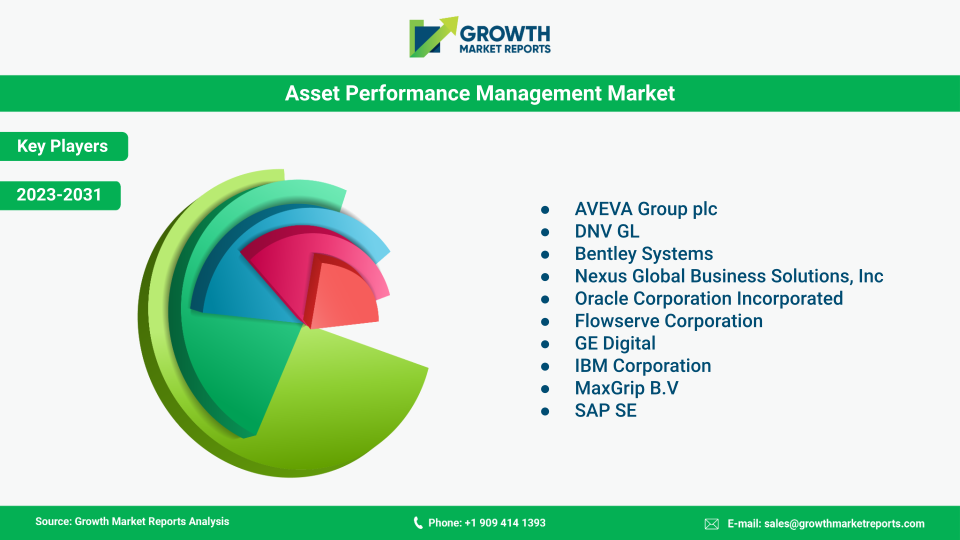

Asset Performance Management Market Key Players

Frequently Asked Questions

Digital transformation is accelerating APM adoption by enabling real-time data collection, advanced analytics, and integration with IoT devices. This leads to improved asset insights, proactive decision-making, and continuous operational improvement.

Challenges include high implementation and integration costs, complexity of legacy systems, limited IT resources in some organizations, and concerns about data security and regulatory compliance, especially with cloud-based solutions.

Key players include IBM Corporation, GE Digital, Siemens AG, ABB Ltd., SAP SE, Schneider Electric, Bentley Systems, Aspen Technology, Emerson Electric Co., Honeywell International, and AVEVA Group.

North America leads the global APM market, followed by Europe. The Asia Pacific region is the fastest-growing market due to rapid industrialization and increasing adoption of digital technologies.

Predictive maintenance uses real-time data and analytics to anticipate equipment failures before they occur. This minimizes unplanned downtime, reduces maintenance costs, and optimizes asset utilization, especially in asset-heavy industries.

APM solutions can be deployed on-premises or in the cloud. On-premises deployment is preferred by organizations with strict data security needs, while cloud-based solutions offer scalability, flexibility, and cost-effectiveness, making them popular among small and medium enterprises.

Major adopters include oil & gas, energy & utilities, manufacturing, healthcare, transportation, chemicals, and mining industries, all of which rely on asset-intensive operations.

Key growth drivers include the increasing need for real-time monitoring, predictive maintenance, digital transformation, integration of IoT and advanced analytics, regulatory compliance, and the focus on sustainability and energy efficiency.

The global Asset Performance Management market reached USD 4.8 billion in 2024 and is projected to grow at a CAGR of 11.2% from 2025 to 2033, reaching USD 13.3 billion by the end of 2033.

Asset Performance Management (APM) refers to the use of software and services to monitor, maintain, and optimize the performance of physical assets such as machinery, equipment, and infrastructure. It is important because it helps organizations reduce unplanned downtime, extend asset lifecycles, improve operational efficiency, and ensure regulatory compliance.

Table Of Content

Chapter 1 Executive Summary
Chapter 2 Assumptions and Acronyms Used
Chapter 3 Research Methodology
Chapter 4 Asset Performance Management Market Overview
   4.1 Introduction
      4.1.1 Market Taxonomy
      4.1.2 Market Definition
      4.1.3 Macro-Economic Factors Impacting the Market Growth
   4.2 Asset Performance Management Market Dynamics
      4.2.1 Market Drivers
      4.2.2 Market Restraints
      4.2.3 Market Opportunity
   4.3 Asset Performance Management Market - Supply Chain Analysis
      4.3.1 List of Key Suppliers
      4.3.2 List of Key Distributors
      4.3.3 List of Key Consumers
   4.4 Key Forces Shaping the Asset Performance Management Market
      4.4.1 Bargaining Power of Suppliers
      4.4.2 Bargaining Power of Buyers
      4.4.3 Threat of Substitution
      4.4.4 Threat of New Entrants
      4.4.5 Competitive Rivalry
   4.5 Global Asset Performance Management Market Size & Forecast, 2023-2032
      4.5.1 Asset Performance Management Market Size and Y-o-Y Growth
      4.5.2 Asset Performance Management Market Absolute $ Opportunity

Chapter 5 Global Asset Performance Management Market Analysis and Forecast By Component
   5.1 Introduction
      5.1.1 Key Market Trends & Growth Opportunities By Component
      5.1.2 Basis Point Share (BPS) Analysis By Component
      5.1.3 Absolute $ Opportunity Assessment By Component
   5.2 Asset Performance Management Market Size Forecast By Component
      5.2.1 Software
      5.2.2 Services
   5.3 Market Attractiveness Analysis By Component

Chapter 6 Global Asset Performance Management Market Analysis and Forecast By Deployment Mode
   6.1 Introduction
      6.1.1 Key Market Trends & Growth Opportunities By Deployment Mode
      6.1.2 Basis Point Share (BPS) Analysis By Deployment Mode
      6.1.3 Absolute $ Opportunity Assessment By Deployment Mode
   6.2 Asset Performance Management Market Size Forecast By Deployment Mode
      6.2.1 On-Premises
      6.2.2 Cloud
   6.3 Market Attractiveness Analysis By Deployment Mode

Chapter 7 Global Asset Performance Management Market Analysis and Forecast By Enterprise Size
   7.1 Introduction
      7.1.1 Key Market Trends & Growth Opportunities By Enterprise Size
      7.1.2 Basis Point Share (BPS) Analysis By Enterprise Size
      7.1.3 Absolute $ Opportunity Assessment By Enterprise Size
   7.2 Asset Performance Management Market Size Forecast By Enterprise Size
      7.2.1 Small and Medium Enterprises
      7.2.2 Large Enterprises
   7.3 Market Attractiveness Analysis By Enterprise Size

Chapter 8 Global Asset Performance Management Market Analysis and Forecast By Industry Vertical
   8.1 Introduction
      8.1.1 Key Market Trends & Growth Opportunities By Industry Vertical
      8.1.2 Basis Point Share (BPS) Analysis By Industry Vertical
      8.1.3 Absolute $ Opportunity Assessment By Industry Vertical
   8.2 Asset Performance Management Market Size Forecast By Industry Vertical
      8.2.1 Oil & Gas
      8.2.2 Energy & Utilities
      8.2.3 Manufacturing
      8.2.4 Healthcare
      8.2.5 Transportation
      8.2.6 Chemicals
      8.2.7 Mining
      8.2.8 Others
   8.3 Market Attractiveness Analysis By Industry Vertical

Chapter 9 Global Asset Performance Management Market Analysis and Forecast by Region
   9.1 Introduction
      9.1.1 Key Market Trends & Growth Opportunities By Region
      9.1.2 Basis Point Share (BPS) Analysis By Region
      9.1.3 Absolute $ Opportunity Assessment By Region
   9.2 Asset Performance Management Market Size Forecast By Region
      9.2.1 North America
      9.2.2 Europe
      9.2.3 Asia Pacific
      9.2.4 Latin America
      9.2.5 Middle East & Africa (MEA)
   9.3 Market Attractiveness Analysis By Region

Chapter 10 Coronavirus Disease (COVID-19) Impact 
   10.1 Introduction 
   10.2 Current & Future Impact Analysis 
   10.3 Economic Impact Analysis 
   10.4 Government Policies 
   10.5 Investment Scenario

Chapter 11 North America Asset Performance Management Analysis and Forecast
   11.1 Introduction
   11.2 North America Asset Performance Management Market Size Forecast by Country
      11.2.1 U.S.
      11.2.2 Canada
   11.3 Basis Point Share (BPS) Analysis by Country
   11.4 Absolute $ Opportunity Assessment by Country
   11.5 Market Attractiveness Analysis by Country
   11.6 North America Asset Performance Management Market Size Forecast By Component
      11.6.1 Software
      11.6.2 Services
   11.7 Basis Point Share (BPS) Analysis By Component 
   11.8 Absolute $ Opportunity Assessment By Component 
   11.9 Market Attractiveness Analysis By Component
   11.10 North America Asset Performance Management Market Size Forecast By Deployment Mode
      11.10.1 On-Premises
      11.10.2 Cloud
   11.11 Basis Point Share (BPS) Analysis By Deployment Mode 
   11.12 Absolute $ Opportunity Assessment By Deployment Mode 
   11.13 Market Attractiveness Analysis By Deployment Mode
   11.14 North America Asset Performance Management Market Size Forecast By Enterprise Size
      11.14.1 Small and Medium Enterprises
      11.14.2 Large Enterprises
   11.15 Basis Point Share (BPS) Analysis By Enterprise Size 
   11.16 Absolute $ Opportunity Assessment By Enterprise Size 
   11.17 Market Attractiveness Analysis By Enterprise Size
   11.18 North America Asset Performance Management Market Size Forecast By Industry Vertical
      11.18.1 Oil & Gas
      11.18.2 Energy & Utilities
      11.18.3 Manufacturing
      11.18.4 Healthcare
      11.18.5 Transportation
      11.18.6 Chemicals
      11.18.7 Mining
      11.18.8 Others
   11.19 Basis Point Share (BPS) Analysis By Industry Vertical 
   11.20 Absolute $ Opportunity Assessment By Industry Vertical 
   11.21 Market Attractiveness Analysis By Industry Vertical

Chapter 12 Europe Asset Performance Management Analysis and Forecast
   12.1 Introduction
   12.2 Europe Asset Performance Management Market Size Forecast by Country
      12.2.1 Germany
      12.2.2 France
      12.2.3 Italy
      12.2.4 U.K.
      12.2.5 Spain
      12.2.6 Russia
      12.2.7 Rest of Europe
   12.3 Basis Point Share (BPS) Analysis by Country
   12.4 Absolute $ Opportunity Assessment by Country
   12.5 Market Attractiveness Analysis by Country
   12.6 Europe Asset Performance Management Market Size Forecast By Component
      12.6.1 Software
      12.6.2 Services
   12.7 Basis Point Share (BPS) Analysis By Component 
   12.8 Absolute $ Opportunity Assessment By Component 
   12.9 Market Attractiveness Analysis By Component
   12.10 Europe Asset Performance Management Market Size Forecast By Deployment Mode
      12.10.1 On-Premises
      12.10.2 Cloud
   12.11 Basis Point Share (BPS) Analysis By Deployment Mode 
   12.12 Absolute $ Opportunity Assessment By Deployment Mode 
   12.13 Market Attractiveness Analysis By Deployment Mode
   12.14 Europe Asset Performance Management Market Size Forecast By Enterprise Size
      12.14.1 Small and Medium Enterprises
      12.14.2 Large Enterprises
   12.15 Basis Point Share (BPS) Analysis By Enterprise Size 
   12.16 Absolute $ Opportunity Assessment By Enterprise Size 
   12.17 Market Attractiveness Analysis By Enterprise Size
   12.18 Europe Asset Performance Management Market Size Forecast By Industry Vertical
      12.18.1 Oil & Gas
      12.18.2 Energy & Utilities
      12.18.3 Manufacturing
      12.18.4 Healthcare
      12.18.5 Transportation
      12.18.6 Chemicals
      12.18.7 Mining
      12.18.8 Others
   12.19 Basis Point Share (BPS) Analysis By Industry Vertical 
   12.20 Absolute $ Opportunity Assessment By Industry Vertical 
   12.21 Market Attractiveness Analysis By Industry Vertical

Chapter 13 Asia Pacific Asset Performance Management Analysis and Forecast
   13.1 Introduction
   13.2 Asia Pacific Asset Performance Management Market Size Forecast by Country
      13.2.1 China
      13.2.2 Japan
      13.2.3 South Korea
      13.2.4 India
      13.2.5 Australia
      13.2.6 South East Asia (SEA)
      13.2.7 Rest of Asia Pacific (APAC)
   13.3 Basis Point Share (BPS) Analysis by Country
   13.4 Absolute $ Opportunity Assessment by Country
   13.5 Market Attractiveness Analysis by Country
   13.6 Asia Pacific Asset Performance Management Market Size Forecast By Component
      13.6.1 Software
      13.6.2 Services
   13.7 Basis Point Share (BPS) Analysis By Component 
   13.8 Absolute $ Opportunity Assessment By Component 
   13.9 Market Attractiveness Analysis By Component
   13.10 Asia Pacific Asset Performance Management Market Size Forecast By Deployment Mode
      13.10.1 On-Premises
      13.10.2 Cloud
   13.11 Basis Point Share (BPS) Analysis By Deployment Mode 
   13.12 Absolute $ Opportunity Assessment By Deployment Mode 
   13.13 Market Attractiveness Analysis By Deployment Mode
   13.14 Asia Pacific Asset Performance Management Market Size Forecast By Enterprise Size
      13.14.1 Small and Medium Enterprises
      13.14.2 Large Enterprises
   13.15 Basis Point Share (BPS) Analysis By Enterprise Size 
   13.16 Absolute $ Opportunity Assessment By Enterprise Size 
   13.17 Market Attractiveness Analysis By Enterprise Size
   13.18 Asia Pacific Asset Performance Management Market Size Forecast By Industry Vertical
      13.18.1 Oil & Gas
      13.18.2 Energy & Utilities
      13.18.3 Manufacturing
      13.18.4 Healthcare
      13.18.5 Transportation
      13.18.6 Chemicals
      13.18.7 Mining
      13.18.8 Others
   13.19 Basis Point Share (BPS) Analysis By Industry Vertical 
   13.20 Absolute $ Opportunity Assessment By Industry Vertical 
   13.21 Market Attractiveness Analysis By Industry Vertical

Chapter 14 Latin America Asset Performance Management Analysis and Forecast
   14.1 Introduction
   14.2 Latin America Asset Performance Management Market Size Forecast by Country
      14.2.1 Brazil
      14.2.2 Mexico
      14.2.3 Rest of Latin America (LATAM)
   14.3 Basis Point Share (BPS) Analysis by Country
   14.4 Absolute $ Opportunity Assessment by Country
   14.5 Market Attractiveness Analysis by Country
   14.6 Latin America Asset Performance Management Market Size Forecast By Component
      14.6.1 Software
      14.6.2 Services
   14.7 Basis Point Share (BPS) Analysis By Component 
   14.8 Absolute $ Opportunity Assessment By Component 
   14.9 Market Attractiveness Analysis By Component
   14.10 Latin America Asset Performance Management Market Size Forecast By Deployment Mode
      14.10.1 On-Premises
      14.10.2 Cloud
   14.11 Basis Point Share (BPS) Analysis By Deployment Mode 
   14.12 Absolute $ Opportunity Assessment By Deployment Mode 
   14.13 Market Attractiveness Analysis By Deployment Mode
   14.14 Latin America Asset Performance Management Market Size Forecast By Enterprise Size
      14.14.1 Small and Medium Enterprises
      14.14.2 Large Enterprises
   14.15 Basis Point Share (BPS) Analysis By Enterprise Size 
   14.16 Absolute $ Opportunity Assessment By Enterprise Size 
   14.17 Market Attractiveness Analysis By Enterprise Size
   14.18 Latin America Asset Performance Management Market Size Forecast By Industry Vertical
      14.18.1 Oil & Gas
      14.18.2 Energy & Utilities
      14.18.3 Manufacturing
      14.18.4 Healthcare
      14.18.5 Transportation
      14.18.6 Chemicals
      14.18.7 Mining
      14.18.8 Others
   14.19 Basis Point Share (BPS) Analysis By Industry Vertical 
   14.20 Absolute $ Opportunity Assessment By Industry Vertical 
   14.21 Market Attractiveness Analysis By Industry Vertical

Chapter 15 Middle East & Africa (MEA) Asset Performance Management Analysis and Forecast
   15.1 Introduction
   15.2 Middle East & Africa (MEA) Asset Performance Management Market Size Forecast by Country
      15.2.1 Saudi Arabia
      15.2.2 South Africa
      15.2.3 UAE
      15.2.4 Rest of Middle East & Africa (MEA)
   15.3 Basis Point Share (BPS) Analysis by Country
   15.4 Absolute $ Opportunity Assessment by Country
   15.5 Market Attractiveness Analysis by Country
   15.6 Middle East & Africa (MEA) Asset Performance Management Market Size Forecast By Component
      15.6.1 Software
      15.6.2 Services
   15.7 Basis Point Share (BPS) Analysis By Component 
   15.8 Absolute $ Opportunity Assessment By Component 
   15.9 Market Attractiveness Analysis By Component
   15.10 Middle East & Africa (MEA) Asset Performance Management Market Size Forecast By Deployment Mode
      15.10.1 On-Premises
      15.10.2 Cloud
   15.11 Basis Point Share (BPS) Analysis By Deployment Mode 
   15.12 Absolute $ Opportunity Assessment By Deployment Mode 
   15.13 Market Attractiveness Analysis By Deployment Mode
   15.14 Middle East & Africa (MEA) Asset Performance Management Market Size Forecast By Enterprise Size
      15.14.1 Small and Medium Enterprises
      15.14.2 Large Enterprises
   15.15 Basis Point Share (BPS) Analysis By Enterprise Size 
   15.16 Absolute $ Opportunity Assessment By Enterprise Size 
   15.17 Market Attractiveness Analysis By Enterprise Size
   15.18 Middle East & Africa (MEA) Asset Performance Management Market Size Forecast By Industry Vertical
      15.18.1 Oil & Gas
      15.18.2 Energy & Utilities
      15.18.3 Manufacturing
      15.18.4 Healthcare
      15.18.5 Transportation
      15.18.6 Chemicals
      15.18.7 Mining
      15.18.8 Others
   15.19 Basis Point Share (BPS) Analysis By Industry Vertical 
   15.20 Absolute $ Opportunity Assessment By Industry Vertical 
   15.21 Market Attractiveness Analysis By Industry Vertical

Chapter 16 Competition Landscape 
   16.1 Asset Performance Management Market: Competitive Dashboard
   16.2 Global Asset Performance Management Market: Market Share Analysis, 2023
   16.3 Company Profiles (Details – Overview, Financials, Developments, Strategy) 
      16.3.1 ABB
AVEVA Group
Aspen Technology
Bentley Systems
Emerson Electric
GE Digital
Honeywell International
IBM Corporation
OSIsoft
SAP SE
Siemens AG
Schneider Electric
Rockwell Automation
DNV GL
Uptake Technologies
Oracle Corporation
IPS Intelligent Process Solutions
eMaint Enterprises
ARMS Reliability
ABB Ability

Methodology

Our Clients

sinopec
Pfizer
General Electric
Honda Motor Co. Ltd.
Deloitte
The John Holland Group
Microsoft
Dassault Aviation