IGBT Market Research Report 2034

Segments - by Type (Discrete IGBT, IGBT Module), by Power Rating (Low Power, Medium Power, High Power), by Application (Consumer Electronics, Industrial Manufacturing, Automotive, Renewable Energy, Railways, Others), by End-User (Industrial, Commercial, Residential, Others)

https://growthmarketreports.com/Raksha
Author : Raksha Sharma
https://growthmarketreports.com/Vaibhav
Fact-checked by : V. Chandola
https://growthmarketreports.com/Shruti
Editor : Shruti Bhat

Last Updated : Jun, 2026 | Report ID :ICT-SE-2244 | 4.0 Rating | 72 Reviews | 294 Pages | Format : Docx PDF

Report Description

This report is updated with the latest market data and insights as of June 2026. Base year: 2025  |  Forecast period: 2026-2034


Insulated-gate Bipolar Transistor (IGBT) Market Outlook

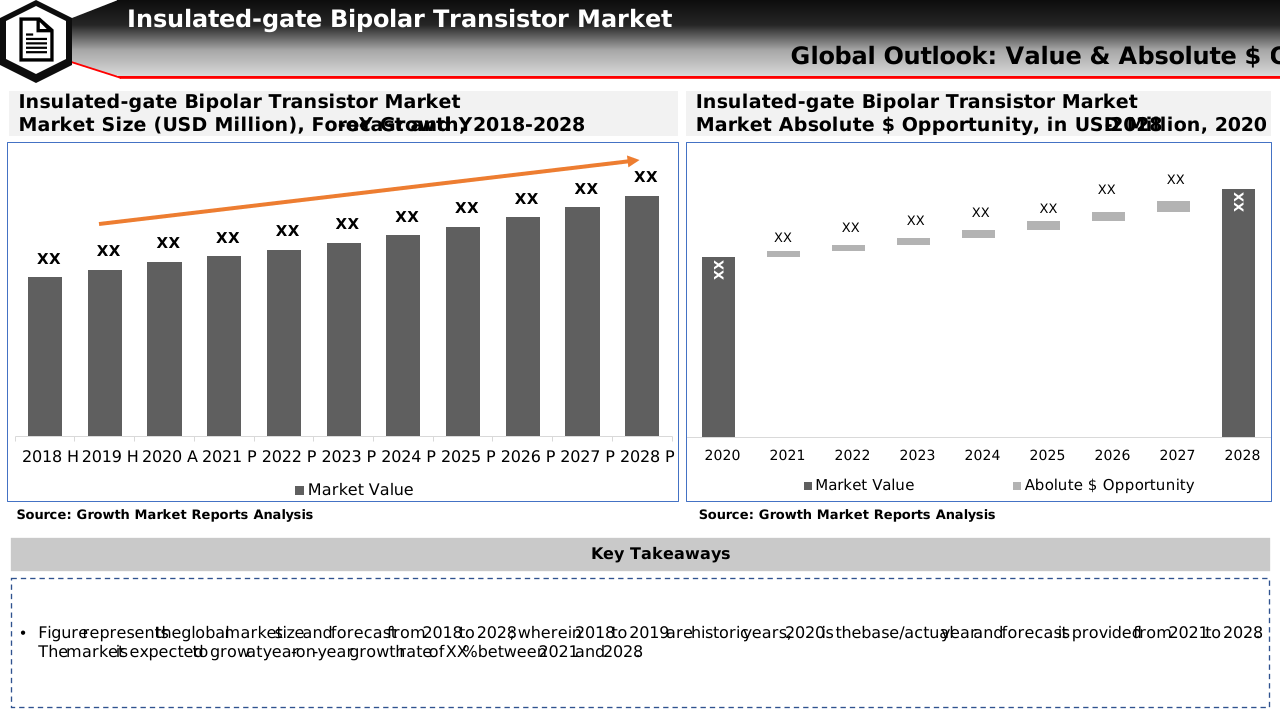
According to our latest research, the global Insulated-gate Bipolar Transistor (IGBT) market size reached USD 9.5 billion in 2025, reflecting robust demand across diverse industries. The market is projected to grow at a remarkable CAGR of 9.1% from 2026 to 2034, reaching an estimated USD 20.8 billion by 2034. This growth trajectory is primarily driven by the accelerating adoption of energy-efficient power electronics in renewable energy systems, automotive electrification, and industrial automation. As per the latest research, ongoing advancements in power semiconductor technology and the global push towards carbon neutrality are solidifying the pivotal role of IGBT devices in modern power conversion and management solutions.

A key factor propelling the growth of the Insulated-gate Bipolar Transistor (IGBT) market is the surging demand for electric vehicles (EVs) and hybrid electric vehicles (HEVs) worldwide. IGBTs are central to the efficient operation of EV drivetrains, enabling high-speed switching and reduced power losses. As governments introduce stricter emissions regulations and incentivize EV adoption, automakers are increasingly integrating IGBT-based modules for enhanced performance and energy efficiency. Additionally, the automotive sector's focus on fast-charging infrastructure and battery management systems further amplifies IGBT demand, positioning the market for sustained expansion through 2034.

The rapid growth of renewable energy installations, particularly solar and wind power, is another significant driver for the IGBT market. IGBT modules are integral to inverters and power conversion systems that connect renewable energy sources to the grid, ensuring efficient energy transfer and grid stability. As countries invest heavily in renewable energy capacity to achieve climate targets, the demand for high-power, reliable IGBT solutions is expected to surge. Furthermore, advancements in wide bandgap materials and packaging technologies are enhancing IGBT performance, making them suitable for high-voltage and high-frequency applications in utility-scale renewable projects. Complementary technologies such as the SiC isolated gate driver are increasingly co-deployed with advanced IGBT modules to maximize switching efficiency in these systems.

Industrial automation and smart manufacturing are also contributing to the expansion of the Insulated-gate Bipolar Transistor (IGBT) market. Modern industrial processes require precise motor control, energy-efficient drives, and robust power management systems, all of which rely heavily on IGBT technology. The proliferation of Industry 4.0 initiatives, coupled with the increasing adoption of robotics and industrial IoT, is amplifying the need for reliable and high-performance power semiconductors. As industries strive to optimize operational efficiency and reduce energy consumption, IGBTs are becoming indispensable components in automation solutions across sectors such as manufacturing, utilities, and transportation.

In the realm of power electronics, the development of Radiation-Hardened IGBT technology is gaining traction, particularly for applications in aerospace and defense. These specialized IGBTs are designed to withstand harsh radiation environments, making them ideal for use in satellites, space exploration vehicles, and military systems. The demand for radiation-hardened components is driven by the need for reliable performance in extreme conditions, where conventional IGBTs might fail. As the space industry expands and defense budgets increase, the market for radiation-hardened solutions is expected to grow, offering new opportunities for manufacturers to innovate and capture niche markets.

From a regional perspective, Asia Pacific continues to dominate the IGBT market, accounting for the largest share in 2025. The region's leadership is underpinned by the presence of major electronics manufacturers, rapid industrialization, and aggressive investments in renewable energy and electric mobility. North America and Europe are also witnessing significant growth, driven by advancements in automotive electrification and renewable integration. Emerging markets in Latin America and the Middle East and Africa are gradually increasing their share, supported by infrastructure modernization and energy diversification initiatives. This global expansion underscores the universal importance of IGBT technology in enabling energy-efficient and sustainable solutions.

Type Analysis

The Type segment of the Insulated-gate Bipolar Transistor (IGBT) market is bifurcated into Discrete IGBT and IGBT Module. Discrete IGBTs are single devices that offer flexibility for custom circuit designs and are widely used in applications requiring lower power ratings or specific design configurations. Their compact size and cost-effectiveness make them suitable for applications in consumer electronics, small motor drives, and portable power systems. The discrete segment continues to witness steady demand, particularly in developing markets where cost sensitivity and customization are key considerations for end-users.

Insulated-gate Bipolar Transistor Market Share by Type 2025

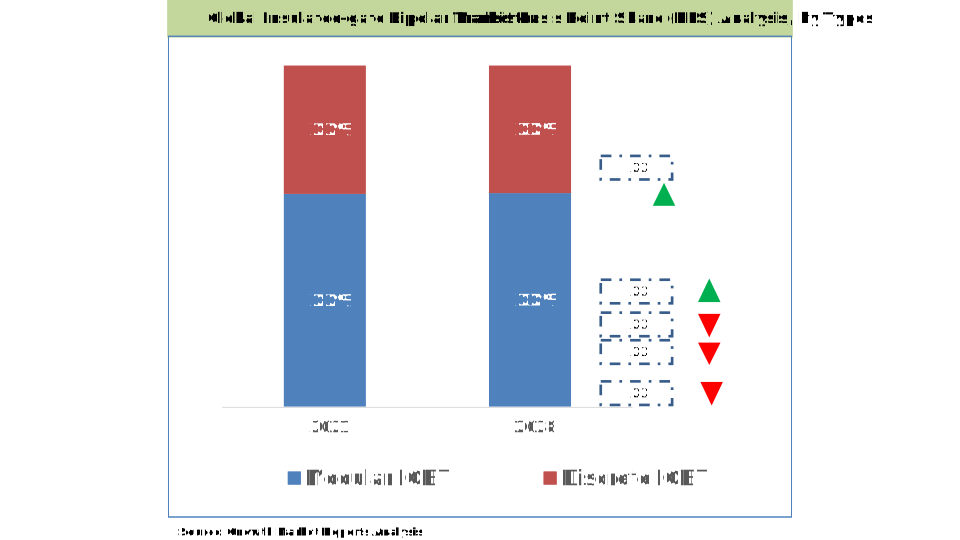
On the other hand, IGBT Modules integrate multiple IGBT chips and associated circuitry into a single package, delivering higher power handling, improved thermal management, and simplified assembly for end-users. These modules are increasingly preferred in high-power applications such as industrial drives, renewable energy inverters, railway traction, and automotive powertrains. The growing adoption of modular power electronics in electric vehicles and utility-scale renewable installations is propelling the IGBT module segment to outpace discrete IGBTs in terms of revenue contribution and technological innovation. In 2025, IGBT modules hold approximately 61.5% of total market revenue, a share expected to grow further through 2034 as high-power applications multiply.

Technological advancements in packaging, such as the development of advanced cooling solutions and the use of wide bandgap materials, are enhancing the performance and reliability of IGBT modules. Manufacturers are focusing on reducing module size, increasing power density, and improving switching speeds to meet the evolving needs of high-efficiency applications. This trend is particularly evident in the automotive and renewable energy sectors, where space constraints and thermal management are critical challenges. Designers frequently pair IGBT modules with specialized gate driver integrated circuits to achieve precise switching control and protection in demanding environments.

In summary, while discrete IGBTs retain their relevance in specific low-power and cost-sensitive applications, the shift towards higher integration, scalability, and performance is driving robust growth in the IGBT module segment. The synergy between these two product types ensures that the market can cater to a broad spectrum of end-user requirements, from compact consumer devices to large-scale industrial and energy infrastructure projects.

Report Scope

Attributes Details
Report Title Insulated-gate Bipolar Transistor Market Research Report 2034
By Type Discrete IGBT, IGBT Module
By Power Rating Low Power, Medium Power, High Power
By Application Consumer Electronics, Industrial Manufacturing, Automotive, Renewable Energy, Railways, Others
By End-User Industrial, Commercial, Residential, Others
Regions Covered North America, Europe, APAC, Latin America, MEA
Base Year 2025
Historic Data 2019-2024
Forecast Period 2026-2034
Number of Pages 294
Number of Tables and Figures 346
Customization Available Yes, the report can be customized as per your need.

Power Rating Analysis

The Power Rating segment of the IGBT market is categorized into Low Power, Medium Power, and High Power. Low power IGBTs, typically rated below 1 kW, are predominantly utilized in consumer electronics, small appliances, and low-voltage motor drives. These devices are valued for their compactness, energy efficiency, and cost-effectiveness, making them ideal for high-volume applications where performance and affordability are critical. The steady growth in consumer electronics manufacturing, particularly in Asia Pacific, continues to sustain demand for low power IGBT solutions into 2025 and beyond.

Medium power IGBTs, with ratings between 1 kW and 100 kW, serve a wide array of industrial and commercial applications, including HVAC systems, industrial automation, and renewable energy inverters. This segment benefits from the ongoing transition towards energy-efficient industrial equipment and the proliferation of distributed renewable energy systems. The need for reliable and efficient power conversion in mid-sized installations is driving continuous innovation in medium power IGBT technology, with manufacturers focusing on improving switching speeds, reducing losses, and enhancing device reliability through the 2026-2034 forecast period.

The high power segment, encompassing IGBTs rated above 100 kW, is witnessing the fastest growth in 2025, fueled by the expansion of electric vehicle infrastructure, utility-scale renewable projects, and railway electrification. High power IGBTs are indispensable in applications demanding robust power handling, superior thermal management, and long-term reliability. The increasing deployment of high voltage direct current (HVDC) transmission systems and large-scale industrial drives is further elevating the importance of high power IGBT modules. As global energy demand rises and electrification initiatives gain momentum, this segment is expected to capture a growing share of the overall market, with the strongest CAGR recorded among all power rating categories.

Overall, the diversification of power rating options in the Insulated-gate Bipolar Transistor (IGBT) market ensures that manufacturers can address the full spectrum of end-user needs, from compact, low-power devices to high-capacity industrial and infrastructure applications. The ongoing evolution of power semiconductor technology, coupled with the increasing complexity of modern energy systems, underscores the critical role of tailored IGBT solutions in driving market growth through 2034.

Application Analysis

The Application segment of the IGBT market encompasses Consumer Electronics, Industrial Manufacturing, Automotive, Renewable Energy, Railways, and Others. In consumer electronics, IGBTs are integral to devices such as air conditioners, washing machines, and other household appliances that require efficient power conversion and motor control. The relentless pace of innovation in smart home technologies and the growing emphasis on energy efficiency are sustaining demand for IGBT-based solutions in this segment throughout 2025 and into the forecast years.

Industrial manufacturing represents a significant application area for IGBTs, with widespread adoption in motor drives, robotics, and process automation systems. The shift towards smart factories, driven by Industry 4.0 initiatives, is intensifying the need for high-performance power electronics that can deliver precise control and energy savings. IGBTs play a crucial role in enabling advanced automation, predictive maintenance, and digitalization of industrial processes, thereby enhancing productivity and operational efficiency across manufacturing sectors. The convergence of IGBT technology with next-generation switching platforms, including emerging gate-all-around power transistor architectures, is a notable frontier being explored for future industrial electronics applications.

The automotive sector is experiencing a transformative shift towards electrification, with IGBTs at the core of electric powertrains, battery management systems, and charging infrastructure. The rapid growth of electric vehicles and hybrid electric vehicles is fueling unprecedented demand for high-reliability, high-efficiency IGBT modules. As automakers intensify their focus on range, performance, and safety through 2034, the integration of advanced IGBT solutions is becoming a key differentiator in the competitive automotive landscape.

Renewable energy is another high-growth application for IGBTs, particularly in solar inverters, wind turbine converters, and energy storage systems. The global push towards decarbonization and grid modernization is driving investments in renewable energy infrastructure, creating substantial opportunities for IGBT manufacturers. The ability of IGBTs to handle high voltages, fast switching, and thermal stress makes them indispensable in ensuring the efficiency and reliability of renewable energy systems across utility-scale and distributed projects alike.

Railways and other transportation sectors are also leveraging IGBT technology for traction systems, signaling equipment, and auxiliary power supplies. The modernization of rail networks, electrification of transit systems, and the adoption of high-speed trains are expanding the application scope of IGBTs in transportation. Collectively, these diverse application areas underscore the versatility and indispensability of IGBT technology in enabling energy-efficient, high-performance solutions across the global economy through the 2026-2034 period.

End-User Analysis

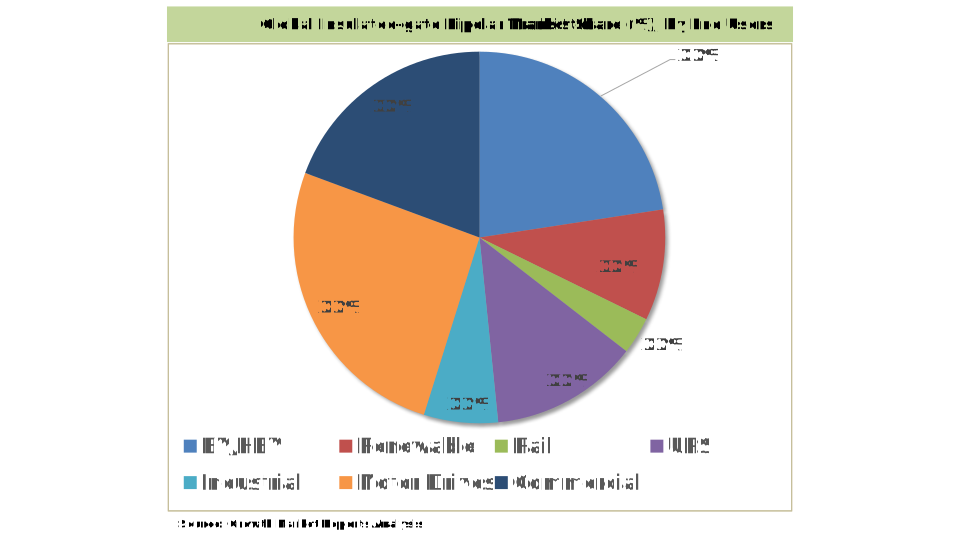
The End-User segment of the IGBT market is divided into Industrial, Commercial, Residential, and Others. The industrial segment commands the largest share in 2025, driven by the widespread adoption of IGBT-based power electronics in manufacturing, utilities, mining, and transportation. Industrial end-users prioritize reliability, scalability, and energy efficiency, making IGBTs the preferred choice for motor drives, automation systems, and power distribution networks. The ongoing digital transformation of industries and the integration of smart technologies are further amplifying the demand for advanced IGBT solutions.

Commercial end-users, including data centers, office buildings, and retail complexes, are increasingly investing in energy-efficient HVAC systems, lighting, and backup power solutions that leverage IGBT technology. The rising emphasis on sustainability, coupled with regulatory mandates for energy conservation, is driving the adoption of IGBT-based systems in commercial infrastructure. Additionally, the proliferation of electric vehicle charging stations in commercial spaces is creating new avenues for market growth as fleet electrification accelerates through 2034.

The residential segment, while smaller in comparison to industrial and commercial sectors, is experiencing steady growth due to the rising adoption of smart home appliances, residential solar power systems, and energy storage solutions. As consumers seek to reduce energy bills and carbon footprints, IGBT-enabled devices are gaining traction in residential applications. The increasing penetration of distributed energy resources and home automation technologies is expected to bolster demand in this segment over the 2026-2034 forecast period.

Other end-users, such as healthcare, telecommunications, and defense, also contribute to the IGBT market, albeit to a lesser extent. These sectors require specialized power electronics for mission-critical applications, including medical imaging equipment, telecom base stations, and defense systems. The unique requirements of these end-users, such as high reliability, compact form factors, and electromagnetic compatibility, are driving innovation in IGBT design and manufacturing.

Opportunities and Threats

The Insulated-gate Bipolar Transistor (IGBT) market presents a multitude of opportunities, particularly in the context of global energy transition and digital transformation. The accelerating shift towards electric mobility, renewable energy integration, and smart infrastructure is creating unprecedented demand for high-performance power electronics. IGBT manufacturers have the opportunity to capitalize on emerging trends such as hybrid silicon and wide bandgap designs, which combine the proven strengths of IGBT with the efficiency gains of SiC platforms. Makers of complementary products such as power MOSFETs are also moving into adjacent IGBT application spaces, reinforcing the importance of differentiation through performance and reliability. Strategic investments in research and development, coupled with collaborations across the value chain, can unlock new growth avenues and enable companies to address evolving customer needs in automotive, energy, and industrial sectors.

Another major opportunity lies in the expansion of grid modernization and energy storage projects worldwide. As utilities and governments invest in upgrading aging power infrastructure and deploying advanced energy management systems, the demand for robust, high-voltage IGBT modules is expected to surge through 2034. The proliferation of smart grids, microgrids, and distributed energy resources presents significant potential for IGBT suppliers to deliver customized solutions that enhance grid reliability, resilience, and efficiency. Additionally, the growing emphasis on sustainability and carbon reduction is prompting industries to adopt energy-efficient power conversion technologies, further fueling market growth.

Despite these opportunities, the IGBT market faces certain restraints, most notably the intense competition from alternative power semiconductor technologies such as SiC and GaN. These wide bandgap materials offer superior switching speeds, lower losses, and better thermal performance compared to traditional silicon-based IGBTs. As a result, some high-end applications are transitioning towards these newer technologies, potentially limiting the growth of conventional IGBT products in specific niches. Furthermore, supply chain disruptions, raw material price volatility, geopolitical risks affecting semiconductor manufacturing, and the need for continuous technological innovation pose additional challenges for market participants, necessitating agile strategies and robust risk management frameworks.

Regional Outlook

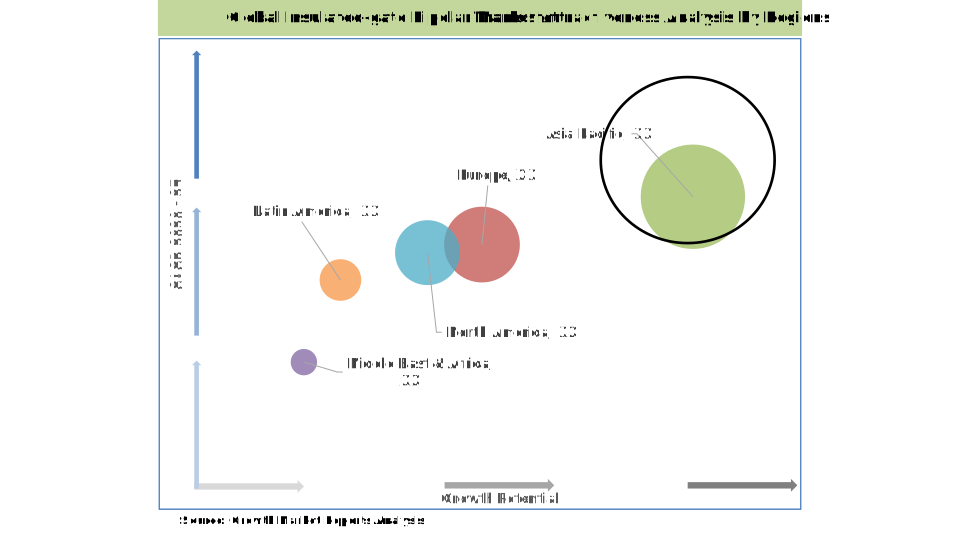
From a regional perspective, Asia Pacific holds the largest share of the Insulated-gate Bipolar Transistor (IGBT) market, accounting for approximately USD 4.2 billion in 2025. The region's dominance is attributed to its strong manufacturing base, rapid industrialization, and aggressive investments in renewable energy and electric mobility. Countries such as China, Japan, South Korea, and India are at the forefront of IGBT adoption, driven by robust demand in automotive, consumer electronics, and industrial sectors. The presence of leading semiconductor manufacturers, including Mitsubishi Electric, Fuji Electric, StarPower Semiconductor, and CRRC, along with favorable government policies, reinforces Asia Pacific's position as the global hub for IGBT production and innovation through 2034.

Insulated-gate Bipolar Transistor Market Regional Share 2025

North America is the second-largest market, with a market size of approximately USD 2.1 billion in 2025. The region's growth is underpinned by the rapid electrification of the automotive sector, expansion of renewable energy capacity, and modernization of industrial infrastructure. The United States, in particular, is witnessing increased investments in electric vehicle manufacturing, grid upgrades, and smart city projects, all of which are driving demand for advanced IGBT solutions. The North American market is expected to grow at a CAGR of approximately 8.7% through 2034, propelled by ongoing technological advancements and supportive regulatory frameworks such as the Inflation Reduction Act provisions for clean energy.

Europe follows closely, with a market size of approximately USD 1.8 billion in 2025, characterized by strong emphasis on sustainability, energy efficiency, and digital transformation. The region's leadership in automotive electrification, renewable energy integration, and smart manufacturing is creating substantial opportunities for IGBT suppliers. Germany, France, and the United Kingdom are leading adopters of IGBT technology, driven by stringent emissions regulations and ambitious climate targets. Emerging markets in Latin America and Middle East and Africa collectively account for around USD 1.4 billion in 2025, with growth prospects linked to infrastructure modernization, energy diversification, and industrial development. These regions are expected to witness steady growth as governments prioritize sustainable energy solutions and invest in next-generation power electronics throughout the 2026-2034 forecast period.

Competitor Outlook

The Insulated-gate Bipolar Transistor (IGBT) market is characterized by intense competition, rapid technological innovation, and a dynamic ecosystem of global and regional players. Leading companies are continuously investing in research and development to enhance device performance, reduce costs, and address the evolving needs of end-users across automotive, industrial, and energy sectors. The competitive landscape in 2025 is marked by a mix of established semiconductor giants and emerging players specializing in niche applications or advanced materials. Strategic partnerships, mergers and acquisitions, and collaborations with OEMs are common strategies adopted by market participants to strengthen their market position and expand their product portfolios.

Innovation in packaging, thermal management, and wide bandgap materials is a key focus area for leading IGBT manufacturers. Companies are leveraging advanced manufacturing processes, such as trench gate and field stop technologies, to deliver higher efficiency, greater power density, and improved reliability. The shift towards silicon carbide and gallium nitride hybrid solutions is also influencing competitive dynamics, with some players investing in platforms that combine the benefits of IGBT and wide bandgap technologies. The ability to offer comprehensive solutions, including modules, discrete devices, and integrated systems, is emerging as a critical differentiator in the market heading into the 2026-2034 period.

Customer-centricity and application expertise are becoming increasingly important as end-users demand tailored solutions that address specific performance, reliability, and cost requirements. Leading companies are working closely with automotive OEMs, industrial automation providers, and renewable energy developers to co-develop customized IGBT modules and systems. This collaborative approach not only accelerates innovation but also enhances customer loyalty and market penetration. Additionally, investments in digitalization, smart manufacturing, and supply chain optimization are enabling companies to improve operational efficiency and responsiveness in a highly competitive market environment.

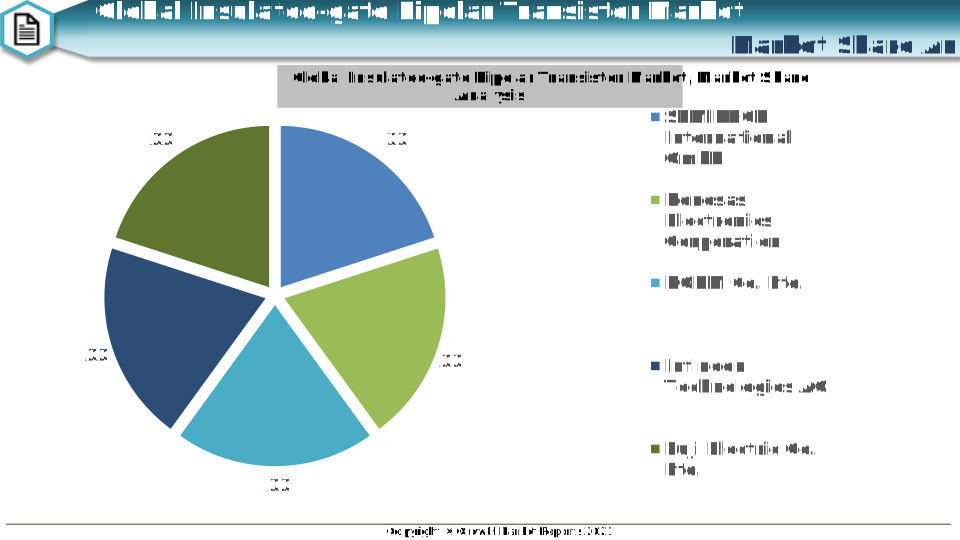
Major players in the IGBT market include Infineon Technologies AG, Mitsubishi Electric Corporation, Fuji Electric Co., Ltd., onsemi, STMicroelectronics N.V., Toshiba Corporation, ABB Ltd., Hitachi Ltd., Renesas Electronics Corporation, and Vishay Intertechnology, Inc.. Infineon Technologies AG is recognized for its leadership in automotive and industrial IGBT modules, offering a broad portfolio of high-efficiency solutions and commanding a significant global market share in 2025. Mitsubishi Electric Corporation and Fuji Electric Co., Ltd. are prominent players in the Asia Pacific region, with strong capabilities in industrial automation and renewable energy applications. onsemi and STMicroelectronics N.V. are known for their focus on automotive and consumer electronics markets, leveraging advanced manufacturing technologies to deliver competitive products.

Other notable companies, such as Toshiba Corporation and ABB Ltd., are actively investing in research and development to expand their IGBT offerings for high-power and utility-scale applications. Hitachi Ltd. and Renesas Electronics Corporation are leveraging their expertise in power electronics and system integration to address emerging opportunities in electric mobility and smart infrastructure. Semikron Danfoss has emerged as a strong competitor in module packaging and thermal management innovation following its merger, while CRRC Corporation Limited and StarPower Semiconductor Ltd. are rapidly expanding their presence in railway traction and high-power industrial segments within China and beyond. Collectively, these companies are shaping the future of the Insulated-gate Bipolar Transistor (IGBT) market through relentless innovation, strategic partnerships, and a steadfast commitment to customer value through 2034.

Key Players

  • Infineon Technologies AG
  • Mitsubishi Electric Corporation
  • Fuji Electric Co., Ltd.
  • ABB Ltd.
  • STMicroelectronics N.V.
  • Toshiba Corporation
  • onsemi (ON Semiconductor Corporation)
  • Hitachi, Ltd.
  • Vishay Intertechnology, Inc.
  • Renesas Electronics Corporation
  • ROHM Semiconductor
  • Semikron Danfoss
  • Littelfuse, Inc.
  • Dynex Semiconductor Ltd.
  • CRRC Corporation Limited
  • StarPower Semiconductor Ltd.
  • Microchip Technology Inc.
  • GeneSiC Semiconductor Inc.

Segments

The Insulated-gate Bipolar Transistor market has been segmented on the basis of

Type

  • Discrete IGBT
  • IGBT Module

Power Rating

  • Low Power
  • Medium Power
  • High Power

Application

  • Consumer Electronics
  • Industrial Manufacturing
  • Automotive
  • Renewable Energy
  • Railways
  • Others

End-User

  • Industrial
  • Commercial
  • Residential
  • Others

Frequently Asked Questions

Yes, the Insulated-gate Bipolar Transistor market research report can be fully customized to meet specific research and business requirements. Customization options include additional country-level or regional breakdowns, deeper segmentation by voltage rating or application niche, competitive benchmarking of specific companies, analysis of supply chain dynamics, and integration of proprietary data. Please contact our research team to discuss tailored deliverables, custom forecast scenarios, or any specific focus areas relevant to your strategic planning for the 2026-2034 period.

Major opportunities include the global transition to electric mobility, expanding grid modernization and energy storage projects, growth in renewable energy capacity, and increasing demand from industrial automation and smart factory deployments. The development of hybrid IGBT and wide bandgap solutions also opens new high-efficiency application segments. Key threats include intensifying competition from silicon carbide (SiC) and gallium nitride (GaN) power semiconductors, which outperform conventional IGBTs in high-frequency and high-temperature environments. Supply chain disruptions, raw material price volatility, and the capital-intensive nature of semiconductor manufacturing also present ongoing challenges for market participants.

The global IGBT market is led by Infineon Technologies AG, Mitsubishi Electric Corporation, Fuji Electric Co., Ltd., ABB Ltd., STMicroelectronics N.V., Toshiba Corporation, onsemi, Hitachi Ltd., Renesas Electronics Corporation, ROHM Semiconductor, Semikron Danfoss, Littelfuse Inc., Dynex Semiconductor Ltd., CRRC Corporation Limited, and StarPower Semiconductor Ltd. These companies compete through continuous R&D investment, advanced packaging innovation, strategic partnerships with automotive OEMs and energy developers, and expansion into wide bandgap hybrid solutions.

The IGBT market is segmented into three power rating categories. Low power IGBTs (below 1 kW) serve consumer electronics, small appliances, and low-voltage motor drives, and remain popular in high-volume cost-sensitive markets. Medium power IGBTs (1 kW to 100 kW) address HVAC systems, industrial automation, and distributed renewable energy inverters, benefiting from energy efficiency transitions. High power IGBTs (above 100 kW) represent the fastest-growing segment in 2025, driven by EV infrastructure, utility-scale renewable projects, HVDC transmission systems, and large railway electrification initiatives.

IGBTs are deployed across a wide range of applications including consumer electronics (air conditioners, washing machines, and home appliances), industrial manufacturing (motor drives, robotics, and automation systems), automotive (EV powertrains, onboard chargers, and charging infrastructure), renewable energy (solar inverters, wind turbine converters, and energy storage), railways (traction drives and auxiliary power supplies), and specialized sectors such as healthcare, telecommunications, and defense. The diversity of these applications highlights the versatility of IGBT technology as a foundational component of modern power electronics.

Asia Pacific is the dominant region, holding approximately 44.5% of global IGBT market revenue in 2025, led by China, Japan, South Korea, and India due to strong manufacturing bases, rapid industrialization, and aggressive EV and renewable energy investments. North America accounts for around 22.5% of the market, driven by automotive electrification and grid modernization. Europe holds approximately 18.5%, underpinned by stringent emission regulations and renewable energy mandates. Latin America and the Middle East and Africa collectively account for the remaining share, with steady growth expected through 2034.

The IGBT market is broadly divided into two product types: Discrete IGBTs and IGBT Modules. Discrete IGBTs are standalone devices valued for their flexibility, compact size, and cost-effectiveness in lower-power or custom circuit designs, commonly used in consumer electronics and small motor drives. IGBT Modules integrate multiple chips and associated circuitry into a single package, offering higher power handling, superior thermal management, and simplified assembly. Modules dominate the market with approximately 61.5% share in 2025, preferred in high-power applications such as industrial drives, renewable energy inverters, railway traction, and automotive powertrains.

In electric vehicles (EVs) and hybrid electric vehicles (HEVs), IGBTs are central to the power inverter, enabling efficient conversion of DC battery power to AC motor drive power. They also play critical roles in onboard chargers, DC-DC converters, battery management systems, and fast-charging infrastructure. The high switching frequency and low conduction losses of modern IGBT modules make them indispensable for extending EV range, improving thermal management, and enhancing overall drivetrain performance. As automakers scale EV production through 2034, IGBT module demand in the automotive sector is expected to surge substantially.

The primary growth drivers include the rapid expansion of electric vehicles and hybrid electric vehicles globally, massive investments in renewable energy infrastructure such as solar and wind power, the rollout of Industry 4.0 and smart manufacturing initiatives, increasing railway electrification projects, and global grid modernization efforts. Government mandates for carbon neutrality and stricter emissions regulations are also amplifying demand for high-efficiency IGBT solutions through the forecast period to 2034.

According to our latest research, the global IGBT market reached USD 9.5 billion in 2025. The market is projected to grow at a CAGR of 9.1% from 2026 to 2034, reaching an estimated USD 20.8 billion by 2034. This growth is driven by accelerating adoption of energy-efficient power electronics across renewable energy systems, automotive electrification, and industrial automation.

Table Of Content

Chapter 1 Executive Summary
Chapter 2 Assumptions and Acronyms Used
Chapter 3 Research Methodology
Chapter 4 Insulated-gate Bipolar Transistor Market Overview
   4.1 Introduction
      4.1.1 Market Taxonomy
      4.1.2 Market Definition
      4.1.3 Macro-Economic Factors Impacting the Market Growth
   4.2 Insulated-gate Bipolar Transistor Market Dynamics
      4.2.1 Market Drivers
      4.2.2 Market Restraints
      4.2.3 Market Opportunity
   4.3 Insulated-gate Bipolar Transistor Market - Supply Chain Analysis
      4.3.1 List of Key Suppliers
      4.3.2 List of Key Distributors
      4.3.3 List of Key Consumers
   4.4 Key Forces Shaping the Insulated-gate Bipolar Transistor Market
      4.4.1 Bargaining Power of Suppliers
      4.4.2 Bargaining Power of Buyers
      4.4.3 Threat of Substitution
      4.4.4 Threat of New Entrants
      4.4.5 Competitive Rivalry
   4.5 Global Insulated-gate Bipolar Transistor Market Size & Forecast, 2023-2032
      4.5.1 Insulated-gate Bipolar Transistor Market Size and Y-o-Y Growth
      4.5.2 Insulated-gate Bipolar Transistor Market Absolute $ Opportunity

Chapter 5 Global Insulated-gate Bipolar Transistor Market Analysis and Forecast By Type
   5.1 Introduction
      5.1.1 Key Market Trends & Growth Opportunities By Type
      5.1.2 Basis Point Share (BPS) Analysis By Type
      5.1.3 Absolute $ Opportunity Assessment By Type
   5.2 Insulated-gate Bipolar Transistor Market Size Forecast By Type
      5.2.1 Discrete IGBT
      5.2.2 IGBT Module
   5.3 Market Attractiveness Analysis By Type

Chapter 6 Global Insulated-gate Bipolar Transistor Market Analysis and Forecast By Power Rating
   6.1 Introduction
      6.1.1 Key Market Trends & Growth Opportunities By Power Rating
      6.1.2 Basis Point Share (BPS) Analysis By Power Rating
      6.1.3 Absolute $ Opportunity Assessment By Power Rating
   6.2 Insulated-gate Bipolar Transistor Market Size Forecast By Power Rating
      6.2.1 Low Power
      6.2.2 Medium Power
      6.2.3 High Power
   6.3 Market Attractiveness Analysis By Power Rating

Chapter 7 Global Insulated-gate Bipolar Transistor Market Analysis and Forecast By Application
   7.1 Introduction
      7.1.1 Key Market Trends & Growth Opportunities By Application
      7.1.2 Basis Point Share (BPS) Analysis By Application
      7.1.3 Absolute $ Opportunity Assessment By Application
   7.2 Insulated-gate Bipolar Transistor Market Size Forecast By Application
      7.2.1 Consumer Electronics
      7.2.2 Industrial Manufacturing
      7.2.3 Automotive
      7.2.4 Renewable Energy
      7.2.5 Railways
      7.2.6 Others
   7.3 Market Attractiveness Analysis By Application

Chapter 8 Global Insulated-gate Bipolar Transistor Market Analysis and Forecast By End-User
   8.1 Introduction
      8.1.1 Key Market Trends & Growth Opportunities By End-User
      8.1.2 Basis Point Share (BPS) Analysis By End-User
      8.1.3 Absolute $ Opportunity Assessment By End-User
   8.2 Insulated-gate Bipolar Transistor Market Size Forecast By End-User
      8.2.1 Industrial
      8.2.2 Commercial
      8.2.3 Residential
      8.2.4 Others
   8.3 Market Attractiveness Analysis By End-User

Chapter 9 Global Insulated-gate Bipolar Transistor Market Analysis and Forecast by Region
   9.1 Introduction
      9.1.1 Key Market Trends & Growth Opportunities By Region
      9.1.2 Basis Point Share (BPS) Analysis By Region
      9.1.3 Absolute $ Opportunity Assessment By Region
   9.2 Insulated-gate Bipolar Transistor Market Size Forecast By Region
      9.2.1 North America
      9.2.2 Europe
      9.2.3 Asia Pacific
      9.2.4 Latin America
      9.2.5 Middle East & Africa (MEA)
   9.3 Market Attractiveness Analysis By Region

Chapter 10 Coronavirus Disease (COVID-19) Impact 
   10.1 Introduction 
   10.2 Current & Future Impact Analysis 
   10.3 Economic Impact Analysis 
   10.4 Government Policies 
   10.5 Investment Scenario

Chapter 11 North America Insulated-gate Bipolar Transistor Analysis and Forecast
   11.1 Introduction
   11.2 North America Insulated-gate Bipolar Transistor Market Size Forecast by Country
      11.2.1 U.S.
      11.2.2 Canada
   11.3 Basis Point Share (BPS) Analysis by Country
   11.4 Absolute $ Opportunity Assessment by Country
   11.5 Market Attractiveness Analysis by Country
   11.6 North America Insulated-gate Bipolar Transistor Market Size Forecast By Type
      11.6.1 Discrete IGBT
      11.6.2 IGBT Module
   11.7 Basis Point Share (BPS) Analysis By Type 
   11.8 Absolute $ Opportunity Assessment By Type 
   11.9 Market Attractiveness Analysis By Type
   11.10 North America Insulated-gate Bipolar Transistor Market Size Forecast By Power Rating
      11.10.1 Low Power
      11.10.2 Medium Power
      11.10.3 High Power
   11.11 Basis Point Share (BPS) Analysis By Power Rating 
   11.12 Absolute $ Opportunity Assessment By Power Rating 
   11.13 Market Attractiveness Analysis By Power Rating
   11.14 North America Insulated-gate Bipolar Transistor Market Size Forecast By Application
      11.14.1 Consumer Electronics
      11.14.2 Industrial Manufacturing
      11.14.3 Automotive
      11.14.4 Renewable Energy
      11.14.5 Railways
      11.14.6 Others
   11.15 Basis Point Share (BPS) Analysis By Application 
   11.16 Absolute $ Opportunity Assessment By Application 
   11.17 Market Attractiveness Analysis By Application
   11.18 North America Insulated-gate Bipolar Transistor Market Size Forecast By End-User
      11.18.1 Industrial
      11.18.2 Commercial
      11.18.3 Residential
      11.18.4 Others
   11.19 Basis Point Share (BPS) Analysis By End-User 
   11.20 Absolute $ Opportunity Assessment By End-User 
   11.21 Market Attractiveness Analysis By End-User

Chapter 12 Europe Insulated-gate Bipolar Transistor Analysis and Forecast
   12.1 Introduction
   12.2 Europe Insulated-gate Bipolar Transistor Market Size Forecast by Country
      12.2.1 Germany
      12.2.2 France
      12.2.3 Italy
      12.2.4 U.K.
      12.2.5 Spain
      12.2.6 Russia
      12.2.7 Rest of Europe
   12.3 Basis Point Share (BPS) Analysis by Country
   12.4 Absolute $ Opportunity Assessment by Country
   12.5 Market Attractiveness Analysis by Country
   12.6 Europe Insulated-gate Bipolar Transistor Market Size Forecast By Type
      12.6.1 Discrete IGBT
      12.6.2 IGBT Module
   12.7 Basis Point Share (BPS) Analysis By Type 
   12.8 Absolute $ Opportunity Assessment By Type 
   12.9 Market Attractiveness Analysis By Type
   12.10 Europe Insulated-gate Bipolar Transistor Market Size Forecast By Power Rating
      12.10.1 Low Power
      12.10.2 Medium Power
      12.10.3 High Power
   12.11 Basis Point Share (BPS) Analysis By Power Rating 
   12.12 Absolute $ Opportunity Assessment By Power Rating 
   12.13 Market Attractiveness Analysis By Power Rating
   12.14 Europe Insulated-gate Bipolar Transistor Market Size Forecast By Application
      12.14.1 Consumer Electronics
      12.14.2 Industrial Manufacturing
      12.14.3 Automotive
      12.14.4 Renewable Energy
      12.14.5 Railways
      12.14.6 Others
   12.15 Basis Point Share (BPS) Analysis By Application 
   12.16 Absolute $ Opportunity Assessment By Application 
   12.17 Market Attractiveness Analysis By Application
   12.18 Europe Insulated-gate Bipolar Transistor Market Size Forecast By End-User
      12.18.1 Industrial
      12.18.2 Commercial
      12.18.3 Residential
      12.18.4 Others
   12.19 Basis Point Share (BPS) Analysis By End-User 
   12.20 Absolute $ Opportunity Assessment By End-User 
   12.21 Market Attractiveness Analysis By End-User

Chapter 13 Asia Pacific Insulated-gate Bipolar Transistor Analysis and Forecast
   13.1 Introduction
   13.2 Asia Pacific Insulated-gate Bipolar Transistor Market Size Forecast by Country
      13.2.1 China
      13.2.2 Japan
      13.2.3 South Korea
      13.2.4 India
      13.2.5 Australia
      13.2.6 South East Asia (SEA)
      13.2.7 Rest of Asia Pacific (APAC)
   13.3 Basis Point Share (BPS) Analysis by Country
   13.4 Absolute $ Opportunity Assessment by Country
   13.5 Market Attractiveness Analysis by Country
   13.6 Asia Pacific Insulated-gate Bipolar Transistor Market Size Forecast By Type
      13.6.1 Discrete IGBT
      13.6.2 IGBT Module
   13.7 Basis Point Share (BPS) Analysis By Type 
   13.8 Absolute $ Opportunity Assessment By Type 
   13.9 Market Attractiveness Analysis By Type
   13.10 Asia Pacific Insulated-gate Bipolar Transistor Market Size Forecast By Power Rating
      13.10.1 Low Power
      13.10.2 Medium Power
      13.10.3 High Power
   13.11 Basis Point Share (BPS) Analysis By Power Rating 
   13.12 Absolute $ Opportunity Assessment By Power Rating 
   13.13 Market Attractiveness Analysis By Power Rating
   13.14 Asia Pacific Insulated-gate Bipolar Transistor Market Size Forecast By Application
      13.14.1 Consumer Electronics
      13.14.2 Industrial Manufacturing
      13.14.3 Automotive
      13.14.4 Renewable Energy
      13.14.5 Railways
      13.14.6 Others
   13.15 Basis Point Share (BPS) Analysis By Application 
   13.16 Absolute $ Opportunity Assessment By Application 
   13.17 Market Attractiveness Analysis By Application
   13.18 Asia Pacific Insulated-gate Bipolar Transistor Market Size Forecast By End-User
      13.18.1 Industrial
      13.18.2 Commercial
      13.18.3 Residential
      13.18.4 Others
   13.19 Basis Point Share (BPS) Analysis By End-User 
   13.20 Absolute $ Opportunity Assessment By End-User 
   13.21 Market Attractiveness Analysis By End-User

Chapter 14 Latin America Insulated-gate Bipolar Transistor Analysis and Forecast
   14.1 Introduction
   14.2 Latin America Insulated-gate Bipolar Transistor Market Size Forecast by Country
      14.2.1 Brazil
      14.2.2 Mexico
      14.2.3 Rest of Latin America (LATAM)
   14.3 Basis Point Share (BPS) Analysis by Country
   14.4 Absolute $ Opportunity Assessment by Country
   14.5 Market Attractiveness Analysis by Country
   14.6 Latin America Insulated-gate Bipolar Transistor Market Size Forecast By Type
      14.6.1 Discrete IGBT
      14.6.2 IGBT Module
   14.7 Basis Point Share (BPS) Analysis By Type 
   14.8 Absolute $ Opportunity Assessment By Type 
   14.9 Market Attractiveness Analysis By Type
   14.10 Latin America Insulated-gate Bipolar Transistor Market Size Forecast By Power Rating
      14.10.1 Low Power
      14.10.2 Medium Power
      14.10.3 High Power
   14.11 Basis Point Share (BPS) Analysis By Power Rating 
   14.12 Absolute $ Opportunity Assessment By Power Rating 
   14.13 Market Attractiveness Analysis By Power Rating
   14.14 Latin America Insulated-gate Bipolar Transistor Market Size Forecast By Application
      14.14.1 Consumer Electronics
      14.14.2 Industrial Manufacturing
      14.14.3 Automotive
      14.14.4 Renewable Energy
      14.14.5 Railways
      14.14.6 Others
   14.15 Basis Point Share (BPS) Analysis By Application 
   14.16 Absolute $ Opportunity Assessment By Application 
   14.17 Market Attractiveness Analysis By Application
   14.18 Latin America Insulated-gate Bipolar Transistor Market Size Forecast By End-User
      14.18.1 Industrial
      14.18.2 Commercial
      14.18.3 Residential
      14.18.4 Others
   14.19 Basis Point Share (BPS) Analysis By End-User 
   14.20 Absolute $ Opportunity Assessment By End-User 
   14.21 Market Attractiveness Analysis By End-User

Chapter 15 Middle East & Africa (MEA) Insulated-gate Bipolar Transistor Analysis and Forecast
   15.1 Introduction
   15.2 Middle East & Africa (MEA) Insulated-gate Bipolar Transistor Market Size Forecast by Country
      15.2.1 Saudi Arabia
      15.2.2 South Africa
      15.2.3 UAE
      15.2.4 Rest of Middle East & Africa (MEA)
   15.3 Basis Point Share (BPS) Analysis by Country
   15.4 Absolute $ Opportunity Assessment by Country
   15.5 Market Attractiveness Analysis by Country
   15.6 Middle East & Africa (MEA) Insulated-gate Bipolar Transistor Market Size Forecast By Type
      15.6.1 Discrete IGBT
      15.6.2 IGBT Module
   15.7 Basis Point Share (BPS) Analysis By Type 
   15.8 Absolute $ Opportunity Assessment By Type 
   15.9 Market Attractiveness Analysis By Type
   15.10 Middle East & Africa (MEA) Insulated-gate Bipolar Transistor Market Size Forecast By Power Rating
      15.10.1 Low Power
      15.10.2 Medium Power
      15.10.3 High Power
   15.11 Basis Point Share (BPS) Analysis By Power Rating 
   15.12 Absolute $ Opportunity Assessment By Power Rating 
   15.13 Market Attractiveness Analysis By Power Rating
   15.14 Middle East & Africa (MEA) Insulated-gate Bipolar Transistor Market Size Forecast By Application
      15.14.1 Consumer Electronics
      15.14.2 Industrial Manufacturing
      15.14.3 Automotive
      15.14.4 Renewable Energy
      15.14.5 Railways
      15.14.6 Others
   15.15 Basis Point Share (BPS) Analysis By Application 
   15.16 Absolute $ Opportunity Assessment By Application 
   15.17 Market Attractiveness Analysis By Application
   15.18 Middle East & Africa (MEA) Insulated-gate Bipolar Transistor Market Size Forecast By End-User
      15.18.1 Industrial
      15.18.2 Commercial
      15.18.3 Residential
      15.18.4 Others
   15.19 Basis Point Share (BPS) Analysis By End-User 
   15.20 Absolute $ Opportunity Assessment By End-User 
   15.21 Market Attractiveness Analysis By End-User

Chapter 16 Competition Landscape 
   16.1 Insulated-gate Bipolar Transistor Market: Competitive Dashboard
   16.2 Global Insulated-gate Bipolar Transistor Market: Market Share Analysis, 2023
   16.3 Company Profiles (Details – Overview, Financials, Developments, Strategy) 
      16.3.1 Infineon Technologies AG
      16.3.2 Mitsubishi Electric Corporation
      16.3.3 Fuji Electric Co., Ltd.
      16.3.4 ABB Ltd.
      16.3.5 STMicroelectronics N.V.
      16.3.6 Toshiba Corporation
      16.3.7 onsemi (ON Semiconductor Corporation)
      16.3.8 Hitachi, Ltd.
      16.3.9 Vishay Intertechnology, Inc.
      16.3.10 Renesas Electronics Corporation
      16.3.11 ROHM Semiconductor
      16.3.12 Semikron Danfoss
      16.3.13 Littelfuse, Inc.
      16.3.14 Dynex Semiconductor Ltd.
      16.3.15 CRRC Corporation Limited
      16.3.16 StarPower Semiconductor Ltd.
      16.3.17 Microchip Technology Inc.
      16.3.18 GeneSiC Semiconductor Inc.

Methodology

Our Clients

General Electric
Microsoft
Deloitte
Honda Motor Co. Ltd.
Siemens Healthcare
Dassault Aviation
sinopec
General Mills