Segments - by Product Type (Epoxy Coatings, Polyurethane Coatings, Acrylic Coatings, Zinc-Rich Coatings, Alkyd Coatings, Others), by Technology (Solvent-borne, Water-borne, Powder Coatings, Others), by Application (Marine, Oil & Gas, Infrastructure, Power Generation, Automotive & Transportation, Industrial, Others), by End-User (Construction, Energy, Automotive, Marine, Others)
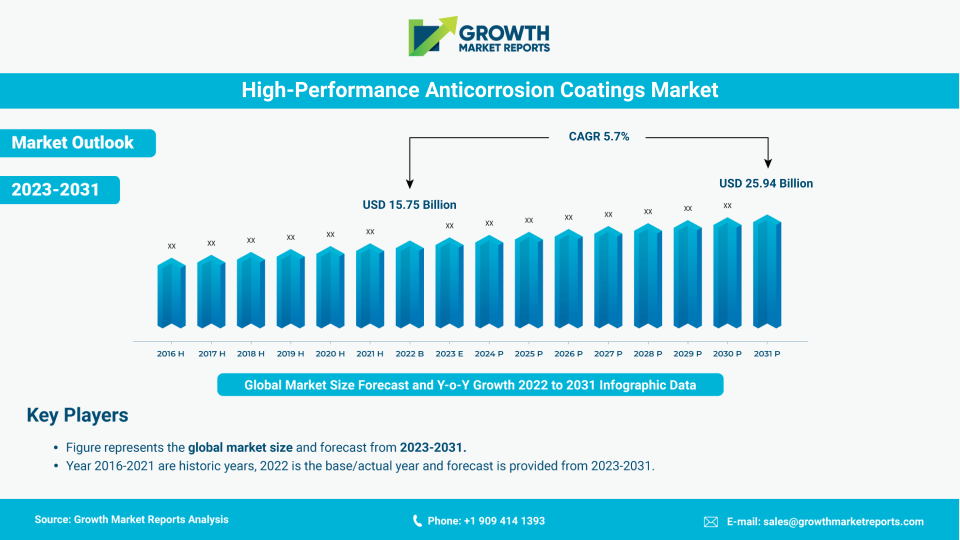
According to our latest research, the global high-performance anticorrosion coatings market size reached USD 13.7 billion in 2024, driven by increasing demand across diverse industrial sectors and stringent regulations for asset protection. The market is projected to expand at a robust CAGR of 5.9% from 2025 to 2033, with the total market value expected to reach USD 23.3 billion by 2033. This growth is primarily attributed to rising investments in infrastructure development, the expansion of oil and gas activities, and the growing emphasis on extending the lifecycle of critical assets amid harsh environmental conditions.
One of the primary growth factors propelling the high-performance anticorrosion coatings market is the escalating need for asset protection in industries exposed to aggressive environments, such as marine, oil and gas, and infrastructure. Corrosion leads to significant economic losses globally, prompting industries to adopt advanced anticorrosion solutions that not only prevent material degradation but also reduce maintenance costs and downtime. The growing awareness of the long-term cost savings and operational efficiency offered by high-performance coatings encourages end-users to invest in innovative products, including epoxy and polyurethane coatings, which offer superior adhesion and chemical resistance. Additionally, the adoption of stringent environmental and safety regulations by governments worldwide has compelled industries to upgrade their corrosion protection systems, further boosting market demand.
Technological advancements in coating formulations and application techniques also play a pivotal role in market growth. Manufacturers are increasingly focusing on the development of eco-friendly, high-performance anticorrosion coatings that comply with regulatory standards related to volatile organic compounds (VOCs) and hazardous air pollutants. The shift toward water-borne and powder coating technologies, which offer reduced environmental impact without compromising performance, is gaining momentum. Furthermore, the integration of nanotechnology and smart coatings with self-healing and anti-fouling properties is opening new avenues for innovation, enabling industries to address complex corrosion challenges in demanding operational environments.
The expansion of key end-use industries, particularly in emerging economies, significantly contributes to the growth trajectory of the high-performance anticorrosion coatings market. Rapid urbanization and industrialization in Asia Pacific and the Middle East are driving large-scale investments in infrastructure, energy, and transportation sectors, which in turn require robust corrosion protection solutions. The resurgence of the construction sector in North America and Europe, coupled with ongoing upgrades in power generation and oil and gas infrastructure, further amplifies market opportunities. As companies strive to enhance the durability and reliability of their assets, the demand for advanced anticorrosion coatings is expected to remain strong across both developed and developing regions.
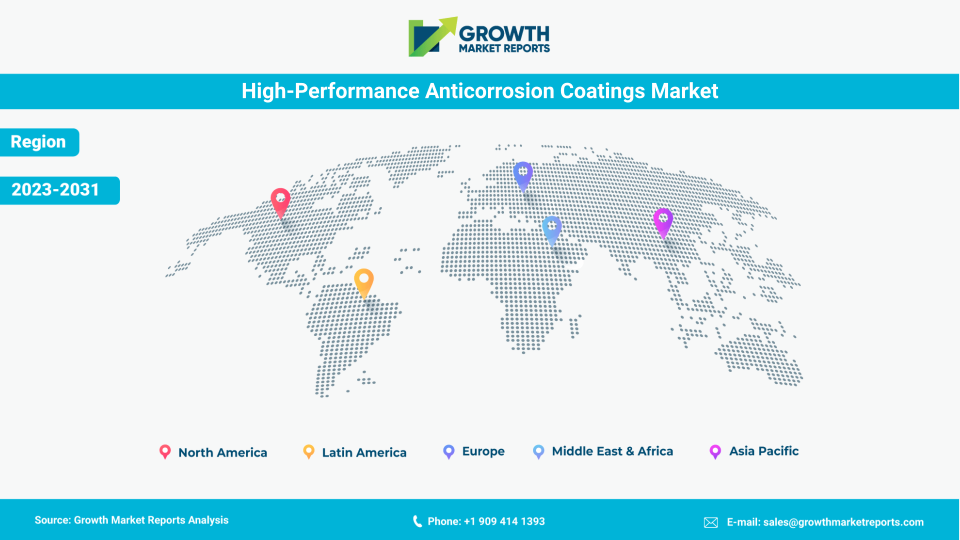
Regionally, Asia Pacific dominates the global high-performance anticorrosion coatings market, accounting for the largest revenue share in 2024. The region's leadership is underpinned by rapid industrial expansion, significant infrastructure projects, and a thriving marine sector in countries such as China, India, and Japan. North America and Europe also exhibit substantial market potential, supported by technological innovation and regulatory compliance. Meanwhile, the Middle East & Africa and Latin America are emerging as high-growth markets, propelled by investments in energy and construction. This diverse regional landscape underscores the global relevance and multifaceted growth prospects of the high-performance anticorrosion coatings market.
The high-performance anticorrosion coatings market is segmented by product type into epoxy coatings, polyurethane coatings, acrylic coatings, zinc-rich coatings, alkyd coatings, and others. Among these, epoxy coatings hold the largest market share, thanks to their exceptional chemical resistance, mechanical strength, and adhesion properties. Epoxy coatings are widely preferred in heavy-duty industrial applications, including marine, oil and gas, and infrastructure, where robust protection against harsh chemicals and moisture is essential. The durability and versatility of epoxy-based systems make them the go-to solution for both new construction and maintenance projects, supporting their continued dominance in the market.
Polyurethane coatings are another significant segment, valued for their superior UV resistance, flexibility, and aesthetic finish. These coatings are particularly popular in the automotive, transportation, and infrastructure sectors, where both functional and decorative attributes are important. Polyurethane coatings offer excellent weatherability and abrasion resistance, making them suitable for outdoor applications exposed to fluctuating environmental conditions. The growing trend toward lightweight and high-performance materials in automotive manufacturing further accelerates the adoption of polyurethane-based anticorrosion coatings.
Acrylic coatings, while traditionally used in less demanding environments, are gaining traction due to their fast-drying properties, ease of application, and relatively low environmental impact. Recent advancements in acrylic technology have enhanced their corrosion resistance, enabling their use in light industrial and infrastructure applications. Their compatibility with water-borne technologies and low VOC emissions aligns well with the increasing regulatory focus on sustainable and environmentally friendly coatings. As a result, the acrylic coatings segment is expected to register steady growth over the forecast period.
Zinc-rich coatings and alkyd coatings also play crucial roles in the high-performance anticorrosion coatings market. Zinc-rich coatings are extensively used as primers in steel structures, offering sacrificial protection against corrosion in highly aggressive environments, such as offshore platforms and bridges. Alkyd coatings, on the other hand, are favored for their cost-effectiveness and ease of application, particularly in maintenance and refurbishment projects. The "others" category includes specialty coatings formulated for niche applications, such as ceramic and fluoropolymer-based systems, which offer targeted protection in extreme service conditions. Overall, the diversity of product types enables end-users to select the most appropriate solution based on their specific performance and regulatory requirements.
| Attributes | Details |
| Report Title | High-Performance Anticorrosion Coatings Market Research Report 2033 |
| By Product Type | Epoxy Coatings, Polyurethane Coatings, Acrylic Coatings, Zinc-Rich Coatings, Alkyd Coatings, Others |
| By Technology | Solvent-borne, Water-borne, Powder Coatings, Others |
| By Application | Marine, Oil & Gas, Infrastructure, Power Generation, Automotive & Transportation, Industrial, Others |
| By End-User | Construction, Energy, Automotive, Marine, Others |
| Regions Covered | North America, Europe, APAC, Latin America, MEA |
| Base Year | 2024 |
| Historic Data | 2018-2023 |
| Forecast Period | 2025-2033 |
| Number of Pages | 279 |
| Number of Tables & Figures | 284 |
| Customization Available | Yes, the report can be customized as per your need. |
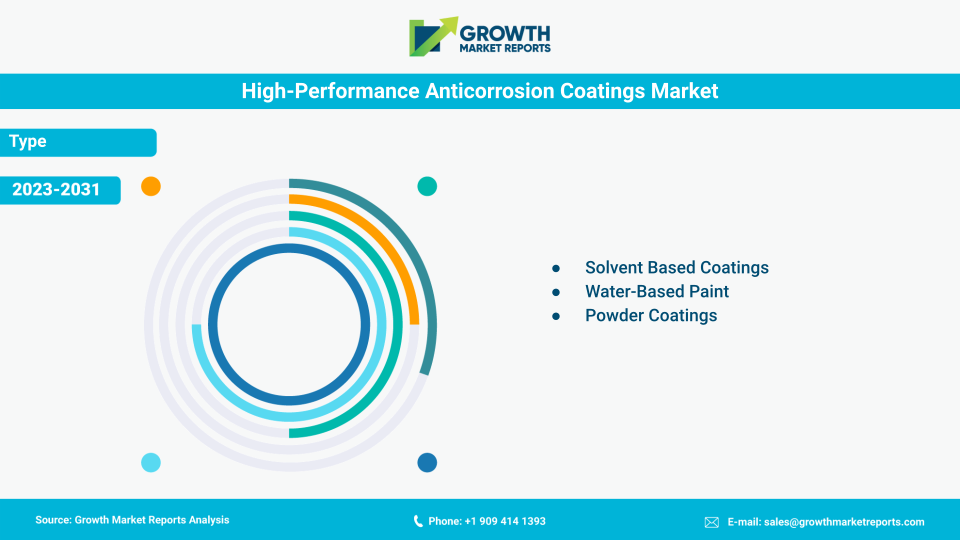
The technology segment of the high-performance anticorrosion coatings market encompasses solvent-borne, water-borne, powder coatings, and other emerging technologies. Solvent-borne coatings have historically dominated the market due to their excellent film-forming ability, rapid curing, and high performance in challenging environments. However, increasing environmental concerns and stringent regulations regarding VOC emissions are driving a gradual shift away from solvent-borne systems, especially in developed regions. Despite this, solvent-borne coatings continue to be widely used in applications where high performance and fast turnaround times are critical, such as in oil and gas pipelines and marine vessels.
Water-borne coatings are gaining significant market share, propelled by advancements in formulation technology that allow these systems to deliver comparable performance to their solvent-borne counterparts. Water-borne coatings offer the dual benefits of reduced environmental impact and improved worker safety, making them highly attractive in markets with strict regulatory frameworks. Their growing adoption in infrastructure, automotive, and industrial maintenance projects is a testament to their versatility and evolving performance characteristics. As regulatory pressure intensifies and end-users prioritize sustainability, the water-borne segment is expected to witness robust growth throughout the forecast period.
Powder coatings represent another important technological advancement in the high-performance anticorrosion coatings market. These coatings are applied as dry powders and cured under heat, resulting in durable and uniform finishes with minimal environmental impact. Powder coatings are free from solvents and VOCs, making them an eco-friendly alternative for a wide range of applications, including automotive components, industrial machinery, and infrastructure. The rapid curing process, high transfer efficiency, and ability to create thick, protective films contribute to the increasing popularity of powder coatings in both developed and emerging markets.
The "others" segment includes cutting-edge technologies such as high solids coatings, UV-curable systems, and nanotechnology-based coatings. High solids coatings offer reduced VOC emissions and enhanced film thickness, while UV-curable systems provide rapid curing and minimal downtime. Nanotechnology-based coatings, incorporating nanoparticles to improve barrier properties and self-healing capabilities, are at the forefront of innovation in the anticorrosion sector. These emerging technologies are being adopted in specialized applications where conventional coatings may fall short, thus broadening the technological landscape of the market.
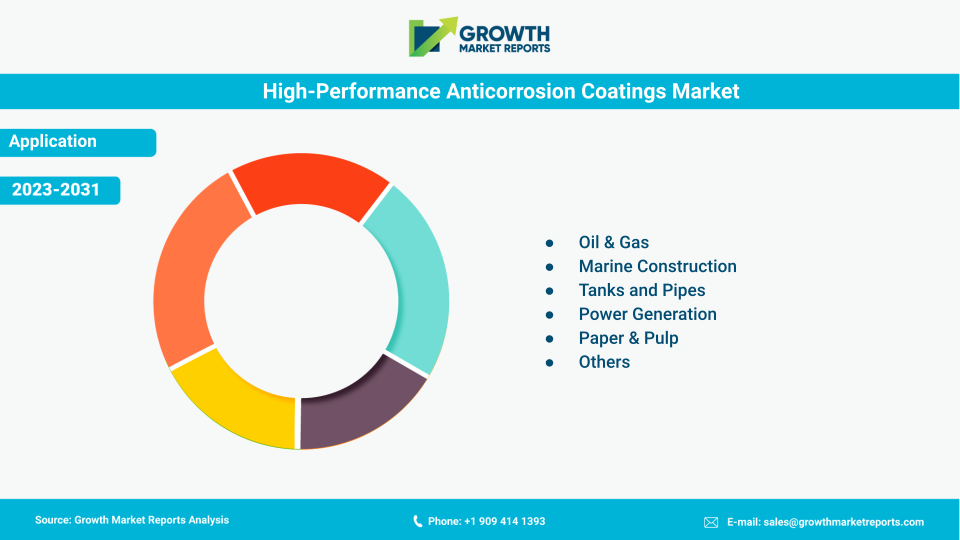
The application landscape of the high-performance anticorrosion coatings market is diverse, encompassing marine, oil and gas, infrastructure, power generation, automotive and transportation, industrial, and other sectors. The marine sector is a major consumer of anticorrosion coatings, driven by the need to protect ships, offshore platforms, and port structures from the corrosive effects of saltwater and harsh weather conditions. The adoption of advanced coatings in marine applications not only extends asset lifespan but also ensures compliance with international maritime regulations, thereby safeguarding operational efficiency and safety.
The oil and gas industry is another critical application area, where high-performance anticorrosion coatings are indispensable for protecting pipelines, storage tanks, drilling rigs, and processing facilities. The sector faces some of the most aggressive corrosion challenges due to exposure to chemicals, moisture, and extreme temperatures. The use of specialized coatings, such as zinc-rich primers and epoxy topcoats, is essential to prevent leaks, maintain structural integrity, and minimize environmental risks. Ongoing investments in oil and gas exploration, particularly in the Middle East, North America, and Asia Pacific, continue to fuel demand for high-performance anticorrosion solutions.
Infrastructure development, including bridges, highways, airports, and water treatment plants, represents a significant application segment for anticorrosion coatings. Governments and private sector entities worldwide are investing in the construction and maintenance of critical infrastructure to support economic growth and urbanization. The durability and long-term protection offered by advanced coatings are vital for reducing lifecycle costs and ensuring the reliability of these assets. The growing emphasis on sustainable infrastructure and green building practices further amplifies the need for environmentally friendly, high-performance coatings.
The automotive and transportation sector is witnessing increased adoption of anticorrosion coatings as manufacturers seek to enhance vehicle durability, safety, and aesthetics. Coatings are applied to both exterior and underbody components to protect against road salts, moisture, and mechanical wear. The shift toward electric vehicles and lightweight materials introduces new corrosion challenges, prompting the development of specialized coatings tailored to these emerging needs. Additionally, the industrial sector, encompassing manufacturing plants, machinery, and equipment, relies on anticorrosion coatings to maintain operational efficiency and minimize costly repairs. The "others" category includes niche applications in sectors such as aerospace, defense, and mining, where advanced protection is required under extreme service conditions.
The high-performance anticorrosion coatings market is segmented by end-user into construction, energy, automotive, marine, and others. The construction sector is the largest end-user, accounting for a significant share of the global market. The demand is driven by ongoing infrastructure projects, urban redevelopment initiatives, and the need for maintenance and refurbishment of aging structures. High-performance coatings are essential for protecting concrete and steel elements from corrosion, ensuring structural safety, and complying with building codes and standards. The trend toward smart cities and sustainable construction practices is further bolstering demand for advanced, environmentally friendly coating solutions.
The energy sector, encompassing oil and gas, power generation, and renewable energy, is another major end-user of anticorrosion coatings. The sector's assets are exposed to some of the most aggressive environmental and operational conditions, necessitating robust corrosion protection to maintain safety, reliability, and regulatory compliance. The transition toward renewable energy sources, such as wind and solar, introduces new material and corrosion challenges, prompting the development of specialized coatings for wind turbine towers, solar panel mounts, and related infrastructure. As global energy demand rises and the industry evolves, the need for high-performance anticorrosion coatings in the energy sector is expected to grow steadily.
The automotive sector is a key end-user, with manufacturers increasingly adopting advanced coatings to enhance vehicle longevity, performance, and appearance. The trend toward lightweight vehicles, electric mobility, and increased automation in manufacturing processes is driving innovation in coating formulations and application techniques. Marine end-users, including shipbuilders, port authorities, and offshore operators, rely on high-performance coatings to ensure asset durability and regulatory compliance. The "others" segment includes industrial, aerospace, and defense end-users, each with unique requirements for corrosion protection in demanding operational environments.
Each end-user segment presents distinct challenges and opportunities for market participants. Manufacturers must tailor their product offerings to meet the specific performance, regulatory, and sustainability requirements of each sector. The ability to provide customized solutions, technical support, and value-added services is increasingly important for gaining a competitive edge and building long-term customer relationships in the high-performance anticorrosion coatings market.
The high-performance anticorrosion coatings market presents numerous opportunities for growth and innovation. One of the most promising opportunities lies in the development of environmentally sustainable coatings that meet stringent regulatory requirements without compromising performance. As governments worldwide implement stricter regulations on VOC emissions and hazardous substances, there is a growing demand for water-borne, powder, and high solids coatings that offer reduced environmental impact. Companies investing in research and development to create advanced, eco-friendly formulations are well-positioned to capture market share and differentiate themselves in a competitive landscape. Additionally, the integration of smart technologies, such as self-healing and anti-fouling coatings, represents a significant opportunity to address emerging corrosion challenges in high-value applications, such as offshore wind farms and electric vehicles.
Another key opportunity is the expanding application scope of high-performance anticorrosion coatings in emerging markets. Rapid industrialization, urbanization, and infrastructure development in Asia Pacific, the Middle East, and Latin America are driving demand for robust corrosion protection solutions. Strategic partnerships with local distributors, investment in regional manufacturing facilities, and the development of tailored products for specific climatic and regulatory conditions can help companies capitalize on these high-growth markets. Furthermore, the increasing adoption of digital technologies and automation in coating application processes offers opportunities to improve efficiency, reduce waste, and enhance quality control, thereby delivering greater value to end-users.
Despite these opportunities, the high-performance anticorrosion coatings market faces several threats and restraining factors. One of the primary challenges is the volatility in raw material prices, particularly for key inputs such as resins, pigments, and solvents. Fluctuating costs can squeeze profit margins and create uncertainty for manufacturers and end-users alike. Additionally, the transition to more sustainable and low-VOC technologies may require significant capital investment in research, development, and production infrastructure. The complexity of regulatory compliance across different regions, coupled with the need for continuous innovation, adds to the operational challenges faced by market participants. Addressing these threats requires a proactive approach to supply chain management, regulatory strategy, and technology investment.
The regional dynamics of the high-performance anticorrosion coatings market reveal a diverse and evolving landscape. Asia Pacific leads the global market, accounting for approximately 41% of total revenue in 2024, equivalent to around USD 5.6 billion. The region’s dominance is fueled by large-scale infrastructure development, rapid industrialization, and robust growth in the marine and oil and gas sectors, particularly in China, India, Japan, and Southeast Asia. The increasing focus on asset protection, coupled with government initiatives to upgrade critical infrastructure, ensures sustained demand for advanced anticorrosion coatings. The Asia Pacific market is expected to register a strong CAGR of 6.7% through 2033, outpacing global growth rates and reinforcing its position as the primary engine of market expansion.
North America represents the second-largest regional market, with a 2024 value of approximately USD 3.4 billion. The region benefits from a mature industrial base, ongoing investments in energy and infrastructure, and a strong focus on regulatory compliance and environmental sustainability. The United States, in particular, is a major consumer of high-performance anticorrosion coatings, driven by the need to maintain aging infrastructure, adhere to stringent environmental standards, and support the resurgence of domestic manufacturing. Canada and Mexico also contribute to regional demand, with growth opportunities in the oil and gas, construction, and transportation sectors. North America is expected to maintain steady growth, supported by technological innovation and a supportive regulatory environment.
Europe holds a significant share of the global market, valued at approximately USD 2.9 billion in 2024. The region is characterized by a strong emphasis on sustainability, advanced manufacturing practices, and a well-established regulatory framework for coatings. Key markets include Germany, the United Kingdom, France, and Italy, where demand is driven by infrastructure renewal, automotive manufacturing, and marine activities. The Middle East & Africa and Latin America, while smaller in terms of market size, are emerging as high-growth regions, with combined revenues reaching USD 1.8 billion in 2024. These regions benefit from investments in energy, construction, and transportation, as well as increasing adoption of advanced coatings to address challenging environmental conditions. The regional outlook underscores the global reach and multifaceted growth drivers of the high-performance anticorrosion coatings market.
The competitive landscape of the high-performance anticorrosion coatings market is characterized by the presence of several global and regional players, each striving to enhance their market position through product innovation, strategic partnerships, and expansion into high-growth regions. Leading companies invest heavily in research and development to create advanced coatings that meet evolving regulatory requirements and address emerging application needs. The market is marked by intense competition, with participants differentiating themselves through technological leadership, comprehensive product portfolios, and value-added services such as technical support, training, and customized solutions. Mergers, acquisitions, and collaborations are common strategies employed to strengthen market presence, access new customer segments, and expand geographic reach.
Innovation is a key driver of competitive advantage in the high-performance anticorrosion coatings market. Companies are focused on developing coatings with enhanced durability, reduced environmental impact, and specialized functionalities such as self-healing, anti-fouling, and high-temperature resistance. The ability to offer tailored solutions for specific end-use applications, such as offshore oil platforms, wind turbines, or automotive components, is increasingly important for capturing market share. Digitalization and automation in manufacturing and application processes are also gaining traction, enabling companies to improve efficiency, reduce costs, and deliver consistent quality to end-users.
The market is witnessing a trend toward consolidation, with larger players acquiring smaller, specialized firms to broaden their product offerings and gain access to new technologies. Regional players, meanwhile, leverage their local expertise and customer relationships to compete effectively in niche segments and emerging markets. The competitive environment is further shaped by the need to comply with diverse regulatory frameworks across different regions, requiring companies to maintain robust compliance and quality assurance processes.
Major companies operating in the high-performance anticorrosion coatings market include AkzoNobel N.V., PPG Industries, Inc., The Sherwin-Williams Company, Hempel A/S, Jotun Group, RPM International Inc., Axalta Coating Systems, BASF SE, Kansai Paint Co., Ltd., and Nippon Paint Holdings Co., Ltd. AkzoNobel is renowned for its broad range of marine and protective coatings, leveraging advanced technologies to deliver high performance in demanding environments. PPG Industries and Sherwin-Williams are global leaders with extensive product portfolios and strong distribution networks, serving diverse end-use industries worldwide. Hempel and Jotun have a strong presence in the marine and offshore sectors, offering innovative solutions tailored to the unique challenges of these markets. RPM International, Axalta, BASF, Kansai Paint, and Nippon Paint are also prominent players, each bringing unique strengths in technology, sustainability, and customer service.
These leading companies are continuously investing in sustainable product development, expanding their global footprint, and enhancing their technical capabilities to stay ahead of the competition. Strategic initiatives such as joint ventures, licensing agreements, and participation in industry consortia enable them to access new markets, share expertise, and accelerate innovation. The dynamic and competitive nature of the high-performance anticorrosion coatings market ensures that only those companies capable of adapting to changing customer needs, regulatory requirements, and technological advancements will sustain long-term success and growth.
The High-Performance Anticorrosion Coatings market has been segmented on the basis of
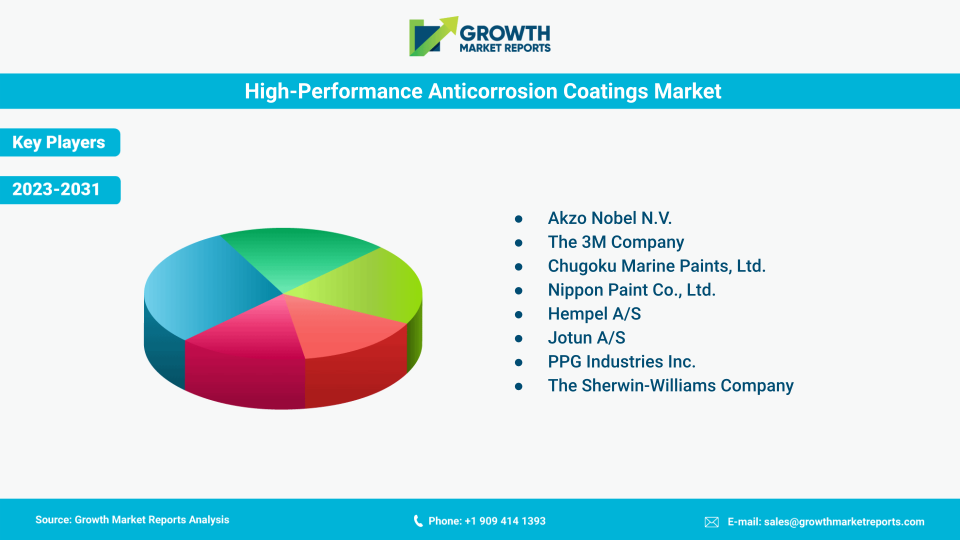
Key players in the global high-performance anticorrosion coatings market include Akzo Nobel N.V., The 3M Company, Chugoku Marine Paints, Ltd., Nippon Paint Co., Ltd., Hempel A/S, Jotun A/S, PPG Industries Inc., and The Sherwin-Williams Company. These players engage in mergers & acquisitions, collaborations, agreements, and partnerships to strengthen their geographical presence.
Opportunities include the development of sustainable coatings and expansion in emerging markets. Challenges include raw material price volatility, regulatory compliance, and the need for continuous innovation.
Leading companies include AkzoNobel N.V., PPG Industries, The Sherwin-Williams Company, Hempel A/S, Jotun Group, RPM International Inc., Axalta Coating Systems, BASF SE, Kansai Paint Co., Ltd., and Nippon Paint Holdings Co., Ltd.
Key trends include the development of eco-friendly, low-VOC coatings, adoption of water-borne and powder technologies, integration of nanotechnology, and smart coatings with self-healing and anti-fouling properties.
Growth is driven by increasing infrastructure investments, expansion of oil and gas activities, stringent environmental regulations, and the need to extend asset lifecycles in harsh environments.
Major end-users are the construction, energy, automotive, and marine sectors, along with industrial, aerospace, and defense industries.
Prominent technology segments include solvent-borne, water-borne, powder coatings, high solids coatings, UV-curable systems, and nanotechnology-based coatings.
Key applications include marine, oil and gas, infrastructure, power generation, automotive and transportation, industrial, and niche sectors like aerospace, defense, and mining.
The main product types include epoxy coatings, polyurethane coatings, acrylic coatings, zinc-rich coatings, alkyd coatings, and specialty coatings such as ceramic and fluoropolymer-based systems.
Asia Pacific dominates the market, accounting for approximately 41% of global revenue in 2024, followed by North America and Europe. The Middle East & Africa and Latin America are also emerging as high-growth regions.
The global high-performance anticorrosion coatings market is expected to reach USD 23.3 billion by 2033, growing at a CAGR of 5.9% from 2025 to 2033.