Epoxy Coatings Market Research Report 2033

Epoxy Coatings Market Research Report 2033

Segments - by Product Type (Water-based Epoxy Coatings, Solvent-based Epoxy Coatings, Powder-based Epoxy Coatings, Others), by Application (Building & Construction, Automotive, Industrial, Marine, Aerospace, Others), by End-Use Industry (Residential, Commercial, Industrial, Infrastructure), by Technology (One-Component, Two-Component, Others)

https://growthmarketreports.com/Raksha
Author : Raksha Sharma
https://growthmarketreports.com/Vaibhav
Fact-checked by : V. Chandola
https://growthmarketreports.com/Shruti
Editor : Shruti Bhat

Upcoming | Report ID :MC-3999 | 4.8 Rating | 98 Reviews | 259 Pages | Format : Docx PDF

Report Description


Epoxy Coatings Market Outlook

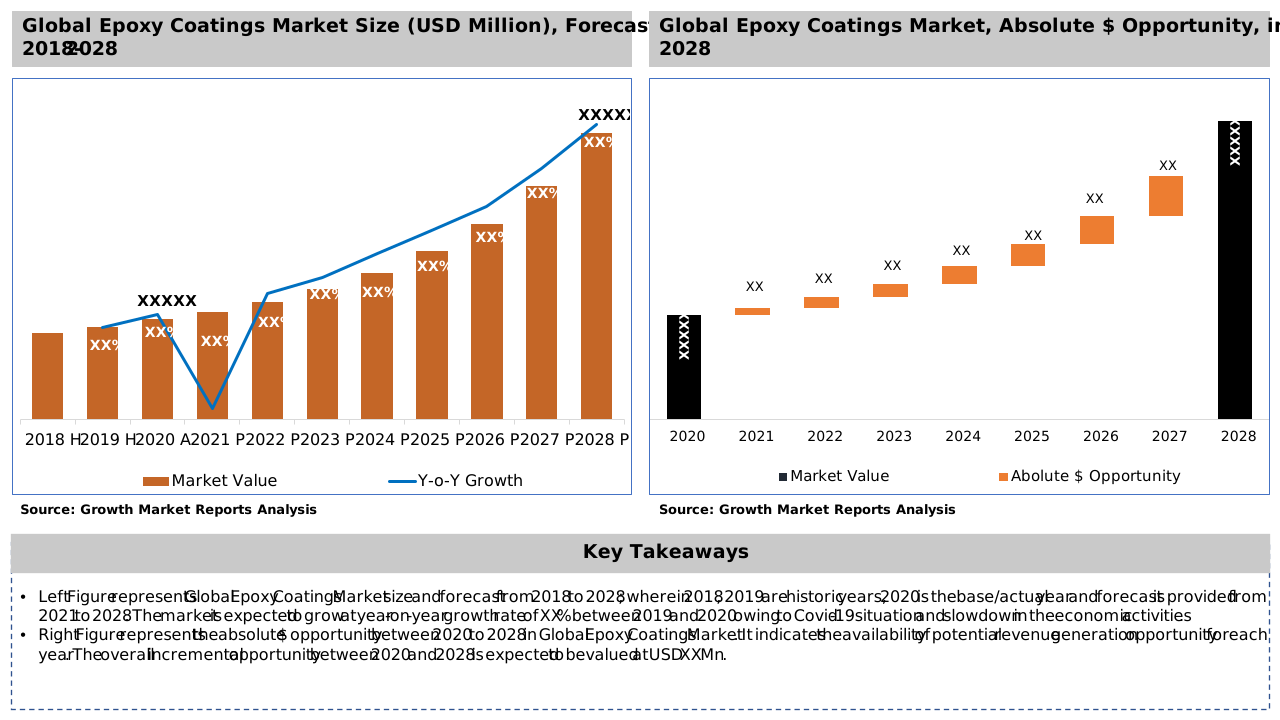
According to our latest research, the global epoxy coatings market size in 2024 stands at USD 42.8 billion, with a robust compound annual growth rate (CAGR) of 5.9% expected through the forecast period. By 2033, the market is projected to reach approximately USD 72.5 billion, driven by escalating demand across construction, automotive, and industrial sectors. This growth is primarily fueled by the superior performance characteristics of epoxy coatings, such as exceptional chemical resistance, durability, and versatility, which are increasingly sought after in a variety of end-use industries.

One of the primary growth drivers of the epoxy coatings market is the burgeoning construction sector worldwide. As urbanization accelerates and infrastructure development projects multiply, particularly in emerging economies, the demand for advanced protective coatings has surged. Epoxy coatings are renowned for their excellent adhesion, resistance to moisture, and ability to withstand harsh environmental conditions, making them indispensable in protecting concrete and steel structures in both residential and commercial construction. Additionally, the push for sustainable and long-lasting building materials has further cemented the role of epoxy coatings, which offer extended service life and reduced maintenance costs. The market is also witnessing a shift towards eco-friendly and low-VOC (volatile organic compound) formulations, aligning with global sustainability trends and regulatory standards.

Another significant factor propelling the epoxy coatings market is the automotive and industrial manufacturing boom. Epoxy coatings are extensively used in automotive applications for corrosion protection, surface finishing, and enhancing aesthetic appeal. The increasing production of automobiles, coupled with stringent regulations regarding vehicle durability and emission standards, has led to heightened adoption of high-performance coatings. In the industrial segment, epoxy coatings are vital for machinery, equipment, and floorings, offering resistance to chemicals, abrasion, and mechanical wear. The ongoing advancements in epoxy resin technology, including the development of rapid-curing and high-solid formulations, are further expanding the scope of applications and driving market growth.

Technological innovations and product diversification are also shaping the trajectory of the epoxy coatings market. Manufacturers are investing heavily in research and development to introduce novel products tailored to specific application requirements. The rise of powder-based and water-based epoxy coatings, which offer environmental and operational advantages over traditional solvent-based variants, is a testament to this trend. Furthermore, the integration of smart and functional additives, such as antimicrobial and self-healing properties, is enhancing the value proposition of epoxy coatings across various sectors. These advancements not only address evolving customer needs but also open up new avenues for market expansion, particularly in high-growth regions.

Epoxy Coating is increasingly being recognized for its critical role in enhancing the longevity and performance of various structures. Its application extends beyond traditional uses, finding a place in innovative solutions that cater to modern construction and industrial needs. The versatility of epoxy coating lies in its ability to adapt to different environments, offering unparalleled protection against environmental stressors. This adaptability makes it a preferred choice in sectors that demand high durability and minimal maintenance, such as marine and aerospace industries. As industries continue to evolve, the demand for epoxy coatings that can meet stringent performance criteria is expected to rise, further solidifying its position in the market.

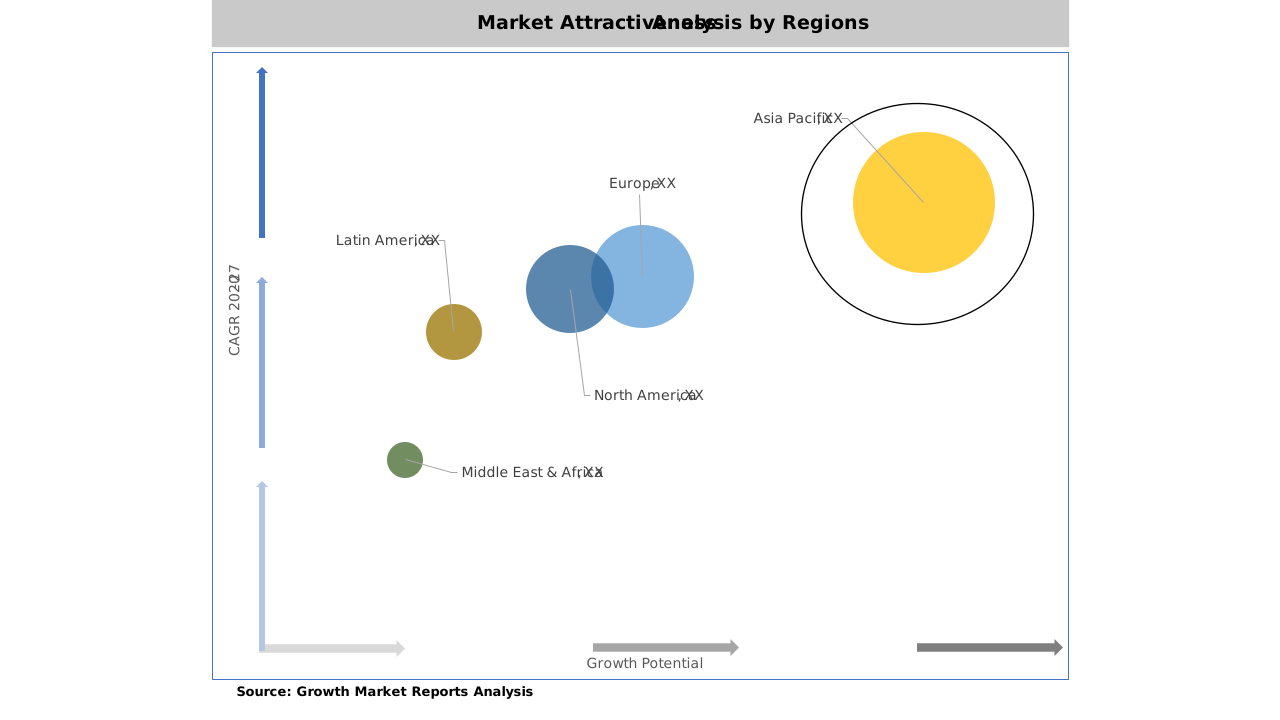
From a regional perspective, Asia Pacific dominates the global epoxy coatings market, accounting for the largest share in 2024. This dominance is attributed to rapid industrialization, extensive infrastructure development, and the presence of major automotive and electronics manufacturing hubs in countries like China, India, and Japan. North America and Europe also hold substantial market shares, driven by established construction industries, technological advancements, and stringent environmental regulations. Meanwhile, the Middle East & Africa and Latin America are emerging as promising markets, buoyed by increasing investments in infrastructure and urban development. Each region presents unique growth opportunities and challenges, shaping the competitive landscape and strategic priorities of key market players.

Global Epoxy Coatings Industry Outlook

Product Type Analysis

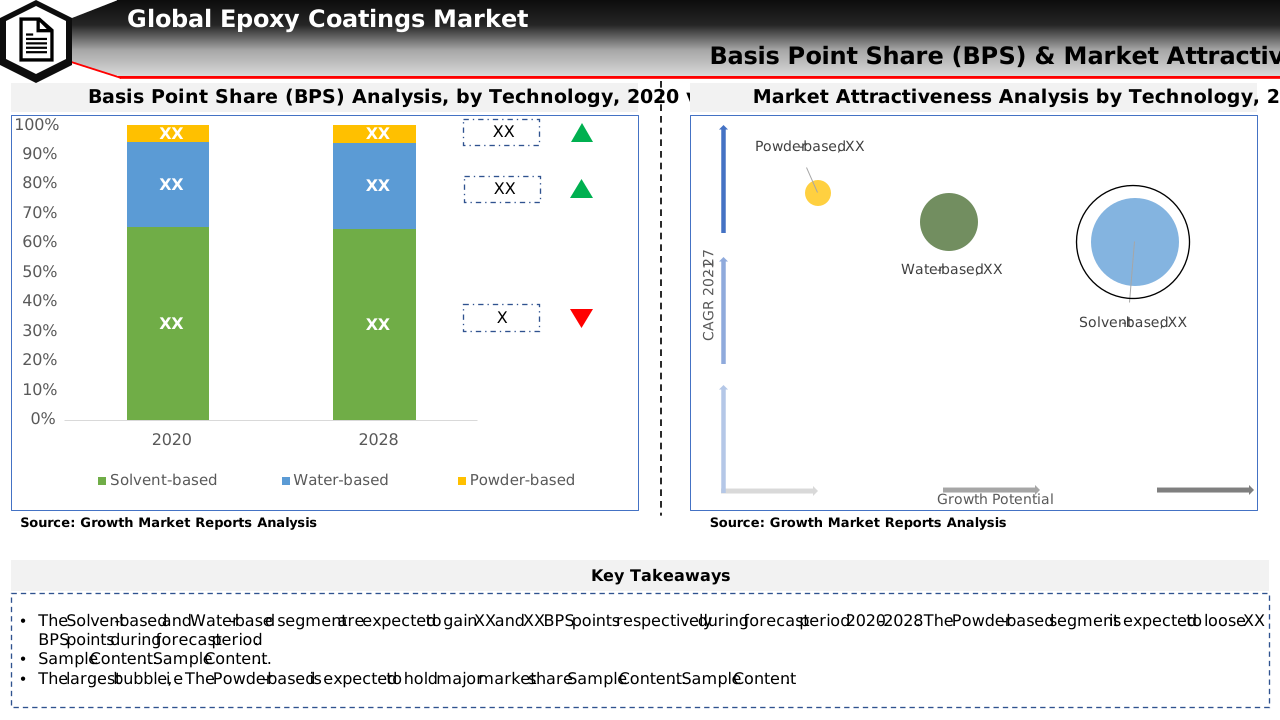
The product type segment of the epoxy coatings market is segmented into water-based epoxy coatings, solvent-based epoxy coatings, powder-based epoxy coatings, and others. Water-based epoxy coatings are gaining significant traction due to their low VOC emissions and compliance with stringent environmental regulations. These coatings offer excellent adhesion, chemical resistance, and ease of application, making them ideal for indoor and sensitive environments such as hospitals, schools, and food processing facilities. The rising awareness about sustainability and the increasing adoption of green building standards are further driving the demand for water-based formulations. Manufacturers are focusing on enhancing the performance attributes of water-based epoxy coatings to match those of their solvent-based counterparts, thereby broadening their application scope.

Solvent-based epoxy coatings, while facing regulatory pressures due to their higher VOC content, continue to hold a substantial market share, particularly in applications requiring superior film formation and rapid curing under challenging environmental conditions. These coatings are widely used in industrial, marine, and heavy-duty infrastructure projects, where durability and long-term protection against corrosion and abrasion are paramount. The robust performance characteristics of solvent-based epoxy coatings make them indispensable for critical applications, despite the ongoing shift towards more environmentally friendly alternatives. However, manufacturers are increasingly investing in reformulating solvent-based products to reduce VOC emissions and enhance worker safety.

Powder-based epoxy coatings represent a rapidly expanding segment within the epoxy coatings market, driven by their environmental benefits and operational efficiencies. These coatings are free from solvents and VOCs, making them an attractive choice for industries seeking to minimize their environmental footprint. Powder-based epoxy coatings offer excellent mechanical strength, uniform thickness, and superior resistance to chemicals and UV radiation. They are extensively used in automotive, appliance, and industrial equipment manufacturing, where high-performance and eco-friendly solutions are in demand. The advancements in powder coating technology, such as improved curing processes and color retention, are further fueling the adoption of this product type.

The "others" category includes specialty epoxy coatings designed for niche applications, such as anti-static, anti-microbial, and fire-retardant coatings. These products cater to specific industry requirements, including electronics, healthcare, and aerospace, where unique performance attributes are essential. The continuous innovation in specialty epoxy coatings is opening new market opportunities and allowing manufacturers to differentiate their offerings. As industries become more specialized and demand tailored solutions, the importance of this segment is expected to grow, contributing to the overall expansion of the epoxy coatings market.

Report Scope

Attributes Details
Report Title Epoxy Coatings Market Research Report 2033
By Product Type Water-based Epoxy Coatings, Solvent-based Epoxy Coatings, Powder-based Epoxy Coatings, Others
By Application Building & Construction, Automotive, Industrial, Marine, Aerospace, Others
By End-Use Industry Residential, Commercial, Industrial, Infrastructure
By Technology One-Component, Two-Component, Others
Regions Covered North America, Europe, APAC, Latin America, MEA
Base Year 2024
Historic Data 2018-2023
Forecast Period 2025-2033
Number of Pages 259
Number of Tables & Figures 274
Customization Available Yes, the report can be customized as per your need.

Application Analysis

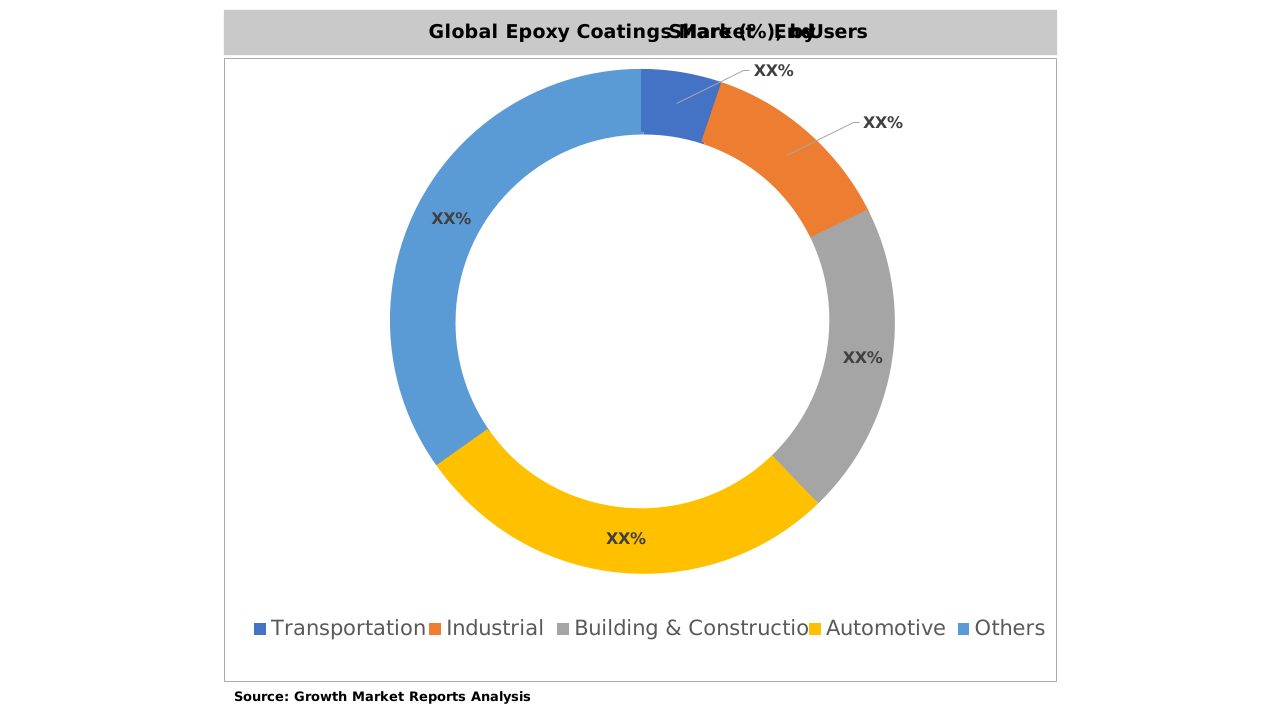
The application segment of the epoxy coatings market encompasses building & construction, automotive, industrial, marine, aerospace, and others. The building & construction sector is the largest consumer of epoxy coatings, driven by the need for durable, chemical-resistant, and aesthetically pleasing surfaces in both residential and commercial buildings. Epoxy coatings are extensively used for flooring, wall protection, and structural steel coatings, offering enhanced longevity and reduced maintenance costs. The increasing adoption of green building practices and the emphasis on sustainable construction materials are further boosting the demand for epoxy coatings in this segment.

In the automotive industry, epoxy coatings play a crucial role in corrosion protection, surface preparation, and aesthetic enhancement of vehicle components. The growing production of automobiles, coupled with the rising demand for lightweight and fuel-efficient vehicles, is driving the adoption of advanced coating solutions. Epoxy coatings offer excellent adhesion, impact resistance, and compatibility with various substrates, making them ideal for both OEM and aftermarket applications. The shift towards electric vehicles and the integration of smart coatings with self-healing and anti-scratch properties are expected to further propel market growth in this segment.

The industrial application segment is characterized by the use of epoxy coatings for machinery, equipment, and industrial flooring. These coatings provide superior resistance to chemicals, abrasion, and mechanical wear, ensuring the longevity and safety of industrial assets. The increasing focus on plant safety, operational efficiency, and regulatory compliance is driving the adoption of high-performance epoxy coatings in manufacturing facilities, warehouses, and processing plants. The development of rapid-curing and easy-to-apply formulations is also facilitating the use of epoxy coatings in time-sensitive industrial projects.

Marine and aerospace applications represent specialized segments within the epoxy coatings market, where the demand for high-performance, corrosion-resistant, and weatherproof coatings is paramount. In the marine industry, epoxy coatings are used for ship hulls, decks, and offshore structures, providing long-lasting protection against saltwater, UV radiation, and harsh environmental conditions. In aerospace, epoxy coatings are valued for their lightweight, thermal stability, and ability to withstand extreme temperatures and pressures. The continuous advancements in coating technology, including the integration of nanomaterials and smart additives, are enhancing the performance and application range of epoxy coatings in these demanding sectors.

End-Use Industry Analysis

The end-use industry segment of the epoxy coatings market is divided into residential, commercial, industrial, and infrastructure. The residential sector is experiencing steady growth, driven by the rising demand for durable and aesthetically appealing flooring, wall coatings, and decorative finishes. Epoxy coatings are increasingly being adopted in homes for their easy maintenance, resistance to stains, and customizable appearance. The trend towards modern interior designs and the growing awareness of the benefits of epoxy coatings among homeowners are contributing to the expansion of this segment.

In the commercial sector, epoxy coatings are widely used in offices, retail spaces, hospitals, schools, and public buildings. The need for hygienic, easy-to-clean, and long-lasting surfaces is driving the adoption of epoxy coatings in high-traffic areas. Commercial facilities benefit from the quick installation and minimal downtime associated with epoxy coatings, which is critical for maintaining business operations. The shift towards sustainable building materials and the implementation of green building certifications are also influencing the choice of epoxy coatings in the commercial sector.

The industrial end-use segment remains a key driver of the epoxy coatings market, with applications ranging from factory floors and production lines to storage tanks and pipelines. Industrial environments demand coatings that can withstand heavy mechanical loads, chemical exposure, and frequent cleaning. Epoxy coatings meet these requirements by offering exceptional durability, slip resistance, and protection against corrosion and contamination. The ongoing modernization of industrial facilities and the adoption of automation and smart manufacturing technologies are further stimulating the demand for advanced epoxy coatings in this segment.

Infrastructure projects, including bridges, highways, airports, and water treatment plants, represent a significant market for epoxy coatings. The need for long-lasting protection against environmental degradation, moisture ingress, and structural wear is driving the use of high-performance epoxy coatings in infrastructure development. Governments and private investors are increasingly prioritizing the use of durable and low-maintenance materials to ensure the longevity and safety of critical infrastructure assets. The growing investments in infrastructure development, particularly in emerging economies, are expected to provide substantial growth opportunities for the epoxy coatings market in the coming years.

Technology Analysis

The technology segment of the epoxy coatings market includes one-component, two-component, and other advanced technologies. One-component epoxy coatings are favored for their ease of use, simplified application process, and reduced preparation time. These coatings are commonly used in residential and light commercial applications, where rapid turnaround and minimal labor are essential. One-component systems are also gaining popularity in maintenance and repair projects, as they offer quick curing and minimal disruption to ongoing operations. Manufacturers are continuously improving the performance and versatility of one-component epoxy coatings to expand their market appeal.

Two-component epoxy coatings dominate the market in terms of performance and application versatility. These systems consist of a resin and a hardener that are mixed prior to application, resulting in a highly durable and chemically resistant coating. Two-component epoxy coatings are widely used in industrial, marine, and infrastructure projects, where long-term protection and high mechanical strength are required. The ability to customize the formulation for specific performance attributes, such as flexibility, UV resistance, and color stability, makes two-component systems the preferred choice for demanding applications. The ongoing development of fast-curing and low-temperature curing technologies is further enhancing the appeal of two-component epoxy coatings.

Other advanced technologies in the epoxy coatings market include hybrid systems, nanotechnology-enhanced coatings, and smart coatings with self-healing or anti-microbial properties. These innovations are addressing emerging customer needs and regulatory requirements, such as enhanced sustainability, improved safety, and extended service life. Hybrid epoxy coatings, which combine the benefits of epoxy resins with other polymers, offer improved flexibility, weatherability, and application versatility. Nanotechnology is enabling the development of coatings with superior barrier properties, scratch resistance, and functional enhancements. The integration of smart additives is opening new possibilities for epoxy coatings in healthcare, electronics, and other high-tech industries.

The technology landscape in the epoxy coatings market is characterized by continuous innovation and differentiation. Manufacturers are investing in research and development to address evolving customer demands, regulatory changes, and competitive pressures. The shift towards digitalization and automation in coating application processes is also influencing technology adoption, with a focus on improving efficiency, quality control, and sustainability. As technology continues to evolve, the epoxy coatings market is expected to witness the emergence of new application areas and performance standards, further driving market growth and transformation.

Opportunities & Threats

The epoxy coatings market is poised for significant opportunities in the coming years, driven by the global shift towards sustainable and eco-friendly products. The increasing adoption of green building standards and regulations limiting VOC emissions are creating a favorable environment for the development and commercialization of water-based and powder-based epoxy coatings. Manufacturers that invest in innovative, low-emission formulations and sustainable raw materials are well-positioned to capture market share and meet the evolving expectations of customers and regulators. Additionally, the rapid urbanization and infrastructure development in emerging economies present lucrative opportunities for market expansion, as governments and private investors prioritize durable and low-maintenance construction materials.

Another major opportunity lies in the growing demand for high-performance coatings in specialized applications, such as healthcare, electronics, and aerospace. The integration of smart and functional additives, such as antimicrobial, anti-static, and self-healing properties, is opening new avenues for product differentiation and value creation. The ongoing advancements in nanotechnology and hybrid coating systems are enabling the development of next-generation epoxy coatings with enhanced performance attributes, such as superior barrier properties, UV resistance, and thermal stability. The increasing focus on digitalization, automation, and quality control in coating application processes is also driving the adoption of advanced technologies and creating new growth opportunities for market players.

Despite the favorable growth prospects, the epoxy coatings market faces certain restraining factors, particularly related to environmental and health concerns associated with traditional solvent-based formulations. The presence of hazardous chemicals and high VOC emissions in some epoxy coatings has led to stringent regulatory scrutiny and the need for compliance with safety standards. Manufacturers are under pressure to reformulate products, invest in cleaner technologies, and ensure worker safety during production and application. Additionally, the volatility in raw material prices and supply chain disruptions can impact production costs and profit margins, posing challenges for market participants. Addressing these restraining factors through innovation, regulatory compliance, and supply chain resilience will be critical for sustained growth in the epoxy coatings market.

Regional Outlook

Asia Pacific leads the global epoxy coatings market, accounting for approximately 45% of the total market value in 2024, which translates to around USD 19.3 billion. The region's dominance is driven by rapid industrialization, urbanization, and infrastructure development in countries such as China, India, and Japan. The thriving construction, automotive, and electronics industries in these countries are fueling the demand for high-performance coatings. Government initiatives aimed at improving urban infrastructure and promoting sustainable construction practices are also contributing to market growth. The Asia Pacific region is expected to maintain its leadership position, with a projected CAGR of 6.3% through 2033, outpacing other regions in terms of both volume and value growth.

North America represents the second-largest market for epoxy coatings, with a market size of approximately USD 10.7 billion in 2024. The region benefits from a mature construction industry, stringent environmental regulations, and a strong focus on technological innovation. The demand for epoxy coatings in North America is driven by the need for durable, low-maintenance materials in residential, commercial, and industrial applications. The automotive and aerospace sectors also contribute significantly to market growth, with an emphasis on lightweight, high-performance coatings. The trend towards green building certifications and the adoption of advanced coating technologies are expected to sustain market growth in North America over the forecast period.

Europe holds a significant share of the global epoxy coatings market, valued at around USD 8.5 billion in 2024. The region is characterized by a strong regulatory framework promoting environmental sustainability and innovation in construction materials. The demand for epoxy coatings in Europe is driven by the need for high-quality, energy-efficient, and environmentally friendly building solutions. The industrial and automotive sectors also play a vital role in market development, with a focus on corrosion protection, aesthetics, and performance. The Middle East & Africa and Latin America are emerging as promising markets, with growing investments in infrastructure and urban development. These regions are expected to witness steady growth, albeit from a smaller base, as economic development and urbanization continue to drive demand for advanced coating solutions.

Epoxy Coatings Market Statistics

Competitor Outlook

The global epoxy coatings market is highly competitive, with a diverse mix of multinational corporations and regional players vying for market share. The competitive landscape is characterized by continuous innovation, product differentiation, and strategic collaborations aimed at expanding product portfolios and market presence. Leading companies are investing heavily in research and development to introduce advanced formulations that meet evolving customer requirements and regulatory standards. The focus on sustainability, low-VOC products, and digitalization is driving competition and shaping the strategic priorities of market participants. Mergers, acquisitions, and partnerships are common strategies employed to strengthen market positions, access new technologies, and penetrate emerging markets.

Product quality, performance attributes, and brand reputation are critical factors influencing the competitive dynamics of the epoxy coatings market. Companies that offer a broad range of high-performance, environmentally friendly coatings are better positioned to capture market opportunities and address diverse customer needs. The ability to provide technical support, customized solutions, and efficient supply chain management is also a key differentiator in the market. As customer expectations evolve and regulatory requirements become more stringent, the importance of continuous innovation and operational excellence is increasing. The competitive landscape is expected to remain dynamic, with new entrants and technological advancements reshaping the market structure.

Major players in the epoxy coatings market include Akzo Nobel N.V., PPG Industries, Inc., The Sherwin-Williams Company, BASF SE, Axalta Coating Systems, RPM International Inc., Nippon Paint Holdings Co., Ltd., Jotun Group, Hempel A/S, and Sika AG. These companies have established strong global footprints, extensive product portfolios, and robust distribution networks, enabling them to serve a wide range of industries and applications. Akzo Nobel N.V. is recognized for its innovative water-based and powder-based epoxy coatings, while PPG Industries focuses on advanced technologies and sustainable solutions. The Sherwin-Williams Company is a leader in the North American market, offering a comprehensive range of industrial and commercial coatings.

BASF SE and Axalta Coating Systems are known for their cutting-edge research and development capabilities, with a focus on high-performance and specialty coatings. RPM International Inc. and Nippon Paint Holdings Co., Ltd. have a strong presence in the Asia Pacific region, leveraging local manufacturing and distribution capabilities to meet regional demand. Jotun Group and Hempel A/S are prominent players in the marine and protective coatings segments, offering solutions tailored to the unique requirements of these industries. Sika AG is renowned for its expertise in construction chemicals and epoxy flooring systems. These companies are continuously expanding their product offerings, investing in sustainable technologies, and pursuing strategic partnerships to maintain their competitive edge in the global epoxy coatings market.

Key Players

  • PPG Industries, Inc.
  • Akzo Nobel N.V.
  • The Sherwin-Williams Company
  • BASF SE
  • Axalta Coating Systems Ltd.
  • RPM International Inc.
  • Hempel A/S
  • Kansai Paint Co., Ltd.
  • Nippon Paint Holdings Co., Ltd.
  • Sika AG
  • Jotun Group
  • Berger Paints India Limited
  • Asian Paints Limited
  • Tikkurila Oyj
  • Teknos Group Oy
  • Valspar Corporation
  • DAW SE
  • Carboline Company
  • 3M Company
  • Evonik Industries AG
Epoxy Coatings Market Overview

Segments

The Epoxy Coatings market has been segmented on the basis of

Product Type

  • Water-based Epoxy Coatings
  • Solvent-based Epoxy Coatings
  • Powder-based Epoxy Coatings
  • Others

Application

  • Building & Construction
  • Automotive
  • Industrial
  • Marine
  • Aerospace
  • Others

End-Use Industry

  • Residential
  • Commercial
  • Industrial
  • Infrastructure

Technology

  • One-Component
  • Two-Component
  • Others

Competitive Landscape

Key players competing in the global epoxy coatings market are Axalta Coating Systems, Ltd.; Sherwin-Williams Co.; PPG Industries, Inc.; Akzo Nobel N.V.; and Nippon Paint Holdings Co. Manufacturers in the industry have employed a range of strategic initiatives including collaborations, mergers and acquisitions, and partnerships to expand their consumer base and obtain a competitive advantage over competitors. Furthermore, in order to maintain their market competitiveness, businesses are focusing their R&D spending on the production and introduction of new products.
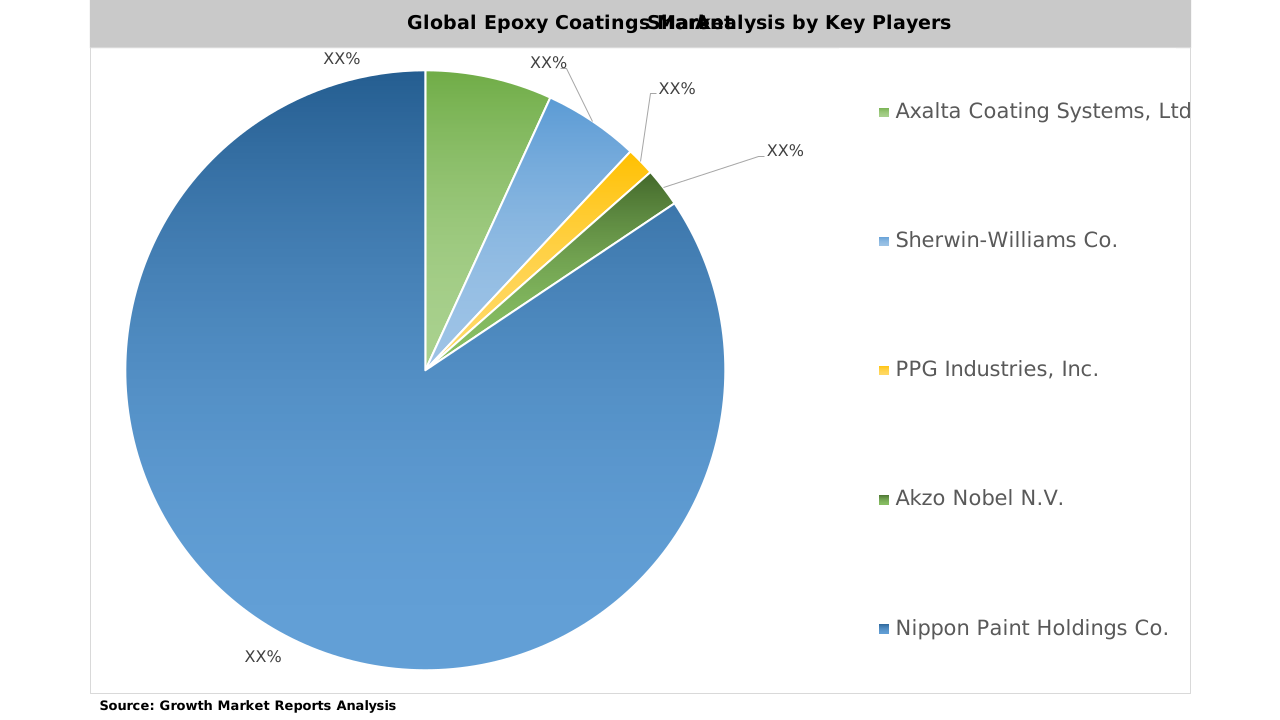

Epoxy Coatings Market Keyplayers

Frequently Asked Questions

Opportunities include expanding demand for sustainable and high-performance coatings, growth in emerging markets, adoption of green building standards, and increasing use in specialized sectors like healthcare and electronics.

Key challenges include regulatory pressures on VOC emissions, environmental and health concerns with solvent-based coatings, raw material price volatility, and supply chain disruptions.

Major companies include Akzo Nobel N.V., PPG Industries, The Sherwin-Williams Company, BASF SE, Axalta Coating Systems, RPM International, Nippon Paint Holdings, Jotun Group, Hempel A/S, and Sika AG.

Trends include the rise of water-based and powder-based formulations for environmental compliance, integration of smart additives, and continuous R&D for improved performance and sustainability.

Technological advancements include the development of one-component and two-component systems, hybrid and nanotechnology-enhanced coatings, and smart coatings with self-healing or antimicrobial properties.

Epoxy coatings are widely used in building & construction, automotive, industrial, marine, and aerospace sectors for purposes such as flooring, corrosion protection, surface finishing, and machinery protection.

The main types are water-based epoxy coatings, solvent-based epoxy coatings, powder-based epoxy coatings, and specialty coatings such as anti-static, anti-microbial, and fire-retardant variants.

Asia Pacific leads the market, accounting for about 45% of global value in 2024, followed by North America and Europe. Rapid industrialization and infrastructure development in countries like China, India, and Japan are major contributors.

Key growth drivers include rising demand from the construction, automotive, and industrial sectors, superior performance characteristics like chemical resistance and durability, and the shift towards eco-friendly, low-VOC formulations.

As of 2024, the global epoxy coatings market is valued at USD 42.8 billion and is expected to reach approximately USD 72.5 billion by 2033, growing at a CAGR of 5.9%.

Table Of Content

Chapter 1 Executive Summary
Chapter 2 Assumptions and Acronyms Used
Chapter 3 Research Methodology
Chapter 4 Epoxy Coatings Market Overview
   4.1 Introduction
      4.1.1 Market Taxonomy
      4.1.2 Market Definition
      4.1.3 Macro-Economic Factors Impacting the Market Growth
   4.2 Epoxy Coatings Market Dynamics
      4.2.1 Market Drivers
      4.2.2 Market Restraints
      4.2.3 Market Opportunity
   4.3 Epoxy Coatings Market - Supply Chain Analysis
      4.3.1 List of Key Suppliers
      4.3.2 List of Key Distributors
      4.3.3 List of Key Consumers
   4.4 Key Forces Shaping the Epoxy Coatings Market
      4.4.1 Bargaining Power of Suppliers
      4.4.2 Bargaining Power of Buyers
      4.4.3 Threat of Substitution
      4.4.4 Threat of New Entrants
      4.4.5 Competitive Rivalry
   4.5 Global Epoxy Coatings Market Size & Forecast, 2023-2032
      4.5.1 Epoxy Coatings Market Size and Y-o-Y Growth
      4.5.2 Epoxy Coatings Market Absolute $ Opportunity

Chapter 5 Global Epoxy Coatings Market Analysis and Forecast By Product Type
   5.1 Introduction
      5.1.1 Key Market Trends & Growth Opportunities By Product Type
      5.1.2 Basis Point Share (BPS) Analysis By Product Type
      5.1.3 Absolute $ Opportunity Assessment By Product Type
   5.2 Epoxy Coatings Market Size Forecast By Product Type
      5.2.1 Water-based Epoxy Coatings
      5.2.2 Solvent-based Epoxy Coatings
      5.2.3 Powder-based Epoxy Coatings
      5.2.4 Others
   5.3 Market Attractiveness Analysis By Product Type

Chapter 6 Global Epoxy Coatings Market Analysis and Forecast By Application
   6.1 Introduction
      6.1.1 Key Market Trends & Growth Opportunities By Application
      6.1.2 Basis Point Share (BPS) Analysis By Application
      6.1.3 Absolute $ Opportunity Assessment By Application
   6.2 Epoxy Coatings Market Size Forecast By Application
      6.2.1 Building & Construction
      6.2.2 Automotive
      6.2.3 Industrial
      6.2.4 Marine
      6.2.5 Aerospace
      6.2.6 Others
   6.3 Market Attractiveness Analysis By Application

Chapter 7 Global Epoxy Coatings Market Analysis and Forecast By End-Use Industry
   7.1 Introduction
      7.1.1 Key Market Trends & Growth Opportunities By End-Use Industry
      7.1.2 Basis Point Share (BPS) Analysis By End-Use Industry
      7.1.3 Absolute $ Opportunity Assessment By End-Use Industry
   7.2 Epoxy Coatings Market Size Forecast By End-Use Industry
      7.2.1 Residential
      7.2.2 Commercial
      7.2.3 Industrial
      7.2.4 Infrastructure
   7.3 Market Attractiveness Analysis By End-Use Industry

Chapter 8 Global Epoxy Coatings Market Analysis and Forecast By Technology
   8.1 Introduction
      8.1.1 Key Market Trends & Growth Opportunities By Technology
      8.1.2 Basis Point Share (BPS) Analysis By Technology
      8.1.3 Absolute $ Opportunity Assessment By Technology
   8.2 Epoxy Coatings Market Size Forecast By Technology
      8.2.1 One-Component
      8.2.2 Two-Component
      8.2.3 Others
   8.3 Market Attractiveness Analysis By Technology

Chapter 9 Global Epoxy Coatings Market Analysis and Forecast by Region
   9.1 Introduction
      9.1.1 Key Market Trends & Growth Opportunities By Region
      9.1.2 Basis Point Share (BPS) Analysis By Region
      9.1.3 Absolute $ Opportunity Assessment By Region
   9.2 Epoxy Coatings Market Size Forecast By Region
      9.2.1 North America
      9.2.2 Europe
      9.2.3 Asia Pacific
      9.2.4 Latin America
      9.2.5 Middle East & Africa (MEA)
   9.3 Market Attractiveness Analysis By Region

Chapter 10 Coronavirus Disease (COVID-19) Impact 
   10.1 Introduction 
   10.2 Current & Future Impact Analysis 
   10.3 Economic Impact Analysis 
   10.4 Government Policies 
   10.5 Investment Scenario

Chapter 11 North America Epoxy Coatings Analysis and Forecast
   11.1 Introduction
   11.2 North America Epoxy Coatings Market Size Forecast by Country
      11.2.1 U.S.
      11.2.2 Canada
   11.3 Basis Point Share (BPS) Analysis by Country
   11.4 Absolute $ Opportunity Assessment by Country
   11.5 Market Attractiveness Analysis by Country
   11.6 North America Epoxy Coatings Market Size Forecast By Product Type
      11.6.1 Water-based Epoxy Coatings
      11.6.2 Solvent-based Epoxy Coatings
      11.6.3 Powder-based Epoxy Coatings
      11.6.4 Others
   11.7 Basis Point Share (BPS) Analysis By Product Type 
   11.8 Absolute $ Opportunity Assessment By Product Type 
   11.9 Market Attractiveness Analysis By Product Type
   11.10 North America Epoxy Coatings Market Size Forecast By Application
      11.10.1 Building & Construction
      11.10.2 Automotive
      11.10.3 Industrial
      11.10.4 Marine
      11.10.5 Aerospace
      11.10.6 Others
   11.11 Basis Point Share (BPS) Analysis By Application 
   11.12 Absolute $ Opportunity Assessment By Application 
   11.13 Market Attractiveness Analysis By Application
   11.14 North America Epoxy Coatings Market Size Forecast By End-Use Industry
      11.14.1 Residential
      11.14.2 Commercial
      11.14.3 Industrial
      11.14.4 Infrastructure
   11.15 Basis Point Share (BPS) Analysis By End-Use Industry 
   11.16 Absolute $ Opportunity Assessment By End-Use Industry 
   11.17 Market Attractiveness Analysis By End-Use Industry
   11.18 North America Epoxy Coatings Market Size Forecast By Technology
      11.18.1 One-Component
      11.18.2 Two-Component
      11.18.3 Others
   11.19 Basis Point Share (BPS) Analysis By Technology 
   11.20 Absolute $ Opportunity Assessment By Technology 
   11.21 Market Attractiveness Analysis By Technology

Chapter 12 Europe Epoxy Coatings Analysis and Forecast
   12.1 Introduction
   12.2 Europe Epoxy Coatings Market Size Forecast by Country
      12.2.1 Germany
      12.2.2 France
      12.2.3 Italy
      12.2.4 U.K.
      12.2.5 Spain
      12.2.6 Russia
      12.2.7 Rest of Europe
   12.3 Basis Point Share (BPS) Analysis by Country
   12.4 Absolute $ Opportunity Assessment by Country
   12.5 Market Attractiveness Analysis by Country
   12.6 Europe Epoxy Coatings Market Size Forecast By Product Type
      12.6.1 Water-based Epoxy Coatings
      12.6.2 Solvent-based Epoxy Coatings
      12.6.3 Powder-based Epoxy Coatings
      12.6.4 Others
   12.7 Basis Point Share (BPS) Analysis By Product Type 
   12.8 Absolute $ Opportunity Assessment By Product Type 
   12.9 Market Attractiveness Analysis By Product Type
   12.10 Europe Epoxy Coatings Market Size Forecast By Application
      12.10.1 Building & Construction
      12.10.2 Automotive
      12.10.3 Industrial
      12.10.4 Marine
      12.10.5 Aerospace
      12.10.6 Others
   12.11 Basis Point Share (BPS) Analysis By Application 
   12.12 Absolute $ Opportunity Assessment By Application 
   12.13 Market Attractiveness Analysis By Application
   12.14 Europe Epoxy Coatings Market Size Forecast By End-Use Industry
      12.14.1 Residential
      12.14.2 Commercial
      12.14.3 Industrial
      12.14.4 Infrastructure
   12.15 Basis Point Share (BPS) Analysis By End-Use Industry 
   12.16 Absolute $ Opportunity Assessment By End-Use Industry 
   12.17 Market Attractiveness Analysis By End-Use Industry
   12.18 Europe Epoxy Coatings Market Size Forecast By Technology
      12.18.1 One-Component
      12.18.2 Two-Component
      12.18.3 Others
   12.19 Basis Point Share (BPS) Analysis By Technology 
   12.20 Absolute $ Opportunity Assessment By Technology 
   12.21 Market Attractiveness Analysis By Technology

Chapter 13 Asia Pacific Epoxy Coatings Analysis and Forecast
   13.1 Introduction
   13.2 Asia Pacific Epoxy Coatings Market Size Forecast by Country
      13.2.1 China
      13.2.2 Japan
      13.2.3 South Korea
      13.2.4 India
      13.2.5 Australia
      13.2.6 South East Asia (SEA)
      13.2.7 Rest of Asia Pacific (APAC)
   13.3 Basis Point Share (BPS) Analysis by Country
   13.4 Absolute $ Opportunity Assessment by Country
   13.5 Market Attractiveness Analysis by Country
   13.6 Asia Pacific Epoxy Coatings Market Size Forecast By Product Type
      13.6.1 Water-based Epoxy Coatings
      13.6.2 Solvent-based Epoxy Coatings
      13.6.3 Powder-based Epoxy Coatings
      13.6.4 Others
   13.7 Basis Point Share (BPS) Analysis By Product Type 
   13.8 Absolute $ Opportunity Assessment By Product Type 
   13.9 Market Attractiveness Analysis By Product Type
   13.10 Asia Pacific Epoxy Coatings Market Size Forecast By Application
      13.10.1 Building & Construction
      13.10.2 Automotive
      13.10.3 Industrial
      13.10.4 Marine
      13.10.5 Aerospace
      13.10.6 Others
   13.11 Basis Point Share (BPS) Analysis By Application 
   13.12 Absolute $ Opportunity Assessment By Application 
   13.13 Market Attractiveness Analysis By Application
   13.14 Asia Pacific Epoxy Coatings Market Size Forecast By End-Use Industry
      13.14.1 Residential
      13.14.2 Commercial
      13.14.3 Industrial
      13.14.4 Infrastructure
   13.15 Basis Point Share (BPS) Analysis By End-Use Industry 
   13.16 Absolute $ Opportunity Assessment By End-Use Industry 
   13.17 Market Attractiveness Analysis By End-Use Industry
   13.18 Asia Pacific Epoxy Coatings Market Size Forecast By Technology
      13.18.1 One-Component
      13.18.2 Two-Component
      13.18.3 Others
   13.19 Basis Point Share (BPS) Analysis By Technology 
   13.20 Absolute $ Opportunity Assessment By Technology 
   13.21 Market Attractiveness Analysis By Technology

Chapter 14 Latin America Epoxy Coatings Analysis and Forecast
   14.1 Introduction
   14.2 Latin America Epoxy Coatings Market Size Forecast by Country
      14.2.1 Brazil
      14.2.2 Mexico
      14.2.3 Rest of Latin America (LATAM)
   14.3 Basis Point Share (BPS) Analysis by Country
   14.4 Absolute $ Opportunity Assessment by Country
   14.5 Market Attractiveness Analysis by Country
   14.6 Latin America Epoxy Coatings Market Size Forecast By Product Type
      14.6.1 Water-based Epoxy Coatings
      14.6.2 Solvent-based Epoxy Coatings
      14.6.3 Powder-based Epoxy Coatings
      14.6.4 Others
   14.7 Basis Point Share (BPS) Analysis By Product Type 
   14.8 Absolute $ Opportunity Assessment By Product Type 
   14.9 Market Attractiveness Analysis By Product Type
   14.10 Latin America Epoxy Coatings Market Size Forecast By Application
      14.10.1 Building & Construction
      14.10.2 Automotive
      14.10.3 Industrial
      14.10.4 Marine
      14.10.5 Aerospace
      14.10.6 Others
   14.11 Basis Point Share (BPS) Analysis By Application 
   14.12 Absolute $ Opportunity Assessment By Application 
   14.13 Market Attractiveness Analysis By Application
   14.14 Latin America Epoxy Coatings Market Size Forecast By End-Use Industry
      14.14.1 Residential
      14.14.2 Commercial
      14.14.3 Industrial
      14.14.4 Infrastructure
   14.15 Basis Point Share (BPS) Analysis By End-Use Industry 
   14.16 Absolute $ Opportunity Assessment By End-Use Industry 
   14.17 Market Attractiveness Analysis By End-Use Industry
   14.18 Latin America Epoxy Coatings Market Size Forecast By Technology
      14.18.1 One-Component
      14.18.2 Two-Component
      14.18.3 Others
   14.19 Basis Point Share (BPS) Analysis By Technology 
   14.20 Absolute $ Opportunity Assessment By Technology 
   14.21 Market Attractiveness Analysis By Technology

Chapter 15 Middle East & Africa (MEA) Epoxy Coatings Analysis and Forecast
   15.1 Introduction
   15.2 Middle East & Africa (MEA) Epoxy Coatings Market Size Forecast by Country
      15.2.1 Saudi Arabia
      15.2.2 South Africa
      15.2.3 UAE
      15.2.4 Rest of Middle East & Africa (MEA)
   15.3 Basis Point Share (BPS) Analysis by Country
   15.4 Absolute $ Opportunity Assessment by Country
   15.5 Market Attractiveness Analysis by Country
   15.6 Middle East & Africa (MEA) Epoxy Coatings Market Size Forecast By Product Type
      15.6.1 Water-based Epoxy Coatings
      15.6.2 Solvent-based Epoxy Coatings
      15.6.3 Powder-based Epoxy Coatings
      15.6.4 Others
   15.7 Basis Point Share (BPS) Analysis By Product Type 
   15.8 Absolute $ Opportunity Assessment By Product Type 
   15.9 Market Attractiveness Analysis By Product Type
   15.10 Middle East & Africa (MEA) Epoxy Coatings Market Size Forecast By Application
      15.10.1 Building & Construction
      15.10.2 Automotive
      15.10.3 Industrial
      15.10.4 Marine
      15.10.5 Aerospace
      15.10.6 Others
   15.11 Basis Point Share (BPS) Analysis By Application 
   15.12 Absolute $ Opportunity Assessment By Application 
   15.13 Market Attractiveness Analysis By Application
   15.14 Middle East & Africa (MEA) Epoxy Coatings Market Size Forecast By End-Use Industry
      15.14.1 Residential
      15.14.2 Commercial
      15.14.3 Industrial
      15.14.4 Infrastructure
   15.15 Basis Point Share (BPS) Analysis By End-Use Industry 
   15.16 Absolute $ Opportunity Assessment By End-Use Industry 
   15.17 Market Attractiveness Analysis By End-Use Industry
   15.18 Middle East & Africa (MEA) Epoxy Coatings Market Size Forecast By Technology
      15.18.1 One-Component
      15.18.2 Two-Component
      15.18.3 Others
   15.19 Basis Point Share (BPS) Analysis By Technology 
   15.20 Absolute $ Opportunity Assessment By Technology 
   15.21 Market Attractiveness Analysis By Technology

Chapter 16 Competition Landscape 
   16.1 Epoxy Coatings Market: Competitive Dashboard
   16.2 Global Epoxy Coatings Market: Market Share Analysis, 2023
   16.3 Company Profiles (Details – Overview, Financials, Developments, Strategy) 
      16.3.1 PPG Industries, Inc.
Akzo Nobel N.V.
The Sherwin-Williams Company
BASF SE
Axalta Coating Systems Ltd.
RPM International Inc.
Hempel A/S
Kansai Paint Co., Ltd.
Nippon Paint Holdings Co., Ltd.
Sika AG
Jotun Group
Berger Paints India Limited
Asian Paints Limited
Tikkurila Oyj
Teknos Group Oy
Valspar Corporation
DAW SE
Carboline Company
3M Company
Evonik Industries AG

Methodology

Our Clients

FedEx Logistics
The John Holland Group
sinopec
Honda Motor Co. Ltd.
Pfizer
General Mills
Siemens Healthcare
Microsoft