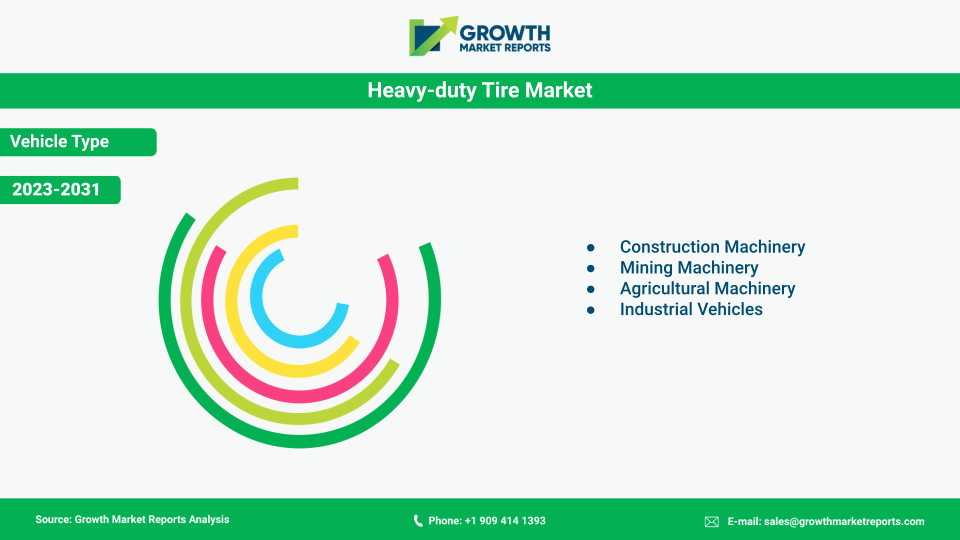
Segments - by Product Type (Radial Tires, Bias Tires, Solid Tires, Others), by Application (Construction & Mining, Agriculture, Industrial, Transportation, Others), by Vehicle Type (Trucks, Buses, Earthmoving Equipment, Tractors, Others), by Distribution Channel (OEM, Aftermarket)
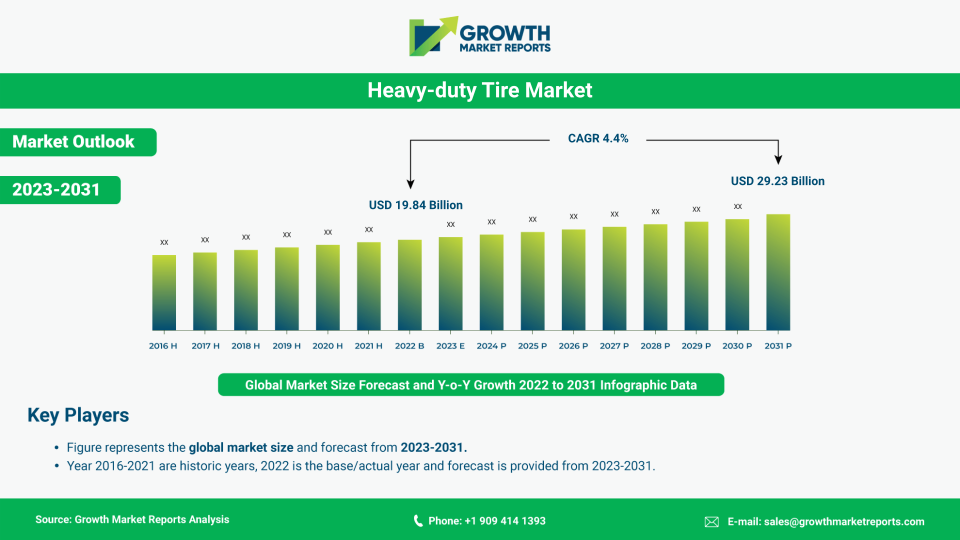
According to our latest research, the global heavy duty tire market size reached USD 31.8 billion in 2024, with a robust compound annual growth rate (CAGR) of 5.2% expected from 2025 to 2033. By the end of 2033, the market is forecasted to attain a value of USD 50.2 billion, reflecting sustained demand and continuous innovation across key industrial sectors. The primary growth driver for the heavy duty tire market is the increasing infrastructure investments worldwide, notably in emerging economies, which are fueling the need for durable and high-performance tires for construction, mining, and agricultural machinery.
One of the principal growth factors for the heavy duty tire market is the surge in construction and mining activities globally. Rapid urbanization, government spending on infrastructure, and the expansion of mining operations, particularly in Asia Pacific and Africa, have significantly elevated the demand for heavy duty vehicles. These vehicles, which include trucks, earthmoving equipment, and tractors, require specialized tires capable of withstanding harsh operating conditions and heavy loads. The growing adoption of radial and solid tires, known for their superior durability and performance, is further propelling the market. Additionally, technological advancements such as self-sealing tires, enhanced tread designs, and eco-friendly materials are driving replacement cycles and attracting new customers from both OEM and aftermarket segments.
Another critical factor contributing to the growth of the heavy duty tire market is the increasing mechanization in the agriculture sector. With the global population rising and food demand surging, there is a marked shift towards modernizing agricultural practices. Farmers are increasingly investing in advanced tractors and harvesters, which necessitate reliable and long-lasting tires. Furthermore, the proliferation of commercial transportation, owing to booming e-commerce and logistics industries, is also augmenting the demand for heavy duty tires. The need for frequent tire replacements due to high mileage and varying road conditions is creating significant opportunities for both OEM and aftermarket suppliers, ensuring a healthy sales pipeline throughout the forecast period.
Sustainability trends and regulatory pressures are also shaping the heavy duty tire market. Governments and environmental agencies are imposing stricter regulations on tire manufacturing processes, emphasizing the reduction of carbon emissions and the use of sustainable raw materials. This has led to increased investments in research and development, with manufacturers focusing on producing eco-friendly and energy-efficient tire solutions. The integration of smart tire technologies, such as sensors for real-time monitoring of tire pressure and temperature, is gaining traction among fleet operators, further enhancing operational efficiency and safety. These advancements are not only improving product life cycles but also supporting the market's long-term growth trajectory.
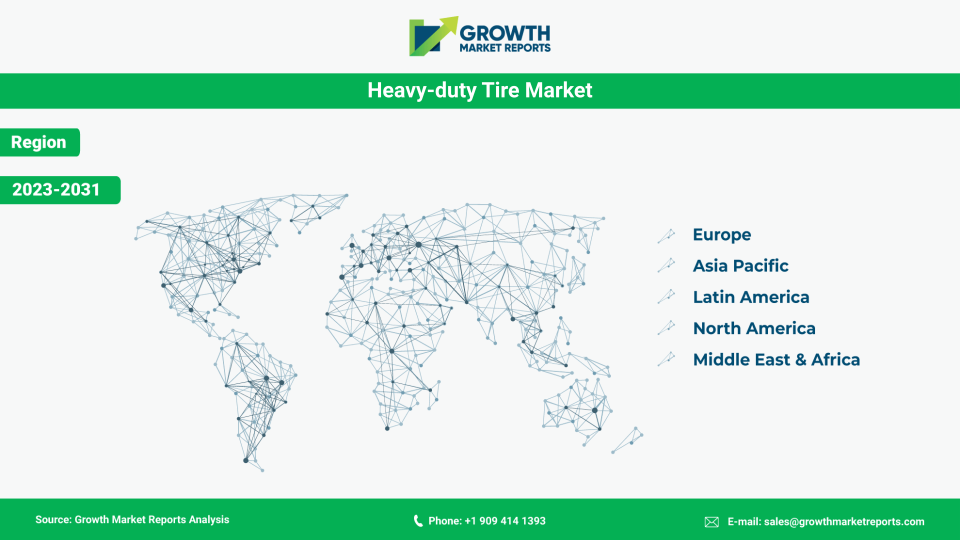
Regionally, Asia Pacific dominates the heavy duty tire market, accounting for the largest share in 2024, followed by North America and Europe. The dominance of Asia Pacific can be attributed to the region's expansive construction, mining, and agricultural sectors, particularly in China and India. North America remains a significant market, driven by its advanced transportation infrastructure and the presence of leading OEMs. Meanwhile, Europe is witnessing steady growth, supported by stringent regulatory standards and the adoption of advanced tire technologies. Latin America and the Middle East & Africa, though smaller in market size, are experiencing accelerated growth due to increasing investments in infrastructure and industrial development. The regional landscape is expected to remain dynamic, with emerging markets offering substantial potential for future expansion.
The product type segment of the heavy duty tire market is categorized into radial tires, bias tires, solid tires, and others. Among these, radial tires hold the largest market share, primarily due to their superior performance characteristics, including better fuel efficiency, enhanced traction, and longer lifespan compared to bias tires. The demand for radial tires is particularly high in regions with advanced road infrastructure and stringent safety regulations, such as North America and Europe. The adoption of radial technology is also gaining momentum in emerging markets, where fleet operators are increasingly seeking cost-effective and durable solutions to minimize operational downtime and maintenance costs.
Bias tires, while gradually losing market share to radial counterparts, continue to maintain relevance in specific applications, particularly in regions with challenging terrains and less developed road networks. These tires are favored for their robust construction, high load-bearing capacity, and resistance to sidewall damage, making them suitable for off-road and heavy-duty applications in mining and agriculture. Manufacturers are investing in improving the performance of bias tires through advanced materials and innovative tread designs, ensuring their continued presence in the market despite the growing preference for radial alternatives.
Solid tires, another important product type, are witnessing increased adoption in industrial and construction applications where puncture resistance and maintenance-free operation are critical. These tires are commonly used in forklifts, loaders, and other equipment operating in environments with high risk of tire damage. The market for solid tires is expected to expand steadily, driven by the growth of the warehousing, logistics, and construction sectors. Innovations in solid tire manufacturing, such as the use of advanced rubber compounds and reinforced structures, are further enhancing their performance and lifespan, making them a preferred choice for specific heavy-duty applications.
The "others" category includes specialty tires designed for unique applications, such as forestry and military vehicles. While this segment represents a smaller share of the overall market, it is characterized by high value-added products tailored to meet specific performance requirements. Manufacturers catering to this segment focus on customization, durability, and compliance with stringent safety standards. As industries continue to diversify their vehicle fleets and operational needs, the demand for specialty heavy duty tires is expected to witness moderate growth, supported by ongoing product development and innovation.
| Attributes | Details |
| Report Title | Heavy duty Tire Market Research Report 2033 |
| By Product Type | Radial Tires, Bias Tires, Solid Tires, Others |
| By Application | Construction & Mining, Agriculture, Industrial, Transportation, Others |
| By Vehicle Type | Trucks, Buses, Earthmoving Equipment, Tractors, Others |
| By Distribution Channel | OEM, Aftermarket |
| Regions Covered | North America, Europe, APAC, Latin America, MEA |
| Base Year | 2024 |
| Historic Data | 2018-2023 |
| Forecast Period | 2025-2033 |
| Number of Pages | 272 |
| Number of Tables & Figures | 368 |
| Customization Available | Yes, the report can be customized as per your need. |
The application segment of the heavy duty tire market encompasses construction and mining, agriculture, industrial, transportation, and others. The construction and mining sector dominates this segment, accounting for the largest share due to the high demand for robust tires capable of withstanding extreme loads and harsh operating environments. The resurgence of global infrastructure projects, particularly in developing economies, has led to increased deployment of heavy machinery, thereby driving the need for durable and high-performance tires. Mining operations, in particular, require specialized tires with enhanced puncture resistance, heat dissipation, and traction, prompting manufacturers to invest in advanced tire technologies tailored for this sector.
Agriculture represents another significant application area, with the mechanization of farming practices fueling the demand for heavy duty tires. Tractors, harvesters, and other agricultural equipment require tires that offer optimal traction, soil protection, and longevity. The adoption of radial and bias tires in this segment is influenced by factors such as crop type, soil conditions, and farm size. Technological advancements, including the development of low-compaction tires and self-cleaning tread patterns, are enabling farmers to enhance productivity while minimizing soil disturbance. The growing emphasis on sustainable agriculture is also driving the demand for eco-friendly tire solutions in this sector.
The industrial segment, which includes manufacturing, warehousing, and logistics operations, is experiencing steady growth in demand for heavy duty tires. Equipment such as forklifts, cranes, and loaders require tires that deliver consistent performance under continuous operation and heavy loads. The rise of e-commerce and global supply chains has further intensified the need for reliable tires in the transportation and logistics sectors. Fleet operators are increasingly prioritizing tire quality and lifecycle cost, leading to greater adoption of premium tire brands and innovative tire management solutions.
The transportation application segment, encompassing trucks and buses, is a vital contributor to the heavy duty tire market. The expansion of road freight and public transportation networks, particularly in urbanizing regions, is driving tire replacement demand. Regulatory requirements for safety, fuel efficiency, and emissions are prompting fleet operators to invest in advanced tire technologies, such as low rolling resistance and smart tires. As the global economy becomes increasingly interconnected, the transportation sector's reliance on durable and high-performing tires is expected to remain a key growth driver for the market.
The vehicle type segment of the heavy duty tire market is segmented into trucks, buses, earthmoving equipment, tractors, and others. Trucks represent the largest sub-segment, driven by their extensive use in logistics, construction, and mining industries. The increasing movement of goods, coupled with the expansion of e-commerce and retail sectors, has led to a surge in demand for heavy duty truck tires. Fleet operators are seeking tires that offer enhanced fuel efficiency, longer tread life, and reduced maintenance costs, prompting manufacturers to introduce innovative products with advanced rubber compounds and tread designs.
Buses constitute another significant vehicle type, particularly in regions with expanding public transportation networks. The need for reliable and safe transportation solutions is driving investments in high-quality tires for buses, with a focus on durability, ride comfort, and safety. Urbanization trends and government initiatives to improve public transport infrastructure are expected to sustain the demand for heavy duty bus tires over the forecast period. Manufacturers are also developing specialized tires for electric and hybrid buses, addressing the unique performance requirements of these vehicles.
Earthmoving equipment, including excavators, loaders, and dump trucks, plays a critical role in construction and mining activities. The tires used in these vehicles must withstand extreme loads, abrasive surfaces, and challenging terrains. As infrastructure projects and mining operations expand globally, the demand for heavy duty tires for earthmoving equipment is expected to rise significantly. Manufacturers are investing in R&D to enhance tire durability, heat resistance, and traction, ensuring optimal performance in demanding operating conditions.
Tractors and other agricultural vehicles represent a vital sub-segment, driven by the ongoing mechanization of farming practices. The need for tires that offer superior traction, soil protection, and operational efficiency is prompting farmers to invest in advanced tire technologies. The adoption of radial and low-compaction tires is gaining traction in this segment, supported by government incentives and technological advancements in agricultural machinery. The "others" category includes specialty vehicles used in forestry, military, and other niche applications, where customized tire solutions are essential to meet specific operational requirements.
The distribution channel segment of the heavy duty tire market is divided into OEM (Original Equipment Manufacturer) and aftermarket channels. The OEM segment is characterized by direct sales to vehicle manufacturers, who incorporate tires into new vehicles during assembly. This channel is primarily driven by long-term contracts and strategic partnerships between tire manufacturers and OEMs, ensuring a steady demand for high-quality tires that meet stringent performance and safety standards. The OEM segment benefits from the growing production of heavy duty vehicles worldwide, particularly in emerging economies where infrastructure development is a key focus.
The aftermarket channel, on the other hand, represents the largest share of the heavy duty tire market, driven by the need for tire replacements and upgrades throughout the vehicle lifecycle. Fleet operators, construction companies, and individual vehicle owners rely on the aftermarket for a wide range of tire options, including premium, mid-range, and budget-friendly products. The aftermarket segment is highly competitive, with numerous players offering differentiated products, value-added services, and innovative tire management solutions. The increasing adoption of digital platforms and e-commerce channels is transforming the aftermarket landscape, providing customers with greater convenience and access to a broader selection of tires.
The growing emphasis on preventive maintenance and operational efficiency is fueling demand for aftermarket tire services, such as tire retreading, balancing, and alignment. These services not only extend tire lifespan but also reduce overall operating costs, making them attractive to fleet operators and industrial customers. Manufacturers are expanding their service networks and investing in digital tools to enhance customer engagement and streamline the tire replacement process.
In addition, the aftermarket channel is witnessing increased demand for specialty and customized tires, catering to specific operational needs in construction, mining, agriculture, and industrial sectors. The availability of advanced tire tracking and monitoring solutions is enabling customers to optimize tire usage, minimize downtime, and improve safety. As the heavy duty vehicle fleet continues to grow and diversify, the aftermarket segment is expected to remain a critical driver of market growth, offering significant opportunities for innovation and differentiation.
The heavy duty tire market presents a range of opportunities for industry participants, particularly in the areas of technological innovation and sustainability. The adoption of smart tire technologies, such as sensors for real-time monitoring of tire pressure, temperature, and wear, is creating new avenues for value-added services and predictive maintenance solutions. These advancements are enabling fleet operators to enhance operational efficiency, reduce downtime, and improve safety, driving demand for next-generation tire products. Furthermore, the growing emphasis on sustainability and environmental responsibility is prompting manufacturers to develop eco-friendly tires using renewable materials and energy-efficient manufacturing processes. As governments and regulatory agencies continue to tighten emissions standards and promote green initiatives, companies that prioritize sustainability are well-positioned to capture market share and build long-term customer loyalty.
Emerging markets offer significant growth potential for the heavy duty tire market, driven by rapid industrialization, urbanization, and infrastructure development. Countries in Asia Pacific, Latin America, and Africa are investing heavily in transportation, construction, and mining projects, creating robust demand for heavy duty vehicles and tires. Manufacturers that establish a strong presence in these regions, either through local production facilities or strategic partnerships, can capitalize on the expanding customer base and evolving market needs. In addition, the increasing adoption of digital platforms and e-commerce channels is transforming the distribution landscape, enabling companies to reach a wider audience and offer personalized solutions. By leveraging data analytics and digital marketing strategies, industry participants can enhance customer engagement and drive sales growth in both OEM and aftermarket segments.
Despite the numerous opportunities, the heavy duty tire market faces several challenges that could restrain growth. One of the primary threats is the volatility in raw material prices, particularly natural rubber and synthetic polymers, which can impact production costs and profit margins. Fluctuations in oil prices and supply chain disruptions, such as those experienced during the COVID-19 pandemic, further exacerbate these challenges. In addition, the market is highly competitive, with numerous players vying for market share through aggressive pricing and product differentiation. Regulatory pressures related to environmental standards and product safety add another layer of complexity, requiring manufacturers to invest in compliance and certification processes. Companies that fail to adapt to these evolving market dynamics risk losing their competitive edge and market position.
The Asia Pacific region leads the global heavy duty tire market, accounting for approximately 41% of the total market size in 2024, or USD 13.0 billion. The region's dominance is underpinned by rapid industrialization, urbanization, and infrastructure development in countries such as China, India, and Southeast Asian nations. The proliferation of construction and mining activities, coupled with the mechanization of agriculture, is fueling robust demand for heavy duty tires across multiple sectors. Local manufacturers benefit from cost advantages and proximity to key end-users, while international players are expanding their presence through joint ventures and strategic investments. The Asia Pacific market is expected to maintain a strong growth trajectory, with a projected CAGR of 6.1% through 2033, outpacing other regions.
North America is the second-largest market for heavy duty tires, with a market size of USD 8.2 billion in 2024. The region's mature transportation infrastructure, advanced manufacturing capabilities, and high adoption of technological innovations contribute to sustained demand for premium tire products. The United States and Canada are key markets, driven by robust construction, mining, and logistics sectors. Regulatory standards related to safety, emissions, and sustainability are prompting manufacturers to invest in advanced tire technologies and eco-friendly solutions. The aftermarket segment is particularly strong in North America, supported by a large vehicle fleet and a well-established distribution network. The region is expected to grow at a steady CAGR of 4.7% over the forecast period.
Europe holds a significant share of the global heavy duty tire market, valued at USD 6.4 billion in 2024. The region's focus on sustainability, safety, and technological innovation is driving demand for advanced tire solutions. Countries such as Germany, France, and the United Kingdom are at the forefront of adopting smart tire technologies and eco-friendly manufacturing practices. The construction and transportation sectors are major contributors to tire demand, while the growing adoption of electric and hybrid vehicles is creating new opportunities for specialized tire products. Latin America and the Middle East & Africa, though smaller in market size, are experiencing accelerated growth due to increasing investments in infrastructure and industrial development. Together, these regions accounted for USD 4.2 billion in 2024, and are expected to witness above-average growth rates as governments prioritize economic diversification and modernization.
The competitive landscape of the heavy duty tire market is characterized by the presence of several global and regional players, each vying for market share through product innovation, strategic partnerships, and expansion into emerging markets. Leading companies are investing heavily in research and development to enhance tire performance, durability, and sustainability, aligning their product portfolios with evolving customer needs and regulatory requirements. The market is highly competitive, with players differentiating themselves through advanced technologies, value-added services, and robust distribution networks. Strategic collaborations with OEMs and fleet operators are common, enabling manufacturers to secure long-term contracts and strengthen their market position.
Innovation is a key driver of competitiveness in the heavy duty tire market, with manufacturers focusing on developing smart tires, eco-friendly materials, and advanced tread designs. Companies are leveraging digital technologies to offer predictive maintenance and tire management solutions, enhancing operational efficiency and reducing total cost of ownership for customers. The integration of sensors and IoT-enabled devices is enabling real-time monitoring of tire performance, providing actionable insights for fleet operators and contributing to improved safety and productivity. As sustainability becomes a central focus, leading players are also investing in circular economy initiatives, such as tire recycling and the use of renewable materials, to reduce environmental impact and meet regulatory standards.
The market is witnessing increased consolidation through mergers, acquisitions, and strategic alliances, as companies seek to expand their product offerings, enter new markets, and achieve economies of scale. Regional players are also gaining traction by offering customized solutions tailored to local market needs and preferences. The competitive intensity is further heightened by the entry of new players, particularly in the aftermarket segment, where barriers to entry are relatively low. To maintain their competitive edge, established companies are continually enhancing their customer service capabilities, expanding their distribution networks, and investing in brand building and marketing initiatives.
Some of the major companies operating in the heavy duty tire market include Bridgestone Corporation, Michelin, Goodyear Tire & Rubber Company, Continental AG, Yokohama Rubber Co., Ltd., Pirelli & C. S.p.A., Sumitomo Rubber Industries, Ltd., Apollo Tyres Ltd., and Hankook Tire & Technology Co., Ltd. These companies are recognized for their extensive product portfolios, global reach, and commitment to innovation and quality. Bridgestone, for example, is a leader in the development of advanced tire technologies and sustainable manufacturing practices, while Michelin is known for its focus on safety, performance, and environmental responsibility. Goodyear and Continental are at the forefront of smart tire innovation, offering digital solutions for predictive maintenance and fleet management.
Other notable players include Yokohama, which has a strong presence in the Asia Pacific region and is expanding its footprint in North America and Europe. Pirelli is renowned for its premium tire offerings and focus on high-performance applications, while Sumitomo and Apollo Tyres are leveraging their regional strengths to capture market share in emerging economies. Hankook is rapidly gaining recognition for its technological advancements and competitive pricing, particularly in the OEM and aftermarket segments. These companies are continually investing in research, product development, and strategic partnerships to maintain their leadership positions and capitalize on emerging opportunities in the global heavy duty tire market.
The Heavy duty Tire market has been segmented on the basis of
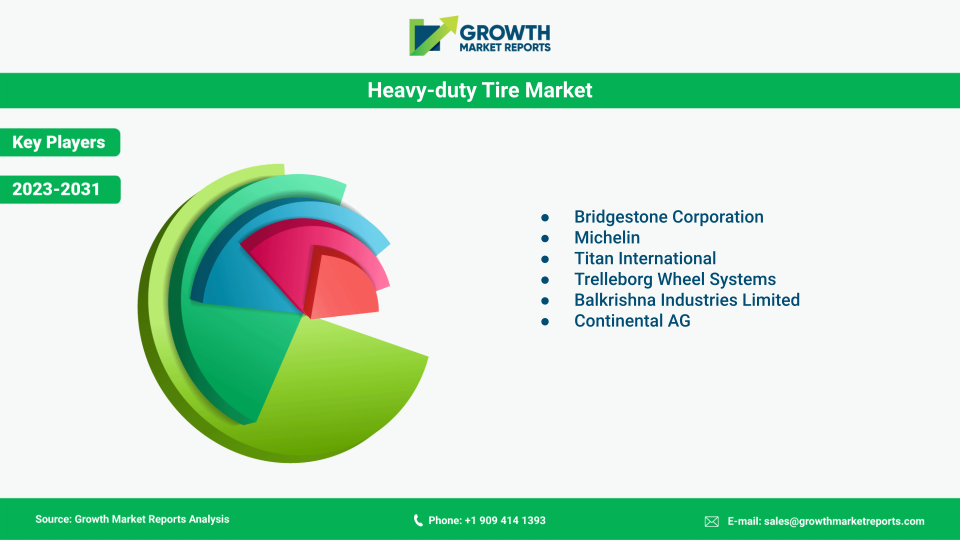
Key players operating in the global heavy-duty tire market includes Bridgestone Corporation, Michelin, Titan International, Trelleborg Wheel Systems, Balkrishna Industries Limited, and Continental AG.
Major industry players are engaging in partnerships, collaborations, and heavily investing in R&D activities to develop high-quality heavy-duty tires.
Major challenges include volatility in raw material prices, supply chain disruptions, intense market competition, and the need to comply with evolving environmental and safety regulations.
Heavy duty tires are distributed through OEM (Original Equipment Manufacturer) channels for new vehicles and the aftermarket for replacements and upgrades. The aftermarket segment holds the largest market share.
Sustainability trends and stricter regulations are prompting manufacturers to invest in eco-friendly materials, energy-efficient production, and tire recycling, while also complying with safety and environmental standards.
Technological advancements such as smart tires with real-time monitoring sensors, self-sealing tires, enhanced tread designs, and eco-friendly materials are driving market growth and improving tire performance and safety.
Major companies include Bridgestone Corporation, Michelin Group, Goodyear Tire & Rubber Company, Continental AG, Sumitomo Rubber Industries, Yokohama Rubber Company, Pirelli & C. S.p.A., Hankook Tire & Technology, and Apollo Tyres Ltd.
Heavy duty tires are primarily used in construction and mining, agriculture, industrial operations, transportation (trucks and buses), and specialty sectors.
Asia Pacific leads the global heavy duty tire market, followed by North America and Europe. Asia Pacific’s dominance is driven by strong construction, mining, and agricultural sectors, especially in China and India.
The main types of heavy duty tires are radial tires, bias tires, solid tires, and specialty tires for unique applications such as forestry and military vehicles.
Key growth drivers include increasing infrastructure investments, rapid urbanization, expansion of construction and mining activities, mechanization in agriculture, and the rise of e-commerce and logistics industries.
As of 2024, the global heavy duty tire market size is valued at USD 31.8 billion. It is expected to grow at a CAGR of 5.2% from 2025 to 2033, reaching USD 50.2 billion by the end of 2033.