Food Diagnostics Market Research Report 2033

Food Diagnostics Market Research Report 2033

Segments - by Product Type (Systems, Test Kits, Consumables, Others), by Testing Type (Pathogen Testing, GMO Testing, Allergen Testing, Mycotoxin Testing, Others), by Application (Meat, Poultry, Seafood Products, Dairy Products, Processed Foods, Fruits & Vegetables, Cereals & Grains, Others), by End-User (Food Manufacturers, Laboratories, Regulatory Bodies, Others)

https://growthmarketreports.com/raksha
Author : Raksha Sharma
https://growthmarketreports.com/Vaibhav
Fact-checked by : V. Chandola
https://growthmarketreports.com/Shruti
Editor : Shruti Bhat

Upcoming | Report ID :HC-4222 | 4.1 Rating | 75 Reviews | 300 Pages | Format : Docx PDF

Report Description


Food Diagnostics Market Outlook

According to our latest research, the global food diagnostics market size in 2024 stands at USD 17.8 billion. The market is exhibiting robust expansion, propelled by growing concerns over food safety and regulatory compliance, with a compound annual growth rate (CAGR) of 7.2% expected through the forecast period. By 2033, the food diagnostics market is projected to reach a value of USD 33.2 billion, driven by technological advancements in testing methods and increasing incidences of foodborne illnesses. As per the latest research, the primary growth factor remains the stringent regulatory landscape and the rising demand for rapid, reliable food testing solutions worldwide.

One of the most significant growth drivers for the food diagnostics market is the heightened awareness regarding food safety among consumers and regulatory authorities. Over the past decade, a surge in foodborne diseases and contamination incidents has prompted governments and organizations to implement stricter regulations and quality standards. These regulations require food producers and processors to adopt advanced diagnostic solutions to ensure compliance and safeguard public health. The adoption of Hazard Analysis and Critical Control Points (HACCP) and International Organization for Standardization (ISO) standards, coupled with the increasing prevalence of food recalls, has further amplified the need for comprehensive food diagnostics. As consumers become more informed and demand transparency, food manufacturers are compelled to invest in state-of-the-art testing technologies to maintain brand integrity and consumer trust, thereby fueling market growth.

Another pivotal factor contributing to the expansion of the food diagnostics market is the rapid technological innovation in testing methodologies. The integration of molecular diagnostics, next-generation sequencing, and biosensor-based assays has revolutionized the speed, accuracy, and cost-effectiveness of food testing. These advancements have enabled real-time detection of pathogens, allergens, genetically modified organisms (GMOs), and other contaminants, significantly reducing the time required for analysis and decision-making. The development of portable and user-friendly diagnostic devices is empowering even small and medium-scale food producers to implement robust quality assurance protocols. Furthermore, the increasing adoption of automation and digitalization in laboratory workflows is streamlining operations and enhancing throughput, allowing for the testing of a larger number of samples with minimal human error.

The globalization of food supply chains presents both opportunities and challenges, further stimulating the demand for advanced food diagnostics. As food products traverse international borders, the risk of contamination and adulteration increases, necessitating rigorous testing at multiple points along the supply chain. Import and export regulations in developed regions such as North America and Europe are particularly stringent, requiring comprehensive documentation and certification of food safety. This global interconnectedness has led to a surge in demand for diagnostic solutions that can detect a wide array of contaminants across diverse food matrices. Additionally, the rise of e-commerce and online food delivery services has expanded the scope of food diagnostics beyond traditional retail and manufacturing, necessitating continuous innovation and adaptation to emerging risks and regulatory requirements.

Immunoassay Food Testing Systems have emerged as a cornerstone in the advancement of food diagnostics, providing a versatile and reliable method for detecting a wide range of contaminants, including allergens, pathogens, and toxins. These systems utilize antibodies to specifically bind to target molecules, enabling precise quantification and identification. The integration of immunoassay techniques in food testing has significantly enhanced the ability to ensure food safety and compliance with stringent regulatory standards. As the demand for rapid and accurate testing solutions grows, immunoassay systems are increasingly being adopted by food manufacturers and laboratories worldwide. Their ability to deliver high-throughput results with minimal sample preparation makes them an invaluable tool in the ongoing effort to safeguard public health and maintain consumer trust in the food supply chain.

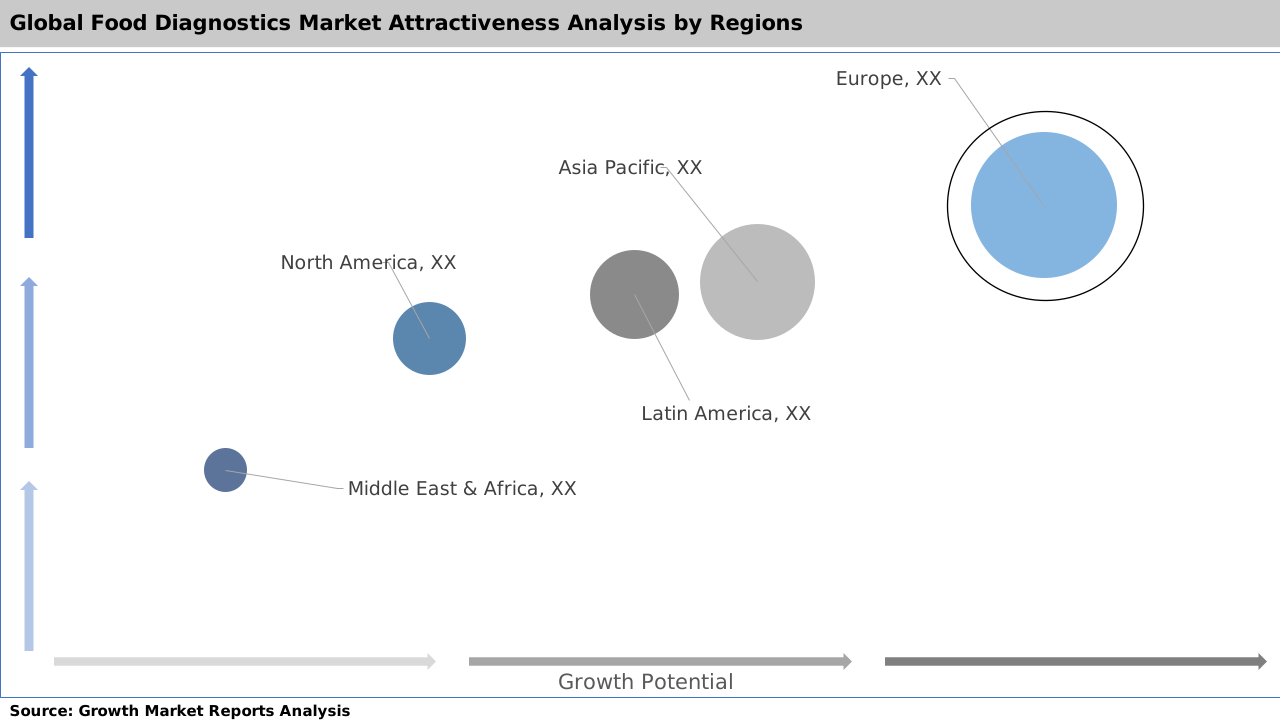
Regionally, the food diagnostics market exhibits a dynamic landscape, with North America and Europe leading in terms of market share due to their advanced regulatory frameworks and high adoption of cutting-edge technologies. Asia Pacific, however, is emerging as the fastest-growing region, driven by rapid urbanization, increasing disposable incomes, and evolving food safety regulations. Countries such as China, India, and Japan are witnessing a surge in food processing activities and a parallel rise in foodborne illness outbreaks, compelling authorities to invest in modern diagnostic infrastructure. Latin America and the Middle East & Africa are also experiencing steady growth, supported by government initiatives to enhance food safety and quality standards. The regional outlook for the food diagnostics market underscores the importance of tailored solutions that address the unique challenges and opportunities present in each geography.

Global Food Diagnostics Industry Outlook

Product Type Analysis

The food diagnostics market is segmented by product type into systems, test kits, consumables, and others. Systems, which include sophisticated laboratory instruments such as PCR machines, immunoassay analyzers, and chromatography systems, form the backbone of food testing infrastructure. These systems are essential for high-throughput, automated analysis and are widely adopted by large-scale laboratories and regulatory bodies. The demand for advanced systems is driven by the need for rapid, accurate, and reproducible results, especially in high-volume testing environments. The integration of artificial intelligence and machine learning algorithms into diagnostic systems is further enhancing their capabilities, enabling predictive analytics and real-time monitoring of food safety parameters. As the complexity of food matrices increases, the reliance on multi-functional, versatile diagnostic systems is expected to grow, contributing significantly to market expansion.

Biosensors for Food Safety are revolutionizing the landscape of food diagnostics by offering real-time, on-site detection of contaminants. These innovative devices combine biological recognition elements with electronic systems to provide rapid and accurate analysis of food samples. The application of biosensors in food safety is particularly valuable in scenarios where immediate decision-making is critical, such as during food recalls or contamination outbreaks. Their portability and ease of use make them ideal for deployment in various settings, from farms to processing facilities and retail outlets. As the technology continues to evolve, biosensors are expected to play an increasingly vital role in enhancing food safety protocols, reducing the risk of foodborne illnesses, and supporting the industry's commitment to transparency and quality assurance.

Test kits represent a rapidly growing segment within the food diagnostics market, owing to their convenience, portability, and ease of use. These kits are designed for on-site, point-of-care testing and are particularly valuable for small and medium-sized food producers, as well as for field inspections by regulatory authorities. The proliferation of lateral flow assays, enzyme-linked immunosorbent assays (ELISA), and rapid PCR kits has democratized access to food diagnostics, making it feasible for non-specialists to conduct reliable testing. The increasing demand for rapid test kits is fueled by the need for immediate results, especially in situations where quick decision-making is critical to prevent the spread of contamination or foodborne outbreaks. Innovations in microfluidics and lab-on-a-chip technologies are expected to further enhance the performance and affordability of test kits, making them an indispensable tool in the food diagnostics arsenal.

Consumables, including reagents, sample preparation materials, and disposables, constitute a vital component of the food diagnostics market. The recurring nature of consumable usage ensures a steady revenue stream for market players, as these products are essential for the operation of both systems and test kits. The increasing complexity of food samples, coupled with the need for high sensitivity and specificity in testing, is driving the demand for specialized consumables tailored to specific applications. Manufacturers are focusing on developing environmentally friendly and sustainable consumables to align with global trends toward green chemistry and waste reduction. The consumables segment is characterized by intense competition and continuous innovation, as companies strive to offer products that enhance workflow efficiency and reduce the risk of cross-contamination.

Other product types, such as software solutions and ancillary devices, are gaining prominence as the digital transformation of food diagnostics accelerates. Data management platforms, laboratory information management systems (LIMS), and cloud-based analytics tools are becoming integral to the efficient operation of modern food testing laboratories. These solutions facilitate seamless data integration, traceability, and regulatory compliance, enabling stakeholders to make informed decisions based on real-time insights. The growing emphasis on data security and interoperability is prompting market players to invest in the development of robust, user-friendly software solutions that complement their hardware offerings. As the food diagnostics ecosystem becomes increasingly interconnected, the role of digital solutions in enhancing operational efficiency and ensuring data integrity is expected to expand significantly.

Report Scope

Attributes Details
Report Title Food Diagnostics Market Research Report 2033
By Product Type Systems, Test Kits, Consumables, Others
By Testing Type Pathogen Testing, GMO Testing, Allergen Testing, Mycotoxin Testing, Others
By Application Meat, Poultry, Seafood Products, Dairy Products, Processed Foods, Fruits & Vegetables, Cereals & Grains, Others
By End-User Food Manufacturers, Laboratories, Regulatory Bodies, Others
Regions Covered North America, Europe, APAC, Latin America, MEA
Base Year 2024
Historic Data 2018-2023
Forecast Period 2025-2033
Number of Pages 300
Number of Tables & Figures 395
Customization Available Yes, the report can be customized as per your need.

Testing Type Analysis

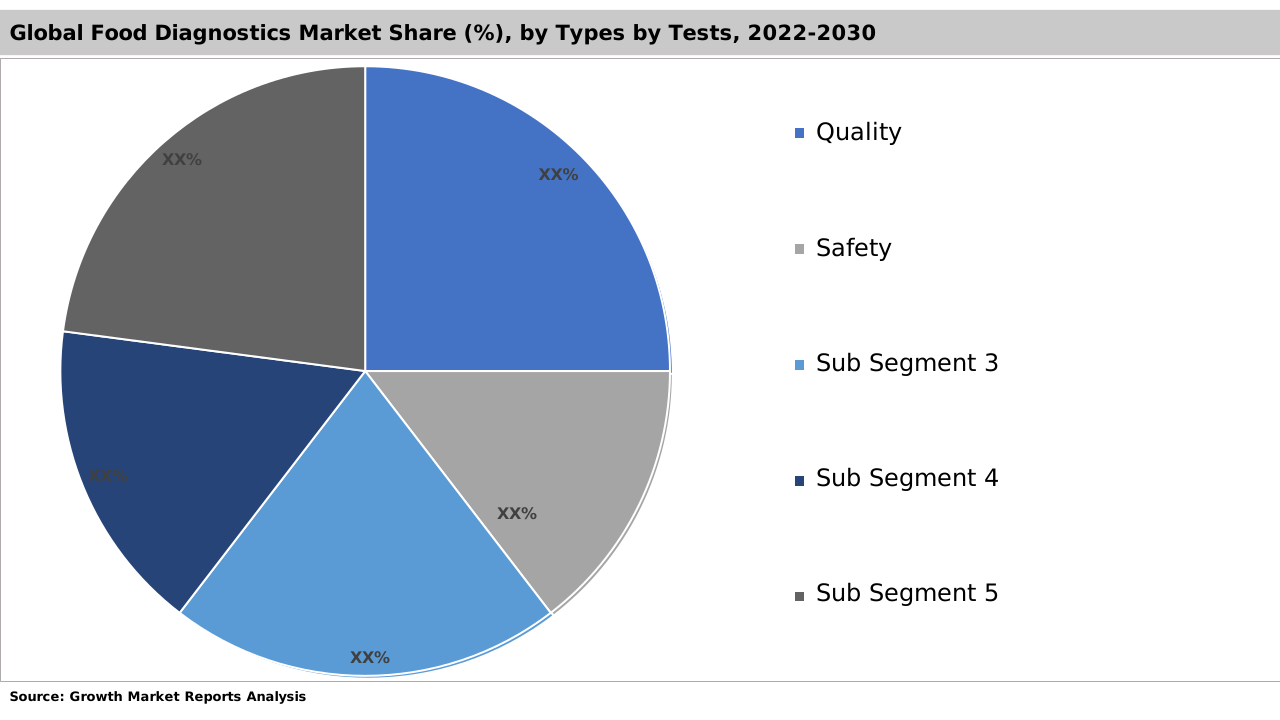
The food diagnostics market is broadly categorized by testing type into pathogen testing, GMO testing, allergen testing, mycotoxin testing, and others. Pathogen testing remains the most dominant segment, accounting for a substantial share of the market due to the high prevalence of foodborne illnesses caused by bacteria such as Salmonella, Listeria, and E. coli. The continuous emergence of new and virulent strains of pathogens, coupled with increasing incidents of food contamination, is driving the demand for advanced pathogen detection methods. Molecular diagnostics, including PCR and next-generation sequencing, are increasingly being adopted for their high sensitivity and specificity. Regulatory mandates requiring routine pathogen testing across the food supply chain further bolster the growth of this segment, making it a cornerstone of the global food diagnostics market.

GMO testing has gained significant traction in recent years, driven by the growing consumer demand for transparency and the need for compliance with labeling regulations in various countries. As genetically modified crops become more prevalent in global agriculture, food manufacturers and exporters are required to verify the GMO status of their products to meet regulatory requirements and cater to consumer preferences. Advanced molecular techniques, such as real-time PCR and digital PCR, are widely used for the detection and quantification of genetically modified organisms in food and feed samples. The increasing adoption of non-GMO and organic labeling, particularly in North America and Europe, is expected to sustain the growth of the GMO testing segment over the forecast period.

Allergen testing represents a critical segment within the food diagnostics market, as food allergies pose a significant health risk to sensitive individuals. The rising incidence of food allergies, particularly among children, has prompted regulatory authorities to enforce stringent labeling requirements and allergen control measures. Food manufacturers are increasingly investing in advanced diagnostic solutions to detect trace amounts of allergens such as peanuts, gluten, soy, and dairy in their products. Immunoassay-based methods, including ELISA and lateral flow tests, are widely used for allergen detection due to their high sensitivity and rapid turnaround time. Continuous innovation in multiplex testing platforms is enabling the simultaneous detection of multiple allergens, enhancing the efficiency and effectiveness of allergen management programs.

Mycotoxin testing is gaining importance as climate change and global trade contribute to the proliferation of mycotoxin-producing fungi in food crops. Mycotoxins, such as aflatoxins, ochratoxins, and fumonisins, pose serious health risks and are subject to strict regulatory limits in many countries. The increasing awareness of the health hazards associated with mycotoxin contamination, coupled with the expansion of international trade in cereals, grains, and nuts, is driving the adoption of advanced mycotoxin testing solutions. Analytical techniques such as liquid chromatography-mass spectrometry (LC-MS) and immunoassays are commonly employed for accurate quantification of mycotoxins. The ongoing development of rapid, cost-effective testing methods is expected to further stimulate the growth of the mycotoxin testing segment.

Application Analysis

The food diagnostics market finds applications across a wide range of food categories, including meat, poultry, and seafood products; dairy products; processed foods; fruits and vegetables; cereals and grains; and others. Meat, poultry, and seafood products represent a major application segment, driven by the high risk of contamination with pathogens such as Salmonella, Listeria, and Vibrio. The increasing consumption of animal-based proteins, coupled with the globalization of meat supply chains, necessitates rigorous testing to ensure safety and compliance with import-export regulations. Advanced molecular and immunoassay-based diagnostic solutions are widely used for the detection of pathogens, residues, and contaminants in these products. The growing demand for traceability and transparency in the meat industry is further fueling the adoption of comprehensive food diagnostics solutions.

Dairy products constitute another significant application area within the food diagnostics market, owing to their susceptibility to microbial contamination and spoilage. The dairy industry faces unique challenges related to the detection of pathogens, antibiotic residues, and allergens in milk and milk-based products. Regulatory authorities in major dairy-producing regions have established stringent testing requirements to ensure the safety and quality of dairy products. The adoption of rapid, automated testing systems is enabling dairy producers to monitor critical control points in real time and prevent the distribution of contaminated products. The increasing consumer preference for organic and minimally processed dairy products is also driving the demand for advanced diagnostic solutions that can verify product authenticity and quality.

Processed foods, encompassing a diverse range of ready-to-eat and convenience products, represent a rapidly growing application segment for food diagnostics. The complexity of processed food matrices, coupled with the use of multiple ingredients and additives, increases the risk of contamination and adulteration. Food manufacturers are increasingly investing in comprehensive diagnostic solutions to detect pathogens, allergens, mycotoxins, and chemical residues in processed foods. The rise of clean label and free-from product trends is further amplifying the need for rigorous testing to ensure compliance with labeling claims and regulatory standards. The integration of digital technologies and automation in food processing facilities is facilitating the implementation of real-time monitoring and quality control systems, enhancing the safety and integrity of processed foods.

Fruits and vegetables, as well as cereals and grains, are also key application areas for food diagnostics, given their susceptibility to contamination with pesticides, mycotoxins, and microbial pathogens. The increasing consumption of fresh produce, driven by health and wellness trends, has heightened the focus on ensuring the safety and quality of fruits, vegetables, cereals, and grains. Advanced diagnostic solutions, including rapid test kits and portable analyzers, are being adopted for on-site testing at farms, distribution centers, and retail outlets. The expansion of organic and non-GMO product lines is further driving the demand for specialized testing solutions that can verify product claims and detect potential contaminants. The ongoing development of multi-residue and multiplex testing platforms is expected to enhance the efficiency and effectiveness of food diagnostics in these application areas.

End-User Analysis

The food diagnostics market serves a diverse range of end-users, including food manufacturers, laboratories, regulatory bodies, and others. Food manufacturers represent the largest end-user segment, driven by the need to ensure product safety, comply with regulatory requirements, and maintain consumer trust. The increasing complexity of food supply chains, coupled with the rise of private label and export-oriented production, is compelling manufacturers to invest in advanced diagnostic solutions for routine quality control and risk management. The integration of automated testing systems and data analytics platforms is enabling manufacturers to streamline their operations, reduce costs, and enhance the accuracy of their testing processes. The growing emphasis on proactive risk assessment and preventive measures is expected to sustain the demand for food diagnostics among manufacturers over the forecast period.

Laboratories, including both independent and in-house facilities, play a critical role in the food diagnostics ecosystem by providing specialized testing services to food producers, processors, and regulatory authorities. The increasing outsourcing of food testing activities to third-party laboratories is driven by the need for cost-effective, high-throughput analysis and access to advanced testing technologies. Laboratories are investing in state-of-the-art equipment, automation, and digitalization to enhance their testing capabilities and meet the evolving needs of their clients. The rising demand for comprehensive, multi-parameter testing services is prompting laboratories to expand their service portfolios and adopt integrated testing platforms. The trend toward accreditation and certification of laboratories is further enhancing the credibility and reliability of food diagnostics services.

Regulatory bodies, including government agencies and food safety authorities, constitute a key end-user segment for the food diagnostics market. These organizations are responsible for enforcing food safety regulations, conducting routine inspections, and responding to foodborne illness outbreaks. The increasing stringency of regulatory standards and the growing emphasis on preventive controls are driving the adoption of advanced diagnostic solutions by regulatory bodies. The use of rapid, field-deployable testing kits is enabling authorities to conduct on-site inspections and make timely decisions to protect public health. The collaboration between regulatory bodies, industry stakeholders, and technology providers is fostering the development of innovative diagnostic solutions tailored to the unique requirements of regulatory applications.

Other end-users, such as research institutions, academic organizations, and non-governmental organizations (NGOs), also contribute to the growth of the food diagnostics market. These entities are involved in research and development activities, surveillance programs, and public awareness campaigns related to food safety and quality. The increasing focus on food security, nutrition, and sustainable agriculture is driving the demand for advanced diagnostic tools and technologies among these end-users. The collaboration between academia, industry, and government is facilitating the translation of research findings into practical solutions that address emerging challenges in food safety and diagnostics.

Opportunities & Threats

The food diagnostics market is brimming with opportunities, primarily driven by the increasing adoption of digital and automated testing solutions. The integration of artificial intelligence, machine learning, and big data analytics into food diagnostics is revolutionizing the way food safety is monitored and managed. These technologies enable predictive analytics, real-time monitoring, and early detection of contamination risks, allowing stakeholders to take proactive measures and prevent foodborne outbreaks. The growing trend toward lab-on-a-chip and microfluidic devices is making it possible to conduct complex analyses with minimal sample volumes and faster turnaround times. The expansion of e-commerce and online food delivery services is also creating new opportunities for diagnostic solution providers to offer tailored solutions for emerging risks associated with non-traditional food distribution channels. The increasing emphasis on sustainability and green chemistry is driving the development of eco-friendly consumables and testing methods, opening up new avenues for innovation and differentiation in the market.

Another significant opportunity lies in the untapped potential of emerging markets, particularly in Asia Pacific, Latin America, and the Middle East & Africa. These regions are experiencing rapid urbanization, population growth, and changes in dietary patterns, leading to increased demand for processed and convenience foods. The rising incidence of foodborne illnesses and contamination incidents is prompting governments and industry stakeholders to invest in modern diagnostic infrastructure and capacity building. The expansion of food processing industries and the implementation of food safety regulations in these regions are creating a fertile ground for the adoption of advanced food diagnostics solutions. Market players that can offer affordable, scalable, and user-friendly diagnostic products tailored to the unique needs of these markets are well-positioned to capitalize on the growing demand and establish a strong foothold in the global food diagnostics landscape.

Despite the numerous opportunities, the food diagnostics market faces certain restraining factors that could impede its growth. One of the primary challenges is the high cost associated with the acquisition, maintenance, and operation of advanced diagnostic systems and technologies. Small and medium-sized enterprises (SMEs), which form a significant portion of the food industry, often face budget constraints that limit their ability to invest in state-of-the-art testing solutions. Additionally, the complexity of regulatory requirements and the lack of harmonization across different regions can create barriers to market entry and compliance. The shortage of skilled personnel and the need for continuous training to keep pace with technological advancements further exacerbate the challenges faced by end-users. Addressing these restraining factors will require concerted efforts from industry stakeholders, policymakers, and technology providers to develop cost-effective, user-friendly, and accessible diagnostic solutions that cater to the diverse needs of the global food industry.

Regional Outlook

The regional distribution of the food diagnostics market highlights the dominance of North America and Europe, which together account for a significant share of global revenue. In 2024, North America is estimated to hold a market size of USD 5.8 billion, supported by stringent regulatory frameworks, a mature food processing industry, and high consumer awareness regarding food safety. The presence of leading diagnostic solution providers and well-established laboratory infrastructure further strengthens the regionÂ’s position as a market leader. The United States, in particular, is a major contributor, driven by the implementation of the Food Safety Modernization Act (FSMA) and ongoing investments in research and development.

Europe follows closely, with a market size of USD 5.2 billion in 2024, characterized by robust regulatory oversight from organizations such as the European Food Safety Authority (EFSA) and the adoption of advanced diagnostic technologies across the food supply chain. The regionÂ’s emphasis on traceability, allergen management, and non-GMO labeling is driving the demand for comprehensive food diagnostics solutions. Countries such as Germany, France, and the United Kingdom are at the forefront of innovation, supported by strong government initiatives and public-private partnerships. The European market is expected to grow at a steady CAGR of 6.8% through 2033, reflecting the ongoing commitment to food safety and quality.

Asia Pacific is emerging as the fastest-growing region, with a market size of USD 4.1 billion in 2024 and an impressive CAGR of 9.2% projected through the forecast period. The regionÂ’s rapid urbanization, expanding middle class, and increasing consumption of processed foods are driving the demand for modern diagnostic solutions. China, India, and Japan are leading the charge, supported by government initiatives to enhance food safety standards and invest in diagnostic infrastructure. Latin America and the Middle East & Africa, with market sizes of USD 1.6 billion and USD 1.1 billion respectively in 2024, are also witnessing steady growth, propelled by rising awareness, regulatory reforms, and the expansion of food processing industries. The regional outlook for the food diagnostics market underscores the need for tailored strategies that address the unique challenges and opportunities present in each geography.

Food Diagnostics Market Statistics

Competitor Outlook

The competitive landscape of the food diagnostics market is characterized by the presence of both global giants and regional players, all vying for market share through innovation, strategic partnerships, and mergers and acquisitions. Leading companies are investing heavily in research and development to introduce advanced diagnostic technologies that offer higher sensitivity, specificity, and speed. The focus on automation, digitalization, and integration of artificial intelligence is transforming the market, enabling players to offer comprehensive, end-to-end solutions that cater to the evolving needs of the food industry. The competitive dynamics are further intensified by the entry of new players, particularly in the test kits and consumables segments, who are leveraging cost-effective manufacturing and innovative product designs to gain a foothold in the market.

Market leaders are also expanding their global footprint through strategic collaborations with food manufacturers, laboratories, and regulatory bodies. These partnerships enable companies to co-develop tailored solutions, enhance their distribution networks, and gain access to emerging markets. The emphasis on sustainability and eco-friendly products is prompting companies to invest in green chemistry, recyclable packaging, and energy-efficient manufacturing processes. Intellectual property protection and regulatory compliance are key differentiators in the market, as companies seek to secure their innovations and navigate the complex global regulatory landscape. The ongoing consolidation in the market, driven by mergers and acquisitions, is enabling players to achieve economies of scale, diversify their product portfolios, and strengthen their competitive positions.

The food diagnostics market is also witnessing a trend toward customer-centric innovation, with companies focusing on developing user-friendly, portable, and affordable diagnostic solutions that cater to the diverse needs of end-users. The integration of cloud-based data management platforms, remote monitoring capabilities, and real-time analytics is enhancing the value proposition of diagnostic products and services. Companies are increasingly offering bundled solutions that combine hardware, software, consumables, and technical support, providing end-users with a seamless and integrated experience. The ability to offer customized solutions that address specific customer requirements is emerging as a key competitive advantage in the market.

Some of the major companies operating in the global food diagnostics market include Thermo Fisher Scientific Inc., bioMérieux SA, Neogen Corporation, Agilent Technologies Inc., Danaher Corporation (Cepheid), 3M Company, Qiagen N.V., Merck KGaA, Bio-Rad Laboratories Inc., and FOSS Analytical A/S. Thermo Fisher Scientific is renowned for its comprehensive portfolio of food safety testing solutions, including advanced systems, test kits, and consumables. bioMérieux SA specializes in microbiological testing and offers a wide range of diagnostic instruments and reagents tailored to the food industry. Neogen Corporation is a leading provider of rapid test kits and consumables for pathogen, allergen, and mycotoxin detection, with a strong focus on customer support and technical expertise.

Agilent Technologies and Merck KGaA are prominent players in the analytical instrumentation space, offering cutting-edge chromatography, spectroscopy, and molecular diagnostics solutions for food testing laboratories. Danaher Corporation, through its subsidiary Cepheid, is a pioneer in molecular diagnostics and has introduced innovative PCR-based platforms for rapid pathogen detection. 3M Company is known for its extensive range of food safety products, including sample preparation materials, test kits, and data management solutions. Qiagen N.V. and Bio-Rad Laboratories are recognized for their expertise in molecular biology and immunoassay technologies, providing laboratories with robust tools for comprehensive food diagnostics. FOSS Analytical A/S specializes in analytical solutions for dairy, meat, and grain testing, with a strong emphasis on automation and digital integration.

These companies are continuously expanding their product portfolios, investing in research and development, and forging strategic alliances to strengthen their market positions. The focus on innovation, quality, and customer-centricity is enabling them to address the evolving challenges of the food industry and capitalize on the growing demand for advanced diagnostic solutions. As the food diagnostics market continues to evolve, the ability to anticipate and respond to emerging trends, regulatory changes, and customer needs will be critical to sustaining long-term growth and competitiveness.

Key Players

  • 3M
  • Bio-Rad Laboratories
  • Thermo Fisher Scientific
  • Neogen Corporation
  • bioMérieux
  • Agilent Technologies
  • Danaher Corporation
  • PerkinElmer
  • QIAGEN
  • Romer Labs
  • Eurofins Scientific
  • Merck KGaA
  • Shimadzu Corporation
  • FOSS
  • Charm Sciences
  • R-Biopharm AG
  • ELISA Technologies
  • Genetic ID NA, Inc.
  • DuPont Nutrition & Health
  • Silliker (Mérieux NutriSciences)
Food Diagnostics Market Overview

Segments

The Food Diagnostics market has been segmented on the basis of

Product Type

  • Systems
  • Test Kits
  • Consumables
  • Others

Testing Type

  • Pathogen Testing
  • GMO Testing
  • Allergen Testing
  • Mycotoxin Testing
  • Others

Application

  • Meat
  • Poultry
  • Seafood Products
  • Dairy Products
  • Processed Foods
  • Fruits & Vegetables
  • Cereals & Grains
  • Others

End-User

  • Food Manufacturers
  • Laboratories
  • Regulatory Bodies
  • Others

Competitive Landscape

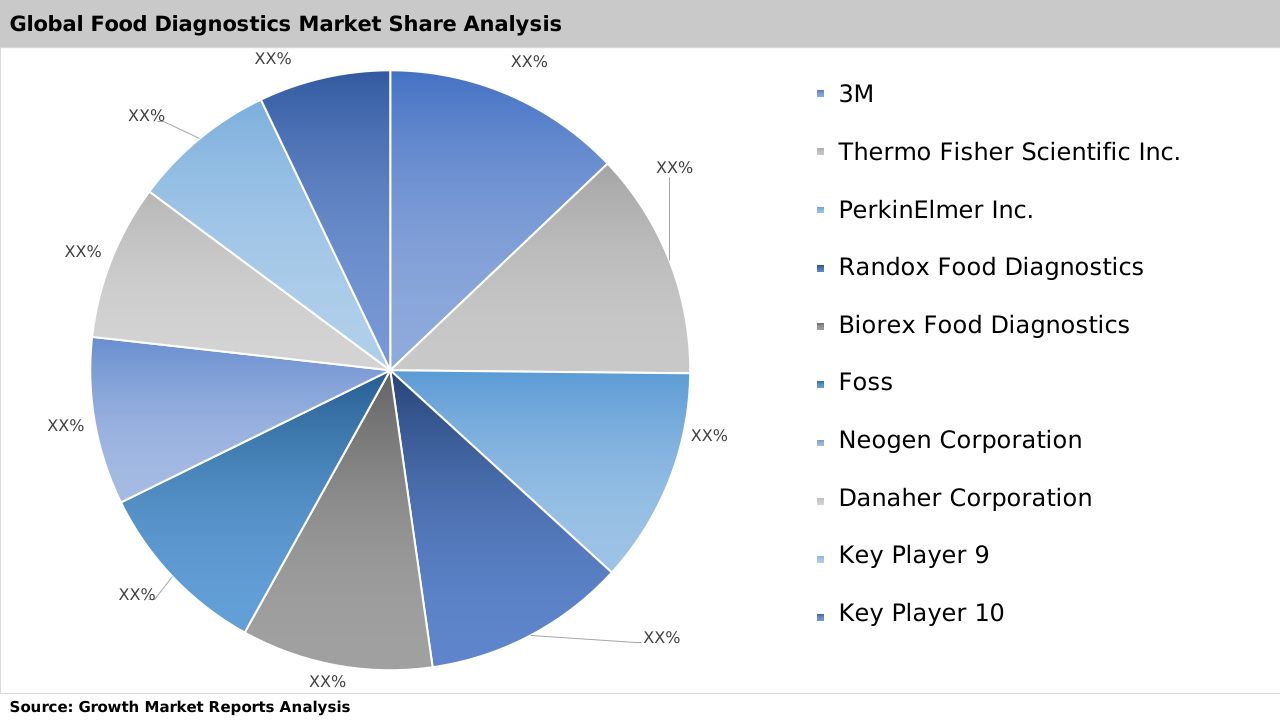
Key players competing in the food diagnostics market include 3M; Thermo Fisher Scientific Inc.; PerkinElmer Inc.; Randox Food Diagnostics; Biorex Food Diagnostics; Foss; Neogen Corporation; Bio-Rad Laboratories, Inc.; bioMerieux SA; Agilent Technologies Inc.; Shimadzu Corporation; Danaher Corporation; Omega Diagnostics Group PLC; and Invisible Sentinel. Some of these players are using several market strategies such as acquisitions, mergers, collaborations, partnerships, capacity expansion, and product launches to enhance their market shares, generate revenue, and raise their production line of the business in the coming years.

Food Diagnostics Market by Key Players

Frequently Asked Questions

3M; Thermo Fisher Scientific Inc.; PerkinElmer Inc.; and Randox Food Diagnostics are some of the top players in the food diagnostics market.

Increase in false labelling cases is expected to hinder the market growth during the forecast period.

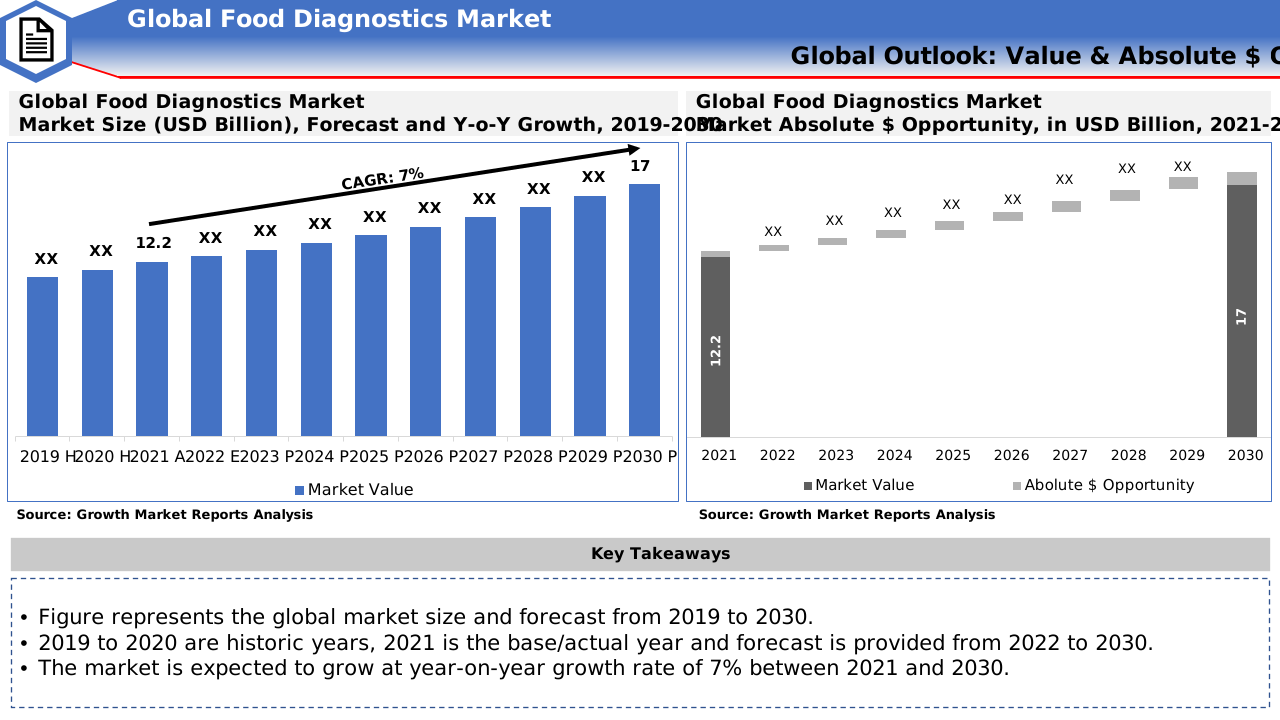
The food diagnostics market size was valued at USD 12.2 billion in 2021.

The food diagnostics market is projected to reach USD 17 billion by 2030.

The food diagnostics market is projected to expand at a CAGR of around 7% during the forecast period, 2022 – 2030.

Table Of Content

Chapter 1 Executive Summary
Chapter 2 Assumptions and Acronyms Used
Chapter 3 Research Methodology
Chapter 4 Food Diagnostics Market Overview
   4.1 Introduction
      4.1.1 Market Taxonomy
      4.1.2 Market Definition
      4.1.3 Macro-Economic Factors Impacting the Market Growth
   4.2 Food Diagnostics Market Dynamics
      4.2.1 Market Drivers
      4.2.2 Market Restraints
      4.2.3 Market Opportunity
   4.3 Food Diagnostics Market - Supply Chain Analysis
      4.3.1 List of Key Suppliers
      4.3.2 List of Key Distributors
      4.3.3 List of Key Consumers
   4.4 Key Forces Shaping the Food Diagnostics Market
      4.4.1 Bargaining Power of Suppliers
      4.4.2 Bargaining Power of Buyers
      4.4.3 Threat of Substitution
      4.4.4 Threat of New Entrants
      4.4.5 Competitive Rivalry
   4.5 Global Food Diagnostics Market Size & Forecast, 2023-2032
      4.5.1 Food Diagnostics Market Size and Y-o-Y Growth
      4.5.2 Food Diagnostics Market Absolute $ Opportunity

Chapter 5 Global Food Diagnostics Market Analysis and Forecast By Product Type
   5.1 Introduction
      5.1.1 Key Market Trends & Growth Opportunities By Product Type
      5.1.2 Basis Point Share (BPS) Analysis By Product Type
      5.1.3 Absolute $ Opportunity Assessment By Product Type
   5.2 Food Diagnostics Market Size Forecast By Product Type
      5.2.1 Systems
      5.2.2 Test Kits
      5.2.3 Consumables
      5.2.4 Others
   5.3 Market Attractiveness Analysis By Product Type

Chapter 6 Global Food Diagnostics Market Analysis and Forecast By Testing Type
   6.1 Introduction
      6.1.1 Key Market Trends & Growth Opportunities By Testing Type
      6.1.2 Basis Point Share (BPS) Analysis By Testing Type
      6.1.3 Absolute $ Opportunity Assessment By Testing Type
   6.2 Food Diagnostics Market Size Forecast By Testing Type
      6.2.1 Pathogen Testing
      6.2.2 GMO Testing
      6.2.3 Allergen Testing
      6.2.4 Mycotoxin Testing
      6.2.5 Others
   6.3 Market Attractiveness Analysis By Testing Type

Chapter 7 Global Food Diagnostics Market Analysis and Forecast By Application
   7.1 Introduction
      7.1.1 Key Market Trends & Growth Opportunities By Application
      7.1.2 Basis Point Share (BPS) Analysis By Application
      7.1.3 Absolute $ Opportunity Assessment By Application
   7.2 Food Diagnostics Market Size Forecast By Application
      7.2.1 Meat
      7.2.2 Poultry
      7.2.3 Seafood Products
      7.2.4 Dairy Products
      7.2.5 Processed Foods
      7.2.6 Fruits & Vegetables
      7.2.7 Cereals & Grains
      7.2.8 Others
   7.3 Market Attractiveness Analysis By Application

Chapter 8 Global Food Diagnostics Market Analysis and Forecast By End-User
   8.1 Introduction
      8.1.1 Key Market Trends & Growth Opportunities By End-User
      8.1.2 Basis Point Share (BPS) Analysis By End-User
      8.1.3 Absolute $ Opportunity Assessment By End-User
   8.2 Food Diagnostics Market Size Forecast By End-User
      8.2.1 Food Manufacturers
      8.2.2 Laboratories
      8.2.3 Regulatory Bodies
      8.2.4 Others
   8.3 Market Attractiveness Analysis By End-User

Chapter 9 Global Food Diagnostics Market Analysis and Forecast by Region
   9.1 Introduction
      9.1.1 Key Market Trends & Growth Opportunities By Region
      9.1.2 Basis Point Share (BPS) Analysis By Region
      9.1.3 Absolute $ Opportunity Assessment By Region
   9.2 Food Diagnostics Market Size Forecast By Region
      9.2.1 North America
      9.2.2 Europe
      9.2.3 Asia Pacific
      9.2.4 Latin America
      9.2.5 Middle East & Africa (MEA)
   9.3 Market Attractiveness Analysis By Region

Chapter 10 Coronavirus Disease (COVID-19) Impact 
   10.1 Introduction 
   10.2 Current & Future Impact Analysis 
   10.3 Economic Impact Analysis 
   10.4 Government Policies 
   10.5 Investment Scenario

Chapter 11 North America Food Diagnostics Analysis and Forecast
   11.1 Introduction
   11.2 North America Food Diagnostics Market Size Forecast by Country
      11.2.1 U.S.
      11.2.2 Canada
   11.3 Basis Point Share (BPS) Analysis by Country
   11.4 Absolute $ Opportunity Assessment by Country
   11.5 Market Attractiveness Analysis by Country
   11.6 North America Food Diagnostics Market Size Forecast By Product Type
      11.6.1 Systems
      11.6.2 Test Kits
      11.6.3 Consumables
      11.6.4 Others
   11.7 Basis Point Share (BPS) Analysis By Product Type 
   11.8 Absolute $ Opportunity Assessment By Product Type 
   11.9 Market Attractiveness Analysis By Product Type
   11.10 North America Food Diagnostics Market Size Forecast By Testing Type
      11.10.1 Pathogen Testing
      11.10.2 GMO Testing
      11.10.3 Allergen Testing
      11.10.4 Mycotoxin Testing
      11.10.5 Others
   11.11 Basis Point Share (BPS) Analysis By Testing Type 
   11.12 Absolute $ Opportunity Assessment By Testing Type 
   11.13 Market Attractiveness Analysis By Testing Type
   11.14 North America Food Diagnostics Market Size Forecast By Application
      11.14.1 Meat
      11.14.2 Poultry
      11.14.3 Seafood Products
      11.14.4 Dairy Products
      11.14.5 Processed Foods
      11.14.6 Fruits & Vegetables
      11.14.7 Cereals & Grains
      11.14.8 Others
   11.15 Basis Point Share (BPS) Analysis By Application 
   11.16 Absolute $ Opportunity Assessment By Application 
   11.17 Market Attractiveness Analysis By Application
   11.18 North America Food Diagnostics Market Size Forecast By End-User
      11.18.1 Food Manufacturers
      11.18.2 Laboratories
      11.18.3 Regulatory Bodies
      11.18.4 Others
   11.19 Basis Point Share (BPS) Analysis By End-User 
   11.20 Absolute $ Opportunity Assessment By End-User 
   11.21 Market Attractiveness Analysis By End-User

Chapter 12 Europe Food Diagnostics Analysis and Forecast
   12.1 Introduction
   12.2 Europe Food Diagnostics Market Size Forecast by Country
      12.2.1 Germany
      12.2.2 France
      12.2.3 Italy
      12.2.4 U.K.
      12.2.5 Spain
      12.2.6 Russia
      12.2.7 Rest of Europe
   12.3 Basis Point Share (BPS) Analysis by Country
   12.4 Absolute $ Opportunity Assessment by Country
   12.5 Market Attractiveness Analysis by Country
   12.6 Europe Food Diagnostics Market Size Forecast By Product Type
      12.6.1 Systems
      12.6.2 Test Kits
      12.6.3 Consumables
      12.6.4 Others
   12.7 Basis Point Share (BPS) Analysis By Product Type 
   12.8 Absolute $ Opportunity Assessment By Product Type 
   12.9 Market Attractiveness Analysis By Product Type
   12.10 Europe Food Diagnostics Market Size Forecast By Testing Type
      12.10.1 Pathogen Testing
      12.10.2 GMO Testing
      12.10.3 Allergen Testing
      12.10.4 Mycotoxin Testing
      12.10.5 Others
   12.11 Basis Point Share (BPS) Analysis By Testing Type 
   12.12 Absolute $ Opportunity Assessment By Testing Type 
   12.13 Market Attractiveness Analysis By Testing Type
   12.14 Europe Food Diagnostics Market Size Forecast By Application
      12.14.1 Meat
      12.14.2 Poultry
      12.14.3 Seafood Products
      12.14.4 Dairy Products
      12.14.5 Processed Foods
      12.14.6 Fruits & Vegetables
      12.14.7 Cereals & Grains
      12.14.8 Others
   12.15 Basis Point Share (BPS) Analysis By Application 
   12.16 Absolute $ Opportunity Assessment By Application 
   12.17 Market Attractiveness Analysis By Application
   12.18 Europe Food Diagnostics Market Size Forecast By End-User
      12.18.1 Food Manufacturers
      12.18.2 Laboratories
      12.18.3 Regulatory Bodies
      12.18.4 Others
   12.19 Basis Point Share (BPS) Analysis By End-User 
   12.20 Absolute $ Opportunity Assessment By End-User 
   12.21 Market Attractiveness Analysis By End-User

Chapter 13 Asia Pacific Food Diagnostics Analysis and Forecast
   13.1 Introduction
   13.2 Asia Pacific Food Diagnostics Market Size Forecast by Country
      13.2.1 China
      13.2.2 Japan
      13.2.3 South Korea
      13.2.4 India
      13.2.5 Australia
      13.2.6 South East Asia (SEA)
      13.2.7 Rest of Asia Pacific (APAC)
   13.3 Basis Point Share (BPS) Analysis by Country
   13.4 Absolute $ Opportunity Assessment by Country
   13.5 Market Attractiveness Analysis by Country
   13.6 Asia Pacific Food Diagnostics Market Size Forecast By Product Type
      13.6.1 Systems
      13.6.2 Test Kits
      13.6.3 Consumables
      13.6.4 Others
   13.7 Basis Point Share (BPS) Analysis By Product Type 
   13.8 Absolute $ Opportunity Assessment By Product Type 
   13.9 Market Attractiveness Analysis By Product Type
   13.10 Asia Pacific Food Diagnostics Market Size Forecast By Testing Type
      13.10.1 Pathogen Testing
      13.10.2 GMO Testing
      13.10.3 Allergen Testing
      13.10.4 Mycotoxin Testing
      13.10.5 Others
   13.11 Basis Point Share (BPS) Analysis By Testing Type 
   13.12 Absolute $ Opportunity Assessment By Testing Type 
   13.13 Market Attractiveness Analysis By Testing Type
   13.14 Asia Pacific Food Diagnostics Market Size Forecast By Application
      13.14.1 Meat
      13.14.2 Poultry
      13.14.3 Seafood Products
      13.14.4 Dairy Products
      13.14.5 Processed Foods
      13.14.6 Fruits & Vegetables
      13.14.7 Cereals & Grains
      13.14.8 Others
   13.15 Basis Point Share (BPS) Analysis By Application 
   13.16 Absolute $ Opportunity Assessment By Application 
   13.17 Market Attractiveness Analysis By Application
   13.18 Asia Pacific Food Diagnostics Market Size Forecast By End-User
      13.18.1 Food Manufacturers
      13.18.2 Laboratories
      13.18.3 Regulatory Bodies
      13.18.4 Others
   13.19 Basis Point Share (BPS) Analysis By End-User 
   13.20 Absolute $ Opportunity Assessment By End-User 
   13.21 Market Attractiveness Analysis By End-User

Chapter 14 Latin America Food Diagnostics Analysis and Forecast
   14.1 Introduction
   14.2 Latin America Food Diagnostics Market Size Forecast by Country
      14.2.1 Brazil
      14.2.2 Mexico
      14.2.3 Rest of Latin America (LATAM)
   14.3 Basis Point Share (BPS) Analysis by Country
   14.4 Absolute $ Opportunity Assessment by Country
   14.5 Market Attractiveness Analysis by Country
   14.6 Latin America Food Diagnostics Market Size Forecast By Product Type
      14.6.1 Systems
      14.6.2 Test Kits
      14.6.3 Consumables
      14.6.4 Others
   14.7 Basis Point Share (BPS) Analysis By Product Type 
   14.8 Absolute $ Opportunity Assessment By Product Type 
   14.9 Market Attractiveness Analysis By Product Type
   14.10 Latin America Food Diagnostics Market Size Forecast By Testing Type
      14.10.1 Pathogen Testing
      14.10.2 GMO Testing
      14.10.3 Allergen Testing
      14.10.4 Mycotoxin Testing
      14.10.5 Others
   14.11 Basis Point Share (BPS) Analysis By Testing Type 
   14.12 Absolute $ Opportunity Assessment By Testing Type 
   14.13 Market Attractiveness Analysis By Testing Type
   14.14 Latin America Food Diagnostics Market Size Forecast By Application
      14.14.1 Meat
      14.14.2 Poultry
      14.14.3 Seafood Products
      14.14.4 Dairy Products
      14.14.5 Processed Foods
      14.14.6 Fruits & Vegetables
      14.14.7 Cereals & Grains
      14.14.8 Others
   14.15 Basis Point Share (BPS) Analysis By Application 
   14.16 Absolute $ Opportunity Assessment By Application 
   14.17 Market Attractiveness Analysis By Application
   14.18 Latin America Food Diagnostics Market Size Forecast By End-User
      14.18.1 Food Manufacturers
      14.18.2 Laboratories
      14.18.3 Regulatory Bodies
      14.18.4 Others
   14.19 Basis Point Share (BPS) Analysis By End-User 
   14.20 Absolute $ Opportunity Assessment By End-User 
   14.21 Market Attractiveness Analysis By End-User

Chapter 15 Middle East & Africa (MEA) Food Diagnostics Analysis and Forecast
   15.1 Introduction
   15.2 Middle East & Africa (MEA) Food Diagnostics Market Size Forecast by Country
      15.2.1 Saudi Arabia
      15.2.2 South Africa
      15.2.3 UAE
      15.2.4 Rest of Middle East & Africa (MEA)
   15.3 Basis Point Share (BPS) Analysis by Country
   15.4 Absolute $ Opportunity Assessment by Country
   15.5 Market Attractiveness Analysis by Country
   15.6 Middle East & Africa (MEA) Food Diagnostics Market Size Forecast By Product Type
      15.6.1 Systems
      15.6.2 Test Kits
      15.6.3 Consumables
      15.6.4 Others
   15.7 Basis Point Share (BPS) Analysis By Product Type 
   15.8 Absolute $ Opportunity Assessment By Product Type 
   15.9 Market Attractiveness Analysis By Product Type
   15.10 Middle East & Africa (MEA) Food Diagnostics Market Size Forecast By Testing Type
      15.10.1 Pathogen Testing
      15.10.2 GMO Testing
      15.10.3 Allergen Testing
      15.10.4 Mycotoxin Testing
      15.10.5 Others
   15.11 Basis Point Share (BPS) Analysis By Testing Type 
   15.12 Absolute $ Opportunity Assessment By Testing Type 
   15.13 Market Attractiveness Analysis By Testing Type
   15.14 Middle East & Africa (MEA) Food Diagnostics Market Size Forecast By Application
      15.14.1 Meat
      15.14.2 Poultry
      15.14.3 Seafood Products
      15.14.4 Dairy Products
      15.14.5 Processed Foods
      15.14.6 Fruits & Vegetables
      15.14.7 Cereals & Grains
      15.14.8 Others
   15.15 Basis Point Share (BPS) Analysis By Application 
   15.16 Absolute $ Opportunity Assessment By Application 
   15.17 Market Attractiveness Analysis By Application
   15.18 Middle East & Africa (MEA) Food Diagnostics Market Size Forecast By End-User
      15.18.1 Food Manufacturers
      15.18.2 Laboratories
      15.18.3 Regulatory Bodies
      15.18.4 Others
   15.19 Basis Point Share (BPS) Analysis By End-User 
   15.20 Absolute $ Opportunity Assessment By End-User 
   15.21 Market Attractiveness Analysis By End-User

Chapter 16 Competition Landscape 
   16.1 Food Diagnostics Market: Competitive Dashboard
   16.2 Global Food Diagnostics Market: Market Share Analysis, 2023
   16.3 Company Profiles (Details – Overview, Financials, Developments, Strategy) 
      16.3.1 3M
Bio-Rad Laboratories
Thermo Fisher Scientific
Neogen Corporation
bioMérieux
Agilent Technologies
Danaher Corporation
PerkinElmer
QIAGEN
Romer Labs
Eurofins Scientific
Merck KGaA
Shimadzu Corporation
FOSS
Charm Sciences
R-Biopharm AG
ELISA Technologies
Genetic ID NA, Inc.
DuPont Nutrition & Health
Silliker (Mérieux NutriSciences)

Methodology

Our Clients

Nestle SA
sinopec
Honda Motor Co. Ltd.
Siemens Healthcare
General Electric
Microsoft
General Mills
Deloitte