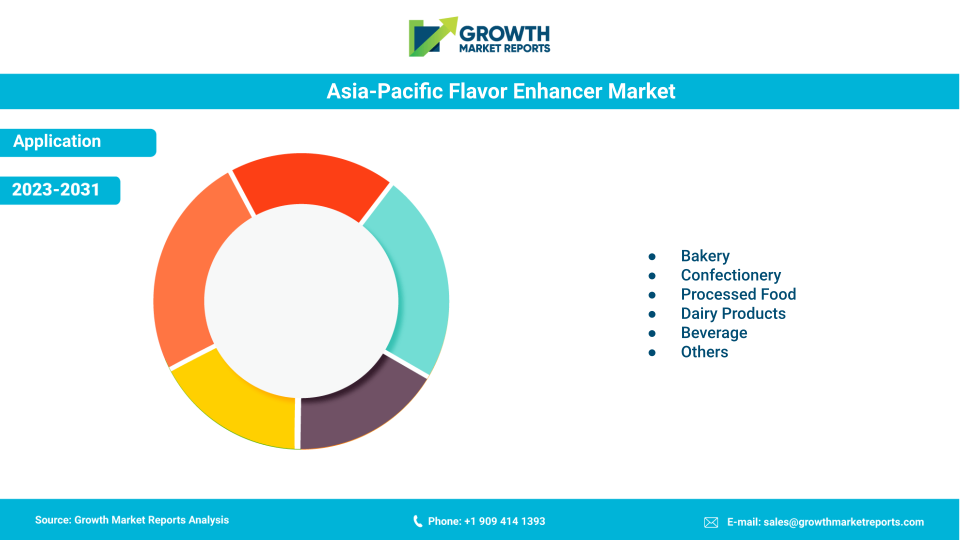
Segments - by Product Type (Natural Flavor Enhancers, Artificial Flavor Enhancers, Yeast Extracts, Monosodium Glutamate, Hydrolyzed Vegetable Protein, Others), by Application (Processed Foods, Beverages, Bakery and Confectionery, Dairy Products, Meat and Seafood, Snacks, Others), by Form (Powder, Liquid, Granules, Others), by Distribution Channel (Supermarkets/Hypermarkets, Convenience Stores, Online Retail, Specialty Stores, Others)
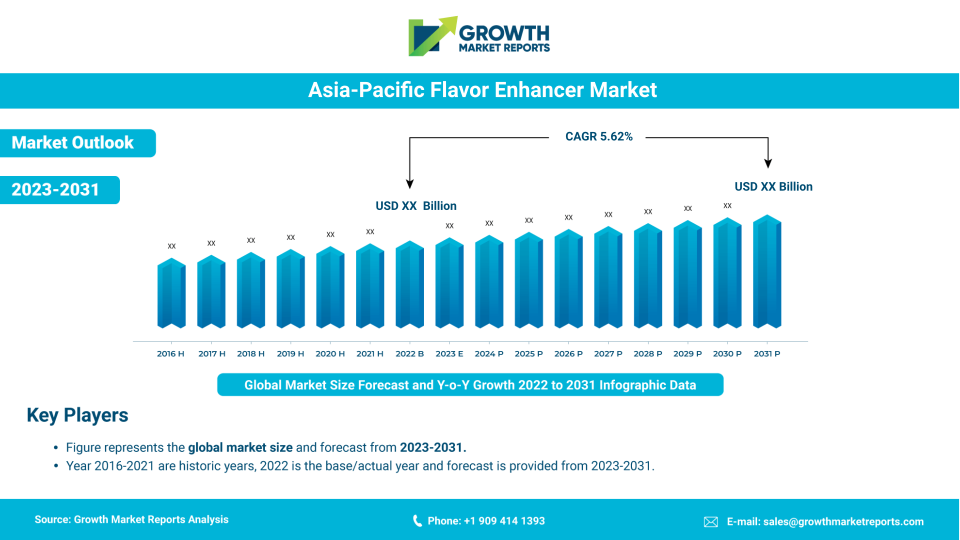
According to our latest research, the global Flavor Enhancer market size reached USD 9.8 billion in 2024, with a robust year-on-year expansion driven by evolving consumer preferences and food industry innovation. The market is projected to grow at a CAGR of 6.2% from 2025 to 2033, reaching a forecasted value of USD 16.9 billion by 2033. This growth trajectory is primarily fueled by the increasing demand for processed foods, rising health consciousness leading to the adoption of natural flavor enhancers, and ongoing product development across food and beverage segments. As per our comprehensive analysis, the flavor enhancer market is poised for significant transformation, underpinned by technological advancements and shifting regulatory landscapes.
One of the most significant growth factors in the flavor enhancer market is the rising consumer inclination towards convenience and processed foods. Urbanization, busy lifestyles, and the growing working population have led to a surge in demand for ready-to-eat and packaged food products, which heavily rely on flavor enhancers to improve taste and palatability. Food manufacturers are increasingly incorporating both natural and artificial flavor enhancers to differentiate their products in a highly competitive market. Additionally, the global expansion of fast-food chains and quick-service restaurants further accelerates the adoption of flavor enhancers, as these establishments prioritize consistency and taste in their offerings. The ongoing innovation in food processing technologies also allows for more sophisticated and stable flavor profiles, further driving market growth.
Another critical factor contributing to the expansion of the flavor enhancer market is the rising health awareness among consumers. There is a growing demand for clean-label products and natural ingredients, prompting manufacturers to invest in the development of natural flavor enhancers such as yeast extracts, hydrolyzed vegetable proteins, and plant-based additives. Regulatory pressures and consumer advocacy for transparent labeling are pushing companies to reformulate products by reducing artificial additives and monosodium glutamate (MSG), and instead, using natural alternatives. This shift not only caters to health-conscious consumers but also opens up new market opportunities, particularly in regions where regulatory frameworks are becoming increasingly stringent regarding food additives.
Technological advancements and innovation in extraction and formulation techniques are also propelling the flavor enhancer market forward. Companies are leveraging biotechnology, fermentation processes, and advanced encapsulation technologies to create novel flavor solutions that are both effective and sustainable. These innovations enable the production of flavor enhancers with improved solubility, stability, and targeted release, enhancing their functionality across diverse food applications. Moreover, the integration of artificial intelligence and data analytics in product development is allowing manufacturers to better understand consumer preferences and optimize flavor profiles accordingly. Such technological progress is expected to further diversify the range of available flavor enhancers and strengthen market growth over the forecast period.
Regionally, the Asia Pacific leads the flavor enhancer market, accounting for the largest share in 2024, followed by North America and Europe. The robust growth in Asia Pacific is attributed to the region's expanding middle-class population, rapid urbanization, and the proliferation of food processing industries. North America and Europe are witnessing steady growth, driven by consumer demand for natural and organic products and stringent regulatory standards. In contrast, the Middle East & Africa and Latin America are emerging markets with significant untapped potential, supported by changing dietary patterns and increasing investments in food processing infrastructure. The regional dynamics are expected to evolve further as global players expand their footprint and local manufacturers ramp up production to meet rising domestic demand.
In the evolving landscape of flavor enhancers, the role of Bitterness Suppressors and Flavor Carriers is becoming increasingly significant. These components are essential in refining the taste profiles of various food products by masking undesirable bitter notes and enhancing the overall flavor experience. As consumers become more discerning about taste and quality, manufacturers are turning to these specialized ingredients to create more balanced and appealing flavors. The integration of bitterness suppressors and flavor carriers not only improves the palatability of health-focused products but also supports the development of innovative taste solutions that cater to diverse consumer preferences. This trend is particularly evident in the beverage and snack segments, where the demand for complex and satisfying flavors is on the rise.
The Product Type segment in the flavor enhancer market encompasses a diverse array of options, including natural flavor enhancers, artificial flavor enhancers, yeast extracts, monosodium glutamate (MSG), hydrolyzed vegetable protein (HVP), and others. Natural flavor enhancers, such as plant and microbial extracts, have witnessed a surge in demand due to the growing consumer preference for clean-label and organic products. These natural variants are perceived as safer and healthier alternatives to synthetic additives, driving their adoption across various food and beverage applications. Manufacturers are increasingly investing in research and development to discover new sources of natural flavor enhancers, such as seaweed extracts and fermentation-based solutions, further expanding the product portfolio and catering to evolving consumer tastes.
Artificial flavor enhancers, despite facing scrutiny over potential health impacts, continue to hold a significant share of the market, particularly in regions where cost-effectiveness and flavor intensity are paramount. Monosodium glutamate (MSG) remains a widely used artificial enhancer, especially in Asian cuisines and processed food segments. However, the segment is gradually witnessing a shift towards alternative compounds that offer similar umami and savory profiles without the stigma associated with MSG. Regulatory agencies in North America and Europe are closely monitoring the use of artificial flavor enhancers, prompting manufacturers to ensure compliance and explore safer alternatives to mitigate potential risks and maintain consumer trust.
Yeast extracts and hydrolyzed vegetable proteins (HVP) represent a rapidly growing segment within the flavor enhancer market, driven by their versatility and natural origin. These products are extensively used in soups, sauces, snacks, and ready meals to impart a rich, savory taste known as umami. The demand for yeast extracts is particularly strong in the clean-label market, as they are perceived as minimally processed and free from artificial chemicals. Hydrolyzed vegetable proteins, derived from soy, wheat, or corn, are valued for their ability to enhance flavor without the need for synthetic additives. The ongoing innovation in extraction and hydrolysis techniques is further improving the taste, solubility, and nutritional profile of these products.
The "Others" category in the product type segment includes a variety of specialty flavor enhancers such as nucleotides, organic acids, and enzyme-modified ingredients. These niche products cater to specific functional and sensory requirements in food formulations, such as boosting sweetness, masking bitterness, or enhancing mouthfeel. The growing demand for customized flavor solutions in the food industry is driving the development and commercialization of these specialty enhancers. As consumer expectations continue to evolve, and regulatory frameworks become more stringent, the product type segment is expected to witness ongoing transformation, with a clear trend towards natural, sustainable, and multifunctional flavor enhancers.
| Attributes | Details |
| Report Title | Flavor Enhancer Market Research Report 2033 |
| By Product Type | Natural Flavor Enhancers, Artificial Flavor Enhancers, Yeast Extracts, Monosodium Glutamate, Hydrolyzed Vegetable Protein, Others |
| By Application | Processed Foods, Beverages, Bakery and Confectionery, Dairy Products, Meat and Seafood, Snacks, Others |
| By Form | Powder, Liquid, Granules, Others |
| By Distribution Channel | Supermarkets/Hypermarkets, Convenience Stores, Online Retail, Specialty Stores, Others |
| Regions Covered | North America, Europe, APAC, Latin America, MEA |
| Base Year | 2024 |
| Historic Data | 2018-2023 |
| Forecast Period | 2025-2033 |
| Number of Pages | 280 |
| Number of Tables & Figures | 355 |
| Customization Available | Yes, the report can be customized as per your need. |
The Application segment of the flavor enhancer market is vast, covering processed foods, beverages, bakery and confectionery, dairy products, meat and seafood, snacks, and others. Processed foods remain the dominant application area, accounting for the largest market share in 2024. The widespread use of flavor enhancers in soups, sauces, ready meals, and canned foods is driven by the need to compensate for flavor losses during processing and extend shelf life. The demand for convenience foods, especially in urban markets, continues to rise, reinforcing the importance of flavor enhancers in delivering consistent taste and sensory appeal. Manufacturers are also focusing on reformulating processed foods with natural and clean-label enhancers to address health concerns and regulatory requirements.
Beverages represent a rapidly growing application segment for flavor enhancers, particularly in the non-alcoholic category. The increasing popularity of functional drinks, flavored water, and plant-based beverages is creating new opportunities for flavor enhancer manufacturers. These products require precise flavor modulation to mask off-notes from vitamins, minerals, or plant proteins, making flavor enhancers an essential ingredient. The trend towards sugar reduction and the use of natural sweeteners also necessitates the use of flavor enhancers to maintain taste profiles without compromising on health benefits. As consumer preferences shift towards healthier and more diverse beverage options, the application of flavor enhancers in this segment is expected to expand further.
Bakery and confectionery products are another key application area for flavor enhancers. The need to deliver unique and appealing flavors in cakes, cookies, pastries, and candies is driving the adoption of both natural and artificial enhancers. Flavor enhancers are used to intensify sweetness, improve mouthfeel, and create novel taste experiences that cater to diverse consumer palates. The rise of premium and artisanal bakery products, along with the growing demand for gluten-free and vegan options, is prompting manufacturers to innovate with new flavor enhancer formulations. Additionally, the use of flavor enhancers in confectionery is being shaped by consumer demand for reduced sugar and clean-label ingredients, further influencing product development strategies.
In the dairy, meat, seafood, and snack segments, flavor enhancers play a crucial role in improving taste, texture, and overall product quality. In dairy products such as cheese, yogurt, and spreads, flavor enhancers help achieve the desired flavor profile and mask undesirable notes from fortification or processing. Meat and seafood products benefit from flavor enhancers that boost umami and savory notes, making them more appealing to consumers. The snack segment, characterized by intense competition and rapidly changing trends, relies on flavor enhancers to create differentiated and memorable taste experiences. As food manufacturers continue to innovate and diversify their product offerings, the application scope for flavor enhancers is set to broaden, supporting sustained market growth.
The Form segment in the flavor enhancer market includes powder, liquid, granules, and other specialized formats. Powdered flavor enhancers are the most widely used form, owing to their stability, ease of handling, and compatibility with a wide range of food applications. Powders are particularly favored in processed foods, snacks, and seasoning blends, where they can be easily mixed, measured, and stored. The ability to create customized blends and the longer shelf life of powdered enhancers make them a preferred choice for large-scale food manufacturers. Additionally, advancements in encapsulation and microencapsulation technologies are enabling the development of powders with improved flavor retention, controlled release, and enhanced solubility.
Liquid flavor enhancers are gaining traction, especially in beverage, dairy, and bakery applications. Liquids offer superior solubility and homogeneity, making them ideal for products that require even flavor distribution. The use of liquid enhancers is also expanding in the foodservice and catering sectors, where they facilitate quick and consistent flavor adjustments. Manufacturers are developing concentrated liquid formulations that offer high potency and ease of dosing, reducing the need for large volumes and minimizing waste. The growing demand for ready-to-drink beverages, flavored syrups, and liquid seasonings is expected to further drive the adoption of liquid flavor enhancers in the coming years.
Granular flavor enhancers represent a niche but growing segment, particularly in applications where controlled release and texture are important. Granules are commonly used in soups, instant noodles, and seasoning mixes, where they provide a convenient and mess-free way to deliver flavor. The development of granules with specific particle sizes and dissolution rates allows for precise flavor modulation in complex food matrices. As consumer demand for convenience and premiumization increases, the use of granular flavor enhancers is likely to expand, supported by ongoing innovation in granulation and coating technologies.
The "Others" category in the form segment includes specialty formats such as emulsions, pastes, and encapsulated flavor systems. These formats cater to specific functional and sensory requirements in food formulations, such as improved stability, targeted release, or enhanced mouthfeel. The increasing complexity of modern food products, coupled with the demand for personalized nutrition and sensory experiences, is driving the development of innovative flavor enhancer formats. As manufacturers strive to meet diverse application needs and regulatory requirements, the form segment is expected to witness continuous evolution, with a clear focus on functionality, convenience, and sustainability.
The Distribution Channel segment in the flavor enhancer market is characterized by a diverse array of sales platforms, including supermarkets/hypermarkets, convenience stores, online retail, specialty stores, and others. Supermarkets and hypermarkets remain the dominant distribution channel, accounting for the largest share in 2024. These retail formats offer consumers a wide selection of flavor enhancers, including both branded and private-label products, under one roof. The convenience of one-stop shopping, attractive promotions, and the ability to compare products in person contribute to the popularity of supermarkets and hypermarkets. As urbanization continues and modern retail infrastructure expands, the importance of this channel is expected to remain strong.
Convenience stores represent a significant distribution channel, particularly in urban and suburban areas where consumers seek quick and easy access to food ingredients. These stores typically stock a curated range of flavor enhancers, catering to impulse purchases and last-minute needs. The rise of small-format stores and the increasing penetration of convenience retail in emerging markets are driving the growth of this channel. Manufacturers are partnering with convenience store chains to ensure optimal product placement and visibility, leveraging promotional campaigns and in-store tastings to drive sales.
Online retail is rapidly emerging as a key distribution channel for flavor enhancers, driven by the growth of e-commerce and changing consumer shopping habits. The convenience of online shopping, coupled with the ability to access a wide variety of products and detailed information, is attracting a growing number of consumers to digital platforms. Online retailers offer personalized recommendations, subscription services, and direct-to-consumer delivery, enhancing the overall shopping experience. The COVID-19 pandemic has accelerated the shift towards online retail, prompting manufacturers to invest in digital marketing, e-commerce partnerships, and direct sales channels. As internet penetration and digital literacy continue to rise, online retail is expected to play an increasingly important role in the flavor enhancer market.
Specialty stores, including health food stores, gourmet shops, and organic retailers, cater to niche consumer segments seeking premium, natural, or specialty flavor enhancers. These stores offer curated product selections, expert advice, and a focus on quality and authenticity. The growing demand for clean-label, organic, and allergen-free products is driving the expansion of specialty retail channels. Manufacturers are leveraging partnerships with specialty retailers to launch new products, conduct in-store promotions, and gather consumer feedback. As the market for premium and differentiated flavor enhancers grows, specialty stores are expected to play a pivotal role in shaping consumer preferences and driving innovation.
The flavor enhancer market presents numerous opportunities for growth and innovation. One significant opportunity lies in the development of natural and clean-label flavor enhancers, which cater to the rising consumer demand for healthier and more transparent food products. As regulatory agencies tighten restrictions on artificial additives and consumers become increasingly health-conscious, manufacturers have the chance to differentiate their offerings by investing in research and development of plant-based, fermentation-derived, and minimally processed flavor enhancers. Additionally, the growing popularity of plant-based and alternative protein products creates a substantial need for flavor enhancers that can improve taste and mask undesirable notes, opening up new avenues for product development and market expansion.
Another major opportunity is the expansion into emerging markets, particularly in Asia Pacific, Latin America, and the Middle East & Africa. These regions are experiencing rapid urbanization, rising disposable incomes, and changing dietary patterns, all of which are driving demand for processed foods and convenience products. Flavor enhancer manufacturers can capitalize on these trends by tailoring their products to local tastes, investing in regional production facilities, and forming strategic partnerships with local distributors and food manufacturers. The increasing penetration of modern retail and e-commerce platforms in these markets further enhances the accessibility and visibility of flavor enhancers, supporting sustained growth.
Despite the numerous opportunities, the flavor enhancer market faces several restraining factors, the most notable being regulatory challenges and health concerns associated with artificial additives such as monosodium glutamate (MSG) and certain synthetic compounds. Growing consumer awareness of potential health risks, coupled with advocacy for natural and organic products, is leading to stricter regulations and labeling requirements in many countries. Manufacturers must invest in compliance, reformulation, and transparent communication to address these concerns and maintain consumer trust. Additionally, the high cost of developing and scaling natural flavor enhancers, coupled with supply chain complexities, can pose significant barriers to entry and expansion for smaller players.
The Asia Pacific region leads the global flavor enhancer market, accounting for approximately USD 4.1 billion in 2024, driven by rapid urbanization, population growth, and the expansion of the food processing industry. Countries such as China, India, Japan, and South Korea are witnessing robust demand for processed foods, snacks, and convenience meals, all of which rely heavily on flavor enhancers for taste optimization. The rising middle-class population and increasing disposable incomes are further fueling market growth, as consumers seek diverse and premium food experiences. The region's dynamic food industry, coupled with the adoption of advanced processing technologies, positions Asia Pacific as a key growth engine for the global flavor enhancer market.
North America holds the second-largest share of the flavor enhancer market, with a market size of USD 2.3 billion in 2024. The region is characterized by a mature food processing sector, high consumer awareness, and a strong demand for natural and clean-label products. The United States and Canada are at the forefront of innovation, with manufacturers investing in the development of plant-based and allergen-free flavor enhancers to cater to evolving consumer preferences. Regulatory scrutiny and a focus on health and wellness are prompting companies to reformulate products and invest in transparent labeling. The market in North America is expected to grow at a steady CAGR of 5.8% through 2033, supported by ongoing product innovation and the expansion of e-commerce channels.
Europe represents a significant market for flavor enhancers, with a value of USD 1.9 billion in 2024. The region is driven by strong demand for premium, organic, and specialty food products, as well as stringent regulatory standards governing food additives. Countries such as Germany, France, the United Kingdom, and Italy are leading markets for both natural and artificial flavor enhancers. The growing trend towards plant-based diets and the increasing prevalence of food allergies are shaping product development and marketing strategies. The flavor enhancer market in Europe is expected to experience moderate growth, supported by innovation in clean-label and functional ingredients, as well as the expansion of specialty retail channels. Meanwhile, the Middle East & Africa and Latin America are emerging as high-potential regions, with market sizes of USD 0.8 billion and USD 0.7 billion respectively in 2024, and forecasted to grow rapidly as food processing industries develop and consumer preferences evolve.
The flavor enhancer market is highly competitive, characterized by the presence of several global and regional players vying for market share through innovation, strategic partnerships, and product differentiation. Leading companies are investing heavily in research and development to create novel flavor solutions that cater to evolving consumer preferences for natural, clean-label, and functional ingredients. The competitive landscape is further shaped by mergers and acquisitions, as companies seek to expand their product portfolios, enter new geographic markets, and strengthen their technological capabilities. The entry of new players, particularly in the natural and specialty segments, is intensifying competition and driving innovation across the industry.
Major companies in the flavor enhancer market are also focusing on sustainability and transparency to build consumer trust and comply with regulatory requirements. Initiatives such as responsible sourcing of raw materials, reduction of carbon footprint, and development of plant-based and allergen-free products are becoming increasingly important in the competitive landscape. Companies are leveraging digital technologies, such as artificial intelligence and data analytics, to better understand consumer preferences and optimize product development. Strategic collaborations with food manufacturers, retailers, and research institutions are enabling companies to accelerate innovation and bring new products to market more efficiently.
The market is also witnessing a growing emphasis on customization and personalization, with companies offering tailored flavor solutions to meet specific customer requirements. This trend is particularly evident in the foodservice and catering sectors, where flavor enhancers are used to create unique and memorable dining experiences. The ability to provide customized blends, quick turnaround times, and technical support is becoming a key differentiator for leading players. Additionally, the expansion of e-commerce and direct-to-consumer channels is enabling companies to reach a broader customer base and gather valuable feedback for continuous improvement.
Some of the major companies operating in the global flavor enhancer market include Givaudan SA, International Flavors & Fragrances Inc. (IFF), Firmenich SA, Kerry Group plc, Tate & Lyle PLC, Sensient Technologies Corporation, Ajinomoto Co., Inc., Symrise AG, Corbion N.V., and Cargill, Incorporated. Givaudan SA and Firmenich SA are known for their extensive portfolios of natural and synthetic flavor enhancers, as well as their focus on sustainability and innovation. International Flavors & Fragrances Inc. (IFF) and Kerry Group plc are leaders in the development of clean-label and functional flavor solutions, catering to the growing demand for healthier and more transparent food products. Tate & Lyle PLC and Sensient Technologies Corporation are recognized for their expertise in specialty ingredients and advanced formulation technologies, enabling them to deliver customized and high-performance flavor enhancers.
Ajinomoto Co., Inc. is a pioneer in the production of monosodium glutamate (MSG) and other umami enhancers, with a strong presence in Asia Pacific and global markets. Symrise AG and Corbion N.V. are at the forefront of natural and fermentation-based flavor solutions, leveraging biotechnology and sustainable sourcing practices. Cargill, Incorporated is a key player in the hydrolyzed vegetable protein and yeast extract segments, with a focus on innovation and customer collaboration. These companies are continuously expanding their global footprint through strategic acquisitions, partnerships, and investments in research and development, ensuring their leadership position in the rapidly evolving flavor enhancer market.
The Flavor Enhancer market has been segmented on the basis of
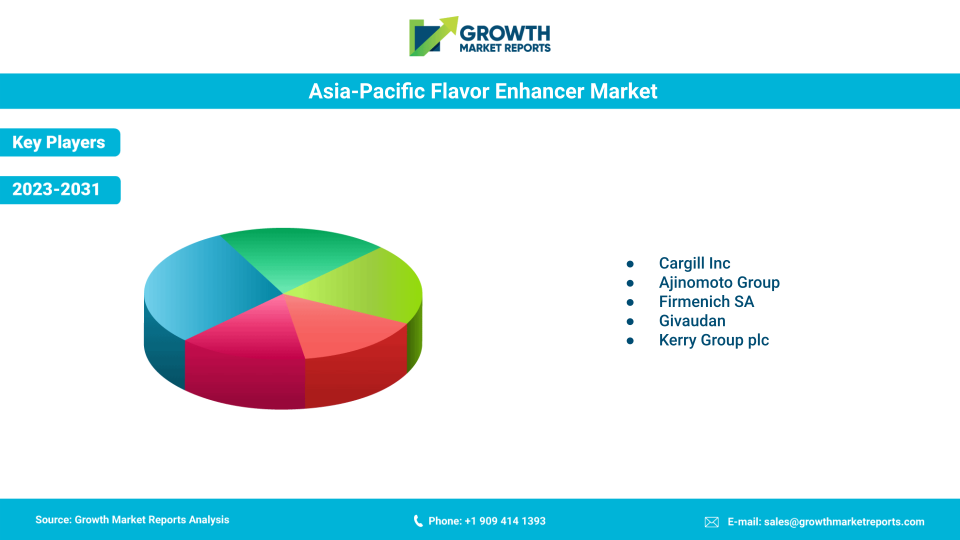
Key players competing in the Asia-Pacific Flavor Enhancer market include Cargill Inc, Ajinomoto Group, Firmenich SA, Givaudan, and Kerry Group plc.
Some of these players are using several market/business strategies including/such as mergers, acquisitions, partnerships, collaborations, capacity expansion, and product launches to increase their market shares.
Technological advancements such as biotechnology, fermentation, encapsulation, and the use of artificial intelligence for product development are enabling the creation of more effective, sustainable, and customized flavor enhancers.
Opportunities include the development of natural and clean-label enhancers and expansion into emerging markets. Challenges involve regulatory restrictions, health concerns over artificial additives, and high costs of developing natural alternatives.
Key players include Givaudan SA, International Flavors & Fragrances Inc. (IFF), Firmenich SA, Kerry Group plc, Tate & Lyle PLC, Sensient Technologies Corporation, Ajinomoto Co., Inc., Symrise AG, Corbion N.V., and Cargill, Incorporated.
Supermarkets/hypermarkets are the dominant distribution channels, followed by convenience stores, online retail, and specialty stores. Online retail is rapidly growing due to changing consumer shopping habits.
Major trends include rising demand for natural and clean-label products, technological advancements in extraction and formulation, increased use in plant-based foods, and growing regulatory scrutiny on artificial additives.
Flavor enhancers are widely used in processed foods, beverages, bakery and confectionery, dairy products, meat and seafood, snacks, and other food categories to improve taste, texture, and overall product appeal.
The main types of flavor enhancers include natural flavor enhancers, artificial flavor enhancers, yeast extracts, monosodium glutamate (MSG), hydrolyzed vegetable protein (HVP), and specialty ingredients like nucleotides and enzyme-modified ingredients.
Asia Pacific leads the flavor enhancer market, followed by North America and Europe. Asia Pacific's growth is driven by rapid urbanization, a growing middle class, and expansion of the food processing industry.
The flavor enhancer market is expected to grow at a CAGR of 6.2% from 2025 to 2033, reaching a forecasted value of USD 16.9 billion by 2033.
As of 2024, the global flavor enhancer market size reached USD 9.8 billion, with strong year-on-year growth driven by changing consumer preferences and food industry innovation.