Segments - by Type (Vegetable Oils, Animal Fats, Marine Oils, Specialty Fats), by Source (Soybean, Palm, Sunflower, Canola, Olive, Butter, Lard, Fish, Others), by Application (Food & Beverages, Industrial, Animal Feed, Pharmaceuticals, Others), by Distribution Channel (Supermarkets/Hypermarkets, Convenience Stores, Online Retail, Others)
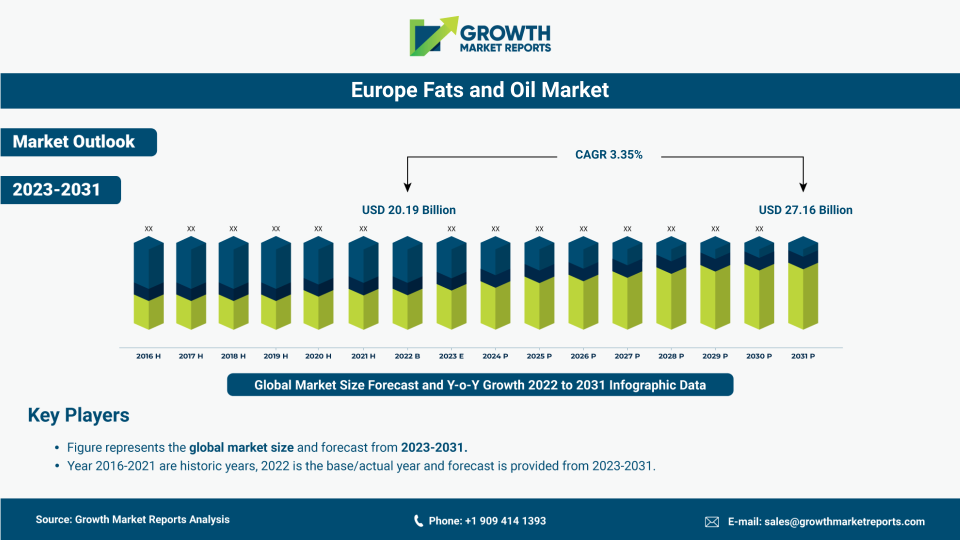
According to our latest research, the global fats and oil market size reached USD 271.4 billion in 2024, reflecting robust demand across multiple sectors. The market is poised to grow at a CAGR of 4.3% from 2025 to 2033, with a projected value of USD 390.6 billion by 2033. The primary growth drivers include rising consumption of processed foods, increasing health consciousness among consumers, and expanding industrial applications. As per our comprehensive analysis, the industryÂ’s expansion is underpinned by dynamic shifts in dietary patterns and technological advancements in oil extraction and processing.
One of the most significant growth factors for the fats and oil market is the escalating demand for convenience and processed food products worldwide. Urbanization and fast-paced lifestyles have led consumers to seek ready-to-eat and easy-to-cook meal options, all of which rely heavily on various edible oils and fats for flavor, texture, and preservation. This surge in demand is particularly pronounced in emerging economies, where rising disposable incomes and changing food habits are fueling the consumption of packaged foods. Additionally, the foodservice sector, including restaurants and fast-food chains, is expanding rapidly, further driving the need for high-quality cooking oils and specialty fats.
Another pivotal driver is the growing awareness of health and wellness, which is influencing both the type and source of fats and oils consumers prefer. There is a marked shift towards plant-based oils such as olive, canola, and sunflower oils, which are perceived as healthier alternatives to traditional animal fats. This trend is bolstered by increasing incidences of lifestyle-related diseases such as obesity, diabetes, and cardiovascular disorders, prompting consumers to opt for oils with lower saturated fat content and higher levels of unsaturated fatty acids. Furthermore, food manufacturers are innovating with fortified and functional oils to cater to the health-conscious segment, thereby expanding the marketÂ’s scope.
Technological advancements in extraction and refining processes have also played a crucial role in the evolution of the fats and oil market. Modern processing techniques enable higher yields, improved purity, and enhanced nutritional profiles, making oils and fats more versatile for various industrial and food applications. The advent of sustainable and eco-friendly extraction methods is gaining traction, particularly among environmentally conscious consumers and industries. Innovations in biotechnology and enzymatic processes are further optimizing production efficiency, reducing waste, and enabling the development of specialty fats tailored for specific uses in confectionery, bakery, and pharmaceutical products.
Specialty fats are becoming increasingly important in the fats and oil market due to their unique properties and applications. These fats are specially formulated to meet specific needs in the food industry, such as providing the right melting point, texture, and stability for confectionery and bakery products. The demand for specialty fats is driven by the growing consumer preference for high-quality, indulgent food products that offer superior taste and mouthfeel. As the market for premium and health-conscious food items expands, manufacturers are investing in the development of innovative specialty fats that cater to emerging dietary trends, including vegan, allergen-free, and clean-label products. This trend is expected to continue, with specialty fats playing a pivotal role in the evolution of the fats and oil market.
Regionally, the Asia Pacific dominates the global fats and oil market, accounting for the largest share due to its vast population base, rapid urbanization, and burgeoning food processing industry. Countries such as China, India, and Indonesia are leading contributors, driven by rising consumer incomes and evolving dietary preferences. North America and Europe follow closely, with strong demand for specialty and functional oils, while Latin America and the Middle East & Africa are witnessing steady growth fueled by agricultural expansion and increasing adoption of Western dietary patterns. The regional market dynamics are also shaped by trade policies, local production capacities, and shifting consumer trends, making the global landscape highly diverse and dynamic.
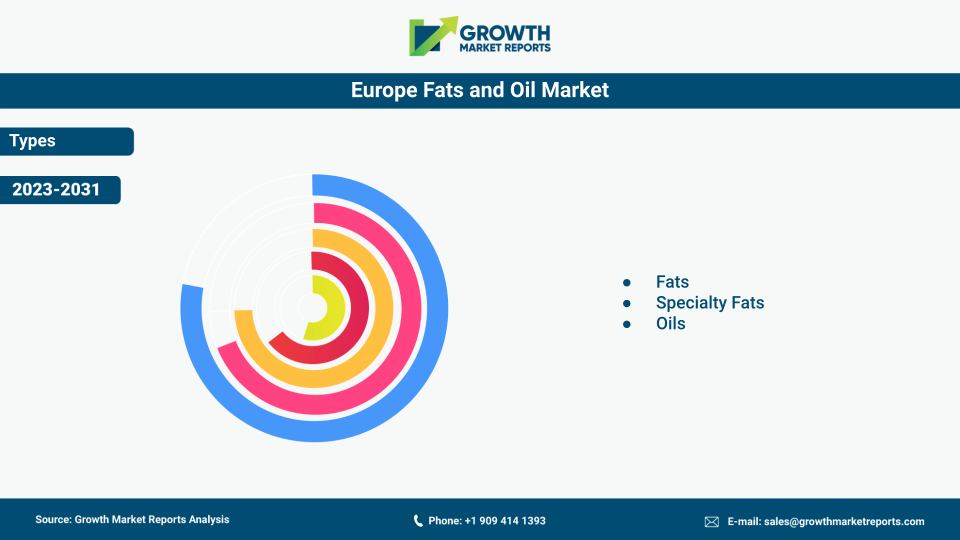
The type segment of the fats and oil market encompasses vegetable oils, animal fats, marine oils, and specialty fats, each catering to distinct consumer and industrial needs. Vegetable oils, such as soybean, palm, sunflower, and canola oils, dominate the market due to their widespread use in cooking, food processing, and as ingredients in margarine and shortening. The versatility, cost-effectiveness, and favorable fatty acid profiles of vegetable oils have fueled their adoption in both household and industrial settings. Palm oil, in particular, stands out for its high yield and functional properties, making it a staple in the food industry and a key export commodity for countries like Indonesia and Malaysia.
Animal fats, including butter, lard, and tallow, continue to hold significant market share, especially in regions with traditional culinary practices. These fats are prized for their unique flavors and textures, making them indispensable in bakery, confectionery, and certain savory food applications. However, the demand for animal fats is increasingly challenged by health concerns and the growing popularity of plant-based alternatives. Nevertheless, these fats remain integral to specific niche markets and are also utilized in non-food applications such as soap manufacturing and biodiesel production, ensuring their continued relevance.
Marine oils, derived primarily from fish and other seafood, are gaining traction owing to their high omega-3 fatty acid content and associated health benefits. These oils are extensively used in dietary supplements, pharmaceuticals, and functional foods targeting cardiovascular and cognitive health. The rising consumer awareness of the nutritional advantages of marine oils, coupled with advancements in extraction and purification technologies, is propelling their market growth. Regulatory support for the fortification of foods with omega-3s further augments the demand for marine oils, particularly in developed economies.
Specialty fats represent a dynamic and rapidly evolving segment within the fats and oil market. These include fractionated, interesterified, and structured fats designed for specific applications in confectionery, bakery, and dairy alternatives. The demand for specialty fats is driven by the need for tailored melting profiles, improved stability, and enhanced mouthfeel in premium food products. Food manufacturers are increasingly investing in research and development to create innovative specialty fats that cater to vegan, allergen-free, and clean-label trends. As consumer expectations for quality and functionality rise, the specialty fats segment is expected to witness significant growth over the forecast period.
| Attributes | Details |
| Report Title | Fats and Oil Market Market Research Report 2033 |
| By Type | Vegetable Oils, Animal Fats, Marine Oils, Specialty Fats |
| By Source | Soybean, Palm, Sunflower, Canola, Olive, Butter, Lard, Fish, Others |
| By Application | Food & Beverages, Industrial, Animal Feed, Pharmaceuticals, Others |
| By Distribution Channel | Supermarkets/Hypermarkets, Convenience Stores, Online Retail, Others |
| Regions Covered | North America, Europe, APAC, Latin America, MEA |
| Base Year | 2024 |
| Historic Data | 2018-2023 |
| Forecast Period | 2025-2033 |
| Number of Pages | 265 |
| Number of Tables & Figures | 360 |
| Customization Available | Yes, the report can be customized as per your need. |
The source segment of the fats and oil market is highly diverse, encompassing both plant and animal origins. Soybean oil leads the global market in terms of volume, driven by its affordability, neutral taste, and extensive use in cooking, frying, and processed foods. The United States, Brazil, and Argentina are major producers, benefiting from large-scale soybean cultivation and advanced processing infrastructure. Palm oil follows closely, with Southeast Asia accounting for the lionÂ’s share of global production. Its versatility and high yield per hectare make it a preferred choice for food manufacturers, though sustainability concerns and deforestation issues are prompting a shift towards certified sustainable palm oil.
Sunflower and canola oils are gaining popularity due to their favorable fatty acid compositions, mild flavors, and suitability for high-heat cooking. These oils are particularly favored in European and North American markets, where health-conscious consumers seek alternatives with lower saturated fat content. Olive oil, renowned for its health benefits and distinct flavor, commands a premium segment within the market. Mediterranean countries, particularly Spain, Italy, and Greece, dominate olive oil production and export, catering to both culinary and cosmetic applications.
Animal-derived sources such as butter and lard continue to be integral to traditional diets and artisanal food products. Butter, in particular, is experiencing renewed interest due to a shift away from artificial trans fats and a resurgence of natural and minimally processed foods. Lard, while facing competition from vegetable oils, remains popular in specific cuisines and is valued for its unique cooking properties. Fish oils represent the marine source segment, with a focus on extraction from species rich in omega-3 fatty acids. Sustainable sourcing and traceability are becoming critical factors influencing consumer preference and regulatory compliance in the animal and marine oil sectors.
Other sources, including exotic oils such as avocado, coconut, and rice bran, are emerging as niche products catering to health-conscious and gourmet markets. These oils are often marketed for their unique nutritional profiles, flavors, and functional properties, finding applications in premium food products, cosmetics, and dietary supplements. The diversification of sources reflects the marketÂ’s responsiveness to evolving consumer preferences, regional availability of raw materials, and the ongoing quest for sustainable and innovative oil solutions.
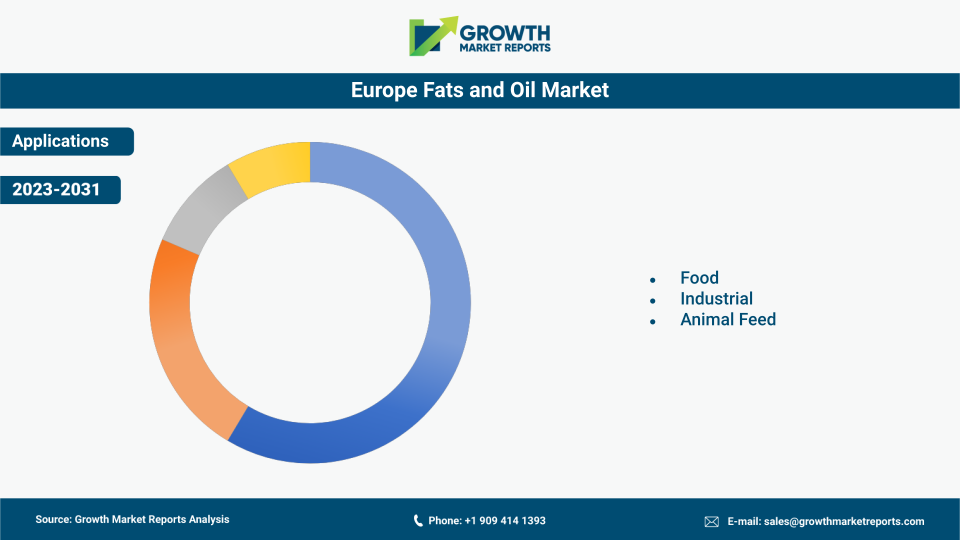
The application segment of the fats and oil market is broad, with the food and beverages industry representing the largest share. Edible oils and fats are indispensable in cooking, frying, baking, and as ingredients in processed foods, spreads, dressings, and snacks. The growing demand for convenience foods, ready-to-eat meals, and bakery products is directly translating into higher consumption of various oils and fats. Food manufacturers are increasingly focusing on product innovation, such as trans-fat-free formulations, low-cholesterol spreads, and fortified oils, to cater to health-conscious consumers and meet regulatory requirements.
The industrial application segment is also significant, with fats and oils serving as raw materials for the production of biodiesel, soaps, detergents, lubricants, and oleochemicals. The push towards renewable energy sources and sustainable industrial practices is driving the adoption of plant-based oils in biodiesel manufacturing, particularly in regions with supportive government policies and incentives. Oleochemical derivatives of fats and oils are finding increasing use in personal care, cosmetics, and pharmaceutical products, further expanding the marketÂ’s reach beyond traditional food uses.
Animal feed is another important application area, where fats and oils are incorporated to enhance the energy density and palatability of feed formulations. The livestock and aquaculture industries rely on various oils and fats to meet the nutritional requirements of animals, improve growth rates, and optimize feed efficiency. The shift towards high-quality and specialized feed ingredients is creating new opportunities for oil producers, particularly in emerging markets with expanding animal husbandry and aquaculture sectors.
Pharmaceutical applications of fats and oils are growing, driven by the demand for functional lipids, omega-3 supplements, and excipients for drug formulations. The use of marine and specialty oils in nutraceuticals and dietary supplements is on the rise, supported by increasing consumer awareness of the health benefits of essential fatty acids. The pharmaceutical industryÂ’s stringent quality standards and regulatory requirements are prompting oil manufacturers to invest in advanced processing and purification technologies to ensure product safety and efficacy.
Other applications include cosmetics, personal care, and specialty chemicals, where fats and oils are valued for their emollient, moisturizing, and functional properties. The trend towards natural and organic ingredients in beauty and wellness products is boosting the demand for high-purity, sustainably sourced oils. As the market continues to diversify, the application segment is expected to witness sustained growth, driven by innovation, evolving consumer preferences, and expanding industrial uses.
The distribution channel segment of the fats and oil market is evolving in response to changing consumer shopping habits and technological advancements in retail. Supermarkets and hypermarkets remain the dominant channels, offering a wide range of edible oils and fats under one roof and catering to the convenience needs of urban consumers. These outlets provide opportunities for brand visibility, in-store promotions, and bulk purchasing, making them the preferred choice for both households and small-scale food businesses. The expansion of organized retail chains in emerging markets is further strengthening the supermarket/hypermarket segment.
Convenience stores play a crucial role in reaching consumers in urban and semi-urban areas, offering smaller pack sizes and quick access to essential cooking oils and fats. These stores are particularly popular in densely populated regions where time constraints and proximity drive purchasing decisions. The rise of modern convenience store formats, coupled with strategic partnerships with oil manufacturers, is enabling greater market penetration and accessibility.
Online retail is emerging as a transformative force in the fats and oil market, driven by the proliferation of e-commerce platforms and changing consumer preferences for digital shopping. The convenience of home delivery, access to a wider variety of brands and specialty oils, and competitive pricing are key factors attracting consumers to online channels. The COVID-19 pandemic accelerated the adoption of online grocery shopping, with many consumers continuing to prefer this channel for its safety and efficiency. Oil manufacturers and retailers are investing in robust digital marketing strategies, user-friendly interfaces, and efficient logistics to capitalize on the growing online demand.
Other distribution channels, including direct sales to foodservice establishments, wholesale markets, and specialty stores, continue to play an important role, particularly in reaching institutional buyers and niche markets. Direct sales enable manufacturers to build strong relationships with restaurants, bakeries, and food processors, ensuring consistent demand and tailored product offerings. Specialty stores cater to premium and health-focused segments, offering organic, cold-pressed, and gourmet oils that appeal to discerning consumers. The diversification of distribution channels reflects the marketÂ’s adaptability to changing consumer behaviors and the need for multi-channel strategies to maximize reach and growth.
The fats and oil market is ripe with opportunities, particularly in the realm of health and wellness. The rising consumer preference for healthier oils, such as olive, avocado, and canola, is creating avenues for product innovation and premiumization. Manufacturers are investing in research and development to create fortified, functional, and clean-label oils that address specific health concerns, including heart health, weight management, and immune support. The growing popularity of plant-based diets and vegan alternatives is driving demand for specialty and non-GMO oils, while the trend towards organic and sustainably sourced products is opening up new markets in developed and emerging economies alike.
Another significant opportunity lies in the industrial and biofuel sectors, where the push for renewable energy and sustainable practices is driving the adoption of plant-based oils as feedstocks for biodiesel and oleochemicals. Governments worldwide are implementing policies and incentives to promote the use of renewable resources, creating a favorable environment for investments in bio-based oils and fats. The expansion of the animal feed and aquaculture industries in Asia Pacific and Latin America also presents growth prospects, as demand for high-quality feed ingredients continues to rise. Furthermore, advancements in extraction, refining, and processing technologies are enabling the development of value-added and specialty oils tailored for specific industrial and pharmaceutical applications.
Despite the promising outlook, the market faces restrainers in the form of sustainability concerns and supply chain disruptions. The production of certain oils, particularly palm oil, is associated with deforestation, habitat loss, and social issues, leading to increased scrutiny from regulators, NGOs, and consumers. The need for sustainable sourcing, certification, and traceability is becoming imperative for market participants, adding to operational costs and complexity. Additionally, volatility in raw material prices, trade restrictions, and geopolitical tensions can disrupt supply chains and impact profitability. Addressing these challenges requires a concerted effort from industry stakeholders to adopt sustainable practices, invest in supply chain resilience, and engage in transparent communication with consumers and regulators.
The Asia Pacific region leads the global fats and oil market, accounting for over 38% of the total market value in 2024, equivalent to approximately USD 103.1 billion. The regionÂ’s dominance is driven by its large and rapidly growing population, rising disposable incomes, and expanding food processing industry. China, India, and Indonesia are the primary contributors, with strong demand for palm, soybean, and sunflower oils in both household and industrial applications. The increasing adoption of Western dietary patterns, urbanization, and government initiatives to boost agricultural productivity are further propelling market growth in the region. The Asia Pacific fats and oil market is expected to register a robust CAGR of 5.1% through 2033, outpacing other regions.
North America holds a significant share of the global market, valued at USD 61.2 billion in 2024, driven by high consumption of specialty oils, health-focused products, and industrial applications. The United States is the largest market in the region, benefiting from advanced processing technologies, a strong foodservice sector, and a growing preference for organic and non-GMO oils. The region is also a major producer and exporter of soybean oil, with a well-established supply chain and regulatory framework supporting market stability. The North American fats and oil market is characterized by innovation, premiumization, and a focus on sustainability, with manufacturers investing in eco-friendly practices and product differentiation.
Europe represents another key market, with a value of USD 54.7 billion in 2024, underpinned by high per capita consumption of olive oil, butter, and specialty fats. Mediterranean countries, particularly Spain, Italy, and Greece, dominate olive oil production and export, catering to both domestic and international markets. The regionÂ’s emphasis on health, quality, and sustainability is driving demand for organic and cold-pressed oils, while regulatory frameworks ensure product safety and traceability. Latin America and the Middle East & Africa, with market values of USD 29.3 billion and USD 23.1 billion respectively, are experiencing steady growth, fueled by expanding agricultural production, urbanization, and rising consumer awareness. These regions offer untapped potential for market participants willing to invest in infrastructure, distribution, and product innovation.
The fats and oil market is highly competitive and fragmented, with a mix of global giants, regional players, and emerging startups vying for market share. The competitive landscape is shaped by factors such as product quality, price competitiveness, brand reputation, innovation, and sustainability credentials. Leading companies are focusing on expanding their product portfolios, investing in research and development, and adopting sustainable sourcing and production practices to differentiate themselves in the market. Mergers, acquisitions, and strategic partnerships are common strategies employed to enhance market presence, access new technologies, and enter emerging markets.
Innovation is a key driver of competition, with companies developing new products to cater to evolving consumer preferences and regulatory requirements. The shift towards health-oriented and functional oils has prompted manufacturers to invest in fortification, clean-label formulations, and organic certifications. Sustainability is another critical battleground, with market leaders committing to responsible sourcing, traceability, and certification schemes such as RSPO (Roundtable on Sustainable Palm Oil) and Fair Trade. Companies are also leveraging digital marketing, e-commerce platforms, and data analytics to enhance customer engagement and streamline distribution.
The market is witnessing increased investment in advanced processing technologies, such as enzymatic interesterification, molecular distillation, and cold-press extraction, aimed at improving yield, quality, and environmental footprint. Regional players are leveraging their knowledge of local markets and supply chains to offer tailored solutions and capitalize on niche opportunities, while global companies are expanding their footprint through acquisitions and joint ventures. The competitive intensity is further heightened by the entry of new players specializing in specialty, organic, and plant-based oils, challenging established brands and driving market innovation.
Some of the major companies operating in the global fats and oil market include Wilmar International Ltd., Archer Daniels Midland Company (ADM), Bunge Limited, Cargill, Incorporated, IOI Corporation Berhad, Sime Darby Plantation Berhad, and Unilever PLC. Wilmar International is a leading agribusiness group with an extensive portfolio of edible oils, specialty fats, and oleochemicals, serving markets across Asia, Africa, and Europe. ADM and Bunge are global leaders in oilseed processing and vegetable oil production, with integrated supply chains and a strong focus on sustainability and innovation. Cargill is renowned for its diversified product offerings, research capabilities, and commitment to responsible sourcing and environmental stewardship.
IOI Corporation and Sime Darby are prominent players in the palm oil sector, with vertically integrated operations spanning plantation, processing, and distribution. Unilever, a major consumer goods company, is a key player in the packaged edible oils and spreads market, leveraging its global brand presence and commitment to sustainable sourcing. These companies are continuously investing in technology, sustainability initiatives, and market expansion to maintain their competitive edge and address the evolving needs of consumers and industries worldwide.
In summary, the fats and oil market is characterized by intense competition, rapid innovation, and a growing emphasis on health, sustainability, and product differentiation. Market participants must navigate complex regulatory environments, shifting consumer preferences, and supply chain challenges to succeed in this dynamic and fast-evolving industry.
The Fats and Oil market has been segmented on the basis of
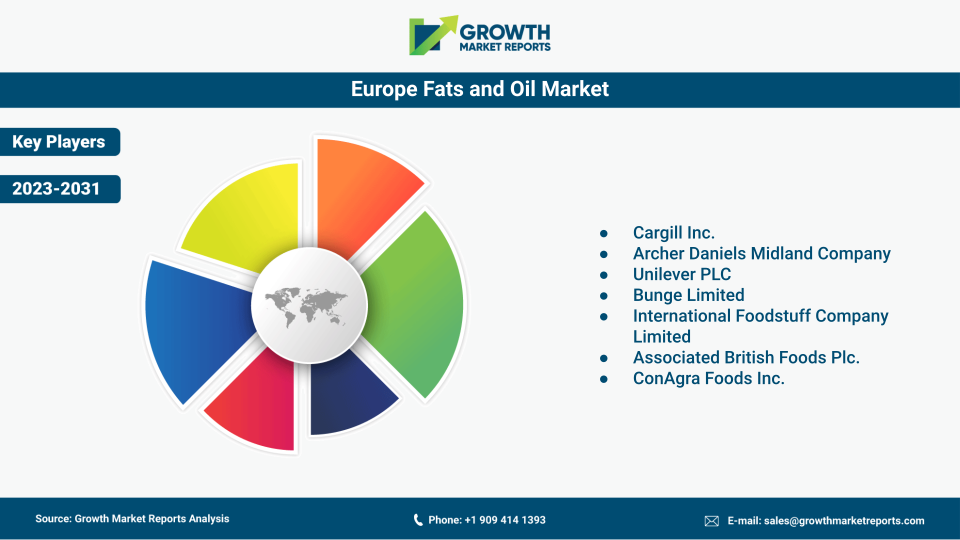
Key players competing in the Europe fats and oil market are Cargill Inc., Archer Daniels Midland Company, Unilever PLC, Bunge Limited, International Foodstuff Company Limited, Associated British Foods Plc., and ConAgra Foods Inc.
Opportunities include innovation in health-focused and specialty oils, expansion in biofuel and animal feed sectors, and growth in emerging markets. Challenges include sustainability concerns (especially with palm oil), supply chain disruptions, and regulatory compliance.
Major players include Cargill, Archer Daniels Midland Company (ADM), Wilmar International, Bunge Limited, IOI Corporation, Sime Darby Plantation, Unilever PLC, Olam International, Associated British Foods, and Louis Dreyfus Company.
Consumers are increasingly seeking healthier oils (such as olive, avocado, and canola), plant-based and non-GMO options, organic and sustainably sourced products, and specialty fats for vegan and clean-label foods.
Key distribution channels include supermarkets/hypermarkets, convenience stores, online retail, direct sales to foodservice establishments, wholesale markets, and specialty stores.
Asia Pacific is the largest market, driven by countries like China, India, and Indonesia. North America and Europe follow, with strong demand for specialty and functional oils. Latin America and the Middle East & Africa are also experiencing steady growth.
Fats and oils are primarily used in food and beverages for cooking, frying, and baking. They are also used in industrial applications (biodiesel, soaps, oleochemicals), animal feed, pharmaceuticals, cosmetics, and personal care products.
Major sources include soybean oil, palm oil, sunflower oil, canola oil, olive oil, butter, lard, and fish oil. Soybean oil leads in volume, while palm oil is notable for its high yield and versatility.
Vegetable oils such as soybean, palm, sunflower, and canola dominate the market due to their versatility and widespread use. Animal fats, marine oils, and specialty fats also hold significant shares, catering to various consumer and industrial needs.
Key growth drivers include rising consumption of processed foods, increasing health consciousness, expanding industrial applications, urbanization, and technological advancements in oil extraction and processing.
As of 2024, the global fats and oil market is valued at USD 271.4 billion. It is expected to grow at a CAGR of 4.3% from 2025 to 2033, reaching USD 390.6 billion by 2033.