Gonorrhea Diagnostic Market Research Report 2033

Gonorrhea Diagnostic Market Research Report 2033

Segments - by Product Type (Instruments, Consumables, Software), by Technology (Molecular Diagnostics, Immunoassays, Chromatography, Others), by End User (Hospitals, Diagnostic Laboratories, Clinics, Others), by Sample Type (Urine, Swab, Blood, Others)

https://growthmarketreports.com/raksha
Author : Raksha Sharma
https://growthmarketreports.com/Vaibhav
Fact-checked by : V. Chandola
https://growthmarketreports.com/Shruti
Editor : Shruti Bhat

Upcoming | Report ID :HC-2583 | 4.5 Rating | 50 Reviews | 277 Pages | Format : Docx PDF

Report Description


Gonorrhea Diagnostic Market Outlook

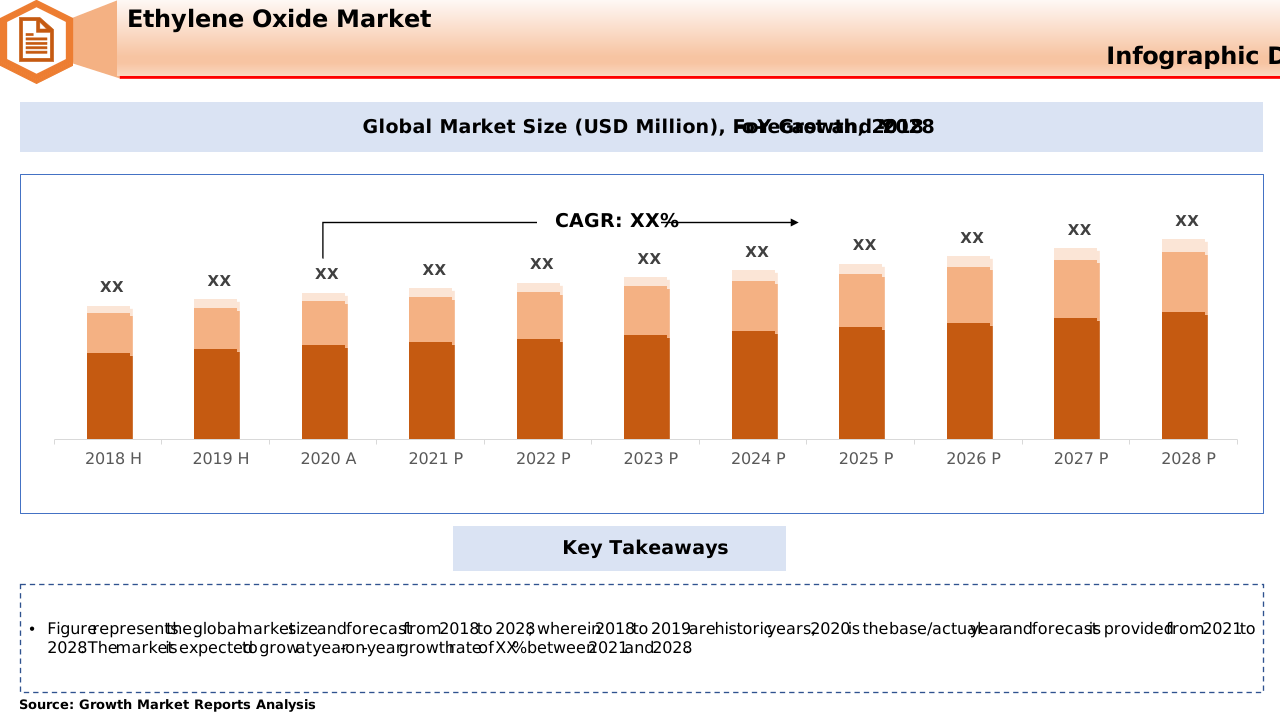
According to our latest research, the global gonorrhea diagnostic market size reached USD 1.28 billion in 2024, reflecting robust growth driven by rising incidences of sexually transmitted infections (STIs) and increasing awareness of early disease detection. The market has been expanding at a CAGR of 7.4% and is forecasted to achieve a value of USD 2.42 billion by 2033. The primary growth factor fueling this trajectory is the growing demand for advanced diagnostic technologies that offer rapid and accurate detection, which is essential for effective disease management and control.

One of the most significant growth drivers for the gonorrhea diagnostic market is the escalating global prevalence of gonorrhea, particularly among young adults and high-risk populations. The World Health Organization (WHO) estimates millions of new gonorrhea cases annually, highlighting the urgent need for reliable diagnostic solutions. This increasing disease burden has prompted governments and healthcare organizations to intensify screening programs and public health campaigns, further stimulating demand for innovative diagnostic products. Additionally, the emergence of antibiotic-resistant strains of Neisseria gonorrhoeae has made timely and precise diagnosis more critical than ever, underscoring the necessity for highly sensitive molecular diagnostic platforms and rapid point-of-care (POC) tests. The integration of these advanced technologies is not only improving diagnostic accuracy but also enabling earlier intervention and reducing the risk of complications associated with untreated infections.

Another key factor propelling market growth is the ongoing advancements in diagnostic technology, particularly in molecular diagnostics and immunoassays. The adoption of nucleic acid amplification tests (NAATs) and other molecular techniques has revolutionized gonorrhea detection by offering superior sensitivity and specificity compared to traditional methods. These innovations have facilitated the development of user-friendly, automated platforms that can be deployed in a variety of healthcare settings, from centralized laboratories to remote clinics. Furthermore, the increasing availability of consumables and software solutions tailored for STI diagnostics is streamlining laboratory workflows and enhancing data management, thereby improving diagnostic efficiency and patient outcomes. As a result, both public and private sector investments in research and development are accelerating, leading to a continuous pipeline of next-generation diagnostic products entering the market.

Healthcare infrastructure improvements and the expansion of diagnostic laboratory networks, particularly in emerging economies, are also contributing to the market's rapid growth. Countries in Asia Pacific, Latin America, and Africa are witnessing significant investments in healthcare facilities, laboratory automation, and training programs, which are expanding access to high-quality diagnostic services. In addition, favorable government initiatives, such as subsidized screening and awareness campaigns, are driving patient volumes and supporting early diagnosis efforts. This trend is particularly evident in urban centers, where increased healthcare spending and insurance coverage are making advanced diagnostics more accessible to larger segments of the population. As a result, the gonorrhea diagnostic market is experiencing robust growth across both developed and developing regions, with market players focusing on geographic expansion and strategic partnerships to capture emerging opportunities.

From a regional perspective, North America currently dominates the gonorrhea diagnostic market, accounting for the largest revenue share in 2024 due to high disease awareness, advanced healthcare infrastructure, and strong presence of leading diagnostic companies. However, the Asia Pacific region is poised for the fastest growth over the forecast period, driven by rising STI prevalence, increasing healthcare investments, and growing adoption of modern diagnostic technologies. Europe also represents a significant market, supported by comprehensive screening programs and favorable reimbursement policies. Meanwhile, Latin America and the Middle East & Africa are emerging as key growth areas, benefiting from international aid, public health initiatives, and improving access to diagnostic services. This diverse regional landscape underscores the importance of tailored market strategies to address unique healthcare needs and regulatory environments in each geography.

Global Gonorrhea Diagnostic Industry Outlook

Product Type Analysis

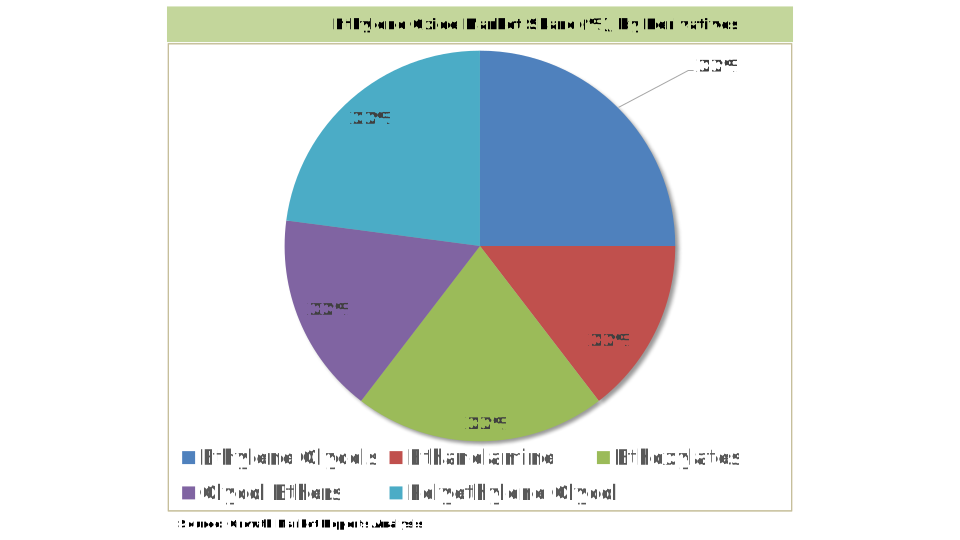
The gonorrhea diagnostic market is segmented by product type into instruments, consumables, and software, each playing a crucial role in the overall diagnostic ecosystem. Instruments, such as automated analyzers and point-of-care devices, form the backbone of laboratory and clinical testing, providing the hardware necessary for accurate and efficient detection of Neisseria gonorrhoeae. The demand for advanced instruments is being driven by the need for high-throughput testing capabilities, particularly in large hospitals and diagnostic laboratories. These instruments are increasingly equipped with automation features, connectivity options, and integrated data management systems, which enhance workflow efficiency and reduce the risk of human error. As healthcare providers strive to improve turnaround times and diagnostic accuracy, the adoption of state-of-the-art instruments is expected to remain strong, especially in developed regions with well-established laboratory networks.

Consumables represent a significant and recurring revenue stream within the gonorrhea diagnostic market, encompassing reagents, test kits, sample collection devices, and other disposable products used in the diagnostic process. The consumables segment is characterized by high volume usage, as each diagnostic test typically requires specific reagents and kits tailored to the chosen technology platform. The ongoing shift towards molecular diagnostics and rapid immunoassays has driven innovation in consumables, with manufacturers focusing on developing products that offer enhanced sensitivity, specificity, and ease of use. Additionally, the trend towards multiplex testing, which allows simultaneous detection of multiple pathogens, is boosting demand for versatile and compatible consumables. This segment is highly competitive, with companies continuously launching new and improved products to meet evolving clinical needs and regulatory standards.

Software solutions are becoming increasingly integral to the gonorrhea diagnostic market, supporting laboratory information management, data analysis, and result reporting. Modern diagnostic instruments are often paired with sophisticated software platforms that facilitate automated data capture, interpretation, and integration with electronic health record (EHR) systems. These software tools are essential for ensuring traceability, compliance with regulatory requirements, and seamless communication between laboratories and healthcare providers. The growing emphasis on data-driven healthcare and interoperability is fueling demand for software solutions that can handle large volumes of diagnostic data, generate actionable insights, and support population health management initiatives. As digital transformation accelerates across the healthcare sector, software is expected to play an ever-expanding role in optimizing diagnostic workflows and enhancing patient care.

The interplay between instruments, consumables, and software is shaping the competitive dynamics of the gonorrhea diagnostic market, with manufacturers increasingly offering integrated solutions that combine hardware, reagents, and digital tools. This holistic approach not only simplifies procurement and implementation for healthcare providers but also enhances the overall value proposition by delivering end-to-end diagnostic capabilities. Strategic partnerships between instrument manufacturers, consumable suppliers, and software developers are becoming more common, enabling the development of comprehensive diagnostic platforms that address the full spectrum of clinical and operational requirements. As market players continue to innovate and differentiate their offerings, the product type segment is expected to remain a key battleground for capturing market share and driving long-term growth.

Report Scope

Attributes Details
Report Title Gonorrhea Diagnostic Market Research Report 2033
By Product Type Instruments, Consumables, Software
By Technology Molecular Diagnostics, Immunoassays, Chromatography, Others
By End User Hospitals, Diagnostic Laboratories, Clinics, Others
By Sample Type Urine, Swab, Blood, Others
Regions Covered North America, Europe, APAC, Latin America, MEA
Base Year 2024
Historic Data 2018-2023
Forecast Period 2025-2033
Number of Pages 277
Number of Tables & Figures 311
Customization Available Yes, the report can be customized as per your need.

Technology Analysis

The gonorrhea diagnostic market is segmented by technology into molecular diagnostics, immunoassays, chromatography, and others, each offering distinct advantages and applications in clinical practice. Molecular diagnostics, particularly nucleic acid amplification tests (NAATs), have emerged as the gold standard for gonorrhea detection due to their exceptional sensitivity and specificity. These tests can detect even low levels of Neisseria gonorrhoeae DNA or RNA in a variety of sample types, making them ideal for early and accurate diagnosis. The rapid turnaround times and ability to process multiple samples simultaneously have made molecular diagnostics the preferred choice in both centralized laboratories and decentralized settings. Continuous innovation in this segment, including the development of portable and user-friendly molecular platforms, is expanding access to high-quality diagnostics and supporting efforts to curb the spread of antibiotic-resistant strains.

Immunoassays, such as enzyme-linked immunosorbent assays (ELISA) and lateral flow tests, represent another important technology segment within the gonorrhea diagnostic market. These assays detect antibodies or antigens associated with Neisseria gonorrhoeae infection, offering a cost-effective and relatively simple alternative to molecular methods. Immunoassays are particularly valued in resource-limited settings and point-of-care environments, where rapid results and ease of use are critical. Advances in assay design and detection chemistry are enhancing the sensitivity and specificity of these tests, making them increasingly reliable for screening and confirmatory purposes. The growing adoption of immunoassays is also being driven by public health initiatives aimed at expanding access to STI testing in underserved populations.

Chromatography-based techniques, while less commonly used for routine gonorrhea diagnosis, play a specialized role in certain laboratory workflows, particularly in research and drug resistance monitoring. Gas chromatography-mass spectrometry (GC-MS) and liquid chromatography-mass spectrometry (LC-MS) are employed to analyze metabolic profiles, identify resistance markers, and support epidemiological studies. These technologies offer high analytical precision and are instrumental in advancing our understanding of Neisseria gonorrhoeae biology and resistance mechanisms. Although the chromatography segment represents a smaller share of the overall market, ongoing research and development efforts are expected to yield new applications and contribute to the broader diagnostic landscape.

Other technologies, including culture-based methods and microscopy, continue to be used in specific contexts, particularly in low-resource settings and for confirmatory testing. Culture remains the definitive method for assessing antibiotic susceptibility, despite its longer turnaround times and technical complexity. Microscopy, while less sensitive than molecular or immunoassay techniques, can provide rapid preliminary results and is often used in conjunction with other diagnostic methods. The continued relevance of these traditional technologies underscores the importance of a diverse diagnostic toolkit, capable of meeting the varied needs of healthcare providers and patient populations. As the market evolves, the integration of multiple technologies into comprehensive diagnostic algorithms is expected to enhance the accuracy and efficiency of gonorrhea detection and management.

End User Analysis

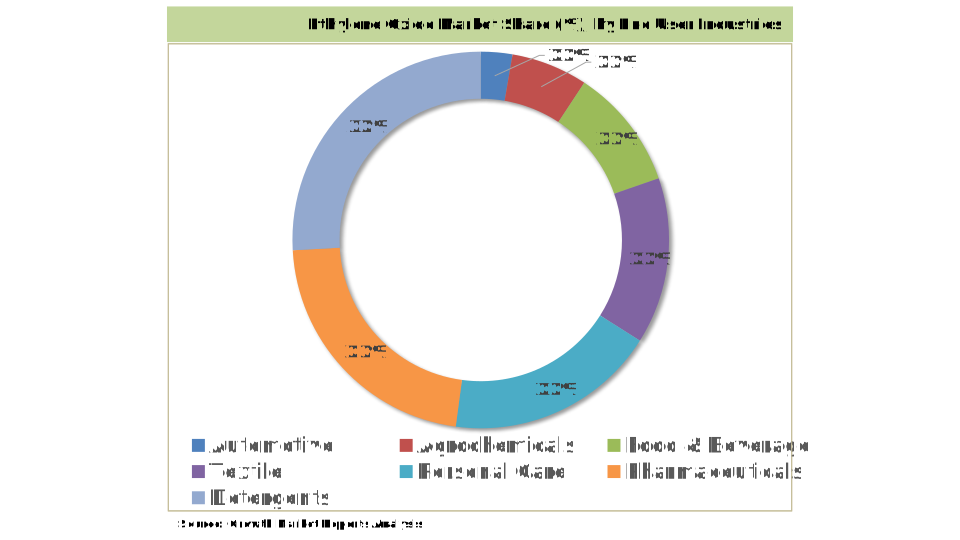
The gonorrhea diagnostic market is segmented by end user into hospitals, diagnostic laboratories, clinics, and others, reflecting the diverse settings in which diagnostic testing is performed. Hospitals represent the largest end user segment, driven by their central role in providing comprehensive healthcare services, including STI screening, diagnosis, and treatment. Hospitals are equipped with advanced laboratory infrastructure and skilled personnel, enabling them to perform high-volume testing and manage complex cases. The increasing prevalence of gonorrhea and the need for timely intervention are prompting hospitals to invest in state-of-the-art diagnostic technologies, such as automated molecular platforms and integrated laboratory information systems. Additionally, hospitals often serve as referral centers for complicated or resistant cases, further reinforcing their importance in the diagnostic ecosystem.

Diagnostic laboratories, both independent and hospital-based, constitute a significant share of the gonorrhea diagnostic market, offering specialized testing services to a wide range of healthcare providers. These laboratories are characterized by their ability to process large volumes of samples efficiently, leveraging economies of scale and advanced automation technologies. The growing demand for high-throughput, accurate, and cost-effective diagnostic solutions is driving investment in laboratory automation, molecular diagnostics, and quality control systems. Diagnostic laboratories play a critical role in supporting public health surveillance, epidemiological research, and outbreak management, making them indispensable partners in the fight against sexually transmitted infections. As healthcare systems increasingly emphasize preventive care and early detection, the role of diagnostic laboratories is expected to expand further.

Clinics, including sexual health clinics, community health centers, and primary care facilities, are emerging as important end users in the gonorrhea diagnostic market, particularly in the context of decentralized and point-of-care testing. Clinics are often the first point of contact for individuals seeking STI screening and counseling, making rapid and accessible diagnostic solutions essential. The adoption of user-friendly, portable diagnostic devices and rapid immunoassays is enabling clinics to deliver timely results and initiate treatment during the same visit, reducing the risk of onward transmission and improving patient outcomes. Public health initiatives aimed at expanding access to STI testing in underserved communities are further driving demand for clinic-based diagnostic solutions.

Other end users, such as research institutions, academic centers, and non-governmental organizations (NGOs), also contribute to the gonorrhea diagnostic market, albeit to a lesser extent. These organizations are involved in research, surveillance, and capacity-building activities, often focusing on the development and evaluation of new diagnostic technologies. Collaborative efforts between public and private sector stakeholders are facilitating knowledge transfer, technology adoption, and the dissemination of best practices, ultimately strengthening the global response to gonorrhea and other STIs. As the market continues to evolve, tailored diagnostic solutions that address the unique needs of each end user segment will be critical for maximizing impact and achieving public health goals.

Sample Type Analysis

The gonorrhea diagnostic market is segmented by sample type into urine, swab, blood, and others, reflecting the various biological specimens used for detecting Neisseria gonorrhoeae infection. Urine samples have gained popularity as a non-invasive and convenient option for both patients and healthcare providers. Molecular diagnostic techniques, such as NAATs, have demonstrated high sensitivity and specificity when applied to urine specimens, making them suitable for routine screening and early detection. The ease of collection and minimal discomfort associated with urine sampling are driving widespread adoption, particularly in large-scale screening programs and community-based settings. As public health initiatives increasingly emphasize accessibility and patient-centered care, the demand for urine-based diagnostic tests is expected to continue rising.

Swab samples, including endocervical, urethral, pharyngeal, and rectal swabs, remain a cornerstone of gonorrhea diagnosis, particularly for detecting infections at specific anatomical sites. Swab-based sampling is essential for identifying extragenital infections, which are increasingly recognized as important contributors to ongoing transmission. Advances in swab design, transport media, and molecular assay compatibility are enhancing the reliability and convenience of swab-based diagnostics. Healthcare providers are increasingly adopting multiplex testing platforms that allow simultaneous detection of multiple STIs from a single swab sample, improving diagnostic efficiency and patient experience. The continued relevance of swab samples underscores the importance of comprehensive diagnostic strategies that address the full spectrum of gonorrhea presentations.

Blood samples, while less commonly used for direct detection of Neisseria gonorrhoeae, play a role in serological testing and research applications. Blood-based assays are primarily employed to detect antibodies or monitor immune responses, providing valuable information for epidemiological studies and vaccine development efforts. In certain clinical scenarios, blood tests may be used in conjunction with other sample types to support differential diagnosis and rule out co-infections. The integration of blood-based diagnostics into broader STI screening programs is enhancing our understanding of disease dynamics and informing public health interventions.

Other sample types, such as vaginal or conjunctival swabs, are utilized in specific clinical contexts, particularly when infection is suspected at less common anatomical sites. The ability to accurately detect Neisseria gonorrhoeae from a variety of sample types is critical for comprehensive disease surveillance and targeted intervention. Diagnostic manufacturers are responding to this need by developing versatile assay platforms and validated protocols for multiple specimen types. As the market continues to evolve, the availability of flexible and reliable diagnostic solutions will be essential for addressing the diverse needs of healthcare providers and patient populations.

Opportunities & Threats

The gonorrhea diagnostic market presents a wealth of opportunities for innovation and growth, particularly in the development of rapid, point-of-care diagnostic solutions. The increasing emphasis on early detection and treatment is driving demand for user-friendly, portable devices that can deliver accurate results within minutes, even in resource-limited settings. Advances in microfluidics, biosensors, and digital health technologies are enabling the creation of next-generation diagnostic platforms that combine high sensitivity with ease of use. These innovations have the potential to revolutionize STI screening, expand access to underserved populations, and support public health efforts to control the spread of gonorrhea and other sexually transmitted infections. Market players that prioritize research and development, strategic partnerships, and regulatory compliance are well-positioned to capitalize on these emerging opportunities.

Another significant opportunity lies in the integration of artificial intelligence (AI) and data analytics into diagnostic workflows. AI-powered software solutions can enhance the accuracy and efficiency of result interpretation, support clinical decision-making, and facilitate population health management. The growing adoption of electronic health records (EHRs) and interoperability standards is enabling seamless data exchange between laboratories, clinics, and public health agencies, improving surveillance and outbreak response capabilities. Companies that invest in digital transformation and data-driven healthcare are likely to gain a competitive edge in the rapidly evolving gonorrhea diagnostic market. Additionally, the expansion of telemedicine and remote testing services is creating new avenues for market growth, particularly in the wake of the COVID-19 pandemic.

Despite these opportunities, the gonorrhea diagnostic market faces several restraining factors, chief among them being the high cost of advanced diagnostic technologies. The adoption of molecular diagnostic platforms and automated laboratory systems often requires substantial upfront investment, which can be a barrier for healthcare providers in low- and middle-income countries. Limited reimbursement coverage and budget constraints further exacerbate this challenge, hindering the widespread implementation of state-of-the-art diagnostic solutions. Addressing these barriers will require concerted efforts from governments, international organizations, and industry stakeholders to ensure equitable access to high-quality diagnostics and support global disease control initiatives.

Regional Outlook

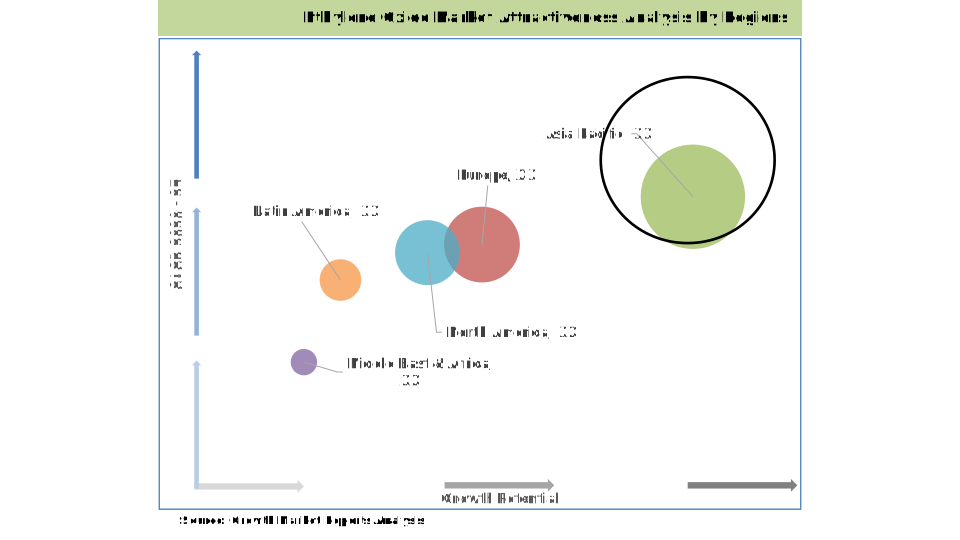
The regional distribution of the gonorrhea diagnostic market reflects significant variations in disease prevalence, healthcare infrastructure, and access to diagnostic technologies. North America remains the largest regional market, accounting for approximately USD 470 million in revenue in 2024. This dominance is attributed to high disease awareness, advanced laboratory networks, and strong government support for STI screening programs. The United States, in particular, has implemented comprehensive public health initiatives aimed at reducing the burden of gonorrhea and other sexually transmitted infections, driving demand for innovative diagnostic solutions. Canada also contributes significantly to the regional market, benefiting from universal healthcare coverage and robust surveillance systems.

Europe represents the second-largest regional market, with a market size of around USD 320 million in 2024. The region is characterized by well-established healthcare systems, extensive screening programs, and favorable reimbursement policies. Countries such as the United Kingdom, Germany, and France are at the forefront of adopting advanced diagnostic technologies, supported by strong regulatory frameworks and public health infrastructure. The European market is also benefiting from cross-border collaboration and harmonization of diagnostic standards, facilitating the adoption of best practices and innovative solutions. The region is expected to maintain steady growth over the forecast period, driven by ongoing investments in healthcare modernization and disease prevention.

The Asia Pacific region is poised for the fastest growth, with a projected CAGR of 9.1% and a market size of USD 340 million in 2024. Rapid urbanization, rising STI prevalence, and increasing healthcare spending are fueling demand for modern diagnostic technologies in countries such as China, India, and Japan. Public health initiatives aimed at expanding access to STI testing, coupled with growing investments in laboratory infrastructure, are creating a favorable environment for market expansion. Latin America and the Middle East & Africa, with market sizes of USD 95 million and USD 55 million respectively in 2024, are emerging as important growth regions, driven by international aid, public health campaigns, and improving access to diagnostic services. As market players seek to capture these opportunities, tailored strategies that address local healthcare needs and regulatory requirements will be essential for success.

Gonorrhea Diagnostic Market Statistics

Competitor Outlook

The competitive landscape of the gonorrhea diagnostic market is characterized by the presence of several global and regional players, each striving to differentiate themselves through product innovation, technological advancements, and strategic partnerships. Major companies are investing heavily in research and development to introduce next-generation diagnostic platforms that offer improved sensitivity, specificity, and ease of use. The market is witnessing a trend towards integrated solutions that combine instruments, consumables, and software, enabling healthcare providers to streamline workflows and enhance diagnostic accuracy. As competition intensifies, companies are focusing on expanding their product portfolios, obtaining regulatory approvals, and strengthening their distribution networks to capture a larger share of the global market.

Mergers and acquisitions are a common strategy among leading market players, enabling them to gain access to new technologies, enter emerging markets, and enhance their competitive positioning. Collaborations with academic institutions, research organizations, and public health agencies are also playing a critical role in driving innovation and accelerating the development of novel diagnostic solutions. Companies are increasingly leveraging digital technologies, such as artificial intelligence and cloud-based data management, to differentiate their offerings and deliver greater value to customers. The ability to provide comprehensive, end-to-end diagnostic solutions is becoming a key determinant of success in the evolving market landscape.

Regulatory compliance and quality assurance are paramount in the gonorrhea diagnostic market, given the critical importance of accurate and reliable test results for patient care and public health. Leading companies are investing in robust quality management systems, clinical validation studies, and post-market surveillance to ensure the safety and effectiveness of their products. Obtaining regulatory approvals from agencies such as the U.S. Food and Drug Administration (FDA), European Medicines Agency (EMA), and other national authorities is a top priority for market players seeking to expand their global footprint. Companies that demonstrate a strong commitment to regulatory excellence and customer support are likely to build lasting relationships with healthcare providers and maintain a competitive edge.

Some of the major companies operating in the gonorrhea diagnostic market include Abbott Laboratories, Becton, Dickinson and Company (BD), Hologic Inc., Roche Diagnostics, Siemens Healthineers, Danaher Corporation, Thermo Fisher Scientific, Bio-Rad Laboratories, Cepheid (a Danaher company), and QuidelOrtho Corporation. Abbott Laboratories is renowned for its broad portfolio of molecular and immunoassay diagnostic platforms, while BD is a leader in automated specimen processing and laboratory automation. Hologic and Roche Diagnostics are at the forefront of molecular diagnostics, offering high-throughput NAAT systems that set industry standards for accuracy and reliability. Siemens Healthineers and Danaher Corporation are recognized for their comprehensive laboratory solutions, encompassing instruments, reagents, and digital tools. Thermo Fisher Scientific, Bio-Rad Laboratories, and Cepheid are known for their innovation in molecular and microbiology diagnostics, while QuidelOrtho Corporation specializes in rapid point-of-care testing solutions. These companies are continually investing in product development, geographic expansion, and strategic collaborations to strengthen their market positions and drive long-term growth.

Key Players

  • Abbott Laboratories
  • Becton, Dickinson and Company (BD)
  • F. Hoffmann-La Roche Ltd
  • Hologic, Inc.
  • Danaher Corporation
  • Siemens Healthineers
  • Thermo Fisher Scientific Inc.
  • bioMérieux SA
  • QuidelOrtho Corporation
  • Cepheid (a Danaher company)
  • Bio-Rad Laboratories, Inc.
  • Qiagen N.V.
  • Meridian Bioscience, Inc.
  • Luminex Corporation
  • GenMark Diagnostics, Inc.
  • Grifols, S.A.
  • Sysmex Corporation
  • Sekisui Diagnostics
  • Mast Group Ltd.
  • Nanosphere, Inc.
Gonorrhea Diagnostic Market Overview

Segments

The Gonorrhea Diagnostic market has been segmented on the basis of

Product Type

  • Instruments
  • Consumables
  • Software

Technology

  • Molecular Diagnostics
  • Immunoassays
  • Chromatography
  • Others

End User

  • Hospitals
  • Diagnostic Laboratories
  • Clinics
  • Others

Sample Type

  • Urine
  • Swab
  • Blood
  • Others

Competitive Landscape

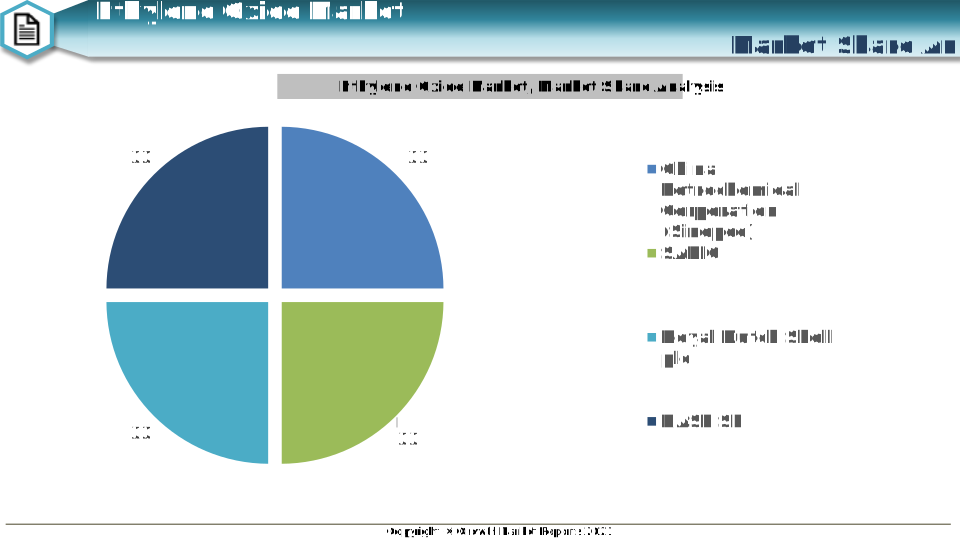
The key players competing in the global ethylene oxide market are Shiloh Industries, Inc.; Gibbs Die Casting Corporation Company; Georg Fischer; Sundaram - Clayton Limited; and Pace Industries.

Companies are engaging in partnerships, acquisitions, and mergers to expand their market share. Moreover, they’re focusing on expanding their production capacities to leverage their market position. Key players are partnering with local manufacturers and investing in R&D activities to enhance the manufacturing process to reduce the operation costs.

Ethylene Oxide Market

Frequently Asked Questions

Opportunities include the development of rapid point-of-care diagnostic solutions, integration of artificial intelligence and data analytics, expansion of telemedicine and remote testing, and tailored solutions for emerging markets.

Major players include Abbott Laboratories, Becton Dickinson (BD), Roche Diagnostics, Hologic Inc., Siemens Healthineers, Danaher Corporation, Thermo Fisher Scientific, Bio-Rad Laboratories, Cepheid, and QuidelOrtho Corporation.

Key challenges include the high cost of advanced diagnostic technologies, limited reimbursement coverage in some regions, and budget constraints in low- and middle-income countries.

Common sample types include urine, swab (endocervical, urethral, pharyngeal, rectal), blood, and other specific samples like vaginal or conjunctival swabs.

Major end users include hospitals, diagnostic laboratories, clinics (including sexual health and community health centers), and research institutions.

The market includes instruments (such as automated analyzers and point-of-care devices), consumables (reagents, test kits, sample collection devices), and software solutions for data management and laboratory workflows.

North America currently dominates the market, followed by Europe and Asia Pacific. Asia Pacific is expected to experience the fastest growth due to rising STI prevalence and increased healthcare investments.

The main technologies used are molecular diagnostics (especially nucleic acid amplification tests or NAATs), immunoassays (such as ELISA and lateral flow tests), chromatography, and traditional methods like culture and microscopy.

Key growth drivers include rising incidences of sexually transmitted infections (STIs), increasing awareness of early disease detection, advancements in diagnostic technology, and the emergence of antibiotic-resistant strains of Neisseria gonorrhoeae.

As of 2024, the global gonorrhea diagnostic market is valued at USD 1.28 billion and is projected to reach USD 2.42 billion by 2033.

Table Of Content

Chapter 1 Executive Summary
Chapter 2 Assumptions and Acronyms Used
Chapter 3 Research Methodology
Chapter 4 Gonorrhea Diagnostic Market Overview
   4.1 Introduction
      4.1.1 Market Taxonomy
      4.1.2 Market Definition
      4.1.3 Macro-Economic Factors Impacting the Market Growth
   4.2 Gonorrhea Diagnostic Market Dynamics
      4.2.1 Market Drivers
      4.2.2 Market Restraints
      4.2.3 Market Opportunity
   4.3 Gonorrhea Diagnostic Market - Supply Chain Analysis
      4.3.1 List of Key Suppliers
      4.3.2 List of Key Distributors
      4.3.3 List of Key Consumers
   4.4 Key Forces Shaping the Gonorrhea Diagnostic Market
      4.4.1 Bargaining Power of Suppliers
      4.4.2 Bargaining Power of Buyers
      4.4.3 Threat of Substitution
      4.4.4 Threat of New Entrants
      4.4.5 Competitive Rivalry
   4.5 Global Gonorrhea Diagnostic Market Size & Forecast, 2023-2032
      4.5.1 Gonorrhea Diagnostic Market Size and Y-o-Y Growth
      4.5.2 Gonorrhea Diagnostic Market Absolute $ Opportunity

Chapter 5 Global Gonorrhea Diagnostic Market Analysis and Forecast By Product Type
   5.1 Introduction
      5.1.1 Key Market Trends & Growth Opportunities By Product Type
      5.1.2 Basis Point Share (BPS) Analysis By Product Type
      5.1.3 Absolute $ Opportunity Assessment By Product Type
   5.2 Gonorrhea Diagnostic Market Size Forecast By Product Type
      5.2.1 Instruments
      5.2.2 Consumables
      5.2.3 Software
   5.3 Market Attractiveness Analysis By Product Type

Chapter 6 Global Gonorrhea Diagnostic Market Analysis and Forecast By Technology
   6.1 Introduction
      6.1.1 Key Market Trends & Growth Opportunities By Technology
      6.1.2 Basis Point Share (BPS) Analysis By Technology
      6.1.3 Absolute $ Opportunity Assessment By Technology
   6.2 Gonorrhea Diagnostic Market Size Forecast By Technology
      6.2.1 Molecular Diagnostics
      6.2.2 Immunoassays
      6.2.3 Chromatography
      6.2.4 Others
   6.3 Market Attractiveness Analysis By Technology

Chapter 7 Global Gonorrhea Diagnostic Market Analysis and Forecast By End User
   7.1 Introduction
      7.1.1 Key Market Trends & Growth Opportunities By End User
      7.1.2 Basis Point Share (BPS) Analysis By End User
      7.1.3 Absolute $ Opportunity Assessment By End User
   7.2 Gonorrhea Diagnostic Market Size Forecast By End User
      7.2.1 Hospitals
      7.2.2 Diagnostic Laboratories
      7.2.3 Clinics
      7.2.4 Others
   7.3 Market Attractiveness Analysis By End User

Chapter 8 Global Gonorrhea Diagnostic Market Analysis and Forecast By Sample Type
   8.1 Introduction
      8.1.1 Key Market Trends & Growth Opportunities By Sample Type
      8.1.2 Basis Point Share (BPS) Analysis By Sample Type
      8.1.3 Absolute $ Opportunity Assessment By Sample Type
   8.2 Gonorrhea Diagnostic Market Size Forecast By Sample Type
      8.2.1 Urine
      8.2.2 Swab
      8.2.3 Blood
      8.2.4 Others
   8.3 Market Attractiveness Analysis By Sample Type

Chapter 9 Global Gonorrhea Diagnostic Market Analysis and Forecast by Region
   9.1 Introduction
      9.1.1 Key Market Trends & Growth Opportunities By Region
      9.1.2 Basis Point Share (BPS) Analysis By Region
      9.1.3 Absolute $ Opportunity Assessment By Region
   9.2 Gonorrhea Diagnostic Market Size Forecast By Region
      9.2.1 North America
      9.2.2 Europe
      9.2.3 Asia Pacific
      9.2.4 Latin America
      9.2.5 Middle East & Africa (MEA)
   9.3 Market Attractiveness Analysis By Region

Chapter 10 Coronavirus Disease (COVID-19) Impact 
   10.1 Introduction 
   10.2 Current & Future Impact Analysis 
   10.3 Economic Impact Analysis 
   10.4 Government Policies 
   10.5 Investment Scenario

Chapter 11 North America Gonorrhea Diagnostic Analysis and Forecast
   11.1 Introduction
   11.2 North America Gonorrhea Diagnostic Market Size Forecast by Country
      11.2.1 U.S.
      11.2.2 Canada
   11.3 Basis Point Share (BPS) Analysis by Country
   11.4 Absolute $ Opportunity Assessment by Country
   11.5 Market Attractiveness Analysis by Country
   11.6 North America Gonorrhea Diagnostic Market Size Forecast By Product Type
      11.6.1 Instruments
      11.6.2 Consumables
      11.6.3 Software
   11.7 Basis Point Share (BPS) Analysis By Product Type 
   11.8 Absolute $ Opportunity Assessment By Product Type 
   11.9 Market Attractiveness Analysis By Product Type
   11.10 North America Gonorrhea Diagnostic Market Size Forecast By Technology
      11.10.1 Molecular Diagnostics
      11.10.2 Immunoassays
      11.10.3 Chromatography
      11.10.4 Others
   11.11 Basis Point Share (BPS) Analysis By Technology 
   11.12 Absolute $ Opportunity Assessment By Technology 
   11.13 Market Attractiveness Analysis By Technology
   11.14 North America Gonorrhea Diagnostic Market Size Forecast By End User
      11.14.1 Hospitals
      11.14.2 Diagnostic Laboratories
      11.14.3 Clinics
      11.14.4 Others
   11.15 Basis Point Share (BPS) Analysis By End User 
   11.16 Absolute $ Opportunity Assessment By End User 
   11.17 Market Attractiveness Analysis By End User
   11.18 North America Gonorrhea Diagnostic Market Size Forecast By Sample Type
      11.18.1 Urine
      11.18.2 Swab
      11.18.3 Blood
      11.18.4 Others
   11.19 Basis Point Share (BPS) Analysis By Sample Type 
   11.20 Absolute $ Opportunity Assessment By Sample Type 
   11.21 Market Attractiveness Analysis By Sample Type

Chapter 12 Europe Gonorrhea Diagnostic Analysis and Forecast
   12.1 Introduction
   12.2 Europe Gonorrhea Diagnostic Market Size Forecast by Country
      12.2.1 Germany
      12.2.2 France
      12.2.3 Italy
      12.2.4 U.K.
      12.2.5 Spain
      12.2.6 Russia
      12.2.7 Rest of Europe
   12.3 Basis Point Share (BPS) Analysis by Country
   12.4 Absolute $ Opportunity Assessment by Country
   12.5 Market Attractiveness Analysis by Country
   12.6 Europe Gonorrhea Diagnostic Market Size Forecast By Product Type
      12.6.1 Instruments
      12.6.2 Consumables
      12.6.3 Software
   12.7 Basis Point Share (BPS) Analysis By Product Type 
   12.8 Absolute $ Opportunity Assessment By Product Type 
   12.9 Market Attractiveness Analysis By Product Type
   12.10 Europe Gonorrhea Diagnostic Market Size Forecast By Technology
      12.10.1 Molecular Diagnostics
      12.10.2 Immunoassays
      12.10.3 Chromatography
      12.10.4 Others
   12.11 Basis Point Share (BPS) Analysis By Technology 
   12.12 Absolute $ Opportunity Assessment By Technology 
   12.13 Market Attractiveness Analysis By Technology
   12.14 Europe Gonorrhea Diagnostic Market Size Forecast By End User
      12.14.1 Hospitals
      12.14.2 Diagnostic Laboratories
      12.14.3 Clinics
      12.14.4 Others
   12.15 Basis Point Share (BPS) Analysis By End User 
   12.16 Absolute $ Opportunity Assessment By End User 
   12.17 Market Attractiveness Analysis By End User
   12.18 Europe Gonorrhea Diagnostic Market Size Forecast By Sample Type
      12.18.1 Urine
      12.18.2 Swab
      12.18.3 Blood
      12.18.4 Others
   12.19 Basis Point Share (BPS) Analysis By Sample Type 
   12.20 Absolute $ Opportunity Assessment By Sample Type 
   12.21 Market Attractiveness Analysis By Sample Type

Chapter 13 Asia Pacific Gonorrhea Diagnostic Analysis and Forecast
   13.1 Introduction
   13.2 Asia Pacific Gonorrhea Diagnostic Market Size Forecast by Country
      13.2.1 China
      13.2.2 Japan
      13.2.3 South Korea
      13.2.4 India
      13.2.5 Australia
      13.2.6 South East Asia (SEA)
      13.2.7 Rest of Asia Pacific (APAC)
   13.3 Basis Point Share (BPS) Analysis by Country
   13.4 Absolute $ Opportunity Assessment by Country
   13.5 Market Attractiveness Analysis by Country
   13.6 Asia Pacific Gonorrhea Diagnostic Market Size Forecast By Product Type
      13.6.1 Instruments
      13.6.2 Consumables
      13.6.3 Software
   13.7 Basis Point Share (BPS) Analysis By Product Type 
   13.8 Absolute $ Opportunity Assessment By Product Type 
   13.9 Market Attractiveness Analysis By Product Type
   13.10 Asia Pacific Gonorrhea Diagnostic Market Size Forecast By Technology
      13.10.1 Molecular Diagnostics
      13.10.2 Immunoassays
      13.10.3 Chromatography
      13.10.4 Others
   13.11 Basis Point Share (BPS) Analysis By Technology 
   13.12 Absolute $ Opportunity Assessment By Technology 
   13.13 Market Attractiveness Analysis By Technology
   13.14 Asia Pacific Gonorrhea Diagnostic Market Size Forecast By End User
      13.14.1 Hospitals
      13.14.2 Diagnostic Laboratories
      13.14.3 Clinics
      13.14.4 Others
   13.15 Basis Point Share (BPS) Analysis By End User 
   13.16 Absolute $ Opportunity Assessment By End User 
   13.17 Market Attractiveness Analysis By End User
   13.18 Asia Pacific Gonorrhea Diagnostic Market Size Forecast By Sample Type
      13.18.1 Urine
      13.18.2 Swab
      13.18.3 Blood
      13.18.4 Others
   13.19 Basis Point Share (BPS) Analysis By Sample Type 
   13.20 Absolute $ Opportunity Assessment By Sample Type 
   13.21 Market Attractiveness Analysis By Sample Type

Chapter 14 Latin America Gonorrhea Diagnostic Analysis and Forecast
   14.1 Introduction
   14.2 Latin America Gonorrhea Diagnostic Market Size Forecast by Country
      14.2.1 Brazil
      14.2.2 Mexico
      14.2.3 Rest of Latin America (LATAM)
   14.3 Basis Point Share (BPS) Analysis by Country
   14.4 Absolute $ Opportunity Assessment by Country
   14.5 Market Attractiveness Analysis by Country
   14.6 Latin America Gonorrhea Diagnostic Market Size Forecast By Product Type
      14.6.1 Instruments
      14.6.2 Consumables
      14.6.3 Software
   14.7 Basis Point Share (BPS) Analysis By Product Type 
   14.8 Absolute $ Opportunity Assessment By Product Type 
   14.9 Market Attractiveness Analysis By Product Type
   14.10 Latin America Gonorrhea Diagnostic Market Size Forecast By Technology
      14.10.1 Molecular Diagnostics
      14.10.2 Immunoassays
      14.10.3 Chromatography
      14.10.4 Others
   14.11 Basis Point Share (BPS) Analysis By Technology 
   14.12 Absolute $ Opportunity Assessment By Technology 
   14.13 Market Attractiveness Analysis By Technology
   14.14 Latin America Gonorrhea Diagnostic Market Size Forecast By End User
      14.14.1 Hospitals
      14.14.2 Diagnostic Laboratories
      14.14.3 Clinics
      14.14.4 Others
   14.15 Basis Point Share (BPS) Analysis By End User 
   14.16 Absolute $ Opportunity Assessment By End User 
   14.17 Market Attractiveness Analysis By End User
   14.18 Latin America Gonorrhea Diagnostic Market Size Forecast By Sample Type
      14.18.1 Urine
      14.18.2 Swab
      14.18.3 Blood
      14.18.4 Others
   14.19 Basis Point Share (BPS) Analysis By Sample Type 
   14.20 Absolute $ Opportunity Assessment By Sample Type 
   14.21 Market Attractiveness Analysis By Sample Type

Chapter 15 Middle East & Africa (MEA) Gonorrhea Diagnostic Analysis and Forecast
   15.1 Introduction
   15.2 Middle East & Africa (MEA) Gonorrhea Diagnostic Market Size Forecast by Country
      15.2.1 Saudi Arabia
      15.2.2 South Africa
      15.2.3 UAE
      15.2.4 Rest of Middle East & Africa (MEA)
   15.3 Basis Point Share (BPS) Analysis by Country
   15.4 Absolute $ Opportunity Assessment by Country
   15.5 Market Attractiveness Analysis by Country
   15.6 Middle East & Africa (MEA) Gonorrhea Diagnostic Market Size Forecast By Product Type
      15.6.1 Instruments
      15.6.2 Consumables
      15.6.3 Software
   15.7 Basis Point Share (BPS) Analysis By Product Type 
   15.8 Absolute $ Opportunity Assessment By Product Type 
   15.9 Market Attractiveness Analysis By Product Type
   15.10 Middle East & Africa (MEA) Gonorrhea Diagnostic Market Size Forecast By Technology
      15.10.1 Molecular Diagnostics
      15.10.2 Immunoassays
      15.10.3 Chromatography
      15.10.4 Others
   15.11 Basis Point Share (BPS) Analysis By Technology 
   15.12 Absolute $ Opportunity Assessment By Technology 
   15.13 Market Attractiveness Analysis By Technology
   15.14 Middle East & Africa (MEA) Gonorrhea Diagnostic Market Size Forecast By End User
      15.14.1 Hospitals
      15.14.2 Diagnostic Laboratories
      15.14.3 Clinics
      15.14.4 Others
   15.15 Basis Point Share (BPS) Analysis By End User 
   15.16 Absolute $ Opportunity Assessment By End User 
   15.17 Market Attractiveness Analysis By End User
   15.18 Middle East & Africa (MEA) Gonorrhea Diagnostic Market Size Forecast By Sample Type
      15.18.1 Urine
      15.18.2 Swab
      15.18.3 Blood
      15.18.4 Others
   15.19 Basis Point Share (BPS) Analysis By Sample Type 
   15.20 Absolute $ Opportunity Assessment By Sample Type 
   15.21 Market Attractiveness Analysis By Sample Type

Chapter 16 Competition Landscape 
   16.1 Gonorrhea Diagnostic Market: Competitive Dashboard
   16.2 Global Gonorrhea Diagnostic Market: Market Share Analysis, 2023
   16.3 Company Profiles (Details – Overview, Financials, Developments, Strategy) 
      16.3.1 Abbott Laboratories
Becton, Dickinson and Company (BD)
F. Hoffmann-La Roche Ltd
Hologic, Inc.
Danaher Corporation
Siemens Healthineers
Thermo Fisher Scientific Inc.
bioMérieux SA
QuidelOrtho Corporation
Cepheid (a Danaher company)
Bio-Rad Laboratories, Inc.
Qiagen N.V.
Meridian Bioscience, Inc.
Luminex Corporation
GenMark Diagnostics, Inc.
Grifols, S.A.
Sysmex Corporation
Sekisui Diagnostics
Mast Group Ltd.
Nanosphere, Inc.

Methodology

Our Clients

Siemens Healthcare
Dassault Aviation
Pfizer
Honda Motor Co. Ltd.
Microsoft
FedEx Logistics
General Mills
Nestle SA