Electrolytic Copper Market Research Report 2033

Electrolytic Copper Market Research Report 2033

Segments - by Product Type (Cathodes, Wire Rods, Billets, Others), by Purity Level (High Purity, Standard Purity), by Application (Electrical & Electronics, Construction, Automotive, Industrial Machinery, Others), by End-User (Power Generation, Telecommunication, Transportation, Consumer Goods, Others)

https://growthmarketreports.com/Raksha
Author : Raksha Sharma
https://growthmarketreports.com/Vaibhav
Fact-checked by : V. Chandola
https://growthmarketreports.com/Shruti
Editor : Shruti Bhat

Upcoming | Report ID :MC-5143 | 4.2 Rating | 51 Reviews | 260 Pages | Format : Docx PDF

Report Description


Electrolytic Copper Market Outlook

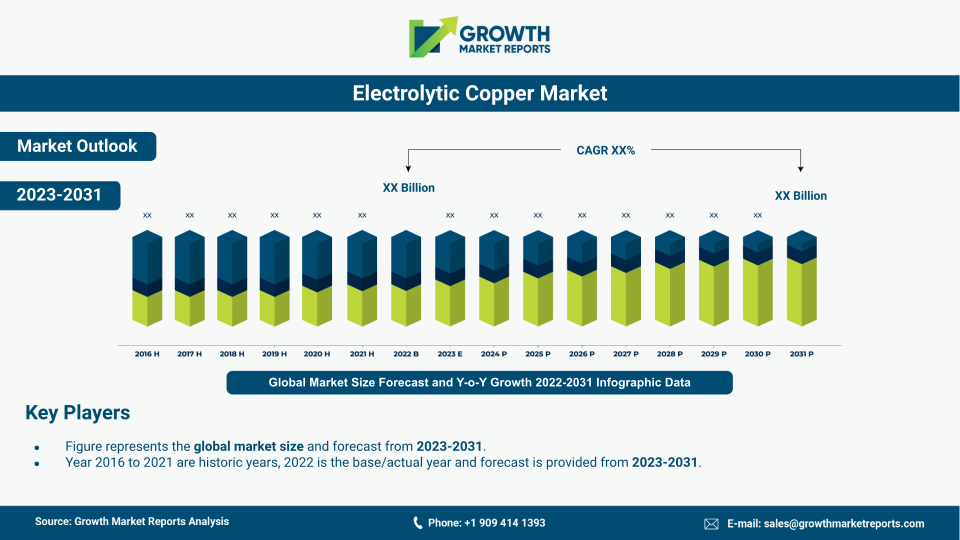
According to our latest research, the global Electrolytic Copper market size in 2024 stands at USD 86.2 billion, exhibiting robust growth with a CAGR of 5.7% from 2025 to 2033. This sustained expansion is primarily driven by the increasing demand for high-conductivity copper in power generation, telecommunication infrastructure, and electric vehicle manufacturing. By 2033, the worldwide electrolytic copper market is projected to reach USD 143.1 billion, underscoring the material’s pivotal role in the ongoing global transition toward electrification and advanced industrialization.

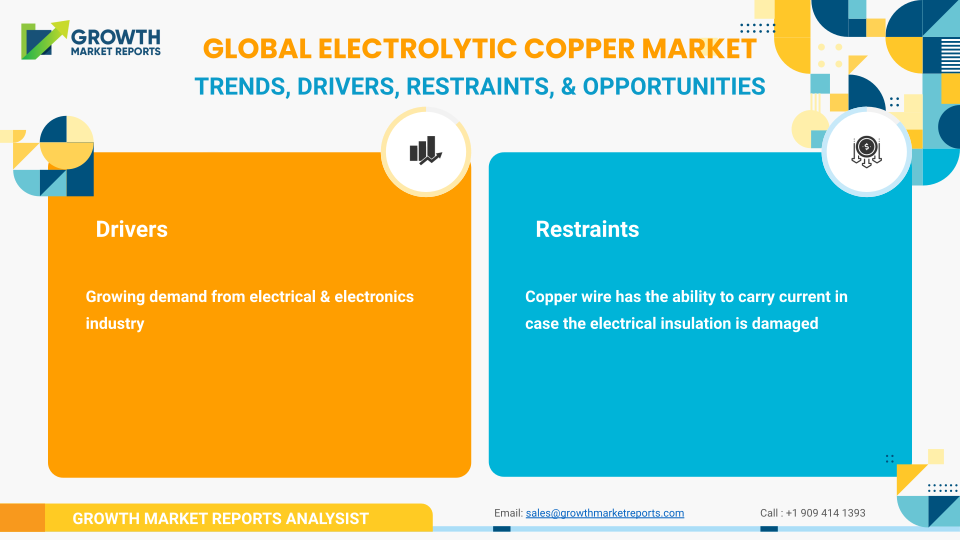
The growth trajectory of the electrolytic copper market is fundamentally anchored in the rapid expansion of the electrical and electronics sector. As the backbone of modern technology, electrolytic copper’s superior conductivity and purity make it indispensable for manufacturing wires, cables, circuit boards, and electronic connectors. The proliferation of consumer electronics, coupled with the accelerating adoption of renewable energy systems and electric vehicles, has significantly heightened the demand for high-quality copper. Additionally, the increasing integration of smart grid technologies and the global rollout of 5G networks are amplifying the need for reliable and efficient copper-based components, further bolstering market growth.

Another crucial growth driver is the construction industry’s escalating requirement for durable and efficient electrical wiring and plumbing systems. Urbanization trends, particularly in emerging economies across Asia Pacific and Latin America, have led to substantial investments in residential, commercial, and infrastructure development. Electrolytic copper’s corrosion resistance and malleability make it the preferred choice for building applications, ensuring safety and longevity. Governments worldwide are also prioritizing infrastructure upgrades and sustainable urban planning, which directly translates to increased consumption of electrolytic copper products in construction and allied sectors.

The automotive and industrial machinery segments are also contributing significantly to the expansion of the electrolytic copper market. The ongoing shift toward electric mobility, characterized by a surge in electric vehicle (EV) production, requires large volumes of high-purity copper for battery systems, motors, and charging stations. Moreover, the industrial machinery sector’s modernization efforts, aimed at improving energy efficiency and automation, are driving up the demand for copper-based components. These trends, combined with favorable regulatory frameworks supporting clean energy and technological innovation, are expected to sustain the market’s upward momentum throughout the forecast period.

From a regional perspective, Asia Pacific continues to dominate the global electrolytic copper market, accounting for the largest share in both production and consumption. This dominance is attributed to the region’s thriving manufacturing sector, robust infrastructure development, and the presence of leading electronics and automotive manufacturers. North America and Europe are also witnessing steady growth, driven by investments in renewable energy, grid modernization, and advanced manufacturing technologies. Meanwhile, Latin America and the Middle East & Africa are emerging as promising markets, fueled by resource availability and infrastructure expansion initiatives. The global landscape is thus characterized by dynamic regional contributions, each playing a vital role in shaping the future of the electrolytic copper industry.

Global Electrolytic Copper Industry Outlook

Product Type Analysis

The electrolytic copper market is segmented by product type into cathodes, wire rods, billets, and others, with each segment playing a distinct role in meeting end-user requirements. Cathodes represent the largest product segment, owing to their fundamental role as the primary feedstock for downstream copper products. Cathodes are produced through the electrolytic refining process, ensuring high purity and uniformity, making them highly sought after by wire and cable manufacturers. The consistent quality and traceability of electrolytic copper cathodes are pivotal for industries that demand stringent material specifications, such as electrical and electronics, and for applications where conductivity and reliability are paramount. The growing emphasis on high-performance electrical infrastructure and the need for pure copper in advanced manufacturing processes continue to drive the demand for cathodes.

Wire rods, another significant product type, are extensively utilized in the fabrication of electrical wires, cables, and conductors. The wire rods segment is experiencing robust growth, propelled by the increasing electrification of transportation and the expansion of renewable energy projects. The flexibility, ductility, and high conductivity of electrolytic copper wire rods make them ideal for applications in power transmission, distribution networks, and electronic device assembly. As global energy demand rises and smart grid technologies become more prevalent, the market for copper wire rods is set to witness sustained expansion, particularly in regions investing heavily in grid modernization and renewable energy integration.

Billets, though a smaller segment compared to cathodes and wire rods, play a crucial role in the production of various copper products through extrusion and forging processes. Electrolytic copper billets are favored for their machinability and consistent quality, making them suitable for manufacturing components used in industrial machinery, automotive parts, and specialized electrical equipment. The ongoing modernization of industrial processes and the push for higher efficiency in machinery design are driving the demand for copper billets. Additionally, the rise of precision engineering and the trend toward miniaturization in electronics are creating new opportunities for billet-based copper products.

The "others" category encompasses a diverse range of electrolytic copper products, including sheets, strips, and foils, each serving niche applications across different industries. These products are integral to the production of printed circuit boards, heat exchangers, and architectural elements. The demand for specialized copper forms is rising in response to the growing complexity of electronic devices and the need for advanced thermal management solutions. As industries continue to innovate and develop new applications for copper, the market for these specialized electrolytic copper products is expected to expand, contributing to the overall growth of the sector.

Report Scope

Attributes Details
Report Title Electrolytic Copper Market Research Report 2033
By Product Type Cathodes, Wire Rods, Billets, Others
By Purity Level High Purity, Standard Purity
By Application Electrical & Electronics, Construction, Automotive, Industrial Machinery, Others
By End-User Power Generation, Telecommunication, Transportation, Consumer Goods, Others
Regions Covered North America, Europe, APAC, Latin America, MEA
Base Year 2024
Historic Data 2018-2023
Forecast Period 2025-2033
Number of Pages 260
Number of Tables & Figures 262
Customization Available Yes, the report can be customized as per your need.

Purity Level Analysis

The electrolytic copper market is further segmented by purity level into high purity and standard purity categories, each catering to specific industrial needs. High purity electrolytic copper, typically defined as copper with a purity level above 99.99%, is essential for applications where electrical and thermal conductivity are critical, such as in semiconductor manufacturing, high-frequency electronics, and advanced communication systems. The increasing miniaturization of electronic components and the stringent quality standards in the electronics industry are driving the demand for high purity copper. Manufacturers are investing in advanced refining technologies to achieve ultra-high purity levels, ensuring that their products meet the evolving requirements of cutting-edge applications.

Standard purity electrolytic copper, generally ranging from 99.90% to 99.99% purity, remains the workhorse of the industry, serving a broad spectrum of applications in construction, automotive, and general electrical wiring. The reliability, cost-effectiveness, and wide availability of standard purity copper make it the preferred choice for large-scale infrastructure projects and mass-market products. As urbanization accelerates and the need for efficient energy distribution grows, the consumption of standard purity copper is expected to rise steadily, particularly in emerging markets with expanding construction and manufacturing activities.

The distinction between high purity and standard purity copper is becoming increasingly important as industries adopt more sophisticated technologies and demand materials with precise performance characteristics. In sectors such as renewable energy, aerospace, and medical devices, the push for higher efficiency and reliability is prompting end-users to specify higher purity copper grades. This trend is encouraging producers to enhance their refining processes and invest in quality control systems, thereby elevating the overall standards within the electrolytic copper market.

Furthermore, regulatory frameworks and industry standards are influencing the adoption of different purity levels. For instance, the global shift toward lead-free and environmentally friendly manufacturing practices is driving the demand for high purity copper, which is free from harmful impurities. As environmental concerns and quality expectations continue to shape the market, the purity level segment is poised for ongoing innovation and differentiation, ensuring that electrolytic copper remains at the forefront of material solutions for diverse industrial applications.

Application Analysis

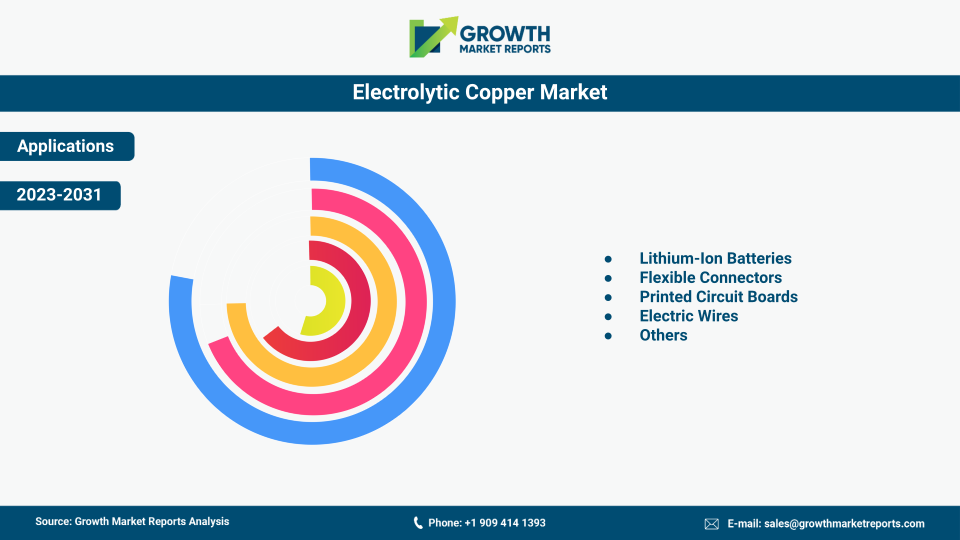
Within the electrolytic copper market, the application segment encompasses electrical & electronics, construction, automotive, industrial machinery, and others, each representing unique growth avenues. Electrical and electronics applications dominate the market, accounting for the largest share due to copper’s unmatched conductivity and reliability. The explosive growth of consumer electronics, coupled with the global transition to digital infrastructure and renewable energy, is fueling the demand for copper in wiring, connectors, printed circuit boards, and power transmission systems. As the world embraces smart devices, IoT, and cloud computing, the reliance on high-quality electrolytic copper is intensifying, creating lucrative opportunities for manufacturers and suppliers.

The construction sector is another major application area, leveraging electrolytic copper’s durability, malleability, and resistance to corrosion. Copper is widely used in electrical wiring, plumbing, roofing, and HVAC systems, ensuring safety, efficiency, and longevity in buildings. The surge in urbanization, infrastructure modernization, and sustainable building initiatives worldwide is driving the consumption of copper in construction projects. As governments invest in smart cities and green buildings, the demand for electrolytic copper in this segment is expected to witness sustained growth, particularly in regions experiencing rapid economic development and population expansion.

In the automotive industry, the shift toward electric and hybrid vehicles is revolutionizing the demand for electrolytic copper. Electric vehicles require significantly more copper than traditional internal combustion engine vehicles, primarily for batteries, motors, inverters, and charging infrastructure. As automakers ramp up EV production and invest in next-generation mobility solutions, the automotive segment is emerging as a key driver of copper consumption. Additionally, the integration of advanced driver-assistance systems (ADAS), infotainment, and connectivity features in vehicles is further boosting the need for high-quality copper components.

The industrial machinery segment relies on electrolytic copper for manufacturing motors, transformers, generators, and a wide range of industrial equipment. The ongoing automation and digitalization of manufacturing processes, coupled with the push for energy-efficient solutions, are increasing the adoption of copper-based components in industrial machinery. As industries strive to enhance productivity and reduce operational costs, the demand for reliable and high-performance copper materials is set to grow, reinforcing the importance of this application segment in the overall market landscape.

Other applications, including marine, aerospace, and medical devices, are also witnessing rising copper consumption. These sectors require specialized copper products with tailored properties to meet stringent performance and safety standards. As technological advancements drive the development of new applications and industries, the versatility and adaptability of electrolytic copper ensure its continued relevance and growth across diverse market segments.

End-User Analysis

The end-user segment of the electrolytic copper market is categorized into power generation, telecommunication, transportation, consumer goods, and others, each contributing to the market’s dynamic growth profile. Power generation stands out as a primary end-user, with copper being integral to the production and distribution of electricity. The expansion of renewable energy sources such as solar, wind, and hydroelectric power is driving the need for efficient copper-based conductors, transformers, and switchgear. As countries worldwide commit to decarbonization and grid modernization, the power generation sector’s reliance on high-quality electrolytic copper is expected to intensify, ensuring stable and efficient energy supply.

Telecommunication is another critical end-user, leveraging copper’s superior conductivity and signal integrity for the deployment of broadband networks, data centers, and communication infrastructure. The global rollout of 5G technology and the exponential growth of data traffic are creating unprecedented demand for copper cables, connectors, and related components. As digital transformation accelerates and the need for high-speed, reliable communication networks grows, the telecommunication segment is poised to remain a significant consumer of electrolytic copper.

The transportation sector, encompassing automotive, railways, aerospace, and marine, is experiencing a paradigm shift with the advent of electric mobility and smart transportation systems. Copper’s essential role in EVs, charging stations, and electrified public transport is driving substantial growth in this end-user segment. Furthermore, the integration of advanced safety, navigation, and entertainment systems in vehicles is increasing the use of copper-based wiring and electronic components, reinforcing the material’s indispensability in modern transportation.

Consumer goods, ranging from household appliances to electronic gadgets, represent a steady source of demand for electrolytic copper. The proliferation of smart home devices, energy-efficient appliances, and wearable technology is expanding the scope of copper applications in the consumer goods sector. As consumers seek innovative and sustainable products, manufacturers are incorporating high-quality copper to enhance performance, durability, and energy efficiency, thereby driving market growth in this segment.

Other end-users, including industrial equipment, healthcare, and defense, also contribute to the diverse demand landscape for electrolytic copper. Each of these sectors requires copper products tailored to specific performance, safety, and regulatory requirements. As industries evolve and new technologies emerge, the end-user segment is expected to witness ongoing diversification, ensuring the continued relevance and growth of the electrolytic copper market.

Opportunities & Threats

The electrolytic copper market is brimming with opportunities, particularly in the context of the global shift toward electrification and sustainable development. The rapid adoption of electric vehicles, renewable energy systems, and smart infrastructure is creating unprecedented demand for high-purity copper products. Technological advancements in refining processes are enabling manufacturers to produce ultra-high purity copper, opening new avenues in semiconductor manufacturing, advanced electronics, and medical devices. Moreover, the increasing focus on energy efficiency and environmental sustainability is driving investments in recycling and circular economy initiatives, offering opportunities for market players to develop innovative, eco-friendly copper solutions. As industries continue to evolve and embrace digitalization, the need for reliable and high-performance copper materials is expected to grow, presenting significant growth prospects for the global electrolytic copper market.

Emerging markets, particularly in Asia Pacific, Latin America, and Africa, offer substantial growth opportunities for electrolytic copper manufacturers and suppliers. Rapid urbanization, infrastructure development, and industrialization in these regions are driving the demand for copper in construction, power generation, and transportation. Strategic investments in mining, refining, and manufacturing capabilities are enabling companies to tap into these high-growth markets and expand their global footprint. Additionally, the increasing adoption of smart grid technologies, 5G networks, and electric mobility solutions is creating new application areas for electrolytic copper, further enhancing market potential. Collaborative efforts between governments, industry stakeholders, and research institutions are fostering innovation and driving the development of next-generation copper products, positioning the market for sustained long-term growth.

Despite the favorable outlook, the electrolytic copper market faces certain restraining factors that could impede growth. Volatility in raw material prices, particularly copper ore, poses a significant challenge for manufacturers, affecting production costs and profit margins. Environmental regulations and sustainability concerns related to mining and refining activities are also prompting companies to invest in cleaner and more efficient technologies, which may increase operational costs in the short term. Furthermore, the emergence of alternative materials and substitutes, such as aluminum and conductive polymers, could potentially limit the market’s growth in specific applications. To mitigate these risks, market players must focus on innovation, cost optimization, and sustainable practices to maintain their competitive edge and ensure long-term market viability.

Regional Outlook

The Asia Pacific region continues to lead the global electrolytic copper market, accounting for the largest share in both production and consumption. In 2024, Asia Pacific’s market size is estimated at USD 43.8 billion, driven by the robust manufacturing sector, rapid urbanization, and significant investments in infrastructure and technology. China, India, Japan, and South Korea are at the forefront, with strong demand from electrical, electronics, automotive, and construction industries. The region’s dominance is further reinforced by the presence of major copper producers and refiners, as well as favorable government policies supporting industrial growth and technological innovation. With a projected CAGR of 6.2% through 2033, Asia Pacific is expected to maintain its leadership position, reaching a market size of USD 76.2 billion by the end of the forecast period.

North America is the second-largest market for electrolytic copper, with a 2024 market size of USD 18.4 billion. The region’s growth is fueled by investments in renewable energy, grid modernization, and advanced manufacturing technologies. The United States and Canada are key contributors, leveraging their technological expertise and focus on sustainability to drive copper consumption in power generation, electric vehicles, and telecommunication infrastructure. North America’s commitment to clean energy and digital transformation is expected to support steady market growth, with a projected CAGR of 5.1% over the forecast period.

Europe follows closely, with a 2024 market size of USD 14.9 billion, driven by strong demand from the automotive, construction, and industrial machinery sectors. Countries such as Germany, France, and the United Kingdom are leading the adoption of electric mobility, renewable energy, and smart infrastructure solutions, creating significant opportunities for electrolytic copper manufacturers. The region’s focus on sustainability, energy efficiency, and technological innovation is expected to drive moderate growth, with a projected CAGR of 4.8% through 2033. Meanwhile, Latin America and the Middle East & Africa are emerging as promising markets, with a combined market size of USD 9.1 billion in 2024. These regions are benefiting from resource availability, infrastructure development, and increasing industrialization, positioning them as key growth engines for the global electrolytic copper market.

Electrolytic Copper Market Statistics

Competitor Outlook

The global electrolytic copper market is highly competitive, characterized by the presence of established multinational corporations, regional players, and a growing number of new entrants. Market leaders are focusing on technological innovation, capacity expansion, and sustainable practices to maintain their competitive edge and capture emerging opportunities. Strategic partnerships, mergers and acquisitions, and investments in research and development are common strategies employed by key players to enhance their product portfolios and strengthen their market positions. The competitive landscape is further shaped by the increasing emphasis on quality, traceability, and environmental responsibility, with companies striving to meet the evolving needs of end-users across diverse industries.

Innovation remains a cornerstone of competition in the electrolytic copper market, with leading companies investing in advanced refining technologies, process automation, and digitalization to improve efficiency, reduce costs, and enhance product quality. The adoption of circular economy principles and the development of eco-friendly copper products are gaining traction, driven by regulatory requirements and consumer demand for sustainable solutions. Companies are also focusing on expanding their global footprint, particularly in high-growth regions such as Asia Pacific and Latin America, to capitalize on emerging market opportunities and diversify their revenue streams.

Supply chain management and vertical integration are critical factors influencing competitiveness in the electrolytic copper market. Major players are investing in upstream and downstream integration to secure raw material supply, optimize production processes, and ensure consistent product quality. The ability to offer customized solutions, technical support, and value-added services is also becoming increasingly important, as end-users seek reliable partners capable of meeting their specific requirements and delivering superior performance.

Some of the major companies operating in the global electrolytic copper market include Jiangxi Copper Corporation, Codelco, Aurubis AG, Sumitomo Metal Mining Co., Ltd., Freeport-McMoRan Inc., Glencore plc, Hindalco Industries Limited, KGHM Polska Miedź S.A., Mitsubishi Materials Corporation, and Southern Copper Corporation. These companies are recognized for their extensive production capacities, technological expertise, and commitment to sustainability. Jiangxi Copper Corporation and Codelco are among the world’s largest producers, with integrated operations spanning mining, refining, and manufacturing. Aurubis AG and Sumitomo Metal Mining Co., Ltd. are renowned for their focus on innovation and high-purity copper products, catering to the needs of the electronics and automotive industries.

Freeport-McMoRan Inc. and Glencore plc are global mining giants with significant copper refining operations, leveraging their resource base and operational scale to serve diverse markets. Hindalco Industries Limited and KGHM Polska Miedź S.A. are leading regional players with strong positions in Asia and Europe, respectively, while Mitsubishi Materials Corporation and Southern Copper Corporation are known for their technological advancements and commitment to environmental stewardship. These companies are continuously investing in capacity expansion, process optimization, and sustainable practices to address the growing demand for electrolytic copper and maintain their leadership positions in the global market.

Key Players

  • Codelco
  • Freeport-McMoRan Inc.
  • Glencore International AG
  • BHP Group
  • Aurubis AG
  • Jiangxi Copper Company Limited
  • Sumitomo Metal Mining Co., Ltd.
  • KGHM Polska Miedź S.A.
  • Grupo México
  • Mitsubishi Materials Corporation
  • Hindalco Industries Limited
  • Southern Copper Corporation
  • Tongling Nonferrous Metals Group
  • LS-Nikko Copper Inc.
  • Boliden Group
  • Antofagasta plc
  • Shandong Humon Smelting Co., Ltd.
  • Yunnan Copper Co., Ltd.
  • China Nonferrous Metal Mining (Group) Co., Ltd.
  • JX Nippon Mining & Metals Corporation
Electrolytic Copper Market Overview

Segments

The Electrolytic Copper market has been segmented on the basis of

Product Type

  • Cathodes
  • Wire Rods
  • Billets
  • Others

Purity Level

  • High Purity
  • Standard Purity

Application

  • Electrical & Electronics
  • Construction
  • Automotive
  • Industrial Machinery
  • Others

End-User

  • Power Generation
  • Telecommunication
  • Transportation
  • Consumer Goods
  • Others

Competitive Landscape

Key players competing in the global electrolytic copper market are 3M; FURUKAWA ELECTRIC CO., LTD.; Jinbao Electronics; JX Nippon Mining & Metals Corporation; MITSUI MINING & SMELTING CO.,LTD.; Olin Brass; and Tongling Nonferrous Metals Group Holdings Co., Ltd.

Some of these major companies adopted development strategies including mergers, partnerships, acquisitions, collaboration, product launches, and production expansion to boost global presence. For instance,

  • On April 3, 2023, MITSUI MINING & SMELTING CO., LTD. launched a new website to recruit co-manufacturer partners for the development of new applications for its copper foil division.
  • On April 11, 2022, JX Nippon Mining & Metals Corporation announced that its 100% owned German-based subsidiary, JX Metal Circular Solutions Europe GmbH (JXCSE) successfully arranged to structure a "Green Loan" for recycling Lithium-ion Batteries with Mizuho Bank, Ltd. This project considers as the first Green Loan project in non-ferrous metals industry in Japan.
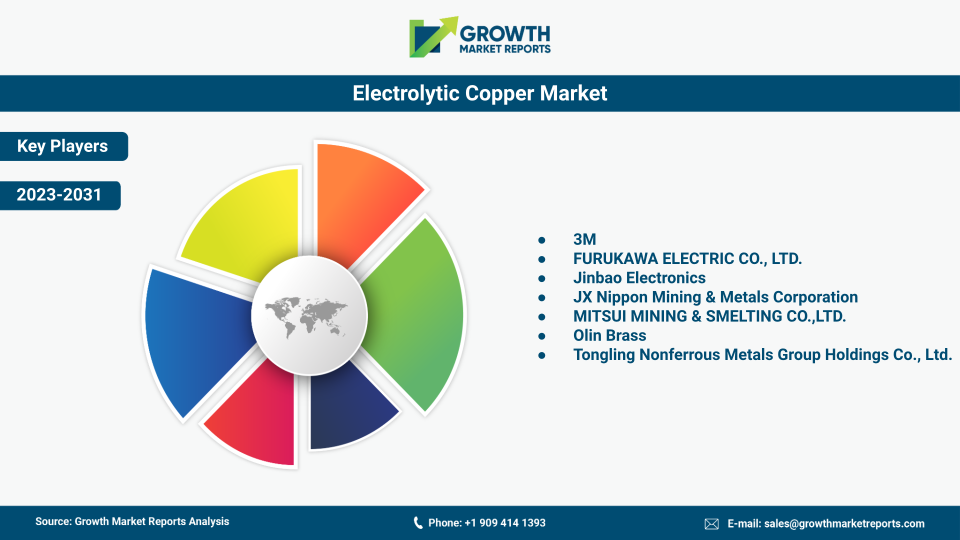

Electrolytic Copper Market Key Players

Frequently Asked Questions

Emerging markets in Asia Pacific, Latin America, and Africa are expected to see significant growth due to rapid urbanization, infrastructure development, and industrialization, driving increased demand for electrolytic copper.

Key players include Jiangxi Copper Corporation, Codelco, Aurubis AG, Sumitomo Metal Mining Co., Ltd., Freeport-McMoRan Inc., Glencore plc, Hindalco Industries Limited, KGHM Polska Miedź S.A., Mitsubishi Materials Corporation, and Southern Copper Corporation.

Opportunities include the global shift to electrification, renewable energy, electric vehicles, and technological advancements in refining. Challenges include raw material price volatility, environmental regulations, and competition from alternative materials like aluminum.

Major end-users include power generation, telecommunication, transportation, consumer goods, and industrial equipment sectors.

Electrolytic copper is mainly used in electrical & electronics, construction, automotive, industrial machinery, and other sectors such as marine, aerospace, and medical devices.

The market is segmented into high purity (above 99.99%) and standard purity (99.90%–99.99%) electrolytic copper. High purity copper is essential for advanced electronics and semiconductors, while standard purity is widely used in construction and general electrical applications.

The main product types are cathodes, wire rods, billets, and others (including sheets, strips, and foils). Cathodes are the largest segment, serving as primary feedstock for downstream copper products.

Asia Pacific leads the market in both production and consumption, followed by North America and Europe. Latin America and the Middle East & Africa are emerging as promising markets due to resource availability and infrastructure development.

Key growth drivers include rising demand for high-conductivity copper in power generation, telecommunication infrastructure, electric vehicles, renewable energy systems, and the construction industry.

As of 2024, the global electrolytic copper market size is USD 86.2 billion and is expected to grow at a CAGR of 5.7% from 2025 to 2033, reaching USD 143.1 billion by 2033.

Table Of Content

Chapter 1 Executive Summary
Chapter 2 Assumptions and Acronyms Used
Chapter 3 Research Methodology
Chapter 4 Electrolytic Copper Market Overview
   4.1 Introduction
      4.1.1 Market Taxonomy
      4.1.2 Market Definition
      4.1.3 Macro-Economic Factors Impacting the Market Growth
   4.2 Electrolytic Copper Market Dynamics
      4.2.1 Market Drivers
      4.2.2 Market Restraints
      4.2.3 Market Opportunity
   4.3 Electrolytic Copper Market - Supply Chain Analysis
      4.3.1 List of Key Suppliers
      4.3.2 List of Key Distributors
      4.3.3 List of Key Consumers
   4.4 Key Forces Shaping the Electrolytic Copper Market
      4.4.1 Bargaining Power of Suppliers
      4.4.2 Bargaining Power of Buyers
      4.4.3 Threat of Substitution
      4.4.4 Threat of New Entrants
      4.4.5 Competitive Rivalry
   4.5 Global Electrolytic Copper Market Size & Forecast, 2023-2032
      4.5.1 Electrolytic Copper Market Size and Y-o-Y Growth
      4.5.2 Electrolytic Copper Market Absolute $ Opportunity

Chapter 5 Global Electrolytic Copper Market Analysis and Forecast By Product Type
   5.1 Introduction
      5.1.1 Key Market Trends & Growth Opportunities By Product Type
      5.1.2 Basis Point Share (BPS) Analysis By Product Type
      5.1.3 Absolute $ Opportunity Assessment By Product Type
   5.2 Electrolytic Copper Market Size Forecast By Product Type
      5.2.1 Cathodes
      5.2.2 Wire Rods
      5.2.3 Billets
      5.2.4 Others
   5.3 Market Attractiveness Analysis By Product Type

Chapter 6 Global Electrolytic Copper Market Analysis and Forecast By Purity Level
   6.1 Introduction
      6.1.1 Key Market Trends & Growth Opportunities By Purity Level
      6.1.2 Basis Point Share (BPS) Analysis By Purity Level
      6.1.3 Absolute $ Opportunity Assessment By Purity Level
   6.2 Electrolytic Copper Market Size Forecast By Purity Level
      6.2.1 High Purity
      6.2.2 Standard Purity
   6.3 Market Attractiveness Analysis By Purity Level

Chapter 7 Global Electrolytic Copper Market Analysis and Forecast By Application
   7.1 Introduction
      7.1.1 Key Market Trends & Growth Opportunities By Application
      7.1.2 Basis Point Share (BPS) Analysis By Application
      7.1.3 Absolute $ Opportunity Assessment By Application
   7.2 Electrolytic Copper Market Size Forecast By Application
      7.2.1 Electrical & Electronics
      7.2.2 Construction
      7.2.3 Automotive
      7.2.4 Industrial Machinery
      7.2.5 Others
   7.3 Market Attractiveness Analysis By Application

Chapter 8 Global Electrolytic Copper Market Analysis and Forecast By End-User
   8.1 Introduction
      8.1.1 Key Market Trends & Growth Opportunities By End-User
      8.1.2 Basis Point Share (BPS) Analysis By End-User
      8.1.3 Absolute $ Opportunity Assessment By End-User
   8.2 Electrolytic Copper Market Size Forecast By End-User
      8.2.1 Power Generation
      8.2.2 Telecommunication
      8.2.3 Transportation
      8.2.4 Consumer Goods
      8.2.5 Others
   8.3 Market Attractiveness Analysis By End-User

Chapter 9 Global Electrolytic Copper Market Analysis and Forecast by Region
   9.1 Introduction
      9.1.1 Key Market Trends & Growth Opportunities By Region
      9.1.2 Basis Point Share (BPS) Analysis By Region
      9.1.3 Absolute $ Opportunity Assessment By Region
   9.2 Electrolytic Copper Market Size Forecast By Region
      9.2.1 North America
      9.2.2 Europe
      9.2.3 Asia Pacific
      9.2.4 Latin America
      9.2.5 Middle East & Africa (MEA)
   9.3 Market Attractiveness Analysis By Region

Chapter 10 Coronavirus Disease (COVID-19) Impact 
   10.1 Introduction 
   10.2 Current & Future Impact Analysis 
   10.3 Economic Impact Analysis 
   10.4 Government Policies 
   10.5 Investment Scenario

Chapter 11 North America Electrolytic Copper Analysis and Forecast
   11.1 Introduction
   11.2 North America Electrolytic Copper Market Size Forecast by Country
      11.2.1 U.S.
      11.2.2 Canada
   11.3 Basis Point Share (BPS) Analysis by Country
   11.4 Absolute $ Opportunity Assessment by Country
   11.5 Market Attractiveness Analysis by Country
   11.6 North America Electrolytic Copper Market Size Forecast By Product Type
      11.6.1 Cathodes
      11.6.2 Wire Rods
      11.6.3 Billets
      11.6.4 Others
   11.7 Basis Point Share (BPS) Analysis By Product Type 
   11.8 Absolute $ Opportunity Assessment By Product Type 
   11.9 Market Attractiveness Analysis By Product Type
   11.10 North America Electrolytic Copper Market Size Forecast By Purity Level
      11.10.1 High Purity
      11.10.2 Standard Purity
   11.11 Basis Point Share (BPS) Analysis By Purity Level 
   11.12 Absolute $ Opportunity Assessment By Purity Level 
   11.13 Market Attractiveness Analysis By Purity Level
   11.14 North America Electrolytic Copper Market Size Forecast By Application
      11.14.1 Electrical & Electronics
      11.14.2 Construction
      11.14.3 Automotive
      11.14.4 Industrial Machinery
      11.14.5 Others
   11.15 Basis Point Share (BPS) Analysis By Application 
   11.16 Absolute $ Opportunity Assessment By Application 
   11.17 Market Attractiveness Analysis By Application
   11.18 North America Electrolytic Copper Market Size Forecast By End-User
      11.18.1 Power Generation
      11.18.2 Telecommunication
      11.18.3 Transportation
      11.18.4 Consumer Goods
      11.18.5 Others
   11.19 Basis Point Share (BPS) Analysis By End-User 
   11.20 Absolute $ Opportunity Assessment By End-User 
   11.21 Market Attractiveness Analysis By End-User

Chapter 12 Europe Electrolytic Copper Analysis and Forecast
   12.1 Introduction
   12.2 Europe Electrolytic Copper Market Size Forecast by Country
      12.2.1 Germany
      12.2.2 France
      12.2.3 Italy
      12.2.4 U.K.
      12.2.5 Spain
      12.2.6 Russia
      12.2.7 Rest of Europe
   12.3 Basis Point Share (BPS) Analysis by Country
   12.4 Absolute $ Opportunity Assessment by Country
   12.5 Market Attractiveness Analysis by Country
   12.6 Europe Electrolytic Copper Market Size Forecast By Product Type
      12.6.1 Cathodes
      12.6.2 Wire Rods
      12.6.3 Billets
      12.6.4 Others
   12.7 Basis Point Share (BPS) Analysis By Product Type 
   12.8 Absolute $ Opportunity Assessment By Product Type 
   12.9 Market Attractiveness Analysis By Product Type
   12.10 Europe Electrolytic Copper Market Size Forecast By Purity Level
      12.10.1 High Purity
      12.10.2 Standard Purity
   12.11 Basis Point Share (BPS) Analysis By Purity Level 
   12.12 Absolute $ Opportunity Assessment By Purity Level 
   12.13 Market Attractiveness Analysis By Purity Level
   12.14 Europe Electrolytic Copper Market Size Forecast By Application
      12.14.1 Electrical & Electronics
      12.14.2 Construction
      12.14.3 Automotive
      12.14.4 Industrial Machinery
      12.14.5 Others
   12.15 Basis Point Share (BPS) Analysis By Application 
   12.16 Absolute $ Opportunity Assessment By Application 
   12.17 Market Attractiveness Analysis By Application
   12.18 Europe Electrolytic Copper Market Size Forecast By End-User
      12.18.1 Power Generation
      12.18.2 Telecommunication
      12.18.3 Transportation
      12.18.4 Consumer Goods
      12.18.5 Others
   12.19 Basis Point Share (BPS) Analysis By End-User 
   12.20 Absolute $ Opportunity Assessment By End-User 
   12.21 Market Attractiveness Analysis By End-User

Chapter 13 Asia Pacific Electrolytic Copper Analysis and Forecast
   13.1 Introduction
   13.2 Asia Pacific Electrolytic Copper Market Size Forecast by Country
      13.2.1 China
      13.2.2 Japan
      13.2.3 South Korea
      13.2.4 India
      13.2.5 Australia
      13.2.6 South East Asia (SEA)
      13.2.7 Rest of Asia Pacific (APAC)
   13.3 Basis Point Share (BPS) Analysis by Country
   13.4 Absolute $ Opportunity Assessment by Country
   13.5 Market Attractiveness Analysis by Country
   13.6 Asia Pacific Electrolytic Copper Market Size Forecast By Product Type
      13.6.1 Cathodes
      13.6.2 Wire Rods
      13.6.3 Billets
      13.6.4 Others
   13.7 Basis Point Share (BPS) Analysis By Product Type 
   13.8 Absolute $ Opportunity Assessment By Product Type 
   13.9 Market Attractiveness Analysis By Product Type
   13.10 Asia Pacific Electrolytic Copper Market Size Forecast By Purity Level
      13.10.1 High Purity
      13.10.2 Standard Purity
   13.11 Basis Point Share (BPS) Analysis By Purity Level 
   13.12 Absolute $ Opportunity Assessment By Purity Level 
   13.13 Market Attractiveness Analysis By Purity Level
   13.14 Asia Pacific Electrolytic Copper Market Size Forecast By Application
      13.14.1 Electrical & Electronics
      13.14.2 Construction
      13.14.3 Automotive
      13.14.4 Industrial Machinery
      13.14.5 Others
   13.15 Basis Point Share (BPS) Analysis By Application 
   13.16 Absolute $ Opportunity Assessment By Application 
   13.17 Market Attractiveness Analysis By Application
   13.18 Asia Pacific Electrolytic Copper Market Size Forecast By End-User
      13.18.1 Power Generation
      13.18.2 Telecommunication
      13.18.3 Transportation
      13.18.4 Consumer Goods
      13.18.5 Others
   13.19 Basis Point Share (BPS) Analysis By End-User 
   13.20 Absolute $ Opportunity Assessment By End-User 
   13.21 Market Attractiveness Analysis By End-User

Chapter 14 Latin America Electrolytic Copper Analysis and Forecast
   14.1 Introduction
   14.2 Latin America Electrolytic Copper Market Size Forecast by Country
      14.2.1 Brazil
      14.2.2 Mexico
      14.2.3 Rest of Latin America (LATAM)
   14.3 Basis Point Share (BPS) Analysis by Country
   14.4 Absolute $ Opportunity Assessment by Country
   14.5 Market Attractiveness Analysis by Country
   14.6 Latin America Electrolytic Copper Market Size Forecast By Product Type
      14.6.1 Cathodes
      14.6.2 Wire Rods
      14.6.3 Billets
      14.6.4 Others
   14.7 Basis Point Share (BPS) Analysis By Product Type 
   14.8 Absolute $ Opportunity Assessment By Product Type 
   14.9 Market Attractiveness Analysis By Product Type
   14.10 Latin America Electrolytic Copper Market Size Forecast By Purity Level
      14.10.1 High Purity
      14.10.2 Standard Purity
   14.11 Basis Point Share (BPS) Analysis By Purity Level 
   14.12 Absolute $ Opportunity Assessment By Purity Level 
   14.13 Market Attractiveness Analysis By Purity Level
   14.14 Latin America Electrolytic Copper Market Size Forecast By Application
      14.14.1 Electrical & Electronics
      14.14.2 Construction
      14.14.3 Automotive
      14.14.4 Industrial Machinery
      14.14.5 Others
   14.15 Basis Point Share (BPS) Analysis By Application 
   14.16 Absolute $ Opportunity Assessment By Application 
   14.17 Market Attractiveness Analysis By Application
   14.18 Latin America Electrolytic Copper Market Size Forecast By End-User
      14.18.1 Power Generation
      14.18.2 Telecommunication
      14.18.3 Transportation
      14.18.4 Consumer Goods
      14.18.5 Others
   14.19 Basis Point Share (BPS) Analysis By End-User 
   14.20 Absolute $ Opportunity Assessment By End-User 
   14.21 Market Attractiveness Analysis By End-User

Chapter 15 Middle East & Africa (MEA) Electrolytic Copper Analysis and Forecast
   15.1 Introduction
   15.2 Middle East & Africa (MEA) Electrolytic Copper Market Size Forecast by Country
      15.2.1 Saudi Arabia
      15.2.2 South Africa
      15.2.3 UAE
      15.2.4 Rest of Middle East & Africa (MEA)
   15.3 Basis Point Share (BPS) Analysis by Country
   15.4 Absolute $ Opportunity Assessment by Country
   15.5 Market Attractiveness Analysis by Country
   15.6 Middle East & Africa (MEA) Electrolytic Copper Market Size Forecast By Product Type
      15.6.1 Cathodes
      15.6.2 Wire Rods
      15.6.3 Billets
      15.6.4 Others
   15.7 Basis Point Share (BPS) Analysis By Product Type 
   15.8 Absolute $ Opportunity Assessment By Product Type 
   15.9 Market Attractiveness Analysis By Product Type
   15.10 Middle East & Africa (MEA) Electrolytic Copper Market Size Forecast By Purity Level
      15.10.1 High Purity
      15.10.2 Standard Purity
   15.11 Basis Point Share (BPS) Analysis By Purity Level 
   15.12 Absolute $ Opportunity Assessment By Purity Level 
   15.13 Market Attractiveness Analysis By Purity Level
   15.14 Middle East & Africa (MEA) Electrolytic Copper Market Size Forecast By Application
      15.14.1 Electrical & Electronics
      15.14.2 Construction
      15.14.3 Automotive
      15.14.4 Industrial Machinery
      15.14.5 Others
   15.15 Basis Point Share (BPS) Analysis By Application 
   15.16 Absolute $ Opportunity Assessment By Application 
   15.17 Market Attractiveness Analysis By Application
   15.18 Middle East & Africa (MEA) Electrolytic Copper Market Size Forecast By End-User
      15.18.1 Power Generation
      15.18.2 Telecommunication
      15.18.3 Transportation
      15.18.4 Consumer Goods
      15.18.5 Others
   15.19 Basis Point Share (BPS) Analysis By End-User 
   15.20 Absolute $ Opportunity Assessment By End-User 
   15.21 Market Attractiveness Analysis By End-User

Chapter 16 Competition Landscape 
   16.1 Electrolytic Copper Market: Competitive Dashboard
   16.2 Global Electrolytic Copper Market: Market Share Analysis, 2023
   16.3 Company Profiles (Details – Overview, Financials, Developments, Strategy) 
      16.3.1 Codelco
Freeport-McMoRan Inc.
Glencore International AG
BHP Group
Aurubis AG
Jiangxi Copper Company Limited
Sumitomo Metal Mining Co., Ltd.
KGHM Polska Miedź S.A.
Grupo México
Mitsubishi Materials Corporation
Hindalco Industries Limited
Southern Copper Corporation
Tongling Nonferrous Metals Group
LS-Nikko Copper Inc.
Boliden Group
Antofagasta plc
Shandong Humon Smelting Co., Ltd.
Yunnan Copper Co., Ltd.
China Nonferrous Metal Mining (Group) Co., Ltd.
JX Nippon Mining & Metals Corporation

Methodology

Our Clients

Nestle SA
FedEx Logistics
Siemens Healthcare
sinopec
General Electric
The John Holland Group
Dassault Aviation
Honda Motor Co. Ltd.