Segments - by Type (Column Assist EPS, Pinion Assist EPS, Rack Assist EPS), by Component (Steering Column, Sensors, Electric Motor, ECU, Others), by Vehicle Type (Passenger Cars, Light Commercial Vehicles, Heavy Commercial Vehicles), by Mechanism (Rigid, Collapsible), by Sales Channel (OEM, Aftermarket)
According to our latest research, the global Electric Power Steering (EPS) market size reached USD 29.8 billion in 2024, with a robust year-on-year growth trajectory. The market is expected to expand at a CAGR of 5.9% during the forecast period, reaching approximately USD 50.1 billion by 2033. This growth is primarily attributed to the increasing demand for advanced automotive safety and comfort technologies, alongside stringent government regulations focused on fuel efficiency and reduced emissions. As per our comprehensive analysis, the EPS market continues to evolve rapidly, driven by technological advancements and a shift towards electric and hybrid vehicles.
One of the most significant growth factors propelling the Electric Power Steering (EPS) market is the global automotive industryÂ’s ongoing transition from traditional hydraulic steering systems to more energy-efficient and responsive EPS solutions. Automakers are increasingly adopting EPS due to its ability to reduce vehicle weight, improve fuel economy, and provide enhanced steering precision. The integration of advanced driver-assistance systems (ADAS) is further fueling EPS adoption, as these systems rely on precise and responsive steering control. Additionally, the rising consumer preference for vehicles equipped with advanced comfort and safety features is driving automakers to incorporate EPS across a broader range of vehicle models, including both passenger and commercial vehicles.
Another key driver for the EPS market is the expanding electric and hybrid vehicle segment. As global environmental concerns intensify and regulatory bodies impose stricter emission norms, the automotive industry is witnessing a surge in the production and sales of electric vehicles (EVs) and hybrid vehicles. EPS systems, being inherently more compatible with the architecture of EVs compared to hydraulic systems, are becoming a standard feature in this vehicle category. The reduced mechanical complexity, lower maintenance requirements, and improved energy efficiency of EPS systems make them particularly attractive for EV manufacturers. This paradigm shift towards electrification is expected to continue fueling EPS market growth throughout the forecast period.
Furthermore, advancements in EPS technology, such as the integration of sensor-based feedback mechanisms and the development of steer-by-wire systems, are enhancing the performance and reliability of EPS solutions. These innovations are not only improving the driving experience by offering superior handling and maneuverability but are also enabling new functionalities such as lane-keeping assist and automated parking. The growing focus on vehicle safety and the increasing prevalence of semi-autonomous and autonomous vehicles are expected to drive further investments in EPS technology. As a result, manufacturers are actively investing in research and development to deliver next-generation EPS systems that can meet the evolving demands of the automotive market.
The shift towards Automotive Electric Power Steering is a significant trend in the automotive industry, driven by the need for more efficient and responsive steering systems. Unlike traditional hydraulic systems, electric power steering offers numerous advantages, including reduced energy consumption and enhanced precision. This transition is particularly beneficial for electric and hybrid vehicles, where energy efficiency is paramount. As automakers continue to innovate, the integration of Automotive Electric Power Steering systems is becoming more prevalent, supporting the industry's broader goals of sustainability and performance enhancement. This trend is expected to accelerate as manufacturers seek to meet consumer demand for vehicles that offer superior driving dynamics and reduced environmental impact.
From a regional perspective, Asia Pacific remains the dominant market for Electric Power Steering (EPS), accounting for the largest share of global revenues in 2024. This leadership is supported by the regionÂ’s strong automotive manufacturing base, particularly in countries like China, Japan, and South Korea. North America and Europe also represent significant markets, driven by high adoption rates of advanced automotive technologies and stringent regulatory frameworks. Meanwhile, emerging markets in Latin America and the Middle East & Africa are gradually witnessing increased EPS adoption, supported by rising vehicle production and growing consumer awareness regarding vehicle safety and efficiency. The regional outlook for the EPS market is characterized by dynamic growth patterns, with Asia Pacific poised to maintain its leadership position throughout the forecast period.
The Electric Power Steering (EPS) market can be segmented by type into Column Assist EPS (C-EPS), Pinion Assist EPS (P-EPS), and Rack Assist EPS (R-EPS). Each of these types serves unique applications and vehicle categories, contributing distinctively to the overall market dynamics. Column Assist EPS is widely used in small and compact vehicles due to its lightweight design and cost-effectiveness. This type of EPS is mounted on the steering column and provides direct assistance to the driver, making it a preferred choice for passenger cars, especially in regions where cost sensitivity is high. The increasing production of small cars in emerging economies is expected to bolster the demand for C-EPS systems over the next decade.
Pinion Assist EPS, on the other hand, is commonly found in mid-sized vehicles and offers a balanced combination of performance and efficiency. This system is mounted on the steering pinion and provides assistance directly to the steering rack, resulting in improved steering feel and responsiveness. Automakers are increasingly integrating P-EPS in their vehicle lineups to enhance driving comfort and safety, particularly in urban environments where maneuverability is crucial. The growing demand for mid-sized sedans and crossover vehicles in both developed and developing markets is expected to drive the adoption of P-EPS solutions.
Rack Assist EPS represents the most advanced and robust type of EPS, typically used in larger vehicles such as SUVs, light commercial vehicles, and heavy commercial vehicles. R-EPS systems are mounted directly on the steering rack and offer superior assistance, making them ideal for vehicles that require higher steering loads. The increasing popularity of SUVs and the rising demand for commercial vehicles equipped with advanced safety and comfort features are fueling the growth of the R-EPS segment. Furthermore, as vehicle manufacturers strive to enhance the driving experience and meet regulatory requirements, the adoption of R-EPS is expected to witness substantial growth during the forecast period.
The type-based segmentation of the EPS market underscores the importance of tailored solutions that cater to the specific requirements of different vehicle categories. With continuous advancements in EPS technology, manufacturers are focusing on developing modular and scalable systems that can be easily adapted across various vehicle platforms. This trend is expected to drive innovation and foster greater competition among EPS suppliers, ultimately benefiting end-users through improved product offerings and enhanced value propositions.
Electric Power Steering Control Modules play a crucial role in the functionality of modern steering systems. These modules are responsible for processing input from various sensors and determining the appropriate level of assistance needed for the steering mechanism. As vehicles become more sophisticated, the demand for advanced control modules that can support complex functionalities such as variable assist and integration with ADAS features is increasing. This technological evolution is driving manufacturers to invest in the development of more intelligent and adaptable control modules, which are essential for ensuring the seamless operation of Electric Power Steering systems across a wide range of vehicle types.
| Attributes | Details |
| Report Title | Electric Power Steering (EPS) Market Research Report 2033 |
| By Type | Column Assist EPS, Pinion Assist EPS, Rack Assist EPS |
| By Component | Steering Column, Sensors, Electric Motor, ECU, Others |
| By Vehicle Type | Passenger Cars, Light Commercial Vehicles, Heavy Commercial Vehicles |
| By Mechanism | Rigid, Collapsible |
| By Sales Channel | OEM, Aftermarket |
| Regions Covered | North America, Europe, APAC, Latin America, MEA |
| Base Year | 2024 |
| Historic Data | 2018-2023 |
| Forecast Period | 2025-2033 |
| Number of Pages | 274 |
| Number of Tables & Figures | 311 |
| Customization Available | Yes, the report can be customized as per your need. |
The Electric Power Steering (EPS) market is further segmented by component, including the steering column, sensors, electric motor, electronic control unit (ECU), and other related components. The steering column serves as the primary interface between the driver and the steering mechanism, playing a crucial role in transmitting steering input to the wheels. Recent advancements in materials and design have enhanced the strength and durability of steering columns, contributing to improved safety and performance. As automakers continue to prioritize lightweighting and crash safety, the demand for advanced steering columns is expected to rise steadily.
Sensors are another critical component in EPS systems, providing real-time feedback on parameters such as steering angle, torque, and vehicle speed. These sensors enable precise control of the steering assist function, ensuring optimal performance under varying driving conditions. The integration of advanced sensor technologies, including magnetic and optical sensors, is enhancing the accuracy and reliability of EPS systems. As vehicles become increasingly equipped with ADAS features, the role of sensors in EPS is expected to become even more prominent, driving further innovation in this segment.
The electric motor is the heart of the EPS system, responsible for generating the necessary torque to assist the driverÂ’s steering input. Recent developments in brushless DC motors and high-efficiency power electronics have significantly improved the performance and energy efficiency of EPS motors. As the automotive industry shifts towards electrification, the demand for high-performance electric motors capable of delivering precise and responsive steering assistance is expected to grow. Manufacturers are investing in the development of compact, lightweight, and energy-efficient motors to meet the evolving needs of the market.
The electronic control unit (ECU) acts as the brain of the EPS system, processing input from sensors and determining the appropriate level of steering assistance. Advances in microcontroller technology and software algorithms have enabled the development of sophisticated ECUs capable of supporting complex functionalities such as variable assist, active return control, and integration with ADAS features. The increasing complexity of modern vehicles and the growing emphasis on safety and reliability are driving the demand for advanced ECUs in EPS applications. Other components, including wiring harnesses, connectors, and mounting brackets, also play a vital role in ensuring the seamless operation of EPS systems.
Segmentation by vehicle type reveals distinct trends and growth opportunities within the Electric Power Steering (EPS) market. Passenger cars represent the largest segment, accounting for a significant share of global EPS installations. The widespread adoption of EPS in passenger vehicles is driven by the growing demand for comfort, safety, and fuel efficiency among consumers. Automakers are increasingly equipping their passenger car models with advanced EPS systems to differentiate their offerings and comply with regulatory requirements. The rising popularity of compact and mid-sized cars, particularly in emerging markets, is expected to further boost the demand for EPS in this segment.
The advancement of Electric Power Steering Electronics is pivotal in enhancing the overall performance and reliability of steering systems. These electronics are integral to the operation of EPS systems, enabling precise control and responsiveness. Recent innovations in electronic components, such as high-efficiency power electronics and advanced microcontrollers, have significantly improved the capabilities of EPS systems. As the automotive industry continues to embrace electrification, the role of Electric Power Steering Electronics becomes increasingly important, ensuring that vehicles can deliver the desired driving experience while maintaining energy efficiency and safety. This focus on electronic innovation is set to drive further growth in the EPS market.
Light commercial vehicles (LCVs) constitute another important segment within the EPS market. The adoption of EPS in LCVs is being driven by the need for improved maneuverability, reduced steering effort, and enhanced driver comfort, especially in urban delivery and logistics applications. As e-commerce and last-mile delivery services continue to expand globally, the demand for LCVs equipped with advanced steering systems is expected to rise. Manufacturers are responding to this trend by offering EPS solutions tailored to the specific requirements of commercial vehicle operators, including enhanced durability and load-carrying capability.
Heavy commercial vehicles (HCVs), including trucks and buses, are also witnessing increased adoption of EPS technology. While hydraulic steering systems have traditionally dominated this segment, the advantages of EPS—such as reduced maintenance, improved fuel efficiency, and compatibility with advanced safety features—are driving a gradual shift towards electric solutions. The growing emphasis on reducing the total cost of ownership and enhancing operational efficiency in the commercial vehicle sector is expected to accelerate the adoption of EPS in HCVs over the coming years. Additionally, regulatory mandates related to vehicle emissions and safety are prompting fleet operators to invest in modern steering technologies.
The vehicle type-based segmentation highlights the diverse application landscape of EPS technology across different automotive categories. As vehicle manufacturers strive to address the unique needs of various customer segments, the development of customized EPS solutions is becoming increasingly important. This trend is expected to drive further innovation and specialization within the EPS market, enabling suppliers to capture new growth opportunities and expand their market presence.
The Electric Power Steering (EPS) market can also be segmented by mechanism into rigid and collapsible systems. Rigid EPS mechanisms are characterized by their robust construction and are typically used in applications where structural integrity and durability are paramount. These systems are commonly found in commercial vehicles and heavy-duty applications, where the steering system must withstand high loads and harsh operating conditions. The demand for rigid EPS systems is expected to remain strong, particularly in markets where commercial vehicle production is on the rise.
Collapsible EPS mechanisms, on the other hand, are designed to enhance occupant safety by absorbing impact energy in the event of a collision. These systems are widely used in passenger cars and light commercial vehicles, where crash safety and occupant protection are critical considerations. The increasing focus on vehicle safety standards and the growing adoption of advanced safety features are driving the demand for collapsible EPS systems. Automakers are investing in the development of innovative collapsible steering mechanisms that offer improved energy absorption and reduced risk of injury to occupants.
The choice between rigid and collapsible EPS mechanisms is influenced by a variety of factors, including vehicle type, intended application, and regulatory requirements. Manufacturers are increasingly offering a range of EPS solutions to cater to the diverse needs of their customers, enabling them to optimize safety, performance, and cost-effectiveness. The ongoing evolution of vehicle safety standards and the growing emphasis on crashworthiness are expected to drive continued innovation in EPS mechanism design.
As the automotive industry continues to prioritize safety and performance, the development of advanced EPS mechanisms that combine the benefits of rigidity and collapsibility is gaining traction. These hybrid systems offer enhanced structural integrity while providing effective energy absorption in the event of a collision. The growing adoption of such innovative solutions is expected to create new growth opportunities for EPS suppliers and contribute to the overall expansion of the market.
The Electric Power Steering (EPS) market is segmented by sales channel into Original Equipment Manufacturer (OEM) and aftermarket segments. The OEM segment dominates the market, accounting for the majority of EPS installations globally. Automakers are increasingly integrating EPS systems into new vehicle models as standard or optional features, driven by consumer demand for advanced safety and comfort technologies. The strong focus on vehicle differentiation and compliance with regulatory standards is prompting OEMs to collaborate closely with EPS suppliers to develop customized solutions that meet the specific requirements of their vehicle platforms.
The aftermarket segment, while smaller in comparison to the OEM segment, represents a significant growth opportunity for EPS suppliers. As the global vehicle parc continues to expand and vehicles age, the demand for replacement and retrofit EPS systems is expected to rise. The increasing adoption of EPS in older vehicle models, particularly in regions with large fleets of legacy vehicles, is driving growth in the aftermarket segment. Suppliers are responding to this trend by offering a wide range of aftermarket EPS solutions, including remanufactured and upgrade kits that enable vehicle owners to benefit from the latest advancements in steering technology.
The sales channel-based segmentation underscores the importance of a dual-pronged approach to market development, with suppliers focusing on both OEM partnerships and aftermarket distribution networks. The ability to offer comprehensive support and service solutions is becoming increasingly important, as customers seek reliable and cost-effective options for EPS installation and maintenance. The growing emphasis on customer experience and aftersales support is expected to drive further investment in aftermarket capabilities, enabling suppliers to capture additional value and strengthen their market position.
As the EPS market continues to mature, the distinction between OEM and aftermarket channels is becoming less pronounced, with suppliers increasingly offering integrated solutions that cater to the needs of both segments. This trend is expected to drive greater collaboration and innovation across the value chain, resulting in improved product offerings and enhanced customer satisfaction.
The Electric Power Steering (EPS) market presents numerous opportunities for growth and innovation, particularly in the context of the automotive industryÂ’s ongoing transformation. One of the most promising opportunities lies in the development of advanced EPS systems that support semi-autonomous and autonomous driving functionalities. As the adoption of ADAS and autonomous vehicles accelerates, the demand for highly responsive and reliable steering systems is expected to surge. EPS suppliers that invest in the development of steer-by-wire and integrated control systems will be well-positioned to capitalize on this trend, capturing new revenue streams and establishing themselves as key enablers of next-generation mobility solutions.
Another significant opportunity for EPS market participants is the expansion into emerging markets, where vehicle production and sales are growing rapidly. The increasing urbanization, rising disposable incomes, and growing awareness of vehicle safety and comfort are driving demand for advanced automotive technologies in regions such as Asia Pacific, Latin America, and the Middle East & Africa. By tailoring their product offerings to meet the specific needs of these markets and establishing strong local partnerships, EPS suppliers can unlock new growth opportunities and expand their global footprint. Furthermore, the ongoing electrification of the automotive industry presents a unique opportunity for EPS suppliers to develop solutions that are optimized for electric and hybrid vehicles, further enhancing their competitive advantage.
Despite the numerous opportunities, the EPS market also faces several challenges and threats that could impact its growth trajectory. One of the primary restraining factors is the high cost associated with advanced EPS systems, particularly those equipped with sophisticated sensors and control units. The need for continuous investment in research and development, coupled with the pressure to deliver cost-competitive solutions, poses a significant challenge for suppliers. Additionally, the complexity of integrating EPS systems with other vehicle subsystems, such as ADAS and powertrain controls, can create technical and operational challenges. Suppliers must navigate these complexities while ensuring compliance with stringent safety and regulatory standards, which can add to the overall cost and time-to-market for new products.
The Asia Pacific region remains the largest and fastest-growing market for Electric Power Steering (EPS), accounting for approximately 43% of global revenues in 2024, which translates to around USD 12.8 billion. This dominance is underpinned by the region’s robust automotive manufacturing ecosystem, particularly in China, Japan, South Korea, and India. The rapid expansion of the middle class, increasing vehicle ownership rates, and the push towards electric mobility are driving significant investments in automotive technology across Asia Pacific. The region is expected to maintain a leading position through 2033, supported by a CAGR of 6.2%—the highest among all regions—fueled by ongoing urbanization and government incentives for green mobility.
North America is another key market for EPS, contributing approximately USD 7.6 billion in 2024, or about 25.5% of global revenues. The regionÂ’s strong focus on safety, comfort, and advanced automotive technologies has driven widespread adoption of EPS systems in both passenger and commercial vehicles. Stringent regulatory standards regarding vehicle emissions and fuel efficiency, coupled with the growing popularity of electric and hybrid vehicles, are further boosting demand for EPS solutions. The United States, in particular, is witnessing significant investments in research and development, with automakers and suppliers collaborating to deliver next-generation steering systems that support autonomous driving and connected vehicle functionalities.
Europe represents the third-largest market, with revenues reaching USD 6.5 billion in 2024, accounting for nearly 21.8% of the global EPS market. The regionÂ’s leadership in automotive innovation, combined with strict regulatory frameworks and a strong emphasis on vehicle safety, has driven high adoption rates of EPS technology. The presence of leading automotive OEMs and a well-established supplier network further supports market growth in Europe. Meanwhile, Latin America and the Middle East & Africa collectively account for the remaining USD 2.9 billion in revenues, with growth in these regions driven by rising vehicle production, increasing consumer awareness, and gradual adoption of advanced steering technologies. While their market shares are smaller, both regions present significant long-term potential as automotive markets mature and regulatory standards evolve.
The competitive landscape of the Electric Power Steering (EPS) market is characterized by intense rivalry among a diverse group of global and regional players. Leading EPS manufacturers are investing heavily in research and development to introduce innovative products that offer superior performance, reliability, and integration capabilities. The market is marked by a high degree of technological advancement, with companies focusing on the development of advanced sensor technologies, high-efficiency electric motors, and intelligent control systems. Strategic collaborations, mergers and acquisitions, and partnerships with automotive OEMs are common strategies employed by key players to strengthen their market positions and expand their product portfolios.
The trend towards vehicle electrification and the integration of ADAS and autonomous driving functionalities are creating new opportunities and challenges for EPS suppliers. Companies are increasingly focusing on the development of steer-by-wire systems and other next-generation steering solutions that can support the advanced requirements of modern vehicles. The ability to offer scalable and modular EPS platforms that can be easily adapted to different vehicle architectures is becoming a key differentiator in the market. Furthermore, the growing importance of cybersecurity and data privacy in connected vehicles is prompting suppliers to invest in the development of secure and resilient EPS systems.
The global EPS market is also witnessing the emergence of new entrants, particularly from the Asia Pacific region, where local suppliers are leveraging their proximity to major automotive manufacturing hubs to gain a competitive edge. These companies are focusing on cost-effective production and rapid innovation to capture market share, particularly in the entry-level and mid-range vehicle segments. Meanwhile, established players in North America and Europe are leveraging their technological expertise and strong relationships with OEMs to maintain their leadership positions in the premium and high-performance vehicle segments.
Some of the major companies operating in the Electric Power Steering (EPS) market include Robert Bosch GmbH, JTEKT Corporation, Nexteer Automotive, ZF Friedrichshafen AG, NSK Ltd., Showa Corporation, Hyundai Mobis, Mando Corporation, Thyssenkrupp AG, and Mitsubishi Electric Corporation. Robert Bosch GmbH is recognized for its comprehensive portfolio of EPS solutions and its strong focus on innovation and quality. JTEKT Corporation is a leading supplier of advanced steering systems, with a particular emphasis on the integration of sensor technologies and electronic control units. Nexteer Automotive is known for its expertise in electric and automated steering systems, with a strong presence in both OEM and aftermarket segments.
ZF Friedrichshafen AG and NSK Ltd. are also prominent players, with a strong focus on research and development and a broad product offering that caters to a wide range of vehicle types and applications. Showa Corporation and Hyundai Mobis are leveraging their strong relationships with leading automotive OEMs to drive growth in the Asia Pacific market, while Mando Corporation and Thyssenkrupp AG are focusing on the development of innovative EPS solutions for commercial vehicles and heavy-duty applications. Mitsubishi Electric Corporation is recognized for its advanced electric motor and control technologies, which are integral to the performance and reliability of modern EPS systems. Collectively, these companies are shaping the future of the EPS market through continuous innovation, strategic partnerships, and a relentless focus on quality and customer satisfaction.
The Electric Power Steering (EPS) market has been segmented on the basis of
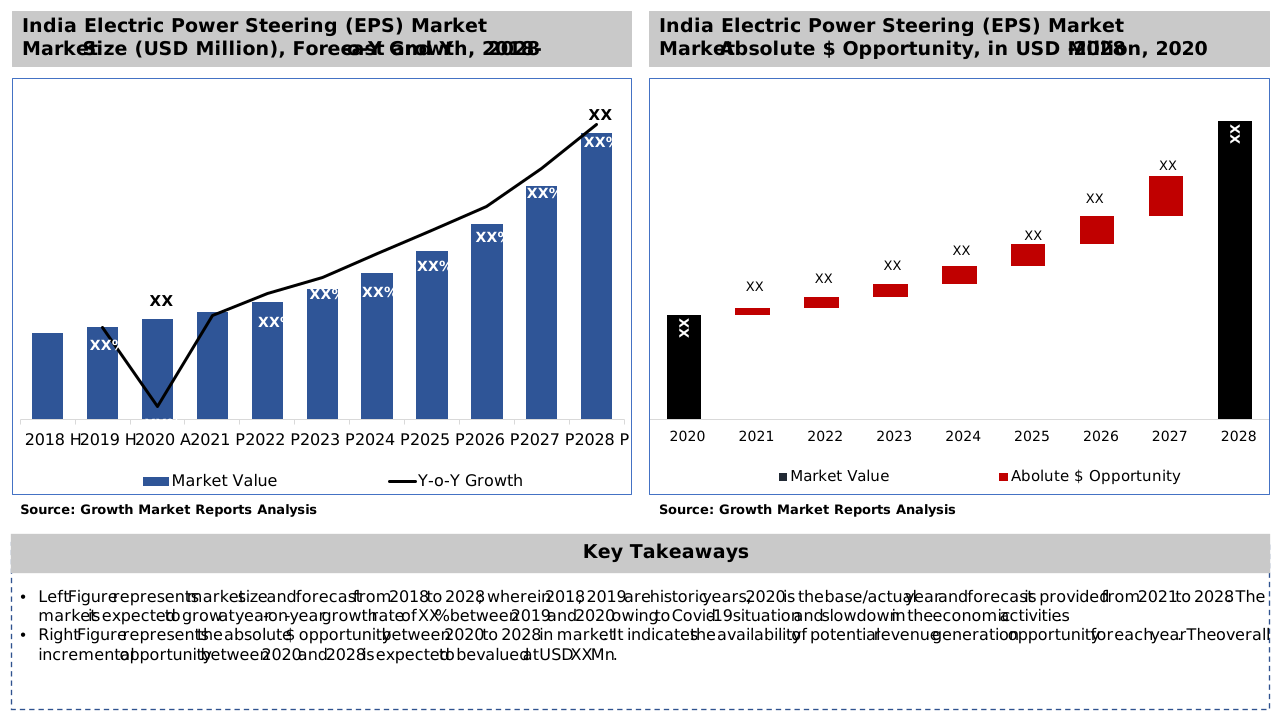
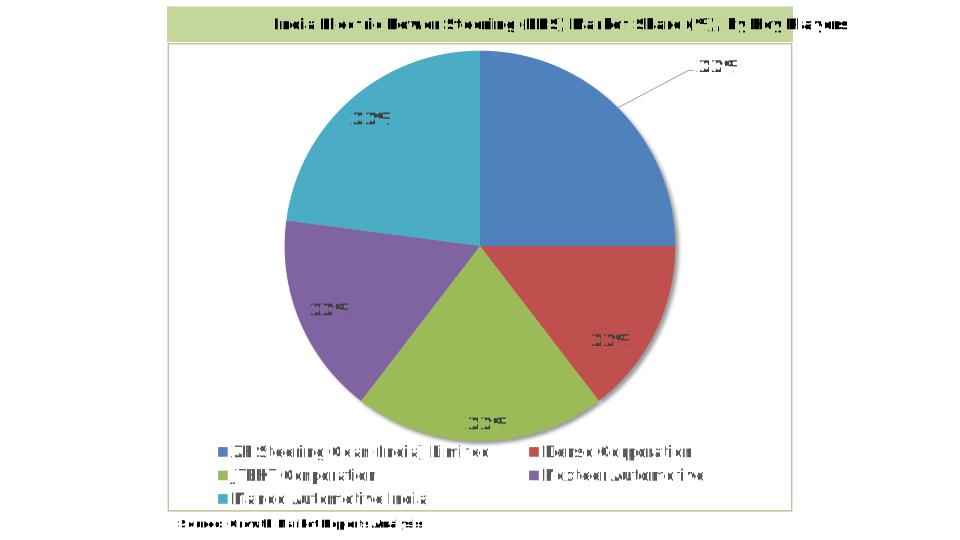
Key players competing in the India electric power steering (EPS) market are ZF Steering Gear (India) Limited; Denso Corporation; JTEKT Corporation; Nexteer Automotive; and Mando Automotive India. These are major player in India and they are planning to continue to expand their business to capture the growing demand for EPS in the country.
In March 2019 , Nexteer Automotive stated that it produced 60 million EPS devices throughout the world. This EPS system improves fuel economy by more than 5% and reduces CO2 emissions by more than 7% per km.
Opportunities include the development of EPS for autonomous vehicles, expansion into emerging markets, and solutions for electric/hybrid vehicles. Challenges involve high costs of advanced systems, integration complexity with other vehicle subsystems, and compliance with safety regulations.
Key companies include Robert Bosch GmbH, JTEKT Corporation, Nexteer Automotive, ZF Friedrichshafen AG, NSK Ltd., Showa Corporation, Hyundai Mobis, Mando Corporation, Thyssenkrupp AG, and Mitsubishi Electric Corporation.
Recent advancements include sensor-based feedback mechanisms, steer-by-wire systems, improved brushless DC motors, advanced ECUs, and integration with ADAS features like lane-keeping assist and automated parking.
EPS systems are sold through Original Equipment Manufacturer (OEM) channels, which dominate the market, and the aftermarket segment, which is growing due to the need for replacement and retrofit solutions in older vehicles.
Major EPS components include the steering column, sensors, electric motor, electronic control unit (ECU), and other parts like wiring harnesses and connectors. Each plays a crucial role in ensuring precise, safe, and efficient steering assistance.
EPS systems are used in passenger cars, light commercial vehicles (LCVs), and heavy commercial vehicles (HCVs). Passenger cars represent the largest segment, while LCVs and HCVs are seeing increased adoption due to the need for maneuverability, comfort, and efficiency.
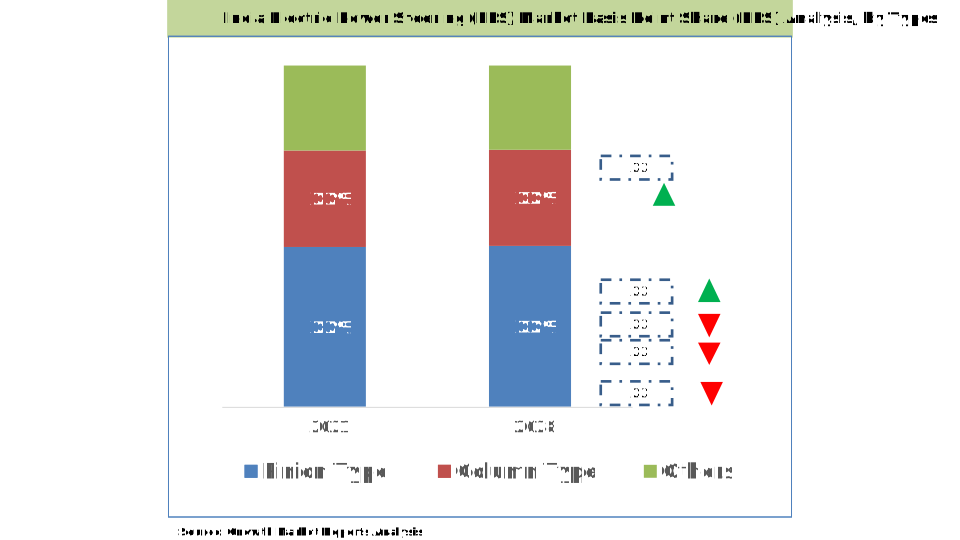
The EPS market is segmented into Column Assist EPS (C-EPS) for small vehicles, Pinion Assist EPS (P-EPS) for mid-sized vehicles, and Rack Assist EPS (R-EPS) for larger vehicles like SUVs and commercial vehicles. Each type serves unique vehicle categories and performance needs.
Asia Pacific is the dominant region, accounting for about 43% of global revenues in 2024, thanks to its strong automotive manufacturing base in countries like China, Japan, and South Korea. North America and Europe also have significant shares due to advanced automotive technology adoption and strict regulatory standards.
Key growth drivers include the automotive industry's shift from hydraulic to electric steering systems, rising adoption of electric and hybrid vehicles, integration of advanced driver-assistance systems (ADAS), and increasing consumer demand for safety and comfort features.
The global Electric Power Steering (EPS) market reached USD 29.8 billion in 2024 and is projected to grow at a CAGR of 5.9%, reaching approximately USD 50.1 billion by 2033, driven by demand for advanced automotive safety, comfort technologies, and stricter fuel efficiency regulations.