Segments - by Type (Column Assist Type, Pinion Assist Type, Rack Assist Type), by Component (Steering Column, Sensors, Electric Motor, ECU, Others), by Vehicle Type (Passenger Cars, Light Commercial Vehicles, Heavy Commercial Vehicles), by Mechanism (Rigid, Collapsible), by Sales Channel (OEM, Aftermarket)
This report is updated with the latest market data and insights as of June 2026. Base year: 2025 | Forecast period: 2026-2034
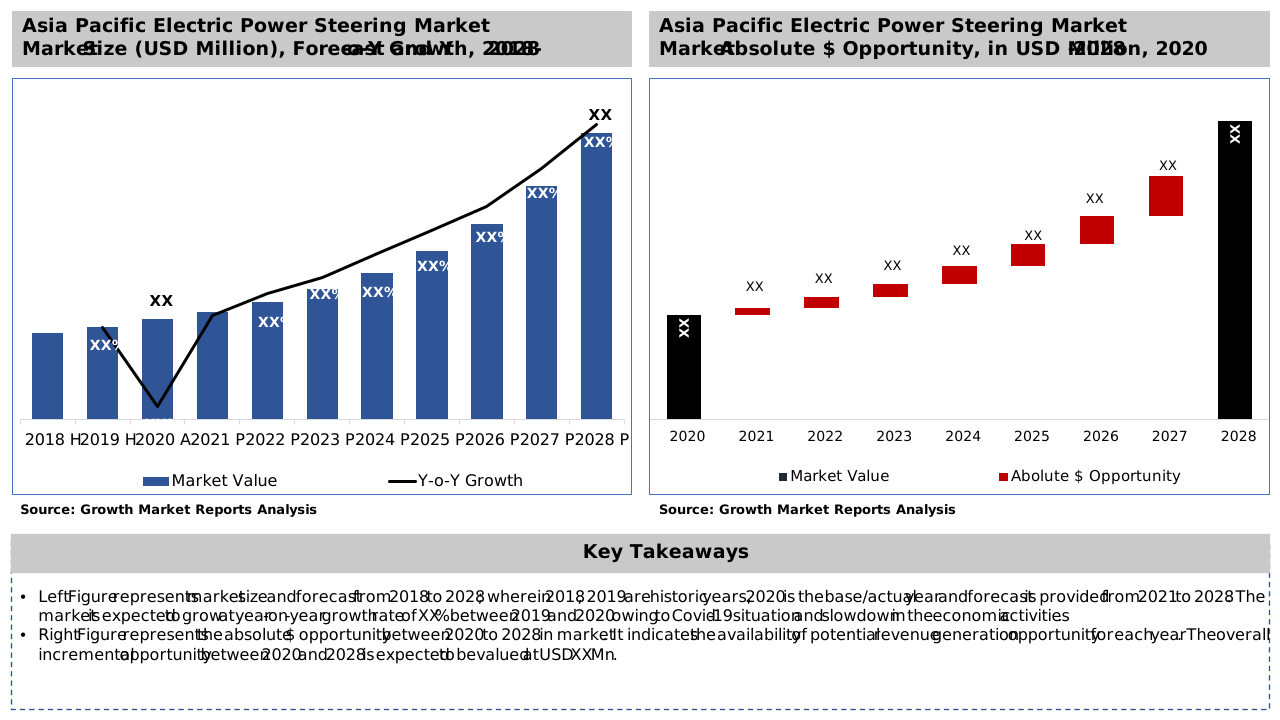
According to our latest research, the global Electric Power Steering (EPS) market size reached USD 31.8 billion in 2025, demonstrating robust expansion driven by the automotive industry's ongoing transition toward advanced vehicle technologies and electrification. The market is poised for significant growth, projected to attain USD 57.4 billion by 2034 at a compelling CAGR of 6.8% during the forecast period of 2026 to 2034. This growth trajectory is underpinned by the increasing integration of EPS systems in both passenger and commercial vehicles, the emphasis on vehicle safety and fuel efficiency, and the global push for reduced carbon emissions.
A primary growth factor for the Electric Power Steering market is the automotive sector's rapid adoption of advanced driver assistance systems (ADAS) and electrification technologies. As automakers strive to enhance vehicle safety, maneuverability, and driver comfort, EPS systems have become a preferred choice over traditional hydraulic steering due to their energy efficiency, lightweight construction, and integration capabilities with modern electronic safety features. The proliferation of battery electric vehicles (BEVs) and hybrid electric vehicles (HEVs), where EPS is a standard feature, further accelerates demand. Additionally, stringent government regulations aimed at reducing vehicular emissions and improving fuel economy are compelling manufacturers to transition from hydraulic to electric steering systems, thus fueling market expansion.
Another significant driver is the surge in global vehicle production, especially in emerging economies such as China, India, and Brazil. These regions are witnessing rapid urbanization, rising disposable incomes, and increasing consumer preference for technologically advanced vehicles. The growing awareness about the benefits of electric power steering systems, including reduced steering effort, enhanced precision, and improved driving experience, is encouraging both OEMs and aftermarket players to invest in EPS solutions. Furthermore, the automotive industry's focus on lightweighting vehicles to meet emission norms is boosting the adoption of EPS, which is substantially lighter than hydraulic alternatives, contributing to measurable fuel economy improvements across all vehicle classes.
Technological advancements in sensor integration, electric motors, and electronic control units (ECUs) are also propelling the Electric Power Steering market forward. The development of steer-by-wire technology, which eliminates mechanical linkages in favor of electronic controls, is revolutionizing steering systems and paving the way for autonomous driving applications. Innovations in EPS components, such as high-resolution torque sensors and advanced microcontrollers, are enabling precise control, real-time diagnostics, and enhanced safety features. These advancements are not only improving system reliability and performance but are also making EPS systems more affordable and accessible across various vehicle segments as production volumes scale globally.
From a regional perspective, Asia Pacific dominates the global Electric Power Steering market, accounting for the largest share in 2025 due to the region's massive automotive manufacturing base and high vehicle sales volume. North America and Europe also represent significant markets, driven by early adoption of advanced automotive technologies and stringent emission regulations. The Middle East and Africa and Latin America are emerging as promising markets with increasing automotive investments and a growing demand for fuel-efficient vehicles. The regional landscape is characterized by a mix of established players and new entrants, fostering innovation and competitive pricing across the EPS value chain.
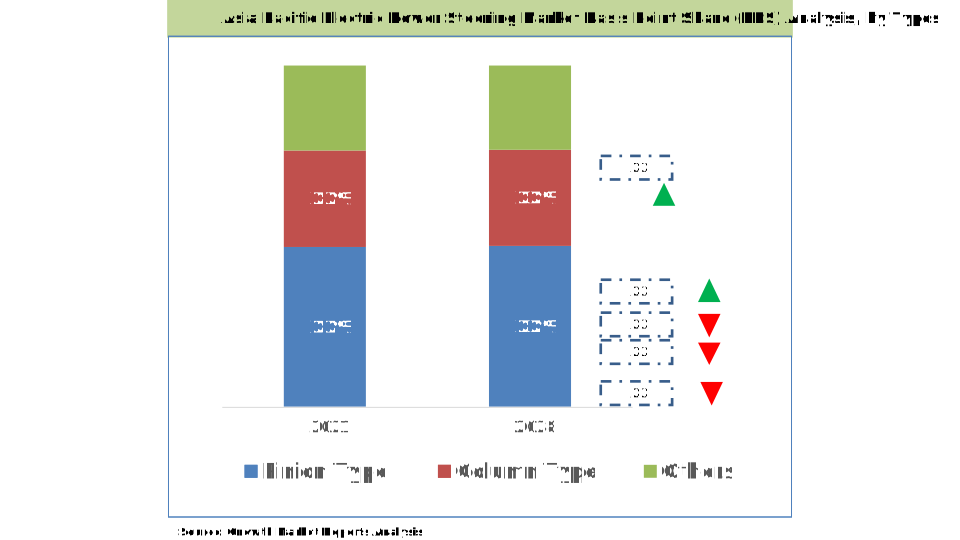
The Electric Power Steering market is segmented by type into Column Assist Type, Pinion Assist Type, and Rack Assist Type, each catering to distinct vehicle architectures and performance requirements. Column Assist Type EPS, commonly used in compact and mid-sized passenger cars, offers cost-effectiveness and compact design, making it ideal for urban vehicles where space efficiency is paramount. Its integration with the steering column allows for straightforward installation and maintenance, contributing to its widespread adoption in entry-level vehicles. With approximately 38.5% of the global market share in 2025, this segment remains the most widely deployed EPS configuration, particularly across high-volume markets in Asia Pacific and Latin America.
Pinion Assist Type EPS systems, positioned directly on the steering rack, provide a balance between compactness and steering precision. This type is gaining traction in mid-sized sedans and light commercial vehicles, where a more direct steering response is desired. The growing popularity of SUVs and crossovers, which require robust and responsive steering systems, is further driving demand for Pinion Assist Type EPS. Automakers are leveraging advancements in sensor technology and electric motor efficiency to refine pinion assist systems, ensuring they meet evolving safety standards and consumer expectations for smooth, controlled handling across diverse road conditions.
Rack Assist Type EPS, recognized for its superior performance and ability to handle higher steering loads, is predominantly used in larger vehicles such as premium sedans, SUVs, and commercial vehicles. Holding approximately 34.5% of the market in 2025, its direct connection to the steering rack allows for precise torque application, making it suitable for vehicles that demand superior stability and handling characteristics. The increasing adoption of Rack Assist Type EPS in high-performance and luxury vehicles underscores the automotive industry's commitment to safety, comfort, and driving dynamics. Continuous innovation in rack assist technology, including the integration of advanced ECUs and high-torque electric motors, is expanding its applicability across a broader range of vehicle platforms.
The evolution of EPS types is closely linked to the automotive industry's focus on modularity and scalability. Automakers are seeking flexible EPS solutions that can be adapted across multiple vehicle platforms, reducing development costs and time-to-market. This trend is driving the development of hybrid EPS architectures that combine features of column, pinion, and rack assist designs to deliver optimal performance for specific vehicle segments. As the market matures through the 2026-2034 forecast period, competition among EPS types will intensify, with manufacturers striving to offer systems that deliver the best balance of cost, performance, and integration capability for both combustion and electric drivetrains.
| Attributes | Details |
| Report Title | Electric Power Steering Market Research Report 2034 |
| By Type | Column Assist Type, Pinion Assist Type, Rack Assist Type |
| By Component | Steering Column, Sensors, Electric Motor, ECU, Others |
| By Vehicle Type | Passenger Cars, Light Commercial Vehicles, Heavy Commercial Vehicles |
| By Mechanism | Rigid, Collapsible |
| By Sales Channel | OEM, Aftermarket |
| Regions Covered | North America, Europe, APAC, Latin America, MEA |
| Countries Covered | North America (United States, Canada), Europe (Germany, France, Italy, United Kingdom, Spain, Russia, Rest of Europe), Asia Pacific (China, Japan, South Korea, India, Australia, South East Asia (SEA), Rest of Asia Pacific), Latin America (Mexico, Brazil, Rest of Latin America), Middle East & Africa (Saudi Arabia, South Africa, United Arab Emirates, Rest of Middle East & Africa) |
| Base Year | 2025 |
| Historic Data | 2019-2024 |
| Forecast Period | 2026-2034 |
| Number of Pages | 250 |
| Number of Tables & Figures | 334 |
| Customization Available | Yes, the report can be customized as per your need. |
The Electric Power Steering market's component segmentation includes Steering Column, Sensors, Electric Motor, ECU, and Others, each playing a critical role in system functionality and performance. The Steering Column serves as the primary interface between the driver and the vehicle's steering system, transmitting input to the EPS mechanism. Innovations in steering column design, such as collapsible and tilt-and-telescoping adjustable configurations, are enhancing driver safety and ergonomic comfort. The integration of high-resolution torque and angle sensors within the steering column is enabling real-time data acquisition, facilitating precise control and predictive diagnostics for modern EPS platforms deployed from 2025 onward.
Sensors are pivotal in the operation of Electric Power Steering systems, providing essential feedback on steering torque, angle, and vehicle speed. Advanced sensor technologies, including Hall-effect, magneto-resistive, and inductive sensors, are being adopted to improve accuracy, reliability, and response times under all driving conditions. The proliferation of ADAS features and autonomous driving capabilities is driving further advancements in sensor fusion, enabling EPS systems to interact seamlessly with other vehicle control modules such as electronic stability control and active suspension management. The increasing demand for redundancy and fail-safe mechanisms in safety-critical automotive applications is also shaping next-generation sensor architecture.
The Electric Motor is the heart of the EPS system, responsible for generating the assistive force required for steering. Brushless DC motors and permanent magnet synchronous motors are commonly deployed due to their high efficiency, compact size, and robust performance across a wide operating temperature range. Innovations in motor control algorithms and power electronics, including silicon carbide (SiC) inverter technology, are enhancing the responsiveness and energy efficiency of EPS systems. The trend toward 48V mild-hybrid and full-BEV architectures is driving the development of advanced electric motors capable of delivering higher torque density and improved thermal management for demanding steering applications.
The Electronic Control Unit (ECU) acts as the brain of the EPS system, processing input from sensors and orchestrating the operation of the electric motor. Modern ECUs employ sophisticated AI-driven algorithms to optimize steering assistance based on driving conditions, vehicle speed, road surface feedback, and driver intent. The integration of embedded cybersecurity frameworks and over-the-air (OTA) software update capabilities is becoming critically important as EPS systems grow more connected and software-defined. The continuous evolution of high-performance automotive microcontrollers is enabling ECUs to deliver enhanced processing power, real-time diagnostics, and support for advanced functionalities including steer-by-wire and autonomous path-following.
Other components, including wiring harnesses, connectors, and mounting brackets, play supporting roles in ensuring the seamless operation and integration of EPS systems within vehicles. The focus on modularity and ease of assembly is driving innovation in component design, enabling manufacturers to streamline production processes and reduce costs. The growing emphasis on sustainability, recyclability, and reduced rare-earth material dependency is also influencing material selection and component engineering, aligning with the automotive industry's broader environmental objectives and circular economy commitments heading into the 2026-2034 period.
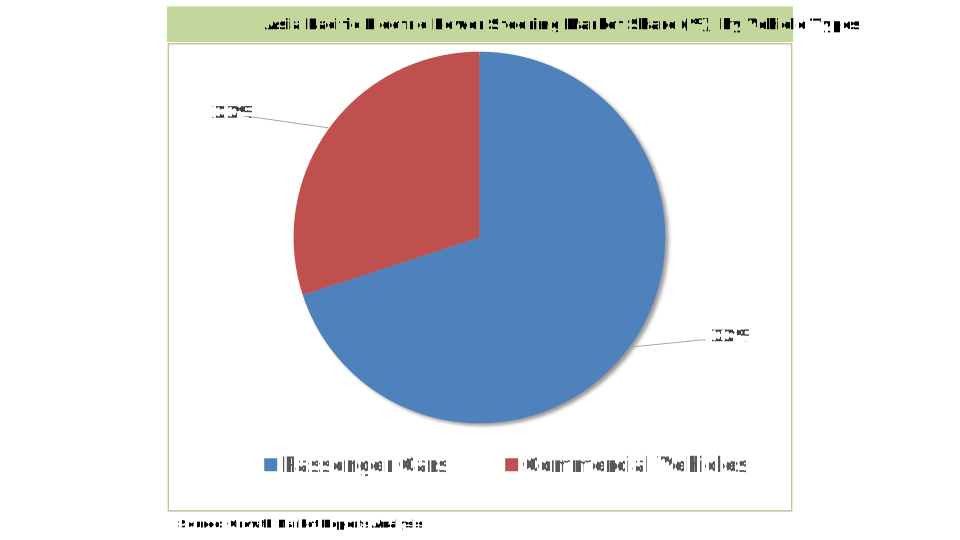
The Electric Power Steering market is segmented by vehicle type into Passenger Cars, Light Commercial Vehicles (LCVs), and Heavy Commercial Vehicles (HCVs), reflecting the diverse application landscape and performance requirements across global markets. Passenger Cars represent the largest segment, driven by the high volume of global car production and the increasing integration of EPS as standard equipment across nearly all new model lines by 2025. The shift toward compact, fuel-efficient urban vehicles is further accelerating EPS adoption, as manufacturers seek to enhance maneuverability and driver comfort while meeting tightening emission standards in Europe, China, and North America.
Light Commercial Vehicles, including vans, pickups, and urban delivery vehicles, are increasingly adopting Electric Power Steering systems to improve fuel efficiency, reduce maintenance costs, and enhance driver ergonomics during high-cycle urban operations. The surge in e-commerce activity and last-mile logistics demand is fueling LCV production, particularly in emerging markets across Asia and Latin America. EPS systems in LCVs are engineered to withstand heavier loads and more demanding duty cycles, requiring robust components, advanced thermal management, and adaptive control algorithms. The integration of telematics and fleet management connectivity is also accelerating EPS innovation for commercial applications.
Heavy Commercial Vehicles, such as long-haul trucks, regional delivery vehicles, and buses, are gradually transitioning to Electric Power Steering systems as manufacturers pursue compliance with evolving regulatory standards and measurable improvements in driver safety and fatigue reduction. While hydraulic steering systems have traditionally dominated this segment due to their capacity to handle very high steering loads, advancements in high-torque electric motor technology and robust power electronics are making EPS a commercially viable alternative for HCVs. EPS adoption in HCVs is expected to accelerate meaningfully through the forecast period, as electrification of commercial fleets expands and total cost of ownership benefits become more apparent to fleet operators.
The diversification of EPS applications across all vehicle types is fostering the development of tailored solutions addressing specific performance, durability, and integration requirements. Manufacturers are leveraging modular design principles and software-defined architecture to create EPS systems that can be efficiently customized across different vehicle platforms, reducing development time and capital expenditure. The growing global installed base of BEVs and PHEVs across all segments is further cementing EPS as the standard steering technology, as electric and hybrid drivetrains inherently require electric steering for system efficiency and compatibility with advanced electronic vehicle control.
The Electric Power Steering market is segmented by mechanism into Rigid and Collapsible, reflecting the industry's focus on safety, adaptability, and vehicle design flexibility. Rigid mechanisms are typically employed in commercial vehicles and off-highway applications where structural integrity and high load-bearing capacity are paramount. These systems are designed to withstand elevated levels of stress and provide consistent steering performance under demanding conditions. The use of high-strength steel alloys and precision-engineered components ensures the durability and reliability of rigid EPS mechanisms, making them well-suited for heavy-duty vehicles, construction equipment derivatives, and specialized fleet applications.
Collapsible mechanisms are increasingly favored in passenger cars and light commercial vehicles due to their superior passive safety characteristics. In the event of a frontal collision, collapsible steering columns are designed to progressively absorb impact energy, significantly reducing the risk of serious driver injury. The integration of collapsible mechanisms with advanced EPS systems is enhancing vehicle safety ratings and enabling manufacturers to meet increasingly stringent global crashworthiness standards such as Euro NCAP and IIHS protocols. Automakers continue to invest in simulation-driven research and development to optimize the balance between structural rigidity and controlled energy absorption in collapsible EPS column designs.
The evolution of EPS mechanisms is closely linked to advancements in materials science and advanced manufacturing processes. The adoption of lightweight aluminum alloys, high-strength composites, and precision cold-forming techniques is enabling the production of EPS mechanisms that deliver superior performance while minimizing total system weight and manufacturing cost. The trend toward modular and scalable mechanism designs is also facilitating efficient integration across a broader range of vehicle platforms, supporting automakers' ongoing efforts to consolidate engineering resources and reduce platform complexity across global product portfolios.
The increasing emphasis on occupant protection and active safety is driving regulatory requirements for the adoption of collapsible EPS mechanisms across new vehicle model lines in all major markets. Manufacturers are collaborating with global regulatory bodies and independent safety organizations to develop and refine standards and testing protocols that validate the real-world effectiveness of EPS mechanisms under diverse crash scenarios. As the automotive industry continues to prioritize both active and passive safety innovation, the market for advanced EPS mechanisms is expected to witness sustained growth and accelerating technological differentiation through 2034.
The Electric Power Steering market is segmented by sales channel into OEM and Aftermarket, reflecting the industry's dual focus on new vehicle production and replacement and upgrade parts. The OEM segment dominates the market by a wide margin, driven by the near-universal adoption of EPS systems as standard equipment in new vehicles across virtually all global automotive markets by 2025. Automakers are partnering with leading EPS suppliers to integrate advanced steering solutions that enhance vehicle performance, safety, and driver comfort at the point of manufacture. The OEM channel benefits from economies of scale, tightly integrated supply chains, and deep engineering collaboration between vehicle manufacturers and their tier-1 technology partners.
The Aftermarket segment, while smaller in relative scale, is experiencing steady growth as vehicle owners seek to replace aging or damaged steering systems and as independent workshops expand their EPS servicing capabilities. The increasing average age of vehicle fleets in North America and Europe is sustaining demand for replacement EPS components across a wide variety of models. Independent repair shops, authorized dealer service centers, and rapidly growing online auto parts retailers are broadening their EPS product offerings to serve diverse vehicle makes, models, and production years with competitive pricing and availability.
The rise of e-commerce and digital distribution platforms is transforming the aftermarket landscape, enabling consumers and workshop operators to access a broader selection of EPS products, technical specifications, and fitment guides with unprecedented ease. Online marketplaces are facilitating price transparency, multi-brand product comparisons, and verified customer reviews, empowering vehicle owners and professional technicians to make well-informed purchasing decisions. The expanding availability of digital installation guides, remote technical support, and extended warranty services is further enhancing the attractiveness of the online aftermarket channel for EPS solutions globally.
The OEM and aftermarket segments are increasingly converging as automakers and suppliers explore new service-oriented business models, including subscription-based software features, extended warranty packages, and remote predictive diagnostics for EPS health monitoring. The integration of connected vehicle telematics is enabling real-time condition monitoring and data-driven maintenance scheduling for EPS systems, creating new opportunities for value-added services and deeper customer lifecycle engagement. As the Electric Power Steering market continues to evolve through the 2026-2034 forecast period, the interplay between OEM and aftermarket channels will play a critical role in shaping industry revenue dynamics and competitive positioning.
The Electric Power Steering market presents significant opportunities for innovation and value creation, driven by the automotive industry's accelerating transition toward electrification, autonomy, and connectivity. The integration of EPS systems with advanced driver assistance features, such as lane-keeping assist, automated parking, emergency steering intervention, and highway pilot functions, is opening new avenues for product differentiation and premium pricing. The development of steer-by-wire technology, which eliminates conventional mechanical linkages in favor of fully electronic controls, holds transformative potential for next-generation vehicle architectures and represents a foundational enabler for fully autonomous driving at SAE Levels 4 and 5. Manufacturers that invest decisively in research and development, strategic co-development partnerships, and digital software platforms are well-positioned to capture disproportionate value in the evolving global EPS landscape through 2034.
Another key opportunity lies in the geographic expansion of the Electric Power Steering market across high-growth emerging economies, where rising vehicle ownership rates, rapid urbanization, and ongoing infrastructure development are driving sustained demand for advanced automotive technologies. The accelerating adoption of electric and hybrid vehicles across Southeast Asia, India, Brazil, and the Gulf Cooperation Council countries is creating meaningful new growth prospects for EPS suppliers, as these vehicle architectures inherently require electric steering for operational efficiency and compatibility with modern electronic chassis systems. Localization of manufacturing, customization of product configurations for local vehicle preferences, and investment in regional aftersales and training infrastructure are critical strategies for building durable market positions in these high-potential geographies.
Despite the favorable long-term outlook, the Electric Power Steering market faces meaningful headwinds that require proactive management. The relatively high initial cost of advanced EPS systems compared to legacy hydraulic alternatives continues to constrain adoption in price-sensitive vehicle segments and markets. The growing complexity of software-intensive EPS platforms increases exposure to cybersecurity threats, software defects, and over-the-air update management challenges. Persistent semiconductor supply tightness and geopolitical disruptions affecting rare-earth material sourcing pose risks to production continuity, lead times, and input cost management. Addressing these challenges requires sustained investment in supply chain resilience, dual-sourcing strategies, and proactive engagement with regulatory and cybersecurity standards bodies.
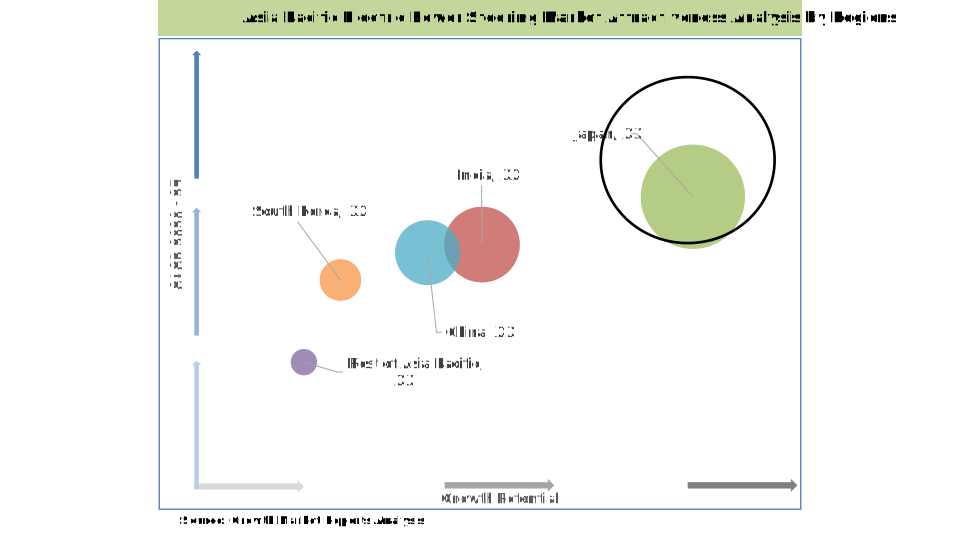
The Asia Pacific region leads the global Electric Power Steering market, accounting for approximately 48% of total market share in 2025, which translates to roughly USD 15.3 billion. This dominance is attributed to the region's robust automotive manufacturing ecosystem, consistently high vehicle sales volumes, and rapid adoption of advanced automotive technologies across all vehicle classes. China, Japan, South Korea, and India are the primary contributors, with China alone representing a substantial portion of regional demand. The intensifying focus on new energy vehicles (NEVs), coupled with government incentives supporting EV adoption and domestic automotive innovation, is further propelling EPS market growth across Asia Pacific through the forecast period.
North America holds a substantial share of the Electric Power Steering market, valued at around USD 7.6 billion in 2025. The region's sustained growth is driven by the early and widespread adoption of advanced driver assistance systems, increasingly stringent federal and state-level emission regulations, and a strong presence of both leading legacy automakers and fast-growing EV-native manufacturers. The United States and Canada are at the forefront of EPS innovation, with growing emphasis on vehicle connectivity, cybersecurity compliance, and autonomous driving readiness. The North American market is expected to grow at a steady CAGR of approximately 6.2% during the 2026-2034 forecast period, supported by ongoing R&D investment and the rapid scaling of domestic EV production capacity.
Europe represents another key market for Electric Power Steering, with a market size of approximately USD 5.9 billion in 2025. The region's automotive industry is defined by a strong commitment to sustainability, carbon neutrality targets, and technological leadership. Germany, France, the United Kingdom, and Italy are the leading contributors, benefiting from a mature and highly sophisticated automotive supply chain and supportive regulatory frameworks aligned with the EU Green Deal. The European market is witnessing rising demand for premium and electric vehicles equipped with advanced EPS and steer-by-wire systems, alongside growing investments in smart mobility and software-defined vehicle platforms. Latin America and the Middle East and Africa, while smaller in current scale, are emerging as promising growth markets with increasing automotive sector investments, expanding middle-class vehicle demand, and a rising focus on fuel-efficient and electrified transportation solutions.
The Electric Power Steering market is highly competitive, characterized by the presence of established global automotive suppliers, specialized technology innovators, and a growing cohort of emerging players from both traditional automotive and adjacent technology sectors. Leading companies are focusing on product innovation, strategic partnerships, and targeted mergers and acquisitions to reinforce their market position and extend their global manufacturing and engineering footprint. The competitive landscape is shaped by the continuous evolution of EPS technologies, the deepening integration of advanced electronic and software features, and the relentless pursuit of cost-competitive manufacturing at scale. Companies are investing heavily in research and development to advance system performance, enhance functional safety compliance (ISO 26262), and address the growing demands of cybersecurity and over-the-air software management.
The market is witnessing accelerating collaboration between automakers and tier-1 EPS technology providers to co-develop next-generation steering systems tailored to specific vehicle platform requirements. Joint ventures, technology licensing agreements, and co-development programs are becoming standard strategies for pooling expertise, sharing development risk, and compressing time-to-market for complex EPS innovations. The growing strategic importance of software and advanced electronics in EPS architecture is attracting new entrants from the semiconductor and software industries, intensifying competition and accelerating the convergence of traditional automotive engineering with digital technology disciplines.
Major companies operating in the Electric Power Steering market include Robert Bosch GmbH, JTEKT Corporation, Nexteer Automotive, ZF Friedrichshafen AG, NSK Ltd., Showa Corporation, Hitachi Astemo Ltd., Hyundai Mobis Co., Ltd., and Mando Corporation. These companies are recognized for their extensive and diversified product portfolios, global manufacturing capabilities, deep OEM customer relationships, and sustained commitment to R&D investment. They are actively advancing EPS technologies to support the transition toward autonomous, connected, and electrified vehicle architectures, with particular emphasis on steer-by-wire readiness, AI-assisted steering control, and cybersecurity-certified ECU platforms.
Robert Bosch GmbH maintains a leadership position in EPS solutions, combining broad system integration expertise with deep investments in software-defined steering platforms and autonomous driving enablement. JTEKT Corporation and Nexteer Automotive are prominent global players with differentiated strengths in modular EPS architecture, advanced sensor integration, and efficient supply chain management across multiple continents. ZF Friedrichshafen AG and NSK Ltd. leverage extensive systems engineering expertise to deliver high-performance EPS solutions spanning passenger cars through heavy commercial applications. Hitachi Astemo Ltd. (formed through the merger of Hitachi Automotive Systems and Showa Corporation's parent operations) is emerging as a significant force in integrated chassis and steering system solutions. Hyundai Mobis and Mando Corporation are expanding their global EPS presence through strategic R&D partnerships, capacity investments in Southeast Asia and Europe, and accelerated development of next-generation steer-by-wire systems aligned with their parent group's ambitious electrification roadmap.
The Electric Power Steering market has been segmented on the basis of
Key technological trends include the development of steer-by-wire systems that replace mechanical linkages with electronic controls, enabling flexible vehicle architectures and full autonomy readiness. Advanced sensor fusion, AI-driven control algorithms, and over-the-air (OTA) software updates are enhancing EPS precision and adaptability. Higher-voltage motor architectures compatible with 48V and full-EV platforms are expanding EPS performance envelopes. Cybersecurity frameworks embedded into ECU design, redundant sensor configurations for fail-safe operation, and lightweight composite materials for mechanism construction are also defining the next generation of EPS technology through the 2026-2034 forecast period.
The EPS market is segmented into OEM and Aftermarket channels. The OEM segment dominates, as EPS systems are increasingly integrated as standard equipment in new vehicles across all segments. Automakers collaborate closely with tier-1 EPS suppliers to embed advanced steering solutions during production. The Aftermarket segment is growing steadily, driven by vehicle fleet aging, consumer demand for upgraded steering performance, and expanding e-commerce platforms that improve access to EPS replacement parts and assemblies. Connected vehicle technologies are also creating new value-added aftermarket service models.
Leading players include JTEKT Corporation, Nexteer Automotive, Robert Bosch GmbH, NSK Ltd., ZF Friedrichshafen AG, Mando Corporation, Hyundai Mobis Co., Ltd., Showa Corporation, Hitachi Astemo Ltd., Denso Corporation, Magna International Inc., China Automotive Systems Inc., Mitsubishi Electric Corporation, Sona BLW Precision Forgings Ltd., and Thyssenkrupp AG. These companies compete on the basis of product innovation, global manufacturing scale, software integration capabilities, and strategic partnerships with major automakers.
Key opportunities include the integration of EPS with ADAS features such as lane-keeping assist, automated parking, and collision avoidance, as well as the advancement of steer-by-wire technology enabling fully autonomous vehicle architectures. Expansion into high-growth emerging markets in Asia, Latin America, and Africa also presents significant upside. Major threats include high initial system costs, cybersecurity vulnerabilities in software-driven EPS platforms, ongoing semiconductor supply constraints, and the complexity of integrating advanced EPS with legacy vehicle architectures. Geopolitical disruptions and raw material price volatility also pose risks to supply chain continuity.
An EPS system comprises five core components: the Steering Column, which transmits driver input and houses torque and angle sensors; Sensors (including Hall-effect and magneto-resistive types) that provide real-time feedback on steering torque, angle, and vehicle speed; the Electric Motor (typically a brushless DC or permanent magnet synchronous motor) that generates assistive steering force; the Electronic Control Unit (ECU), which processes sensor data and controls motor output using advanced algorithms; and other supporting components such as wiring harnesses, connectors, and mounting hardware ensuring seamless system integration.
The market is divided into Passenger Cars, Light Commercial Vehicles (LCVs), and Heavy Commercial Vehicles (HCVs). Passenger Cars represent the largest segment due to high global production volumes and the standardization of EPS in new models. LCVs are the fastest-growing sub-segment, propelled by urban logistics growth and last-mile delivery expansion. HCVs are gradually adopting EPS as advances in motor technology make electric steering viable for higher steering loads, supported by regulatory pressure for improved commercial vehicle safety and efficiency.
The three primary EPS types are Column Assist, Pinion Assist, and Rack Assist. Column Assist Type, holding roughly 38.5% of the market in 2025, is popular in compact and entry-level passenger cars for its cost efficiency and compact packaging. Pinion Assist Type accounts for about 27% and is favored in mid-sized sedans and SUVs for balanced precision and compactness. Rack Assist Type, representing approximately 34.5%, is preferred for larger, premium, and performance vehicles requiring superior torque handling and steering precision.
Asia Pacific dominates the global market with approximately 48% share in 2025, valued at around USD 15.3 billion, driven by China, Japan, South Korea, and India. North America is the second-largest market, valued at roughly USD 7.6 billion in 2025, benefiting from early ADAS adoption and strong EV penetration. Europe holds about 18.5% share, supported by stringent emission standards and a mature automotive industry. Latin America and the Middle East and Africa are emerging markets recording growing automotive investments and rising demand for fuel-efficient vehicles.
Key growth drivers include the rapid electrification of vehicle fleets, expanding ADAS deployment, and government mandates targeting lower vehicular emissions and improved fuel economy. The transition from hydraulic to electric steering systems is being accelerated by automakers seeking lighter, more energy-efficient architectures. Surging vehicle production in Asia Pacific, the proliferation of electric and hybrid models, and continuous improvements in motor control technology and sensor accuracy are also significant contributors to sustained market expansion through 2034.
The global Electric Power Steering market reached USD 31.8 billion in 2025 and is projected to attain USD 57.4 billion by 2034, expanding at a CAGR of 6.8% during the forecast period of 2026 to 2034. This growth is underpinned by rising EV adoption, stricter emission regulations, and deepening integration of ADAS features across passenger and commercial vehicle segments worldwide.