Segments - by Service Type (Medicinal Chemistry, Biology Services, Drug Metabolism and Pharmacokinetics, Lead Optimization, Target Validation, Others), by Therapeutic Area (Oncology, Neurology, Cardiovascular Diseases, Infectious Diseases, Respiratory Diseases, Others), by End-User (Pharmaceutical Companies, Biotechnology Companies, Academic and Research Institutes, Others)
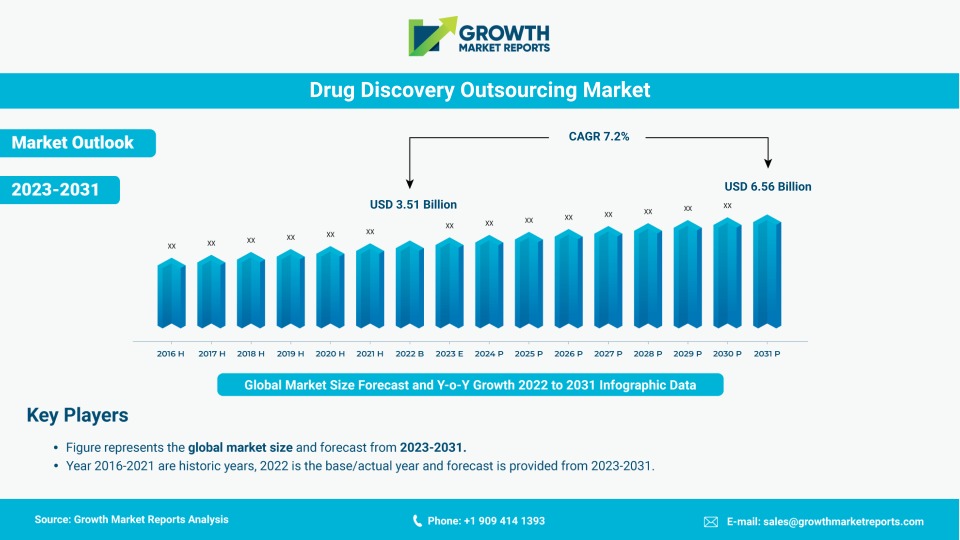
According to our latest research, the global drug discovery outsourcing market size reached USD 22.8 billion in 2024, reflecting the growing reliance of pharmaceutical and biotechnology companies on external expertise to accelerate drug development pipelines. The market is projected to expand at a robust CAGR of 8.4% from 2025 to 2033, with the total market value forecasted to hit USD 47.1 billion by 2033. This growth is primarily driven by the increasing complexity of drug discovery processes, rising R&D costs, and the need for specialized knowledge and advanced technologies. The market's expansion is further supported by the globalization of clinical trials and the rising demand for innovative therapies across therapeutic areas.
One of the most significant growth factors for the drug discovery outsourcing market is the escalating cost and complexity associated with in-house drug development. Pharmaceutical and biotechnology companies are increasingly outsourcing various stages of the drug discovery process to contract research organizations (CROs) and specialized service providers. This strategy allows them to access cutting-edge technologies, specialized scientific expertise, and global talent pools without incurring the substantial fixed costs of maintaining these resources internally. Outsourcing also enables companies to focus on their core competencies, streamline their operations, and reduce the time-to-market for new drugs. The demand for drug discovery outsourcing services is particularly high among small and mid-sized enterprises that lack the infrastructure and resources to conduct comprehensive research in-house.
Another major driver propelling the growth of the drug discovery outsourcing market is the rapid advancement in scientific technologies such as artificial intelligence (AI), machine learning, high-throughput screening, and next-generation sequencing. These innovations are revolutionizing the drug discovery landscape by enabling more accurate target identification, faster lead optimization, and improved prediction of drug safety and efficacy. Outsourcing partners are often at the forefront of adopting these technologies, providing clients with access to state-of-the-art platforms and methodologies. This technological edge not only enhances the efficiency and success rates of drug discovery projects but also supports the development of personalized and precision medicines, which are gaining traction in the global healthcare sector.
The growing prevalence of chronic and infectious diseases worldwide is also fueling the demand for drug discovery outsourcing. The increasing incidence of conditions such as cancer, neurological disorders, cardiovascular diseases, and respiratory illnesses has intensified the need for innovative therapeutic solutions. Pharmaceutical companies are under pressure to expand their pipelines and bring new drugs to market more quickly and cost-effectively. Outsourcing enables them to tap into a global network of scientific expertise and resources, accelerating the identification and validation of novel drug targets and the optimization of lead compounds. Additionally, the globalization of clinical trials and regulatory harmonization across regions are facilitating cross-border collaborations, further driving market growth.
The growing trend of Biotechnology & Pharmaceutical Services Outsourcing is reshaping the landscape of drug discovery and development. Companies are increasingly turning to external partners to handle various aspects of the drug development process, from early-stage research to clinical trials. This outsourcing model allows pharmaceutical and biotechnology companies to leverage specialized expertise and advanced technologies without the need for significant in-house investments. By collaborating with service providers, companies can focus on their core competencies while benefiting from the flexibility and scalability that outsourcing offers. This approach not only accelerates the drug development timeline but also enhances the ability to navigate complex regulatory environments and manage resource-intensive projects efficiently.
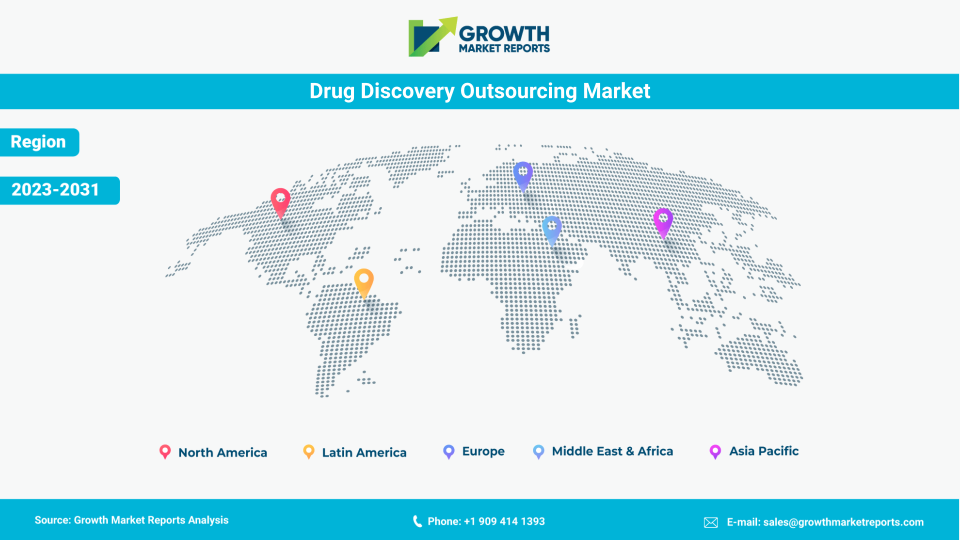
From a regional perspective, North America continues to dominate the drug discovery outsourcing market, owing to its advanced healthcare infrastructure, high R&D expenditure, and the presence of leading pharmaceutical and biotechnology companies. However, the Asia Pacific region is emerging as a key growth engine, driven by the rapid expansion of the pharmaceutical sector, increasing investments in research and development, and the availability of cost-effective skilled labor. Countries such as China and India have become popular outsourcing destinations due to their robust scientific talent pools, favorable regulatory environments, and competitive pricing. Europe also maintains a significant share of the market, supported by strong academic research, government funding, and a well-established CRO ecosystem. The Middle East & Africa and Latin America regions are witnessing steady growth, fueled by rising healthcare investments and the increasing participation of local players in the global drug discovery value chain.
The service type segment of the drug discovery outsourcing market encompasses a wide range of offerings, including medicinal chemistry, biology services, drug metabolism and pharmacokinetics (DMPK), lead optimization, target validation, and other specialized services. Among these, medicinal chemistry remains a cornerstone, accounting for a substantial share of the market. This service involves the design, synthesis, and optimization of chemical compounds with the potential to become drug candidates. Outsourcing medicinal chemistry enables pharmaceutical companies to leverage the expertise of specialized chemists and access advanced laboratories equipped with state-of-the-art instrumentation. By collaborating with external partners, companies can accelerate the identification of promising leads, improve compound libraries, and enhance the overall efficiency of the drug discovery process.
Biology services, including target identification, assay development, and mechanism-of-action studies, are also in high demand within the drug discovery outsourcing market. These services are critical for understanding the biological pathways underlying diseases and validating potential drug targets. Outsourcing biology services allows companies to tap into a diverse array of scientific expertise and cutting-edge technologies, such as CRISPR gene editing and high-content screening. This not only enhances the quality and reliability of research outputs but also reduces the risk of costly late-stage failures. As the focus on precision medicine and personalized therapies grows, the need for sophisticated biology services is expected to rise, further driving market growth in this segment.
Drug metabolism and pharmacokinetics (DMPK) services are essential for evaluating the absorption, distribution, metabolism, and excretion (ADME) properties of drug candidates. These studies are crucial for predicting the safety, efficacy, and dosing regimens of potential drugs. Outsourcing DMPK services provides access to specialized analytical platforms, experienced scientists, and comprehensive data analysis capabilities. This not only accelerates the drug development timeline but also ensures compliance with regulatory requirements. As regulatory agencies increasingly emphasize the importance of robust ADME data, the demand for outsourced DMPK services is expected to remain strong.
Lead optimization and target validation are two other critical service areas within the drug discovery outsourcing market. Lead optimization involves refining the chemical structure of lead compounds to enhance their potency, selectivity, and drug-like properties. Target validation, on the other hand, focuses on confirming the relevance of specific biological targets in disease processes. Both services require a deep understanding of medicinal chemistry, molecular biology, and pharmacology. Outsourcing these functions allows companies to leverage multidisciplinary teams and advanced technologies, increasing the likelihood of successful drug development. The growing complexity of drug discovery and the need for specialized expertise are expected to drive continued growth in these service segments.
| Attributes | Details |
| Report Title | Drug Discovery Outsourcing Market Research Report 2033 |
| By Service Type | Medicinal Chemistry, Biology Services, Drug Metabolism and Pharmacokinetics, Lead Optimization, Target Validation, Others |
| By Therapeutic Area | Oncology, Neurology, Cardiovascular Diseases, Infectious Diseases, Respiratory Diseases, Others |
| By End-User | Pharmaceutical Companies, Biotechnology Companies, Academic and Research Institutes, Others |
| Regions Covered | North America, Europe, APAC, Latin America, MEA |
| Base Year | 2024 |
| Historic Data | 2018-2023 |
| Forecast Period | 2025-2033 |
| Number of Pages | 279 |
| Number of Tables & Figures | 327 |
| Customization Available | Yes, the report can be customized as per your need. |
The therapeutic area segment of the drug discovery outsourcing market is highly diverse, reflecting the wide range of diseases and conditions that pharmaceutical companies are targeting. Oncology remains the largest and fastest-growing therapeutic area, driven by the rising global burden of cancer and the urgent need for novel therapies. The complexity of cancer biology and the need for personalized treatment approaches have made oncology drug discovery particularly challenging. Outsourcing enables companies to access specialized expertise in cancer biology, genomics, and immunotherapy, as well as advanced screening platforms and preclinical models. The high failure rates and substantial costs associated with oncology drug development further underscore the value of outsourcing in this therapeutic area.
Neurology is another key therapeutic area within the drug discovery outsourcing market, fueled by the increasing prevalence of neurological disorders such as Alzheimer's disease, Parkinson's disease, and multiple sclerosis. The intricate nature of the central nervous system and the limited success of existing treatments have prompted pharmaceutical companies to seek external partners with expertise in neurobiology, electrophysiology, and neuropharmacology. Outsourcing in this area enables access to cutting-edge research tools, animal models, and translational capabilities, facilitating the identification and validation of novel drug targets. As the global population ages and the incidence of neurodegenerative diseases rises, demand for outsourced neurology research is expected to grow.
Cardiovascular diseases represent another significant therapeutic segment, given their status as a leading cause of morbidity and mortality worldwide. The development of new treatments for conditions such as heart failure, hypertension, and atherosclerosis requires a deep understanding of cardiovascular physiology and pathophysiology. Outsourcing partners offer expertise in cardiovascular biology, biomarker discovery, and in vivo models, supporting the efficient screening and optimization of drug candidates. The growing emphasis on preventive cardiology and personalized medicine is expected to drive further innovation and outsourcing in this therapeutic area.
Infectious diseases and respiratory diseases also account for a considerable share of the drug discovery outsourcing market. The recent COVID-19 pandemic underscored the critical importance of rapid and collaborative drug discovery efforts to address emerging infectious threats. Outsourcing enables pharmaceutical companies to respond swiftly to outbreaks by leveraging global networks of scientific expertise, high-throughput screening platforms, and advanced computational tools. Similarly, the rising prevalence of chronic respiratory conditions such as asthma and chronic obstructive pulmonary disease (COPD) is driving demand for innovative therapies, supported by outsourced research in pulmonary biology and pharmacology.
The end-user segment of the drug discovery outsourcing market is primarily composed of pharmaceutical companies, biotechnology companies, academic and research institutes, and other entities such as government agencies and non-profit organizations. Pharmaceutical companies represent the largest end-user group, driven by their substantial R&D budgets, extensive drug pipelines, and the need to accelerate the development of new therapies. Outsourcing allows these companies to access specialized expertise, advanced technologies, and scalable resources, enabling them to manage complex research projects and reduce development timelines. The growing emphasis on cost containment and operational efficiency further incentivizes pharmaceutical companies to partner with external service providers.
Biotechnology companies are also major contributors to the drug discovery outsourcing market, particularly small and mid-sized firms that may lack the infrastructure and resources to conduct comprehensive research in-house. These companies often focus on niche therapeutic areas or innovative drug modalities, such as biologics, gene therapies, and cell-based treatments. Outsourcing provides them with access to multidisciplinary teams, state-of-the-art laboratories, and regulatory expertise, enabling them to advance their drug candidates from discovery to clinical development. The increasing availability of venture capital and government funding for biotech innovation is expected to drive continued growth in this end-user segment.
Academic and research institutes play a vital role in the drug discovery ecosystem, contributing to basic research, target identification, and early-stage drug development. These institutions often collaborate with pharmaceutical and biotechnology companies, leveraging their scientific expertise and access to cutting-edge technologies. Outsourcing partnerships with academic centers can facilitate the translation of basic research findings into novel drug candidates, supporting the commercialization of innovative therapies. Government initiatives to promote public-private partnerships and translational research are expected to further enhance the role of academic and research institutes in the drug discovery outsourcing market.
Other end-users, including government agencies, non-profit organizations, and contract research organizations, also contribute to the growth of the drug discovery outsourcing market. These entities often focus on neglected diseases, rare conditions, or public health priorities that may not be adequately addressed by commercial players. Outsourcing enables them to leverage external expertise and resources, accelerating the development of new treatments and supporting global health initiatives. The increasing emphasis on collaborative research and open innovation is expected to drive further engagement of diverse end-users in the drug discovery outsourcing landscape.
The drug discovery outsourcing market presents significant opportunities for growth and innovation, particularly as pharmaceutical and biotechnology companies seek to enhance their R&D productivity and bring new therapies to market more efficiently. One major opportunity lies in the integration of advanced digital technologies, such as artificial intelligence, machine learning, and big data analytics, into the drug discovery process. These technologies have the potential to revolutionize target identification, lead optimization, and predictive modeling, enabling more informed decision-making and reducing the risk of late-stage failures. Outsourcing partners that invest in digital transformation and data-driven research are well-positioned to capture a larger share of the market, offering clients enhanced value and competitive differentiation.
Another key opportunity in the drug discovery outsourcing market is the expansion into emerging therapeutic areas and novel drug modalities. The growing focus on precision medicine, immunotherapy, gene editing, and RNA-based therapeutics is creating new avenues for outsourced research and development. Service providers that can offer expertise in these cutting-edge fields, along with access to specialized technologies and regulatory guidance, are likely to experience strong demand from clients seeking to develop next-generation therapies. Additionally, the globalization of drug discovery and the increasing participation of emerging markets present opportunities for CROs and service providers to expand their geographic footprint and tap into new client segments.
Despite these opportunities, the drug discovery outsourcing market faces several restraining factors, including concerns related to data security, intellectual property (IP) protection, and regulatory compliance. Pharmaceutical companies are often hesitant to share sensitive data and proprietary information with external partners, particularly when outsourcing to regions with less stringent IP enforcement. Ensuring data confidentiality, robust cybersecurity measures, and transparent contractual agreements are critical to building trust and sustaining long-term partnerships. Additionally, navigating the complex and evolving regulatory landscape across different countries can pose challenges for both clients and service providers, potentially leading to delays and increased costs.
North America continues to hold the largest share of the drug discovery outsourcing market, accounting for approximately 41% of the global market value in 2024, or around USD 9.3 billion. The region's dominance is underpinned by its advanced healthcare infrastructure, high R&D expenditure, and the presence of leading pharmaceutical and biotechnology companies. The United States, in particular, is home to a vibrant CRO industry, world-class academic research institutions, and a supportive regulatory environment. The market in North America is expected to maintain steady growth, with a projected CAGR of 7.8% through 2033, as companies continue to invest in innovation and external partnerships.
Europe represents the second-largest regional market, with a market size of approximately USD 6.8 billion in 2024, accounting for 30% of the global total. The region benefits from strong government support for research and innovation, a well-established network of CROs, and a collaborative research culture. Countries such as the United Kingdom, Germany, and France are key contributors to the European drug discovery outsourcing market, supported by robust academic research, skilled scientific talent, and favorable regulatory frameworks. The European market is expected to witness sustained growth, driven by increasing investments in biopharmaceutical R&D and the expansion of precision medicine initiatives.
The Asia Pacific region is emerging as a major growth engine for the drug discovery outsourcing market, with a market value of approximately USD 4.6 billion in 2024, representing 20% of the global market. The region is characterized by rapid expansion of the pharmaceutical sector, increasing investments in R&D, and the availability of cost-effective skilled labor. China and India are at the forefront of this growth, offering attractive outsourcing destinations due to their large scientific talent pools, competitive pricing, and improving regulatory standards. The Asia Pacific market is projected to grow at a robust CAGR of 10.2% through 2033, outpacing other regions and contributing significantly to the overall expansion of the global market.
The drug discovery outsourcing market is highly competitive and fragmented, with a large number of global and regional players vying for market share. The competitive landscape is shaped by the presence of established contract research organizations, specialized service providers, and integrated drug discovery companies. Leading players differentiate themselves through technological innovation, comprehensive service portfolios, strong client relationships, and global delivery capabilities. The market is also witnessing a trend toward consolidation, as larger CROs acquire smaller firms to expand their service offerings, geographic presence, and scientific expertise. Strategic partnerships, mergers and acquisitions, and investments in digital transformation are key strategies employed by market leaders to maintain their competitive edge.
Innovation is a critical driver of competitiveness in the drug discovery outsourcing market. Companies that invest in advanced technologies such as artificial intelligence, machine learning, high-throughput screening, and next-generation sequencing are well-positioned to capture new business opportunities and deliver superior value to clients. The ability to offer end-to-end drug discovery solutions, from target identification to preclinical development, is increasingly important as clients seek integrated and streamlined research partnerships. Additionally, the capacity to address emerging therapeutic areas, such as immuno-oncology, gene therapy, and rare diseases, is a key differentiator for leading service providers.
The competitive landscape is also influenced by the growing importance of regulatory compliance, data security, and intellectual property protection. Companies that demonstrate robust quality management systems, transparent contractual agreements, and strong track records in regulatory submissions are preferred partners for pharmaceutical and biotechnology clients. Building long-term relationships based on trust, reliability, and scientific excellence is essential for sustaining market leadership in this dynamic and evolving industry.
Major companies operating in the drug discovery outsourcing market include Charles River Laboratories, WuXi AppTec, Syngene International, Evotec, and Covance (LabCorp Drug Development). Charles River Laboratories is renowned for its comprehensive portfolio of drug discovery and preclinical services, serving clients across the pharmaceutical, biotechnology, and academic sectors. WuXi AppTec, based in China, has established itself as a global leader in integrated drug discovery, development, and manufacturing services, leveraging its extensive scientific expertise and state-of-the-art facilities. Syngene International, headquartered in India, offers a wide range of discovery and development solutions, with a strong focus on innovation and client collaboration.
Evotec, based in Germany, is recognized for its expertise in integrated drug discovery and development, with a focus on accelerating the translation of scientific research into clinical candidates. Covance, the drug development arm of LabCorp, is a leading global CRO offering comprehensive drug discovery, preclinical, and clinical development services. These companies, along with other prominent players such as ICON plc, Thermo Fisher Scientific, and Jubilant Biosys, continue to invest in expanding their service portfolios, enhancing their technological capabilities, and strengthening their global footprints to meet the evolving needs of the pharmaceutical and biotechnology industries.
The Drug Discovery Outsourcing market has been segmented on the basis of
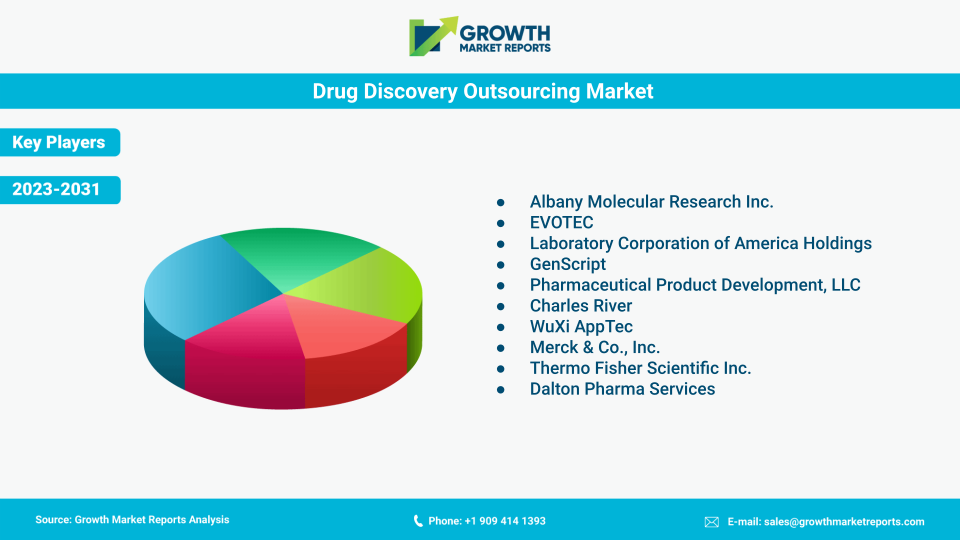
Key players competing in the drug discovery outsourcing market include Albany Molecular Research Inc., EVOTEC, Laboratory Corporation of America Holdings, GenScript, Pharmaceutical Product Development, LLC, Charles River, WuXi AppTec, Merck & Co., Inc., Thermo Fisher Scientific Inc., Dalton Pharma Services, Oncodesign, Jubilant Biosys, DiscoverX Corporation, and QIAGEN.
Major market players are consistently implementing several business strategies such as mergers, acquisitions, collaborations, capacity expansion, and product launches to enhance their market shares. Moreover, some of these key players have entered into partnerships with contract development and manufacturing organizations (CDMOs) over contract manufacturing organizations (CMOs). For instance, in the UK, CROs are collaborating with companies in the Swiss pharmaceutical sector.
In 2018, the University of Nottingham collaborated with GSK and the University of Leicester for accelerating the development and discovery of new treatments for COPD.
In another event, AstraZeneca entered into a collaboration in June 2020 with Accent Therapeutics for the purpose of development, discovery, and commercialization of transformative therapeutics.
Technological advancements such as artificial intelligence, machine learning, high-throughput screening, and next-generation sequencing are revolutionizing drug discovery by enabling faster, more accurate research and supporting the development of personalized and precision medicines.
Major players include Charles River Laboratories, WuXi AppTec, Syngene International, Evotec, Covance (LabCorp Drug Development), ICON plc, Thermo Fisher Scientific, Jubilant Biosys, Eurofins Scientific, and others.
Major opportunities include the integration of advanced digital technologies (AI, machine learning, big data), expansion into emerging therapeutic areas, and growth in emerging markets. Key threats involve concerns over data security, intellectual property protection, and navigating complex regulatory environments.
Primary end-users include pharmaceutical companies, biotechnology companies (especially small and mid-sized firms), academic and research institutes, government agencies, and non-profit organizations.
Oncology is the largest and fastest-growing therapeutic area, followed by neurology, cardiovascular diseases, infectious diseases, and respiratory diseases. The need for novel therapies in these areas drives significant outsourcing activity.
Commonly outsourced services include medicinal chemistry, biology services (such as target identification and assay development), drug metabolism and pharmacokinetics (DMPK), lead optimization, target validation, and other specialized research services.
North America holds the largest share of the market, followed by Europe and the Asia Pacific region. North America benefits from advanced healthcare infrastructure and high R&D spending, while Asia Pacific is experiencing rapid growth due to expanding pharmaceutical sectors and cost-effective skilled labor, especially in China and India.
Key growth drivers include the increasing complexity and cost of in-house drug development, advancements in scientific technologies like AI and high-throughput screening, globalization of clinical trials, and rising demand for innovative therapies across various therapeutic areas.
The global drug discovery outsourcing market reached USD 22.8 billion in 2024 and is projected to grow at a CAGR of 8.4% from 2025 to 2033, reaching an estimated value of USD 47.1 billion by 2033.
Drug discovery outsourcing involves pharmaceutical and biotechnology companies partnering with external organizations, such as contract research organizations (CROs), to conduct various stages of drug research and development. This approach is important because it provides access to specialized expertise, advanced technologies, and global talent, helping companies accelerate drug development, reduce costs, and focus on their core competencies.