Drug Discovery Market Research Report 2033

Drug Discovery Market Research Report 2033

Segments - by Process (Target Identification, Target Validation, Hit Generation and Selection, Lead Optimization, Candidate Validation), by Drug Type (Small Molecule Drugs, Biologics), by Technology (High Throughput Screening, Bioinformatics, Combinatorial Chemistry, Nanotechnology, Others), by End-User (Pharmaceutical Companies, Biotechnology Companies, Academic and Research Institutes, Contract Research Organizations)

https://growthmarketreports.com/raksha
Author : Raksha Sharma
https://growthmarketreports.com/Vaibhav
Fact-checked by : V. Chandola
https://growthmarketreports.com/Shruti
Editor : Shruti Bhat

Upcoming | Report ID :HC-2434 | 4.7 Rating | 43 Reviews | 269 Pages | Format : Docx PDF

Report Description


Drug Discovery Market Outlook

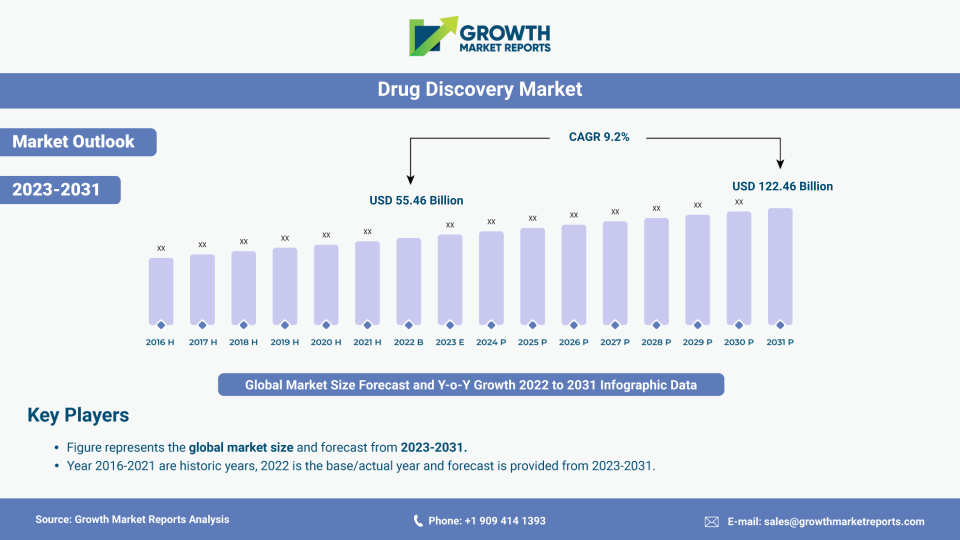
According to our latest research, the global drug discovery market size reached USD 87.5 billion in 2024, reflecting robust industry activity and investment worldwide. The market is projected to grow at a CAGR of 8.4% from 2025 to 2033, reaching an estimated USD 175.7 billion by 2033. This sustained expansion is driven by technological advancements, increased prevalence of chronic diseases, and growing demand for novel therapeutics. The rapid integration of artificial intelligence, high throughput screening, and bioinformatics into drug discovery processes is accelerating timelines and enhancing the success rate of new drug candidates, shaping a highly dynamic and competitive market landscape.

One of the primary growth factors for the drug discovery market is the escalating prevalence of chronic and infectious diseases, including cancer, diabetes, cardiovascular disorders, and emerging viral infections. The mounting global disease burden has intensified the need for innovative and effective therapeutic solutions, prompting pharmaceutical and biotechnology companies to increase their R&D investments. The COVID-19 pandemic, for instance, highlighted the critical importance of rapid drug discovery and development, leading to the adoption of advanced platforms and collaborative models. These trends are further supported by favorable regulatory frameworks and government initiatives aimed at expediting drug approval processes, which collectively foster an environment conducive to market growth.

Another significant driver is the technological revolution transforming the drug discovery process. The adoption of high throughput screening, bioinformatics, and artificial intelligence has enabled researchers to analyze vast datasets, identify promising molecular targets, and optimize lead compounds with unprecedented speed and accuracy. These technologies reduce the attrition rate of drug candidates and streamline the progression from target identification to clinical trials. Moreover, the integration of nanotechnology and combinatorial chemistry is facilitating the development of highly specific and potent drug molecules, expanding the therapeutic possibilities for previously intractable diseases. The convergence of these innovations is reshaping the drug discovery landscape, making it more efficient and cost-effective.

The growing trend of strategic collaborations and partnerships among pharmaceutical companies, biotechnology firms, academic institutions, and contract research organizations (CROs) is another key factor propelling market growth. These alliances enable stakeholders to pool resources, share knowledge, and leverage complementary capabilities, thereby accelerating the discovery and development of novel therapeutics. Outsourcing drug discovery activities to CROs has become increasingly common, particularly among small and medium-sized enterprises seeking to reduce operational costs and access specialized expertise. This collaborative approach not only enhances the efficiency of drug discovery pipelines but also broadens access to cutting-edge technologies and global talent pools.

From a regional perspective, North America continues to dominate the drug discovery market, owing to its advanced healthcare infrastructure, strong presence of leading pharmaceutical companies, and substantial R&D expenditure. The United States, in particular, is a global leader in drug innovation, supported by a robust intellectual property framework and a favorable investment climate. Europe follows closely, driven by significant government funding and a thriving biotechnology sector. Meanwhile, the Asia Pacific region is emerging as a high-growth market, fueled by increasing healthcare investments, expanding pharmaceutical manufacturing capabilities, and a rising focus on translational research. The global distribution of market activity underscores the interconnected nature of the drug discovery ecosystem and the importance of cross-border collaboration.

Global Drug Discovery Industry Outlook

Process Analysis

The drug discovery process is a complex, multi-stage endeavor encompassing target identification, target validation, hit generation and selection, lead optimization, and candidate validation. Each stage is critical to the successful development of new therapeutics, and advancements in technology have significantly enhanced the efficiency and accuracy of these processes. Target identification involves pinpointing biological molecules or pathways implicated in disease, which serves as the foundation for subsequent drug discovery efforts. Innovations in genomics, proteomics, and systems biology have enabled researchers to identify novel targets with greater precision, expanding the scope of treatable conditions and increasing the likelihood of discovering first-in-class drugs.

Target validation is the next pivotal step, wherein the relevance and therapeutic potential of identified targets are rigorously assessed through a combination of in vitro, in vivo, and computational methods. This stage is crucial for minimizing the risk of late-stage failures and ensuring that resources are allocated to the most promising candidates. The integration of advanced screening technologies and predictive modeling tools has improved the reliability of target validation, allowing for more informed decision-making and resource allocation. Pharmaceutical companies are increasingly leveraging these capabilities to prioritize high-value targets and streamline their drug discovery pipelines.

Hit generation and selection involve the identification of chemical or biological compounds that interact with validated targets, serving as the starting point for drug development. High throughput screening (HTS) platforms have revolutionized this stage by enabling the rapid testing of thousands to millions of compounds against specific targets. The use of automated robotics, miniaturized assays, and data analytics has significantly increased the throughput and accuracy of hit identification, reducing the time and cost required to advance promising candidates. Additionally, computational approaches such as virtual screening and molecular docking are increasingly being employed to complement experimental methods and identify novel hits with desirable pharmacological profiles.

Lead optimization is a critical phase in which identified hits are chemically modified and refined to enhance their efficacy, selectivity, and pharmacokinetic properties. This iterative process involves extensive structure-activity relationship (SAR) studies, medicinal chemistry, and in vitro/in vivo testing to optimize the lead compounds for further development. The application of artificial intelligence, machine learning, and predictive modeling is accelerating lead optimization by enabling researchers to rapidly evaluate and prioritize compound modifications. The ultimate goal is to generate drug candidates with optimal therapeutic potential and an acceptable safety profile, ready for progression to preclinical and clinical validation.

Candidate validation marks the final stage of the drug discovery process, where optimized leads are subjected to comprehensive preclinical evaluation to assess their safety, efficacy, and pharmacological properties. This stage involves a combination of laboratory experiments, animal studies, and advanced modeling techniques to generate robust data supporting the advancement of candidates into clinical trials. The integration of translational research, biomarker development, and patient stratification strategies is enhancing the predictive power of candidate validation, reducing the risk of clinical failures, and improving the overall success rate of drug discovery programs. As a result, the process segment remains a focal point for innovation and investment within the global drug discovery market.

Report Scope

Attributes Details
Report Title Drug Discovery Market Research Report 2033
By Process Target Identification, Target Validation, Hit Generation and Selection, Lead Optimization, Candidate Validation
By Drug Type Small Molecule Drugs, Biologics
By Technology High Throughput Screening, Bioinformatics, Combinatorial Chemistry, Nanotechnology, Others
By End-User Pharmaceutical Companies, Biotechnology Companies, Academic and Research Institutes, Contract Research Organizations
Regions Covered North America, Europe, APAC, Latin America, MEA
Base Year 2024
Historic Data 2018-2023
Forecast Period 2025-2033
Number of Pages 269
Number of Tables & Figures 319
Customization Available Yes, the report can be customized as per your need.

Drug Type Analysis

The drug discovery market is segmented by drug type into small molecule drugs and biologics, each representing distinct scientific approaches and therapeutic applications. Small molecule drugs have traditionally dominated the market, owing to their well-established development pathways, oral bioavailability, and cost-effective manufacturing processes. These compounds are typically characterized by their low molecular weight, enabling them to modulate intracellular targets and cross biological membranes with relative ease. Small molecule drugs continue to play a vital role in the treatment of a wide range of diseases, including cancer, infectious diseases, and neurological disorders, and remain a key focus of pharmaceutical R&D efforts.

In recent years, the biologics segment has witnessed remarkable growth, driven by advances in biotechnology, molecular biology, and genetic engineering. Biologics encompass a diverse array of therapeutic modalities, including monoclonal antibodies, recombinant proteins, vaccines, and gene therapies. These complex molecules are engineered to target specific disease mechanisms with high precision, offering significant advantages in terms of efficacy, safety, and the ability to address previously untreatable conditions. The growing pipeline of biologics is supported by increasing investments in research infrastructure, favorable regulatory pathways, and rising demand for personalized medicine approaches.

The shift towards biologics is particularly evident in the treatment of chronic and autoimmune diseases, oncology, and rare genetic disorders. Biologics often demonstrate superior efficacy and reduced side effects compared to traditional small molecules, making them highly attractive for both patients and healthcare providers. However, their development and manufacturing processes are inherently more complex and costly, necessitating advanced bioprocessing technologies, stringent quality control, and specialized expertise. Despite these challenges, the biologics segment is expected to outpace small molecule drugs in terms of growth rate over the forecast period, driven by ongoing innovation and expanding therapeutic indications.

Pharmaceutical and biotechnology companies are increasingly adopting a hybrid approach, leveraging the unique strengths of both small molecule drugs and biologics to develop combination therapies and next-generation therapeutics. The convergence of these modalities is enabling the creation of highly targeted and effective treatment regimens, improving patient outcomes and expanding the market potential for drug discovery. Additionally, the emergence of biosimilars and biobetters is fostering competition and driving down costs, making biologic therapies more accessible to a broader patient population. This dynamic interplay between drug types underscores the evolving nature of the drug discovery market and the need for continuous adaptation and innovation.

The ongoing evolution of drug types is also influencing regulatory policies, intellectual property strategies, and market access considerations. Regulatory agencies are adapting their frameworks to accommodate the unique characteristics of biologics, while pharmaceutical companies are investing in robust patent portfolios and lifecycle management strategies to protect their innovations. The interplay between small molecule drugs and biologics is expected to shape the future trajectory of the drug discovery market, with both segments contributing to the development of transformative therapies and the advancement of global healthcare.

Technology Analysis

Technological advancements are at the heart of the drug discovery market, with high throughput screening (HTS) emerging as a cornerstone technology for accelerating hit identification and lead optimization. HTS platforms enable the rapid and automated testing of vast compound libraries against biological targets, generating large datasets that can be analyzed to identify promising drug candidates. The integration of robotics, miniaturized assays, and advanced data analytics has significantly increased the efficiency and scalability of HTS, reducing both the time and cost associated with early-stage drug discovery. Pharmaceutical and biotechnology companies are increasingly investing in state-of-the-art HTS infrastructure to maintain a competitive edge and enhance their R&D productivity.

Bioinformatics represents another critical technology segment, revolutionizing the way researchers analyze and interpret biological data. The exponential growth of genomics, proteomics, and metabolomics datasets has necessitated the development of sophisticated computational tools and algorithms for data mining, target identification, and predictive modeling. Bioinformatics platforms enable the integration of multi-omics data, facilitating a systems-level understanding of disease mechanisms and drug responses. This holistic approach is improving the accuracy of target selection, optimizing lead compounds, and reducing the risk of late-stage failures. The adoption of artificial intelligence and machine learning in bioinformatics is further enhancing its predictive power and enabling the discovery of novel drug candidates.

Combinatorial chemistry is a powerful technology that accelerates the synthesis and screening of diverse chemical libraries, enabling the rapid identification of compounds with desirable pharmacological properties. By systematically varying chemical structures, researchers can generate large numbers of analogs and evaluate their structure-activity relationships (SAR) in a high-throughput manner. Combinatorial chemistry has become an indispensable tool for lead optimization, enabling the fine-tuning of drug candidates for improved efficacy, selectivity, and safety. The integration of automated synthesis platforms and advanced analytical techniques is further enhancing the efficiency and scalability of combinatorial chemistry, driving innovation in drug discovery.

Nanotechnology is an emerging frontier in drug discovery, offering unique opportunities for the design and delivery of novel therapeutics. Nanoscale materials and devices can be engineered to interact with biological systems at the molecular level, enabling targeted drug delivery, improved bioavailability, and controlled release profiles. Nanotechnology is particularly valuable for overcoming challenges associated with traditional drug formulations, such as poor solubility, stability, and off-target effects. The application of nanotechnology in drug discovery is expanding rapidly, with ongoing research focused on the development of nanoparticle-based drug carriers, biosensors, and diagnostic tools. This multidisciplinary approach is opening new avenues for the treatment of complex diseases and enhancing the overall effectiveness of drug discovery efforts.

In addition to these core technologies, the drug discovery market is witnessing the emergence of innovative approaches such as CRISPR-based gene editing, organ-on-chip models, and advanced imaging techniques. These technologies are enabling researchers to model disease processes more accurately, evaluate drug responses in physiologically relevant systems, and accelerate the translation of discoveries from the laboratory to the clinic. The continuous evolution of technology is reshaping the drug discovery landscape, driving efficiency, reducing costs, and expanding the range of treatable conditions. As a result, technology remains a key area of focus and investment for stakeholders across the drug discovery value chain.

End-User Analysis

The drug discovery market is characterized by a diverse end-user landscape, with pharmaceutical companies representing the largest segment. These organizations are the primary drivers of drug discovery and development, investing heavily in R&D to maintain competitive pipelines and bring innovative therapies to market. Pharmaceutical companies benefit from extensive resources, global reach, and established regulatory expertise, enabling them to undertake large-scale drug discovery programs and navigate complex approval processes. The increasing focus on precision medicine, biologics, and combination therapies is prompting pharmaceutical companies to adopt advanced technologies and collaborate with external partners to enhance their drug discovery capabilities.

Biotechnology companies play a critical role in the drug discovery ecosystem, often serving as the source of breakthrough innovations and novel therapeutic modalities. These organizations are typically more agile and focused on specific disease areas or technologies, enabling them to pursue high-risk, high-reward projects that may not align with the broader strategies of larger pharmaceutical firms. Biotechnology companies are at the forefront of emerging fields such as gene therapy, cell therapy, and RNA-based therapeutics, driving the development of next-generation drugs. Strategic partnerships, licensing agreements, and mergers and acquisitions are common strategies employed by biotechnology companies to advance their drug discovery programs and access additional resources.

Academic and research institutes are vital contributors to the drug discovery market, providing foundational research, novel target identification, and early-stage validation of drug candidates. These institutions often collaborate with industry partners to translate basic scientific discoveries into therapeutic innovations, leveraging public and private funding to support their research activities. Academic centers are increasingly involved in translational research, biomarker development, and the establishment of specialized drug discovery platforms. Their expertise in basic science and access to cutting-edge technologies make them valuable partners for pharmaceutical and biotechnology companies seeking to expand their drug discovery pipelines.

Contract research organizations (CROs) have emerged as indispensable partners in the drug discovery process, offering a wide range of outsourced services spanning target identification, lead optimization, preclinical studies, and clinical trial management. CROs enable pharmaceutical and biotechnology companies to access specialized expertise, advanced technologies, and global infrastructure without the need for significant capital investments. The growing trend towards outsourcing drug discovery activities is driven by the need to reduce costs, accelerate timelines, and mitigate operational risks. CROs are increasingly investing in integrated service offerings, digital platforms, and data analytics to enhance their value proposition and capture a larger share of the drug discovery market.

The dynamic interplay between these end-user segments is fostering a collaborative and innovation-driven drug discovery ecosystem. Pharmaceutical companies, biotechnology firms, academic institutions, and CROs are forming strategic alliances, joint ventures, and consortia to pool resources, share knowledge, and leverage complementary capabilities. This collaborative approach is accelerating the pace of drug discovery, enhancing the quality of therapeutic candidates, and expanding access to novel treatments for patients worldwide. The evolving end-user landscape underscores the importance of partnership, flexibility, and continuous learning in the pursuit of drug discovery excellence.

Opportunities & Threats

The drug discovery market presents a wealth of opportunities for stakeholders across the value chain, driven by the convergence of scientific innovation, technological advancement, and evolving healthcare needs. The growing adoption of artificial intelligence, machine learning, and data analytics is enabling researchers to optimize every stage of the drug discovery process, from target identification to clinical candidate selection. These technologies are reducing the time and cost associated with drug development, increasing the probability of success, and opening new avenues for the treatment of complex and rare diseases. The rise of personalized medicine, biomarker-driven drug development, and companion diagnostics is further expanding the market potential, enabling the creation of tailored therapies that deliver superior patient outcomes.

Another significant opportunity lies in the expanding role of emerging markets, particularly in the Asia Pacific region. Countries such as China, India, and South Korea are investing heavily in research infrastructure, talent development, and regulatory modernization to position themselves as global leaders in drug discovery and development. The increasing prevalence of chronic diseases, rising healthcare expenditure, and growing demand for innovative therapies are creating fertile ground for market expansion. Strategic collaborations, joint ventures, and technology transfer agreements are enabling multinational companies to access local expertise, resources, and patient populations, accelerating the development and commercialization of new drugs. The globalization of clinical trials and the harmonization of regulatory standards are further facilitating cross-border drug discovery initiatives.

Despite these opportunities, the drug discovery market faces several restraining factors that could impede its growth. One of the primary challenges is the high attrition rate of drug candidates, with a significant proportion failing to demonstrate safety and efficacy in clinical trials. The escalating cost and complexity of drug development, coupled with stringent regulatory requirements, pose significant barriers to entry for smaller companies and limit the pace of innovation. Intellectual property issues, pricing pressures, and reimbursement challenges further complicate the commercialization of new drugs. Addressing these restrainers will require continued investment in translational research, innovative trial designs, and collaborative approaches to risk-sharing and resource allocation.

Regional Outlook

The North American region remains the dominant force in the global drug discovery market, accounting for the largest share of both R&D investments and market revenues. In 2024, North America contributed approximately USD 36.5 billion to the global market, driven by the presence of leading pharmaceutical companies, cutting-edge research institutions, and a favorable regulatory environment. The United States, in particular, is a global leader in drug innovation, supported by a robust intellectual property framework, significant government funding, and a thriving venture capital ecosystem. The region’s focus on precision medicine, biologics, and advanced technologies is expected to sustain its leadership position over the forecast period.

Europe is the second-largest market, with a 2024 value of USD 25.2 billion, underpinned by strong government support for biomedical research, a vibrant biotechnology sector, and a collaborative regulatory landscape. Major countries such as Germany, the United Kingdom, and France are investing heavily in translational research, public-private partnerships, and infrastructure development to foster drug discovery innovation. The European Medicines Agency (EMA) provides a harmonized framework for drug approval, facilitating cross-border research and commercialization. The region is also witnessing a surge in advanced therapy medicinal products (ATMPs), biosimilars, and orphan drugs, reflecting its commitment to addressing unmet medical needs and expanding access to innovative treatments.

The Asia Pacific region is emerging as a high-growth market, with a 2024 market size of USD 19.7 billion and a projected CAGR of 10.2% through 2033. Countries such as China, India, Japan, and South Korea are rapidly expanding their pharmaceutical manufacturing capabilities, investing in research infrastructure, and adopting advanced technologies to compete on the global stage. The region’s large and diverse patient populations, coupled with rising healthcare expenditure and increasing prevalence of chronic diseases, are driving demand for new and effective therapies. Strategic collaborations between local and multinational companies, government incentives, and regulatory reforms are further accelerating the pace of drug discovery and development in Asia Pacific.

Drug Discovery Market Statistics

Competitor Outlook

The global drug discovery market is characterized by intense competition, rapid technological innovation, and a dynamic landscape of mergers, acquisitions, and strategic partnerships. Major pharmaceutical companies dominate the market, leveraging their extensive R&D capabilities, global reach, and robust financial resources to maintain leadership positions. These companies are continuously expanding their drug discovery pipelines, investing in next-generation technologies, and forming alliances with biotechnology firms, academic institutions, and CROs to accelerate the development of novel therapeutics. The competitive landscape is further shaped by the entry of new players, particularly in the biotechnology and technology sectors, who bring fresh perspectives and disruptive innovations to the market.

Biotechnology companies are playing an increasingly important role in the drug discovery ecosystem, driving the development of breakthrough therapies and pioneering new scientific approaches. These firms are often focused on specific disease areas or technologies, enabling them to pursue high-risk, high-reward projects that may not align with the broader strategies of larger pharmaceutical companies. The success of biotechnology companies is frequently tied to their ability to secure funding, form strategic partnerships, and demonstrate the clinical and commercial potential of their drug candidates. Many leading pharmaceutical companies are actively acquiring or partnering with innovative biotech firms to access new technologies and expand their therapeutic portfolios.

Contract research organizations (CROs) are also key players in the drug discovery market, providing a wide range of outsourced services that enable pharmaceutical and biotechnology companies to optimize their R&D operations. CROs offer expertise in target identification, lead optimization, preclinical studies, and clinical trial management, allowing clients to access specialized capabilities and global infrastructure without the need for significant capital investments. The growing trend towards outsourcing drug discovery activities is driving consolidation in the CRO sector, with leading firms expanding their service offerings, geographic presence, and technological capabilities to capture a larger share of the market.

Some of the major companies operating in the drug discovery market include Pfizer Inc., GlaxoSmithKline plc, Novartis AG, Roche Holding AG, Johnson & Johnson, Merck & Co., Inc., AstraZeneca plc, Sanofi S.A., Bristol-Myers Squibb Company, and AbbVie Inc.. These companies are recognized for their extensive R&D investments, diverse therapeutic pipelines, and commitment to innovation. They are actively engaged in strategic collaborations, licensing agreements, and acquisitions to enhance their drug discovery capabilities and expand their global footprint. In addition, leading CROs such as Charles River Laboratories, IQVIA, and Syneos Health play a pivotal role in supporting drug discovery programs across the industry.

These market leaders are distinguished by their ability to integrate cutting-edge technologies, leverage global networks, and adapt to evolving regulatory and market dynamics. Their continued focus on innovation, operational excellence, and strategic partnerships is expected to drive sustained growth and competitive advantage in the global drug discovery market. As the industry continues to evolve, the competitive landscape will be shaped by the emergence of new scientific paradigms, the adoption of advanced technologies, and the pursuit of collaborative models that enable the efficient and effective discovery of life-changing therapeutics.

Key Players

  • Pfizer Inc.
  • Johnson & Johnson
  • Roche Holding AG
  • Novartis AG
  • Merck & Co., Inc.
  • Sanofi S.A.
  • AstraZeneca PLC
  • GlaxoSmithKline plc (GSK)
  • Eli Lilly and Company
  • AbbVie Inc.
  • Bristol-Myers Squibb Company
  • Amgen Inc.
  • Bayer AG
  • Takeda Pharmaceutical Company Limited
  • Boehringer Ingelheim GmbH
  • Gilead Sciences, Inc.
  • Novo Nordisk A/S
  • Regeneron Pharmaceuticals, Inc.
  • Vertex Pharmaceuticals Incorporated
  • Biogen Inc.
Drug Discovery Market Overview

Segments

The Drug Discovery market has been segmented on the basis of

Process

  • Target Identification
  • Target Validation
  • Hit Generation and Selection
  • Lead Optimization
  • Candidate Validation

Drug Type

  • Small Molecule Drugs
  • Biologics

Technology

  • High Throughput Screening
  • Bioinformatics
  • Combinatorial Chemistry
  • Nanotechnology
  • Others

End-User

  • Pharmaceutical Companies
  • Biotechnology Companies
  • Academic and Research Institutes
  • Contract Research Organizations

Competitive Landscape

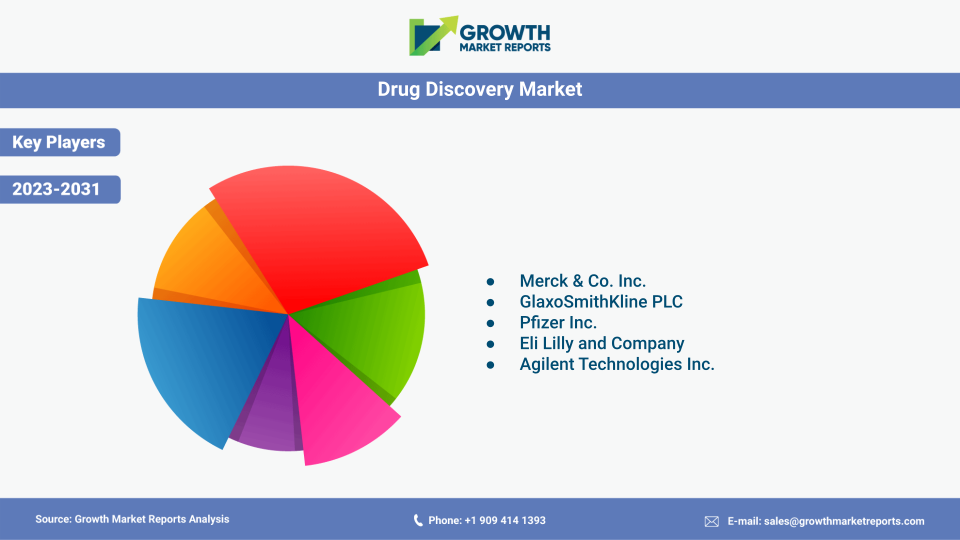
The market is very competitive in nature owing to the presence of many major players. Some of the major players competing in the global drug discovery market are Merck & Co. Inc.; GlaxoSmithKline PLC; Pfizer Inc.; Eli Lilly and Company; and Agilent Technologies Inc.

Drug Discovery Market Key Players

Frequently Asked Questions

Major players include Pfizer Inc., Johnson & Johnson, Roche Holding AG, Novartis AG, Merck & Co., Inc., Sanofi S.A., AstraZeneca PLC, GlaxoSmithKline plc (GSK), Eli Lilly and Company, AbbVie Inc., and several others.

Opportunities include the adoption of AI, personalized medicine, and expansion in emerging markets. Challenges involve high drug development costs, high attrition rates, regulatory hurdles, and intellectual property issues.

North America dominates the market, followed by Europe and the Asia Pacific region. North America leads due to advanced healthcare infrastructure and high R&D spending, while Asia Pacific is emerging as a high-growth market.

Primary end-users include pharmaceutical companies, biotechnology firms, academic and research institutes, and contract research organizations (CROs), each playing a unique role in the drug discovery ecosystem.

High throughput screening, bioinformatics, combinatorial chemistry, and nanotechnology are key technologies driving efficiency, accuracy, and innovation in drug discovery.

The market is segmented into small molecule drugs and biologics. Small molecules remain dominant due to established pathways, while biologics are rapidly growing thanks to advances in biotechnology and their ability to target complex diseases.

The drug discovery process includes target identification, target validation, hit generation and selection, lead optimization, and candidate validation, each enhanced by technological innovations and advanced screening methods.

Artificial intelligence is accelerating drug discovery by enabling rapid analysis of large datasets, improving target identification and validation, optimizing lead compounds, and reducing the time and cost of bringing new drugs to market.

Key growth drivers include technological advancements (such as AI, high throughput screening, and bioinformatics), the rising prevalence of chronic and infectious diseases, increased R&D investments, and favorable regulatory frameworks.

The global drug discovery market reached USD 87.5 billion in 2024 and is projected to grow at a CAGR of 8.4% from 2025 to 2033, reaching an estimated USD 175.7 billion by 2033.

Table Of Content

Chapter 1 Executive Summary
Chapter 2 Assumptions and Acronyms Used
Chapter 3 Research Methodology
Chapter 4 Drug Discovery Market Overview
   4.1 Introduction
      4.1.1 Market Taxonomy
      4.1.2 Market Definition
      4.1.3 Macro-Economic Factors Impacting the Market Growth
   4.2 Drug Discovery Market Dynamics
      4.2.1 Market Drivers
      4.2.2 Market Restraints
      4.2.3 Market Opportunity
   4.3 Drug Discovery Market - Supply Chain Analysis
      4.3.1 List of Key Suppliers
      4.3.2 List of Key Distributors
      4.3.3 List of Key Consumers
   4.4 Key Forces Shaping the Drug Discovery Market
      4.4.1 Bargaining Power of Suppliers
      4.4.2 Bargaining Power of Buyers
      4.4.3 Threat of Substitution
      4.4.4 Threat of New Entrants
      4.4.5 Competitive Rivalry
   4.5 Global Drug Discovery Market Size & Forecast, 2023-2032
      4.5.1 Drug Discovery Market Size and Y-o-Y Growth
      4.5.2 Drug Discovery Market Absolute $ Opportunity

Chapter 5 Global Drug Discovery Market Analysis and Forecast By Process
   5.1 Introduction
      5.1.1 Key Market Trends & Growth Opportunities By Process
      5.1.2 Basis Point Share (BPS) Analysis By Process
      5.1.3 Absolute $ Opportunity Assessment By Process
   5.2 Drug Discovery Market Size Forecast By Process
      5.2.1 Target Identification
      5.2.2 Target Validation
      5.2.3 Hit Generation and Selection
      5.2.4 Lead Optimization
      5.2.5 Candidate Validation
   5.3 Market Attractiveness Analysis By Process

Chapter 6 Global Drug Discovery Market Analysis and Forecast By Drug Type
   6.1 Introduction
      6.1.1 Key Market Trends & Growth Opportunities By Drug Type
      6.1.2 Basis Point Share (BPS) Analysis By Drug Type
      6.1.3 Absolute $ Opportunity Assessment By Drug Type
   6.2 Drug Discovery Market Size Forecast By Drug Type
      6.2.1 Small Molecule Drugs
      6.2.2 Biologics
   6.3 Market Attractiveness Analysis By Drug Type

Chapter 7 Global Drug Discovery Market Analysis and Forecast By Technology
   7.1 Introduction
      7.1.1 Key Market Trends & Growth Opportunities By Technology
      7.1.2 Basis Point Share (BPS) Analysis By Technology
      7.1.3 Absolute $ Opportunity Assessment By Technology
   7.2 Drug Discovery Market Size Forecast By Technology
      7.2.1 High Throughput Screening
      7.2.2 Bioinformatics
      7.2.3 Combinatorial Chemistry
      7.2.4 Nanotechnology
      7.2.5 Others
   7.3 Market Attractiveness Analysis By Technology

Chapter 8 Global Drug Discovery Market Analysis and Forecast By End-User
   8.1 Introduction
      8.1.1 Key Market Trends & Growth Opportunities By End-User
      8.1.2 Basis Point Share (BPS) Analysis By End-User
      8.1.3 Absolute $ Opportunity Assessment By End-User
   8.2 Drug Discovery Market Size Forecast By End-User
      8.2.1 Pharmaceutical Companies
      8.2.2 Biotechnology Companies
      8.2.3 Academic and Research Institutes
      8.2.4 Contract Research Organizations
   8.3 Market Attractiveness Analysis By End-User

Chapter 9 Global Drug Discovery Market Analysis and Forecast by Region
   9.1 Introduction
      9.1.1 Key Market Trends & Growth Opportunities By Region
      9.1.2 Basis Point Share (BPS) Analysis By Region
      9.1.3 Absolute $ Opportunity Assessment By Region
   9.2 Drug Discovery Market Size Forecast By Region
      9.2.1 North America
      9.2.2 Europe
      9.2.3 Asia Pacific
      9.2.4 Latin America
      9.2.5 Middle East & Africa (MEA)
   9.3 Market Attractiveness Analysis By Region

Chapter 10 Coronavirus Disease (COVID-19) Impact 
   10.1 Introduction 
   10.2 Current & Future Impact Analysis 
   10.3 Economic Impact Analysis 
   10.4 Government Policies 
   10.5 Investment Scenario

Chapter 11 North America Drug Discovery Analysis and Forecast
   11.1 Introduction
   11.2 North America Drug Discovery Market Size Forecast by Country
      11.2.1 U.S.
      11.2.2 Canada
   11.3 Basis Point Share (BPS) Analysis by Country
   11.4 Absolute $ Opportunity Assessment by Country
   11.5 Market Attractiveness Analysis by Country
   11.6 North America Drug Discovery Market Size Forecast By Process
      11.6.1 Target Identification
      11.6.2 Target Validation
      11.6.3 Hit Generation and Selection
      11.6.4 Lead Optimization
      11.6.5 Candidate Validation
   11.7 Basis Point Share (BPS) Analysis By Process 
   11.8 Absolute $ Opportunity Assessment By Process 
   11.9 Market Attractiveness Analysis By Process
   11.10 North America Drug Discovery Market Size Forecast By Drug Type
      11.10.1 Small Molecule Drugs
      11.10.2 Biologics
   11.11 Basis Point Share (BPS) Analysis By Drug Type 
   11.12 Absolute $ Opportunity Assessment By Drug Type 
   11.13 Market Attractiveness Analysis By Drug Type
   11.14 North America Drug Discovery Market Size Forecast By Technology
      11.14.1 High Throughput Screening
      11.14.2 Bioinformatics
      11.14.3 Combinatorial Chemistry
      11.14.4 Nanotechnology
      11.14.5 Others
   11.15 Basis Point Share (BPS) Analysis By Technology 
   11.16 Absolute $ Opportunity Assessment By Technology 
   11.17 Market Attractiveness Analysis By Technology
   11.18 North America Drug Discovery Market Size Forecast By End-User
      11.18.1 Pharmaceutical Companies
      11.18.2 Biotechnology Companies
      11.18.3 Academic and Research Institutes
      11.18.4 Contract Research Organizations
   11.19 Basis Point Share (BPS) Analysis By End-User 
   11.20 Absolute $ Opportunity Assessment By End-User 
   11.21 Market Attractiveness Analysis By End-User

Chapter 12 Europe Drug Discovery Analysis and Forecast
   12.1 Introduction
   12.2 Europe Drug Discovery Market Size Forecast by Country
      12.2.1 Germany
      12.2.2 France
      12.2.3 Italy
      12.2.4 U.K.
      12.2.5 Spain
      12.2.6 Russia
      12.2.7 Rest of Europe
   12.3 Basis Point Share (BPS) Analysis by Country
   12.4 Absolute $ Opportunity Assessment by Country
   12.5 Market Attractiveness Analysis by Country
   12.6 Europe Drug Discovery Market Size Forecast By Process
      12.6.1 Target Identification
      12.6.2 Target Validation
      12.6.3 Hit Generation and Selection
      12.6.4 Lead Optimization
      12.6.5 Candidate Validation
   12.7 Basis Point Share (BPS) Analysis By Process 
   12.8 Absolute $ Opportunity Assessment By Process 
   12.9 Market Attractiveness Analysis By Process
   12.10 Europe Drug Discovery Market Size Forecast By Drug Type
      12.10.1 Small Molecule Drugs
      12.10.2 Biologics
   12.11 Basis Point Share (BPS) Analysis By Drug Type 
   12.12 Absolute $ Opportunity Assessment By Drug Type 
   12.13 Market Attractiveness Analysis By Drug Type
   12.14 Europe Drug Discovery Market Size Forecast By Technology
      12.14.1 High Throughput Screening
      12.14.2 Bioinformatics
      12.14.3 Combinatorial Chemistry
      12.14.4 Nanotechnology
      12.14.5 Others
   12.15 Basis Point Share (BPS) Analysis By Technology 
   12.16 Absolute $ Opportunity Assessment By Technology 
   12.17 Market Attractiveness Analysis By Technology
   12.18 Europe Drug Discovery Market Size Forecast By End-User
      12.18.1 Pharmaceutical Companies
      12.18.2 Biotechnology Companies
      12.18.3 Academic and Research Institutes
      12.18.4 Contract Research Organizations
   12.19 Basis Point Share (BPS) Analysis By End-User 
   12.20 Absolute $ Opportunity Assessment By End-User 
   12.21 Market Attractiveness Analysis By End-User

Chapter 13 Asia Pacific Drug Discovery Analysis and Forecast
   13.1 Introduction
   13.2 Asia Pacific Drug Discovery Market Size Forecast by Country
      13.2.1 China
      13.2.2 Japan
      13.2.3 South Korea
      13.2.4 India
      13.2.5 Australia
      13.2.6 South East Asia (SEA)
      13.2.7 Rest of Asia Pacific (APAC)
   13.3 Basis Point Share (BPS) Analysis by Country
   13.4 Absolute $ Opportunity Assessment by Country
   13.5 Market Attractiveness Analysis by Country
   13.6 Asia Pacific Drug Discovery Market Size Forecast By Process
      13.6.1 Target Identification
      13.6.2 Target Validation
      13.6.3 Hit Generation and Selection
      13.6.4 Lead Optimization
      13.6.5 Candidate Validation
   13.7 Basis Point Share (BPS) Analysis By Process 
   13.8 Absolute $ Opportunity Assessment By Process 
   13.9 Market Attractiveness Analysis By Process
   13.10 Asia Pacific Drug Discovery Market Size Forecast By Drug Type
      13.10.1 Small Molecule Drugs
      13.10.2 Biologics
   13.11 Basis Point Share (BPS) Analysis By Drug Type 
   13.12 Absolute $ Opportunity Assessment By Drug Type 
   13.13 Market Attractiveness Analysis By Drug Type
   13.14 Asia Pacific Drug Discovery Market Size Forecast By Technology
      13.14.1 High Throughput Screening
      13.14.2 Bioinformatics
      13.14.3 Combinatorial Chemistry
      13.14.4 Nanotechnology
      13.14.5 Others
   13.15 Basis Point Share (BPS) Analysis By Technology 
   13.16 Absolute $ Opportunity Assessment By Technology 
   13.17 Market Attractiveness Analysis By Technology
   13.18 Asia Pacific Drug Discovery Market Size Forecast By End-User
      13.18.1 Pharmaceutical Companies
      13.18.2 Biotechnology Companies
      13.18.3 Academic and Research Institutes
      13.18.4 Contract Research Organizations
   13.19 Basis Point Share (BPS) Analysis By End-User 
   13.20 Absolute $ Opportunity Assessment By End-User 
   13.21 Market Attractiveness Analysis By End-User

Chapter 14 Latin America Drug Discovery Analysis and Forecast
   14.1 Introduction
   14.2 Latin America Drug Discovery Market Size Forecast by Country
      14.2.1 Brazil
      14.2.2 Mexico
      14.2.3 Rest of Latin America (LATAM)
   14.3 Basis Point Share (BPS) Analysis by Country
   14.4 Absolute $ Opportunity Assessment by Country
   14.5 Market Attractiveness Analysis by Country
   14.6 Latin America Drug Discovery Market Size Forecast By Process
      14.6.1 Target Identification
      14.6.2 Target Validation
      14.6.3 Hit Generation and Selection
      14.6.4 Lead Optimization
      14.6.5 Candidate Validation
   14.7 Basis Point Share (BPS) Analysis By Process 
   14.8 Absolute $ Opportunity Assessment By Process 
   14.9 Market Attractiveness Analysis By Process
   14.10 Latin America Drug Discovery Market Size Forecast By Drug Type
      14.10.1 Small Molecule Drugs
      14.10.2 Biologics
   14.11 Basis Point Share (BPS) Analysis By Drug Type 
   14.12 Absolute $ Opportunity Assessment By Drug Type 
   14.13 Market Attractiveness Analysis By Drug Type
   14.14 Latin America Drug Discovery Market Size Forecast By Technology
      14.14.1 High Throughput Screening
      14.14.2 Bioinformatics
      14.14.3 Combinatorial Chemistry
      14.14.4 Nanotechnology
      14.14.5 Others
   14.15 Basis Point Share (BPS) Analysis By Technology 
   14.16 Absolute $ Opportunity Assessment By Technology 
   14.17 Market Attractiveness Analysis By Technology
   14.18 Latin America Drug Discovery Market Size Forecast By End-User
      14.18.1 Pharmaceutical Companies
      14.18.2 Biotechnology Companies
      14.18.3 Academic and Research Institutes
      14.18.4 Contract Research Organizations
   14.19 Basis Point Share (BPS) Analysis By End-User 
   14.20 Absolute $ Opportunity Assessment By End-User 
   14.21 Market Attractiveness Analysis By End-User

Chapter 15 Middle East & Africa (MEA) Drug Discovery Analysis and Forecast
   15.1 Introduction
   15.2 Middle East & Africa (MEA) Drug Discovery Market Size Forecast by Country
      15.2.1 Saudi Arabia
      15.2.2 South Africa
      15.2.3 UAE
      15.2.4 Rest of Middle East & Africa (MEA)
   15.3 Basis Point Share (BPS) Analysis by Country
   15.4 Absolute $ Opportunity Assessment by Country
   15.5 Market Attractiveness Analysis by Country
   15.6 Middle East & Africa (MEA) Drug Discovery Market Size Forecast By Process
      15.6.1 Target Identification
      15.6.2 Target Validation
      15.6.3 Hit Generation and Selection
      15.6.4 Lead Optimization
      15.6.5 Candidate Validation
   15.7 Basis Point Share (BPS) Analysis By Process 
   15.8 Absolute $ Opportunity Assessment By Process 
   15.9 Market Attractiveness Analysis By Process
   15.10 Middle East & Africa (MEA) Drug Discovery Market Size Forecast By Drug Type
      15.10.1 Small Molecule Drugs
      15.10.2 Biologics
   15.11 Basis Point Share (BPS) Analysis By Drug Type 
   15.12 Absolute $ Opportunity Assessment By Drug Type 
   15.13 Market Attractiveness Analysis By Drug Type
   15.14 Middle East & Africa (MEA) Drug Discovery Market Size Forecast By Technology
      15.14.1 High Throughput Screening
      15.14.2 Bioinformatics
      15.14.3 Combinatorial Chemistry
      15.14.4 Nanotechnology
      15.14.5 Others
   15.15 Basis Point Share (BPS) Analysis By Technology 
   15.16 Absolute $ Opportunity Assessment By Technology 
   15.17 Market Attractiveness Analysis By Technology
   15.18 Middle East & Africa (MEA) Drug Discovery Market Size Forecast By End-User
      15.18.1 Pharmaceutical Companies
      15.18.2 Biotechnology Companies
      15.18.3 Academic and Research Institutes
      15.18.4 Contract Research Organizations
   15.19 Basis Point Share (BPS) Analysis By End-User 
   15.20 Absolute $ Opportunity Assessment By End-User 
   15.21 Market Attractiveness Analysis By End-User

Chapter 16 Competition Landscape 
   16.1 Drug Discovery Market: Competitive Dashboard
   16.2 Global Drug Discovery Market: Market Share Analysis, 2023
   16.3 Company Profiles (Details – Overview, Financials, Developments, Strategy) 
      16.3.1 Pfizer Inc.
Johnson & Johnson
Roche Holding AG
Novartis AG
Merck & Co., Inc.
Sanofi S.A.
AstraZeneca PLC
GlaxoSmithKline plc (GSK)
Eli Lilly and Company
AbbVie Inc.
Bristol-Myers Squibb Company
Amgen Inc.
Bayer AG
Takeda Pharmaceutical Company Limited
Boehringer Ingelheim GmbH
Gilead Sciences, Inc.
Novo Nordisk A/S
Regeneron Pharmaceuticals, Inc.
Vertex Pharmaceuticals Incorporated
Biogen Inc.

Methodology

Our Clients

Honda Motor Co. Ltd.
Siemens Healthcare
Dassault Aviation
Microsoft
The John Holland Group
sinopec
General Mills
Nestle SA