Data Center Rack Power Distribution Unit Market Research Report 2033

Data Center Rack Power Distribution Unit Market Research Report 2033

Segments - by Product Type (Basic PDU, Metered PDU, Monitored PDU, Switched PDU, Others), by Power Phase (Single Phase, Three Phase), by Application (Colocation, Enterprise, Cloud, Others), by End-User (IT & Telecom, BFSI, Healthcare, Government, Energy, Others)

https://growthmarketreports.com/Raksha
Author : Raksha Sharma
https://growthmarketreports.com/Vaibhav
Fact-checked by : V. Chandola
https://growthmarketreports.com/Shruti
Editor : Shruti Bhat

Upcoming | Report ID :ICT-SE-5748 | 4.7 Rating | 100 Reviews | 253 Pages | Format : Docx PDF

Report Description


Data Center Rack Power Distribution Unit Market Outlook

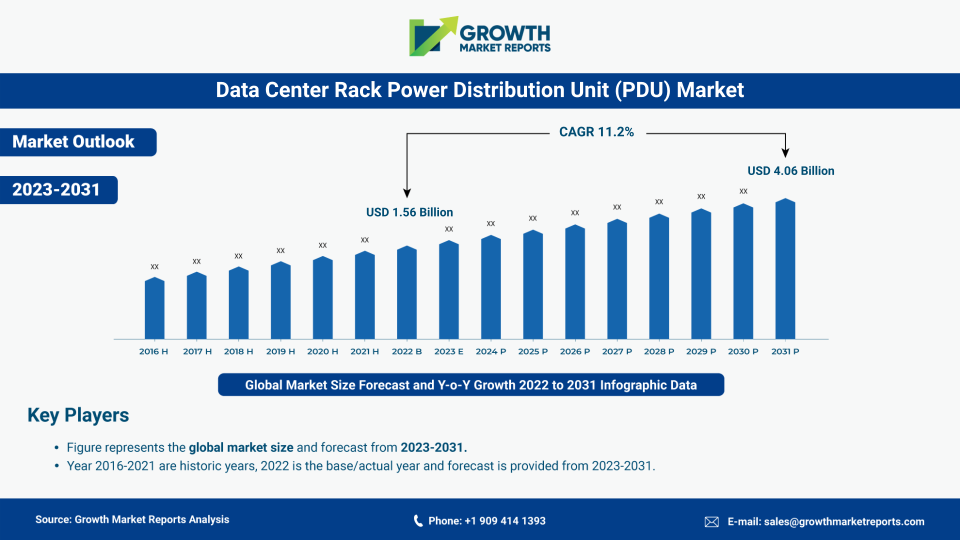
According to our latest research, the global Data Center Rack Power Distribution Unit (PDU) market size reached USD 2.09 billion in 2024, reflecting robust demand driven by the proliferation of data centers worldwide. The market is projected to expand at a CAGR of 7.2% during the forecast period, reaching a value of USD 3.91 billion by 2033. This remarkable growth is primarily fueled by escalating data traffic, the rapid adoption of cloud computing, and the increasing deployment of hyperscale and edge data centers. As organizations worldwide continue to digitize their operations and enhance their IT infrastructures, the demand for advanced and efficient rack PDUs is expected to surge significantly.

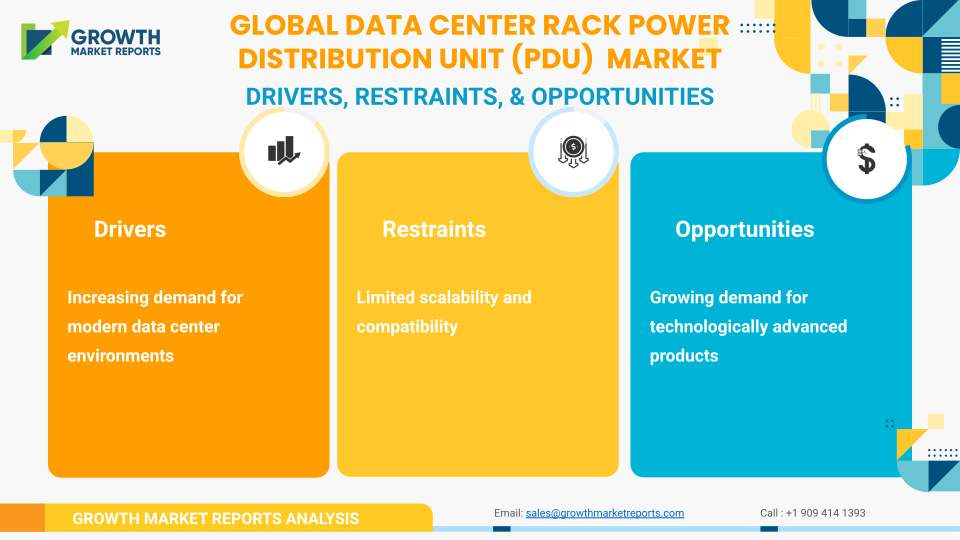
The primary growth factor for the Data Center Rack PDU market is the exponential rise in data generation and consumption, propelled by the widespread adoption of cloud services, Internet of Things (IoT) devices, and artificial intelligence-driven applications. Enterprises and service providers are investing heavily in constructing new data centers and expanding existing facilities to accommodate the growing volume of data. Modern data center architectures demand robust, scalable, and energy-efficient power distribution solutions, making advanced rack PDUs indispensable. These units not only ensure reliable power delivery to critical IT equipment but also enable real-time monitoring, remote management, and energy optimization, which are vital for maintaining uptime and operational efficiency in todayÂ’s digital economy.

Another significant driver is the increasing focus on energy efficiency and sustainability within data center environments. With rising energy costs and stringent regulations regarding carbon emissions, data center operators are under immense pressure to optimize their power usage effectiveness (PUE). Advanced rack PDUs, particularly metered, monitored, and switched variants, offer granular visibility into power consumption at the rack or device level, enabling proactive energy management and reducing operational expenses. Furthermore, these intelligent PDUs facilitate load balancing, capacity planning, and remote troubleshooting, thereby supporting green data center initiatives and contributing to the overall reduction of environmental impact.

Technological advancements and the integration of smart features in rack PDUs are further catalyzing market expansion. Modern PDUs come equipped with network connectivity, environmental sensors, and support for remote firmware updates, providing data center managers with actionable insights and enhanced control over their power infrastructure. The convergence of PDUs with data center infrastructure management (DCIM) platforms allows for seamless monitoring, automation, and predictive maintenance, minimizing downtime and maximizing asset utilization. As digital transformation accelerates across industries, the need for agile, intelligent, and scalable power distribution solutions will remain a key growth lever for the Data Center Rack PDU market.

In this context, the emergence of the Edge Power Distribution Unit is becoming increasingly significant. As data centers evolve to meet the demands of edge computing, the need for specialized PDUs that can efficiently manage power in decentralized locations is growing. Edge PDUs are designed to handle the unique challenges of edge environments, such as limited space, varying power requirements, and the necessity for remote management. These units are crucial for ensuring reliable power distribution in edge data centers, which are often deployed in remote or urban locations to reduce latency and improve data processing speeds. The integration of Edge Power Distribution Units into existing infrastructure allows for seamless scalability and enhanced operational efficiency, making them an essential component of modern data center strategies.

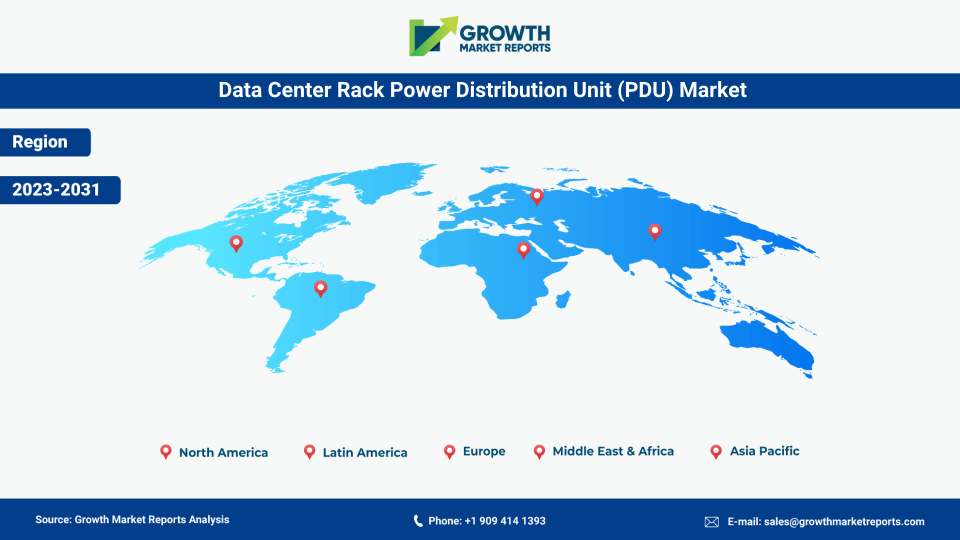
From a regional perspective, North America continues to dominate the global Data Center Rack Power Distribution Unit market, accounting for the largest revenue share in 2024 due to the presence of hyperscale data centers, major cloud service providers, and a mature IT infrastructure. Asia Pacific, however, is emerging as the fastest-growing region, driven by rapid digitalization, increased investments in data center construction, and government initiatives promoting smart city and 5G deployments. Europe follows closely, with a strong emphasis on energy efficiency and regulatory compliance shaping market dynamics. Latin America and the Middle East & Africa are also witnessing steady growth, supported by expanding digital economies and the rising adoption of cloud computing services.

Global Data Center Rack Power Distribution Unit Industry Outlook

Product Type Analysis

The Product Type segment in the Data Center Rack PDU market is broadly categorized into Basic PDU, Metered PDU, Monitored PDU, Switched PDU, and Others. Among these, Basic PDUs remain widely adopted due to their cost-effectiveness and simplicity in delivering reliable power distribution within small to medium-sized data centers. However, as data center operations become increasingly complex and mission-critical, the demand for advanced PDUs with enhanced functionalities is witnessing a notable upsurge. Metered PDUs are gaining traction as they provide real-time monitoring of power consumption, which is crucial for optimizing energy usage and preventing overloads. These units are particularly favored in environments where power usage effectiveness (PUE) and operational efficiency are top priorities.

Monitored PDUs take the capabilities of metered units a step further by offering remote monitoring and alerting features. This allows data center administrators to proactively manage power distribution, identify potential issues before they escalate, and ensure continuous uptime. The integration of network connectivity in monitored PDUs enables seamless communication with DCIM platforms, facilitating centralized control and analytics. As organizations increasingly adopt remote management solutions and seek to minimize on-site interventions, the adoption of monitored PDUs is expected to accelerate, especially in large-scale and geographically distributed data center environments.

Switched PDUs represent the most advanced category, offering not only monitoring but also remote switching capabilities. This enables administrators to remotely power cycle individual outlets or entire racks, providing unparalleled flexibility for maintenance, troubleshooting, and load balancing. Switched PDUs are particularly valuable in colocation and cloud data centers, where rapid response to power-related incidents is critical. The ability to automate power management tasks and integrate with intelligent software solutions further enhances the appeal of switched PDUs, positioning them as a preferred choice for next-generation data centers focused on agility and resilience.

The "Others" category encompasses specialized PDUs designed for unique applications, such as high-density racks, modular data centers, and edge computing environments. These units often feature custom configurations, enhanced safety mechanisms, and support for emerging power standards. As the data center landscape continues to evolve, the demand for tailored PDU solutions that address specific operational challenges and compliance requirements is anticipated to rise. Overall, the product type segment is witnessing a clear shift toward intelligent, feature-rich PDUs, driven by the need for enhanced visibility, control, and energy efficiency in modern data centers.

Report Scope

Attributes Details
Report Title Data Center Rack Power Distribution Unit Market Research Report 2033
By Product Type Basic PDU, Metered PDU, Monitored PDU, Switched PDU, Others
By Power Phase Single Phase, Three Phase
By Application Colocation, Enterprise, Cloud, Others
By End-User IT & Telecom, BFSI, Healthcare, Government, Energy, Others
Regions Covered North America, Europe, APAC, Latin America, MEA
Base Year 2024
Historic Data 2018-2023
Forecast Period 2025-2033
Number of Pages 253
Number of Tables & Figures 325
Customization Available Yes, the report can be customized as per your need.

Power Phase Analysis

The Power Phase segment of the Data Center Rack Power Distribution Unit market is divided into Single Phase and Three Phase solutions. Single Phase PDUs are commonly used in small to medium-sized data centers, enterprise server rooms, and edge facilities where power requirements are relatively modest. These units are valued for their simplicity, ease of installation, and cost-effectiveness, making them a popular choice for organizations with limited power density needs. Despite their widespread adoption, the growing trend toward high-density computing and virtualization is gradually shifting the focus toward more robust power distribution solutions.

Three Phase PDUs are increasingly preferred in large-scale data centers, colocation facilities, and hyperscale environments where high power density and efficiency are paramount. These units offer significant advantages in terms of load balancing, reduced cabling complexity, and improved scalability. By distributing power more evenly across multiple circuits, three phase PDUs help to minimize voltage drops, enhance equipment performance, and support the deployment of high-performance computing (HPC) clusters. The ability to deliver greater power capacity within a compact footprint is particularly beneficial as data centers strive to maximize space utilization and accommodate growing workloads.

The adoption of three phase PDUs is further propelled by the rise of modular and scalable data center architectures. As organizations seek to future-proof their infrastructure and support rapid expansion, the flexibility and efficiency offered by three phase power distribution become increasingly attractive. Additionally, advancements in PDU design, such as hot-swappable components, intelligent monitoring, and support for multiple input voltages, are making three phase solutions more accessible and easier to manage. These innovations are helping to overcome traditional barriers to adoption, such as perceived complexity and higher upfront costs.

Despite the growing popularity of three phase PDUs, single phase units continue to play a vital role in specific use cases, particularly in legacy data centers, branch offices, and remote sites where power demands are lower. Manufacturers are responding to market needs by offering a wide range of customizable options, including hybrid PDUs that can support both single and three phase inputs. This flexibility enables data center operators to optimize their power distribution strategy based on current requirements while retaining the ability to scale as needed. As the market evolves, the power phase segment will remain a key consideration for organizations seeking to balance performance, efficiency, and cost-effectiveness in their data center operations.

Application Analysis

The Application segment of the Data Center Rack Power Distribution Unit market is categorized into Colocation, Enterprise, Cloud, and Others. Colocation data centers represent a significant and growing market for rack PDUs, as businesses increasingly opt for third-party facilities to house their IT infrastructure. These environments demand highly reliable and scalable power distribution solutions to support diverse tenant requirements, maximize uptime, and facilitate remote management. Advanced PDUs with monitoring, switching, and environmental sensing capabilities are particularly valued in colocation settings, enabling operators to deliver differentiated services and maintain stringent service level agreements (SLAs).

The Enterprise segment encompasses privately owned and operated data centers that serve the IT needs of individual organizations. While enterprise data centers vary widely in size and complexity, they typically require robust power distribution solutions that can support mission-critical workloads, ensure business continuity, and optimize energy usage. The adoption of intelligent rack PDUs in this segment is driven by the need for enhanced visibility into power consumption, proactive capacity planning, and compliance with internal and external energy efficiency standards. As digital transformation initiatives accelerate, enterprises are increasingly investing in scalable and future-proof power infrastructure to support evolving business needs.

Cloud data centers, operated by major service providers such as Amazon Web Services, Microsoft Azure, and Google Cloud, represent the fastest-growing application segment for rack PDUs. These hyperscale facilities require advanced power distribution units capable of supporting extremely high densities, rapid scaling, and remote management across multiple locations. The integration of PDUs with sophisticated DCIM platforms enables cloud operators to monitor and optimize power usage in real time, automate maintenance tasks, and ensure maximum uptime. The relentless growth of cloud computing and the expansion of global data center footprints are expected to drive sustained demand for intelligent and high-capacity rack PDUs in this segment.

The "Others" category includes specialized applications such as edge data centers, modular facilities, and disaster recovery sites. These environments often present unique power distribution challenges, such as limited space, harsh operating conditions, and the need for rapid deployment. Customized PDUs with ruggedized designs, flexible mounting options, and support for remote monitoring are increasingly sought after to address these requirements. As the data center ecosystem becomes more diverse and distributed, the application segment is expected to witness continued innovation and differentiation, with manufacturers developing tailored solutions to meet the specific needs of various deployment scenarios.

End-User Analysis

The End-User segment in the Data Center Rack Power Distribution Unit market includes IT & Telecom, BFSI, Healthcare, Government, Energy, and Others. The IT & Telecom sector remains the largest consumer of rack PDUs, driven by the ever-increasing demand for data processing, storage, and transmission. Telecommunications operators and internet service providers rely heavily on advanced power distribution solutions to ensure the reliability and scalability of their network infrastructure. The proliferation of 5G networks, IoT devices, and edge computing is further amplifying the need for intelligent PDUs capable of supporting high-density and distributed deployments.

The BFSI (Banking, Financial Services, and Insurance) sector is another major end-user, with data centers playing a critical role in supporting digital banking, online transactions, and regulatory compliance. Financial institutions require highly secure, resilient, and energy-efficient power distribution solutions to safeguard sensitive data and maintain uninterrupted operations. The adoption of monitored and switched PDUs is particularly prevalent in this sector, enabling real-time monitoring, remote management, and rapid response to power-related incidents. As the BFSI industry continues to embrace digital transformation, the demand for advanced rack PDUs is expected to grow steadily.

Healthcare organizations are increasingly investing in data center infrastructure to support electronic health records (EHRs), telemedicine, and advanced analytics. The critical nature of healthcare data and the need for continuous availability make reliable power distribution a top priority. Intelligent PDUs with features such as environmental monitoring, redundancy, and remote control are highly valued in this sector, helping to ensure compliance with regulatory requirements and minimize the risk of downtime. As healthcare providers expand their digital capabilities and adopt new technologies, the need for robust and scalable rack PDU solutions will continue to rise.

The Government and Energy sectors also represent significant end-user segments, with data centers supporting a wide range of applications, from public services and national security to grid management and renewable energy integration. These sectors demand power distribution solutions that offer high reliability, security, and flexibility to accommodate diverse operational requirements. The growing emphasis on energy efficiency, sustainability, and regulatory compliance is driving the adoption of intelligent PDUs in government and energy data centers. The "Others" category includes industries such as retail, manufacturing, and education, which are increasingly leveraging data center infrastructure to support digital initiatives and enhance operational efficiency.

Opportunities & Threats

The Data Center Rack Power Distribution Unit market presents substantial opportunities for growth and innovation, particularly in the areas of intelligent power management, automation, and sustainability. As data centers continue to scale and diversify, the demand for advanced PDUs with integrated monitoring, switching, and environmental sensing capabilities is expected to rise. Vendors have the opportunity to differentiate their offerings by developing solutions that support seamless integration with DCIM platforms, enable predictive maintenance, and facilitate energy optimization. The growing adoption of edge computing, modular data centers, and hybrid cloud architectures further expands the addressable market for rack PDUs, creating new avenues for product development and market penetration.

Another significant opportunity lies in the increasing focus on energy efficiency and sustainability within the data center industry. As organizations strive to reduce their carbon footprint and comply with stringent environmental regulations, the demand for PDUs that enable granular visibility into power consumption and support proactive energy management is set to surge. Manufacturers can capitalize on this trend by offering solutions that incorporate advanced analytics, machine learning, and automation to optimize power usage effectiveness (PUE) and minimize operational costs. The transition to renewable energy sources and the adoption of green data center practices also present opportunities for innovation in PDU design, materials, and functionality.

Despite the positive outlook, the Data Center Rack PDU market faces certain restrainers that could impede growth. One of the primary challenges is the high initial cost associated with deploying advanced PDUs, particularly for small and medium-sized enterprises (SMEs) and organizations operating on tight budgets. The complexity of integrating intelligent PDUs with existing data center infrastructure and management systems can also pose significant hurdles, requiring specialized expertise and resources. Additionally, concerns related to cybersecurity, interoperability, and vendor lock-in may deter some organizations from adopting advanced power distribution solutions. Addressing these challenges will be crucial for vendors seeking to capture a larger share of the market and sustain long-term growth.

Regional Outlook

North America continues to lead the global Data Center Rack Power Distribution Unit market, accounting for approximately 39% of the total revenue in 2024, which translates to around USD 815 million. The regionÂ’s dominance is attributed to the presence of major cloud service providers, hyperscale data centers, and a mature IT ecosystem. The United States, in particular, is home to some of the worldÂ’s largest and most advanced data center facilities, driving sustained demand for intelligent and high-capacity rack PDUs. The region also benefits from a strong focus on innovation, energy efficiency, and regulatory compliance, which are key factors shaping market dynamics.

The Asia Pacific region is emerging as the fastest-growing market for Data Center Rack PDUs, with a projected CAGR of 9.1% during the forecast period. In 2024, the region accounted for approximately 28% of the global market, or roughly USD 585 million. Rapid digitalization, increasing investments in data center construction, and government initiatives promoting smart city and 5G deployments are driving robust growth across countries such as China, India, Japan, and Singapore. The expansion of the cloud computing market and the proliferation of edge data centers are further fueling demand for advanced and scalable power distribution solutions in the region.

Europe holds a significant share of the global Data Center Rack Power Distribution Unit market, contributing around 22% of total revenue in 2024, or approximately USD 460 million. The region is characterized by a strong emphasis on energy efficiency, sustainability, and regulatory compliance, with data center operators investing heavily in green infrastructure and intelligent power management solutions. The Middle East & Africa and Latin America regions, while accounting for smaller shares of the global market (around 6% and 5% respectively), are witnessing steady growth driven by expanding digital economies, rising cloud adoption, and increased investments in data center infrastructure. Overall, the regional outlook for the Data Center Rack PDU market remains positive, with significant opportunities for growth and innovation across all major geographies.

Data Center Rack Power Distribution Unit Market Statistics

Competitor Outlook

The Data Center Rack Power Distribution Unit market is characterized by intense competition, with a mix of established global players and emerging regional vendors vying for market share. Leading companies are focusing on product innovation, strategic partnerships, and mergers and acquisitions to strengthen their market position and expand their product portfolios. The competitive landscape is shaped by the growing demand for intelligent, high-density, and energy-efficient PDUs, with vendors investing heavily in research and development to stay ahead of the curve. Key differentiators in the market include advanced monitoring and management capabilities, seamless integration with DCIM platforms, and support for emerging data center architectures such as edge and modular facilities.

In addition to technological innovation, customer service, reliability, and brand reputation play a crucial role in shaping competitive dynamics. Leading vendors are leveraging their extensive distribution networks, global presence, and strong customer relationships to capture new business opportunities and retain existing clients. The ability to offer customized solutions that address specific operational challenges and compliance requirements is increasingly important, particularly as data center environments become more diverse and complex. Pricing strategies, warranty and support services, and the ability to deliver rapid deployment and scalability are also key factors influencing vendor selection.

The market is witnessing a trend toward consolidation, with larger players acquiring smaller, specialized vendors to enhance their technological capabilities and expand their geographic reach. This consolidation is expected to intensify as competition increases and the demand for integrated, end-to-end power management solutions grows. At the same time, new entrants and niche players are carving out market niches by focusing on innovative technologies, flexible business models, and targeted applications such as edge computing and modular data centers. The dynamic and evolving nature of the market presents both challenges and opportunities for companies seeking to differentiate themselves and achieve sustainable growth.

Some of the major companies operating in the Data Center Rack Power Distribution Unit market include Schneider Electric, Eaton Corporation, Vertiv Group, ABB Ltd., Legrand, Cisco Systems, Tripp Lite, Raritan Inc., CyberPower Systems, and Server Technology. Schneider Electric is renowned for its comprehensive portfolio of intelligent PDUs, advanced monitoring solutions, and strong focus on sustainability. Eaton Corporation offers a wide range of high-density and energy-efficient PDUs, with a strong emphasis on innovation and reliability. Vertiv Group is a leading provider of critical infrastructure solutions, including intelligent PDUs designed for hyperscale and edge data centers. ABB Ltd. and Legrand are also prominent players, known for their robust product offerings and global reach.

Cisco Systems, while primarily recognized for its networking solutions, has made significant inroads into the data center power management space through strategic partnerships and acquisitions. Tripp Lite and Raritan Inc. are well-established providers of rack PDUs, offering a broad range of solutions tailored to different data center environments and customer needs. CyberPower Systems and Server Technology are also key players, known for their focus on innovation, quality, and customer service. These companies are continuously investing in research and development, expanding their product lines, and enhancing their service offerings to meet the evolving needs of data center operators worldwide.

Overall, the competitive landscape of the Data Center Rack Power Distribution Unit market is dynamic and rapidly evolving, with companies striving to stay ahead through innovation, strategic alliances, and a relentless focus on customer value. As the market continues to grow and mature, the ability to deliver intelligent, scalable, and energy-efficient power distribution solutions will remain the key to success.

Key Players

  • Schneider Electric
  • Eaton Corporation
  • Vertiv Group Corp.
  • Legrand SA
  • ABB Ltd.
  • Cisco Systems, Inc.
  • Hewlett Packard Enterprise (HPE)
  • Tripp Lite
  • CyberPower Systems
  • Raritan Inc.
  • Server Technology, Inc.
  • APC by Schneider Electric
  • Delta Electronics, Inc.
  • Siemens AG
  • Panduit Corp.
  • Enlogic Systems
  • Geist (Vertiv)
  • Black Box Corporation
  • Anord Mardix (Flex Ltd.)
  • Leviton Manufacturing Co., Inc.
Data Center Rack Power Distribution Unit Market Overview

Segments

The Data Center Rack Power Distribution Unit market has been segmented on the basis of

Product Type

  • Basic PDU
  • Metered PDU
  • Monitored PDU
  • Switched PDU
  • Others

Power Phase

  • Single Phase
  • Three Phase

Application

  • Colocation
  • Enterprise
  • Cloud
  • Others

End-User

  • IT & Telecom
  • BFSI
  • Healthcare
  • Government
  • Energy
  • Others

Competitive Landscape

Key players competing in the global data center rack power distribution unit (PDU) market are Cyber Power Systems (USA), Inc.; Legrand; Eaton; Schneider Electric; Leviton Manufacturing Co., Inc.; Raritan Inc.; Enlogic; Hewlett Packard Enterprise Development; Vertiv Group Corp.; and Server Technology, Inc.

These companies adopted development strategies including mergers, acquisitions, partnerships, collaboration, product launches, and production expansion to expand their consumer base worldwide. For instance,

  • In May 2023, Legrand, a leading global expert in electrical and digital building infrastructures, unveiled its intelligent rack Power Distribution Units (PDUs). These innovative Server Technology PRO4X and Raritan PX4 rack PDUs are set to revolutionize power management in data centers by offering exceptional visibility, advanced hardware, and heightened security.
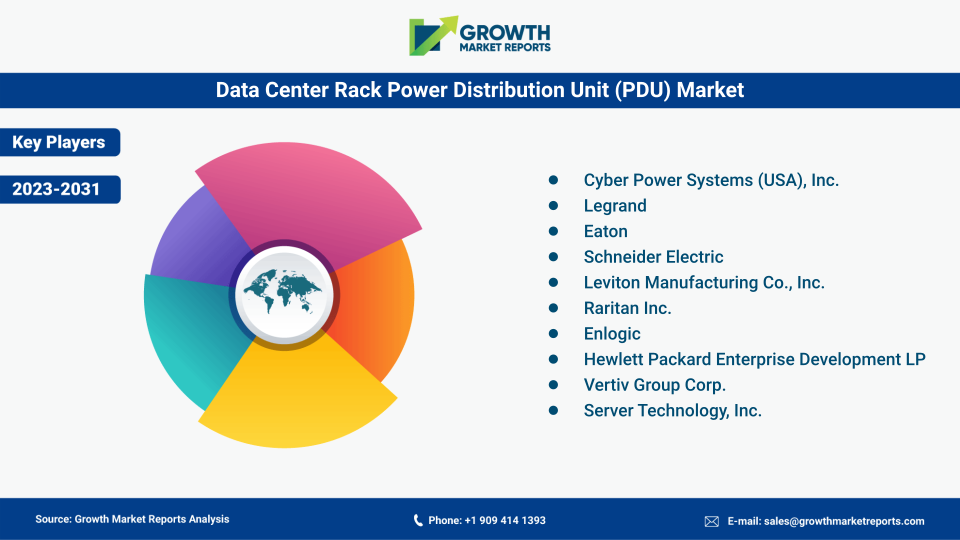

    Data Center Rack Power Distribution Unit Market Key Players

Frequently Asked Questions

The market is projected to grow at a CAGR of 7.2% from 2025 to 2033, reaching an estimated value of USD 3.91 billion by 2033, driven by digital transformation, cloud adoption, and increasing data center capacity.

Challenges include high initial costs for advanced PDUs, integration complexity with existing infrastructure, cybersecurity concerns, interoperability issues, and potential vendor lock-in.

Key players include Schneider Electric, Eaton Corporation, Vertiv Group, ABB Ltd., Legrand, Cisco Systems, Tripp Lite, Raritan Inc., CyberPower Systems, and Server Technology.

Trends include the rise of intelligent PDUs with monitoring and remote management, integration with DCIM platforms, focus on energy efficiency and sustainability, and growing demand from edge and modular data centers.

Major end-users include IT & Telecom, BFSI (Banking, Financial Services, and Insurance), Healthcare, Government, Energy, and sectors like retail, manufacturing, and education.

Single phase PDUs are commonly used in small to medium-sized data centers for their simplicity and cost-effectiveness, while three phase PDUs are preferred in large-scale and hyperscale environments for higher power density, load balancing, and scalability.

The main types of rack PDUs are Basic PDU, Metered PDU, Monitored PDU, Switched PDU, and specialized PDUs for unique applications such as high-density racks and edge computing.

North America leads the market, accounting for about 39% of revenue in 2024, followed by Asia Pacific as the fastest-growing region, and Europe with a strong focus on energy efficiency and compliance.

Key growth drivers include the exponential rise in data generation, widespread adoption of cloud computing, IoT devices, artificial intelligence applications, and the increasing deployment of hyperscale and edge data centers.

As of 2024, the global Data Center Rack Power Distribution Unit (PDU) market reached USD 2.09 billion, with strong demand driven by the growth of data centers worldwide.

Table Of Content

Chapter 1 Executive Summary
Chapter 2 Assumptions and Acronyms Used
Chapter 3 Research Methodology
Chapter 4 Data Center Rack Power Distribution Unit Market Overview
   4.1 Introduction
      4.1.1 Market Taxonomy
      4.1.2 Market Definition
      4.1.3 Macro-Economic Factors Impacting the Market Growth
   4.2 Data Center Rack Power Distribution Unit Market Dynamics
      4.2.1 Market Drivers
      4.2.2 Market Restraints
      4.2.3 Market Opportunity
   4.3 Data Center Rack Power Distribution Unit Market - Supply Chain Analysis
      4.3.1 List of Key Suppliers
      4.3.2 List of Key Distributors
      4.3.3 List of Key Consumers
   4.4 Key Forces Shaping the Data Center Rack Power Distribution Unit Market
      4.4.1 Bargaining Power of Suppliers
      4.4.2 Bargaining Power of Buyers
      4.4.3 Threat of Substitution
      4.4.4 Threat of New Entrants
      4.4.5 Competitive Rivalry
   4.5 Global Data Center Rack Power Distribution Unit Market Size & Forecast, 2023-2032
      4.5.1 Data Center Rack Power Distribution Unit Market Size and Y-o-Y Growth
      4.5.2 Data Center Rack Power Distribution Unit Market Absolute $ Opportunity

Chapter 5 Global Data Center Rack Power Distribution Unit Market Analysis and Forecast By Product Type
   5.1 Introduction
      5.1.1 Key Market Trends & Growth Opportunities By Product Type
      5.1.2 Basis Point Share (BPS) Analysis By Product Type
      5.1.3 Absolute $ Opportunity Assessment By Product Type
   5.2 Data Center Rack Power Distribution Unit Market Size Forecast By Product Type
      5.2.1 Basic PDU
      5.2.2 Metered PDU
      5.2.3 Monitored PDU
      5.2.4 Switched PDU
      5.2.5 Others
   5.3 Market Attractiveness Analysis By Product Type

Chapter 6 Global Data Center Rack Power Distribution Unit Market Analysis and Forecast By Power Phase
   6.1 Introduction
      6.1.1 Key Market Trends & Growth Opportunities By Power Phase
      6.1.2 Basis Point Share (BPS) Analysis By Power Phase
      6.1.3 Absolute $ Opportunity Assessment By Power Phase
   6.2 Data Center Rack Power Distribution Unit Market Size Forecast By Power Phase
      6.2.1 Single Phase
      6.2.2 Three Phase
   6.3 Market Attractiveness Analysis By Power Phase

Chapter 7 Global Data Center Rack Power Distribution Unit Market Analysis and Forecast By Application
   7.1 Introduction
      7.1.1 Key Market Trends & Growth Opportunities By Application
      7.1.2 Basis Point Share (BPS) Analysis By Application
      7.1.3 Absolute $ Opportunity Assessment By Application
   7.2 Data Center Rack Power Distribution Unit Market Size Forecast By Application
      7.2.1 Colocation
      7.2.2 Enterprise
      7.2.3 Cloud
      7.2.4 Others
   7.3 Market Attractiveness Analysis By Application

Chapter 8 Global Data Center Rack Power Distribution Unit Market Analysis and Forecast By End-User
   8.1 Introduction
      8.1.1 Key Market Trends & Growth Opportunities By End-User
      8.1.2 Basis Point Share (BPS) Analysis By End-User
      8.1.3 Absolute $ Opportunity Assessment By End-User
   8.2 Data Center Rack Power Distribution Unit Market Size Forecast By End-User
      8.2.1 IT & Telecom
      8.2.2 BFSI
      8.2.3 Healthcare
      8.2.4 Government
      8.2.5 Energy
      8.2.6 Others
   8.3 Market Attractiveness Analysis By End-User

Chapter 9 Global Data Center Rack Power Distribution Unit Market Analysis and Forecast by Region
   9.1 Introduction
      9.1.1 Key Market Trends & Growth Opportunities By Region
      9.1.2 Basis Point Share (BPS) Analysis By Region
      9.1.3 Absolute $ Opportunity Assessment By Region
   9.2 Data Center Rack Power Distribution Unit Market Size Forecast By Region
      9.2.1 North America
      9.2.2 Europe
      9.2.3 Asia Pacific
      9.2.4 Latin America
      9.2.5 Middle East & Africa (MEA)
   9.3 Market Attractiveness Analysis By Region

Chapter 10 Coronavirus Disease (COVID-19) Impact 
   10.1 Introduction 
   10.2 Current & Future Impact Analysis 
   10.3 Economic Impact Analysis 
   10.4 Government Policies 
   10.5 Investment Scenario

Chapter 11 North America Data Center Rack Power Distribution Unit Analysis and Forecast
   11.1 Introduction
   11.2 North America Data Center Rack Power Distribution Unit Market Size Forecast by Country
      11.2.1 U.S.
      11.2.2 Canada
   11.3 Basis Point Share (BPS) Analysis by Country
   11.4 Absolute $ Opportunity Assessment by Country
   11.5 Market Attractiveness Analysis by Country
   11.6 North America Data Center Rack Power Distribution Unit Market Size Forecast By Product Type
      11.6.1 Basic PDU
      11.6.2 Metered PDU
      11.6.3 Monitored PDU
      11.6.4 Switched PDU
      11.6.5 Others
   11.7 Basis Point Share (BPS) Analysis By Product Type 
   11.8 Absolute $ Opportunity Assessment By Product Type 
   11.9 Market Attractiveness Analysis By Product Type
   11.10 North America Data Center Rack Power Distribution Unit Market Size Forecast By Power Phase
      11.10.1 Single Phase
      11.10.2 Three Phase
   11.11 Basis Point Share (BPS) Analysis By Power Phase 
   11.12 Absolute $ Opportunity Assessment By Power Phase 
   11.13 Market Attractiveness Analysis By Power Phase
   11.14 North America Data Center Rack Power Distribution Unit Market Size Forecast By Application
      11.14.1 Colocation
      11.14.2 Enterprise
      11.14.3 Cloud
      11.14.4 Others
   11.15 Basis Point Share (BPS) Analysis By Application 
   11.16 Absolute $ Opportunity Assessment By Application 
   11.17 Market Attractiveness Analysis By Application
   11.18 North America Data Center Rack Power Distribution Unit Market Size Forecast By End-User
      11.18.1 IT & Telecom
      11.18.2 BFSI
      11.18.3 Healthcare
      11.18.4 Government
      11.18.5 Energy
      11.18.6 Others
   11.19 Basis Point Share (BPS) Analysis By End-User 
   11.20 Absolute $ Opportunity Assessment By End-User 
   11.21 Market Attractiveness Analysis By End-User

Chapter 12 Europe Data Center Rack Power Distribution Unit Analysis and Forecast
   12.1 Introduction
   12.2 Europe Data Center Rack Power Distribution Unit Market Size Forecast by Country
      12.2.1 Germany
      12.2.2 France
      12.2.3 Italy
      12.2.4 U.K.
      12.2.5 Spain
      12.2.6 Russia
      12.2.7 Rest of Europe
   12.3 Basis Point Share (BPS) Analysis by Country
   12.4 Absolute $ Opportunity Assessment by Country
   12.5 Market Attractiveness Analysis by Country
   12.6 Europe Data Center Rack Power Distribution Unit Market Size Forecast By Product Type
      12.6.1 Basic PDU
      12.6.2 Metered PDU
      12.6.3 Monitored PDU
      12.6.4 Switched PDU
      12.6.5 Others
   12.7 Basis Point Share (BPS) Analysis By Product Type 
   12.8 Absolute $ Opportunity Assessment By Product Type 
   12.9 Market Attractiveness Analysis By Product Type
   12.10 Europe Data Center Rack Power Distribution Unit Market Size Forecast By Power Phase
      12.10.1 Single Phase
      12.10.2 Three Phase
   12.11 Basis Point Share (BPS) Analysis By Power Phase 
   12.12 Absolute $ Opportunity Assessment By Power Phase 
   12.13 Market Attractiveness Analysis By Power Phase
   12.14 Europe Data Center Rack Power Distribution Unit Market Size Forecast By Application
      12.14.1 Colocation
      12.14.2 Enterprise
      12.14.3 Cloud
      12.14.4 Others
   12.15 Basis Point Share (BPS) Analysis By Application 
   12.16 Absolute $ Opportunity Assessment By Application 
   12.17 Market Attractiveness Analysis By Application
   12.18 Europe Data Center Rack Power Distribution Unit Market Size Forecast By End-User
      12.18.1 IT & Telecom
      12.18.2 BFSI
      12.18.3 Healthcare
      12.18.4 Government
      12.18.5 Energy
      12.18.6 Others
   12.19 Basis Point Share (BPS) Analysis By End-User 
   12.20 Absolute $ Opportunity Assessment By End-User 
   12.21 Market Attractiveness Analysis By End-User

Chapter 13 Asia Pacific Data Center Rack Power Distribution Unit Analysis and Forecast
   13.1 Introduction
   13.2 Asia Pacific Data Center Rack Power Distribution Unit Market Size Forecast by Country
      13.2.1 China
      13.2.2 Japan
      13.2.3 South Korea
      13.2.4 India
      13.2.5 Australia
      13.2.6 South East Asia (SEA)
      13.2.7 Rest of Asia Pacific (APAC)
   13.3 Basis Point Share (BPS) Analysis by Country
   13.4 Absolute $ Opportunity Assessment by Country
   13.5 Market Attractiveness Analysis by Country
   13.6 Asia Pacific Data Center Rack Power Distribution Unit Market Size Forecast By Product Type
      13.6.1 Basic PDU
      13.6.2 Metered PDU
      13.6.3 Monitored PDU
      13.6.4 Switched PDU
      13.6.5 Others
   13.7 Basis Point Share (BPS) Analysis By Product Type 
   13.8 Absolute $ Opportunity Assessment By Product Type 
   13.9 Market Attractiveness Analysis By Product Type
   13.10 Asia Pacific Data Center Rack Power Distribution Unit Market Size Forecast By Power Phase
      13.10.1 Single Phase
      13.10.2 Three Phase
   13.11 Basis Point Share (BPS) Analysis By Power Phase 
   13.12 Absolute $ Opportunity Assessment By Power Phase 
   13.13 Market Attractiveness Analysis By Power Phase
   13.14 Asia Pacific Data Center Rack Power Distribution Unit Market Size Forecast By Application
      13.14.1 Colocation
      13.14.2 Enterprise
      13.14.3 Cloud
      13.14.4 Others
   13.15 Basis Point Share (BPS) Analysis By Application 
   13.16 Absolute $ Opportunity Assessment By Application 
   13.17 Market Attractiveness Analysis By Application
   13.18 Asia Pacific Data Center Rack Power Distribution Unit Market Size Forecast By End-User
      13.18.1 IT & Telecom
      13.18.2 BFSI
      13.18.3 Healthcare
      13.18.4 Government
      13.18.5 Energy
      13.18.6 Others
   13.19 Basis Point Share (BPS) Analysis By End-User 
   13.20 Absolute $ Opportunity Assessment By End-User 
   13.21 Market Attractiveness Analysis By End-User

Chapter 14 Latin America Data Center Rack Power Distribution Unit Analysis and Forecast
   14.1 Introduction
   14.2 Latin America Data Center Rack Power Distribution Unit Market Size Forecast by Country
      14.2.1 Brazil
      14.2.2 Mexico
      14.2.3 Rest of Latin America (LATAM)
   14.3 Basis Point Share (BPS) Analysis by Country
   14.4 Absolute $ Opportunity Assessment by Country
   14.5 Market Attractiveness Analysis by Country
   14.6 Latin America Data Center Rack Power Distribution Unit Market Size Forecast By Product Type
      14.6.1 Basic PDU
      14.6.2 Metered PDU
      14.6.3 Monitored PDU
      14.6.4 Switched PDU
      14.6.5 Others
   14.7 Basis Point Share (BPS) Analysis By Product Type 
   14.8 Absolute $ Opportunity Assessment By Product Type 
   14.9 Market Attractiveness Analysis By Product Type
   14.10 Latin America Data Center Rack Power Distribution Unit Market Size Forecast By Power Phase
      14.10.1 Single Phase
      14.10.2 Three Phase
   14.11 Basis Point Share (BPS) Analysis By Power Phase 
   14.12 Absolute $ Opportunity Assessment By Power Phase 
   14.13 Market Attractiveness Analysis By Power Phase
   14.14 Latin America Data Center Rack Power Distribution Unit Market Size Forecast By Application
      14.14.1 Colocation
      14.14.2 Enterprise
      14.14.3 Cloud
      14.14.4 Others
   14.15 Basis Point Share (BPS) Analysis By Application 
   14.16 Absolute $ Opportunity Assessment By Application 
   14.17 Market Attractiveness Analysis By Application
   14.18 Latin America Data Center Rack Power Distribution Unit Market Size Forecast By End-User
      14.18.1 IT & Telecom
      14.18.2 BFSI
      14.18.3 Healthcare
      14.18.4 Government
      14.18.5 Energy
      14.18.6 Others
   14.19 Basis Point Share (BPS) Analysis By End-User 
   14.20 Absolute $ Opportunity Assessment By End-User 
   14.21 Market Attractiveness Analysis By End-User

Chapter 15 Middle East & Africa (MEA) Data Center Rack Power Distribution Unit Analysis and Forecast
   15.1 Introduction
   15.2 Middle East & Africa (MEA) Data Center Rack Power Distribution Unit Market Size Forecast by Country
      15.2.1 Saudi Arabia
      15.2.2 South Africa
      15.2.3 UAE
      15.2.4 Rest of Middle East & Africa (MEA)
   15.3 Basis Point Share (BPS) Analysis by Country
   15.4 Absolute $ Opportunity Assessment by Country
   15.5 Market Attractiveness Analysis by Country
   15.6 Middle East & Africa (MEA) Data Center Rack Power Distribution Unit Market Size Forecast By Product Type
      15.6.1 Basic PDU
      15.6.2 Metered PDU
      15.6.3 Monitored PDU
      15.6.4 Switched PDU
      15.6.5 Others
   15.7 Basis Point Share (BPS) Analysis By Product Type 
   15.8 Absolute $ Opportunity Assessment By Product Type 
   15.9 Market Attractiveness Analysis By Product Type
   15.10 Middle East & Africa (MEA) Data Center Rack Power Distribution Unit Market Size Forecast By Power Phase
      15.10.1 Single Phase
      15.10.2 Three Phase
   15.11 Basis Point Share (BPS) Analysis By Power Phase 
   15.12 Absolute $ Opportunity Assessment By Power Phase 
   15.13 Market Attractiveness Analysis By Power Phase
   15.14 Middle East & Africa (MEA) Data Center Rack Power Distribution Unit Market Size Forecast By Application
      15.14.1 Colocation
      15.14.2 Enterprise
      15.14.3 Cloud
      15.14.4 Others
   15.15 Basis Point Share (BPS) Analysis By Application 
   15.16 Absolute $ Opportunity Assessment By Application 
   15.17 Market Attractiveness Analysis By Application
   15.18 Middle East & Africa (MEA) Data Center Rack Power Distribution Unit Market Size Forecast By End-User
      15.18.1 IT & Telecom
      15.18.2 BFSI
      15.18.3 Healthcare
      15.18.4 Government
      15.18.5 Energy
      15.18.6 Others
   15.19 Basis Point Share (BPS) Analysis By End-User 
   15.20 Absolute $ Opportunity Assessment By End-User 
   15.21 Market Attractiveness Analysis By End-User

Chapter 16 Competition Landscape 
   16.1 Data Center Rack Power Distribution Unit Market: Competitive Dashboard
   16.2 Global Data Center Rack Power Distribution Unit Market: Market Share Analysis, 2023
   16.3 Company Profiles (Details – Overview, Financials, Developments, Strategy) 
      16.3.1 Schneider Electric
Eaton Corporation
Vertiv Group Corp.
Legrand SA
ABB Ltd.
Cisco Systems, Inc.
Hewlett Packard Enterprise (HPE)
Tripp Lite
CyberPower Systems
Raritan Inc.
Server Technology, Inc.
APC by Schneider Electric
Delta Electronics, Inc.
Siemens AG
Panduit Corp.
Enlogic Systems
Geist (Vertiv)
Black Box Corporation
Anord Mardix (Flex Ltd.)
Leviton Manufacturing Co., Inc.

Methodology

Our Clients

Pfizer
The John Holland Group
Microsoft
General Electric
Siemens Healthcare
FedEx Logistics
Honda Motor Co. Ltd.
General Mills