Segments - by Component (Software, Hardware, Services), by Technology (Machine Learning & Deep Learning, Natural Language Processing, Automated Speech Recognition), by Application (Customer Support, Personal Assistant, Branding & Advertisement, Data Privacy & Compliance, Others), by Deployment Mode (On-Premises, Cloud), by End-User (BFSI, Healthcare, Retail & E-commerce, IT & Telecommunications, Media & Entertainment, Travel & Hospitality, Others)
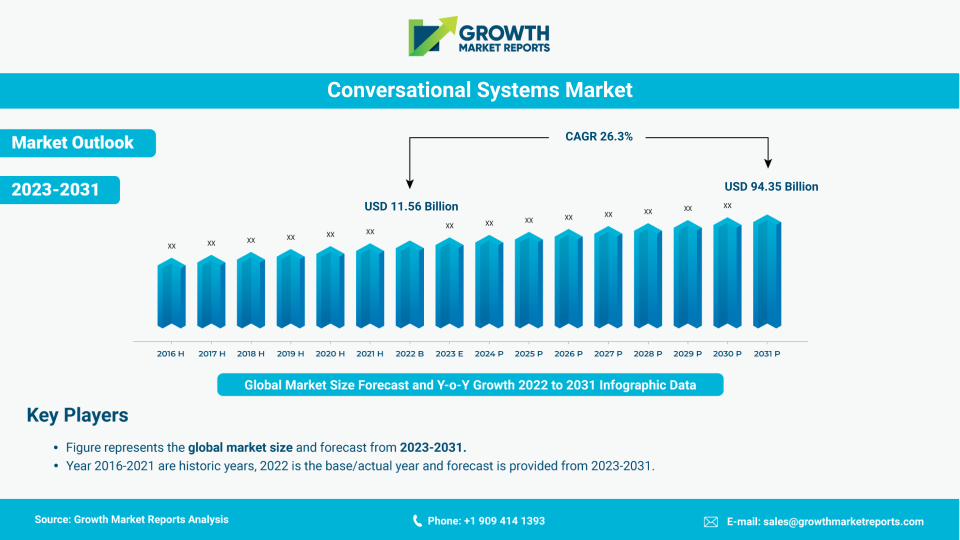
According to our latest research, the global conversational systems market size reached USD 13.8 billion in 2024, demonstrating robust adoption across industries. The market is projected to grow at a CAGR of 22.7% from 2025 to 2033, reaching a forecasted value of USD 59.2 billion by 2033. This remarkable expansion is primarily driven by the increasing need for automated customer engagement, advancements in artificial intelligence, and the rapid proliferation of digital transformation initiatives across various sectors.
One of the primary growth factors propelling the conversational systems market is the surging demand for enhanced customer experience. Organizations are increasingly leveraging conversational systems, such as chatbots and virtual assistants, to provide round-the-clock support, reduce operational costs, and streamline customer interactions. This shift towards automation not only ensures faster query resolution but also helps businesses gather actionable insights from customer conversations. The integration of natural language processing (NLP) and machine learning (ML) technologies has further elevated the capabilities of these systems, enabling more human-like and context-aware interactions, which is a key differentiator in today’s competitive digital landscape.
Another significant driver is the rapid adoption of conversational systems in sectors like banking, financial services, insurance (BFSI), healthcare, and retail & e-commerce. In BFSI, conversational platforms are revolutionizing customer service by automating routine inquiries, facilitating secure transactions, and providing personalized financial advice. Similarly, in healthcare, these systems are being used for appointment scheduling, patient triage, and health information dissemination, reducing the administrative burden on staff and improving patient outcomes. Retailers, on the other hand, are deploying conversational AI to enhance shopping experiences, offer personalized recommendations, and streamline order management, thereby boosting customer loyalty and sales conversions.
Furthermore, the ongoing advancements in AI technologies, particularly in natural language understanding and automated speech recognition, are broadening the scope of conversational systems. These technological breakthroughs are enabling systems to comprehend complex queries, support multiple languages, and deliver contextually relevant responses. As a result, enterprises are able to deploy conversational solutions not just for customer support, but also for branding, advertisement, and compliance management. The integration of conversational AI with other enterprise systems, such as CRM and ERP, is further amplifying its value proposition by driving seamless workflows and improving data-driven decision-making.
From a regional perspective, North America continues to dominate the conversational systems market, accounting for the largest share in 2024, followed by Europe and Asia Pacific. The region’s leadership is attributed to the early adoption of AI technologies, a strong presence of leading technology providers, and a mature digital infrastructure. However, Asia Pacific is expected to witness the highest growth rate during the forecast period, spurred by rapid digitalization, expanding internet penetration, and increased investments in AI-driven solutions by enterprises in countries like China, India, and Japan.
The conversational systems market can be segmented by component into software, hardware, and services. The software segment represents the largest share of the market, primarily due to the rising demand for intelligent conversational platforms that can be easily integrated into existing business processes. Software solutions encompass chatbots, virtual assistants, and voice-based applications that leverage advanced AI algorithms to facilitate seamless human-machine interactions. These platforms are being continuously enhanced with new features such as sentiment analysis, emotion detection, and multilingual capabilities, making them indispensable tools for organizations aiming to deliver superior customer experiences.
The hardware segment includes devices and infrastructure required to support conversational systems, such as smart speakers, microphones, and dedicated AI processors. While not as dominant as software, the hardware segment is witnessing steady growth, particularly with the proliferation of smart home devices and the integration of voice assistants into consumer electronics. Enterprises are also investing in specialized hardware to support on-premises deployment, ensuring data privacy and compliance with industry regulations. The evolution of edge computing and the development of low-latency, high-performance hardware are expected to further drive this segment.
Services form an essential component of the conversational systems market, encompassing consulting, integration, deployment, and maintenance services. As organizations strive to implement and scale conversational AI solutions, they rely on service providers for expertise in customization, system integration, and ongoing support. The growing complexity of conversational platforms and the need for continuous optimization have led to increased demand for managed services. Service providers are also playing a pivotal role in training AI models, ensuring regulatory compliance, and facilitating seamless upgrades, thereby contributing to the sustained growth of this segment.
The interplay between these components is crucial for the successful deployment and operation of conversational systems. While software remains the primary revenue generator, the importance of robust hardware and comprehensive services cannot be understated. Organizations are increasingly seeking end-to-end solutions that encompass all three components, enabling them to maximize the value of their conversational AI investments and achieve desired business outcomes.
| Attributes | Details |
| Report Title | Conversational Systems Market Research Report 2033 |
| By Component | Software, Hardware, Services |
| By Technology | Machine Learning & Deep Learning, Natural Language Processing, Automated Speech Recognition |
| By Application | Customer Support, Personal Assistant, Branding & Advertisement, Data Privacy & Compliance, Others |
| By Deployment Mode | On-Premises, Cloud |
| By End-User | BFSI, Healthcare, Retail & E-commerce, IT & Telecommunications, Media & Entertainment, Travel & Hospitality, Others |
| Regions Covered | North America, Europe, APAC, Latin America, MEA |
| Base Year | 2024 |
| Historic Data | 2018-2023 |
| Forecast Period | 2025-2033 |
| Number of Pages | 272 |
| Number of Tables & Figures | 329 |
| Customization Available | Yes, the report can be customized as per your need. |
The conversational systems market is underpinned by several core technologies, with machine learning and deep learning being at the forefront. These technologies enable conversational platforms to learn from vast datasets, recognize patterns, and continuously improve their understanding of user intent. Deep learning models, particularly those based on neural networks, have significantly enhanced the ability of conversational systems to process complex queries, understand context, and deliver more accurate and personalized responses. The integration of reinforcement learning is further empowering these systems to adapt to dynamic user behaviors and preferences over time.
Natural language processing (NLP) is another critical technology driving the evolution of conversational systems. NLP algorithms facilitate the interpretation and generation of human language, allowing machines to comprehend text and speech in a manner that closely mimics human understanding. Advances in NLP have enabled conversational systems to support multiple languages, understand colloquial expressions, and detect sentiment, thereby making interactions more natural and engaging. The ongoing research in areas such as semantic analysis and language generation is expected to unlock new possibilities for conversational AI applications.
Automated speech recognition (ASR) plays a pivotal role in enabling voice-based interactions, which are becoming increasingly popular across consumer and enterprise applications. ASR technology converts spoken language into text, allowing conversational systems to process and respond to voice commands in real time. The accuracy and reliability of ASR have improved significantly with the advent of deep learning, making it possible to support a wide range of accents, dialects, and noisy environments. This has led to the widespread adoption of voice assistants in smart devices, automobiles, and customer service centers.
The synergy between these technologies is driving the development of next-generation conversational systems that are more intelligent, responsive, and context-aware. Vendors are investing heavily in R&D to enhance the capabilities of their platforms, focusing on areas such as emotion detection, proactive engagement, and multimodal interactions. As these technologies continue to mature, they are expected to unlock new use cases and drive deeper integration of conversational AI across industries.
The application landscape of the conversational systems market is highly diverse, with customer support emerging as the largest and most prominent use case. Organizations across industries are deploying chatbots and virtual assistants to handle routine customer inquiries, provide product information, and resolve issues without human intervention. This not only reduces the workload on customer service representatives but also ensures faster response times and improved customer satisfaction. The ability to operate 24/7 and handle high volumes of interactions makes conversational systems an attractive solution for businesses seeking to enhance their customer support operations.
Personal assistants represent another significant application area, particularly in the consumer segment. Virtual assistants such as Siri, Alexa, and Google Assistant have become ubiquitous, helping users manage tasks, set reminders, control smart home devices, and access information through voice commands. The integration of conversational AI into smartphones, wearables, and IoT devices is further expanding the reach and utility of personal assistants, driving their adoption among tech-savvy consumers and enterprise users alike.
In the realm of branding and advertisement, conversational systems are being utilized to engage customers in personalized interactions, deliver targeted promotions, and gather feedback. Brands are leveraging chatbots and voice assistants to create interactive marketing campaigns, enhance brand recall, and drive customer engagement across digital channels. The ability to collect and analyze conversational data provides valuable insights into customer preferences and behavior, enabling marketers to refine their strategies and achieve better ROI.
Data privacy and compliance have also emerged as critical application areas, especially in regulated industries such as BFSI and healthcare. Conversational systems are being designed with robust security features to ensure the confidentiality and integrity of sensitive information. Organizations are leveraging AI-driven compliance solutions to automate data governance, monitor interactions for regulatory adherence, and mitigate the risk of data breaches. As data privacy regulations become more stringent, the demand for secure and compliant conversational platforms is expected to rise.
Beyond these core applications, conversational systems are being deployed in a variety of other use cases, including employee onboarding, training, and internal communications. The versatility of conversational AI enables organizations to address a wide range of business challenges, from enhancing operational efficiency to improving employee engagement and driving innovation.
The deployment mode of conversational systems is a critical consideration for organizations, with on-premises and cloud-based solutions being the primary options. On-premises deployment offers greater control over data and system security, making it the preferred choice for organizations operating in highly regulated industries such as banking and healthcare. These organizations often have stringent data privacy requirements and need to ensure compliance with industry-specific regulations. On-premises solutions also allow for greater customization and integration with legacy systems, enabling organizations to tailor conversational platforms to their unique business needs.
Conversely, cloud deployment is gaining significant traction due to its scalability, flexibility, and cost-effectiveness. Cloud-based conversational systems can be quickly deployed, updated, and scaled to accommodate fluctuating user demands. This deployment model is particularly attractive to small and medium-sized enterprises (SMEs) that may lack the resources to maintain complex on-premises infrastructure. The cloud also facilitates seamless integration with other SaaS applications, enabling organizations to leverage a wide range of digital tools and services to enhance their conversational AI capabilities.
The shift towards cloud-based conversational systems is being driven by the growing adoption of remote work, digital transformation initiatives, and the need for rapid innovation. Cloud providers are continually enhancing their offerings with advanced AI capabilities, robust security features, and global reach, making it easier for organizations to deploy and manage conversational platforms at scale. The pay-as-you-go pricing model offered by cloud vendors further reduces the total cost of ownership, making conversational AI accessible to a broader range of businesses.
Despite the growing popularity of cloud deployment, some organizations continue to prefer on-premises solutions due to concerns over data sovereignty, latency, and compliance. Hybrid deployment models, which combine the benefits of both on-premises and cloud solutions, are also gaining traction, allowing organizations to balance security and scalability requirements. As the conversational systems market evolves, vendors are expected to offer more flexible deployment options to cater to the diverse needs of their customers.
The BFSI sector is at the forefront of conversational systems adoption, leveraging AI-driven platforms to automate customer service, streamline transactions, and enhance fraud detection. Conversational systems are being used to handle routine banking inquiries, provide personalized financial advice, and facilitate secure account management. The ability to deliver real-time support and personalized experiences has made conversational AI an indispensable tool for banks and financial institutions seeking to differentiate themselves in a highly competitive market.
In healthcare, conversational systems are transforming patient engagement, appointment scheduling, and information dissemination. Virtual health assistants are being deployed to answer patient queries, provide medication reminders, and triage symptoms, reducing the administrative burden on healthcare staff and improving patient outcomes. The integration of conversational AI with electronic health records (EHR) and telemedicine platforms is further enhancing the quality and efficiency of healthcare delivery.
The retail and e-commerce sector is another major adopter of conversational systems, using chatbots and virtual assistants to enhance the shopping experience, offer personalized product recommendations, and streamline order management. Conversational AI is enabling retailers to engage customers across digital channels, drive sales conversions, and gather valuable insights into customer preferences and behavior. The ability to deliver consistent and personalized experiences at scale is helping retailers build stronger customer relationships and improve brand loyalty.
IT and telecommunications companies are leveraging conversational systems to automate technical support, manage service requests, and enhance customer engagement. These platforms are being integrated with network management and CRM systems to deliver proactive support, resolve issues faster, and reduce churn. The ability to handle high volumes of interactions and provide multilingual support is particularly valuable for global telecom operators.
Other sectors, including media and entertainment, travel and hospitality, and public services, are also embracing conversational systems to enhance user engagement, deliver personalized content, and streamline service delivery. The versatility of conversational AI is enabling organizations across industries to address a wide range of business challenges, from improving operational efficiency to driving innovation and growth.
The conversational systems market is brimming with opportunities, particularly as organizations seek to enhance customer engagement and streamline operations through automation. The increasing adoption of AI-driven platforms across industries such as BFSI, healthcare, and retail presents significant growth prospects for vendors. The integration of conversational AI with emerging technologies such as augmented reality (AR), virtual reality (VR), and the Internet of Things (IoT) is expected to unlock new use cases and drive further innovation. As conversational systems become more sophisticated, they are poised to play a pivotal role in shaping the future of customer interactions and business processes.
Another major opportunity lies in the growing demand for multilingual and multicultural conversational systems. As businesses expand their global footprint, the need for platforms that can support multiple languages and understand diverse cultural nuances is becoming increasingly important. Vendors that can deliver highly accurate, context-aware, and culturally sensitive conversational solutions will be well-positioned to capture a larger share of the market. The rise of conversational commerce, where transactions are conducted entirely through chatbots or voice assistants, also represents a significant growth avenue for the market.
Despite the numerous opportunities, the conversational systems market faces certain restraining factors, the most prominent being concerns over data privacy and security. As conversational platforms handle sensitive customer information, ensuring the confidentiality and integrity of data is paramount. Organizations must navigate complex regulatory environments and implement robust security measures to prevent data breaches and comply with privacy laws. The risk of AI bias and ethical concerns related to automated decision-making also pose challenges that vendors must address to build trust and drive widespread adoption.
North America continues to lead the global conversational systems market, accounting for USD 5.9 billion in 2024. The region’s dominance can be attributed to early adoption of AI technologies, a strong presence of leading technology providers, and a mature digital infrastructure. The United States, in particular, is home to several major conversational AI vendors and has witnessed significant investments in R&D. The widespread deployment of conversational platforms across industries such as BFSI, healthcare, and retail is driving sustained growth in the region.
Europe holds the second-largest share of the conversational systems market, with a market size of USD 3.5 billion in 2024. The region’s growth is driven by increasing digitalization, stringent data privacy regulations, and the adoption of AI-driven solutions by enterprises. Countries such as the United Kingdom, Germany, and France are at the forefront of conversational AI adoption, leveraging these platforms to enhance customer engagement and streamline business operations. The European market is expected to grow at a steady pace, supported by ongoing investments in digital transformation and AI innovation.
Asia Pacific is emerging as the fastest-growing region in the conversational systems market, with a projected CAGR of 27.8% during the forecast period. The region’s market size stood at USD 2.6 billion in 2024 and is expected to witness exponential growth, driven by rapid digitalization, expanding internet penetration, and increased investments in AI technologies. Countries such as China, India, and Japan are leading the adoption of conversational systems, particularly in the retail, banking, and telecommunications sectors. The increasing focus on customer experience and the growing popularity of digital assistants are expected to fuel further growth in the region.
The global conversational systems market is highly competitive, characterized by the presence of numerous established players and a growing number of new entrants. Leading technology companies are investing heavily in research and development to enhance the capabilities of their conversational AI platforms, focusing on areas such as natural language understanding, emotion detection, and multilingual support. The competitive landscape is further shaped by strategic partnerships, mergers and acquisitions, and collaborations aimed at expanding product portfolios and reaching new customer segments.
Major players in the conversational systems market are continually innovating to maintain their competitive edge. They are introducing advanced features such as proactive engagement, sentiment analysis, and integration with enterprise systems to deliver more value to customers. The ability to offer end-to-end solutions that encompass software, hardware, and services is becoming a key differentiator, as organizations seek comprehensive platforms that can address their unique business needs. Vendors are also focusing on enhancing the scalability, security, and interoperability of their solutions to cater to the evolving requirements of enterprise customers.
The market is witnessing increased competition from niche players and startups that are developing specialized conversational AI solutions for specific industries and use cases. These companies are leveraging cutting-edge technologies and agile development methodologies to deliver highly customized and cost-effective platforms. The growing demand for vertical-specific solutions is creating new opportunities for innovation and differentiation, enabling smaller players to carve out a niche in the market.
Some of the major companies operating in the conversational systems market include Microsoft Corporation, IBM Corporation, Google LLC, Amazon Web Services, Oracle Corporation, SAP SE, Nuance Communications, Baidu Inc., Artificial Solutions, and Kore.ai. These companies are at the forefront of conversational AI innovation, offering a wide range of platforms and services to enterprises across the globe. Microsoft, for instance, has made significant advancements in its Azure Bot Service and Cognitive Services, enabling organizations to build and deploy intelligent conversational agents at scale. IBM’s Watson Assistant is renowned for its robust NLP capabilities and industry-specific solutions, while Google’s Dialogflow is widely used for building conversational interfaces across digital channels.
Amazon Web Services continues to expand its portfolio of conversational AI services, including Amazon Lex and Alexa for Business, catering to both consumer and enterprise markets. Oracle and SAP are integrating conversational AI into their enterprise software suites, enabling organizations to automate business processes and enhance employee productivity. Nuance Communications, a pioneer in speech recognition technology, is focusing on healthcare and customer service applications, while Baidu is driving conversational AI adoption in the Asia Pacific region. Artificial Solutions and Kore.ai are gaining traction with their highly customizable and scalable platforms, targeting verticals such as banking, healthcare, and retail.
As the conversational systems market evolves, competition is expected to intensify, with vendors vying to deliver more intelligent, secure, and user-friendly platforms. The ability to innovate rapidly, address industry-specific challenges, and provide seamless integration with existing enterprise systems will be critical for success in this dynamic and fast-growing market.
The Conversational Systems market has been segmented on the basis of
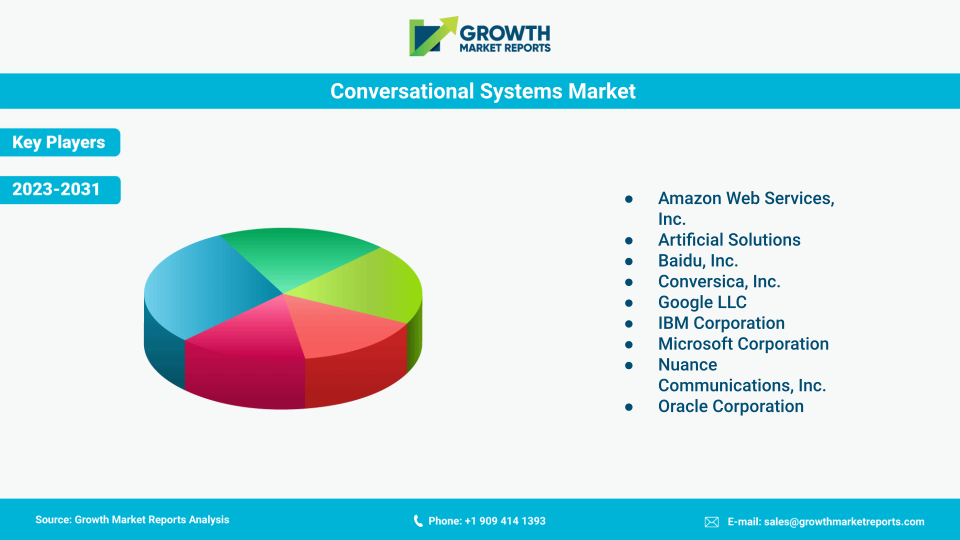
The key players in the global conversational systems market are IBM Corporation; Oracle Corporation; Amazon Web Services, Inc.; Microsoft Corporation; Artificial Solutions; Baidu, Inc.; Conversica, Inc.; Nuance Communications, Inc.; Google LLC; and SAP SE.
These key players have adopted a series of market strategies including new product launching, entering into partnership, collaboration, and production expansion to enhance their market position and expand their consumer base.

Opportunities include multilingual support, conversational commerce, and integration with AR/VR and IoT. Challenges involve data privacy, security concerns, regulatory compliance, and addressing AI bias.
Leading companies include Microsoft, IBM, Google, Amazon Web Services, Oracle, SAP, Nuance Communications, Baidu, Artificial Solutions, and Kore.ai.
Key applications include customer support, personal assistants, branding and advertisement, data privacy and compliance, employee onboarding, and internal communications.
North America leads the market due to early AI adoption and strong digital infrastructure, while Asia Pacific is the fastest-growing region, driven by rapid digitalization and increased AI investments.
The market is segmented into software (chatbots, virtual assistants), hardware (smart speakers, AI processors), and services (consulting, integration, maintenance). Software holds the largest market share.
Conversational systems can be deployed on-premises for greater control and compliance or via the cloud for scalability and cost-effectiveness. Hybrid deployment models are also gaining popularity.
Conversational systems leverage technologies such as machine learning, deep learning, natural language processing (NLP), and automated speech recognition (ASR) to enable intelligent, context-aware interactions.
Major industries adopting conversational systems include banking, financial services & insurance (BFSI), healthcare, retail & e-commerce, IT & telecommunications, and media & entertainment.
Key growth drivers include the rising demand for automated customer engagement, advancements in artificial intelligence, digital transformation initiatives, and the need for enhanced customer experience across industries.
The global conversational systems market reached USD 13.8 billion in 2024 and is projected to grow at a CAGR of 22.7% from 2025 to 2033, reaching USD 59.2 billion by 2033.