Casino and Gaming Market Research Report 2033

Casino and Gaming Market Research Report 2033

Segments - by Type (Casino, Sports Betting, Lotteries, Poker, Bingo, Others), by Platform (Land-Based, Online), by Application (Commercial, Residential, Others), by End-User (Individual, Group)

https://growthmarketreports.com/Debadatta
Author : Debadatta Patel
https://growthmarketreports.com/Vaibhav
Fact-checked by : V. Chandola
https://growthmarketreports.com/Shruti
Editor : Shruti Bhat

Upcoming | Report ID :CG-2973 | 4.9 Rating | 28 Reviews | 283 Pages | Format : Docx PDF

Report Description


Casino and Gaming Market Outlook

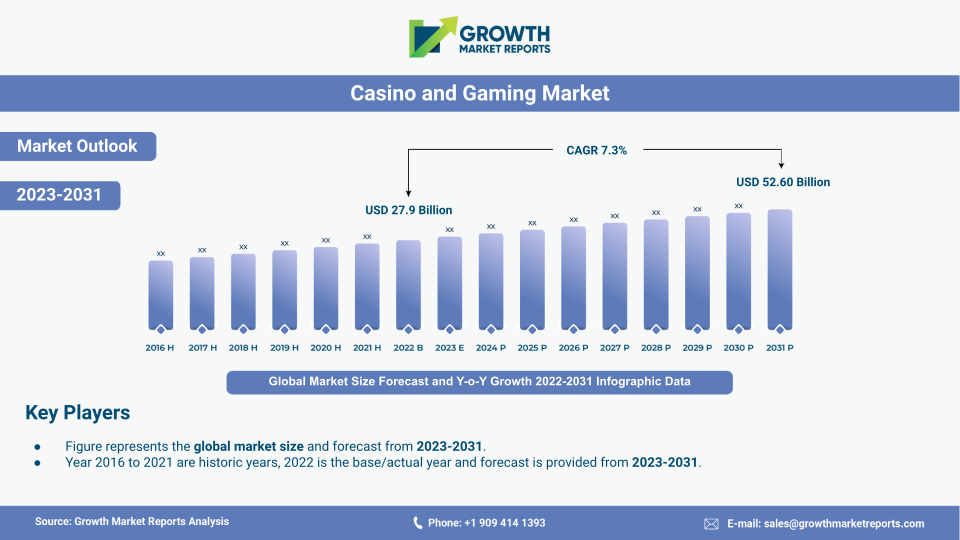
According to our latest research, the global casino and gaming market size reached USD 263.3 billion in 2024, with a robust expansion trajectory fueled by digital transformation and regulatory advancements. The market is expected to grow at a CAGR of 6.8% during the forecast period, reaching an estimated USD 484.7 billion by 2033. Key growth drivers include the proliferation of online gaming platforms, increased legalization of gambling activities in emerging markets, and technological innovations such as live dealer experiences and blockchain-enabled betting systems. As per our analysis, the sector is witnessing significant momentum due to the convergence of entertainment, technology, and evolving consumer preferences, making it one of the most dynamic segments in the global entertainment industry.

A primary growth factor for the casino and gaming market is the rapid adoption of digital technologies, which has fundamentally transformed the industry landscape. Online casinos, sports betting platforms, and mobile gaming applications have made gambling more accessible than ever before, enabling users to participate from the comfort of their homes or on the go. The integration of artificial intelligence, virtual reality, and live streaming technologies has further enhanced user engagement, offering immersive and personalized experiences. This digital shift is particularly pronounced in regions with high internet penetration and smartphone adoption, where younger demographics are driving demand for innovative and interactive gaming solutions. The seamless fusion of entertainment and technology continues to attract new audiences, fueling sustained market growth.

Another significant driver is the progressive regulatory environment in several key markets, which is fostering a safer and more transparent gaming ecosystem. Governments across North America, Europe, and parts of Asia Pacific have implemented comprehensive frameworks to legalize, regulate, and tax various forms of gambling, including online casinos and sports betting. These regulatory reforms have not only legitimized the industry but also attracted substantial investments from both domestic and international operators. Enhanced consumer protections, responsible gaming initiatives, and anti-money laundering measures are boosting player confidence and encouraging participation. As a result, established markets are experiencing renewed growth, while emerging regions are witnessing a surge in new entrants and innovative offerings.

The casino and gaming market also benefits from evolving consumer preferences, particularly the growing demand for experiential entertainment. Modern consumers, especially millennials and Gen Z, seek entertainment experiences that combine social interaction, skill-based gaming, and real-time engagement. Land-based casinos are responding by diversifying their offerings with integrated resorts, themed attractions, and exclusive events, while online platforms are introducing gamified features, loyalty programs, and live tournaments. The convergence of gaming with other forms of entertainment, such as esports and live performances, is creating new revenue streams and expanding the addressable market. This shift towards experiential and social gaming is expected to drive long-term growth and reshape the competitive landscape.

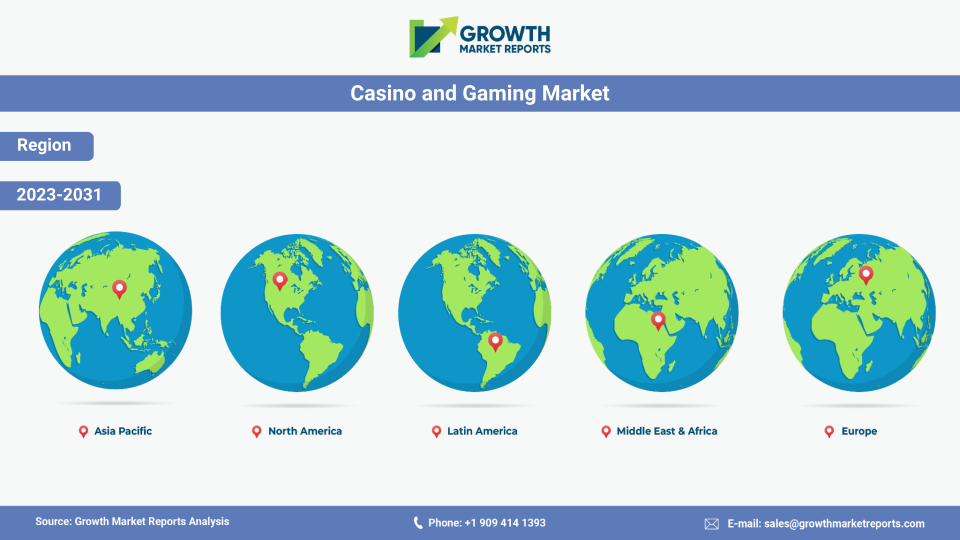
From a regional perspective, Asia Pacific is emerging as the fastest-growing market for casino and gaming, driven by rising disposable incomes, urbanization, and a strong cultural affinity for gaming activities. Macau and Singapore continue to dominate the land-based casino segment, while countries like India and the Philippines are witnessing rapid growth in online gaming. North America remains a key market, bolstered by the legalization of sports betting in several U.S. states and the expansion of online casinos in Canada. Europe maintains a mature market profile, characterized by well-established regulatory frameworks and a diverse range of gaming options. The Middle East & Africa and Latin America are also gaining traction, supported by regulatory reforms and increasing internet penetration. These regional dynamics are shaping the global market, with operators tailoring their strategies to local preferences and regulatory requirements.

Global Casino and Gaming Industry Outlook

Type Analysis

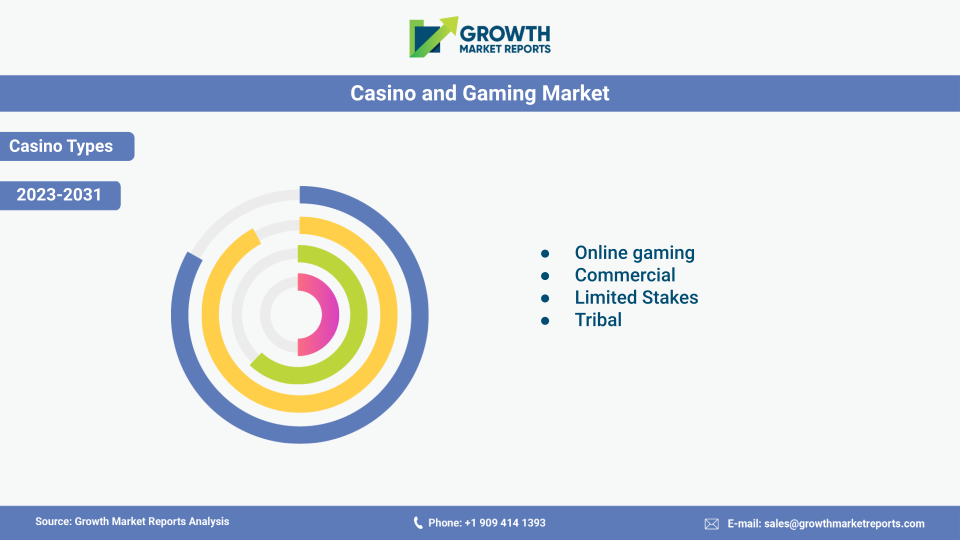
The casino and gaming market is segmented by type into casino, sports betting, lotteries, poker, bingo, and others, each contributing uniquely to the market’s overall growth and diversification. The casino segment, representing the largest share, is driven by the enduring popularity of traditional table games and slot machines, both in land-based establishments and through sophisticated online platforms. The integration of live dealer technology and real-time streaming has enhanced the appeal of online casinos, providing an authentic gaming experience that closely mimics physical venues. This segment continues to innovate with the introduction of new game formats, progressive jackpots, and cross-platform compatibility, attracting both seasoned players and newcomers.

Sports betting has emerged as one of the fastest-growing sub-segments, propelled by the widespread legalization of sports wagering in North America and parts of Europe. The proliferation of online sportsbooks and mobile betting applications has democratized access to sports betting, enabling users to place wagers on a diverse array of sporting events, from football and basketball to esports and virtual sports. Advanced data analytics, real-time odds updates, and in-play betting features have significantly enhanced user engagement, while partnerships with sports leagues and teams are elevating brand visibility and trust. The convergence of sports betting with media and entertainment is creating new opportunities for fan engagement and monetization, further driving segment growth.

Lotteries remain a staple in the global gaming landscape, offering mass-market appeal and substantial revenue generation for governments and charitable organizations. The transition from traditional paper-based lotteries to digital platforms has expanded the reach of lottery games, enabling participation across geographies and demographics. Online lottery services offer convenience, instant results, and innovative game formats, such as syndicates and instant win games, which are attracting new player segments. Regulatory support for online lottery operations is also contributing to market expansion, particularly in regions where lotteries are a key source of public funding.

Poker and bingo, while representing smaller shares, are experiencing renewed interest due to the rise of online platforms and televised tournaments. Online poker rooms and bingo halls offer a variety of game formats, stakes, and social features, catering to both recreational and professional players. The integration of live chat, multiplayer modes, and community events is fostering a sense of camaraderie and competition, enhancing player retention and lifetime value. These segments are also benefiting from the gamification trend, with operators introducing achievements, leaderboards, and loyalty rewards to drive engagement. The "others" category encompasses emerging game types and hybrid formats, such as skill-based games and social casino apps, which are gaining traction among younger demographics seeking novel entertainment experiences.

Report Scope

Attributes Details
Report Title Casino and Gaming Market Research Report 2033
By Type Casino, Sports Betting, Lotteries, Poker, Bingo, Others
By Platform Land-Based, Online
By Application Commercial, Residential, Others
By End-User Individual, Group
Regions Covered North America, Europe, APAC, Latin America, MEA
Base Year 2024
Historic Data 2018-2023
Forecast Period 2025-2033
Number of Pages 283
Number of Tables & Figures 391
Customization Available Yes, the report can be customized as per your need.

Platform Analysis

The casino and gaming market is bifurcated by platform into land-based and online segments, each exhibiting distinct growth patterns and strategic imperatives. Land-based casinos continue to command a significant share of the market, particularly in established gaming destinations such as Las Vegas, Macau, and Monaco. These venues offer a comprehensive entertainment experience, combining gaming with hospitality, fine dining, live performances, and luxury amenities. The resilience of land-based casinos is underpinned by their ability to deliver immersive and social experiences that cannot be fully replicated online. Integrated resort developments and themed attractions are further enhancing the appeal of physical casinos, driving foot traffic and ancillary revenue streams.

Conversely, the online platform segment is experiencing exponential growth, fueled by advancements in digital infrastructure, mobile technology, and regulatory liberalization. Online casinos, sports betting sites, and lottery portals offer unparalleled convenience, accessibility, and variety, enabling users to participate in gaming activities anytime and anywhere. The adoption of secure payment gateways, robust encryption, and responsible gaming tools is addressing concerns around security and fair play, boosting consumer confidence in digital platforms. Operators are leveraging data analytics and artificial intelligence to personalize offerings, optimize user journeys, and enhance retention, positioning online gaming as a key driver of market expansion.

The convergence of land-based and online platforms is giving rise to hybrid models, such as live dealer games and omnichannel loyalty programs, which bridge the gap between physical and digital experiences. Land-based operators are increasingly partnering with technology providers to launch branded online platforms, extend their reach, and diversify revenue streams. Cross-platform integration enables seamless player transitions between online and offline environments, fostering brand loyalty and maximizing customer lifetime value. This trend is particularly pronounced in regulated markets, where operators are leveraging their physical presence to build trust and credibility in the digital domain.

While online platforms are driving innovation and accessibility, they also face challenges related to regulatory compliance, cybersecurity, and responsible gaming. Operators must navigate a complex web of jurisdiction-specific regulations, implement robust anti-fraud measures, and promote safe gaming practices to mitigate risks and safeguard player interests. The competitive landscape is intensifying, with new entrants and established brands vying for market share through aggressive marketing, exclusive content, and differentiated user experiences. As the boundaries between land-based and online gaming continue to blur, operators that can successfully integrate both platforms and deliver seamless, engaging experiences will be best positioned for long-term success.

Application Analysis

The casino and gaming market is further segmented by application into commercial, residential, and others, reflecting the diverse settings in which gaming activities occur. The commercial segment dominates the market, encompassing land-based casinos, gaming clubs, racetracks, and online gaming platforms operated by licensed entities. These venues are designed to maximize revenue generation through high-volume foot traffic, premium services, and diversified entertainment offerings. Commercial operators invest heavily in marketing, technology, and customer experience to attract and retain players, leveraging data-driven insights to optimize game portfolios, loyalty programs, and promotional campaigns. The commercial segment is also characterized by significant capital expenditures on infrastructure, security, and regulatory compliance, underscoring the scale and complexity of operations in this space.

The residential application segment is gaining traction, driven by the rise of online and mobile gaming platforms that enable users to participate in casino and gaming activities from the comfort of their homes. The proliferation of smartphones, high-speed internet, and user-friendly applications has democratized access to gaming, making it a mainstream leisure activity for a broad demographic. Residential gaming appeals to individuals seeking convenience, privacy, and flexibility, with operators offering a wide range of games, stakes, and social features to cater to diverse preferences. The COVID-19 pandemic accelerated the shift towards residential gaming, as lockdowns and social distancing measures limited access to physical venues, prompting operators to enhance their digital offerings and invest in remote engagement strategies.

The "others" application segment encompasses a variety of niche and emerging use cases, such as gaming in cruise ships, airports, and entertainment complexes. These venues cater to specific customer segments, such as tourists, business travelers, and event attendees, offering tailored gaming experiences that complement other leisure and hospitality services. The integration of gaming with non-traditional settings is creating new opportunities for operators to diversify revenue streams, enhance brand visibility, and capture incremental demand. These applications often require specialized regulatory approvals and operational expertise, given the unique challenges associated with transient customer bases and variable demand patterns.

Across all application segments, operators are prioritizing the adoption of advanced technologies to enhance user experience, streamline operations, and ensure regulatory compliance. The deployment of cashless payment systems, biometric authentication, and real-time analytics is improving security, efficiency, and personalization, while responsible gaming initiatives are promoting safe and sustainable participation. As consumer preferences evolve and new applications emerge, operators that can anticipate and respond to shifting demand dynamics will be well-positioned to capture growth opportunities and maintain competitive advantage.

End-User Analysis

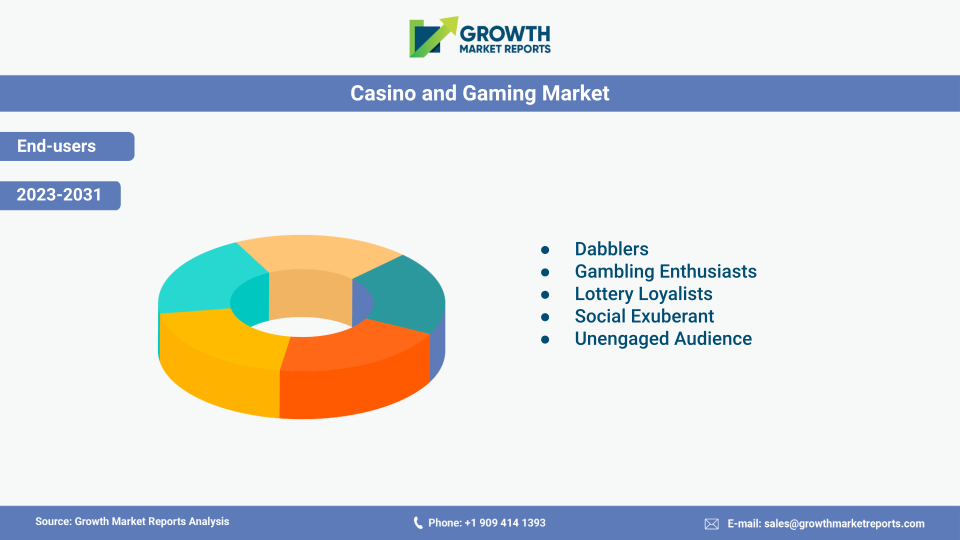
The casino and gaming market is segmented by end-user into individual and group categories, each exhibiting distinct behavioral patterns and engagement drivers. Individual users represent the largest and most diverse segment, encompassing casual players, enthusiasts, and high rollers who participate in gaming activities for entertainment, socialization, and the potential for monetary rewards. Operators are increasingly leveraging data analytics and artificial intelligence to segment individual users based on preferences, playing habits, and risk profiles, enabling personalized marketing, game recommendations, and loyalty programs. The rise of online and mobile gaming platforms has empowered individual users with greater choice, convenience, and control, fostering higher engagement and retention rates.

Group end-users, including families, friends, corporate clients, and organized gaming clubs, are an important segment for both land-based and online operators. Group gaming experiences, such as poker tournaments, bingo nights, and themed events, offer social interaction, camaraderie, and shared excitement, making them popular for special occasions and team-building activities. Land-based casinos and integrated resorts often design exclusive packages and private gaming rooms to cater to group bookings, while online platforms are introducing multiplayer modes, chat features, and collaborative challenges to enhance group engagement. Group participation is also associated with higher average spending, longer session durations, and increased brand loyalty, making it a strategic focus area for operators seeking to maximize lifetime value.

The dynamics of individual and group end-users are influenced by cultural, demographic, and socioeconomic factors, which vary significantly across regions and market segments. For example, individual gaming is more prevalent in mature markets with high internet penetration and disposable incomes, while group gaming is gaining traction in emerging markets with strong social and communal traditions. Operators are tailoring their offerings and marketing strategies to align with local preferences, regulatory requirements, and competitive dynamics, ensuring relevance and resonance with target audiences.

The convergence of individual and group gaming experiences is giving rise to new formats and hybrid models, such as live tournaments, social casinos, and community-driven platforms. These innovations are blurring the boundaries between solitary and social play, enabling users to seamlessly transition between individual and group modes based on their preferences and motivations. As the market continues to evolve, understanding and addressing the unique needs of both individual and group end-users will be critical for operators seeking to drive engagement, differentiation, and long-term growth.

Opportunities & Threats

The casino and gaming market presents a wealth of opportunities for operators, investors, and technology providers, driven by ongoing digital transformation and regulatory liberalization. The rapid expansion of online and mobile gaming platforms is unlocking new revenue streams and enabling operators to reach previously underserved segments, such as younger demographics and players in remote or unregulated regions. Technological advancements, including artificial intelligence, blockchain, and virtual reality, are enabling the development of innovative game formats, personalized experiences, and secure payment solutions, enhancing user engagement and trust. Strategic partnerships and mergers are facilitating market entry, portfolio diversification, and operational synergies, positioning stakeholders to capitalize on the growing demand for experiential and interactive entertainment.

Another major opportunity lies in the integration of gaming with other entertainment and hospitality offerings, such as esports, live performances, and themed attractions. The convergence of gaming with broader leisure and lifestyle trends is creating new avenues for cross-promotion, customer acquisition, and brand differentiation. Operators that can deliver seamless, immersive, and socially engaging experiences across multiple touchpoints will be well-positioned to capture share in an increasingly competitive landscape. Additionally, the adoption of responsible gaming practices and advanced compliance technologies is enhancing industry credibility, attracting new players, and fostering sustainable growth.

Despite these opportunities, the market faces several restraining factors that could impact growth and profitability. Chief among them are regulatory complexities and compliance costs, which vary significantly across jurisdictions and require substantial investments in legal, operational, and technological infrastructure. The risk of regulatory changes, tax increases, and advertising restrictions poses ongoing challenges for operators, particularly in emerging markets with evolving policy frameworks. Additionally, concerns around problem gambling, cybersecurity threats, and fraud necessitate continuous investment in player protection, monitoring, and education, which can impact margins and operational efficiency. Operators must navigate these challenges proactively to ensure sustainable growth and maintain stakeholder trust.

Regional Outlook

Regionally, the Asia Pacific market stands out as the fastest-growing segment, with a market size of USD 92.1 billion in 2024 and a projected CAGR of 8.5% through 2033. Macau, Singapore, and the Philippines are key hubs for land-based casinos, while India and China are witnessing significant growth in online gaming due to rising internet penetration and smartphone adoption. The cultural acceptance of gaming, coupled with supportive regulatory reforms, is attracting substantial investments from global operators looking to tap into the region’s vast and diverse consumer base. The integration of gaming with tourism, hospitality, and entertainment is further enhancing the appeal and economic impact of the sector in Asia Pacific.

In North America, the market reached USD 78.6 billion in 2024, driven by the legalization of sports betting in several U.S. states and the expansion of online casinos in Canada. The region is characterized by a mature regulatory environment, high consumer spending, and a strong culture of gaming and entertainment. Land-based casinos in Las Vegas and Atlantic City continue to attract domestic and international visitors, while online platforms are capturing a growing share of the market through innovative offerings and aggressive marketing. The convergence of gaming with sports, media, and technology is creating new growth opportunities and reshaping the competitive landscape in North America.

Europe maintains a well-established and diverse gaming market, with a market size of USD 61.7 billion in 2024. The region is known for its comprehensive regulatory frameworks, which promote transparency, player protection, and responsible gaming. Key markets such as the United Kingdom, Germany, and Italy offer a wide range of gaming options, from land-based casinos and betting shops to online platforms and lotteries. The adoption of advanced technologies and cross-border collaborations is driving innovation and market expansion, while regulatory harmonization efforts are facilitating market entry and growth for international operators. Europe’s focus on sustainability, compliance, and consumer welfare positions it as a benchmark for best practices in the global casino and gaming industry.

Casino and Gaming Market Statistics

Competitor Outlook

The global casino and gaming market is characterized by intense competition, with a diverse array of operators, technology providers, and content developers vying for share across land-based and online segments. The competitive landscape is shaped by the interplay of scale, innovation, brand equity, and regulatory compliance, with leading players leveraging their resources and expertise to expand market presence, enhance offerings, and drive customer loyalty. Mergers, acquisitions, and strategic partnerships are common, enabling operators to achieve operational efficiencies, diversify portfolios, and accelerate digital transformation. The entry of new players, particularly in the online and mobile gaming space, is intensifying competition and driving innovation across the value chain.

Major land-based casino operators are investing heavily in integrated resort developments, premium amenities, and experiential offerings to differentiate themselves and attract high-value customers. These operators are also expanding into online gaming through branded platforms, joint ventures, and acquisitions, leveraging their brand recognition and customer databases to capture digital market share. Online-first operators, on the other hand, are focusing on technology-driven innovation, personalized experiences, and agile marketing strategies to disrupt traditional models and appeal to digital-native audiences. Content developers and technology providers play a critical role in the ecosystem, supplying operators with cutting-edge games, platforms, and analytics tools that drive engagement and retention.

Regulatory compliance and responsible gaming are key competitive differentiators, with operators investing in advanced monitoring, reporting, and player protection systems to meet evolving legal and ethical standards. The adoption of blockchain, artificial intelligence, and machine learning is enabling operators to enhance transparency, security, and personalization, while reducing fraud and operational risks. The ability to navigate complex regulatory environments, build trust with players, and deliver consistent, high-quality experiences is essential for long-term success in the highly regulated and scrutinized casino and gaming market.

Some of the major companies operating in the global casino and gaming market include Las Vegas Sands Corp., MGM Resorts International, Caesars Entertainment Corporation, Galaxy Entertainment Group, Wynn Resorts, Melco Resorts & Entertainment, Bet365 Group, Flutter Entertainment, International Game Technology PLC (IGT), and Scientific Games Corporation. Las Vegas Sands Corp. is renowned for its integrated resorts in Asia and North America, while MGM Resorts International boasts a diverse portfolio of land-based and online gaming assets. Caesars Entertainment is a leader in both casino operations and digital gaming platforms, with a strong presence in sports betting and online casinos. Bet365 Group and Flutter Entertainment are dominant players in the online sports betting and gaming segment, leveraging advanced technology and global reach to capture market share. International Game Technology PLC and Scientific Games Corporation are leading suppliers of gaming technology and content, supporting operators with innovative solutions that drive engagement and efficiency.

These companies are continually investing in research and development, strategic partnerships, and geographic expansion to strengthen their competitive positions and capitalize on emerging opportunities. Their ability to adapt to changing market dynamics, regulatory requirements, and consumer preferences will be critical in shaping the future trajectory of the global casino and gaming market. As the industry continues to evolve, collaboration, innovation, and a relentless focus on customer experience will remain key drivers of success and differentiation.

Key Players

  • Las Vegas Sands Corp.
  • MGM Resorts International
  • Caesars Entertainment Corporation
  • Wynn Resorts Limited
  • Galaxy Entertainment Group Limited
  • SJM Holdings Limited
  • Melco Resorts & Entertainment Limited
  • Genting Berhad
  • MGM China Holdings Limited
  • Boyd Gaming Corporation
  • Penn Entertainment, Inc.
  • Flutter Entertainment plc
  • International Game Technology PLC (IGT)
  • Scientific Games Corporation (Light & Wonder)
  • Aristocrat Leisure Limited
  • BetMGM
  • DraftKings Inc.
  • Entain plc
  • Kindred Group plc
  • 888 Holdings plc
Casino and Gaming Market Overview

Segments

The Casino and Gaming market has been segmented on the basis of

Type

  • Casino
  • Sports Betting
  • Lotteries
  • Poker
  • Bingo
  • Others

Platform

  • Land-Based
  • Online

Application

  • Commercial
  • Residential
  • Others

End-User

  • Individual
  • Group

Competitive Landscape

Key players in the casino and gaming market include Caesars Entertainment; Las Vegas Sands; Galaxy Entertainment; Betfair Online Casino Games; MGM Resorts; 888 Holdings; City of Dreams Manila; Boyd Gaming; SJM Holdings; and Delaware Park.

These players are constantly engaged in several market development activities including collaborations, agreements, mergers & acquisitions, production capacity expansion, new product launches, and partnerships to strengthen their geographical presence and expand their customer base globally.
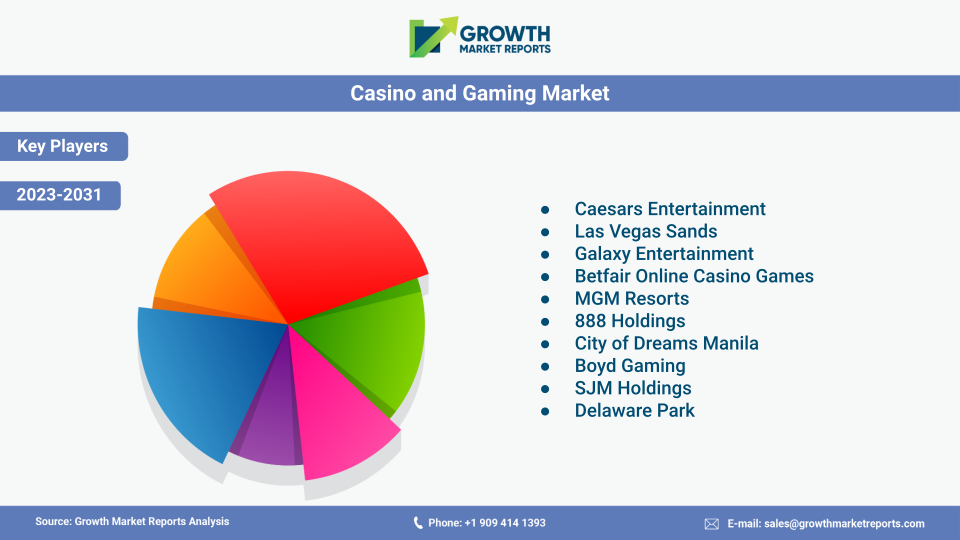

Casino and Gaming Market Key Players

Frequently Asked Questions

Progressive regulatory environments in North America, Europe, and Asia Pacific are legitimizing the industry, attracting investments, enhancing consumer protections, and fostering safer, more transparent gaming ecosystems.

Modern consumers, especially millennials and Gen Z, prefer experiential and social gaming, including skill-based games, live tournaments, and integrated entertainment experiences both online and offline.

Key players include Las Vegas Sands Corp., MGM Resorts International, Caesars Entertainment Corporation, Wynn Resorts, Galaxy Entertainment Group, Melco Resorts & Entertainment, Bet365 Group, Flutter Entertainment, International Game Technology PLC (IGT), and Scientific Games Corporation.

Opportunities include digital expansion, integration with entertainment and hospitality, and adoption of advanced technologies. Challenges involve regulatory complexities, compliance costs, cybersecurity threats, and the need for responsible gaming measures.

Casino and gaming activities are offered through land-based and online platforms. Land-based casinos focus on immersive, social experiences, while online platforms provide convenience, variety, and innovative features like live dealer games and omnichannel loyalty programs.

Digital transformation is a major trend, with online casinos, mobile gaming, AI, virtual reality, live streaming, and blockchain technologies enhancing accessibility, security, and user engagement across platforms.

The market is segmented by type into casino, sports betting, lotteries, poker, bingo, and others. Casinos and sports betting are the largest and fastest-growing segments, while lotteries, poker, and bingo continue to attract diverse player bases.

Asia Pacific is the fastest-growing region, with significant contributions from Macau, Singapore, India, and the Philippines. North America and Europe also remain key markets due to regulatory advancements and high consumer spending.

Major growth drivers include the proliferation of online gaming platforms, increased legalization of gambling in emerging markets, technological innovations like live dealer experiences and blockchain betting, and evolving consumer preferences for experiential entertainment.

As of 2024, the global casino and gaming market size reached USD 263.3 billion and is projected to grow at a CAGR of 6.8%, reaching approximately USD 484.7 billion by 2033.

Table Of Content

Chapter 1 Executive Summary
Chapter 2 Assumptions and Acronyms Used
Chapter 3 Research Methodology
Chapter 4 Casino and Gaming Market Overview
   4.1 Introduction
      4.1.1 Market Taxonomy
      4.1.2 Market Definition
      4.1.3 Macro-Economic Factors Impacting the Market Growth
   4.2 Casino and Gaming Market Dynamics
      4.2.1 Market Drivers
      4.2.2 Market Restraints
      4.2.3 Market Opportunity
   4.3 Casino and Gaming Market - Supply Chain Analysis
      4.3.1 List of Key Suppliers
      4.3.2 List of Key Distributors
      4.3.3 List of Key Consumers
   4.4 Key Forces Shaping the Casino and Gaming Market
      4.4.1 Bargaining Power of Suppliers
      4.4.2 Bargaining Power of Buyers
      4.4.3 Threat of Substitution
      4.4.4 Threat of New Entrants
      4.4.5 Competitive Rivalry
   4.5 Global Casino and Gaming Market Size & Forecast, 2023-2032
      4.5.1 Casino and Gaming Market Size and Y-o-Y Growth
      4.5.2 Casino and Gaming Market Absolute $ Opportunity

Chapter 5 Global Casino and Gaming Market Analysis and Forecast By Type
   5.1 Introduction
      5.1.1 Key Market Trends & Growth Opportunities By Type
      5.1.2 Basis Point Share (BPS) Analysis By Type
      5.1.3 Absolute $ Opportunity Assessment By Type
   5.2 Casino and Gaming Market Size Forecast By Type
      5.2.1 Casino
      5.2.2 Sports Betting
      5.2.3 Lotteries
      5.2.4 Poker
      5.2.5 Bingo
      5.2.6 Others
   5.3 Market Attractiveness Analysis By Type

Chapter 6 Global Casino and Gaming Market Analysis and Forecast By Platform
   6.1 Introduction
      6.1.1 Key Market Trends & Growth Opportunities By Platform
      6.1.2 Basis Point Share (BPS) Analysis By Platform
      6.1.3 Absolute $ Opportunity Assessment By Platform
   6.2 Casino and Gaming Market Size Forecast By Platform
      6.2.1 Land-Based
      6.2.2 Online
   6.3 Market Attractiveness Analysis By Platform

Chapter 7 Global Casino and Gaming Market Analysis and Forecast By Application
   7.1 Introduction
      7.1.1 Key Market Trends & Growth Opportunities By Application
      7.1.2 Basis Point Share (BPS) Analysis By Application
      7.1.3 Absolute $ Opportunity Assessment By Application
   7.2 Casino and Gaming Market Size Forecast By Application
      7.2.1 Commercial
      7.2.2 Residential
      7.2.3 Others
   7.3 Market Attractiveness Analysis By Application

Chapter 8 Global Casino and Gaming Market Analysis and Forecast By End-User
   8.1 Introduction
      8.1.1 Key Market Trends & Growth Opportunities By End-User
      8.1.2 Basis Point Share (BPS) Analysis By End-User
      8.1.3 Absolute $ Opportunity Assessment By End-User
   8.2 Casino and Gaming Market Size Forecast By End-User
      8.2.1 Individual
      8.2.2 Group
   8.3 Market Attractiveness Analysis By End-User

Chapter 9 Global Casino and Gaming Market Analysis and Forecast by Region
   9.1 Introduction
      9.1.1 Key Market Trends & Growth Opportunities By Region
      9.1.2 Basis Point Share (BPS) Analysis By Region
      9.1.3 Absolute $ Opportunity Assessment By Region
   9.2 Casino and Gaming Market Size Forecast By Region
      9.2.1 North America
      9.2.2 Europe
      9.2.3 Asia Pacific
      9.2.4 Latin America
      9.2.5 Middle East & Africa (MEA)
   9.3 Market Attractiveness Analysis By Region

Chapter 10 Coronavirus Disease (COVID-19) Impact 
   10.1 Introduction 
   10.2 Current & Future Impact Analysis 
   10.3 Economic Impact Analysis 
   10.4 Government Policies 
   10.5 Investment Scenario

Chapter 11 North America Casino and Gaming Analysis and Forecast
   11.1 Introduction
   11.2 North America Casino and Gaming Market Size Forecast by Country
      11.2.1 U.S.
      11.2.2 Canada
   11.3 Basis Point Share (BPS) Analysis by Country
   11.4 Absolute $ Opportunity Assessment by Country
   11.5 Market Attractiveness Analysis by Country
   11.6 North America Casino and Gaming Market Size Forecast By Type
      11.6.1 Casino
      11.6.2 Sports Betting
      11.6.3 Lotteries
      11.6.4 Poker
      11.6.5 Bingo
      11.6.6 Others
   11.7 Basis Point Share (BPS) Analysis By Type 
   11.8 Absolute $ Opportunity Assessment By Type 
   11.9 Market Attractiveness Analysis By Type
   11.10 North America Casino and Gaming Market Size Forecast By Platform
      11.10.1 Land-Based
      11.10.2 Online
   11.11 Basis Point Share (BPS) Analysis By Platform 
   11.12 Absolute $ Opportunity Assessment By Platform 
   11.13 Market Attractiveness Analysis By Platform
   11.14 North America Casino and Gaming Market Size Forecast By Application
      11.14.1 Commercial
      11.14.2 Residential
      11.14.3 Others
   11.15 Basis Point Share (BPS) Analysis By Application 
   11.16 Absolute $ Opportunity Assessment By Application 
   11.17 Market Attractiveness Analysis By Application
   11.18 North America Casino and Gaming Market Size Forecast By End-User
      11.18.1 Individual
      11.18.2 Group
   11.19 Basis Point Share (BPS) Analysis By End-User 
   11.20 Absolute $ Opportunity Assessment By End-User 
   11.21 Market Attractiveness Analysis By End-User

Chapter 12 Europe Casino and Gaming Analysis and Forecast
   12.1 Introduction
   12.2 Europe Casino and Gaming Market Size Forecast by Country
      12.2.1 Germany
      12.2.2 France
      12.2.3 Italy
      12.2.4 U.K.
      12.2.5 Spain
      12.2.6 Russia
      12.2.7 Rest of Europe
   12.3 Basis Point Share (BPS) Analysis by Country
   12.4 Absolute $ Opportunity Assessment by Country
   12.5 Market Attractiveness Analysis by Country
   12.6 Europe Casino and Gaming Market Size Forecast By Type
      12.6.1 Casino
      12.6.2 Sports Betting
      12.6.3 Lotteries
      12.6.4 Poker
      12.6.5 Bingo
      12.6.6 Others
   12.7 Basis Point Share (BPS) Analysis By Type 
   12.8 Absolute $ Opportunity Assessment By Type 
   12.9 Market Attractiveness Analysis By Type
   12.10 Europe Casino and Gaming Market Size Forecast By Platform
      12.10.1 Land-Based
      12.10.2 Online
   12.11 Basis Point Share (BPS) Analysis By Platform 
   12.12 Absolute $ Opportunity Assessment By Platform 
   12.13 Market Attractiveness Analysis By Platform
   12.14 Europe Casino and Gaming Market Size Forecast By Application
      12.14.1 Commercial
      12.14.2 Residential
      12.14.3 Others
   12.15 Basis Point Share (BPS) Analysis By Application 
   12.16 Absolute $ Opportunity Assessment By Application 
   12.17 Market Attractiveness Analysis By Application
   12.18 Europe Casino and Gaming Market Size Forecast By End-User
      12.18.1 Individual
      12.18.2 Group
   12.19 Basis Point Share (BPS) Analysis By End-User 
   12.20 Absolute $ Opportunity Assessment By End-User 
   12.21 Market Attractiveness Analysis By End-User

Chapter 13 Asia Pacific Casino and Gaming Analysis and Forecast
   13.1 Introduction
   13.2 Asia Pacific Casino and Gaming Market Size Forecast by Country
      13.2.1 China
      13.2.2 Japan
      13.2.3 South Korea
      13.2.4 India
      13.2.5 Australia
      13.2.6 South East Asia (SEA)
      13.2.7 Rest of Asia Pacific (APAC)
   13.3 Basis Point Share (BPS) Analysis by Country
   13.4 Absolute $ Opportunity Assessment by Country
   13.5 Market Attractiveness Analysis by Country
   13.6 Asia Pacific Casino and Gaming Market Size Forecast By Type
      13.6.1 Casino
      13.6.2 Sports Betting
      13.6.3 Lotteries
      13.6.4 Poker
      13.6.5 Bingo
      13.6.6 Others
   13.7 Basis Point Share (BPS) Analysis By Type 
   13.8 Absolute $ Opportunity Assessment By Type 
   13.9 Market Attractiveness Analysis By Type
   13.10 Asia Pacific Casino and Gaming Market Size Forecast By Platform
      13.10.1 Land-Based
      13.10.2 Online
   13.11 Basis Point Share (BPS) Analysis By Platform 
   13.12 Absolute $ Opportunity Assessment By Platform 
   13.13 Market Attractiveness Analysis By Platform
   13.14 Asia Pacific Casino and Gaming Market Size Forecast By Application
      13.14.1 Commercial
      13.14.2 Residential
      13.14.3 Others
   13.15 Basis Point Share (BPS) Analysis By Application 
   13.16 Absolute $ Opportunity Assessment By Application 
   13.17 Market Attractiveness Analysis By Application
   13.18 Asia Pacific Casino and Gaming Market Size Forecast By End-User
      13.18.1 Individual
      13.18.2 Group
   13.19 Basis Point Share (BPS) Analysis By End-User 
   13.20 Absolute $ Opportunity Assessment By End-User 
   13.21 Market Attractiveness Analysis By End-User

Chapter 14 Latin America Casino and Gaming Analysis and Forecast
   14.1 Introduction
   14.2 Latin America Casino and Gaming Market Size Forecast by Country
      14.2.1 Brazil
      14.2.2 Mexico
      14.2.3 Rest of Latin America (LATAM)
   14.3 Basis Point Share (BPS) Analysis by Country
   14.4 Absolute $ Opportunity Assessment by Country
   14.5 Market Attractiveness Analysis by Country
   14.6 Latin America Casino and Gaming Market Size Forecast By Type
      14.6.1 Casino
      14.6.2 Sports Betting
      14.6.3 Lotteries
      14.6.4 Poker
      14.6.5 Bingo
      14.6.6 Others
   14.7 Basis Point Share (BPS) Analysis By Type 
   14.8 Absolute $ Opportunity Assessment By Type 
   14.9 Market Attractiveness Analysis By Type
   14.10 Latin America Casino and Gaming Market Size Forecast By Platform
      14.10.1 Land-Based
      14.10.2 Online
   14.11 Basis Point Share (BPS) Analysis By Platform 
   14.12 Absolute $ Opportunity Assessment By Platform 
   14.13 Market Attractiveness Analysis By Platform
   14.14 Latin America Casino and Gaming Market Size Forecast By Application
      14.14.1 Commercial
      14.14.2 Residential
      14.14.3 Others
   14.15 Basis Point Share (BPS) Analysis By Application 
   14.16 Absolute $ Opportunity Assessment By Application 
   14.17 Market Attractiveness Analysis By Application
   14.18 Latin America Casino and Gaming Market Size Forecast By End-User
      14.18.1 Individual
      14.18.2 Group
   14.19 Basis Point Share (BPS) Analysis By End-User 
   14.20 Absolute $ Opportunity Assessment By End-User 
   14.21 Market Attractiveness Analysis By End-User

Chapter 15 Middle East & Africa (MEA) Casino and Gaming Analysis and Forecast
   15.1 Introduction
   15.2 Middle East & Africa (MEA) Casino and Gaming Market Size Forecast by Country
      15.2.1 Saudi Arabia
      15.2.2 South Africa
      15.2.3 UAE
      15.2.4 Rest of Middle East & Africa (MEA)
   15.3 Basis Point Share (BPS) Analysis by Country
   15.4 Absolute $ Opportunity Assessment by Country
   15.5 Market Attractiveness Analysis by Country
   15.6 Middle East & Africa (MEA) Casino and Gaming Market Size Forecast By Type
      15.6.1 Casino
      15.6.2 Sports Betting
      15.6.3 Lotteries
      15.6.4 Poker
      15.6.5 Bingo
      15.6.6 Others
   15.7 Basis Point Share (BPS) Analysis By Type 
   15.8 Absolute $ Opportunity Assessment By Type 
   15.9 Market Attractiveness Analysis By Type
   15.10 Middle East & Africa (MEA) Casino and Gaming Market Size Forecast By Platform
      15.10.1 Land-Based
      15.10.2 Online
   15.11 Basis Point Share (BPS) Analysis By Platform 
   15.12 Absolute $ Opportunity Assessment By Platform 
   15.13 Market Attractiveness Analysis By Platform
   15.14 Middle East & Africa (MEA) Casino and Gaming Market Size Forecast By Application
      15.14.1 Commercial
      15.14.2 Residential
      15.14.3 Others
   15.15 Basis Point Share (BPS) Analysis By Application 
   15.16 Absolute $ Opportunity Assessment By Application 
   15.17 Market Attractiveness Analysis By Application
   15.18 Middle East & Africa (MEA) Casino and Gaming Market Size Forecast By End-User
      15.18.1 Individual
      15.18.2 Group
   15.19 Basis Point Share (BPS) Analysis By End-User 
   15.20 Absolute $ Opportunity Assessment By End-User 
   15.21 Market Attractiveness Analysis By End-User

Chapter 16 Competition Landscape 
   16.1 Casino and Gaming Market: Competitive Dashboard
   16.2 Global Casino and Gaming Market: Market Share Analysis, 2023
   16.3 Company Profiles (Details – Overview, Financials, Developments, Strategy) 
      16.3.1 Las Vegas Sands Corp.
MGM Resorts International
Caesars Entertainment Corporation
Wynn Resorts Limited
Galaxy Entertainment Group Limited
SJM Holdings Limited
Melco Resorts & Entertainment Limited
Genting Berhad
MGM China Holdings Limited
Boyd Gaming Corporation
Penn Entertainment, Inc.
Flutter Entertainment plc
International Game Technology PLC (IGT)
Scientific Games Corporation (Light & Wonder)
Aristocrat Leisure Limited
BetMGM
DraftKings Inc.
Entain plc
Kindred Group plc
888 Holdings plc

Methodology

Our Clients

Siemens Healthcare
The John Holland Group
Nestle SA
General Mills
FedEx Logistics
sinopec
Dassault Aviation
Pfizer