Automotive Power Sliding & Tailgate Door System Market 2030
Global Automotive Power Sliding and Tailgate Door System Market
Segments - by Types (Power Sliding Door Systems and Power Tailgate Systems), By Vehicle Type (Passenger Car {Compact, Mid-size, Luxury, and SUV}, LCV, and HCV), By Material (Steel, Aluminum, and Brass/Bronze/Composite & Other Material), By Sales Channel (OEM and Aftermarket), and Regions (North America, Europe, Asia Pacific, Latin America, and Middle East & Africa) - Global Industry Analysis, Growth, Share, Size, Trends, and Forecast 2021 – 2028
Segments - by Types (Power Sliding Door Systems and Power Tailgate Systems), By Vehicle Type (Passenger Car {Compact, Mid-size, Luxury, and SUV}, LCV, and HCV), By Material (Steel, Aluminum, and Brass/Bronze/Composite & Other Material), By Sales Channel (OEM and Aftermarket), and Regions (North America, Europe, Asia Pacific, Latin America, and Middle East & Africa) - Global Industry Analysis, Growth, Share, Size, Trends, and Forecast 2021 – 2028
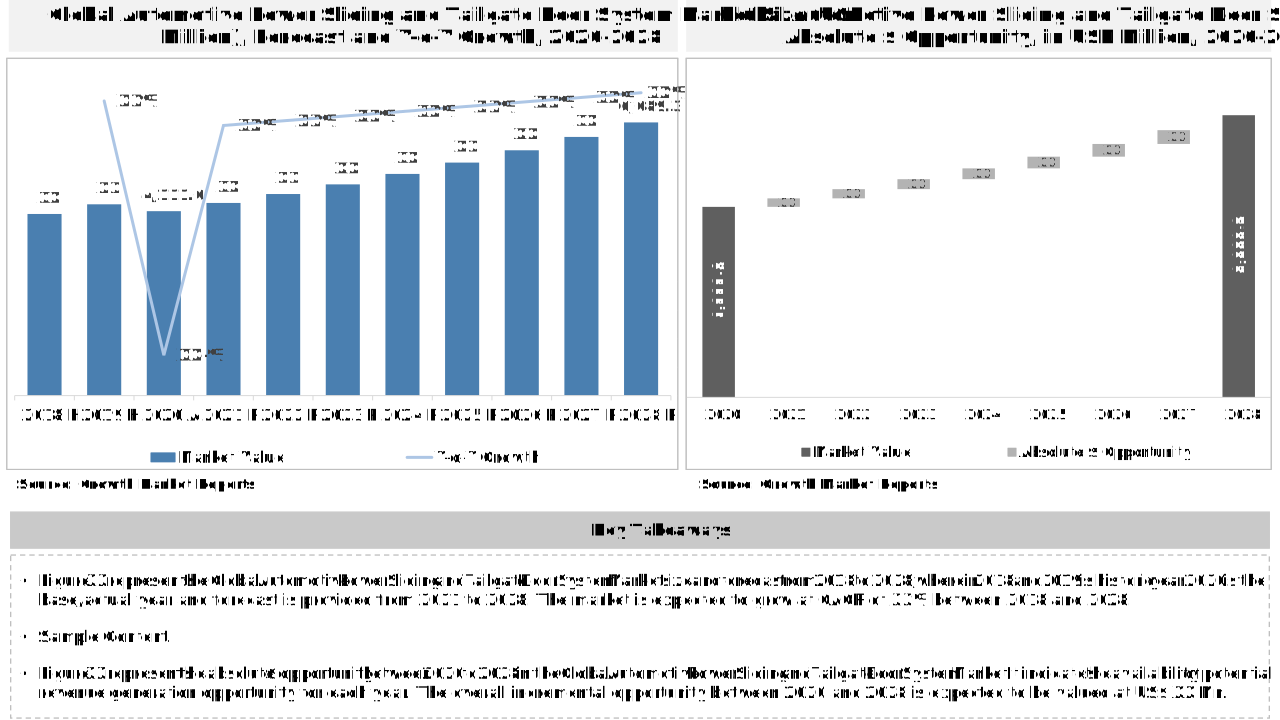
The global automotive power sliding and tailgate door system market was valued at USD 4,111.0 Mn in 2020 and is projected to reach USD 6,089.3 Mn by 2028, expanding at a CAGR of 5.1% during the forecast period. The global automotive power sliding and tailgate door system market is projected to expand at a rapid pace, due to increased spending on luxury vehicles around the world, as well as technological advancements. Rising demand for power sliding door over conventional door in commercial vehicle is projected to boost the market during the forecast period.
Market Dynamics
Vehicles with sliding doors require less space as compared with other types of doors, which is expected to drive the market during the forecast period. Vehicle parking is a major issue in urban cities. Limited parking space is available, due to ongoing construction, traffic, shopping centers, airports, hospitals, and other public spaces. Therefore, conventional and other types of doors require space for parking. Less parking space required with sliding doors is expected to propel the market during the forecast period.
A major factor driving the automotivepower sliding and tailgate door system market is the increasing adoption of luxury vans.Product launches led to the development of the automotive power sliding and tailgate door system market during the forecast period.2021 Ford transit passenger van consists of Ford Co-Pilot360 technologies and gives comfort and convenience while driving. These passenger vans have power sliding doors and the doors are pulled by using exterior or interior handle, key fob, or instrument panel button.
Automotive sliding and tailgate door systems provide comfort and convenience to consumers, due to various technological advancements, which is expected to drive the market during the forecast period.Nissan Motor Corporation introduced hands-free automatic sliding door. The sliding door is opened by waving the foot under it. A person opens the vehicle door easily while carrying shopping bags or small children in the arms.
Several market players are increasing their expenditure on R&D for the development of low-cost technology, which is expected to propel the market over the forecast period. In Honda cars, when the driver carries keyless remote, the vehicle door along with the tailgate is opened within 80cm radius. The door is locked by pressing the lock button on the front door or on the tailgate. Rising investment in R&D for the development of products and advanced techniques are estimated to boost the market in the coming years.
In the automotive industry, counterfeit components cause serious damage to users, which hampers the market growth. Availability of counterfeit products in the market is expected to restrain the automotive power sliding and tailgate door systems market growth during the forecast period. Consumers are not able to distinguish between counterfeit automotive parts, due to lack of knowledge, which hampers the growth of the automotive industry.
Segment Outlook
By Type
In terms of types, the automotive power sliding and tailgate door system market is bifurcated into power sliding door systems and power tailgate systems. Research & development operations have revealed that carbon fiber and other composites may be used to make lighter power sliding doors, presenting new opportunities for the automotive power sliding doors market to grow throughout the forecast period.
By Vehicle Type
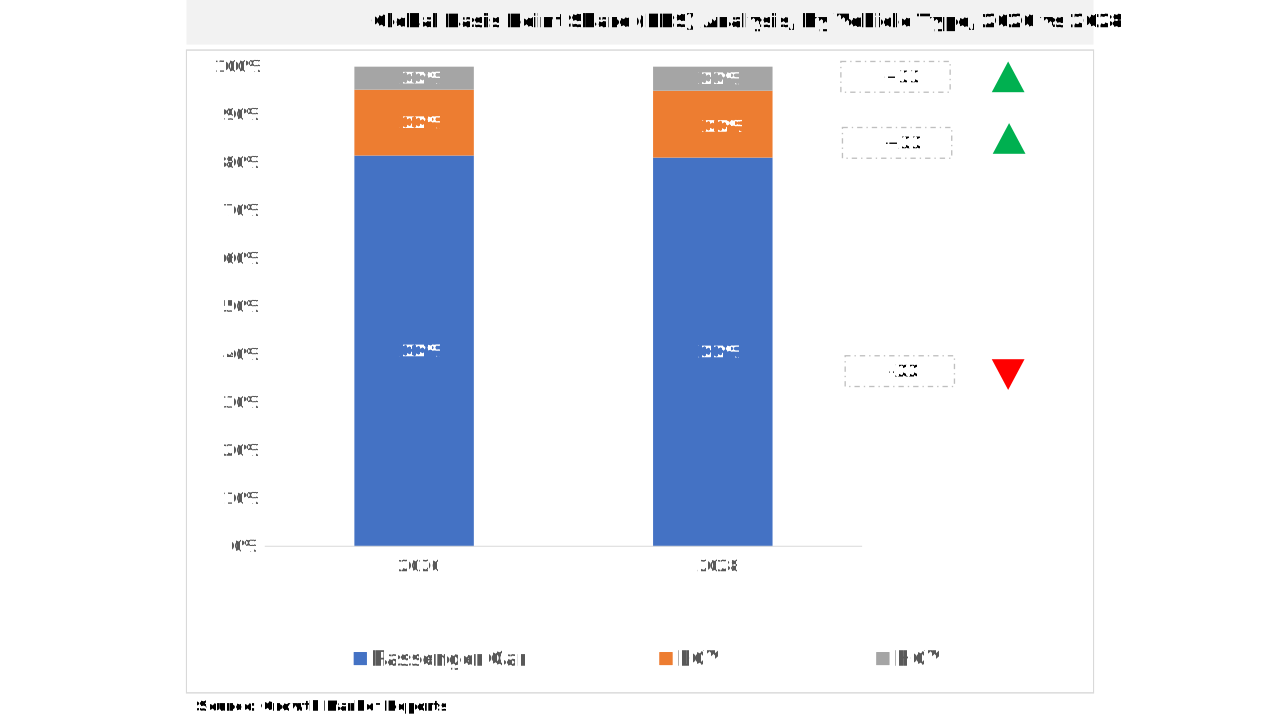
In terms of vehicle type, the automotive power sliding and tailgate door system market is segmented into Passenger Car, LCV, and HCV. Passenger Car is further segmented into compact, mid-size, luxury, and SUV. Over the projected period, the Passenger Car segment is projected to dominate the market owing to rising per capita income, and increasing tour & leisure activities globally.
By Material
In terms of materials, the automotive power sliding and tailgate door system market is segmented into Steel, Aluminum, and Brass/Bronze/Composite & Other Materials. Over the projected period, the steel segment is projected to dominate the market owing to increasing use of steel in automotive power sliding and tailgate door systemdue to its various advantages such as cost effective, stainless, high strength in nature and less in weight.
By Sales Channel
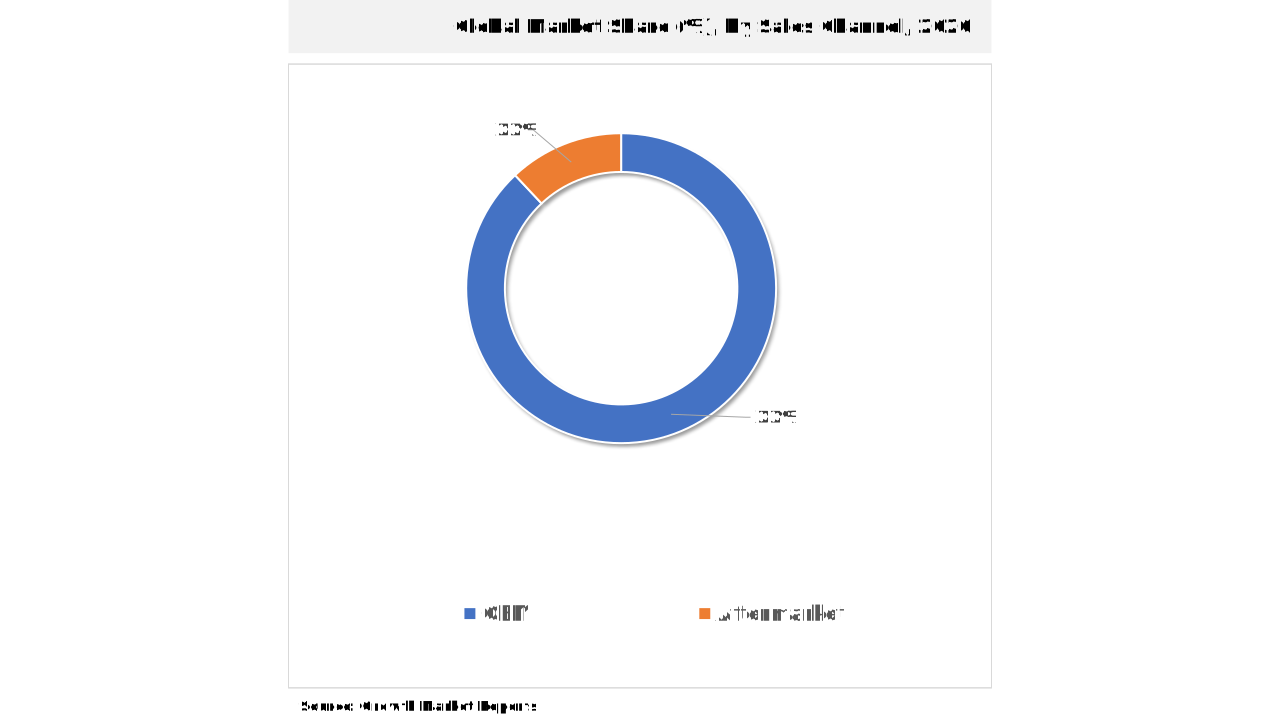
In terms of sales channels, the automotive power sliding and tailgate door system market is bifurcated into OEM and Aftermarket. The Aftermarket segment is expected to expand at a significant CAGR. The growing demand for vehicles in emerging markets is expected to boost industry growth. Due to numerous environmental requirements, technological advancements and the adoption of various eco-friendly practices in vehicle production are expected to increase demand for alternative automotive parts such as power sliding and tailgate door system.
By Region
Based on regions, the global automotive power sliding and tailgate door system market is fragmented into North America, Europe, Latin America, and Middle East & Africa. North America accounted for a significant share of the market in 2020 and the market in Asia Pacific is anticipated to expand at a substantial CAGR during the forecast period. The automotive power sliding and tailgate door system market is growing in North America, owing to use of sliding doors in commercial vehicles. North America has high level of vehicle automation, hence automobile power sliding and tailgate doors are in high demand in the region.
Key Benefits for Industry Participants & Stakeholders
In-Depth Analysis of the Automotive Power Sliding and Tailgate Door System Market.
Historical, Current and Projected Market Size in Terms of Value.
Potential & Niche Segments and Regions Exhibiting Promising Growth Covered
Industry Drivers, Restraints and Opportunities Covered in the Study
Recent Industry Trends and Developments
Competitive Landscape & Strategies of Key Players
Neutral Perspective on From Automotive Power Sliding and Tailgate Door System Market Performance
Segments
By Type
Power Sliding Door Systems
Power Tailgate Systems
By Vehicle Type
Passenger Car
Compact
Mid-size
Luxury
SUV
LCV
HCV
By Material
Steel
Aluminum
Brass/Bronze/Composite & Other Materials
By Sales Channel
OEM
After Market
By Region
North America
Europe
Asia Pacific
Latin America
Middle East & Africa
Key Market Players Profiled in the Report
AISIN CORPORATION
Continental AG
Robert Bosch GmbH
Mitsuba Corp.
Mitsui Kinzoku ACT Corporation
Johnson Electric Holdings Limited
HI-LEX CORPORATION
Huf Hülsbeck & Fürst GmbH & Co. KG
Brose Fahrzeugteile SE & Co. KG
Stabilus GmbH
Competitive Landscape
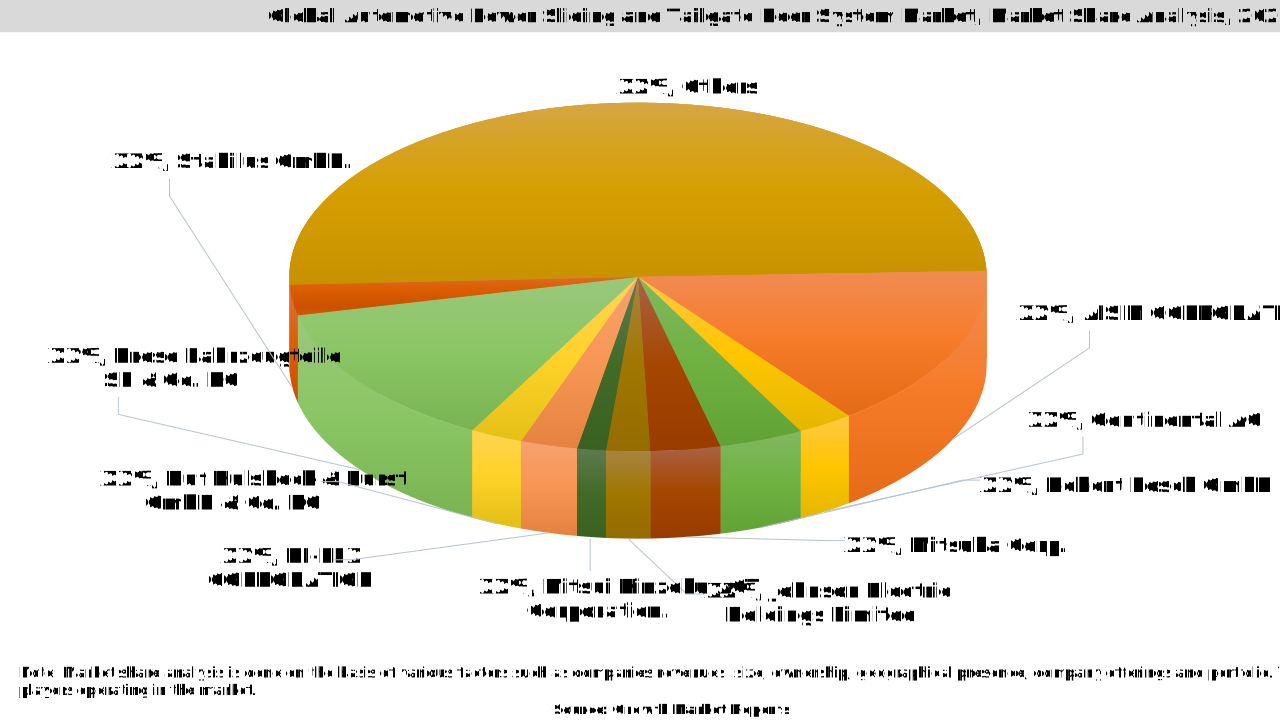
Key players in the automotive power sliding and tailgate door system market are AISIN CORPORATION, Continental AG, Robert Bosch GmbH, Mitsuba Corp., Mitsui Kinzoku ACT Corporation, Johnson Electric Holdings Limited, HI-LEX CORPORATION, Huf Hülsbeck & Fürst GmbH & Co. KG, Brose Fahrzeugteile SE & Co. KG, and Stabilus GmbH.
The players are adopting key strategies such as product development, geographical expansion, mergers and acquisition, and many other strategies to cater the increasing demand for automotive power sliding and tailgate door system system. For instance, in August 2021, Johnson Electric Holdings Limited launched an electric compressor with high power, which effectively decreases the heat produced by the battery during fast charging at high-rate of electric vehicles. The super-fast new-generation charging vehicles is armed with this new high-capacity compressor.
Video Summary for Automotive Power Sliding and Tailgate Door System Market
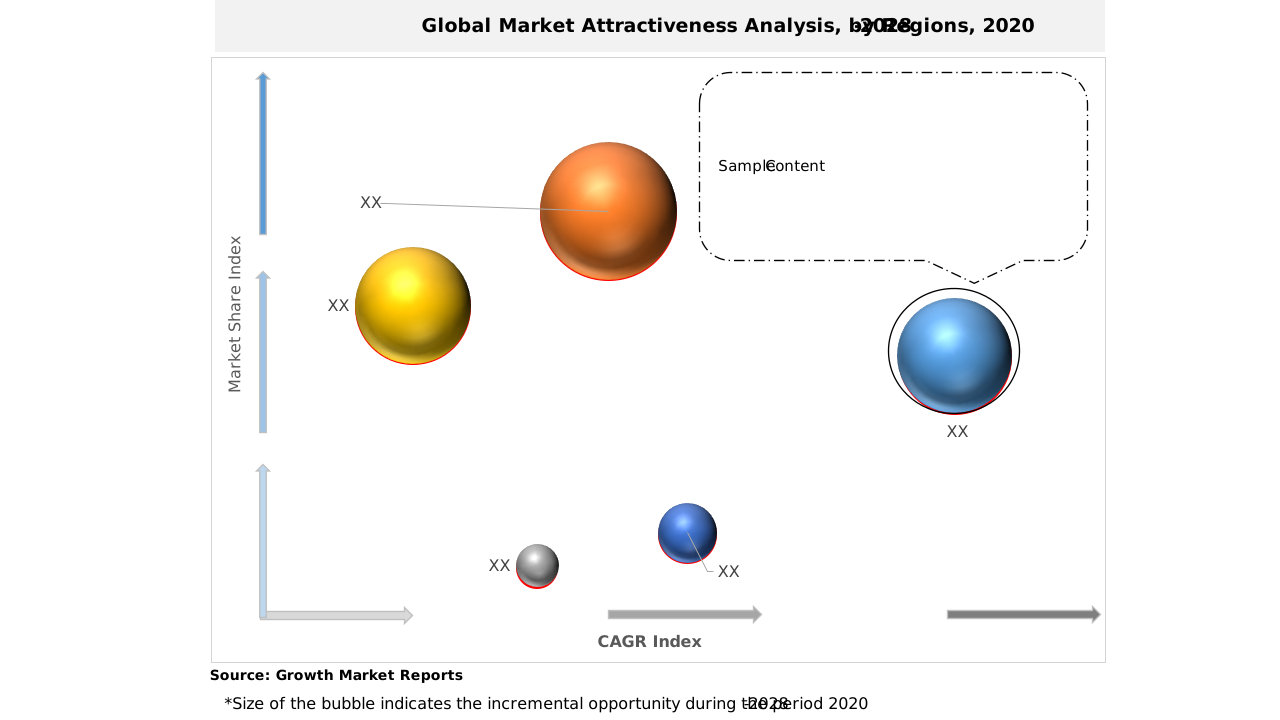
Chapter 1 Executive Summary Chapter 2 Assumptions and Acronyms Used Chapter 3 Research Methodology Chapter 4 Automotive Power Sliding and Tailgate Door System Market Overview 4.1 Introduction 4.1.1 Market Taxonomy 4.1.2 Market Definition 4.1.3 Macro-Economic Factors Impacting the Market Growth 4.2 Automotive Power Sliding and Tailgate Door System Market Dynamics 4.2.1 Market Drivers 4.2.2 Market Restraints 4.2.3 Market Opportunity 4.3 Automotive Power Sliding and Tailgate Door System Market - Supply Chain Analysis 4.3.1 List of Key Suppliers 4.3.2 List of Key Distributors 4.3.3 List of Key Consumers 4.4 Key Forces Shaping the Automotive Power Sliding and Tailgate Door System Market 4.4.1 Bargaining Power of Suppliers 4.4.2 Bargaining Power of Buyers 4.4.3 Threat of Substitution 4.4.4 Threat of New Entrants 4.4.5 Competitive Rivalry 4.5 Global Automotive Power Sliding and Tailgate Door System Market Size & Forecast, 2018-2028 4.5.1 Automotive Power Sliding and Tailgate Door System Market Size and Y-o-Y Growth 4.5.2 Automotive Power Sliding and Tailgate Door System Market Absolute $ Opportunity Chapter 5 Global Automotive Power Sliding and Tailgate Door System Market Analysis and Forecast By Type 5.1 Introduction 5.1.1 Key Market Trends & Growth Opportunities By Type 5.1.2 Basis Point Share (BPS) Analysis By Type 5.1.3 Absolute $ Opportunity Assessment By Type 5.2 Automotive Power Sliding and Tailgate Door System Market Size Forecast By Type 5.2.1 Power Sliding Door Systems 5.2.2 Power Tailgate Systems 5.3 Market Attractiveness Analysis By Type Chapter 6 Global Automotive Power Sliding and Tailgate Door System Market Analysis and Forecast By Vehicle Type 6.1 Introduction 6.1.1 Key Market Trends & Growth Opportunities By Vehicle Type 6.1.2 Basis Point Share (BPS) Analysis By Vehicle Type 6.1.3 Absolute $ Opportunity Assessment By Vehicle Type 6.2 Automotive Power Sliding and Tailgate Door System Market Size Forecast By Vehicle Type 6.2.1 Passenger Car 6.2.1.1 Compact 6.2.1.2 Mid-Size 6.2.1.3 Luxury 6.2.1.4 SUV 6.2.2 LCV 6.2.3 HCV 6.3 Market Attractiveness Analysis By Vehicle Type Chapter 7 Global Automotive Power Sliding and Tailgate Door System Market Analysis and Forecast By Material 7.1 Introduction 7.1.1 Key Market Trends & Growth Opportunities By Material 7.1.2 Basis Point Share (BPS) Analysis By Material 7.1.3 Absolute $ Opportunity Assessment By Material 7.2 Automotive Power Sliding and Tailgate Door System Market Size Forecast By Material 7.2.1 Steel 7.2.2 Aluminum 7.2.3 Brass/Bronze/Composite & Other Material 7.3 Market Attractiveness Analysis By Material Chapter 8 Global Automotive Power Sliding and Tailgate Door System Market Analysis and Forecast By Sales Channel 8.1 Introduction 8.1.1 Key Market Trends & Growth Opportunities By Sales Channel 8.1.2 Basis Point Share (BPS) Analysis By Sales Channel 8.1.3 Absolute $ Opportunity Assessment By Sales Channel 8.2 Automotive Power Sliding and Tailgate Door System Market Size Forecast By Sales Channel 8.2.1 OEM 8.2.2 Aftermarket 8.3 Market Attractiveness Analysis By Sales Channel Chapter 9 Global Automotive Power Sliding and Tailgate Door System Market Analysis and Forecast by Region 9.1 Introduction 9.1.1 Key Market Trends & Growth Opportunities by Region 9.1.2 Basis Point Share (BPS) Analysis by Region 9.1.3 Absolute $ Opportunity Assessment by Region 9.2 Automotive Power Sliding and Tailgate Door System Market Size Forecast by Region 9.2.1 North America 9.2.2 Europe 9.2.3 Asia Pacific 9.2.4 Latin America 9.2.5 Middle East & Africa (MEA) 9.3 Market Attractiveness Analysis by Region Chapter 10 Coronavirus Disease (COVID-19) Impact 10.1 Introduction 10.2 Current & Future Impact Analysis 10.3 Economic Impact Analysis 10.4 Government Policies 10.5 Investment Scenario Chapter 11 North America Automotive Power Sliding and Tailgate Door System Analysis and Forecast 11.1 Introduction 11.2 North America Automotive Power Sliding and Tailgate Door System Market Size Forecast by Country 11.2.1 U.S. 11.2.2 Canada 11.3 Basis Point Share (BPS) Analysis by Country 11.4 Absolute $ Opportunity Assessment by Country 11.5 Market Attractiveness Analysis by Country 11.6 North America Automotive Power Sliding and Tailgate Door System Market Size Forecast By Type 11.6.1 Power Sliding Door Systems 11.6.2 Power Tailgate Systems 11.7 Basis Point Share (BPS) Analysis By Type 11.8 Absolute $ Opportunity Assessment By Type 11.9 Market Attractiveness Analysis By Type 11.10 North America Automotive Power Sliding and Tailgate Door System Market Size Forecast By Vehicle Type 11.10.1 Passenger Car 11.10.1.1 Compact 11.10.1.2 Mid-Size 11.10.1.3 Luxury 11.10.1.4 SUV 11.10.2 LCV 11.10.3 HCV 11.11 Basis Point Share (BPS) Analysis By Vehicle Type 11.12 Absolute $ Opportunity Assessment By Vehicle Type 11.13 Market Attractiveness Analysis By Vehicle Type 11.14 North America Automotive Power Sliding and Tailgate Door System Market Size Forecast By Material 11.14.1 Steel 11.14.2 Aluminum 11.14.3 Brass/Bronze/Composite & Other Material 11.15 Basis Point Share (BPS) Analysis By Material 11.16 Absolute $ Opportunity Assessment By Material 11.17 Market Attractiveness Analysis By Material 11.18 North America Automotive Power Sliding and Tailgate Door System Market Size Forecast By Sales Channel 11.18.1 OEM 11.18.2 Aftermarket 11.19 Basis Point Share (BPS) Analysis By Sales Channel 11.20 Absolute $ Opportunity Assessment By Sales Channel 11.21 Market Attractiveness Analysis By Sales Channel Chapter 12 Europe Automotive Power Sliding and Tailgate Door System Analysis and Forecast 12.1 Introduction 12.2 Europe Automotive Power Sliding and Tailgate Door System Market Size Forecast by Country 12.2.1 Germany 12.2.2 France 12.2.3 Italy 12.2.4 U.K. 12.2.5 Spain 12.2.6 Russia 12.2.7 Rest of Europe 12.3 Basis Point Share (BPS) Analysis by Country 12.4 Absolute $ Opportunity Assessment by Country 12.5 Market Attractiveness Analysis by Country 12.6 Europe Automotive Power Sliding and Tailgate Door System Market Size Forecast By Type 12.6.1 Power Sliding Door Systems 12.6.2 Power Tailgate Systems 12.7 Basis Point Share (BPS) Analysis By Type 12.8 Absolute $ Opportunity Assessment By Type 12.9 Market Attractiveness Analysis By Type 12.10 Europe Automotive Power Sliding and Tailgate Door System Market Size Forecast By Vehicle Type 12.10.1 Passenger Car 12.10.1.1 Compact 12.10.1.2 Mid-Size 12.10.1.3 Luxury 12.10.1.4 SUV 12.10.2 LCV 12.10.3 HCV 12.11 Basis Point Share (BPS) Analysis By Vehicle Type 12.12 Absolute $ Opportunity Assessment By Vehicle Type 12.13 Market Attractiveness Analysis By Vehicle Type 12.14 Europe Automotive Power Sliding and Tailgate Door System Market Size Forecast By Material 12.14.1 Steel 12.14.2 Aluminum 12.14.3 Brass/Bronze/Composite & Other Material 12.15 Basis Point Share (BPS) Analysis By Material 12.16 Absolute $ Opportunity Assessment By Material 12.17 Market Attractiveness Analysis By Material 12.18 Europe Automotive Power Sliding and Tailgate Door System Market Size Forecast By Sales Channel 12.18.1 OEM 12.18.2 Aftermarket 12.19 Basis Point Share (BPS) Analysis By Sales Channel 12.20 Absolute $ Opportunity Assessment By Sales Channel 12.21 Market Attractiveness Analysis By Sales Channel Chapter 13 Asia Pacific Automotive Power Sliding and Tailgate Door System Analysis and Forecast 13.1 Introduction 13.2 Asia Pacific Automotive Power Sliding and Tailgate Door System Market Size Forecast by Country 13.2.1 China 13.2.2 Japan 13.2.3 South Korea 13.2.4 India 13.2.5 Australia 13.2.6 South East Asia (SEA) 13.2.7 Rest of Asia Pacific (APAC) 13.3 Basis Point Share (BPS) Analysis by Country 13.4 Absolute $ Opportunity Assessment by Country 13.5 Market Attractiveness Analysis by Country 13.6 Asia Pacific Automotive Power Sliding and Tailgate Door System Market Size Forecast By Type 13.6.1 Power Sliding Door Systems 13.6.2 Power Tailgate Systems 13.7 Basis Point Share (BPS) Analysis By Type 13.8 Absolute $ Opportunity Assessment By Type 13.9 Market Attractiveness Analysis By Type 13.10 Asia Pacific Automotive Power Sliding and Tailgate Door System Market Size Forecast By Vehicle Type 13.10.1 Passenger Car 13.10.1.1 Compact 13.10.1.2 Mid-Size 13.10.1.3 Luxury 13.10.1.4 SUV 13.10.2 LCV 13.10.3 HCV 13.11 Basis Point Share (BPS) Analysis By Vehicle Type 13.12 Absolute $ Opportunity Assessment By Vehicle Type 13.13 Market Attractiveness Analysis By Vehicle Type 13.14 Asia Pacific Automotive Power Sliding and Tailgate Door System Market Size Forecast By Material 13.14.1 Steel 13.14.2 Aluminum 13.14.3 Brass/Bronze/Composite & Other Material 13.15 Basis Point Share (BPS) Analysis By Material 13.16 Absolute $ Opportunity Assessment By Material 13.17 Market Attractiveness Analysis By Material 13.18 Asia Pacific Automotive Power Sliding and Tailgate Door System Market Size Forecast By Sales Channel 13.18.1 OEM 13.18.2 Aftermarket 13.19 Basis Point Share (BPS) Analysis By Sales Channel 13.20 Absolute $ Opportunity Assessment By Sales Channel 13.21 Market Attractiveness Analysis By Sales Channel Chapter 14 Latin America Automotive Power Sliding and Tailgate Door System Analysis and Forecast 14.1 Introduction 14.2 Latin America Automotive Power Sliding and Tailgate Door System Market Size Forecast by Country 14.2.1 Brazil 14.2.2 Mexico 14.2.3 Rest of Latin America (LATAM) 14.3 Basis Point Share (BPS) Analysis by Country 14.4 Absolute $ Opportunity Assessment by Country 14.5 Market Attractiveness Analysis by Country 14.6 Latin America Automotive Power Sliding and Tailgate Door System Market Size Forecast By Type 14.6.1 Power Sliding Door Systems 14.6.2 Power Tailgate Systems 14.7 Basis Point Share (BPS) Analysis By Type 14.8 Absolute $ Opportunity Assessment By Type 14.9 Market Attractiveness Analysis By Type 14.10 Latin America Automotive Power Sliding and Tailgate Door System Market Size Forecast By Vehicle Type 14.10.1 Passenger Car 14.10.1.1 Compact 14.10.1.2 Mid-Size 14.10.1.3 Luxury 14.10.1.4 SUV 14.10.2 LCV 14.10.3 HCV 14.11 Basis Point Share (BPS) Analysis By Vehicle Type 14.12 Absolute $ Opportunity Assessment By Vehicle Type 14.13 Market Attractiveness Analysis By Vehicle Type 14.14 Latin America Automotive Power Sliding and Tailgate Door System Market Size Forecast By Material 14.14.1 Steel 14.14.2 Aluminum 14.14.3 Brass/Bronze/Composite & Other Material 14.15 Basis Point Share (BPS) Analysis By Material 14.16 Absolute $ Opportunity Assessment By Material 14.17 Market Attractiveness Analysis By Material 14.18 Latin America Automotive Power Sliding and Tailgate Door System Market Size Forecast By Sales Channel 14.18.1 OEM 14.18.2 Aftermarket 14.19 Basis Point Share (BPS) Analysis By Sales Channel 14.20 Absolute $ Opportunity Assessment By Sales Channel 14.21 Market Attractiveness Analysis By Sales Channel Chapter 15 Middle East & Africa (MEA) Automotive Power Sliding and Tailgate Door System Analysis and Forecast 15.1 Introduction 15.2 Middle East & Africa (MEA) Automotive Power Sliding and Tailgate Door System Market Size Forecast by Country 15.2.1 Saudi Arabia 15.2.2 South Africa 15.2.3 UAE 15.2.4 Rest of Middle East & Africa (MEA) 15.3 Basis Point Share (BPS) Analysis by Country 15.4 Absolute $ Opportunity Assessment by Country 15.5 Market Attractiveness Analysis by Country 15.6 Middle East & Africa (MEA) Automotive Power Sliding and Tailgate Door System Market Size Forecast By Type 15.6.1 Power Sliding Door Systems 15.6.2 Power Tailgate Systems 15.7 Basis Point Share (BPS) Analysis By Type 15.8 Absolute $ Opportunity Assessment By Type 15.9 Market Attractiveness Analysis By Type 15.10 Middle East & Africa (MEA) Automotive Power Sliding and Tailgate Door System Market Size Forecast By Vehicle Type 15.10.1 Passenger Car 15.10.1.1 Compact 15.10.1.2 Mid-Size 15.10.1.3 Luxury 15.10.1.4 SUV 15.10.2 LCV 15.10.3 HCV 15.11 Basis Point Share (BPS) Analysis By Vehicle Type 15.12 Absolute $ Opportunity Assessment By Vehicle Type 15.13 Market Attractiveness Analysis By Vehicle Type 15.14 Middle East & Africa (MEA) Automotive Power Sliding and Tailgate Door System Market Size Forecast By Material 15.14.1 Steel 15.14.2 Aluminum 15.14.3 Brass/Bronze/Composite & Other Material 15.15 Basis Point Share (BPS) Analysis By Material 15.16 Absolute $ Opportunity Assessment By Material 15.17 Market Attractiveness Analysis By Material 15.18 Middle East & Africa (MEA) Automotive Power Sliding and Tailgate Door System Market Size Forecast By Sales Channel 15.18.1 OEM 15.18.2 Aftermarket 15.19 Basis Point Share (BPS) Analysis By Sales Channel 15.20 Absolute $ Opportunity Assessment By Sales Channel 15.21 Market Attractiveness Analysis By Sales Channel Chapter 16 Competition Landscape 16.1 Automotive Power Sliding and Tailgate Door System Market: Competitive Dashboard 16.2 Global Automotive Power Sliding and Tailgate Door System Market: Market Share Analysis, 2020 16.3 Company Profiles (Details – Overview, Financials, Developments, Strategy) 16.3.1 AISIN CORPORATION 16.3.2 Brose Fahrzeugteile SE & Co. KG 16.3.3 Continental AG 16.3.4 HI-LEX CORPORATION 16.3.5 Huf Hülsbeck & Fürst GmbH & Co. KG 16.3.6 Johnson Electric Holdings Limited 16.3.7 Mitsuba Corp. 16.3.8 Mitsui Kinzoku ACT Corporation. 16.3.9 Robert Bosch GmbH 16.3.10 Stabilus GmbH
Ask for Research To Be Focused On Specific Regions or Segments
Receive Data As Per Your Format and Definition
Companies Profiled based on Your Requirements
Breaking Down Competitive Landscape as per Your Requirements
Any Level of Customization
Our Clients
Client Testinomials
We needed a highly accurate and precise report, which Growth Market Reports delivered promptly. The company compiled information from a wide array of reliable agencies and sourcess.It is extremely satisfactory to be working with you. Strategy Head of Major Tech Company
We were very pleased to contact Growth Market Reports as they tailored reports precisely as per our requirements. As we are dealing with the aerospace and defense industry, we need reports of high accuracy and substantial quality. Major Player in Defense Industry
Extremely delighted to have a well-crafted report on “Global Packaging Solutions Market Research Report” from your team. Thank you for providing me with all our requirements and for incorporating our suggestions. CMO of Leading Packaging Company from USA
I had a good experience working with Growth Market Reports as they were very open to all constructive changes in the report. I found that the report had its charm embedded with ample of data. Founder and Managing Partner of Major Korean Company
Our company has been working with Growth Market Reports for some years now and we are very happy with the quality of the reports provided by the company.I, on behalf of my organization, would like to thank you for offering professional reports. Global Consulting Firm
The base year considered for the Automotive power sliding and tailgate door system market report is 2020. The complete analysis period is 2018 to 2028, wherein, 2018 & 2019 are the historic years, and the forecast is provided from 2021 to 2028.
The market is expected to witness decreased in terms of demand during 2019-2020 owing to the negative impact of COVID-19 pandemic on the automotive power sliding and tailgate door system market.
The growing need for light-weighted fuel-efficient sophisticated OEM parts, combined with rigorous fuel-efficiency and vehicle-emissions requirements, is also driving the growth of the automotive original equipment manufacturer (OEM) industry.
A major factor driving the automotive power sliding and tailgate door market is the increasing adoption of luxury vans. Several market players are increasing their expenditure on R&D for the development of low-cost technology, which is expected to propel the market over the forecast period.
In addition to market size (in USD Million) and Company Market Share (in % for base year 2020), other data such Macro-economic factors, COVID-19 Impact on the automotive power sliding and tailgate door system market is available in final report.
According to this Growth Market Reports, the market from automotive power sliding and tailgate door system market is likely to register a CAGR of 5.1% during period 2021-2028, with an anticipated valuation of USD 6,089.3 million by the end of the 2028.
The power tailgate systems segment is expected to dominate the market in the coming years, owing to rising demand for electronic-based components in vehicles and the need for efficient products in the automotive industry.











 Request For Customization
 Enquiry Before Buying
 Speak With Analyst