Automotive Pneumatic Actuator Market Research Report 2033

Automotive Pneumatic Actuator Market Research Report 2033

Segments - by Product Type (Single-Acting Actuators, Double-Acting Actuators), by Vehicle Type (Passenger Cars, Light Commercial Vehicles, Heavy Commercial Vehicles), by Application (Engine Control, Brake Systems, HVAC Systems, Door and Trunk Operations, Others), by Sales Channel (OEM, Aftermarket)

https://growthmarketreports.com/Raksha
Author : Raksha Sharma
https://growthmarketreports.com/Vaibhav
Fact-checked by : V. Chandola
https://growthmarketreports.com/Shruti
Editor : Shruti Bhat

Upcoming | Report ID :AL-1688 | 5.0 Rating | 96 Reviews | 272 Pages | Format : Docx PDF

Report Description


Automotive Pneumatic Actuator Market Outlook

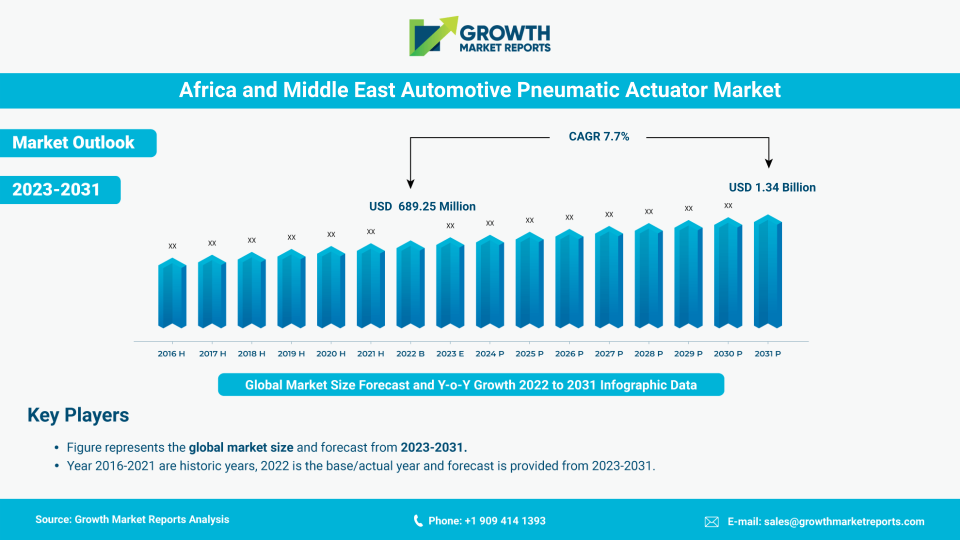
As per our latest research, the global automotive pneumatic actuator market size reached USD 3.78 billion in 2024, reflecting robust industry growth driven by advancements in vehicle automation and efficiency requirements. The market is projected to expand at a CAGR of 5.2% from 2025 to 2033, reaching a forecasted value of USD 5.92 billion by 2033. This sustained growth trajectory is primarily fueled by increasing demand for fuel-efficient vehicles, stringent emission regulations, and the rapid integration of advanced driver assistance systems (ADAS) across both passenger and commercial vehicles worldwide.

The automotive pneumatic actuator market is experiencing significant expansion due to the growing emphasis on vehicle automation and electrification. Modern vehicles are increasingly adopting pneumatic actuators for precise control of engine functions, braking systems, and HVAC operations. These actuators offer several advantages, such as rapid response times, reliability, and the ability to operate in harsh environments, making them highly suitable for automotive applications. Additionally, the shift towards lightweight vehicle architectures is encouraging manufacturers to integrate pneumatic actuators, which are typically lighter and more compact than their hydraulic or electric counterparts. This trend is further supported by ongoing research and development efforts aimed at enhancing actuator efficiency and durability, which are crucial for meeting the evolving demands of the automotive industry.

Another key growth factor for the automotive pneumatic actuator market is the intensifying regulatory landscape focused on emission reduction and fuel efficiency. Governments worldwide are implementing stricter emission norms, compelling automakers to adopt advanced technologies that optimize engine performance and reduce fuel consumption. Pneumatic actuators play a pivotal role in this context by enabling precise control over exhaust gas recirculation, turbocharging systems, and other engine management functions. The adoption of pneumatic actuators in brake systems, particularly in commercial vehicles, is also on the rise due to their ability to provide consistent and reliable braking performance. Furthermore, the increasing popularity of electric and hybrid vehicles is opening new avenues for pneumatic actuator applications, particularly in auxiliary systems such as thermal management and cabin comfort.

The surging demand for comfort and safety features in vehicles is another major driver propelling the automotive pneumatic actuator market. Consumers today expect vehicles to offer enhanced convenience, safety, and connectivity, which has led to the proliferation of advanced features such as automatic door and trunk operations, adaptive HVAC systems, and intelligent braking solutions. Pneumatic actuators are integral to the seamless functioning of these systems, ensuring smooth and efficient operation. The aftermarket segment is also witnessing robust growth, as vehicle owners increasingly seek to upgrade or replace actuators to maintain optimal performance and comply with regulatory standards. This trend is particularly pronounced in emerging economies, where the vehicle parc is expanding rapidly, creating lucrative opportunities for both OEMs and aftermarket players.

Regionally, Asia Pacific dominates the global automotive pneumatic actuator market, accounting for a substantial share of both production and consumption. The region’s leadership is underpinned by the presence of major automotive manufacturing hubs in China, Japan, South Korea, and India, coupled with rising vehicle ownership and increasing investments in automotive R&D. North America and Europe also represent significant markets, driven by technological innovation, stringent regulatory frameworks, and a strong focus on vehicle safety and efficiency. Meanwhile, Latin America and the Middle East & Africa are emerging as promising markets, fueled by improving economic conditions, urbanization, and infrastructure development. The regional dynamics of the market are shaped by a complex interplay of factors, including regulatory policies, consumer preferences, and the pace of technological adoption, which collectively influence the growth prospects of the automotive pneumatic actuator market.

Global Automotive Pneumatic Actuator Industry Outlook

Product Type Analysis

The automotive pneumatic actuator market is segmented by product type into single-acting actuators and double-acting actuators, each catering to specific automotive applications. Single-acting actuators, which utilize air pressure to move in one direction and rely on a spring or external force for the return stroke, are widely used in applications requiring simple, cost-effective motion control. These actuators are particularly favored for operations such as door and trunk opening, as well as certain engine control functions, where reliability and ease of installation are paramount. Their relatively low cost and straightforward design make them a popular choice among OEMs and aftermarket suppliers, especially in price-sensitive markets.

Double-acting actuators, on the other hand, employ air pressure for both the forward and return strokes, delivering greater control and force output. This makes them ideal for more demanding applications such as brake systems, advanced engine management, and HVAC operations, where precise and consistent actuation is critical for optimal performance. The adoption of double-acting actuators is on the rise, particularly in high-performance and commercial vehicles, as manufacturers seek to enhance vehicle safety, efficiency, and comfort. The ability of these actuators to operate under varying pressure conditions and deliver reliable performance even in harsh environments is a key factor driving their increasing use in the automotive sector.

Technological advancements in actuator materials and design are further shaping the product landscape. The development of lightweight, corrosion-resistant materials and the integration of smart sensors for real-time monitoring are enabling both single and double-acting actuators to deliver improved efficiency and durability. This is particularly important in the context of modern vehicles, which demand high levels of reliability and performance while minimizing weight and energy consumption. As a result, leading manufacturers are investing heavily in R&D to develop next-generation pneumatic actuators that meet the evolving needs of the automotive industry.

The competitive dynamics within the product type segment are also influenced by the growing trend towards vehicle electrification and automation. As electric and hybrid vehicles become more prevalent, the demand for actuators capable of supporting advanced auxiliary systems is expected to surge. Both single-acting and double-acting actuators are being adapted to meet the specific requirements of these new vehicle architectures, including compatibility with electric powertrains and integration with digital control systems. This ongoing evolution is expected to drive sustained growth in both product segments, with double-acting actuators likely to capture a larger share of the market due to their superior performance characteristics.

Report Scope

Attributes Details
Report Title Automotive Pneumatic Actuator Market Research Report 2033
By Product Type Single-Acting Actuators, Double-Acting Actuators
By Vehicle Type Passenger Cars, Light Commercial Vehicles, Heavy Commercial Vehicles
By Application Engine Control, Brake Systems, HVAC Systems, Door and Trunk Operations, Others
By Sales Channel OEM, Aftermarket
Regions Covered North America, Europe, APAC, Latin America, MEA
Base Year 2024
Historic Data 2018-2023
Forecast Period 2025-2033
Number of Pages 272
Number of Tables & Figures 396
Customization Available Yes, the report can be customized as per your need.

Vehicle Type Analysis

The automotive pneumatic actuator market is segmented by vehicle type into passenger cars, light commercial vehicles (LCVs), and heavy commercial vehicles (HCVs), each exhibiting distinct demand patterns and growth drivers. Passenger cars constitute the largest segment, accounting for a significant share of the market due to the sheer volume of vehicles produced and sold globally. The increasing adoption of pneumatic actuators in passenger cars is driven by the growing demand for advanced safety, comfort, and convenience features, as well as the need to comply with stringent emission and fuel efficiency regulations. Automakers are integrating pneumatic actuators into a wide range of applications, including engine control, HVAC systems, and automatic door operations, to enhance the overall driving experience and meet consumer expectations.

Light commercial vehicles represent another important segment, with demand fueled by the rapid growth of e-commerce, urban logistics, and last-mile delivery services. LCVs require robust and reliable actuation systems to support frequent stop-and-go operations, heavy payloads, and extended service intervals. Pneumatic actuators are increasingly being used in these vehicles for brake systems, engine management, and auxiliary functions, owing to their ability to deliver consistent performance under demanding operating conditions. The adoption of pneumatic actuators in LCVs is expected to accelerate further as fleet operators seek to improve vehicle uptime, reduce maintenance costs, and comply with evolving regulatory standards.

Heavy commercial vehicles, including trucks and buses, also represent a significant market for pneumatic actuators, particularly in applications such as air brake systems and powertrain management. The reliability, durability, and high force output of pneumatic actuators make them well-suited for the rigorous demands of heavy-duty vehicles, which operate in challenging environments and often carry substantial loads. The growing emphasis on vehicle safety, efficiency, and emissions reduction is driving the adoption of advanced pneumatic actuator technologies in this segment. Moreover, the increasing penetration of telematics and fleet management solutions is enabling more effective monitoring and maintenance of actuator systems, further supporting market growth.

The vehicle type segment is also influenced by regional trends and regulatory frameworks. In mature markets such as North America and Europe, the focus is on enhancing vehicle safety, comfort, and connectivity, driving demand for sophisticated actuator solutions in both passenger and commercial vehicles. In emerging markets, rapid urbanization, rising disposable incomes, and expanding vehicle fleets are creating new opportunities for pneumatic actuator manufacturers across all vehicle types. The ongoing transition towards electric and hybrid vehicles is expected to reshape the demand landscape, with new applications emerging for pneumatic actuators in next-generation vehicle architectures.

Application Analysis

The application segment of the automotive pneumatic actuator market encompasses engine control, brake systems, HVAC systems, door and trunk operations, and others, each representing unique growth opportunities and technological challenges. Engine control remains a primary application area, with pneumatic actuators playing a critical role in managing air intake, exhaust gas recirculation, and turbocharging systems. These actuators enable precise control over engine parameters, contributing to improved fuel efficiency, reduced emissions, and enhanced performance. The increasing adoption of downsized, turbocharged engines and advanced emission control technologies is further boosting demand for pneumatic actuators in this segment.

Brake systems represent another key application, particularly in commercial vehicles where pneumatic actuators are widely used in air brake systems. The reliability, rapid response, and high force output of pneumatic actuators make them indispensable for ensuring safe and effective braking performance in heavy vehicles. The growing focus on vehicle safety and regulatory compliance is driving the adoption of advanced pneumatic actuator solutions in both OEM and aftermarket segments. In passenger vehicles, pneumatic actuators are also being integrated into electronic parking brake systems and other safety-critical applications, reflecting the broader trend towards vehicle automation and intelligent safety systems.

HVAC systems are another important area of application, with pneumatic actuators used to control airflow, temperature, and humidity within the vehicle cabin. The demand for enhanced comfort and climate control is driving the integration of advanced actuator technologies in both passenger and commercial vehicles. Pneumatic actuators offer several advantages in HVAC applications, including rapid response, energy efficiency, and compatibility with compact system designs. The increasing adoption of electric and hybrid vehicles is also creating new opportunities for pneumatic actuators in thermal management systems, as automakers seek to optimize energy usage and extend vehicle range.

Door and trunk operations represent a growing application area, particularly in premium and luxury vehicles where automatic opening and closing mechanisms are becoming standard features. Pneumatic actuators provide smooth, reliable, and silent operation, enhancing the overall user experience and vehicle appeal. The trend towards smart and connected vehicles is further driving the adoption of pneumatic actuators in door and trunk systems, with features such as remote operation, anti-pinch protection, and integration with vehicle security systems becoming increasingly common. Other applications, including seat adjustment, convertible roof operation, and active aerodynamics, also contribute to the expanding scope of pneumatic actuators in the automotive sector.

Sales Channel Analysis

The automotive pneumatic actuator market is segmented by sales channel into OEM (Original Equipment Manufacturer) and aftermarket, each playing a vital role in shaping the competitive dynamics and growth prospects of the market. The OEM segment dominates the market, accounting for the majority of pneumatic actuator sales due to the high volume of vehicles produced by global automakers. OEMs are increasingly partnering with actuator manufacturers to develop customized solutions that meet specific vehicle requirements, regulatory standards, and consumer preferences. The focus on quality, reliability, and integration with advanced vehicle systems is driving innovation in the OEM segment, with leading players investing in R&D to develop next-generation actuator technologies.

The aftermarket segment is also witnessing robust growth, driven by the expanding global vehicle parc and the increasing need for replacement and upgrade of actuator components. As vehicles age, the demand for high-quality, reliable replacement actuators rises, particularly in regions with large and growing vehicle fleets. The aftermarket offers significant opportunities for both established manufacturers and new entrants, as consumers seek to maintain optimal vehicle performance, comply with regulatory requirements, and enhance comfort and safety features. The proliferation of online sales channels and the growing popularity of do-it-yourself (DIY) vehicle maintenance are further supporting growth in the aftermarket segment.

The competitive landscape within the sales channel segment is characterized by intense competition, with manufacturers striving to differentiate their offerings through product quality, innovation, and customer service. OEMs typically prioritize long-term partnerships with actuator suppliers that can deliver consistent quality, technical expertise, and support for new vehicle programs. In contrast, the aftermarket is more fragmented, with a wide range of suppliers competing on price, availability, and product range. The increasing complexity of modern vehicles and the integration of smart actuator technologies are creating new challenges and opportunities for both OEM and aftermarket players.

The ongoing digital transformation of the automotive industry is also influencing sales channel dynamics. The adoption of digital platforms for product selection, ordering, and technical support is enhancing the efficiency and transparency of the supply chain, benefiting both OEMs and aftermarket customers. Manufacturers are leveraging data analytics and customer feedback to develop targeted marketing strategies, optimize inventory management, and improve product offerings. This digital shift is expected to drive further growth and innovation in both OEM and aftermarket segments, as the automotive pneumatic actuator market continues to evolve.

Opportunities & Threats

The automotive pneumatic actuator market presents a multitude of opportunities for industry participants, driven by the ongoing transformation of the global automotive landscape. One of the most significant opportunities lies in the electrification of vehicles, with electric and hybrid powertrains creating new demand for advanced actuator solutions. As automakers seek to optimize energy usage, reduce emissions, and enhance vehicle performance, pneumatic actuators are increasingly being integrated into auxiliary systems such as thermal management, active aerodynamics, and smart HVAC systems. The rise of connected and autonomous vehicles is also opening new avenues for actuator applications, as vehicles become more reliant on automated control systems for safety, comfort, and efficiency. Manufacturers that can develop innovative, reliable, and cost-effective actuator solutions tailored to these emerging vehicle architectures are well-positioned to capture a larger share of the market.

Another major opportunity is the growing demand for vehicle customization and personalization, particularly in the premium and luxury segments. Consumers are increasingly seeking vehicles that offer unique features, enhanced comfort, and advanced safety technologies, driving the adoption of pneumatic actuators in applications such as adaptive seating, automatic door and trunk operations, and intelligent climate control systems. The aftermarket segment offers significant potential for growth, as vehicle owners look to upgrade or replace actuators to maintain optimal performance and comply with evolving regulatory standards. The proliferation of digital sales channels and the increasing popularity of DIY vehicle maintenance are further supporting aftermarket growth, enabling manufacturers to reach a broader customer base and offer tailored solutions.

Despite these opportunities, the automotive pneumatic actuator market faces several threats and restraining factors that could impact growth prospects. One of the primary challenges is the increasing competition from alternative actuation technologies, such as electric and hydraulic actuators, which offer distinct advantages in certain applications. The rapid pace of technological change and the need for continuous innovation place significant pressure on manufacturers to invest in R&D and adapt to evolving market demands. Additionally, the market is subject to fluctuations in raw material prices, supply chain disruptions, and regulatory changes, which can affect profitability and market stability. Manufacturers must navigate these challenges by focusing on product quality, innovation, and operational efficiency to maintain a competitive edge in the dynamic automotive pneumatic actuator market.

Regional Outlook

The Asia Pacific region continues to lead the global automotive pneumatic actuator market, accounting for approximately 41% of total market revenue in 2024. This dominance is driven by the presence of major automotive manufacturing hubs in China, Japan, South Korea, and India, which collectively produce a significant share of the world’s vehicles. The region’s robust economic growth, rising disposable incomes, and expanding middle class are fueling demand for both passenger and commercial vehicles, creating a strong market for pneumatic actuators. Investments in automotive R&D, government initiatives to promote vehicle electrification, and the increasing adoption of advanced safety and comfort features are further supporting market growth in Asia Pacific. The region is expected to maintain a healthy CAGR of 5.7% through 2033, outpacing other regions in terms of both volume and value growth.

North America and Europe represent mature yet dynamic markets for automotive pneumatic actuators, together accounting for nearly 45% of global market revenue in 2024. In North America, the market is driven by technological innovation, stringent regulatory standards, and a strong focus on vehicle safety and efficiency. The United States and Canada are key contributors, with significant investments in automotive R&D and a high rate of adoption of advanced vehicle technologies. Europe, led by Germany, France, and the United Kingdom, is characterized by a strong emphasis on emission reduction, vehicle electrification, and the integration of smart actuator solutions. The region’s well-established automotive industry, coupled with supportive regulatory frameworks and a focus on sustainability, is expected to drive steady market growth over the forecast period.

Latin America and the Middle East & Africa are emerging as promising markets for automotive pneumatic actuators, albeit from a smaller base. Together, these regions accounted for approximately 14% of global market revenue in 2024. Improving economic conditions, urbanization, and infrastructure development are driving demand for new vehicles and creating opportunities for actuator manufacturers. The growing focus on vehicle safety, regulatory compliance, and the adoption of advanced automotive technologies is supporting market expansion in these regions. While growth rates may vary depending on local economic and regulatory factors, both Latin America and the Middle East & Africa are expected to contribute to the overall growth of the global automotive pneumatic actuator market in the coming years.

Automotive Pneumatic Actuator Market Statistics

Competitor Outlook

The competitive landscape of the automotive pneumatic actuator market is characterized by the presence of a diverse mix of global and regional players, each vying for market share through innovation, product quality, and strategic partnerships. Leading companies are investing heavily in research and development to introduce next-generation actuator solutions that meet the evolving demands of the automotive industry. Key areas of focus include the development of lightweight, energy-efficient actuators, integration with smart vehicle systems, and compliance with stringent regulatory standards. The ability to offer customized solutions tailored to specific vehicle platforms and applications is a critical differentiator in this highly competitive market.

Strategic collaborations and partnerships between actuator manufacturers, automotive OEMs, and technology providers are becoming increasingly common, as companies seek to leverage complementary strengths and accelerate the development of innovative solutions. Mergers and acquisitions are also shaping the competitive landscape, enabling companies to expand their product portfolios, enhance their technological capabilities, and strengthen their global presence. The shift towards vehicle electrification and automation is driving the convergence of mechanical, electrical, and digital technologies, creating new opportunities and challenges for market participants.

In addition to global leaders, the market features a significant number of regional and niche players that cater to specific markets or applications. These companies often compete on the basis of price, product customization, and responsiveness to local customer needs. The aftermarket segment is particularly fragmented, with a wide range of suppliers offering replacement and upgrade solutions for pneumatic actuators. As the market continues to evolve, the ability to adapt to changing customer preferences, regulatory requirements, and technological advancements will be key to sustaining long-term competitiveness.

Some of the major companies operating in the automotive pneumatic actuator market include Continental AG, Robert Bosch GmbH, Delphi Technologies, Denso Corporation, Hitachi Automotive Systems, HELLA GmbH & Co. KGaA, Johnson Electric Holdings Limited, Schaeffler Group, SMC Corporation, and Parker Hannifin Corporation. These companies are at the forefront of innovation, offering a wide range of pneumatic actuator solutions for various automotive applications. Continental AG, for example, is known for its advanced actuator technologies used in engine management and brake systems, while Bosch and Denso are recognized for their expertise in integrating actuators with smart vehicle systems. SMC Corporation and Parker Hannifin are leading suppliers of pneumatic components, with a strong focus on product quality and reliability. The ongoing investments in R&D, strategic partnerships, and global expansion initiatives by these companies are expected to shape the future trajectory of the automotive pneumatic actuator market.

Key Players

  • Continental AG
  • Robert Bosch GmbH
  • Denso Corporation
  • Delphi Technologies
  • HELLA GmbH & Co. KGaA
  • Johnson Electric Holdings Limited
  • Hitachi Automotive Systems
  • Schaeffler AG
  • ZF Friedrichshafen AG
  • Magneti Marelli S.p.A.
  • BorgWarner Inc.
  • Valeo SA
  • Aptiv PLC
  • Mitsubishi Electric Corporation
  • Nidec Corporation
  • SMC Corporation
  • Parker Hannifin Corporation
  • Emerson Electric Co.
  • Rotork plc
  • Honeywell International Inc.
Automotive Pneumatic Actuator Market Overview

Segments

The Automotive Pneumatic Actuator market has been segmented on the basis of

Product Type

  • Single-Acting Actuators
  • Double-Acting Actuators

Vehicle Type

  • Passenger Cars
  • Light Commercial Vehicles
  • Heavy Commercial Vehicles

Application

  • Engine Control
  • Brake Systems
  • HVAC Systems
  • Door and Trunk Operations
  • Others

Sales Channel

  • OEM
  • Aftermarket

Competitive Landscape

Key players competing in the Africa and Middle East automotive pneumatic actuator market include Bosch Rexroth AG, Nidec Corporation, Denso Corporation, Emerson Electric Co, and SMC Corporation of America.
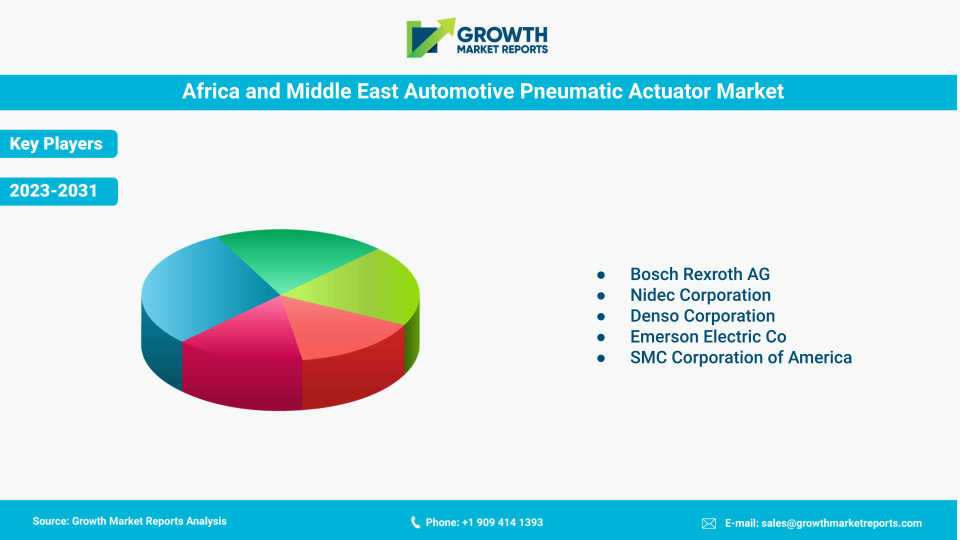

Africa and Middle East Automotive Pneumatic Actuator Market Key Players

Frequently Asked Questions

Opportunities include vehicle electrification, customization, and the rise of connected/autonomous vehicles. Challenges involve competition from electric and hydraulic actuators, raw material price fluctuations, and the need for continuous R&D and innovation.

Key trends include the development of lightweight, corrosion-resistant materials, integration of smart sensors for real-time monitoring, and adaptation for electric and hybrid vehicles, especially in auxiliary and thermal management systems.

Major players include Continental AG, Robert Bosch GmbH, Denso Corporation, Delphi Technologies, HELLA GmbH & Co. KGaA, Johnson Electric Holdings Limited, Hitachi Automotive Systems, SMC Corporation, and Parker Hannifin Corporation.

Sales channels include OEM (original equipment manufacturer) and aftermarket. OEMs dominate due to high vehicle production, but the aftermarket is growing rapidly as vehicle owners seek upgrades and replacements.

The market is segmented into passenger cars, light commercial vehicles (LCVs), and heavy commercial vehicles (HCVs). Passenger cars hold the largest share, but demand is also strong in LCVs and HCVs due to logistics growth and safety requirements.

Pneumatic actuators are used in engine control, brake systems, HVAC systems, door and trunk operations, and other functions such as seat adjustment and active aerodynamics.

The market is segmented into single-acting actuators, which use air pressure for movement in one direction, and double-acting actuators, which use air pressure for both forward and return strokes. Double-acting actuators are favored for demanding applications like brake systems and engine management.

Asia Pacific leads the market, accounting for about 41% of global revenue in 2024, followed by North America and Europe. Latin America and the Middle East & Africa are emerging as promising markets.

Key growth drivers include rising demand for fuel-efficient vehicles, stricter emission regulations, increasing vehicle automation, integration of advanced driver assistance systems (ADAS), and the shift towards lightweight vehicle architectures.

The global automotive pneumatic actuator market reached USD 3.78 billion in 2024 and is projected to grow at a CAGR of 5.2% from 2025 to 2033, reaching USD 5.92 billion by 2033.

Table Of Content

Chapter 1 Executive Summary
Chapter 2 Assumptions and Acronyms Used
Chapter 3 Research Methodology
Chapter 4 Automotive Pneumatic Actuator Market Overview
   4.1 Introduction
      4.1.1 Market Taxonomy
      4.1.2 Market Definition
      4.1.3 Macro-Economic Factors Impacting the Market Growth
   4.2 Automotive Pneumatic Actuator Market Dynamics
      4.2.1 Market Drivers
      4.2.2 Market Restraints
      4.2.3 Market Opportunity
   4.3 Automotive Pneumatic Actuator Market - Supply Chain Analysis
      4.3.1 List of Key Suppliers
      4.3.2 List of Key Distributors
      4.3.3 List of Key Consumers
   4.4 Key Forces Shaping the Automotive Pneumatic Actuator Market
      4.4.1 Bargaining Power of Suppliers
      4.4.2 Bargaining Power of Buyers
      4.4.3 Threat of Substitution
      4.4.4 Threat of New Entrants
      4.4.5 Competitive Rivalry
   4.5 Global Automotive Pneumatic Actuator Market Size & Forecast, 2023-2032
      4.5.1 Automotive Pneumatic Actuator Market Size and Y-o-Y Growth
      4.5.2 Automotive Pneumatic Actuator Market Absolute $ Opportunity

Chapter 5 Global Automotive Pneumatic Actuator Market Analysis and Forecast By Product Type
   5.1 Introduction
      5.1.1 Key Market Trends & Growth Opportunities By Product Type
      5.1.2 Basis Point Share (BPS) Analysis By Product Type
      5.1.3 Absolute $ Opportunity Assessment By Product Type
   5.2 Automotive Pneumatic Actuator Market Size Forecast By Product Type
      5.2.1 Single-Acting Actuators
      5.2.2 Double-Acting Actuators
   5.3 Market Attractiveness Analysis By Product Type

Chapter 6 Global Automotive Pneumatic Actuator Market Analysis and Forecast By Vehicle Type
   6.1 Introduction
      6.1.1 Key Market Trends & Growth Opportunities By Vehicle Type
      6.1.2 Basis Point Share (BPS) Analysis By Vehicle Type
      6.1.3 Absolute $ Opportunity Assessment By Vehicle Type
   6.2 Automotive Pneumatic Actuator Market Size Forecast By Vehicle Type
      6.2.1 Passenger Cars
      6.2.2 Light Commercial Vehicles
      6.2.3 Heavy Commercial Vehicles
   6.3 Market Attractiveness Analysis By Vehicle Type

Chapter 7 Global Automotive Pneumatic Actuator Market Analysis and Forecast By Application
   7.1 Introduction
      7.1.1 Key Market Trends & Growth Opportunities By Application
      7.1.2 Basis Point Share (BPS) Analysis By Application
      7.1.3 Absolute $ Opportunity Assessment By Application
   7.2 Automotive Pneumatic Actuator Market Size Forecast By Application
      7.2.1 Engine Control
      7.2.2 Brake Systems
      7.2.3 HVAC Systems
      7.2.4 Door and Trunk Operations
      7.2.5 Others
   7.3 Market Attractiveness Analysis By Application

Chapter 8 Global Automotive Pneumatic Actuator Market Analysis and Forecast By Sales Channel
   8.1 Introduction
      8.1.1 Key Market Trends & Growth Opportunities By Sales Channel
      8.1.2 Basis Point Share (BPS) Analysis By Sales Channel
      8.1.3 Absolute $ Opportunity Assessment By Sales Channel
   8.2 Automotive Pneumatic Actuator Market Size Forecast By Sales Channel
      8.2.1 OEM
      8.2.2 Aftermarket
   8.3 Market Attractiveness Analysis By Sales Channel

Chapter 9 Global Automotive Pneumatic Actuator Market Analysis and Forecast by Region
   9.1 Introduction
      9.1.1 Key Market Trends & Growth Opportunities By Region
      9.1.2 Basis Point Share (BPS) Analysis By Region
      9.1.3 Absolute $ Opportunity Assessment By Region
   9.2 Automotive Pneumatic Actuator Market Size Forecast By Region
      9.2.1 North America
      9.2.2 Europe
      9.2.3 Asia Pacific
      9.2.4 Latin America
      9.2.5 Middle East & Africa (MEA)
   9.3 Market Attractiveness Analysis By Region

Chapter 10 Coronavirus Disease (COVID-19) Impact 
   10.1 Introduction 
   10.2 Current & Future Impact Analysis 
   10.3 Economic Impact Analysis 
   10.4 Government Policies 
   10.5 Investment Scenario

Chapter 11 North America Automotive Pneumatic Actuator Analysis and Forecast
   11.1 Introduction
   11.2 North America Automotive Pneumatic Actuator Market Size Forecast by Country
      11.2.1 U.S.
      11.2.2 Canada
   11.3 Basis Point Share (BPS) Analysis by Country
   11.4 Absolute $ Opportunity Assessment by Country
   11.5 Market Attractiveness Analysis by Country
   11.6 North America Automotive Pneumatic Actuator Market Size Forecast By Product Type
      11.6.1 Single-Acting Actuators
      11.6.2 Double-Acting Actuators
   11.7 Basis Point Share (BPS) Analysis By Product Type 
   11.8 Absolute $ Opportunity Assessment By Product Type 
   11.9 Market Attractiveness Analysis By Product Type
   11.10 North America Automotive Pneumatic Actuator Market Size Forecast By Vehicle Type
      11.10.1 Passenger Cars
      11.10.2 Light Commercial Vehicles
      11.10.3 Heavy Commercial Vehicles
   11.11 Basis Point Share (BPS) Analysis By Vehicle Type 
   11.12 Absolute $ Opportunity Assessment By Vehicle Type 
   11.13 Market Attractiveness Analysis By Vehicle Type
   11.14 North America Automotive Pneumatic Actuator Market Size Forecast By Application
      11.14.1 Engine Control
      11.14.2 Brake Systems
      11.14.3 HVAC Systems
      11.14.4 Door and Trunk Operations
      11.14.5 Others
   11.15 Basis Point Share (BPS) Analysis By Application 
   11.16 Absolute $ Opportunity Assessment By Application 
   11.17 Market Attractiveness Analysis By Application
   11.18 North America Automotive Pneumatic Actuator Market Size Forecast By Sales Channel
      11.18.1 OEM
      11.18.2 Aftermarket
   11.19 Basis Point Share (BPS) Analysis By Sales Channel 
   11.20 Absolute $ Opportunity Assessment By Sales Channel 
   11.21 Market Attractiveness Analysis By Sales Channel

Chapter 12 Europe Automotive Pneumatic Actuator Analysis and Forecast
   12.1 Introduction
   12.2 Europe Automotive Pneumatic Actuator Market Size Forecast by Country
      12.2.1 Germany
      12.2.2 France
      12.2.3 Italy
      12.2.4 U.K.
      12.2.5 Spain
      12.2.6 Russia
      12.2.7 Rest of Europe
   12.3 Basis Point Share (BPS) Analysis by Country
   12.4 Absolute $ Opportunity Assessment by Country
   12.5 Market Attractiveness Analysis by Country
   12.6 Europe Automotive Pneumatic Actuator Market Size Forecast By Product Type
      12.6.1 Single-Acting Actuators
      12.6.2 Double-Acting Actuators
   12.7 Basis Point Share (BPS) Analysis By Product Type 
   12.8 Absolute $ Opportunity Assessment By Product Type 
   12.9 Market Attractiveness Analysis By Product Type
   12.10 Europe Automotive Pneumatic Actuator Market Size Forecast By Vehicle Type
      12.10.1 Passenger Cars
      12.10.2 Light Commercial Vehicles
      12.10.3 Heavy Commercial Vehicles
   12.11 Basis Point Share (BPS) Analysis By Vehicle Type 
   12.12 Absolute $ Opportunity Assessment By Vehicle Type 
   12.13 Market Attractiveness Analysis By Vehicle Type
   12.14 Europe Automotive Pneumatic Actuator Market Size Forecast By Application
      12.14.1 Engine Control
      12.14.2 Brake Systems
      12.14.3 HVAC Systems
      12.14.4 Door and Trunk Operations
      12.14.5 Others
   12.15 Basis Point Share (BPS) Analysis By Application 
   12.16 Absolute $ Opportunity Assessment By Application 
   12.17 Market Attractiveness Analysis By Application
   12.18 Europe Automotive Pneumatic Actuator Market Size Forecast By Sales Channel
      12.18.1 OEM
      12.18.2 Aftermarket
   12.19 Basis Point Share (BPS) Analysis By Sales Channel 
   12.20 Absolute $ Opportunity Assessment By Sales Channel 
   12.21 Market Attractiveness Analysis By Sales Channel

Chapter 13 Asia Pacific Automotive Pneumatic Actuator Analysis and Forecast
   13.1 Introduction
   13.2 Asia Pacific Automotive Pneumatic Actuator Market Size Forecast by Country
      13.2.1 China
      13.2.2 Japan
      13.2.3 South Korea
      13.2.4 India
      13.2.5 Australia
      13.2.6 South East Asia (SEA)
      13.2.7 Rest of Asia Pacific (APAC)
   13.3 Basis Point Share (BPS) Analysis by Country
   13.4 Absolute $ Opportunity Assessment by Country
   13.5 Market Attractiveness Analysis by Country
   13.6 Asia Pacific Automotive Pneumatic Actuator Market Size Forecast By Product Type
      13.6.1 Single-Acting Actuators
      13.6.2 Double-Acting Actuators
   13.7 Basis Point Share (BPS) Analysis By Product Type 
   13.8 Absolute $ Opportunity Assessment By Product Type 
   13.9 Market Attractiveness Analysis By Product Type
   13.10 Asia Pacific Automotive Pneumatic Actuator Market Size Forecast By Vehicle Type
      13.10.1 Passenger Cars
      13.10.2 Light Commercial Vehicles
      13.10.3 Heavy Commercial Vehicles
   13.11 Basis Point Share (BPS) Analysis By Vehicle Type 
   13.12 Absolute $ Opportunity Assessment By Vehicle Type 
   13.13 Market Attractiveness Analysis By Vehicle Type
   13.14 Asia Pacific Automotive Pneumatic Actuator Market Size Forecast By Application
      13.14.1 Engine Control
      13.14.2 Brake Systems
      13.14.3 HVAC Systems
      13.14.4 Door and Trunk Operations
      13.14.5 Others
   13.15 Basis Point Share (BPS) Analysis By Application 
   13.16 Absolute $ Opportunity Assessment By Application 
   13.17 Market Attractiveness Analysis By Application
   13.18 Asia Pacific Automotive Pneumatic Actuator Market Size Forecast By Sales Channel
      13.18.1 OEM
      13.18.2 Aftermarket
   13.19 Basis Point Share (BPS) Analysis By Sales Channel 
   13.20 Absolute $ Opportunity Assessment By Sales Channel 
   13.21 Market Attractiveness Analysis By Sales Channel

Chapter 14 Latin America Automotive Pneumatic Actuator Analysis and Forecast
   14.1 Introduction
   14.2 Latin America Automotive Pneumatic Actuator Market Size Forecast by Country
      14.2.1 Brazil
      14.2.2 Mexico
      14.2.3 Rest of Latin America (LATAM)
   14.3 Basis Point Share (BPS) Analysis by Country
   14.4 Absolute $ Opportunity Assessment by Country
   14.5 Market Attractiveness Analysis by Country
   14.6 Latin America Automotive Pneumatic Actuator Market Size Forecast By Product Type
      14.6.1 Single-Acting Actuators
      14.6.2 Double-Acting Actuators
   14.7 Basis Point Share (BPS) Analysis By Product Type 
   14.8 Absolute $ Opportunity Assessment By Product Type 
   14.9 Market Attractiveness Analysis By Product Type
   14.10 Latin America Automotive Pneumatic Actuator Market Size Forecast By Vehicle Type
      14.10.1 Passenger Cars
      14.10.2 Light Commercial Vehicles
      14.10.3 Heavy Commercial Vehicles
   14.11 Basis Point Share (BPS) Analysis By Vehicle Type 
   14.12 Absolute $ Opportunity Assessment By Vehicle Type 
   14.13 Market Attractiveness Analysis By Vehicle Type
   14.14 Latin America Automotive Pneumatic Actuator Market Size Forecast By Application
      14.14.1 Engine Control
      14.14.2 Brake Systems
      14.14.3 HVAC Systems
      14.14.4 Door and Trunk Operations
      14.14.5 Others
   14.15 Basis Point Share (BPS) Analysis By Application 
   14.16 Absolute $ Opportunity Assessment By Application 
   14.17 Market Attractiveness Analysis By Application
   14.18 Latin America Automotive Pneumatic Actuator Market Size Forecast By Sales Channel
      14.18.1 OEM
      14.18.2 Aftermarket
   14.19 Basis Point Share (BPS) Analysis By Sales Channel 
   14.20 Absolute $ Opportunity Assessment By Sales Channel 
   14.21 Market Attractiveness Analysis By Sales Channel

Chapter 15 Middle East & Africa (MEA) Automotive Pneumatic Actuator Analysis and Forecast
   15.1 Introduction
   15.2 Middle East & Africa (MEA) Automotive Pneumatic Actuator Market Size Forecast by Country
      15.2.1 Saudi Arabia
      15.2.2 South Africa
      15.2.3 UAE
      15.2.4 Rest of Middle East & Africa (MEA)
   15.3 Basis Point Share (BPS) Analysis by Country
   15.4 Absolute $ Opportunity Assessment by Country
   15.5 Market Attractiveness Analysis by Country
   15.6 Middle East & Africa (MEA) Automotive Pneumatic Actuator Market Size Forecast By Product Type
      15.6.1 Single-Acting Actuators
      15.6.2 Double-Acting Actuators
   15.7 Basis Point Share (BPS) Analysis By Product Type 
   15.8 Absolute $ Opportunity Assessment By Product Type 
   15.9 Market Attractiveness Analysis By Product Type
   15.10 Middle East & Africa (MEA) Automotive Pneumatic Actuator Market Size Forecast By Vehicle Type
      15.10.1 Passenger Cars
      15.10.2 Light Commercial Vehicles
      15.10.3 Heavy Commercial Vehicles
   15.11 Basis Point Share (BPS) Analysis By Vehicle Type 
   15.12 Absolute $ Opportunity Assessment By Vehicle Type 
   15.13 Market Attractiveness Analysis By Vehicle Type
   15.14 Middle East & Africa (MEA) Automotive Pneumatic Actuator Market Size Forecast By Application
      15.14.1 Engine Control
      15.14.2 Brake Systems
      15.14.3 HVAC Systems
      15.14.4 Door and Trunk Operations
      15.14.5 Others
   15.15 Basis Point Share (BPS) Analysis By Application 
   15.16 Absolute $ Opportunity Assessment By Application 
   15.17 Market Attractiveness Analysis By Application
   15.18 Middle East & Africa (MEA) Automotive Pneumatic Actuator Market Size Forecast By Sales Channel
      15.18.1 OEM
      15.18.2 Aftermarket
   15.19 Basis Point Share (BPS) Analysis By Sales Channel 
   15.20 Absolute $ Opportunity Assessment By Sales Channel 
   15.21 Market Attractiveness Analysis By Sales Channel

Chapter 16 Competition Landscape 
   16.1 Automotive Pneumatic Actuator Market: Competitive Dashboard
   16.2 Global Automotive Pneumatic Actuator Market: Market Share Analysis, 2023
   16.3 Company Profiles (Details – Overview, Financials, Developments, Strategy) 
      16.3.1 Continental AG
Robert Bosch GmbH
Denso Corporation
Delphi Technologies
HELLA GmbH & Co. KGaA
Johnson Electric Holdings Limited
Hitachi Automotive Systems
Schaeffler AG
ZF Friedrichshafen AG
Magneti Marelli S.p.A.
BorgWarner Inc.
Valeo SA
Aptiv PLC
Mitsubishi Electric Corporation
Nidec Corporation
SMC Corporation
Parker Hannifin Corporation
Emerson Electric Co.
Rotork plc
Honeywell International Inc.

Methodology

Our Clients

FedEx Logistics
Dassault Aviation
Siemens Healthcare
General Electric
Honda Motor Co. Ltd.
Microsoft
General Mills
The John Holland Group